
U.S. Hostility With Iran Only Serves Hardliners on Both Sides
The Biden administration should propose a serious rollback of U.S. sanctions—including over the use of the U.S. dollar—in return for diplomatic relations, a JCPOA 2.0 that indefinitely extends restrictions on Iran’s nuclear program, and a nonaggression pact.
By Barbara Slavin
In the aftermath of President-elect Joe Biden’s election victory, U.S. and European think tanks and pundits are flooding the internet with papers about how to fix this or that aspect of U.S. foreign policy after four years of President Donald Trump.
The Atlantic Council and the European Leadership Network, with an assist from the top Iran hand at the European Council on Foreign Relations, just put out a roadmap for Europe to act as a bridge between Iran and the incoming Biden team. The recommendations seek to salvage the 2015 Iran Nuclear Deal—the Joint Comprehensive Plan of Action (JCPOA)—by returning the United States and Iran to compliance, promoting regional conflict resolution, and reviving people-to-people engagement.
In the longer run, however, U.S.-Iranian relations need a more radical rethink. For about 40 years, they’ve been going in circles, with occasional flickers of détente interrupting longer periods of economic warfare, cyber-attacks, and loss of life from direct and indirect military confrontation. Just last week, Trump reportedly asked for options to bomb Iranian nuclear sites—a reckless escalation that even Mike Pompeo, his hawkish secretary of state, is said to have opposed. The mutual hostility serves hardliners on both sides—and the arms dealers that cater to their respective regional partners—but also hurts U.S. national interests and, most especially, the Iranian people. It also hobbles Iran’s ties with European and Asian democracies.
The first order of business for a Biden administration may well be to freeze Iran’s slow walk out of the JCPOA in return for calibrated sanctions relief. But the Bidenites should be thinking of something much bolder, to be conveyed to Iran through back-channel talks in the region or in Europe.
The United States’ ability to advance its interests in the Middle East has been severely undermined by its lack of a functioning diplomatic relationship with Iran, the largest, most populous, and most scientifically advanced (apart from Israel) country in the region. Estrangement has left successive U.S. administrations reliant on Arab autocrats and an increasingly undemocratic Israel, which has in turn boosted Iran’s influence among Arab Shias and handed Russia and China increasing economic and strategic power.
Twice, U.S. and Iranian interests have actually coincided to a surprising extent—in post-2001 Afghanistan and post-2003 Iraq—but the George W. Bush administration put Iran in its crosshairs as a charter member of the “axis of evil” rather than building on Washington and Tehran’s shared animosity toward the Taliban and Iraqi leader Saddam Hussein. Instead, Iran exploited the power vacuums created by U.S. military interventions and the chaos that followed the 2011 Arab Spring to build new Shia militias in Iraq and to deepen ties with Yemen’s Houthi rebel groups. Despite that success, though, Iran has dramatically underperformed in economic terms compared to countries that 40 years ago were at similar stages of development.
As long as the United States and Iran are at so deeply at odds, Iran will continue to thwart U.S. interests while also failing to achieve its potential—and its government will remain chronically unpopular and insecure.
So what to do? The Biden administration should propose a serious rollback of U.S. sanctions—including over the use of the U.S. dollar—in return for diplomatic relations, a JCPOA 2.0 that indefinitely extends restrictions on Iran’s nuclear program, and a nonaggression pact.
Critics will no doubt call such a proposal naïve and unattainable. They may point out that Iran’s leadership needs continued animosity with the United States to survive. But the prospects for a big breakthrough between the two countries are bolstered by the fact that the American people are sick of U.S. military confrontations in the Middle East, and Iranians are fed up with being isolated.
Iran, of course, has long sought a reduction in U.S. forces in the region, which it perceives as part of a provocative containment regime. As Iranian Foreign Minister Javad Zarif put it to American journalists a few years ago: “Have you seen that map with all the US bases around us and said, ‘Why are these Iranians putting their country in the middle of all these bases?’”
Since the 1980s, when the United States escorted Kuwaiti tankers down the Persian Gulf during the Iran-Iraq war, the U.S. military has had a large presence on Iran’s flanks. Since 2003, tens of thousands of American troops have been based to Iran’s east and west and the U.S. navy remains a near constant presence near the Strait of Hormuz, the main chokepoint for Iranian and Arab oil exports.
The value of that oil is declining, however, as the world confronts the need to deal with climate change. Iran’s Arab neighbors have learned that the United States, with its rotating administrations, can be a fickle friend, while Iran, as Zarif put it in a recent tweet, will be there “forever.” All of the parties involved, more than ever, need to focus on their own domestic problems and divisions, which have only grown more acute and worrisome thanks to this year’s pandemic and accompanying economic crisis.
It isn’t guaranteed that a grand bargain with Iran will work when it has not in the past. But it is still worth an effort. And even if such overtures only result in a tenuous détente, it would be better than where the world is now.
Barbara Slavin directs the Future of Iran Initiative at the Atlantic Council. Follow her at @BarbaraSlavin1.
Photo: Wikicommons

Museum Diplomacy Falters in the Face of Iran Sanctions
Museums have historically played an important role in the mediation of the relationship between the United States and Iran. But American sanctions policy made it difficult to conduct the exchanges of objects and personnel required put on exhibitions related to Iranian cultural heritage.
This article is the third in a five-part series.
Read Part 1 here
Read Part 2 here
In 1926, Alexander Upham Pope, an art historian, collector, and dealer who specialized in Iranian art, was contracted by the Iranian government to design the Persian Pavilion at the Sesquicentennial International Exposition in Philadelphia. The centerpiece of the exhibition was a replica of the magnificent Safavid-era mosque Masjid-e Shah from Naqsh-e Jahan square in Isfahan, which sat in what is now the Franklin Delano Roosevelt Park and the Sports Complex in South Philadelphia. The interest generated by Persian Pavilion and the precious objects displayed within it led to the convening of the First International Congress for Persian Art and Archaeology. The success of this congress in turn paved the way for an exhibition of Iranian art and antiquities sponsored by the British Royal Academy of Art, held at Burlington House in London several years later.
The Pavilion and subsequent congress captured the imaginations of two brothers-in-law, scions of established Philadelphia families: Fiske Kimball and Horace Howard Furness Jayne, the directors of the Philadelphia Museum of Art and the University of Pennsylvania Museum of Archaeology and Anthropology, respectively. Together, they sponsored Pope to travel to Iran to participate in the negotiation of a new Antiquities Law in Iran that would allow American archaeologists to conduct surveys and excavations in Iran for the first time. Pope had his own agenda, however, and his feuds with the era’s leading scholar of ancient Iran—Ernst E. Herzfeld—complicated proceedings. So Kimball and Jayne dispatched the explorer, diplomat, and amateur archaeologist Frederick R. Wulsin to Tehran to take Pope’s place. Within six months, an agreement had been reached, and the Law for the Protection of National Vestiges was ratified by the Iranian Parliament in November of 1930.
Wulsin, hailing from Cincinnati, Ohio and educated at Harvard, was one of the heirs of the Baldwin Piano Company fortune, which supported his early travels in China, Mongolia, Tibet, Vietnam, and Laos. In his capacity as the representative of the University of Pennsylvania Museum, Wulsin was the first American citizen to apply for a permit to conduct archaeological excavations in Iran, digging for two months with his wife Susanne (née Emery) at the site of Tureng Tepe (Hill of the Pheasants) near the modern city of Gorgan. It was through research on the artifacts and documents that resulted from this excavation that I first became involved in the archaeology of Iran, making him a figure of special significance for me.
This background is important because it demonstrates the meaningful role museums have historically played in the mediation of the relationship between the United States and Iran. These private institutions were among the primary American actors on the Iranian political scene and a key contributor to goodwill between the two countries during the interwar period. As I write in a forthcoming piece, museums and their representatives were in fact seen at the time by State Department officials as the United States’ best chance at improving relations with Iran at the time. Iran’s heritage has long been an important channel of cultural exchange with other countries, and despite current American policy, this has not changed today.
***
Recent museum exchanges between Iran and the West, both high and low-profile, have shown the continuing importance of Iran’s heritage in its foreign affairs. These include the international tour of the Cyrus Cylinder (2013), the Louvre exhibition “The Rose Empire: Masterpieces of 19th-Century Persian Art” (2018), the Persepolis Fortification Tablet Archive Return (2019), and the planned show “Epic Iran” at the Victoria & Albert Museum (due to open in February 2021). In each case, sponsors and participants in these initiatives have had to navigate a tangle of sanctions and restrictive financial regulations, which are at least to a degree predictable. They have also had to weather less foreseeable storms, such as political fallout from skirmishes in the Persian Gulf and the assassination of Qassem Soleimani in January 2020.
In 2013, the Iran Heritage Foundation, working together with the British Museum and the Smithsonian institution, undertook an American tour of one of the most famous artifacts of ancient Iran: the Cyrus Cylinder. The Cyrus Cylinder is a 2600-year-old cuneiform document, written in the Babylonian variant of the Akkadian script in 539 BCE, which was excavated at the site of ancient Babylon in 1879 by the Assyrian-British archaeologist Hormuzd Rassam. The object has been in the possession of the British Museum since 1880.
Following Mohammad Reza Pahlavi’s formulation, the Cyrus Cylinder is often referred to as the “first declaration of human rights,” a precursor to the modern Universal Declaration of Human Rights. Since 1971, a replica has been displayed at the UN headquarters in New York as a symbol of human liberty. This is in no small part because the text of the Cylinder is understood to have encouraged “freedom of worship” within the Persian Empire and allowed the return of peoples, such as the Israelites, deported from their homelands by the Assyrians. It has thus been taken up and promoted as a symbol of “multi-culturalism, tolerance, diversity, and human rights.”
The IHF exhibition, which traveled to five cities—Washington DC, Houston, New York, San Francisco, and Los Angeles—was marketed to American audiences on the basis that Cyrus’ principles of tolerance influenced the American founding fathers, particularly Thomas Jefferson, who owned not one but two copies of Xenophon’s Cyropaedia. The reception of the tour at the time is instructive. On the one hand, politicians speaking out of both sides of their mouths hailed the artifact and its message as a way to counter the media narrative of Iran’s nuclear program and regional ambitions. On the other, commentators such as noted religious scholar Karen Armstrong highlighted the power that cultural diplomacy can have where political diplomacy has failed.
This has continued to be the case, though current American policy has made such efforts at cultural diplomacy more difficult. For example, following a French-Iranian cultural exchange agreement signed in 2016, and after two years of painstaking preparations, the 2018 Louvre exhibitions, “The Louvre in Tehran” and “The Rose Empire: Masterpieces of 19th-Century Persian Art,” faced major financial and logistical challenges due to American policy. As reported in The Art Newspaper, would-be exhibition sponsors were concerned about falling afoul of primary and secondary sanctions penalties. Ultimately, both shows went on as scheduled, but because of restrictions on cargo flights between Paris and Tehran, the number of items in the Tehran show had to be considerably reduced. Despite tensions in other domains, the exhibitions were seen, at least by the French foreign ministry, as symbols of a shared ambition to promote positive relations and bring Iran back into the fold of international affairs.
In contrast, the planned exhibition “Epic Iran,” scheduled to open in February 2021 at the V&A in London, hangs in the balance. Even prior to COVID-19, the planners of this exhibition commented publicly on the difficulties they faced due to the exit of the United States from the JCPOA, intensified sanctions, and the assassination of Qassem Soleimani. V&A Director Tristram Hunt believes that the geopolitical situation makes the show all the more significant. Under present conditions, however, there are legitimate concerns that Iran will choose not to lend approximately 40-50 promised objects, potentially compromising forthcoming sponsorship. Nevertheless, despite difficult conditions and difficulties in securing loans, Hunt maintains that, at a time of escalating tensions, the exhibition serves a vital and important purpose in educating British audiences about the art and culture of “one of the world’s greatest historic civilizations.”
The current policy environment and geopolitical standoff between the United States and Iran has also impacted the return of long-term loans of Iranian antiquities stored in the United States, most notably the Persepolis Fortification Archive at the Oriental Institute of the University of Chicago. This collection of 30,000 Achaemenid administrative documents was exported to the United States on loan for conservation and decipherment following its excavation in the mid-1930s by representatives of the Oriental Institute. In keeping with the original agreement that the tablets would eventually be returned, three batches of objects had previously been sent to Tehran, first in 1948 and 1950, and then again in 2004.
The remaining tablets housed in Chicago could only be returned recently. The delay in the continuation of the return of the tablets in the 2000s was in no small part due to a decade-long lawsuit that attempted to wrest control over the objects away from the Oriental Institute, which eventually rose all the way to the Supreme Court. Victims of a terrorist attack in Jerusalem in 1997, carried out by Hamas, but blamed on Iran, were awarded $71.5 million dollars in restitution by an earlier lower-court ruling in 2006, which Iran refused to pay. The victims sought indemnification via repossession of this collection of artifacts in lieu of the awarded settlement, presumably to sell on the art market. In 2018, the Supreme Court ruled unanimously against this petition (Rubin v. Islamic Republic of Iran), opening the door to the return of the artifacts to Iran.
The reimposition of sanctions under the Trump administration in 2017-18 further complicated the return process, however. The shipment of the tablets and their hand-delivery by personnel from the Oriental Institute had to be thoroughly vetted by the Treasury Department’s Office of Foreign Assets Control (OFAC), which is a difficult and lengthy process even in the best of times. Despite the expensive legal battles and complicated licensing required to undertake the return, the first batch of tablets in this round were returned in October 2019, to be followed by additional shipments when conditions allow. There is great hope on both sides that despite the difficulties, the broadening of contacts that this project represents could mark a renewed era of scientific collaboration between American and Iranian scholars in the heritage sector.
***
American foreign policy has complicated the ability of museums—whether University research museums, like the Oriental Institute and the University of Pennsylvania Museum, or major art museums such as the V&A and the Louvre—to conduct the exchanges of objects and personnel required put on exhibitions related to Iranian cultural heritage. Nevertheless, museum professionals in North America, Europe, and Iran recognize the importance of these events for educating the public and for establishing ties between nations. There is much more to be said about the conduct of Western museums in amassing their collections of Iranian antiquities, but that is the subject of a different essay. In the meantime, another domain where American policy has stymied efforts to engage in heritage diplomacy and intercultural dialogues is in international cooperative archaeological field research, which we will consider next week.
Click here to read Part 4 of this five-part series.
Photo: Wikicommons
The Optimistic Case for Biden and Iran
In Tehran and Washington alike, the impact of Biden’s election on US-Iran relations has been the subject of strategizing for months. Now, the Biden presidency is a real political fact.
“It’s over.”
So reads the November 8 headline of Hamshahri, one of the leading newspapers in Iran. The past four years have been brutal for ordinary Iranians. The Trump administration waged an economic war on Iran that exacerbated the political and social tensions endemic to the country. Iranians are hoping that the election of Joe Biden and Kamala Harris will enable a return to the optimism they experienced in the short period between the implementation of the Joint Comprehensive Plan of Action (JCPOA) in January 2016 and the dismaying election of Donald Trump in November of the same year.
In a CNN op-ed published in September, Biden made clear his intention to “rejoin the [JPCOA] as a starting point for follow-on negotiations” so long as “Iran returns to strict compliance with the nuclear deal.” Here, Biden is accepting the basic premise of “compliance-for-compliance.” In response to Trump’s withdrawal from the nuclear deal, Iran has reduced its own commitments to the deal, particularly by increasing its levels of uranium enrichment beyond what is permitted by the JCPOA. These moves, which have dismayed the remaining parties to the agreement—France, Germany, the United Kingdom, Russia, and China—are nonetheless perceived as tactical and reversible. The administration of Iranian president Hassan Rouhani remains committed to the JCPOA and appears ready to welcome the U.S. back into the deal so long as the U.S. policymakers accept “to be held responsible for damages” caused to “the people of Iran” as a result of Trump’s withdrawal, while also providing “guarantees” that such an event would not be repeated. Notably, Iranian foreign minister Javad Zarif has described the stance of the Biden administration as “promising.”
Despite these encouraging statements by both the Biden camp and officials in the Rouhani administration, there is a remarkable degree of pessimism surrounding the prospect of a U.S. reentry to the JCPOA. These assessments highlight pressure, particularly from U.S. allies in the Middle East, to build on the nuclear deal and achieve diplomatic breakthroughs on issues such as regional security and Iran’s missile program. They also point to the ascendency of Iran’s hardliners, a loose coalition of politicians who savaged Rouhani and his moderate bloc as the nuclear deal faltered. The vocal anti-Americanism of these conservative politicians and their labeling of figures such as Rouhani and Zarif as either naïve or knowing traitors, has furnished dire predictions for the future of U.S.-Iran diplomacy under the hardline president expected to prevail in Iran’s elections next year.
In a recent piece, Ariane Tabatabai and Henry Rome seek to account for the likely victory of a hardliner president, arguing that “the United States shouldn’t rush to secure a deal in the hopes of shaping Iran’s domestic politics, or for fear that the window of opportunity will close.” They observe astutely that “the new administration shouldn’t assume that without Rouhani, diplomacy wouldn’t stand a chance.” Tabatabai and Rome explain that the next Iranian president “will almost certainly be more conservative,” but note that the decision to engage in diplomacy with the United States will not be the prerogative of this hardline figure. Rather, such decisions require “buy-in from the whole system.” So long as Iran’s national security interests would be advanced by negotiations, it is reasonable to expect a receptiveness to talks, even with the U.S.
According to Tabatabai and Rome, it follows that the new Iranian administration will “have no choice but to negotiate” with the U.S. principally because of the country’s weak economic position. But this assessment likely underestimates the ability of the Iranian economy to limp along under sanctions pressure—even for four or more years. Before the COVID-19 pandemic hit the country, the Iranian economy was already returning to growth despite two years under Trump’s maximum pressure sanctions. High inflation has emerged as the single most significant challenge facing Iranian policymakers, but as the case of Venezuela shows, even the most extreme circumstances of hyperinflation can prove insufficient to coerce policymakers to the negotiating table.
Trump’s national security advisor, Robert O’Brien, recently conceded that the administration was seeing diminishing returns from economic coercion, having imposed “so many sanctions” that there was little pressure to add. This view reflects the assessments of the U.S. intelligence community, which is developing a more sophisticated understanding of the Iranian economy and its adaptability to sanctions pressure. The takeaway is that Trump’s sanctions offer Biden no real leverage on Iran and that it will not be possible to coerce Rouhani nor his successor into talks.
Despite this, Tabatabai and Rome are still correct to claim that Biden will have a shot at diplomacy—a very good one at that. To understand why, it is important to look beyond Trump’s withdrawal from the nuclear deal as the critical political act of the last three years. Far more significant is the fact that Iran remains in the agreement. Sure, Iran has reduced its compliance with key aspects of the deal. But the extraordinary political price paid by the Rouhani administration, spurred by a creditable commitment to diplomacy for its own sake and also by the strategic considerations of the wider Iranian “system,” suggests that understanding the logic of Iran’s persistence with the deal is the key to understanding the prospects for U.S.-Iran talks.
Back in 2018, on the eve of John Bolton’s appointment to lead the National Security Council, it appeared that the writing was on the wall for the Iran deal. As I wrote at the time, “by any conventional assessment, then, the Iran deal is dead.” Implementation of the deal was already faltering, and Bolton was hellbent on killing the agreement outright. But I foresaw a different outcome, arguing that “the Iran deal cannot be killed” because of a set of “several undeniable truths about Iran and its place in the world.” My argument focused on three structural factors that underpin Iran’s diplomatic engagement: the geopolitical influence of Iran, the demographic and economic drivers of the Iranian policy of engagement, and the fact that the United States has limited leverage because there is no credible or affordable military threat behind diminishing sanctions pressure.
Each of these structural factors is even more pronounced today. The Islamic Republic is less isolated diplomatically than ever before because it opted to remain in the JCPOA following the U.S. withdrawal. In the face of reduced oil revenues, the Iranian economy is more dependent on economic diversification, including in its trade partnerships. The combination of sanctions overuse and the American public’s calls for a pullback from the Middle East will leave Biden with less scope to coerce or threaten Iran.
The notion that Iran’s commitment to engagement (and the nuclear deal) is structural was underscored in a November 3 speech by Iran’s Supreme Leader, Ali Khamenei. Addressing the possible impact of U.S. elections on U.S.-Iran relations, Khamenei stated, “We follow a sensible, calculated policy which cannot be affected by changes of personnel.” Many took the statement to be Khamenei’s way of pouring cold water on the prospect of a Biden victory revitalizing the JCPOA. But again, in the Iranian assessment, the deal is not yet dead. The calculated policy to which Khamenei is referring is the policy of keeping the nuclear deal alive in accordance with Iran’s strategic interests.
This structural commitment means that the Biden administration does not need to rush to make a deal with Iran—the window of opportunity will not close when Iran elects a new president next summer. However, that does not mean Biden will not need to make some early gestures to signal the depth of his own commitment to diplomacy. In an excellent report envisioning a roadmap for the Biden administration’s reengagement of Iran, Ilan Goldenberg, Elisa Catalano Ewers, and Kaleigh Thomas, point to the importance of an early “de-escalation” phase, stating that the Biden administration “should start with immediate, modest unilateral confidence-building measures” in order to achieve both compliance-for-compliance on the nuclear file and “calm-for-calm” when it comes to regional tensions.
As Edoardo Saravalle has convincingly argued, the Biden administration can use executive orders to implement its sanctions relief commitments under a compliance-for-compliance framework in under sixty days. These moves can be made tangible by coordinating moves with European allies and international bodies to deliver tangible economic benefits to Iran. For example, this coordination can ensure that sanctions relief enables the unfreezing of foreign exchange reserves and the provision of Iran’s requested COVID-19 relief loan by the International Monetary Fund—moves that would ease inflation, delivering appreciable economic relief for ordinary Iranians. Should the Biden administration choose incentivization over coercion and thereby prove itself a credible counterparty for follow-on negotiations by the time of the Iranian election in the early summer of 2021, it is more than likely that any Iranian president elected—even a so-called hardliner—will take up the mantle of new talks.
The fierce opposition of hardliners to the nuclear deal was far more about the stakes of domestic politics than the terms of the deal itself. Even before talks had concluded, hardline politicians were gripped by anxiety that the successful implementation of the nuclear deal would grant Rouhani, a savvy political operator, a diplomatic and economic triumph that would consolidate the dominance of reformist politics in Iran for a generation. The opposition to the nuclear deal, which extended to efforts to undermine the deal itself, was intended to take Rouhani from the heights of popularity—he won two stunning mandates in high-turnout elections—to the depths of disgrace. The hardliners succeeded in this cynical mission and Rouhani was battered. But tellingly, the nuclear deal, as a product of Iran’s largely apolitical strategic decision-making, has survived.
A hardline president in Iran can be confident of his ability to run the country for an initial four-year term without needing a détente with Biden. The economy will limp along, regional tensions will remain high, and domestic unrest will simmer. But the presidential administration will be able to coordinate with state organs to keep Iran resilient to external and internal pressure—even as the Iranian people continue to suffer from the country’s stagnation.
But what president would choose to preside over a constant slow-moving crisis, particularly one that was not of his own making? For hardliners, 2021 represents an extraordinary political opportunity. For the first time since 1989, Iran and the United States will have first-term presidents at the same time. Meanwhile, Iran’s conservative politicians are increasingly concerned about the political legacy and legitimacy of the Islamic Revolution as it enters its fifth decade. Negotiations with the Biden administration offer Iran’s next president, and his political backers, the opportunity to give to the Iranian people that long-awaited gift—a robust, transformational deal with the world powers, chief among them the United States.
The impact of Biden’s election on U.S.-Iran relations has been the subject of strategizing for months. Today, what was once a hypothetical has become a reality. The impetus for U.S.-Iran talks arises from both an emergent political opportunity and the unchanged structural factors that push both sides towards engagement. The mechanics and sequencing of an American reentry into the JCPOA remain to be determined, but it will not be harder than when the deal was originally struck, when taboos needed to be broken in Tehran and Washington alike. Much has been learned over the last four years about what it takes to implement an “Iran Deal” successfully. We ought to be optimistic about comes next.
It’s a beginning.
Photo: Wikicommons

For Tourism in Iran, It Wasn't Supposed to Be Like This
With a favorable exchange rate, a famous culture of hospitality, and numerous UNESCO World Heritage Sites, Iran should be a highly sought-after destination for international travelers. But that isn’t how it has played out.
This article is the second in a five-part series.
Read Part 1 here
Iran has many enticements for the intrepid foreign traveler. With its culture and history, its cuisine and its arts, Iran is a highly desirable destination. But for many throughout the world, Iran’s negative portrayal in the media has a major impact on how it is viewed. For the past forty years, Iran has been depicted as a rogue state, an international pariah, and a land of religious fanatics chanting “Death to America” and “Death to Israel.” From George W. Bush branding Iran as a member of the “axis of evil” to Donald Trump’s designation of Iran as the world’s “leading sponsor of terrorism,” a particular narrative has taken root in Anglophone media that positions Iran as a dangerous, hostile, and unwelcoming country.
Dissenting voices, however, do exist. Most important among them are journalists, such as Dutch New York Times correspondent Thomas Erdbrink, whose 2018 Frontline special feature Our Man in Tehran, provides a much needed corrective on Iranian society, focusing on human-interest stories which show Western audiences slices of life in Iran. In vivid sequences, among many other topics, Erdbrink documents “ordinary Iranians’ love of country, love of travel, of music, of fun, the craving for respect and national stature, fascination with America, hatred of injustice, and reverence for parents.”
But perhaps even more important than journalists are travel-show hosts, who show through their own personal experiences just how transformative actually visiting Iran can be. Take for example, Anthony Bourdain, who captured the effect that being in Iran can have on perception of the place and its people in his CNN show Parts Unknown. He narrates his confusion in a street-scene montage at the beginning of his famous Iran episode: “It wasn’t supposed to be like this. Of all the places, of all the countries, of all the years of traveling, it’s here—in Iran—that I’m greeted most warmly by total strangers.” Seated at a kabob restaurant, as he rips apart a piece of noon-sangak, a popular flatbread, he says directly to the camera: “Good to be here, finally—it’s taken some time. Like, a lot of time—like, four years, I’ve been trying. Finally!” Over a shot of meat and vegetable kabobs being prepared and served, Bourdain invites the viewer to “forget about the politics for a moment, if you can,” before extoling the virtues of Iran’s rich, complex cuisine, highlighting Iranian hospitality, and noting that Iranians tend to kill guests with kindness.
While food and hospitality are featured by Bourdain, Rick Steves, another famous travel-show host, highlights the allure of Iran’s other major attraction for travelers and tourists. In the first minute of Steves’ “Iran: Yesterday and Today,” images of Persepolis appear three times, Iran’s 2500-year legacy of civilization is praised, and the viewer is primed for footage of the “splendid monuments of Iran’s rich and glorious past.”
The significance of Iran’s cultural heritage in capturing the imagination of foreign travelers is further reflected in the plot of the 2006 Iranian adaptation of My Big Fat Greek Weeding, titled in Farsi Ezdevaj be Sabk-e Irani (Marriage, Iranian Style). One day while working at her father’s tour agency, the female lead Shirin meets an American, David Howard (Davood), when he comes into the office to schedule a tour to Shiraz. The scene is painfully awkward for both characters—and the viewer, I should add—but through this brief encounter, a budding courtship begins. Shirin’s father is particularly displeased and seeks to distance the two, but her Uncle Mehdi and mother Akram-Khanoum conspire to arrange for Shirin to join the tour as a guide. The first steps of a flirtatious dance between the David and Shirin occur on the tour—upon the Apadana of Persepolis itself no less—and culminate in David’s declaration of his love for Shirin at the Tomb of Hafez. The choice of these settings is far from accidental, connecting the intercultural romance—and by extension, the relationship between the protagonists’ two countries—directly to Iranian heritage.
***
The significance of Iran’s cultural heritage sites, beyond their clear symbolic importance to Iran’s national identity, is reflected not just in media representations of the country, but in the fact that tourism and cultural heritage have been coupled administratively in Iran since their merger into a single government agency in 1982. In its various organizational forms, this agency has overseen the development of a network of museums and foundations, academic departments and research centers, contractors, and traditional craft producers, as well as charitable trusts and religious endowments. In 2019, the former Organization for Cultural Heritage, Handicrafts and Tourism (ICHHTO) was upgraded to the status of an official government ministry (the Ministry of Cultural Heritage, Tourism and Handicrafts or MCTH). While my sources tell me that this has not resulted in significant changes to the structure of the organization or its personnel, it has increased its prestige, and crucially, its budget. Whatever the motives for and ultimate effects of this administrative reorganization might be, the change reflects the important role that tourism has come to play in Iran’s government, public policy, and economy.
According to Mohammad-Hossein Asgharpour, MCTH’s Director General of the Office of Facilities and Resources, in its first year, the ministry oversaw the execution of approximately 750 projects, representing investments of USD 153.6 million, providing direct employment for 7266 people. These projects include everything from the development of hotels, eco-tourism resorts, guesthouses, and health villages, to supporting museums and restoration/conservation efforts. As indicated by a recent statement from the MCTH’s Director General of the Office for Tourism Studies and Training, considerable investments are being made in capacity-building and human capital. In the first six months of the Iranian year 1399 (2020-21), at least 10,000 stakeholders and professionals attended trainings sponsored by the Ministry in a range of domains. These include workshops on topics such as: facilities management, ecotourism and sustainability, applications of new technologies, quality management, financial management, etiquette and hospitality, and training and retraining tour guides. While it is difficult to ascertain the exact proportion of the ministry’s budget spent on human capital and tourism, as opposed to heritage protection, preservation, restoration, and research, there can be no doubt that archaeological sites and museums are a major draw for tourists and represent focal points of infrastructural investment in the tourism industry.
***
With a favorable exchange rate, a famous culture of hospitality, and numerous UNESCO World Heritage Sites, not to mention all the investment outlined above, Iran should by all accounts be a highly sought-after destination for international travelers. Major tour operators targeting foreign tourists are certainly keen to highlight Iran’s cultural heritage on their websites and in their advertising. These firms emphasize above all else the depth of history and culture in Iran, spotlighting ancient monuments as well as Iran’s rich artistic and architectural traditions. One operator currently provides seven main tour packages, three of which are specifically focused on heritage, but all of which involve visiting heritage sites. Another tour leads its pitch with an invitation to experience “the wondrous remains of the ancient capital of Persepolis – the scale and grandeur will leave you in no doubt that this was once the center of the known world.” Welcome to Iran’s Iran Historical Tours describes Iran as a land with an “ancient civilization, rich history, [and] historical monuments,” highlighting Iran’s archaeological heritage as a particular draw for tourists interested in art and history.
English-speaking tourists who might have come into contact with this advertising copy, however, constitute only a fraction of all the tourists traveling to and within Iran. After the United States pulled out of the JCPOA, despite specific targeted attempts to attract foreign tourists to Iran from Europe and China, arrivals from these countries decreased by 25-40%, whereas arrivals from neighboring countries such as Iraq, Azerbaijan, Afghanistan, Turkey, Pakistan, and Turkmenistan increased substantially. According to MCTH, many of these “tourists” are actually pilgrims, who have come to Iran to experience the country’s Islamic—rather than ancient—heritage. In terms of visas issued, the number of pilgrims exceeded tourists in 1396 (2017-18) by approximately 100,000, and in 1397 (2018-2019) by over 1 million.
Regardless of the origins and motivations of tourists coming to Iran, heritage is clearly a draw and is recognized as potentially big business. Prior to and immediately following the signing of the JCPOA, experts and policymakers had hoped that the tourism industry would not only benefit from the normalization of Iran’s international relations, but in fact become a central part of the Iranian economy, providing a sustainable base for employment and revenue for years to come. By MCTH’s own accounting, nearly 1.3 million people are employed in the tourism industry in Iran. In 2016, the economic activity of the sector represented approximately 2 percent of the country’s GDP and all indicators suggest that it continued to grow until early 2020. Before COVID-19 struck, despite American sanctions, the Iranian heritage and tourism sector was flourishing, attracting 8 million foreign tourists in the Iranian calendar year 1397 (2018-19). This represents significant growth from ten years prior, when Iran recorded only 3 million foreign arrivals.
Ultimately, it appears that American sanctions did not significantly slow the arrival of foreign tourists to Iran, though it may have had an impact on who visited Iran and from where. In the first three months of 1399 (2020-21), however, only 74 foreign tourists visited Iran, and with inter-provincial travel subject to stiff restrictions, the tourism industry has been one of the hardest hit by the pandemic, with estimates of losses across the industry exceeding two billion dollars in the first six months of 1399. Regardless of the pandemic, however, because of the pressure of sanctions, the MCTH’s long-term strategic outlook was already focused on fostering the growth of domestic tourism as a pillar of sustainable development. Between 1397 (2018-19) and 1398 (2019-20), domestic tourism reportedly increased by 20 percent. Two European colleagues related that between 2016-2018, while there were increased numbers of Italian, French, German, and Chinese tourists visiting the sites where they were working, the overwhelming majority of tourists were Iranian. It is important to note, however, that while there is substantial domestic demand, spending by Iranian nationals is seen to be lower than that of foreign visitors, even though foreign tourists must travel with cash as it is presently impossible to make payments using international credit cards. Despite obstacles to capitalizing on the available opportunities and the Coronavirus pandemic, this sector is still seen by policymakers as one with great potential for growth.
***
At the present juncture, however, it is difficult to gauge the direct and specific effect of American sanctions on the economics of the Iranian cultural heritage management sector. But by recognizing the importance of Iranian cultural heritage to the tourism industry and examining the impact of American policy on that sector, we can obliquely approximate the consequences of maximum pressure on heritage management. Currently, it appears that American sanctions have had two outcomes: first, there has been a decrease in foreign tourists from Europe and China coupled with an increase in foreign tourists from neighboring countries, presumably for pilgrimage; and second, policymakers have shifted their attention to stimulating demand for domestic tourism. By all measures, however, the industry has been severely handicapped by the COVID-19 pandemic, suffering job losses estimated at around 13,000 by August 2020 among tour guides alone, not to mention in hotels and travel agencies. Prognoses for the future remain bleak, as demand is not likely to rebound soon, and promised government support for the industry has been slow to materialize.
Yet, the importance of tourism for improving Iran’s image on the world stage is clear. According to the results of MCHT-internal surveys, tourists reported a “very positive view” of Iran after visiting, noting how much their opinion of the country had changed after seeing it with their own eyes, rather than through the lens of the media. Ali Asghar Mounesan, the Minister in charge of MCTH, recently observed that tourists are cultural ambassadors all over the world, but nowhere more so than in Iran. Indeed, according to Mounesan, tourism has the ability to bring nations closer together. Iran’s heritage plays a role in cultural diplomacy that goes far beyond tourism, however. In the next article in this series, we will explore in greater depth the impact of American sanctions on museum exchanges and inter-institutional cooperation in the heritage sector.
Click here to read Part 3 of this five-part series.
Photo: Wikicommons

American Policy Casts a Shadow Over Persepolis
American sanctions have created significant challenges for cultural heritage sector in Iran, particularly in the domains of tourism, heritage diplomacy, and international scientific cooperation. The continued study and preservation of Iran’s remarkable cultural heritage is at risk.
This article is the first in a five-part series.
Five years ago, I traveled to Iran to attend a conference in Tehran, The International Congress of Young Archaeologists (ICYA). It was my second time participating in this biannual event, which was and is the most important conference for students and early career researchers specializing in Iranian archaeology. On my first trip in 2013, I was one of only three Americans who made the journey; on the second, there were more than twenty. The difference was largely due to the atmosphere of openness in the immediate post-Nuclear Deal era. I, like many of my colleagues, was guardedly optimistic about the opportunity and the possibilities that this conference and the sideline meetings surrounding it represented. In a meeting with the then director of archaeological research at the Iranian Cultural Heritage, Handicrafts and Tourism Organization, the message conveyed to those of us assembled was one of welcome and excitement. It seemed at the time that American archaeology in Iran, a field that had lain mostly dormant for four decades, was perhaps being reborn.
These two trips were marked by a pair of major diplomatic events. The first was the famous phone call between Hassan Rouhani and Barack Obama after the UN General Assembly in September 2013, which occurred, auspiciously, the same day that I received my visa invitation to attend the ICYA for the first time. The second trip coincided with “Adoption Day,” October 18, 2015, when the terms of the Joint Comprehensive Plan of Action (JCPOA, a.k.a. the “Nuclear Deal”) became binding, transforming the deal from an agreement on paper to a policy reality. With a sense of occasion, I rushed out to the nearest kiosk and purchased a copy of every paper they had for sale. Headlines that day announced, among other things, the first foreign capital investment permit issued after the JCPOA, for a German-Iranian joint venture in a chalk mine in Fars province. While Adoption Day was not celebrated in the streets the way the signing of the deal in July had been, that day in October was seen, at least by reformist-leaning newspaper editors, as the beginning of the end of sanctions.
For me personally, that day in October 2015 appeared to be the beginning of a career as an archaeologist working in Iran. I had just returned from a short excursion with a potential collaborator after the conference. The trip went well, resulting in an invitation for me to participate in his project, so long as I was able to pay my own way over the years that it would take to conduct my dissertation research and write it up. In the end, of course, this did not come to pass. I returned to the US and set to work designing a research proposal and preparing grant applications. The annual application deadline for the main funding source for archaeological field research in my discipline is the first of November. In 2016, a week after applications were due, Donald Trump was elected president. Among his first policies after inauguration was Executive Order 13769, officially titled “Protecting the Nation from Foreign Terrorist Entry into the United States,” but popularly known as the “Muslim Ban.”
I have not been back to Iran since. I knew that specializing in Iranian archaeology was a risky career move, even at the best of times, but I had expected the majority of difficulties to come on the Iranian side, in the form of red tape around visa applications and permissions to access sites and collections. In the end, it turned out to be American policy that upended my carefully laid plans. Ultimately, Trump’s Iran policy forced me to completely reshape the trajectory of my academic research. While I continued to work on Iranian archaeology, I had to use different materials and methods, focusing instead on museum collections and satellite imagery to collect the data I had intended to pursue in the field. But more than this, the experience imparted to me a deep awareness of the impact of geopolitics on the field of archaeology. More broadly, these events have given me insight into the human toll of American policy toward Iran. This article, with the four that will follow, represent a moment of pause and reflection on the past five years, an attempt to make sense of the challenges and opportunities that the field of archaeology in Iran faces as a result of American foreign policy.
***
American sanctions and the Trump administration’s “maximum pressure” campaign have not only failed to achieve their stated objectives to choke off revenues to the so-called regime, but have also caused considerable collateral damage in Iran’s economy. While American policy-makers rail against Iran’s “malign activities” and regional footprint, Iranian officials have entrenched themselves in a defensive posture, promoting a “resistance” economy to overcome the imposed restrictions on the country’s participation in the global market. Ordinary Iranians are caught in the crossfire of this geopolitical stand-off. They face difficulties ranging from disruptions in accessing medicine and humanitarian aid to natural disaster relief. Partisans and detractors alike agree that American sanctions are strangling the Iranian economy and threatening the livelihoods of millions of civilians.
One area of Iran’s economy and society which has been little discussed in conversations on the impact of maximum pressure sanctions is the cultural heritage sector. Cultural heritage is significant for any country’s national identity, and this is nowhere more true than in Iran, which has 24 UNESCO World Heritage Sites, a robust set of heritage institutions, and a public deeply invested in its history. The importance of Iran’s national patrimony is clearly reflected in Donald Trump’s January 2020 threat to strike 52 Iranian heritage sites if Iran were to target American troops, citizens, or assets in Iraq in retaliation for the assassination of Qassem Soleimani. The specific number of targets is no accident—it was the number of Americans held in the embassy seizure of 1979—nor is the threat to strike Iranian heritage sites in particular a coincidence. Iran’s cultural heritage is viewed as among the nation’s greatest contributions to world civilization and its most effective ambassador in a time of international isolation.
Beyond matters of cultural identity and geopolitics, however, cultural heritage has become more important than ever in Iran over the past five years. This is in no small part due to the close relationship between Iranian cultural heritage management and the tourism industry. Tourism and heritage are linked explicitly in the public relations messaging of the newly formed Ministry of Cultural Heritage, Handicrafts and Tourism (MCHT). MCHT Minister Ali Asghar Mounesan recently stated that “tourism is the most important channel for the transmission of Iranian culture to the world.” Iran’s heritage is seen by policymakers not only as an important part of Iran’s foreign relations, but also as an indispensable resource for an industry viewed as a potential growth engine in an economy hamstrung by sanctions. Under the current regime of sanctions, the promotion of tourism—both domestic and foreign—has come to be seen as a key component of the Iranian resistance economy. This in turn calls for an analysis of the sector’s condition and current prospects under American sanctions and maximum pressure.
***
The articles in this series will therefore investigate the impact of American policy on cultural heritage management in Iran, in particular as it relates to the three domains of tourism, heritage diplomacy, and international scientific cooperation. Generally, American sanctions and maximum pressure have created extreme challenges for those working in these areas at every level, from government ministers and policymakers to museum directors, from archaeology professors to tour guides and hospitality workers.
Several trends have arisen in response to these policies. In the case of heritage and tourism, the industry was growing rapidly in Iran prior to the outbreak of the COVID-19 pandemic. As it turns out, most of this growth was from domestic tourists and religious pilgrims from neighboring countries. After the signing of the JCPOA, policymakers in MCHT had hoped to attract more European and Chinese tourists, who are perceived as bigger spenders than domestic and regional tourists. Between 2015 and 2017, there did seem to be growing numbers of these tourists, but they dwindled after the US backed out of the Nuclear Deal, and appear to have bottomed out after the reimposition of broad-spectrum sanctions in 2018.
With regard to intergovernmental and interinstitutional heritage diplomacy, Iran’s cultural heritage has historically played an important role in its foreign relations. From the Persepolis Celebration of 1971, to the Cyrus Cylinder’s tour of American and Iranian museums in 2013 (the cylinder is held by the British Museum), and more recent joint exhibitions at the Victoria & Albert and the Louvre, Iran’s heritage has been used to position the country as an important member of the world community. American policy toward Iran has created an extraordinarily unstable environment for such exchanges, complicating the delivery of objects and the travel of personnel. In a time when American policy seeks to isolate Iran on the global stage, heritage professionals and diplomats are at great pains to highlight Iran’s contributions to world history and to educate their audiences and stakeholders about Iran’s civilizational legacy. The current sanctions regime means that exchanges of objects are not only expensive and logistically complex, but also vulnerable to interruption due to rising tensions and fears about the potential for armed conflict. Nevertheless, despite many challenges and difficulties, heritage diplomacy is seen as a potential avenue for rapprochement and the improvement of ties. Such exhibitions have managed to continue for now, but at great expense and risk. It appears unlikely that an event such as the Cyrus Cylinder’s tour of the US will be possible in the near future, despite the fact that such exchanges are exactly what is needed in these times.
There is another form of heritage diplomacy made complex by American policy: international cooperative research in the field of archaeology. While foreign scientists face a range of difficulties in conducting joint expeditions with their Iranian counterparts due to American policy, these pale in comparison to the obstacles faced by Iranian scholars. In addition to pressuring the Iranian economy in general, sanctions, travel bans, and related policies are squeezing the lifeblood out of this profession. My sources—both Iranian and foreign—tell me that while there is money available for investment in tourism infrastructure and heritage restoration, there is very little funding for basic archaeological research beyond rescue and salvage operations to recover materials that would otherwise be destroyed by development activities. Consequently, Iranian archaeologists have little choice other than to seek out international collaborators to gain access to the funding needed to conduct question-driven field research and perform laboratory analyses. Under present conditions, however, it is extraordinarily difficult to engage in the joint labor of performing the field research necessary to produce archaeological knowledge. This has serious downstream consequences. Without the work of archaeologists and related specialists—including conservators, curators, and other museum professionals—neither tourism initiatives nor high-level diplomatic exchanges would be possible.
Despite the present nadir in US-Iranian relations, there are signs of hope. There is great will among the invested stakeholders, professionals, and researchers to continue to cooperate across borders regardless of American policy. How are they faring and what are their prospects? Could Iran’s past be the key to its future? Heritage workers will be the first to tell you that international engagement with Iran’s heritage has previously been an important vector for establishing and improving ties, even under difficult circumstances. By maintaining relations in the face of maximum pressure, heritage professionals are doing what they can to keep open one of the last remaining channels of communication between Iranian civil society and the global community. Hopefully, these connections will survive current conditions and Iran’s cultural heritage could yet again be a well-traveled bridge between nations.
Click here to read Part 2 of this five-part series.
Photo: Wikicommons
China Will Not Capitalise on the End of the Iran Arms Embargo
Sunday marked the expiration of a 13-year UN arms embargo on Iran. Iranian authorities have stated they are now free to buy and sell conventional weapons in an effort to strengthen their country’s security. But China, a major arms supplier in the Middle East, is unlikely to be making significant arms sales to Iran any time soon.
On October 18, the arms embargo imposed on Iran by the United Nations expired. The provision, which was part of UN Resolution 2231 (2015) that endorsed the Iran Nuclear Deal, expired five years after the resolution’s endorsement and a month after the failure of a U.S. attempt to extend its terms.
There has been some speculation that China will rush in to export conventional weapons to the Islamic Republic. Iranian Foreign Minister Javad Zarif’s visit to Beijing two weeks ago no doubt set off alarm bells in Washington. China appears keen to maintain its reputation as a legitimate international player that abides by the rules. In July, Chinese Foreign Ministry Spokesperson Hua Chunying stated, "China has practiced caution and responsibility in arms exports. And no one can criticize China for conducting regular arms trade with any country that does not violate international obligations."
Between dueling words from Beijing and Washington, the reality is that an influx of Chinese arms to Iran not track with the trend of Chinese arms sales in the Middle East or the broader Chinese-Iranian relationship, which is characterised by mutual anxieties. While the expiration of the arms embargo could offer some opportunities in the long-term, China is not set to become a major arms exporter to Iran.
Conventional weapons trade is a lucrative business in the Middle East. The countries of the region are consistently global leaders in arms imports. Purchases are on the rise—between 2014 and 2019, arms flows to the Middle East increased 87 percent. At the same time, the Chinese military is moderising and seeking advanced weaponry, propelled by the priorities of Xi Jinping’s rising China. While the Chinese defense industry will always have the People’s Liberation Army as their supreme client, arms exports have been encouraged by Beijing. The PRC ranked the world’s fifth-largest weapons exporter for the period of 2014-2019.
To be among the most competitive international defense contractors, Chinese companies need to acquire customers in the Middle East. China’s unique selling point for buyers in the Middle East is the promise of apolitical trade. The arms market, however, is not just a commercial market, but a political one as well. The PRC views the Middle East as a political tar pit and Chinese policymakers see the failures US policy in the region as a cautionary tale. But Chinese defense contractors have benefited from the region’s instability—the Middle East is an arena where Chinese weapons can be battle-tested.
China first made inroads selling weapons to Iran during the Iran-Iraq War in the 1980s, a conflict in which it also sold arms to Iraq. Iran ordered fighter aircraft, tanks, guns, and missiles from the PRC. There were some sporadic orders in the 1990s and 2000s, the final one being in 2005, according to data compiled by the Stockholm International Peace Research Institute. After the imposition of international sanctions, no more orders have been recorded, though previously scheduled deliveries may have been taking place as late as 2015.
To date, there is no hard evidence of any major Chinese violations of international arms embargoes, although the U.S. has sanctioned Chinese defense companies before. International sanctions, which China voted for, have worked to halt Chinese-Iranian arms trade. Iran has not acquired the latest high-tech weaponry to come out of the Chinese defense industry. The PRC has supplied a majority of Iranian arms imports since 2006, but that is only by dint of international sanctions regimes. As in many fields, Iran is not paired with China by choice. Iran’s only other reliable supplier is Russia, with some sporadic business with Belarus, North Korea, Pakistan, and Ukraine. The end of the arms embargo is unlikely to return momentum to a trade relationship that has none. Even Russia, Iran’s only other realistic alternative for advanced weapons expiration the end of the arms embargo, faces its own hurdles and hesitations in selling arms to Tehran—Russia too is unlikely to prove a major weapons supplier to Iran.
While China’s sales to Iran have languished, arms sales to the countries like the United Arab Emirates and Saudi Arabia have grown, reflecting that relations with Iran are just one pillar of China’s overall strategy in the Middle East. One of the Beijing’s diplomatic feats is maintaining relationships with regional powers such as Iran and Saudi Arabia, whose rivalry is responsible for a great deal of bloodshed.
Sales of unarmed aerial vehicles (UAVs), or drones, are a hallmark of China’s international arms sales. China has two series of drones on the international arms market: The Wing Loong I and II and the Chang Hong series, the most exported of which in the Middle East is the CH-4. The CH-4 drone is a medium-altitude, long endurance armed drone comparable to the U.S.-made Predator series, only cheaper. China has exported Wing Loong and CH-4 drones to Saudi Arabia, the UAE, Iraq, and Pakistan, but not Iran. Saudi Arabia and the UAE have both deployed CH-4 drones in the war against the Iranian-backed Houthis in Yemen, a fact sure to vex Iran. The sale of ballistic missile systems and certain kinds of long-range UAVs to Iran remain subject to a nuclear-weapons related embargo in force for a further three years.
Saudi Arabia also enjoys joint arms production with China. During King Salman’s visit to Beijing in 2017, one of the agreements signed included China’s first drone factory in the Middle East. King Abdulaziz City for Science and Technology (KACST) signed a partnership agreement with China Aerospace Science and Technology Corporation (CASC) to manufacture the CH-4 drone line.
Iran has sought to address what it perceives as unequal treatment. In a leaked draft of the Chinese-Iranian Comprehensive Strategic Partnership agreement, there are provisions calling for joint defense production ventures as part of security cooperation. Whether such joint production enterprises will materialize has yet to be seen, as China has yet to even sell drones to Iran. Other Chinese efforts to invest in production in Iran have struggled, particularly oil and gas.
Selling a substantial arsenal to Iran would endanger China’s other partnerships in the region, to say nothing of heightening regional threat perceptions and tilting the Middle East towards further instability. The financial rewards of any such sales are not worth upsetting the entire basis of Chinese foreign policy in the Middle East.
Another pillar of China’s Middle East strategy is reliance on the U.S. security architecture in the region. While China has made its own strides in mobilising its naval fleet and leveraging a logistical base in Djibouti off the Gulf of Aden, these developments pale in comparison with the U.S. military presence in the region. The U.S. presence serves to secure the flow of oil from Middle Eastern producers to China. Significant arms sales to Iran could increase the likelihood of a confrontation between U.S. and Iranian forces in the Persian Gulf—an outcome Chinese policymakers fear. Furthermore, China’s relationship with the U.S. will always be a higher priority than its relationship with Iran. Historically, China has pulled back from engagement with Iran under U.S. pressure. Until the latest UN vote to extend the arms embargo in Iran, China generally did not defy the United States on Iran. In this regard, the vote was more of an ill-omen for U.S. multilateralism and the U.S.-China relationship than a material promise of China’s commitment to Iran.
Finally, there is also the matter of whether Iran can actually pay for large orders of advanced arms. Years of sanctions had taken their toll even before the COVID-19 crisis has ravaged the country’s economy and taken over 29,000 lives. Even with the appetite for defense spending of an increasingly militarised state, Iranian priorities will have to adapt, and Beijing’s motivation is profit. Additionally, the PRC does not manufacture the kinds of weaponry Iran covets. Iran is desperately in need of air-to-air machinery and air defense systems. Despite much effort, China cannot yet produce passable jet engines, and there are questions about its drones. China and Iran are mismatched when it comes to the weaponry on offer and spending capacity.
When it comes to trade, politics, and wider security, Chinese and Iranian interests can often align, but the partnership between the countries has not developed into a functional alliance. Certainly, the end of the UN arms embargo on Iran presents a long-term commercial opportunity for China’s defense industry. But in concert with both China’s ambitions and restraint in the region, it is unlikely that China will move to capitalise on the expiration of the arms embargo.
Photo: Wikicommons
US Weighing Sanctions to Cripple Iran Humanitarian Trade
The Trump administration is reportedly considering new sanctions targeting several Iranian banks, a move that would cripple the few reliable banking channels for Iranian imports of food and medicine.
The Trump administration is reportedly considering a new set of sanctions designations targeting 14 Iranian banks that are not currently subject to secondary sanctions. The new designations would be made under authorities associated with “terrorism, ballistic-missile development and human-rights abuses.” The targeting of these banks would cripple Iran’s already degraded channels for the importation of humanitarian goods—including food and medicine—at a time when the country is battling the COVID-19 pandemic.
This new proposal, spearheaded by the Foundation for Defense of Democracies, long-time opponents of the 2015 nuclear deal, would be the latest and most extreme in a series of sanctions moves intended to deliberately undermined long-standing protections for humanitarian trade. Proponents of the proposal believe that it will be “possible to mitigate the humanitarian costs, chiefly through so-called comfort letters from the Treasury Department.”
However, considering the precedent set by the Trump administration, there is no reason to believe that the humanitarian costs can be mitigated. In 2019, Iran imported over $1 billion of pharmaceutical products and over $3.5 billion in cereals. This trade is so sizable that no degree of licensing or special accommodations by the Treasury Department, nor any recourse to the still non-functional Swiss Humanitarian Trade Arrangement, will suffice to ensure that ordinary Iranians are not unduly impacted by the consequences of the move. In short, the Treasury Department lacks the means to designate these banks while ensuring that Iran’s imports of food and medicine remain routine and reliable.
The designation would have three distinct consequences:
1. Iran’s rial would lose value.
The designation would serve as a supply-side and demand-side shock for Iran’s foreign exchange markets. On the supply-side, the closure of the few remaining correspondent banking channels between Iran and the global financial system would make it near-impossible for Iranian exporters to repatriate foreign exchange revenue. This makes it significantly more expensive for Iranian importers to purchase foreign exchange through the centralized NIMA exchange.
On the demand-side, ordinary Iranians will respond to the new uncertainty by seeking to convert more of their savings into foreign currency, pushing up the free market exchange rate, beyond its recent historic highs. The net effect will be that all Iranian imports become more expensive in the short-term, exacerbating the already significant inflationary pressures that have seen year-on-year inflation rise as high as 50 percent in recent months. Because Iran imports significant volumes of food and medicine products, these humanitarian goods will likewise become more expensive for Iranian households.
2. There would be a liquidity crisis around Iran’s humanitarian trade.
While foreign currency within Iran would become more expensive, the foreign currency held by Iranian these banks and their Iranian clients in accounts outside of Iran will be frozen . Since the Trump administration hit Iran’s central bank with a new designation in September 2019, it has become increasingly difficult for the Central Bank of Iran to freely use its funds for the purposes of facilitating humanitarian trade as long allowed under US sanctions exemptions. In July of this year, Reuters reported on how these challenges were having a direct impact on Iran’s ability to make payments for purchases of food commodities such as grain and soybeans.
In the face of these challenges, Iranian pharmaceutical and food importers have increasingly used funds held by private sector banks and companies outside of Iran as means to make payments for goods. These funds are often held at accounts belonging to Iranian banks at foreign financial institutions in countries such as Turkey, South Korea, and China. If these Iranian banks are designated in a manner that eliminates the clear exemptions for the use of Iranian-origin funds for humanitarian trade, foreign financial institutions will be obligated to freeze the accounts of Iranian banks and their clients.
Such a situation, which is functionally the same as the situation facing funds belonging to Iran’s central bank, would contribute to a sudden liquidity crisis. Even if European and Asian companies remain willing to sell humanitarian goods to Iran, and even if the Treasury Department issues new licenses and comfort letters to try and reassure companies about the permissibility of these sales, Iranian importers will struggle to source the foreign currency needed to pay for these goods. This will likely contribute to significantly more delays in the importation of food and medicine which could lead to issues of scarcity and affordability.
Because of the restrictions imposed by sanctions on Iran’s banking sector, the financial transactions that enabled these imports are facilitated through an increasingly complex and fragile set of banking channels. Iranian importers and their suppliers are required to have multiple channels, knowing that new sanctions designations or financial circumstances could render any channel non-viable overnight. This byzantine system is the direct opposite of the simple, reliable banking channels countries need to ensure the availability of food and medicine. Targeting these key Iranian banks with new sanction will smash the remaining few reliable channels.
3. Many global pharmaceutical and food companies would quit the Iranian market.
Among the banks that may be targeted are those Iranian institutions that have gone to the greatest lengths to adopt anti-money laundering and counter terrorist financing policies, including those policies recommended by the Financial Action Task Force. While such policies have been only partially implemented across the wider Iranian financial system, these banks have instituted policies that exceed regulatory requirements in Iran in order to effectively serve Iranian importers and the multinational pharmaceutical and food commodities companies that supply them. These banks take an active role in helping these companies meet the stringent due diligence requirements necessary to successfully process Iran-related payments at banks in Europe and Asia. The impact of such a designation on these banks would be grave.
We know this because of the experience of Parsian Bank, a similar private sector financial institution which became subject to a terrorism-related designation in October 2018. As reported by the Washington Post, the designation of Parsian Bank left many multinational companies, including German drugs giant Bayer, scrambling to transfer their accounts to new Iranian banks in order to maintain their sales to Iran. But should the Trump administration move to designate all the remaining banks, there will be no alternatives available.
This will be a significant blow to the operations of many multinational companies which still maintain a local presence in Iran—companies overwhelmingly involved in the importation and production of food and medicine. Given these new operational restrictions, it is likely that many of the European and Asian companies still selling into Iran will either temporarily or permanently cease operations. As an employee at Bayer Iran commented to the Washington Post on the impact of sanctions on foreign pharmaceutical companies in Iran, “Many companies have started limiting their activities and laying off employees.”
Consequences for the US
What is striking about the proposed sanctions is the lack of any clear policy rationale for their imposition. The targeting of these banks in no way advances the Trump administration’s stated aims to curtail Iran’s “malign behaviors.” These banks are not significant vectors for money laundering and terrorist financing nor are they substantively linked to the Iranian government nor entities such as the Islamic Revolutionary Guard Corps. These banks have not been designated so far under the proposed authorities precisely because they are unlike most other Iranian banks. It is these distinct governance and operational characteristics that have enabled several of these banks to play a crucial role in humanitarian trade. As such, there is no national security justification for the designations—the only clear impact will be the further immiseration of ordinary Iranians as the supply of food and medicine becomes increasingly erratic.
Those who support targeting these banks have spoken openly about their intention to make future diplomacy with Iran more difficult in the event that Joe Biden wins the election in the next few weeks. This admission itself exposes the cynical thinking behind the proposal. But more consequentially for those individuals who have spent more than a decade developing US sanctions powers, the application of sanctions in the manner being proposed will no doubt damage the credibility of US sanctions as a tool of foreign policy.
Following significant concerns raised by governments, international organizations, and activists about the ability of sanctioned countries to respond to the COVID-19 pandemic, the Treasury Department issued a new fact sheet in April to clarify the exemptions and general licenses that govern humanitarian trade. At the time, OFAC director Andrea Gakci reaffirmed her office’s commitment to protecting “humanitarian relief efforts related to the COVID-19 crisis.”
The factsheet touted the launch of the Swiss Humanitarian Trade Arrangement (SHTA) as a model financial channel that would enable food and medicine to flow to Iran. SHTA has processed just one transaction during the COVID-19 crisis in Iran. One of the principle challenges facing SHTA and similar financial channels being considered is the failure of the Treasury Department to clearly permit the Central Bank of Iran, to access the foreign exchange reserves necessary to make payments through the channel. Such impediments will only get worse if Iran’s private sector banks are made subject to a similar designation as the central bank.
“Maximum pressure” sanctions are increasingly seen by US allies, and not least the Iranian public, as so poorly targeted as to intentionally harm the health and wellbeing of ordinary Iranians. Any move to designate the remaining Iranian banks at the heart of the country’s humanitarian trade would not only confirm this view of US sanctions policy, but also serve to directly undermine the commitments made by US officials, including Treasury Secretary Steven Mnuchin, who stated in April that his department was “committed to working with financial institutions and non-profit organizations in their efforts to mitigate risks and allow humanitarian assistance and associated payments to flow to those who need it.” Mnuchin should stand by his word and the US government should stand by its principles—the proposal to designate these banks must be rejected.
Photo: IRNA
Sanctions Are Driving Iran and Venezuela Into Each Other’s Arms
Maximum pressure has not destroyed the Iranian economy, and Nicolás Maduro’s beleaguered government may be learning from Iran’s model of resilience.
By Esfandyar Batmanghelidj and Francisco Rodríguez
Over the past few years, Venezuelans have seen thousands of shops shuttered, with business after business failing under the weight of a massive economic depression and crippling economic sanctions. So it was somewhat of an event when a huge new supermarket opened in eastern Caracas in July. Yet what was even more unusual was that shoppers who flocked to the store had a hard time understanding what they were buying: many of the products’ labels were in Farsi, not Spanish.
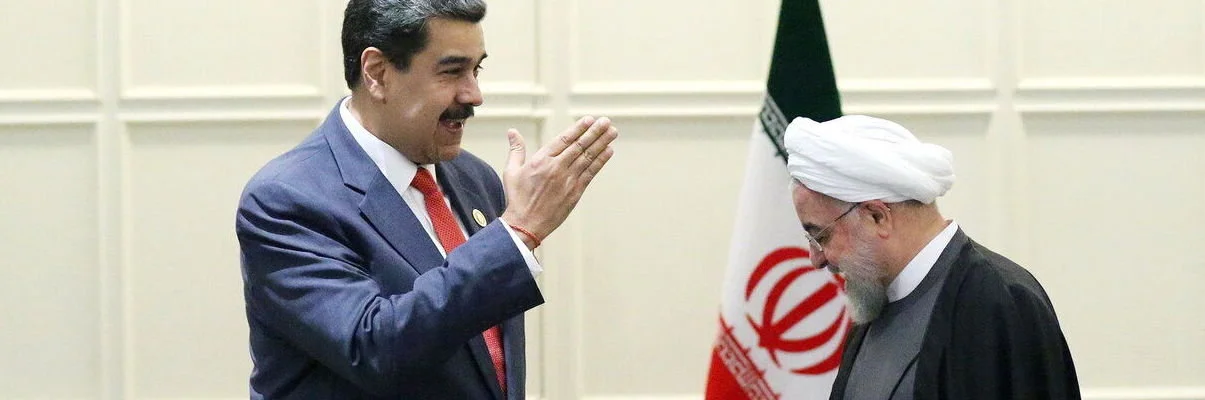
The supermarket opening was only the latest episode in the warming of the relationship between Venezuela and Iran—two countries subject to stringent U.S. economic sanctions. U.S. policymakers were quick to denounce the event, with acting Assistant Secretary of State Michael Kozak describing the store as an example of “an alliance of pariah states.” Over the past five months, Iran has sent gasoline tankers, parts, and experts to fix an ailing refinery, and a ship full of food to help the crisis-ridden South American nation.
Foreign-policy experts often classify Venezuela and Iran similarly—as pariah countries under pressure from U.S. secondary sanctions, which deter other countries from trading with them for fear of being punished by Washington.
Sanctions on Venezuela and Iran have been effective in cutting export revenues, contributing to one of the largest economic contractions in recorded Latin American history, and to a loss of more than two-thirds of the Iranian rial’s value and high fiscal deficits in Iran—but it is also driving the two countries into each other’s arms.
Iran is not doing as badly as Venezuela, but its deep recession and accelerating inflation have fed concerns that Iran is on the verge of a Venezuela-style economic collapse, where hyperinflation stokes unrest and the delegitimization of the government.
Yet the simple fact that Iran, which has faced a broad campaign of sanctions for more than a decade, has recently come to aid of Venezuela, which has been under concerted sanctions pressure for only a few years, suggests a remarkable degree of economic resilience. When comparing the two economies, the most salient question is not whether Iran will become like Venezuela, but rather whether Venezuela will become more like Iran.
Since the international community first levied broad economic sanctions against Iran in the mid-2000s, Iranian policymakers, particularly those with a conservative outlook, have repeatedly asserted that the country would respond by adopting a “resistance economy” which would aim to reduce dependency on imports and Western investment. These statements gave rise to the belief that Iran would embrace economic isolation as well. But as Parvin Alizadeh and Hassan Hakimian argued in 2013, characterizations of Iran’s “attitude and posture towards the global economy as wholly distrustful, apprehensive, or critical would be a simplistic stance.” While it may be anti-imperialist, it isn’t isolated.
In the year leading up to March 2020, Iran generated $41.3 billion of export revenue from nonoil goods. Around half of this total was from manufactured goods. In the same period, Iran’s oil exports totaled just $9 billion, marking a historic moment in its modern economic history where the country’s industrial sector, which employs around one-third of the labor force, earned double the export revenue generated by the country’s oil sector.
Remarkably, Iran managed to grow nonoil exports during a period in which it was subject to U.S. secondary sanctions for all but two years. One of the major consequences of sanctions pressure, the steep devaluation of the rial, actually served to make Iranian exports more competitive abroad.
The development of the Iranian private sector in the first decade of the millennium—encompassing improvements in the quality and efficiency of manufacturing as well as the capture of local market share—led to a larger number of manufacturing firms eyeing export potential. From March 2019 to March 2020, China was the top destination for nonoil exports, with Iraq, the United Arab Emirates, Turkey, and Afghanistan rounding out the top five destinations.
Iran still faces significant economic challenges because of U.S. President Donald Trump’s “maximum pressure” campaign. The knock-on effects of expensive and unreliable imports on Iran’s manufacturing sector not only short-circuit the push for nonoil exports, but also act as a driver for inflation. This vulnerability can be seen in the recent depreciation of the rial, where pandemic-related disruptions to trade pushed the rial lower.
But Iranian policymakers are already indicating that their response will be to double down on what Alizadeh and Hakimian have described as a long-standing feature of Iranian economic policy under pressure: the “search [for] beneficial opportunities for engagement with the international economy.” Iran’s recent outreach to Venezuela, with the new spectacle of Iranian exports for sale on supermarket shelves in Caracas, is the latest example of this opportunistic approach to international engagement.
Venezuela’s economy has been hit hard by U.S. financial and economic sanctions imposed over the past several years—a blow that followed the damage done by the administrations of former President Hugo Chávez and President Nicolás Maduro, which both mismanaged one of the largest resource booms experienced by any country in the region.
Yet, sanctions on Venezuela have been ineffective in generating the regime change U.S. officials want. Twenty months after the decision by the United States and a large number of European and Latin American nations to recognize Juan Guaidó as interim president of Venezuela, Maduro is, if anything, even more deeply entrenched in power.
Calling on Venezuelans to think of sanctions as the necessary pain that must be undergone to get rid of the Maduro regime is a message that plays a lot better in Florida than it does in Caracas. A recent unpublished survey by Venezuelan pollster Datanálisis found that 65.2 percent of Venezuelans are against oil sanctions. That may be one of the reasons why over the past 18 months opposition leader Guaidó’s approval rating has fallen from 61 to 28 percent, according to the same survey. Meanwhile, the dearth in foreign exchange revenue has forced the Maduro government to correct course in some areas.
For example, in September 2018, one year after the United States imposed financial sanctions and after a drop of around 800,000 barrels per day in oil production, the country overhauled its foreign exchange system, allowing the currency to become fully convertible for the first time in 15 years.
At first, these currency reforms were met with skepticism; it wasn’t the first time that Maduro had tinkered with exchange rate flexibility. Yet over time it became clear that the new system implied a stunning reversal in one of the key policy levers used by the Venezuelan regime. One of the standard measures of economic distortions in highly regulated economies is the black market premium, which is defined as the difference between the price at which dollars are sold on the black market and their legal price.
In Venezuela, this premium captures the size of the profits that would accrue to persons sufficiently well connected to gain access to scarce dollars sold by the government at the lower official exchange rate. The measure, which had reached a surreal 350,000 percent average in the 12 months before the reforms, averaged just 4 percent last month according to calculations based on foreign exchange and central bank data, and it is not unusual these days for it to be negative.
Just as with the partial liberalization in Iran, the end of the system of exchange controls in Venezuela had major macroeconomic implications. First, it implied the end of substantial rents that accrued to those who were able to gain access to preferential dollars. It also ended a huge implicit tax on foreign companies, including joint venture partners in the oil sector, who had been previously been forced to sell dollars at the overvalued official rate. Additionally, it put an end to the government’s attempts to enforce strict price controls on retailers, who previously were required to value their imported inputs at the official rate.
The rigid system of government-set prices in almost all sectors which had been in place since 2011 was replaced in 2018 by a system of “accorded prices” set in bilateral negotiations with the private sector. According to the liberal Venezuelan think tank Cedice, the government carried out only about 1,000 government audits of privately owned stores in the first seven months of 2019, in contrast to an average of 7,700 per year between 2017 and 2018. By 2020, accorded prices were denominated in foreign currency and were largely in line with private-sector requests.
The Maduro government in fact went further by not only tolerating but outright embracing the use of U.S. dollars for domestic transactions. When opposition candidate Henri Falcón promised to dollarize the Venezuelan economy if he won the May 2018 presidential election, Maduro reacted by accusing his adversary of wanting “to sell Venezuela out to imperialism.” But by November 2019, Maduro had completely changed tack, saying that he saw “nothing wrong with it.”
In an echo of Iran’s November 2019 move to reduce long-standing fuel subsidies, Maduro put an end to the decades-old practice of selling gasoline at a near-zero price. In a new scheme unveiled in May, the government will now ration access to subsidized gasoline yet allow buyers to purchase as much gasoline as they want at international prices. The retail sale of nonsubsidized gasoline will be carried out by privately owned stations. Notably, Maduro explained that the need to sell gasoline at market prices had to do with the fact that the country had to pay in cash for the gasoline it was purchasing from Iran.
It will be long before Venezuela can think of private-sector investment as leading a role in the economy’s recovery. But there is another way in which Venezuela has adjusted to the collapse of its oil industry which also makes it much more resilient. Over the past five years, more than 5 million Venezuelans—or around one-sixth of the population—are estimated to have left the country. Remittances have now become one of the main sources of foreign currency. Despite the COVID-19 pandemic, income from remittances has continued to flow into the country, allowing Venezuela to forgo further import substitution. Imports actually rose 3 percent year-on-year in the first four months of the year based on data from 31 trading partners, despite a complete collapse in oil exports.
Venezuela’s economic collapse has many causes, and it is hard to disentangle how much of it is caused by mismanagement and how much by sanctions. But what is clear is that both the government and the economy more generally have developed their own coping mechanisms to deal with a much more restrictive external environment—evidence that steps toward economic development can take place in periods of severe economic contraction. For Venezuelan policymakers, Iran’s push to grow nonoil export revenue, along with its increased reliance on the private sector, is a model to emulate.
Esfandyar Batmanghelidj is the founder of Bourse & Bazaar.
Francisco Rodríguez is a visiting fellow at the University of Notre Dame’s Kellogg Institute for International Studies and a former head of the Venezuelan Congressional Budget Office.
Photo: IRNA

Executives Describe Bottlenecks, Red Tape in Iran's Pharmaceutical Sector
In these interviews, two Iranian pharmaceutical executives detail an acute need for some medicines and shed light on some of the regulatory, operational, and integrity risks that foreign pharmaceutical companies face on the ground.
Iran has made strides in the development of its domestic pharmaceutical sector. When measuring by dosage, just 3 percent of pharmaceutical products consumed last year were imported. But when looking to sales value, imports accounted for USD 1.6 billion of the USD 3.6 billion in total sales last year. Many of the pharmaceuticals that Iran imports are expensive therapies, having been produced using advanced technology that Iran currently does not possess.
Given the importance of many of these imported medications are for the treatment of life-threatening diseases, Iran’s Ministry of Health and Medical Education (MoHME) regularly publishes a list of pharmaceuticals that the country needs and is allowed for import. The list for August included pharmaceuticals needed to treat a range of life-threatening diseases, including Lymphoma, Morquio syndrome, Crohn’s disease, and prostate cancer.
US sanctions have made the import of these pharmaceuticals and the raw materials needed to domestically manufacture more basic pharmaceuticals increasingly challenging. While US sanctions ostensibly do not target the humanitarian sector, international financial institutions remain wary of processing humanitarian transactions with Iran due to fear of falling foul to US sanctions, contributing to medicine shortages.
I interviewed two individuals working in Iran’s pharmaceutical sector in late August to discuss medicine shortages and some of the challenges that foreign and local companies operating have faced since the reimposition of US sanctions. Both interviewees, while highlighting an acute need for some medicines, shed light on some of the regulatory, operational and integrity risks that foreign pharmaceutical companies face on the ground.
Ara (A) owns a pharmacy and is a business development specialist for a company that manufactures pharmaceutical products. Fariba (F) works in pharmaceutics in the manufacturing and production of drugs. Their names have been changed to protect their identities.
Has there been an increase in medicine shortages in recent years?
F: Before, it was very easy to import some medicines like Paladix or Aspirin, but now their import is very limited. Branded pharmaceuticals are limited in availability. A lot of the products that are available in pharmacies are from prior to the reimposition of sanctions.
Do you have an example of a pharmaceutical product that witnessed a shortage in the market in recent years?
F: We had massive problems importing insulin pens, which used to be imported through a foreign pharmaceutical company because they cannot be manufactured in Iran. I believe we are still having problems importing them. When you go to pharmacies nowadays it’s very difficult to find insulin pens. We were forced to tell people who had diabetes and needed the pens to go back to their old ways of injecting insulin so that they don’t use insulin pens anymore. Now, Iran is moving towards the direction of manufacturing insulin domestically.
Are shortages of raw materials needed to produce pharmaceutical products contributing to medical shortages?
A: It’s even become more challenging for domestic companies to manufacture pharmaceuticals for which there is a shortage of in the market because they are having difficulty obtaining the raw materials needed to manufacture finished pharmaceutical products. Foreign companies have been less willing to send us raw materials. India and China are some of the big suppliers, but even importing raw materials form China has become increasingly difficult in the past year. Indian companies are better, but if we want to import raw materials from Europe or elsewhere, it’s very difficult. So even if companies have active licenses to manufacture a product, they are unable to because they don’t have the raw materials needed, causing medicine shortages. However, despite these shortages due to the inability to import raw materials, the IFDA [the Food and Drug Administration of Iran] sometimes won’t allow the finished product to be imported, citing companies that have an active license to manufacture the product in Iran. Part of the reason the IFDA does this is that it wants to spur domestic production—including for raw materials—in the pharmaceutical sector.
F: A huge problem is the import of the raw materials that we need. A lot of raw materials are made by our own chemists, but sometimes we don’t have the products we need to manufacture the finished pharmaceutical product (i.e tablets). For example, for my own work, I order some of my products from two foreign pharmaceutical companies, but it’s become harder for us to import it from them. The shipping times have become longer and there’s also the issues of sanctions and COVID-19. In another example, I wanted to work on Posaconazole, an anti-fungal medication for which the needed raw material is expensive. Posaconazole is needed for people who are in the ICU because they have a fungal infection that isn’t responding to routine medication. We are looking for a company that will be willing to ship it to us, even in small quantities, but we can’t find any willing company. Posaconazole is not being manufactured in Iran, and with the countries that do produce it, there are problems with the shipping and exchange rate. Before the sanctions, we were going to order some products from Spain, Italy, and Holland, but when the sanctions were re-imposed, all of these got cancelled.
Has it become more challenging to import drugs from foreign manufacturers in the past two years?
A: Yes. Foreign companies need to look at the list of pharmaceuticals published by the MoHME that Iran needs and is allowing to be imported. It has become very hard for pharmaceutical companies operating in Iran to import drugs that are manufactured in the country and the chances of importing them is very low. For the drugs that the country needs, like drugs that they cannot locally manufacture because they use advanced technology, IFDA will usually issue companies a conditional license to import the product. For example, the IFDA will issue a company a conditional license in which it will allow the import of a pharmaceutical product for a short period of time on the condition that next year the company will manufacture the product domestically. In some instances, when the renewal time comes for an active license to import a pharmaceutical product, if it is now being manufactured in Iran, the ministry will not renew the license.
F: The MoHME’s budget is now going more towards hospitals and ensuring that they have what they need to combat COVID-19, so the import of some drugs has reduced, especially the ones that can be manufactured in Iran generically.
Has it become harder for foreign companies to get the necessary license and permits for their operations and has it become easier for domestic companies in recent years?
F: No, you can’t say that exactly. It’s true that we are trying to locally manufacture some drugs, but for some drugs while we have the ability to manufacture the medicine, we currently don’t have the technology needed for the device needed to deliver the drug. For example, for insulin pens, the problem isn’t the medicine, it’s the technology of the pen. Sometimes, it’s not that that it’s too hard to locally manufacture a drug that’s the issue, it’s that it’s too expensive to produce, so it’s not worth it for the manufacturers to produce. However, when sanctions were re-imposed, local manufacturers were forced to try and make some drugs that they otherwise wouldn’t pursue, because there is a need.
What are some things that Iran has been doing to strengthen domestic production in the pharmaceutical sector?
A: If a company now wants to import a pharmaceutical product, the MoHME will sometimes, for example, give the company a license to import only 5 percent of the drug’s market share. In other words, they won’t let one company take control of the whole market for a drug. Before, it was more common that when domestic companies were manufacturing a drug that some companies could import the drug alongside it. But now, the ministry has made it much more difficult to do this. Because of this, the underground market has also become stronger.
F: One way that the government has been trying to drive domestic production of pharmaceuticals that we currently cannot manufacture is through a program called markaze roshd [Growth Center]. If university students have an idea to manufacture a pharmaceutical product, some public universities will provide them funding for up to two years to create it. The University of Tehran and Shahid Beheshti University currently have this program. If the students are not successful in creating the product, it is okay, but if they are successful, they will have to give the university a portion of their profits.
Has the underground market for pharmaceuticals become stronger in the past two years?
A: On the one hand, it’s become harder to import products, but on the other hand, the underground market has thrived in the past few years. Many doctors continue to only approve branded products, so when they prescribe patients pharmaceuticals, they’ll advise their patients to definitely opt for the branded version. Since branded products have become less available in pharmacies, the patient goes towards the underground market to find the product, which could pose a reputational risk to those brands.
How do pharmaceuticals enter the underground market?
A: A lot of kolbars [Kurdish porters who smuggle goods between the Kurdish areas of Iran, Iraq, Syria and Turkey] bring products from Kurdistan in neighboring Iraq. A lot of the products in the underground market come from Turkey, since the price for them is low there. Some travelers from other countries bring products to sell. There are many ways.
Photo: IRNA
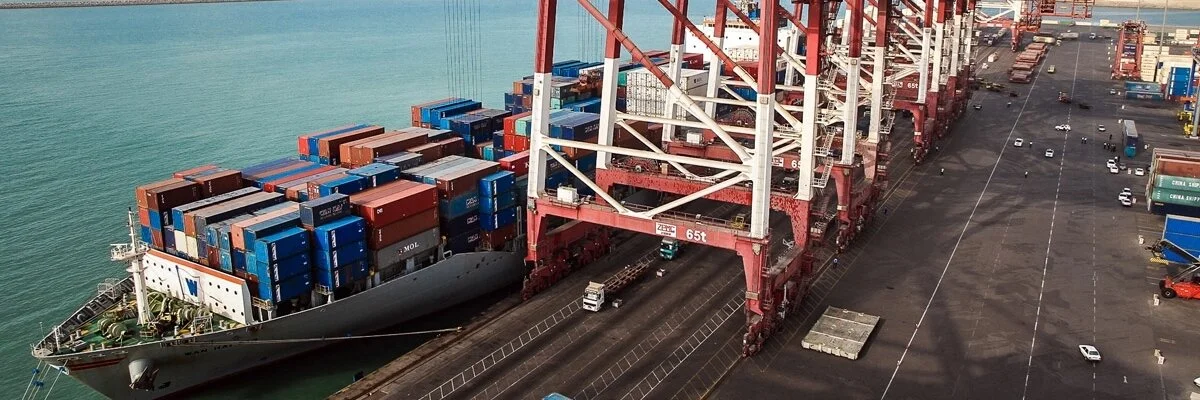
After UN Showdown, INSTEX Can Help Sustain Iran Nuclear Deal
INSTEX alone cannot save the JCPOA, the future of which essentially depends on US-Iranian relations. INSTEX can nevertheless help maintain the nuclear agreement until, or even after, diplomatic solutions are found.
In return for limits to Iran’s nuclear activities under the 2015 agreement, or the Joint Comprehensive Plan of Action (JCPOA), the other side—the United States, the EU/E3 (France, Germany and the UK), China and Russia—were supposed to lift sanctions on the country. The US opted out of this compromise in May 2018 by withdrawing from the JCPOA. By deterring most private sector actors from Iran-related activities, US secondary sanctions have also prevented other JCPOA parties from living up to their end of the deal. In addition to a deep socio-economic crisis within Iran, US sanctions have undermined Iranian people’s access to basic humanitarian goods--and pushed the country to reduce its nuclear commitments. The EU and E3 efforts to protect the JCPOA under these circumstances have offered a grim lesson about the limits of European autonomy in a dollar-dominated world economy.
When the Trump administration withdrew from the JCPOA, the EU stressed its commitment to ensuring continued sanctions lifting and to upholding the agreement. This determination was also expressed in practical measures. In summer 2018 the EU included the upcoming US sanctions on Iran in the so-called Blocking Regulation, thus banning EU companies from complying with them. In September 2018 the EU and the E3 announced that they would develop a special trade instrument to facilitate European-Iranian trade, including in oil, which was to be targeted by US secondary sanctions.
However, the Trump administration’s obliviousness to the Blocking Regulation soon exposed the absence of an effective enforcement mechanism to enforce it, and in practice US law took priority over EU law in the private sector’s risk assessments. Apparently recognizing their lack of political and economic leverage over US policy, by January 2019 the E3 had reduced the mission of the trade instrument—then named Instrument in Support of Trade Exchanges (INSTEX)— to trade in humanitarian goods.
While its limited focus fell short of previous expectations that the EU could counter or even significantly minimize the negative effects of US sanctions, INSTEX addresses a critical problem created by them. Humanitarian trade, which is in principle exempt from sanctions, has also been hit by the banking sector’s fear of US penalties, leading to a medicine shortage in Iran. In addition to being urgent, addressing this particular area of sanction over-compliance is also practical, as humanitarian trade runs a lower risk of being targeted by US sanctions than other trade areas.
INSTEX seeks to enable the exchange of humanitarian goods or services between Europe and Iran without the transfer of currency, thus minimizing the risk of US penalties. European exporters are to be compensated with funds located in Europe, based on the value commensurate with the value of imports from Iran. INSTEX’ Iranian counterpart, the Special Trade and Finance Instrument (STFI), is similarly tasked to coordinate payments within Iran.
INSTEX can reassure banks and companies through its joint ownership by the E3 and four other European states—Belgium, Denmark, the Netherlands and Norway, as well as Finland and Sweden, which are expected to join soon. In addition to providing a high level of trust in the instrument’s due diligence procedures, governmental ownership raises the threshold for the USA to impose sanctions on INSTEX.
Having processed only one pilot transaction thus far, INSTEX still needs to overcome major obstacles to function as intended. One key challenge is that the value of European exports to Iran exceeds the value of Iranian exports to Europe. Potential solutions to the problem include paying European exporters using Iran’s revenues currently frozen in foreign banks, or offering Iran a loan to buy humanitarian goods. However, the US is seeking to block these options.
The chances of striking a functioning trade balance could also be increased through the expansion of INSTEX to non-European companies, and extension of the INSTEX mandate to non-humanitarian trade that are not targeted by the USA but are impeded by fear of secondary sanctions. While INSTEX is unlikely to deliberately go against US sanctions, the E3 might decide to take further steps to protect is economic sovereignty if the instrument is targeted by the USA.
Currently it might seem that INSTEX is being taken over by political events, in particular the 2020 US presidential elections. Democratic Party victory in the elections could open the door for the US re-entry into the JCPOA, which would appear to make INSTEX less relevant. However, restoring the JCPOA or reaching any new agreements with Iran is dependent on sanctions lifting. This is likely to be difficult given the private sector’s disillusionment with the Obama administration’s previous assurances about the safety of engaging with Iran. INSTEX could help address this problem by providing additional guarantees to risk-averse banks and companies fearing the next U-turn in US policy towards Iran.
Alternatively, the possibility of Trump’s re-election as US president—or a snapback of UN Security Council sanctions on Iran—could lead to the collapse of the JCPOA. While this can be expected to reduce European commitment to INSTEX, its humanitarian mission should be pursued as a matter of ethical necessity, even without the JCPOA.
Clearly, INSTEX alone cannot save the JCPOA, the future of which essentially depends on US-Iranian relations. INSTEX can nevertheless help maintain the nuclear agreement until, or even after, diplomatic solutions are found. In addition to demonstrating solidarity on the JCPOA and commitment to basic humanitarian principles, INSTEX can also been seen as a test case of a more independent European foreign policy.
Photo: IRNA
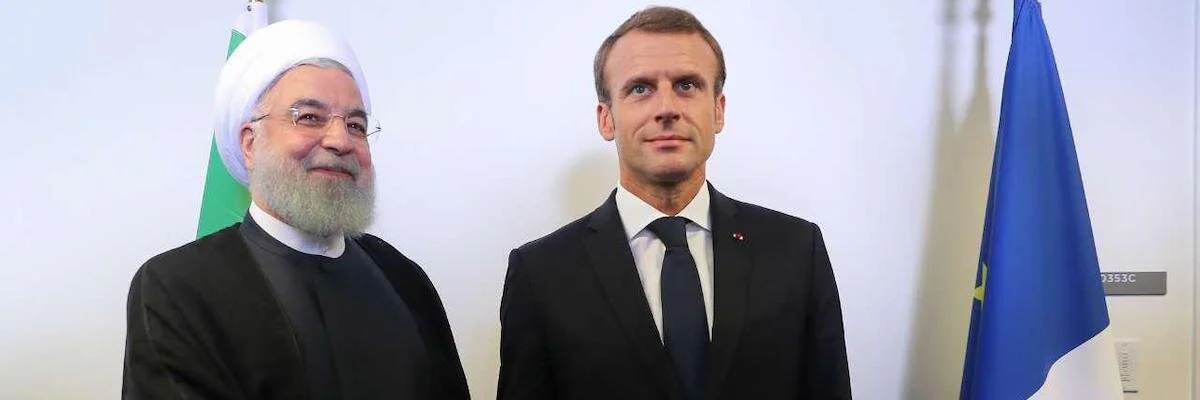
Europe Can Preserve the Iran Nuclear Deal Until November
After a humiliating defeat at the U.N. Security Council, Washington will seek snapback sanctions to sabotage what’s left of the nuclear deal. Britain, France, and Germany can still keep it alive until after the U.S. election.
By Ellie Geranmayeh and Elisa Catalano Ewers
The United States just lost the showdown at the United Nations Security Council over extending the terms of the arms embargo against Iran. The U.S. government was left embarrassingly isolated, winning just one other vote for its proposed resolution (from the Dominican Republic), while Russia and China voted against and 11 other nations abstained.
But the Trump administration is not deterred: In response to the vote, President Donald Trump threatened that “we’ll be doing a snapback”—a reference to reimposing sanctions suspended under the 2015 nuclear deal from which the United States withdrew in 2018.
The dance around the arms embargo has always been a prelude to the bigger goal: burning down the remaining bridges that could lead back to the 2015 deal.
The Trump administration now seeks to snap back international sanctions using a measure built into the very nuclear agreement the Trump White House withdrew from two years ago. This latest gambit by the Trump administration is unsurprisingly contested by other world powers.
On the one hand, Russia and China are making a technical, legal argument against the U.S. move, namely that the United States forfeited its right to impose snapback sanctions once it exited the nuclear deal. This is based on Security Council Resolution 2231 that enshrined the nuclear agreement, which clearly outlines that only a participant state to the nuclear deal can resort to snapback. This is a legal position that even former U.S. National Security Advisor John Bolton—an opponent of the nuclear deal and under whose watch Trump left the agreement—has recently endorsed.
In the end, however, this is more a political fight than a legal one. The political case—which seems to be most favored by European countries—is that the United States lacks the legitimacy to resort to snapback since it is primarily motivated by a desire to sabotage the multilateral agreement after spending the last two years undermining its foundations.
The main actor that will decide the fate of the nuclear deal after snapback sanctions is Iran itself. Iran has already acted in response to the U.S. maximum pressure campaign, from increasing enrichment levels and exceeding other caps placed on its nuclear program, to attacking U.S. forces based in Iraq and threatening to exit the Nuclear Nonproliferation Treaty.
But the calculations of decision-makers in Tehran will be influenced by the political and practical realities that follow snapback sanctions. And here, the response from the remaining parties to the nuclear deal—France, the United Kingdom, Germany, China, and Russia—will be critical. These countries remain committed to keeping the deal on life support—at least until the U.S. presidential election in November.
Seizing on its failure to extend the arms embargo, the United States now claims it can start the clock on a 30-day notification period, after which U.N. sanctions removed against Iran by the nuclear deal are reinstated. This notification will be timed deliberately to end before October—when the arms embargo is set to expire, and also when Russia takes over presidency of the U.N. Security Council: a time when Washington could face more procedural hurdles.
What is likely to follow snapback is a messy scene at the U.N. in which council members will broadly fall into three groups. First, the United States will seek to build support for its case—primarily through political and economic pressure—so that by the end of the 30-day notice period some U.N. member states agree to implement sanctions. The Trump administration will likely use the threat of U.S. secondary sanctions, as it has done successfully over the last 18 months, if governments don’t move to enforce snapback sanctions.
Even if most governments around the world disagree that the United States has any authority to impose snapback sanctions, some countries may be forced to side with Washington given the threat that the United States could turn its economic pressure against them.
The second group will be led by China and Russia, both of which have already started to push back. Not only will this group refuse to implement the U.N. sanctions that the U.S. government claims should be reimposed, but they likely will throw obstacles into the mix, such as blocking the reinstitution of appropriate U.N. committees that will oversee the implementation of such sanctions. This group may also see it as advantageous to seek a determination by the International Court of Justice on the legal question over the U.S. claim.
The third grouping will be led by the France, Britain, and Germany, who remain united in the belief that the deal should be preserved to the greatest extent possible. In a statement in June, the three governments already emphasized that they would not support unilateral snapback by the United States. But it is unclear if this will translate into active opposition—and their approach will certainly not include the obstructionist moves that Russia and China may make.
This bloc will look to stall decisions to take the steps necessary to implement the U.N. sanctions. This is a delicate undertaking, as European countries are not in the habit of blatantly ignoring the binding framework of some of the U.N.’s directives, and will want to balance their actions against the risk of eroding the security council’s credibility further. But they will also take advantage of whatever procedural avenues are in place to delay full enforcement of the sanctions, buying time to urge Iranian restraint in response to the U.S. moves.
Countries such as India, South Korea, and Japan are likely to favor this approach. These governments may even go so far as to send a significant political signal to Iran and back a joint statement by most of the security council members vowing not to recognize unilateral U.S. snapback sanctions.
As part of this approach, the 27 member states of the European Union could embark on a prolonged consultation process over how and if to implement snapback sanctions. The separate EU-level sanctions targeting Iran’s nuclear program are unlikely to be reimposed so long as Iran takes a measured approach to its nuclear activities.
Reimposing EU sanctions against Iran will entail a series of steps, the first of which requires France, Britain, and Germany, together with the EU High Representative, to make a recommendation to the EU Council. The return of EU sanctions would then require unanimity among member states, a goal which will take time to achieve in a context where Washington is largely viewed as sabotaging the nuclear deal.
In this process, the EU should seek to preserve as much space as possible to salvage the deal and avoid the reimposition of nuclear-focused sanctions against Iran—at least until the outcome of the U.S. election is clear. The U.K., in the run-up to Brexit, may well lean toward a similar position rather than tying itself too closely to an administration in Washington that may be on its way out.
Until now, the remaining parties to the nuclear deal have managed to preserve the deal’s architecture despite its hollowing out. The aim has been to stumble along until the U.S. election to see if a new opening is possible to resuscitate the agreement with a possible Biden administration in January.
While a Trump win could spell the end of the deal and further dim the prospects of diplomacy between the United States and Iran, the two sides could come to a new understanding over Iran’s nuclear program at some point during the second term that is premised on the original deal. Judging by the pace of the Trump administration’s nuclear diplomacy with North Korea, this will be a Herculean process with no certain outcome.
In Tehran, there will be some sort of immediate response to the snapback—most likely involving further expansion of its nuclear activities. However, Iran may decide to extend its strategic patience a few weeks longer until the U.S. election. A legal battle by Russia and China against snapback, combined with non-implementation of U.N. sanctions by a large number of countries and continued hints from the Biden camp that Washington would re-enter the nuclear deal could provide the Rouhani administration with enough face-saving to stall the most extreme responses available to Iran.
But with Iranian elections coming in the first half of 2021, there will be great domestic pressure from more hardline forces to take assertive action, particularly on the nuclear program, to give Iran more leverage in any future talks with Washington.
If Iran takes more extreme steps on its nuclear activities, such as a major increase in its enrichment levels or reducing access to international monitors, it will make it nearly impossible for the Britain and the EU to remain committed to the deal in the short term. There are also factors outside Iranian and U.S. control that could have an impact, such as a potential uptick in Israeli attacks against Iranian nuclear targets.
Over the course of the Trump administration, Europe and Iran have managed to avert the collapse of the nuclear deal. Having come so far, and just 11 weeks away from the U.S. election, they will need to work hard to prevent the total collapse of the agreement. Even if Biden—who has vowed to re-enter the deal if Iran returns to compliance—is elected, the remaining parties will need to continue the hard slog to preserve it until January.
Those opposed to the nuclear deal with Iran may see the last two months of a Trump administration as a window to pursue a scorched-earth policy toward Iran’s nuclear program. That leaves Britain and Europe with the job of holding what remains of the deal together, for as long as they can.
Ellie Geranmayeh is a senior policy fellow at the European Council on Foreign Relations. Follow her at @EllieGeranmayeh.
Elisa Catalano Ewers is an adjunct senior fellow at the Center for a New American Security and a former U.S. State Department and National Security Council official.
Photo: IRNA

Despite Public Outcry, Consensus Builds For China-Iran Deal
Iranian officials hope that the economic uplift of an implemented partnership agreement with China will win the hearts and minds of a wary public.
The relationship between Iran and China has improved considerably over the past two decades, but the two countries are far from enjoying the mutual understanding that is necessary for deeper strategic ties. Iranian public perceptions of China are increasingly, negative particularly in the aftermath of the coronavirus crisis.
In April, while the coronavirus was raging in Iran, health ministry spokesperson Kianoush Jahanpour called China’s official death toll a “bitter joke”. He then traded barbs with Chang Hua, China’s ambassador to Tehran, on Twitter. The Chinese envoy urged the Iranian official to “respect the great efforts of Chinese people.” This heated exchange drew the attention of many in Iran, while Jahanpour’s “unconsidered” remarks enraged conservatives.
Jahanpour later backtracked and was eventually replaced, but Iranian public opinion had turned against China, and social media users reprimanded the Rouhani administration for not standing behind their official. Things got so tense that the Chinese ambassador blocked a number of Iranian users on Twitter including a famous Iranian singer. Reformists also jumped into the fray, slamming Rouhani's government for its “unbalanced” ties with China.
It speaks to the complicated politics around Iran-China relations that the Rouhani administration has been accused of both being too dismissive and too dependent on China. Conservative politicians in Iran, who are eager for closer ties with China, have laid blame at the feet of the Rouhani administration for the dismal state of bilateral relations.
Ahmad Tavakoli, an influential conservative, has argued that Rouhani failed to welcome Xi Jinping warmly enough during a state visit to Tehran in 2016, sending his foreign minister to receive him on the tarmac. Hamid-Reza Taraghi, a political activist, recently claimed that “Some of [Iran’s] government officials have the wrong behavior towards our Chinese partners, and even the trip of Chinese President [ended up being useless] while it could have been the beginning of massive developments.”
Majid Reza Hariri, the Chairman of Iran-China Chamber of Commerce, told the hardline newspaper Kayhan, that following the implementation of the nuclear deal officials, in the Rouhani administration “talked to any Chinese official coming to Iran [in a way], as if [they] were his servants. He was [so] rest assured that Renault, Siemens and Total have formed a line [to invest in Iran] that he formally and publicly told Chinese that they are at the end of the line.”
While Xi Jinping signed a Comprehensive Strategic Partnership (CSP) agreement with Iran during his state visit, little was implemented in the subsequent four years. Mahdi Safari, Iran’s former envoy to Beijing, stated recently that “The Chinese tell us that ‘you see us as spare parts, and when you get into trouble with Westerners and your relationship with them goes sour, you come to us.’” Adding that “We need to build trust to correct this perception.”
According to Gholamreza Mesbahi-Moghaddam, a former conservative MP, as the Rouhani administration exhibited “no determination” to pursue the CSP, Ayatollah Khamenei intervened, sending the then parliament speaker Ali Larijani on an important mission to Beijing last year in order to revive the languishing agreement. now that the Rouhani administration is belatedly pursuing a new 25-year framework for the CSP agreement with China, that Khamenei’s intervention is bearing fruit.
But the public sentiment towards China threatens to prevent the deal from progressing. As a leaked 18-page document detailing negotiating points for the new CSP circulated on social media and critics labelled the terms as another Turkmenchay—the 1828 treaty between Persia and Imperial Russia under which the Persian government ceded control of territory in the South Caucasus. Rumors circulated on social media that the deal would see Iran host Chinese military forces and to cede the island of Kish to the Chinese, prompting denials from Iranian authorities.
Even conservative political figures, perhaps surprised by the public reaction to news of the deal, sought to turn the criticism towards the Rouhani administration. The conservative camp had itself been subject to similar criticism when President Mahmoud Ahmadinejad signed a deal with Chinese officials in 2008 in an effort to safeguard oil exports in the face of international sanctions. The deal, which restricted Iran’s access to its own oil revenues, was also compared to Turkmenchay.
Hojjatollah Abdolmaleki, a prominent conservative political figure, cast doubt on the Rouhani administration’s ability to garner public support for the deal. Conservative figures even sought to amplify the rumors of embarrassing concessions. Mahmoud Ahmadi Bieghash, a newly elected radical MP, told claimed in an interview on state TV that the rumors about Iran ceding Kish to China were correct, but that “the [reaction] of people and parliament” forced a change in plans.
According to Fereidoun Majlesi, a former Iranian diplomat, the hardline politicians have found an issue around which to engage the wider public. “The radicals know that a large number of people are disappointed. Therefore, to attract their votes in the coming presidential election in 2021, they are bringing up such rumors to discredit their rivals, while portraying themselves as patriots,” Majlesi explained in an interview.
Despite their electoral ambitions, the strategic logic of an upgraded partnership deal between Iran and China is undeniable for Iranian authorities across the political spectrum. The conservative Farhikhtegan newspaper heralded the deal as “[the best opportunity] through which Iran can target the core of the maximum pressure policy,” referring to the sanctions reimposed by the Trump administration in November 2018.
Prominent economist Saeed Laylaz recently stated the agreement with China “will return balance to Iran’s foreign relation, while averting the exceeding demands of US and is [also] a response to Europe’s inaction,” adding that “Those who [care] for Iran should welcome this agreement. Because it both reduces the pressure on the country and increases our bargaining power against the West.”
Laylaz explained that Iran has no option but to pursue a more functional relationship with China. “If we do not use this opportunity with China, the West will never give us a chance. [Our] experience has shown that the West is nothing but the United States until further notice. Counting on Germany or the European Union is similar to building a house on the sands by the sea,” he said.
This view was echoed by Diako Hosseini, a senior director at the Centre for Strategic Studies, which is affiliated with the presidency. “Prior to US withdrawal from the JCPOA, strategic cooperation of Iran and China was just a choice. After US withdrawal, it was turned into a 'preference,” he tweeted. Hosseini added that the Trump administration’s maximum pressure sanctions made such a deal a “priority,” and that further economic pressure would make the deal as “necessity,” describing any such agreement as the “price the [U.S.] should pay.”
Clearly, there is a growing consensus that an agreement with China would bolster Iran’s hand in future negotiations with the U.S. by increasing the means by which to survive the pressure of U.S. sanctions. However, some in Tehran are worried about Beijing’s ability to take advantage of Tehran’s current weak economic position.
Majlesi told Bourse & Bazaar that “Iranians are naturally worried that the Chinese will follow the playbook of Russians regarding Iran. For a period of time, Russia used Iran as a winning card to solve its own problems with the U.S. However, I strongly believe that China has unique abilities and if they decide to help us, they are certainly able to do so. “
Despite these headwinds, the Rouhani administration appears newly determined conclude this agreement. Mahmoud Vaezi, chief of staff to the president, has asserted that the negotiations on the document are likely to be "concluded by the end of the [Persian] year” (before March 2021).
An informed source told Bourse & Bazaar that this agreement “will be implemented during Rouhani’s presidency for sure,” adding that the political consensus in Iran is now clear, despite the public rhetoric. “Currently, there is no problem with implementing the agreement on the side of Iran, and everything is now dependent to China.”
No matter what administration is to come next, the Iranian political system and Ayatollah Khamenei will adamantly pursue the 25-year deal in order to more fully implement the CSP first signed in 2016. The hope will be that an economic uplift from China’s renewed commitment to Iran will win the hearts and minds of a wary public.
Photo: IRNA

Iran’s Pact With China Is Bad News for the West
Tehran’s new strategic partnership with Beijing will give the Chinese a strategic foothold and strengthen Iran’s economy and regional clout.
By Alam Saleh and Zakieh Yazdanshenas
A recently leaked document suggests that China and Iran are entering a 25-year strategic partnership in trade, politics, culture, and security.
Cooperation between China and Middle Eastern countries is neither new nor recent. Yet what distinguishes this development from others is that both China and Iran have global and regional ambitions, both have confrontational relationships with the United States, and there is a security component to the agreement. The military aspect of the agreement concerns the United States, just as last year’s unprecedented Iran-China-Russia joint naval exercise in the Indian Ocean and Gulf of Oman spooked Washington.
China’s growing influence in East Asia and Africa has challenged U.S. interests, and the Middle East is the next battlefield on which Beijing can challenge U.S. hegemony—this time through Iran. This is particularly important since the agreement and its implications go beyond the economic sphere and bilateral relations: It operates at the internal, regional, and global level.
Internally, the agreement can be an economic lifeline for Iran, saving its sanctions-hit, cash-strapped economy by ensuring the sale of its oil and gas to China. In addition, Iran will be able to use its strategic ties with China as a bargaining chip in any possible future negotiations with the West by taking advantage of its ability to expand China’s footprint in the Persian Gulf.
While there are only three months left before the 2020 U.S. presidential election, closer scrutiny of the new Iran-China strategic partnership could jeopardize the possibility of a Republican victory. That’s because the China-Iran strategic partnership proves that the Trump administration’s maximum pressure strategy has been a failure; not only did it fail to restrain Iran and change its regional behavior, but it pushed Tehran into the arms of Beijing.
In the long term, Iran’s strategic proximity to China implies that Tehran is adapting the so-called “Look East” policy in order to boost its regional and military power and to defy and undermine U.S. power in the Persian Gulf region.
For China, the pact can help guarantee its energy security. The Persian Gulf supplies more than half of China’s energy needs. Thus, securing freedom of navigation through the Persian Gulf is of great importance for China. Saudi Arabia, a close U.S. ally, has now become the top supplier of crude oil to China, as Chinese imports from the kingdom in May set a new record of 2.16 million barrels per day. This dependence is at odds with China’s general policy of diversifying its energy sources and not being reliant on one supplier. (China’s other Arab oil suppliers in the Persian Gulf region have close security ties with the United States.)
China fears that as the trade war between the two countries intensifies, the United States may put pressure on those countries not to supply Beijing with the energy it needs. A comprehensive strategic partnership with Iran is both a hedge and an insurance policy; it can provide China with a guaranteed and discounted source of energy.
Chinese-Iranian ties will inevitably reshape the political landscape of the region in favor of Iran and China, further undermining U.S. influence. Indeed, the agreement allows China to play a greater role in one of the most important regions in the world. The strategic landscape has shifted since the 2003 U.S. invasion of Iraq. In the new regional order, transnational identities based on religious and sectarian divisions spread and changed the essence of power dynamics.
These changes, as well as U.S. troop withdrawals and the unrest of the Arab Spring, provided an opportunity for middle powers like Iran to fill the gaps and to boost their regional power. Simultaneously, since Xi Jinping assumed power in 2012, the Chinese government has expressed a stronger desire to make China a world power and to play a more active role in other regions. This ambition manifested itself in introducing the Belt and Road Initiative (BRI), which highlighted the strategic importance of the Middle East.
China grasps Iran’s position and importance as a regional power in the new Middle East. Regional developments in recent years have consolidated Iran’s influence. Unlike the United States, China has adopted an apolitical development-oriented approach to the region, utilizing Iran’s regional power to expand economic relations with nearby countries and establish security in the region through what it calls developmental peace—rather than the Western notion of democratic peace. It’s an approach that authoritarian states in the Middle East tend to welcome.
U.S. President Donald Trump’s withdrawal from the nuclear deal with Iran in 2018, and the subsequent introduction of the maximum pressure policy, was the last effort by the U.S. government to halt Iran’s growing influence in the region. Although this policy has hit Iran’s economy hard, it has not been able to change the country’s ambitious regional and military policies yet. As such, the newfound strategic cooperation between China and Iran will further undermine U.S. leverage, paving the way for China to play a more active role in the Middle East.
The Chinese-Iranian strategic partnership will also impact neighboring regions, including South Asia. In 2016, India and Iran signed an agreement to invest in Iran’s strategic Chabahar Port and to construct the railway connecting the southeastern port city of Chabahar to the eastern city of Zahedan and to link India to landlocked Afghanistan and Central Asia. Iran now accuses India of delaying its investments under U.S. pressure and has dismissed India from the project.
While Iranian officials have refused to link India’s removal from Chabahar-Zahedan project to the new 25-year deal with China, it seems that India’s close ties to Washington led to this decision. Replacing India with China in such a strategic project will alter the balance of power in South Asia to the detriment of New Delhi.
China now has the chance to connect Chabahar Port to Gwadar in Pakistan, which is a critical hub in the BRI program. Regardless of what Washington thinks, the new China-Iran relationship will ultimately undermine India’s interests in the region, particularly if Pakistan gets on board. The implementation of Iran’s proposal to expand the existing China-Pakistan Economic Corridor along northern, western, and southern axes and link Gwadar Port in Pakistan to Chabahar and then to Europe and to Central Asia through Iran by a rail network is now more probable. If that plan proceeds, the golden ring consisting of China, Pakistan, Iran, Russia, and Turkey will turn into the centerpiece of BRI, linking China to Iran and onward to Central Asia, the Caspian Sea, and to the Mediterranean Sea through Iraq and Syria.
On July 16, Iranian President Hassan Rouhani announced that Jask Port would become the country’s main oil loading point. By placing a greater focus on the development of the two strategic ports of Jask and Chabahar, Iran is attempting to shift its geostrategic focus from the Persian Gulf to the Gulf of Oman. This would allow Tehran to avoid the tense Persian Gulf region, reduces the journey distance for oil tankers shipping Iranian oil, and also enables Tehran to close the Strait of Hormuz when needed.
The bilateral agreement provides China with an extraordinary opportunity to participate in the development of this port. China will be able to add Jask to its network of strategic hubs in the region. According to this plan, regional industrial parks developed by Chinese companies in some Persian Gulf countries will link up to ports where China has a strong presence. This interconnected network of industrial parks and ports can further challenge the United States’ dominant position in the region surrounding the strategically vital Strait of Hormuz.
A strategic partnership between Iran and China will also affect the great-power rivalry between the United States and China. While China remains the largest trading partner of the United States and there are still extensive bilateral relations between the two global powers, their competition has intensified in various fields to the point that many observers argue the world is entering a new cold war. Given the geopolitical and economic importance of the Middle East, the deal with Iran gives China yet another perch from which it can challenge U.S. power.
Meanwhile, in addition to ensuring its survival, Tehran is going to take advantage of ties with Beijing to consolidate its regional position. Last but not least, while the United States has been benefiting from rivalry and division in the region, Chinese-Iranian partnership could eventually reshape the region’s security landscape by promoting stability through the Chinese approach of developmental peace.
Alam Saleh is a lecturer in Iranian studies at Australian National University’s Centre for Arab and Islamic Studies. He is also a council member of the British Society for Middle Eastern Studies. Follow him at @alamsaleh1.
Zakiyeh Yazdanshenas is a research fellow at the Center for Middle East Strategic Studies. Her expertise mainly focuses on great-power rivalries in the Middle East. Follow her at @YzdZakiyeh.
Photo: IRNA
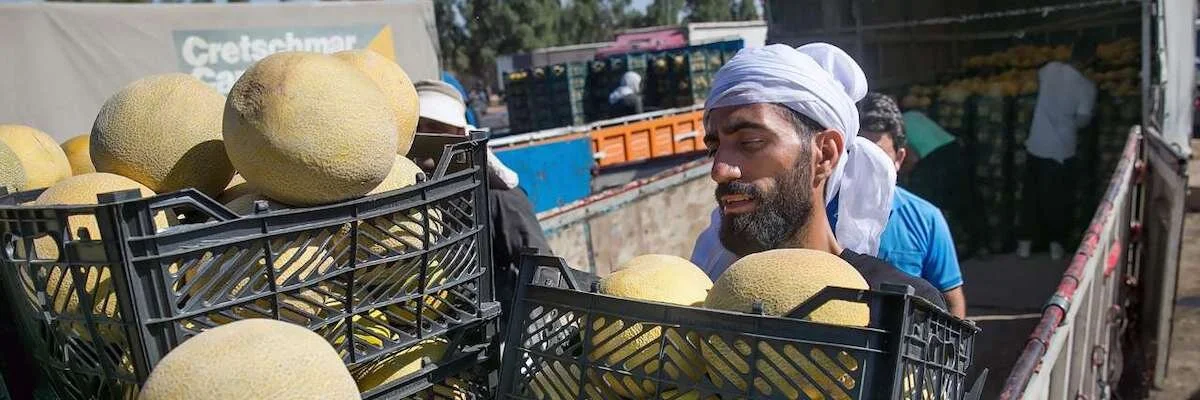
Dysfunction at the Border Jeopardizes Growth of Iran-Iraq Trade
The Rouhani administration has lofty goals to grow Iran-Iraq trade as Iran seeks to expand its non-oil exports. But dysfunction at the border and a lack of government support have frustrated many Iranian exporters.
When the United States re-imposed secondary sanctions on Iran in November 2018, the Rouhani administration belatedly decided that increasing the country’s non-oil exports, particularly to Iran’s regional neighbors, would become a central aim of economic policy.
In 2019, Hossein Modarres Khiyabani, currently the acting industry minister, stated that Iran’s neighboring countries currently import USD 1.2 trillion worth of goods each year, of which Iran accounts for USD 24 billion, equivalent to a 2 percent share. The government aims to grow regional exports to USD 48 billion by the Iranian calendar year ending in March 2022.
Among these countries, Iraq has emerged as Iran’s leading regional trade partner. Iran and Iraq share religious and cultural connections and a border nearly 1,500 kilometers long. But it is Iraq’s large consumer market that makes it ideally suited to play a role in Iran’s non-oil trade agenda. The quality of products produced in Iran is compatible with standards in the Iraqi market, which means a wider range of Iranian producers can target exports to Iraq. This also makes Iraq an arguably more important export destination than China.
While exports to China totaled USD 9.5 billion in the Iranian calendar year ending in March 2020, exports to Iraq were a close second at USD 8.9 billion. Yahya Ale-Es’haq, Chairman of the Iran-Iraq Joint Chamber of Commerce, notes that the composition of trade with China is dominated by raw materials, whereas trade with Iraq includes value-added goods that generate employment in Iran.
“Iran and Iraq set a 5-year target to increase bilateral trade to $20 billion per year in 2018. This has been hampered this year to some extent, partly due to the trade restrictions caused by the COVID-19 outbreak and partly because of Iraq’s reduced purchasing power, a consequence of depleting global oil prices,” Ale-Es’haq told Bourse & Bazaar.
In response to economic pressure at home, Ale-Es’haq explained, Iraq is trying to be more frugal and to address public demands to deal with rampant corruption.
“In reopening Mandali border crossing earlier this month, Iraqi Prime Minister Mustafa Al-Kadhimi said he aims to launch a full-throttle battle against corruption in the borders and customs offices. This is because the central government is not being given its share of customs revenues.”
Officials at the Islamic Republic of Iran Customs Administration (IRICA) describe the Iraqi prime minister’s vow to fight corruption as an internal matter.
“Our customs offices and checkpoints are disciplined and every step and procedure is documented in our electronic system. The Iraqi PM was addressing a matter of national governance as Iraq is a nation made up of different ethnic, religious, tribal and political groups. Each of these have their own regulations and practices which, of course, extend to economic activities of which all groups claim a share,” a spokesperson for IRICA stated.
But Iranian exporters feel that their own government should be doing more to support trade.
Ali Hosseini Sakha is the owner of Nasl-e-Jonoub-e-Karoun Trading Company, based in the southern province of Khuzestan. The company maintains an office in the Iraqi city of Basra. Sakha has been trading in Iraq for over 25 years and last year exported nearly USD 22 million worth of foodstuff, construction material, and minerals across the border.
Sakha also runs a research center under the auspices of the Trade Promotion Organization of Iran, an agency of the Ministry of Industry. He conducts market research and organizes trade forums to try to facilitate greater cooperation and trade on both sides of the border.
“Based on our latest research, the share of Iranian commodities in the Iraqi market amounts to no more than 3 percent. You can hardly find Iranian goods when walking through supermarket aisles in Iraq and that’s a shame,” he said.
Sakha points to a lack of coordination among government agencies. While the government provides a budget to wide range of agencies and to each Iranian province for export promotion activities, the funds are largely squandered on forums and meetings or allocated to those with “special interests.”
Moreover, Sakha explained that Iranian exporters are increasingly reliant on unreliable middlemen in the hopes of getting their products into the Iraq market without having to do the hard work of distribution themselves.
“Iranian exporters take their goods to the border for sale and usually end up making deals with middlemen because that’s how they think they can ‘get ahead in the game.’”
The unregulated middlemen then sell goods on to “the real Iraqi merchants.” Sakha noted that it is not uncommon for middlemen to disappear without having made payment for the goods they have just taken across the border.
He believes that customs officials and the joint Iran-Iraq chamber of commerce could do more to ensure exporters are engaging reliable Iraqi merchants and trading companies. “None of this takes place. The joint chamber is there and has no other business than to serve the interests of certain groups and individuals.”
Sakha’s sentiments were echoed by Hemmat Shahbaz-Beigi, owner of Arshia Gostar Trading Company in Kermanshah province’s Qasr-e-Shirin County. The company exports everything from construction materials, to home appliances, and even vegetables.
Shahbaz-Beigi did not hold back in complaining about the lack of support for Iranian exporters.
“There are rules and regulations, yet, there is no guarantee that any of them will be executed or applied to your case if you ever come across a problem,” he said.
Shahbaz-Beigi recounted the saga of a USD 200,000 order fulfilled in 2015 than went unpaid. Five years year later, he has spent USD 40,000 in pursuit of payment but “hasn’t gotten a penny back.”
Shahbaz-Beigi has met with Iran’s consulate general in Iraq but was “not to spend any more on the case and forget about my money altogether.”
He has also been unable to get help from the joint chamber of commerce. “This is just frustrating,” he lamented.
In a recent tweet, Ali Shariati, a board member of the Iran Chamber of Commerce, the nationwide body representing the interests of the country’s private sector, claimed that the Iran-Iraq Joint Chamber of Commerce had been operating without a statute for 16 months and that the chamber no longer comprises of individuals with an interest in developing bilateral trade.
The failure of the joint chamber to support bilateral trade is not unique to the experience of Iranian exporters in Iraq.
“This is how most of our joint chambers are functioning,” explain Farhas Ehteshamzad, former head of Iran Auto Importers Association and a respected figure in business circles. “If these bodies are not made to fulfill their responsibilities towards the private sector, they will not only hamper trade but the members will probably end up monopolizing trade in their areas of interest.”
When asked to comment on the matter, Hamid Hosseini, former general secretary of Iran-Iraq joint chamber and current member, described the complaints of Shariati, Ehteshamzad, and others as “their take on the issue.”
Responding to Shariati’s tweet regarding the join chamber’s statute, Hosseini noted that the statute must be renewed every year during an “assembly with two thirds of the members are present.”
“We have more than 400 members and most of them live in the provinces bordering Iraq. So it’s been hard organizing such an assembly given that we are currently experiencing a pandemic. But we’ve recently been given the permit to hold the assembly online and this will solve the problem,” he explained.
Hosseini added that the joint chamber has an arbitration center with Iraq where disputes are settled, but the problem is that trade between Iranian and Iraqi partners is usually carried out traditionally on the basis of mutual trust rather than robust contracts.
“In such cases, no contracts are signed and there are no documents proving that a commercial interaction has taken place. That’s why these merchants can’t win their cases and the joint chamber should not be made to take the blame for this.”
Despite these challenges, companies committed to export growth can persevere with the right mindset, argued Ali Dorhi, a senior executive at Dina Food Industries, which produces Iran’s beloved “Cheetoz” cheese puffs.
Dorhi believes most Iranian enterprises lack an “export-oriented mindset” and that only “30 percent” of the problems facing Iranian firms eyeing export opportunities can be attributed to bureaucracy and red-tape.
“There is often no market research and trade takes place at the very gates of the borders. Products are not customized or at least adapted a bit to suit the tastes of the destination markets,” Dorhi noted.
“In Iraq, for example, customers demand that product information be written in Arabic on boxes and containers. Many Iranian producers will not meet that request. This is why we end up having an insignificant share of less than 2 percent in Iraq’s lucrative food industry market.”
With oil exports having earned Iran just USD 8.9 billion dollars in the Iranian calendar year that ended in March 2020, the government is finally recognizing the importance of non-oil exports. But what has been neglected, particularly in the case of trade with Iraq, is the need to support exporters with better regulations, better market research, and more responsive trade bodies and chambers of commerce.
During Al-Khadimi’s recent trip to Iraq, Hassan Rouhani reiterated that Iran and Iraq intend “to expand bilateral trade ties to USD 20 billion”—a figure that reflects the effective doubling of Iranian exports to Iraq. Whether the two countries can reach that lofty goal will depend on whether Iranian authorities and exporters can address the dysfunction at the border.
Photo: IRNA
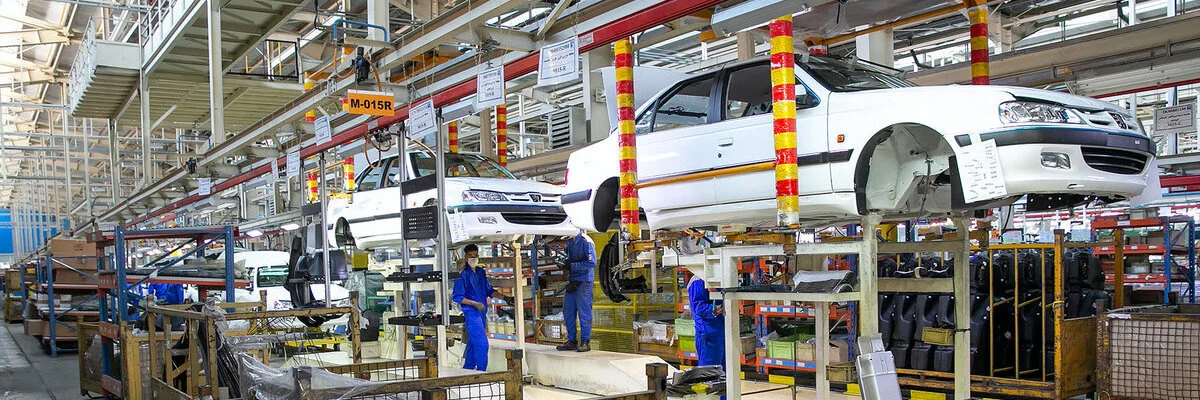
Will Foreign Investment Return to Iran’s Automotive Sector?
Falling output over the past two years has made clear the limits of the Iranian government’s ability to grow the automotive sector without foreign partnerships and new investment.
Iran produced just 770,000 automobiles in 2019, down from 1,418,550 just two years prior. The re-imposition of U.S. secondary sanctions interrupted new investment in Iran’s automotive sector, particularly by European automakers such as Renault, Peugeot, and Volkswagen.
The median age in Iran is just 32. Limited public transport options and cheap petrol make car ownership attractive and even necessary—under normal circumstances, the Iranians would purchase up to 2 million cars each year, with a total sales value of up to $20 billion.
The rising cost of manufacturing inputs and a shortfall in production has contributed to a sharp increase in the price of automobiles, particularly in the secondary market. While Iranian policymakers consider the automotive industry as a “strategic sector,” with state-owned firms Iran Khodro and SAIPA among the country’s largest employers, the hit to output over past two years has made clear the limits of the government’s ability to grow the automotive sector without foreign partnerships.
Over the last year, companies linked to Iran’s defense ministry have stepped in to support production at the Iran Khodro and SAIPA in an attempt to localize the production of more parts and shield automakers from the rising cost of imports. At a signing ceremony in December of 2019, SAIPA CEO Seyyed Javad Soleimani told reporters, “With Defense Ministry’s help, domestic substitutes for 35 key auto parts are to be produced in Iran to curb the industry’s reliance on the global supply chain.”
The cooperation between automakers and defense contractors is best understood as a stop-gap solution for the automotive industry. In the short-term the goal is to raise output. In the medium-term, the automotive sector will still require the transformative investment that only foreign automakers can provide.
Foreign automakers have long understood the potential of Iran’s large domestic market and the combination of low labor costs and local parts production. Iran’s industrial workforce is skilled and experience, particularly relative to their compensation. The monthly minimum wage is IRR 18.34 million for the current Iranian calendar year—now equivalent to less than USD 100 per month at current exchange rates. Between 2009 and 2011, two out of every 100 cars and commercial vehicles produced worldwide was manufactured in Iran.
These dynamics led numerous European, Korean, and, more recently, Chinese car and truck manufactures to establish license manufacturing agreements and even full joint ventures with Iranian automakers. Iranian auto parts makers developed the supply chain to provide the local parts content on which Iranian policymakers insisted. The manufacturing of the Renault Tondar, known as the Dacia Logan in most markets, saw Iranian spare parts manufacture obtain “Grade A” certifications from Renault. Following the new investments committed after the implementation of sanctions relief in 2016, there were growing expectations that Iran would become an exporter of European-branded automobiles to regional markets.
Notably, the new post-JCPOA investment was intended to facilitate the partial privatization of the state-owned manufacturers. Through the Industrial Development and Renovation Organization (IDRO), the Iranian state was set to become a minority shareholder in the new Renault joint venture. A similar deal was struck between Daimler and Iran Khodro Diesel for the manufacturing of Mercedes-Benz trucks in Iran.
Allowing foreign firms to be the majority shareholders of their joint ventures was an important shift in industrial policy for the “strategic” automotive sector. Such policy was also intended to address the long-running issue of inefficiency and poor productivity among the state-owned automakers. There were also a number of deals between foreign automakers and private sector firms in Iran, such as the agreement between Volkswagen and Mammut, which has produced Scania trucks in Iran since 2008. Scania’s persistence in the Iranian market has earned it a commanding market share of over 60 percent.
Clearly, prior to the re-imposition of sanctions, Iran was set to deepen its dependence on foreign investment to drive growth in the automotive sector. In the case that sanctions are once again lifted, that drive for foreign investment would no doubt resume. Iran’s automotive market will remain attractive, but foreign automakers will want to be sure that any new round of sanctions relief will be durable.
Photo: IRNA
What You Should Know About Iran's Weakening Currency
The rollercoaster ride that has taken the rial to a historic low of IRR 215,000 to the dollar does not tell us as much about the health of the Iranian economy as is widely assumed.
The Iranian rial has hit a historic low against the dollar, adding to the perception that the country is in the throes of a deepening economic crisis. But the figures that are most concerning for Iranian economic policymakers (there are many) are rarely the most dramatic or those that make the headlines. The rollercoaster ride that has taken the rial to a historic low of IRR 215,000 to the dollar does not tell us as much about the health of the Iranian economy as is widely assumed.
Reporting on Iran’s currency focuses on the azad or free market rate, which is the price of purchasing a single, physical dollar bill at an exchange bureau in Tehran. The buying and selling of eskenas, or hard currency, represents a small proportion of the overall foreign exchange market in Iran, likely accounting for less than 20 percent of all foreign exchange transactions.
There is also a fixed subsidized rate of IRR 42,000 for each dollar. This rate is made available to importers of critical goods such as food and pharmaceutical products, but the Iranian government has been seeking to shrink the number of goods eligible to be imported at this rate.
The most important rate, which is rarely cited in reporting on Iran’s currency woes, is the rate available in the NIMA exchange, a centralized electronic system established by the Central Bank of Iran in 2018 to streamline the purchase and sale of foreign exchange among Iranian companies. The NIMA rate has hit just over IRR 168,000 in the past week, also a historic low.
The NIMA rate has also risen in recent months, reflecting the reported shortages of foreign exchange available in the market due to trade disruptions brought-on by COVID-19 as well as the underlying difficulties facing Iranian banks, and particularly the Central Bank of Iran, in accessing foreign exchange held in accounts at foreign financial institutions.
After approaching convergence in the summer of 2019, the spread between the free market and NIMA rates has widened considerably, meaning that the devaluation of the rial in the free market is not the best indicator of the strength of the rial, nor an accurate reflection of concerns around inflation.
Since the NIMA exchange began operating in earnest in the last quarter of 2019, inflation, as measured by the consumer price index, has tracked most closely the NIMA rate and not the free market rate. This is to be expected. The NIMA rate reflects the price at which most foreign currency is bought and sold in Iran and crucially it reflects the price at which Iranian companies purchase foreign exchange in order to pay for imported goods.
On one hand, the devaluation of the rial over the last decade has benefited Iranian exporters, making their goods more attractive to foreign buyers. The more liberal approach to foreign exchange policy has helped Iran grow its non-oil exports—a lifeline for the economy as oil exports are constrained by sanctions.
But on the other hand, the more liberal approach to the exchange rate has had an impact on the price of imported goods, whether those are finished goods or raw materials and parts used in the manufacturing of finished goods in Iran. This relationship is most clear when comparing the changes in the NIMA rate with the price index for consumer durables, a category of goods more likely to have imported parts content. When the NIMA rate increases, so does the price of durable goods, contributing to the total cost of the consumer basket.
Often, reports about the plunging value of the rial suggest that the appreciation of the dollar in the free market reflects the erosion of Iranian purchasing power. But the relationship between the rial’s free market rate and inflation is limited. Unlike in other economies that have experienced currency crises, such as Lebanon, Iran’s economy is not dollarized. When ordinary Iranians exchange rials for physical dollars, they are acquiring an asset that they will most likely exchange back into rials at some future point, preserving the value of their savings in the process. Iranians purchase dollars for the same reason they purchase gold, real estate, and even used cars—they are seeking a hedge against inflation. Hard currency dollar appreciation does not depress the value of the rial as a medium of exchange.
However, the free market rate could be a signal for price makers about expectations of future inflation, and therefore may influence producers and retailers to increase prices. Moreover, the free market rate may also have an impact on the price of real estate, which is also used as a hedge against inflation. In both instances, the devaluation of the rial in the free market could contribute to higher prices for Iranian households.
But when considering that the free market represents a small proportion of the overall foreign exchange market in Iran, fluctuations in the free market rate are perhaps best understood as a response to inflation, among other economic indicators. In fact, at a time when the central bank is pumping historic amounts of liquidity into the Iranian economy, the conversion of rials into dollars may actually serve to absorb some liquidity.
This is perhaps the other parallel that can be drawn between the purchase of dollars and assets such as stocks and gold—the currency free market has some of the hallmarks of a bubble, particularly as the spread with the rates available on the NIMA exchange widen. The devaluation of the rial that can be observed in the NIMA exchange, which is equivalent to the rial losing about a third of its value since Iran reported its first two cases of COVID-19 in February, lags behind the devaluation in the free market exchanges, which has seen the rial lose half of its value in the same period.
Given the media attention both inside and outside of Iran to the rial’s free market fluctuations, it is perhaps no surprise that psychological factors may be responsible for the recent devaluation episode. Given that the NIMA rate is a better indicator of the vulnerability of the Iranian economy to inflation, both when considering how much foreign exchange is available in the market, but also when considering changes in the money supply in Iran, it is notable that the free market rate has deteriorated more sharply.
This divergence, which the central bank had worked hard to limit, is beneficial to a wide range of actors within Iran’s financial system, including those engaged in corruption. The arbitrage between the two rates incentivizes commercial enterprises that earn foreign exchange revenue to circumvent the NIMA system. The panic buying of dollars by working class Iranians benefits wealthy Iranians who are more likely to maintain a large portion of their savings in hard currency, or who can bring hard currency back to the country from abroad. Ironically, in the short term, the devaluation of the rial has probably created more wealth than it has destroyed
Nonetheless, Iranians should be worried about inflation. The COVID-19 crisis has widened Iran’s fiscal deficit and also given rise to balance of payments challenges. There is growing concern that inflation will rise in the coming months as the central bank prints money.
Iran’s central bank governor, Abdolnasser Hemmati, has sought to calm nerves by arguing that increased liquidity is a “structural phenomenon” in the Iranian economy. His statements have yet to reduce demand for dollars, which has risen in anticipation of increased inflation. Nonetheless, the increased demand does not itself mean that Iran is presently experiencing or is set to experience the scenarios of “hyperinflation” that have been long predicted. Rather, those purchasing dollars in the free market are betting that the policymakers will fail to keep inflation under control as it edges towards 30 percent.
Photo: IRNA
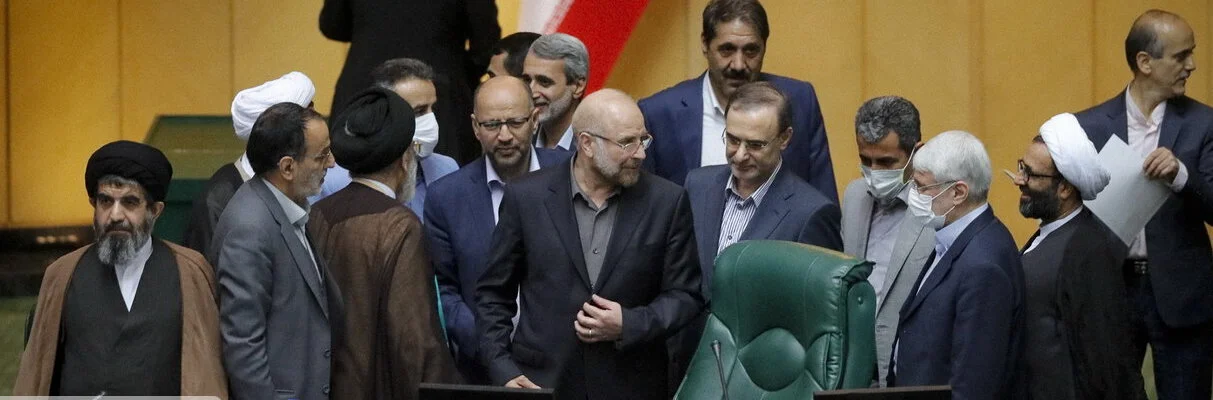
Iran Is Becoming Immune to US Pressure
Trump’s so-called maximum pressure campaign has empowered hard-line figures in Tehran, marginalizing those eager to take the diplomatic route.
By Sina Toosi
U.S. President Donald Trump said on June 5 that Iran should not wait until after the presidential election “to make the Big deal,” but can get a “better deal” with him now. Trump’s remarks came after a recent prisoner swap, which saw detained U.S. Navy veteran Michael White released from Iran in exchange for Iranian American doctor Majid Taheri. However, while Trump may want to negotiate with Iran and reinforce his self-avowed reputation as a deal-maker before the U.S. election, his “maximum pressure” policy has all but eliminated the chance for U.S.-Iranian diplomacy in the months to come.
Iran has proven resilient in the face of U.S. pressure. While many ordinary Iranians are suffering, the economy is not in total free fall, as many in Washington hoped for. Instead, the country has shown signs of economic recovery, with domestic production and employment increasing. According to Iran’s Central Bank chief Abdolnaser Hemmati, Iran’s nonoil gross domestic product grew by 1.1 percent last year. Prominent Iranian economist Saeed Laylaz also contends that Iran’s economy can weather the coronavirus pandemic and may experience growth this year despite the virus.
Trump’s bellicose rhetoric and actions have not made Iran more inclined to do a deal, but they have undermined any Iranian officials who supported negotiations with the United States. Whether wittingly or not, Trump’s policy decisions have closed the potential for diplomacy. The political cost one faces in Tehran for arguing in favor of negotiations is now simply too high. This is evident in how Iranian officials have reacted to the recent prisoner exchange.
Ali Shamkhani, the secretary of Iran’s Supreme National Security Council, one of the highest decision-making bodies in Iran, said in response to Trump’s offer for a deal, “The exchange of prisoners is not the result of negotiations & no talks will happen in the future.” Shamkhani’s remarks reflect a consistent line in Tehran: Negotiations with the United States are off the table. Even moderate President Hassan Rouhani’s foreign minister, Javad Zarif, and spokesperson Ali Rabiee now maintain that prisoner swaps can occur without negotiations.
The situation was different just a few months ago. The only other time the United States and Iran exchanged prisoners under the Trump administration was in December 2019, when Iran released Princeton doctorate student Xiyue Wang for Iranian scientist Masoud Soleimani. Unlike the recent White-Taheri exchange, the December swap also saw high-level meetings between U.S. and Iranian officials, a rare instance of bilateral U.S.-Iranian talks under the Trump administration. The United States has called for such a meeting again, but Iranian officials now accuse it of sabotaging diplomatic efforts.
Rouhani’s rhetoric around the time of the December swap also suggested he was more open to a new round of negotiations with the United States. Rouhani explicitly declared in the lead-up to the swap that Tehran had not ruled out talks and that negotiations could be “revolutionary.”
Then, in late December, Rouhani traveled to Japan in a trip that Japanese media said was greenlighted by Washington. There was speculation that the trip could have led to a “small deal” between the United States and Iran, with Iranian media reporting that Japan could get a U.S. waiver for importing Iranian oil and release billions of dollars in frozen Iranian oil revenues. Such a deal could have built confidence and met Rouhani’s precondition of sanctions removal for negotiating with Trump.
However, any hope that the positive diplomatic momentum built in late 2019 would lead to diplomatic progress between the United States and Iran was crushed in early January, with the U.S. assassination of Iranian military commander Qassem Suleimani. Many millions thronged Iran’s cities calling for revenge after the killing. Rouhani defiantly exclaimed in February: “They thought that with maximum pressure they can take us to the table of negotiation in a position of weakness … this will never happen.”
The political climate in Iran has since decisively turned hostile to any talk of negotiating with the United States, reestablishing a taboo that existed for years before the nuclear negotiations during the presidency of Barack Obama.
“Negotiations and compromise with America, the focal point of global arrogance, are useless and harmful,” said Mohammad Bagher Ghalibaf, Iran’s new parliamentary speaker, in his first speech to the body, “Our strategy toward the terroristic America is to complete our vengeance for the blood of the martyr Suleimani.”
Ghalibaf, a former commander in the Islamic Revolutionary Guard Corps and an old friend of Suleimani, unsuccessfully ran against Rouhani in both Iran’s 2013 and 2017 presidential elections. He assumed his parliamentary post in May, after parliamentary elections in February that swept conservatives to power. Importantly, that conservative victory occurred amid record-low turnout in the election and the widespread disqualification of reformist and moderate candidates by the Guardian Council.
Nevertheless, the total capture of parliament by conservatives cements the marginalization of reformists such as Rouhani and his allies that began after Trump scuttled the 2015 nuclear deal. Rouhani had sunk all his political capital into negotiating the accord and promised it would give the Iranian people major economic dividends.
Ghalibaf has now replaced Rouhani’s ally Ali Larijani as parliamentary speaker. Meanwhile, the judiciary, considered one of the three branches of government in Iran alongside the presidency and legislature, is being run by Rouhani’s other former 2017 rival, conservative cleric Ebrahim Raisi.
The changing political winds are significant for the future of Iranian foreign policy. Within the byzantine Islamic Republic system, Rouhani managed to forge necessary consensus on negotiations with the United States during the Obama administration, which included nods of approval from both the Supreme National Security Council and the supreme leader, Ayatollah Ali Khamenei. Unlike his hard-line predecessor, the boisterous and belligerent Mahmoud Ahmadinejad, Rouhani formed a cabinet of many U.S.-educated technocrats and his ambitions laid squarely on securing Iran’s economic integration to the world. For a time, Rouhani was riding high in public opinion polls, but that has dramatically reversed.
Ghalibaf, while not as aggressively ideological as Ahmadinejad, has made it clear that he will do everything in his power to ensure Rouhani remains a lame duck for the rest of his presidency. In his first address as parliamentary speaker, he lambasted Rouhani’s administration for its “focus on the outside [world]” and not believing in “the principles of jihadi management.”
Ironically, Ghalibaf himself has been described as a technocrat, drawing from his 12-year run as mayor of Tehran. During his tenure, he oversaw the construction of major infrastructure projects, voiced support for the nuclear deal, and participated in international summits such as the World Economic Forum in Davos, Switzerland, where in 2008 he called for international investment in Iran.
However, political expediency compels Ghalibaf to oppose Rouhani for the rest of his term, which ends next year. As parliamentary speaker, Ghalibaf presides over disparate conservative factions, ranging from the fundamentalist Front of Islamic Revolution Stability to the free-market-oriented Islamic Coalition Party. Targeting Rouhani and his agenda is an easy and effective way for Ghalibaf to unite conservatives behind him. Above all, the goal will be to obstruct Rouhani’s ability to negotiate with the United States and restore the political fortunes of his camp.
Trump is mistaken if he believes “maximum pressure” is getting him closer to a deal with Iran. The policy is not leading to Iran’s capitulation or collapse, but entrenching U.S.-Iran hostilities and keeping the United States perennially at the cusp of war in the Middle East. Trump, who ran in 2016 on getting the United States out of costly Middle Eastern wars, nearly went to war last June and again in January over his decision to escalate with Iran.
An alternative approach is possible but requires Trump to ditch maximum pressure and rebuild the trust necessary for successful negotiations. International relations and the real estate market are not similar. Bullying and bluster do not win deals; mutual respect and “win-win” compromise do. Trump has styled himself as a deal-maker, but ahead of the November election he has zero foreign-policy victories to his name. If he wants any semblance of a positive foreign-policy legacy, he needs to get off the path to war and on a path to negotiations with Iran.
Sina Toossi is a senior research analyst for the National Iranian American Council. Follow him at @SinaToossi.
Photo: IRNA
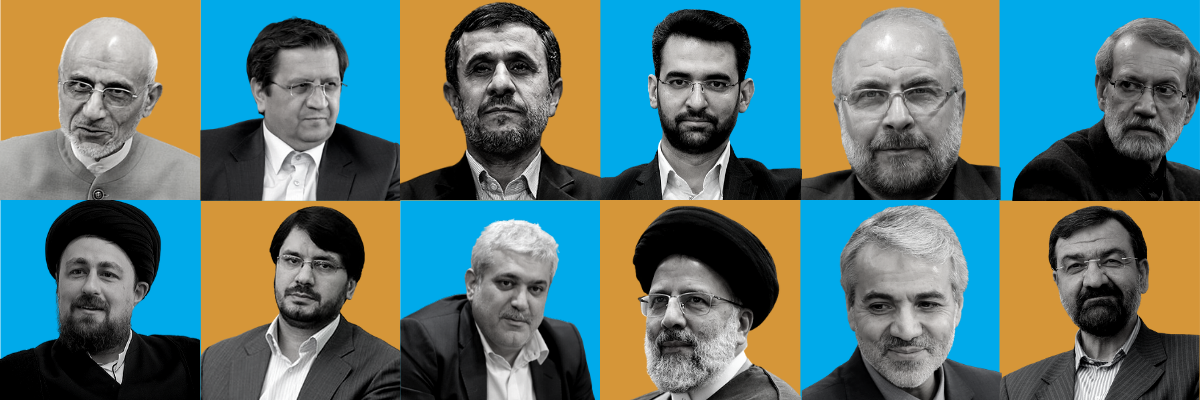
Young Candidates Enter Fray for Iran Presidency
With less than a year until Iran’s presidential election, political camps are making preparations for what is expected to be a watershed contest to decide who will succeed moderate president Hassan Rouhani.
With less than a year until Iran’s presidential election, political camps are making preparations for what is expected to be a watershed contest to decide who will succeed moderate president Hassan Rouhani.
The state of Iran’s economy will be the key issue for most Iranian voters, and by extension, there will be a fierce debate among hardline camps, which now control the parliament and the judiciary, as to whether the country should continue the pro-engagement politics introduced by Rouhani and his political allies following the 2013 election.
But alongside this political debate, another question has emerged—whether it is time for younger candidates to come to the fore.
“I have stressed time and again that I do believe in a young and religiously committed administration,” said Supreme Leader Ali Khamenei in a May 17 virtual meeting with representatives of student unions.
Khamenei, however, made it clear that the notion of a young government does not mean electing a president who is “say 32 years old.” Rather, Khamenei called for “an administration … within an age range capable of working hard, one that is not fatigued.”
The supreme leader’s speech has spurred new names to be added to the already long list of candidates expected to run for president. Iranian media have touted three rising figures who may be aiming to succeed Rouhani.
Topping the list of young candidates is Mohammad Javad Azari Jahromi, the country’s 39-year-old minister communications minister, who has positioned himself as a progressive technocrat. Jahromi has sought to earn the trust of younger Iranians by seeking to make his ministry more transparent and by vowing to protect access to social media platforms such as Instagram.
“Let them rest easy that I will not run for president,” Jahromi told reporters when asked whether his push for transparency was a stunt to gain popularity ahead of the election. Of course, Iranian politicians typically deny their ambitions for as long as possible, and Jahromi’s statements have not put an end to speculation that he is planning to run.
Another young would-be candidate is Sorena Sattari, the Rouhani administration’s Vice President for Science and Technology. The son of a late air force commander, Sattari is seen as someone who maintains ties on both ends of the Iranian political spectrum. Trained as a mechanical engineer, he is understood to maintain strong ties to the supreme leader’s office. But he is also seen as forward-looking and has won praise for his relentless support of the country’s start-up ecosystem, hardly a bastion of conservatism.
Sensing that a generational shift is underway in Iranian politics, conservative camps have also sought to elevate younger politicians. Now 40 years old, Mehrdad Bazrpash, began his political career at the age of 25 and has been ruthless in his criticism of the Rouhani administration, especially with regards to the state of the economy and efforts to normalize ties with the West.
But for all the appeals of youth, the old guard is not ready to step aside just yet. Within the reformist-moderate bloc that supported President Rouhani, debate continues about the candidacy of former parliament speaker Ali Larijani, one of the most powerful politicians in the history of the Islamic Republic, who underwent a transformation over the last decade from a conservative firebrand to a moderate figurehead. Rouhani owes much of the internal backing for the nuclear deal to Larijani.
Still, reformists remain divided about Larijani and his loyalties. “The Reformists will not resort to a proxy candidate,” said Hamid-Reza Jalaeepour, a key voice in reformist circles. But other leading reformists, including Mohammad Atrianfar, consider Larijani the only viable candidate to continue the political project Rouhani began. In a recent interview, Atrianfar argued that Larijani had “significantly distanced himself from the hardline conservatives in recent years and insists on maintaining this distance.”
Parviz Fattah, an IRGC member and the head of the Mostazafan Foundation, one of the country’s largest bonyads, or charitable endowments, has also been touted as an attractive presidential candidate in hardliner circles. Fattah is seen as someone who, if not young himself, may be able to galvanize conservative-minded youth through his uncompromising ideological outlook.
With the economy looming large in the minds of voters, a theme of technocratic competence has also emerged much like the theme of youth. There is growing speculation that the governor of Iran’s central bank, Abdolnasser Hemmati, could come forward as a candidate, allowing the reformists and moderates to avoid some of the internecine tensions that would surround a Larijani candidacy. Hemmati’s performance at Iran’s central bank has not been without controversy, with some questioning his heavy-handed approach to the country’s turbulent foreign exchange markets. But he is broadly seen as someone who has reinstated the relative independence of Iran’s central bank, instituting policies that have eased some of the impacts of U.S. secondary sanctions.
In a similar vein, Mohammad Bagher Nobakht, the head of the country’s Plan and Budget Organization and a longstanding figure in Iranian economic policy, has fueled speculation about his own candidacy after several trips to Iranian provinces, which included campaign-style posters and press conferences. Nobakht has, nevertheless, dismissed speculation of his candidacy as “unfounded.”
But if the reformists and moderates are to recapture some of the enthusiasm that thrust Hassan Rouhani to two landslide election victories, charisma may be key. Hossein Kanani-Moghaddam, founder of the center-right Green Party of Iran, has suggested that the greatest hope for those wishing to preserve the political project begun under Rouhani comes in the form of Hassan Khomeini, the grandson of Ayatollah Rouhollah Khomeini, the founder of the Islamic Republic. The 47-year-old cleric is a close ally of the spiritual leader of the reform movement, Mohammad Khatami, but has largely stayed away from the political scene and has declined calls to run in past presidential elections.
Whomever the reformists and moderates put forth, the most difficult hurdle will be the vetting process carried out by the Guardian Council, a body dominated by conservative clerics. In a worrying sign, the council purged the majority of pro-reform candidates ahead of the February parliamentary vote, a move which contributed to the lowest turnout in any major election since the founding of the Islamic Republic.
Akbar Torkan, a veteran moderate politician and a former senior aide to Rouhani, believes that the presidential election will have much in common with the parliamentary polls, warning that the Guardian Council will “select the candidates on their own just to have the public approve them at the ballot box.”
Outspoken political scientist Sadegh Zibakalam has made an even more pessimistic predication, arguing that the “reform movement is over.” In his view, those who voted for Rouhani in 2017 have become disillusioned, contributing to low turnout. “It’s not about names, even someone like Khatami cannot garner votes,” he said of the dwindling popularity of the reformist camp.
Zibakalam believes that a low-turnout election will favor a hardline figure who can mobilize his base, perhaps even Mahmoud Ahmadinejad, the controversial former president who refused to rule out plans for his candidacy in a recent interview. Ahmadinejad, who has cultivated a populist image by focusing on the grievances of Iran’s lower classes, has already begun touring the country, mustering large crowds that give credence to Zibakalam’s warnings.
Ahmadinejad was barred by the Guardian Council from the 2017 presidential race. But he is reportedly engaged in behind-the-scene talks with the vetting body to get the green-light for next year’s election “An Ahmadinejad candidacy could disrupt all the calculations,” said prominent conservative politician Morteza Talaee, noting that the ex-president technically belongs to no major camp after breaking away from the hardliners, who once supported him unequivocally.
Ahmadinejad’s national profile is matched by just a few other potential candidates—prominent political figures who continued to eye the presidency after failed bids.
Former Tehran mayor, Mohammad Bagher Ghalibaf, who was named the new parliament speaker in June, has failed to become president in 2005, 2013, and 2017. In recent years, Ghalibaf has cast himself as a conservative stalwart in an attempt to galvanize the new generation of “revolutionary” youth behind his leadership.
Chief Justice Ibrahim Raisi, who came second to Rouhani in the 2017 election is also expected by many pundits to be considering a second run. But another election defeat would dent Raisi’s hopes of becoming the country’s next supreme leader and he may wish to focus on the ambitious anti-corruption drive widely seen as a gambit to increase his chances of succeeding Khamanei.
Finally, Mohsen Rezaee, a former commander of the Islamic Revolutionary Guard Corps, who has already had three failed bids for the presidency, appears to be warming up for another fight. As a proponent of “resistance economy”, Rezaee has recently sharpened his attacks against the Rouhani government’s economic performance, including a slogan-like tweet issued last week. “I can give our people assurances that by pushing aside the pro-Americans from power … our national currency will become the strongest in the entire region,” Rezaee declared.
Iranian voters have a long wait to see who will appear on their ballots. But the crowded field makes it clear that Iran is set to have a watershed election, one that will combine a likely shift away from progressive reformism with the potential emergence of a new generation of political leaders.
Photo: Various
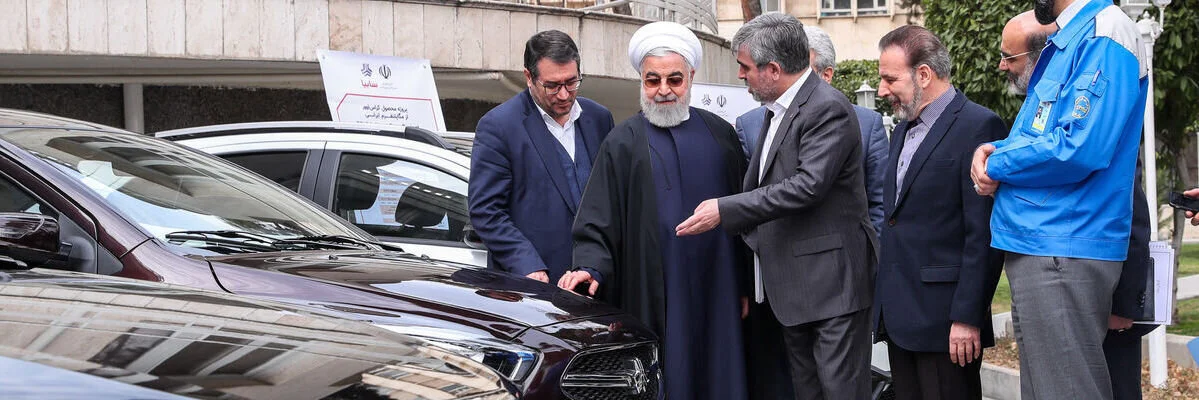
Iran's Rouhani Ousts Industry Minister Seen as Disloyal and Doomed
When industry minister Reza Rahmani sat down for a meeting with Iranian Vice President Eshaq Jahangiri on Monday, he did not know that he was about to be sacked.
When Iran’s industry minister, Reza Rahmani, sat down for a meeting with Iranian Vice President Eshaq Jahangiri on Monday, he did not know that he was about to be fired.
Rahmani was accompanied to the meeting by his deputy Hossein Modarres Khiabani, who would soon be named as his interim replacement.
After the axe came down, Rahmani wrote an open letter to President Hassan Rouhani in which he claims his dismissal was part of “a political plot.”
“Despite enemies’ plots, and in line with the Supreme Leader’s wishes, I have been able to boost production while sustaining the supply of essential goods. I am proud [of my record]. I am surprised that I am being ousted for political reasons alone,” Rahmani writes.
In the letter, Rahmani also claims Rouhani’s that chief of staff, Mahmoud Vaezi, strong-armed him to get a government-sponsored bill passed. The bill, which was shot down by parliament on Sunday, would have paved the way for the re-establishment of the Ministry of Trade which was dissolved and merged with Ministry of Industry and Mine in 2011.
Rahmani writes, “Mr. Vaezi threatened that if the bill does not pass, I would be sacked. He also told me that I must lobby MPs and whip the vote. I responded that the parliament is not controlled by me, but I don’t oppose the bill.” Rahmani, a three-term parliamentary representative, was believed to hold sway over many of his former colleagues, especially MPs of Azeri heritage.
In response to the letter, Vaezi’s office released a blistering statement accusing Rahmani of twisting facts to put his conduct in a better light. In a deliberate turn of phrase, the statement condemns Rahmani’s letter as tailored “to mislead the people and disturb public opinion,” an act that is a crime under Iran’s Islamic Penal Code. While the Rouhani administration is unlikely to press charges against a former minister, the statement was clearly intended to intimidate.
In response to Rahmani’s accusations, the statement claimed that the former minister “was not requested to support the government-sponsored bill but to put an end to his three confidants lobbying efforts against the bill—the three individuals' names will be released if need be. [Rahmani] was warned by the president that his continued conduct was unacceptable and that such conduct would be dealt with decisively.”
The Wrong Man
Despite his sudden ouster, many in the business community had not expected Rahmani to last in the role of industry minister. Hamid Reza Salehi, secretary general of the Energy Commission of the Iran Chamber of Commerce explained that many pitfalls face Iran’s industry minister.
“Over the years, without an exception, every politician appointed as industry minister has faced the gargantuan task of regulating and facilitating the growth of varying and at times conflicting business sectors. With the US maximum pressure campaign squeezing Iran’s economy, the burden has become heavier,” he said.
In October 2018, during the lead-up to his confirmation hearings, Rahmani met with chambers of commerce and other industries bodies to garner the support of the business community. Salehi noted, “From the first day after Rahmani’s appointment, everyone knew he was the wrong man for the job.”
Like most Iranian business leaders engaged in foreign trade, Salehi is critical of the ministry’s overwhelming focusing on industrial development, at the expense of support for trade promotion. The challenges facing Iran’s economy go beyond government officials finding themselves out of their depths. “Iran’s economy is afflicted with fundamental challenges: heavy-handed government interventionism, state interference with the natural supply and demand equilibrium, rent-seeking practices, and inherent corruption,” Salehi observed.
He added, “Iranian authorities still believe they can sell oil and distribute the proceeds. They simply do not adhere to market-economy principles or believe any good would come out of them. Anyone put at the helm of that ministry would have to grapple with all these misconceptions and hurdles. Replacing the minister will just lead to another media circus, nothing more.”
Salehi believes that the 2011 merger of the ministries of industry and trade “could have been a good move” that would have helped reduce the size of government. “Many countries have taken similar steps over the years. But since the merger, different administrations have failed to find someone to properly lead the ministry.”
Salehi is skeptical that the government’s plan to establish a new trade ministry, which would essentially reserve the 2011 merger, is well-considered. “If you were to tell me that a new ministry is to be established that will focus on streamlining exports, I would support that. But if the government motion solely intends to reverse the merger, I oppose it. I don’t support decisions that are only intended to reverse change. Fundamental issues need to be addressed and that would not happen even with the establishment of a dozen new ministries.”
Mehdi Zahedi Avval, who is the CEO a trading company active in the export of food products, agrees with Salehi that Rahmani was not up to the role of industry minister.
“Rahmani did not have the mettle for the job. President Rouhani tapped him because he had extensive ties to the parliament and, in theory, could have whipped the vote for government-sponsored bills. We all now know how that ended for the president,” he said. Zahedi notes that Rahmani had been tapped for the role of minister by his predecessor Mohammad Shariatmadari, who was similarly pushed out of the role despite his former position as the head of SETAD, the holding company affiliated with the office of Iran’s Supreme Leader.
Zahedi supports the re-establishment of the trade ministry. “Merging the ministries was a mistake. A single government agency can’t be in charge of regulating industry and trade simultaneously. On many occasions, these two sectors have conflicting interests.” Having separate ministries which could voice their demands on behalf of their respective interest groups who “would help create a transparent equilibrium,” Zahedi said. “But now all decisions are made behind closed doors.”
The reestablishment of the Ministry of Trade has been debated on numerous occasions by members of the Tehran Chamber of Commerce, according to member Farhad Ehteshamzad, an Iranian industrialist and the former head of the Iran Auto Importers Association.
“After the two ministries of trade and industries were merged in 2011, no structural reform was implemented. The departments and offices of the two ministries are now operating under a single minister’s watch,” Ehteshamzad said.
Moretza Miri, a board member of Iran’s influential Carpet Manufacturers and Exporters Association, also pointed to the failures of the 2011 merger. “After the merger was implemented only 403 employees were laid off. All the assets of the dissolved ministry including all of the buildings, are now owned by the Ministry of Industry, Mine and Trade. How does that translate into cutting government down to size?”
The Trade Taboo
Rahmani and his allies deny the Rouhani administration’s narrative that he was lobbying against the bill to establish a trade ministry. However, many lend credence to the narrative coming out of the presidential palace.
“Rahmani knew that re-establishment of the commerce ministry would limit his powers. Coming face to face with that fact, he started lobbying MPs to kill the bill. A government minister standing against a government-sponsored bill; it is no surprise that Rouhani sacked him so quickly,” said Miri.
Uncharacteristically for Iranian bureaucratic correspondence, the letter in which Rouhani named Khiabani as the caretaker minister made no mention of Rahmani. Such letters are usually offer lavish praise for the outgoing official, even when they have been fired.
Miri is hopeful that Rahmani’s replacement will prioritize trade at a time when Iran needs to further diversity exports to make up for the collapse in oil revenues. “I have directly worked with Rahmani’s replacement. Khiabani is hardworking and has had a focus on non-oil exports. That will be a plus.”
But not everyone is so encouraged. Nasim Tavakol, who runs an e-commerce business specializing in imported electronics, is worried Khaiabani lacks the necessary experience. “Does Khiabani have any solid experience in trade and industry? He has been a board member of a few state-owned companies. And what these board members do? They attend meetings that revolve around sharing a cup of tea and having some snacks. In my book that’s zero experience in business and trade,” she said.
Speaking of the ousted minister, Tavakol said, “In his letter, Rahmani claims that he supported businesses. What he did was not ‘supporting businesses’. He helped rent-seekers line their pockets while his hasty decisions disrupted legitimate businesses.”
Tavakol believes that despite his poor performance Rahami avoided impeachment due to support from key allies in parliament, including reformist MP Masoud Pezeshkian. Reportedly, the same allies helped kill the trade ministry bill. Pezeshkian and his office were not available for comment.
Tavakol had expected the trade ministry bill to fail, “The decision-making processes are utterly politicized in Iran. And the parliament wouldn’t ratify a major motion put forward by Rouhani administration.”
The debate over the creation of a trade ministry has also been politicized due to fears that its creation would lead to increased reliance on imports and capital flight. Tavakol explained that imports have become “taboo” in Iran. “Most MPs would think twice before supporting such a bill.”
So far, just six MPs have reacted publicly to Rahmani’s ouster. Outspoken reformist MP Mahmoud Sadeghi tweeted obtusely, “One of the problems of Rouhani admin has been lack of coordination between different ministries; one lobbies in favor of a bill, another against it.”
Ahmad Amirabadi, a former IRGC officer and conservative MP representing Qom, voiced his support of Rahmani, writing on Twitter,“Dear people, you need to know that Mr. Rouhani did not sack Mr. Rahmani over your problems or car prices. Rahmani was warned that he must resign if the Majlis does not vote in favor of the trade ministry (read: ministry of imports and rent-seeking). He declined to resign and was sacked.”
Conservative MP Abdollah Razian has so far been the only politician to have actuallly defended Rahmani’s record. “Considering the current conditions, Rahmani’s conduct was proper,” he stated in an interview with the parliamentary news agency, ICANA.
Yet, while Abdollah Razian claimed that the industry minister did not take a stance against the bill to reestablish a separate trade ministry, he conceded that Rahmani “did not do anything to get it passed.”
Rahmani failed to whip, so he got the axe.
Photo: IRNA
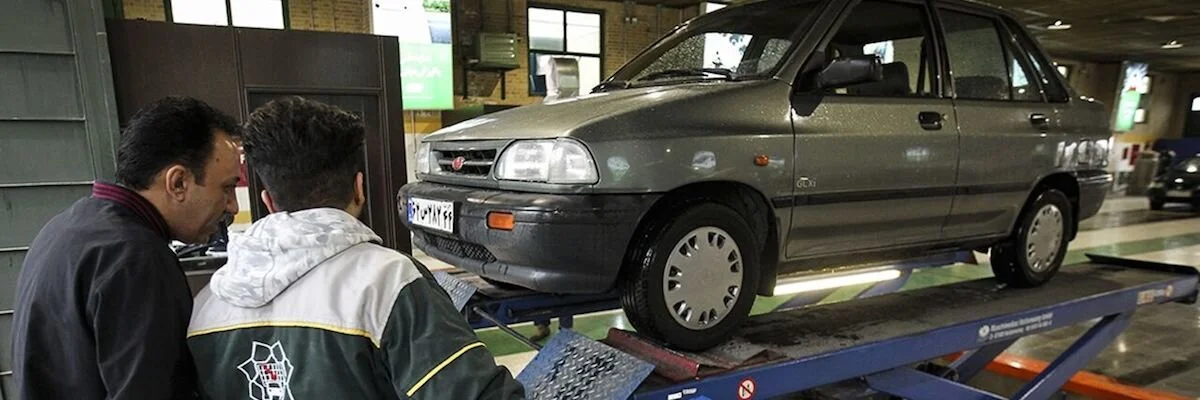
Iran's Automakers Need a Rescue, But Face a Reckoning
Iran’s giant automakers, Iran Khodro and Saipa, are in a tug of war with the Rouhani administration over demands to lift price controls. The state-owned firms are seeking to increase prices by 40 percent.
Iran’s giant automakers, Iran Khodro and Saipa, are in a tug of war with the Rouhani administration over demands to lift price controls. The state-owned firms are seeking to increase prices by 40 percent.
Executives in Iran’s automotive industry, which counts among the country’s largest employers and includes both state-owned and private sector enterprises, argue that rising inflation and the increased cost of parts and raw materials justify increasing automobile prices, which have long been subject to controls. Rising inflation in Iran has been spurred by the depreciation of the rial, first triggered by the reimposition of secondary sanctions by the administration of U.S. President Donald Trump.
The final say on any price increase lies with the Market Regulation Authority of Iran’s industry ministry. A meeting of the authority on May 4 led to a disappointing outcome for the automakers, as the authority’s board gave preliminary approval to a price increase of just 5 percent.
Despite the outcome, market regulators appear increasingly sympathetic to the demands of automakers and further deliberations are planned. The deputy minister who chaired the meeting, Hossein Modarres Khiabani, acknowledged the challenges facing Iran’s automotive sector, stating “For 15 months, the price controls have remained unchanged while many of the production costs have jumped during the period in question.” While carmakers have been unable to increase their prices, the price of automobiles on the secondary market has surged as inflation picked-up. The growing margin between the two prices has given license to many car dealers to engage in enormous profiteering.
However, regulators are reluctant to allow automakers to increase prices without demonstrating some new economic value. The 5 percent price increase preliminarily approved earlier this month is conditioned on a “70 percent improvement in efficiency,” although no detail was provided as to how improved efficiency is to be assessed.
For decades, the poor-quality of locally produced automobiles has been at the core of growing discontent among Iranian consumers with state-owned carmakers. Iran Khodro and Saipa are accused of exploiting an uncompetitive market, operating as a duopoly and disregarding customer satisfaction in order to produce cars with fewer features and worse build quality. Even Iran’s Supreme Leader appeared to acknowledge the lagging quality of domestic cars in a recent tweet.
Despite the role that the price controls have played in deepening losses, Iran Khodro and Saipa have also been repeatedly bailed out by administrations unwilling to swallow the political consequences of mass layoffs. Iranian carmakers, particular those that are state owned, benefit from unfettered access to financing and cheap foreign currency, despite a track record of contributing to the non-performing loan crisis at many Iranian banks and a reputation for corruption among senior management. By one estimate, Iran Khodro and Saipa have received over USD 4.7 billion in foreign currency at the subsidized government rate. With the Rouhani administration now facing an unprecedented fiscal crisis spurred by sanctions, low oil prices, and the COVID-19 crisis, observers of the automotive sector are wondering whether the state remains able to support the embattled auto industry.
Any prolonged shutdown at Iran Khodro or Sapia would hammer Iran’s many parts manufacturers, which constitute the backbone of the auto industry. These companies have already been squeezed as sanctions have made sourcing the foreign currency needed to pay for imported raw materials far more difficult. Parts manufacturers are also owed huge sums by the likes of Iran Khodro and Saipa, who use their dominance in the domestic market to bully suppliers.
But the increasingly dysfunctional supply chain is catching up to the automakers. A recent report from Donya-e-Eqtesad estimates that up to 50,000 cars remain unfinished, parked in storage yards, due to a lack of parts. Falling productivity in the automotive sector, which accounts for 4 percent of Iran’s gross domestic product, could have a significant impact on the wider economy. The negative outlook for the sector stands in stark contrast to the optimism that followed the implementation of the nuclear deal. In 2017, buoyed by the resumption of industrial cooperation and investment by European automakers such as France’s PSA Group, automobile production hit a record high of over 1.4 million vehicles.
The swift decline in output spurred by the reimposition of U.S. secondary sanctions the following year has only been accelerated by the global pandemic. In the period from March 21 to April 20, corresponding to the first month of the Iranian calendar year, Iran Khodro manufactured just 23,246 vehicles, registering a stunning 43 percent decline in production year-on-year. The automaker has discontinued production of seven models, which relied on imported complete knock-down kits, including the Peugeot 2008 SUV and the Suzuki Vitaras. Production at Saipa fell even further, registering a 56 percent decline year-on-year, with just over 9,000 cars produced in the same period. Part of this slowdown is attributable to measures being taken to reduce the risk of transmission of COVID-19 among assembly line workers. Nonetheless, the collapse in production and the controversies around price controls contributed to the ouster of industry minister Reza Rahmani earlier this week. Khiabani has been appointed as caretaker.
The Rouhani administration finds itself at a crossroads and the auto industry faces a reckoning. While regulators have been unwilling to increase the price of automobiles for fear of angering a public already facing diminishing purchasing power, the government cannot simply continue to rescue automakers that have failed to operate efficiently and transparently, selling their products into a profoundly dysfunctional market.
Photo: IRNA
