
Iran Shows New Savvy in Defining Outcome of Key Nuclear Deal Meeting
◢ Iran has finally learned how to use the Joint Commission of the nuclear deal to tackle its economic challenges. Iranian foreign minister Javad Zarif got what he needed from the ministerial meeting. Two months following Trump’s abrogation of the nuclear deal, the remaining parties to the agreement proved able to present a consensus position on the need to protect Iran’s economic interests in direct contravention of the declared US policy. On practical implementation, bilateral exchanges are the preferred route forward.
Following two months of rising uncertainty after President Trump decided to withdraw from the nuclear deal despite Iran’s continued compliance with its commitments, the remaining parties to the Joint Comprehensive Plan of Action (JCPOA) assembled in Vienna on Friday. The meeting of foreign minister was convened at Iran's request.
Iranian expectations of the meeting centered on an “economic package” that was to be offered by Europe—with the support of Russia and China—to keep Iran in the nuclear deal. As Iranian foreign minister Javad Zarif made clear in a tweet prior to the meeting, in the view of Iran, “sanctions and JCPOA compliance are mutually exclusive.” In short, if Europe, Russia, and China are to expect Iran to remain committed to the nuclear deal, they must neutralize the negative effects of US secondary sanctions.
Up until last week the foremost concern had been whether Iran would be able to maintain viable banking channels in the face of a more aggressive US sanctions posture, especially given the limited progress that had been made in reintegrating Iran into the global financial system since Implementation Day. Yet, the announcement that the US would not be providing significant reduction exceptions to allow Iran’s oil customers to maintain their imports when sanctions return in November, will prove Iran’s most significant challenge. Iran relies on oil exports for 40 percent of government revenue.
Iran engaged in expectation management regarding the package ahead of the meeting, perhaps indicating that the Rouhani government has finally learned the consequences of overselling the economic promises made during JCPOA-related talks. The president’s office released two statements Thursday evening indicating that Rouhani had held phone calls with his German and French counterparts. Most pointedly, Rouhani told Macron that the economic package prepared by Europe "does not include all of [Iran's] demands,” but that Iran remained hopeful that the joint commission meeting would help fill the gaps.
In this way, Friday’s meeting of the joint commission was cast as a test for the French, German, British, Russian, and Chinese diplomats. Would the diplomats be able to develop the necessary economic countermeasures to keep Iran in the deal? Would they be able to show concrete progress on the positive commitments that had been made in the days following Trump’s withdrawal? When drafting the JCPOA, the diplomats had relegated the economic aspects of the deal to an annex, where implementation languished on all sides, slowing trade and investment, until Trump made his fateful decision—was it too much to expect practical solutions to emerge now?
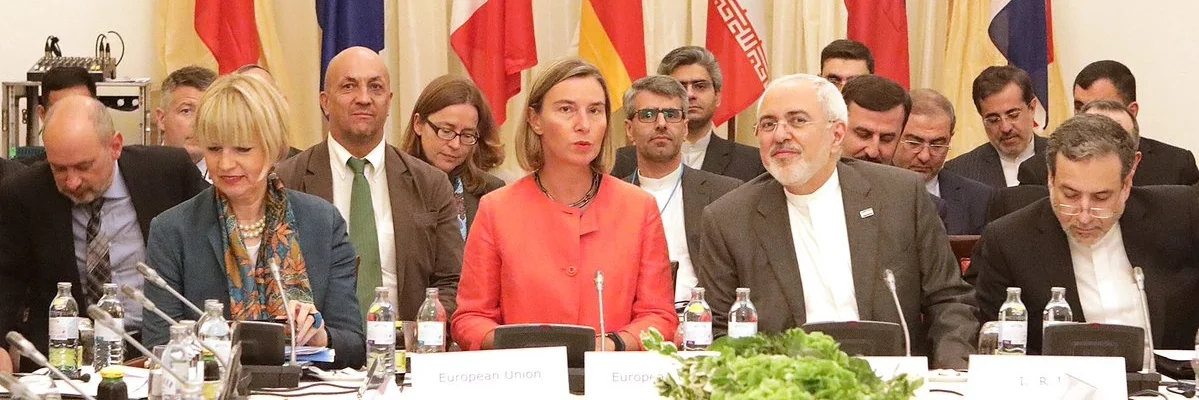
In this context, the joint statement released by the European External Action Service and EU High Representative Federica Mogherini, who chaired the ministerial meeting, was underwhelming. The statement reiterated that “in return for the implementation by Iran of its nuclear-related commitments, the lifting of sanctions, including the economic dividends arising from it, constitutes an essential part of the JCPOA.” As part of this commitment, the statement “affirmed” the commitment of the participants to measures focused on the “promotion of wider economic and sectoral relations with Iran” as well as “the preservation and maintenance of effective financial channels.” Most importantly given Trump’s declared intention to drive Iran’s oil exports to zero, the participants affirmed their intention to defend “Iran’s export of oil and gas condensate, petroleum products and petrochemicals,” among other areas of economic intervention.
The statement was comprehensive in detailing the areas in which Iran wishes to see concrete measures taken, but it did not provide much greater detail than similar statements issued in the weeks immediately following Trump’s withdrawal of the deal. Besides noting that “that the EU is in the process of updating the EU ‘Blocking Statute’" and "the European Investment Bank’s external lending mandate to cover Iran”—two measures first announced in May—no specific tactics were declared in the statement. Of course, it would be a mistake for parties to the JCPOA to reveal their proposed countermeasures too soon, as this would invite American authorities to find ways to undermine them. Yet, nothing in the statement itself seemed to dissuade those hoping for meaningful solutions from a sense of disappointment.
It was therefore notable that Zarif very proactively shared a positive assessment of the meetings upon their conclusion. On one hand, Iran’s foreign minister showed trademark deference to Iran’s other power-brokers, telling reporters that the proposal presented to Iran—“not precise and not a complete one”—should be implemented before the next round of US sanctions come into force in August and that it “is up to the leadership in Tehran to decide whether Iran should remain in the deal” on the basis of this implementation.
Yet, speaking to Iranian media, Zarif highlighted his satisfaction that the parties to the JCPOA, including three “close allies” of the United States, had remained firm in their desire to withstand US pressure. He also highlighted in these interviews and in subsequent tweets that the discussions were “moving in right direction on concrete steps for timely implementation of commitments.” He was remarkably upbeat.
That Iran had achieved a political success was made clear as French foreign minister Jean-Yves Le Drian told reporters that the parties to the deal were trying to deliver an economic package “before sanctions are imposed at the start of August and then the next set of sanctions in November. He added, “ For August it seems a bit short, but we are trying to do it by November.” Le Drian also implored Iran to “stop threatening to break their commitments to the nuclear deal," a statement that may have been taken to undercut the French willingness to help Iran achieve an economic package.
But on the contrary, such as statement proves that Iran retains leverage in the negotiations. Whether signaling the resumption of enrichment activities or the closure of the Strait of Hormuz, a coordinated messaging campaign by the Rouhani administration, which includes public statements by Rouhani himself, by Zarif, by Iran’s atomic energy chief Ali Akbar Salehi, and even by IRGC Quds Force commander Qasem Soleimani, has served to remind the world powers of the significant consequences should Iran withdraw from the deal. The assembled foreign ministers were clear that an economic package is the desired political outcome because they need Iran to remain in the deal. Zarif got what he needed from the ministerial meeting. Two months following Trump’s abrogation of the nuclear deal, the remaining parties to the agreement proved able to present a consensus position on the need to protect Iran’s economic interests in direct contradiction of the declared US policy.
Moreover, while headlines from the likes of Reuters and Bloomberg heralded “no breakthroughs” and “unresolved” issues given the unspecific statement, Zarif’s positive assessment speaks to the fact that Iran was given some indication during the proceedings of what Wall Street Journal reporter Laurence Norman referred to as “real work and genuine ideas” to help Iran both on the banking challenges and the preservation of the all-important oil exports. To this end, Zarif made clear that progress on implementation would follow “direct bilateral efforts.”
It is important to note that the ministerial meeting was far from the only diplomatic or technical dialogue in which Iran has participated since the survival of the nuclear deal was plunged into doubt by Trump’s violation in May. In just the last week, President Rouhani held successful official visits to Switzerland and Austria, two longstanding trading partners. This follows, an important official visit by Rouhani to China, as well as working-level dialogues in France, Sweden, Belgium, the Netherlands, and the United Kingdom. These meetings have included officials from the Central Bank of Iran, Ministry of Industry, and Ministry of Transportation among executives from state and private sector enterprises. It is these bilateral exchanges, not joint commission dialogues, which have given Iran a more precise indication as to how its economic interests might be protected.
The fact that Iran is back under US secondary sanctions is a failure of multilateralism. But Iran has now recognized that the solution to this failure will not be found in a multilateral format. Whether looking to the European Union or the JCPOA parties, the need to generate politically driven consensus on economic countermeasures will prove cumbersome. As noted by Eldar Mamedov, even the European Parliament is an arena prone to “sabotage." Mamedov, a parliamentarian, illustrates this fact by recounting recent efforts to block the European Investment Bank’s mandate to fund projects in Iran.
A Bourse & Bazaar white paper published in January on the “economic implementation of the nuclear deal” correctly diagnosed that “the joint commission itself is poorly suited to conduct [economic] coordination given the divergent views” of its parties on “matters of sanctions and economic implementation.” In recognition of this fact, the paper recommended that the “European External Action Service (EEAS), which has taken the mantle of leadership on the nuclear deal since the change in American administrations, would be well positioned to convene… a new multi-agency commission for economic implementation, formed in accordance with European commitments under the JCPOA,” In effect, the paper envisioned a joint commission-type body specifically for economic matters. While the joint commission convenes foreign ministers and their diplomatic teams, an economically focused commission would seek to convene economic ministers and their technical staff.
Such a proposal would seem to be supported by the particularly strong stance taken by French economic minister Bruno Le Maire on the need for France to defend its economic interests in Iran in the face of US secondary sanctions. From the Iranian perspective, the inclusion of Laya Joneydi, Iran’s well-regarded vice president for legal affairs, in Iran’s delegation to the joint commission meeting was a positive step, in part because, as noted by Adnan Tabatabai, it was refreshing to see an Iran represented by a female official.
Yet, it is probably the case that convening technocrats into a multilateral format would only serve to limit their effectiveness in the near-term. The political limitations faced by nuclear experts Salehi and US secretary of energy Ernest Moniz during the JCPOA negotiations offers a compelling case study. The Rouhani administration is now aware that given the limited timeframes, Iran’s will need to assemble a patchwork of solutions from various countries, particularly by expanding focus beyond France, Germany and the United Kingdom to seek direct cooperation with a wider ranger of EU member states. Based on institutional and economic factors, some countries will be better able to devise solutions on oil imports, others on banking channels, and others on insulating their multinational corporations or promoting their SMEs. To underscore the point, even the revival of the blocking regulation, a piece of EU law, will depend on the individual implementation and enforcement of member states. When it comes to technical matters and economic implementation, only bilateral dialogues can really deliver.
But if Rouhani and Zarif have learned the limitations of the joint commission and how to work within those limitations, they must also recognize their own limitations. It is impractical for the majority of outreach on the economic package to depend on Zarif and Iran’s foreign ministry. While the lion-like Bijan Zanganeh ably leads the oil ministry, there is a glaring lack of leadership in key bodies such as Iran’s central bank, ministry of economic affairs, and ministry of industry. Both Rouhani and his first vice president Ehsaq Jahangiri have been signaling for several months that a cabinet reshuffle may be on the cards. The politicking behind such a reshuffle is complicated, as parliament would need to confirm new ministers, opening Rouhani to a new round of attacks. But the urgency of new leadership could not be clearer.
If Iran is to succeed in “direct bilateral efforts” to ensure the implementation of an economic package, it must be able to send capable ministers to Europe, Russia, China, and other trading partners to meet with their counterparts in these critical coming months. Zarif can certainly craft a conducive political environment, as evidenced by the positive joint commission outcome, but the foreign ministry cannot orchestrate the defense of Iran’s economy singlehandedly, if for no other reason than the fact that when it comes to the economy, internal challenges greatly outnumber the external ones which Iran's diplomats can reasonable consider within their domain.
Iran demonstrated real savvy in defining the outcome of the joint commission meeting. No longer seeking to unsatisfactorily bend political commitments into practical solutions for its longstanding economic problems, the Iranian delegation proved willing to aptly designate matters of implementation to the numerous bilateral dialogues currently underway. This allowed a relatively positive political outcome to be taken on its own terms, especially with an Iranian audience in mind. If the Rouhani administration can assemble the right teams for these bilateral exchanges, the vital economic package can still be delivered upon. Hope persists.
Photo Credit: EEAS
Europeans Beat Back Americans as FATF Gives Iran More Time on Financial Reforms
◢ At its plenary meeting in Paris, the Financial Action Task Force (FATF) opted “to continue the suspension of countermeasures” related to Iran’s inclusion in the so-called “blacklist” of countries with deficiencies in anti-money laundering (AML) and combating financing of terrorism (CFT) standards. The suspension will be in place until October 2018. The suspension can be seen as a victory for European and Iranian multilateral cooperation in the face of the increasingly hostile American posture.
At its plenary meeting in Paris, the Financial Action Task Force (FATF) opted “to continue the suspension of countermeasures” related to Iran’s inclusion in the so-called “blacklist” of countries with deficiencies in anti-money laundering (AML) and combating financing of terrorism (CFT) standards. The suspension will be in place until October 2018 and in this period jurisdictions will continue to “advise their financial institutions to apply enhanced due diligence to business relationships and transactions with natural and legal persons from Iran.”
The outcome of the plenary was the subject of great anticipation. Progress on the FATF action plan is critical for Iran’s reintegration in the global financial system. The FATF expressed its “disappointed with Iran’s failure to implement its action plan to address its significant AML/CFT deficiencies” noting in a public statement that “a majority of the action items remaining incomplete.”
Iran’s slow implementation of the Action Plan reflects in part the considerable political scrutiny that has been placed on the process in Iran. Political leaders opposed to President Hassan Rouhani have decried the action plan reforms as an effort by international actors to exert undue influence over the Iranian financial system. They have also questioned the value of the reforms given the pending snapback of US secondary sanctions following President Trump's May 8 withdrawal from the JCPOA nuclear deal.
Iran’s hardliners were not alone in their disapproval of Iran's FATF efforts. American officials had made it clear in the run-up to the plenary that they would be pushing for the resumption of countermeasures against Iran. Congressmen Rob Portman (R-OH) and Ed Royce (R-CA) sent a letter to Treasury Secrtary Steven Mnuchin last week to “ to ensure action next week by the Financial Action Task Force (FATF) against Iran. For many in Washington, resumption of countermeasures is seen as a way to further hobble Iran’s financial system, given that banks that might otherwise be structured to work with Iran under secondary sanctions would likely refuse to do so if the FATF action plan had failed to be implemented outright.
Officials from the European members of FATF, noting that the resumption of countermeasures would effectively end the tenuous political support for financial sector reforms in Iran, coordinated in order to ensure that Iran’s case would receive a fair evaluation. Active dialogue with Iranian stakeholders at the Ministry of Foreign Affairs and the Central Bank of Iran helped European officials gauge the likely tides of political support for the action plan reforms, especially given outstanding legislative requirements such as the ratifying and implementing the Palermo and TF Conventions.
Iranian officials were keen to impress on their European counterparts that Iran’s compliance with FATF’s recommendations is presently commensurate with many countries, which are not currently blacklisted. An appeal was made for Iran’s case to be evaluated on a technical, rather than political basis, particularly as American antipathy towards the continued suspension of countermeasures has been understood as part of the Trump administration’s broader pressure campaign against Iran.
In addition, Iranian officials noted that the FATF issue was now a matter of direct discussion between President Rouhani and Ayatollah Ali Khamenei, Iran's supreme leader. Despite the contentiousness of the issues, there is some suggestion that a political consensus around AML/CFT reforms is achievable. Such a consensus may see reforms characterized as a national endeavor rather than one pursued at the behest of FATF. Overall, within the domestic and international political context, the suspension of countermeasures should be seen as a victory for European and Iranian multilateral cooperation in the face of an increasingly hostile American posture.
Photo Credit: FATF
As Trump Goes Nuclear On Iranian Oil, Europe Must Match His Brinkmanship
◢ As the US chooses the "nuclear option" on Iran's oil, Europe must find leverage and force the US to walk back on its announced policy of driving down Iranian oil exports to zero. The negative consequences for European economy could prove significant, and the risks of regional escalation are high. There are three measures that the EU can pursue to pressure Trump and prevent a dangerous escalation.
This article was originally published in LobeLog.
In the view of veteran observers of the oil industry, Trump has “gone nuclear.” Speaking during a background briefing on Tuesday, a senior state department official announced that the the Trump administration wants to completely eliminate imports of Iranian oil by its current customers. The official told journalists that, during a tour of countries that has already begun with a visit to Japan, U.S. officials will be “requesting that their oil imports go to zero, without question.”
Until recently, there had been an expectation that the Trump administration would issue significant reduction exceptions as was the case under the Obama administration, allowing countries to sustain some level of imports from Iran if significant reductions take place. Indeed, the guidance issued by the U.S. Treasury on May 8 following Trump’s withdrawal from the Joint Comprehensive Plan of Action, made specific reference to significant reduction exceptions as part of the reapplication of oil sanctions. These exceptions were to be devised following “the Secretary of State, in consultation with the Secretary of the Treasury, the Secretary of Energy, and the Director of National Intelligence” as consistent with “past practice.” A survey of oil analysts conducted by S&P Platts after May 8 suggested that “US oil sanctions on Iran will likely have an immediate impact of less than 200,000 bpd and will block less than 500,000 bpd after six months.” The announced policy is akin to a reduction of over 2 million barrels per day.
Something seems to have shifted during the OPEC meeting. As reports emerged that Japan had been asked to cease its imports of Iranian crude, Bijan Zanganeh, Iran’s oil minister, engaged in expectation management. During an interview with Bloomberg Television, he stated, “I don’t believe [the Japanese] can receive a waiver from the United States,” adding that Iran would need to “find some other way” to mitigate the effect of the oil sanctions. With Saudi Arabia cavalierly announcing that it will boost its production to record levels in July, it is easy to see how a Saudi commitment to raise production would have been coordinated with an American effort to eliminate Iran’s export market entirely.
To this end, Iran is facing the most serious challenge to its economy and political integrity to date. The Trump administration has taken its avowed commitment to exert “unprecedented financial pressure” far beyond the realm of coercion and into the realm of destruction. For Iran’s government, which receives about half of its revenues from oil sales, the prospects are grim. Of course, such an outcome is consistent with the regime-change goals of the Trump administration and its regional allies. They are seeking to engineer a collapse from within. But what is seemingly unaccounted for in such a scenario is the immense risk of regional chaos and conflict if they push Iran’s government to the brink. The risk is not merely that instability will lead to violence and mass displacement that could spill beyond Iran’s borders, but more likely that when faced with a near-existential threat, Iran’s ruling elite will seek to regain leverage in the most destructive ways possible.
In one plausible scenario, the Iranian reaction to the total embargo of its oil sales will be to try and impose a physical blockade on Saudi exports by closing the Strait of Hormuz and engaging in a new “tanker war.” The threat to close the strait has been a constant feature of hardline rhetoric from Iran over the years, and the move is easier said than done. But any suggestion that Iran could escalate in such a manner would no doubt spook oil markets—about 18 million barrels per day, equivalent to 20 percent of global supply, pass through the strait each day.
European Response
The prospect of a global oil crisis spurred by Trump’s brash move to deny waivers should frighten European leaders. Aside from the risks of confrontation in the region that would stem from any blockade attempt, the knock-on effects of an even short-term supply crisis could send the already fragile Eurozone economies into a recession. European officials have been quick to note the risks, characterizing the move as “really unhelpful and part of an escalation plan” and declaring that Europe “strongly disagree[s] with this plan.”
The timing could not be more fraught for Europe, which had been expected to present its long-awaited package of economic measures to Iran in the next week. These measures, intended to help incentivize Iran’s continued compliance with the JCPOA in the face of U.S. sanctions snapback, will have little meaning if the preservation of oil imports cannot be assured. Realistically, it will be difficult for Europe to find a way to maintain a viable importation mechanism in the absence of exemptions. If circumvention is not an option, Europe must find new leverage and compel the United States to change its policies. There are three actions that can be taken.
First, European governments must buy themselves and Iran time to reduce the chaos factor. Accelerating and increasing imports of Iranian oil over the next few months, basically allowing Iran to frontload its expected 2019 exports before the sanctions deadline kicks in, would help ensure that Iran retains an ability to sustain the rising pressure. Indian imports of Iranian oil surged in May in anticipation of the U.S. sanctions. European governments should, as a matter of national security, use any excess storage capacity to purchase as much Iranian oil as possible. In order to encourage Europe’s more independent oil traders and refiners to take on these purchases, Iran would need to offer attractive commercial terms in something akin to a flash sale.
Europe should also consider its own coercive measures. American oil exports to Europe have recently reached levels of around 500,000 barrels per day, levels approaching those of Iran. It would be relatively straightforward for Europe to declare that it will seek to eliminate imports of American oil to Europe as a countermeasure for Trump’s move to ban Iranian imports. The impact on the oil-producing American heartland and Trump’s political base could be profound. Importantly, Europe would not necessarily seek to use sanctions in order to enforce such a move. Sanctioning European companies that trade American oil would inhibit the ability of these multinational companies to pick up supply from other producers worldwide. A much more elegant way to impose a cost on the Americans would be to take a page out of the tariffs playbook. Imposing a hefty oil-import tariff would make it commercially unattractive for refiners to important American crude, and so the decision to cease importing American oil would technically be a voluntary decision rather than a decision requiring legal enforcement.
Sanctioning Trump
Finally, European entities could target Trump’s personal assets as damages for the costs incurred due to his prohibition on Iranian oil imports. Congressman Keith Ellison (D-MN) and Vox editor Matthew Yglesias have both recently argued that sanctioning Trump personally may be the best way to change his behavior. As Ellison puts it, “Sanctions targeting Trump’s own companies will sting in a way that he cannot ignore.”
But there may be a more elegant solution already at Europe’s disposal. The EU has initiated the revival of the so-called Blocking Regulation, a 1996 EU law designed to prohibit compliance with US sanctions by EU companies. The regulation includes a “clawback provision” that provides a mechanism for EU entities to sue for damages for costs arising from sanctions. The recovery of damages “may be obtained from the natural or legal person or any other entity causing the damages or from any person acting on its behalf or intermediary.” This broad definition could clearly be extended to Trump.
Moreover, the “recovery could take the form of seizure and sale of assets held by those persons, entities, persons acting on their behalf or intermediaries within the Community, including shares held in a legal person incorporated within the Community.” In short, Trump’s property and assets in Europe could be seized and sold. Given that the assessed costs related to a complete cessation of Iranian oil imports could easily amount to billions of dollars, Trump could ostensibly be threatened with the total seizure of his Europe-based wealth. Of course, the legal action probably would not need to go that far. Dragging the Trump Organization into European court would probably wake up Trump. He has a history of settling in the face of legal challenges, so a threat to his personal empire may force him to rethink his abuse of the American empire.
If Europe can muster the political courage to pursue these measures in the face of catastrophic security and economic risks introduced by the total oil embargo, it can gain the necessary leverage to push the United States to a more reasonable position. Europe must not rely on China or India or Turkey to skirt the U.S. sanctions. Given the immensity of the threat to global security arrangement represented by the abrogation of the JCPOA, and the global economic arrangement underpinned by the current composition of the oil markets, Europe must match Trump’s “nuclear option” with its own. Perhaps this kind of mutually assured financial destruction can bring the world back from the brink.
Photo Credit: IRNA
Closure of Tehran Bazaar Reflects Fierce Elite Competition, Not Popular Politics
◢ The bazaar of today is not the bazaar of forty years ago, and no longer plays the same role as a key actor in Iran’s popular political mobilizations. The recent bazaar closures reflect primarily the economic self-interest of bazaar elite, who sense an opportunity to put the brakes on reforms that threaten their unique capacities for lucrative arbitrage. Protests are being co-opted as a political tool at the expense of genuine civil society mobilization.
The closure of Tehran’s Grand Bazaar yesterday, and the closure of the consumer electronics bazaar the day before, seemed to be part of the regular and widespread protests that have roiled Iran over the last few months, spurred by economic volatility. Many saw the bazaar’s closure and subsequent protests as a meaningful escalation, a sign that perhaps popular discontent was spreading to key institutions and that coalitions were forming that could challenge the government more directly. After all, the bazaar has historically been seen as the heart of Iranian civil society, an institution where people of all walks of life could cross paths. As a physical institution, it was long a rare incubator for solidarity: “the rooted nature of the market… establish[es] the necessary foundation for communal allegiance, with its confined nature fostering long-term and face-to-face interactions among bazaaris.”
But this conception of the bazaar is an artifact of an earlier time. The bazaar in Iran today can no longer claim to be what historian Roy Mottahedeh eloquently described as “the assessor that sets the valuations politicians must use when they trade.” Over the last few decades, the bazaar has been cleaved from Iran’s civil society, no longer standing at its heart, but rather in isolation, losing its former role as a cite for broad civil society politics, and acting instead in its economic self-interest as the recent protests so transparently expose. Understanding this transformation is fundamental to an assessment of the recent protests.
The networks of the bazaar that linked the merchants to civil society were deliberately disrupted and broken following the 1979 Islamic revolution. As detailed by Arang Keshavarzian in his seminal Bazaar and State in Iran, the new revolutionary government, concerned about the continued role of the bazaar as a site of contentious politics, sought to constrain the role of the bazaar in civil society via two processes.
First, those bazaar merchants loyal to the revolution and the new Islamic Republic were co-opted into the state, offered positions as the heads of ministries and bonyads. The regime rewarded namely the members of the group of the Islamic Coalition Association (ICA), a small segment of bazaar merchants, who had “financed and organized many political rallies and events… became part of the new ruling elite.” Incorporating these bazaaris into the regime gave them new incentives and power, changing their relations with the bazaar—indeed, they are no longer referred to as bazaaris by other merchants but instead called dawlati, meaning “of the government.” Personal gain motivated the separation from the bazaar. With the economy under state control, officials were in the position to take advantage of power for personal gain, with, “direct access to rents via exclusive importing licenses, tax exemptions, subsidized hard currency, and control over procurement boards and industrial establishments. The bazaaris who have established patronage channels have used them for personal and exclusive ends, and not as a tool for the benefit of the entire bazaar.”
Second, a new kind of profiteering was introduced to the bazaar. During the Iran-Iraq war, the government of the Islamic Republic saw its coffers emptying rapidly. Iran’s economy was increasingly cut-off from global markets for goods and services as a result of economic sanctions. Some goods were unavailable, others became more expensive. Turning a crisis into an opportunity, elements in the bazaar began to engage in smuggling both in order to gain access to goods that would be sold for high prices in the market, but also to engage in profiteering and to secure rents that could be funneled to quasi-state institutions. Dawlatis in the bazaar enjoyed state-sanctioned access to black market goods that they could sell at market for large profits. They could also benefit from preferential access to foreign currency.
To be clear, these changes did not make the bazaar apolitical. On the contrary, the merchants continued to mobilize in a coordinated fashion, but with a new and more self-serving outlook. Bazaar closures like those seen this week are relatively rare, but did occur numerous times during the the Ahmadinejad years, with notable closures in 2008, 2010, and 2012. It would be easy to assume that these closures were due to the general economic malaise and popular dissatisfaction that marked Ahmadinejad’s tenure, but the fact that the bazaar did not engage in any significant mobilization in 2009, when sustained mass-protests emerged in response to Ahmadinejad's disputed reelection, demonstrates that civil society solidarity was not the motivating factor. The merchants of the contemporary bazaar do not mobilize for the people. They only mobilize for their own interests.
These is a clear line that can be drawn from the bazaar mobilizations of a decade ago to those of today. The Ahmadinejad years saw the rise of a new kind of rentierism in the Iranian economy, where quasi-state entities extended their role in Iranian enterprise. Iran’s Islamic Revolutionary Guard Corps (IRGC) ambitiously expanded their industrial operations, taking advantage of free-flowing contracts and financing made available by the Ahmadinejad government. A new kind of corporatist rentierism was emerging. Rather than rely on smuggling and arbitrage, quasi-state groups leveraged political connections to provide more valuable products and services to the economy than mere market commerce, sensing an opportunity as the Iranian private sector was squeezed by international sanctions and international companies reduced their presence in the market.
The nascent rivalry between the bazaari class and the IRGC would have been unthinkable in at the outset of the bazaar’s post-revolution transformation, but as IRGC generals saw opportunities develop in the boardroom, new fault lines have emerged, particularly in light of Rouhani’s pursuit of economic reform.
President Rouhani was elected in 2013 on a mandate to liberalize the economy through two interrelated processes: improve monetary policy and overall transparency in the economy and boost foreign trade and investment. He has been a vocal critic of the IRGC and its role in the economy. But it should be noted that corporatist rentierism is not entirely incompatible with liberalization. Rouhani has always positioned himself as giving the IRGC leaders a choice—they can either engage in business or serve proudly in the military, but they cannot do both. Faced with this choice in a liberalizing environment, an entity with links to the IRGC that is a beneficial owner of a company can either profit by offloading its shares in that company to a non-IRGC linked firm (phenomenon which has been observed in several cases) or it can clean itself of its IRGC links in order to position itself to benefit from expected foreign trade and investment. The availability of these options also help explain why liberalization has received a relatively robust endorsement from the supreme leader, Ayatollah Ali Khamenei, including a recent statement that parliament must “must independently make legislation on issues such as terrorism or combating money laundering.” Khamenei’s concern is mostly about the pace of liberalization and the provisioning of its fruits, not its intended structural effects.
Importantly these structural effects threaten the bazaar as it operates today. The fundamental source of rents in the bazaar is arbitrage. Access to goods is secured at a low price, either through smuggling or manipulation of the foreign exchange markets, and then goods are sold at a high price. The disproportionate economic muscle of the bazaar network, stems from rents generated by high-value items such as gold and jewelry and electronics.
As the consumer electronics bazaar shut in protest over the currency fluctuations, Mohammad-Javad Azari Jahromi, the Iran’s Minister of Information and Communication Technology, sought to expose the predatory arbitrage. He disclosed that while consumer electronics sellers in the bazaar were sold a total of EUR 220 million of foreign currency at the official exchange rate in order to purchase stock, only approximately EUR 75 million of mobile phones were imported. So two-thirds of the foreign currency provided cannot be accounted for.
The implication is that approximately EUR 145 million in foreign currency was siphoned-off to be sold at the black market rate, likely allowing the traders to nearly double their investment in the foreign exchange. As demonstrated by Jahromi’s resolve to expose such fraud, these types of activities would become impossible if the Rouhani administration can successfully implement the liberalization measures currently being pursued. Whether it is improving tax collection mechanisms, bettering customs controls, raising accounting standards, introducing stronger financial crime laws, or instituting tighter controls on foreign exchange, including a unified rate, such reforms would spell the end of the bazaar’s cash generation, now seen as a drag on the economy at large.
Meanwhile, IRGC-linked development companies are among those building a plethora of malls across Iran, slowly eroding the bazaar’s long-standing role as the a pillar of Iran’s consumer-driven economy. Ironically, in undermining the bazaar in this way, the Islamic Republic is achieving something the Shah had always sought to accomplish. In 1979, the bazaar mobilized against the Shah largely due to his declared dislike for their “worm-ridden shops” and his attempt to curtail their economic influence. In his own words, the Shah “could not stop building supermarkets. [He] wanted a modern country.” But he never got the chance to render the bazaar obsolete.
Four decades later, economic liberalization and modernization is finally chipping away at the bazaar’s customer base as consumers habits see hours spent in malls and supermarkets rather than in the labyrinthine bazaar. The benefactors of this shift in consumer habits are both Rouhani and his private sector supporters and the opportunistic elements of the IRGC. The losers are the elite traders of the bazaar.
To be clear, not all merchants are part of the predatory elite. There remain plenty of humble grocers and shoe-sellers and spice merchants who can count themselves among those under relentless economic pressure. For these merchants, participating in a closure is not always a matter of choice. Journalist Reihaneh Yasini, in her reporting from the bazaar on Monday, spoke to merchants who described being ordered to shut their shops unwillingly. One young bazaari said, “It was about 11 o’clock when some people came by and said everyone must close their shops. We got scared and also closed.” Another added, “They were angry. They said they would use bricks to smash the windows. They appeared to me to be people complaining about rising costs. It was right for us to close the shop after this happened, though in reality closing the shop has little cost for us. Our sales are so low that closing the bazaar for one day will make little difference to us.”
It is unlikely that the closures were spontaneous. This has not been the historical norm for mobilizations at the bazaar and accounting for historical trajectories and the intense competition of Iran’s present-day economy, the bazaar’s mobilization is best understood as a manifestation of elite competition. Bazaar elites sought to co-opt the voices and slogans of a frustrated and economically insecure population in order to undermine their political opponents and put the brakes on threatening reform processes.
In this sense, the bazaar closures may follow the same playbook as some of the initial mobilizations in Mashhad at the end of last year. These tactics must be called out. There is a very real risk that genuine civil society frustrations are becoming instrumentalized by elites in an effort to preserve the kind of predatory economic activity that has led to so much economic suffering among the Iranian people. Outside observers must remember than the success of civil society protests in Iran depends principally on the independent collective action and claims-making of those mobilizations, not merely on the spectacle of the protests themselves.
Photo Credit: Thomas Cristofoletti
FATF Faces Test of Fairness on Iran at Plenary Meeting
◢ Iran is facing the end of a four month extension given by the Financial Action Task Force (FATF) for the reform of the country’s AML/CFT regulations. Iran will be hoping for a further extension of the suspension of countermeasures at the June plenary of the FATF. Some FATF members have sought to characterize such extensions as exceptional. However, extensions are a common procedure, and FATF ought to treat Iran’s case in fair recognition of this fact.
Next week, Iran is facing the end of a four month extension given by the Financial Action Task Force (FATF), a global standard-setting body, for the reform of the country’s AML/CFT regulations. Beginning in June 2016, Iran gave its political commitment to the action plan, accepting technical assistance in order to effectively implement the action plan. This political commitment saw Iran removed from the so called “black list,” the informal name given to the list of Non-Cooperative Countries and Territories (NCCT). The common practice in recent years has been to apply "countermeasures" against non-cooperative countries. With countermeasures suspended, Iran was moved to a list of “high-risk” countries subject to “enhanced due diligence.”
As per the FATF procedure, Iran can only be returned to the countermeasure list if it proves to be non-cooperative. It should be noted that no country has been added to countermeasure list merely because of less-than-perfect compliance; if that was the case, in this world which is full of corruption and terrorism, the list of countries against which countermeasures should apply would be far more extensive. No country has managed to achieve perfect compliance with all forty recommendations that form the basis of FATF’s guidelines.
Iran will be hoping for a further extension of suspension of countermeasures at next week's plenary of the FATF, as it is in the process of amending its national laws. Some FATF members have sought to characterize such extensions as exceptional. However, a quick glance at the list of countries currently in the gray list or those which managed to get delisted, points to the fact that extensions are a common procedure.
Countries such as Iraq, Syria, Vanuatu, and Yemen have remained on the gray list for many years. Countries such as Bosnia and Herzegovina, Uganda, Afghanistan, and Myanmar were all eventually delisted in recognition of progress in enacting the recommended reforms, but were given between two and six years in order to proceed with their action plans. Iran has been under much more significant pressure, opening FATF to charges of unfair treatment.
For the purposes of a closer comparison, we can look to the case of one country delisted from the so-called gray list in 2017. Based on FATF’s latest evaluation, this country is non-compliant with numerous recommendations outlined in Iran’s action plan. First, the country is non-compliant in terms of “criminalizing terrorist financing.” Second, the country is non-compliant in terms of “Targeted financial sanctions related to terrorism and terrorist financing (identifying and freezing terrorist assets in line with the relevant United Nations Security Council resolutions).” Third, the country is only partially compliant with measures for “customer due diligence.” Fourth, the country is only partially compliant with establishing an effective “Financial Intelligence Unit.” Fifth, the country is non-compliant with wire transfer controls. Finally, the country is only partially compliant with recommendations on criminalizing anti-money laundering.
It is clear that this particular country has deficiencies equal-to or greater-than those of Iran as measured by Iran’s action plan. Yet the country was never included in the FATF blacklist and even managed to be delisted from the gray list as well. This raises the question—is FATF applying double standards against Iran?
FATF emphasizes that it is a technical and not a political body and that all countries are treated equally. Impartiality is important for a global standard-setting body, which seeks to ensure that countries cannot seek to politically undermine one another.
Iran has attended FATF’s face-to-face meetings and answered extensive questions. Moreover, the FATF recommendations call for the enacting of six laws: criminalizing money laundering (i.e. the AML law), criminalizing financing of terrorism (i.e. the CFT law) and four other laws regarding joining four UN conventions. Of these four laws, two had already been approved by the parliament—Iran has joined the UN Anti-Corruption and Vienna conventions. The remaining laws are being deliberated. These legislative measures are among the most difficult recommendations to enact, as they require the coordination of government agencies, parliamentarians, and other supervisory bodies and therefore it seems that the action plan of Iran has been a difficult one with a rather short deadline provided.
Passing a single law may require 18 months of work, as it needs to be reviewed by the committees of the government and the cabinet, parliamentary commissions and then the parliament itself, and finally the powerful Guardian Council. Iran has achieved a degree of compliance with some aspects of the action plan, a fact acknowledged by FATF itself. Therefore, it would be illogical for the country to be considered non-cooperative.
The authority of FATF derives from the number of countries that have trusted it as a technical body. Therefore, this is not only a sensitive juncture for Iran, but also for the legitimacy of FATF, which must strive to preserve its reputation as an impartial technical body that treats all countries equally.
Photo Credit: FATF Twitter
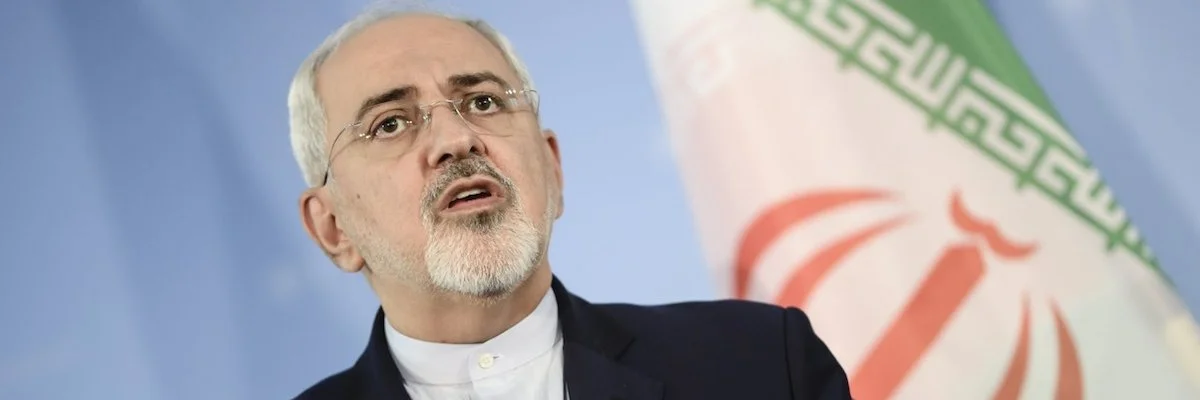
Mohammad Javad Zarif: Iran Sees a Broken U.S. Foreign Policy
◢ In a wide ranging essay, Iranian Foreign Minister Mohammad Javad Zarif outlines the Iranian view of a “broken” U.S. foreign policy and details Iran’s 15 demands in response to the 12 demands issued by U.S. Secretary of State Mike Pompeo after the withdrawal from the JCPOA.
This piece was originally published in Iran Daily. It is republished here with permission.
Following the Trans-Pacific Partnership and the Paris Climate Accord, the Joint Comprehensive Plan of Action (JCPOA) is the third multilateral agreement that the current United States administration has withdrawn from. The administration has also put in jeopardy other multilateral arrangements such as NAFTA, the global trade system, and parts of the United Nations system, thus inflicting considerable damage to multilateralism, and the prospects for resolving disputes through diplomacy.
The announcement on 8 May 2018 of United States’ withdrawal from the JCPOA and the unilateral and unlawful re-imposition of nuclear sanctions—a decision opposed by majority of the American people—was the culmination of a series of violations of the terms of the accord by this administration, in spite of the fact that the International Atomic Energy Agency, as the sole competent international authority had repeatedly verified Iran’s compliance with its commitments under the accord. The US decision was rejected by the international community and even its closest allies, including the European Union, Britain, France and Germany.
On 21 May 2018, US Secretary of State Mike Pompeo, in a baseless and insulting statement, issued a number of demands and threats against Iran in brazen contravention of international law, well-established international norms, and civilized behavior. His statement reflected a desperate reaction by the US administration to the overwhelming opposition of the international community to the persistent efforts by the White House to kill the JCPOA, and the ensuing Washington’s isolation. Mr. Pompeo, in his statement, attempted to justify the US’ withdrawal from the JCPOA and divert international public opinion from the unlawful behavior of the United States and its outright violation of UN Security Council resolution 2231; a resolution drafted and proposed by the US itself and adopted unanimously by the Council. Mr. Pompeo’s 12 preconditions for Iran to follow are especially preposterous as the US administration itself is increasingly isolated internationally due to its effort to undermine diplomacy and multilateralism. It comes as no surprise that the statement and the one made by the US president on Iran were either ignored or received negatively by the international community, including by friends and allies of the United States. Only a small handful of US client states in our region welcomed it.
I seriously doubt that had the US Secretary of State even had a slight knowledge of Iran’s history and culture and the Iranian people’s struggle for independence and freedom, and had he known that Iran’s political system—in contrast to those of the American allies in the region—is based on a popular revolution and the people’s will, would he have delivered such an outlandish statement. He should, however, know that ending foreign intervention in Iran’s domestic affairs, which culminated in the 25-year period following the US-orchestrated coup in 1953, had always been one of the Iranian people’s main demands since well before the Islamic Revolution. He should also be aware that in the past 40 years the Iranian people have heroically resisted and foiled aggressions and pressures by the US, including its coup attempts, military interventions, support of the aggressor in an 8-year war, imposition of unilateral, extraterritorial and even multilateral sanctions, and even going as far as shooting down an Iranian passenger plane in the Persian Gulf in 1987. “Never forget” is our mantra, too.
The Islamic Republic of Iran derives its strength and stability from the brave and peace-loving Iranian people; a people who, while seeking constructive interaction with the world on the basis of mutual respect, are ready to resist bullying and extortions and defend in unison their country’s independence and honor. History bears testimony to the fact that those who staged aggression against this age-old land, such as Saddam and his regime’s supporters, all met an ignominious fate, while Iran has proudly and vibrantly continued its path towards a better and brighter future.
It is regrettable that in the past one-and-a-half years, US foreign policy—if we can call it that—including its policy towards Iran has been predicated on flawed assumptions and illusions—if not actual delusions. The US President and his Secretary of State have persistently made baseless and provocative allegations against Iran that constitute blatant intervention in Iran’s domestic affairs, unlawful threats against a UN Member State, and violations of the United States’ international obligations under the UN Charter, the 1955 Treaty, and the 1981 Algiers Accord. While rejecting these fictitious allegations, I would like to draw the attention of US policymakers to some aspects of their nation’s current foreign policy that are detrimental to the entire international community:
First- Impulsive and illogical decisions and behavior of the US President—and efforts by his subordinates to find some justification to persuade a reluctant domestic and foreign audience—have already surfaced as the main feature of the decision-making process in Washington over the past 17 months. This process, coupled with ill-conceived and hasty explanations to justify outcomes, usually lead to contradictory statements and actions. As an example, in his role as CIA Director, Mike Pompeo once in a Congressional hearing emphatically stated: “Iran has not violated its commitments.” Later, and following the US President’s decision to withdraw from the accord, now Secretary of State Pompeo in his statement on May 21 emphatically stated that “Iran has violated its commitments."
Second- It wouldn’t be an exaggeration to say that some aspects of US foreign policy have been put up for auction—far beyond the routine lobbying practices. It is, for instance, unprecedented that a US president should choose the very country he had called “fanatic and a supporter of terrorism” during his election campaign as the destination for his first foreign visit as president, or to publicly make aspects of his foreign policy positions contingent on the purchase by one or another country of arms and other items from the United States. It has also been reported that in some other cases, mostly illegitimate financial interests have been the main basis for the formulation of mind-bogglingly ill-conceived US policy positions.
Third- Contempt for international law and attempts to undermine the rule of law in international relations have been among the main features of the current administration’s foreign policy. To the extent, according to media reports, that the US negotiators in the G7 Summit were even insisting on deleting the phrase “our commitment to promote the rules-based international order.” This destructive approach began by showing contempt for the fundamental principle of pacta sunt servanda, which is arguably the oldest principle of international law. The US withdrawal from some international agreements and undermining others, coupled with efforts to weaken international organizations, are examples of destructive moves so far by the US government, which have unfortunately darkened the outlook for the international order. Obviously, the continuation of such policies can endanger the stability of the international community, turning the US into a rogue state and an international outlaw.
Fourth- Predicating decisions on illusions is another aspect of this administration’s foreign policy. This has been especially evident with respect to West Asia. The illegal and provocative decision regarding al-Quds al-Sharif, blind support for the cruel atrocities committed by the Zionist regime against Gazans, and aerial and missile attacks against Syria are some of the more brazen aspects of such an unprincipled foreign policy.
The statement made by Mr. Pompeo on May 21 was the culmination of a delusional US approach to our region. Ironically, the US Secretary of State tried to set preconditions for negotiations and agreement with the Islamic Republic of Iran at a time when the international community is doubtful about the possibility or utility of negotiation or agreement with the US on any issue. How can the US government expect to be viewed or treated as a reliable party to another round of serious negotiations following its unilateral and unwarranted withdrawal from an agreement which was the result of hundreds of hours of arduous bilateral and multilateral negotiations, in which the highest ranking US foreign affairs official participated, and which was submitted to the Security Council by the US and adopted unanimously as an international commitment under Article 25 of the Charter?
Recent statements and actions by the US president, including reneging on his agreement with the G7 while in the air flying back from the summit, are other examples of his erratic behavior. His remarks immediately following his meeting with the leader of the DPRK regarding his possible change of mind in 6 months are indicative of what the world is facing—an irrational and dangerous US administration. Does the US Secretary of State really expect Iran to negotiate with a government whose president says: “I may stand before you in six months and say, ‘Hey, I was wrong. I don’t know if I’ll ever admit that, but I’ll find some kind of an excuse”? Can such a government really set preconditions for Iran? Isn’t it actually confusing the plaintiff for the defendant? Mr. Pompeo has forgotten that it is the US government that needs to prove the credibility of its words and legitimacy of its signature, and not the party that has complied with its international obligations and sticks to its word. In fact, the truth is that all US administrations in the past 70 years should be held accountable for their disregard for international law, and their violations of bilateral and multilateral agreements with Iran. A short list of the rightful demands of the Iranian people from the US government could include the following:
1. The US government must respect Iran’s independence and national sovereignty and assure Iran that it will end its intervention in Iran’s domestic affairs in accordance with international law in general, and the 1981 Algiers Accord in particular.
2. The United States must abandon its policy of resorting to the threat or use of force – which constitute a breach of the preemptory norms of international law and principles of the Charter of the United Nations—as an option in the conduct of its foreign affairs with or against the Islamic Republic of Iran and other States.
3. The US government should respect the state immunity of the government of the Islamic Republic of Iran, which is a fundamental principle of international law, and, while rescinding previous arbitrary and unlawful financial judgments, it should refrain from executing them in the US and extraterritorially.
4. The US government should openly acknowledge its unwarranted and unlawful actions against the people of Iran over the past decades, including inter alia the following, take remedial measures to compensate the people of Iran for the damages incurred, and provide verifiable assurances that it will cease and desist from such illegal measures and refrain from ever repeating them:
a. Its role in the 1953 coup that led to the overthrow of Iran’s lawful and democratically-elected government and the subsequent 25 years of dictatorship in Iran;
b. Unlawful blocking, seizure and confiscation of tens of billions of dollars of assets of the Iranian people after the Islamic revolution, or under various baseless pretexts in recent years;
c. Direct military aggression against Iran in April 1980, which was a blatant violation of the sovereignty and territorial integrity of Iran;
d. Provision of massive military and intelligence assistance to the Iraqi dictator during the 8-year war he imposed on the Iranian people inflicting hundreds of billions of dollars of damages on Iran and its people;
e. Responsibility in the enormous suffering that Iranians have incurred over the past 3 decades as a result of the use by Saddam of chemical weapons, whose ingredients were provided by the US and some other western countries;
f. The shooting down of an Iran Air passenger plane by the USS Vincennes in July 1988—a flagrant crime that led to the murder of 290 innocent passengers and crew, and the subsequent awarding of a medal to the captain of the ship rather than punishing him for his war crime;
g. Repeated attacks against Iran’s oil platforms in the Persian Gulf in the spring of 1988;
h. Repeated and unwarranted insults against the Iranian people by calling the entire nation “an outlaw and rogue nation” or “a terrorist nation” and by including Iran in the so-called “axis of evil;”
i. Unlawful and unreasonable establishment of a bigoted list of the nationals of some Islamic countries, including Iranians, prohibiting their entry into the US. The Iranians are among the most successful, educated and law-abiding immigrants in the US and have done great service to American society. They are now prohibited from seeing their loved ones, including even their aging grandparents;
j. Harboring and providing safe haven to anti-Iranian saboteurs in the USA, who openly incite blind violence against Iranian civilians, and supporting criminal gangs and militias and terrorist organizations, some of which were listed for years as terrorist groups by the US and later removed from the list following intense lobbying by those who have received money from them. Some of those lobbyists now occupy high-ranking positions in the Trump administration;
k. Support provided to Mossad for the multiple terrorist assassinations of Iranian nuclear scientists;
l. Sabotage of Iran’s nuclear peaceful program through cyber-attacks;
m. Fabrication of fake documents to deceive the international community over Iran’s peaceful nuclear program and to create an unnecessary crisis.
5. The United States government must cease its persistent economic aggression against the Iranian people which has continued over the past four decades; nullify the cruel and extensive primary and extraterritorial sanctions, rescind hundreds of legislations and executive orders aimed at disrupting Iran’s normal development which are in flagrant contravention of international law and have been universally condemned, and compensate the Iranian people for the enormous damages to the Iranian economy and its people.
6. The US government should immediately cease its violations and breaches of the JCPOA, which have caused hundreds of billions of dollars in direct and indirect damages for disrupting trade with and foreign investment in Iran, compensate Iranian people for these damages and commit to implement unconditionally and verifiably all of its obligations under the accord, and refrain (in accordance with the JCPOA) from any policy or action to adversely affect the normalization of trade and economic relations with Iran.
7. The US government should release all Iranians and non-Iranians who are detained under cruel conditions in the US under fabricated charges related to the alleged violation of sanctions, or apprehended in other countries following unlawful pressure by the US government for extradition, and compensate for the damage inflicted on them. These include pregnant women, the elderly and people suffering from serious health problems; some of whom have even lost their lives in prison.
8. The US government should acknowledge the consequences of its invasions and interventions in the region, including in Iraq, Afghanistan and the Persian Gulf region, and withdraw its forces from and stop interfering in the region.
9. The US government should cease policies and behavior that have led to the creation of the vicious DAESH terrorist group and other extremist organizations, and compel its regional allies to verifiably stop providing financial and political support and armaments to extremist groups in West Asia and the world.
10. The US government should stop providing arms and military equipment to the aggressors—who are murdering thousands of innocent Yemeni civilians and destroying the country—and cease its participation in these attacks. It should compel its allies to end their aggression against Yemen and compensate for the enormous damage done to that country.
11. The US government should stop its unlimited and unconditional support for the Zionist regime in line with its obligations under international law; condemn its policy of apartheid and gross violations of human rights, and support the rights of the Palestinian people, including their right to self-determination and the establishment of an independent Palestinian State with al-Quds al-Sharif as its capital.
12. The US government should stop selling hundreds of billions of lethal—not beautiful—military equipment every year to regions in crisis, especially West Asia, and instead of turning these regions into powder kegs it should allow the enormous amount of money spent on arms to serve as funding for development and combating poverty. Only a fraction of the money paid by US arms customers could alleviate hunger and abject poverty, provide for potable, clean water, and combat diseases throughout the globe.
13. The US government should stop opposing the efforts by the international community for the past 5 decades to establish a zone free from weapons of mass destruction in the Middle East. It should compel the Zionist regime—with its history of aggression and occupation—to de-nuclearize, thus neutralizing the gravest real threat to regional and international peace and security, which emanates from the most destructive arms in the hands of the most warmongering regime in our time.
14. The US government should stop increasingly relying on nuclear weapons and the doctrines of using nuclear weapons to counter conventional threats—a policy that is in flagrant contravention of its commitment under Article VI of the Non-Proliferation Treaty, the advisory opinion of the International Court of Justice, the 1995 NPT Review Conference Declaration, and UN Security Council resolution 984. The US should comply with its moral, legal and security obligations in the field of nuclear disarmament, which is a near unanimous demand of all United Nations Member States, and virtually all people across the globe, including even former US Secretaries of State. As the only State that is stamped with the shame of ever using nuclear weapons itself, it is incumbent on the US to relieve humanity from the nightmare of a global nuclear holocaust, and give up on the illusion of security based on “mutually assured destruction” (MAD).
15. The US government should once and for all commit itself to respect the principle of pacta sunt servanda (agreements must be kept), which is the most fundamental principle of international law and a foundation for civilized relations among peoples, and discard in practice the dangerous doctrine which views international law and international organizations as merely “a tool in the US toolbox.”
The aforementioned US policies are examples of what has resulted in Iranians distrusting the American government. They are also among underlying causes of injustice, violence, terrorism, war and insecurity in West Asia. These policies will bring about nothing but a heavy toll in human lives and material assets for different regions of the world, and isolation for the US in world public opinion. The only ones benefiting are and will be lethal arms manufacturers. If the US government summons the courage to renounce these policies in words and deeds, its global isolation will end and a new image of the US will emerge in the world, including in Iran, paving the path to joint efforts for security, stability, and inclusive sustainable development.
I admit that regrettably, it is not realistic to harbor a hope for such a change in US behavior. Thus, at the global level the Islamic Republic of Iran has for years promoted inclusion, multilateralism, dialogue, respect for the rule of law and nuclear disarmament through initiatives such as Dialogue among Civilizations and WAVE (World Against Violence and Extremism), and participated actively in international efforts to achieve nuclear disarmament and a rule-based international system. We have also presented practical proposals and engaged in serious diplomatic efforts to end regional conflicts in Syria and Yemen through diplomacy from the earliest stages of these unfortunate conflicts, sadly, to the deaf ears of the United States that continues to support aggressors and terrorists in every conflict in our region. And following the United States' withdrawal from the JCPOA, Iran has earnestly engaged with the remaining JCPOA Participants (EU/E3+2) in a good faith effort to salvage this unique global diplomatic achievement. We continue to do so as of this writing.
Nationally, Iran has ensured its security and stability in the past 4 decades on the basis of its inherent domestic capabilities and its reliance on the great Iranian people, not on any foreign power’s benevolence or patronage. Despite foreign pressure and while expending comparatively the least amount in the region on armaments, it has become stronger, more stable and more advanced by the day.
And regionally, in contrast to the US and its foreign policy, Iran—in accordance with its constitution—neither seeks to dominate nor will it ever submit to domination. It believes that the era of regional and global hegemony has long passed, and any effort by any power to achieve it is futile. Instead of yielding to foreign domination or trying to dominate others, countries in our region should seek to create a stronger, more prosperous and more stable region. We in Iran view our security and stability as inseparable from those of our neighbors. We have a common history and culture as well as indivisible opportunities and challenges, and can only enjoy security and stability at home, if and only if our neighbors enjoy internal and international stability and security. We expect other regional countries to adopt a similar approach, and instead of insisting on the failed experiment of “trying to purchase or outsource security,” concentrate on dialogue, mutual understanding, confidence building, and cooperation with neighbors.
The Islamic Republic of Iran views the establishment of a “Regional Dialogue Forum” in the Persian Gulf as the best means to resolve regional crises and create a stronger region. We can begin adopting confidence-building measures to bring regional countries closer to each other on the basis of such principles as the sovereign equality of states, non-resort to the threat or use of force, peaceful settlement of disputes, respect for territorial integrity of other States, inviolability of international boundaries, non-intervention in domestic affairs of others, and respect for the right of peoples to self-determination. By fostering common understanding about threats and opportunities at the regional and global levels, we can move towards achieving a non-aggression pact and creating common mechanisms for regional cooperation. We firmly believe that we, regionally—as the inheritors of the richest civilizations the world has ever known—should stand tall and can solve our own problems amongst ourselves and secure a better future for all of our children without outside interference and patronage, both of which come at a heavy cost to our collective dignity as well as our future development.
Photo Credit: EPA

High Stakes for Iran in Upcoming FATF Meeting
◢ A few days ahead of an international meeting in which Iran’s efforts to improve anti-money laundering and counter-terrorist financing (AML/CFT) standards will be reviewed, Ayatollah Ali Khamenei appeared to pour cold water on the reform process. Yet, it is premature to assume that Iran’s consultations with the Financial Action Task Force (FATF) are suddenly over after two years of close coordination. As the FATF’s plenary meeting approaches, the stakes are high for Iran, which is seeking another extension for implementation of its action plan.
A few days ahead of an international meeting in which Iran’s efforts to improve anti-money laundering and counter-terrorist financing (AML/CFT) standards will be reviewed, Ayatollah Ali Khamenei appeared to pour cold water on the reform process. Yet, it is premature to assume that Iran’s consultations with the Financial Action Task Force (FATF) are suddenly over after two years of close coordination. FATF, a financial crime watchdog that develops and monitors international AML/CFT standards, faces an important decision on Iran. The stakes are high for Iran, which is seeking to reintegrate into the global economy and there are reasons to believe that FATF’s decision may have repercussions that go far beyond its June 24-29 plenary in Paris.
Consequences of Iran's AML/CFT Deficiencies
If FATF believes that Iran is not adhering to its action plan to upgrade AML/CFT standards, the intergovernmental body could call on its 37 members to reimpose strict financial safeguards. These so-called "countermeasures" would discourage or even lead to the termination of relationships between Iranian and foreign banks, and possibly include Iran losing access to global bank messaging service SWIFT. Alternatively, FATF may decide Iran has made sufficient progress to warrant an extension to the two-year suspension of the countermeasures. Regardless, there are no indications that Iran will be removed from FATF’s black list of high-risk jurisdictions and financial institutions will continue to be urged to conduct enhanced due diligence (EDD) on Iranian-related business relationships and transactions.
This type of guidance places a significant risk management burden on global banks. Through customer due diligence, banks collect information to identify and verify customers in order to comply with regulations and report suspicious activity. EDD comprises several extra steps, such as probing sources of funds, scrutinizing financial statements, and conducting thorough investigations of relevant businesses or individuals. Because of the high level of scrutiny required for the Iranian market, most foreign banks did not return even after the international nuclear deal was implemented in 2016.
Foreign financial institutions, especially those with a US presence, are unlikely to change this calculation without an improvement to transparency and governance in the local banking sector. In particular, foreign banks are worried about unwittingly facilitating transactions with sanctioned entities. Due to ongoing fears of reputational and legal liabilities, Iran’s access to the international financial system is diminished by de-risking practices of global banks for the foreseeable future.
How Iran Stands to Benefit from Reform
Although the chance to be removed from FATF’s black list is a clear reason for Iran to complete the organization’s action plan, the long-term economic impact of reforms provides another vital incentive. Mismanagement, corruption, and fragmentation in the banking sector dampens economic potential. Iran’s bad debt, estimated to be in the tens of billions of dollars, fuels fears of an imminent banking crisis. Strengthening Iran’s banking sector to align with international standards, a priority highlighted by the IMF, would lay the foundation for a more stable economy and promote reintegration with the international financial system.
FATF-related reforms will not be a panacea for Iran’s economy. This year the currency lost over 20 percent of its value against the US dollar (and much more on the black market) between January and June, foreign companies are considering plans to wind down billion-dollar investments, and a drop in oil revenue looms because of the impending renewal of US secondary sanctions. Nevertheless, if reforms convince some foreign banks to stay even after US sanctions are re-imposed, it could offer a lifeline to an economy under tremendous pressure. Moreover, new rules that improve Iranian banks’ transparency are vital to address a major grievance from protests late last year: the need to root out financial sector corruption that enriches elites and undercuts economic opportunities for the working class.
Iran’s Progress To Date
Despite Iran’s recent decision to delay vital CFT legislation, the government is taking several steps to satisfy the terms of its action plan. The Rouhani administration regularly engages with FATF experts even though there is fierce internal opposition from many of the same political, religious, and military actors who opposed the nuclear deal. In February, FATF credited Iran for establishing a cash declaration regime. In June, a draft bill to amend the AML law was approved by parliament’s judiciary commission and legislators ratified Iran’s accession to an international convention on combating transnational crime. Similarly, Iranian officials are working to implement several technical AML rules that FATF cited in a statement following the organization’s February plenary. Although full implementation will not be realized within two years of beginning the reform process, Iran continues to work toward compliance with international standards across several areas.
The widest gulf between Iran’s commitments and FATF’s expectations remains on criminalizing terrorist financing. To fully comply with FATF standards, text would need to be changed in Iran’s legislation for amending the counter-terrorist financing law and acceding to a related international convention. Both bills contain CFT exemptions for certain types of militant groups, but there is no precedent for FATF accepting legislation with such conditions. Resolving these issues will not be easy, but the political will to be removed from FATF’s black list (if not eventually acceding to FATF) should prompt ongoing discussions.
It is in this context that Khamenei’s June 20 statements, intimating that parliament should abandon the FATF process, are important. Just like in the run up to the international nuclear deal, Khamenei’s maximalist comments are open to interpretation because they may be intended for several distinctive audiences. Domestically, Khamenei is trying to assuage fears from his traditional allies who believe the FATF process is a foreign ploy to weaken the IRGC and hamper Iran’s support for Hamas and Hezbollah. However, this sentiment must be balanced against palpable angst among Iranians that believe the troubled banking sector threatens their livelihoods. This could be why Khamenei mentioned that “some of the provisions of the international treaties may be good” before suggesting that Iran legislate on money laundering and terrorist financing issues independently.
From an international perspective, Khamenei is seeking to increase pressure on European countries to receive the most favorable economic terms possible after the US pulled out of the nuclear deal. Initially, Iran cited ongoing negotiations to salvage the nuclear deal as the primary reason for delaying by two months FATF-related legislation. Only three weeks ago, Khamenei indicated strong support for Iran’s newly established High Council for Economic Coordination. This council, which is composed of leaders from the country’s executive, legislative, and judiciary branches of government, is coordinating a unified response to US sanctions. That is why it should not be overlooked that their first decision was to speed up the process for implementing the FATF action plan. Khamenei may be fed up with the FATF process, but he also may be negotiating.
FATF and Trans-Atlantic Tensions
Leading up to FATF’s plenary session in February, there were indications that the US strongly supported reprimanding Pakistan for its failure to combat terrorist financing. Yet, the decision was delayed until at least the June meeting after three FATF members (China, Turkey, and Saudi Arabia) allegedly intervened on Pakistan’s behalf. The decision exposed a potential break from strong US influence within FATF. It was also a radical departure from the intergovernmental body’s typical decision-making process that relies on consensus rulings.
Coupled with rising trans-Atlantic tensions on foreign policy and trade issues, this calls into question whether the US will be able to build consensus should it seek to reimpose countermeasures against Iran. Furthermore, it is hard to imagine European governments supporting FATF action that further constrains their efforts to salvage the nuclear deal. Beyond European countries, there are several FATF members (China, India, Russia, Turkey) that will be even less inclined to support countermeasures that hurt the foreign investment strategies of their banks, state-run entities, and private companies.
It is possible that neither the US nor Iran will be satisfied with the FATF meeting’s outcome. Still, Iran’s FATF process offers clear benefits to both. For Iran, staying engaged provides much-needed support for a weakened banking sector and a path to reintegration with the global economy. For the US, it provides a global forum to keep pressure on Iran to do more to combat money laundering and terrorist financing.
From an international AML/CFT perspective, it also makes sense to keep Iran engaged in the FATF process. Certain Iranian actors, including some banks, grew quite adept at facilitating transactions to evade sanctions over the past several decades. With the return of stringent US sanctions, these vested local interests stand to benefit once again. Re-imposing countermeasures now will reduce vital coordination to protect the global financial system from new money laundering threats. There may come a time when FATF countermeasures are viewed as the only viable option to combat AML/CFT threats emanating from Iran. However, more time is needed to support Iranian efforts to bring about legislative and regulatory reforms. For now, this is the best way to fulfill FATF’s mission to counter threats to the integrity of the international financial system.
Photo Credit: Financial Services Commission

Over-Compliance on Iran Sanctions Can Lead to Discrimination
◢ Ireland’s Workplace Relations Commission has fined an unnamed bank EUR 20,000 for discrimination against an Iranian couple. The ruling points to a growing case precedent in Europe on acts of sanctions over-compliance which lead to discrimination of Iranian persons or individuals and businesses who maintain financial links to Iran.
Ireland’s Workplace Relations Commission has fined an unnamed bank EUR 20,000 for discrimination against an Iranian couple. As reported by the Irish Times:
WRC Adjudication Officer Marian Duffy found that the bank did discriminate against the two on the grounds of race. Ms. Duffy said that ‘alternative methods to counter money laundering/terrorist financing and US sanction breaches were open to the respondent… These include the implementation of robust IT systems and procedures, customer advice/guidance and information systems and/or a helpline as part of the process to monitor account activities.’
The comission found that the bank’s policy was neither appropriate nor necessary to achieve its stated aims and therefore was not objectively justified. The bank fundamentally was racially discriminatory in their actions. The bank had stated previously that it has no appetite for dealing with Iranian affiliated customers over risks of sanctions and as a result of maintaining a small presence in the US.
In another example of discrimination, S&P Global Platts had banned Iranian nationals from attending a conference it was holding in London over sanctions fears. The company reserved this ban rapidly following a report in the Financial Times which sparked outrage.
In both the case of the Irish bank and the S&P conference, we see an an overreaction to Iran sanctions, which will only be exacerbated by the US withdrawal from the Joint Comprehensive Plan of Action (JCPOA).
OFAC and the New Culture of Compliance
Compliance officers have a job to do. That job is not easy. Since the global financial crisis in 2008 a whole heap of new regulations have been introduced surrounding financial services on all fronts. Some industries, such as shipping, are plagued by fraud and corruption relating to banking and letters of credit. This leaves compliance officers with the fear of being held personally liable (as officers responsible for anti-money laundering often are) for even the slightest of mistakes. These mistakes can, of course, have serious personal ramifications.
The “take no chances” attitude now common among compliance officers looking to protect a banks from potential breaches and the resulting penalties, is only intensified when you add the factor of Iran.
On one hand banks see Iran as a nation with a large, successful patriotic diaspora who, regardless of what views they hold, have a deep connection to their country both sentimentally, physically, and often financially. Iran is a country with a huge consumer market and significant economic potential. But there is a catch—Iran is on the wrong side of the most powerful financial enforcement authority in the world; Office of Foreign Assets Control, known as OFAC.
For those who maintain connections to Iran—practitioners, businessmen, professionals and Iranians abroad alike—discrimination is unfortunately not uncommon. Bank accounts connected to Iranians or used for Iran related business have been regularly closed over the last ten years, including the accounts of students who rely fully on money sent by family in Iran.
The reason for these closures can be traced to OFAC, part of the US Department of Treasury. OFAC has issued fines ranging from hundreds of millions to billions of dollars against varying institutions—from RBS to Standard & Chartered, and even the Chinese telecommunications company ZTE. In fact, OFAC has generated so much income from sanctions penalties, that the UK decided to set up its own version, OFSI (Office of Financial Sanctions Implementation) in 2016.
From just a brief look at the scale of fines involved—USD 1.2 billion levied on ZTE alone—it is not hard to see why a compliance officer would not want to follow the law to the letter. But therein lies the paradox: which law?
Conflict of Laws and Regulation
We live in an ever-growing and increasingly interconnected financial market. United States is, and shall remain for this generation at least, the crown jewel at the heart of the global financial market. International companies make more money being present in the US market than in any other market, and this requires being on the “right side” of US laws. For this reason, many companies instinctively abide by US laws even in jurisdictions where these laws would seem not apply.
Since the implementation of the Joint Comprehensive Plan of Action (JCPOA) in 2015, the European Union has permitted its companies to invest in Iran by lifting most of the sanctions. But the United States had only removed secondary sanctions as part of the nuclear deal, not the primary sanctions which restrict “US persons” from trading with Iran. Following President Trump’s withdrawal from the JCPOA, and the announcement that secondary sanctions would be returning, many consider the deal to be doomed. But the remaining signatories remain in compliance with the agreement for now.
This has left compliance officers at many multinational companies somewhat confused. What laws ought they abide by, those of the EU or the US? On international trade, the answer is simple. If you have connections to the US or a desire the conduct business in the US market, it is best you comply with US regulations.
However, it is also important not to breach local laws in other jurisdictions in which you operate. There can be a contradistinction between abiding by sanctions and breaking the law. For example, a compliance officer may advise against doing business with Iran, but he/she cannot take a broad brush approach and punish Iranian customers by virtue of their race. While the “take no chances” approach to sanctions may make it attractive to comply with US regulations absolutely, without considering local laws, companies are playing with fire and leaving their organizations at risk of unlawful activity that could have serious consequences.
On matters relating to human affairs, it simply does not matter at all if a company has a US presence, discrimination can and should have very severe consequences. OFAC guidance is vague on a whole range of matters, including instances where there is a conflict between EU and US law. But case precedent is building in Europe against acts of over-compliance. Regulators and judges may not be as harsh now, as there may be some understanding of the confusion stemming from a fluid situation. But the courts will be far harsher later, once their position has been established.
It is therefore imperative, before any overreaction has been made by the US withdrawal from the JCPOA, that local legal advice is taken. Remember, we are not back in the former sanctions era of 2006-2015. The EU is not participating in sanctions against Iran.
Finally, those on the receiving end of such discrimination should take immediate legal advice. The more cases which are pursued, the greater the chance that justice will prevail in the end. As relayed in the word’s of Arcesilaus, “Where you find the laws most numerous, there you will find also the greatest injustice.”
Photo Credit: Surrey Court
New US Sanctions Target Operator of Iran's Presidential Aircraft
◢ The US Treasury Office of Foreign Asset Control on Thursday announced a new round of targeted sanctions designations, including sanctions on Dena Airways, the company which operates the Iran’s presidential aircraft used by Hassan Rouhani for official travel. The new sanctions follow the designation of Iran’s central bank governor, Valliollah Seif, and reflect a further targeting of the Rouhani administration.
The US Treasury on Thursday announced a new round of targeted sanctions designations, including sanctions on Dena Airways, the company which operates the Iran’s presidential aircraft used by Hassan Rouhani for official travel.
The new sanctions follow the designation of Iran’s central bank governor, Valliollah Seif, and reflect a further direct targeting of the Rouhani administration.
Dena Airways is the company which operates EP-DAA, an Airbus A340. Until November 2017, the aircraft was registered to Meraj Airways, an entity which was previously sanctioned as part of the Specially Designated Nationals list, known as the SDN list.
The new sanctions on Dena could prevent the use of the use of the company’s sole registered aircraft for official travel, as ground handling companies worldwide may refuse to refuel or service the aircraft. In February, a Meraj-registered aircraft used by Foreign Minister Javad Zarif to attend the Munich Security Conference needed to be refueled by the German military, after companies refused to provide services to the aircraft, citing US sanctions. That aircraft, EP-AGB, was notably left off the list of designations, despite another government liveried aircraft, EP-AJC being added to the SDN list.
The new designations also extend to thirty-one separate aircraft operated by airlines included Mahan, Caspian, and Pouya. These three entities were previously listed on the Office of Foreign Assets Control’s SDN list, and had been targeted due to reported ownership links to the IRGC and to the reported use of aircraft for military airlifts to Syria.
Mahan is Iran’s largest airline by fleet size and number of destinations. The specific targeting of Mahan’s aircraft will inhibit their continued use on commercial flights. For example, EP-MMB, an Airbus A340, flies regular routes to Istanbul, Ankara, Moscow, and Dubai.
Photo Credit: Planespotters

Increased Competition Squeezes Air France in Iran
◢ Air France recently announced the reduction of its flights from Paris to Tehran after first switching the service on the route to its subsidiary airline JOON. At a time of uncertainty surrounding the future of the Iran nuclear deal, the reduction of flights led to speculation that the move may have been influenced by the return of sanctions. But a look to the current competitive environment shows other significant changes to the market to which Air France was forced to react.
Air France recently announced the reduction of its flights from Paris to Tehran after first switching the service on the route to its subsidiary airline JOON. At a time of uncertainty surrounding the future of the Iran nuclear deal, the reduction of flights led to speculation that the move may have been influenced by the return of sanctions. But a look to the current competitive environment shows other significant changes to the market to which Air France was forced to react.
Starting in October 2018, Air France flights will only operate on the Paris-Tehran route during the summer season. A statement from the airline said: "After two years of operations and faced with a weak economic and commercial performance, Air France took the decision to adjust this route's flight schedule to be in line with demand."
The Iranian travel market has changed considerably from when Air France resumed its flights in April 2016, first operating flights three times a week with Airbus A340 aircraft and a seating capacity for 255 passengers. At the time, Air France was the only airline flying between Paris Charles de Gaulle Airport and Tehran and the only competition facing the French national carrier was Iran Air’s weekly flight out of Paris Orly Airport.
A few months later, Mahan Air began flights to Paris three times a week with its own A340 aircraft. Just recently, Iran Air moved its flights from Paris Orly to Paris Charles de Gaulle Airport, while also upgrading its aircraft to a brand new A330. In January, Mahan Air announced that it will increase its frequencies to Paris from three weekly flights to four for the summer 2018 season.
Looking to the new competition, travelers journeying between Paris and Tehran have more options than ever before. With Iran Air and Mahan Air flying to Paris with higher frequencies and lower prices, Air France has definitely felt the competitive pressure.
According to figures from the French government, 107,317 passengers travelled between Paris and Tehran on the relaunched service in 2016, a 178 percent increase from the previous year. The following year, the number of passengers further increased to 145,896, up 36 percent. Much of this growth can be attributed to Air France's connecting passengers, traveling from Paris to other destinations.
The impending return of sanctions is likely to reduce demand from tourists and business travelers on Paris-Tehran route, making the impact of Iran Air's capacity increases and the new Mahan flights more acutely felt. The recent increase in departure taxes and currency restrictions may affect outbound travel from Iran to foreign destinations including France.
Moreover, the expansion of Iranian airlines is also in doubt as European growth is dependent on the arrival of its new aircraft. Iran Air's deals with Airbus and Boeing are now in jeopardy after President Trump withdrew from the nuclear deal, canceling licenses for aircraft sales.
Nevertheless, Air France also faces more competition with European airlines than it did in 2016. British Airways and KLM resumed flights to Tehran in late 2016, while Austrian Airlines increased its presence in Iran with additional flights to Tehran, Isfahan, and Shiraz, focusing more on Iran’s tourism industry. Aegean Airlines and Ukrainian International Airlines are attracting more connecting passengers and have also increased their presence in Iran.
With more than two years for foreign airlines to observe the Iranian market since 2015, flight adjustments and schedule changes are quite normal to react to over estimations in demand. British Airways and Alitalia have adjusted their schedules with slight decreases in frequencies or capacities to better meet the demand as Iran Air has grown its presence in both London and Rome.
Air France has been flying to Iran since 1946 with few suspensions. Despite the recent adjustments, 2018 will certainly not be the last year of a full service between Paris and Tehran.
Photo Credit: Wikicommons
Global Academic, Cultural Leaders Declare ‘European Imperative’ to Save Iran Deal
◢ In a new open letter, over 150 global academic and cultural leaders have called upon the European Union to “discharge its international obligations” and ensure that “Iran and its people enjoy the full economic and political dividends” of the nuclear deal, despite President Trump’s unilateral withdrawal from the agreement earlier this month.
A new open letter calls upon the European Union to “discharge its international obligations” and ensure that “Iran and its people enjoy the full economic and political dividends” of the nuclear deal, despite President Trump’s unilateral withdrawal from the agreement earlier this month.
Over 150 figures have signed the letter so far, including some of the most prominent names in the humanities and social sciences, among them Judith Butler, Noam Chomsky, Peter Singer, Slavoj Žižek, Cornel West, and Talal Asad. Iranian scholars who have signed the letter include Hamid Dabashi and Ervand Abrahamian. Other signatories include Iranian actress Taraneh Alidoosti and artist Shirin Neshat.
The letter, hosted online and addressed to European Union High Representative Federica Mogherini, applauds the “‘universal language’ of respect and dialogue” she employed in her May 8 speech responding to Trump’s aborgation of the deal. Mogherini insisted that Europe was committed not to “let anyone dismantle this agreement.” Drawing on this sentiment, the letter declares that “failure is not an option” in this “age of extremes” as Europe seeks to protect the credibility of diplomacy and the durability of peace.
One of the creators of the open letter, Eskandar Sadeghi-Boroujerdi, is a postdoctoral research fellow at the University of Oxford. Sadeghi-Boroujerdi sought to unify the voices of people who “possess considerable intellectual and ethical weight and who can influence public opinion.” He sees the threat to a nuclear deal as “deeply concerning” foremost because the deal represented a “promise to the Iranian people” that risks being broken.
Notably, the body of the letter focuses on the “heartfelt support for this hard-won diplomatic accord” demonstrated by the majority of the Iranian people, as shown through “their two-time election of a president promising to initiate constructive dialogue with the world.” The betrayal of this popular support is to be most acutely felt as the Trump administration prepares to reimpose sanctions, “a form of economic warfare which inevitability impact the health, wealth and personal security of ordinary Iranians,” explains Sadeghi-Boroujerdi.
The open letter once again highlights the broad international support for the nuclear deal and follows a similar campaign from April in which saw 500 lawmakers from Germany, France and Britain sign an open letter imploring U.S. congressional leaders to support the JCPOA.
Photo Credit: Open Letter
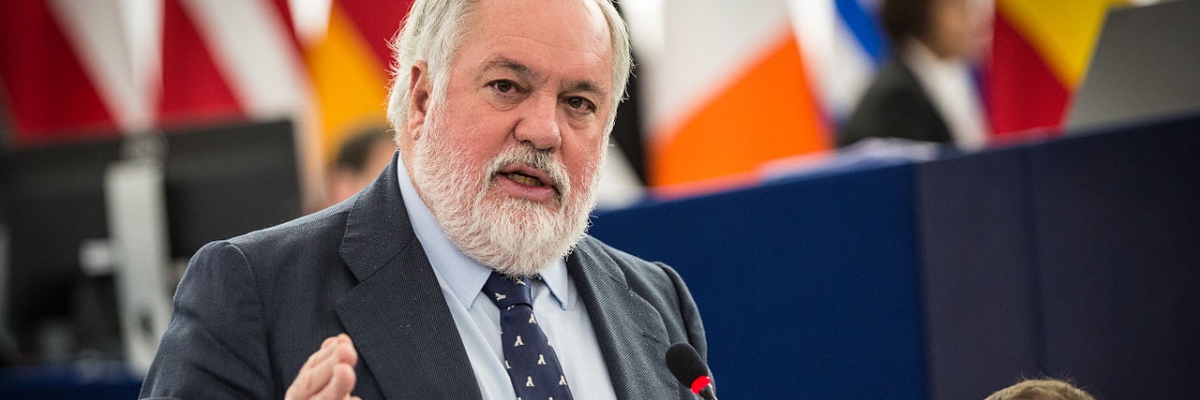
Cañete to Discuss Vital Central Banking Solution on Iran Visit
◢ Europe’s Commissioner for Climate Action and Energy, Miguel Arias Cañete is set to travel to Tehran this weekend. Cañete’s visit will include discussions on possible new payment mechanisms designed to allow Europe to repatriate oil revenues to Iran’s central bank despite despite Trump’s withdrawal from the nuclear deal, offering a vital lifeline for the Iranian economy as sanctions begin to bite.
In a statement released Friday, European Commission president Jean-Claude Juncker declared that the Commission has a “duty… to do what we can to protect our European businesses, especially SMEs.”
As Europe steps-up its efforts to fulfill that duty, the commission took two concrete steps, launching the formal process to revive the blocking regulation that will prohibit EU companies from “complying with the extraterritorial effects of US sanctions.” The regulation also “allows companies to recover damages arising from such sanctions from the person causing them.”
The European Commission also launched the formal process to enable the European Investment Bank (EIB) to finance activities in Iran under an EU budget guarantee. Helga Schmid, Secretary General of the European External Action Service, first announced that EIB would be receiving such a mandate, at the Europe-Iran Forum, a business conference organized by Bourse & Bazaar, in October 2017.
Friday’s statement further highlighted the pending visit of Europe’s Commissioner for Climate Action and Energy, Miguel Arias Cañete, to Tehran. The visit, which will take place over the weekend, is a continuation of a program of “sectoral cooperation” launched in 2016.
But the most significant announcement was the news that the European Commission is “encouraging member states to explore the possibility of one-off bank transfers to the Central Bank of Iran” in order to assist Iran in receiving “oil-related revenues, particularly in case of US sanctions which could target EU entities active in oil transactions with Iran.”
Experts have pointed to the creation of channels for such transfers as an important short-term measure. A report published earlier this month by International Crisis Group, suggests enabling “pertinent European central banks to process related payments” as a means of “empowering those in the Iranian leadership who advocate continued compliance with the deal.”
Speaking on background, an EU official confirmed that Cañete’s visit would include “discussions on how the mechanics of all of this would work.” European authorities have identified two priorities: “One is to work out how you can facilitate payment of Iran for imports of oil to the European Union. But, secondly and equally importantly, the repatriation of Iranian funds that are currently in the European Union.”
The emphasis on repatriation is especially important as Iran seeks a route to sustained economic growth despite the snapback of primary and secondary U.S. sanctions. Economists have identified that increased public investment could help Iran achieve growth in the absence of the foreign investment that had been expected to follow the lifting of sanctions in 2015. Typically, half of Iran’s oil revenues are earmarked for the government budget, and a just under a third of revenues are allocated to the National Development Fund.
During recent consultations, experts from the International Monetary Fund implored Iranian authorities “to explore the scope to use oil revenues to fund bank recapitalization, and noted the importance of replenishing the Oil Stabilization Fund to provide the budget a buffer.”
Seen in this context, oil revenues are a lifeline for the Iranian economy. As Iran’s economy begins to lose momentum in advance of full sanctions snapback, Iranian business leaders and consumers will be watching intently to see if Europe can keep oil flowing in and revenues flowing out.
Photo Credit: Wikicommons
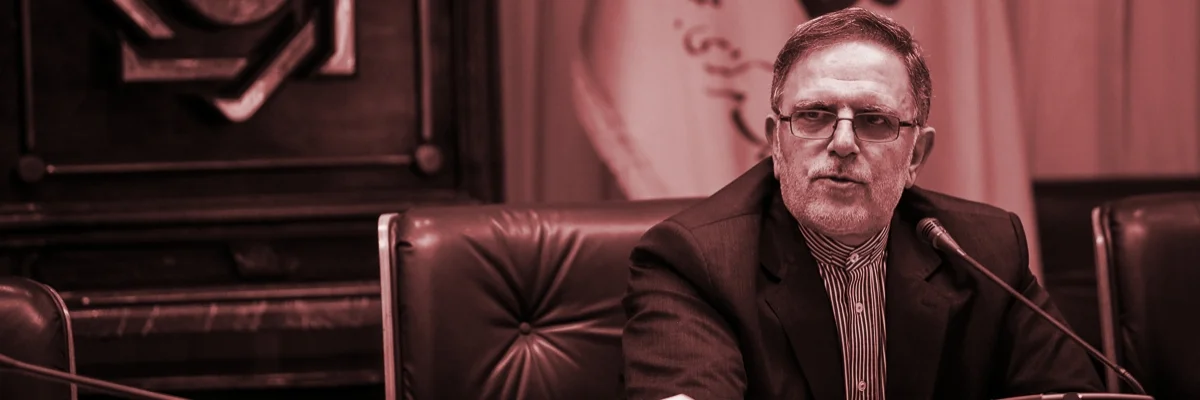
They Want War With Iran, They’re Settling For Economic War
◢ On Tuesday, French officials convened a briefing for French business on possible responses to Trump’s reimposition of secondary sanctions. French Minister of Economy Bruno Le Maire reportedly cited the French parable that “money is the nerve of war” to describe what is at stake. He may be more correct than he realizes, as the Trump administration gears-up for an economic war on Iran.
This article was originally published on LobeLog.
On Tuesday, the U.S. Treasury’s Office of Foreign Assets Control (OFAC) sanctioned Valiollah Seif, governor of the Central Bank of Iran (CBI) as a “Specially Designated Global Terrorist,” accusing him of moving “ millions of dollars on behalf of the Islamic Revolutionary Guard Corps-Qods Force (IRGC-QF) to Hezbollah.” OFAC’s move opened a new front in the Trump administration’s accelerating conflict with Iran. The designation of a single individual, even the central bank governor, may not seem that significant. After all, Trump announced last week that he would reimpose all primary and secondary sanctions lifted as part of the Joint Comprehensive Plan of Action (JCPOA) as part of withdrawing from the nuclear deal. But targeting Seif may prove to be the pivotal moment in an economic war.
Iranian financial institutions have long been designated for suspected terrorist financing, and the Obama administration used such measures to isolate Iran’s economy in the effort to bring Iran to the negotiating table over its nuclear program. But the move to target Seif as an individual represents a significant escalation for two reasons. First, it reflects the direct targeting of a member of the Hassan Rouhani administration in a clear role of civilian leadership. Seif is not a rogue actor. He is a public figure, who travels regularly to Europe to engage in technical dialogue. Just recently, he welcomed Swedish central bank governor Stefan Ingves to Tehran. Seif also travels to the United States when invited for meetings at the International Monetary Fund and World Bank.
Moreover, Iran’s central bank is at the heart of an expansive effort to reform the country’s anti-money laundering (AML) and counter-terrorist financing (CTF) standards. Iran’s parliamentary research center recently concluded in a comprehensive report that “a considerable portion of the problems in Iranian banks’ correspondent relations with global counterparts is rooted in non-sanction reasons” including poor AML/CTF standards. Seif has been a central figure in the effort to improve these standards. Politically speaking, OFAC’s action could not be more different from the routine targeting of Iran’s military brass.
Second, the move represents an escalation because of who was likely behind it. It had long been assumed that OFAC was relatively immune to the more irascible political impulses in Washington. The application of sanctions was informed first and foremost by the need for restraint. As noted by former Treasury Secretary Jack Lew in a 2016 speech, OFAC was expected to “guard against the impulse to reach for sanctions too lightly or in situations where they will have negligible impact.” Lew advised his colleagues to be “be conscious of the risk that overuse of sanctions could undermine [America’s] leadership position within the global economy, and the effectiveness of [American] sanctions themselves.”
The Strategy of Economic Warfare
Neither Trump nor his close advisors are averse to undermining America’s leadership position in the world. The decision to sanction Seif under a terror designation carries the hallmarks of the Foundation for Defense of Democracies (FDD). A 2016 policy brief by FDD’s Mark Dubowitz and Annie Fixler, written on the occasion of Seif’s visit to Washington for meetings at the IMF, identifies the central bank governor as “no stranger to illicit finance” and claims that CBI “stands out for its long rap sheet of financial crimes.” More recently, Richard Goldberg and Saeed Ghasseminejad argued that “the White House should re-impose sanctions on the Central Bank of Iran” in order to push Iran’s currency into a “freefall” and precipitate a deeper economic crisis. This later piece makes it especially clear that FDD is not interested in the application of sanctions to achieve economic coercion. It seeks economic destruction.
As a strategy to confront Iran, economic warfare has clear advantages for the White House. The strategy allows Trump to continue to claim to be a non-interventionist and does not require him to send American troops to die in another quagmire. Economic warfare also allows avowed interventionists such as National Security Advisor John Bolton to pursue their destructive ends without the disapprobation following their support of the Iraq War. By trying to force Iran to collapse from within, by goading the Iranian people to tear down their own state, and by portraying that process as a popular revolution, Bolton can achieve his messianic goal without the high risk of blowback that would certainly face this chaotic administration from a military conflict.
Acknowledging that the Trump administration is adopting a strategy of economic warfare towards Iran means recognizing that the long-held distinction between economic concerns and security concerns vis-a-vis Iran are collapsing. In recent months, European and Iranian officials have made an effort to clarify that the JCPOA is “not an economic deal” but “a very important deal in the field of the non-proliferation regime.” In this formulation, the economic component of the deal is only valuable insofar as it serves a security goal. But Trump’s move to reapply sanctions on Iran—despite the country’s compliance with its commitments under the deal and with the clear purpose of fomenting instability in Iran—transforms the effort to save the JCPOA into an effort to shield Iran from an unjust economic war.
Europe’s Response
Seeing the economic threat to Iran as a security threat should have a significant bearing on how Europe responds to Trump’s provocations. In its recent formulation of a diplomatic strategy to save the JCPOA, Europe is seeking to preserve the economic benefits of the nuclear deal to incentivize Iran’s continued commitment to its non-proliferation commitments. But in the aftermath of the U.S. snapback of sanctions, and the likely escalation of those sanctions beyond levels previously seen, the imperative must be to insulate Iran’s economy and the Iranian people. The U.S. is seeking to instigate instability by putting pressure on the Iranian people, who know all too well the pain of shortages in foodstuffs and medicines that sanctions portend.
Iran will likely be able to prevent internal instability, but doing so will entail securitizing larger parts of the economy and society as was the case during the Mahmoud Ahmadinejad administration. In such a scenario, the ascendency of the IRGC will risk regional conflict by exacerbating the security dilemma with Saudi Arabia and Israel. Europe must recognize that a strong Iranian economy is fundamental to both internal and regional security, especially in the face of sustained pressure from the United States.
On Tuesday, French officials convened a briefing for French business on possible responses to Trump’s reimposition of secondary sanctions. French Minister of Economy Bruno Le Maire reportedly cited the French parable that “money is the nerve of war” to describe what is at stake. Later that day, reports emerged that the foreign ministers’ meeting among the EU, France, Germany, the UK, and Iran focused on a “nine-point plan” devoted to “maintaining economic ties with Iran, continuing Iran’s ability to sell oil and gas products and protecting EU companies doing business in Iran.”
The limits of European independence in international relations and tradecraft have been exposed by the break with the United States over Iran. As described by Siemens CEO Joe Kaeser in a recent interview, the corporation’s decision to wind down operations in Iran is a reflection of the “primacy of [the American] political system. If that primacy says ‘this is what we’re going to do’, then that is exactly what we’re going to do.” As in the case of the primacy of American military might, Europe long relied on the primacy of U.S. sanctions enforcement, grafted as it were onto the primacy of the U.S. financial system, in order to lend power to the once cohesive foreign policy of the transatlantic partnership. Now, the primacy of the U.S. system is a liability for Europe and a threat to Iran.
Photo Credit: IRNA

Total CEO Pouyanné: Transatlantic Partners Risk Gifting Iran to 'China and Russia'
◢ Speaking on Thursday at the Center for Strategic and International Studies, a Washington D.C. think tank, Total CEO Patrick Pouyanné faced several questions about his company’s recently announced decision to wind down operations in Iran following the reapplication of secondary sanctions by the Trump administration. Pouyanné warned that the “Atlantic allies” risk giving “all the Middle East region to China and Russia.”
Speaking on Thursday at the Center for Strategic and International Studies, a Washington D.C. think tank, Total CEO Patrick Pouyanné faced several questions about his company’s recently announced decision to wind down operations in Iran following the reapplication of secondary sanctions by the Trump administration.
With his trademark candor, Pouyanné left no doubt that Total was obligated to comply with U.S. sanctions in regards to the USD 5 billion South Pars gas project launched in July 2017, stating “Secondary sanctions mean that the U.S. president can decide that Total cannot have access to any U.S. banks. I cannot run a company in 130 countries without access to U.S. banks.”
For Total, the South Pars project in Iran was only considered “because of the JCPOA, which meant the end of secondary sanctions.” With the nuclear deal in doubt, and sanctions set to return, “there is no possibility for us,” Pouyanné declared, further noting the role of American shareholders and the significant portfolio of American assets of the French oil company.
But the imposing, formerly rugby-playing executive, did not shut the door to Iran completely. Reiterating a point made in the company’s press release regarding South Pars, Pouyanné stated, “The only way we can proceed is with a project waiver from the U.S.”
Acknowledging a contractual obligation to the Iranians to seek all possible means to remain in the project, Pouyanné confirmed that Total was engaging “with the French government and the U.S. authorities” to raise the prospect of such a waiver, which will not be “easy to obtain.”
Looking to the wider political context, Pouyanné pointed to the early measures being taken by European governments, which may have a bearing on the effort to secure a waiver, reminding the audience that “in 1996-1997 when we made the first South Pars project, [Total] had such a waiver. It was the result of a diplomatic discussion between Europe and the U.S."
The prospects of a diplomatic discussion are dim and Pouyanné recognized that the disagreement over Iran policy is “a big test for the U.S.-Europe relationship" and one that is “beyond Total, as a commercial operation."
Nonetheless, Pouyanné issued a warning: “What would be not good neither for the U.S., nor for Europe, is if that at the end only Russia and China can do business in Iran.” Earlier on Thursday, Iranian authorities had announced that Total’s joint-venture partner in South Pars, Chinese state oil company CNPC, would be assuming Total’s share of the project. Pouyanné was also likely alluding to the presence of Russia state oil company Zarubezhneft, which has signed two major oil deals in Iran. He warned the “Atlantic allies” to consider whether they “want to give all the Middle East region to China and Russia, as this is what we are doing step after step.”
The geopolitical implication of blocking companies such as Total from working in Iran may form the basis of the companies lobbying to receive a waiver from the Trump administration.
Reflecting on what the pullout from the Iranian market meant, Pouyanné struck a philosophical tone, highlighting the importance of loyalty in the oil industry. Responding to a question about Total’s perseverance in Venezuela in an increasingly hostile environment, Pouyanné pointed to the case of Iran, noting “You have to stay as long as you can, because people remember... They remember the company when it stands together in difficult times.”
In the oil industry, he explained “leaving a country is a very tough decision, because it takes a lot of time to convince people that we can come back. It is a question of loyalty.”
Photo Credit: Wikicommons

Ambiguity in Trump Sanctions Could Put Humanitarian Trade with Iran at Risk
◢ In the years when Iran was under broad international sanctions, the country saw shortages in key foodstuffs and life-saving medicines. Despite attestations to the contrary, international sanctions hurt the Iranian people in cruel ways. As Iranians prepare for the return of U.S. sanctions, concerning ambiguity in OFAC’s new sanctions guidance may undermine the longstanding exemptions for humanitarian trade and the carve-outs for the Iranian banks which facilitate these sales.
In the years prior to the nuclear deal, when Iran was under broad international sanctions, the country saw shortages in key foodstuffs and life-saving medicines. Despite attestations to the contrary by proponents of the economic blockade, who spoke of its "targeted" nature, international sanctions hurt the Iranian people in cruel ways.
According to Iran's Food and Drug Administration, the list of medicines subject to shortages in Iran extended to 350 drugs in the sanctions period. Shortages were precipitated by a number of factors. Several multinational corporations downsized their operations or withdrew from the Iranian market. Interruptions in banking channels saw payments turn from the use of industry-standard letters of credit and deferred payment terms to cash-in-advance payments using exchange houses. Transaction and operational costs skyrocketed, with costs being passed on to the consumer, whose buying power was eroded by currency devaluation.
After the lifting of international sanctions as part of the Iran nuclear deal, the situation improved dramatically. Today, the number medicines subject to shortage has dropped to 65 drugs. Yet, it is important to realize that the shortages precipitated by sanctions would have been even worse had it not been for specific carve-outs for humanitarian trade established by the United States’ sanctions enforcement agency, the Office of Foreign Assets Control (OFAC), part of the Department of Treasury.
As per OFAC’s own guidance on the matter, “the U.S. maintains broad authorizations and exceptions that allow for the sale of food, medicine, and medical devices” to Iran by both U.S. and non-U.S. persons. During the sanctions period, the more committed multinational companies, often those with longstanding ties to the Iranian market, took advantage of these exemptions to maintain their sales to Iran. While a commercial incentive reigned supreme, the Iranian people benefited to the extent that the country was not under a total blockade.
Now, with U.S. sanctions poised to return, more suffering seems to be on the horizon. The Trump administration has announced that it will be reinstating all primary and secondary sanctions removed as part of the Joint Comprehensive Plan of Action (JCPOA). This total reapplication of sanctions, which is to take place despite Iran’s proven compliance with its commitments under the nuclear deal, has taken many by surprise given its extreme and unjustified breadth. But take a closer look at the mechanics of the so-called “snapback” and what the Trump administration is seeking to do could prove much more dangerous than anything Iran has been subjected to before.
There is exists an important caveat to OFAC’s exemptions for humanitarian transactions with Iran. These sales “do not trigger sanctions under U.S. law… so long as the transaction does not involve certain U.S.-designated persons (such as Iran’s Islamic Revolutionary Guard Corps or a designated Iranian bank) or proscribed conduct.” The emphasis on banks is what matters here.
Iran’s private sector banks play a vital role in facilitating humanitarian trade. The major multinational corporations selling and manufacturing agricultural commodities (eg. Cargill, Bunge), food (eg. Nestle, Danone), and medicines and medical devices (eg. Sanofi, Novartis, GE Healthcare) depend on these types of banks to access the financial services necessary for day-to-day operations in Iran.
Importantly, while Iran’s private sector banks were targeted as part of efforts to isolate Iran from the international financial system and were included on the SDN list, this was done under designations for which secondary sanctions did not apply.
Foreign companies and financial institutions were prohibited from transacting with Iranian financial institutions under the Iran Freedom and Counter-Proliferation Act (IFCA) in 2012 and Executive Order 13645 in 2013. However, there was a notable carve-out created for those "Iranian depository institution[s] whose property and interests in property are blocked solely pursuant to E.O. 13599." The Iranian financial institutions included in the E.O. 13599 list include the country's private sector banks. The unique status of the banks on this list partly reflects that these entities maintain higher compliance standards and clearer governance structures, lack exposure to government or IRGC shareholders, and have no known history of financial crime or terrorist financing.
The Trump administration has made clear that it intends to re-list all of the entities that had been removed from the SDN list as part of the JCPOA (these entities are listed in the attachments to Annex II of the nuclear deal). What remains unclear is whether Trump’s intended re-listing of these entities means returning them to their precise status prior to the nuclear deal. Legal experts and former government officials are coming to different interpretations of the relevant sanctions guidance. OFAC’s FAQs document issued following Trump’s announcement of the U.S. withdrawal from the JCPOA addresses precisely this question for entities on the E.O. 13599 list. The entry reads:
Will the persons that were placed on the List of Persons Identified as Blocked Solely Pursuant to Executive Order 13599 (E.O. 13599 List) on JCPOA Implementation Day (January 16, 2016) be put back on the SDN List?
The provided answer is concerning (emphasis added):
No later than November 5, 2018, OFAC expects to move persons identified as meeting the definition of the terms “Government of Iran” or “Iranian financial institution” from the List of Persons Blocked Solely Pursuant to E.O. 13599 (the “E.O. 13599 List”) to the SDN List. OFAC will not add these persons to the SDN List on May 8, 2018, to allow for the orderly wind down by non-U.S., non-Iranian persons of activities that had been undertaken prior to May 8, 2018, consistent with the U.S. sanctions relief provided for under the JCPOA involving persons on the E.O. 13599 List. The Government of Iran and Iranian financial institutions remain persons whose property and interests in property are blocked pursuant to E.O. 13599 and section 560.211 of the ITSR, and U.S. persons continue to be broadly prohibited from engaging in transactions or dealing with the Government of Iran and Iranian financial institutions. Beginning on November 5, 2018, activities with most persons moved from the E.O. 13599 List to the SDN List will be subject to secondary sanctions. Such persons will have a notation of “Additional Sanctions Information – Subject to Secondary Sanctions” in their SDN List entry.
The guidance indicates that the entities moved from the E.O. 13599 list to the SDN list “will be subject to secondary sanctions." In practical terms, the guidance can be interpreted to mean that all of Iran’s private sector banks will be listed with a designation more restrictive than was the case prior to the nuclear deal. In this scenario, after November 5, 2018, any company that transacts with Iran’s private sector banks will be exposed to U.S. secondary sanctions.
Several sanctions experts, speaking on background given the sensitivity of the subject, pointed to this concerning lack of clarity. In the assessment of an attorney specializing in U.S. sanctions, "It is not clear whether the mere placement of persons identified on the E.O. 13599 List back on the SDN List will subject private Iranian banks—not otherwise designated pursuant to an authority other than E.O. 13599—to secondary sanctions. If it returns to the pre-JCPOA sanctions, then it will revert to the rules established by IFCA and E.O. 13645." But if the new guidelines do reflect an intention to make secondary sanctions for Iranian banks that were previously exempt, "OFAC has the discretion to do so," the attorney noted.
This reading was echoed by a former U.S. government official: "One could read [the FAQs] to suggest the pre-JCPOA identifications, which is what E.O. 13599 was created to address, are all becoming SDNs. This would be a significant escalation. Most of the private banks on E.O. 13599 were never subject to secondary sanctions because we never had evidence of bad behavior."
If this interpretation holds, the typical exemptions for humanitarian trade will no longer apply for the multinational companies bringing vital foodstuffs and medicines to Iran. This is because the private sector banks that they have customarily used to facilitate this trade will be considered “a designated Iranian bank" exposing their counter-parties or clients to secondary sanctions. Re-listing Iran’s private sector banks in this manner would prove devastating to humanitarian trade.
Several major international law firms are advising clients that the re-listing will not exceed the restrictions of the pre-deal designations. In this assessment, the transactions that were not sanctionable pre-JCPOA should not be sanctionable on November 5. The problem is that such a fundamental question, with a direct bearing on humanitarian trade, should not be a matter for interpretation. OFAC has historically offered clear and reliable guidance is these fundamental areas.
It remains possible that OFAC has simply made a mistake in leaving things ambiguous regarding E.O. 13599 entities. In the assessment of many sanctions attorneys, the FAQs released on May 8 are sloppy and incomplete—perhaps an indication of the last-minute nature of their preparation as President Trump announced his decision on the nuclear deal earlier than expected. If this is just an error in the guidance, OFAC must immediately update its FAQs and provide clarity on the matter.
However, if the re-designation is intended as an escalation, and the United States does aim to designate Iran’s private sector banks as SDNs and target their multinational clients with secondary sanctions, the international community must use all available means to compel the Trump administration to restore full and unfettered humanitarian exemptions for Iran trade. Thousands of lives are at stake.
Photo Credit: IRNA
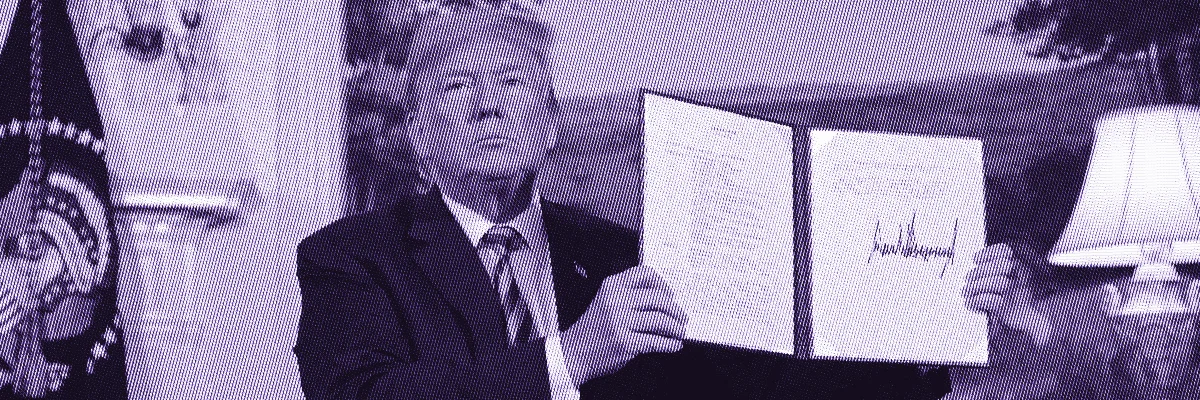
U.S. Sanctions on Iran Set to Return: A Simple Explainer
◢ On 8 May 2018, U.S. President Trump announced that the United States “will withdraw from the Iran nuclear deal” and that the United States “will be instituting the highest level of economic sanctions”. At the same time, U.S. authorities announced that U.S. sanctions would be re-instated, at the latest by 4 November 2018. What does this mean for companies who have ties to Iran or who do business in Iran?
This client note was prepared by the German trade compliance team at Dentons Europe. It is republished here with permission.
On 8 May 2018, U.S. President Trump announced that the United States “will withdraw from the Iran nuclear deal” and that the United States “will be instituting the highest level of economic sanctions”. At the same time, U.S. authorities announced that U.S. sanctions would be re-instated, at the latest by 4 November 2018. What does this mean for companies who have ties to Iran or who do business in Iran?
In January 2016, the U.S. and the EU lifted some of the sanctions that they had imposed on Iran. This was based on an international agreement, the so-called Joint Comprehensive Plan of Action (“JCPOA”). Since 2016, many European companies engaged in business activities in Iran or extended their activities. Transactions with Iran will now meet with severe difficulties, and many companies will be forced to cease and wind down their operations.
In the following, we summarize the most important developments and applicable rules.
U.S. Companies and Their Subsidiaries
Applicable U.S. laws generally prohibit U.S. companies from engaging in any business activities with a relation to Iran. This prohibition also applies to non-U.S. subsidiaries of U.S. companies. Based on the JCPOA, the U.S. had issued General License H. This General License broadly allowed non-U.S. subsidiaries of U.S. companies to engage in business activities with Iran.
General License H will be revoked “as soon as feasible”. It will then be replaced with a “new” General License H; this new General License will, however, only authorize the wind down of existing transactions and operations that had been made possible by the “old” General License H. Wind-down operations must be completed by 4 November 2018.
Adding Parties to the U.S. List of Blocked Parties
The U.S. Government has imposed prohibitions a number of individuals, entities and groups (“Specially Designated Nationals” – “SDN”). Any dealings with SDN are prohibited. In addition, all dealings with a company in which an SDN owns at least 50% of the interest are also prohibited.
Not only U.S. nationals and U.S. companies (amongst others) must comply with this prohibition. Any party must comply with these prohibitions when that party is involved in a transaction that is made in US Dollars or when a U.S. bank or U.S. company is also involved in that transaction.
In 2016, a large number of companies and individuals were removed from the SDN List of the U.S. These parties will be added to the SDN List again. It is currently unclear when that will happen, but at the latest on 5 November 2018. Amongst these parties are Iranian banks as well as the National Iranian Oil Company, and also companies and banks established outside of Iran, e.g. in the EU.
U.S. Measures Targeting Specific Industry Sectors
Before 2016, the U.S. had adopted numerous regulations to deter also non-U.S. companies from doing business with Iran. These regulations, so-called Secondary Sanctions, threaten that the U.S. Government can impose severe measures on non-U.S. companies who enter into transactions with certain industry sectors and with certain entities and individuals in Iran.
These measures can amount to a complete exclusion of the non-U.S. company from the U.S. market and from transactions with all U.S. companies worldwide. This can also mean that companies are designated as SDN. Companies which are faced with the risk of Secondary Sanctions should carefully analyze the risks for continuing their activities. U.S. authorities have stated that they want to enforce Secondary Sanctions in the future.
These measures had been waived or lifted under the JCPOA. They will now be re-instated by 6 August 2018 and by 4 November 2018. Until then, companies engaged in the industry sectors concerned must wind down their operations if they want to avoid Secondary Sanctions.
The most important Secondary Sanctions concern the following activities:
- Wind-down by 6 August 2018
- Transactions with the automotive sector;
- Sale or purchase of graphite, raw or semi-finished metals such as aluminum and steel, and coal;
- Provision of software for integrating industrial processes.
- Wind-down by 4 November 2018
- Transactions involving ports, shipping and shipbuilding, including Iranian shipping lines;
- Petroleum-related transactions;
- Transactions with the petrochemical sector;
- Investments in the development of oil resources;
- Transactions by non-U.S. banks with certain Iranian banks, including the Iranian Central Bank;
- Forwarding of “SWIFT” messages to Iranian banks.
Commercial Aircraft and Related Services
As a result of the close global cooperation in the aircraft industry, any commercial aircraft will include material parts with U.S. origin. As a consequence, commercial aircraft and most spare parts for commercial aircraft can only be supplied to Iran with a license from U.S. authorities. Similarly, even non-U.S. companies require licenses from U.S. authorities for maintenance and other services for commercial aircraft.
Under the JCPOA, U.S. authorities granted such licenses to both U.S. and non-U.S. companies. All these licenses will be revoked. U.S. and non-U.S. companies must wind down their activities under these licenses by 6 August 2018.
The Meaning of Wind-Down
Where a wind-down of operations or business relations is required, deliveries and supplies can be made, and services can be provided, until the wind-down date, but only if the contract has been concluded before 8 May 2018.
Business activities and operations must end by the applicable wind-down date. In order to end business operations, companies are allowed to “engage in all transactions ordinarily incident and necessary to wind down” the activities. This may be necessary, for example, where contracts specify delivery dates that are later than the wind-down date.
Non-Iranian companies can receive payments even after the wind-down date, if the following two conditions are fulfilled: The contract has been concluded before 8 May 2018, and all deliveries have been made by the wind-down date. This also applies to loans or credits granted by non-Iranian banks. By contrast, Iranian banks and companies may not receive any payments after the wind-down date.
Activities that Remain Permitted
Even before 2016, U.S. authorities had issued General Licenses which permit certain business activities in Iran. The most important General Licenses are a General License that permits the export to Iran of food, foodstuffs, agricultural items, pharmaceutical products (drugs) and medical devices (often referred to as the “AgriMed” General License). In addition, U.S. authorities had issued a General License that permits the export to Iran of many standard IT items and software, if these products could be acquired without restrictions on the general market (General License D-1).
Based on information that is currently available, these General Licenses will not be revoked, and exports under these General Licenses remain permitted. These General Licenses cannot only be used by U.S. companies, but by companies from other countries as well.
EU Companies: Existing EU Sanctions Still Apply
The EU has not changed or amended the respective EU sanctions. For EU companies who have business operations in or with Iran, the EU sanctions and embargo apply in addition to the U.S. measures. The most important restrictions under EU sanctions and embargos are the following.
Sanctioned Parties and “Financial” Sanctions
The EU has imposed prohibitions to enter into business transactions with a number of individuals, entities and groups in Iran (so-called “Designated Parties”). EU companies may not make any payments and any deliveries to Designated Parties. There are also restrictions for dealing with companies which are owned or controlled by Designated Parties. These range from increased due diligence requirements to prohibitions on dealing with such subsidiary.
Export Prohibitions
The EU has adopted several lists of items which may not be supplied to Iran. It is also prohibited to conclude sales contracts for these items, to provide technical support services or the provision of export financing for these products. These prohibitions apply, e.g., for military items (arms embargo) and for certain items that could be used in a nuclear program.
Export Licensing Requirements
In addition, licenses are required to supply certain items to Iran. The items concerned are also included in several lists adopted by the EU. As with the export prohibitions, licensing requirements do not only apply for the actual export of these items, but in addition for the conclusion of the respective sales contract, the provision of technical support services for these items or for the provision of export financing of these products. Licensing requirements apply, for example, for the supply of items for the interception of telecommunication, of less important items that could be used in a nuclear program or for graphite, raw or semi-finished metals such as aluminum and steel. Depending on the product in question, licensing procedures may be quite complex, because some licenses must be reviewed by a special committee established under the JCPOA before they are granted.
Restrictions for Investments in Iran
In accordance with the EU sanctions and embargo, establishing companies in Iran or investing in companies in Iran may be prohibited or may require a license. These restrictions apply to companies which engage in certain business activities in Iran (e.g. in activities linked to the nuclear sector). The same restrictions apply for providing financing to companies in Iran.
Trading With Iran in the Future
These new unilateral U.S. measures will severely impact doing business with Iran and doing business in Iran. In addition to the prohibitions and other restrictions that apply to certain business activities directly, the U.S. measures will have a severe “chilling” effect. Companies will refrain from business activities involving Iran, and banks will refuse to provide financing for business activities in Iran.
As a result of the Secondary Sanctions threatened for sending SWIFT messages to Iranian banks, there is a risk that it will become impossible (again) to make electronic transfers of funds to and from Iranian banks. In addition, banks will now be even more reluctant with processing payments to and from Iran. EU companies will face the problem again that they may have perfectly legal business activities in Iran but will not be able to find a bank where they can receive payments.
It remains to be seen if European leaders manage to find a unified response to the new measures adopted unilaterally by the U.S.
Photo Credit: REX/Shutterstock
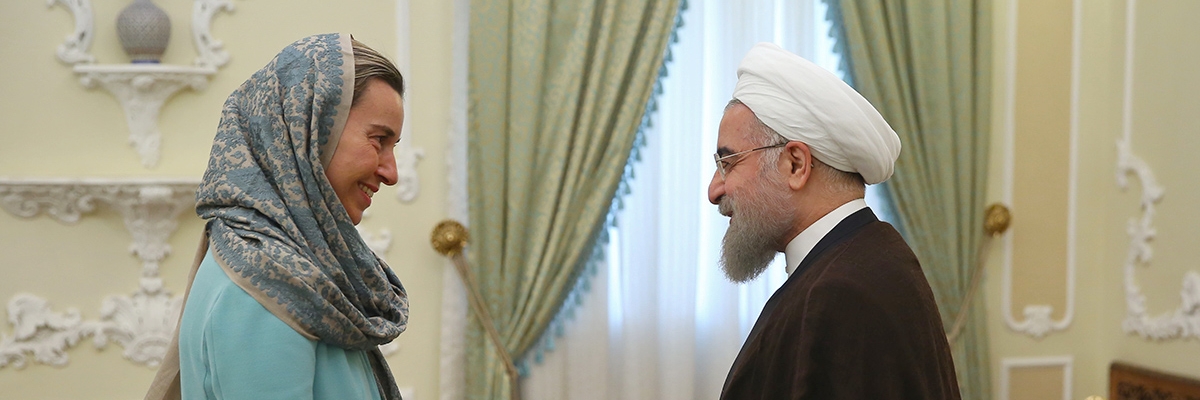
After Trump’s Iran Decision: Time for Europe to Step Up
◢ The E3 should now acknowledge that its negotiating tactic of accommodation and comprise with Trump has failed. If Europe is to have any influence forthcoming US policy on Iran, European governments should quickly shift tack, unifying behind a more assertive diplomatic strategy aimed at deterring the worst-case scenario of renewed Iranian nuclear program and more instability and violence in a region close to its borders.
This article was originally published on the website of the European Council on Foreign Relations.
Despite months of E3-US negotiations to avert an unnecessary crisis over the Iran nuclear deal, President Trump has declared a hard exit from the nuclear agreement. The decision demonstrates that the US has decided that confrontation with Iran is both necessary and inevitable, regardless of what European allies think. The US administration looks set to increase tensions with Tehran and promote an implosion of Iran’s economy in ways that significantly increase risks of greater military escalation in the Middle East. Moreover, in the coming weeks, United States looks set to lead an economic and political assault on European interests.
The E3 should now acknowledge that its negotiating tactic of accommodation and comprise with Trump has failed. If Europe is to have any influence forthcoming US policy on Iran, European governments should quickly shift tack, unifying behind a more assertive diplomatic strategy aimed at deterring the worst-case scenario of renewed Iranian nuclear program and more instability and violence in a region close to its borders.
European governments are clearly tempted to think that the delays in implementation of sanctions mean they still have time to persuade the US president to reverse course. But the US president has acted on his promise to fully withdraw from the deal. He is now supported in that view by key advisors who have long advocated a forceful stand against Iran, not just on the nuclear deal but also in terms of encouraging regime change in Iran. It should now be abundantly clear that the current US administration cannot be a partner in salvaging the deal.
In this context the EU and its member states should now prioritize the following action points:
- European leaders should use the forthcoming May 17 European Council meeting in Sofia to publicly and unanimously condemn the U.S. decision to withdraw from a multilateral global security arrangement and place the responsibility for any instability that results on the Trump administration.
- European leaders should reject further negotiation between the E3 and the US administration on a “broader framework” on Iran policy, including the prospect of further EU sanctions targeting Iran, until and unless the Trump administration makes significant adjustments to minimise the enforcement of US secondary sanctions targeting European companies doing business with Iran.
- European governments should prioritise measures aimed at maintaining Iranian adherence the deal. The E3/EU should meet with Iranian counterparts at foreign ministerial level to agree on contingency plans. European governments should make a case to the Iranian government and public as to why the deal can be sustained and continue to serve Iran’s interest. This should emphasise the immediate economic benefits of continued oil exports (which Europe must vow to maintain as an priority). In this effort to entice Iran, Europe should cooperate with Russia and China, the other parties to the nuclear deal.
- Europe’s approach should include the formulation of clear legal conditions for strategic sectors of trade with Iran aimed at protecting key European commercial deals seen as barometers of nuclear deal’s success and its ongoing survival (namely in the energy domain, aviation and automotive industries). The E3/EU should prioritise securing exemptions and waivers from enforcement of US secondary sanctions for European energy companies and related financial services to allow continued oil imports from and payments to Iran. Towards this end, EU member states should begin consultations regarding counter-measures against the United States. This should include political and legal threats that the EU will consider reviving the EU Blocking Regulation and even impose new penalties against assets of US companies based in Europe to allow for “claw-back” of unfair and illegal fines imposed on European companies doing business with Iran. European leaders should press this issue very hard with the Trump administration, making clear that this is a critical issue for the transatlantic relationship, as well as ongoing cooperation on regional issues in the Middle East.
- European governments should also look to find bridging solutions to maintain banking connections with Iran even if at far reduced levels, including by temporarily connecting respective central banks in EU member states to the Central Bank of Iran and creating emergency export credit lines. The EU EAS should accelerate coordination among leading member states, their export credit agencies and state-owned banks to devise novel banking mechanisms allowing a degree of risk-sharing between governments and the financial sector on business with Iran. This effort should aim to facilitate a pan-European approach towards creating special purpose vehicles to finance sector-specific trade and investment with Iran. The EU EEAS should also advance existing proposals for the European Investment Bank to become a lending bank for long-term and medium-sized investments inside Iran.
- It will now be more critical than ever for Europeans to maintain a dialogue with Iran on regional and ballistic missile issues, given that the US exit from the nuclear deal is already feeding wider regional escalation. This is particularly true given that the Trump administration is likely to work with its key regional allies to accompany the nuclear agreement withdrawal with a wider push against Iran. Germany, France, the UK and Italy should accelerate and formalise recently launched regional talks with Iran, including efforts to advance de-escalation possibilities between Iran and Israel in Syria where the situation is becoming increasingly febrile.
In the end, Europe may not be capable of salvaging the nuclear deal. But if the Europeans want to promote non-proliferation in the region and reduce regional instability, they need to demonstrate to the Americans, the Iranians and others that they are willing to try. Allowing the collapse of the nuclear deal without a proper fight will have immediate and disastrous consequences in the Middle East, while also significantly reducing European relevance on global security. Europe faces a critical and historic choice and must demonstrate its political will to advance its security interests through robust diplomacy.
Photo Credit: HR VP
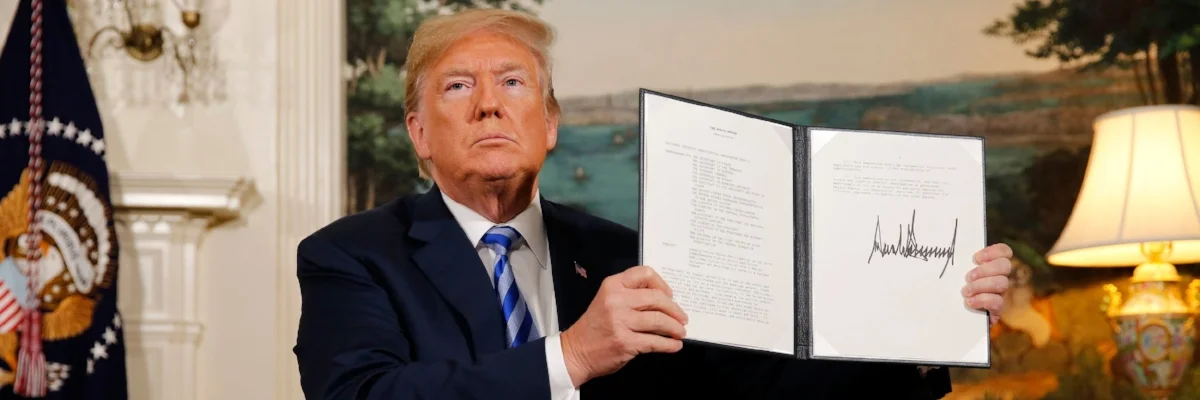
Trump's Unequivocal Iran Deal Withdrawal Was the Best Outcome for Iran
◢ President Trump has violated the Joint Comprehensive Plan of Action and withdrawn from a landmark arms control agreement that enjoyed broad international support. Crucially, he did so more decisively than many expected. It is this decisiveness which may offer a sliver lining for Iran and Europe, who will find it easier to coordinate a robust response in the face of such a definitive action by Trump.
President Trump has violated the Joint Comprehensive Plan of Action and withdrawn from a landmark arms control agreement that enjoyed broad international support. Crucially, he did so more decisively than many expected. In his televised announcement on Tuesday, Trump clearly relished the opportunity to follow through on his campaign promise to “rip up” the Iran nuclear deal, declaring, “The United States no longer makes empty threats. When I make promises, I keep them.”
There is no doubt that the JCPOA is in jeopardy. But the deal has been in jeopardy for a long time. New polling data from IranPoll, drawing on a nationally representative survey of Iranians conducted between April 13-17 and released on May 8 at a Bourse & Bazaar round table in Stockholm, illustrates this point. When asked how confident they are that the “United States will live up to its obligations toward the nuclear agreement,” a resounding 92 percent of Iranians indicated that they lacked confidence, up dramatically from 41 percent in September 2015. Iranians consider U.S. violations of the deal to have been indisputable, even prior to today’s announcement.
The real question is whether the decisiveness with which Trump discarded three months of negotiations with the E3 on a “fix” to the Iran deal will change political perceptions in Europe. European leaders may have be tempted to latch onto any ambiguity in the extent of the U.S. withdrawal, for example had Trump pursued the reapplication of sanctions without immediate enforcement. Over the last few months, France, Germany, and the United Kingdom have proven reluctant to take a robust stance vis-a-vis the United States’ unilateral demands for the renegotiation of the JCPOA. Unsurprisingly, the E3 negotiating strategy was lambasted as one of “appeasement” by Tehran.
The significant and very public investment of political capital in trying to convince Trump to remain in the deal, which saw Macron and Merkel make visits to Washington, as well as British foreign secretary Boris Johnson, meant that an admission of defeat would always have been unlikely. Had Trump taken a more muddled stance on the future of the United States as a party to the nuclear deal, it is not difficult to image that the E3 would have “welcomed” certain aspects of Trump’s relevant announcement.
But there was no muddling on Tuesday. As per the White House statement, Trump “has directed his Administration to immediately begin the process of re-imposing sanctions related to the JCPOA” with the aim of targeting “critical sectors of Iran’s economy, such as its energy, petrochemical, and financial sectors.” The implementation memo shared with the Secretary of State, Secretary of Treasury, and other key actors within the executive branch makes the detail of the impending actions even more clear.
Responding to Trump’s bold move, the joint statement from Macron, Merkel, and May calls for “the US to ensure that the structures of the JCPOA can remain intact, and to avoid taking action which obstructs its full implementation by all other parties to the deal.” Moreover, the statement declares that the E3 will “remain committed to ensuring the agreement is upheld, and will work with all the remaining parties to the deal to ensure this remains the case including through ensuring the continuing economic benefits to the Iranian people that are linked to the agreement.”
The statement from European Union High Representative Federica Mogherini further declares the importance of protecting trade and investment, stressing that “The lifting of nuclear related sanctions is an essential part of the agreement” and “that the lifting of nuclear related sanctions has not only a positive impact on trade and economic relations with Iran, but also and mainly crucial benefits for the Iranian people. The European Union is fully committed to ensuring that this continues to be delivered on.”
Bold statements beget bold statements and European governments are growing increasingly confident in signaling their willingness to protect channels for trade and investment with Iran. However, signaling will need to be followed-up by action. Again, the decisiveness of Trump’s move on Tuesday will probably help ensure that practical measures are pursued in earnest.
The clear failure of the E3 negotiating strategy will likely see the mantle of leadership on Europe-Iran relations return to Mogherini and the European External Action Service. This will happen first and foremost with the convening of the Joint Commission of the JCPOA which is expected in the coming week. Mogherini’s position draws on the foreign policy consensus of the EU’s 28 member state governments. With the policy debate once again expanded to this wider group, the input of the governments of Sweden, Austria, Italy, and the Netherlands, among other countries, will become more influential as Europe seeks to preserve the JCPOA’s economic benefits and keep Iran in the deal. Importantly, these smaller member states are those which have made the most progress in devising special financial vehicles, concluding export credit agreements, and encouraging banks to engage in the Iranian market in adverse conditions. In short, Trump’s rebuke of the E3 can restore the mantle of JCPOA engagement to the wider EU—an outcome that is good for Iran.
Moreover, in taking itself out of the deal, the Trump administration may have actually limited the damage it can do to the legal environment for trade and investment in Iran. Administration officials have confirmed that the United States will not pursue the snapback of UN sanctions lifted as part of United Nations Security Council resolution 2231, which enshrined the JCPOA in international law. As the United States is out of the deal, they no longer have the right to trigger such a vote as per Article 37 of the JCPOA. So while the White House has announced a full snapback of U.S. primary and secondary sanctions eased under the nuclear deal, European and Iranian commercial actors can take some comfort that EU and UN sanctions will not snapback (so long as Iran continues to abide by its commitments under the deal).
Finally, and perhaps most importantly, the nature of Trump’s withdrawal will impact public opinion in Iran. For President Rouhani, there will be great pressure to retaliate in order to prove that Iran cannot be bullied by the United States. This pressure is coming not just from hardliners, but from the general public as well.
When asked whether Iran should “retaliate” or “continue to live by the JCPOA” in the event that “the United States takes measures against Iran that are in violation of the JCPOA agreement,” 67 percent of Iranians believe that Iran should retaliate. Just 31 percent believe that Iran should stick with its commitments under the deal. The proportion of Iranians calling for retaliation has risen 8 percent in the past three months, which corresponds precisely to the period in which the E3 launched its attempt to fix the deal by placating Trump. The political consequences of that strategy are starkly exhibited in the new polling.
Yet, the undeniably aggressive nature of Trump’s move may actually serve to inspire Iranians to choose resilience over retaliation. Resilience is what has made Iran one of the world’s twenty largest economies despite enduring both a decade of war and a decade of sanctions in just the last forty years. In his address to the nation, Rouhani described Trump's decision as "an act of psychological warfare against Iran.” The Iranian response to this psychological warfare will be determined following consultations with the remaining parties in the JCPOA. If the Rouhani administration can credibly demonstrate to the public that there is a plan for principled defiance, and if that plan includes clear commitments from Europe to protect Iran’s economic prospects, it remains possible for Iran to remain in the deal. If this can be achieved, following such a direct attempt by Trump to kill the deal, Iran will reassert its strength in a remarkable way. Cooperative resilience, not retaliation, must prevail. Defying Trump must be the rallying cry.
Photo Credit: REX/Shutterstock
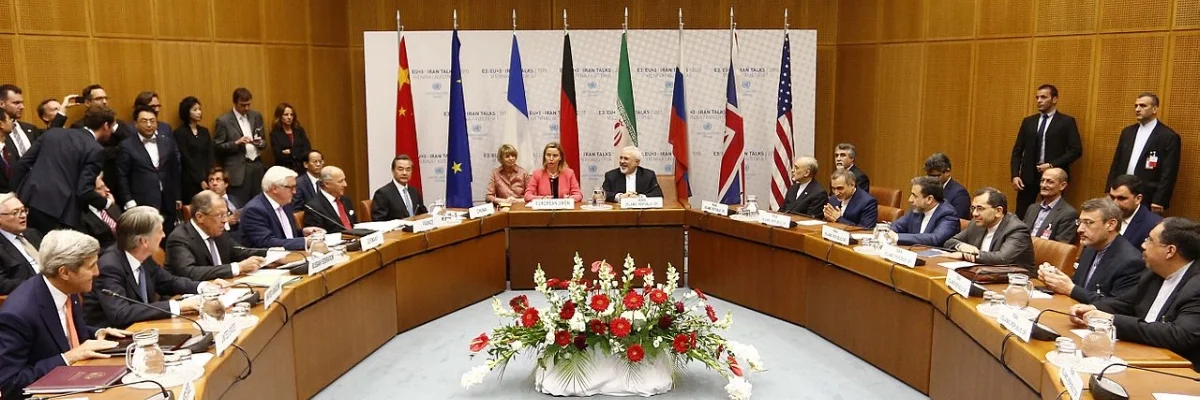
Europe’s Balancing Act on the Nuclear Deal: Wooing Trump Without Losing Iran
◢ European leaders have been assiduous in lobbying Washington on the nuclear deal. But Europe must step up its diplomacy to ensure it does not lose Tehran in the process and should further make a strong case to the Iranian government and public as to why the nuclear deal can continue to serve Iran’s security and economic interest even without the US.
This piece was originally published on the website of the European Council on Foreign Relations.
For much of Iran’s political elite, and its overwhelmingly young population, the nuclear deal is becoming a story of failure. This situation risks impacting on Tehran’s willingness to engage politically and to reach diplomatic compromises with Western powers. Last week European leaders were in Washington for a last push to keep the United States on board ahead of the 12 May deadline for Donald Trump to issue waivers required under the nuclear deal. During his visit, Emmanuel Macron suggested that the US and Europe could work on a “new deal” with Iran – one which preserves but expands on the 2015 accord. But with Iran kept out of the European-US talks, Hassan Rouhani has questioned the legitimacy of proposals now put forward by Macron and Angela Merkel for Iran to negotiate further deals on its nuclear programme and regional issues. In the process of wooing Washington on this bigger and better deal, Europe must ensure it does not end up losing Tehran, whose buy-in will be essential to succeeding in this effort.
Iran's Rethink on Europe
Despite increasing pressures coming from Trump, Iran has continued to fulfil its part of the deal, as verified by the International Atomic Energy Agency 11 times since the deal was implemented in January 2016. Iran has waited to see what actions Trump would take and carefully assessed the ability and willingness of Europe to safeguard the nuclear deal. In October, Tehran sent out clear signals that it would consider sticking to the deal so long as Europe, China, and Russia could deliver a package that served Iran’s national security interests. But as talks between the US and the EU3 (Germany, France, and the United Kingdom) have stepped up over the last few months, Iranian thinking on European positioning has begun to sour.
Officials and experts from Iran, interviewed on condition of anonymity over the past month, outlined a growing perception inside Tehran that Europe is unable and/or unwilling to deliver on the nuclear agreement without the US. Even those who defend the nuclear deal inside the country are finding it difficult to continue to do so, not just because of Trump but also because of European tactics, which one Iranian official described as “appeasement by Europe to reward the violator of the deal and Iran’s expense”.
This perception has contributed to considerably hardened Iranian rhetoric in recent weeks around a possible US withdrawal. The secretary of Iran’s Supreme National Security Council (SNSC), which includes the most important decision-makers inside the country, warned that Iran may not only walk away from the nuclear deal, but also withdraw from the Non-Proliferation Treaty. Such public statements from senior figures signal that a rethink may be taking place over Iran’s foreign policy orientation and openness to engaging with the West. Decision-makers in Europe should be alert to the gravity of such political shifts.
Keeping Iran on Board
Iranian officials have repeatedly outlined that Iran will abide by the nuclear deal so long as the US does not violate the agreement. If Europe wants to keep Iran on board with the agreement in the scenario where Trump does not issue the sanctions waivers required, or to even sell a new European-US framework to Iran, it will need to shore up its fast-diminishing political capital with Tehran. While Macron’s hour-long call with Rouhani on Sunday was a good start, greater activity is urgently needed.
First, Europeans should seek to alleviate growing Iranian fears that the price of saving the deal will be a wider “pressure package”, one which returns their relations to the pre-2013 policy of isolation and sanctions. While the focus is understandably now on securing ongoing US support for the deal, the EU3 should not neglect the fact that any new framework agreed will require at least some Iranian buy-in to make it workable. In the current political climate in Iran, this is not a given.
As such, the EU3 should, as a unified coalition, work at the highest level with Iran’s foreign ministry to shore up confidence regarding the nuclear deal. In advance of the 12 May deadline, if it looks increasingly likely that Trump will not waive sanctions, the newly appointed German foreign minister should follow up on Macron’s call to Rouhani with a visit to Tehran to meet with their Iranian counterpart and consider contingencies (some measures for which are outlined below).
Second, EU member states should delay the prospect of new sanctions targeting Iranian regional behaviour, at least until firmer guarantees are in place regarding Trump’s decision on the nuclear deal. The timing of such sanctions has reportedly been the topic of heated debate among the 28 member states. At a minimum, the countries supporting such measures should step up their public messaging to communicate the reasons and the targeted nature of new sanctions, including a commitment that these are not the start of more far-reaching sanctions that will hurt the wider Iranian economy. This is particularly the case with Iran’s private sector, which constantly meets new hurdles placed in its way when seeking to do business with Europe.
Third, European governments should double down on efforts to maintain Iranian compliance to the nuclear deal if Trump fails to renew waivers due on 12 May. Such action by the White House would result in the snap-back of US secondary sanctions and are likely to be viewed in Tehran as significant non-performance of the nuclear deal. Europe will need to coordinate with Russia and China to persuade Iran to continue adhering to its nuclear obligations, at least for a period of time. The exhaustion of the dispute resolution mechanism under the nuclear deal can buy time (estimated to be between 2-3 months) for contingency planning while allowing Iran to save face.
In this scenario, European governments will need to convince the US that it will be in their mutual interest to agree on an amicable separation on the nuclear deal. Europeans will need to argue that such a settlement would allow Trump to claim victory with his base for withdrawing US participation in the JCPOA, while avoiding deeper damage to transatlantic relations and possibly maintaining Europe’s quiet compliance on regional issues. This path should also allow the US to reverse its course (Europeans should continue to encourage such a reversal, whatever the 12 May decision).
As part of this contingency plan, to keep Iran on board Europeans will need to offer some degree of economic relief. It will be critical to reach a pan-European deal with the Trump administration to limit the extent to which the US secondary sanctions that may snap back are actually enforced by US regulators. This should include a series of exemptions and carve-outs for European companies already involved in strategic areas of trade and investment with Iran, with the priority being to limit the immediate shock to Iranian oil exports.
European governments should further make a strong case to the Iranian government and public as to why the nuclear deal can continue to serve Iran’s security and economic interest even without the US. They should emphasize the immediate economic benefits of continued oil exports to Europe and possible longer-term commitments for investments in the country. Sustained political rapprochement between Europe and Iran could also influence Asian countries that closely watch European actions (such as Japan, South Korea, and India) to retain economic ties with Iran.
Finally, regardless of the fate of the nuclear deal, Europe should keep the pathway open for regional talks with Iran. Germany, France, the UK, and Italy should establish and formalize a regular high-level regional dialogue with Iran that builds on those held in February in Munich. It is a positive sign that a second round of such talks is reportedly due to be held this month in Rome. Such engagement will become even more important if the US withdraws from the nuclear deal, increasing the risk of regional military escalation that is already surfacing between Israel and Iran in Syria. Europeans should focus these talks on damage limitation and de-escalation in both Yemen and Syria, to help create an Israeli-Iranian and Saudi-Iranian modus vivendi in both conflict theaters (something which the US seems uninterested in).
Ultimately, Iran’s willingness to implement any follow-up measures on regional issues will be heavily influenced by the fate of the nuclear deal and how the fallout over Trump’s actions is managed. Europe may well not be capable of salvaging the deal if the US withdraws from or violates it. But Europe must at least attempt to do so and demonstrate its political willingness through actions that serve as a precedent for the international community. To do otherwise is likely to have an immediate and consequential impact on Iranian foreign policy and significantly reduce Europe’s relevance for the Iranian political establishment. For Iran’s youth, as the largest population bloc in the country, this will be an important experience in how far Europe is willing to go in delivering on its promises to defend the nuclear deal, whose collapse would affect the Iranian psyche and domestic political discourse for years to come.
Photo Credit: Wikicommons
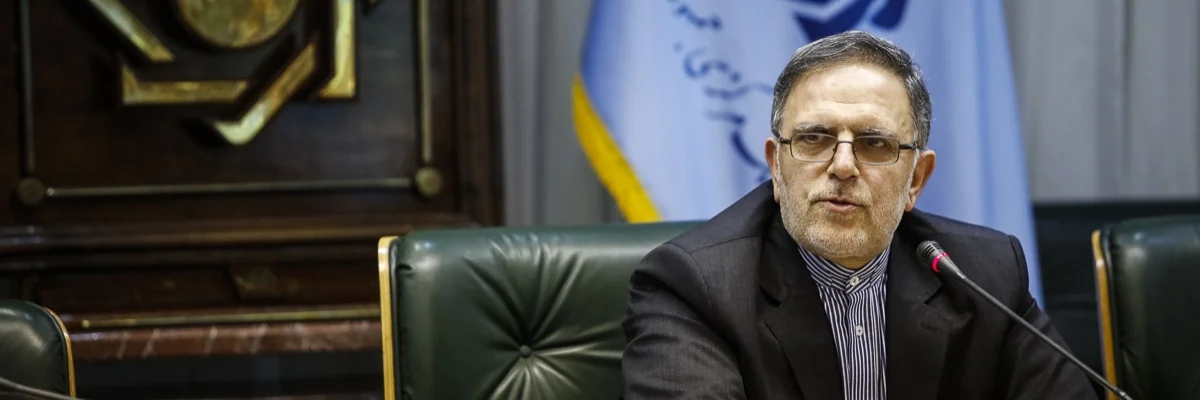
Iran’s Currency Crisis Spurs Action in Financial Reform Efforts
◢ Forced to respond by Iran’s recent currency crisis, the Central Bank of Iran is approaching regulatory reform in the financial sector with new energy. A critical deadline to meet standards set by the Financial Action Task Force is forthcoming in June. Iran needs to demonstrate progress in tackling financial crime estimated to include at least USD 27 billion in transactions annually.
In the 2017 anti-money laundering (AML) index report published by the Basel Institute on Governance, which develops standards for financial regulations and compliance, Iran topped the list of the world’s 10 highest-risk countries failing to comply with AML standards. This index, published since 2007, ranks 140 countries in terms of their efforts combatting dirty money transactions and countering terrorist financing (CTF). Iran has made little progress to date in improving its standing. Yet, the recent reunification of Iran’s exchange rates by central bank is seen to be an effective step toward more economic transparency and part of wider efforts against smuggling and rent seeking in their diverse forms.
The high-risk assessment of Iran highlighted in the Basel Institute report is primarily due to weak AML/CFT regimes practiced in the jurisdiction. High rates of perceived corruption combined with poor financial sector regulations are major drivers of the structural and functional failures in the Iranian economy. Importantly, these are among the critical issues, which the Financial Action Task Force (FATF), an intergovernmental organization which develops politics to combat financial crime, had mandated Iran to address as part of its "action plan."
Following an extension granted in February, the deadline for Iran’s compliance with FATF’s action plans is set for June 2018. This means that Iranian authorities have limited time at their disposal to earn the continued suspension of counter measures against Iran. Lack of membership in organizations such as the World Trade Organization and the FATF, in particular, has led to a myriad of problems in the implementation of the Joint Comprehensive Plan of Action (JCPOA) nuclear deal agreed by Iran and E3+3 in 2015. Due to shortcomings in meeting FATF technical requirements and Basel II and III banking regulations, Iran has failed to expand its business and correspondent banking ties with International financial institutions, with significant consequences. For example, the number of letters of credit opened since “Implementation Day” has been far lower than expected.
As such, financial reform in Iran is motivated by the need to spur economic growth. The mandate that the Supreme Leader of Iran Ali Khamenei gave to the Rouhani government to start negotiations with world powers over Iran’s nuclear program reflects the wider policy of the state to continue interacting with the international bodies on economic matters. To that end, cooperation with the FATF is set to carry on unless that authorization is withdrawn. Yet given the importance of such reforms, this authorization may remain in place regardless of what happens on May 12 with respect to President Trump’s decision to extend sanctions waivers issued as part of the JCPOA.
According to some estimates, the magnitude of organized money laundering in Iran amounts to some USD 26 billion per year. Transacting such sizeable amount of money outside the official financial system is impractical and requires that criminals abuse the conventional financial system to support their illegal activities. The Central Bank of Iran is seeking to increase its powers of supervision to monitor and prevent suspicious money transfers and smuggling of goods, ensuring the integrity of Iran’s financial system.
The central bank's recent moves to stem currency market volatility will make financing of illegal businesses in the economy more difficult. CBI’s new policies prohibit purchasing or holding of more than USD 10,000 or its equivalent in international currencies. In the same parallel, any bank account that whose aggregate debits and credits exceed IRR 50 billion rials will be subject to anti-money laundering probes to monitor for suspicious activities.
Although it will remain possible to find loopholes in the new regulations, these moves reflect significant progress after years of unfulfilled promises to unify the dual foreign exchange rate regime. The move is also viewed as an important step towards obtaining approval from FATF in respect to countering money laundering and removing the rentierism prevalent in the country’s largely state-controlled economy.
In addition, based on the new legislation, revenues from petrochemical exports that are not repatriated to the country will be subject to greater supervision. Firms in the industry will now be required to report their trade transactions in the same system used to record the oil companies’ export revenues. Previously earnings from petrochemical products sales were kept outside Iran in offshore bank accounts in the absence of proper supervision over their transactions and trades.
Interestingly, to further reinforce its oversight, the central bank has launched the an integrated system for monitoring foreign exchange deals or known as NIMA. This is a system which will monitor the activities of four groups of actors who shape the currency market: merchandise and service importers who purchase foreign currency, exporters of goods and services who earn foreign currency, banks and brokerages who act as intermediaries, and the policymakers who seek to manage supply and demand.
According to CBI governor, Valiollah Seif, the operationalization of the NIMA, will change CBI’s current reactionary response mechanism to one that is more proactive and will make controlling hazardous speculative or systematic fluctuations in foreign exchange markets possible by enabling the calculation of the effective demand so that the bank can aptly manage the available foreign exchange reserves.
In sum, the implementation of these targeted measures by CBI is expected to gradually put an end to capital flight and massive conversion of rial to other hard currencies. These moves can also undercut crimes such as smuggling and money laundering by increasing oversight and the likelihood of penalties for their perpetrators. But the effectiveness of CBI’s mandate will be determined by the political will of both the government and the state to fully enforce the letter and spirit of the new regulations and laws. A great deal is at stake. If the Rouhani government can continue to persist in its long-awaited macroeconomic policies and resist pressure from vested interests, then it remains possible that Iran’s economy could find new momentum after years of recession.
Photo Credit: Tasnim
