
As the Iran Deal Approaches its D-Day, Uncertainty Only Set to Increase
◢ With the United States looking set to withdraw from the Iran nuclear deal, the question now becomes how that withdrawal will take place. The European Union and Iran will face complex decisions about legal and diplomatic responses. Even though U.S. policy will be come more clear in the aftermath of May 12, the overall uncertainty facing businesses is likely set to increase.
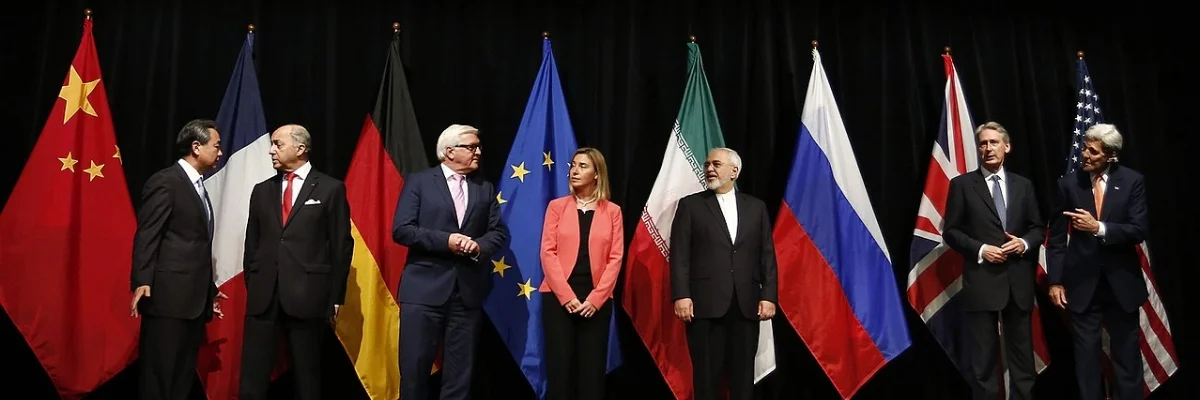
The Joint Comprehensive Plan of Action (JCPOA) was, like many complex pieces of international diplomacy, a necessarily imperfect creation born out of compromise.
The deal is dependent for its survival on continued waivers of US secondary sanctions by the US President (a function of the congressional approval of the deal in the first place). It is also limited—quite deliberately—in the scope of its ambition: it did not seek to settle disputes concerning Iranian intervention in regional conflicts, Iran's human rights record or its ballistic missile program. And, much to the chagrin of Iran hawks in the US and elsewhere, the sunset clauses place no restriction on Iran's uranium enrichment after the first 15 years of the deal, though other aspects of the deal will be in force in perpetuity. From the Iranian side, whilst it provided relief against EU sanctions and US extraterritorial secondary sanctions, the JCPOA offered Iran no access to the US economy or, crucially, the US dollar denominated financial system.
But, imperfect as it was, it did result in the destruction of Iran's stockpile of enriched uranium and afforded the International Atomic Energy Association (IAEA) access to Iran's nuclear sites to verify continued Iranian compliance. And it has allowed Iran access to major European investment in Iran, including high profile deals struck with Airbus and French oil major Total.
In any event, some of the lingering congenital defects would not have mattered as much, or at all, were it not for other extraneous events. For example, it was always intended by the Obama administration that the JCPOA would be a starting point for further discussions and deals on other areas of difference once the nuclear boil was lanced; negotiating the nuclear settlement was lengthy enough without complicating the negotiations further by involving issues such as Syria and ballistic missiles. And continued sanctions waivers were never thought to be seriously in doubt, even as the Trump campaign gained momentum throughout 2016. The State and Treasury Department reach out sessions following Implementation Day emphasized that the political consequences of a US lead snapback would be so serious that the next President would balk at tearing it up, even if that President was a candidate who described the deal as the "worst ever."
Fix It or Nix It
Even after further criticism of the deal from the newly inaugurated President Trump, that conclusion seemed to hold good. Early forays into extending sanctions against Iran with SDN designations in February 2017 were limited in scope. They did not designate Iranian financial institutions or state owned enterprises. Indeed, they were no different in character to some of the late Obama administration's post Implementation Day Iran designations. Many concluded that moderate voices within the administration had managed to constrain the President's more hawkish impulses.
But recent personnel changes amongst the President's close advisors, and the lack of much perceived benefit from the deal in Iran, mean that the defects matter much more now. The appointment of two key Iran skeptics, John Bolton (national security advisor) and Mike Pompeo (Secretary of State) mean that President Trump now has core of foreign policy advisors in place who share his dim view of Iran deal. The President is now determined to either "fix" the perceived failings of the Iran deal or "nix" it.
There is, therefore, a very real fear that President Trump will refuse to renew the next set of waivers that are due to expire on 12 May 2018. Those waivers apply to the secondary sanctions contained in the National Defence Authorization Act (NDAA) 2012 which provides for penalties against foreign financial institutions that engage in significant financial transactions with Iran's central bank. Further secondary sanctions on the provision of significant support to Iran's energy, shipping, shipbuilding sectors or the provision of insurance and reinsurance or refined petroleum products to Iran, which apply under other congressional acts, are due to expire in July 2018 unless the waivers are renewed.
But Iran has its own JCPOA hawks, and the risk is that an abrogation of the JCPOA by the US through a failure to renew the NDAA waivers in May will provide just the excuse they are waiting for to precipitate an Iranian reaction that effectively ends the JCPOA as a meaningful deal.
Caught in the Middle
That concerns the European Union greatly. The EU sees the JCPOA as the most effective way to stop Iran obtaining a nuclear weapon, and precipitating a nuclear arms race in the Middle East that will potentially involve Gulf Arab states, Turkey as well as Israel. As the EU points out, the IAEA has repeatedly confirmed substantial Iranian compliance with the terms of the deal. More immediately, however, it could see European companies that have chosen to engage with Iran since Implementation Day exposed to US secondary sanctions for the first time.
The US did not relax its own self-denying sanctions preventing US persons dealing with Iran after Implementation Day; only the secondary sanctions affecting non-US persons. By contrast the EU lifted most of its general restrictions on trade with Iran except for those on controlled good or remaining designated persons. As a result, European companies that have been able to find means of getting paid (not an easy task when US dollar transactions are still proscribed) have engaged with Iran more enthusiastically—a fact that is no doubt not lost on a President currently jostling with the EU over aluminum tariffs. Any unilateral re-imposition of US secondary sanctions could impact these European companies significantly. The recent application of US secondary sanctions against certain Russian companies and oligarchs illustrates some of the problems that this can cause.
Historically the threat of a divergence between the US and EU over Iran has never been a problem. The two have managed to proceed in concert with each other so that US sanctions which unilaterally sought to regulate or restrict trade and investment activities carried out by persons outside the US were mirrored by the EU's own regulations and restrictions on what EU persons are able to do. But there are earlier precedents for transatlantic fallings out over the extraterritoriality of US sanctions.
In the 1980s the US imposed sanctions on companies doing business on a Russian pipeline in Eastern Europe, provoking a diplomatic falling out. And in 1996 the Helms-Burton Act, which, amongst other things, imposed penalties upon non-US persons "trafficking" in Cuban property formerly owned by US persons, provoked a furious response from the EC which launched blocking legislation and a WTO panel investigation alleging that the extraterritorial restriction of trade between the EC and Cuba breached various provisions of the GATT and GATS. The US countered that it was prepared to rely on the rarely used national security exemption in the GATT. The dispute was only withdrawn after high level political compromise.
But the prospect of a large scale transatlantic trade dispute over Iran occurring at the same time as a US-EU dispute over US aluminum tariffs and extraterritorial Russia sanctions is deeply concerning for the EU.
To that end the EU has even been looking at further potential sanctions against Iran for ballistic missile activities. The rather circular logic is that new sanctions might persuade President Trump that the EU is being tough enough on Iran to renew the waivers in May and may actually save the Iran deal. The EU recently renewed its existing human rights sanctions against Iran, which date back to 2011 and which impose asset freezes and bans on exports of equipment which might be used in internal repression. However, a recent meeting of EU foreign ministers failed to reach any agreement on the imposition of new sanctions against Iran. The clock continues ticking towards May 12.
The Dispute Settlement Process
So what would happen if the US failed to renew the waivers of the NDAA sanctions that expire in May? The JCPOA obliges the US not only to cease the application of its secondary sanctions program but to "continue to do so." A failure to renew the waivers could therefore in theory amount to a breach of the terms of the agreement. Iran could then refer the issue to the JCPOA dispute settlement mechanism, which is a largely consensual process.
The question of US compliance would first be considered by the Joint Commission established under Annex IV of the JCPOA, which consists of the participants from each JCPOA signatory (including Russia and China). The Joint Commission must make decisions by consensus, which would presumably mean that no decision would be made confirming US non-compliance (or no decision would be made within the mandated 15 days). This would then presumably precipitate an escalation to the next level; an Iranian referral of the question of US compliance to a three person advisory board. The board would consist of one person appointed by each of the US and Iran and a third independent person appointed by the first two.
The advisory board can issue a non-binding opinion on the compliance issue and must do so within 15 days. The Joint Commission will then consider the non-binding opinion for a further 5 days to try to resolve the dispute by consensus again. If the dispute has not been resolved to Iran's satisfaction, and if Iran deems the refusal to renew the NDAA waivers as "significant" non-performance, Iran could at that point treat the unresolved issue as grounds to cease performing its commitments under the JCPOA in whole or in part and/or notify the UN Security Council that it believes the issue constitutes significant non-performance.
A referral to the UN Security Council would mean that it must vote on whether to continue the sanctions relief provided by UN Security Council Resolution 2231 (2015) which endorsed the JCPOA and disapplied six previous UN resolutions imposing sanctions against Iran. Under the JCPOA dispute resolution mechanism and Resolution 2231 itself, unless the UN Security Council votes in favor of continuing the sanctions relief, the six former UN resolutions will "snap back" into force automatically. As a veto wielding permanent member of the UN Security Council, the US could, therefore, force the snap back of previous UN sanctions simply by exercising its veto.
Diplomatic Manoeuvres
There are clearly options and opportunities throughout this process for diplomacy and deal making to vary the procedure above. Whilst Iran has already hinted, most recently through its Foreign Minister Javad Zarif, that it would probably react by restarting production of enriched Uranium, it might nonetheless choose to use the fact that some of the waivers expire in May and others in July to bide its time before actually withdrawing from the deal.
It could perhaps choose to take the process through the Joint Commission and advisory board stages, until it reached a point at which it could claim that the unresolved dispute was US non-performance. That point would be reached in mid to late June. It could then refrain from referring the dispute to the Security Council and perhaps even confirm its continued performance (for the time being) despite the lapse of US waivers in May. That would avoid an automatic "snap back" of UN sanctions, or the risk that the US could treat an Iranian abrogation as non-performance and refer the matter to the Security Council itself.
Iran could then utilize the remaining weeks before the next US waivers expire to rally support from concerned EU signatories, perhaps even relying on a potentially positive advisory board opinion, to garner diplomatic sympathy for its position. It would then have a further opportunity to go through the JCPOA dispute resolution process in July if those diplomatic efforts failed and the other waivers were not renewed.
Of course, it is equally possible that Iran's own hardliners gratefully accept any failure to renew waivers in May as the excuse that they have been waiting for to finally tear up the deal. No-one can rule out a last gasp left-field intervention from the US President himself that changes everyone's calculations.
No doubt such diplomatic brinksmanship will cause investors and exporters to Iran to be reaching for their contracts and examining any "snapback" provisions. Would a limited US re-imposition of NDAA secondary sanctions, in the absence of any other secondary sanction re-imposition—let alone any EU sanctions or UN sanctions—constitute a "snapback?" The answer, of course, will depend on what sort of trading relationship is concerned and how the actual clause is drafted. Some are drafted very mechanically requiring specific events to occur; others are more subjective and only require one party to reasonably consider their position is affected by unspecified sanctions. As ever, close attention is required before making any decisions about terminating contracts.
But it is clear that the coming weeks and months will be a rollercoaster ride for all affected.
Photo Credit: Wikicommons
Macron and Merkel Must Flex Muscles to Save Iran Nuclear Deal
◢ The forthcoming visits to Washington by French President Emmanuel Macron and German Chancellor Angela Merkel come at a time of great importance for the Iran nuclear deal, regional security, and transatlantic relations. European policymakers are considering credible ways to signal that the EU is willing to take action if confronted with U.S. withdrawal from the deal, but a significant resolve will be needed.
This article is adapted from a recent report from the European Leadership Network.
The fate of the international nuclear agreement with Iran, known as the Joint Comprehensive Plan of Action (JCPOA), looks increasingly uncertain in light of repeated attacks from U.S. President Donald Trump, who has threatened to walk out of the deal unless Congress and European counterparts agree to “fix it.” The recent appointments of Mike Pompeo and John Bolton—both vocal critics of the JCPOA and widely seen as staunch hawks on Iran—make it less likely that Trump will keep the United States in the deal at his next decision point by 12 May. Faced now with the likelihood of U.S. withdrawal, Europe must decide how far to go to try to preserve the agreement in the face of renewed U.S. sanctions.
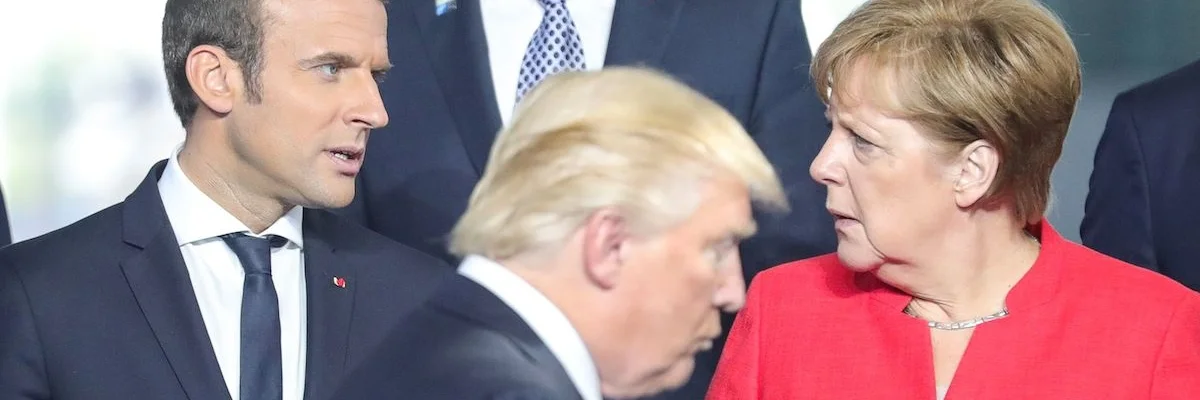
Against this backdrop, the forthcoming visits to Washington by French President Emmanuel Macron and German Chancellor Angela Markel come at a time of great importance for the nuclear agreement, regional security, and transatlantic relations. Macron’s meeting with Trump will be of particular significance, given the good rapport between the two leaders. Syria will likely feature at the top of the agenda, but the visit will offer an urgent opportunity to remind President Trump of the importance of the nuclear deal for his European allies.
U.S. decision makers can still be influenced. Washington’s position on the nuclear deal is far from monolithic and it is still possible that President Trump could be influenced by congressional opinion, which remains sensitive to European concerns. There is no congressional majority for a unilateral U.S. withdrawal from the JCPOA while Iran remains compliant, still less for the re-imposing secondary nuclear-related sanctions on European allies. Even if the United States decides to leave, some main provisions of the deal might still be kept.
This leaves plenty of scope for European intervention. Representatives of the European signatories of the JCPOA, the so-called E3 (Germany, France, and the United Kingdom), are currently engaged in consultations with their U.S. counterparts to save the agreement. This includes discussions on how to accommodate President Trump’s concerns over the deal’s inspection provisions and “sunset clauses,” as well as over Iran’s missile programs and regional activities. But European leaders are also making clear that they will not just fall into line if Washington decides to leave the agreement and re-introduce sanctions.
A re-introduction of sanctions does not necessarily equate to a full re-introduction of all U.S. sanctions without exemptions. American policymakers can calibrate the sanctions they choose to re-instate and the executive powers of the president in matters of national security add to this flexibility. This means that there is plenty for Europeans to negotiate for with their U.S. counterparts about the terms of any U.S. withdrawal. It is possible to envision a transatlantic quid pro quo in which U.S. secondary sanctions are waived even if the United States leaves the agreement.
The risks of a U.S. withdrawal and a comprehensive snap back and enforcement of secondary are nonetheless tangible. As a result, European policymakers are considering credible ways to signal that the EU is willing to take action if confronted with this scenario. This includes reviving EU “blocking regulation” (which seeks to prohibit EU persons from complying with U.S. secondary sanctions or acknowledging the jurisdiction of non-EU courts or authorities with respect to those sanctions) and filing complaints at the World Trade Organization (WTO).
There are significant and inherent risks with these options. These retaliatory measures could easily escalate into an unpredictable and unmanageable tit-for-tat. This would not only impose significant costs on the EU and cause serious friction in the transatlantic relationship but also do damage to the institutions that uphold the free movement of goods, services, and ideas – bedrocks of the multilateralism the EU cherishes. After all, pushing back against the United States requires political will. And while there is undivided support for the JCPOA within the EU, there is little appetite for further confrontations with the United States.
Notably, this could change if Washington is seen as taking further steps to undermine transatlantic relations and European interests. An already fractured partnership is sensitive to further blows – for instance if the United States would go ahead and impose tariffs on European exports after the temporary exemptions on EU steel and aluminum exports expire on May 1.
The wider international context in May is therefore going to matter a great deal for the fate of the JCPOA. So too will the way that the Europeans choose to frame their differences with Washington over the deal. A choice between the JCPOA and good relations with Washington is one thing; the ability of the EU to maintain its security, its autonomy and the values it thinks should define the international order is quite another. The latter would merit a tougher stance.
Still, an inconvenient truth remains—no EU action can completely shield European businesses and investments in Iran. In this sense, there is no bulletproof defense of the JCPOA’s economic benefits in the event of a U.S. withdrawal. The EU and its member states can pursue measures to shield existing links, encourage further business activity and boost investors’ confidence in the Iranian market, but while government can facilitate business, it cannot control it.
Consider the lingering caution of financial institutions despite sanctions relaxation under the JCPOA, which is a sobering reminder of the challenge of steering the private sector through Iranian market obstacles. As the chief legal officer at HSBC noted in response to the Obama administration’s push to encourage European banking activity in Iran, “Governments can lift sanctions, but the private sector is still responsible for managing its own risk and no doubt will be held accountable if it falls short.” In light of the current uncertainty surrounding President Trump’s policy towards Iran, private sector actors will have plenty of reasons to be wary of the Iranian market. This will continue to restrict investment for the foreseeable future.
As a result of struggles with financing, major businesses are canceling or scaling back their planned activities in Iran. Airbus is struggling to complete its sales of Aircraft to Iran; Total, the French energy giant, is deep into contingency planning for its Iranian operations; and Bouguyes, a French industrial group, has decided to put their Iranian plans on the shelf. As noted in a recent Bourse & Bazaar study, this risks dragging the JCPOA into a “zombie state.”
Europe nevertheless has realistic options in the face of a U.S. withdrawal. There is a strong commercial interest in engaging with Iran, and European policymakers can promote policies that help turn interest into action. They need not—indeed, should not—put all their eggs in one basket but should pursue an array of options in parallel. This includes solidifying international support for the JCPOA, demonstrating that re-imposing sanctions unilaterally will come at a cost for the United States, seeking U.S. exemptions for European businesses to continue operating in Iran, and bolstering international business confidence in the Iranian market. Such practical steps, taken now, can bolster European negotiating leverage with Washington, send useful signals to Tehran and strengthen European political will to defend the JCPOA.
Photo Credit: Armando Babani/EPA
Iran’s Energy Sector Takes Stock After Year of Ambivalent Results
◢ The last Iranian year, which ended in March, saw several interesting developments for Iranian energy, both domestically and internationally. Despite persistent challenges, Iran is keen to build on the momentum of last year’s developments. In doing so, the question of whether the Trump administration will stay in the JCPOA and renew sanctions waivers on May 12 will have great importance.
This article was adapted from a report originally published by the Oxford Institute for Energy Studies.
The last Iranian year, which ended in March, saw several interesting developments for Iranian energy, both domestically and internationally.
Numerous challenges remain, hampering the growth of the country’s energy industry – not the least due to complex politics in Iran and abroad. In particular, Iranian energy is overshadowed by mounting uncertainty due to the standoff over the future of the nuclear deal. Nevertheless, there has been progress not seen in years.
Internationally, Iran commenced natural gas exports to Iraq in June 2017. This was Tehran’s first successful natural gas export project in over a decade.
Moreover, Tehran concluded its first two international energy contracts following the introduction of a new fiscal scheme, the Iran Petroleum Contract (IPC), and the implementation of the Joint Comprehensive Plan of Action (JCPOA), as the nuclear deal is formally known.
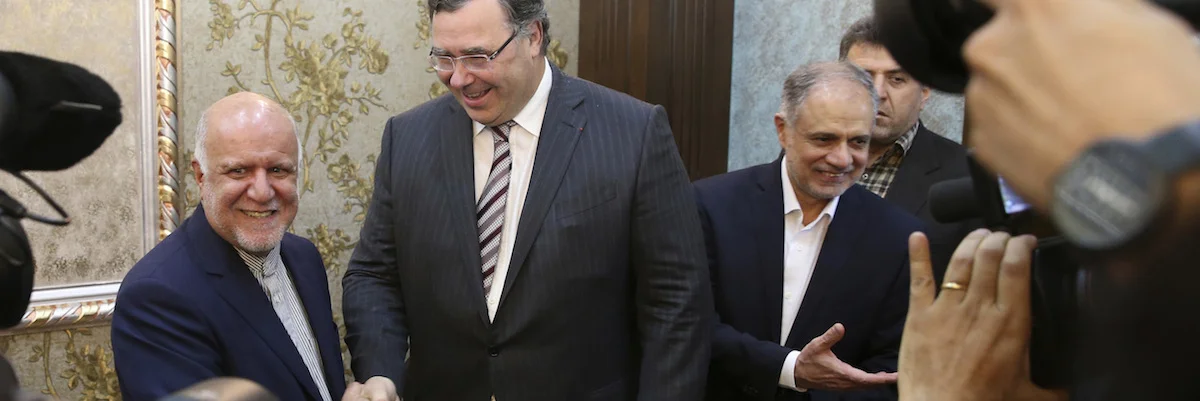
In July 2017, Petropars formed a consortium with French major Total and China’s to develop the eleventh phase of the giant South Pars natural gas field. In March 2018, the National Iranian Oil Company concluded a contract with Russia’s Zarubezhneft and private Iranian company Dana Energy to increase output at the Aban and West Payedar oil fields.
These events constitute important milestones on Iran’s journey to re-connect with global energy. At the same time, it would be wrong to assume that the obstacles hampering the growth of Iran’s energy sector are now overcome—not only because of Trump and the uncertain future of the JCPOA.
Rather, in each of these cases, the circumstances have been rather unique. As for Iraq, close political ties with Baghdad allowed for the project to succeed. This distinguishes the Iraq project from other export plans, where political and commercial issues remain complicated—for example Oman and Pakistan (ongoing) or the United Arab Emirates (in the early 2000s).
Shortly after natural gas exports to Iraq commenced, the Total/CNPC contract was signed. But here, too, the circumstances are rather unique. First, the company has a long history with Iran and the complicated international politics accompanying the country’s energy sector. Already in the 1990s, the French company’s planned engagement in Iran played a key role in the EU’s action to push back against extraterritorial US sanctions. These were introduced by Washington under the 1996 Iran and Libya Sanctions Act (ILSA). In response to ILSA (as well as US extraterritorial sanctions against Cuba), the EU introduced so-called “Blocking Regulations” legislation and filed a dispute against the US at the World Trade Organisation.
The EU’s moves forced the Clinton administration into adopting sanctions waivers, which suspended the implementation of US secondary sanctions and allowed Total to proceed in Iran. Ever since, despite being forced to leave the country in 2010 due to EU sanctions, Total has remained committed to Iran, openly criticised sanctions against the country, and always kept its office in Tehran open—different from other companies.
Second, Total is able to bring its own finance to Iran. The company affords the initial $1 billion investment from its own reserves. With the reluctance of major international banks to return to Iran, fearing punitive measures by the US, finance for large projects remains a huge problem. Being able to bring its own finance sets Total apart.
Last but not least, Total is investing in Iranian natural gas, not oil. In the political economy of Iranian energy, the two hydrocarbons differ markedly. More than half of Iran’s oil production is exported, while less than 5% of the country’s natural gas output is sent abroad. An advancement of Iranian natural gas capacities frees some oil for exports. But the link between increases in production and export revenue is much weaker. Thus, investing in natural gas does not immediately lead to more hard currency at the disposal of the Iranian state.
In light of this, a case can be made that investments in Iranian natural gas projects are more acceptable to Washington than oil. At any rate, both before and after the conclusion of the South Pars contract, Total has frequently acknowledged the importance of the US position for its engagement.
Iran’s second international energy contract, with Zarubezhneft, was particular, too. It combined two firsts in one contract: the deal marked Iran’s first upstream contract with a Russian company and also the first international contract awarded to a private Iranian company, Dana Energy.
Beyond this, the deal is further testimony to the fact that Zarubezhneft, controlled by the Russian government, seems unimpressed by the Trump administration’s harshening stance towards Iran. Unlike Western IOCs, Russian (and also Chinese) state-owned companies might benefit from being able to take a different position when it comes to assessing political and economic risks related to Iranian energy.
The significance of different risk-assessments cannot be underestimated: Iran’s energy sector continues being surrounded by multiple and complex political and economic challenges. These include ample supplies in global energy, efforts by conventional producers to keep barrels away from markets, domestic political opposition to international and especially Western companies in Iran, and—almost overshadowing everything else—the prospect of the US leaving the JCPOA.
Parallel to the ups and downs at the international level, the domestic politics of Iranian energy saw interesting developments, too. In January 2018, Supreme Leader Khamenei reportedly told the Revolutionary Guards (IRGC) to divest from those parts of their wide-spanning business conglomerate that are “irrelevant” to their core purpose. If followed up by meaningful action, this would have wide-ranging consequences for Iran’s energy sector, where the IRGC maintain a considerable presence.
However, several economic and political questions in this regard remain unresolved until now. Politically, it will need to be defined which of the IRGC’s economic activities are actually considered being “irrelevant." Arguing Iran should reduce international dependencies, conservatives might call for the IRGC to maintain a certain presence in strategically vital sectors, including energy. Economically, it is unclear who could actually take over businesses from the guards. Considering the sheer size of the IRGC’s economic holdings, Iran’s private sector seems unprepared to stem a larger IRGC divestment. Meanwhile, foreign ownership remains highly problematic in Iran.
All this suggests that IRGC divestment from the energy sector and the broader economy would at best be slow and gradual. Somewhat, the process has already begun as the administration of president Rohani reduced the number of public contracts awarded to the IRGC in recent years. Still, the IRGC have yet to indicate their willingness to actually divest. It would therefore likely take years until the IRGC have meaningfully reduced their economic profile.
Moving forward, Iran is keen to build on the momentum of last year’s developments. In doing so, the question of whether the Trump administration will stay in the JCPOA and renew sanctions waivers on May 12th will have great importance.
At the same time, a withdrawal of the US from the JCPOA and the re-imposition of nuclear-related US sanctions would not immediately bring Iran back to its pre-sanctions position. In particular, it is unlikely that Tehran’s oil exports would collapse to pre-JCPOA levels.
Europe’s role is crucial here: As long as Tehran fulfils its commitments under the JCPOA, the EU is unlikely to bring back its energy and finance sanctions against Iran. These, however, were deceive in forcing down Iranian oil exports by more than half after 2012.
Some Asian countries, most likely Japan and South Korea, might voluntarily reduce parts of their imports of Iranian oil. But without Europe joining the sanctions effort, the re-imposition of US nuclear sanctions is unlikely to dramatically affect Iranian oil exports.
Nevertheless, if the US decides to withdraw from the JCPOA on May 12th, this would obviously still hit Iranian energy hard. Very likely, it would effectively prevent further European IOCs from engaging in the country—and thereby significantly hamper the growth of Iran’s energy sector.
Photo Credit: AP/REX
For Iran Warehouse, ‘Unglamorous’ Logistics Real Estate Offers Resilience and Returns
◢ The logistics industry in Iran is burgeoning with international players such as DHL Freight and Maersk Line connecting Iran's supply chains to the world. But Iran's logistics infrastructure remains underdeveloped. Iran Warehouse is making a big bet on logistics real estate and is building Iran’s first true Grade A warehouse park—a 60,000 square meter development in West Tehran.
Coco Ferguson first saw the potential in logistics real estate in East Africa, where as a co-founder of Nairobi-based Maris Limited, she raised USD 60 million to fund the development of Kenya’s first “Grade A” warehouses. Now she wants to replicate that success with Iran Warehouse, a company she founded alongside Nader Sianaki, whose family developed some of Iran’s first modern warehousing seventy-five years ago.
The logistics industry in Iran is burgeoning. International players such as DHL Freight and Kuehne + Nagel are connecting the Iranian market to the world by land, while Maersk Line and MSC create new links by sea, facilitating the significant increase in the variety of foreign goods available in Iran since the lifting of international sanctions in January of 2016. The rise of e-commerce has also led to significantly more demand for timely and reliable logistics and distribution services.

Despite these new entrants, Iran’s logistics real estate remains greatly underdeveloped. The World Bank began ranking global logistics infrastructure in 2007 with the Logistics Performance Index. The index looks at five factors: timeliness, customs, infrastructure, international shipments, competence, and tracking. The world’s top ranked country is Germany. Iran ranks 96. Though infrastructure is one of Iran’s stronger categories, its score of 2.67 is significantly below Germany’s score of 4.44. A lack of warehousing is one major reason for the shortfall.
Ferguson and Sianaki estimate that Tehran alone needs 2-3 million square meters of Grade A warehousing space. Current capacity is just 10 percent of that amount. Iran Warehouse has ambitious plans to fulfill latent demand and change the face of what Ferguson calls an “unglamorous sector.”
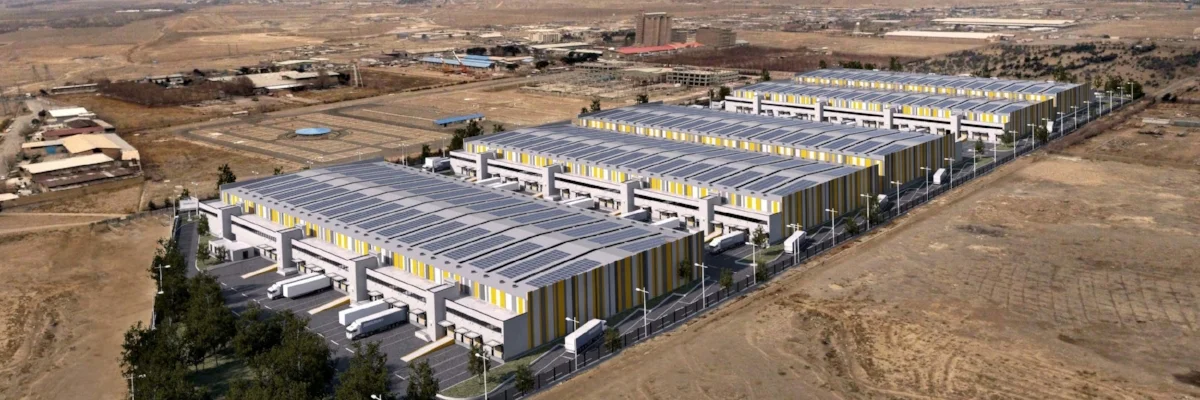
The company has raised 80 percent of an initial EUR 10 million funding round from a combination of European investors and Iranian banks in order to develop Iran’s first true Grade A warehouse park—a 60,000 square meter development in West Tehran, located near the junction between the Azadegan Expressway and Fath Highway. The company currently operates a 6,200 square meter facility in Shurabad. Further sites are under planning.
Iran Warehouse is entering a sector characterized by fragmentation and inefficiency. Nearly all warehouses in Iran are owner-occupied, bucking the international norm. Manufacturers and logistics firms around the world typically seek to avoid the cost and hassle of owning their own warehouses, opting instead to lease space from logistics real estate firms. The world-leading logistics real estate company is San Francisco-based Prologis, which oversees a portfolio assets worth USD 79 billion. The Chairman and CEO of Prologis is Iranian-born Hamid Moghadam. One of Europe’s largest logistics real estate companies with 630 properties, Logicor, is also led by an Iranian, Mo Barzegar.
But in Iran itself, commercial enterprises treat real estate assets as a hedge against volatility and risk. Banks have also been historically reluctant to provide loans to enterprises without real estate collateral. The incentives for companies to own their own warehouses are clear.
Owning real estate does not however mean that Iranian logistics companies value it. A 2018 study by researchers at the Iran University of Science and Technology surveyed 119 Iranian logistics providers, who were asked to rank key success factors in their industry from one to five, with five being the most important. Just ten respondents gave “fixed assets” which includes warehousing facilities, the highest score of five, while 47 respondents scored fixed assets at one. It is fair to assume that logistics providers have a limited appreciation of the additional costs and lost efficiencies represented by the current configuration of logistics real estate in Iran.
Even Iran’s largest companies often make do with numerous small warehouses, which requires them to take-on additional staff and equipment for each site. Ferguson believes that companies in Iran are paying a 30 percent premium on overhead because of such configurations. Add to this the additional costs of inventory management and distribution from multiple centers, and overall logistics costs are probably 60 percent higher than would be the case for a company with access to a well-located and professionally-managed warehouse. The additional cost is passed onto the consumer, creating wider economic consequences.
For Iran Warehouse, these high costs present a unique opportunity. Ferguson acknowledges that Iranian companies have ingrained habits, but cites early success in demonstrating to potential clients how upgraded logistics infrastructure and professional third-party management can unlock value.
The company has partnered with Niktak Freight Forwarders and Shipping, the Geodis agent in Iran, to provide distribution services in addition to the operation of its warehouses. Turn-key solutions have seen Iran Warehouse win 5-7 year leases from clients, rather than the one-year leases that have been commonplace in the warehousing market.
A rendering of Iran Warehouse's planned 60,000 square meter facility
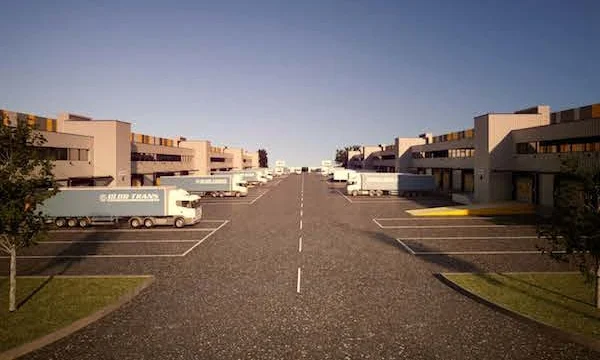
For investors, warehouses may not seem like the most appealing assets, but Ferguson thinks those looking at Iran often overthink their strategies. “Iran is seen as a high risk market, and so investors naturally gravitate towards high-risk, high-reward businesses,” she notes. “Investors tend to ignore the very low risk opportunities in an area such as warehousing.” Warehouses, unlike other forms of real estate, can be built in phases as clients are found, limiting the risk to upfront capital.
While Ferguson expects to generate conservative returns of 15-18 percent for her investors, she notes that Iran Warehouse’s revenues are tied to contracts indexed to the Euro, eliminating exposure to volatility in foreign exchange. Given that Iran’s currency has lost over 30 percent of its value over the last year, an insulated 15 percent return is inherently attractive.
Moreover, the Iran Warehouse business model is not dependent on new companies entering the Iranian market. With political uncertainty having limited the number of new multinational companies entering Iran’s consumer markets in the last year, history shows, Ferguson believes, that the global FMCG companies currently active in Iran “are definitely sticking around.”
By focusing on the storage and handling of food and finished goods, rather than industrial products, Iran Warehouse will enjoy consistent demand however the political tides may turn. The anchor tenant for the company's new facility is global food and beverage giant Nestle, which has been operating in Iran through its local subsidiary for 15 years.
Ferguson observes that a lot of the current real estate development in Iran will necessarily require further development in warehousing: “There are 65 shopping malls being built in Tehran,” she says. “But I don’t know of a single major third-party warehousing development to actually hold the goods that are going to go into stores. Without development on the logistics side, distribution costs will remain unreasonable.”
Moreover, as zoning in Tehran is changed to reduce congestion, many smaller warehouses located in what are now centrally-located neighborhoods are being converted to residential or retail developments. Tehran Municipality therefore has an interest in seeing consolidation in logistics real estate. Newly constructed warehouses will often be situated in Tehran’s traditionally blue-collar outskirts, which have seen factories relocate further afield, to places like Qazvin. These new facilities will bring much-needed jobs. Iran Warehouse’s Azadegan site will create 250 jobs when fully developed.
A huge proportion of Iran’s economic potential remains unrealized simply because of the inefficient configuration and use of existing resources. World-class investments in logistics real estate, though unglamorous, could prove one of the most fundamental ways to create economic value. For Ferguson and Sianaki, who look upon Iranian-led Prologis and Logicor as models to emulate, the challenge is to “bring that winning mentality home.”
Photo Credit: Iran Warehouse
In Confirmation Hearing, Pompeo Unwittingly Makes Strong Case for the Iran Nuclear Deal
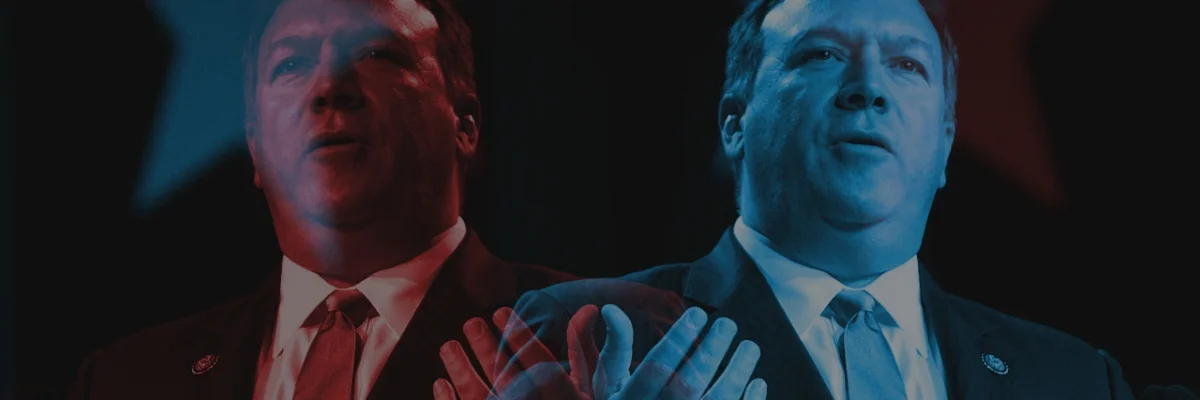
◢ During confirmation hearings yesterday, Secretary of State nominee Mike Pompeo sought to ensure the members of the Senate Foreign Relations Committee of his deep commitment to diplomacy, even in the case of Iran. But committee members were well-prepared, challenging Pompeo on his record of hawkish statements. To defend himself, Pompeo was forced to defend the JCPOA as he struggled to stick to the administration's illogical talking points.
Mike Pompeo is eager to be Trump’s new Secretary of State, a position that would offer the former Kansas congressman a public profile far greater than he enjoyed as director of the Central Intelligence Agency. Pompeo wants to represent America on the world stage and to restore the “swagger” of the Department of State.
His eagerness shone through as the nominee was questioned on his views regarding the Joint Comprehensive Plan of Action (JCPOA) by members of the Senate Foreign Relations Committee yesterday. Republican and Democratic members alike were ready with sharp questions as Trump’s self-imposed May 12 deadline for a “fix” to the deal loomed.
During the hearing, Pompeo was obliged to navigate his record of hawkish statements on Iran and the nuclear deal, his need to show ideological consistency with the President (without which his tenure as Secretary of State would surely be short-lived, as Tillerson’s experience showed), and his need to demonstrate a character befitting America’s lead diplomat. Pulled between these three obligations, Pompeo confused his talking points, struggled to dodge his record of hawkish and bigoted statements, and sought to seem reasonable the one way he could—by making a strong case for the Iran nuclear deal.
The cracks in Pompeo’s thinking first appeared as Arizona senator Jeff Flake began a line of questioning focused on the economic benefit Iran had received from the JCPOA. Flake observed, “In effect Iran has already realized much of the benefit of the agreement, but if we were to exit the agreement now, we would give them reason to renege on the agreements they have made nuclear side.”
The question put Pompeo in a bind. The Trump administration has been vocal about the economic pressure it has placed on Iran. Yet, as Flake’s questions sought to establish, the economic dividend of the deal is the source of American leverage to maintain Iranian compliance.
Flake asked whether there exists any means to claw back money received by Iran to date in the event of an American withdrawal from the agreement. There is no such means, Pompeo conceded, exposing that withdrawal from the JCPOA will mean forgoing significant leverage to prevent Iranian proliferation. Iran would have nothing to lose.
Pompeo, sensing the point about leverage, agreed that Iran has “received great economic benefit from the JCPOA” and that there remains “continued interest on the part of Iran to stay in this deal. It is in their own economic self-interest to do so.”
Senator Flake gets Pompeo to concede that Iran presents a low proliferation risk
But to deflect the concern about a loss of economic leverage in the face of a proliferation risk, Pompeo took a surprising tact, claiming “Iran wasn’t racing to a weapon before the deal, there is no indication that I am aware of that if the deal no longer existed that they would immediately turn to racing to create a nuclear weapon.”
Pompeo did not hold this belief until recently. In 2012, when he criticized the Obama administration's assessment “that the Iranians have not yet decided to build a bomb,” saying at the time, “To me, these words are reminiscent to those of Neville Chamberlain.”
In now downplaying Iran’s ambition to proliferate to Senator Flake, Pompeo undermined his earlier testimony, given in response to questions asked by Senator Bob Menendez, in which the nominee described the urgent need to “fix” the nuclear deal. After all, if Iran is not hellbent on acquiring a nuclear weapon, and was not seeking such a weapon prior to the deal coming into force, then surely the concern over “sunsets” is overblown.
This inconsistent logic reveals who has been advising Pompeo on Iran policy. A recent Washington Post op-ed by Reuel Gerecht of the Foundation for Defense of Democracies, written with Ray Takeyh of the Council on Foreign Relations, makes precisely the same argument. Gerecht and Takeyh write that “there’s no need for hysteria” if Trump abandons the nuclear deal, because “the Islamic Republic still isn’t likely to run amok, ramping up its nuclear program” given technical and political limitations. Pompeo is known to lean on FDD analysis, and participated in a summit organised by the hawkish think tank in October of last year.
Pompeo further contradicted himself on the matter of Iranian proliferation when pressed on Iran’s verifiable compliance with the Iran nuclear deal by New Mexico Senator Tom Udall.
Senator Udall pushes Pompeo on Iran's proven compliance with the JCPOA
Udall read a past statement by Pompeo expressing concern about the expiration of the JCPOA and the so-called “sunset clauses.” Pompeo had previously stated that “Iran will have the freedom to build an arsenal of nuclear weapons at the end of the agreement.”
Udall pointed out that in addition to its commitments under the JCPOA, Iran is also a signatory to the NPT and abides by the IAEA Additional Protocol, the commitments of which Iran has agreed to in perpetuity. He then asked Pompeo whether he had seen any evidence that Iran had not complied with its commitments under the JCPOA. Pompeo’s response was clear: “With the information I have been provided, I have seen no evidence they are not in compliance today.”
When Pompeo was read his own 2014 statement, in which he suggested that a military solution would be easier than a negotiated agreement to halt Iran’s nuclear program, he feebly replied “I don’t think that is what I said that day” before seeking to reassure members of the committee that he believes the “solution to preventing Iran from getting a nuclear weapon… is through diplomacy.”
Whether or not Pompeo’s newfound interest in diplomacy is genuine, it is clear that he is wary of the potential chaos that may follow Trump’s abrogation of the deal. Echoing another FDD talking point, Pompeo claimed that diplomatic efforts to “achieve a better outcome and better deal” could continue “even after May 12.”
The notion that the U.S. could continue to pursue diplomacy, and even remain in the deal, even after Trump opts not to further waive secondary sanctions on May 12, reflects the “fix not nix” approach devised by FDD which seeks to prevent American responsibility for the deal’s demise. Tellingly, Treasury Secretary Steven Mnuchin made a similar statement this week, claiming that “If the president decides not to sign [the waivers], it doesn’t mean we’re necessarily pulling out of the deal.”
Pompeo, after years of saber rattling, seemed willing to give diplomacy a chance. But committee members could see clearly that Pompeo’s testimony was first and foremost about giving himself a chance for confirmation. For Pompeo the verifiable success of the JCPOA is nothing more than an inconvenient truth to be acknowledged briefly now and then denied vociferously later.
Photo Credit: Bourse & Bazaar
Trump Stance on JCPOA Nuclear Deal Poses Legal Dilemmas for Iran
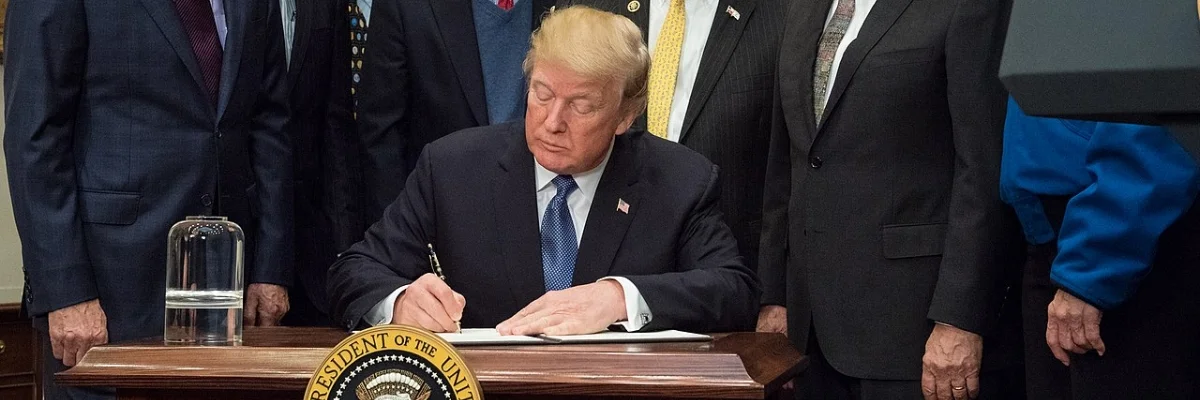
◢ With the May 12 deadline for the issuing of key sanctions waivers as part of the Iran nuclear deal fast approaching, the legal impact of the collapse of the 2015 agreement ought to be considered. Regardless of how Iran responds to a change in U.S. policy, the possible withdrawal of the United States from the JCPOA will have a legal impact on its parties. Any possible change in the partnership or the provisions of the agreement will be reflected within the domain of international law.
With the May 12 deadline for the issuing of key sanctions waivers as part of the Iran nuclear deal fast approaching, what could be the impact of the collapse of the 2015 agreement? While Donald Trump's conditions for the review of the current arrangement have yet to be met and Iran's clear rejection of any amendments to the plan, the breakdown of the Joint Comprehensive Plan of Action (JCPOA) seems inevitable.
The nuclear deal is the most important multilateral agreement reached in the global nuclear non-proliferation system in the last decade. It is now at risk of collapse. There are three options for Iran should the US withdraw from the JCPOA.
First, Iran could exit the deal immediately and continue to fulfill the obligations under NPT and to the IAEA based only on the safeguard agreements with the agency. This is seen as the worst case scenario by the EU, E3 and the IAEA.
Second, Iran could exit the deal immediately, but continue to fulfill its commitments to the International Atomic Energy Agency (IAEA) based on both safeguard agreements with the IAEA agreed as part of the JCPOA and its preceding agreement, the Joint Plan of Action (JPOA). Under these safeguards Iran has suspended enrichment of uranium to 20 percent.
Third, Iran could opt to remain in the deal on the basis that the European Union and E3 (UK, France and Germany) will provide additional benefits to Iran to compensate for the negative effects of US withdrawal.Iran’s deputy foreign minister, Abbas Araghchi, one of the key architects of the JCPOA, has stated that as long as Iran continues to benefit from a removal of sanctions, it will remain committed to the deal, but has expressed doubts that the France, Germany and the UK will be able to guarantee Iran’s interests in the absence of the United States.
Regardless of which route Iran takes, the withdrawal of the United States from the JCPOA will have a legal impact on its parties. Any possible change in the partnership or the provisions of the agreement will be reflected within the domain of international law.
The Threat of Snapback
Trump has threatened not to issue the crucial waivers that have suspended US secondary sanctions on Iran. On May 12, Iran may find itself in a position not of its own making. Despite unprecedented international monitoring and scrutiny of its nuclear program, and despite the IAEA's approval of its commitments without the slightest deviation for military purposes, it may once again face significant economic sanctions, even over the vital sale of its oil. However, snapback of US secondary sanctions could actually preclude snapback of UN sanctions, if the deal remains intact following Trump’s withdrawal.
One of the provisions of the JCPOA, unprecedented in the 70-year history of the Security Council, is the decision-making process of the partners required to resume sanctions. According to Article 37 of the JCPOA, if the dispute resolving mechanism is unsuccessful, the UN Security Council will vote on a resolution to continue the lifting of sanctions.
In such a case, the United Nations Security Council would vote for a resolution to suspend sanctions. As described in a recent report by Stephen Mulligan, an attorney with the Congressional Research Service:
The ‘snapback’ mechanism thus places the onus on the Security Council to vote affirmatively to continue to lift its sanctions by stating that those sanctions will be implemented automatically unless the Security Council votes otherwise. As a permanent member of the Security Council, the United States would possess the power to veto any such vote and effectively force the reinstatement of the Security Council’s sanctions on Iran.
In this process, the vote of all five permanent members of the Council is critical. If one of these members does not agree with the suspension of sanctions, it alone can easily restore a series of Council sanctions under Article 41 and Chapter 7 of the United Nations Charter (threats to global peace and security).
However, if the United States pulls out of the JCPOA, triggering the snapback of its secondary sanctions against Iran, it may lose the ability to use the UN sanctions snapback threat which is articulated with Article 37 under JCPOA. In other words, only parties to the Iran deal are able to trigger the UN nuclear sanctions snapback procedure. If the US withdraws from the deal, it loses the ability to trigger this mechanism.
This would be a reprieve for Iran, but there are further legal pathways that should be considered in order to prevent more damages by the US to the non-proliferation regime and international law.
Recourse to the International Court of Justice
The IAEA has verified in eleven reports that Iran has fully complied with its commitments under the nuclear agreement. On this basis, Iran feels it is facing punishment without justification.
Iran can, on the basis of Clause 2 of Article 21 of the Treaty of Amity, Economic Relations, and Consular Rights (1955), file a complaint with the International Court of Justice (ICJ) against the United States on the basis that it has had a detrimental effect on its business and trade with other countries.
Punishing Iran with various economic sanctions, including the vital sale of its oil, may result in Iran’s withdrawal or limited implementation of its political commitments under JCPOA. Depending on whether Iran completely abandons JCPOA or suspends some of its commitments under the agreement, it means the end of the current inspections and the IAEA's ability to continue a complete and unprecedented monitoring of Iran's nuclear program. The result is the inability of a United Nations agency to carry out its mission.
The current situation has created a legal impediment, despite the wishes of Iran, for the IAEA and the members of its board of governors including the United Kingdom, France and Germany. According to the definition of the Vienna Convention on the Law of Treaties 1969, the JCPOA is not considered to a treaty, under which definition a violation would result in a case directly taken as a complaint to the International Court of Justice.
However the IAEA is an agency authorised by the UN and if it cannot reciprocate with its obligations to a UN member state that has been in compliance with the nuclear agreement (Iran) due to the interference of a third country, the IAEA can, on the basis of Article 96 of the UN Charter, and Clause 1 of Article 65 of the Statute of the International Court of Justice, for the first time in its history, resort to the ICJ for an advisory opinion on the legal status of the JCPOA.
There is some precedent for such a request by an international organization like the IAEA. The World Health Organisation has taken a similar action on threats to the use of nuclear weapons in armed conflict, requesting a referral from the International Court of Justice. The ICJ’s response would not be legally binding but it would be a new source of international law, and may be considered by the other parties to the nuclear agreement as an official advisory about their treatment of deadlock with the United States.
The JCPOA is an improbable achievement, an agreement reached after Iran had been subjected to the harshest sanctions regime ever imposed. In political practice and in the domain of international law, the JCPOA provides a new way of resolving disputes in support of the nuclear non-proliferation regime. the agreement collapses it would be, as in the words of Yukiya Amano, Director General of the IAEA, a “great loss for nuclear verification and for multilateralism” and in my view also for international law more generally.
Photo Credit: Wikicommons
Rouhani Government Unifies Iran’s Exchange Rates in Decisive Move to Stabilize Currency
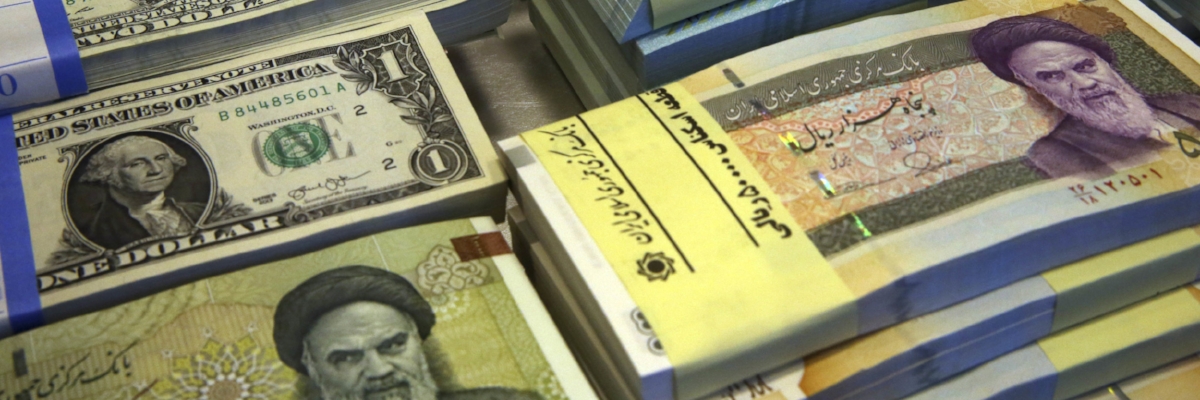
◢ In a decisive move intended to stop the further devaluation of the rial, the Rouhani government announced it would unify the official and free market dollar exchange rates, settling on an official rate of IRR 42,000. First Vice President Eshagh Jahangiri made the announcement last night, declaring that trading dollars above the new rate would be a serious crime.
In a decisive move intended to stop the further devaluation of the rial, the Rouhani government announced it would unify the official and free market dollar exchange rates, settling on an official rate of IRR 42,000.
First Vice President Eshagh Jahangiri made the announcement last night, declaring that trading dollars above the new rate would be a serious crime. "Just like the smuggling of drugs, no one has the right to buy or sell [above the new rate]... If any other exchange rate is formed in the market, the judiciary and security forces will deal with it," he warned.
"There should not be such incidents in an economy that always has a surplus of foreign currency. Some say interference by foreign hands is disrupting the economic climate and some say domestic machinations are spurring these things in order to destabilize the climate in the country," added Jahangiri.
Earlier in the day, the Economic Commission of Iran’s parliament had summoned Minister of Economic Affairs Masoud Karbasian and Central Bank Governor Valiollah Seif for an emergency meeting regarding the careening value of the rial, which had reached a record low of IRR 60,000 to the dollar.
Speaking to reporters after the meeting, Karbasian continued the government line that the devaluation was not a reflection of the true state of the economy. Rather, he obliquely suggested that the “security agencies” ought to be summoned to explain the real cause for the fluctuations. His comments were an apparent reference to rumors that certain actors opposed to the Rouhani government, likely in the security establishment, were hoarding dollars in order to exacerbate speculation and undermine confidence in the government’s economic management.
However, in the face of this significant political pressure, the Rouhani administration made a bold move, instituting a policy that has eluded the country’s economic planners since the 1979 revolution. Rate unification has long been considered a necessary step to introduce more stability in Iran’s monetary policy and foster a better business environment for the country’s enterprises.
Iran's last major currency crisis of a similar scale took place in 2012. Then president Mahmoud Ahmadinejad similarly blamed psychological factors for the rout, arguing in a speech, "Are these currency fluctuations because of economic problems? The answer is no. Is this because of government policies? Never … It's due to psychological pressure. It's a psychological battle." His government similarly tried to unify rates at IRR 12,260. But sanctions made it difficult to generate sufficient supply of hard currency in Iran, and the unified rate collapsed after just a few months.
During this most recent currency crisis, the rial had lost about one-third of its value against the dollar over the last Iranian new year, which ended on March 20. The devaluation accelerated beginning in December, and the rise in the free market price of the dollar tracked closely with that of gold. Both gold and the dollar have been typical “safe-haven” investments for Iranians wishing to hedge against inflation and general economic uncertainty. However, inflation had remained flat over the previous twelve months, and real estate prices were relatively stable, suggesting little change in the purchasing power of the rial. The net effect was a rampant devaluation more akin to a bubble, fueled by rising doubts among Iranians about the survival of nuclear deal.

Though clearly responding to the recent turmoil, the Rouhani government had already begun the groundwork necessary for such a unification. In March of last year, Catriona Purfield, a senior economist at the IMF, suggested that Iran could perhaps unify the rates earlier than expected, stating, “Half of imports have been put on the market rate and most of the goods are now at the flexible rate. Interbank FX market has been reestablished. Therefore all the elements are there, so an early move is possible.”
The new rate of IRR 42,000 is closer to the rate economists expect would be necessarily for unification. Economists Mohsen Bahmani-Oskooee and Sahar Bahrami looked at exchange rate data from 1979 to 2015. They concluded that had Iran’s rial been allowed to depreciate in accordance to changes in purchasing power parity, the exchange rate in 2015 would have been around IRR 47,000. The rial’s purchasing power has been relatively stable in the last few years and so this is likely a fair estimation of the current dollar rate in PPP terms.
Yet, despite the clear economic rationale behind the rate unification, it will remain to be seen whether the political gamble pays off for Rouhani. The official exchange rate presented a lucrative arbitrage opportunity for quasi-state actors, who could purchase dollars at the lower official rate then sell the hard currency on the black market. These entrenched interests will no-doubt see the unification as a direct challenge by Rouhani, and a further example of his administration's continued efforts to reign-in rent seeking in the economy.
But for the general public, such a confidence-inspiring move should serve as an indication that the Rouhani cabinet, despite the claims of infighting and mismanagement, remains capable of the kind of coordinated policymaking necessary to reform the economy.
Photo Credit: Vahid Salemi
Governor of Sweden’s Central Bank Visits Iran for Technical Dialogue
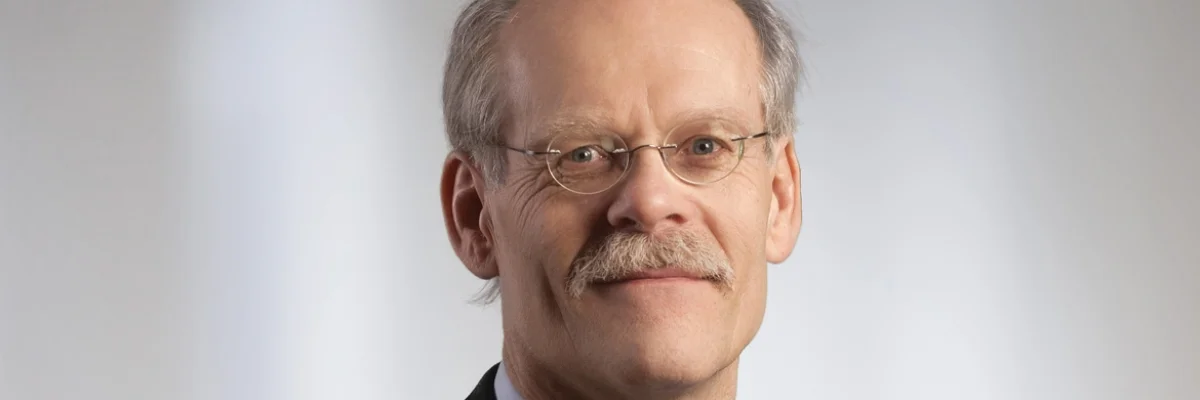
◢ The governor of the Riksbank, Sweden’s central bank, is visiting Iran on April 5th on the invitation of Iran’s central bank governor Valiollah Seif. With an agenda focused on technical exchanges, a spokesperson for the Riksbank confirmed to Bourse & Bazaar that Ingves will give a presentation entitled “Central Banking and Financial Crisis: Lessons Learned.”
The governor of the Riksbank, Sweden’s central bank, will visit Iran on April 5-6 at the invitation of Iran’s central bank governor Valiollah Seif.
Stefan Ingves, the governor of the Riksbank will be leading a day of technical exchanges including a working dinner hosted by Sweden’s ambassador in Tehran, Helena Sångeland. The visit, which comes as political uncertainty around the nuclear deal reaches a fever pitch, underscores the long-standing commercial and economic relationship between Sweden and Iran. In February of 2017, Swedish Prime Minister Stefan Löfven visited Iran with an itinerary that included a visit to the Scania truck factory in Qazvin.
For the Central Bank of Iran, the visit by one of Europe’s most seasoned central bankers is a valuable opportunity to draw on the Riksbank’s experience in central banking, financial stability, and monetary policy. Ingves has held the position of Riksbank governor since 2006 and navigated the country through the 2009 global financial crisis. He is also the chairman of the Basel Committee on Banking Supervision, which sets global standards for prudential regulation of banks. Iranian banks have been undertaking extensive reforms in order to better conform to so-called “Basel” standards.
A spokesperson for the Riksbank confirmed to Bourse & Bazaar that Ingves will give a presentation entitled “Central Banking and Financial Crisis: Lessons Learned.” The topic is of particular relevance as Iran seeks to manage systemic risk in its banking sector stemming from non-performing loans, a key driver of the 2009 crisis. Sweden was one of the fastest recovering countries in the aftermath of the last major global recession, earning praise as a “rockstar of the recovery” for its combination of intelligent fiscal and monetary measures.
No doubt, Iran’s central bankers will listen to Ignves’ presentation attentively.
Photo Credit: Riksbank
First OECD Complaint Filed Against a European Company for its Activities in Iran
◢ The filing of a complaint against Italian telecommunications firm Italtel under the OECD Guidelines for Multinational Enterprises for its business activities in Iran is a warning about the scrutiny and politicized climate surrounding investment in the Islamic Republic. But companies can navigate these claims succesfully if they remain committed to responsible business and proactive monitoring.
When companies consider the risks associated with doing business in Iran they largely focus on sanctions. Yet this approach misses the increasing normative and regulatory requirements that companies also manage the social and environmental impacts of their activities. While the importance of managing these risks holds for any country, it is particularly salient in the Iranian context due to the scrutiny and politicised climate surrounding investment in the Islamic Republic.
The filing of the first complaint against a European company under the OECD Guidelines for Multinational Enterprises (the OECD Guidelines) for its business activities in Iran is a warning for what might lie ahead. Without prejudging on the merits of the complaint, this case is important for any company looking at doing business in Iran because it highlights a type of regulatory policy businesses are mostly unaware of, and because of its implications on the broader political environment to continue an economic opening towards Iran.
The Complaint
On 13 September 2017, three civil society organisations filed a complaint with the Italian Government against Italtel Group S.p.A, a major Italian telecom company regarding its business activities in Iran.
The complainants argue that the technologies and services offered by Italtel to its Iranian partner, the Telecommunications Company of Iran (TCI), breach multiple provisions of the OECD Guidelines by contributing to internet censorship and other rights violations in Iran and help the Iranian authorities, including the Islamic Revolutionary Guard Corps, to suppress political dissent and civil liberties in the country and in cyberspace. The complainants are asking the Italian government whether the company’s actions are consistent with the Guidelines and more importantly are calling for an immediate moratorium on current negotiations and business engagements between Italtel and TCI until the alleged breaches to the Guidelines are addressed.
The OECD Guidelines
The OECD Guidelines are recommendations addressed by Governments to multinational enterprises operating in or from one of the 48 adhering countries—that includes the 35 OECD countries and 13 additional countries ranging from Argentina to Kazakhstan to Ukraine. The Guidelines provide non-binding principles for responsible business conduct in areas such as employment and industrial relations, human rights, environment, information disclosure, combating bribery, consumer interests, human rights, science and technology, competition and taxation. Their impact has been felt the most extensively in the areas of human rights and labour relations.
The Guidelines, in line with the other key reference instruments on responsible business practices such as the United Nations Guiding Principles on business and human rights and the International Labour Organization’s Core Labour Standards, make clear that responsible business is not charity or philanthropy but about identifying, managing and remediating adverse impacts on social and environmental issues.
As the Guidelines are not legally binding, one might conclude they can easily be ignored. But the most unique feature of the Guidelines is that they require governments to set up “National Contact Points” whose role is to promote the Guidelines and, more importantly, to receive and handle complaints against alleged non-observance of the Guidelines. These complaints are not judicial cases in the classical sense. NCPs offer conciliation and mediation to facilitate consensual solutions to the alleged violation of the Guidelines. Again, it might be tempting to ignore NCPs due to their apparent lack of judicial standing. However, these cases increasingly lead to concrete consequences for companies found in non-compliance of the Guidelines.
As the OECD's own reports show, findings and recommendations of NCPs are increasingly being used by investors in their assessment of companies’ performances, including in decisions of divestment. Governments are increasingly looking at NCP findings and recommendations when and whether extending their support to companies. The most advanced example is probably Canada, which can withdraw its state support for companies in case of an established violation of the Guidelines or a failure to participate in good faith in the NCP process. More broadly, OECD export credit agencies have coordinated their policies to recommend that agencies take into account NCP statements when deciding whether to provide financial support. Individual NCP cases have also resulted in significant consequences for companies such as loss of future contracts.
NCPs have handled over 400 complaints, addressing impacts from business operations in over 100 countries and territories since 2000. Since 2011 there has been a steady increase in recourse to the NCPs, demonstrating growing confidence in the system. This, combined with the breadth of issues covered by the Guidelines and the relative ease of access to the NCP probably explain why civil society organizations decided to use the OECD system. The Italian case may well be a clear signal that NCPs will likely be increasingly used as a tool of strategic (quasi) litigation in the context of business activities in Iran.
Maybe Italtel activities do not amount to a breach of the Guidelines. Maybe they do, but unwillingly or unwittingly. The issues raised by the complaint are complex. Phone and ICT companies are increasingly forced to assess the balance between respecting basic human rights such as freedom of expression and privacy with government requests based on public security. Vodafone came under fire when it was forced to send out pro-government messages and shut down its network by the Egyptian government during the 2011 uprising. BlackBerry, when it was still a thing, faced a ban in India for refusing to provide access to customers' emails. Google left China after its servers were attacked to access information about activists and Apple recently opposed the US Government over users’ privacy.
In any case, it is fully in the interest of the company to use the opportunity of the NCP case to clarify the situation. NCPs focus on problem solving. It represents in the end a relatively easy way to reach a consensual and non-adversarial solution to its alleged challenges.
Responsible Economic Relations
The importance of the OECD Guidelines can also be felt at a very different level highlighted in a recent feature on Bourse & Bazaar. The feature discussed the question of whether Iran is a “good country” as essential for business leaders and governments as they try to justify market entry plans to board members, shareholders, and their national constituencies while critics of the Iran nuclear deal claims more forcefully than ever that investing in Iran will further enable the “bad behavior” of the Iranian state
This good/bad approach might seem simplistic but it reflects a very real dimension of the broader political environment surrounding companies and governments developing business and economic ties with Iran. They must be mindful of the heightened impact of negative headlines alleging that European businesses are harming people and the environment in the country just like irresponsible foreign investors risk compromising internal support in Iran for opening economic ties.
In this context, responsible business offers an additional tool to demonstrate that investments in Iran are “good” when they respect people and the environment. Reinforcing this perception, based on actual performances, will be crucial to strengthening broad acceptance of economic and business relations with Iran. Said differently, it is in the interest of investors, companies as well as governments in Europe and Iran to respect, support and implement concretely and convincingly the OECD Guidelines and more broadly responsible business practices in Iran.
Photo Credit: Wikicommons
Iran Financing at Austria's Oberbank 'On Hold' Because of Trump
◢ A new report in Austria's Die Presse confirms that one of the first Western banks to sign a deal to provide project financing to Iran has had to put its projects “on hold” due to the uncertainties surrounding the Iran nuclear deal. Oberbank had signed an agreement to extend a EUR 1 billion line of credit to Iran in September of last year.
A new report in Austria's Die Presse confirms that Oberbank, one of the first Western banks to sign a deal to provide project finance to Iran, has put projects “on hold” due to the uncertainties surrounding the Iran nuclear deal.
Oberbank, Austria’s seventh-largest bank despite its regional focus and limited exposure to the U.S. financial system, had signed an agreement to extend a EUR 1 billion line of credit to Iran in September of last year. The deal was announced to much fanfare as political uncertainty increased around the expectation that President Donald Trump would “decertify” the nuclear deal later that October—a step the American leader did subsequently take.
The finance deal, which was signed with the express support of Iran’s central bank as well as the Austrian government, was intended to support capital-intensive infrastructure and energy projects led by Austrian companies and was earmarked for projects of over two years in duration. While Oberbank has long provided trade finance in areas that are exempt from sanctions, such as food and pharmaceuticals, the provision of project finance was considered a significant boost to Iran’s engagement with the European financial system. Denmark’s Danske Bank signed a similar agreement shortly after their Austrian peers.
However, in a presentation to shareholders by Oberbank CEO Franz Gasselsberger, the Iran project emerged as a rare blemish in an otherwise strong annual report. As Die Presse reports, Gasselsberger told those present that the financing of projects in Iran remains “on hold” because the current U.S. policy "complicates the business massively.” Moreover, the prospect that secondary sanctions could “snapback” on May 12 if Trump refuses to reissue key sanctions waivers was highlighted as something the bank’s leadership will need “take a close look at.”
Photo Credit: Wikicommons
The Iran Deal’s On Life Support: Time To Pull The Plug
◢ The JCPOA has become a liability for Iranian diplomacy. The "fix not nix" strategy has allowed the U.S. to sour the Europe-Iran relationship and focus nearly all diplomatic efforts on preserving the deal, rather than building new foundations for political and economic engagement. Iran ought to consider taking control by leaving the JCPOA as part of a strategy that keeps its key non-proliferation commitments intact.
This article was originally published in Lobelog.
The saga of the Iran nuclear deal has taken another bizarre turn. Eli Lake, a longtime skeptic of the deal, yesterday published a much-discussed Bloomberg View piece in which he surprisingly argues that “to withdraw from the Iran deal now would be a mistake.” Lake’s piece reflects a new line of thinking that has emerged from the campaign to “fix” the Joint Comprehensive Plan of Action (JCPOA).
With the recent appointment of John Bolton as national security advisor and the prognostications of Israeli Prime Minister Bibi Netanyahu, it is now being taken largely for granted that Trump will withdraw from the Iran deal. But summarily nixing the deal on May 12, the date when Trump would need to once again waive U.S. secondary sanctions in order to remain in the deal, might pose a problem. The “fix not nix” strategy, which has been advanced since Trump’s de-certification of the agreement in October 2017, reflects a concern in Washington that if Trump abrogates the deal in a flourish of executive privilege, he will harm transatlantic relations and make the U.S. seem responsible for any subsequent escalation or blowback.
For some months, the date of May 12 has loomed over the U.S.-E3 negotiations to find a fix to the deal by giving Europe the chance to compel Iran into a package of add-ons and concessions. Time is running out, and Trump seems determined to kill the deal by his own small hands. Ever aware of the optics, Mark Dubowitz, CEO of the Foundation of Defense of Democracies (FDD), has suggested a “safe harbor” period which would extend to November 12, during which the sanctions re-imposed in May would not be enforced, thereby granting a greater window for negotiations on a “real fix.”
At first glance, this might look like a reasonable accommodation. But in truth, it is an effort to bait Iran into a harsh reaction that kills the deal. The failure to renew sanctions waivers on May 12, even if sanctions snapback is delayed, will trigger substantial political pressure for the Rouhani administration or other elements within Iran’s state to respond. Should that response be escalatory—and if it takes place within the window of time before the United States has actually redesignated entities and reimposed sanctions—it will look like the Iranians were the party that abrogated the deal first during a period of “extended negotiations.”
Unworkable Fix
There are four clear signs that the strategy to pursue a “fix,” even with more time, is unworkable. The first sign is that Trump has never independently articulated what an acceptable fix would look like. His antipathy for the Iran deal is clearly more emotional than rational, stemming from his view of the deal as a key achievement of the Obama administration. Even if a rational fix were to be devised, it would still be vulnerable to Trump’s sentiment that the deal should not be saved. It may even be the case that the JCPOA is the primary reason why Trump cares about Iran at all. With the deal off the table, the unlikely tag team of Saudi Crown Prince Mohammad bin Salman and Bibi Netanyahu may have less success weaponizing the White House against Iran.
Second, the elevation of Mike Pompeo to secretary of state and John Bolton to national security advisor only compounds the problem of Trump’s impulses as he has surrounded himself with individuals who have a nearly pathological obsession with Iran as an adversary. These new advisors may find the pretense to escalate even if the JCPOA were “fixed.” Iran can no longer rely on the nuclear deal alone to underpin a basic detente with the Americans and therefore needs to begin investing in other methods of counterbalancing.
Third, there has been reduced capacity for reasonable action among the bureaucracy. The Treasury Department’s Office of Foreign Assets Control (OFAC) has failed to issue a single new license for commercial activities in Iran to date. OFAC has a clear institutional interest in creating a robust but navigable regulatory environment. The Trump administration’s Iran posture has overriden this interest, even prior to snapback, which suggests that waiver renewal would be insufficient to ensure that Iran receives the expected economic benefit from the nuclear deal.
Finally, the “fix not nix” approach is just a tactic, not a complete strategy, and has been put forward as a policy option by advocacy groups and think tanks whose larger ambitions are to seek regime change in Iran. Even if a fix were to emerge, groups such as FDD and the American Enterprise Institute (AEI) will continue to push for a more confrontational policy with Iran, emboldened by the fact that they were able to secure concessions through the acquiescence of European governments, such as the new sanctions currently being considered.
The confluence of these factors has put the JCPOA into the intensive-care unit. This characterization might unnerve deal supporters, who insist that the deal remains strong, particularly with the continued verification by the IAEA that Iran remains in compliance with its commitments under the deal. But it is important not to misunderstand the origins of the Iran deal’s strength. Deal supporters ought to remember that “JCPOA” is just a particular instantiation of the larger idea that diplomatic engagement with Iran is the best way to achieve greater security and prosperity in the Middle East. Deal supporters must also realize that the strength of the Iran deal does not derive from the mechanisms of the deal itself, but rather from the pre-existing factors and forces that made the deal possible in the first place, such as the aspirations of Iran’s citizenry, the economic need for internationalization, and the longstanding deterrents and disincentives for proliferation activity.
The total subjugation of normalized relations between Iran and the West to the uncertainties of the JCPOA has created a quagmire. Pro-engagement stakeholders in the U.S., Europe, and Iran have spent nearly all of their energies in the last year seeking to preserve the deal. In the meantime, the underlying sources of strength in Europe-Iran ties have been neglected and underutilized. The general sense of trust between stakeholders on both sides has eroded as accusations of European appeasement have collided with accusations of Iranian intransigence.
With the Iran deal in the ICU, there is an argument to keep the deal on life support. Barbara Slavin has recently argued that coming shifts in American politics could offer a strong reason for Iranian patience in regards to the nuclear deal. But the waiting game is itself harmful, eroding confidence and leading to the whittling away of strategic options.
Pulling the Plug
It may be time for Iran to pull the plug on the JCPOA. It should consider reallocating efforts and resources toward new initiatives, programs, and agreements to shore up diplomatic and economic ties between Europe and Iran, as well as the wider international community, where Trump can’t directly interfere. This would create an opportunity to declare the deal dead at Trump’s hands because of what he has already done, rather than what he may do. It would give Iran and its European, Russian, and Chinese partners a chance to craft a new plan for engagement outside the moribund JCPOA that will no longer be beholden to sentiments in Washington and less exposed to craven lobbying from the leaders of Saudi Arabia and Israel.
In Iran’s domestic arena, such a step would also allow pro-engagement stakeholders, namely the Rouhani administration, to reassert their control over the diplomatic and economic agenda. In effect, Iran could preempt Trump’s decision and pull out of the JCPOA from a position of strength, doing so without violating the spirit or letter of the agreement, and transposing its commitments to a new set of multilateral engagements. There are several steps that would need to be taken to executive such a strategy.
First, Iran should use the dispute resolution mechanism outlined in the JCPOA to orchestrate its exit from the agreement but in a manner that does not trigger the snapback of UN or EU sanctions. As per the text of the agreement, Iran would present the U.S. failure to implement the deal as grounds to “cease performing its commitments under [the] JCPOA in whole or in part and/or notify the UN Security Council that it believes the issue constitutes significant non-performance.” The degree to which Iran opts to cease performing its commitments is critical. This is because an unresolved dispute triggers a UN Security Council “vote on a resolution to continue the sanctions lifting.” The goal for Iran must be to be to ensure that the Security Council does not vote to reimpose UN sanctions. In order to avoid this outcome, Iran should confirm to the IAEA that it intends to remain in full compliance with its commitments presently outlined in the JCPOA and ensure continued access for IAEA inspectors despite its formal withdrawal from the nuclear deal. At this stage, it will be easier to push the U.S. not to take measures to snapback UN sanctions within the UN Security Council than it will be to keep the U.S. committed to the JCPOA.
Second, Iran should strongly consider other mechanisms through which to formalize its avowed commitment to never seek nuclear weapons. Though currently a signatory to the Nuclear Non-Proliferation Treaty (NPT), as Seyed Hossein Mousavian has argued, it should also consider signing the Treaty on the Prohibition of Nuclear Weapons. Iranian officials, who have publicly praised the nuclear ban, will need to understand that their effective communication of intentions will be absolutely crucial at this stage in the strategy. After all, abrogation of the deal is currently assumed to lead to an Iranian “dash to the bomb.” Getting key stakeholders and advocacy groups to attest to the new circumstances of Iranian non-proliferation commitments will require proactive communication and transparency. If this can be done successfully, Iran could exit the agreement without punishment from the UN or EU.
Third, on the basis of the continued commitment to preserving the core security benefits of the JCPOA, Iran should formally invite the European Union into a new set of multilateral and comprehensive consultations on political, economic, and security matters modeled on the periodic meetings of the Joint Commission. Importantly, these new consultations should not be led by the E3 governments of France, Germany, and the United Kingdom. Under the auspices of the European Union and the European External Action Service, which has been the most proactive stakeholder for the expansion of political and economic dialogue between Europe and Iran, Iran must engage the wider EU 27 to create a greater space for countries such as Austria, Denmark, Sweden, and the Netherlands, which have actually made greater relative strides in expanding political and commercial ties than the E3 in their respective bilateral contexts. Of course, such efforts should also include non-EU states such as Switzerland and Norway. Bringing these smaller European states into a formal multilateral dialogue would provide a much more durable forum for engagement than the over-reliance on the JCPOA has provided thus far. Of course, Iran should also continue to hedge by finding constructive ways to deepen its relationship with Russia and China, especially outside of the realm of security cooperation.
Fourth, Iran must continue its process of domestic reform necessary for both political and economic internationalization. Most importantly, it should continue its commitment to the Financial Action Task Force action plan regardless of the snapback of U.S. sanctions. This will ensure that critical reforms are made to the Iranian financial system that will build confidence in Iran’s intentions to solve some of the most stubborn barriers to the facilitation of trade and investment. Additionally, Iran should improve openness and transparency in the domestic political sphere by tackling corruption, expanding access to media and information, and better protecting dual-nationals from undo persecution.
These four steps constitute a bold rethinking of Iran’s path to a more productive, prosperous, and peaceful place in the international community. The strategy certainly introduces technical complexity that cannot be fully considered here. But any sober assessment of the current situation surrounding the JCPOA makes it clear that Iran will need to consider new ways to leverage its fundamental geopolitical significance and its ongoing multilateral engagement in order to derive from its international relations the essential domestic political and economic dividends that have for five years underpinned Iran’s tentative turn towards openness.
Without such an effort, Iran may find itself externally isolated at the hands of Trump’s throttling of the nuclear deal. The Iranian government would also struggle to live up its ambition to ameliorate the terms of the social contract with the electorate. Whichever strategy is taken, however, the integrity and scope of Iranian diplomacy is not something to be cynically certified by an erratic American president. To save diplomacy and to prove integrity in the international system, it may be time for Iran to kill the deal.
Photo Credit: Wikicommons
New IMF Report Calls for Iran to Access International Bond Markets
◢ A new report from the International Monetary Fund (IMF) examining “selected issues” in Iran’s economy, including the expansion of non-oil exports and the role of women in the labor force, places special emphasis on the importance of the development of Iran's government securities market, which is a priority under the Sixth National Development Plan (NDP).
A new report from the International Monetary Fund (IMF) examining “selected issues” in Iran’s economy, including the expansion of non-oil exports and the role of women in the labor force, places special emphasis on the importance for Iran to develop the government securities market, which is a priority under the Sixth National Development Plan (NDP).
The report, authored by an IMF team in cooperation with the Iran Parliament Research Center, establishes that the “deficit and gross funding needs of the [central government] are set to rise as securitization of arrears and financial sector reform advance.” Iran’s gross financing requirements will rise from the current level of 4.5 percent of GDP to 15 percent of GDP by the end of the decade.
Countries at a similar stage of development as Iran are able to fund public investment via bond offerings in international markets. However, Iran remains largely isolated from international financial channels. Acknowledging this, the authors of the IMF report suggest that “fast development of the government securities market would help overcome Iran’s limited access to international capital markets and lower its recourse to monetary financing of the budget.”
This suggestion echoes the analysis of a 2015 Bourse & Bazaar piece by Seyed Ahmad Araghchi, now vice governor of the Central Bank of Iran. In the piece, Araghchi argues that “securitization offers the best and most efficient methods of financing the country’s projects in the post-sanctions era in the shortest period of time.”
The IMF team praises Iran for establishing a Debt Management Office (DMO) within the Ministry of Economic Affairs and Finance to coordinate the issuance of government debt, including Sukuk bonds and Islamic Treasury Bills.
However, Iran has yet to develop a clear Debt Management Strategy (DMS) to give greater clarity and confidence to creditors. The authors note that “although the annual budget laws provide a ceiling for types of securities to be issued, there is no pre-announced issuance calendar, debt statistics are not published, and the objectives of debt management are not clearly defined nor publicly disclosed.” Moreover, the DMO is currently developing much of its policy in isolation, whereas it ought to craft strategy in discussion with CBI and the Planning and Budget Office (PBO) “to ensure greater coordination between monetary and fiscal policies.”
These reforms will also be important for expanding the diversity of creditors. Data from the Iran Fara Bourse shows that 80 percent of bonds are held by asset management companies, most of which are owned by banks. Just 10 percent of bonds are held by foreign owners, and the remaining 10 percent is held by individuals and corporates.
Tellingly, the IMF authors consider it a “long-term” prospect for Iranian bonds to be included in international bond indices. Certainly, the political uncertainty surrounding the Iran nuclear deal and the remaining barriers to reintegration to international financial markets will make this difficult if not impossible in the near term. These factors are not however discussed directly in the report.
Nonetheless, the authors suggest that Iranian bonds should be “traded on an international clearing house” and that the DMS should devise conditions where bond issuance is of a significant enough size and has enough primary dealers to ensure “liquidity and consistent bid/ask spreads” as well as transaction volume.
Overall, the IMF report offers a compelling example of the kind of technical dialogue Iran needs to ensure that its process of domestic financial reform meets internationals standards.
Photocredit: Wikicommons
Hold on Iran: Regime Change is Coming to Washington
◢ With the announcement March 22 that John Bolton will soon be joining Mike Pompeo in the Trump administration, US adherence to the Iran nuclear deal looks doomed.
◢ But officials in Tehran who may be arguing that Iran should also quit the JCPOA if the US does, should remain patient. The Trump administration is in trouble and the Republican majorities on which it depends in Congress are looking almost as endangered as the Iran nuclear deal.
With last week's announcement that John Bolton will soon be joining Mike Pompeo in the Trump administration, US adherence to the Iran nuclear deal looks doomed.
Both Bolton, who is to become national security adviser, and Pompeo, the new Secretary of State-designate, have forcefully opposed the Joint Comprehensive Plan of Action (JCPOA) and are likely to recommend that the US stop waiving nuclear-related sanctions when the next deadline arrives on May 12.
But officials in Tehran who may be arguing that Iran should also quit the JCPOA if the US does, should hold onto their centrifuges. The Trump administration is in trouble and the Republican majorities on which it depends in Congress are looking almost as endangered as the Iran nuclear deal.
Along with hundreds of thousands of other Americans, this writer took part on March 24 in a historic demonstration in Washington, D.C. against gun violence. The “March for our Lives” was focused on achieving common-sense laws that would make it much harder for people who should not have guns to get them. Assault-style weapons and large capacity magazines would also be banned for civilians. But the chief slogan at the rally had a much broader if unstated target, the Republican Party, which has aligned itself with the gun-loving National Rifle Association.
“Vote them out!” the marchers yelled, looking toward November midterm elections. The speakers, all teenage survivors of gun violence, vowed to register to vote upon turning 18 and to mobilize their peers to do the same.
A wave is coming in November that will likely shift the House of Representatives and possibly the Senate, too, to Democratic control. Even if only the House flips, the prospects for Trump’s removal rise. Special counsel Robert Mueller is assembling a mountain of evidence implicating the president for obstruction of justice at a minimum as well as possible coordination with Russia and other crimes. Meanwhile, former Trump paramours and alleged victims of sexual harassment are also bringing cases against him that could require him to testify and possibly perjure himself as Bill Clinton once did.
These threats to Trump are mounting at a time when his popularity remains stuck at about 40 percent. Younger voters are overwhelmingly turned off by him and by his party. According to a recent poll, 67 percent of voters aged 18-34 want to see the Senate switch to Democratic control. Another survey showed that liberals in this cohort outnumber conservatives by 57 to 12 percent. Without drastic change by Republicans, the party’s future looks bleak.
In terms of foreign policy, the US consensus among both Republicans and Democrats favors diplomacy over military action and rejects views put forward by unrelenting hawks such as Bolton. A veteran of three previous Republican administrations, Bolton strongly advocated for the Iraq war on what turned out to be false accusations that Iraq possessed weapons of mass destruction. He has also called for bombing both North Korea and Iran. But Americans are tired of the wars we are still in—in Afghanistan, Syria and Iraq as well as parts of North Africa. The last thing they want is another conflict in the Middle East.
Even if the Trump administration walks out of the Iran deal, it is not a foregone conclusion that it will seek to enforce renewed sanctions against foreign companies that continue to do business with Iran. Twenty years ago, Congress passed similar secondary sanctions—the Iran-Libya Sanctions Act—threatening penalties against foreign companies investing in Iran’s oil and gas sector. Europe cried foul and the sanctions were never implemented. That could well be the outcome in May.
For the past few months, Britain, France and Germany have been negotiating with Washington a package of sanctions on non-nuclear matters such as Iran’s missile program and regional interventions. The E3 should now put all of its diplomatic energy into a plan to combat a unilateral US abrogation of the JCPOA and to encourage Iran to stay within the agreement.
In its bullying attitude toward the rest of the world, the Trump administration is isolating the US and alienating a majority of Americans. This is an increasingly interconnected globe where cooperation, engagement, diplomacy and commerce are the keys to lifting all peoples. The US president and his incoming advisers, in their “America first” and zero sum mentality, are out of step and on the wrong side of history.
Iranians, who have suffered a great deal at the hands of the United States and its allies as well as their own government, should be patient and stick with the JCPOA even if the US pulls out. Regime change is coming in Washington—probably sooner than in Tehran. And the outcome should benefit people in both countries.
Photo Credit: Wikicommons
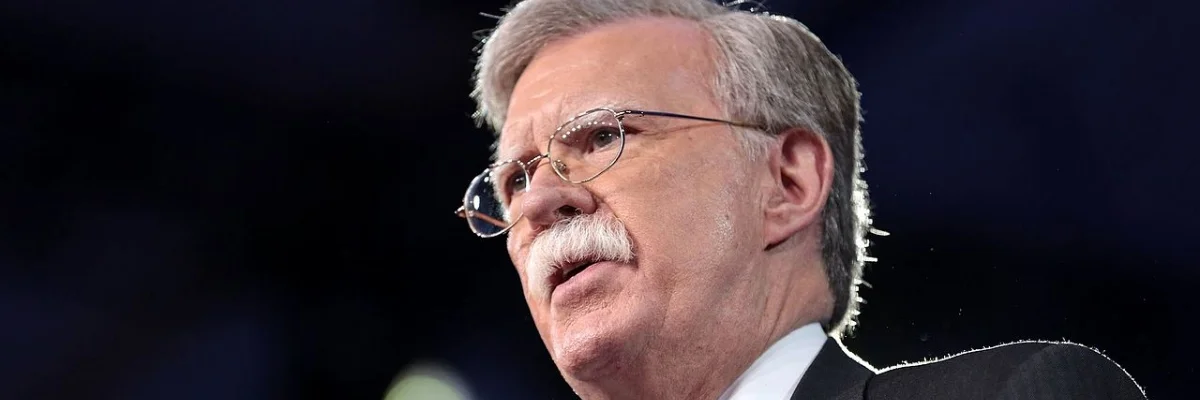
The Iran Deal is Dead, Long Live the Iran Deal
◢ John Bolton's appointment as Trump's new national security advisor likely spells the end of the JCPOA as we know it. Bolton is a vocal opponent of the deal and seeks military confrontation with Iran.
◢ But while Trump may finally nix the Iran Deal, he will cannot impede the forces that brought it into existence. In the long run, Iran's geopolitical significance and need for engagement will outlast Trump and keep Iran at the table alongside reasonable actors in the international community.
This article was originally published in LobeLog.
With the news that John Bolton will be Trump’s new national security advisor, the death of the Iran Deal is all but assured. Bolton has vocally advocated for war with Iran, which he sees not as an option of last resort but as the only appropriate course of action.
Add to Bolton’s hiring the impending arrival of Mike Pompeo as Trump’s new secretary of state and it is clear that the president will have no shortage of cheerleaders for his more destructive impulses. It is almost impossible to see how Trump would do anything other than fail to renew sanctions waivers and effectively withdraw from the Iran Deal on May 12.
The sudden ascendency of Bolton and Pompeo has also exposed how poorly the governments of France, Germany, and the United Kingdom have handled their negotiations with the Trump administration on a “fix” for the Iran deal. By seeking to appease Trump by extracting greater concessions from the Iranians on security matters clearly outside the bounds of the Joint Comprehensive Plan of Action (JCPOA), the Europeans have exposed their weakness, degraded trust with the Iranians, and wasted valuable time negotiating with administration officials who have since left their positions.
Even if by some miracle Trump were to once again waive sanctions in May, the politicization of the Iran deal is so complete that the waivers themselves will cease to have real meaning. The evidence is clear that the current posture of the Trump administration towards Iran, now turning towards an even more hostile stance, has been sufficient to dissuade the majority of possible trade and investment in Iran.
Moreover, Trump’s Treasury Department has failed to issue a single new license for commercial activities in Iran to date. Sanctions attorneys note that even applications that would have been “no-brainers” in the Obama years are currently being denied under Trump. The Office of Foreign Assets Control (OFAC) has long been staffed by pragmatic civil servants whose commitment to sanctions enforcement was based on the creation of a predictable and clear regulatory environment. Today, however, the letter of the regulations no longer suffices to determine the permissibility of commercial activities in Iran.
By any conventional assessment, then, the Iran deal is dead. But what conventional analysis fails to recognize is that the Iran deal cannot be killed. The JCPOA is not merely an arms control agreement or a pact that sought to deliver sanctions relief. It is a historic acknowledgement of several undeniable truths about Iran and its place in the world.
The first truth is that Iran is a mighty geopolitical actor. Despite the recent claims of Saudi Crown Prince Mohammad bin Salman to the contrary, Iran does not need a large military force or diplomatic clout to carry weight in the international system. Accidents of geography (such as the keystone position between Europe, Russia, and China) and accidents of history (such as the legacy of the Iraq war) have only served to increase the strategic position of Iran in the Middle East and within the larger Eurasian landmass. The collapse of the Iran deal will do nothing to change these geopolitical realities, and the necessity for Europe, Russia, and China to continue to engage Iran may even be heightened should the United States return to a pronounced confrontational stance.
The second truth is that an increase in Iran’s international engagement is a reliable bet. Demographic and economic factors are necessarily pushing Iran towards greater diplomatic and economic outreach. Whereas a foreign policy of engagement was once the begrudging choice of a revolutionary government, today engagement is a political necessity driven by structural factors. The eighteenth largest economy in the world cannot grow larger in any manner other than through greater international trade and investment. Cognizant of this, Iranians overwhelmingly support greater engagement with the international community because they believe such trade and investment will improve their livelihoods.
Moreover, the Iranian people are now their own ambassadors to the world, linked to the international community in the digital domain. Although the nuclear deal may seem like the creation of the Rouhani administration, and in particular the brainchild of Javad Zarif, the impulse that drove Iran’s government to seek a win-win agreement at the negotiating table derives from the aspirations and ambitions of the Iranian people, whose resilience will outlast the collapse of this particular agreement. Washington may sow uncertainty, but in the inertia of these forces a kind of certitude will persist. These forces will outlast Trump, as they will outlast their opponents in Iran as well.
The third truth is that the United States has little leverage over Iran. The debate over the viability of the Iran deal in the face of a U.S. withdrawal overstates the importance of American policy as a strategic consideration for Iran. On one hand, the deal’s collapse, and the costly snapback of sanctions, precipitated by the U.S., would suggest that Trump retains great power to constrain Iran. But seen another way, the debate around the deal shows that the JCPOA is the sole mechanism through which the United States currently enjoys substantial leverage over Iran. The U.S. had so successfully isolated Iran in the sanctions period that the creation of the JCPOA represented a rare instance in which it increased its leverage. When Trump withdraws from the agreement, he will remove his only “free” means to seek changes in Iranian behavior. The remaining options, mostly military options, will come at a great toll to the United States.
Trump is old and has a few years left in his term. The forces that brought the JCPOA to fruition may have been interrupted by his erratic governance and distorted worldview, but those forces will certainly outlast him. The imminent demise of the Iran deal should not obscure the fundamental reality of what the JCPOA was—a reminder to the international community that it must deal with Iran and that dialogue can be fruitful if conducted on the basis of trust and mutual goals. Even if the JCPOA falls apart, the lesson cannot be dismissed.
There remain reasonable actors in Europe, Russia, China and the wider international community who understand that they will need to continue constructively dealing with Iran in many arenas. There are many more “Iran deals” to be struck, in politics and commerce, both big and small. For the many hundreds of potential deals Trump will scupper with his actions, thousands more wait to be concluded as a matter of political and economic necessity and through the endeavors of those who still believe in the promise of diplomacy.
Photo Credit: Wikicommons
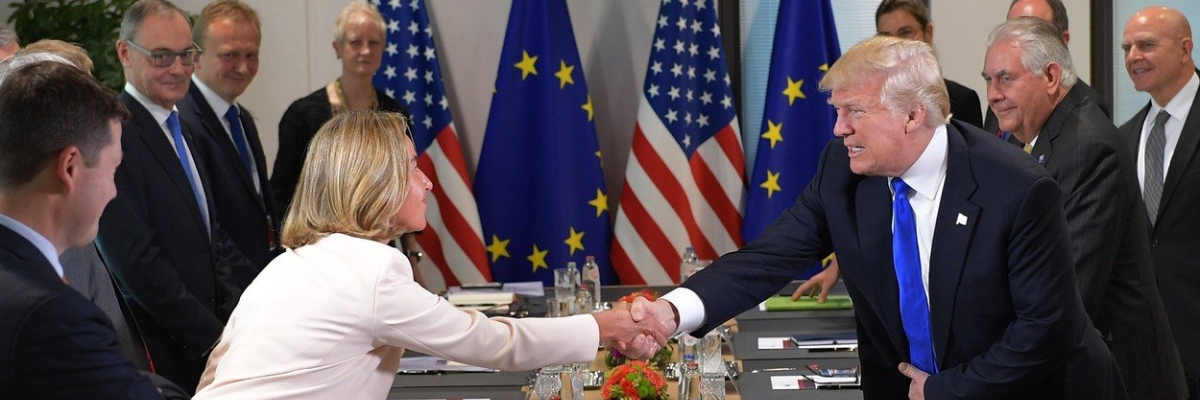
Europe Should Strike a Tough Pose With Trump on the Iran Nuclear Deal
◢ If Europe is serious about saving the nuclear deal, then the appointment of Pompeo, an Iran-hawk in Washington, should serve as an urgent prompt to rethink its current strategy.
◢ Europeans should be clear-eyed about the chances of success of current talks with the United States. Based on recent precedent, Trump is likely to perceive Europe’s flexibility and accommodation over Iran policy as a weakness that he can exploit to raise the benchmarks of demands.
This article is re-published with permission from the European Council on Foreign Relations. Since the initial publication of this article, John Bolton has been named Trump's new national security advisor.
France, the United Kingdom, and Germany (the ‘E3’) appear set to intensify ongoing talks with the US in an effort to convince Donald Trump to stick to the Iran nuclear deal. Trump has threatened to withdraw from the agreement in May unless certain preconditions were met. Europeans hope the ongoing discussions will be able to find a middle way to both safeguard the nuclear deal and address outstanding areas of concern with Iran, such as on missiles and regional issues. However, Trump’s recent nomination of Mike Pompeo as US secretary of state increases the risk that this approach will backfire on Europe.
European policymakers largely viewed Rex Tillerson as a voice of moderation within the White House and as someone who, together with secretary of defense James Mattis, influenced Trump towards a more pragmatic position on Iran. If Europe is serious about saving the nuclear deal, then the appointment of Pompeo, an Iran-hawk in Washington, should serve as an urgent prompt to rethink its current strategy.
Some in European policy circles hoped that Trump’s statement on the nuclear deal on 12 January this year was part of his maximalist negotiating tactics, and that if Europe showed some flexibility, the president would be climb down from these demands. But one of the reasons Trump cited when firing Tillerson was their disagreement over the Iran nuclear deal. This should indicate that the moderate voices in the White House have been unable to bridge gaps between Trump and Europe over the nuclear deal.
Trump, meanwhile, remarked on the “very similar thought process” he and Pompeo share on a number of issues. Pompeo has been especially outspoken on Iran: he opposed the nuclear deal, supported regime change, and downplayed the costs of war with Iran. With Pompeo now in charge of US diplomacy, Europeans are likely to face a tougher and non-accommodating negotiating posture from the Trump administration over the nuclear deal. This comes against a backdrop of rising regional tensions between Iran and Israel, in addition to repeated pledges from Trump to confront Iran, most recently in his Nowruz message marking the Iranian new year.
Trump’s deal-making during his term in office should create doubt as to whether he would actually implement a side framework agreement of the type that his administration is currently seeking to strike with Europe over Iran policy. On foreign policy matters, Trump has remained dangerously unpredictable, and threatened everything from trade war to nuclear war. The pattern of negotiations between his administration and the US Congress over immigration and healthcare suggests that, even if Trump’s counterparts make concessions to fulfil his demands, there is no guarantee that he will, in the end, accept it.
Europeans should therefore be clear-eyed about the chances of success of current talks with the United States. Based on recent precedent, Trump is likely to perceive Europe’s flexibility and accommodation over Iran policy as a weakness that he can exploit to raise the benchmarks of demands. Moreover, by threatening imminent withdrawal from the nuclear deal, Trump is increasingly pressuring the E3 to jump on board with his efforts to undermine the agreement. Republican lawmakers such as Senator Bob Corker have also adopted this stance and warned that, unless the E3 sign up to the side framework agreement that meets US demands, Trump is unlikely to extend sanctions waivers due in May.
Yet, in their attempt to save the nuclear agreement through reaching a broader understanding with the Trump administration on Iran policy, the E3 must ensure that Europe does not become complicit in hollowing out the nuclear agreement. So far, the International Atomic Energy Agency has repeatedly verified that Iran is fulfilling its nuclear-related obligations. However, Iran has firmly indicated it will take reciprocal action to match any US backtracking from the deal. A potential side agreement between the E3 and the US with respect to the nuclear deal therefore risks a tit-for-tat exchange between Tehran and Washington that could alter and muddy their respective commitments under the agreement and cumulatively cause it to unravel.
So, what should Europe do?
In light of Pompeo’s appointment, the E3 should harden their negotiating tactics on the nuclear deal in ways that match the mindset of the Trump administration. First, Europeans should take a unified and more assertive position in forthcoming talks with the US to underscore that they will not be party to, nor accept as permissible, violations of a multilateral and United Nations Security Council-enshrined agreement. The E3 should continue to outline that it will not, and indeed cannot, alter expiration dates of the terms in the nuclear deal (so-called “sunset provisions”) as Trump has demanded. If Trump wants to kill the deal, he must take full responsibility, and Europe should avoid guilt by association.
Second, Europe should continue to show openness to working with the US administration on a follow-up to the nuclear agreement with Iran once the current deal has reached a more mature stage of implementation. The E3 should also have a candid exchange with Iran on regional security and demonstrate to the Trump administration that a range of tools exists to address concerns related to Iran. But in return for this flexibility, Europeans should outline an expectation that Washington will adhere to its existing obligations under the multilateral agreement and minimize the unpredictability surrounding Trump’s waivers of sanctions.
The sequencing of European measures and flexibility will be important to strengthening the E3’s position. For example, the European Union should first receive firm assurances that Trump will waive nuclear-related sanctions in May before it even debates the tougher measures against Iran’s missiles program proposed by the US and reportedly supported by the E3 during a meeting with EU foreign ministers on Monday this week. The E3 should also consider how political and legislative measures within the US could better guarantee US commitments to the nuclear deal. This could entail extensions in the length of time between each waiver of US secondary sanctions related to Iran’s nuclear program (thereby easing the unpredictability surrounding Trump’s actions), and pressing for progress in the Airbus aviation deals with Iran explicitly permitted under the nuclear deal.
Third, Europeans should prepare for the worst-case scenario – namely, a US withdrawal from the agreement and snap-back sanctions in May – and minimise the damage that will ensue. Pompeo’s appointment should be a trigger for European policymakers and companies to step up contingency planning to salvage the deal even without the US. For Iran to continue implementing the restrictions on its nuclear program, there must be a degree of political and economic incentives. As outlined elsewhere, Europe could provide this package to Iran by using a range of political and technical tools that ring-fence companies from the enforcement of US secondary sanctions through legal carve-outs, sector-specific exemptions, political understandings, and reviving the EU Blocking Regulation.
In current talks with the US, Europe should privately stress its willingness to pursue alternative options to preserve the nuclear agreement. A significant benefit of outlining a contingency plan at this stage is the deterrence impact it may have on Trump’s decision to kill the deal through highlighting the isolation the US would face. In short, Europe should outline, as it has done on the issue of trade and the Paris climate accord, that it will work with like-minded coalitions to fill the gaps left by US withdrawal.
This strategy may not, in the end, alter the decision by Trump to execute his campaign promise to “dismantle” the “disastrous deal” with Iran. But this approach at least provides Europe with the political capital to try to salvage the agreement and thereby secure its own non-proliferation goals. If Iran’s nuclear program expands in respond to Trump’s withdrawal, other regional powers, such as Saudi Arabia, have warned that they will do the same. A firm European position in defense of the diplomatic accord may also reduce the growing risk of confrontation between Washington and Tehran in the Middle East, for which Europe will inevitably bear the cost. This approach also sets a precedent that Europe is a credible international partner, demonstrating political willingness to safeguard international norms at a time when global leadership is lacking.
Photo Credit: EU
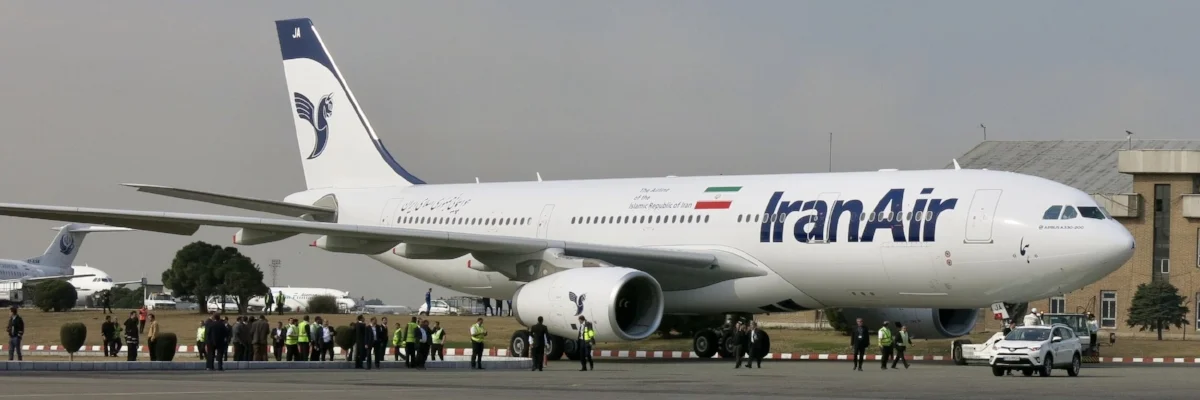
Iran Air Expands Routes Amid Uncertainty
◢ Despite recent uncertainty surrounding the 2015 nuclear deal, Iran Air has been moving forward with its expansion efforts, drastically changing its face in the airline industry.
◢ Iran Air's network has grown significantly since 2015, but remains much smaller than that of a decade ago. In 2002, the airline was serving 18 European destinations, compared to today’s 13 destinations.
Despite recent uncertainty surrounding the 2015 nuclear deal, Iran Air has been moving forward with its expansion efforts. The airline's CEO, Farzaneh Sharafbafi, attended last Friday's meeting of the JCPOA Joint Commission. Her presence indicated the significant political efforts being made to facilitate the acquisition of new aircraft which the airline needs to successfully maintain its growth.
Celebrating its 57th anniversary this year, Iran Air began flights from Tehran to Belgrade and Tbilisi on March 10 and is planning to start flights to Budapest, Malmö, and Saint Petersburg later this year.
With visa restrictions being lifted in Serbia, further optimism points to India. In a joint statement by President Rouhani and Prime Minister Modi in February, Iran and India committed to the opening of e-visa facilities for their citizens. In 2016, neighboring Armenia and Georgia lifted visa requirements for Iranians, leading to the overall flight increases between the two countries and the addition of Tehran-Tbilisi flights to Iran Air’s schedule.
Although Iran Air does not publish passenger statistics and load factors on its routes, its performance can be estimated based on frequency increases on many of its European routes in the last year. Flights to Frankfurt, Gothenburg, Stockholm, and Vienna have all seen the addition of more weekly flights and higher capacities. The Tehran-Belgrade flights, have already sold out through the summer of this year. The airline has also begun codeshare flights on Lufthansa’s Tehran flights, and expanded its codeshare services with Turkish Airlines.
Iran Air's network has grown significantly since 2015, but remains much smaller than that of a decade ago. In 2002, the airline was serving 18 European destinations, compared to 13 destinations today. Iran Air’s Asian flights to Beijing, Bangkok, Kuala Lumpur, Seoul, and Tokyo, have not been in operation for a several years.
By re-establishing these routes, Iran Air could capitalize on a hub and spoke system used by most global airlines. Better geographically positioned in the Middle East than any other Persian Gulf carrier, Tehran could serve as a connecting point for passengers traveling to East Asia and Australia from Europe and North America.
With neighboring Qatar Airways, Emirates, and Etihad Airways experiencing financial difficulties due to political tensions, increased competition, and investments in struggling European airlines, now would be an ideal time for Iran Air to revitalize its own hub and spoke strategy in order to grab market share.
However, despite the opening of new routes planned for this year, Iran Air faces an uphill battle in sustaining its growth. Because the airline's network remains limited, the success of newly launched routes is initially dependent on Iranian tourists. Economic pressures could see Iranian tourist figures fall. The Iranian departure tax may rise later this year and current proposals show increases from USD 15 to USD 45, which must be paid by all passengers departing Iran.
Furthermore, due to the existing sanctions on financial transactions, Iran Air tickets are not sold on various travel websites. Tickets are sold only through Iran Air offices or travel agents, making it difficult for those booking online from outside of Iran. This hinders growth for connecting passengers and makes competing airlines more attractive, which have already increased their Iran services. In the last two years alone, Iran Air has faced new competition from Air France, Austrian Airlines, British Airways, and KLM, all of which have resumed services or increased the number of seats on Iranian flights.
Nonetheless, Iran Air has revitalized its domestic flights with the creation of a new regional service using newly acquired ATR aircraft. Iran Air is projecting a significant rise in revenue. At the height of economic pressure in 2013, the company’s revenue was approximately USD 330 million. The airline hopes to earn around USD 1 billion annually once its new fleet has been put into service over the next decade. Plans to begin flights to many intercontinental destinations depend on the arrival of new long-haul aircraft.
The airline currently has fifteen Boeing 777-300ERs on order, most of which will be used for intercontinental flights. During a press conference in Paris, the airline’s CEO, Farzaneh Sharafbafi, confirmed that upon receipt of the Boeing aircraft, Iran Air would start or resume flights to Adelaide, Bangkok, Kuala Lumpur, and Sydney, further expanding its reach into Asia and Australia. On these planned routes, Iran Air faces little to no competition from Asian carriers.
Sharafbafi reassured all that Boeing would remain committed to its landmark contract. She also said that there are no problems in financing the orders and that Boeing and Airbus jets would be delivered in late 2018 and 2019 respectively.
But while the licenses issued by the U.S. government allowing for the sale of Airbus, Boeing, or ATR aircraft remain valid, the Trump administration continues to threaten to pull out of the Iran nuclear deal. Ultimately, the growth of Iran Air significantly depends on American adherence to the deal and the delivery of the new aircraft. It remains to be seen whether Sharafbafi will have the opportunity to pursue Iran Air's ambitious reintegration in the global airline industry.
Photo Credit: Alireza Izadi
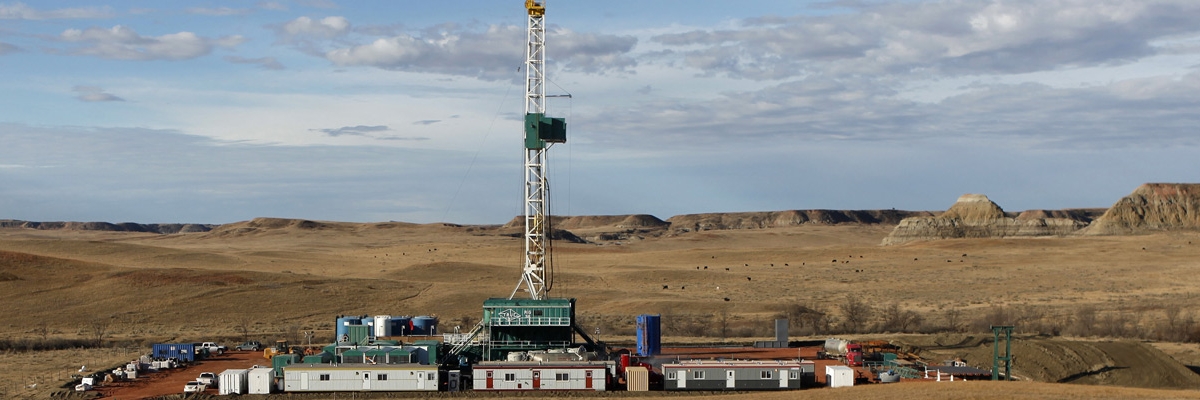
Zarubezhneft Signs Two Major Oil Contracts in Iran, Bucking Uncertainty
◢ Russian news agency TASS is reporting that Zarubezhneft, a Russian state-owned oil company, has signed two major contracts with the National Iranian Oil Company (NIOC).
◢ The agreements will see Zarubezhneft exploit the Aban and Western Paydar oil fields in a consortium with Dana Energy, an private sector Iranian oil services company.
Russian news agency TASS is reporting that Zarubezhneft, a Russian state-owned oil company, has signed two major contracts with the National Iranian Oil Company (NIOC).
The agreements will see Zarubezhneft exploit the Aban and Western Paydar oil fields in a consortium with Dana Energy, an private sector Iranian oil services company.
While Zarubezhneft has yet to officially provide comment on the reports, a signing ceremony is expected to take place in Tehran. The value of the deals is expected to be around USD 700 million.
Earlier this month, Russian Energy Minister Alexander Novak had announced that such a deal was imminent.
The Aban and Western Paydar deals had been long-anticipated, with the initial memorandums allowing Zarubezhneft's study of the fields signed in 2016. Both projects lie close to Iran's border with Iraq.
The Russian energy giant is evaluating four further fields: the Sepec, Jofeir and Darkhuain oil fields, as well as gas reserves in Kish.
Iranian oil Minister Bijan Zanganeh had expressed confidence that Iran would see further investment commitments in the oil sector prior to the Iranian new year, which begins next week. Zarubezhneft's move will be closely watched as Iran's oil and gas sector seeks to navigate considerably uncertainty, including political uncertainty around the Iran nuclear deal.
It is unclear how Zarubezhneft's investment would be affected by possible snapback of U.S. secondary sanctions. But it is notable that it is a Russian state-owned enterprise is making this move in the uncertain environment.
This is the second major energy deal signed in Iran since the lifting of international sanctions and follows Total's landmark USD 5 billion deal to develop Iran’s South Pars gas field in cooperation with China National Petroleum Company and Iranian firm Petropars. That deal was signed in July 2017.
Photo Credit: Wikicommons
LaLiga and MTN Irancell Team Up to Bring Global Football to Iran
◢ Spanish football league LaLiga held a three-day football clinic in Tehran in late February, welcoming 90 children for a day of coaching and friendly competition at the Olympic Football Complex.
◢ The clinic was delivered as part of a partnership concluded between MTN-Irancell and LaLiga in December 2017, which covers joint broadcasting and marketing activities. Irancell is one of the most active companies in sports marketing in Iran.
Spanish football league LaLiga held a three-day football clinic in Tehran in late February, welcoming 90 children for a day of coaching and friendly competition at the Olympic Football Complex.
LaLiga, Spain’s highest division, is one of the most-watched leagues in the world, and is home to rockstar teams Real Madrid and F.C. Barcelona. LaLiga executives believe theirs is the most followed foreign league in football-mad Iran, in part due to the broadcasting of Real Madrid and F.C. Barcelona matches on state television networks IRIB TV3 and IRIB Varzesh.
The decision to conduct a first-of-its-kind football clinic in Tehran reflects a strategy that LaLiga has adopted in growth markets around the world, including China and India. In Iran, the clinic initiative was spearheaded by Khais Rahmanie, an international business development executive with the Spanish league.
As Rahmanie explains, the clinics “are not just an opportunity to share knowledge and LaLiga’s winning methodology, but also to help our highly skilled coaches learn about the Iranian market and the skills and talents that are present.”
The clinic welcomed three world-class coaches. Luciano Santana Martel, a former youth coach at Deportivo de la Coruña and Francisco José García López and Carlos Casal López, international development coaches with LaLiga, traveled to Iran to run the training sessions.
But the star of the show was Gaizka Mendieta, a legend of Spanish side Valencia, who also played short spells at Barcelona and Lazio, an Italian club.
MTN Irancell, a leading telecommunications company, provided financial support for the event. The company boasts one of Iran’s most proactive and successful retail marketing strategies and is actively involved in Iranian football, both as a strategic partner for the Persian Gulf Pro League, Iran’s top division, and as a shirt sponsor for Persepolis and Esteghlal, two of the league’s most successful teams and greatest rivals.
Irancell and LaLiga concluded a regional partnership for Iran in December 2017. At the time, LaLiga’s managing director, Javier Gomez commented that the agreement “amplifies further the global recognition of LaLiga brand all around the world and help us to connect and engage further with our millions of fans in Iran in very innovative way.” As part of the partnership, LaLiga matches, exclusive interviews with players, and documentaries about Spanish teams will be broadcasted through “Lenz Sport,” Irancell’s internet protocol television service.
LaLiga is currently planning more events Iran, with a further clinic to be held in April. But, just as in coaching, patience is the key for LaLiga’s market expansion. Rahmanie says, “We are taking our time to evaluate how to organize future events so we can bring the best possible experience for our fans in Iran.”
Photo Credit: LaLiga
To Transform the Fortunes of Iran’s Saffron Farmers, a Commitment to Technology and the Environment
◢ Keshmoon, an Iranian startup, connects carefully selected saffron farmers engaged in sustainable agriculture with premium consumers. The company has recently gained acclaim for its combination of ecommerce and "agritech" solutions.
◢ Starting with an initial cohort of 30 farmers in the town of Qaen in Khorasan Province, Keshmoon is encouraging a move to sustainable agriculture. The goal is to reduce water usage through means that also help the farmers improve their livelihoods.
Mohammad Qaempanah is a serial entrepreneur. His first business saw him act as a one-man internet service provider in his town, the connectivity from which he leveraged to start his next business, exporting saffron, a coveted spice with a heady aroma taken from the stigma of the crocus flower. Qaempanah exported the spice until sanctions made it impossible. He then opened a vegetarian restaurant in Mashhad with the aim of “educating people about the way in which their eating habits are linked to global warming.” Furthering his commitment to the environment, he then founded Iran’s first “nature school,” also in Mashhad, which offered programs to enable children from the city to experience and enjoy time in nature, learning about the environment. Having spurred something of a movement, there are today over 40 such schools around Iran.
Qaempanah, whose grandfather was a saffron farmer, has now turned his attention to agriculture in his hometown of Qaen, in the province of Khorasan, with a venture that combines his knowledge of saffron, his commitment to the environment, and his aptitude in technology. This latest venture, Keshmoon, has already won accolades. The company was recognized as the “Best Seed Stage Startup” at the recent Iran Web and Mobile Festival. Mohammad-Javad Jahromi, Iran’s young Minister of Communication and Information Technology, acknowledged the company in a subsequent tweet.
This early recognition reflects the scope of Keshmoon’s commercial ambition and its innovative vision for Iran’s agricultural sector. In Qaempanah’s words, Keshmoon combines an “ecommerce platform that serves consumers with an ‘agritech’ layer that serves suppliers.” In simpler terms, he explains, Keshmoon connects “carefully selected farmers engaged in sustainable agriculture with premium consumers.”
In founding the company alongside his brother, Hamza, and a friend, Siamak Khorrami, Qaempanah took inspiration from the increasingly popular model of direct trade coffee, where coffee roasters ethically source beans directly from growers, and also the popular ecommerce platform Etsy, which allows artists and craftsmen to sell their wares directly to consumers online. But while these platforms primarily reflect innovations in ecommerce, Keshmoon seeks to use technology to change the methods of agriculture itself.
Speaking about his vision, Qaempanah is careful to point out that his motivation in founding Keshmoon was “not to help farmers improve their economic situation.” Rather, his “foremost concern was water.” In his view, “unless the issue of water depletion is managed, it won’t matter what the farmers choose to grow, it will be impossible to cultivate anything.”
In the town of Qaen, where Qaempanah’s grandfather cultivated the particularly aromatic saffron that brought fame to the region, the qanats, a traditional system of underground channels which tap into the aquifer, have long been replaced by modern wells. Over the years, farmers drilled more wells to pump ever-increasing volumes of water, seeking to grow crops ill-suited to the arid climate. The water table has dropped precipitously. As Qaempanah relays, “wells that were once 15 meters deep now need to extend to 135 meters.”
Qaempanah believes that farmers are currently stuck in a self-defeating economic cycle. Presently, the use of more water enables higher yields and therefore higher earnings. Keshmoon was designed as a “technical infrastructure to change this cycle.” By incentivizing farmers to move towards the sustainable cultivation of saffron, which is naturally well-suited to Khorasan’s arid climate, farmers will be able to use less water, and yet enjoy greater earnings.
Gallery: The Farmers of Qaen
This has proven an attractive proposition to the farmers of Qaen, where Keshmoon has recruited its first cohort of 30 farmers. As Qaempanah recounts, the local saffron growers were “invited to a meeting in the town mosque, where we explained our approach, how we wanted to help, and asked them to go home and think about it.” Despite concerns that it might be hard to explain the technical aspects of the concept, the pitch worked. Today, farmers from neighboring villages and towns regularly stop by Keshmoon’s office in Qaen to learn more about the program they have heard about. The company has earned the trust of the local community.
To gain acceptance to Keshmoon’s platform, farmers need to demonstrate competency growing saffron in the traditional manner. Keshmoon will introduce more stringent requirements in the near future, introducing guidelines consistent with sustainable farming. It will take about one year to “gain critical mass and give farmers the time to make adjustments to their planting,” says Qaempanah. He foresees Keshmoon partnering with universities and other institutions to help provide training to farmers unfamiliar with growing saffron in a sustainable manner in order to help them make the switch.
For farmers, the commercial appeal of Keshmoon is the higher price achieved for their crop by selling to consumers directly, rather than selling to local traders. One drawback is that using Keshmoon will require farmers to sell their harvest incrementally, as orders come in online. Some farmers have said that they prefer selling to the local buyers, who can purchase the whole harvest in one transaction. But the price advantage is substantial. Farmers on Keshmoon can expect to generate 20-40 percent more in earnings than those who sell locally in bulk.
Laudably, Keshmoon has been very transparent about pricing for the sake of both consumers and farmers and offers a detailed breakdown on their website. Generally speaking, farmers receive 70 percent of the saffron’s retail price, while around 12 percent is earmarked for quality control, packaging, and transport, and the remaining 18 percent goes towards Keshmoon’s overhead.
Once accepted to Keshmoon, farmers need to create their online profiles. In most cases, the Keshmoon team helps by taking photos and recording the farmer’s personal details, family history, and also explanations of how the saffron is farmed. These profiles can be seen on the Keshmoon website, where consumers can even send messages to specific farmers.
Qaempanah notes that some farmers, typically those who are younger or who have had more education, have been able to author their profiles themselves. In some cases, it was the farmers’ children, many of whom own smartphones, who took responsibility for telling the story of the family farm through words and pictures. There is immense potential for the farmers to develop both some technology literacy and also their personal brand, which can help them connect with consumers more proactively. Commercial considerations aside, there is something affecting about seeing the personal portraits of the farmers and families behind Iran’s most precious crop.
A Keshmoon Giftbox
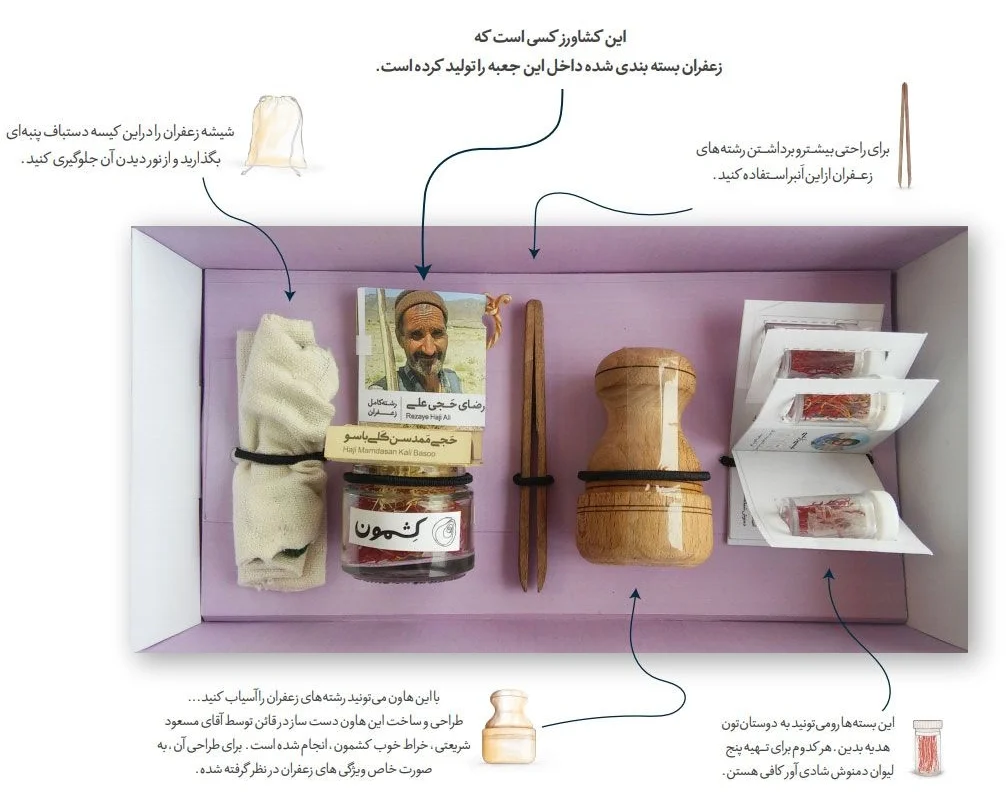
A connection to the farmers and a beautiful presentation of the saffron, including a small booklet about its origins, has proven a hit among consumers. The company has been selling online for nine months, and boasts a few hundred clients, about one-quarter of whom whom make recurring purchases. Keshmoon’s models show that it will take about 20-40 clients in order to support each farmer. At the moment, the company has stopped accepting new farmers onto its platform until is grows the client-base further. A big boost will come when the company begins selling to Europe later this year.
But while the Keshmoon story may begin with saffron, Qaempanah’s ambition is much greater. For the next few years, the Keshmoon team will focus on perfecting its “technical infrastructure,” combining ecommerce and agritech to open a new market for saffron. The big test will be in the marketing and branding. Qaempanah hopes to achieve a level of awareness such that “when people hear saffron, they think of Keshmoon.”
If this model can be developed successfully for saffron, the company plans to expand to other crops and bringing a similar model to other agricultural regions in Iran. Qaempanah imagines a situation where farmers from around the country can approach Keshmoon and receive recommendations for which crops to grow based both on analysis of the local environment and also Keshmoon’s data on which crops will sell most effectively on its marketplace. In this way, Keshmoon would serve to introduce efficiencies of scale typically reserved for large, corporatized farming. The economic and environmental impact for Iran, where the agricultural sector remains dominated by smallholder farmers, could be transformative.
But it is early days yet and the success of this grand masterplan will first depend on the successful collaboration between the saffron farmers of Qaen and the team at Keshmoon. Theirs is a collaboration that crosses talents and crosses generations—both a microcosm of the economic and environmental challenges facing Iran and a case study in the creative thinking and entrepreneurial spirit that may eventually solve those challenges.
Photo Credit: Keshmoon

Sweden's Serkland To Invest in Iran Plastics Packaging Leader Moheb
◢ A Swedish investment company is “on course” to make a landmark investment in Moheb, the leading manufacturer of plastic and laminate tubes in Iran and the Middle East.
◢ Serkland will take an approximately 40 percent stake in Moheb with its investment, and will receive two of five board seats.
A Swedish investment company is “on course” to make a landmark investment in Moheb, the leading manufacturer of plastic and laminate tubes in Iran and the Middle East. The deal represents one of the first private equity investments made by foreign investor in a growth-stage Iranian company, outside the digital sector.
Serkland Invest, founded in 2016 and headquartered in Stockholm, is focused on investment opportunities in the Iranian consumer sector. The company is primarily backed by Scandinavian family investment offices, high net worth individuals and institutions. Serkland’s first investment in Iran was completed last summer, which saw the Swedish firm invest EUR 17.5 million in one of Iran’s leading pharmaceutical companies.
This new deal, though representing a smaller investment, sees Serkland take a significant minority stake in Moheb. Founded in 1998, Moheb Packaging & Plastic Industrial Company a family-owned business headquartered in Tehran. The company has grown rapidly to meet the packaging needs of Iran’s FMCG manufacturers and produces plastic and laminate tubes for both foodstuffs and cosmetics. Moheb enjoys 75 percent market share in Iran.
Amir Hossein Alambeigi, co-founder and CEO of Moheb, noted that the Serkland investment would enable Moheb to solidify its “market leading position” and to “capitalize on substantial opportunities ahead, both locally and in the wider region.”
The investment will see Serkland take an approximately 40 percent stake in Moheb, and will receive two of five board seats. Mohsen Tavakol, a partner at Serkland, stated that the goal is to leverage the board positions to “instill corporate governance, strategic management, operational and financial best practices” in Moheb to help improve competitiveness and develop the company into an “international corporation.”
The deal is just one in Serkland’s reported “EUR 100 million pipeline of around two dozen Iranian consumer goods companies.” The company is aiming to make six acquisitions by the end of 2018. One pending deal would see Serkland invest alongside a multinational partner in a chocolate confectionary company.
While Serkland is not a private equity fund, its investments, like that in Moheb, provide an early template for private equity in Iran, where new capital is used to enable sales growth through expanded exports.
The executives involved expressed pride that the investment is taking place at a time of political uncertainty. Omid Gholamifar, CEO of Serkland, highlighted his company’s progress “at a time when many are hesitating.”
Bakhtiyar Alambeigi, co-founder and Chairman of Moheb, echoed this sentiment, stating, “Moheb is proud [to be] one of the first private companies in Iran to have been able to attract foreign investment… after the signing of the JCPOA.” Alambeigi hopes that the deal will “will help other companies in Iran to attract foreign investments” by creating a “success story” for the business community at large.
Photo Credit: Wikicommons
