
Canada Demands Cooperation in Iran Crash Ahead of International Meeting
◢ Canada vowed Wednesday to get to the bottom of the plane crash that killed dozens of its nationals in Iran, ahead of a meeting in London with other countries that lost citizens. Prime Minister Justin Trudeau has said that his government intends to ask Tehran for compensation for the families of Canadian victims, which Ottawa officials said Wednesday was a top priority.
Canada vowed Wednesday to get to the bottom of the plane crash that killed dozens of its nationals in Iran, ahead of a meeting in London with other countries that lost citizens.
Foreign ministers from Canada, Ukraine, Sweden, Afghanistan and Britain—which all had nationals who died—are scheduled to meet on Thursday to press for "full cooperation from Iranian authorities," Canadian Transport Minister Marc Garneau told a press conference.
"Canada will not accept a situation where we feel that we're not being given the information that we're looking for," he said.
"Make no mistake about it, Canada is going to get to the very bottom of this."
Prime Minister Justin Trudeau has said that his government intends to ask Tehran for compensation for the families of Canadian victims, which Ottawa officials said Wednesday was a top priority.
The Ukraine International Airlines flight was shot down by Iran in a catastrophic error shortly after taking off from Tehran last week, killing all 176 passengers and crew on board.
According to Ottawa, 57 of the victims were Canadian.
"Our first priority at this time is supporting the families and friends of the 57 Canadians who lost their lives in this tragedy," Garneau said.
"While we cannot bring back their loved ones, we can make sure that they receive compensation to help them navigate this difficult time."
Asked if Ottawa might provide monies to the victims' families and seek reimbursement from Iran later in order to fast-track what could otherwise be a lengthy process, Trudeau's parliament secretary Omar Alghabra said: "We are actively exploring these options and we hope to have a resolution in short order."
Iran has invited Canada's Transportation Safety Board to participate in its investigation, including the download and analysis of the black boxes.
Garneau said Iran has indicated it wishes to cooperate, noting that two Canadian investigators were due to examine the wreckage at Tehran's invitation.
But he added that he would like Iran, as lead investigator, to formalize Canada's involvement in the probe as an "accredited representative" to ensure access.
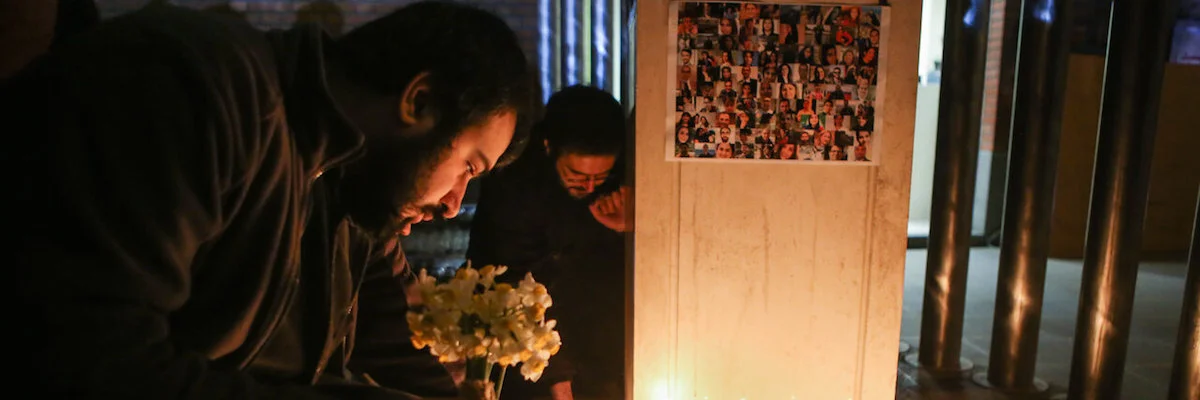
A week after the crash, Canadian universities observed a minute of silence in tribute to the victims, which included academics and students.
Photo: IRNA
Rouhani Warns Europe Over Mideast Role as Ties Sour on 2015 Deal
◢ Iranian President Hassan Rouhani warned European countries that their soldiers in the Middle East could be exposed to greater danger in the future if instability fueled by the presence of their American counterparts continues. Rouhani said on Wednesday that Iran wanted U.S. forces to exit the region “sensibly” to improve stability, before he extended his caution to Europe.
By Golnar Motevalli
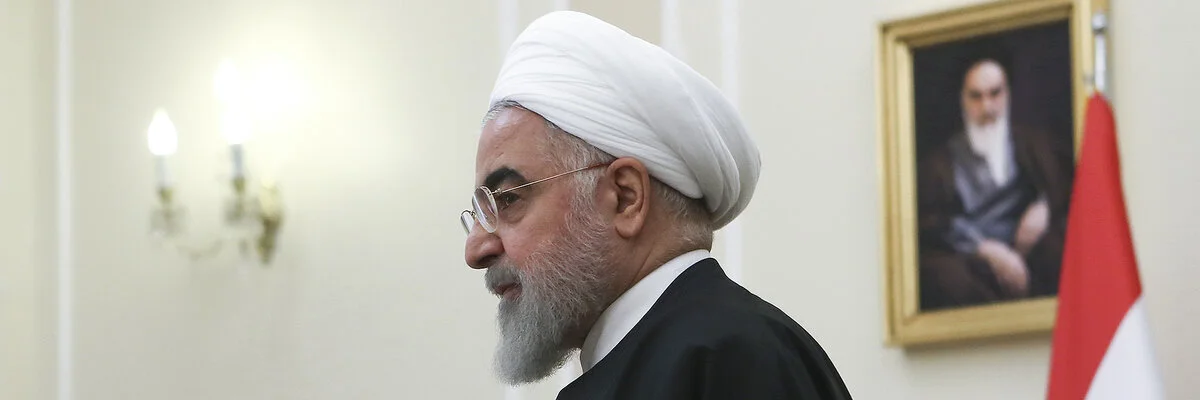
Iranian President Hassan Rouhani warned European countries that their soldiers in the Middle East could be exposed to greater danger in the future if instability fueled by the presence of their American counterparts continues.
Europe’s ties to Iran risk becoming collateral damage in the spreading confrontation between Tehran and Washington. Germany, France and the U.K. on Tuesday started formal action against the Islamic Republic for breaching restrictions on uranium enrichment set out in the 2015 nuclear accord, which has been crumbling since the U.S. withdrew 20 months ago and reimposed sanctions on Iran.
Rouhani said on Wednesday that Iran wanted U.S. forces to exit the region “sensibly” to improve stability, before he extended his caution to Europe.
“Stop making so many mistakes and return,” he said in a cabinet meeting broadcast live on TV. “Today U.S. soldiers are in danger, tomorrow European soldiers may also be in danger.”
The European powers said their move to trigger the nuclear deal’s dispute mechanism aims to turn up the pressure on Iran with the ultimate goal of salvaging the multiparty agreement. But the intervention risks propelling the sides into greater conflict as Tehran struggles to deal with fallout from the U.S. killing on Jan. 3 of its top general, Iran’s retaliatory missile salvos and international outrage over the downing of a Ukrainian jetliner by on-edge Iranian security forces.
Iranians have been outraged by the news that their own armed forces -- often boastful of their prowess -- had not only shot down a passenger plane but had concealed the fact from the public for three days. Thousands protested against the leadership in cities nationwide.
The U.K. ambassador to Iran, Rob Macaire, was briefly arrested after attending a vigil for the victims that later morphed into an anti-regime protest. He has left the country to return to London for a routine visit that’s not a response to his detention, a person familiar with the matter said.
While accepting responsibility for bringing down the plane and calling on the military to fully explain its actions, Rouhani and other Iranian leaders have blamed the U.S. for creating the conditions that led to it, demanding that American forces end a decades-long presence in the region.
That has been taken up in neighboring Iraq, where Shiite lawmakers with ties to Tehran and the outgoing prime minister called for talks on a mechanism to advance the U.S. departure, but have been rebuffed by Washington.
A commander of Iran’s Islamic Revolutionary Guard Corps, Brigadier General Amir Ali Hajizadeh, on Wednesday said officials withheld informing the public that Iranian missiles had hit the jet “in the interests of national security.” Separately, the military said it’s investigating whether radar interference had a role in the debacle.
The U.S. and Iran have both stepped back from further military conflict as allies in Europe and the Gulf warned over the potentially catastrophic consequences of a broader war.
But the U.S. imposed new sanctions last week and called on European signatories to the nuclear deal to dump the accord and insist on Iran negotiating a new treaty that extends enrichment caps intended to prevent it developing a nuclear weapon.
U.K. Prime Minister Boris Johnson on Tuesday threw his weight behind a new “Trump deal” even as his government has stood by its European allies in seeking to keep the current version alive.
Rouhani dismissed Johnson’s idea and urged European countries to reverse their decision to activate the dispute mechanism.
“Mr. Johnson, I don’t know what he’s thinking when he says that instead of the nuclear deal we should implement a Trump plan. Other than violate international contracts, what else has Trump done?” Rouhani said.
Photo: IRNA
UK PM Says 'Trump Deal' Could Replace Iran Nuclear Pact
◢ British Prime Minister Boris Johnson said on Tuesday he would be willing to work on a "Trump deal" to replace an international accord designed to stop Iran from developing nuclear weapons. Britain, France and Germany announced on Tuesday they were launching a dispute mechanism under the JCPOA because Iran was not meeting its commitments.
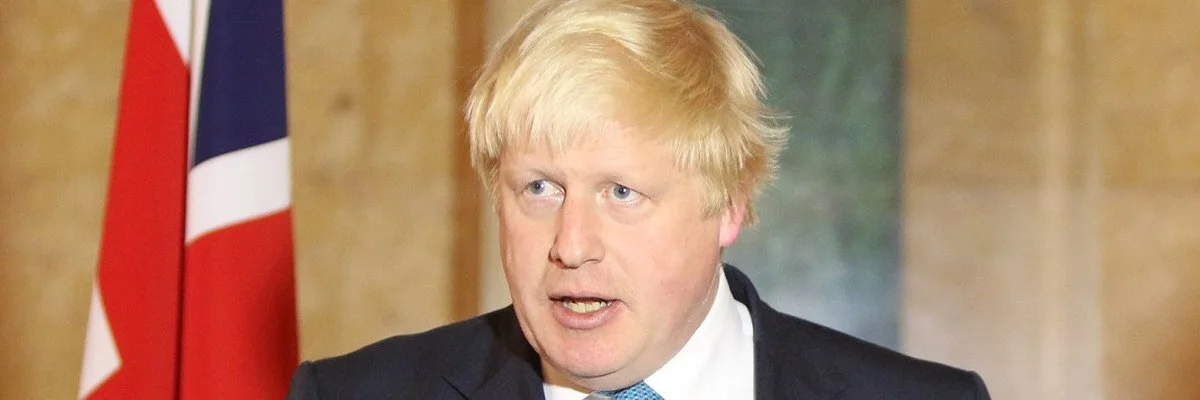
British Prime Minister Boris Johnson said on Tuesday he would be willing to work on a "Trump deal" to replace an international accord designed to stop Iran from developing nuclear weapons.
"If we are going to get rid of it then we need a replacement," Johnson said of the 2015 nuclear deal that Britain and other European powers have been trying to salvage since President Donald Trump pulled the United States out in 2018.
Britain, France and Germany announced on Tuesday they were launching a dispute mechanism under the deal, known as the Joint Comprehensive Plan of Action (JCPOA), because Iran was not meeting its commitments.
The EU's diplomatic chief on Tuesday urged all parties to the Iran nuclear accord to save it, saying escalating tensions made the deal "more important than ever."
Josep Borrell, the EU's foreign affairs high representative, spoke after Britain, France and Germany formally triggered a dispute mechanism under the 2015 accord, after Iran announced its fifth major step back from compliance.
The deal gave Iran sanctions relief in return for curbs on its nuclear program.
Borrell, who will oversee the dispute mechanism which could ultimately lead to reimposition of UN sanctions, said the aim of the process was to save the deal, not sink it.
"The dispute resolution mechanism requires intensive efforts in good faith by all. As the coordinator, I expect all JCPOA participants to approach this process in that spirit," he said, using an acronym for the deal's formal title.
"In light of the ongoing dangerous escalations in the Middle East, the preservation of the JCPOA is now more important than ever," he said.
In launching the process, Britain, France and Germany accused Tehran of repeated violations of the deal but insisted they remained committed to it.
Johnson said a "Trump deal" would be "a great way forward", but did not specify the details of the proposal.
His idea stands at odds with Tuesday's statement from Britain, France and Germany, which expressed "determination to work with all participants to preserve" the deal.
"From the American perspective it's a flawed agreement, it expires, plus it was negotiated by (former) President Obama," Johnson said.
"President Trump is a great deal-maker—by his own account and many others. Let's work together to replace the JCPOA and get the Trump deal instead."
Tehran has wound down its compliance since the American withdrawal and last week, British Foreign Secretary Dominic Raab said the non-compliance had become "so acute" that European powers were looking at taking action.
He said London wanted to see Iran "come back to full compliance" and said triggering the dispute resolution mechanism was one option.
The mechanism could ultimately lead to the UN Security Council reimposing sanctions on Iran.
Photo; IRNA
Iran Floods Kill at Least Three
◢ Flooding in southern Iran has killed at least three people and left hundreds of villages cut off following days of heavy rainfall, official media reported on Tuesday. "More than 20,000 people in villages of Sistan-Baluchistan province have lost their homes because of flooding or are surrounded by water," Deputy Health Minister Alireza Raisi said.
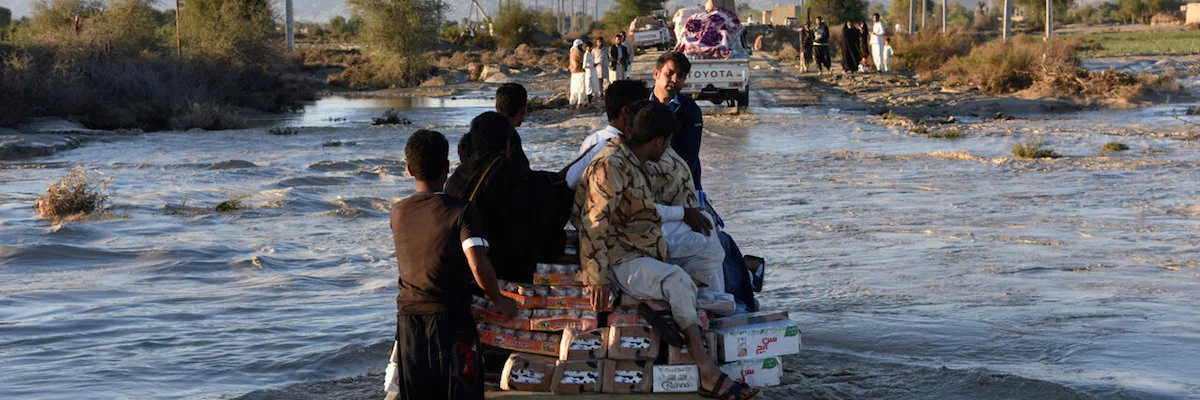
Flooding in southern Iran has killed at least three people and left hundreds of villages cut off following days of heavy rainfall, official media reported on Tuesday.
“So far three people have been confirmed dead and one has been reported missing," Press TV, the English-language service of state television, reported on its website.
Rescue teams used boats and helicopters to provide relief after floodwaters cut off road access to urban areas of Hormozgan, Kerman and Sistan-Baluchistan provinces, state news agency IRNA said.
They have so far been unable to reach the town of Qasr-e Qand and 40 surrounding villages in Sistan-Baluchistan, said governor Rahimbaksh Pakandish, cited by IRNA.
Five hundred villages were affected and thousands of homes destroyed or damaged in the southeastern province, IRNA reported, adding that 285 families were given emergency shelter in Red Crescent tents.
"More than 20,000 people in villages of Sistan-Baluchistan province have lost their homes because of flooding or are surrounded by water," Deputy Health Minister Alireza Raisi was quoted as saying.
The Revolutionary Guards distributed 1,000 food packages to those affected, said IRNA.
In Kerman province, roads were severed and 40 villages suffered damage, while in Hormozgan province 61 people were rescued.
The amount of rain that fell in the southwestern province of Hormozgan since Friday was "unprecedented", the semi-official ISNA news agency reported.
Floodwaters had surrounded more than 50 villages in the Gulf province.
"Unprecedented floods are ravaging #Iran's Sistan & Baluchistan province, with significant human & material costs," Foreign Minister Mohammad Javad Zarif tweeted on Monday night.
The flood disaster is the worst in Iran since at least 70 people were killed across 20 provinces in April.
Photo: IRNA
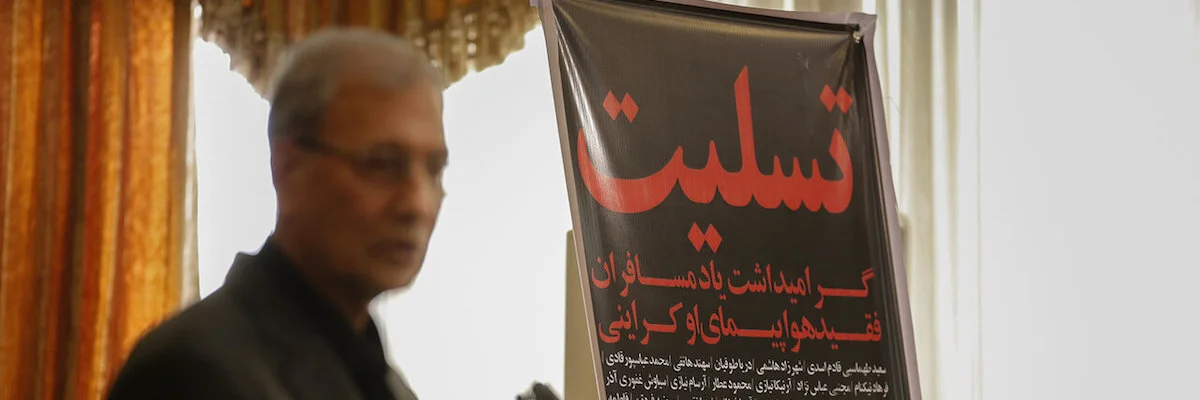
Iran Makes Arrests Over Jet Disaster and Vows Full Investigation
◢ Iran said it’s arrested a number of people linked to the Jan. 8 downing of a Ukrainian passenger jet, and the country’s president called on the judiciary to form a special court and fully investigate the disaster. “I promise that the government, with all its ability and using everything at its disposal, will investigate this matter,” Rouhani told officials in remarks broadcast live on state TV.
By Golnar Motevalli and Abeer Abu Omar
Iran said it’s arrested a number of people linked to the Jan. 8 downing of a Ukrainian passenger jet, and the country’s president called on the judiciary to form a special court and fully investigate the disaster.
Hassan Rouhani said Tuesday that while U.S. policies toward the Islamic Republic were the root cause of the mistake, that didn’t excuse Iranian officials from confronting their own responsibility in the disaster. All 176 people on board were killed when Iranian defense units fired at the plane, bringing it down shortly after take-off from Tehran.
“I promise that the government, with all its ability and using everything at its disposal, will investigate this matter,” Rouhani told officials in remarks broadcast live on state TV. “This is not an ordinary case. The entire world will be watching.”
Iran is under intense international pressure to provide full accountability over the circumstances that caused the crash of the Ukrainian International Airlines plane. The country’s Islamic Revolutionary Guards Corps, which led a strike on U.S. bases in Iraq hours earlier, said it had mistaken the aircraft for a cruise missile.
Iranian officials at first fiercely denied that Iran was to blame, provoking outrage and protests in Iran once they accepted culpability. Security forces clashed with thousands of protesters over the weekend and unverified video footage has shown them using tear gas and live-round ammunition to disperse and intimidate crowds in Tehran, who were chanting against the country’s leadership and the IRGC.
Those arrested will continue to be questioned, a spokesman for Iran’s judiciary, Gholam-Hossein Esmaili, told reporters, according to the semi-official Mehr news agency. Esmaili, who did not specify how many people had been detained, added that Iranian and Ukrainian investigators had traveled to France with the flight’s black box and their work should provide more clarity on the tragedy.
Photo: IRNA
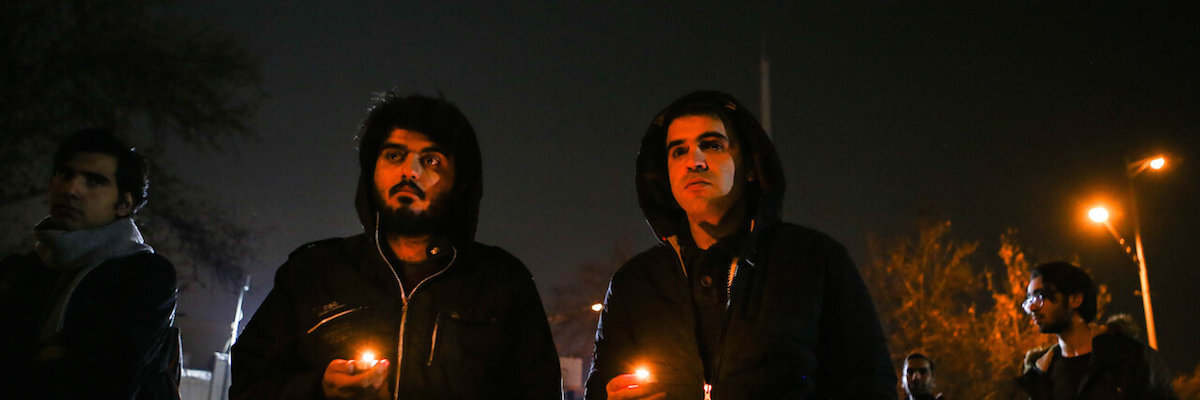
Iran Protests Turn Violent in Ongoing Anger Over Downed Jet
◢ Conditions boiled over as Iranians gathered for a second night of protests after the government admitted it had mistakenly downed a Ukrainian passenger jet, triggering global outrage as well as internal dissent. Security forces stepped up their patrols as protesters, many of them students, came out in force in Tehran’s landmark Azadi Square and at Shahid Beheshti University.
By Aoyon Ashraf and Arsalan Shahla
Conditions boiled over as Iranians gathered for a second night of protests after the government admitted it had mistakenly downed a Ukrainian passenger jet, triggering global outrage as well as internal dissent.
Security forces stepped up their patrols as protesters, many of them students, came out in force in Tehran’s landmark Azadi Square and at Shahid Beheshti University, as well as in several regional cities.
Videos posted on social media, which could not immediately be verified by Bloomberg News, showed clashes between protesters and riot police, trails of blood on a main street, chants in opposition to Supreme Leader Ayatollah Ali Khamenei, and calls to rid the country of the Islamic Revolutionary Guards Corps. Protesters in the videos said arrests had been made and tear gas fired at crowds.
Anger spread across the globe after Iran’s leaders admitted on Saturday that its military accidentally shot down the Ukrainian jet on Wednesday, killing all 176 people on board, after mistaking it for a cruise missile.
The announcement was a dramatic reversal after the regime spent days accusing Western governments of “psychological warfare.” Iran’s government said Sunday it was forming a working group to probe the crash and compensate victims.
President Donald Trump, who a week ago threatened to bomb Iranian cultural sites, sent a series of tweets in Farsi over the weekend expressing support for protesters and warning Iran’s leaders not to intervene. “DO NOT KILL YOUR PROTESTERS,” Trump said.
Earlier, videos showed motorcycle-mounted security forces in green camouflage and anti-riot body armor stationed on Tehran’s central Valiasr Square. There was also a heavy police presence outside Tehran University.
In the face of the growing tensions, some of the organizers of a candlelight vigil Saturday—which turned into an angry protest against the regime—urged people on social media to avoid a rally initially planned for 6 p.m. local time, at Azadi Square.
Large crowds of students demonstrated outside Amir Kabir University in downtown Tehran late Saturday for the candlelight vigil, according to witnesses, before starting chants of “death to the dictator” and “resignation is not enough, a trial is needed!” Security forces intervened to disperse the demonstrators. The British Ambassador to Iran Rob Macaire was briefly detained after he attended the vigil, triggering an international incident.
Others used social media to vent their anger, contrasting the plane deaths with reports that the Iranian attack on the Iraqi bases on Wednesday when the plane was downed was specifically designed not to injure Americans.
The government’s admission that Iran’s security forces hold ultimate responsibility for the downing of the plane -- albeit at a time of conflict with their chief foe -- is a further blow for the country’s ruling clerics at a time when the economy has been devastated by U.S. sanctions. The admission appears to have undercut the sense of national unity that built after the Jan. 3 killing by the U.S. of General Qassem Soleimani, a hero to many Iranians for his work in Iraq and Syria helping to defeat Islamic State.
On Sunday, General Hossein Salami, commander of Iran’s Revolutionary Guards, apologized for the jet downing during a speech n parliament, CBS reported, citing Iranian state television.
“I swear to almighty God that I wished I were in that plane and had crashed with them and had burned, and had not witnessed this tragic incident,” Salami said.
Canadian Prime Minister Justin Trudeau Saturday said he was “outraged” and “furious” by the admission that Iran had shot down Ukrainian International Airlines Flight PS752. At least 57 Canadians were among the dead.
“What Iran has admitted to is very serious. Shooting down a civilian aircraft is horrific. Iran must take full responsibility,” Trudeau said Saturday at a press briefing in Ottawa. He earlier declared the incident a national tragedy.
Ukrainian President Volodymyr Zelenskiy said in a televised address that he wants a full admission of guilt by Iran for what authorities there called a “disastrous mistake.”
Ukraine and Iran will work jointly to decode the black boxes of the doomed Ukrainian Boeing jet, Zelenskiy said. The Ukrainian government will make payments to the families of each of those who died in the crash, he said.
“I urge all international partners of Ukraine, the entire world community, to be united and to keep pressing until the full and final investigation into all the circumstances of this catastrophe is delivered,” said Zelenskiy.
The three-year-old Boeing Co. 737-800 was shot down about two minutes after takeoff from Tehran. The tragedy occurred hours after Iran started launching rockets against Iraqi bases where U.S. forces are stationed, in retaliation for Soleimani’s targeted killing. Nearly half the victims were Iranians, while many of the other passengers, including citizens of Canada, Sweden and the U.K., were of Iranian descent.
U.S. Defense Secretary Mark Esper said Iran was attempting to make itself the victim by blaming the jet incident, in part, on the escalation in tensions with Washington.
“Clearly, it was just a horrible mistake,” Esper said of downing of the Ukrainian commercial airliner in an interview with CBS News. “To somehow allow Iran to play the victim card with the international community is just ridiculous.”
The commander of the IRGC’s aerospace force, Amir Ali Hajizadeh, blamed the tragedy on a communications failure. The operative who first mistakenly identified the plane as an incoming missile failed to get a second opinion due to a “disturbance” and had only 10 seconds to make a decision, he said. The army had previously said that “culprits” would be turned over to judicial authorities.
Iran’s supreme leader offered his condolences to the victims of the Ukrainian flight, while President Hassan Rouhani said the Islamic Republic “deeply regrets the disastrous mistake” and vowed compensation for the families of victims.
Meanwhile, the fate of the 2015 Vienna Nuclear Agreement between world powers and Iran hung in the balance. German, France and the U.K. on Sunday affirmed their commitment to the deal, which Trump pulled the U.S. out of in 2018.
Tehran this month announced it would stop abiding by limits on uranium enrichment, which had been agreed to in return for sanctions relief. The U.S. has instead pressed ahead with a series of measures against the Islamic Republic.
Additional U.S. sanctions announced last week, and a new executive order signed by Trump, “gave us additional capabilities to target both primary and secondary sanctions in different sectors, including the metals industry, construction, and travel,” U.S. Treasury Secretary Steven Mnuchin said Sunday on Fox News.
Photo: IRNA
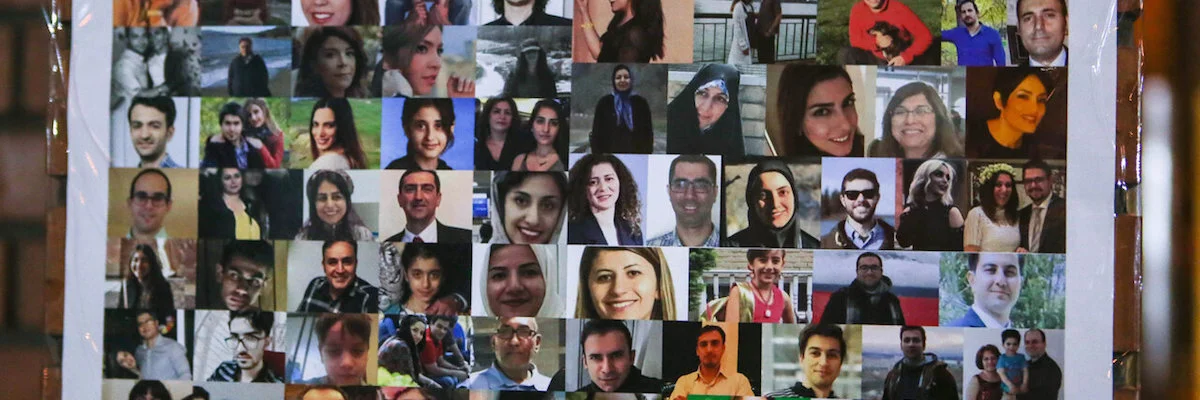
Iran Says It 'Unintentionally' Shot Down Ukraine Passenger Jet
◢ Iran said on Saturday its armed forces "unintentionally" shot down a Ukrainian passenger jet that crashed after taking off from Tehran, killing all 176 people aboard. President Hassan Rouhani said a military investigation had found "missiles fired due to human error" brought down the Boeing 737.
By Marc Jourdier
Iran said on Saturday its armed forces "unintentionally" shot down a Ukrainian passenger jet that crashed after taking off from Tehran, killing all 176 people aboard.
President Hassan Rouhani said a military investigation had found "missiles fired due to human error" brought down the Boeing 737 on Wednesday, calling it an "unforgivable mistake".
The about-turn came after officials in Iran had categorically denied Western claims that the Ukraine International Airlines (UIA) airliner had been struck by a missile in a catastrophic error.
The plane, which had been bound for Kiev, slammed into a field shortly after taking off from Tehran's Imam Khomeini International Airport before dawn on Wednesday.
It came only hours after Iran's armed forces launched a wave of missiles at bases hosting American forces in Iraq in response to the killing of Qasem Soleimani, one of Iran's top generals, in a US drone strike.
Iran had come under mounting pressure to allow a "credible" investigation after video footage emerged appearing to show the plane being hit by a fast-moving object before a flash appears.
The Ukrainian and Canadian leaders called for accountability after Iran's admission.
The armed forces were first to acknowledge the error, saying the Boeing 737 had been mistaken for a "hostile plane" at a time when enemy threats were at the highest level.
"The Islamic Republic of Iran deeply regrets this disastrous mistake," Rouhani said on Twitter.
"Armed Forces' internal investigation has concluded that regrettably missiles fired due to human error caused the horrific crash of the Ukrainian plane & death of 176 innocent people."
Iran 'Saddened'
In a statement posted on the government's website, Rouhani said Iran's armed forces had been on alert for possible attacks by the Americans after the "martyrdom" of Soleimani.
"Iran is very much saddened by this catastrophic mistake and I, on behalf of the Islamic Republic of Iran, express my deep condolences to the families of victims of this painful catastrophe," he said.
Rouhani added he had ordered "all relevant bodies to take all necessary actions (to ensure) compensation" to the families of those killed.
"This painful incident is not an issue that can be overcome easily."
He said "the perpetrators of this unforgivable mistake will be prosecuted".
"It is necessary to take necessary steps and measures to remove the weak points of the country's defence systems so that such a catastrophe is never repeated again."
The majority of passengers on UIA Flight PS752 were dual national Iranian-Canadians but also included Ukrainians, Afghans, Britons and Swedes.
Demands for Justice
Ukrainian President Volodymyr Zelensky demanded Saturday that Iran punish those responsible for the downing of the plane and pay compensation.
"We expect Iran... to bring the guilty to the courts," the Ukrainian leader wrote on Facebook.
Canadian Prime Minister Justin Trudeau said closure and accountability were needed in the wake of the incident.
Trudeau also demanded "transparency, and justice for the families and loved ones of the victims".
"This is a national tragedy, and all Canadians are mourning together," his office said in a statement.
The disaster came as tensions soared in the region after the Soleimani killing, and fears grew of an all-out war between Iran and its arch-enemy the United States.
Washington said the Soleimani strike was carried out to prevent "imminent", large-scale attacks on American embassies.
Tehran had vowed "severe revenge" for the killing of Soleimani before launching missiles at the bases in Iraq.
"Human error at time of crisis caused by US adventurism led to disaster," Iranian Foreign Minister Mohammad Javad Zarif tweeted.
"Our profound regrets, apologies and condolences to our people, to the families of all victims, and to other affected nations."
Iran has invited the United States, Ukraine, Canada and others to join the crash investigation.
It is Iran's worst civil aviation disaster since 1988 when the US military said it shot down an Iran Air plane over the Gulf by mistake, killing all 290 people on board.
Video footage of the UIA 737, which The New York Times said it had verified, emerged and appeared to show the moment the airliner was hit.
A fast-moving object is seen rising at an angle into the sky before a bright flash appears, which dims and then continues moving forward. Several seconds later, an explosion is heard and the sky lights up.
Many airlines from around the world cancelled flights to and from Iran in the wake of the crash, or rerouted flights away from Iranian airspace.
Nations around the world have called for restraint and de-escalation, and fears of a full-blown conflict have subsided after US President Donald Trump said on Wednesday that Iran appeared to be standing down after targeting the US bases in Iraq.
Photo: IRNA

U.S. to Impose Sanctions on Iran’s Metal Exports and Leaders
◢ The Trump administration imposed new sanctions on Iran on Friday, including penalties on the Islamic Republic’s metals and some senior leaders, following Tehran’s attack on U.S. military bases. The sanctions target the nation’s steel industry, as well as eight senior Iranian officials and other sectors of the economy.
By Jordan Fabian and Kevin Cirilli
The Trump administration imposed new sanctions on Iran on Friday, including penalties on the Islamic Republic’s metals and some senior leaders, following Tehran’s attack on U.S. military bases.
The sanctions target the nation’s steel industry, as well as eight senior Iranian officials and other sectors of the economy, including construction, manufacturing, textiles and mining, said Treasury Secretary Steven Mnuchin and Secretary of State Michael Pompeo.
“We want Iran to simply behave like a normal nation,” Pompeo said at the White House.
The move comes one day after President Donald Trump said Iran would be sanctioned “immediately” for the airstrikes against two U.S. military installations in Iraq, which resulted in no casualties.
The administration first prepared the sanctions in December, before tensions escalated between the U.S. and Iran, leading to the Jan. 2 U.S. airstrike in Baghdad that killed top Iranian general Qassem Soleimani. The new measures are aimed at cracking down on Iran’s few remaining sources of export revenue and squeezing the nation’s economy to force its leaders back into negotiations for a new nuclear agreement.
Tehran has repeatedly rebuffed the Trump administration’s overtures to talk, even as existing sanctions have crippled the Iranian economy. Yet President Hassan Rouhani has confronted street protests against price increases and corruption that has left his government politically vulnerable, potentially benefiting hardliners even more opposed to Washington.
Guidance from the State and Treasury Departments will warn ship insurers, banks, charter companies, port owners, crews and captains that they all face sanctions exposure if they can’t account for the legitimacy of the cargoes they carry.
The administration is seeking to close a significant loophole that allows Iran and other nations to avoid sanctions: ship-to-ship transfers of crude oil, refined petroleum and other goods.
Trump on Wednesday attempted to lower tensions with Iran by standing down from further military actions that could have sparked a new war in the Middle East.
Trump and top administration officials have said they are open to new talks with Tehran, but Iranian leaders have not been eager to reciprocate.
Photo: Wikicommons
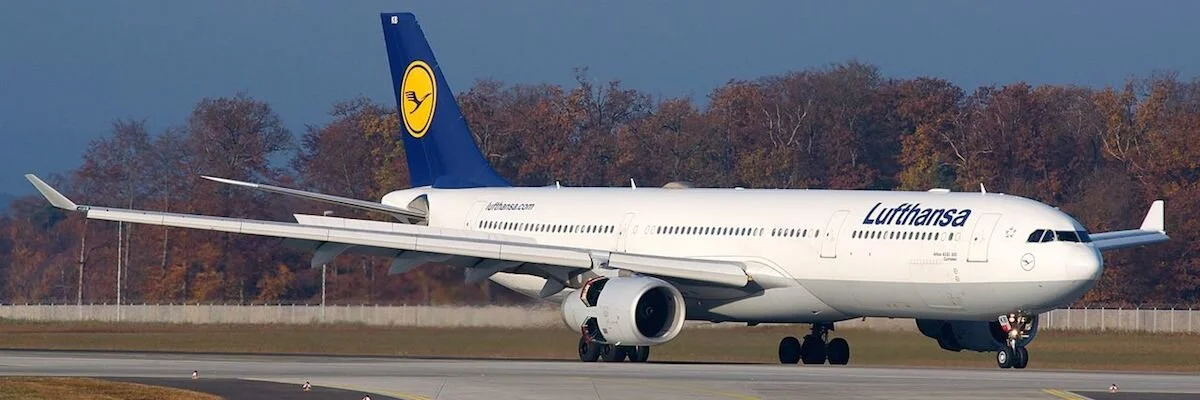
Lufthansa Scraps Tehran Flights Until Jan 20
◢ Lufthansa on Friday said it was canceling all flights to and from Tehran until January 20, following suggestions that Iran may have mistakenly shot down a Ukrainian passenger plane earlier this week. The German group said the flight ban was "due to the unclear security situation for the airspace around Tehran airport.”
Lufthansa on Friday said it was canceling all flights to and from Tehran until January 20, following suggestions that Iran may have mistakenly shot down a Ukrainian passenger plane earlier this week.
The German group, which also owns Austrian Airlines, said the flight ban was "due to the unclear security situation for the airspace around Tehran airport.”
All 176 people on board died when the Ukrainian International Airlines plane went down near Tehran on Wednesday, shortly after Iran launched missiles at US forces in Iraq over the killing of a top Iranian general.
American, British and Canadian officials say intelligence sources indicate Iran shot down the plane, perhaps unintentionally, but this has been denied by Tehran.
Several airlines had already announced they would avoid Iranian and Iraqi airspace as tensions in the region soared.
A Lufthansa flight between Frankfurt and Tehran on Thursday turned back an hour after takeoff because of security concerns.
Austrian Airlines meanwhile said late Thursday that its flight to Tehran that day was ordered to return to Vienna after a stopover in Sofia.
Photo: Wikicommons
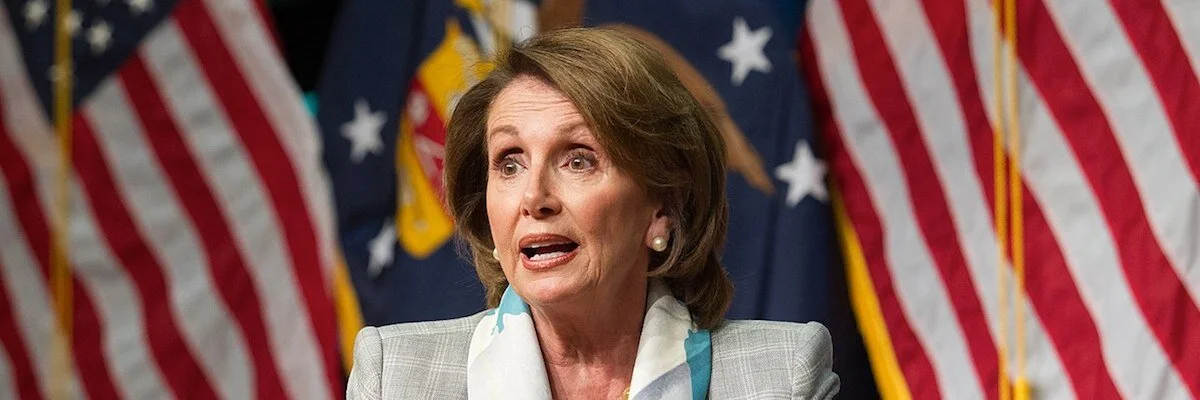
House Votes to Curb Trump Power to Strike Iran Without Congress
◢ The U.S. House of Representatives voted Thursday to limit President Donald Trump’s authority to strike Iran, a mostly symbolic move Democrats say defends Congress’s constitutional powers but Republicans say endangers national security. The resolution was adopted on a 224-194 vote, as tensions in the Middle East remain high.
By Daniel Flatley
The U.S. House of Representatives voted Thursday to limit President Donald Trump’s authority to strike Iran, a mostly symbolic move Democrats say defends Congress’s constitutional powers but Republicans say endangers national security.
The resolution was adopted on a 224-194 vote, as tensions in the Middle East remain high after a U.S. drone strike killed Iranian general Qassem Soleimani. Iran retaliated with missiles striking an Iraqi base used by U.S. troops late Tuesday, without casualties, leaving uncertainty about future hostilities.
With Thursday’s resolution, the House is saying that Congress should be consulted before the conflict with Iran escalates. The Senate now can either consider the House-passed measure or move forward with a different version introduced by Senator Tim Kaine, a Democrat from Virginia.
The effort to constrain Trump’s power was backed by three Republicans but faces tough odds in the GOP-led Senate. Still, House Speaker Nancy Pelosi said the measure has “real teeth,” citing the 1973 War Powers Act to limit a president’s military options without consulting Congress.
Republicans Matt Gaetz of Florida, Thomas Massie of Kentucky and Francis Rooney of Florida and independent Justin Amash of Michigan joined 220 Democrats in supporting the measure. Eight Democrats voted with 186 Republicans against it.
Democrats criticized the Trump administration for failing to provide clear justification that Soleimani posed an imminent threat. Two Republican senators -- Mike Lee of Utah and Rand Paul of Kentucky -- sharply criticized Wednesday’s classified briefing led by Secretary of State Michael Pompeo for failing to address their concerns about congressional authorization for the attack.
Lee said the “insulting” briefing tipped his vote in favor of strengthening requirements for the president to consult Congress on military action.
“That briefing is what changed my mind,” Lee said Wednesday. “After today, every time they pull a stunt like this, I’m willing to consider and introduce any and every War Powers Act resolution.”
Constitutional Requirement
The House measure, sponsored by Michigan Democrat and former CIA analyst Elissa Slotkin, would require Trump to cease military actions against Iran unless authorized by Congress or in response to an imminent threat.
Republicans and at least one Democrat -- New York Representative Max Rose, an Army veteran -- criticized the House resolution as an empty gesture that plays “politics with questions of war and peace.”
The House version is a concurrent resolution that wouldn’t require Trump’s signature if passed by both chambers. The War Power Act provides for a concurrent resolution to have the force of law, although that would probably be challenged in court.
The Senate version Kaine introduced is a joint resolution, which would require the president to sign it to become law. Trump vetoed a previous resolution last year to end U.S. military involvement in Yemen, and the Senate didn’t have enough votes to override his veto.
If either Kaine’s resolution or the House version meets Senate requirements to get a privileged voting status, it would only need a simple majority to pass. With Lee and Paul saying they back Kaine’s resolution, it would need support from at least two more Republicans to pass.
Kaine said he dropped two paragraphs that referenced Trump directly after getting feedback from some Republicans he hopes to attract to his effort. GOP Senators Susan Collins and Todd Young, who have voted with Democrats for war powers resolutions in the past, said they are considering the Kaine resolution but haven’t committed to it yet.
Military Authorization
Kaine’s resolution also states explicitly that the 2001 and 2002 Authorizations for the Use of Military Force don’t cover military action against Iran. The Trump administration included the 2002 AUMF as part of its justification for the drone strike near the Baghdad, Iraq, airport that killed Soleimani.
The White House on Thursday issued a statement challenging the House resolution, saying it’s unnecessary and would lack the force of law. The statement of administration policy also said the 2002 AUMF covers any military action that would be restricted under the House measure.
The statement said that if the provisions of the resolution were to become law, “they could undermine the president’s ability to defend United States forces and interests in the region against ongoing threats from Iran and its proxies.”
Kaine said earlier that it is precisely the risk of conflict with Iran that makes it so important for Congress to defend its constitutional authority to declare war.
“We’re at the brink of war right now,” Kaine said. “It increases the necessity of the bill.”
PHoto: Wikicommons
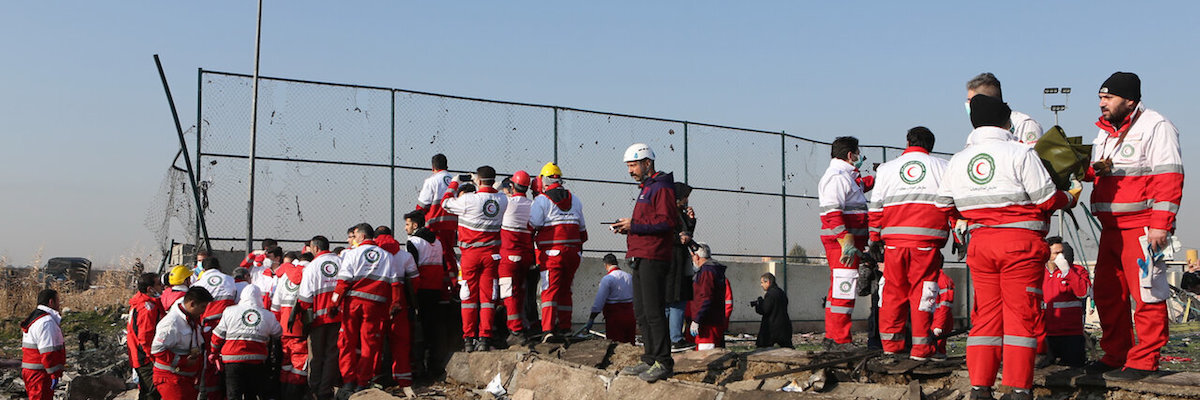
Iran May Seek U.S. Help in Jet-Crash Probe Through UN Treaty
◢ Iran has invoked an international agreement to get assistance from foreign investigators—including from the U.S.—in the investigation of Wednesday’s fiery crash of a jetliner near Tehran, according to two people familiar with the matter. However, American agencies including the National Transportation Safety Board are weighing whether it is legal to engage with Iranian authorities under the terms of sanctions the U.S. has imposed on Iran.
By Alan Levin
Iran has invoked an international agreement to get assistance from foreign investigators—including from the U.S.—in the investigation of Wednesday’s fiery crash of a jetliner near Tehran, according to two people familiar with the matter.
Such a move is common in aviation disasters, and gives the country where the plane was produced the ability to participate. The plane that crashed was a U.S.-built Boeing Co. 737-800.
However, American agencies including the National Transportation Safety Board are weighing whether it is legal to engage with Iranian authorities under the terms of sanctions the U.S. has imposed on Iran. Moreover, they are concerned about the safety of sending people there given the confrontation between the two countries that has led to military strikes on both sides, the people said.
The probe into Ukraine International Airlines Flight 752 -- which plunged from the sky minutes after takeoff, killing all 176 people aboard -- is fraught with difficulty and intrigue.
The crash came hours after an Iranian missile attack on two Iraqi military bases in retaliation for an American drone attack last week that killed one of Iran’s top generals. American forces are stationed at both bases.
Under the United Nation’s International Civil Aviation Organization, crash investigations are conducted by the nation in which they occur. In addition, the country where the plane and key components are manufactured are allowed to take part.
Iran notified the UN agency of the accident in the hours after it occurred, according to the people, who were briefed on the matter but weren’t authorized to speak about it and asked not to be named.
The NTSB routinely participates in dozens of crash investigations around the world under the ICAO process, known as Annex 13.
By notifying the ICAO, Iran suggested it might be open to U.S. help in the probe, said the two people. But the Islamic Republic has sent mixed signals, with some officials being quoted as saying they would not allow Americans to analyze the plane’s two crash-proof flight recorders, for example.
American law also prohibits the NTSB from working in Iran because of longstanding bans on conducting business in that country. The NTSB has occasionally assisted in accident investigations there, but had to obtain special permission from the U.S. Treasury. The process of obtaining such approval has at times taken more than a year.
“The NTSB is monitoring developments surrounding the crash of Ukraine International flight 752 and is following its standard procedures for international aviation accident investigations, including long-standing restrictions under the country embargoes,” the agency said in an emailed statement Wednesday.
“As part of its usual procedures, the NTSB is working with the State Department and other agencies to determine the best course of action.”
The State Department issued a statement offering assistance to Ukraine, but notably didn’t mention helping Iran. “The United States calls for complete cooperation with any investigation into the cause of the crash,” the department said.
The aircraft climbed normally until it reached an altitude of 7,900 feet (2,408 meters), then suddenly stopped transmitting its position, according to data from the tracking site FlightRadar24.
The jetliner was equipped with a device that communicated with the airline and it also showed the plane was behaving normally until it stopped transmitting at about the same time, said a person familiar with the data.
The airline said in a statement that the investigation would include representatives of Iran, Boeing, the airline and the National Bureau of Air Accidents Investigation of Ukraine.
Boeing said in a statement “we are ready to assist in any way needed.”
Photo: IRNA
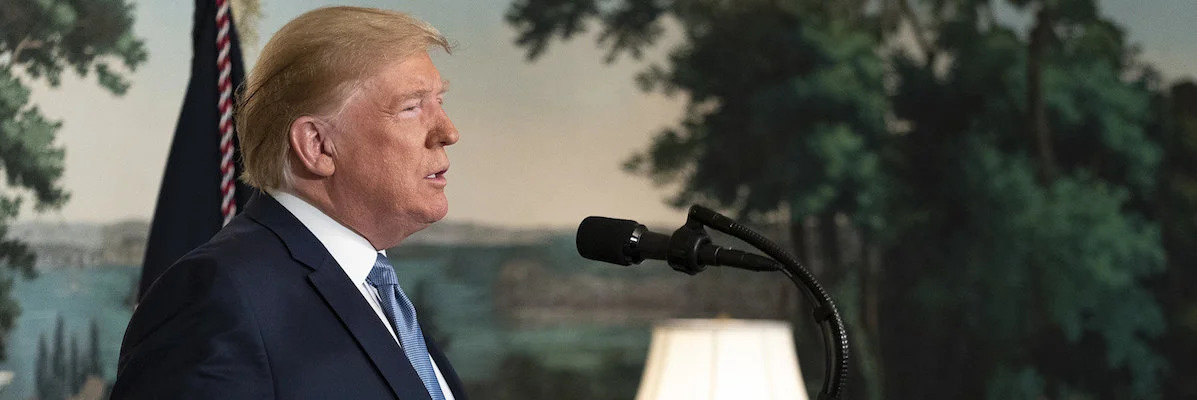
Trump Backs Away From Conflict With Iran After Harmless Attack
◢ President Donald Trump said no Americans were harmed by an Iranian missile attack on U.S. bases in Iraq early Wednesday, defended the U.S. killing of a top Iranian general and said he would impose new sanctions on Tehran. “Iran appears to be standing down,” Trump said. “Which is a good thing for all parties concerned and a very good thing for the world.”
By Josh Wingrove and Jennifer Jacobs
President Donald Trump backed away from the precipice of war with Iran after the Islamic Republic attacked U.S. bases in Iraq with a barrage of missiles the Pentagon believes was intended to cause no casualties.
In televised remarks to the nation on Wednesday, Trump defended the U.S. strike on a top Iranian general that touched off the missile barrage and said he would impose new sanctions on Tehran.
“As long as I’m president of the United States, Iran will never be allowed to have a nuclear weapon,” Trump said as he began his speech.
But he also offered the country’s regime a diplomatic opening. Any new nuclear deal, he said, must allow “Iran to thrive and prosper, and take advantage of its enormous untapped potential. Iran can be a great country.”
Iran fired more than a dozen guided missiles at two U.S. bases in Iraq in retaliation for the killing of Qassem Soleimani. But a Pentagon analysis of the attack suggested the missiles were aimed at unpopulated parts of the bases, according to people familiar with the matter.
Satellite imagery of the bases provided by Planet Labs showed damaged aircraft hangers and other structures at the Al Asad airbase in western Iraq following the strike.
“Iran appears to be standing down,” Trump said. “Which is a good thing for all parties concerned and a very good thing for the world.”
Iran’s restraint and Trump’s measured remarks in response suggest a path toward easing tensions with Tehran, which surged after Soleimani’s killing in a U.S. drone strike near the Baghdad airport last week.
Iranian Foreign Minister Javad Zarif said on Twitter earlier Wednesday that the missile attack “concluded” Iran’s retaliation for Soleimani’s killing. Even if Tehran refrains from further direct attacks, it might still seek reprisals through more covert means, such as attacks by proxy militias or in cyberspace.
An Iranian official said earlier this week that its government was considering 13 means of retaliation that would inflict a “historic nightmare” on the U.S.
The S&P 500 pushed to a fresh intraday record after Trump’s remarks. Treasuries turned lower after spiking overnight following the Iranian attack. Oil fell below $61 a barrel in New York.
‘Top Terrorist’
Trump said Soleimani was “the world’s top terrorist” and was “personally responsible for some of the absolutely worst atrocities,” including the training of “terrorist armies” and “fueling bloody civil wars across the region.” He said Iranian weapons Soleimani supplied to Iraqi militants had injured or killed thousands of U.S. troops.
Trump had threatened to strike 52 Iranian targets were any Americans killed in Tehran’s reprisals for Soleimani’s death.
The Pentagon said that the two bases struck by Iranian missiles -- the sprawling Al Asad airbase in western Iraq, and a smaller base near the city of Erbil -- had already been on high alert, and Iraq’s government said it had been forewarned of the Iranian attack. There were no Iraqi casualties from the Iranian strike.
Iranian Supreme Leader Ayatollah Ali Khamenei described the attacks on the bases as a “crushing response.”
“Last night, they got a slap in the face,” he said on state television. He again demanded that the U.S. presence in the Mideast come to an end, a sign that Tehran’s ultimate goal remains to push the American military out of Iraq.
Nuclear Accord
Trump escalated tensions with Iran in 2018 by withdrawing from the nuclear accord negotiated by his predecessor, Barack Obama, and reimposing sanctions that have crushed the Iranian economy. Iran responded by arming and directing proxy militias across the region that have caused trouble for the U.S. and its allies in Yemen, Iraq, Syria and Lebanon.
The missiles Iran fired at U.S. bases on Wednesday, Trump claimed, “were paid for by the funds made available by the last administration.” He provided no substantiation, but has frequently criticized Obama for releasing frozen Iranian assets to Tehran after the nuclear accord was completed.
Soleimani, regarded as the second most powerful person in Iran, commanded the Islamic Revolutionary Guards Corps’ Quds Force, the expeditionary arm of the Iranian military that provided support for proxy groups. Trump ordered him killed after a Dec. 27 rocket attack on a joint U.S.-Iraqi base near Kirkuk resulted in the death of an American contractor. The U.S. blamed the attack on an Iran-backed militia and killed its leader in the strike on Soleimani.
Trump has said that Soleimani was planning “imminent” attacks on U.S. forces in the Mideast, though his administration has provided little evidence for the claim.
Democrats and a few Republicans have criticized the Soleimani strike, saying it would endanger U.S. diplomatic and military personnel in the region. Administration officials will provide classified briefings to Congress later on Wednesday.
Photo: White House
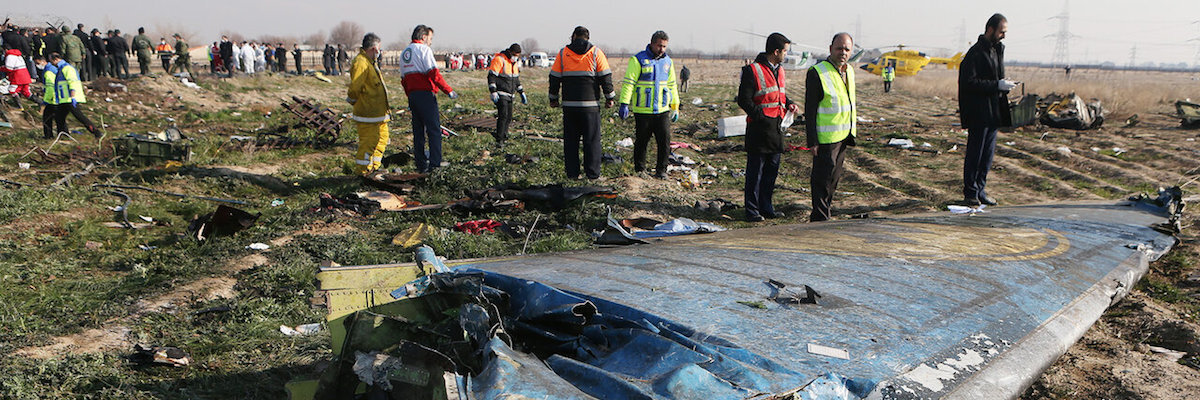
Ukraine Passenger Jet Crashes in Iran, Killing at Least 170
◢ A Ukrainian airliner carrying at least 170 people crashed shortly after takeoff from Tehran on Wednesday, killing all on board, Iran state media reported. The Boeing 737 had left Tehran's international airport bound for Kiev, semi-official news agency ISNA said.
By David Vujanovic and Ania Tsoukanova
A Ukrainian airliner carrying 176 passengers crashed shortly after takeoff from Tehran on Wednesday, killing all on board, officials in Iran said. The Boeing 737 had departed Imam Khomeini International Airport before dawn bound for the Ukrainian capital Kiev, semi-official news agency ISNA said.
It slammed into farmland at Khalaj Abad, in Shahriar county, about 45 kilometres northwest of the airport, according to reports on state media.
"Obviously it is impossible that passengers" on flight PS-752 are alive, Red Crescent head Morteza Salimi told semi-official news agency ISNA.
"Out of the 176 people who died, nine were flight crew members and the others passengers," Mohammad Taghizadeh, the deputy governor for Tehran province, told ISNA. Seventy were men, 81 women and 15 children, he said.
"There are currently 500 medical units on the scene" gathering bodies, he added. Emergency services spokesman Mojtaba Khaledi said the vast majority of the dead were Iranian citizens.
Just two passengers and nine crew members were Ukrainian, according to Ukraine's national security council, which is overseeing a crisis team. Ukrainian President Volodymyr Zelensky confirmed all those on board the plane were killed.
The aircraft was carrying 82 Iranian and 63 Canadian nationals, a Ukrainian minister said. The Boeing 737 was also carrying 11 Ukrainians, 10 Swedes, four Afghans, three Germans and three Britons, Foreign Minister Vadym Prystaiko wrote on Twitter.
"According to preliminary data, all passengers and crew members are dead," he wrote on Facebook.
The Red Crescent said teams were being assisted by soldiers and firefighters in the effort to recover bodies.
"After six o'clock (0230 GMT) this morning we were informed that a passenger plane crashed in the vicinity of Shahriar," said Shahin Fathi, the head of its search and rescue unit.
"All operational teams were dispatched to the area," he told state television. "Unfortunately... we haven't found anyone alive."
The crash was likely to have been caused by "technical difficulties", Press TV said, quoting Ali Khashani, spokesman for Imam Khomeini International Airport.
The Ukrainian airline whose plane crashed outside Tehran on Wednesday, killing over 170 people, said the Boeing 737 was built in 2016 and checked only two days before the accident.
"The plane was manufactured in 2016, it was received by the airline directly from the (Boeing) factory. The plane underwent its last planned technical maintenance on January 6, 2020," Ukraine International Airlines said in a statement.
"The plane caught fire after crashing," said Press TV, state television's English-language news broadcaster.
A video aired by the state broadcaster appeared to show the plane already on fire, falling from the night sky.
American airline manufacturer Boeing tweeted: "We are aware of the media reports out of Iran and we are gathering more information." The Ukrainian president warned against speculation about the causes of the crash.
"I ask everyone to keep from speculating and putting forth unconfirmed theories about the crash," Zelensky he wrote on Facebook, as he cut short a vacation in Oman and flew back to Ukraine.
Aviation expert Stephen Wright said he doubted the airliner had been downed by an Iranian missile but said the evidence suggested something "catastrophic" had taken place.
"There is a lot of speculation at the moment it has been shot down - I think that is not going to be the case at all," he said. "The aircraft was climbing... it was going up in the right direction, which means that something catastrophic has happened.
"It could be a bomb or it could be some sort of catastrophic breakup of the aircraft." Wright, a professor of aircraft systems at Tampere University in Finland, said the aircraft was quite new and not one of the the MAX models fitted with anti-stall systems that have been linked with two other recent crashes.
The crash came shortly after Iran said it fired missiles at Iraqi bases in revenge for the killing of one of the Islamic republic's top military commanders in a US drone strike on Friday.
Following the missile strikes, the US Federal Aviation Administration (FAA) said it was banning US-registered carriers from flying over Iraq, Iran and the Gulf after rocket attacks on US forces in Iraq.
"The (FAA) issues Notices to Airmen tonight outlining flight restrictions that prohibit US civil aviation operators from operating in the airspace over Iraq, Iran and the waters of the Persian Gulf and the Gulf of Oman," it said in a statement.
"The FAA will continue closely monitoring events in the Middle East." Iran launched the missiles after a US drone strike killed Qasem Soleimani, a hugely popular figure who headed the foreign operations arm of the Islamic Revolutionary Guard Corps.
Supreme leader Ayatollah Ali Khamenei vowed "severe revenge" for the assassination and declared three days of mourning following the assassination which shocked the Islamic republic.
The assassination of Soleimani set off an escalating war of words between Iran and the US.
In Tehran, President Hassan Rouhani on Monday warned Trump to "never threaten" Iran, after the US leader issued a US strike list of 52 targets in the Islamic republic.
Photo: IRNA

Iran Retaliates With Missile Strike on U.S.-Iraqi Bases
◢ Iran fired more than a dozen missiles at U.S.-Iraqi airbases, a direct attack on American forces in the region that risks further action from President Donald Trump after a U.S. air strike killed top Iranian general Qassem Soleimani last week. The Islamic Revolutionary Guard Corps claimed responsibility for the barrage.
By Glen Carey
Iran fired more than a dozen missiles at U.S.-Iraqi airbases, a direct attack on American forces in the region that risks further action from President Donald Trump after a U.S. air strike killed top Iranian general Qassem Soleimani last week.
The Islamic Revolutionary Guard Corps claimed responsibility for the barrage, which the Pentagon said was launched from Iran. Fifteen missiles were fired, 10 of which hit the Ayn al-Asad base in western Iraq and another facility in Erbil, according to two U.S. officials. Another struck the Taji air base near Baghdad while four fell out of the sky.
Stocks dropped and oil rose on news of the Iranian strike, though crude later pared its gains. The big concern is the extent of any U.S. casualties, because that is likely to influence the White House thinking on potential retaliation. For now no U.S. nor Iraqi casualties have been confirmed.
Some sort of response had been expected to the killing of Soleimani, who ran Iran’s proxy operations across the Middle East and was close to the country’s leaders. While Tehran does not want outright war with the U.S., there was growing pressure at home to react. The balancing act was to do so without tipping things into a conflict that no-one has appetite for.
Supreme Leader Ayatollah Ali Khamenei spoke on state television and described the attack as a “crushing response.” He called again for the U.S. presence in the region to end, a sign that Tehran’s ultimate goal remains to push the U.S. military out of Iraq. Foreign Minister Mohammad Javad Zarif said on Twitter the government “concluded proportionate measures in self-defense” after the Soleimani strike. “We do not seek escalation or war, but will defend ourselves against any aggression,” Zarif wrote.
In Tehran the mood on Wednesday was cautious, with ordinary people taking to Twitter to voice their fears of a war.
President Donald Trump tweeted “All is well!” and “So far, so good!” while adding that battle damage assessments continued. He added he’ll make a statement Wednesday morning. Tensions between Iran and the U.S. have soared under Trump, who walked away from the Iranian nuclear deal agreed by his predecessor. Since then, Iran has warned repeatedly the restraints on its nuclear program will be removed.
Trump was joined in the White House Situation Room after the attack by officials including Vice President Mike Pence, Secretary of State Michael Pompeo, Joint Chiefs Chairman Army General Mark Milley and National Security Adviser Robert O’Brien.
One White House official, who spoke on condition of anonymity, said the early thinking was the missile strike was a perfunctory move that would let Iran retaliate without incurring a potentially devastating U.S. counter-assault.
Iran’s attack sent futures on the S&P 500 Index down as much as 1.7% before paring losses. Gold initially advanced to the highest since 2013, though those gains were trimmed along with an advance in oil which at one point surged above $65 a barrel.
U.S. aviation regulators issued new restrictions barring civilian flights over Iraq, Iran, the Persian Gulf and the Gulf of Oman. Adding to the confusion, a Boeing Co. 737 passenger jet bound for Ukraine crashed shortly after takeoff in Iran, killing all 167 passengers and 9 crew on board, with Iran’s media reporting it was due to a technical problem.
“A missile attack from Iran against U.S. forces is a serious escalation,” said Michael Singh of the Washington Institute for Near East Policy and a former senior director for Middle East affairs under President George W. Bush. Such an attack “cannot be regarded as merely symbolic or face-saving regardless of its results,” he added.
Trump has shown restraint in previous attacks in the region blamed on Iran that didn’t kill any U.S. citizens. But Iran’s quick claim of responsibility for the strike and the targeting of U.S. military outposts make some sort of retaliation more likely.
“The next question is, does the U.S. react or overreact to this,” said Jarrett Blanc, a senior fellow at the Carnegie Endowment for International Peace and a former State Department coordinator for Iran nuclear implementation.
Iran is believed to have the region’s largest stockpile of short-range ballistic missiles, and a large number of American military and diplomatic facilities in the region were seen as potential targets for reprisals.
“As we evaluate the situation and our response, we will take all necessary measures to protect and defend U.S. personnel, partners, and allies in the region,” according to a Pentagon statement.
The Ayn al-Asad base is a key U.S. facility in the country. Pence visited it late last year and Trump was there in December 2018. A Facebook account belonging to the Iraqi prime minister’s office said 22 missiles entered Iraqi airspace early Wednesday, and 17 hit Ayn al-Asad. It said there were no casualties among the Iraqi forces.
The Islamic Revolutionary Guard Corps said that further responses will come. It called the attack the start of its “Martyr Soleimani” operation, in honor of a leader many Iranians considered a national hero for his exploits in conflicts from Syria to Yemen.
At his funeral on Tuesday, Hossein Salami, leader of Iran’s Revolutionary Guard, threatened to “set ablaze” places supported by the U.S., the Associated Press reported. The general’s burial was postponed after dozens of mourners died in a stampede.
Even so, Zarif’s comments cast some doubt on about whether more action is really in the works. Iran has for years operated a carefully-calibrated strategy of attacks, often via proxies, in the Middle East, that preserves its influence without drawing major retaliation. Crippled by economic sanctions, Iran can ill-afford an outright war.
Before the latest attack, Iran said it was assessing 13 scenarios for retaliation according to comments by Ali Shamkhani, head of Iran’s national security council, reported by the semi-official Fars news agency.
Iran “needed to do something quick,” said Kamran Bokhari, founding director of the Center for Global Policy in Washington. “This is a placeholder move and a low cost one.”
The U.S. had vowed a quick and overwhelming response to any Iranian attacks. Over the past week, the Pentagon deployed about 3,500 soldiers from the 82nd Airborne to Kuwait and another three Navy ships with about 2,200 Marines to the Persian Gulf region.
Iranian-only targets for the U.S. include Islamic Revolutionary Guard Corps navy vessels in the Persian Gulf, nuclear facilities, military bases, ports and oil installations, according to a Tuesday report by the Congressional Research Service. Another option: Iranian proxies.
U.S. officials say they were justified in targeting Soleimani, who was accused of having helped Iraqi insurgents target American troops with improvised explosive devices following the U.S. invasion in 2003.
Drone Strike
Tensions between the U.S. and Iran soared following a Dec. 27 rocket assault on an Iraqi base. It killed an American contractor and wounded several U.S. personnel. The U.S. put the blame on Kataib Hezbollah, an Iraqi militia closely associated with Iran.
On Dec. 29, the U.S. conducted air strikes on five bases in Iraq and Syria used by Kataib Hezbollah. Two days later, dozens of Iraqi militiamen and their supporters stormed the U.S. embassy complex in Baghdad. The U.S. responded with the drone strike on Soleimani.
Defense Secretary Mark Esper said Tuesday that attacks planned by Soleimani, who headed the Revolutionary Guard’s Quds Force, were “days away” when the U.S. struck.
Photo: AFP
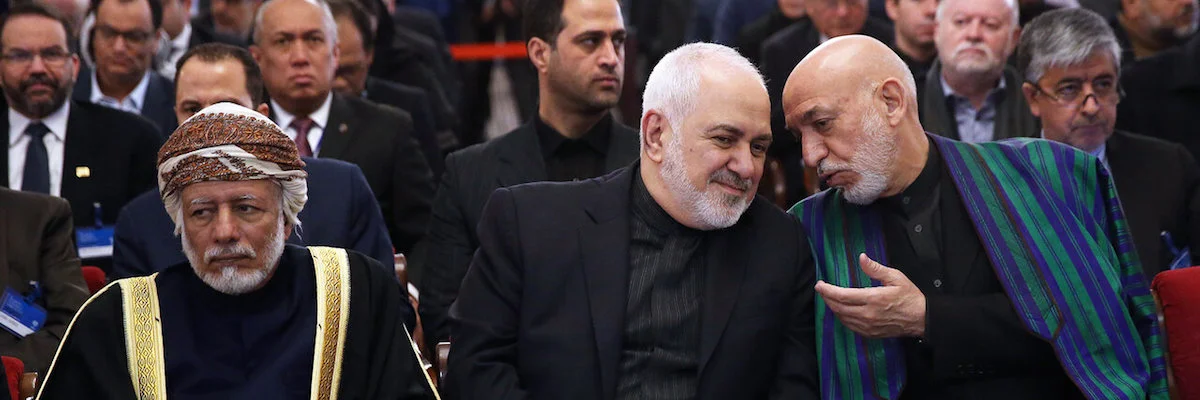
Zarif Says Informed by UN That US Has Denied Him Visa
◢ Iran's foreign minister said Tuesday he has been informed by UN chief Antonio Guterres that Washington has denied him a visa for a trip to UN headquarters in New York. Asked about Zarif's complaint, Pompeo said the State Department does not comment on visa matters.
Iran's foreign minister said Tuesday he has been informed by UN chief Antonio Guterres that Washington has denied him a visa for a trip to UN headquarters in New York.
"What we know is that the US State Secretary (Mike Pompeo), in a call to the Secretary General of the United Nations, said: 'We did not have time to issue a visa for Mohammad Javad Zarif and we will not issue a visa'," Zarif said.
"The Secretary General responded by saying that it is Iran's right to take part in this session," Tehran's top diplomat said, quoted by semi-official news agency ISNA.
Asked about Zarif's complaint, Pompeo said the State Department does not comment on visa matters.
"I will say only this—we will always comply with our obligations under the UN requirements and the Headquarters Agreement, and we will do so in this particular instance and more broadly every day," he told reporters.
Zarif was speaking to reporters in Tehran at a gathering to promote an Iranian peace plan for the Gulf.
His remarks came as Iran held funeral processions on Tuesday for one of its top military commanders killed in a US drone strike in Iraq.
Zarif later took to Twitter, saying the rejection violated the terms of a 1947 agreement on the travel of representatives of UN members to and from the headquarters.
But he said "denying me a visa... pales in comparison to" US sanctions and threats, as well as the "cowardly assassination" of Iranian general Qasem Soleimani last week.
"What are they really afraid of? Truth?" he tweeted.
Soleimani's killing in the US strike Friday in Baghdad has sparked a war of words between the arch-foes, with Iran vowing "severe revenge" and US President Donald Trump threatening to hit back hard for any retaliation.
Trump warned on Saturday that Washington had lined up 52 targets if Tehran attacked US personnel or assets.
Zarif said the US visa decision was "a sign of the bankruptcy of the US government and Trump's regime", according to ISNA.
The Iranian foreign minister said he had been planning to go to UN headquarters on Thursday for an open debate on "Upholding the Charter of the United Nations".
But he added that he had also intended to "raise America's crimes" during his visit to New York.
It is not the first time that Iranian officials have encountered problems when travelling to New York for events at UN headquarters.
In December, the UN General Assembly called on the United States to lift restrictions on Iranian diplomats.
Since mid-2019, Iranian diplomats and ministers have been under strict movement restrictions when they are in the United States.
They are limited largely to the area around UN headquarters, the Iranian diplomatic mission and the ambassador's residence.
In September, while taking part in the annual General Assembly, Zarif complained he was unable to visit the country's UN ambassador in a US hospital.
Photo: IRNA
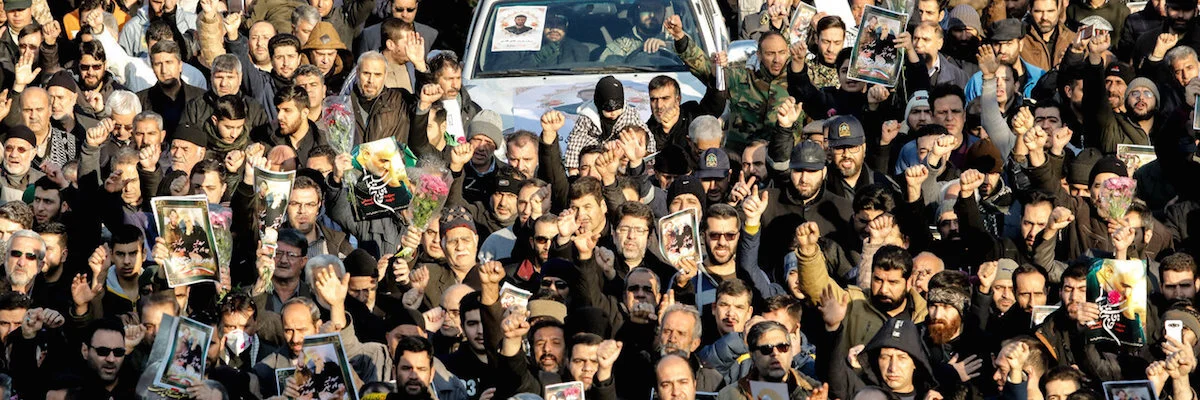
Dozens Killed in Stampede at Iran General's Funeral
◢ Dozens of people were crushed to death after a stampede broke out Tuesday during a massive funeral procession for a top Iranian general assassinated in a US drone strike. "The enemy killed him unjustly," the Revolutionary Guards' top commander, Major General Hossein Salami said, adding the process of "expelling the United States from the region has begun.”
By Amir Havasi
Dozens of people were crushed to death after a stampede broke out Tuesday during a massive funeral procession for a top Iranian general assassinated in a US drone strike.
The tragedy came as grieving crowds packed the hometown of Revolutionary Guards commander Qasem Soleimani, a hugely popular figure in the Islamic republic. More than 50 people were killed and 212 people injured in the stampede in Kerman, semi-official news agency ISNA said, citing the emergency services chief in the southeastern city, Mohammad Saberi.
Anxious Iranians gathered outside a city hospital to check the lists of victims or show doctors pictures of their missing relatives.
AFP correspondents in Kerman said the streets were filled with mourners, while others took refuge on hillsides around the city, where the general was to be buried at the martyrs' cemetery.
Soleimani, the head of the Guards' Quds Force foreign operations arm, was killed on Friday in a US strike near Baghdad international airport, an operation that shocked Iran.
"The enemy killed him unjustly," the Revolutionary Guards' top commander, Major General Hossein Salami said, adding the process of "expelling the United States from the region has begun.”
"Our will is firm. We also tell our enemies that we will take revenge, and that if they (strike again) we will set fire to what they love," he told the sea of black-clad mourners.
Schoolgirls joined chants of "Death to Trump" from the crowd, an AFP correspondent reported.
Tuesday's funeral comes after days of processions through the southwestern city of Ahvaz and the shrine cities of Qom and Mashhad as well as the capital Tehran.
The assassination of Soleimani set off an escalating war of words between Iran and the United States.
In Tehran, President Hassan Rouhani on Monday warned Trump to "never threaten" Iran, after the US leader issued a US strike list of 52 targets in the Islamic republic.
On Tuesday, Iranian lawmakers voted to designate all US forces around the world "terrorists" over Soleimani's killing.
Parliament also agreed to bolster the coffers of the Quds Force, which Soleimani led, by $244 million.
'Boils the Blood'
In Kerman, people converged from afar on Azadi Square where two flag-draped coffins were on display, with the second one reportedly containing the remains of Soleimani's closest aide, Brigadier General Hossein Pourjafari.
"We're here today to pay respects to the great commander of the holy defence," said one of the mourners who came from the southern city of Shiraz.
"Haj Qasem was not only loved in Kerman, or Iran, but also the whole world," Hemmat Dehghan told AFP.
“The security of the whole world, Muslims, Shiites, Iraq, Syria, Afghanistan and especially Iran, all owe it to him," said the 56-year-old war veteran.
Another mourner said Soleimani's assassination "boils the blood of the Iranian people".
"He was seen as a great man who was ready to serve his people both then in the war and now. He must certainly be avenged," said Sara Khaksar, an 18-year-old student. Friday's assassination of Soleimani, 62, heightened international concern about a new war in the volatile Middle East.
Iraq's parliament has demanded the government expel the 5,200 American troops stationed in the country in response to the drone attack which also killed top Iraqi military figure Abu Mahdi al-Muhandis.
Baghdad requested in a letter to the UN—seen by AFP—that the Security Council condemn the US strike so that "the law of the jungle" is not allowed to prevail.
The operation represented "a dangerous escalation that could lead to a devastating war in Iraq, the region and the world," wrote Iraq's UN ambassador Mohammed Hussein Bahr-Aluloom.
'Path of Sobriety'
On Sunday night, the US mistakenly notified Baghdad of an imminent troop pullout in a letter that sparked confusion in Washington.
"We respect your sovereign decision to order our departure," said the letter, whose authenticity was confirmed to AFP by both Iraqi and US defense officials.
In the letter, US Brigadier General William Seely said the US-led coalition would "be repositioning forces".
But Pentagon Joint Chiefs Chairman Mark Milley said the letter was a mere "draft" that was sent by mistake. Germany said Tuesday it was withdrawing some of its troops deployed to the anti-IS coalition in Iraq.
NATO chief Jens Stoltenberg warned on Monday that Iran must avoid "further violence and provocations.”
The European Union, whose foreign ministers will hold emergency talks on the crisis Friday, said it was in both Iran and Iraq's interests to "take the path of sobriety and not the path of escalation.”
Saudi Arabia—an oil-rich US ally seen as vulnerable to Iranian counter strikes—also appealed for calm after a "very dangerous" escalation.
Iran's foreign minister said he has been informed by UN chief Antonio Guterres that Washington has denied him a visa for a planned trip to UN headquarters in New York.
"What we know is that the US State Secretary (Mike Pompeo), in a call to the Secretary General of the United Nations, said: 'We did not have time to issue a visa for Mohammad Javad Zarif and we will not issue a visa'," Zarif said.
Photo: IRNA
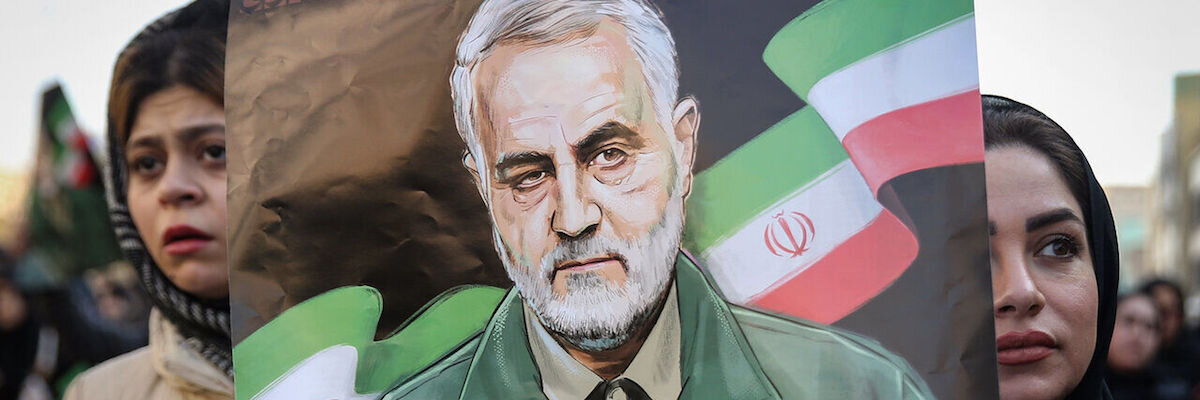
Qassem Soleimani Killing Leaves Trump’s Middle East Strategy in Tatters
◢ U.S. President Donald Trump and his top aides spent the weekend arguing that the killing of Iranian General Qassem Soleimani would deter future attacks and make the Middle East safer. Instead, U.S. policy in the region seems to be going in the opposite direction of what Trump has long promised.
By Nick Wadhams and David Wainer
U.S. President Donald Trump and his top aides spent the weekend arguing that the killing of Iranian General Qassem Soleimani would deter future attacks and make the Middle East safer.
Instead, U.S. policy in the region seems to be going in the opposite direction of what Trump has long promised—with more U.S. troops going in, not fewer; an Iran defiant, not cowed and broken by sanctions; and regional allies giving only lukewarm support to Trump’s airstrike instead of rallying around it.
Economic costs of the strike are also mounting: oil surged above $70 a barrel on Monday and equities around the world extended losses. Havens climbed, with gold rising to the highest in more than six years.
The political backlash came quickly, as the U.S.-led coalition against Islamic State was forced to suspend operations and Iraq’s parliament on Sunday called for U.S. troops to withdraw. Trump responded by saying Iraq could face sanctions and would have to “reimburse” America. Iran said it would abandon limits on uranium enrichment put in place as part of a 2015 nuclear agreement that Trump abandoned in 2018.
U.S actions have “made an already volatile situation much more dangerous,” said retired Army Lieutenant Colonel Daniel Davis, a senior fellow at Defense Priorities who favors a U.S. troop withdrawal from Iraq. “If you paid any attention to Iran in the last 40 years you know they will never buckle to that kind of pressure. It’s just the opposite.”
The strike on Soleimani appeared to unite Iranians after months of protests against their own government, with hundreds of thousands turning out to mourn a military chief who had made their nation -- battered by U.S. economic sanctions -- appear strong by giving Tehran leverage in conflicts from Syria to Yemen. Iran has vowed revenge, and allies including Hezbollah leader Hassan Nasrallah warned that they’d now seek to drive out the more than 50,000 U.S. troops from the region.
“It united most political forces in Iraq against the U.S.,” said Fawaz Gerges, a professor of international relations at the London School of Economics. “The Trump administration monstrously miscalculated by playing into Iran’s hands.”
The fight against Islamic State was immediately hampered, with the U.S.-led coalition saying it would suspend operations in Iraq to focus on protecting bases that have come under attack. Threats from Iran-backed militias have previously forced staff drawdowns in U.S. diplomatic missions across the country.
Iraq serves as the home base for operations against Islamic State. Trump told reporters aboard Air Force One late Sunday that the U.S. wouldn’t leave unless it got paid back for the “billions” spent on an air base there.
“If they do ask us to leave, if we don’t do it in a very friendly basis, we will charge them sanctions like they’ve never seen before ever,” he said. “It’ll make Iranian sanctions look somewhat tame.”
The escalating tensions hit markets starting Friday and continuing through Monday. Oil futures jumped an additional 3% on Monday after the State Department warned of a “heightened risk” of missile attacks near military and energy facilities in Saudi Arabia. Japanese, Hong Kong and South Korean equities fell, and U.S. and European futures retreated.
After Trump and Iranian officials traded public threats about future reprisals, the U.S. leader will now face questions from lawmakers returning to Washington from the end-of-year break ready to take up a bitter debate over the president’s impeachment by the Democratic-led House and a coming trial in the Republican-controlled Senate.
In the U.S., reaction to the raid has fallen mostly along party lines, with Republicans hailing the elimination of a leader responsible for terror attacks and Democrats questioning the administration’s assertion that Soleimani presented an “imminent threat.” They’re also asking whether Trump has a broader strategy or plan to deal with the aftermath.
U.S. House Speaker Nancy Pelosi, a California Democrat, sent a letter to the chamber’s lawmakers announcing a vote this week on a resolution that would limit Trump’s power in any potential military actions regarding Iran.
Secretary of State Michael Pompeo argued the administration’s case on Sunday news shows after more than a dozen calls with foreign counterparts from China to Saudi Arabia.
He said there were no doubts about the intelligence behind the decision to kill Soleimani, and that any moves taken against Tehran will be “lawful.” That was a response to concerns about Trump’s threat on Saturday to hit “52 Iranian sites” including cultural targets if Tehran retaliates. Trump’s comment raised concerns because attacks against cultural property are prohibited under the Geneva Convention and the U.S. Defense Department’s rules of engagement.
“We’ll behave inside the system,” Pompeo said Sunday on ABC’s “This Week.”
Despite Pompeo’s international outreach, there were few signs of strong support among key U.S. allies beyond Israel, while the NATO alliance planned an emergency meeting Monday to discuss growing tensions in the region. U.K. Prime Minister Boris Johnson summed up European reaction to the strike on Soleimani, saying “we will not lament his death,” but “we are in close contact with all sides to encourage de-escalation.”
Working to the U.S. advantage is Iran’s dire economic situation following increasingly tight U.S. sanctions that have largely wiped out the country’s ability to sell oil abroad and cut it off from most trade partners. And some analysts said the political tensions in Iran will only be briefly masked by Soleimani’s death.
Pompeo seemed to minimize the significance of Iraq’s parliament calling for a withdrawal of U.S. forces, suggesting that outgoing Prime Minister Adel Abdul-Mahdi—who said he was due to meet with Soleimani the morning he was killed about de-escalation efforts between Iran and Saudi Arabia—was acting under enormous pressure from Tehran.
Pompeo said the U.S. was a force for good in Iraq, 17 years after it invaded to oust Saddam Hussein. But the overthrow of the Sunni dictator in 2003 provided an opening that Iran has steadily exploited since, deepening its influence over Shia-majority Iraq. The parliament vote fell along sectarian and ethnic lines, with Sunni and Kurdish lawmakers abstaining.
It’s unlikely U.S. troops will leave Iraq anytime soon, but Sunday’s vote was damning for Trump and U.S. plans for the region. The diplomatic compound in Baghdad was constructed after the 2003 invasion to be the biggest American embassy in the world, designed to essentially serve as a forward operating base and a listening post in the Middle East.
With his latest deployment of about 3,500 troops to Kuwait, Trump has bolstered American forces by about 17,000 personnel since May, undermining his vow to get the country out of “endless wars.”
“Rarely has any single tactical move, untethered from any long-range thinking, produced so many potential strategically negative consequences for the U.S.,” said Aaron David Miller, a senior fellow at the Carnegie Endowment for International Peace. “In one single decision you’ve undermined 17 years of a U.S. mission, fraught though it may be.”
Photo: IRNA
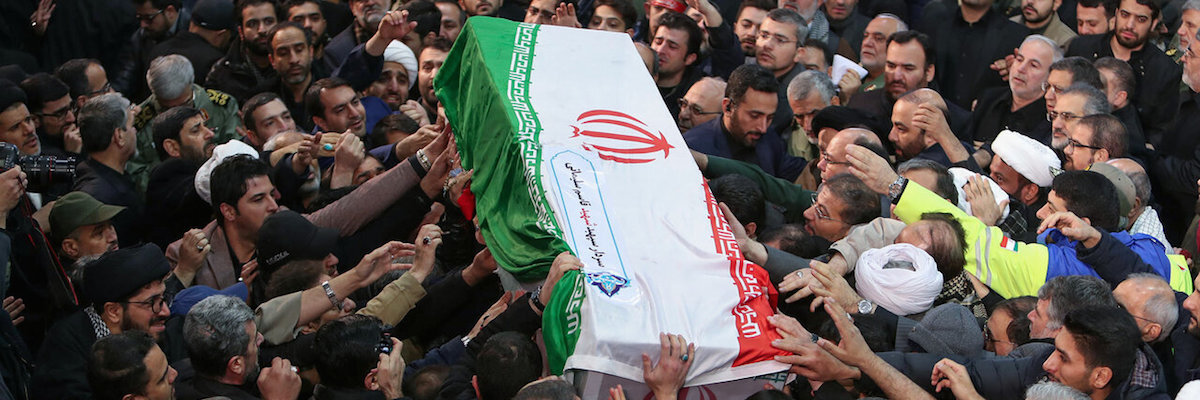
'Million-Strong' Homage for General Brings Tehran to Standstill
◢ Downtown Tehran was brought to a standstill Monday as mourners flooded the Iranian capital to pay an emotional homage to Qassem Soleimani, the "heroic" general killed in a US strike. Young and old were packed shoulder-to-shoulder in the streets, including women dressed in black-clad chadors and others wearing loose-fitting hijabs.
By Amir Havasi
Downtown Tehran was brought to a standstill Monday as mourners flooded the Iranian capital to pay an emotional homage to Qassem Soleimani, the "heroic" general killed in a US strike.
Young and old were packed shoulder-to-shoulder in the streets, including women dressed in black-clad chadors and others wearing loose-fitting hijabs.
Soleimani, one of Iran's most popular public figures, was killed in a US drone strike on Friday near Baghdad international airport. He was 62.
His assassination drove up tensions between arch-enemies Washington and Tehran, which has vowed "severe revenge".
"He was a hero. He defeated Daesh," said a woman in her 30s, referring to the Islamic State group.
"What America did is definitely a crime," said the woman who only gave her surname as Mohammadi.
"I'm here to mourn his martyrdom. There must be a response but we don't want war. Nobody wants war," she told AFP.
State television said it was a "several million-strong" turnout.
Supreme leader Ayatollah Ali Khamenei, who has vowed "severe revenge" for the US attack, presided over prayers for the slain general.
He appeared to cry beside the flag-draped coffins containing the remains of Soleimani and five other "martyrs" killed in the strike.
The streets of Tehran were so full of people that many were unable to emerge from underground metro stations, semi-official news agency ISNA reported.
"There are large crowds at metro stations but as there is also a huge crowd at the street level, it isn't possible to evacuate passengers," metro chief Farnoush Nobakht was quoted as saying.
The sheer number of mourners left many people stuck in sidestreets around Enghelab (Revolution) Street, the main route of a procession to a ceremony at Tehran University.
'Crushing Response'
It was silent in one alley until a child who climbed a tree to see if the street ahead had opened uttered "Death to America".
People within earshot soon joined in and loudly chanted the same phrase.
Chants of "Death to infidels," "Death to seditionists" and "Death to al-Saud"—a reference to the Saudi ruling family—were then heard.
But most of the anger was directed at Tehran's arch-enemy Washington and US President Donald Trump.
One man said he had come to the capital with his wife and child before dawn from Karaj, a city about 40 kilometres (25 miles) west of the Iranian capital.
"Our message to America is we will hit you. We'll make you pay for the blood you spilled," said Mehdi Ghorbani.
"America should know they started this, but we will end it," he told AFP.
A group of teenagers stood in a circle holding banners, one reading: "Haj Qasem's shoe is worth more than Trump's head".
Other mourners called for US forces to be driven out of the region.
"We must give a crushing response," one of the mourners told AFP.
"We must target whatever military base they have in the region. We must attack all that are in the range of our missiles," said the 61-year-old businessman who gave his name as Afkhami.
"Americans being thrown out (of Iraq) is not enough."
Photo: IRNA
Iran Will Forego 'Limit' on Centrifuges as Tensions with US Soar
◢ Iran on Sunday announced its fifth reduction in its nuclear commitments, saying it will forego the "limit on the number of centrifuges", as tensions with the United States soar after the killing of a top Iranian commander in a US strike. Tehran said it would continue cooperating "as before" with the International Atomic Energy Agency.
By Amir Havasi
Iran on Sunday announced its fifth reduction in its nuclear commitments, saying it will forego the "limit on the number of centrifuges", as tensions with the United States soar after the killing of a top Iranian commander in a US strike.
Iran's 2015 nuclear agreement with the United Nations Security Council's five permanent members—Britain, China, France, Russia and the United States—plus Germany has been hanging by a thread since the US withdrew unilaterally from two years ago.
European countries have been pushing for talks with Iran to salvage the nuclear deal and the EU has invited Iranian Foreign Minister Mohammed Javad Zarif to Brussels for talks.
"Iran's nuclear programme no longer faces any limitation in the operational field", the Iranian government said in a statement on Sunday night.
This extends to Iran's capacity for enriching uranium, the level of enrichment carried out, the amount enriched, and other research and development, it said.
"As of now Iran's nuclear program will continue solely based on its technical needs," it added.
Until now, Iran has said it needs to enrich uranium up to a level of five percent to produce fuel for electricity generation in nuclear power plants.
Tehran said it would continue cooperating "as before" with the International Atomic Energy Agency.
The UN nuclear watchdog's inspectors monitor the implementation of the deal with world powers, which also known as the Joint Comprehensive Plan of Action (JCPOA).
Iran's latest announcement came after a US drone strike Friday killed the commander of the Revolutionary Guards' foreign operations, Qasem Soleimani, in Iraq.
His death sparked fury in Iran, where he was considered a hero and Iranian leaders have vowed to avenge his death.
EU Diplomacy
After pulling out of the nuclear accord in May 2018, the United States reimposed crippling sanctions on Iran.
On Sunday Tehran said if sanctions were lifted and Iran benefited from the nuclear deal, the Islamic republic "is ready to return to its JCPOA commitments".
The three remaining European nations and China and Russia have led attempts to salvage the agreement.
The leaders of Germany, France and Britain on Sunday agreed to work towards bringing about de-escalation of tensions, a German government spokesman said.
"The chancellor, the French president and the British prime minister agreed to work together to reduce tensions in the region," said the spokesman.
Following German Chancellor Angela Merkel's telephone calls with France's Emmanuel Macron and Britain's Boris Johnson, the spokesman said the leaders were "in agreement that de-escalation is now urgent".
"Iran in particular is urged to exercise restraint in the current situation," he added.
On Saturday, France urged Iran to stick to the landmark 2015 accord.
"France fully shares with Germany the central objective of de-escalation and preservation of the Vienna (nuclear) accord," Foreign Minister Jean-Yves Le Drian said.
With China, "we in particular noted our agreement... to urge Iran to avoid any new violation of the Vienna accord," he added.
The European Union's foreign policy chief Josep Borrell invited Zarif to Brussels for talks during a telephone call this weekend.
"Borrell invited the Iranian Foreign Minister to Brussels to continue their engagement on these matters," a press release on Sunday said.
During the call he urged a "de-escalation of tensions" in the Persian Gulf.
A regional political solution was the "only way forward", Borrell said, underlining "the importance of preserving" the 2015 Iran nuclear deal.
He confirmed "his resolve to continue to fully play his role as coordinator and keep the unity of the remaining participants in support of the agreement and its full implementation by all parties.'“
Photo: IRNA
Iran Says to Finalize New Retreat From Nuclear Deal Later Sunday
◢ Iran will finalize its fifth step back from a nuclear deal later Sunday, a spokesman said, in retaliation for the US withdrawing from the multilateral accord and reimposing sanctions. France urged Iran to stick to the landmark 2015 nuclear accord.
Iran will finalize its fifth step back from a nuclear deal later Sunday, a spokesman said, in retaliation for the US withdrawing from the multilateral accord and reimposing sanctions.
"Regarding the fifth step, decisions had already been made... but considering the current situation, some changes will be made in an important meeting tonight," foreign ministry spokesman Abbas Mousavi said in televised remarks two days after the US killed a top Iranian general in a drone strike.
"In the world of politics, all things affect each other," he added.
Mousavi gave no indication as to what the next step would be nor when it would be announced.
The nuclear accord between Iran and the United Nations Security Council's five permanent members—Britain, China, France, Russia and the United States—plus Germany was agreed in 2015.
It has been hanging by a thread since the US withdrawal in May 2018, despite efforts to salvage it led by the three European nations that remain parties to the deal along with China and Russia.
The US on Friday killed Iranian general Qassem Soleimani in a drone strike near Baghdad international airport that raised fears of a new war in the Middle East.
Iran has vowed "severe revenge" for the killing of the commander of the Revolutionary Guards' foreign operations.
On Saturday, France urged Iran to stick to the landmark 2015 nuclear accord.
"France fully shares with Germany the central objective of de-escalation and preservation of the Vienna (nuclear) accord," Foreign Minister Jean-Yves Le Drian said.
With China, "we in particular noted our agreement... to urge Iran to avoid any new violation of the Vienna accord," he added.
Photo: IRNA