

EU Invites Iranian Foreign Minister to Brussels
◢ Iran's foreign minister has been invited to Brussels, the European Union said Sunday, January 5, urging a "de-escalation of tensions" in the Persian Gulf after a US air strike that killed top general Qassem Soleimani. The EU's foreign policy chief Josep Borrell made the offer to Mohammad Javad Zarif during a telephone call this weekend.
Iran's foreign minister has been invited to Brussels, the European Union said Sunday, January 5, urging a "de-escalation of tensions" in the Persian Gulf after a US air strike that killed top general Qassem Soleimani.
The EU's foreign policy chief Josep Borrell made the offer to Mohammad Javad Zarif during a telephone call this weekend, a press release said.
"Borrell invited the Iranian Foreign Minister to Brussels to continue their engagement on these matters," it said.
A regional political solution was the "only way forward," Borrell said, underlining "the importance of preserving" the 2015 Iran nuclear deal.
He confirmed "his resolve to continue to fully play his role as coordinator and keep the unity of the remaining participants in support of the agreement and its full implementation by all parties".
US-Iran tensions have escalated since 2018 when President Donald Trump unilaterally withdrew the United States from the landmark accord that gave Tehran relief from sanctions in return for curbs on its nuclear program.
Iran has hit back by reducing its nuclear commitments with a series of steps every 60 days, the most recent deadline passing Saturday.
Trump warned Saturday night that the US would hit Iran harder than ever before if it retaliates over the assassination of Qassem Soleimani, the commander of the Revolutionary Guards' Quds Force foreign operations.
He was killed in a US drone strike Friday near Baghdad international airport ordered by Trump, who accused the general of planning an imminent attack on American diplomats and troops in Iraq
Photo: IRNA
Mourners Pack Iran Cities as Top General's Remains Return
◢ Mourners flooded the Iranian cities of Ahvaz and Mashhad Sunday, weeping and beating their chests in homage to top general Qasem Soleimani who was killed in a US strike in Baghdad. In the northeastern city of Mashhad, scores took to streets around the Imam Reza shrine and, addressing the US, chanted "Be afraid of your own shadow".
By Amir Havasi
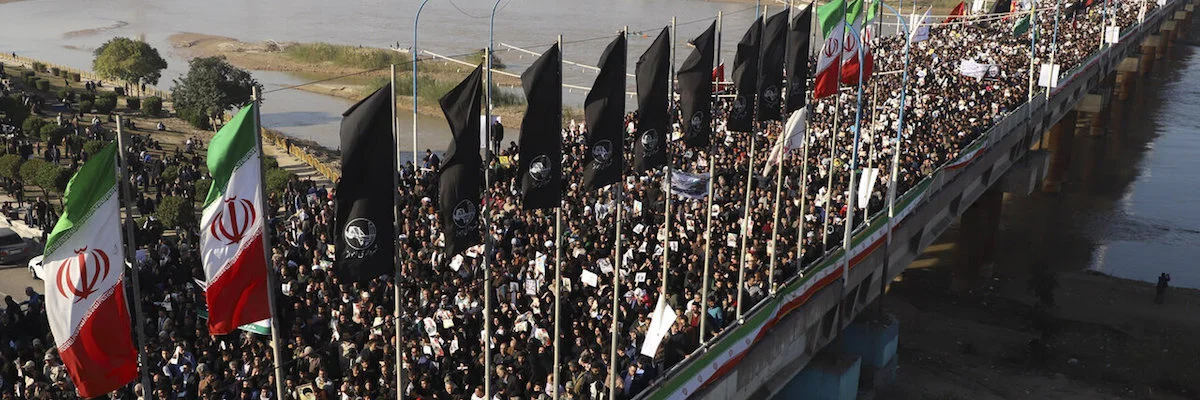
Mourners flooded the Iranian cities of Ahvaz and Mashhad Sunday, weeping and beating their chests in homage to top general Qassem Soleimani who was killed in a US strike in Baghdad.
"Death to America," they chanted as they packed Ahvaz's streets and a long bridge spanning a river in the southwestern city to receive the casket containing Soleimani's remains.
As Shiite chants resonated in the air, people held portraits of the man seen as a hero of the 1980-88 Iran-Iraq war and for spearheading Iran's Middle East operations as commander of the Revolutionary Guards' Quds Force.
In the northeastern city of Mashhad, scores took to streets around the Imam Reza shrine and, addressing the US, chanted "Be afraid of your own shadow".
Soleimani was killed in a US drone strike Friday near Baghdad airport, shocking the Islamic republic. He was 62.
The attack was ordered by President Donald Trump, who said the Quds commander had been planning an "imminent" attack on US diplomats and forces in Iraq.
In the face of growing Iraqi anger over the strike, the country's parliament was expected to vote Sunday on whether to oust the roughly 5,200 American troops in Iraq.
Soleimani's assassination ratcheted up tensions between arch-enemies Tehran and Washington and sparked fears of a new Middle East war.
Iran's supreme leader Ayatollah Ali Khamenei vowed "severe revenge" and declared three days of mourning.
But Trump warned late Saturday that America was targeting 52 sites "important to Iran & Iranian culture" and would hit them "very fast and very hard" if the country attacks American personnel or assets.
In a series of saber-rattling tweets, Trump said the choice of 52 targets represented the number of Americans held hostage at the US embassy in Tehran for more than a year starting in late 1979.
'Terrorist in a Suit'
Iran's top diplomat Mohammad Javad Zarif tweeted that "targeting cultural sites is a WAR CRIME".
For Iran's army chief, Trump's threat was an attempt to distract the world from Soleimani's "unjustifiable" assassination.
"I doubt they have the courage to initiate" a conflict, said Major General Abdolrahim Mousavi.
Iran's communications minister, Mohammad Javad Jahromi, branded Trump a "terrorist in a suit" and said in a tweet that he is "like ISIS, like Hitler, like Genghis (Khan)! They all hate cultures".
US-Iran tensions escalated in 2018 when Trump unilaterally withdrew from a landmark accord that gave Tehran relief from sanctions in return for curbs on its nuclear programme.
A year on, Iran began hitting back by reducing its nuclear commitments with a series of steps every 60 days, the most recent deadline passing on Saturday.
Its foreign ministry spokesman, Abbas Mousavi, said Tehran would finalise the fifth step in a meeting on Sunday night, noting the nature of its move was altered by Soleimani's killing.
On Sunday, thousands of mourners dressed in black gathered in Ahvaz.
Crowds massed in Mollavi Square with flags in green, white and red—depicting the blood of "martyrs".
"A glorious crowd is at the ceremony," said state television.
In Tehran, deputies chanted "Death to America" for a few minutes during a regular session of parliament.
"Trump, this is the voice of the Iranian nation, listen," said speaker Ali Larijani.
Soleimani's remains and those of five other Iranians—all Guards members—killed in the US drone strike had arrived at Ahvaz airport before dawn, semi-official news agency ISNA said.
With them were the remains of Abu Mahdi al-Muhandis, the deputy commander of Iraq's powerful Hashed al-Shaabi paramilitary umbrella group, who was also killed in the US strike.
Soleimani's remains arrived in Mashhad in the afternoon and are due to be flown to Tehran for more tributes on Sunday evening.
On Monday, Khamenei is expected to pray over Soleimani's remains at Tehran University before a procession to Azadi Square.
His remains are then due to be taken to the holy city of Qom for a ceremony at Masumeh shrine, ahead of a funeral Tuesday in his hometown Kerman.
Cyber Attack
In neighbouring Iraq, pro-Iran factions ramped up pressure on US installations with missiles and warnings to Iraq's troops late Saturday.
In the first hints of a possible retaliatory response, two mortar rounds struck Saturday near the US embassy in Baghdad, security sources said.
Almost simultaneously, two rockets slammed into the Al-Balad airbase where American troops are deployed.
Iraq said there were no casualties. The US military also said no coalition troops were hurt.
Photo: IRNA
Pompeo: Europe Not 'Helpful' as Could be over Soleimani Killing
◢ US Secretary of State Mike Pompeo said Friday that Washington's European allies had not been "as helpful" as he hoped over the US killing of Iranian military commander Qassem Soleimani in Iraq. Following the assassination, EU foreign affairs chief Josep Borrell called on all involved actors "to exercise maximum restraint and show responsibility in this crucial moment."
US Secretary of State Mike Pompeo said Friday that Washington's European allies had not been "as helpful" as he hoped over the US killing of Iranian military commander Qassem Soleimani in Iraq.
Pompeo called officials worldwide to discuss the attack, which was praised by US President Donald Trump's Republicans and close ally Israel, but elsewhere met with sharp warnings it could inflame regional tensions.
"I spent the last day and a half, two days, talking to partners in the region, sharing with them what we were doing, why we were doing it, seeking their assistance. They've all been fantastic," Pompeo said in an interview with Fox News.
"And then talking to our partners in other places that haven't been quite as good. Frankly, the Europeans haven't been as helpful as I wish that they could be," he said.
US officials said Soleimani, who had been blacklisted by the US, was killed when a drone hit his vehicle near Baghdad's international airport.
Following the assassination, EU foreign affairs chief Josep Borrell called on all involved actors "to exercise maximum restraint and show responsibility in this crucial moment."
Meanwhile French President Emmanuel Macron urged those involved to act with "restraint" while British Foreign Secretary Dominic Raab said de-escalation would be key.
"The Brits, the French, the Germans all need to understand that what we did, what the Americans did, saved lives in Europe as well," Pompeo said.
"This was a good thing for the entire world, and we are urging everyone in the world to get behind what the United States is trying to do to get the Islamic Republic of Iran to simply behave like a normal nation," he added.
Pompeo said earlier in the day that Soleimani was planning imminent action that threatened American citizens when he was killed in the strike.
Photo: IRNA
U.S. Official Central to Hawkish Iran Policies Departs NSC
◢ Richard Goldberg, the U.S. National Security Council official who clashed with other members of the administration over his push for a more hawkish stance toward Iran, is leaving the job after one year for personal reasons, a person familiar with the matter said.
By Nick Wadhams
Richard Goldberg, the U.S. National Security Council official who clashed with other members of the administration over his push for a more hawkish stance toward Iran, is leaving the job after one year for personal reasons, a person familiar with the matter said.
Goldberg’s departure comes just as tensions with Iran have soared following a U.S. strike in Baghdad that killed Qassem Soleimani, a key Iranian general the administration said was plotting “imminent and sinister attacks” against American diplomats and military personnel.
Former National Security Adviser John Bolton created Goldberg’s job—director for countering Iran’s weapons of mass destruction—explicitly for him. The goal was to counter what Bolton saw as a desire at the departments of State and Treasury to weaken the “maximum pressure” campaign against Iran.
Tension over that issue flared in March as the administration mulled whether to extend waivers allowing Iran to sell a limited amount of oil. The waivers were eventually ended in May.
That fight was only one of the administration’s internecine battles related to Iran and underscored the influence wielded by the Foundation for Defense of Democracies, the think tank where Goldberg previously worked, in pushing for a tougher line against Iran.
Goldberg will return to FDD, which continued to pay his salary during his time on the National Security Council.
Photo: IRNA
Top Iranian Commander Killed in U.S. Airstrike on Trump Orders
◢ A U.S. airstrike in Iraq ordered by President Donald Trump killed one of Iran’s most powerful generals, sending global markets tumbling on fears of a deepening conflict in the Middle East. Qassem Soleimani, who led proxy militias that extended Iran’s power across the region, was killed in a strike in Baghdad authorized by Trump.
By Jennifer Jacobs, Zaid Sabah and Nick Wadhams
A U.S. airstrike in Iraq ordered by President Donald Trump killed one of Iran’s most powerful generals, sending global markets tumbling on fears of a deepening conflict in the Middle East.
Qassem Soleimani, who led proxy militias that extended Iran’s power across the region, was killed in a strike in Baghdad authorized by Trump, the Defense Department said in a statement late Thursday night. Trump had no immediate comment, but tweeted the image of an American flag. Iran’s Supreme Leader threatened “severe retaliation.”
Oil futures in London and New York surged by more than 4%, gold extended gains, Treasuries advanced and stock futures slid, ending the bullish mood that had pushed the S&P 500 to a record high on Thursday.
“At the direction of the president, the U.S. military has taken decisive defensive action to protect U.S. personnel abroad by killing” Soleimani, the department said. “General Soleimani was actively developing plans to attack American diplomats and service members in Iraq and throughout the region.”
The death of Soleimani, who led the Revolutionary Guards’ Quds force, prompted oil to surge and U.S. stock futures to fall amid heightened fears that rising tensions between the U.S. and Iran may lead to an armed confrontation that could easily pull in other countries. The pressures, which have been building for months, have been complicated by widespread protests in Iraq and Iran.
Iran’s top leaders all condemned the attack and vowed to hit back. Supreme Leader Ayatollah Ali Khamenei vowed to avenge Soleimani’s killers, according to a statement. The state-run Tasnim news agency said the government declared three days of mourning.
“A severe retaliation awaits murderers who have the blood of Soleimani and that of other martyrs on their wicked hands from last night’s incident,” Khamenei said.
President Hassan Rouhani also said Iran “will take revenge,” while Foreign Minister Javad Zarif denounced the killing on Twitter as “an act of international terrorism” and said the U.S. “bears responsibility for all consequences of its rogue adventurism.”
“Nowhere will be safe for Americans from now on after Soleimani assassination,” Heshmatollah Falahatpisheh, a member of the Iranian parliament’s national security commission, was quoted as saying by ICANA, the legislative body’s official news service.
U.S. equity futures fell and Asian stocks reversed earlier gains as the news broke. Treasury futures climbed with the yen as investors sought safer haven assets. Futures on the S&P 500 dropped 0.8% as of 6:34 a.m. in London on Friday. Brent crude surged 2.9%.
Soleimani was hit in a U.S. drone strike near Baghdad International Airport, according to a U.S. official. Details remained unclear, but a person familiar with the developments said an Iraqi militia leader, Abu Mahdi al-Muhandis, was also killed.
The Iranian regime will be under “strong pressure” to strike back, said Paul Pillar, a former U.S. Central Intelligence Agency officer and a non-resident senior fellow at Georgetown University in Washington. “Many Iranians will regard this event the same way Americans would regard, say, the assassination of one of the best known and most admired U.S. military leaders. The potential for escalation has suddenly gone up.”
Iraqi forces enhanced security around the U.S. embassy in Baghdad after the airstrike, Iraq’s al-Sumaria news reported, citing a security official. Iran summoned the Swiss envoy in Tehran, who helps look after U.S. interests in the country, in response to the killing, according to foreign ministry spokesman Abbas Mousavi.
Soleimani, a veteran of the Iran-Iraq war, was a household name in Iran where he’s celebrated for helping to defeat Islamic State in Iraq and Syria and countering U.S. influence. He had been sanctioned by the U.S. since 2007 and last May Washington designated the Revolutionary Guards Corp in its entirety a foreign terrorist organization, the first time the label has been applied to an official state institution or a country’s security forces.
The assault in Baghdad marked the latest in a series of violent episodes that have strained already hostile relations between Iran and the U.S. that began last week when an American contractor was killed in a rocket attack on an Iraqi military base in Kirkuk. The death of the contractor led to a rare, direct American assault on an Iran-backed militia in Iraq. That, in turn, prompted an attack on the U.S. embassy in Baghdad.
Trump had tweeted a warning of dire consequences for Iranian aggression: “They will pay a very BIG PRICE! This is not a Warning, it is a Threat. Happy New Year!”
The killing of such a prominent member of the Iranian hierarchy was unexpected, and drew quick reactions from U.S. lawmakers and Democratic presidential candidates.
Congressional Reaction
Former Vice President Joe Biden, a Democratic presidential candidate, said in a statement that while “no American will mourn” Soleimani’s passing, Trump “just tossed a stick of dynamite into a tinderbox, and he owes the American people an explanation.” Senator Elizabeth Warren called the move “reckless,” while her colleague Bernie Sanders said it put the U.S. on a path to another endless war.
Republican Senator Marco Rubio of Florida said Iran was “entirely to blame for bringing about the dangerous moment now before us.” Lindsey Graham, a Republican senator from South Carolina, praised Trump’s move and said “the price of killing and injuring Americans has just gone up drastically.”
Outside the U.S. government and political arenas, the reaction also wavered between a sense of justification and apprehension over Soleimani’s killing.
‘Worst Nightmare’
Kamran Bokhari, founding director of the Center for Global Policy in Washington, warned that things “could get ugly.” Mark Dubowitz, the chief executive of the Washington-based Foundation for Defense of Democracies, said “the regime in Iran is now facing their worst nightmare: a U.S. president willing to escalate using all instruments of national power.”
Earlier Thursday, U.S. Defense Secretary Mark Esper told reporters at the Pentagon that the American military was moving from responding to Iranian-backed attacks to anticipating them.
“There are some indications out there that they may be planning additional attacks. That’s nothing new,” Esper said. “If that happens, then we will act and, by the way, if we get word of an attack of some kind of indication, we would take pre-emptive action as well to protect American forces, American lives. The game has changed.”
Photo: IRNA
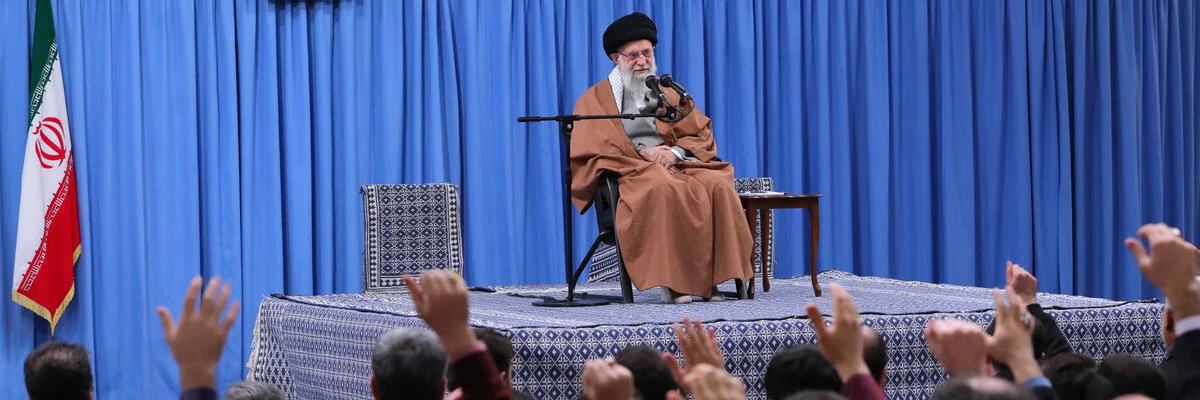
Khamenei Condemns US, Warns Iran Will Confront Threats
◢ Iran's supreme leader Wednesday strongly condemned deadly US strikes on Iraq and warned his country was ready to confront threats after US President Donald Trump issued one against the Islamic Republic. "I and the government and the nation of Iran strongly condemn this American crime," Ayatollah Ali Khamenei said in a speech broadcast on state television.
Iran's supreme leader Wednesday strongly condemned deadly US strikes on Iraq and warned his country was ready to confront threats after US President Donald Trump issued one against the Islamic Republic.
"I and the government and the nation of Iran strongly condemn this American crime," Ayatollah Ali Khamenei said in a speech broadcast on state television.
They were his first remarks since Sunday's deadly US strikes on the Hashed al-Shaabi paramilitary network in western Iraq.
The United States carried out the raids in retaliation for rocket fire that killed an American civilian contractor at a base in northern Iraq on Friday.
In a tweet on Tuesday, Trump accused Iran of "orchestrating" that day's storming of the US embassy in Baghdad by protesters angry at the American air strikes.
Trump said: "Iran will be held fully responsible for lives lost, or damage incurred, at any of our facilities. They will pay a very BIG PRICE! This is not a Warning, it is a Threat."
In response, Khamenei retweeted the post and said: "That guy has tweeted that we (the United States) see Iran responsible for the events in Baghdad and we will respond to Iran.
"First of all, you can't do a damn thing! This has nothing to do with Iran," the supreme leader in his televised address.
"Secondly, be logical... The people of this region hate America. Why don't Americans understand this?" he said.
"You Americans have committed crimes in Iraq, you have committed crimes in Afghanistan. You have killed people."
Khamenei said Iran was ready to respond to any threat.
"If the Islamic Republic decides to oppose or fight against a country, it will do this explicitly," he said.
"We are strongly committed to the interests of our country... We are strongly committed to the dignity of our nation. We are strongly committed to the progress and greatness of the nation of Iran.
"Should anyone threaten these, we will confront him without any hesitation and will strike our blow," Khamenei said.
"We will never... drag the country towards war. But if others want to impose anything on this country, we will stand against them with all our might."
US-Iran tensions have soared since Washington pulled out of a landmark nuclear agreement with Tehran in 2018 and reimposed crippling sanctions.
Photo: IRNA
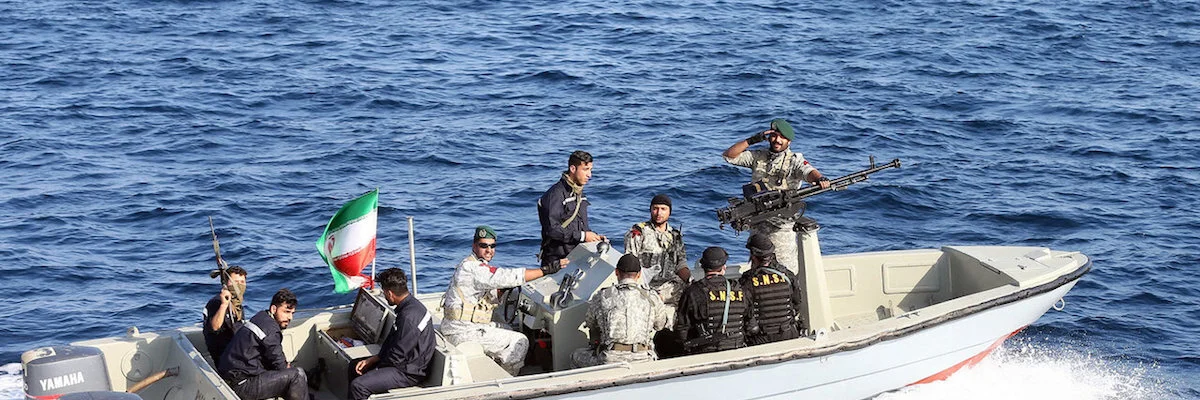
Iran Seizes Ship Smuggling Fuel, Arrests 16 Malaysians
◢ Iran' Revolutionary Guards have seized a ship suspected of fuel-smuggling and arrested 16 Malaysian crew members. The website of IRIB state television said the Guards confiscated 1.3 million liters of "smuggled fuel" from the unnamed vessel 15 nautical miles from Abu Musa island.
Iran' Revolutionary Guards have seized a ship suspected of fuel-smuggling and arrested 16 Malaysian crew members, state media reported on Monday.
The website of IRIB state television said the Guards confiscated 1.3 million litres of "smuggled fuel" from the unnamed vessel 15 nautical miles from Abu Musa island.
“The ship's 16 crew who are of Malaysian nationality were arrested," the Guards' naval commander for the region, Brigadier General Ali Ozmayi, was quoted as saying.
Abu Musa is one of three islands in the southern Gulf that are under Iranian control but claimed by the United Arab Emirates.
"This is the sixth ship smuggling fuel that (the Guards') navy has confiscated," added Ozmayi.
In September, Iran seized a boat and arrested 12 Filipino crewmen from a suspected fuel-smuggling ring in the Strait of Hormuz, state media reported.
The Islamic Revolutionary Guard Corps detained a "foreign tanker" in Gulf waters on July 14 for allegedly smuggling contraband fuel.
Iran also seized another ship on July 31 with seven foreign crew aboard over fuel smuggling, but it never revealed the vessel's identity or the nationality of its crew.
Tensions have been high in the Gulf this year, after the United States stepped up a stated campaign of "maximum pressure" on Iran following its withdrawal from a landmark nuclear deal in 2018.
The escalation saw ships mysteriously attacked, drones downed and oil tankers seized in the Strait of Hormuz—a chokepoint for a third of world's seaborne oil.
And on July 19 the Guards seized the British-flagged oil tanker Stena Impero for allegedly hitting a fishing boat and released it two months later.
Photo: IRNA
Russia Rejects Extending Iran Arms Embargo, Defying U.S.
◢ Russia, seeing prospects for multi-billion dollar deals, ruled out extending a United Nations-approved arms embargo on Iran that expires in October next year, despite U.S. warnings. “We’re not ready to do the bidding of our American colleagues,” Deputy Foreign Minister Sergei Ryabkov told reporters.
By Henry Meyer
Russia, seeing prospects for multi-billion dollar deals, ruled out extending a United Nations-approved arms embargo on Iran that expires in October next year, despite U.S. warnings that lifting the restrictions will jeopardize global security.
“We’re not ready to do the bidding of our American colleagues,” Deputy Foreign Minister Sergei Ryabkov told the Interfax news agency in an interview published Friday.
U.S. Secretary of State Michael Pompeo earlier this year warned that allowing renewed weapons sales to Iran will mean the country will be “unleashed to create new global turmoil.”
The removal of the UN arms embargo within five years was part of the 2015 nuclear deal with Iran, which the U.S. withdrew from last year. President Donald Trump’s administration has pursued a policy of “maximum pressure” on Iran in a bid to force the Islamic Republic back to the negotiating table. Russia, China and European powers have tried unsuccessfully to salvage the landmark accord curbing Iran’s nuclear activities, though formally it’s still in existence.
Ending the ban on military sales “is important for Russia as it will bring it closer to Iran and opens up the world’s last big untapped weapons markets,” said Ruslan Pukhov, head of the Center of Analysis of Strategies and Technologies, a defense-industry consultancy in Moscow. According to a recent report published by the think-tank, Iran could become a major customer for Russian hardware, including fighter jets, submarines and air-defense systems.
The arms embargo bars Iran from buying offensive weapons. Russia has sold its S-300 anti-aircraft system to Iran after ending a self-imposed moratorium that it put in place at Israel’s request.
Iran wants to purchase weapons “it has largely been unable to acquire for decades” when the embargo expires, an assessment released by the U.S. Defense Intelligence Agency said in November.
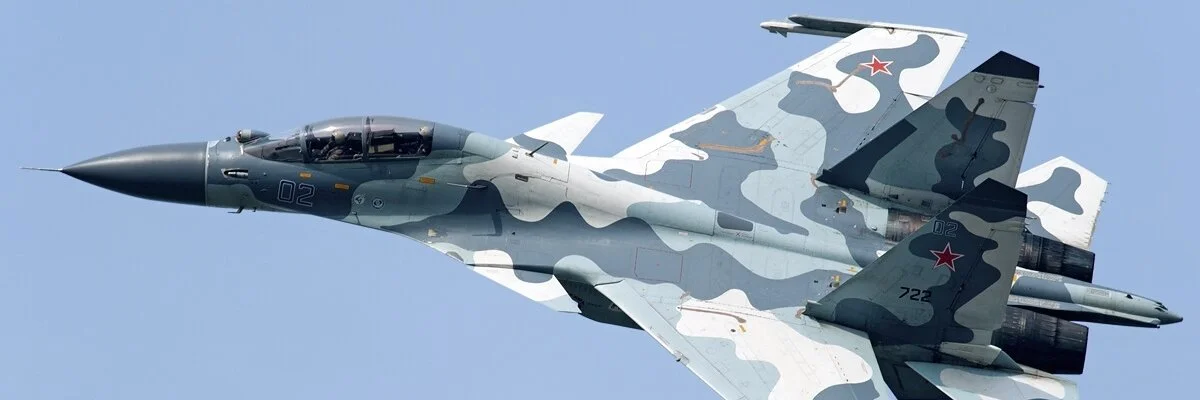
Iran is already targeting military supplies, primarily from Russia but also from China, the Pentagon report found. Iran’s potential acquisitions include Russian Su-30 fighters, Yak-130 trainers and T-90 tanks. Iran has also shown interest in buying the S-400 air-defense system and Bastion coastal defense system from Russia, it said.
Photo: Wikicommons
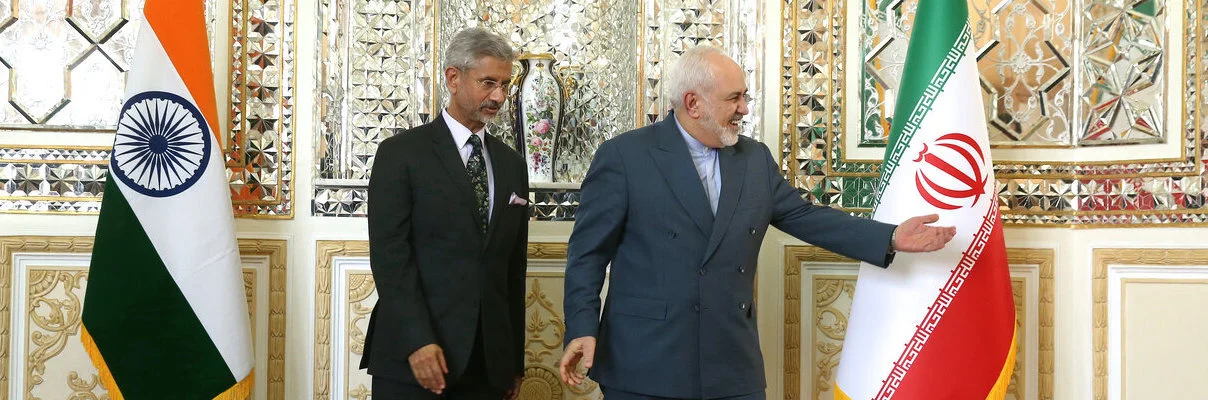
Iran and India Agree to Speed up Major Port Project
◢ Tehran and Delhi have agreed to accelerate the development of an important Iranian port, India's foreign minister said during a visit to the sanctions-hit Islamic republic on Monday. Chabahar port—being jointly developed by India, Iran and Afghanistan—is on the Indian Ocean about 100 kilometres (62 miles) west of the Pakistan border.
Tehran and Delhi have agreed to accelerate the development of an important Iranian port, India's foreign minister said during a visit to the sanctions-hit Islamic republic on Monday.
Chabahar port—being jointly developed by India, Iran and Afghanistan—is on the Indian Ocean about 100 kilometres (62 miles) west of the Pakistan border.
But development has stalled, despite waivers to sanctions that the United States began reimposing last year after withdrawing from a landmark 2015 nuclear deal with Iran.
"Just concluded a very productive #IndiaIran Joint Commission Meeting," Indian Foreign Minister Subrahmanyam Jaishankar tweeted.
"Reviewed the entire gamut of our cooperation. Agreed on accelerating our Chabahar project," he added as he wound up a two-day visit to the Iranian capital.
Washington withdrew from the nuclear accord and reimposed sanctions on Tehran as part of a campaign of "maximum pressure" aimed at reducing its arch-enemy's regional role and missile programme.
The rare exemptions from the sanctions are due mainly to the pivotal role of the port, and a planned railway line, in breaking landlocked Afghanistan's dependence on Pakistan for trade.
Iran's President Hassan Rouhani said Monday in a joint news conference with Jaishankar that the project would boost trade in the region.
"Completing the Chabahar-Zahedan railway and connecting it to Iran's national railway can elevate the position of Chabahar port, revolutionise regional commerce and help transport goods on a cheaper and shorter route," he said.
Rouhani said maintaining regional security was an important topic for Iran and India.
"In the current situation where America stands against nations with unilateral sanctions, we have to try to continue bilateral cooperation.
"This situation certainly will not last, and America will be forced to stop its maximum pressure against Iran sooner or later," he said, without elaborating.
India stopped buying Iranian oil after the US abolished waivers for some countries in May, in a move meant to wipe out the Islamic republic's main source of revenue.
Despite tensions in their relationship, Iran and India have sought to move forward and develop partnerships.
Photo: IRNA
China, Russia, Iran to Hold Joint Naval Drills
◢ China, Russia and Iran will hold joint naval drills starting Friday in the Gulf of Oman, Beijing and Tehran said. For Iran, the drill's purpose was to bolster "international commerce security in the region" and "fighting terrorism and piracy," said senior armed forces spokesman Brigadier General Aboldazl Shekarchi.
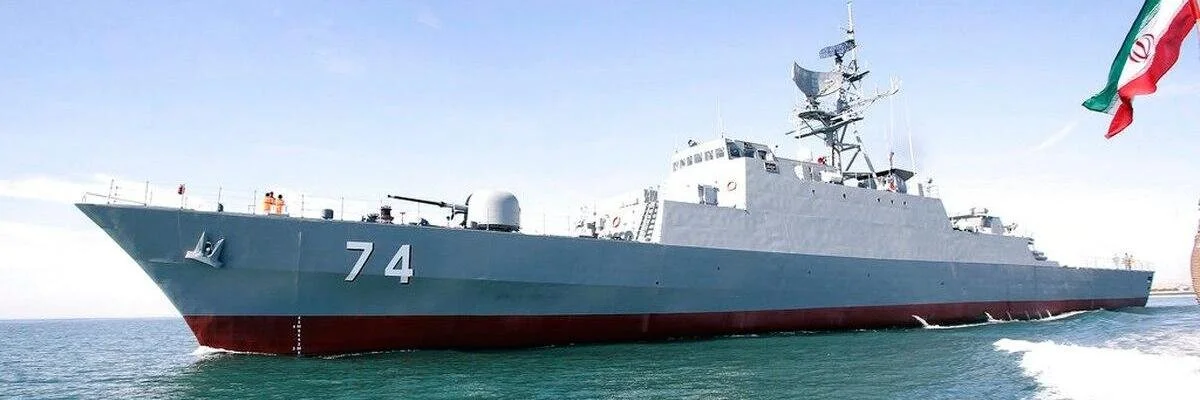
China, Russia and Iran will hold joint naval drills starting Friday in the Gulf of Oman, Beijing and Tehran said, at a time of heightened tensions since the US withdrew from a landmark nuclear deal with Tehran.
Set to take place from December 27 to 30, the military exercises aim to "deepen exchange and cooperation between the navies of the three countries", Chinese defence ministry spokesman Wu Qian told reporters Thursday.
Wu said the Chinese navy would deploy its Xining guided missile destroyer—nicknamed the "carrier killer" for its array of anti-ship and land attack cruise missiles—in the drills.
But he did not give details on how many personnel or ships would take part overall.
For Iran, the drill's purpose was to bolster "international commerce security in the region" and "fighting terrorism and piracy," said senior armed forces spokesman Brigadier General Aboldazl Shekarchi.
The exercise would "stabilise security" in the region and benefit the world, state news agency IRNA quoted him as saying on Wednesday.
The US reimposed crippling sanctions on Iran in May last year after withdrawing from the international deal aimed at tackling the Islamic Republic's nuclear program, prompting Tehran to hit back with countermeasures.
Remaining parties to the badly weakened 2015 deal include China, Russia, Britain, France and Germany.
China's foreign minister said the exercises were part of "normal military cooperation" between the three countries.
In June, US President Donald Trump authorized a military strike after Iran shot down a US drone, only to call off the retaliation at the last moment.
Photo: IRNA
Iran Poll Shows Majority Backs Right to Protest After Crackdown
◢ About three-quarters of Iranians surveyed in a government-backed poll said they supported the rights of protesters to take to the streets in last month’s countrywide demonstrations. The Iranian Students’ Polling Agency also found that 62% of respondents saw “dialogue with protesters” as the government’s best means of addressing popular discontent.
By Arsalan Shahla
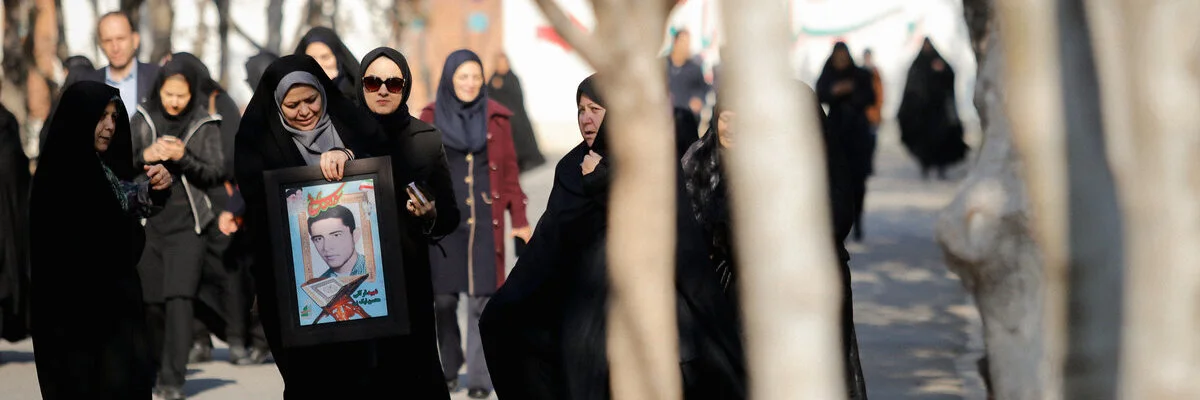
About three-quarters of Iranians surveyed in a government-backed poll said they supported the rights of protesters to take to the streets in last month’s countrywide demonstrations, a reformist newspaper reported.
The Iranian Students’ Polling Agency, which surveyed 2,027 people in the province of Tehran, also found that 62 percent of respondents saw “dialogue with protesters” as the government’s best means of addressing popular discontent, the daily Etemad newspaper said.
The expression of support, especially in a survey conducted by a state-backed polling organization, suggests that grievances still run deep in Iran. Triggered by a steep rise in gasoline prices, November’s protests met with a violent crackdown, becoming the bloodiest in Iran since the 1979 revolution.
The government so far hasn’t provided an official death toll for the unrest, but the London-based rights group Amnesty International estimates that some 304 people were killed by security forces.
The demonstrations spread to scores of cities and towns throughout the country and several of Tehran’s districts and its outskirts were swept up in the unrest.
Officials have consistently claimed that the majority of those who took part in demonstrations and clashed with police were “rioters” and “terrorists” acting on behalf of foreign governments. Hundreds of people remain in prison.
The most deadly violence took place in the oil-rich, Arab-speaking province of Khuzestan, which the ISPA survey doesn’t cover.
According to the survey, 71% of people said impartiality at Iran’s state broadcaster, which holds a monopoly over the country’s entire broadcasting services, was “low” or “very low” when it came to covering the protests. Some 90% of respondents said they used alternative news sources such as social media and satellite TV.
Photo: IRNA
Japan's Abe Discusses Iran, North Korea in Call with Trump
◢ Japanese Prime Minister Shinzo Abe on Saturday discussed events in Iran and North Korea with US President Donald Trump in a lengthy phone call, the Kyodo news agency reported. The phone conversation, which Abe told reporters took place at Trump's request, came on the same day that Iranian President Hassan Rouhani wrapped up his two-day visit to Japan.
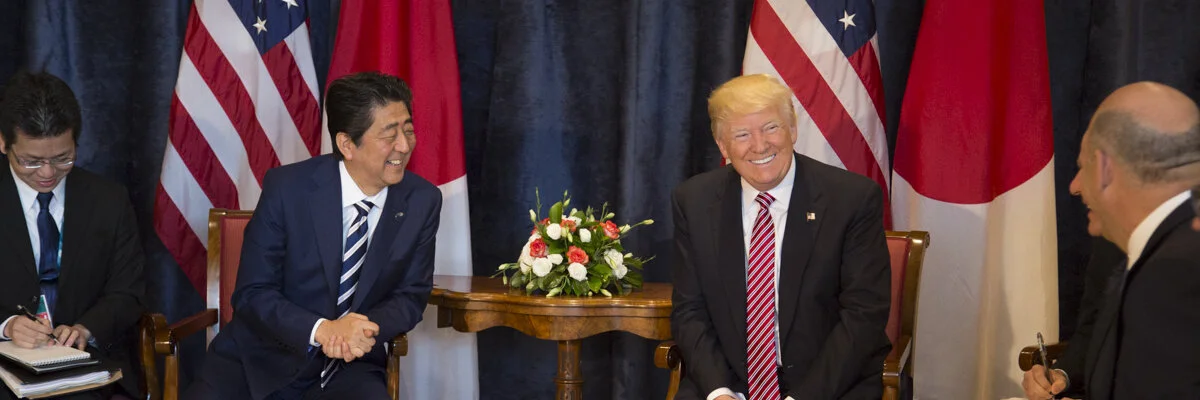
Japanese Prime Minister Shinzo Abe on Saturday discussed events in Iran and North Korea with US President Donald Trump in a lengthy phone call, the Kyodo news agency reported.
The phone conversation, which Abe told reporters took place at Trump's request, came on the same day that Iranian President Hassan Rouhani wrapped up his two-day visit to Japan.
Rouhani's trip came after deadly protests over fuel price hikes in Iran, where the economy has been hit by US sanctions over Tehran's nuclear programme.
Japan is a key US ally that also maintains close diplomatic and economic ties with Iran, and Abe has tried to build bridges between the two rivals.
Abe did not refer to Iran when he met with reporters just before midnight Saturday, but a Japanese government source told Kyodo that Abe did talk to Trump about his discussions with Rouhani.
The Abe-Trump phone call lasted about 75 minutes, according to Kyodo.
Abe told reporters that he and the US leader talked about what Kyodo described as a "coordinated response" towards North Korea.
Pyongyang has shown frustration at the lack of sanctions relief after three summits with Trump.
Earlier this month it promised a "Christmas gift" if the US did not come up with concessions by the end of the year after it placed a moratorium on long-range missile tests.
Photo: IRNA
Poles Help Stranded Iranian Lorry Driver
◢ An Iranian driver who was stranded after his lorry broke down in Poland received a helping hand from locals who launched a crowd-funding initiative for a new truck to take him home. By Friday morning, the appeal on the website zrzutka.pl had drawn more nearly USD 65,000 in donations for Fardin Kazemi.
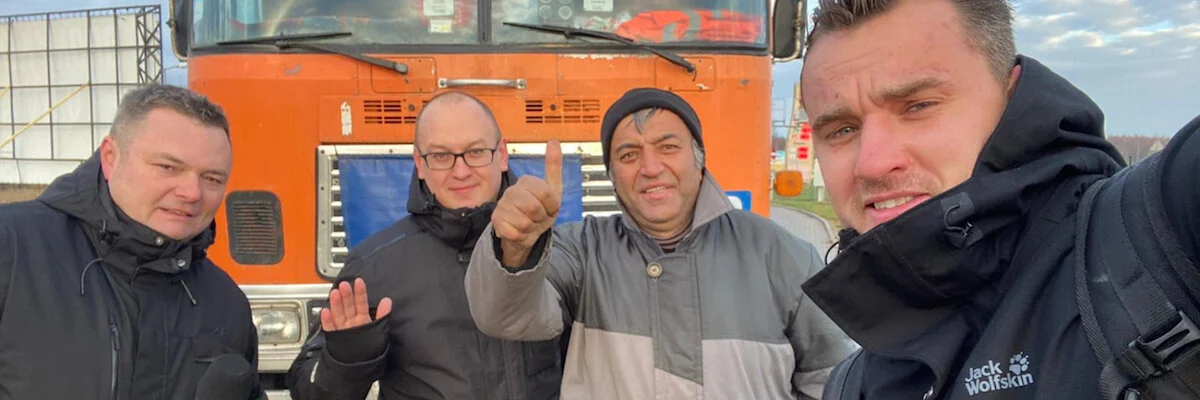
An Iranian driver who was stranded after his lorry broke down in Poland received a helping hand from locals who launched a crowd-funding initiative for a new truck to take him home.
By Friday morning, the appeal on the website zrzutka.pl had drawn more than 250,000 zlotys (59,000 euros, $65,000) in donations for Fardin Kazemi.
The self-employed driver was forced to sleep in his American International 9670 lorry after it broke down in early December near the southern city of Czestochowa after travelling 5,550 kilometres (3,450 miles).
Locals provided him with food and a roof over his head a few days after the vehicle broke down.
"I am very thankful to the great Polish nation for (their) hospitality," Kazemi said.
He was delivering raisins to Poland and was supposed to continue on to the Czech Republic to pick up goods to import to Iran, according to local media.
After his story hit the Internet, Polish lorry-drivers joined forces to help him repair the vehicle, and when that proved impossible, they decided to crowd-fund him a new one.
A replacement lorry was found on Thursday but its seller DAF Trucks—a Dutch manufacturing company which is a division of US firm Paccar—pulled out at the last minute for fear of being affected by US sanctions against Iran.
The organizers of the online appeal now hope to quickly find another vehicle for Kazemi, according to a video posted to Facebook.
Photo: Zrzutka
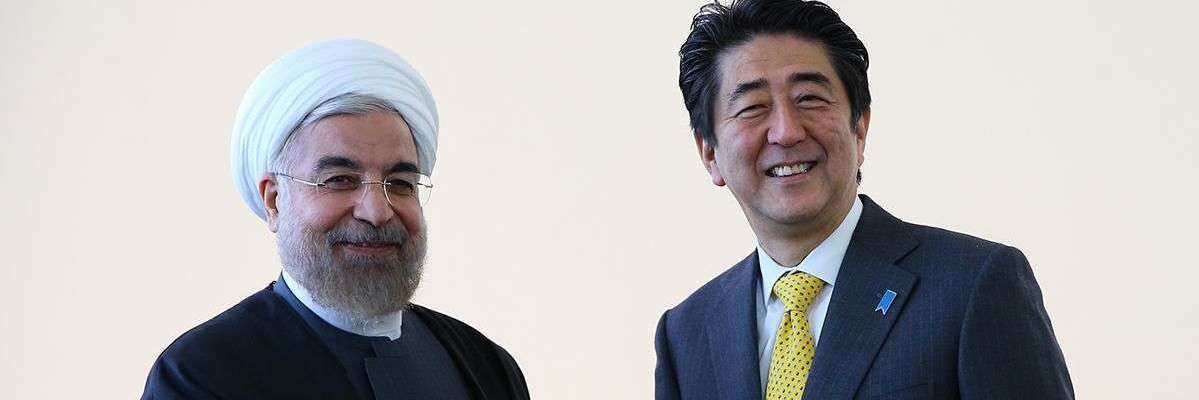
Iran's Rouhani, Japan PM Meet Amid Tension With US
◢ President Hassan Rouhani became the first Iranian head of state to visit Japan for two decades on Friday, as Tokyo seeks to mediate between Tehran and Washington amid spiraling nuclear tensions. The two men inspected a guard of honor at Abe's central Tokyo office before summit talks and a dinner scheduled to last into Friday evening.
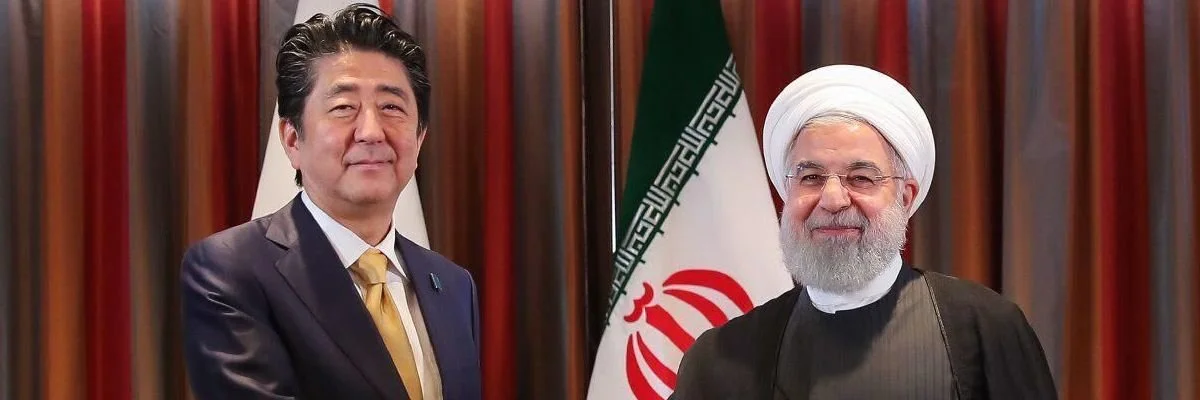
President Hassan Rouhani became the first Iranian head of state to visit Japan for two decades on Friday, as Tokyo seeks to mediate between Tehran and Washington amid spiraling nuclear tensions.
The two men inspected a guard of honor at Abe's central Tokyo office before summit talks and a dinner scheduled to last into Friday evening. They are not scheduled to brief reporters after the talks.
The trip comes after deadly protests last month over petroleum price hikes in Iran, as Washington-imposed sanctions over its nuclear program hit the Iranian economy.
The United States re-imposed crippling sanctions on Iran in 2018 after withdrawing from an international deal aimed at tackling the Islamic Republic's nuclear program.
Iranian government spokesman Ali Rabiei has played down the mediation aspect of the trip, saying the visit to Tokyo had "nothing to do with issues such as negotiations with America".
However, he acknowledged that "our Japanese friends usually convey messages or initiatives, which we welcome... and seriously examine.”
As a key US ally that also maintains close diplomatic and economic ties with Iran, Prime Minister Shinzo Abe has tried to build bridges between the two rival powers.
Last week, Abe said he would strive "as much as possible to ease tensions" in the Middle East, noting Japan's alliance with Washington and "favorable relations" with Tehran.
Abe travelled to Tehran in June to try to ease tension between the United States and Iran in the Gulf.
Japan was formerly a major buyer of Iranian crude but stopped purchases to comply with the US sanctions.
The prime minister is expected to explain to Rouhani Tokyo's plans to send two Self Defense Forces ships to the Gulf of Oman to protect shipping there.
"At the Japan-Iran summit today we will explain Japan's policy. This kind of policy is aimed at securing Japanese vessels' safety," said government spokesman Yoshihide Suga, adding that 90 percent of Japan's crude oil imports come from the region.
'Serious Impact'
Rouhani comes to Japan from Kuala Lumpur where he called on Muslim countries at a summit to band together to fight US "economic terrorism".
Osamu Miyata, head of Center for Contemporary Islamic Studies in Japan (CCISJ), told AFP that Abe would find it difficult to steer a path between US President Donald Trump and Rouhani.
The US sanctions "are having a serious impact on every aspect of Iran—people's daily life, the country's finances, and inflation in imported goods", Hitoshi Suzuki, a Middle East scholar at the Institute of Developing Economies (IDE-JETRO), told AFP.
"It would be difficult to have tangible achievements from the Rouhani-Abe meeting this time, but in the long-term, Japan can warn the US that the current sanctions are having a serious negative impact," added Suzuki.
"This could prompt Iranian domestic politics to move in the opposite direction hoped for by the US—for example, hawks leading Iran to resume nuclear development, or the emergence of an anti-democratic Iran," he said.
Photo: IRNA
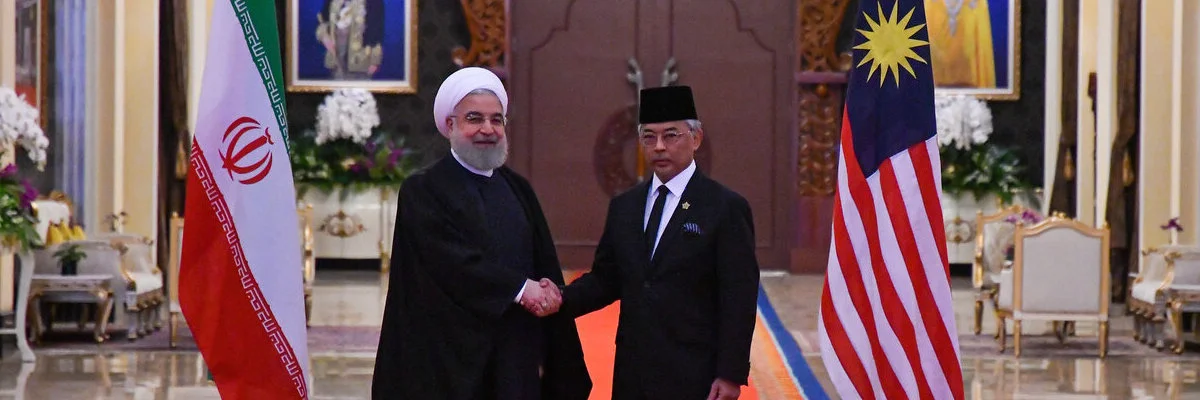
Iran Urges Muslim World to Fight Dollar 'Domination'
◢ The president of sanctions-hit Iran called Thursday for Muslim countries to cooperate in fighting US "economic terrorism" at the opening of a summit aimed at tackling the Islamic world's woes. The Muslim world needs to be saved "from the domination of the United States dollar, and the American financial regime", he added, calling for greater financial cooperation between Islamic countries.
By Sam Reeves
The president of sanctions-hit Iran called Thursday for Muslim countries to cooperate in fighting US "economic terrorism" at the opening of a summit aimed at tackling the Islamic world's woes.
Hundreds of delegates are attending the gathering in Malaysia—including heads of state and religious leaders—but the meeting has been snubbed by Saudi Arabia, home to Islam's holiest shrines.
The summit has also been criticized for undermining the Organisation of Islamic Conference (OIC), the Saudi-based global body representing Muslim nations and organizations.
Issues including the plight of Myanmar's Rohingya and China's mostly Muslim Uighur minority could be discussed, although, with massive Chinese infrastructure in many Islamic nations, criticism may be muted.
In opening remarks, Iran's President Hassan Rouhani slammed Washington's global clout.
"The American economic regime, and dollarization of national and global economies, have provided the United States with the possibility of advancing its hegemony under the threat of sanctions and economic terrorism," he said.
The Muslim world needs to be saved "from the domination of the United States dollar, and the American financial regime", he added, calling for greater financial cooperation between Islamic countries.
The United States re-imposed crippling sanctions on Iran in 2018 after withdrawing from an international deal aimed at tackling the Islamic Republic's nuclear program.
Iran's economy has since suffered a sharp economic downturn, with a plummeting currency sending inflation skyrocketing.
Speaking later alongside other leaders, Rouhani listed areas where Muslim nations could work together, from the banking sector to the tourism industries.
He proposed that Muslim countries' central banks could work together to introduce a unified cryptocurrency.
Muslim World 'in Crisis'
Turkish President Recep Tayyip Erdogan also suggested reducing dependence on the US dollar, calling on Muslim countries to "free bilateral trade from foreign exchange pressure".
"Instead of trade with foreign currencies, we would like to do foreign trade with our national currencies," he said.
"We are trying to develop alternative payment systems with countries like Russia and China and Brazil."
Turkey's lira plunged in value last year at a time of heightened tensions with the US, in one of the worst economic crises that Erdogan has faced in his long rule.
In his welcome address at the Kuala Lumpur event, Malaysian Prime Minister Mahathir Mohamad said that Muslim countries were "in a state of crisis, helpless and unworthy of this great religion which is meant to be good for mankind".
He also insisted summit organisers were "not discriminating (against) or isolating anyone" after the absence of Saudi Arabia triggered speculation the meeting was aimed at countering the kingdom's influence.
We have "invited almost all Muslim nations to participate in this summit, albeit at different levels", he said.
With Saudi rivals Iran, Qatar and Turkey in attendance, analysts had suggested the meeting could be aimed at forming a rival bloc to the OIC.
There were signs Riyadh was worried, with Pakistani Prime Minister Imran Khan withdrawing from the gathering—reportedly after Saudi pressure.
Mahathir dismissed such concerns in a phone call this week with Saudi Arabia's King Salman.
But the OIC, which has 57 members, launched a veiled attack Wednesday on the event, saying such gatherings would weaken Islam.
Photo: IRNA

UN Calls for Lifting Restrictions on Iran Diplomats
◢ The United Nations General Assembly on Wednesday called on the US—which hosts the organization's headquarters—to lift restrictions on Iranian diplomats. The UN resolution, proposed by Cyprus on behalf of Bulgaria, Canada, Costa Rica and Ivory Coast, was approved by consensus without being put to a vote.
The United Nations General Assembly on Wednesday called on the US—which hosts the organization's headquarters—to lift restrictions on Iranian diplomats.
The resolution also condemned the denial of visas to Russian diplomats.
Since the summer, Iranian diplomats and ministers have been under strict movement restrictions when they are in the US. They are limited largely to the area around the UN headquarters in New York, the Iranian mission and the ambassador's residence.
The UN resolution, proposed by Cyprus on behalf of Bulgaria, Canada, Costa Rica and Ivory Coast, was approved by consensus without being put to a vote.
Unlike those passed by the Security Council, General Assembly resolutions are not binding but do have political weight.
Without naming specific countries, the text was mainly aimed at the restrictions imposed on Iran, as well as the visa denials to Russia's delegation during last September's General Assembly, diplomats said.
The resolution said the UN "urges the host country to remove all remaining travel restrictions imposed by it on staff of certain missions and staff members of the Secretariat of certain nationalities."
The UN "takes seriously" the travel restrictions and arguments of the "two Missions" that say they are hindered in their functions, the text added.
Tensions between the US and Iran have risen since May last year when President Donald Trump abandoned a 2015 multinational deal with Iran aimed at curbing its nuclear program and began reimposing sanctions.
In September, while participating in the annual General Assembly, Iranian Foreign Minister Mohammad Javad Zarif complained he was unable to visit the country's UN ambassador in a US hospital.
The UN also "expresses serious concern regarding the non-issuance of entry visas to certain representatives of certain Member States," the resolution said, referring to 18 Russian diplomats who were denied US visas, also in September.
They were supposed to participate in various UN committees until December.
According to UN diplomats, during a lunch organized by the White House in early December for members of the UN Security Council, Russia's ambassador to the UN Vassily Nebenzia stressed to Trump that the denied visas were damaging to the United States' image as host country.
The US president said he was not aware of the issue and asked his team to look into the matter, the diplomats said.
The visa refusals have led to work delays for the concerned committees. The UN is considering the possibility of hosting sessions in the Geneva or Vienna headquarters in 2020 if the problem continues.
Photo: Wikicommons
Indonesian Man and Three Companies Breached Iran Sanctions, U.S. Says
◢ An Indonesian man and three businesses from that nation have been charged with plotting to send goods and technology to Iran in violation of American economic sanctions. Sunarko Kuntjoro, who remains at large in Indonesia, and the three companies face an eight-count indictment in Washington.
By Andrew Harris and Harry Suhartono
An Indonesian man and three businesses from that nation have been charged with plotting to send goods and technology to Iran in violation of American economic sanctions.
Sunarko Kuntjoro, who remains at large in Indonesia, and the three companies face an eight-count indictment in Washington, federal prosecutors said in a statement Tuesday. The three companies are PT MS Aero Support, PT Kandiyasa Energi Utama and PT Antasena Kreasi.
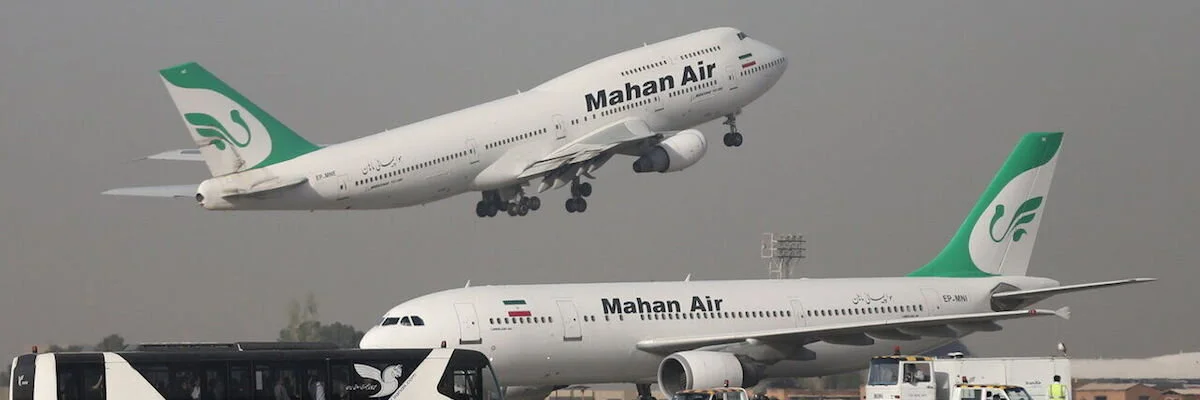
“The U.S.-origin goods were destined for an Iranian aviation business end user, Mahan Air, and the defendants conspired to make a financial profit for themselves and other conspirators, and to evade export regulations, prohibitions and licensing requirements,” the Justice Department said in a statement.
The airline was not charged. Kuntjoro, a former director at Indonesian flag carrier PT Garuda Indonesia, said he couldn’t comment and that he hadn’t been formally notified. Calls to Aero Support and Kandiyasa Energi went unanswered. Contact information for Antasena Kreasi wasn’t immediately available.
Kuntjoro, 68, who is identified as the majority owner of MS Aero Support, is accused of plotting with Mahan Air, one of its executives, and an American person and company to ship goods owned by Mahan Air to the U.S. for repair and re-export them to Iran. The American person and company weren’t named or charged.
The conspiracy ran from 2011 to 2018, prosecutors said.
Kuntjoro is also charged with money laundering and other crimes. Information on his attorney wasn’t immediately available.
Photo: IRNA
U.S. Seeks to Squeeze Shipping, Metals in Iran Sanctions Bid
◢ The Trump administration plans to strengthen enforcement of Iran sanctions now that it’s driven oil exports down to unprecedented lows, with a plan to increase pressure on global shippers, Chinese state-owned enterprises and exporters of raw materials used in metal production.
By Nick Wadhams
The Trump administration plans to strengthen enforcement of Iran sanctions now that it’s driven oil exports down to unprecedented lows, with a plan to increase pressure on global shippers, Chinese state-owned enterprises and exporters of raw materials used in metal production.
The initiatives, described by two U.S. officials familiar with the situation and confirmed by outside analysts aware of the administration’s plans, mark the next phase of President Donald Trump’s bid to squeeze Iran’s economy so hard that the government has no choice but to negotiate new limits on its nuclear and ballistic-missile programs.
Asked about the new moves, Brian Hook, the State Department’s Iran envoy, said in a statement Tuesday that the U.S. is now turning to “all remaining sources of export revenue, including from petrochemicals and metals that are subject to U.S. sanctions.”
At the center of the administration plan, which hasn’t been previously reported, will be guidance issued via the State and Treasury Departments warning ship insurers, banks, charter companies, port owners, crews and captains that they all face sanctions exposure if they can’t account for the legitimacy of the cargoes they carry.
Despite an array of U.S. sanctions since Trump withdrew from the Iran nuclear deal in 2018, Tehran has refused to buckle to American demands for a more comprehensive deal and has moved forward with efforts to enrich uranium. At the same time, President Hassan Rouhani has confronted street protests against price increases and corruption that has left his government cornered politically, potentially benefiting hard-liners even more opposed to Washington.
One element of the new U.S. effort will focus on the automatic identification system used by ships, according to the people. The administration will demand that insurers and ship owners pay closer attention to when ship transponders are turned on and off, and steer clear of doing business with vessels with questionable histories.
The enforcement effort amounts to a renewed bid to overhaul the often shadowy world of global shipping, in which the true owners of ships are easily disguised, vessels fly under the flags of countries that rarely punish them for wrongdoing and insurers and banks turn a blind eye to illicit behavior.
It also aims to close one of the most common means of avoiding sanctions: the ship-to-ship transfers at sea of crude oil, refined petroleum products and bulk goods.
“The U.S., in particular, has started monitoring what these tankers are up to much more carefully,” Hugh Griffiths, the former head of the United Nations panel overseeing sanctions on North Korea, said in an interview. “The main means by which sanctions are being evaded, to the tune of hundreds of millions of dollars in each incident, is through a ship-to-ship transfer in which the AIS is switched off.”
Many of the initiatives planned by the U.S. echo recommendations spelled out in Griffiths’s report from March that highlighted sanctions-busting by North Korea, chiefly through ship-to-ship transfers.
The administration sent a powerful signal to the shipping industry, as well as nations that help Iran evade restrictions, when it imposed sanctions against the Dalian units of China COSCO Shipping Corp. in September. That move led to increases in the cost of transporting oil globally.
One administration official said that should be taken as a signal that the U.S. is willing to target other Chinese state-owned enterprises, including those that operate or lease out terminals and pipelines.
The U.S. is telling ship owners to protect themselves during ship-to-ship transfers by taking photographs with their mobile phones of the crew of the other ship. That would help expose the identity of any potential sanctions violators with whom they unknowingly do business.
The administration is also telling players in the maritime sector that they should review guidance issued in connection with North Korea and assume it also applies to Iran.
“It’s been a huge wake-up call for the shipping industry, which has been scrambling and rates are still escalated,” said Elizabeth Rosenberg, a former Treasury official who’s now a senior fellow at the Center for a New American Security in Washington. At the same time, she said the U.S. has also sought to clarify to shippers that there are limits to the sanctions and they won’t be at risk if they avoid Iran-related business.
“The Treasury Department has gone to great lengths to explain the limitations of exposure,” Rosenberg said. “It serves the purposes of Iran hard-liners that this is vastly more aggressive, but that’s not entirely true.”
Another element of the plan is to target exporters of graphite electrodes and needle coke, two key components for steel-making, as Iran shifts its focus away from oil and toward metals in response to sanctions.
“The Iranians use evasive practices, and companies should be protecting their business and reputations through enhanced diligence,” Hook, the Iran envoy, said. “We have a very good idea of the entities and jurisdictions that are skirting our sanctions.”
Oil Cut
Hook displayed his penchant for unconventional approaches to enforcing sanctions earlier this year when he emailed the captain of an Iranian tanker carrying oil to Syria and offered him a multimillion-dollar reward to take the vessel to a port where it could be impounded by the U.S. The captain declined.
The Trump administration says sanctions have cut Iran’s oil exports by more than 2 million barrels a day and pushed oil revenue down by 80%. The new effort has the backing of Iran hawks in the U.S. who have long argued for more measures to limit Iranian revenue, regardless of the source.
“Petrochemicals are a major source of hard currency export revenue to Iran. Given that the oil shipments have dropped so radically, the U.S. is looking for non-oil export revenue,” said Mark Dubowitz, the chief executive of the Washington-based Foundation for Defense of Democracies. “While they’ve been putting sanctions on Iran, the real key is the enforcement piece.”
Dubowitz’s organization has proposed even further restrictions on how Iran spends its money as part of efforts to ensure that a future U.S. administration can’t undo measures imposed by Trump. The organization has submitted a memo to the State and Treasury Departments arguing that Iran should only be allowed to spend money currently sitting in overseas escrow accounts on humanitarian goods.
Photo: IRNA
Iran's Rouhani 'Finalizing' First Visit to Japan
◢ Iran's President Hassan Rouhani is finalizing with Japan a visit to Tokyo, officials in Tehran said Monday, in what will be the first such trip in two decades. The trip would likely take place around December 20, after Rouhani visits Malaysia for a Muslim leaders summit in Kuala Lumpur, Japanese and Iranian media reported.
Iran's President Hassan Rouhani is finalizing with Japan a visit to Tokyo, officials in Tehran said Monday, in what will be the first such trip in two decades.
The trip would likely take place around December 20, after Rouhani visits Malaysia for a Muslim leaders summit in Kuala Lumpur, Japanese and Iranian media reported.
"This trip (to Japan) is being finalized," Iranian foreign ministry spokesman Abbas Mousavi told a press conference in Tehran.
Iranian government spokesman Ali Rabiei said discussions would focus on "expanding economic relations" between the two countries.
"Mr Rouhani's trip to Japan has nothing to do with issues such as negotiations with America," Rabiei said.
"However, our Japanese friends usually convey messages or initiatives, which we welcome... and seriously examine," he added, stressing the bilateral focus of the visit.
Rouhani would be the first Iranian president to visit Japan since 2000.
He is expected to meet Prime Minister Shinzo Abe, who travelled to Tehran in June to try to ease tension between the United States and Iran in the Gulf.
"After Mr Abe's trip to Iran it was natural for the president of the Islamic Republic of Iran to have a trip to Japan," Mousavi said.
Talks between the two leaders would focus on "issues and developments in our region, the East Asia region," and the landmark 2015 Iran nuclear deal, Mousavi added.
On December 9, Abe said he was weighing inviting Rouhani for a state visit.
Noting Japan's alliance with the United States and Tokyo's "favorable relations" with Tehran, Abe said he would make efforts "as much as possible to help ease tensions" in the Middle East.
Japan was formerly a major buyer of Iranian crude but stopped purchases to comply with US sanctions imposed after the United States unilaterally quit the nuclear deal in May 2018.
Photo: IRNA
Trump Offensive Leaves Iran’s Hardliners Ascendant as Poll Nears
◢ Those who backed Iranian President Rouhani when Iran negotiated the 2015 nuclear deal with world powers, including the influential 62-year-old Larijani, stand fatally weakened as the accord crumbles under President Donald Trump’s economic offensive and Tehran’s tit-for-tat reprisals. With elections looming, the consequences for Iran and regional security are substantial.
By Golnar Motevalli and Arsalan Shahla
After a dozen years as speaker of Iran’s parliament, half of them allied with President Hassan Rouhani as he reached out to the West, Ali Larijani is bowing out.
It’s been a tumultuous reign, book-ended by devastating U.S. sanction regimes. But his decision not to contest February 21 national assembly elections is more than a hard-earned career change. Those who backed Rouhani when Iran negotiated the 2015 nuclear deal with world powers, including the influential 62-year-old Larijani, stand fatally weakened as the accord crumbles under President Donald Trump’s economic offensive and Tehran’s tit-for-tat reprisals.
The U.S. “maximum pressure” campaign weakened the position of Iran’s reformists, according to one of their number, Jalal Mirzaei.
“Things were going well,” Mirzaei said in Vienna this month as he attended an OPEC meeting. Then “Mr. Trump became president.”
As a result, more than six years after Iranians opted for change under Rouhani, arch-conservatives are ascendant, dominating the field of favored ballot candidates. The consequences for Iran and regional security are substantial.
On the Backfoot
“We’re in a situation where the more reasonable voices calling for a much more open Iran which was pro-diplomacy are fast losing ground to hardliners,” said Ellie Geranmayeh, deputy head of the Middle East and North Africa program at the European Council of Foreign Relations.
The Trump administration sought to weaken Iran, which he blamed for stirring regional strife and exporting extremism, in part by alienating Iranians from their leaders. His administration pointed to last month’s protests and a deadly security crackdown as evidence the sanctions strategy is working.
To further its aims, the U.S. might welcome power consolidated in the hands of ultra-conservatives, said Geranmayeh, if that undermines European resolve to maintain ties with Iran.
But for many observers, the electoral realignment’s more likely to extend the standoff. After all, encouraging Iran to accept greater curbs on its nuclear and missile programs for sanctions to be lifted becomes harder if the result is to sideline the people who might be willing to make the case for concessions.
While Iranian leaders have mostly remained united in opposing negotiations with the U.S. until it removes sanctions, two attempts by French President Emmanuel Macron to kickstart talks showed promise. The second foundered after a September attack on Saudi Arabian oil facilities, which Washington blamed on Iran, hardened positions.
‘Gravely Damaged’
“By undermining Rouhani’s most important achievement, Trump gravely damaged his presidency and popularity,” said Ali Vaez, senior analyst at the International Crisis Group. “What has been fatally damaged in the process is not just pro-engagement Iranian politicians, but the whole concept of engagement with the West.”
The 16,145 people registered to contest 290 seats in parliament represent the narrow spectrum of Iranian politics. But the most well-known number among Rouhani’s fiercest critics, supporters of an unflinching interpretation of Iran’s Islamic laws with careers defined by distrust of the U.S. and the wider West.
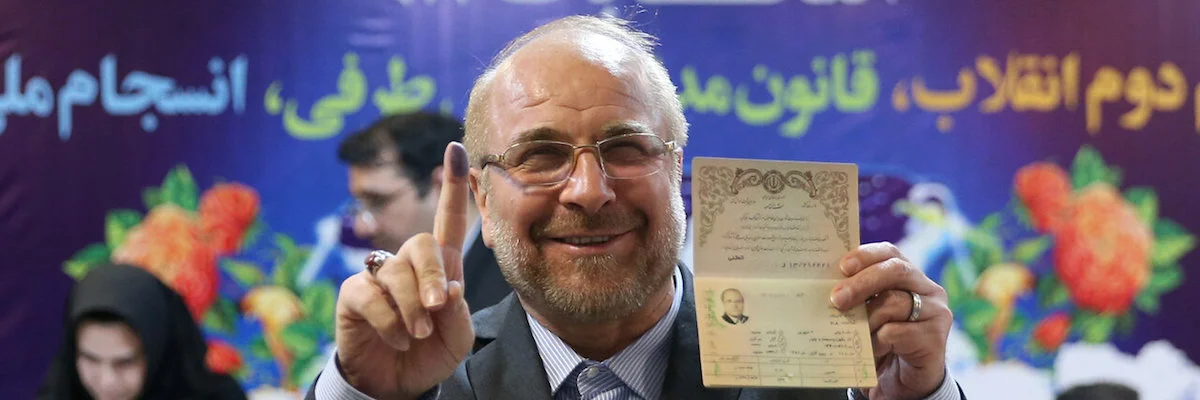
They include ex-mayor of Tehran and former military officer Mohammad-Bagher Qalibaf; Vahid Yaminpour, a TV personality; and legal scholar and cleric Hamid Rasaei.
The most notable reformists standing are Rouhani’s former top legal adviser Shahindokht Molaverdi, and the president’s son-in-law. The current record number of 14 women lawmakers is likely to drop.
Secretary of State Michael Pompeo on December 2 said the Trump administration’s reliance on sanctions to achieve goals in places like Iran and Venezuela had been “incredibly effective.” Tehran has fewer resources to conduct a regional “terror campaign,” he said.
Collision Course
Yet a lurch to the right in Iran risks emboldening the security services and their proxy forces in war zones such as Yemen and Syria, raising the chances of a confrontation, orchestrated or unplanned, with the U.S. just as its Gulf partners want to deescalate tensions.
And it could overwhelm the government with “monthly and even weekly interrogations of ministers and impeachment efforts,” said Geranmayeh. Targets will include Oil Minister Bijan Namdar Zanganeh, one of Rouhani’s most effective technocrats who has longstanding links to reformers, and whom hardliners in parliament are currently trying to impeach.
The government had lost support before Trump exited the nuclear deal last year, for failing to deliver the jobs and better pay the accord promised. Other Iranians, dismayed over no progress in delivering greater social freedoms, lost patience.
As a U.S. ban on critical oil exports tipped the economy into recession, the government’s popularity dived.
Low Turnout
The slump is expected to reduce turnout in February, boosting hardliners whose supporters traditionally vote under instruction from Supreme Leader Ayatollah Ali Khamenei.
Mohammadali Abtahi, a reformist cleric jailed during unrest that followed 2009’s disputed presidential election, told Shargh newspaper that “unpopular” conservatives would “emerge as victorious only if turnout is low.”
He’s not the only moderate to speak out. In a statement read by supporters, former President Mohammad Khatami, whose words can’t be reported in Iran due to a ban, told a December 12 Tehran rally that the only alternative to an Islamic Republic that honored its original founding principles was a dictatorship.
Others present called on Khamenei to overhaul an opaque council able to disqualify election candidates with little accountability, as well as to avoid using decrees—such as the one that triggered November’s violence—to bypass parliamentary oversight.
As for Larijani, Iran’s former top nuclear negotiator may be taking a step back to consider a bid for the presidency. But much of that would depend on the fate of the nuclear deal and whether Trump himself wins another term next year.
Seething Unrest
For now, as he nears the end of his tenure, Larijani still has the task of refereeing a majority-moderate parliament that’s using whatever time it has left to amend the gasoline policy.
In Tehran, where an acrid smog hung over commuters, first-time voter Amirali, 20, dismissed the system as corrupt.
“Somebody comes along with the promise of a better future and people fall for their words,” he said, asking not to be identified due to the sensitivity of speaking to foreign media.
The spark for the protests was a surprise decision to hike gasoline prices and introduce rationing. Demonstrations swept through the cities of Tabriz, Isfahan and Mashhad, and then spread to Tehran as the city was cloaked by a sudden snowfall.
Unverified mobile-phone footage showed clashes between protesters and security forces. Authorities imposed an unprecedented internet blackout and it’s still not clear how many people were killed: death tolls range from an initial 12 reported by officials—a number that hasn’t been updated—to an estimate of more than 200 by Amnesty International.
The violence underscored moderates’ perilous position with less than two years left of Rouhani’s second and last term.
“The most important thing that brings people out to vote is hope,” said Zanganeh, in what could turn out to be a grim prophesy. “And the thing that drives them away is hopelessness.”
Photo: IRNA