

High Stakes for Iran in Upcoming FATF Meeting
◢ A few days ahead of an international meeting in which Iran’s efforts to improve anti-money laundering and counter-terrorist financing (AML/CFT) standards will be reviewed, Ayatollah Ali Khamenei appeared to pour cold water on the reform process. Yet, it is premature to assume that Iran’s consultations with the Financial Action Task Force (FATF) are suddenly over after two years of close coordination. As the FATF’s plenary meeting approaches, the stakes are high for Iran, which is seeking another extension for implementation of its action plan.
A few days ahead of an international meeting in which Iran’s efforts to improve anti-money laundering and counter-terrorist financing (AML/CFT) standards will be reviewed, Ayatollah Ali Khamenei appeared to pour cold water on the reform process. Yet, it is premature to assume that Iran’s consultations with the Financial Action Task Force (FATF) are suddenly over after two years of close coordination. FATF, a financial crime watchdog that develops and monitors international AML/CFT standards, faces an important decision on Iran. The stakes are high for Iran, which is seeking to reintegrate into the global economy and there are reasons to believe that FATF’s decision may have repercussions that go far beyond its June 24-29 plenary in Paris.
Consequences of Iran's AML/CFT Deficiencies
If FATF believes that Iran is not adhering to its action plan to upgrade AML/CFT standards, the intergovernmental body could call on its 37 members to reimpose strict financial safeguards. These so-called "countermeasures" would discourage or even lead to the termination of relationships between Iranian and foreign banks, and possibly include Iran losing access to global bank messaging service SWIFT. Alternatively, FATF may decide Iran has made sufficient progress to warrant an extension to the two-year suspension of the countermeasures. Regardless, there are no indications that Iran will be removed from FATF’s black list of high-risk jurisdictions and financial institutions will continue to be urged to conduct enhanced due diligence (EDD) on Iranian-related business relationships and transactions.
This type of guidance places a significant risk management burden on global banks. Through customer due diligence, banks collect information to identify and verify customers in order to comply with regulations and report suspicious activity. EDD comprises several extra steps, such as probing sources of funds, scrutinizing financial statements, and conducting thorough investigations of relevant businesses or individuals. Because of the high level of scrutiny required for the Iranian market, most foreign banks did not return even after the international nuclear deal was implemented in 2016.
Foreign financial institutions, especially those with a US presence, are unlikely to change this calculation without an improvement to transparency and governance in the local banking sector. In particular, foreign banks are worried about unwittingly facilitating transactions with sanctioned entities. Due to ongoing fears of reputational and legal liabilities, Iran’s access to the international financial system is diminished by de-risking practices of global banks for the foreseeable future.
How Iran Stands to Benefit from Reform
Although the chance to be removed from FATF’s black list is a clear reason for Iran to complete the organization’s action plan, the long-term economic impact of reforms provides another vital incentive. Mismanagement, corruption, and fragmentation in the banking sector dampens economic potential. Iran’s bad debt, estimated to be in the tens of billions of dollars, fuels fears of an imminent banking crisis. Strengthening Iran’s banking sector to align with international standards, a priority highlighted by the IMF, would lay the foundation for a more stable economy and promote reintegration with the international financial system.
FATF-related reforms will not be a panacea for Iran’s economy. This year the currency lost over 20 percent of its value against the US dollar (and much more on the black market) between January and June, foreign companies are considering plans to wind down billion-dollar investments, and a drop in oil revenue looms because of the impending renewal of US secondary sanctions. Nevertheless, if reforms convince some foreign banks to stay even after US sanctions are re-imposed, it could offer a lifeline to an economy under tremendous pressure. Moreover, new rules that improve Iranian banks’ transparency are vital to address a major grievance from protests late last year: the need to root out financial sector corruption that enriches elites and undercuts economic opportunities for the working class.
Iran’s Progress To Date
Despite Iran’s recent decision to delay vital CFT legislation, the government is taking several steps to satisfy the terms of its action plan. The Rouhani administration regularly engages with FATF experts even though there is fierce internal opposition from many of the same political, religious, and military actors who opposed the nuclear deal. In February, FATF credited Iran for establishing a cash declaration regime. In June, a draft bill to amend the AML law was approved by parliament’s judiciary commission and legislators ratified Iran’s accession to an international convention on combating transnational crime. Similarly, Iranian officials are working to implement several technical AML rules that FATF cited in a statement following the organization’s February plenary. Although full implementation will not be realized within two years of beginning the reform process, Iran continues to work toward compliance with international standards across several areas.
The widest gulf between Iran’s commitments and FATF’s expectations remains on criminalizing terrorist financing. To fully comply with FATF standards, text would need to be changed in Iran’s legislation for amending the counter-terrorist financing law and acceding to a related international convention. Both bills contain CFT exemptions for certain types of militant groups, but there is no precedent for FATF accepting legislation with such conditions. Resolving these issues will not be easy, but the political will to be removed from FATF’s black list (if not eventually acceding to FATF) should prompt ongoing discussions.
It is in this context that Khamenei’s June 20 statements, intimating that parliament should abandon the FATF process, are important. Just like in the run up to the international nuclear deal, Khamenei’s maximalist comments are open to interpretation because they may be intended for several distinctive audiences. Domestically, Khamenei is trying to assuage fears from his traditional allies who believe the FATF process is a foreign ploy to weaken the IRGC and hamper Iran’s support for Hamas and Hezbollah. However, this sentiment must be balanced against palpable angst among Iranians that believe the troubled banking sector threatens their livelihoods. This could be why Khamenei mentioned that “some of the provisions of the international treaties may be good” before suggesting that Iran legislate on money laundering and terrorist financing issues independently.
From an international perspective, Khamenei is seeking to increase pressure on European countries to receive the most favorable economic terms possible after the US pulled out of the nuclear deal. Initially, Iran cited ongoing negotiations to salvage the nuclear deal as the primary reason for delaying by two months FATF-related legislation. Only three weeks ago, Khamenei indicated strong support for Iran’s newly established High Council for Economic Coordination. This council, which is composed of leaders from the country’s executive, legislative, and judiciary branches of government, is coordinating a unified response to US sanctions. That is why it should not be overlooked that their first decision was to speed up the process for implementing the FATF action plan. Khamenei may be fed up with the FATF process, but he also may be negotiating.
FATF and Trans-Atlantic Tensions
Leading up to FATF’s plenary session in February, there were indications that the US strongly supported reprimanding Pakistan for its failure to combat terrorist financing. Yet, the decision was delayed until at least the June meeting after three FATF members (China, Turkey, and Saudi Arabia) allegedly intervened on Pakistan’s behalf. The decision exposed a potential break from strong US influence within FATF. It was also a radical departure from the intergovernmental body’s typical decision-making process that relies on consensus rulings.
Coupled with rising trans-Atlantic tensions on foreign policy and trade issues, this calls into question whether the US will be able to build consensus should it seek to reimpose countermeasures against Iran. Furthermore, it is hard to imagine European governments supporting FATF action that further constrains their efforts to salvage the nuclear deal. Beyond European countries, there are several FATF members (China, India, Russia, Turkey) that will be even less inclined to support countermeasures that hurt the foreign investment strategies of their banks, state-run entities, and private companies.
It is possible that neither the US nor Iran will be satisfied with the FATF meeting’s outcome. Still, Iran’s FATF process offers clear benefits to both. For Iran, staying engaged provides much-needed support for a weakened banking sector and a path to reintegration with the global economy. For the US, it provides a global forum to keep pressure on Iran to do more to combat money laundering and terrorist financing.
From an international AML/CFT perspective, it also makes sense to keep Iran engaged in the FATF process. Certain Iranian actors, including some banks, grew quite adept at facilitating transactions to evade sanctions over the past several decades. With the return of stringent US sanctions, these vested local interests stand to benefit once again. Re-imposing countermeasures now will reduce vital coordination to protect the global financial system from new money laundering threats. There may come a time when FATF countermeasures are viewed as the only viable option to combat AML/CFT threats emanating from Iran. However, more time is needed to support Iranian efforts to bring about legislative and regulatory reforms. For now, this is the best way to fulfill FATF’s mission to counter threats to the integrity of the international financial system.
Photo Credit: Financial Services Commission
Over-Compliance on Iran Sanctions Can Lead to Discrimination
◢ Ireland’s Workplace Relations Commission has fined an unnamed bank EUR 20,000 for discrimination against an Iranian couple. The ruling points to a growing case precedent in Europe on acts of sanctions over-compliance which lead to discrimination of Iranian persons or individuals and businesses who maintain financial links to Iran.
Ireland’s Workplace Relations Commission has fined an unnamed bank EUR 20,000 for discrimination against an Iranian couple. As reported by the Irish Times:
WRC Adjudication Officer Marian Duffy found that the bank did discriminate against the two on the grounds of race. Ms. Duffy said that ‘alternative methods to counter money laundering/terrorist financing and US sanction breaches were open to the respondent… These include the implementation of robust IT systems and procedures, customer advice/guidance and information systems and/or a helpline as part of the process to monitor account activities.’
The comission found that the bank’s policy was neither appropriate nor necessary to achieve its stated aims and therefore was not objectively justified. The bank fundamentally was racially discriminatory in their actions. The bank had stated previously that it has no appetite for dealing with Iranian affiliated customers over risks of sanctions and as a result of maintaining a small presence in the US.
In another example of discrimination, S&P Global Platts had banned Iranian nationals from attending a conference it was holding in London over sanctions fears. The company reserved this ban rapidly following a report in the Financial Times which sparked outrage.
In both the case of the Irish bank and the S&P conference, we see an an overreaction to Iran sanctions, which will only be exacerbated by the US withdrawal from the Joint Comprehensive Plan of Action (JCPOA).
OFAC and the New Culture of Compliance
Compliance officers have a job to do. That job is not easy. Since the global financial crisis in 2008 a whole heap of new regulations have been introduced surrounding financial services on all fronts. Some industries, such as shipping, are plagued by fraud and corruption relating to banking and letters of credit. This leaves compliance officers with the fear of being held personally liable (as officers responsible for anti-money laundering often are) for even the slightest of mistakes. These mistakes can, of course, have serious personal ramifications.
The “take no chances” attitude now common among compliance officers looking to protect a banks from potential breaches and the resulting penalties, is only intensified when you add the factor of Iran.
On one hand banks see Iran as a nation with a large, successful patriotic diaspora who, regardless of what views they hold, have a deep connection to their country both sentimentally, physically, and often financially. Iran is a country with a huge consumer market and significant economic potential. But there is a catch—Iran is on the wrong side of the most powerful financial enforcement authority in the world; Office of Foreign Assets Control, known as OFAC.
For those who maintain connections to Iran—practitioners, businessmen, professionals and Iranians abroad alike—discrimination is unfortunately not uncommon. Bank accounts connected to Iranians or used for Iran related business have been regularly closed over the last ten years, including the accounts of students who rely fully on money sent by family in Iran.
The reason for these closures can be traced to OFAC, part of the US Department of Treasury. OFAC has issued fines ranging from hundreds of millions to billions of dollars against varying institutions—from RBS to Standard & Chartered, and even the Chinese telecommunications company ZTE. In fact, OFAC has generated so much income from sanctions penalties, that the UK decided to set up its own version, OFSI (Office of Financial Sanctions Implementation) in 2016.
From just a brief look at the scale of fines involved—USD 1.2 billion levied on ZTE alone—it is not hard to see why a compliance officer would not want to follow the law to the letter. But therein lies the paradox: which law?
Conflict of Laws and Regulation
We live in an ever-growing and increasingly interconnected financial market. United States is, and shall remain for this generation at least, the crown jewel at the heart of the global financial market. International companies make more money being present in the US market than in any other market, and this requires being on the “right side” of US laws. For this reason, many companies instinctively abide by US laws even in jurisdictions where these laws would seem not apply.
Since the implementation of the Joint Comprehensive Plan of Action (JCPOA) in 2015, the European Union has permitted its companies to invest in Iran by lifting most of the sanctions. But the United States had only removed secondary sanctions as part of the nuclear deal, not the primary sanctions which restrict “US persons” from trading with Iran. Following President Trump’s withdrawal from the JCPOA, and the announcement that secondary sanctions would be returning, many consider the deal to be doomed. But the remaining signatories remain in compliance with the agreement for now.
This has left compliance officers at many multinational companies somewhat confused. What laws ought they abide by, those of the EU or the US? On international trade, the answer is simple. If you have connections to the US or a desire the conduct business in the US market, it is best you comply with US regulations.
However, it is also important not to breach local laws in other jurisdictions in which you operate. There can be a contradistinction between abiding by sanctions and breaking the law. For example, a compliance officer may advise against doing business with Iran, but he/she cannot take a broad brush approach and punish Iranian customers by virtue of their race. While the “take no chances” approach to sanctions may make it attractive to comply with US regulations absolutely, without considering local laws, companies are playing with fire and leaving their organizations at risk of unlawful activity that could have serious consequences.
On matters relating to human affairs, it simply does not matter at all if a company has a US presence, discrimination can and should have very severe consequences. OFAC guidance is vague on a whole range of matters, including instances where there is a conflict between EU and US law. But case precedent is building in Europe against acts of over-compliance. Regulators and judges may not be as harsh now, as there may be some understanding of the confusion stemming from a fluid situation. But the courts will be far harsher later, once their position has been established.
It is therefore imperative, before any overreaction has been made by the US withdrawal from the JCPOA, that local legal advice is taken. Remember, we are not back in the former sanctions era of 2006-2015. The EU is not participating in sanctions against Iran.
Finally, those on the receiving end of such discrimination should take immediate legal advice. The more cases which are pursued, the greater the chance that justice will prevail in the end. As relayed in the word’s of Arcesilaus, “Where you find the laws most numerous, there you will find also the greatest injustice.”
Photo Credit: Surrey Court
New US Sanctions Target Operator of Iran's Presidential Aircraft
◢ The US Treasury Office of Foreign Asset Control on Thursday announced a new round of targeted sanctions designations, including sanctions on Dena Airways, the company which operates the Iran’s presidential aircraft used by Hassan Rouhani for official travel. The new sanctions follow the designation of Iran’s central bank governor, Valliollah Seif, and reflect a further targeting of the Rouhani administration.
The US Treasury on Thursday announced a new round of targeted sanctions designations, including sanctions on Dena Airways, the company which operates the Iran’s presidential aircraft used by Hassan Rouhani for official travel.
The new sanctions follow the designation of Iran’s central bank governor, Valliollah Seif, and reflect a further direct targeting of the Rouhani administration.
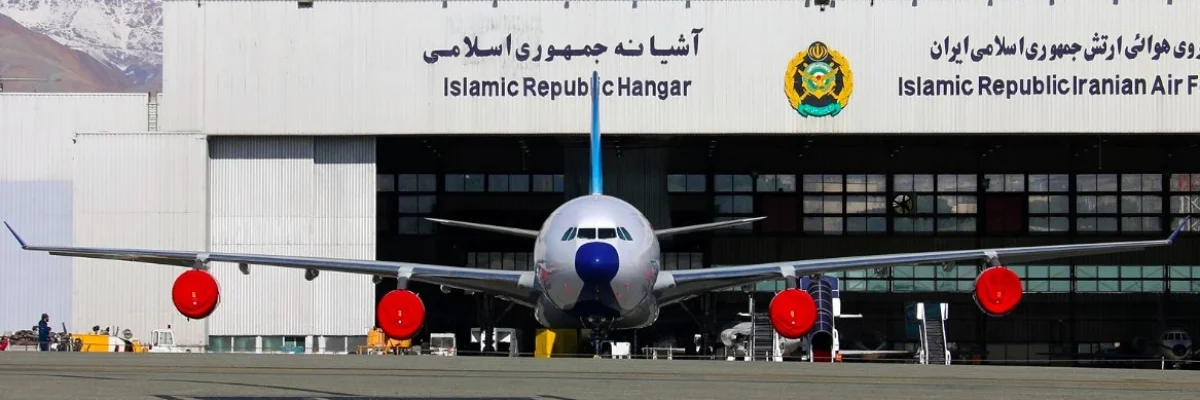
Dena Airways is the company which operates EP-DAA, an Airbus A340. Until November 2017, the aircraft was registered to Meraj Airways, an entity which was previously sanctioned as part of the Specially Designated Nationals list, known as the SDN list.
The new sanctions on Dena could prevent the use of the use of the company’s sole registered aircraft for official travel, as ground handling companies worldwide may refuse to refuel or service the aircraft. In February, a Meraj-registered aircraft used by Foreign Minister Javad Zarif to attend the Munich Security Conference needed to be refueled by the German military, after companies refused to provide services to the aircraft, citing US sanctions. That aircraft, EP-AGB, was notably left off the list of designations, despite another government liveried aircraft, EP-AJC being added to the SDN list.
The new designations also extend to thirty-one separate aircraft operated by airlines included Mahan, Caspian, and Pouya. These three entities were previously listed on the Office of Foreign Assets Control’s SDN list, and had been targeted due to reported ownership links to the IRGC and to the reported use of aircraft for military airlifts to Syria.
Mahan is Iran’s largest airline by fleet size and number of destinations. The specific targeting of Mahan’s aircraft will inhibit their continued use on commercial flights. For example, EP-MMB, an Airbus A340, flies regular routes to Istanbul, Ankara, Moscow, and Dubai.
Photo Credit: Planespotters

Increased Competition Squeezes Air France in Iran
◢ Air France recently announced the reduction of its flights from Paris to Tehran after first switching the service on the route to its subsidiary airline JOON. At a time of uncertainty surrounding the future of the Iran nuclear deal, the reduction of flights led to speculation that the move may have been influenced by the return of sanctions. But a look to the current competitive environment shows other significant changes to the market to which Air France was forced to react.
Air France recently announced the reduction of its flights from Paris to Tehran after first switching the service on the route to its subsidiary airline JOON. At a time of uncertainty surrounding the future of the Iran nuclear deal, the reduction of flights led to speculation that the move may have been influenced by the return of sanctions. But a look to the current competitive environment shows other significant changes to the market to which Air France was forced to react.
Starting in October 2018, Air France flights will only operate on the Paris-Tehran route during the summer season. A statement from the airline said: "After two years of operations and faced with a weak economic and commercial performance, Air France took the decision to adjust this route's flight schedule to be in line with demand."
The Iranian travel market has changed considerably from when Air France resumed its flights in April 2016, first operating flights three times a week with Airbus A340 aircraft and a seating capacity for 255 passengers. At the time, Air France was the only airline flying between Paris Charles de Gaulle Airport and Tehran and the only competition facing the French national carrier was Iran Air’s weekly flight out of Paris Orly Airport.
A few months later, Mahan Air began flights to Paris three times a week with its own A340 aircraft. Just recently, Iran Air moved its flights from Paris Orly to Paris Charles de Gaulle Airport, while also upgrading its aircraft to a brand new A330. In January, Mahan Air announced that it will increase its frequencies to Paris from three weekly flights to four for the summer 2018 season.
Looking to the new competition, travelers journeying between Paris and Tehran have more options than ever before. With Iran Air and Mahan Air flying to Paris with higher frequencies and lower prices, Air France has definitely felt the competitive pressure.
According to figures from the French government, 107,317 passengers travelled between Paris and Tehran on the relaunched service in 2016, a 178 percent increase from the previous year. The following year, the number of passengers further increased to 145,896, up 36 percent. Much of this growth can be attributed to Air France's connecting passengers, traveling from Paris to other destinations.
The impending return of sanctions is likely to reduce demand from tourists and business travelers on Paris-Tehran route, making the impact of Iran Air's capacity increases and the new Mahan flights more acutely felt. The recent increase in departure taxes and currency restrictions may affect outbound travel from Iran to foreign destinations including France.
Moreover, the expansion of Iranian airlines is also in doubt as European growth is dependent on the arrival of its new aircraft. Iran Air's deals with Airbus and Boeing are now in jeopardy after President Trump withdrew from the nuclear deal, canceling licenses for aircraft sales.
Nevertheless, Air France also faces more competition with European airlines than it did in 2016. British Airways and KLM resumed flights to Tehran in late 2016, while Austrian Airlines increased its presence in Iran with additional flights to Tehran, Isfahan, and Shiraz, focusing more on Iran’s tourism industry. Aegean Airlines and Ukrainian International Airlines are attracting more connecting passengers and have also increased their presence in Iran.
With more than two years for foreign airlines to observe the Iranian market since 2015, flight adjustments and schedule changes are quite normal to react to over estimations in demand. British Airways and Alitalia have adjusted their schedules with slight decreases in frequencies or capacities to better meet the demand as Iran Air has grown its presence in both London and Rome.
Air France has been flying to Iran since 1946 with few suspensions. Despite the recent adjustments, 2018 will certainly not be the last year of a full service between Paris and Tehran.
Photo Credit: Wikicommons
Global Academic, Cultural Leaders Declare ‘European Imperative’ to Save Iran Deal
◢ In a new open letter, over 150 global academic and cultural leaders have called upon the European Union to “discharge its international obligations” and ensure that “Iran and its people enjoy the full economic and political dividends” of the nuclear deal, despite President Trump’s unilateral withdrawal from the agreement earlier this month.
A new open letter calls upon the European Union to “discharge its international obligations” and ensure that “Iran and its people enjoy the full economic and political dividends” of the nuclear deal, despite President Trump’s unilateral withdrawal from the agreement earlier this month.
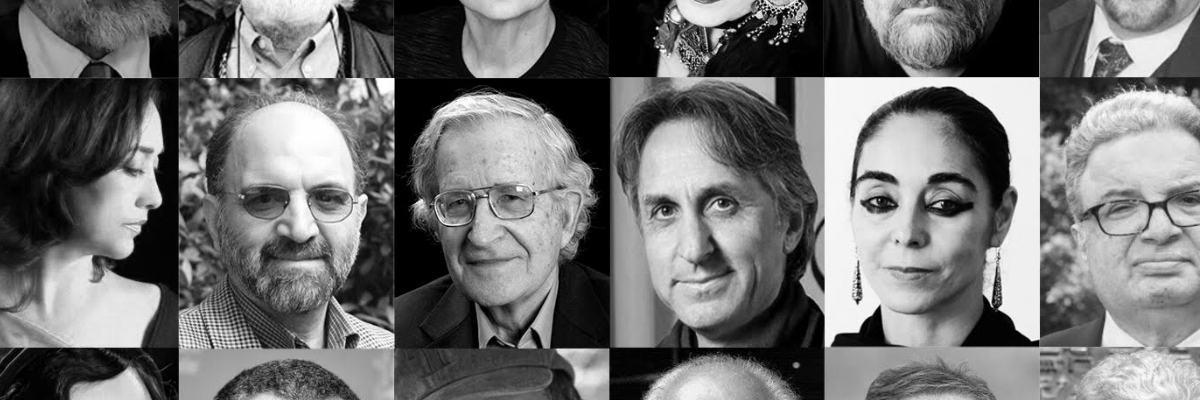
Over 150 figures have signed the letter so far, including some of the most prominent names in the humanities and social sciences, among them Judith Butler, Noam Chomsky, Peter Singer, Slavoj Žižek, Cornel West, and Talal Asad. Iranian scholars who have signed the letter include Hamid Dabashi and Ervand Abrahamian. Other signatories include Iranian actress Taraneh Alidoosti and artist Shirin Neshat.
The letter, hosted online and addressed to European Union High Representative Federica Mogherini, applauds the “‘universal language’ of respect and dialogue” she employed in her May 8 speech responding to Trump’s aborgation of the deal. Mogherini insisted that Europe was committed not to “let anyone dismantle this agreement.” Drawing on this sentiment, the letter declares that “failure is not an option” in this “age of extremes” as Europe seeks to protect the credibility of diplomacy and the durability of peace.
One of the creators of the open letter, Eskandar Sadeghi-Boroujerdi, is a postdoctoral research fellow at the University of Oxford. Sadeghi-Boroujerdi sought to unify the voices of people who “possess considerable intellectual and ethical weight and who can influence public opinion.” He sees the threat to a nuclear deal as “deeply concerning” foremost because the deal represented a “promise to the Iranian people” that risks being broken.
Notably, the body of the letter focuses on the “heartfelt support for this hard-won diplomatic accord” demonstrated by the majority of the Iranian people, as shown through “their two-time election of a president promising to initiate constructive dialogue with the world.” The betrayal of this popular support is to be most acutely felt as the Trump administration prepares to reimpose sanctions, “a form of economic warfare which inevitability impact the health, wealth and personal security of ordinary Iranians,” explains Sadeghi-Boroujerdi.
The open letter once again highlights the broad international support for the nuclear deal and follows a similar campaign from April in which saw 500 lawmakers from Germany, France and Britain sign an open letter imploring U.S. congressional leaders to support the JCPOA.
Photo Credit: Open Letter
Cañete to Discuss Vital Central Banking Solution on Iran Visit
◢ Europe’s Commissioner for Climate Action and Energy, Miguel Arias Cañete is set to travel to Tehran this weekend. Cañete’s visit will include discussions on possible new payment mechanisms designed to allow Europe to repatriate oil revenues to Iran’s central bank despite despite Trump’s withdrawal from the nuclear deal, offering a vital lifeline for the Iranian economy as sanctions begin to bite.
In a statement released Friday, European Commission president Jean-Claude Juncker declared that the Commission has a “duty… to do what we can to protect our European businesses, especially SMEs.”
As Europe steps-up its efforts to fulfill that duty, the commission took two concrete steps, launching the formal process to revive the blocking regulation that will prohibit EU companies from “complying with the extraterritorial effects of US sanctions.” The regulation also “allows companies to recover damages arising from such sanctions from the person causing them.”
The European Commission also launched the formal process to enable the European Investment Bank (EIB) to finance activities in Iran under an EU budget guarantee. Helga Schmid, Secretary General of the European External Action Service, first announced that EIB would be receiving such a mandate, at the Europe-Iran Forum, a business conference organized by Bourse & Bazaar, in October 2017.
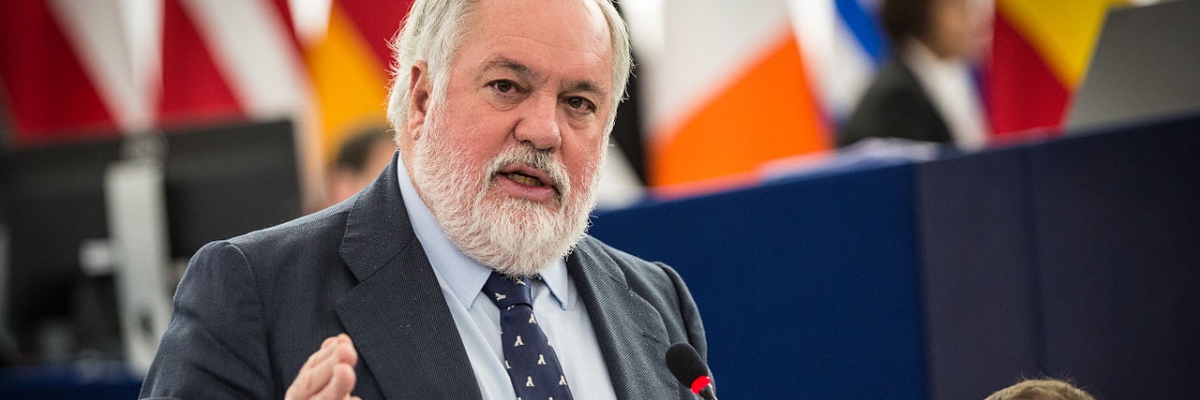
Friday’s statement further highlighted the pending visit of Europe’s Commissioner for Climate Action and Energy, Miguel Arias Cañete, to Tehran. The visit, which will take place over the weekend, is a continuation of a program of “sectoral cooperation” launched in 2016.
But the most significant announcement was the news that the European Commission is “encouraging member states to explore the possibility of one-off bank transfers to the Central Bank of Iran” in order to assist Iran in receiving “oil-related revenues, particularly in case of US sanctions which could target EU entities active in oil transactions with Iran.”
Experts have pointed to the creation of channels for such transfers as an important short-term measure. A report published earlier this month by International Crisis Group, suggests enabling “pertinent European central banks to process related payments” as a means of “empowering those in the Iranian leadership who advocate continued compliance with the deal.”
Speaking on background, an EU official confirmed that Cañete’s visit would include “discussions on how the mechanics of all of this would work.” European authorities have identified two priorities: “One is to work out how you can facilitate payment of Iran for imports of oil to the European Union. But, secondly and equally importantly, the repatriation of Iranian funds that are currently in the European Union.”
The emphasis on repatriation is especially important as Iran seeks a route to sustained economic growth despite the snapback of primary and secondary U.S. sanctions. Economists have identified that increased public investment could help Iran achieve growth in the absence of the foreign investment that had been expected to follow the lifting of sanctions in 2015. Typically, half of Iran’s oil revenues are earmarked for the government budget, and a just under a third of revenues are allocated to the National Development Fund.
During recent consultations, experts from the International Monetary Fund implored Iranian authorities “to explore the scope to use oil revenues to fund bank recapitalization, and noted the importance of replenishing the Oil Stabilization Fund to provide the budget a buffer.”
Seen in this context, oil revenues are a lifeline for the Iranian economy. As Iran’s economy begins to lose momentum in advance of full sanctions snapback, Iranian business leaders and consumers will be watching intently to see if Europe can keep oil flowing in and revenues flowing out.
Photo Credit: Wikicommons
They Want War With Iran, They’re Settling For Economic War
◢ On Tuesday, French officials convened a briefing for French business on possible responses to Trump’s reimposition of secondary sanctions. French Minister of Economy Bruno Le Maire reportedly cited the French parable that “money is the nerve of war” to describe what is at stake. He may be more correct than he realizes, as the Trump administration gears-up for an economic war on Iran.
This article was originally published on LobeLog.
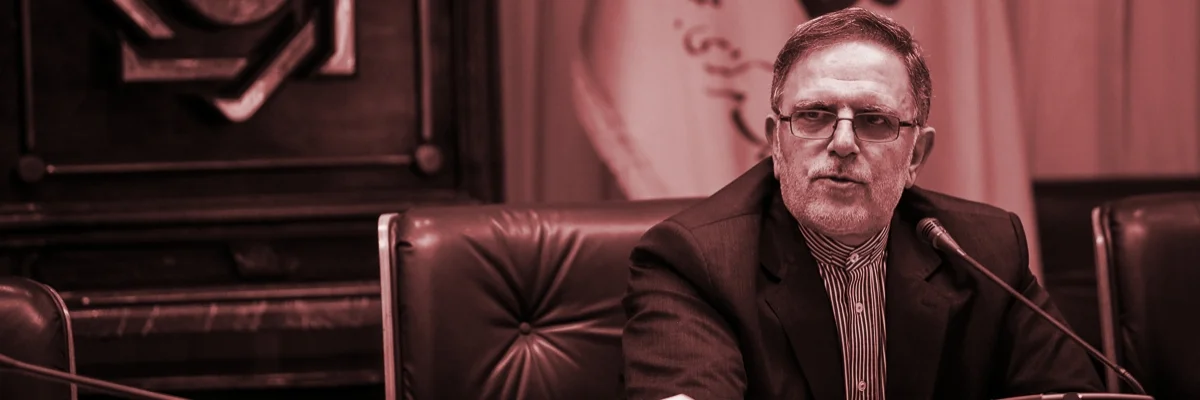
On Tuesday, the U.S. Treasury’s Office of Foreign Assets Control (OFAC) sanctioned Valiollah Seif, governor of the Central Bank of Iran (CBI) as a “Specially Designated Global Terrorist,” accusing him of moving “ millions of dollars on behalf of the Islamic Revolutionary Guard Corps-Qods Force (IRGC-QF) to Hezbollah.” OFAC’s move opened a new front in the Trump administration’s accelerating conflict with Iran. The designation of a single individual, even the central bank governor, may not seem that significant. After all, Trump announced last week that he would reimpose all primary and secondary sanctions lifted as part of the Joint Comprehensive Plan of Action (JCPOA) as part of withdrawing from the nuclear deal. But targeting Seif may prove to be the pivotal moment in an economic war.
Iranian financial institutions have long been designated for suspected terrorist financing, and the Obama administration used such measures to isolate Iran’s economy in the effort to bring Iran to the negotiating table over its nuclear program. But the move to target Seif as an individual represents a significant escalation for two reasons. First, it reflects the direct targeting of a member of the Hassan Rouhani administration in a clear role of civilian leadership. Seif is not a rogue actor. He is a public figure, who travels regularly to Europe to engage in technical dialogue. Just recently, he welcomed Swedish central bank governor Stefan Ingves to Tehran. Seif also travels to the United States when invited for meetings at the International Monetary Fund and World Bank.
Moreover, Iran’s central bank is at the heart of an expansive effort to reform the country’s anti-money laundering (AML) and counter-terrorist financing (CTF) standards. Iran’s parliamentary research center recently concluded in a comprehensive report that “a considerable portion of the problems in Iranian banks’ correspondent relations with global counterparts is rooted in non-sanction reasons” including poor AML/CTF standards. Seif has been a central figure in the effort to improve these standards. Politically speaking, OFAC’s action could not be more different from the routine targeting of Iran’s military brass.
Second, the move represents an escalation because of who was likely behind it. It had long been assumed that OFAC was relatively immune to the more irascible political impulses in Washington. The application of sanctions was informed first and foremost by the need for restraint. As noted by former Treasury Secretary Jack Lew in a 2016 speech, OFAC was expected to “guard against the impulse to reach for sanctions too lightly or in situations where they will have negligible impact.” Lew advised his colleagues to be “be conscious of the risk that overuse of sanctions could undermine [America’s] leadership position within the global economy, and the effectiveness of [American] sanctions themselves.”
The Strategy of Economic Warfare
Neither Trump nor his close advisors are averse to undermining America’s leadership position in the world. The decision to sanction Seif under a terror designation carries the hallmarks of the Foundation for Defense of Democracies (FDD). A 2016 policy brief by FDD’s Mark Dubowitz and Annie Fixler, written on the occasion of Seif’s visit to Washington for meetings at the IMF, identifies the central bank governor as “no stranger to illicit finance” and claims that CBI “stands out for its long rap sheet of financial crimes.” More recently, Richard Goldberg and Saeed Ghasseminejad argued that “the White House should re-impose sanctions on the Central Bank of Iran” in order to push Iran’s currency into a “freefall” and precipitate a deeper economic crisis. This later piece makes it especially clear that FDD is not interested in the application of sanctions to achieve economic coercion. It seeks economic destruction.
As a strategy to confront Iran, economic warfare has clear advantages for the White House. The strategy allows Trump to continue to claim to be a non-interventionist and does not require him to send American troops to die in another quagmire. Economic warfare also allows avowed interventionists such as National Security Advisor John Bolton to pursue their destructive ends without the disapprobation following their support of the Iraq War. By trying to force Iran to collapse from within, by goading the Iranian people to tear down their own state, and by portraying that process as a popular revolution, Bolton can achieve his messianic goal without the high risk of blowback that would certainly face this chaotic administration from a military conflict.
Acknowledging that the Trump administration is adopting a strategy of economic warfare towards Iran means recognizing that the long-held distinction between economic concerns and security concerns vis-a-vis Iran are collapsing. In recent months, European and Iranian officials have made an effort to clarify that the JCPOA is “not an economic deal” but “a very important deal in the field of the non-proliferation regime.” In this formulation, the economic component of the deal is only valuable insofar as it serves a security goal. But Trump’s move to reapply sanctions on Iran—despite the country’s compliance with its commitments under the deal and with the clear purpose of fomenting instability in Iran—transforms the effort to save the JCPOA into an effort to shield Iran from an unjust economic war.
Europe’s Response
Seeing the economic threat to Iran as a security threat should have a significant bearing on how Europe responds to Trump’s provocations. In its recent formulation of a diplomatic strategy to save the JCPOA, Europe is seeking to preserve the economic benefits of the nuclear deal to incentivize Iran’s continued commitment to its non-proliferation commitments. But in the aftermath of the U.S. snapback of sanctions, and the likely escalation of those sanctions beyond levels previously seen, the imperative must be to insulate Iran’s economy and the Iranian people. The U.S. is seeking to instigate instability by putting pressure on the Iranian people, who know all too well the pain of shortages in foodstuffs and medicines that sanctions portend.
Iran will likely be able to prevent internal instability, but doing so will entail securitizing larger parts of the economy and society as was the case during the Mahmoud Ahmadinejad administration. In such a scenario, the ascendency of the IRGC will risk regional conflict by exacerbating the security dilemma with Saudi Arabia and Israel. Europe must recognize that a strong Iranian economy is fundamental to both internal and regional security, especially in the face of sustained pressure from the United States.
On Tuesday, French officials convened a briefing for French business on possible responses to Trump’s reimposition of secondary sanctions. French Minister of Economy Bruno Le Maire reportedly cited the French parable that “money is the nerve of war” to describe what is at stake. Later that day, reports emerged that the foreign ministers’ meeting among the EU, France, Germany, the UK, and Iran focused on a “nine-point plan” devoted to “maintaining economic ties with Iran, continuing Iran’s ability to sell oil and gas products and protecting EU companies doing business in Iran.”
The limits of European independence in international relations and tradecraft have been exposed by the break with the United States over Iran. As described by Siemens CEO Joe Kaeser in a recent interview, the corporation’s decision to wind down operations in Iran is a reflection of the “primacy of [the American] political system. If that primacy says ‘this is what we’re going to do’, then that is exactly what we’re going to do.” As in the case of the primacy of American military might, Europe long relied on the primacy of U.S. sanctions enforcement, grafted as it were onto the primacy of the U.S. financial system, in order to lend power to the once cohesive foreign policy of the transatlantic partnership. Now, the primacy of the U.S. system is a liability for Europe and a threat to Iran.
Photo Credit: IRNA

Total CEO Pouyanné: Transatlantic Partners Risk Gifting Iran to 'China and Russia'
◢ Speaking on Thursday at the Center for Strategic and International Studies, a Washington D.C. think tank, Total CEO Patrick Pouyanné faced several questions about his company’s recently announced decision to wind down operations in Iran following the reapplication of secondary sanctions by the Trump administration. Pouyanné warned that the “Atlantic allies” risk giving “all the Middle East region to China and Russia.”
Speaking on Thursday at the Center for Strategic and International Studies, a Washington D.C. think tank, Total CEO Patrick Pouyanné faced several questions about his company’s recently announced decision to wind down operations in Iran following the reapplication of secondary sanctions by the Trump administration.
With his trademark candor, Pouyanné left no doubt that Total was obligated to comply with U.S. sanctions in regards to the USD 5 billion South Pars gas project launched in July 2017, stating “Secondary sanctions mean that the U.S. president can decide that Total cannot have access to any U.S. banks. I cannot run a company in 130 countries without access to U.S. banks.”
For Total, the South Pars project in Iran was only considered “because of the JCPOA, which meant the end of secondary sanctions.” With the nuclear deal in doubt, and sanctions set to return, “there is no possibility for us,” Pouyanné declared, further noting the role of American shareholders and the significant portfolio of American assets of the French oil company.
But the imposing, formerly rugby-playing executive, did not shut the door to Iran completely. Reiterating a point made in the company’s press release regarding South Pars, Pouyanné stated, “The only way we can proceed is with a project waiver from the U.S.”
Acknowledging a contractual obligation to the Iranians to seek all possible means to remain in the project, Pouyanné confirmed that Total was engaging “with the French government and the U.S. authorities” to raise the prospect of such a waiver, which will not be “easy to obtain.”
Looking to the wider political context, Pouyanné pointed to the early measures being taken by European governments, which may have a bearing on the effort to secure a waiver, reminding the audience that “in 1996-1997 when we made the first South Pars project, [Total] had such a waiver. It was the result of a diplomatic discussion between Europe and the U.S."
The prospects of a diplomatic discussion are dim and Pouyanné recognized that the disagreement over Iran policy is “a big test for the U.S.-Europe relationship" and one that is “beyond Total, as a commercial operation."
Nonetheless, Pouyanné issued a warning: “What would be not good neither for the U.S., nor for Europe, is if that at the end only Russia and China can do business in Iran.” Earlier on Thursday, Iranian authorities had announced that Total’s joint-venture partner in South Pars, Chinese state oil company CNPC, would be assuming Total’s share of the project. Pouyanné was also likely alluding to the presence of Russia state oil company Zarubezhneft, which has signed two major oil deals in Iran. He warned the “Atlantic allies” to consider whether they “want to give all the Middle East region to China and Russia, as this is what we are doing step after step.”
The geopolitical implication of blocking companies such as Total from working in Iran may form the basis of the companies lobbying to receive a waiver from the Trump administration.
Reflecting on what the pullout from the Iranian market meant, Pouyanné struck a philosophical tone, highlighting the importance of loyalty in the oil industry. Responding to a question about Total’s perseverance in Venezuela in an increasingly hostile environment, Pouyanné pointed to the case of Iran, noting “You have to stay as long as you can, because people remember... They remember the company when it stands together in difficult times.”
In the oil industry, he explained “leaving a country is a very tough decision, because it takes a lot of time to convince people that we can come back. It is a question of loyalty.”
Photo Credit: Wikicommons

Ambiguity in Trump Sanctions Could Put Humanitarian Trade with Iran at Risk
◢ In the years when Iran was under broad international sanctions, the country saw shortages in key foodstuffs and life-saving medicines. Despite attestations to the contrary, international sanctions hurt the Iranian people in cruel ways. As Iranians prepare for the return of U.S. sanctions, concerning ambiguity in OFAC’s new sanctions guidance may undermine the longstanding exemptions for humanitarian trade and the carve-outs for the Iranian banks which facilitate these sales.
In the years prior to the nuclear deal, when Iran was under broad international sanctions, the country saw shortages in key foodstuffs and life-saving medicines. Despite attestations to the contrary by proponents of the economic blockade, who spoke of its "targeted" nature, international sanctions hurt the Iranian people in cruel ways.
According to Iran's Food and Drug Administration, the list of medicines subject to shortages in Iran extended to 350 drugs in the sanctions period. Shortages were precipitated by a number of factors. Several multinational corporations downsized their operations or withdrew from the Iranian market. Interruptions in banking channels saw payments turn from the use of industry-standard letters of credit and deferred payment terms to cash-in-advance payments using exchange houses. Transaction and operational costs skyrocketed, with costs being passed on to the consumer, whose buying power was eroded by currency devaluation.
After the lifting of international sanctions as part of the Iran nuclear deal, the situation improved dramatically. Today, the number medicines subject to shortage has dropped to 65 drugs. Yet, it is important to realize that the shortages precipitated by sanctions would have been even worse had it not been for specific carve-outs for humanitarian trade established by the United States’ sanctions enforcement agency, the Office of Foreign Assets Control (OFAC), part of the Department of Treasury.
As per OFAC’s own guidance on the matter, “the U.S. maintains broad authorizations and exceptions that allow for the sale of food, medicine, and medical devices” to Iran by both U.S. and non-U.S. persons. During the sanctions period, the more committed multinational companies, often those with longstanding ties to the Iranian market, took advantage of these exemptions to maintain their sales to Iran. While a commercial incentive reigned supreme, the Iranian people benefited to the extent that the country was not under a total blockade.
Now, with U.S. sanctions poised to return, more suffering seems to be on the horizon. The Trump administration has announced that it will be reinstating all primary and secondary sanctions removed as part of the Joint Comprehensive Plan of Action (JCPOA). This total reapplication of sanctions, which is to take place despite Iran’s proven compliance with its commitments under the nuclear deal, has taken many by surprise given its extreme and unjustified breadth. But take a closer look at the mechanics of the so-called “snapback” and what the Trump administration is seeking to do could prove much more dangerous than anything Iran has been subjected to before.
There is exists an important caveat to OFAC’s exemptions for humanitarian transactions with Iran. These sales “do not trigger sanctions under U.S. law… so long as the transaction does not involve certain U.S.-designated persons (such as Iran’s Islamic Revolutionary Guard Corps or a designated Iranian bank) or proscribed conduct.” The emphasis on banks is what matters here.
Iran’s private sector banks play a vital role in facilitating humanitarian trade. The major multinational corporations selling and manufacturing agricultural commodities (eg. Cargill, Bunge), food (eg. Nestle, Danone), and medicines and medical devices (eg. Sanofi, Novartis, GE Healthcare) depend on these types of banks to access the financial services necessary for day-to-day operations in Iran.
Importantly, while Iran’s private sector banks were targeted as part of efforts to isolate Iran from the international financial system and were included on the SDN list, this was done under designations for which secondary sanctions did not apply.
Foreign companies and financial institutions were prohibited from transacting with Iranian financial institutions under the Iran Freedom and Counter-Proliferation Act (IFCA) in 2012 and Executive Order 13645 in 2013. However, there was a notable carve-out created for those "Iranian depository institution[s] whose property and interests in property are blocked solely pursuant to E.O. 13599." The Iranian financial institutions included in the E.O. 13599 list include the country's private sector banks. The unique status of the banks on this list partly reflects that these entities maintain higher compliance standards and clearer governance structures, lack exposure to government or IRGC shareholders, and have no known history of financial crime or terrorist financing.
The Trump administration has made clear that it intends to re-list all of the entities that had been removed from the SDN list as part of the JCPOA (these entities are listed in the attachments to Annex II of the nuclear deal). What remains unclear is whether Trump’s intended re-listing of these entities means returning them to their precise status prior to the nuclear deal. Legal experts and former government officials are coming to different interpretations of the relevant sanctions guidance. OFAC’s FAQs document issued following Trump’s announcement of the U.S. withdrawal from the JCPOA addresses precisely this question for entities on the E.O. 13599 list. The entry reads:
Will the persons that were placed on the List of Persons Identified as Blocked Solely Pursuant to Executive Order 13599 (E.O. 13599 List) on JCPOA Implementation Day (January 16, 2016) be put back on the SDN List?
The provided answer is concerning (emphasis added):
No later than November 5, 2018, OFAC expects to move persons identified as meeting the definition of the terms “Government of Iran” or “Iranian financial institution” from the List of Persons Blocked Solely Pursuant to E.O. 13599 (the “E.O. 13599 List”) to the SDN List. OFAC will not add these persons to the SDN List on May 8, 2018, to allow for the orderly wind down by non-U.S., non-Iranian persons of activities that had been undertaken prior to May 8, 2018, consistent with the U.S. sanctions relief provided for under the JCPOA involving persons on the E.O. 13599 List. The Government of Iran and Iranian financial institutions remain persons whose property and interests in property are blocked pursuant to E.O. 13599 and section 560.211 of the ITSR, and U.S. persons continue to be broadly prohibited from engaging in transactions or dealing with the Government of Iran and Iranian financial institutions. Beginning on November 5, 2018, activities with most persons moved from the E.O. 13599 List to the SDN List will be subject to secondary sanctions. Such persons will have a notation of “Additional Sanctions Information – Subject to Secondary Sanctions” in their SDN List entry.
The guidance indicates that the entities moved from the E.O. 13599 list to the SDN list “will be subject to secondary sanctions." In practical terms, the guidance can be interpreted to mean that all of Iran’s private sector banks will be listed with a designation more restrictive than was the case prior to the nuclear deal. In this scenario, after November 5, 2018, any company that transacts with Iran’s private sector banks will be exposed to U.S. secondary sanctions.
Several sanctions experts, speaking on background given the sensitivity of the subject, pointed to this concerning lack of clarity. In the assessment of an attorney specializing in U.S. sanctions, "It is not clear whether the mere placement of persons identified on the E.O. 13599 List back on the SDN List will subject private Iranian banks—not otherwise designated pursuant to an authority other than E.O. 13599—to secondary sanctions. If it returns to the pre-JCPOA sanctions, then it will revert to the rules established by IFCA and E.O. 13645." But if the new guidelines do reflect an intention to make secondary sanctions for Iranian banks that were previously exempt, "OFAC has the discretion to do so," the attorney noted.
This reading was echoed by a former U.S. government official: "One could read [the FAQs] to suggest the pre-JCPOA identifications, which is what E.O. 13599 was created to address, are all becoming SDNs. This would be a significant escalation. Most of the private banks on E.O. 13599 were never subject to secondary sanctions because we never had evidence of bad behavior."
If this interpretation holds, the typical exemptions for humanitarian trade will no longer apply for the multinational companies bringing vital foodstuffs and medicines to Iran. This is because the private sector banks that they have customarily used to facilitate this trade will be considered “a designated Iranian bank" exposing their counter-parties or clients to secondary sanctions. Re-listing Iran’s private sector banks in this manner would prove devastating to humanitarian trade.
Several major international law firms are advising clients that the re-listing will not exceed the restrictions of the pre-deal designations. In this assessment, the transactions that were not sanctionable pre-JCPOA should not be sanctionable on November 5. The problem is that such a fundamental question, with a direct bearing on humanitarian trade, should not be a matter for interpretation. OFAC has historically offered clear and reliable guidance is these fundamental areas.
It remains possible that OFAC has simply made a mistake in leaving things ambiguous regarding E.O. 13599 entities. In the assessment of many sanctions attorneys, the FAQs released on May 8 are sloppy and incomplete—perhaps an indication of the last-minute nature of their preparation as President Trump announced his decision on the nuclear deal earlier than expected. If this is just an error in the guidance, OFAC must immediately update its FAQs and provide clarity on the matter.
However, if the re-designation is intended as an escalation, and the United States does aim to designate Iran’s private sector banks as SDNs and target their multinational clients with secondary sanctions, the international community must use all available means to compel the Trump administration to restore full and unfettered humanitarian exemptions for Iran trade. Thousands of lives are at stake.
Photo Credit: IRNA
U.S. Sanctions on Iran Set to Return: A Simple Explainer
◢ On 8 May 2018, U.S. President Trump announced that the United States “will withdraw from the Iran nuclear deal” and that the United States “will be instituting the highest level of economic sanctions”. At the same time, U.S. authorities announced that U.S. sanctions would be re-instated, at the latest by 4 November 2018. What does this mean for companies who have ties to Iran or who do business in Iran?
This client note was prepared by the German trade compliance team at Dentons Europe. It is republished here with permission.
On 8 May 2018, U.S. President Trump announced that the United States “will withdraw from the Iran nuclear deal” and that the United States “will be instituting the highest level of economic sanctions”. At the same time, U.S. authorities announced that U.S. sanctions would be re-instated, at the latest by 4 November 2018. What does this mean for companies who have ties to Iran or who do business in Iran?
In January 2016, the U.S. and the EU lifted some of the sanctions that they had imposed on Iran. This was based on an international agreement, the so-called Joint Comprehensive Plan of Action (“JCPOA”). Since 2016, many European companies engaged in business activities in Iran or extended their activities. Transactions with Iran will now meet with severe difficulties, and many companies will be forced to cease and wind down their operations.
In the following, we summarize the most important developments and applicable rules.
U.S. Companies and Their Subsidiaries
Applicable U.S. laws generally prohibit U.S. companies from engaging in any business activities with a relation to Iran. This prohibition also applies to non-U.S. subsidiaries of U.S. companies. Based on the JCPOA, the U.S. had issued General License H. This General License broadly allowed non-U.S. subsidiaries of U.S. companies to engage in business activities with Iran.
General License H will be revoked “as soon as feasible”. It will then be replaced with a “new” General License H; this new General License will, however, only authorize the wind down of existing transactions and operations that had been made possible by the “old” General License H. Wind-down operations must be completed by 4 November 2018.
Adding Parties to the U.S. List of Blocked Parties
The U.S. Government has imposed prohibitions a number of individuals, entities and groups (“Specially Designated Nationals” – “SDN”). Any dealings with SDN are prohibited. In addition, all dealings with a company in which an SDN owns at least 50% of the interest are also prohibited.
Not only U.S. nationals and U.S. companies (amongst others) must comply with this prohibition. Any party must comply with these prohibitions when that party is involved in a transaction that is made in US Dollars or when a U.S. bank or U.S. company is also involved in that transaction.
In 2016, a large number of companies and individuals were removed from the SDN List of the U.S. These parties will be added to the SDN List again. It is currently unclear when that will happen, but at the latest on 5 November 2018. Amongst these parties are Iranian banks as well as the National Iranian Oil Company, and also companies and banks established outside of Iran, e.g. in the EU.
U.S. Measures Targeting Specific Industry Sectors
Before 2016, the U.S. had adopted numerous regulations to deter also non-U.S. companies from doing business with Iran. These regulations, so-called Secondary Sanctions, threaten that the U.S. Government can impose severe measures on non-U.S. companies who enter into transactions with certain industry sectors and with certain entities and individuals in Iran.
These measures can amount to a complete exclusion of the non-U.S. company from the U.S. market and from transactions with all U.S. companies worldwide. This can also mean that companies are designated as SDN. Companies which are faced with the risk of Secondary Sanctions should carefully analyze the risks for continuing their activities. U.S. authorities have stated that they want to enforce Secondary Sanctions in the future.
These measures had been waived or lifted under the JCPOA. They will now be re-instated by 6 August 2018 and by 4 November 2018. Until then, companies engaged in the industry sectors concerned must wind down their operations if they want to avoid Secondary Sanctions.
The most important Secondary Sanctions concern the following activities:
- Wind-down by 6 August 2018
- Transactions with the automotive sector;
- Sale or purchase of graphite, raw or semi-finished metals such as aluminum and steel, and coal;
- Provision of software for integrating industrial processes.
- Wind-down by 4 November 2018
- Transactions involving ports, shipping and shipbuilding, including Iranian shipping lines;
- Petroleum-related transactions;
- Transactions with the petrochemical sector;
- Investments in the development of oil resources;
- Transactions by non-U.S. banks with certain Iranian banks, including the Iranian Central Bank;
- Forwarding of “SWIFT” messages to Iranian banks.
Commercial Aircraft and Related Services
As a result of the close global cooperation in the aircraft industry, any commercial aircraft will include material parts with U.S. origin. As a consequence, commercial aircraft and most spare parts for commercial aircraft can only be supplied to Iran with a license from U.S. authorities. Similarly, even non-U.S. companies require licenses from U.S. authorities for maintenance and other services for commercial aircraft.
Under the JCPOA, U.S. authorities granted such licenses to both U.S. and non-U.S. companies. All these licenses will be revoked. U.S. and non-U.S. companies must wind down their activities under these licenses by 6 August 2018.
The Meaning of Wind-Down
Where a wind-down of operations or business relations is required, deliveries and supplies can be made, and services can be provided, until the wind-down date, but only if the contract has been concluded before 8 May 2018.
Business activities and operations must end by the applicable wind-down date. In order to end business operations, companies are allowed to “engage in all transactions ordinarily incident and necessary to wind down” the activities. This may be necessary, for example, where contracts specify delivery dates that are later than the wind-down date.
Non-Iranian companies can receive payments even after the wind-down date, if the following two conditions are fulfilled: The contract has been concluded before 8 May 2018, and all deliveries have been made by the wind-down date. This also applies to loans or credits granted by non-Iranian banks. By contrast, Iranian banks and companies may not receive any payments after the wind-down date.
Activities that Remain Permitted
Even before 2016, U.S. authorities had issued General Licenses which permit certain business activities in Iran. The most important General Licenses are a General License that permits the export to Iran of food, foodstuffs, agricultural items, pharmaceutical products (drugs) and medical devices (often referred to as the “AgriMed” General License). In addition, U.S. authorities had issued a General License that permits the export to Iran of many standard IT items and software, if these products could be acquired without restrictions on the general market (General License D-1).
Based on information that is currently available, these General Licenses will not be revoked, and exports under these General Licenses remain permitted. These General Licenses cannot only be used by U.S. companies, but by companies from other countries as well.
EU Companies: Existing EU Sanctions Still Apply
The EU has not changed or amended the respective EU sanctions. For EU companies who have business operations in or with Iran, the EU sanctions and embargo apply in addition to the U.S. measures. The most important restrictions under EU sanctions and embargos are the following.
Sanctioned Parties and “Financial” Sanctions
The EU has imposed prohibitions to enter into business transactions with a number of individuals, entities and groups in Iran (so-called “Designated Parties”). EU companies may not make any payments and any deliveries to Designated Parties. There are also restrictions for dealing with companies which are owned or controlled by Designated Parties. These range from increased due diligence requirements to prohibitions on dealing with such subsidiary.
Export Prohibitions
The EU has adopted several lists of items which may not be supplied to Iran. It is also prohibited to conclude sales contracts for these items, to provide technical support services or the provision of export financing for these products. These prohibitions apply, e.g., for military items (arms embargo) and for certain items that could be used in a nuclear program.
Export Licensing Requirements
In addition, licenses are required to supply certain items to Iran. The items concerned are also included in several lists adopted by the EU. As with the export prohibitions, licensing requirements do not only apply for the actual export of these items, but in addition for the conclusion of the respective sales contract, the provision of technical support services for these items or for the provision of export financing of these products. Licensing requirements apply, for example, for the supply of items for the interception of telecommunication, of less important items that could be used in a nuclear program or for graphite, raw or semi-finished metals such as aluminum and steel. Depending on the product in question, licensing procedures may be quite complex, because some licenses must be reviewed by a special committee established under the JCPOA before they are granted.
Restrictions for Investments in Iran
In accordance with the EU sanctions and embargo, establishing companies in Iran or investing in companies in Iran may be prohibited or may require a license. These restrictions apply to companies which engage in certain business activities in Iran (e.g. in activities linked to the nuclear sector). The same restrictions apply for providing financing to companies in Iran.
Trading With Iran in the Future
These new unilateral U.S. measures will severely impact doing business with Iran and doing business in Iran. In addition to the prohibitions and other restrictions that apply to certain business activities directly, the U.S. measures will have a severe “chilling” effect. Companies will refrain from business activities involving Iran, and banks will refuse to provide financing for business activities in Iran.
As a result of the Secondary Sanctions threatened for sending SWIFT messages to Iranian banks, there is a risk that it will become impossible (again) to make electronic transfers of funds to and from Iranian banks. In addition, banks will now be even more reluctant with processing payments to and from Iran. EU companies will face the problem again that they may have perfectly legal business activities in Iran but will not be able to find a bank where they can receive payments.
It remains to be seen if European leaders manage to find a unified response to the new measures adopted unilaterally by the U.S.
Photo Credit: REX/Shutterstock
After Trump’s Iran Decision: Time for Europe to Step Up
◢ The E3 should now acknowledge that its negotiating tactic of accommodation and comprise with Trump has failed. If Europe is to have any influence forthcoming US policy on Iran, European governments should quickly shift tack, unifying behind a more assertive diplomatic strategy aimed at deterring the worst-case scenario of renewed Iranian nuclear program and more instability and violence in a region close to its borders.
This article was originally published on the website of the European Council on Foreign Relations.
Despite months of E3-US negotiations to avert an unnecessary crisis over the Iran nuclear deal, President Trump has declared a hard exit from the nuclear agreement. The decision demonstrates that the US has decided that confrontation with Iran is both necessary and inevitable, regardless of what European allies think. The US administration looks set to increase tensions with Tehran and promote an implosion of Iran’s economy in ways that significantly increase risks of greater military escalation in the Middle East. Moreover, in the coming weeks, United States looks set to lead an economic and political assault on European interests.
The E3 should now acknowledge that its negotiating tactic of accommodation and comprise with Trump has failed. If Europe is to have any influence forthcoming US policy on Iran, European governments should quickly shift tack, unifying behind a more assertive diplomatic strategy aimed at deterring the worst-case scenario of renewed Iranian nuclear program and more instability and violence in a region close to its borders.
European governments are clearly tempted to think that the delays in implementation of sanctions mean they still have time to persuade the US president to reverse course. But the US president has acted on his promise to fully withdraw from the deal. He is now supported in that view by key advisors who have long advocated a forceful stand against Iran, not just on the nuclear deal but also in terms of encouraging regime change in Iran. It should now be abundantly clear that the current US administration cannot be a partner in salvaging the deal.
In this context the EU and its member states should now prioritize the following action points:
- European leaders should use the forthcoming May 17 European Council meeting in Sofia to publicly and unanimously condemn the U.S. decision to withdraw from a multilateral global security arrangement and place the responsibility for any instability that results on the Trump administration.
- European leaders should reject further negotiation between the E3 and the US administration on a “broader framework” on Iran policy, including the prospect of further EU sanctions targeting Iran, until and unless the Trump administration makes significant adjustments to minimise the enforcement of US secondary sanctions targeting European companies doing business with Iran.
- European governments should prioritise measures aimed at maintaining Iranian adherence the deal. The E3/EU should meet with Iranian counterparts at foreign ministerial level to agree on contingency plans. European governments should make a case to the Iranian government and public as to why the deal can be sustained and continue to serve Iran’s interest. This should emphasise the immediate economic benefits of continued oil exports (which Europe must vow to maintain as an priority). In this effort to entice Iran, Europe should cooperate with Russia and China, the other parties to the nuclear deal.
- Europe’s approach should include the formulation of clear legal conditions for strategic sectors of trade with Iran aimed at protecting key European commercial deals seen as barometers of nuclear deal’s success and its ongoing survival (namely in the energy domain, aviation and automotive industries). The E3/EU should prioritise securing exemptions and waivers from enforcement of US secondary sanctions for European energy companies and related financial services to allow continued oil imports from and payments to Iran. Towards this end, EU member states should begin consultations regarding counter-measures against the United States. This should include political and legal threats that the EU will consider reviving the EU Blocking Regulation and even impose new penalties against assets of US companies based in Europe to allow for “claw-back” of unfair and illegal fines imposed on European companies doing business with Iran. European leaders should press this issue very hard with the Trump administration, making clear that this is a critical issue for the transatlantic relationship, as well as ongoing cooperation on regional issues in the Middle East.
- European governments should also look to find bridging solutions to maintain banking connections with Iran even if at far reduced levels, including by temporarily connecting respective central banks in EU member states to the Central Bank of Iran and creating emergency export credit lines. The EU EAS should accelerate coordination among leading member states, their export credit agencies and state-owned banks to devise novel banking mechanisms allowing a degree of risk-sharing between governments and the financial sector on business with Iran. This effort should aim to facilitate a pan-European approach towards creating special purpose vehicles to finance sector-specific trade and investment with Iran. The EU EEAS should also advance existing proposals for the European Investment Bank to become a lending bank for long-term and medium-sized investments inside Iran.
- It will now be more critical than ever for Europeans to maintain a dialogue with Iran on regional and ballistic missile issues, given that the US exit from the nuclear deal is already feeding wider regional escalation. This is particularly true given that the Trump administration is likely to work with its key regional allies to accompany the nuclear agreement withdrawal with a wider push against Iran. Germany, France, the UK and Italy should accelerate and formalise recently launched regional talks with Iran, including efforts to advance de-escalation possibilities between Iran and Israel in Syria where the situation is becoming increasingly febrile.
In the end, Europe may not be capable of salvaging the nuclear deal. But if the Europeans want to promote non-proliferation in the region and reduce regional instability, they need to demonstrate to the Americans, the Iranians and others that they are willing to try. Allowing the collapse of the nuclear deal without a proper fight will have immediate and disastrous consequences in the Middle East, while also significantly reducing European relevance on global security. Europe faces a critical and historic choice and must demonstrate its political will to advance its security interests through robust diplomacy.
Photo Credit: HR VP
Trump's Unequivocal Iran Deal Withdrawal Was the Best Outcome for Iran
◢ President Trump has violated the Joint Comprehensive Plan of Action and withdrawn from a landmark arms control agreement that enjoyed broad international support. Crucially, he did so more decisively than many expected. It is this decisiveness which may offer a sliver lining for Iran and Europe, who will find it easier to coordinate a robust response in the face of such a definitive action by Trump.
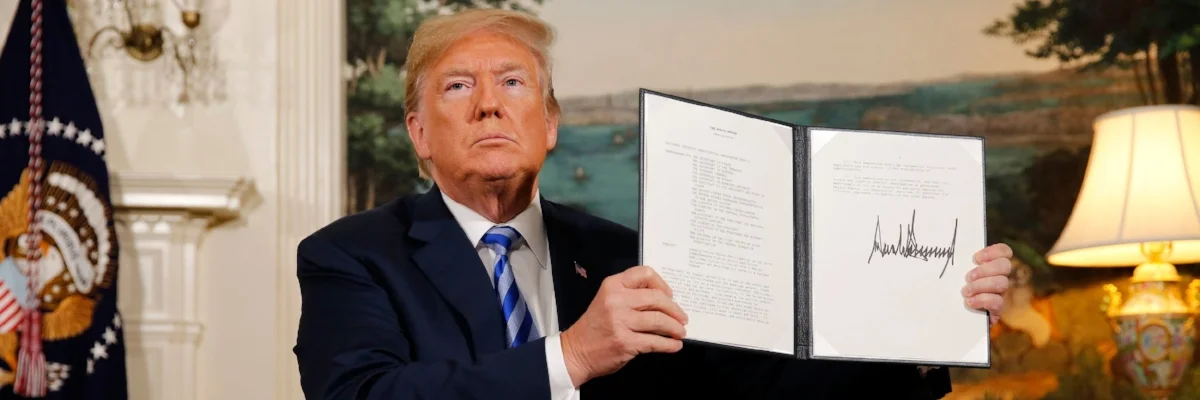
President Trump has violated the Joint Comprehensive Plan of Action and withdrawn from a landmark arms control agreement that enjoyed broad international support. Crucially, he did so more decisively than many expected. In his televised announcement on Tuesday, Trump clearly relished the opportunity to follow through on his campaign promise to “rip up” the Iran nuclear deal, declaring, “The United States no longer makes empty threats. When I make promises, I keep them.”
There is no doubt that the JCPOA is in jeopardy. But the deal has been in jeopardy for a long time. New polling data from IranPoll, drawing on a nationally representative survey of Iranians conducted between April 13-17 and released on May 8 at a Bourse & Bazaar round table in Stockholm, illustrates this point. When asked how confident they are that the “United States will live up to its obligations toward the nuclear agreement,” a resounding 92 percent of Iranians indicated that they lacked confidence, up dramatically from 41 percent in September 2015. Iranians consider U.S. violations of the deal to have been indisputable, even prior to today’s announcement.
The real question is whether the decisiveness with which Trump discarded three months of negotiations with the E3 on a “fix” to the Iran deal will change political perceptions in Europe. European leaders may have be tempted to latch onto any ambiguity in the extent of the U.S. withdrawal, for example had Trump pursued the reapplication of sanctions without immediate enforcement. Over the last few months, France, Germany, and the United Kingdom have proven reluctant to take a robust stance vis-a-vis the United States’ unilateral demands for the renegotiation of the JCPOA. Unsurprisingly, the E3 negotiating strategy was lambasted as one of “appeasement” by Tehran.
The significant and very public investment of political capital in trying to convince Trump to remain in the deal, which saw Macron and Merkel make visits to Washington, as well as British foreign secretary Boris Johnson, meant that an admission of defeat would always have been unlikely. Had Trump taken a more muddled stance on the future of the United States as a party to the nuclear deal, it is not difficult to image that the E3 would have “welcomed” certain aspects of Trump’s relevant announcement.
But there was no muddling on Tuesday. As per the White House statement, Trump “has directed his Administration to immediately begin the process of re-imposing sanctions related to the JCPOA” with the aim of targeting “critical sectors of Iran’s economy, such as its energy, petrochemical, and financial sectors.” The implementation memo shared with the Secretary of State, Secretary of Treasury, and other key actors within the executive branch makes the detail of the impending actions even more clear.
Responding to Trump’s bold move, the joint statement from Macron, Merkel, and May calls for “the US to ensure that the structures of the JCPOA can remain intact, and to avoid taking action which obstructs its full implementation by all other parties to the deal.” Moreover, the statement declares that the E3 will “remain committed to ensuring the agreement is upheld, and will work with all the remaining parties to the deal to ensure this remains the case including through ensuring the continuing economic benefits to the Iranian people that are linked to the agreement.”
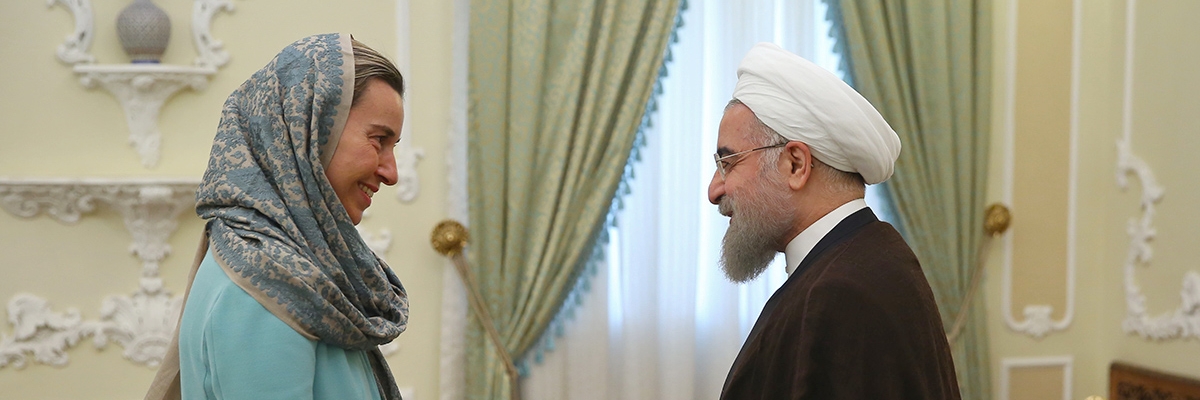
The statement from European Union High Representative Federica Mogherini further declares the importance of protecting trade and investment, stressing that “The lifting of nuclear related sanctions is an essential part of the agreement” and “that the lifting of nuclear related sanctions has not only a positive impact on trade and economic relations with Iran, but also and mainly crucial benefits for the Iranian people. The European Union is fully committed to ensuring that this continues to be delivered on.”
Bold statements beget bold statements and European governments are growing increasingly confident in signaling their willingness to protect channels for trade and investment with Iran. However, signaling will need to be followed-up by action. Again, the decisiveness of Trump’s move on Tuesday will probably help ensure that practical measures are pursued in earnest.
The clear failure of the E3 negotiating strategy will likely see the mantle of leadership on Europe-Iran relations return to Mogherini and the European External Action Service. This will happen first and foremost with the convening of the Joint Commission of the JCPOA which is expected in the coming week. Mogherini’s position draws on the foreign policy consensus of the EU’s 28 member state governments. With the policy debate once again expanded to this wider group, the input of the governments of Sweden, Austria, Italy, and the Netherlands, among other countries, will become more influential as Europe seeks to preserve the JCPOA’s economic benefits and keep Iran in the deal. Importantly, these smaller member states are those which have made the most progress in devising special financial vehicles, concluding export credit agreements, and encouraging banks to engage in the Iranian market in adverse conditions. In short, Trump’s rebuke of the E3 can restore the mantle of JCPOA engagement to the wider EU—an outcome that is good for Iran.
Moreover, in taking itself out of the deal, the Trump administration may have actually limited the damage it can do to the legal environment for trade and investment in Iran. Administration officials have confirmed that the United States will not pursue the snapback of UN sanctions lifted as part of United Nations Security Council resolution 2231, which enshrined the JCPOA in international law. As the United States is out of the deal, they no longer have the right to trigger such a vote as per Article 37 of the JCPOA. So while the White House has announced a full snapback of U.S. primary and secondary sanctions eased under the nuclear deal, European and Iranian commercial actors can take some comfort that EU and UN sanctions will not snapback (so long as Iran continues to abide by its commitments under the deal).
Finally, and perhaps most importantly, the nature of Trump’s withdrawal will impact public opinion in Iran. For President Rouhani, there will be great pressure to retaliate in order to prove that Iran cannot be bullied by the United States. This pressure is coming not just from hardliners, but from the general public as well.
When asked whether Iran should “retaliate” or “continue to live by the JCPOA” in the event that “the United States takes measures against Iran that are in violation of the JCPOA agreement,” 67 percent of Iranians believe that Iran should retaliate. Just 31 percent believe that Iran should stick with its commitments under the deal. The proportion of Iranians calling for retaliation has risen 8 percent in the past three months, which corresponds precisely to the period in which the E3 launched its attempt to fix the deal by placating Trump. The political consequences of that strategy are starkly exhibited in the new polling.
Yet, the undeniably aggressive nature of Trump’s move may actually serve to inspire Iranians to choose resilience over retaliation. Resilience is what has made Iran one of the world’s twenty largest economies despite enduring both a decade of war and a decade of sanctions in just the last forty years. In his address to the nation, Rouhani described Trump's decision as "an act of psychological warfare against Iran.” The Iranian response to this psychological warfare will be determined following consultations with the remaining parties in the JCPOA. If the Rouhani administration can credibly demonstrate to the public that there is a plan for principled defiance, and if that plan includes clear commitments from Europe to protect Iran’s economic prospects, it remains possible for Iran to remain in the deal. If this can be achieved, following such a direct attempt by Trump to kill the deal, Iran will reassert its strength in a remarkable way. Cooperative resilience, not retaliation, must prevail. Defying Trump must be the rallying cry.
Photo Credit: REX/Shutterstock
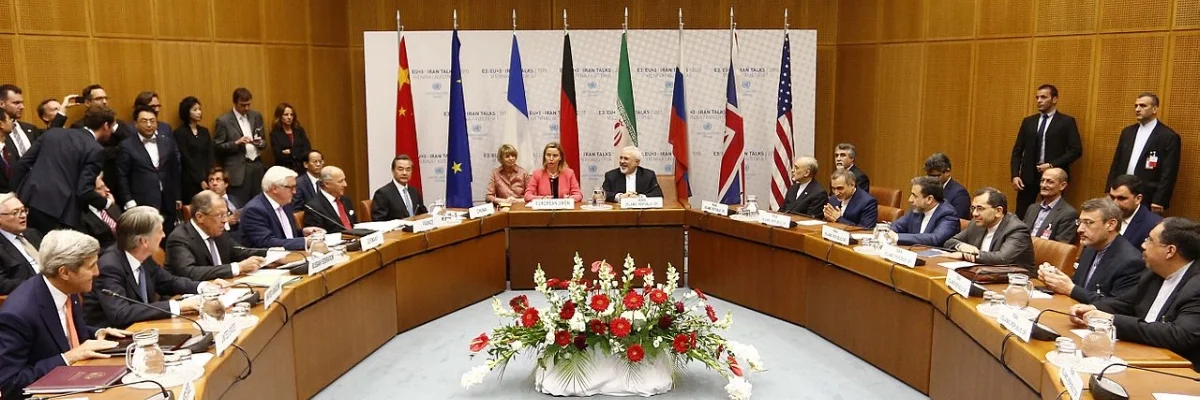
Europe’s Balancing Act on the Nuclear Deal: Wooing Trump Without Losing Iran
◢ European leaders have been assiduous in lobbying Washington on the nuclear deal. But Europe must step up its diplomacy to ensure it does not lose Tehran in the process and should further make a strong case to the Iranian government and public as to why the nuclear deal can continue to serve Iran’s security and economic interest even without the US.
This piece was originally published on the website of the European Council on Foreign Relations.
For much of Iran’s political elite, and its overwhelmingly young population, the nuclear deal is becoming a story of failure. This situation risks impacting on Tehran’s willingness to engage politically and to reach diplomatic compromises with Western powers. Last week European leaders were in Washington for a last push to keep the United States on board ahead of the 12 May deadline for Donald Trump to issue waivers required under the nuclear deal. During his visit, Emmanuel Macron suggested that the US and Europe could work on a “new deal” with Iran – one which preserves but expands on the 2015 accord. But with Iran kept out of the European-US talks, Hassan Rouhani has questioned the legitimacy of proposals now put forward by Macron and Angela Merkel for Iran to negotiate further deals on its nuclear programme and regional issues. In the process of wooing Washington on this bigger and better deal, Europe must ensure it does not end up losing Tehran, whose buy-in will be essential to succeeding in this effort.
Iran's Rethink on Europe
Despite increasing pressures coming from Trump, Iran has continued to fulfil its part of the deal, as verified by the International Atomic Energy Agency 11 times since the deal was implemented in January 2016. Iran has waited to see what actions Trump would take and carefully assessed the ability and willingness of Europe to safeguard the nuclear deal. In October, Tehran sent out clear signals that it would consider sticking to the deal so long as Europe, China, and Russia could deliver a package that served Iran’s national security interests. But as talks between the US and the EU3 (Germany, France, and the United Kingdom) have stepped up over the last few months, Iranian thinking on European positioning has begun to sour.
Officials and experts from Iran, interviewed on condition of anonymity over the past month, outlined a growing perception inside Tehran that Europe is unable and/or unwilling to deliver on the nuclear agreement without the US. Even those who defend the nuclear deal inside the country are finding it difficult to continue to do so, not just because of Trump but also because of European tactics, which one Iranian official described as “appeasement by Europe to reward the violator of the deal and Iran’s expense”.
This perception has contributed to considerably hardened Iranian rhetoric in recent weeks around a possible US withdrawal. The secretary of Iran’s Supreme National Security Council (SNSC), which includes the most important decision-makers inside the country, warned that Iran may not only walk away from the nuclear deal, but also withdraw from the Non-Proliferation Treaty. Such public statements from senior figures signal that a rethink may be taking place over Iran’s foreign policy orientation and openness to engaging with the West. Decision-makers in Europe should be alert to the gravity of such political shifts.
Keeping Iran on Board
Iranian officials have repeatedly outlined that Iran will abide by the nuclear deal so long as the US does not violate the agreement. If Europe wants to keep Iran on board with the agreement in the scenario where Trump does not issue the sanctions waivers required, or to even sell a new European-US framework to Iran, it will need to shore up its fast-diminishing political capital with Tehran. While Macron’s hour-long call with Rouhani on Sunday was a good start, greater activity is urgently needed.
First, Europeans should seek to alleviate growing Iranian fears that the price of saving the deal will be a wider “pressure package”, one which returns their relations to the pre-2013 policy of isolation and sanctions. While the focus is understandably now on securing ongoing US support for the deal, the EU3 should not neglect the fact that any new framework agreed will require at least some Iranian buy-in to make it workable. In the current political climate in Iran, this is not a given.
As such, the EU3 should, as a unified coalition, work at the highest level with Iran’s foreign ministry to shore up confidence regarding the nuclear deal. In advance of the 12 May deadline, if it looks increasingly likely that Trump will not waive sanctions, the newly appointed German foreign minister should follow up on Macron’s call to Rouhani with a visit to Tehran to meet with their Iranian counterpart and consider contingencies (some measures for which are outlined below).
Second, EU member states should delay the prospect of new sanctions targeting Iranian regional behaviour, at least until firmer guarantees are in place regarding Trump’s decision on the nuclear deal. The timing of such sanctions has reportedly been the topic of heated debate among the 28 member states. At a minimum, the countries supporting such measures should step up their public messaging to communicate the reasons and the targeted nature of new sanctions, including a commitment that these are not the start of more far-reaching sanctions that will hurt the wider Iranian economy. This is particularly the case with Iran’s private sector, which constantly meets new hurdles placed in its way when seeking to do business with Europe.
Third, European governments should double down on efforts to maintain Iranian compliance to the nuclear deal if Trump fails to renew waivers due on 12 May. Such action by the White House would result in the snap-back of US secondary sanctions and are likely to be viewed in Tehran as significant non-performance of the nuclear deal. Europe will need to coordinate with Russia and China to persuade Iran to continue adhering to its nuclear obligations, at least for a period of time. The exhaustion of the dispute resolution mechanism under the nuclear deal can buy time (estimated to be between 2-3 months) for contingency planning while allowing Iran to save face.
In this scenario, European governments will need to convince the US that it will be in their mutual interest to agree on an amicable separation on the nuclear deal. Europeans will need to argue that such a settlement would allow Trump to claim victory with his base for withdrawing US participation in the JCPOA, while avoiding deeper damage to transatlantic relations and possibly maintaining Europe’s quiet compliance on regional issues. This path should also allow the US to reverse its course (Europeans should continue to encourage such a reversal, whatever the 12 May decision).
As part of this contingency plan, to keep Iran on board Europeans will need to offer some degree of economic relief. It will be critical to reach a pan-European deal with the Trump administration to limit the extent to which the US secondary sanctions that may snap back are actually enforced by US regulators. This should include a series of exemptions and carve-outs for European companies already involved in strategic areas of trade and investment with Iran, with the priority being to limit the immediate shock to Iranian oil exports.
European governments should further make a strong case to the Iranian government and public as to why the nuclear deal can continue to serve Iran’s security and economic interest even without the US. They should emphasize the immediate economic benefits of continued oil exports to Europe and possible longer-term commitments for investments in the country. Sustained political rapprochement between Europe and Iran could also influence Asian countries that closely watch European actions (such as Japan, South Korea, and India) to retain economic ties with Iran.
Finally, regardless of the fate of the nuclear deal, Europe should keep the pathway open for regional talks with Iran. Germany, France, the UK, and Italy should establish and formalize a regular high-level regional dialogue with Iran that builds on those held in February in Munich. It is a positive sign that a second round of such talks is reportedly due to be held this month in Rome. Such engagement will become even more important if the US withdraws from the nuclear deal, increasing the risk of regional military escalation that is already surfacing between Israel and Iran in Syria. Europeans should focus these talks on damage limitation and de-escalation in both Yemen and Syria, to help create an Israeli-Iranian and Saudi-Iranian modus vivendi in both conflict theaters (something which the US seems uninterested in).
Ultimately, Iran’s willingness to implement any follow-up measures on regional issues will be heavily influenced by the fate of the nuclear deal and how the fallout over Trump’s actions is managed. Europe may well not be capable of salvaging the deal if the US withdraws from or violates it. But Europe must at least attempt to do so and demonstrate its political willingness through actions that serve as a precedent for the international community. To do otherwise is likely to have an immediate and consequential impact on Iranian foreign policy and significantly reduce Europe’s relevance for the Iranian political establishment. For Iran’s youth, as the largest population bloc in the country, this will be an important experience in how far Europe is willing to go in delivering on its promises to defend the nuclear deal, whose collapse would affect the Iranian psyche and domestic political discourse for years to come.
Photo Credit: Wikicommons
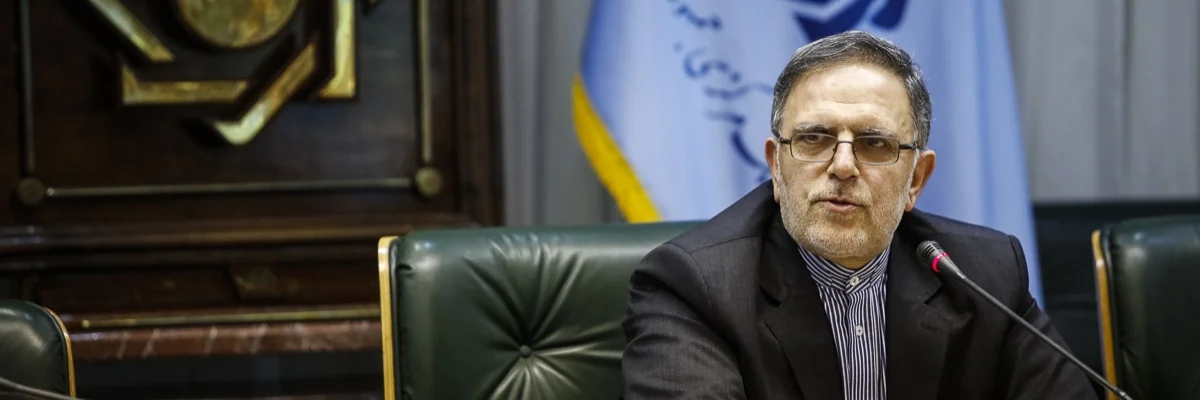
Iran’s Currency Crisis Spurs Action in Financial Reform Efforts
◢ Forced to respond by Iran’s recent currency crisis, the Central Bank of Iran is approaching regulatory reform in the financial sector with new energy. A critical deadline to meet standards set by the Financial Action Task Force is forthcoming in June. Iran needs to demonstrate progress in tackling financial crime estimated to include at least USD 27 billion in transactions annually.
In the 2017 anti-money laundering (AML) index report published by the Basel Institute on Governance, which develops standards for financial regulations and compliance, Iran topped the list of the world’s 10 highest-risk countries failing to comply with AML standards. This index, published since 2007, ranks 140 countries in terms of their efforts combatting dirty money transactions and countering terrorist financing (CTF). Iran has made little progress to date in improving its standing. Yet, the recent reunification of Iran’s exchange rates by central bank is seen to be an effective step toward more economic transparency and part of wider efforts against smuggling and rent seeking in their diverse forms.
The high-risk assessment of Iran highlighted in the Basel Institute report is primarily due to weak AML/CFT regimes practiced in the jurisdiction. High rates of perceived corruption combined with poor financial sector regulations are major drivers of the structural and functional failures in the Iranian economy. Importantly, these are among the critical issues, which the Financial Action Task Force (FATF), an intergovernmental organization which develops politics to combat financial crime, had mandated Iran to address as part of its "action plan."
Following an extension granted in February, the deadline for Iran’s compliance with FATF’s action plans is set for June 2018. This means that Iranian authorities have limited time at their disposal to earn the continued suspension of counter measures against Iran. Lack of membership in organizations such as the World Trade Organization and the FATF, in particular, has led to a myriad of problems in the implementation of the Joint Comprehensive Plan of Action (JCPOA) nuclear deal agreed by Iran and E3+3 in 2015. Due to shortcomings in meeting FATF technical requirements and Basel II and III banking regulations, Iran has failed to expand its business and correspondent banking ties with International financial institutions, with significant consequences. For example, the number of letters of credit opened since “Implementation Day” has been far lower than expected.
As such, financial reform in Iran is motivated by the need to spur economic growth. The mandate that the Supreme Leader of Iran Ali Khamenei gave to the Rouhani government to start negotiations with world powers over Iran’s nuclear program reflects the wider policy of the state to continue interacting with the international bodies on economic matters. To that end, cooperation with the FATF is set to carry on unless that authorization is withdrawn. Yet given the importance of such reforms, this authorization may remain in place regardless of what happens on May 12 with respect to President Trump’s decision to extend sanctions waivers issued as part of the JCPOA.
According to some estimates, the magnitude of organized money laundering in Iran amounts to some USD 26 billion per year. Transacting such sizeable amount of money outside the official financial system is impractical and requires that criminals abuse the conventional financial system to support their illegal activities. The Central Bank of Iran is seeking to increase its powers of supervision to monitor and prevent suspicious money transfers and smuggling of goods, ensuring the integrity of Iran’s financial system.
The central bank's recent moves to stem currency market volatility will make financing of illegal businesses in the economy more difficult. CBI’s new policies prohibit purchasing or holding of more than USD 10,000 or its equivalent in international currencies. In the same parallel, any bank account that whose aggregate debits and credits exceed IRR 50 billion rials will be subject to anti-money laundering probes to monitor for suspicious activities.
Although it will remain possible to find loopholes in the new regulations, these moves reflect significant progress after years of unfulfilled promises to unify the dual foreign exchange rate regime. The move is also viewed as an important step towards obtaining approval from FATF in respect to countering money laundering and removing the rentierism prevalent in the country’s largely state-controlled economy.
In addition, based on the new legislation, revenues from petrochemical exports that are not repatriated to the country will be subject to greater supervision. Firms in the industry will now be required to report their trade transactions in the same system used to record the oil companies’ export revenues. Previously earnings from petrochemical products sales were kept outside Iran in offshore bank accounts in the absence of proper supervision over their transactions and trades.
Interestingly, to further reinforce its oversight, the central bank has launched the an integrated system for monitoring foreign exchange deals or known as NIMA. This is a system which will monitor the activities of four groups of actors who shape the currency market: merchandise and service importers who purchase foreign currency, exporters of goods and services who earn foreign currency, banks and brokerages who act as intermediaries, and the policymakers who seek to manage supply and demand.
According to CBI governor, Valiollah Seif, the operationalization of the NIMA, will change CBI’s current reactionary response mechanism to one that is more proactive and will make controlling hazardous speculative or systematic fluctuations in foreign exchange markets possible by enabling the calculation of the effective demand so that the bank can aptly manage the available foreign exchange reserves.
In sum, the implementation of these targeted measures by CBI is expected to gradually put an end to capital flight and massive conversion of rial to other hard currencies. These moves can also undercut crimes such as smuggling and money laundering by increasing oversight and the likelihood of penalties for their perpetrators. But the effectiveness of CBI’s mandate will be determined by the political will of both the government and the state to fully enforce the letter and spirit of the new regulations and laws. A great deal is at stake. If the Rouhani government can continue to persist in its long-awaited macroeconomic policies and resist pressure from vested interests, then it remains possible that Iran’s economy could find new momentum after years of recession.
Photo Credit: Tasnim
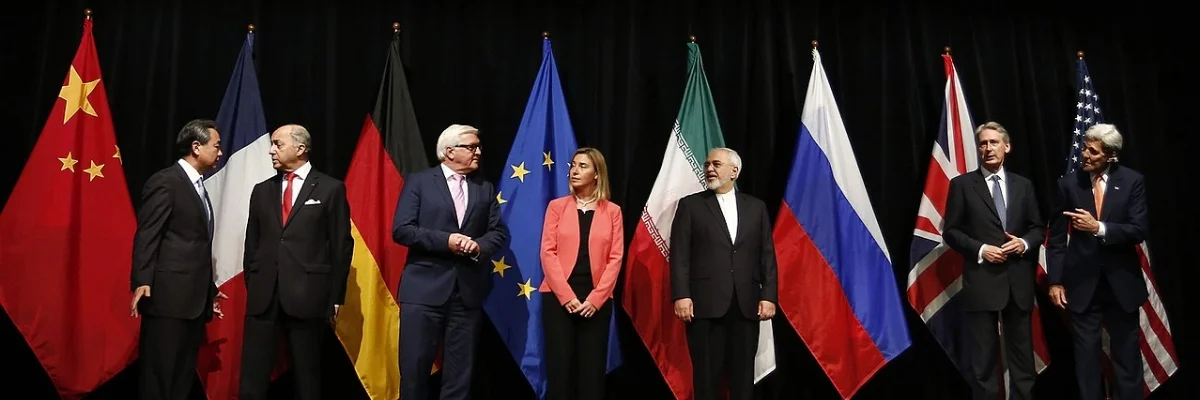
As the Iran Deal Approaches its D-Day, Uncertainty Only Set to Increase
◢ With the United States looking set to withdraw from the Iran nuclear deal, the question now becomes how that withdrawal will take place. The European Union and Iran will face complex decisions about legal and diplomatic responses. Even though U.S. policy will be come more clear in the aftermath of May 12, the overall uncertainty facing businesses is likely set to increase.
The Joint Comprehensive Plan of Action (JCPOA) was, like many complex pieces of international diplomacy, a necessarily imperfect creation born out of compromise.
The deal is dependent for its survival on continued waivers of US secondary sanctions by the US President (a function of the congressional approval of the deal in the first place). It is also limited—quite deliberately—in the scope of its ambition: it did not seek to settle disputes concerning Iranian intervention in regional conflicts, Iran's human rights record or its ballistic missile program. And, much to the chagrin of Iran hawks in the US and elsewhere, the sunset clauses place no restriction on Iran's uranium enrichment after the first 15 years of the deal, though other aspects of the deal will be in force in perpetuity. From the Iranian side, whilst it provided relief against EU sanctions and US extraterritorial secondary sanctions, the JCPOA offered Iran no access to the US economy or, crucially, the US dollar denominated financial system.
But, imperfect as it was, it did result in the destruction of Iran's stockpile of enriched uranium and afforded the International Atomic Energy Association (IAEA) access to Iran's nuclear sites to verify continued Iranian compliance. And it has allowed Iran access to major European investment in Iran, including high profile deals struck with Airbus and French oil major Total.
In any event, some of the lingering congenital defects would not have mattered as much, or at all, were it not for other extraneous events. For example, it was always intended by the Obama administration that the JCPOA would be a starting point for further discussions and deals on other areas of difference once the nuclear boil was lanced; negotiating the nuclear settlement was lengthy enough without complicating the negotiations further by involving issues such as Syria and ballistic missiles. And continued sanctions waivers were never thought to be seriously in doubt, even as the Trump campaign gained momentum throughout 2016. The State and Treasury Department reach out sessions following Implementation Day emphasized that the political consequences of a US lead snapback would be so serious that the next President would balk at tearing it up, even if that President was a candidate who described the deal as the "worst ever."
Fix It or Nix It
Even after further criticism of the deal from the newly inaugurated President Trump, that conclusion seemed to hold good. Early forays into extending sanctions against Iran with SDN designations in February 2017 were limited in scope. They did not designate Iranian financial institutions or state owned enterprises. Indeed, they were no different in character to some of the late Obama administration's post Implementation Day Iran designations. Many concluded that moderate voices within the administration had managed to constrain the President's more hawkish impulses.
But recent personnel changes amongst the President's close advisors, and the lack of much perceived benefit from the deal in Iran, mean that the defects matter much more now. The appointment of two key Iran skeptics, John Bolton (national security advisor) and Mike Pompeo (Secretary of State) mean that President Trump now has core of foreign policy advisors in place who share his dim view of Iran deal. The President is now determined to either "fix" the perceived failings of the Iran deal or "nix" it.
There is, therefore, a very real fear that President Trump will refuse to renew the next set of waivers that are due to expire on 12 May 2018. Those waivers apply to the secondary sanctions contained in the National Defence Authorization Act (NDAA) 2012 which provides for penalties against foreign financial institutions that engage in significant financial transactions with Iran's central bank. Further secondary sanctions on the provision of significant support to Iran's energy, shipping, shipbuilding sectors or the provision of insurance and reinsurance or refined petroleum products to Iran, which apply under other congressional acts, are due to expire in July 2018 unless the waivers are renewed.
But Iran has its own JCPOA hawks, and the risk is that an abrogation of the JCPOA by the US through a failure to renew the NDAA waivers in May will provide just the excuse they are waiting for to precipitate an Iranian reaction that effectively ends the JCPOA as a meaningful deal.
Caught in the Middle
That concerns the European Union greatly. The EU sees the JCPOA as the most effective way to stop Iran obtaining a nuclear weapon, and precipitating a nuclear arms race in the Middle East that will potentially involve Gulf Arab states, Turkey as well as Israel. As the EU points out, the IAEA has repeatedly confirmed substantial Iranian compliance with the terms of the deal. More immediately, however, it could see European companies that have chosen to engage with Iran since Implementation Day exposed to US secondary sanctions for the first time.
The US did not relax its own self-denying sanctions preventing US persons dealing with Iran after Implementation Day; only the secondary sanctions affecting non-US persons. By contrast the EU lifted most of its general restrictions on trade with Iran except for those on controlled good or remaining designated persons. As a result, European companies that have been able to find means of getting paid (not an easy task when US dollar transactions are still proscribed) have engaged with Iran more enthusiastically—a fact that is no doubt not lost on a President currently jostling with the EU over aluminum tariffs. Any unilateral re-imposition of US secondary sanctions could impact these European companies significantly. The recent application of US secondary sanctions against certain Russian companies and oligarchs illustrates some of the problems that this can cause.
Historically the threat of a divergence between the US and EU over Iran has never been a problem. The two have managed to proceed in concert with each other so that US sanctions which unilaterally sought to regulate or restrict trade and investment activities carried out by persons outside the US were mirrored by the EU's own regulations and restrictions on what EU persons are able to do. But there are earlier precedents for transatlantic fallings out over the extraterritoriality of US sanctions.
In the 1980s the US imposed sanctions on companies doing business on a Russian pipeline in Eastern Europe, provoking a diplomatic falling out. And in 1996 the Helms-Burton Act, which, amongst other things, imposed penalties upon non-US persons "trafficking" in Cuban property formerly owned by US persons, provoked a furious response from the EC which launched blocking legislation and a WTO panel investigation alleging that the extraterritorial restriction of trade between the EC and Cuba breached various provisions of the GATT and GATS. The US countered that it was prepared to rely on the rarely used national security exemption in the GATT. The dispute was only withdrawn after high level political compromise.
But the prospect of a large scale transatlantic trade dispute over Iran occurring at the same time as a US-EU dispute over US aluminum tariffs and extraterritorial Russia sanctions is deeply concerning for the EU.
To that end the EU has even been looking at further potential sanctions against Iran for ballistic missile activities. The rather circular logic is that new sanctions might persuade President Trump that the EU is being tough enough on Iran to renew the waivers in May and may actually save the Iran deal. The EU recently renewed its existing human rights sanctions against Iran, which date back to 2011 and which impose asset freezes and bans on exports of equipment which might be used in internal repression. However, a recent meeting of EU foreign ministers failed to reach any agreement on the imposition of new sanctions against Iran. The clock continues ticking towards May 12.
The Dispute Settlement Process
So what would happen if the US failed to renew the waivers of the NDAA sanctions that expire in May? The JCPOA obliges the US not only to cease the application of its secondary sanctions program but to "continue to do so." A failure to renew the waivers could therefore in theory amount to a breach of the terms of the agreement. Iran could then refer the issue to the JCPOA dispute settlement mechanism, which is a largely consensual process.
The question of US compliance would first be considered by the Joint Commission established under Annex IV of the JCPOA, which consists of the participants from each JCPOA signatory (including Russia and China). The Joint Commission must make decisions by consensus, which would presumably mean that no decision would be made confirming US non-compliance (or no decision would be made within the mandated 15 days). This would then presumably precipitate an escalation to the next level; an Iranian referral of the question of US compliance to a three person advisory board. The board would consist of one person appointed by each of the US and Iran and a third independent person appointed by the first two.
The advisory board can issue a non-binding opinion on the compliance issue and must do so within 15 days. The Joint Commission will then consider the non-binding opinion for a further 5 days to try to resolve the dispute by consensus again. If the dispute has not been resolved to Iran's satisfaction, and if Iran deems the refusal to renew the NDAA waivers as "significant" non-performance, Iran could at that point treat the unresolved issue as grounds to cease performing its commitments under the JCPOA in whole or in part and/or notify the UN Security Council that it believes the issue constitutes significant non-performance.
A referral to the UN Security Council would mean that it must vote on whether to continue the sanctions relief provided by UN Security Council Resolution 2231 (2015) which endorsed the JCPOA and disapplied six previous UN resolutions imposing sanctions against Iran. Under the JCPOA dispute resolution mechanism and Resolution 2231 itself, unless the UN Security Council votes in favor of continuing the sanctions relief, the six former UN resolutions will "snap back" into force automatically. As a veto wielding permanent member of the UN Security Council, the US could, therefore, force the snap back of previous UN sanctions simply by exercising its veto.
Diplomatic Manoeuvres
There are clearly options and opportunities throughout this process for diplomacy and deal making to vary the procedure above. Whilst Iran has already hinted, most recently through its Foreign Minister Javad Zarif, that it would probably react by restarting production of enriched Uranium, it might nonetheless choose to use the fact that some of the waivers expire in May and others in July to bide its time before actually withdrawing from the deal.
It could perhaps choose to take the process through the Joint Commission and advisory board stages, until it reached a point at which it could claim that the unresolved dispute was US non-performance. That point would be reached in mid to late June. It could then refrain from referring the dispute to the Security Council and perhaps even confirm its continued performance (for the time being) despite the lapse of US waivers in May. That would avoid an automatic "snap back" of UN sanctions, or the risk that the US could treat an Iranian abrogation as non-performance and refer the matter to the Security Council itself.
Iran could then utilize the remaining weeks before the next US waivers expire to rally support from concerned EU signatories, perhaps even relying on a potentially positive advisory board opinion, to garner diplomatic sympathy for its position. It would then have a further opportunity to go through the JCPOA dispute resolution process in July if those diplomatic efforts failed and the other waivers were not renewed.
Of course, it is equally possible that Iran's own hardliners gratefully accept any failure to renew waivers in May as the excuse that they have been waiting for to finally tear up the deal. No-one can rule out a last gasp left-field intervention from the US President himself that changes everyone's calculations.
No doubt such diplomatic brinksmanship will cause investors and exporters to Iran to be reaching for their contracts and examining any "snapback" provisions. Would a limited US re-imposition of NDAA secondary sanctions, in the absence of any other secondary sanction re-imposition—let alone any EU sanctions or UN sanctions—constitute a "snapback?" The answer, of course, will depend on what sort of trading relationship is concerned and how the actual clause is drafted. Some are drafted very mechanically requiring specific events to occur; others are more subjective and only require one party to reasonably consider their position is affected by unspecified sanctions. As ever, close attention is required before making any decisions about terminating contracts.
But it is clear that the coming weeks and months will be a rollercoaster ride for all affected.
Photo Credit: Wikicommons
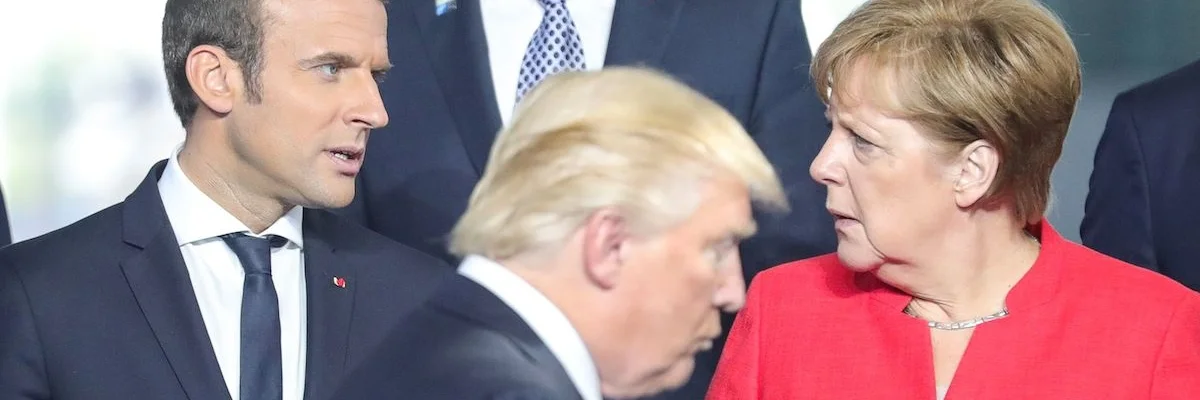
Macron and Merkel Must Flex Muscles to Save Iran Nuclear Deal
◢ The forthcoming visits to Washington by French President Emmanuel Macron and German Chancellor Angela Merkel come at a time of great importance for the Iran nuclear deal, regional security, and transatlantic relations. European policymakers are considering credible ways to signal that the EU is willing to take action if confronted with U.S. withdrawal from the deal, but a significant resolve will be needed.
This article is adapted from a recent report from the European Leadership Network.
The fate of the international nuclear agreement with Iran, known as the Joint Comprehensive Plan of Action (JCPOA), looks increasingly uncertain in light of repeated attacks from U.S. President Donald Trump, who has threatened to walk out of the deal unless Congress and European counterparts agree to “fix it.” The recent appointments of Mike Pompeo and John Bolton—both vocal critics of the JCPOA and widely seen as staunch hawks on Iran—make it less likely that Trump will keep the United States in the deal at his next decision point by 12 May. Faced now with the likelihood of U.S. withdrawal, Europe must decide how far to go to try to preserve the agreement in the face of renewed U.S. sanctions.
Against this backdrop, the forthcoming visits to Washington by French President Emmanuel Macron and German Chancellor Angela Markel come at a time of great importance for the nuclear agreement, regional security, and transatlantic relations. Macron’s meeting with Trump will be of particular significance, given the good rapport between the two leaders. Syria will likely feature at the top of the agenda, but the visit will offer an urgent opportunity to remind President Trump of the importance of the nuclear deal for his European allies.
U.S. decision makers can still be influenced. Washington’s position on the nuclear deal is far from monolithic and it is still possible that President Trump could be influenced by congressional opinion, which remains sensitive to European concerns. There is no congressional majority for a unilateral U.S. withdrawal from the JCPOA while Iran remains compliant, still less for the re-imposing secondary nuclear-related sanctions on European allies. Even if the United States decides to leave, some main provisions of the deal might still be kept.
This leaves plenty of scope for European intervention. Representatives of the European signatories of the JCPOA, the so-called E3 (Germany, France, and the United Kingdom), are currently engaged in consultations with their U.S. counterparts to save the agreement. This includes discussions on how to accommodate President Trump’s concerns over the deal’s inspection provisions and “sunset clauses,” as well as over Iran’s missile programs and regional activities. But European leaders are also making clear that they will not just fall into line if Washington decides to leave the agreement and re-introduce sanctions.
A re-introduction of sanctions does not necessarily equate to a full re-introduction of all U.S. sanctions without exemptions. American policymakers can calibrate the sanctions they choose to re-instate and the executive powers of the president in matters of national security add to this flexibility. This means that there is plenty for Europeans to negotiate for with their U.S. counterparts about the terms of any U.S. withdrawal. It is possible to envision a transatlantic quid pro quo in which U.S. secondary sanctions are waived even if the United States leaves the agreement.
The risks of a U.S. withdrawal and a comprehensive snap back and enforcement of secondary are nonetheless tangible. As a result, European policymakers are considering credible ways to signal that the EU is willing to take action if confronted with this scenario. This includes reviving EU “blocking regulation” (which seeks to prohibit EU persons from complying with U.S. secondary sanctions or acknowledging the jurisdiction of non-EU courts or authorities with respect to those sanctions) and filing complaints at the World Trade Organization (WTO).
There are significant and inherent risks with these options. These retaliatory measures could easily escalate into an unpredictable and unmanageable tit-for-tat. This would not only impose significant costs on the EU and cause serious friction in the transatlantic relationship but also do damage to the institutions that uphold the free movement of goods, services, and ideas – bedrocks of the multilateralism the EU cherishes. After all, pushing back against the United States requires political will. And while there is undivided support for the JCPOA within the EU, there is little appetite for further confrontations with the United States.
Notably, this could change if Washington is seen as taking further steps to undermine transatlantic relations and European interests. An already fractured partnership is sensitive to further blows – for instance if the United States would go ahead and impose tariffs on European exports after the temporary exemptions on EU steel and aluminum exports expire on May 1.
The wider international context in May is therefore going to matter a great deal for the fate of the JCPOA. So too will the way that the Europeans choose to frame their differences with Washington over the deal. A choice between the JCPOA and good relations with Washington is one thing; the ability of the EU to maintain its security, its autonomy and the values it thinks should define the international order is quite another. The latter would merit a tougher stance.
Still, an inconvenient truth remains—no EU action can completely shield European businesses and investments in Iran. In this sense, there is no bulletproof defense of the JCPOA’s economic benefits in the event of a U.S. withdrawal. The EU and its member states can pursue measures to shield existing links, encourage further business activity and boost investors’ confidence in the Iranian market, but while government can facilitate business, it cannot control it.
Consider the lingering caution of financial institutions despite sanctions relaxation under the JCPOA, which is a sobering reminder of the challenge of steering the private sector through Iranian market obstacles. As the chief legal officer at HSBC noted in response to the Obama administration’s push to encourage European banking activity in Iran, “Governments can lift sanctions, but the private sector is still responsible for managing its own risk and no doubt will be held accountable if it falls short.” In light of the current uncertainty surrounding President Trump’s policy towards Iran, private sector actors will have plenty of reasons to be wary of the Iranian market. This will continue to restrict investment for the foreseeable future.
As a result of struggles with financing, major businesses are canceling or scaling back their planned activities in Iran. Airbus is struggling to complete its sales of Aircraft to Iran; Total, the French energy giant, is deep into contingency planning for its Iranian operations; and Bouguyes, a French industrial group, has decided to put their Iranian plans on the shelf. As noted in a recent Bourse & Bazaar study, this risks dragging the JCPOA into a “zombie state.”
Europe nevertheless has realistic options in the face of a U.S. withdrawal. There is a strong commercial interest in engaging with Iran, and European policymakers can promote policies that help turn interest into action. They need not—indeed, should not—put all their eggs in one basket but should pursue an array of options in parallel. This includes solidifying international support for the JCPOA, demonstrating that re-imposing sanctions unilaterally will come at a cost for the United States, seeking U.S. exemptions for European businesses to continue operating in Iran, and bolstering international business confidence in the Iranian market. Such practical steps, taken now, can bolster European negotiating leverage with Washington, send useful signals to Tehran and strengthen European political will to defend the JCPOA.
Photo Credit: Armando Babani/EPA
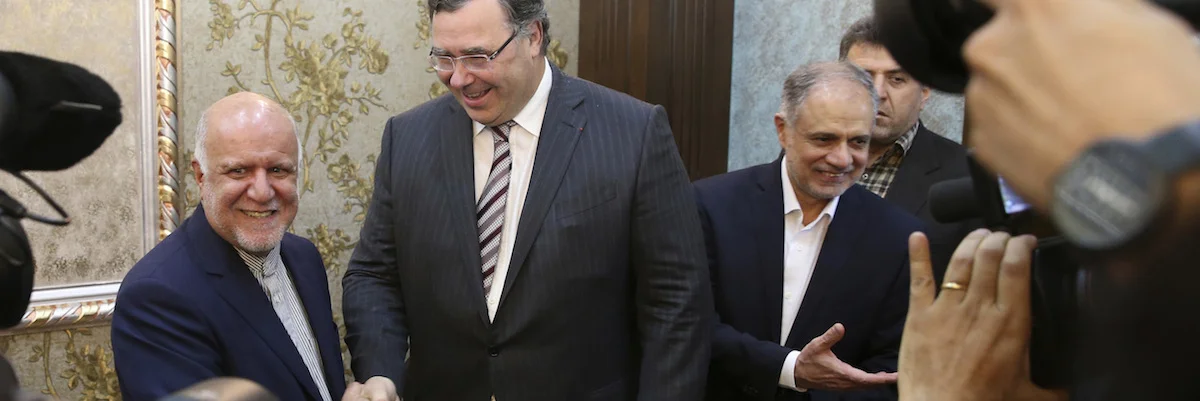
Iran’s Energy Sector Takes Stock After Year of Ambivalent Results
◢ The last Iranian year, which ended in March, saw several interesting developments for Iranian energy, both domestically and internationally. Despite persistent challenges, Iran is keen to build on the momentum of last year’s developments. In doing so, the question of whether the Trump administration will stay in the JCPOA and renew sanctions waivers on May 12 will have great importance.
This article was adapted from a report originally published by the Oxford Institute for Energy Studies.
The last Iranian year, which ended in March, saw several interesting developments for Iranian energy, both domestically and internationally.
Numerous challenges remain, hampering the growth of the country’s energy industry – not the least due to complex politics in Iran and abroad. In particular, Iranian energy is overshadowed by mounting uncertainty due to the standoff over the future of the nuclear deal. Nevertheless, there has been progress not seen in years.
Internationally, Iran commenced natural gas exports to Iraq in June 2017. This was Tehran’s first successful natural gas export project in over a decade.
Moreover, Tehran concluded its first two international energy contracts following the introduction of a new fiscal scheme, the Iran Petroleum Contract (IPC), and the implementation of the Joint Comprehensive Plan of Action (JCPOA), as the nuclear deal is formally known.
In July 2017, Petropars formed a consortium with French major Total and China’s to develop the eleventh phase of the giant South Pars natural gas field. In March 2018, the National Iranian Oil Company concluded a contract with Russia’s Zarubezhneft and private Iranian company Dana Energy to increase output at the Aban and West Payedar oil fields.
These events constitute important milestones on Iran’s journey to re-connect with global energy. At the same time, it would be wrong to assume that the obstacles hampering the growth of Iran’s energy sector are now overcome—not only because of Trump and the uncertain future of the JCPOA.
Rather, in each of these cases, the circumstances have been rather unique. As for Iraq, close political ties with Baghdad allowed for the project to succeed. This distinguishes the Iraq project from other export plans, where political and commercial issues remain complicated—for example Oman and Pakistan (ongoing) or the United Arab Emirates (in the early 2000s).
Shortly after natural gas exports to Iraq commenced, the Total/CNPC contract was signed. But here, too, the circumstances are rather unique. First, the company has a long history with Iran and the complicated international politics accompanying the country’s energy sector. Already in the 1990s, the French company’s planned engagement in Iran played a key role in the EU’s action to push back against extraterritorial US sanctions. These were introduced by Washington under the 1996 Iran and Libya Sanctions Act (ILSA). In response to ILSA (as well as US extraterritorial sanctions against Cuba), the EU introduced so-called “Blocking Regulations” legislation and filed a dispute against the US at the World Trade Organisation.
The EU’s moves forced the Clinton administration into adopting sanctions waivers, which suspended the implementation of US secondary sanctions and allowed Total to proceed in Iran. Ever since, despite being forced to leave the country in 2010 due to EU sanctions, Total has remained committed to Iran, openly criticised sanctions against the country, and always kept its office in Tehran open—different from other companies.
Second, Total is able to bring its own finance to Iran. The company affords the initial $1 billion investment from its own reserves. With the reluctance of major international banks to return to Iran, fearing punitive measures by the US, finance for large projects remains a huge problem. Being able to bring its own finance sets Total apart.
Last but not least, Total is investing in Iranian natural gas, not oil. In the political economy of Iranian energy, the two hydrocarbons differ markedly. More than half of Iran’s oil production is exported, while less than 5% of the country’s natural gas output is sent abroad. An advancement of Iranian natural gas capacities frees some oil for exports. But the link between increases in production and export revenue is much weaker. Thus, investing in natural gas does not immediately lead to more hard currency at the disposal of the Iranian state.
In light of this, a case can be made that investments in Iranian natural gas projects are more acceptable to Washington than oil. At any rate, both before and after the conclusion of the South Pars contract, Total has frequently acknowledged the importance of the US position for its engagement.
Iran’s second international energy contract, with Zarubezhneft, was particular, too. It combined two firsts in one contract: the deal marked Iran’s first upstream contract with a Russian company and also the first international contract awarded to a private Iranian company, Dana Energy.
Beyond this, the deal is further testimony to the fact that Zarubezhneft, controlled by the Russian government, seems unimpressed by the Trump administration’s harshening stance towards Iran. Unlike Western IOCs, Russian (and also Chinese) state-owned companies might benefit from being able to take a different position when it comes to assessing political and economic risks related to Iranian energy.
The significance of different risk-assessments cannot be underestimated: Iran’s energy sector continues being surrounded by multiple and complex political and economic challenges. These include ample supplies in global energy, efforts by conventional producers to keep barrels away from markets, domestic political opposition to international and especially Western companies in Iran, and—almost overshadowing everything else—the prospect of the US leaving the JCPOA.
Parallel to the ups and downs at the international level, the domestic politics of Iranian energy saw interesting developments, too. In January 2018, Supreme Leader Khamenei reportedly told the Revolutionary Guards (IRGC) to divest from those parts of their wide-spanning business conglomerate that are “irrelevant” to their core purpose. If followed up by meaningful action, this would have wide-ranging consequences for Iran’s energy sector, where the IRGC maintain a considerable presence.
However, several economic and political questions in this regard remain unresolved until now. Politically, it will need to be defined which of the IRGC’s economic activities are actually considered being “irrelevant." Arguing Iran should reduce international dependencies, conservatives might call for the IRGC to maintain a certain presence in strategically vital sectors, including energy. Economically, it is unclear who could actually take over businesses from the guards. Considering the sheer size of the IRGC’s economic holdings, Iran’s private sector seems unprepared to stem a larger IRGC divestment. Meanwhile, foreign ownership remains highly problematic in Iran.
All this suggests that IRGC divestment from the energy sector and the broader economy would at best be slow and gradual. Somewhat, the process has already begun as the administration of president Rohani reduced the number of public contracts awarded to the IRGC in recent years. Still, the IRGC have yet to indicate their willingness to actually divest. It would therefore likely take years until the IRGC have meaningfully reduced their economic profile.
Moving forward, Iran is keen to build on the momentum of last year’s developments. In doing so, the question of whether the Trump administration will stay in the JCPOA and renew sanctions waivers on May 12th will have great importance.
At the same time, a withdrawal of the US from the JCPOA and the re-imposition of nuclear-related US sanctions would not immediately bring Iran back to its pre-sanctions position. In particular, it is unlikely that Tehran’s oil exports would collapse to pre-JCPOA levels.
Europe’s role is crucial here: As long as Tehran fulfils its commitments under the JCPOA, the EU is unlikely to bring back its energy and finance sanctions against Iran. These, however, were deceive in forcing down Iranian oil exports by more than half after 2012.
Some Asian countries, most likely Japan and South Korea, might voluntarily reduce parts of their imports of Iranian oil. But without Europe joining the sanctions effort, the re-imposition of US nuclear sanctions is unlikely to dramatically affect Iranian oil exports.
Nevertheless, if the US decides to withdraw from the JCPOA on May 12th, this would obviously still hit Iranian energy hard. Very likely, it would effectively prevent further European IOCs from engaging in the country—and thereby significantly hamper the growth of Iran’s energy sector.
Photo Credit: AP/REX
For Iran Warehouse, ‘Unglamorous’ Logistics Real Estate Offers Resilience and Returns
◢ The logistics industry in Iran is burgeoning with international players such as DHL Freight and Maersk Line connecting Iran's supply chains to the world. But Iran's logistics infrastructure remains underdeveloped. Iran Warehouse is making a big bet on logistics real estate and is building Iran’s first true Grade A warehouse park—a 60,000 square meter development in West Tehran.
Coco Ferguson first saw the potential in logistics real estate in East Africa, where as a co-founder of Nairobi-based Maris Limited, she raised USD 60 million to fund the development of Kenya’s first “Grade A” warehouses. Now she wants to replicate that success with Iran Warehouse, a company she founded alongside Nader Sianaki, whose family developed some of Iran’s first modern warehousing seventy-five years ago.
The logistics industry in Iran is burgeoning. International players such as DHL Freight and Kuehne + Nagel are connecting the Iranian market to the world by land, while Maersk Line and MSC create new links by sea, facilitating the significant increase in the variety of foreign goods available in Iran since the lifting of international sanctions in January of 2016. The rise of e-commerce has also led to significantly more demand for timely and reliable logistics and distribution services.

Despite these new entrants, Iran’s logistics real estate remains greatly underdeveloped. The World Bank began ranking global logistics infrastructure in 2007 with the Logistics Performance Index. The index looks at five factors: timeliness, customs, infrastructure, international shipments, competence, and tracking. The world’s top ranked country is Germany. Iran ranks 96. Though infrastructure is one of Iran’s stronger categories, its score of 2.67 is significantly below Germany’s score of 4.44. A lack of warehousing is one major reason for the shortfall.
Ferguson and Sianaki estimate that Tehran alone needs 2-3 million square meters of Grade A warehousing space. Current capacity is just 10 percent of that amount. Iran Warehouse has ambitious plans to fulfill latent demand and change the face of what Ferguson calls an “unglamorous sector.”
The company has raised 80 percent of an initial EUR 10 million funding round from a combination of European investors and Iranian banks in order to develop Iran’s first true Grade A warehouse park—a 60,000 square meter development in West Tehran, located near the junction between the Azadegan Expressway and Fath Highway. The company currently operates a 6,200 square meter facility in Shurabad. Further sites are under planning.
Iran Warehouse is entering a sector characterized by fragmentation and inefficiency. Nearly all warehouses in Iran are owner-occupied, bucking the international norm. Manufacturers and logistics firms around the world typically seek to avoid the cost and hassle of owning their own warehouses, opting instead to lease space from logistics real estate firms. The world-leading logistics real estate company is San Francisco-based Prologis, which oversees a portfolio assets worth USD 79 billion. The Chairman and CEO of Prologis is Iranian-born Hamid Moghadam. One of Europe’s largest logistics real estate companies with 630 properties, Logicor, is also led by an Iranian, Mo Barzegar.
But in Iran itself, commercial enterprises treat real estate assets as a hedge against volatility and risk. Banks have also been historically reluctant to provide loans to enterprises without real estate collateral. The incentives for companies to own their own warehouses are clear.
Owning real estate does not however mean that Iranian logistics companies value it. A 2018 study by researchers at the Iran University of Science and Technology surveyed 119 Iranian logistics providers, who were asked to rank key success factors in their industry from one to five, with five being the most important. Just ten respondents gave “fixed assets” which includes warehousing facilities, the highest score of five, while 47 respondents scored fixed assets at one. It is fair to assume that logistics providers have a limited appreciation of the additional costs and lost efficiencies represented by the current configuration of logistics real estate in Iran.
Even Iran’s largest companies often make do with numerous small warehouses, which requires them to take-on additional staff and equipment for each site. Ferguson believes that companies in Iran are paying a 30 percent premium on overhead because of such configurations. Add to this the additional costs of inventory management and distribution from multiple centers, and overall logistics costs are probably 60 percent higher than would be the case for a company with access to a well-located and professionally-managed warehouse. The additional cost is passed onto the consumer, creating wider economic consequences.
For Iran Warehouse, these high costs present a unique opportunity. Ferguson acknowledges that Iranian companies have ingrained habits, but cites early success in demonstrating to potential clients how upgraded logistics infrastructure and professional third-party management can unlock value.
The company has partnered with Niktak Freight Forwarders and Shipping, the Geodis agent in Iran, to provide distribution services in addition to the operation of its warehouses. Turn-key solutions have seen Iran Warehouse win 5-7 year leases from clients, rather than the one-year leases that have been commonplace in the warehousing market.
A rendering of Iran Warehouse's planned 60,000 square meter facility
For investors, warehouses may not seem like the most appealing assets, but Ferguson thinks those looking at Iran often overthink their strategies. “Iran is seen as a high risk market, and so investors naturally gravitate towards high-risk, high-reward businesses,” she notes. “Investors tend to ignore the very low risk opportunities in an area such as warehousing.” Warehouses, unlike other forms of real estate, can be built in phases as clients are found, limiting the risk to upfront capital.
While Ferguson expects to generate conservative returns of 15-18 percent for her investors, she notes that Iran Warehouse’s revenues are tied to contracts indexed to the Euro, eliminating exposure to volatility in foreign exchange. Given that Iran’s currency has lost over 30 percent of its value over the last year, an insulated 15 percent return is inherently attractive.
Moreover, the Iran Warehouse business model is not dependent on new companies entering the Iranian market. With political uncertainty having limited the number of new multinational companies entering Iran’s consumer markets in the last year, history shows, Ferguson believes, that the global FMCG companies currently active in Iran “are definitely sticking around.”
By focusing on the storage and handling of food and finished goods, rather than industrial products, Iran Warehouse will enjoy consistent demand however the political tides may turn. The anchor tenant for the company's new facility is global food and beverage giant Nestle, which has been operating in Iran through its local subsidiary for 15 years.
Ferguson observes that a lot of the current real estate development in Iran will necessarily require further development in warehousing: “There are 65 shopping malls being built in Tehran,” she says. “But I don’t know of a single major third-party warehousing development to actually hold the goods that are going to go into stores. Without development on the logistics side, distribution costs will remain unreasonable.”
Moreover, as zoning in Tehran is changed to reduce congestion, many smaller warehouses located in what are now centrally-located neighborhoods are being converted to residential or retail developments. Tehran Municipality therefore has an interest in seeing consolidation in logistics real estate. Newly constructed warehouses will often be situated in Tehran’s traditionally blue-collar outskirts, which have seen factories relocate further afield, to places like Qazvin. These new facilities will bring much-needed jobs. Iran Warehouse’s Azadegan site will create 250 jobs when fully developed.
A huge proportion of Iran’s economic potential remains unrealized simply because of the inefficient configuration and use of existing resources. World-class investments in logistics real estate, though unglamorous, could prove one of the most fundamental ways to create economic value. For Ferguson and Sianaki, who look upon Iranian-led Prologis and Logicor as models to emulate, the challenge is to “bring that winning mentality home.”
Photo Credit: Iran Warehouse
In Confirmation Hearing, Pompeo Unwittingly Makes Strong Case for the Iran Nuclear Deal
◢ During confirmation hearings yesterday, Secretary of State nominee Mike Pompeo sought to ensure the members of the Senate Foreign Relations Committee of his deep commitment to diplomacy, even in the case of Iran. But committee members were well-prepared, challenging Pompeo on his record of hawkish statements. To defend himself, Pompeo was forced to defend the JCPOA as he struggled to stick to the administration's illogical talking points.
Mike Pompeo is eager to be Trump’s new Secretary of State, a position that would offer the former Kansas congressman a public profile far greater than he enjoyed as director of the Central Intelligence Agency. Pompeo wants to represent America on the world stage and to restore the “swagger” of the Department of State.
His eagerness shone through as the nominee was questioned on his views regarding the Joint Comprehensive Plan of Action (JCPOA) by members of the Senate Foreign Relations Committee yesterday. Republican and Democratic members alike were ready with sharp questions as Trump’s self-imposed May 12 deadline for a “fix” to the deal loomed.
During the hearing, Pompeo was obliged to navigate his record of hawkish statements on Iran and the nuclear deal, his need to show ideological consistency with the President (without which his tenure as Secretary of State would surely be short-lived, as Tillerson’s experience showed), and his need to demonstrate a character befitting America’s lead diplomat. Pulled between these three obligations, Pompeo confused his talking points, struggled to dodge his record of hawkish and bigoted statements, and sought to seem reasonable the one way he could—by making a strong case for the Iran nuclear deal.
The cracks in Pompeo’s thinking first appeared as Arizona senator Jeff Flake began a line of questioning focused on the economic benefit Iran had received from the JCPOA. Flake observed, “In effect Iran has already realized much of the benefit of the agreement, but if we were to exit the agreement now, we would give them reason to renege on the agreements they have made nuclear side.”
The question put Pompeo in a bind. The Trump administration has been vocal about the economic pressure it has placed on Iran. Yet, as Flake’s questions sought to establish, the economic dividend of the deal is the source of American leverage to maintain Iranian compliance.
Flake asked whether there exists any means to claw back money received by Iran to date in the event of an American withdrawal from the agreement. There is no such means, Pompeo conceded, exposing that withdrawal from the JCPOA will mean forgoing significant leverage to prevent Iranian proliferation. Iran would have nothing to lose.
Pompeo, sensing the point about leverage, agreed that Iran has “received great economic benefit from the JCPOA” and that there remains “continued interest on the part of Iran to stay in this deal. It is in their own economic self-interest to do so.”
Senator Flake gets Pompeo to concede that Iran presents a low proliferation risk
But to deflect the concern about a loss of economic leverage in the face of a proliferation risk, Pompeo took a surprising tact, claiming “Iran wasn’t racing to a weapon before the deal, there is no indication that I am aware of that if the deal no longer existed that they would immediately turn to racing to create a nuclear weapon.”
Pompeo did not hold this belief until recently. In 2012, when he criticized the Obama administration's assessment “that the Iranians have not yet decided to build a bomb,” saying at the time, “To me, these words are reminiscent to those of Neville Chamberlain.”
In now downplaying Iran’s ambition to proliferate to Senator Flake, Pompeo undermined his earlier testimony, given in response to questions asked by Senator Bob Menendez, in which the nominee described the urgent need to “fix” the nuclear deal. After all, if Iran is not hellbent on acquiring a nuclear weapon, and was not seeking such a weapon prior to the deal coming into force, then surely the concern over “sunsets” is overblown.
This inconsistent logic reveals who has been advising Pompeo on Iran policy. A recent Washington Post op-ed by Reuel Gerecht of the Foundation for Defense of Democracies, written with Ray Takeyh of the Council on Foreign Relations, makes precisely the same argument. Gerecht and Takeyh write that “there’s no need for hysteria” if Trump abandons the nuclear deal, because “the Islamic Republic still isn’t likely to run amok, ramping up its nuclear program” given technical and political limitations. Pompeo is known to lean on FDD analysis, and participated in a summit organised by the hawkish think tank in October of last year.
Pompeo further contradicted himself on the matter of Iranian proliferation when pressed on Iran’s verifiable compliance with the Iran nuclear deal by New Mexico Senator Tom Udall.
Senator Udall pushes Pompeo on Iran's proven compliance with the JCPOA
Udall read a past statement by Pompeo expressing concern about the expiration of the JCPOA and the so-called “sunset clauses.” Pompeo had previously stated that “Iran will have the freedom to build an arsenal of nuclear weapons at the end of the agreement.”
Udall pointed out that in addition to its commitments under the JCPOA, Iran is also a signatory to the NPT and abides by the IAEA Additional Protocol, the commitments of which Iran has agreed to in perpetuity. He then asked Pompeo whether he had seen any evidence that Iran had not complied with its commitments under the JCPOA. Pompeo’s response was clear: “With the information I have been provided, I have seen no evidence they are not in compliance today.”
When Pompeo was read his own 2014 statement, in which he suggested that a military solution would be easier than a negotiated agreement to halt Iran’s nuclear program, he feebly replied “I don’t think that is what I said that day” before seeking to reassure members of the committee that he believes the “solution to preventing Iran from getting a nuclear weapon… is through diplomacy.”
Whether or not Pompeo’s newfound interest in diplomacy is genuine, it is clear that he is wary of the potential chaos that may follow Trump’s abrogation of the deal. Echoing another FDD talking point, Pompeo claimed that diplomatic efforts to “achieve a better outcome and better deal” could continue “even after May 12.”
The notion that the U.S. could continue to pursue diplomacy, and even remain in the deal, even after Trump opts not to further waive secondary sanctions on May 12, reflects the “fix not nix” approach devised by FDD which seeks to prevent American responsibility for the deal’s demise. Tellingly, Treasury Secretary Steven Mnuchin made a similar statement this week, claiming that “If the president decides not to sign [the waivers], it doesn’t mean we’re necessarily pulling out of the deal.”
Pompeo, after years of saber rattling, seemed willing to give diplomacy a chance. But committee members could see clearly that Pompeo’s testimony was first and foremost about giving himself a chance for confirmation. For Pompeo the verifiable success of the JCPOA is nothing more than an inconvenient truth to be acknowledged briefly now and then denied vociferously later.
Photo Credit: Bourse & Bazaar
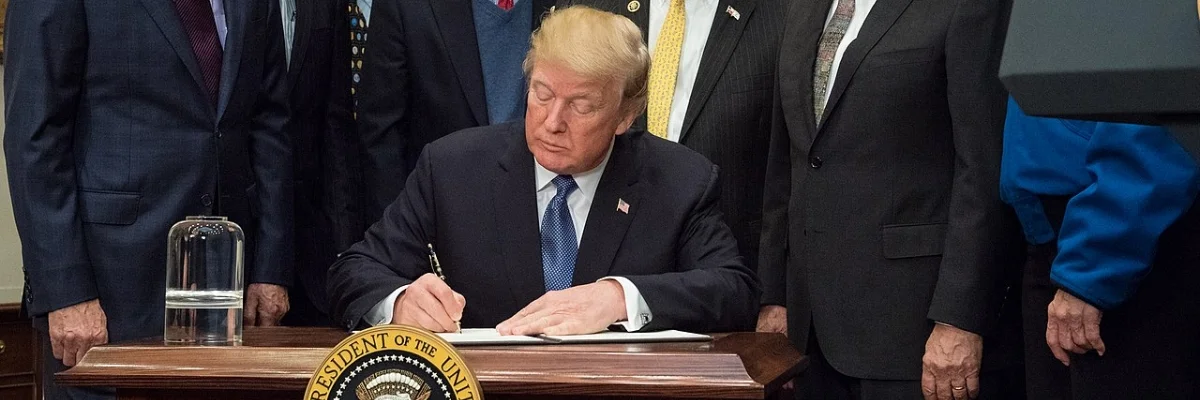
Trump Stance on JCPOA Nuclear Deal Poses Legal Dilemmas for Iran
◢ With the May 12 deadline for the issuing of key sanctions waivers as part of the Iran nuclear deal fast approaching, the legal impact of the collapse of the 2015 agreement ought to be considered. Regardless of how Iran responds to a change in U.S. policy, the possible withdrawal of the United States from the JCPOA will have a legal impact on its parties. Any possible change in the partnership or the provisions of the agreement will be reflected within the domain of international law.
With the May 12 deadline for the issuing of key sanctions waivers as part of the Iran nuclear deal fast approaching, what could be the impact of the collapse of the 2015 agreement? While Donald Trump's conditions for the review of the current arrangement have yet to be met and Iran's clear rejection of any amendments to the plan, the breakdown of the Joint Comprehensive Plan of Action (JCPOA) seems inevitable.
The nuclear deal is the most important multilateral agreement reached in the global nuclear non-proliferation system in the last decade. It is now at risk of collapse. There are three options for Iran should the US withdraw from the JCPOA.
First, Iran could exit the deal immediately and continue to fulfill the obligations under NPT and to the IAEA based only on the safeguard agreements with the agency. This is seen as the worst case scenario by the EU, E3 and the IAEA.
Second, Iran could exit the deal immediately, but continue to fulfill its commitments to the International Atomic Energy Agency (IAEA) based on both safeguard agreements with the IAEA agreed as part of the JCPOA and its preceding agreement, the Joint Plan of Action (JPOA). Under these safeguards Iran has suspended enrichment of uranium to 20 percent.
Third, Iran could opt to remain in the deal on the basis that the European Union and E3 (UK, France and Germany) will provide additional benefits to Iran to compensate for the negative effects of US withdrawal.Iran’s deputy foreign minister, Abbas Araghchi, one of the key architects of the JCPOA, has stated that as long as Iran continues to benefit from a removal of sanctions, it will remain committed to the deal, but has expressed doubts that the France, Germany and the UK will be able to guarantee Iran’s interests in the absence of the United States.
Regardless of which route Iran takes, the withdrawal of the United States from the JCPOA will have a legal impact on its parties. Any possible change in the partnership or the provisions of the agreement will be reflected within the domain of international law.
The Threat of Snapback
Trump has threatened not to issue the crucial waivers that have suspended US secondary sanctions on Iran. On May 12, Iran may find itself in a position not of its own making. Despite unprecedented international monitoring and scrutiny of its nuclear program, and despite the IAEA's approval of its commitments without the slightest deviation for military purposes, it may once again face significant economic sanctions, even over the vital sale of its oil. However, snapback of US secondary sanctions could actually preclude snapback of UN sanctions, if the deal remains intact following Trump’s withdrawal.
One of the provisions of the JCPOA, unprecedented in the 70-year history of the Security Council, is the decision-making process of the partners required to resume sanctions. According to Article 37 of the JCPOA, if the dispute resolving mechanism is unsuccessful, the UN Security Council will vote on a resolution to continue the lifting of sanctions.
In such a case, the United Nations Security Council would vote for a resolution to suspend sanctions. As described in a recent report by Stephen Mulligan, an attorney with the Congressional Research Service:
The ‘snapback’ mechanism thus places the onus on the Security Council to vote affirmatively to continue to lift its sanctions by stating that those sanctions will be implemented automatically unless the Security Council votes otherwise. As a permanent member of the Security Council, the United States would possess the power to veto any such vote and effectively force the reinstatement of the Security Council’s sanctions on Iran.
In this process, the vote of all five permanent members of the Council is critical. If one of these members does not agree with the suspension of sanctions, it alone can easily restore a series of Council sanctions under Article 41 and Chapter 7 of the United Nations Charter (threats to global peace and security).
However, if the United States pulls out of the JCPOA, triggering the snapback of its secondary sanctions against Iran, it may lose the ability to use the UN sanctions snapback threat which is articulated with Article 37 under JCPOA. In other words, only parties to the Iran deal are able to trigger the UN nuclear sanctions snapback procedure. If the US withdraws from the deal, it loses the ability to trigger this mechanism.
This would be a reprieve for Iran, but there are further legal pathways that should be considered in order to prevent more damages by the US to the non-proliferation regime and international law.
Recourse to the International Court of Justice
The IAEA has verified in eleven reports that Iran has fully complied with its commitments under the nuclear agreement. On this basis, Iran feels it is facing punishment without justification.
Iran can, on the basis of Clause 2 of Article 21 of the Treaty of Amity, Economic Relations, and Consular Rights (1955), file a complaint with the International Court of Justice (ICJ) against the United States on the basis that it has had a detrimental effect on its business and trade with other countries.
Punishing Iran with various economic sanctions, including the vital sale of its oil, may result in Iran’s withdrawal or limited implementation of its political commitments under JCPOA. Depending on whether Iran completely abandons JCPOA or suspends some of its commitments under the agreement, it means the end of the current inspections and the IAEA's ability to continue a complete and unprecedented monitoring of Iran's nuclear program. The result is the inability of a United Nations agency to carry out its mission.
The current situation has created a legal impediment, despite the wishes of Iran, for the IAEA and the members of its board of governors including the United Kingdom, France and Germany. According to the definition of the Vienna Convention on the Law of Treaties 1969, the JCPOA is not considered to a treaty, under which definition a violation would result in a case directly taken as a complaint to the International Court of Justice.
However the IAEA is an agency authorised by the UN and if it cannot reciprocate with its obligations to a UN member state that has been in compliance with the nuclear agreement (Iran) due to the interference of a third country, the IAEA can, on the basis of Article 96 of the UN Charter, and Clause 1 of Article 65 of the Statute of the International Court of Justice, for the first time in its history, resort to the ICJ for an advisory opinion on the legal status of the JCPOA.
There is some precedent for such a request by an international organization like the IAEA. The World Health Organisation has taken a similar action on threats to the use of nuclear weapons in armed conflict, requesting a referral from the International Court of Justice. The ICJ’s response would not be legally binding but it would be a new source of international law, and may be considered by the other parties to the nuclear agreement as an official advisory about their treatment of deadlock with the United States.
The JCPOA is an improbable achievement, an agreement reached after Iran had been subjected to the harshest sanctions regime ever imposed. In political practice and in the domain of international law, the JCPOA provides a new way of resolving disputes in support of the nuclear non-proliferation regime. the agreement collapses it would be, as in the words of Yukiya Amano, Director General of the IAEA, a “great loss for nuclear verification and for multilateralism” and in my view also for international law more generally.
Photo Credit: Wikicommons
