
In First, Global Financial Institution Takes Equity Stake in Iranian Financial Services Firm
◢ New deal between Azimut Group and Mofid Securities represents a landmark deal for Iran's financial services sector. Azimut Group is taking a 20% stake in Mofid Entekhab.
◢ The two companies will launch new investment offerings, largely targeting foreign investors. A capital raise will support the expansion of the local sales and advisory teams.
Mofid Securities, Iran’s largest independent brokerage and financial advisory company, has entered into a major new agreement with Azimut Group, one of Europe’s leading asset managers. The agreement will see Azimut take a 20% stake in Mofid Entekhab, the asset management business of Mofid Securities, as Azimut and Mofid seek to bring a higher standard of asset management offerings to the Iranian market for both domestic and foreign investors.
The new deal makes Azmiut the first global financial institution to make an equity investment in an Iranian financial services company. It comes at a time when Iran’s financial services sector has made recent headway in reconnecting with global counterparts. New financing deals with Austria’s Oberbank and Denmark’s Danske Bank and an announced commitment from French bank BPI suggest that more foreign capital is set to flow to Iran in 2018, so long as the possible snapback of secondary sanctions does not take place. Similarly, investor appetite has grown with investment companies deploying foreign capital in Iran’s public and private equities in historic volumes.
With the minority acquisition and joint pro rata capital increase, Azimut will help Mofid Entekhab to develop new investment strategies in local asset classes. Marketing will see a boost with an expanded, locally trained sales force. Most importantly, Azimut and Mofid intend to launch new offshore funds to enable foreign investors to gain exposure to promising Iranian equities.
Mofid Entekhab currently manages USD 89 million in six mutual funds and managed accounts, with 8% market share among Iran’s equity funds. The Mofid Group, founded in 1994, has earned a reputation for its innovation in the Iranian financial sector. The company has invested considerably to raise the standards of its services to international standards. Notably, Mofid owns Pouya Finance, the fintech company behind BourseView, the most extensive financial data platform for Iran’s capital markets.
The new partnership with Azimut is consistent with Mofid’s effort to provide clients to “a new suite of financial advisory and wealth management services in line with the highest international standards,” said Hamid Azaraksh, Chairman of Mofid Securities. Azaraksh states that the company’s strategic goal is “to capitalize on [its] track record as the leading financial intermediary in Iran and create with Azimut a benchmark for the local asset management industry.”
For Azmut, the deal represents a bold move into a country with immense financial potential. Sergio Albarelli, CEO of Azimut Holding, described the deal as “a historical first step for a global player entering the Iranian financial market.” Albarelli noted the compatibility of Mofid and Azimut, based on “core values of independence and commitment to performance.”
The deal, announced just a week before U.S. President Donald Trump is set to declare whether he intends to “de-certify” Iran’s compliance with the JCPOA, offers another example of the strong European commitment to economic engagement with Iran, which is now in evidence across sectors.
Photo Credit: Mofid Securities
New Survey Examines Iranian Attitudes Towards Foreign Investment, Multinational Companies
New survey conducted by IranPoll in partnership with Bourse & Bazaar looks at Iranian attitudes towards economic reform and foreign investment with new detail. Iranians demonstrate high degree of openness to foreign investment and the economic reforms necessary to facilitate that investment. But they want multinational companies to do more to localize their offerings effectively.
A first-of-its-kind survey on attitudes towards trade and investment in Iran conducted by public opinion firm IranPoll in partnership with Bourse & Bazaar, a business media company, points to strong public support in Iran for greater trade with other countries and related economic reforms. A resounding 85% of respondents feel that “growing trade and business ties between Iran and other countries” was leading to good or very good outcomes for the country.
The results of the landmark survey will be presented by IranPoll CEO Dr. Amir Farmanesh to an audience of over 400 European and Iranian business leaders and policymakers at the 4th Europe-Iran Forum, which takes place on October 3-4 in Zurich, Switzerland.
The survey, which was conducted in August 2017 among a representative urban sample of 700 Iranians has been published at a crucial time when debate over the Joint Comprehensive Plan of Action (JCPOA), also known as the Iran Deal, reaches a fever-pitch. While President Trump has expressed his disapproval with the deal, it remains popular among a majority of Iranians, with 62% of respondents approving. But doubts and frustrations have emerged since the agreement was concluded in 2015. Acutely aware of President Trump’s rhetoric, 77% of Iranians have little or no confidence that the United States “will live up to its obligations under the agreement.” By contrast, public confidence in the European commitment to the JCPOA remains strong, with 57% of respondents believing the Europeans will stick with the agreement.
“Contrary to the reputation and image of the US, Europe’s image in Iran has improved significantly since the signing of the JCPOA and Iranians welcome greater trade and economic engagement with European companies” commented Dr. Farmanesh, the CEO and President of IranPoll. “Yet, only a minority of Iranians believe European producers have a good understanding of the needs and the taste of the Iranian people, which means European companies need to take extra steps not only to familiarize themselves with Iran's business environment but also to demonstrate their appreciation for the tastes, lifestyles, and culture of the Iranian society.”
Against the backdrop of political uncertainty, economic dividends of the agreement remain unclear. While 43% of Iranians report that the “availability of goods made by multinational companies” has increased in Iran since the nuclear deal, majorities say foreign investment and job creation by multinational companies have not increased since the signing of the JCPOA. . However, Iranians do see improvements in the way businesses are operating, with both Iranian and multinational firms making greater efforts towards supporting employee training and technological innovation in Iran when compared to five years ago.
“These findings send an emphatic message to policymakers and business leaders worldwide. Iran may prove to have one of the most receptive populations for a robust agenda of economic engagement,” said Esfandyar Batmanghelidj, founder of Bourse & Bazaar. “The nuclear deal has clearly opened a window of opportunity and encouraged Iranians to think globally and ambitiously. The question remains whether the trade and investment that Iranian have been anticipating will be forthcoming.”
Robust Support for Global Economic Engagement
While public sentiment towards globalization has soured in many countries around the world, Iranians believe that Iran should increase its role in the globalized economy. A majority of Iranians (62%) believe that globalization is having a positive effect worldwide, with just a third (33%)believing the effect is “negative.” Specifically in the case of Iran, a dominant 85% of respondents felt that “growing trade and business ties between Iran and other countries” is leading to good or very good outcomes for the country. Iranians also see positive effects on job creation and wages with 51% of respondents believing that “trade with other countries” creates jobs, and 40% of respondents believing there is an attendant increase in wages (36% see no impact).
As the country reaches out to foreign partners, members of the Iranian public have a strong opinions as to which countries have the most to offer. European countries and Japan are the most desired trading partners among Iranians. The greatest confidence was expressed for German and Japanese investments, with 66% and 67% respondents stating that there is “a lot” of benefit for Iran when these countries invest. French, Swiss, and Italian investments were also seen as highly beneficial. Importantly, European firms have made significant inroads in the Iranian market in the last few months, with notably deals signed by European multinationals such as Total, Renault, Alstom, and Siemens.
"Now I will read you the names of some countries. As I read the name of each, please tell me the degree to which you think it would be in Iran’s interest for more companies from that country to invest and trade with Iran:"

During the period of economic sanctions, China became Iran’s largest trading partner, surpassing the European Union. However, while 65% of Iranians believe that Chinese investment in Iran is in Iran’s interest, only 19% strongly believe that to be the case. That Iranians exhibit significantly less confidence in the benefits of Chinese investment may help explain why the Europeans have been able to conclude the lion’s share of new commercial agreements following the lifting of international sanctions.
Despite the negative view of Iran in the United States, half of Iranians believe that American investment would benefit Iran (19% strongly).
The level of confidence in a foreign nation’s role as investor generally correlates with the perception of the quality of that country’s products. German and Japanese products were seen as having the highest quality, with 69% and 62% of respondents reporting products from those countries as being of “very good” quality. Chinese products were seen as having the lowest quality, with 61% of respondents reporting the quality as “somewhat bad” or “very bad.”
As Iran begins to modify its laws and policies to help facilitate foreign investment, the domestic debate on economic policy in Iran has become more important. While 56% of respondents believe that Iran should keep tariffs on imports in place, there is clear public support for economic reforms that will help spur foreign investment by major multinationals. An overwhelming majority (86%) of respondents would approve of policies that make it easier for multinational banks to operate in Iran and 87% support policies that encourage foreign investment. The same proportion of respondents would approve of policies to make it easier for “heads of multinational companies” to travel to Iran.
Confidence in the Business Community
Beyond the clear public support for the macroeconomic benefits of globalization, Iranians also have strong opinions about the role of the business community in the process of economic development.
At a time when the Trump administration is threatening to de-certify Iran’s compliance with the JCPOA and re-impose broad sanctions on the country, the pace of multinational investment in Iran has frustrated Iranians, with 70% of those surveyed suggesting that multinational companies are “moving slower than they could” to invest in Iran. When asked what is causing multinational companies to move slowly, 77% of respondents identified “fear of the United States” as the primary reason.
"Are multinational companies moving as rapidly as they can to trade and invest with Iran now that some sanctions have been lifted, or are they moving slower than they could?"

Moreover, Iranians are ambivalent as to whether Iranian and multinational companies will contribute to job creation in the next year, with just 7% of respondents believing that Iranian companies will create “a lot of jobs.” In comparison, 7% believe that multinationals will create “a lot of jobs.”
While it remains ambiguous whether jobs will be created in the near-term, Iranians do have a clear sense of who they consider to be the primary drivers of economic progress in Iran. Despite the historical dominance of Iran’s state-owned enterprises, when asked to evaluate whether state, private, or multinational companies will be the main contributors to economic improvement, just 31% chose state companies. Iran’s private sector companies enjoy the greatest degree of the public’s confidence, with 41% of respondents believe these firms “can best help to improve economic conditions” in Iran and 21% of respondents see multinational companies having the most positive effect. The confidence in private enterprise demonstrates further public support for Iran’s accelerating efforts of privatization in the post-sanctions period. That support for private firms and multinationals combined outweighs that for the economic leadership of state firms lends support to government efforts to support foreign investment and privatization in tandem.
"Which one of the following kinds of companies do you think can best help to improve economic conditions in Iran?"

Yet, Iranians still do not feel their economy is accountable to the public. A majority of those surveyed, 57%, believe that Iran’s economy is “run by a few big interests” while just 38% believe it is “run for all the people.” One measure of success in the coming years of economic reform will be whether this proportion shifts.
Iranians Leveraging Their Influence
Not merely passive observers of Iran’s economic transformation, Iranians intend to drive economic reforms from the ground-up. Most notably, those seeking jobs have clear expectations that companies to which they are applying for employment respect corporate social responsibility. While 86% of respondents gave job security the highest score for importance when seeking employment at an Iranian company, salary was deemed less important than the reputation of the company, how the company treats its customers, and the company’s commitment to the public health and safety. Similar sentiments were expressed about environmental protections as well, with 58% of Iranians declaring that the environment should be protected, “even if the economy suffers to some extent.”
Importantly, the vast majority of Iranians believe they have “freedom of choice and control” over their direction in life, with 93.4% agreeing with the notion that “people shape their own fate.” Tellingly, 49% agreed with this statement in the strongest terms. These findings suggest that Iranians have a strong individual impulse and a confidence that if afforded the right opportunities they will be motivated to pursue them. The question remains whether policymakers and business leaders both in Iran and abroad will take heed.
MTN Group Offers a Glimpse of the Future for Iran Investor Relations
◢ MTN Group presented its interim results on August 3rd, which included an extensive look at the operational and financial progress in their Iran joint-venture, MTN Irancell.
◢ The transparent look at Iran for investors, analysts, and media is somewhat unprecedented and shows a future where major multinationals will report on Iran in the same way as any other market.
On August 3rd, the same day that President Rouhani officially launched his second term, South Africa’s MTN Group, a major telecommunications company, presented its 2017 interim results.
As a publicly traded multinational company, MTN’s presentation had all the trappings of a modern investor relations conference: a live-stream on Periscope, a dedicated hashtag (#MTNResults), a web portal, and significant media attention.
But the presentation also included something that perhaps no other company could boast—a direct and wide-ranging discussion of Iran business operations.
The MTN Irancell joint-venture makes Iran one of MTN Group’s most important markets, covering nearly 50,000 million subscribers, and generating USD 1.2 billion in revenue in 2016. Iran is MTN’s third most valuable market after South Africa and Nigeria despite operating in Iran in a joint-venture.

Despite the importance of the market, for several years MTN downplayed its Iran operations as international sanctions were levied on Iran. The country was mentioned sparingly in investor reports and primarily in regards to steps MTN had taken to mitigate regulatory and sanctions risks.
But in a sign of the new post-sanctions environment, Thursday’s presentation, led by Group CEO Rob Shuter and Group CFO Ralph Mupita, included considerable detail on the progress MTN has made in the Iranian market, with subscriber numbers and revenues rising. Their presentation offers a compelling example of the proactive financial communications that more listed firms are bound to follow in the coming years.
By way of comparison, the half-year presentation of Groupe PSA, the corporate entity of Peugeot and Citroen, made little mention of Iran despite Iran being the best-performing market and the source of key sales growth.
The MTN presentation set a strong example for how Iran can be positioned within the strategic vision of a company. MTN Group is active in a number of complex markets, including South Africa, Ghana, Cameroon, and even Syria and Sudan. For Group CEO Shuter, the company mission is to “build credibility as an operator of emerging markets telecommunications.” This mission helps explain the Group’s commitment to the Iran and the appetite for the risk and uncertainty it poses.
The Group’s resolve was tested as the imposition of financial sanctions on Iran had made it impossible to repatriate revenues from MTN Irancell. Following the nuclear deal, MTN was able to reestablish its banking channel, and has since repatriated nearly USD 1 billion in cash.
Buoyed by the fact that Iran revenues can more reliably contribute to the group’s overall performance, Shuter noted that the Iran joint-venture is a “very high margin business” even with the “significant government revenue share.” MTN holds 49%, while Iran Electronic Industries is a relatively passive majority partner. The company expects Iran is continue to deliver growth. Data usage, the most lucrative revenue source for MTN, rose 160% in Iran year-on-year. MTN plans to drive more data usage through investments in thousands of 3G and 4G sites. Data revenue is already up 68% in the first half of 2017.

The public disclosure of detailed operational and financial data of an Iran business unit remains rare. For globally-recognized listed company, reporting financial results is mandated. But in Iran major state and private companies listed on the stock exchange have yet to adopt best-practices for investor relations. MTN’s clear effort to report on their Iran operations in a manner consistent with other markets a kind of proactive communications that will need to be adopted by other multinational firms as they enter into joint-ventures in the market.
MTN’s relatively passive partner in Iran, Iran Electronic Industries, which owns 51% of MTN Irancell, is a state-owned enterprise. Multinationals in the oil and gas, automotive, metals and mining, and infrastructure sectors are currently entering into similar engagements with state enterprises.
As more multinational companies establish joint-ventures with Iran, investors both within Iran and abroad will gain access to more detailed financial results and strategic outlooks. The foreign partners (and foreign regulators) will require transparency, and these requirements could prove transformative.
Finally, the MTN presentation offered a vision of innovation that did not just include Iran, but put Iran at its center. Group CEO Shuter highlighted Snapp, Iran’s answer to Uber, as an example of a market-leading start-up to emerge from an MTN-backed accelerator.
No doubt, for the analysts, investors, and journalists watching the MTN interim results it was a case of “business as usual”—another well-scripted, well-choreographed company presentation. But for those with an eye on Iran, the presentation was reminder that investor relations in that market has a long way to go, particularly for those multinationals currently trading in the country. With its transparency and bold vision, MTN is setting a strong example that others ought to follow.
Photo Credit: MTN Group
“Davos of Iran” to Convene as Post-Sanctions Trade and Investment Reaches Critical Juncture
◢ European business leaders and policymakers will convene with their Iranian counterparts at a critical time during the 4th Europe-Iran Forum in Zurich on October 3-4, 2017.
◢ The business community will be meeting to set an agenda for trade and investment as the Trump administration signals its skepticism regarding the Iran nuclear deal.
European business leaders and policymakers will convene with their Iranian counterparts at a critical time, setting an agenda for trade and investment as the Trump administration signals its skepticism regarding the Iran nuclear deal.
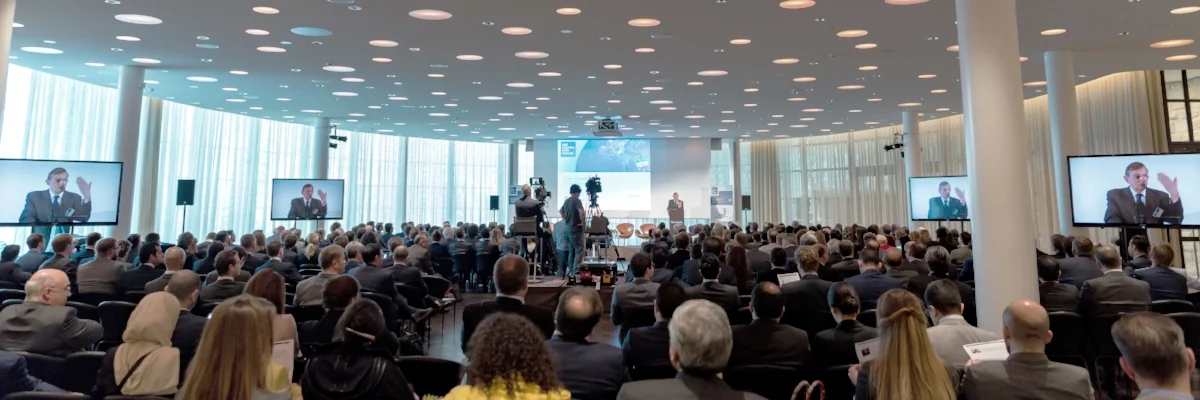
The fourth edition of the Europe-Iran Forum, which has been called the “Davos of Iran,” returns to the historic Dolder Grand Hotel in Zurich on October 3-4, 2017. The summit is set to be the most significant gathering of Iranian and European business leaders and policymakers to date, demonstrating a clear commitment to the economic dividends of the nuclear deal.
“Multinational companies have now spent two years studying the feasibility of new investments in Iran, and pressure is increasing for long-expected deals to reach the contract stage. Encouragingly, with a number of major agreements signed in the last few months, it seems the commitment to the Iranian market remains strong,” said Esfandyar Batmanghelidj, founder of the Europe-Iran Forum.
“The aim now is for European leaders to work with Iranian partners to find a sustainable agenda for trade and investment with a view to the long term.”
Helga Schmid, Secretary General of the European External Action Service (EEAS) and a key figure in the negotiation of the Joint Comprehensive Plan of Action (JCPOA) will give a keynote speech outlining the European commitment to the nuclear deal and the provision of sanctions relief to Iran in exchange for its verified compliance. This is the first time that the Secretary General, one of Europe’s top diplomats, will address an audience of business leaders on these matters.
The European push for “business diplomacy” will be bolstered by the participation of an unprecedented multilateral gathering of senior diplomats, including the Belgian, British, Danish, Dutch, and Polish ambassadors to Iran.
There will also be strong representation from the Rouhani administration, which is determined to push forward its agenda of economic engagement following a resounding election victory in May and the President’s inauguration on August 5.
Mohammad Khazaee, the Deputy Minister for Economic Affairs and Finance and President of the Organization for Investment, Economic, and Technical Assistance of Iran (OIETAI), will outline the administration’s agenda for monetary policy and regulatory reform. Iran is seeking to make more progress on banking challenges, particularly by improving its compliance with the recommendations of the Financial Action Task Force (FATF), an intergovernmental body that establishes regulatory standards for international finance.
Deputy Minister of Industry, Mine, and Trade Mehdi Karbasian, and Deputy Minister of Foreign Affairs Seyyed Kazem Sajjadpour, will also speak at the 4th Europe-Iran Forum.
Senior business leaders from Iran speaking at the conference include Farzaneh Sharafbafi, the newly appointed CEO of Iran Air and the first woman to lead Iran’s national airline. This will be Dr. Sharafbafi’s first major international address in her new role. Iran Air’s pending deals with Airbus and Boeing, valued at USD $10 billion and USD $17 billion respectively, count among Iran’s most important post-sanctions contracts.
Dr. Mohammad Saeedi, Chairman and Managing Director of the Islamic Republic of Iran Shipping Lines (IRISL), will outline how Iran seeks to modernize its merchant fleet and port infrastructure to keep up with rising trade flows. Iran’s non-oil trade hit nearly USD $30 billion in the four months since the beginning of the Iranian calendar year (March 2017).
Masoud Khansari, President of the Tehran Chamber of Commerce, Industries, Mines, and Agriculture, will detail the ways in which Iran’s private sector has been empowered to drive economic growth across sectors, including those traditionally dominated by state enterprise.
A wide range of panels will discuss how Iran is succeeding in attracting foreign investment through new partnership models. Of particular importance will be a panel on transportation and logistics, with senior representatives from Alstom, Siemens, and Port of Antwerp discussing the holistic regeneration of Iran’s transport infrastructure and the concrete achievements of their companies in the market, in addition to ongoing efforts to mitigate risk and ensure adherence with global compliance standards.
Moreover, several of Iran’s key private equity and venture capital executives will explore how foreign capital has begun to enter Iran, supporting growth within the vibrant private sector.
Omid Gholamifar, CEO of Serkland Invest, a Swedish investment company focused on Iran, and a participant on the private equity panel, notes, “Over the last two years, foreign investors have deployed venture capital in Iran, supporting young digital businesses. Those investments have done well, spurring entrepreneurship and bringing new services to the market. Now investors are beginning to look at more mature companies and these growth capital investments could turbocharge Iran's private sector."
The Forum will also mark the release of a new study measuring business confidence in Iran, commissioned in partnership with noted research firm IranPoll. The first-of-its-kind survey examines attitudes among Iranians towards domestic and multinational businesses, as well as the extent to which Iranians believe that business leaders will deliver on important commitments such as job creation, environmental protection, and innovation.
The 4th Europe-Iran Forum is organized by Bourse & Bazaar in partnership with Adam Smith Conferences. It is supported by KPMG, Dentons, and Manoir Industries among other world-class sponsors.
Photo Credit: Europe-Iran Forum
Struggling to Trade With Iran, Japanese Companies Look to European Examples
◢ Japan is one of Iran's major historical trading partners. But Japanese companies have fallen behind European, Chinese, and Korean firms in post-sanctions investment.
◢ Japanese companies are now looking to European firms as they seek to balance political and reputational risks, especially in the absence of a high-level delegation to Iran.
On July 19, Bourse & Bazaar held a round table in Tokyo, part of a global series of meetings being held in advance of the 4th Europe-Iran Forum. This event, hosted by the JIME Center of the Institute for Energy Economics, Japan’s leading Middle East research institute, brought together senior executives from some of the largest Japanese companies to discuss their progress and frustrations in the Iranian market.
Since Implementation Day, Japan has been slowly increasing its economic activity in Iran. Japan has committed to establishing a financing facility worth USD 10 billion to support new investments in Iran by Japanese companies, which have begun to sign new investment contracts across several sectors. Most recently, Toyo Engineering Corporation signed an agreement with Iran’s National Iranian Oil Company to rehabilitate Iran’s Salman oil and gas field in partnership with domestic oil firm Petropars.
However, the pace of post-sanctions trade and investment has lagged behind expectations. Japan was among Iran’s most established trading partners prior to the tightening of international sanctions, and Japanese multinationals have longstanding partnerships in the country. But the rush of activity from European and Korean multinationals has seemingly left the Japanese behind. Japanese executives are asking: “How are the Europeans doing it?” As Trump ups his rhetoric against Iran, and as the GCC crisis continues to roil, Japanese companies are trying to understand and replicate the ability of European multinationals to forge ahead and sign binding commercial agreements in Iran.
On one hand, Japanese companies should be better suited than their European counterparts to crack-open the Iranian market. From a management perspective, Japanese multinationals benefit from tight coordination across sectors and secondarily, a close relationship with the relevant government ministries. The so-called keiretsu, or business groups, link together financial institutions, industrial giants, energy firms, and shipping companies into informal groups that commonly work together in domestic and international markets. Though keiretsu ties are now looser than in their 1990s heyday, bids for large infrastructure or industrial projects by Japanese multinationals are often enhanced by the provision of financing by the main keiretsu bank. At a time when Iran is starved for financing, and while European companies are struggling to enlist major banks for Iran investments, this historic coordination could put Japan in a highly competitive position. Japanese megabanks maintain significant non-dollar financial channels and Iran possesses significant yen-denominated reserves in Japan—proceeds from decades of oil sales.
Yet, coordination is also a curse when the importance of coordination among companies is also reflected within decision-making processes. Japanese companies are managed on the basis of consensus. Approval for decisions is achieved through the process of nemawashi, by which support for an idea is achieved by gathering input and support from a wide range of internal stakeholders. This process both helps explain the impressive track record of Japanese companies in finding commercially successful strategies, but it is also a reflection of the high-degree of caution exercised by Japanese managers, who seek a wide consensus on any given strategy, rather than assume sole responsibility for risky decisions.
Both the aversion to risk and the responsibility for risk pose an understandable barriers when comes to Iran investments. Multiply risk aversion across company departments, and then across the companies within a keiretsu group, and subsequently, the prospects for an Iran investment “green light” grow slim. The Japanese country managers responsible for business development in Iran have the unenviable task of seeking especially broad consensus for key decisions, likely involving a greater number of individuals than in a European corporate context. Consensus-building is further complicated by the fact that the political environment for Iran trade and investment seems to change on a near weekly basis. The longer the decision-making process, the more likely it will be that decision-makers will want to reevaluate in light of recent developments.
Crucially, Japanese management teams are struggling to build consensus around new investments in Iran in part because of lack of political support. The largest Japanese enterprises are in regular communication with organizations such as the Ministry of Economy, Trade and Industry (METI), the Ministry of Foreign Affairs, and the Japanese External Trade Organization (JETRO). Each of these organizations boast staff with deep knowledge of the Iranian market and experience executing large agreements that is perhaps even deeper than among the equivalent European agencies. But Japan, unlike Europe, has yet to set an overarching policy regarding renewed economic ties in Iran, rendering this coordination with government inert.
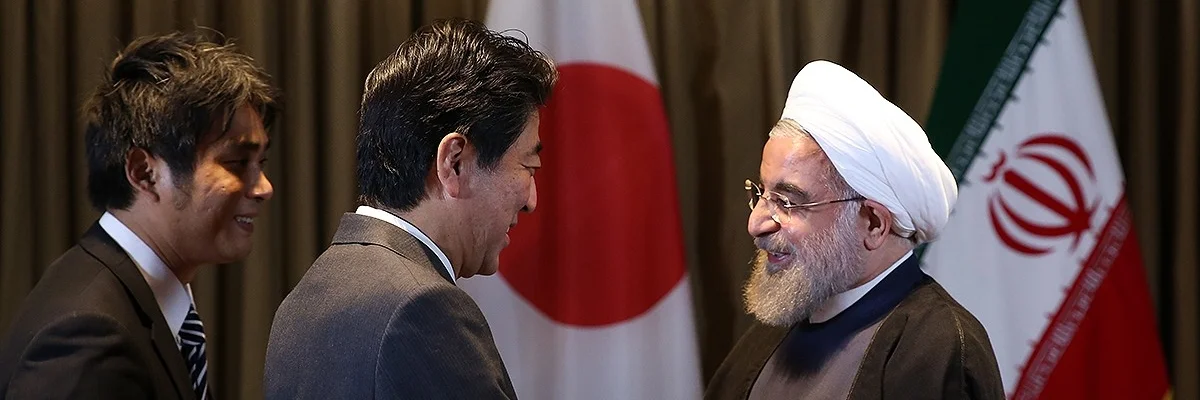
The lack of high-level political support remains the primary difference between the recent experiences of European and Japanese enterprises in Iran. Japanese Prime Minister Shinzo Abe was scheduled to travel to Iran in August 2016, only for the trip to be delayed over concerns that Japan’s first such visit since 1978 could sour possible ties with Donald Trump, who was growing resurgent in the U.S. presidential elections at the time. While Rouhani and Abe did meet on the sidelines of the United Nations General Assembly in October 2016, a high-level state visit to Iran is now on indefinite hold. Trump's eventual triumph saw Abe become among the first world leaders to visit the new president, in February of this year. While numerous European heads of state have traveled to Iran in the last two years, offering valuable political support to their engaged companies, Abe’s lack of a clear stance leaves Japanese companies exposed to possible reputational risks in the United States possibility even at the hands of Trump himself.
Second, Japan’s government and Japanese companies are contending with political pressure from Saudi Arabia and the United Arab Emirates. While Iran was Japan’s largest exporter of oil up until the tightening of international sanctions in 2012, Iranian oil imports were replaced by imports from Saudi Arabia and the United Arab Emirates. Recent data from the Petroleum Association of Japan shows Saudi and UAE oil accounting for a combined 70% of the country's imports.

The governments of Saudi Arabia and the United Arab Emirates have used this energy dependence to send a clear message to Japanese companies regarding Iran: “It is us or them.” This pressure explains in part why Japan’s oil imports from Iran in 2017 are down 51% on the previous year. Japanese companies report being pressured not to invest in Iran, at the risk of losing major contracts in Saudi Arabia and UAE. European companies have also been subject to similar pressure from Saudi and Emirati authorities, but have been more effective in pushing back on false ultimatums. In a recent investor call, Total CFO Patrick de la Chevardiere disclosed that the company had informed its Saudi partners about its intention to sign a full agreement to develop Iran’s South Pars Gas field.
Absent more direct political support, Japanese companies may remain frustrated in their attempts to engage Iran’s investment opportunities more aggressively. But there are a few strategies that could help create basic momentum behind investment plans while still mitigating risk.
First, Japanese companies need to take the keiretsu mentality and use it to create consortia with European firms. European companies have already sought partnerships with Chinese financial and industrial partners to help spread the risk of projects in Iran. Japanese multinationals should more actively position themselves as possible partners for such arrangements, particularly given that Japanese companies already operate substantial business units or joint-ventures in Europe with many of the European companies engaged in Iran.
Second, Japanese companies should be more creative in seeking ways to build credibility and stakeholder relationships in Iran. European companies, cognizant that significant investments would take a long time to move from initial discussions to binding contract, have used smaller projects to help demonstrate their commitment to the market while negotiations are ongoing. One compelling example can be seen in the case of French carmaker Renault, which has provided hardware and expertise to support the study of electric vehicles by students at Azad University. Japanese companies, which lead the world in many technologies, would be well-positioned to devise similar knowledge transfer projects in Iran. Such efforts who help build stakeholder relationships and also provide Japanese companies early examples of corporate social responsibility in Iran that can be used to help mitigate reputational risk.
Japanese ambitions in Iran may remain constrained by politics for some time. But Japanese multinationals can and should remain committed to the market, seeking creative solutions to remain present and active. Ceding market share to European, Chinese, and Korean multinationals would prove a strategic blunder, particularly as cooperation remains a viable option.
Photo Credit: IranThisWay
Is France Ready to Stand Up to Trump on Iran?
◢ With new U.S. sanctions on Russia and Iran set to come into force, the French Foreign Ministry issued a firm statement suggesting new U.S. sanctions could contravene international law.
◢ While Germany is likely to lead on the push back against additional Russia sanctions, the importance of the Iranian market to French enterprise may mean that Macron is best positioned to intervene with Trump to help preserve the JCPOA.
This article was originally published in LobeLog.
On July 26th, the French foreign ministry issued a declaration about the package of new sanctions targeting Russia and Iran making its way through Congress to President Trump’s desk in the Oval Office.
In the estimation of the French foreign ministry, “the extraterritorial scope of [the sanctions] appears to be unlawful under international law.” The statement outlined the need for the Europeans to “adapt our national mechanisms and update European mechanisms” to protect themselves from the U.S. legislation. The French foreign ministry called for coordination with European partners to address American overreach.
Although Germany is likely to lead the fight against additional Russian sanctions because of its reliance on Russian energy supplies, the French are likely to lead on the European pushback on new Iran sanctions, and even more urgently, to advocate for the preservation of Iran nuclear deal, otherwise known as the Joint Comprehensive Plan of Action (JCPOA).
In a recent interview with the Wall Street Journal, Trump stated, “If it was up to me, I would have had [Iran] noncompliant 180 days ago.” Subsequent reports suggest that the administration may be seeking additional access to Iranian nuclear sites. The combination of Trump’s statement and the rumored actions has put the survival of the JCPOA at risk.
France as Lead Investor
For the French, the timing of the new Iran sanctions and Trump’s statements on the nuclear deal are especially troubling. French companies have reached important milestones in the past few weeks that could be jeopardized if political uncertainty begins to undermine business confidence.
On July 3, French energy giant Total signed a landmark $5 billion contract to develop Iran’s South Pars Gas field. Twenty days later, French transportation company Alstom signed a major joint-venture agreement to produce metro carriages in Iran. French carmaker Renault is expected to conclude its long-awaited contract defining the operation of a full-fledged Iran business unit in the next week. At the same time, a steady stream of smaller French investments have brought activity to other corners of Iran’s economy. Sushi Shop, a French fast-casual restaurant chain, opened its first branch in Tehran this week. Add to this Airbus and ATR’s sale of aircraft to Iranian airlines, the mooted market entry of telecommunications giant Orange, and the local expansion of hospitality giant Accor, and the scope of French enterprise is quite large. For France, Iran is a cornerstone market, a rare country where French companies have market-leading positions in strategic sectors.
The success of French enterprises in Iran is a crucial part of France’s program to boost its global competitiveness. In a recent interview, French Minister of Foreign Affairs Jean-Yves Le Drian, noted France’s dismal trade deficit, amounting to 48 billion euros in 2016. Le Drian drew a comparison to France’s European neighbors: “France suffers from a lack of exporting companies: there are only 125,000—half of which work with only one country. We aren’t competitive enough in this respect.”
Le Drian was no doubt referencing the export prowess of Germany. This prowess also explains the differing positions of Germany and France vis-a-vis Iran. Despite being Iran’s largest trading partner prior to the imposition of sanctions, Germany sees Iran as only a part of a wider portfolio of trade partners, one of which is the United States. Tellingly, the value of German exports to the US was $114 billion in 2016, whereas French exports were valued at just $47 billion. The respective 2016 export figures for Iran are 2.9 billion euros for Germany and 1.7 billion euros for France. So, although French trade to the US dwarfs the total value of French trade with Iran, in relative terms, Iran is a more important market for France than for Germany.
This is especially true for foreign investment. French companies are increasingly establishing majority-owned business units in Iran. These units, when they become revenue generating, will deliver significant shareholder value. The best example of this is Peugeot, whose sales in the first half of 2017 dipped in both Europe and China, only to remain positive overall because of strong performance in Iran. Importantly, Peugeot does not sell cars in the United States. Although Peugeot may be an extreme case of reliance on the Iranian market, Iran-based revenues can certainly deliver increased shareholder value to French companies.
For Emmanuel Macron, who faces a massive task in revitalizing French business, the economic boon of the Iran deal will prove strong incentive to advocate for its preservation over and above the fundamental security gains that the deal was able to achieve.
France as Deal Saver?
Although coordinated action from all European allies will be necessary to convince the Trump administration to stay the course with the deal, which the international community believes to be working, France may be the country best positioned to lead on the issue. There are a few reasons why.
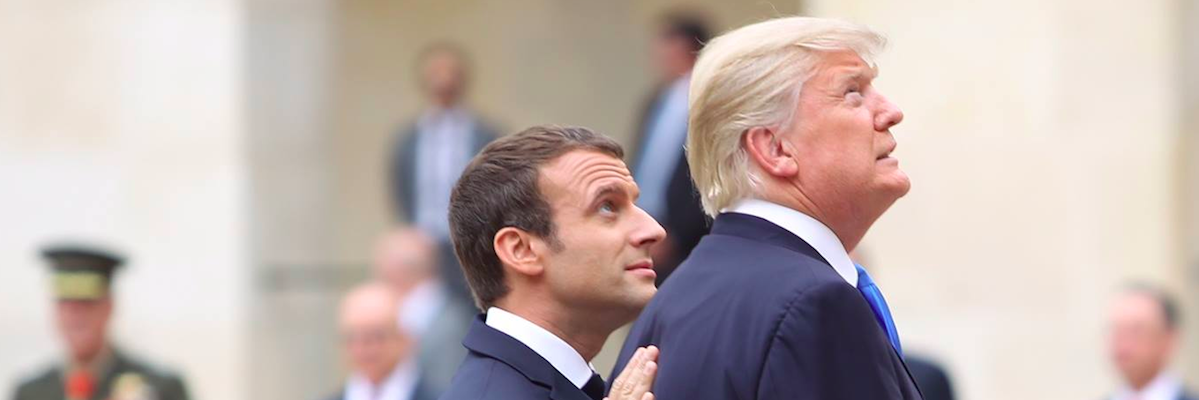
First, Macron has spent a considerable amount of time with Trump both in Washington and Paris, and has developed a personal relationship that constitutes, if not out-and-out rapport, then at least a kind of understanding between two self-styled “alpha males.” This relationship should give Macron the chance to appeal to Trump more directly, not necessarily relying on communications via his fractured circle of advisors, for whom Trump has “great respect” but to whom he may not listen.
Second, the timing for French leadership on the issue is right. Macron remains energized by his recent election triumph, and one recent study has seen France rise from fifth to first in a world-ranking of soft power, due to both Macron’s popularity and the influence of France’s diplomatic network. Both qualities would be brought to bear in any multilateral outreach to preserve the Iran deal in Washington. Moreover, Germany’s Angela Merkel and her government are set to enter an election contest in September, monopolizing attention during this critical period of equivocation from Trump. It would also be wise to separate the advocacy on Russia and Iran sanctions issue given the complicated ways in which the political circumstances of the two countries are both related and unrelated.
Finally, France could prove the most credible advocate for the Iran deal in Europe, since it was the toughest of the European negotiating parties of the JCPOA. Laurent Fabius, the then-French foreign minister, was seen as a potential spoiler of the deal given the firmness of French demands. The French insistence on strict Iranian adherence to the deal was underscored when Macron emphasized the point in his phone call congratulating President Hassan Rouhani on his reelection. Moreover, to the extent that the conversation around Iran’s non-compliance has been conflated in Washington with a discussion of regional security issues like support for terrorism, French intervention could be key. France is the European country most engaged on confronting global terrorism and could credibly mediate between Iranian and American political and military leaders around some of these issues.
Whether or not Macron and his team are ready to spend the time and energy to safeguard the deal is yet to be seen. But like Trump, Macron needs to show that he is “winning.” French businesses are winning in Iran right now, and the loss of the deal could mean the loss of a significant market once more.
Photo Credit: Wikicommons

We Shouldn’t Defend the JCPOA at the Expense of the Iran Deal
◢ The JCPOA has now persisted for two years, and Iran is beginning to see post-sanctions benefits. But American support for the deal is wavering, and deal supporters in Washington have upped their advocacy.
◢ But deal supporters often describe the JCPOA as an unusual concession from an otherwise threatening Iran, a characterization that undermines much of what the Iran Deal has achieved so far.
This article was originally published in LobeLog.
On the two-year anniversary of the agreement, U.S. supporters of the Joint Comprehensive Plan of Action, including many former Obama administration officials, are admirably working to defend the deal through media appearances and coordinated statements. Their message that “diplomacy works” is an important one at a time when America’s global leadership seems in doubt.
However, the rhetoric in Washington defending the JPCOA remains problematic, because it pursues the preservation of the deal in a way that undermines the unfolding detente between Iran and the international community.
On Morning Joe, former Secretary of Energy Ernest Moniz, noted that the Iran deal has eliminated the “existential threat” posed by a nuclear Iran, echoing similar language used by Secretary Kerry and other members of the Obama administration to support the deal since 2015. Similarly, Colin Kahl, another former Obama administration official, has argued in a piece in the New Republic that “If Trump exits the agreement, the prospects of a nuclear-armed Iran—or a major war to head off that outcome—would increase.” Moreover, these risks of escalation are amplified when deal supporters argue that Trump is already in breach of the Iran deal, and that these breaches are part of a concerted effort by hawks to bait Iran into conflict.
Although they seek to demonstrate the efficacy of the JCPOA, these arguments also work to confirm the demonization of Iran peddled by those opposed to the deal. The diplomatic triumph of the JCPOA is cast as directly proportional to an Iranian threat described in nearly essentialist terms. For example, the argument that the collapse of JCPOA would immediately prompt Iran to pursue a nuclear weapon suggests that it’s impossible for Iran’s leadership to choose any other strategy in response to a US withdrawal from the agreement. The argument gives the US full agency to tear up the deal but denies Iran any agency to choose not to proliferate. It also ignores the importance of the other parties to the JCPOA.
Relying on the received wisdom of Iran’s perennial threat to underscore the importance of the JCPOA is perhaps the most politically palatable way to defend the deal in Washington. But it also demonstrates that the talking points around the JCPOA have not significantly advanced in two years. The stagnant rhetoric also reflects a fundamental misunderstanding of how the other members of the P5+1 see the JCPOA.
What American deal supporters and opponents alike fail to recognize is that the JCPOA and the Iran deal are not the same thing. The difference is best described through the lens of basic game theory. Whereas the JCPOA was just one “round,” the Iran deal describes an ongoing “game.”
The Prisoner’s Dilemma
When focusing on the JCPOA alone, American deal supporters find themselves essentially defending the agreement as the unlikely outcome of a situation akin to the traditional prisoner’s dilemma. They suggest that although both the US and Iran had reasons to defect in the “game” of the negotiations to win the upper hand, the two sides decided instead to choose mutually beneficial cooperation—what the Iranian’s called aptly the “win-win” solution.
But this conception of the JCPOA completely misses the full scope of the game that Iran, Europe, Russia, and China are currently playing. The JCPOA is not the final payout of a prisoner’s dilemma-type game. It is rather just one round, which marks the beginning of a long chain of iterated negotiations that can be collectively called the “Iran deal.” As we have seen since July 14, 2015, Iran has been engaged in a multiplicity of new negotiations in both political and commercial spheres. That Iran is successfully engaging in an integrated game with numerous actors also shows that Iran deal supporters in Washington are misconstruing the agency of Iran as a rational player in the game.
When actors enter into an iterated game, the incentives around defection or cooperation change completely. If one side knows that defecting in one round of a game is likely to lead to punishment in the next round, the cost of defection goes up. Rational actors are expected to cooperate more often in games with a large number of iterated interactions. For Iran, reciprocating any American escalation would mean defecting from the constructive path it has taken with other players in the international community. On this basis, not only is the argument that Iran will necessarily reciprocate American escalation dubious, but it also ignores the fact that the costs of escalation for Iran are much higher now, particularly because Iran is cooperating fruitfully with so many other actors in the international system.
A tendency towards cooperation is evident in the quick warming of ties between Iran and other global powers over the last two years. The JCPOA launched a new “game” in which an expanding pool of players could adopt strategies of mutual cooperation, leading to positive outcomes. This includes everything from relaxed visa requirements and educational exchanges to the much-heralded commercial contracts from the likes of Boeing, Airbus, and Total. As the wider Iran Deal continues to fulfill its promise in each successive round, trust builds and the optimal strategy of mutual cooperation is reinforced.
The risks of defending the payout of the round while harming the overall game are clear. By using the risk of escalation, proliferation, and conflict to justify adherence to the JCPOA, its supporters in the United States are undermining both the logical and empirical basis for a more cooperative political strategy from Iran. The “deal-or-war” narrative makes it harder for Americans to see the JCPOA as anything more than an exceptional political concession from Iran rather than an instance of an increasingly clear pattern of rational and constructive behavior. In this sense, JCPOA supporters are deploying arguments that could even give further credence to the popular American conception of Iran as a country that can only act as a rogue state, regardless of the particular government in power or the tenor and type of policies that the government consistently adopts in consideration of myriad internal and external incentives.
Remember Europe
Finally, American supporters of the JCPOA need to be careful not to undermine European advocacy around the wider Iran deal. The approach taken by JCPOA supporters in Washington overstates the centrality of the United States to the success of the Iran deal at large. As Federica Mogherini reminded her American counterparts in comments this week, “The nuclear deal doesn’t belong to one country, it belongs to the international community.”
No doubt, if the U.S. pulls out of the agreement, domestic political forces in Iran could interfere with President Hassan Rouhani’s agenda for international engagement. But the multiplicity of actors involved in subsequent rounds of the Iran deal mean that Iran will retain strong incentives for cooperation with these other players even in the face of US escalation. This is why the Europeans have chosen to advocate for the Iran deal in Washington on the basis of the moderating impact of political and commercial engagement.
American deal supporters need to make sure their advocacy remains consistent with this message, which ultimately reflects the more salient explanation for the continuing success of the JCPOA. Harping on fears of a regional conflagration further conditions American politicians to think Iran cannot see the horrendous costs, now rising, of such a political failure, and this conditioning could thereby undermine receptiveness to the empirical evidence of moderation offered by the recent European experience with Iran.
Ultimately, game theory teaches us the importance of trust. Those who supported the JCPOA as it was being negotiated clearly trusted their Iranian counterparts to stick to their word. The defense of the deal should better reflect this spirit.
Photo Credit: Wikicommons
Country Managers Are Making Post-Sanctions Iran Work
◢ Behind every successful multinational deal in Iran is a country manager. These executives seek to balance the commercial goals of their companies with the needs of Iran's post-sanctions economy.
◢ Country managers are a critical link in what is essentially a bureaucratic system. Policymakers need to help make this bureaucracy work better with better rules and systems so that country managers can succeed.
This article was originally published in LobeLog.
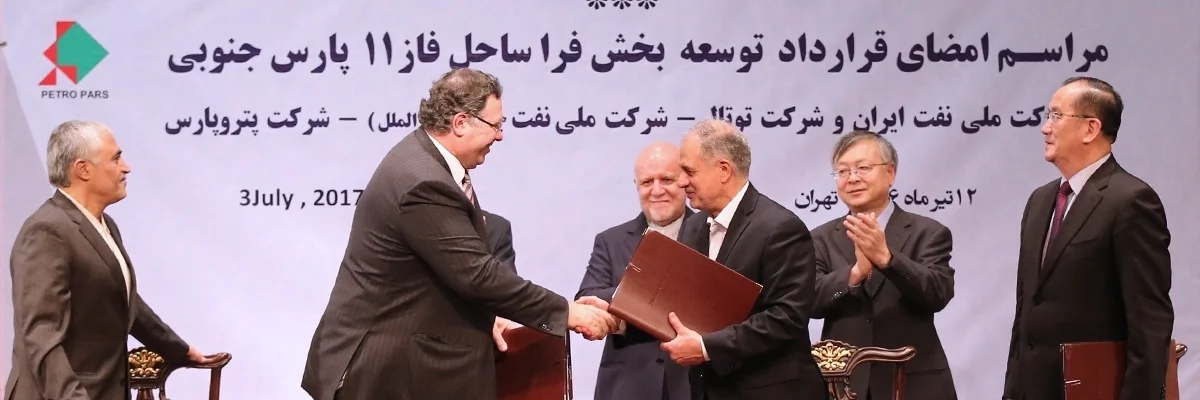
On July 3, Patrick Pouyanné, the imposing, former rugby-playing CEO of Total, arrived in Tehran to sign a landmark $5 billion contract to develop Phase 11 of Iran’s South Pars gas field in cooperation with the China National Petroleum Corporation and Petropars, an Iranian firm. The deal was a sign of Pouyanné’s ambition and resolve in the face of the Trump administration’s rhetoric towards Iran.
But the credit for the deal should not go to Pouyanné. Behind every CEO who travels to Iran to sign a deal, there is a “country manager” who paved the way. In the case of Total, it is Eric Festa, whose formal title is managing director for Iran. Erik is one of a small but growing brigade of country managers who are on the front lines of Iran’s post-sanctions economy.
These country managers are tasked to conduct business in a market, which multinationals euphemistically classify as a “growth market” or “development market.” The country managers typically assigned to Iran have experience operating within other similarly complex markets. Most country managers do not have Persian language skills, though some companies have assigned diaspora Iranians to the role. Country managers are chosen for their understanding of the need to balance relationship-based business with strict attention to issues of risk management and compliance. They also tend to have something of a taste for adventure and a willingness to adapt to a new business culture. Some have relocated to Tehran, but most travel in and out of the country every few weeks.
“Country manager” is a grab-bag term. As a rule of thumb, the formal job title of the country manager reflects the stage of the multinational corporation’s investment in Iran. At the earliest exploratory stage, the individual could merely be a head of a project office. As the commitment to the market grows, the job gains more authority, and “country manager” becomes the more common title. As the business moves to a rollout phase, the title is commonly elevated to a corporate vice president role where the individual is also the director of the Iran business unit. For the multinationals with the most advanced investments, such as a dedicated subsidiary or joint venture, a CEO or managing director with significant autonomy and authority often leads the Iran business, overseeing a staff in the hundreds.
The Western policy community has devoted significant time and resources seeking to locate influence within Iran’s political structure, often using its byzantine nature as an excuse to declare, for reasons of expediency rather than clear evidence, that a certain individual or office is the most powerful. Yet, far less attention has been given to the organizational structures that govern the flow and operation of post-sanctions international capital into Iran.
A Useful Bureaucracy
Country managers are the critical actors behind post-sanctions investment in Iran, but they remain essentially invisible in the structure and organization of that trade. It is telling that there exist more flowcharts explaining political decision-making in Iran than commercial decision-making.
The consequence of this blind spot is an inherent distortion in the way power and influence in Iran are understood. This distortion is particularly acute given the status of economic development as the fundamental political priority across Iran’s political spectrum. This economic development hinges on the success of country managers in balancing the commercial directives of their companies with the political and practical needs of Iran’s industries. At the moment, most analyses of Iran’s post-sanctions political economy presuppose that Iranian power brokers such as members of the Revolutionary Guard are unilaterally setting the terms for commercial activity. But in reality, the process of post-sanctions trade and investment is an ongoing negotiation in which country managers have meaningful leverage: the ability to withhold much-needed foreign investment.
On this basis, a full assessment of power and influence in Iran today must account for the role of the country manager. Max Weber, when he long ago posited the concept of the bureaucracy, dispelled the idea that state administration and industrial administration were distinct. Not only are the administrative methods of the state and industry effectively the same—reflected both in the technocratic tendencies of Iran’s political class and in the emergence of multinational corporations as so-called “private empires”—but the execution of large-scale trade and investment also requires the functioning of a single overarching bureaucracy involving governmental and corporate actors from both the domestic and foreign spheres. Country managers, who serve as the administrative link between these two spheres, are the central bureaucrats of post-sanctions trade and investment in Iran.
The bureaucratic nature of trade and investment, which favors rational, technical, governable, and stable decision-making, also makes the attendant processes inherently vulnerable. Although country managers may be quite influential in Iran, none would ever boast about their power or influence. Like most bureaucrats, they feel beholden to systems much greater than themselves. Iran ranks low in ease-of-doing-business, and by no means are its domestic state or industrial bureaucracies efficient. Iran’s post-sanctions reintegration with international systems for enterprise and finance has proven difficult, and country managers experience these myriad challenges firsthand.
Strengthening the Bureaucracy
To improve the expected outcomes associated with the new influx of trade and investment in Iran, the policy community that supports constructive engagement must do more to empower country managers by addressing vulnerabilities in the bureaucratic structure in which they operate. Interventions are needed on a few fronts.
Continuing to borrow from Weber, a bureaucracy depends greatly on its legitimacy. Country managers struggle to position themselves as effective negotiators because they have a difficult time signaling that their leverage within the given commercial negotiations matters. This leverage centers on the notion that country managers can withhold the investment of their multinational companies if terms are not attractive. However, so long as a narrative persists that other political forces may prevent that investment anyway, the country manager has little to no leverage. It is not the case, as some suggest, that political uncertainty is making Iranians desperate to strike deals. Iranians see little reason to engage in reforms and offer more favorable terms when the payoff is not certain. This fact explains why European governments have devoted so much effort to tightening the coordination between government and commercial actors in regards to Iran. The creation of a credible political commitment has been fundamental to the strengthening of the negotiating power of the country managers. Importantly, in this regard, European ambassadors serve as a kind of political partner to the country managers in Iran.
However, the effort to legitimize trade and investment in Iran has its limitations. The permissibility of trade and investment in Iran is no longer primarily a question of legitimacy. Although the legal basis for post-sanctions trade provides a rational, legal authority for those who wish to pursue that business, there remains a “fear factor” associated with Iran that is sometimes inherently irrational. Policymakers have been hesitant to engage concerns around the perceived moral dubiousness or danger of engaging commercially with Iran, perhaps because they see these matters as reflective of a fraught emotional politics. But there needs to be a greater understanding that these emotional issues have a direct bearing on the ability of Iran trade and investment to become more fully bureaucratic, and thereby more fully constructive. Unless steps are taken to provide assurances on the permissibility of trade and investment beyond the basic question of legality, the fuller picture of legitimacy will never be addressed, and therefore bureaucratic actors such as country managers will always remain hamstrung, unable to fully articulate the legitimacy of a proposed engagement to key stakeholders. They will constantly struggle to relay their on-the-ground knowledge of Iran to decision-makers whose impressions are shaped by threatening headlines.
The country manager must also be empowered with a rational commercial framework in which to operate. The rules that govern trade and investment in Iran remain relatively disorganized. Lingering issues around international sanctions and Iranian regulatory frameworks alike mean that companies need to continually evaluate the rules of engagement. As such, country managers who play roughly the same role within the companies across national affiliations and across industrial sectors find themselves spending inordinate amounts of time simply clarifying the rules for their own specific commercial activities.
The most significant example can be seen when multinational corporations seek a specific license for their Iran business activities, principally from the U.S. Office of Foreign Assets Control. With this licensing policy, the U.S. political establishment is using its tools of administration to exercise jurisdiction over the bureaucratic function of European trade and investment. One bureaucracy is undermining another for the ostensible purpose of protecting security interests. But in forcing Iran trade to be less bureaucratic, less regular, and less basically normal, the policy is counterproductive.
Although general licenses are meant to set non-specific, system-wide rules about the administration and operation of business in Iran, persistent ambiguities prevent the creation of a standard practice that establishes such rules. Add to this the reputational issues around engaging with Iran and the rationale for business in Iran remains a very personal decision, dependent on the resolve and risk appetite of the country managers and their superiors. On the Iranian side, a similar personal dynamic exists. The acceptability of a commercial arrangement is based to a large extent on the strictness with which key stakeholders, such as Iranian ministers or commercial partners, apply formal regulations (such as protectionist laws) and uncodified expectations (such as political resistance).
Defining Best Practices
To address both jurisdictional interference and the personal contingency of trade and investment, European governments and industrial companies must develop a more rigorous set of standard practices that establish the rational rules for engaging with Iran. To do so, far greater effort must be spent on policy research to devise and implement best practices for Iran. Just as few studies have been made to locate domestic and foreign commercial actors within Iranian power structures, little research is being conducted to examine issues of industrial policy, economic planning, and management practices within the Iranian context. Relatively few events and forums bring country managers into dialogue with experts who can help define best practices.
The existence of best-practice rules and guidelines will also improve the bureaucratic operation of trade and investment in Iran by making individual country managers more dispensable. At the moment, the entrepreneurial nature of the role means that when country managers leave their post, the learning curve for their successor is especially steep. This “key person risk” prevents the smooth functioning of trade and investment. Iran will struggle to see adequate trade and investment if deals rely too much on the quality of the individual country manager or the administrative wherewithal of the particular company. Although Total may have been the first international oil company to sign a post-sanctions contract precisely because of the company’s unique strengths, the success of post-sanctions investment depends on the emergence of durable, sector-wide competencies.
Over all, the ability for country managers to facilitate economic development in Iran that is both great in magnitude and constructive in impact will depend on the ability for trade and investment in Iran to operate along more regularized and bureaucratic lines. To do so, policymakers must recognize the central role played by country managers in the legitimization and rationalization of commercial engagements with Iran. It is easy to take bureaucracy for granted. But in the delicate effort to improve the political and economic administration of Iran’s post-sanctions trade and investment, success must be systemic.
Photo Credit: Total
Telepizza's Arrival in Iran Shows Supersized Ambition
◢ The arrival of Telepizza, a global fast-food brand, is a significant development for Iran's food service sector.
◢ The terms of the master franchise keep economic dividends in Iranian hands, and the new entrant will likely spur new investment and improvements in offerings across the sector.
In 1990, during the final year of the Soviet Union, McDonald's opened its first branch in the country, choosing a landmark location in Pushkin Square in Moscow. On the first day, nearly 30,000 customers passed through the doors.
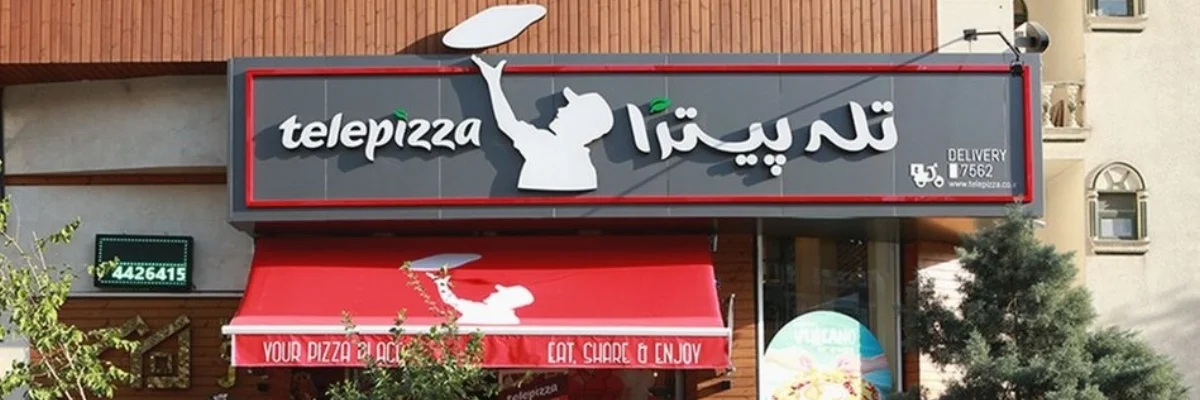
Telepizza, an international fast-food pizza chain, opened its first Tehran location last week. While the opening did not see quite the same fanfare as arrival of McDonald’s in the USSR, the launch is nonetheless significant.
As many articles have emphasized, Telepizza is the largest non-American pizza brand in the world by number of stores (about 1,500). But the Spanish company, which is targeting Iran as part of an ambitious global rollout plan, is one of the first globally-recognized restaurant brand to enter Iran, which has until recently had to make do with cheap imitations such as “Pizza Hat” and “Mash Donalds.”
The arrival of Telepizza follows the awarding of a master franchise agreement to Momenin Investment Group, a little known firm registered in the UK but with Iranian ownership. MIG has committed to spending EUR 100 million over 10 years in an Iran market rollout. The size of the investment makes it clear that Telepizza and MIG are aiming to dominate the market.
The fast-food sector in Iran is among the most attractive for investors, who see a large middle class with growing spending power. Today, Iranians spend about USD 7 billion annually in restaurants, of which about one-third is spent on fast-food. This expenditure is likely to double in the next decade.
To meet demand, there are about 20,000 fast-food outlets in the country, but scale has remained elusive for any single brand. The largest fast-food operators in Iran, including brands such as Haida and Boof, operate around 50 locations each. In many respects, the fractured food service sector reflects similar dynamics in the food retail sector.
It can be tempting to see the absence of major fast-food brands in Iran as a mark of Iran’s resistance to neoliberalism and the attendant exploitation. The prospect of Iranians spending their hard-earned Rials on foreign pizza is seen by many as anathema to the promise of an independent, self-sufficient Iran.
But Iranians, like most people around the world, want to enjoy the occasional pizza. They naturally deserve the best pizza at the best price. The simple fact that no Iranian fast food chain has gone on to dominate the world, suggests that there are improvements to be made in the domestic offering.
Encouragingly, the Telepizza deal keeps Iranians in charge of their own fast-food future. Whereas the McDonald’s in Pushkin Square was company-owned (the “Golden Arches” made its first franchise agreement in Russia in 2015), Iran’s Telepizza locations will all be owned and operated by MIG. This means that the Telepizza deal is consistent with the longstanding pattern of cooperation between Iranian and multinational enterprises.
Across sectors, Iranian companies have typically sought foreign assistance in technology and operations to enable more successful domestic production. Examples include IKCO’s manufacturing of French cars, Sahar Dairy’s manufacturing of Danone Products, and NIOC’s production of oil with Shell’s technology and expertise.
A similar dynamic underpins the Telepizza deal. Domestic fast-food operators in Iran have struggled to ensure efficient supply chains, intuitive inventory and sales technologies, robust brand protection, and winning management practices. This has made scale all but impossible to achieve.
These areas are precisely where a franchisor like Telepizza can offer support. Telepizza offers MIG access to unique intellectual property in the form of the food menu and branding and marketing collateral, as well as providing assistance in creation of a supply chain, training for management and staff, and implementation of key technologies for ordering, sales, and delivery. They also bring the experience of successful rollouts in other complex markets.
If Telepizza and MIG can adapt the global formula for success to the Iranian market, the food sector at large will be jolted by the new and highly-competitive entrant. This should see other fast-food chains in Iran driven to improve their product, and it will also encourage further foreign and domestic investment in the sector. Outcomes include consolidation among existing players and a diversification of the market offering for consumers.
Moreover, consolidation in the fast-food sector around a few key brands will also mean consolidation of buying-power for the food products that go into each pizza, hamburger, or burrito. Today, McDonald’s in Russia purchases most of its supplies from domestic producers. The fast-food chain’s growth was a major contributor to consolidation and expansion in Russia’s agricultural sector. A similar outcome could be expected in Iran, where large-scale farms remain rare, leading to inefficiencies across the value chain.
While the prospect of increased competition and purchasing power leading to better market offerings is consistent with the neoliberal doctrine, it is important to note that both ownership and labor will likely remain in Iranian hands. Under a master franchise agreement, the franchisor (Telepizza) would typically be entitled a recurring franchise fee and a percentage of profits, but MIG is the owner of the Iranian company and the principal beneficiary of profits. It is MIG's entrepreneurial skills that will be tested as the brand seeks to expand.
Additionally, and perhaps most importantly, expansion in the fast-food sector is a job creator precisely where Iran needs it most. Such stores typically hire younger employees who are attracted to the flexible, shift-based work schedule. Lack of significant growth among domestic players means that possible job creation has gone unrealized.
For young Iranians seeking their first jobs, or trying to make some additional income while pursuing their studies, the type of work on offer at a fast-food restaurant could prove ideal. After all, many of the world’s greatest entrepreneurs got their start delivering pizzas.
Telepizza's supersized ambition in the Iranian market might only be matched by the ambition of these yet-unheralded pizza delivery men and women, waiting for their chance.
Photo Credit: Telepizza
Long-Awaited Total Deal Signals Rising Investor Confidence in Iran
◢ On Monday, Total will sign a long-awaited USD 5 billion deal to develop Iran's South Pars gas field, becoming the first international oil company to commit to a post-sanctions investment.
◢ The Total deal indicates rising confidence that political and banking challenges can be addressed, and the contract signing will likely buoy investor confidence across sectors.
On Monday, Total will sign a long-awaited contract to develop Iran’s South Pars gas field in cooperation with China National Petroleum Company and Iranian firm Petropars. Total has been involved in developing the South Pars project since 1997 when it was the first international oil company to be awarded a contract following the Islamic Revolution. The landmark deal, which sees Total committed to a 20 year development roadmap, is valued nearly USD 5 billion. Total's share is 50.1%.
The announcement of the contract signing ceremony follows eight months of deliberations since the heads of terms was signed in November 2016. In the intervening period, Total has had to navigate a changing political environment, stubborn banking challenges, and wavering investor confidence. The move to conclude the contract signals positive developments in each of these three areas.
Total CEO Patrick Pouyanné, who has shown some bravado by speaking publicly about this deal as it progressed, had stated in February that progressing to a contract was contingent on the U.S. continuing its implementation of secondary sanctions relief as part of the Joint Comprehensive Plan of Action (JCPOA). With the increasingly hostile rhetoric of the Trump administration, continued sanctions relief had remained in doubt. But the administration has since confirmed Iran's compliance with the JCPOA and issued the relevant sanctions relief waivers in mid-May. Just a few days later, Iranian president Hassan Rouhani won a landslide reelection, solidifying his mandate to pursue international engagement and investment.
Total will also feel secure in the fact that European government leaders have been very vocal in their support for Iran and the nuclear deal. Federica Mogherini, Theresa May, Angela Merkel, and a host of European ambassadors have strongly advocated that the US stay the course with the nuclear deal both at the White House and on Capitol Hill. Looking together at these factors, Total must feel confident that the political environment remains conducive to the company's long-term investment in Iran.
At a more practical level, Pouyanné had acknowledged in April that Iran’s as-of-yet unsolved banking challenges were an impediment Total’s investment. The hesitance of international banks to provide financing or facilitate the recurring transactions necessary for day-to-day business in the country required Total to make a special effort to find its own solution. Pouyanné disclosed that Total was testing a new banking mechanism to get money in and out of Iran in a compliant way. This likely means that a medium-sized bank, probably French, has carved out a channel for Total to transfer funds to Iran without involving U.S. persons or U.S. dollars, thereby avoiding a so-called “U.S. nexus.”
While major European banks remain hesitant to do this kind of creative banking for Iran transactions, boards of directors are showing an increasing willingness to make exceptions on behalf of their largest clients and at the behest of national governments. Total's move suggests that the banking channel they created works, and this fact may help other large firms in their negotiations to receive banking facilities for Iran business.
Finally, Total’s contract signing will no-doubt boost confidence across sectors among both international and domestic investors. While Boeing and Airbus have notably concluded major contracts prior to the Total deal, the agreements for the sale of aircraft represent large-scale trade. The Total deal, which involves direct ownership and operation of physical, immovable assets in Iran, is true foreign direct investment with all of the attendant risk. That Total is proceeding is even more impressive considering the company will not start seeing revenues until 2021, when it has committed to bringing the first new gas to Iran's large domestic market.
Additionally, proceeding to a full contract reflects that Total was satisfied with the terms of Iran's new standard oil and gas contract, known as the IPC contract. While Total’s clear desire to be the first-mover in Iran’s energy sector has meant that they have been somewhat more willing to overlook the known deficiencies in the IPC model, fear of missing out may see peer companies like Shell, Eni, and OMV decide to press forward with their own investment plans within the existing IPC framework.
For Iran, the true value of the Total deal lies outside the oil and gas sector, which only accounts for about one-fifth of the country's economy. Rather, it is the investor confidence furnished by the Total deal, which will spur activity in other areas like infrastructure, transport, pharmaceuticals, and FMCG, that will really move the needle. Investors in these sectors will no-doubt welcome the deal as the sign of a rising tide.
Photo Credit: Wikicommons
To Break With Austerity, Rouhani Must Deliver on Sovereign Debt Sale
◢ To win foreign investment, Iran's needs to boost development expenditures. But expansionary fiscal policy will require a new source of revenue, as oil sales remain stagnant and tax rises remain politically risky.
◢ A sovereign debt sale, long discussed by Iranian officials, is the fundamental way Iran can find the revenues to self-fund growth. The Rouhani administration must focus on making its bond offering a reality.
One of the remarkable, and yet little discussed, aspects of the Iranian election is that Hassan Rouhani triumphed despite being an austerity candidate. His first term was notable for its frugal budgets and commitment to both slash government handouts and reduce expenditures in an effort to tackle inflation. On one hand, the focus on a more disciplined fiscal and monetary policy meant that Rouhani could point to a successful reduction of inflation from over 40% to around 10% while on the campaign trail. On the other hand, job creation has been stagnant and the average Iranian has seen little improvement in their economic well-being.
Some economists, including Djavad Salehi-Esfahani, have argued that Rouhani’s austerity economics are misguided, depriving the economy of vital liquidity that could help jumpstart investment and job creation. For example, Iran’s 2017/2018 budget sees tax revenues stay constant at an equivalent of USD 34 billion despite the fact that economic growth is expected to top 6%. Salehi-Esfahani believes that these figures reflect the Rouhani administration's belief “that letting the private sector off easy would encourage it to invest.” The government, meanwhile, will not contribute much more in investment. Development spending is set to decrease from USD 20 billion to USD 19 billion.
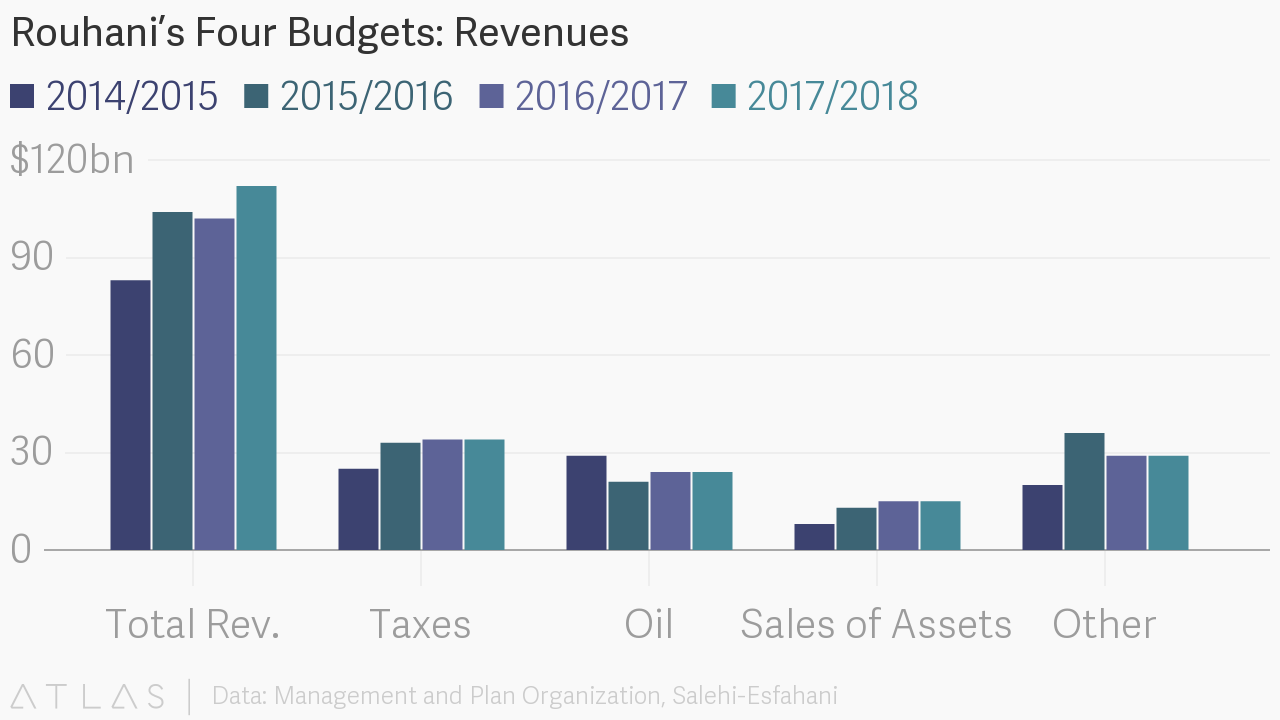
Surely, the Rouhani administration’s pursuit of a small government that leaves the burden of job creation and economic growth to the private sector is admirable. It represents a significant shift in the mentality that has characterized the economic policy of the Islamic Republic, which has long relied on state-owned enterprise and state-backed financing, supported by oil revenues, to drive economic growth.
But the volume of investment needed to revitalize economic sectors and create substantial job opportunity has not yet materialized. This is an undeniable fact, which Rouhani has attributed to failures on the part of Western powers to adequately implement sanctions relief, leaving international banks unable to work with Iran. Rouhani’s opponents meanwhile, attributed low volume of foreign direct investment to his administration's mismanagement. There is truth to both accounts.
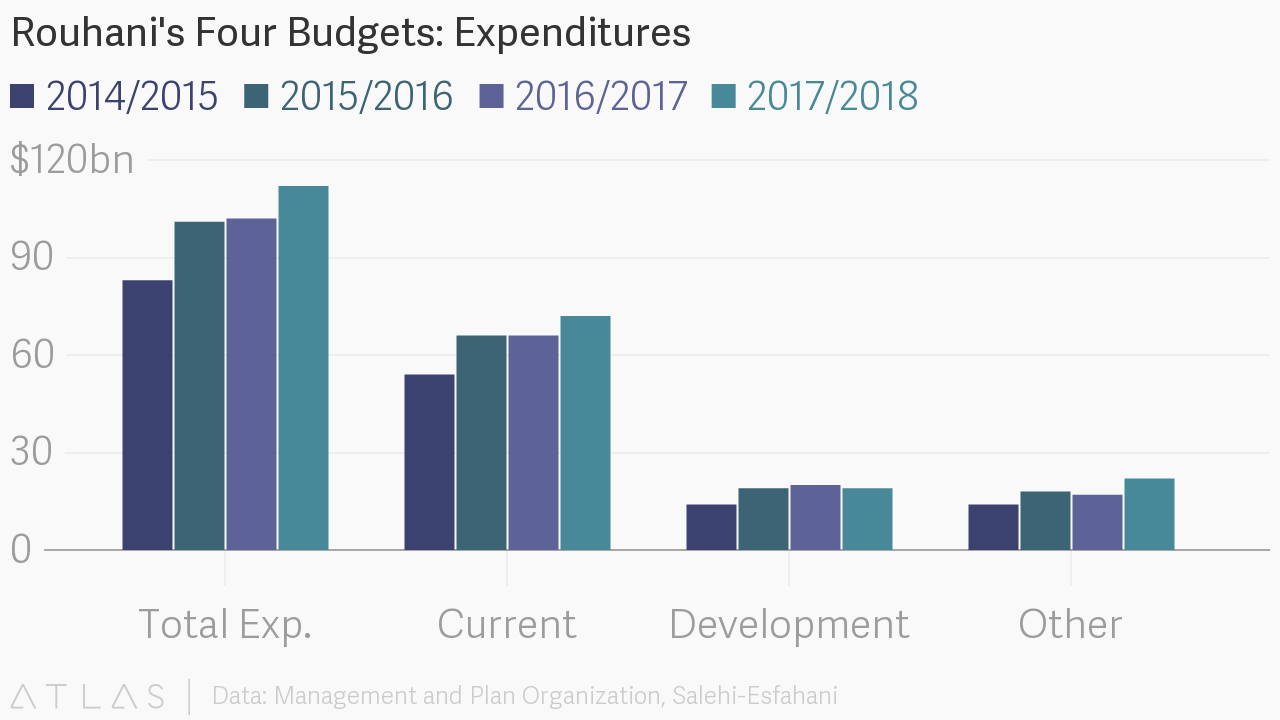
In many ways, Rouhani’s lean towards austerity was a response to the spendthrift policies of his predecessor, Mahmoud Ahmadinejad. The Ahmadinejad administration responded to faltering economic growth during a period of historic oil revenues by ploughing oil rents into the banking system and compelling banks to issue loans. These loans were often provided without the adequate due diligence and were used not to finance growth, but increasingly to fuel speculation, or more forgivably, to address cash flow difficulties faced by companies as a result of international sanctions.
As a result, Iran’s banking sector is now weighed down with a high proportion of non-performing loans, accounting for around 11% of total bank debt. When bank balance sheets grew increasingly precarious as non-payment of loans mounted in the sanctions period, competition for deposits grew. Exacerbating this competition, banks needed to provide higher deposits rates in order to stay ahead of inflation. The combination of forces pushed interest rates up to all-time highs.
The debt market in Iran is now broken. The IMF has urged urgent action to “restructure and recapitalize banks.” In the meantime, banks remain disinclined to lend and in the instances where healthier banks are able to provide loans, borrowers must contend with the high cost of debt.
This may help explain why the Rouhani administration so aggressively sought to address inflation—it was a necessary step to reduce the benchmark interest rate, which has so far been reduced from a high of 22% in 2014 to the current rate of 18%.
But even at such time that interest rates normalize, barriers will remain to the use of debt markets. At a structural level, Iranian companies, particularly in the private sector, rely on equity financing rather than debt financing in order to fund growth. This reflects a “bloc” behavior within Iranian enterprise. Partially as a consequence of the continued dominance of family-owned businesses in Iran’s non-state economy, business leaders tend to approach financiers within their own networks or holding groups, and many of Iran’s largest companies and banks anchor conglomerates that grew out of sequential processes of a kind of inward-looking venture capital. There is limited comfort among Iranian business leaders to seek funding from groups outside of these tight networks and by the same token, equity investors hesitate to provide finance projects outside their own networks. This means that the pool of available investor capital is rarely competing across the whole pool of available capital deployments—a significant inefficiency.
Growth-oriented investing itself can be a difficult strategic proposition. Iranian business leaders have understandably prioritized weathering periods of uncertainty over the execution of long-term plans. The challenge of dealing with short-term volatility has naturally favored short-term thinking. Major companies are only recently undertaking strategic reviews that might identify needs to invest in capital improvements or new services in order to drive growth in support of long-term goals.
The combination of the bloc effect in equity financing and the broken debt market creates a major brake on economic growth, especially from a supply-side perspective. To restore momentum, a third party is needed to order to reset the incentives and mechanisms around financing in Iran.
From the outset of its tenure, the Rouhani administration has hoped foreign investors would take on this role. An influx of foreign investment would have triggered growth without requiring the Rouhani administration to pursue difficult political gambles, such as expanding government expenditure for growth investments in the same period in which welfare programs are being culled. Moreover, the administration’s budgetary leeway was significantly reduced given the persistently low price of oil, making any such balancing act even more fraught.
Eighteen months after Implementation Day, it is clear that the administration significantly overestimated both the attractiveness of the market and underestimated the hesitation of major banks to resume ties with Iran. Investing in Iran is neither easily justified nor easily executed.
The country lacks two essential qualities that have characterized most emerging and frontier markets in the last decade. First, most emerging economies are not as diversified as Iran’s, and do not have such a large arrange of incumbent players with whom any foreign multinational or investor will need to compete for marketshare. There tend to be more “greenfield” opportunities in which lower capital commitment can generate higher returns. Second, a nearly universal feature among emerging markets is the consistent application of both expansionary monetary and fiscal policy. Such policy makes it possible for each investor dollar to achieve a higher return.
In its commitment to reduce interest rates and return the debt markets to normalcy, the Rouhani administration is pursuing an appropriate monetary policy—eventually lenders will become active again. But what remains perplexing is the insistence on austere government budgets in the face of low commitment from foreign investors.
It is clear that the Rouhani administration cannot easily spend tax and oil revenues on long-term projects. Oil revenues are stagnant and there is limited political will to raise taxes. At current levels of government revenue, the political risks of such expenditure are high; as the presidential election showed, populism remains a potent rallying cry among Iranian voters. But foreign investors can’t be expected to step into the gap. Direct equity investments remain a hard sell when domestic financing, whether in equity or debt form, remains throttled and liquidity challenges abound.
There is however a feasible solution that has seen much discussion, but little action—Iran’s return to international debt markets. A sovereign bond issue would both provide Iran’s government the opportunity to raise expenditures in a way that does not draw from existing sources of state revenue by providing a wide class of investors exposure to Iran’s expected period of economic growth. Such a security, ultimately backed by the country’s oil revenues, would serve to mitigate perceptions of country risk for creditors.
In May of 2016, Iran’s finance minister Ali Tayebnia disclosed that discussions were taking place with Moody’s and Fitch over restoring Iran’s sovereign credit rating. One year later, the debt sale continues to be a point of discussion. Recently, Valliolah Seif, Governor of the Central Bank of Iran, commented that the country will issue debt “when [Iran] becomes certain that there is demand for [its] debt.”
Seif’s comments allude to the essential problem of Iran’s planned debt sale—marketing. In order to get Iranian bonds onto the market in any substantial way, the country would need the support of major international banks to serve as underwriters. But banks remain hesitant due to sanctions and political risks.
Turkey, a country which presents creditors significant political risk without mitigation of oil revenues, was able to raise USD $2 billion in a Eurobond sale in January of this year. The sale was underwritten by Barclays, Citigroup, Goldman Sachs and Qatar National Bank.
Iran, is fundamentally a more attractive investment opportunity than Turkey. But major banks remain hesitant to provide financial services to Iran. The Rouhani administration needs to make the sovereign debt sale a core focus of its dialogue with European and global counterparts, and insist on political and technical support in order to entice 2-3 major banks to come on board. In the same manner that the Joint-Commission oversees implementation of the Iran nuclear deal, a multidisciplinary working group needs to be formed to manage the implementation of the debt sale. With the right stakeholders engaged, one can a combination of early-mover banks from Europe, Russia, and Japan agreeing to underwrite the bond issue.
Encouragingly, the delays may have played to Iran’s favor. Emerging markets are just now beginning to rebound, and investors have driven sovereign debt sales to record highs. The Rouhani administration must seize this opportunity and move beyond the limitations of its present austerity economics.
Photo Credit: Wikicommons
The Stage is Set, But Will Rouhani Deliver in His Next Act?
◢ A resounding election victory has renewed Rouhani's popular mandate, but following President Trump's speech in Riyadh, the prospects for improved US-Iran ties remain remote.
◢ But by taking the high road, Iran can still make progress in its international relations, especially if it aims to forge deeper ties with Europe.
Last Friday, Hassan Rouhani emerged victorious in Iran’s contentious election, winning nearly 60% of the vote in a contest which saw 72% turnout. The clear victory confirms the incumbent’s popular mandate, and reflects the electorate’s belief that he remains the only politician able to lead on Iran’s wide range of economic, political, and social challenges.
Crucially, his chief opponents Ebrahim Raisi and Mohammad Bagher Ghalibaf were unable to present a cohesive alternative to Rouhani’s economic program, relying instead on unrealistic promises to expand welfare handouts to Iran’s lower classes.
The promises of greater handouts had an undeniable appeal, however, as voters aired their frustrations with the lack of improvement in their standard of living during Rouhani’s first term. While growth has rebounded since the lifting of international sanctions, stubborn unemployment and wage stagnation have left the average Iranian patiently waiting for the much touted windfall of the nuclear deal. Nonetheless, Iranian voters understand that international engagement is a precondition of any eventual improvement in their economic fortunes. In a boon to electoral fortunes, Rouhani and his administration were widely and credibly seen as the most effective advocate for Iran’s international relations.
Yet, just two days after Rouhani’s victory, American President Donald Trump issued a scathing address from the specially-convened Riyadh Summit, during his first overseas trip. Trump’s speech, issued in concert with the Saudi leadership, cast Iran as a chronic human rights violator and the leading supporter of international terrorism. He called for the international community to isolate Iran.
The juxtaposition of Iran’s energetic and significant popular vote (driven in great numbers by Iranian women voters), with the cynical pageantry of the Riyadh Summit, held in a country where elections do not occur and in which women have limited freedoms, could not have been more stark.
While the Trump administration has quickly aligned itself with the particular vision of Iran espoused by Saudi Arabia and its Persian Gulf allies, the rest of the international community has watched the weekend’s events with greater pause. In the election, Iran put its best foot forward; demonstrating quite vividly that it cannot be caricatured as the destructive force portrayed by Trump, but should understood as a multifaceted country whose civil society is yearning for international engagement.
Though Trump’s speech risked adding fuel to the regional rivalry between Iran and Saudi Arabia, President Rouhani struck a measured tone in his first press conference since being re-elected, noting on Monday that the Saudi people remain Iran’s friends.
Overall, the weekend’s events may actually prove a blessing for Iran. By putting Iran’s better qualities into such clear relief, and by making so transparent the subservience of US foreign policy in the Middle East to an agenda defined by Saudi Arabia, a much wider political space is opening for ties between Iran and the wider international community, especially in regards to relations with Europe.
Senior leaders from the European Union, such as High Representative Federica Mogherini, were the first to congratulate President Rouhani on his reelection. His electoral success will no doubt give greater confidence to the slew of major multinational corporations that have been pursuing trade and investment deals in Iran. At the same time, the elections serve as a validation for the European policy that expanded economic relations can help encourage Iran’s move to a more open and accommodating political and social posture.
Consider also that despite the rhetoric, the Trump administration looks unlikely to interfere with the basic sanctions relief afforded through implementation of the JCPOA nuclear deal. As such, the baseline conditions for Iran’s economic engagement with the international business community have improved significantly.
In order to fully deliver on his promise of economic growth and to more effectively attract investment from industrial players and financial investors, the Rouhani administration must commit to a bold agenda of sustained reform. While his first term was largely focused on addressing fiscal and monetary policy (tightening budgets and reducing money supply in order to tackle inflation, for example), his second term must focus on industrial policy.
Iran needs to quickly decide how it will balance the requirement to support domestic industrialization and job creation with the need to welcome leading multinational companies who wish to bring their products to the Iranian market. A lack of clarity on this issue has meant that many long-standing trading partners in Iran are struggling to get the same support from government ministries and agencies that are afforded to outside companies promising new investment in the country.
This unequal treatment belies a lack of coordination among Iran’s government and business stakeholder groups on issues pertaining to the country’s business environment. European governments and trade promotion bodies could do much more to help transfer best-practices to their Iranian counterparts, helping to support the business development efforts of both foreign and Iranian companies. This kind of technical cooperation, which goes beyond delegations and trade events to address the practical challenges facing the business community across-sector, remains the elusive next step in Europe-Iran ties.
Rouhani’s great success has been to set the stage for an economic resurgence. The question now remains whether he can successfully direct the actors to play their parts.
Photo Credit: Wikicommons

Early Delivery of Iran Air’s First Boeing Jetliner in Doubt
◢ In early April reports suggested that Iran Air would acquire its first Boeing 777-300ER nearly a year early, purchasing a plane originally built for Turkish Airlines.
◢ But the deal now seems dead and the aircraft has not made the expected flight to Victorville, California for repainting in the Iran Air livery.
On April 10, 2017, news broke that Iran Air was to receive its first new Boeing jetliner nearly one year earlier than expected, with delivery slated for mid-May. This was to be the first aircraft of eighty for which Boeing and Iran Air signed a $16.6 billion in December 2016. Deliveries for the order, which include fifty 737 MAX 8s and thirty 777s in two variants, were slated to begin in December 2018.
The aircraft in question was originally built for Turkish Airlines with the registration TC-LJK. Deemed superfluous to requirements before delivery, the plane was to be sold by Turkish to Iran Air, where it would fly with the registration EP-IQA. Prior to reassignment, the jetliner, a Boeing 777-300ER, would need to be repainted in Iran Air colors.
This was to take place in Victorville, California, where International Aerospace Coatings (IAC), a Boeing contractor, operates a program painting liveries for 777 aircraft. Initial reports suggested that TC-LJK would fly to Victorville on April 13 for repainting, following a visit by an Iran Air certification team to ensure the Iranians were happy to acquire the jetliner in its current configuration.
But new reports suggest that the deal has stalled.
Flight data shows that TC-LJK, operating as BOE549, remains in Everett, and has not moved since a short test flight on April 7.
This suggests that the repainting has not been completed. It might be that Iran Air requested alterations to the configuration of the aircraft, which would be made at Everett and would have delayed repainting. But the more likely explanation is that Iran Air is no longer able to secure the early acquisition.
An April 22 post on Paine Field News, a blog site which tracks production of aircraft at Boeing’s Everett factory, cites an unnamed source at the manufacturer to claim that the “Turkish-Iran Air deal for TC-LJK is officially dead” and that Turkish airlines has decided to take delivery of the aircraft as originally intended.
Yet just two days prior, on April 20, the same website cited the same unnamed source to suggest that deal was still alive and that Iran Air inspection teams had visited Everett to view the aircraft.
Something must have changed in the calculation of Boeing, Turkish Airlines, and Iran Air on or around April 21.
It is worth noting that an early delivery of the aircraft to Iran Air became much more difficult on April 19, when Secretary of State Rex Tillerson made an extended address to the press in which he highlighted “Iran’s alarming and ongoing provocations that export terror and violence.” The tone of this address, and the reaction it elicited in the media, certainly meant that there would have been a heightened impact on Boeing’s corporate reputation and that of any facilitating banks had the delivery to Iran Air gone ahead in the subsequent weeks. While Boeing has lobbied that its deal with Iran Air supports American jobs, critics of the deal were buoyed by Tillerson’s apparent acknowledge of concerns over the appropriateness of US-trade with Iran, despite confirmed adherence to commitments under JCPOA.
It may be that Boeing, Iran Air, and Turkish Airlines decided to take a wait-and-see approach on the Trump Administration's rhetoric on Iran. Certainly, even if Iran Air is unable to receive TC-LJK, there remain other "orphaned" jetliners on the market which Boeing can help direct to its Iranian client. An acquisition during the summer remains possible. Given the importance of the Boeing-Iran Air deal as a landmark contract for Iran's post-sanctions trade, the race will be on to make a successful delivery.
Photo Credit: Wikicommons
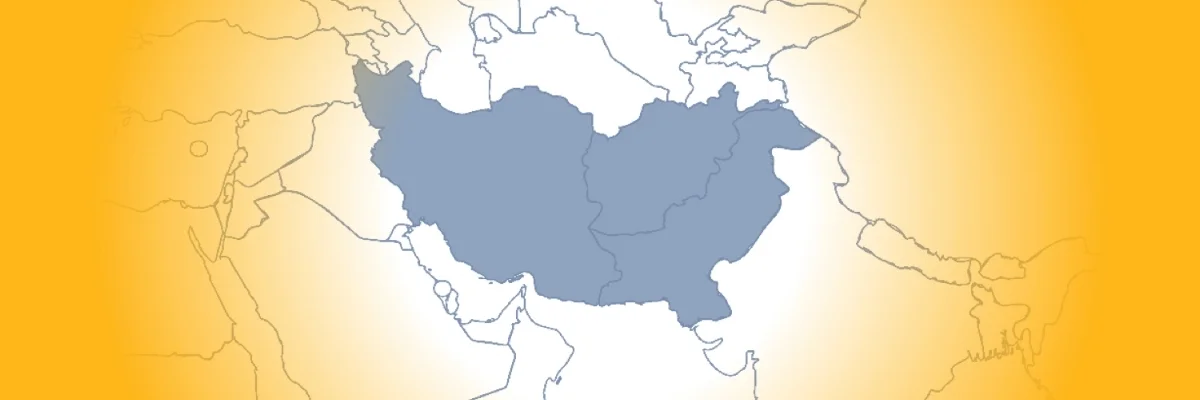
Iran, Pakistan, and Afghanistan Should Take a Regional Approach to Start-Ups
◢ Start-up ecosystems in Iran, Pakistan, and Afghanistan show great promise, but entrepreneurs in these three countries remain isolated from one another.
◢ These entreprenuers would benefit from more regional programs that encourage collaboration and shared learnings. Programs on offer in the ASEAN countries offer a compelling model.
Afghanistan, Iran, and Pakistan host some of most interesting and promising start-ups in Southwest Asia. Entrepreneurship and innovation are neither new nor foreign imports to the region. Cities and towns in Afghanistan, Iran, and Pakistan make up parts of the Silk Road, an ancient network of trade routes that once connected the East and West from China to the Mediterranean Sea. Historically, trade, innovation, and cultural exchanges have flourished along these trade routes.
Today, however, the entrepreneurs of this region operate in isolation from one another. Divergent political ideologies, cultural biases, and economic policies have prevented many entrepreneurs from exchanging ideas and collaborating, rendering them unaware of their neighbors’ achievements in areas of social innovation and entrepreneurship. Knowledge sharing and transfer, if sustained, can highlight the achievements of local and regional social and tech entrepreneurs.
While these three countries engage in active trade individually, building a regional start-up ecosystem would provide a space for entrepreneurs to share their experiences and collaborate further. Because of their shared cultures, histories, languages, and similar economies, Afghan, Iranian, and Pakistani entrepreneurs already share many common characteristics that could foster more collaboration and generate more economic growth and innovation. Therefore, we propose the formation of a regional start-up ecosystem to benefit the entrepreneurs and the economies of the above countries.
Entrepreneurs and ecosystems do not operate in a vacuum. Political, social, and economic realities influence entrepreneurs and shape start-ups. Establishing a regional start-up ecosystem would reduce border tensions, improve overall regional security, promote good governance, and allow the steady flow of goods and services across the region. Meanwhile, entrepreneurs and social innovators should focus on studying and understanding their regional markets, finding opportunities for growth and scaling within their own region.
Pakistan: An Established Player
Of the three countries, Pakistan has the most elaborate and developed start-up ecosystem. Urban areas of Karachi, Lahore, Peshawar, and Islamabad are home to some of the most renowned and internationally acclaimed entrepreneurs and social innovators (e.g payload, Healthwire, Dockit, Meezaj).
Since the security climate in the country has improved, the start-up landscape has grown and attracted venture capitalists from Silicon Valley, Malaysia and the Persian Gulf. The 2012 launch of Plan9, Pakistan’s first incubator, laid the groundwork for the start-up ecosystem. Pakistan is now home to more than 20 start-up incubators and accelerators that provide co-working, office space, mentorship, networking opportunities, and access to investors.
Undoubtedly, Pakistan has the potential to become the next emerging hub in Asia. Both high mobile penetration and the well-developed telecommunication infrastructure have given rise to tech start-ups that have disrupted almost every sector—wedding, health, fashion, payments. Success stories include Convo, a social networking platform, and have captured the attention of international investors.
Shaun Di Gregorio, CEO of Frontier Digital Ventures, a venture capital fund based in Malaysia that has previously invested in Pakistani start-ups, notes that “People who have an appetite for emerging markets will be attracted to Pakistan. It’s considered one of the next big frontier markets.”
Pakistan holds an edge over its regional counterparts primarily because of two reasons. First, Pakistan’s market does not set a limit on foreign equity, enabling investors to hold a 100 percent stake without the help of any local partners. Second, total repatriation of investment capital is allowed. Therefore, every penny earned in profit can be returned to the original investor with ease.
While serving as an example for its neighbors, Pakistan’s start-up scene continues to flourish, there is still work to do. As Khurram Zafar, executive director of Lahore University of Management Sciences’ Center for Entrepreneurship, notes “more bridges are needed between Pakistan and the outside world which are best built by the diaspora looking to stay connected with the country.” This lack of connectivity can be seen in the region. Many Afghan or Iranian start-ups are unaware of the incubators or accelerators that exist in Pakistan and unsurprisingly, there are no Iranian tech entrepreneurs in Pakistan’s accelerator programs such asInvests2Innovate or Peshawar 2.0. Collaboration among these three countries would boost productivity, increase access to investment, and promote their status to emerging markets.
Iran: A Rising Star
Iran’s entrepreneurship ecosystem remains nascent yet promising. In the past decade, Iranian policymakers have shifted their focus to entrepreneurship and innovation and there is plenty of room for progress. Iran’s overall score on the 2016 GEI Index is 28.8%, ranking 80th among the 130 countries surveyed. Among the 15 MENA countries, Iran’s ranking at 14 indicates a weak entrepreneurship ecosystem. Compared to previous years, Iran’s overall score has improved, but it has yet to fully realize its potential.
In 2008, Iranian start-ups such as Digikala emerged in the ecommerce and online retail market, becoming the largest ecommerce platform in Iran. Emulating Amazon, this start-up is considered a poster child for start-up success in Iran. In recent years, fast Internet speeds, high mobile penetration, and official support for entrepreneurship have led to creation of a flourishing start-up scene.
There are many sectors that remain bursting with potential for disruption. They include ride sharing, people to people hospitality, online furniture, design services, and payment delivery. Certainly, there is high demand for these types of start-ups because of Iran’s sophisticated and young costumers, and underserved markets, a legacy of international sanctions which has now been largely removed.
Despite its low entrepreneurship and productivity scores, Iran ranks fifth after India, China, Russia, and the U.S. for having a significant number of talented and well-educated engineers. Consequently, Iranian policymakers should divert their attention fully to exploiting Iran’s impressive human resources toward boosting competitiveness, promoting employment, and raising productivity levels.
Iran’s start-up scene is vibrant led by several savvy Western educated mentors and modeled after successful Silicon Valley companies. Start up Grind and Start-up Weekend events are held throughout the country. However, there too few incubators and those which do exist often struggle to provide adequate financing opportunities to promising businesses. Accelerators exist, but few are run professionally and optimally. Unfortunately, Iranian legal codes do not protect innovation and intellectual property rights. These obstacles have created setbacks for Iranian entrepreneurs, preventing them from robust growth and scaling.
Afghanistan: Underappreciated Potential
Although Afghanistan’s ecosystem and start-up scene is only now starting to grow. Particularly in urban areas of Kabul, Jalalabab, Kandahar, Mazar-i-Sharif, and Herat, new programs are being launched teaching youth how to code, teaching entrepreneurship, and many more related programs to increase capacity, knowledge, and skills.
Among such programs are Shetab Afghanistan, the first comprehensive incubation, co-working, and mentor program in Kabul that is helping entrepreneurs and social innovators. There is also Afghanistan Startup, Startup Valley, Startupistan, and many more that are entering the Afghan start-up scene.. A 2015 survey carried out including 27 start-ups in Afghanistan revealed that 70% of Afghan start-ups fail due to ecosystem and market start-up failures, including access to mentors, infrastructure, and more open regulatory environment, and access to finance. Contrary to conventional wisdom, security is not the top concern facing entrepreneurs. Instead, entrepreneurs face the following challenges: limited access to networks and regional markets, faster internet and related infrastructure, trade friendly regulatory environment, an end to corruption, as well as availability of supportive incubation, acceleration and co-working programs. These gaps can be filled within regional frameworks.
Why Collaboration Matters
It time to put more weight on the effective implementation of new political and economic initiatives, collaborative networks, policies, and programs to regionally link start-up ecosystems across Iran, Pakistan, and Afghanistan.
The potential benefits of collaboration across regional ecosystems outnumber the disadvantages. It would lead to increased visibility and publicity for start-ups, offering an opportunity to scale into new regional markets. It would increase technical knowledge that is localized, and could potentially open up entrepreneurs from the region to sorely needed financial and mentor resources. Beyond these concrete benefits, local governments should offer incentives to attract large corporations in these countries. After all, large corporations remain vitally important for ecosystem building because they help investment in the supply chain, contract start-ups, or even possibly acquire the most promising start-ups in the long-run.
Because of the dominant Western-centric narrative widely accepted among entrepreneurs and start-up lovers, there is an overarching tendency for entrepreneurs to take examples from the West and emulate them. Therefore, there is a gap in knowledge among young entrepreneurs in these countries about exciting and new developments in their own backyard. While it is reasonable to emulate Western models, it is equally important to adopt and adjust them considering local conditions, specifically cultures, languages, and lifestyles.
For example, initiatives could include regional conferences like a TEDx talk held in Herat focusing on regional start-ups that can incorporate Tadjik entrepreneurs. Another way to foster brainstorming and collaboration among entrepreneurs could be to swap co-working spaces, as is done in Europe, so that an entrepreneur from Lahore can learn about the Iranian social technology market to scale his mobile geo-app for car parking. In addition, Iranian, Pakistani, and Afghan member investors could use shared Linked groups as a viable means to bridge cultural biases, connect board members, and enable mentor sharing between various accelerator and incubation programs in the region.
Among the most promising initiatives would be to establish a regional exchange and scholarship program between regional universities. Again looking at the region’s ‘backyard,’ the ASEAN (Association of South Eastern Asian Nations) countries have created several programs that support cross-border innovation and collaboration. For example, the very successful ASEAN University Network has helped hundreds of exchange students to study across borders since 1995. The organizations has built partnerships with other renowned universities around the world to promote knowledge sharing, collaboration, an access to opportunity through joint project-work.
Through the ASEAN Center for Entrepreneurship, regional and global initiatives support various start-ups. Recently, the Malaysian government, through its MaGIC Program, has offered ASEAN start-ups access to a regional accelerator funding and educational support services in Kuala Lumpur. Even "pariah state" North-Korea is sending its young entrepreneurs to Singapore, a powerful start-up hub, to help them in business, law, and economic policy and to learn about Lean Canvas (with the help of Choson Exchange, an NGO).
These initiatives provide compelling models of what could be done to support the achievements of local and regional entrepreneurs and social entrepreneurs among Pakistani, Iranian, and Afghan start-ups.
Unfortunately, the international media has failed to present a full and balanced view of Iran, Afghanistan, and Pakistan. Negative images of violence and terrorism have become ingrained in many entrepreneurs’ minds and rendered them oblivious to the achievements of their neighbors in the areas of social innovation and entrepreneurship. Today’s revival of the ancient trade routes as a successful model for a regional start-up ecosystem highlights not only their historical legacy, but also their contemporary relevance to regional commerce, trade, and advancement of Southwest Asia.
Photo Credit: Bourse & Bazaar
In Letter to Congress, Rex Tillerson Sends Positive Signal on Iran Deal
◢ In a letter to House Speaker Paul Ryan, Secretary of State Rex Tillerson has confirmed Iran's compliance with its obligations under the JCPOA, or Iran Deal.
◢ This letter reflects an important shift in the Trump administration's view on Iran, publicly confirming faith in verification processes and indicating an intention to craft policy through formal mechanisms.
Update: Several hours after the publishing of this piece, Secretary of State Rex Tillerson gave a press conference in which he outlined a strongly negative outlook on Iran, underscoring that the administration's review of Iran policy will take into account the full breadth of foreign policy concerns including support for terrorism and human rights violations. The statement can be seen here.
In a letter to House Speaker Paul Ryan sent yesterday, Rex Tillerson, the U.S. Secretary of State, confirmed "that Iran is compliant through April 18th with its commitments under the Joint Comprehensive Plan of Action." The letter represents the clearest confirmation to date that the Trump administration is in agreement with the international community on the fact of Iran's compliance with the JCPOA, also known as the Iran Deal.
While some outlets misreported that the letter was equivalent to an extension of sanctions relief, it is more accurately a preliminary step, part of the State Department's quarterly reporting to Congress on Iran's compliance with the Iran Deal. The critical date for the extension of sanctions relief arrives in mid-May, just prior to the Iranian presidential elections. At that point, Tillerson will need to formally "waive" the US secondary sanctions on Iran, exercising an authority delegated to him by the President.
The timing of the letter to Ryan, coming just one month before the renewals are required, is a positive signal that the Trump administration will continue to implement the Iran Deal.
To be clear, the letter was not a total break from the relatively hawkish position taken by the Trump administration towards Iran. Tillerson's missive was titled "Iran Continues to Sponsor Terrorism" and it informs Speaker Ryan that President Trump has "directed a National Security Council-led interagency review" to examine whether sanctions relief afforded to Iran is "is vital to the national security interests of the United States." The invocation of Iran as a "leading state sponsor of terror" and the reference to the pending review have led some to see the letter as consistent with President Trump's negative view of Iran and campaign rhetoric in which he described JCPOA as one of the "worst deals" ever negotiated.
However, the letter should be seen as a positive signal for three reasons. First, it is a confirmation that the Trump administration trusts established verification procedures, which include the oversight of the International Atomic Energy Agency (IAEA) and American intelligence gathering. Many opponents of the Iran deal have tried to cast-doubt on the trustworthiness of both the IAEA assessments and intelligence estimates dating to the tenure of the Obama administration, which have so far pointed to Iran's compliance with the Iran Deal. Tillerson's letter would seem to confirm that these mechanisms of evaluation hold weight for the new administration.
Second, the letter demonstrates an increasing willingness for the Trump administration to craft its Iran policy through normal channels. The interagency review requested by President Trump is a formalized and commonly-used process to determine appropriate national security policy. Given that the composition of Trump's National Security Council has changed considerably since he took office, most notably with the ouster of General Mike Flynn, who had put Iran "on notice" shortly before his demise, there is an improved likelihood that a review conducted at this stage would make a sober assessment of the Iran Deal's consistency with the US national security interest.
Finally, Tillerson's letter reflects that the Trump administration may now have a grasp on the essential challenge it is facing in crafting its policy towards Iran. On one hand, there is considerable pressure from certain congressional leaders and foreign allies such as Saudi Arabia and Israel for the administration to take a much harder stance towards the Islamic Republic. Indeed, it is worth noting that Tillerson's letter coincided with his participation in a U.S.-Saudi CEO Summit hosted by the U.S. Chamber of Commerce. On the other hand, the administration has seemingly come to understand that JCPOA is an effective foreign policy tool, one that actually addresses much of the complexity in dealing with Iran. To cease its implementation of the Iran Deal in the face of Iranian compliance would both strain relations with European allies and likely cause further destabilization in the Middle East.
For President Trump, the task will be to remain tough, but reasonable. It remains possible for the Trump administration to be tough on Iran by taking the lead on targeted sanctions designations, such as those levied for Iran's February ballistic missile test. But at the same time, it is also reasonable for the administration to continue the "suspension of sanctions related to Iran pursuant to the JCPOA," as the letter puts it, especially if such suspensions support other Trump administration priorities, such as job creation through limited US-Iran trade.
At this juncture, key stakeholders, including the leaders of American multinationals which stand to benefit from access to the Iranian market, need step-up their outreach to Trump. Encouragingly, the viability of the Iran Deal is no longer "fake news."
Photo Credit: Wikicommons
Extention of Key Incentive Scheme Boosts Iran's Renewable Energy Market
◢ The recent extension of Iran's Feed-in-Tariffs scheme has renewable energy investors pushing to close deals in the next 12 months to take advantage of the strong government incentive packages.
◢ But FiTs won't last forever, and Iranian energy authorities are working to improve the general mechanisms that support foreign investment in Iran's renewable sector, including the use of Iran's first competitive bidding tenders for renewable energy projects.
Since the lifting of sanctions, Iran’s renewable market has emerged as an exciting destination for international green energy developers and investors. Growth can largely be attributed to a generous Feed-in-Tariffs (FiTs) scheme and the government’s continued effort to promote policies that, in combination, aim to strike the right balance between promoting Iran’s renewable market, removing barriers to project deployment, and building the technical capacities of the domestic industry. By looking at some of the recent but important developments in Iran’s renewable energy (RE) market, including the nature of government policies, it becomes clear that the Rouhani administration has set a path for growth enabled by international investment.
Iran’s generous program of green subsidies has been the key determinant of the attractiveness of its renewable market, and with the government’s recent decision to maintain its current FiTs for another 12 months, the market is set to shift into a higher-gear. The extension of the FiTs scheme, which was delivered through a decree signed by the Minister of Energy in mid-March 2017, demonstrated the continued commitment of the government in sustaining the momentum of its favorable renewable energy investment landscape among many of its regional and international competitors. The consistency in the nature of Iran’s renewable policies in the last three years is by extension, a major confidence-building measure for developers and investors, whose interest in a given market is not cultivated by generous FiTs alone, but also by stable and predictable policy environment.
Interestingly, the recent extension Iran’s FiTs scheme comes at a time when in most of other markets across the globe, governments are either reducing, halting or terminating their FiTs schemes all together. This has been a major cause of concern for green developers and investors with huge vested interest in those markets. With a reduction in government incentives and flattened demand in the European market, green developers and investors are now eagerly looking into opportunities in other attractive markets. Iran comes at the top of the list.
Opportunities and Limits of Feed-in-Tariffs
The extension of Iran’s FiTs scheme presents a window of opportunity that will not be around forever, and so the countdown has already begun for developers to take advantage of the existing rates by signing their Power Purchase Agreements (PPAs) with Iran’s Renewable Energy Organization (SUNA) prior to March 2018. In light of this, it is projected that this year SUNA will expand its pipeline of renewable projects to be developed by international developers in partnership with local partners.
Currently, Iran’s FiTs scheme stipulates a 20-year PPA framework that supports a series of 13 renewable plants. The structure of the scheme is deliberately designed to increase the solar and wind capacities of the country, while also encourage procurement of smaller-scale projects by offering higher margin of profit for systems under 10MW and 30MW capacities. The reason behind this policy is twofold. On the one hand, it allows an experimental approach, where the impact of the initial projects that are pending construction and connection in this fledgling market can be assessed, and on other hand, it enables for the competence and commitment of developers to be evaluated in smaller projects prior to issuing further licenses for larger-scale developments. For the most capable developers, Iran’s FiTs system and structure simply means a strategy of portfolio aggregation—that is, building smaller projects that can be aggregated at a later stage. Therefore, many of renewable projects that will mushroom across different regions of the country in the next 24 months will consist of solar photovoltaic plants with 10MW to 30MW of capacity.

Nevertheless, the success and growth of Iran’s RE market cannot not rest on its generous FiTs scheme alone. For example, rival renewable markets, such as UAE, Jordan and Egypt, are currently developing and deploying projects on a much larger-scale than Iran without even considering the need to offer a generous FiTs scheme. For example, the launch of Dubai’s recent large-scale 200MW solar project in March, which was implemented at a record-low bid of 5.6 cents per kilowatt-hour, was product of a competitive RE tendering scheme, which is an alternative means of engaging developers.
The rapid pace of progress in the region’s RE markets, has made Iranian authorities ever more conscious that in parallel to providing FiTs, they need to institute and maintain multiple complementary mechanisms, such as competitive bidding tenders. Taking this in mind, the recent announcement of Yazd Regional Electricity Company for its plans to hold Iran’s first RE tender on the development of a 150MW utility-scale solar project is precisely aligned with this new emerging strategy of Iran—that is, to maintain its current FiTs scheme for broadly incentivizing development projects on smaller-scale, while phase in competitive bidding tenders as a new complementary measure to support larger-scale projects.
Project Deployment Mechanisms
In parallel to government’s effort to incentivize this market in the last two years, SUNA has also been hard at work in addressing deficiencies in regulations, removing barriers-to-entry, and setting a viable and functioning mechanism for project procurement and development. Designing an effective implementation framework, is in many respects the most challenging part of the puzzle for new emerging renewable markets, such as Iran. It requires a significant deal of coordination between various bureaucracies and organizations, followed by a synchronization of relevant policies and regulatory frameworks that enable project procurement and development. The good news is that the Iranian RE market has made great strides in this regard. The successful launch of the 14MW Hamedan solar park in February 2017, followed with the upcoming launch of Esfahan 10MW solar park, would not have been possible without a functioning project development mechanisms.
The achievements of SUNA in responding to many of technical and non-technical impediments of project implementation framework and regulation deficiencies means that the organization can now expand its activities into other important areas, such as more active investment promotion activities.. This includes establishing and developing new synergies and facilitating dialogue with international RE bodies for learning best practises in areas of policy, technology and financial resources, while also engaging with both local and international financial investors to provide the necessary project finance facilities. The recent delegations from the International Renewable Energy Agency (IRENA) and the Norwegian Export Credit Guarantee Agency to Iran to hold meetings with SUNA reflect the increased communication and engagement of this organization with international stakeholders and bodies.
Building Technical Capacity
Support for renewable energy will not only bring numerous environmental benefits, but will also have significant economic yields for the country. The RE sector can important source of job growth should investment support local capabilities and infrastructure. Iran’s renewable market, despite in its infancy, has already inspired countless entrepreneurs to set up localized businesses in the value chain of renewable power generation and development solutions.
This has not gone unnoticed by the government, which has particularly designed its FiTs scheme in order to foster technical capacity within the industry. The program supports local businesses and entrepreneurs active in this field by allocating a premium of up to 30% on base FiTs rates to those projects that utilize locally-produced content. This premium is attractive enough to encourage international developers to maximize integration of domestically produced technologies, or to explore new local manufacturing of key components.
The next generation of Iranian electrical engineers and technicians has already demonstrated resilience, technical expertise and an entrepreneurial-mindset by not only creating and supporting the value chain of electricity generation of the country, but also exporting their services, equipment, and technologies to the regional markets. To demonstrate, Iran’s power industry, exported over USD 3 billion in electric engineering services and goods to the regional market last year. Aside from supportive policies, the long-term potential to use Iran as a launchpad for regional expansion, sets the country's renewable energy market apart from its regional rivals. Investors are beginning to take note.
Photo Credit: Financial Tribune
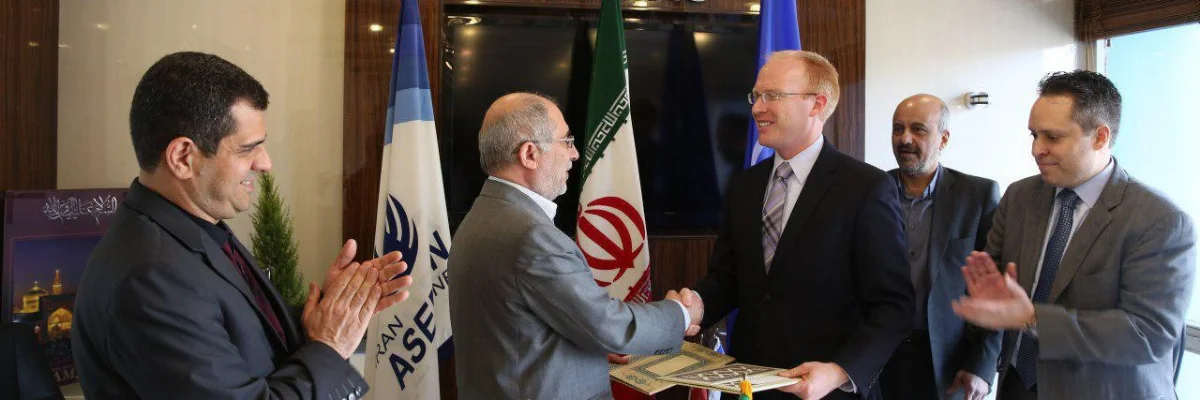
Boeing, Iran, and American Jobs
◢ The first new Boeing jetliner is likely to be delivered to Iran Air later this month in what will a historic moment for US-Iran relations.
◢ Boeing's deal with Iran Air represents a unique instance in which an American company's exports to Iran directly support American jobs. This simple fact may provide a framework on which US-Iran ties could be stablizied during the course of the Trump administration.
This article was originally published in LobeLog.
New reports suggest that Iran Air’s first new Boeing jetliner could be delivered within the month.
According to Reuters, Boeing is reallocating a 777 originally designated for Turkish Airlines. This would be the first aircraft of eighty for which Boeing and Iran Air signed a $16.6 billion in December 2016. Deliveries for the order, which include fifty 737 MAX 8s and thirty 777s in two variants, were originally slated to begin in December 2018.
The early deliver will be a boost to President Hassan Rouhani’s reelection push, and follows Boeing’s announcement last week of its second agreement to sell passenger airplanes to an Iranian airline—a deal to sell thirty 737 MAX 8 airplanes to Iran Aseman airlines, valued at $3 billion.
The Iran Air and Iran Aseman deals are among Boeing’s largest open orders and come at a time of softening demand for commercial aircraft among the world’s airlines.
Expectations are also high for the deal within the Iranian business community. Many business leaders in Iran, as well as their European peers, see the Iran Air and Iran Aseman contracts as important bellwethers of the willingness of the United States to continue to implement sanctions relief commitments under the Joint Comprehensive Plan of Action (JCPOA) nuclear deal. Specifically, the deals are a test of whether the US Treasury’s Office of Foreign Asset Control will continue to provide licenses to both American and European companies that seek to engage opportunities in Iran. Athough Iran Air and Boeing were able to proceed from a memorandum of agreement to a full contract on the back of an OFAC license issued for the relevant transactions, the license was granted in the final months of the Obama administration. The Iran Aseman deal, which is currently limited to a memorandum of agreement, will only be able to proceed to a full contract when the Trump administration issues an OFAC license.
Trump has called the Iran Deal the “the worst deal ever negotiated.” The question is whether he will see Boeing’s opportunity as a redeeming feature.
When Iran Means Jobs
Boeing’s engagement with Iran pits the Trump administration's skepticism of the value of the Iran nuclear deal directly against an avowed commitment to support American jobs, particularly in the manufacturing sector.
Numerous American companies are engaged in business with Iran, either via their non-US subsidiaries as permitted under General License H or on the basis of humanitarian exemptions for the export of agricultural commodities or pharmaceutical products. However, it is rare for the products eventually exported to Iran to originate in the United States. Generally, the exported goods of American companies are produced in a non-U.S. manufacturing facility as part of a globalized supply chain. As such, for most American multinational corporations, engaging in opportunities in Iran may deliver shareholder value but won’t unlikely support American job creation on a large scale.
Boeing is an exception to this pattern. For political and practical reasons, the production of airplanes was never offshored and therefore a direct link exists between the orders placed in Iran and American labor at Boeing’s primary production facilities in Bellevue, Washington and to a lesser extent, North Charleston, South Carolina.
Although Boeing is a large, successful American company, it remains politically delicate to pursue business in Iran. Cognizant of this fact, the company has sought to speak Trump’s language when discussing its sales to Iran.
Boeing has highlighted American manufacturing jobs as a fundamental consideration of both the 2016 deal with Iran Air and the recent deal with Iran Aseman. According to Boeing’s official statement on December 11, 2016 announcing the deal to deliver airplanes to Iran Air, the sales will “support tens of thousands of U.S. jobs directly associated with production and delivery of the 777-300ERs and nearly 100,000 U.S. jobs in the U.S. aerospace value stream for the full course of deliveries.” Similarly, the April 4, 2017 announcement of the agreement with Iran Aseman noted “an aerospace sale of this magnitude creates or sustains approximately 18,000 jobs in the United States.”
Boeing’s government relations outreach isn’t limited to public statements. Following Trump’s public lambasting of the company for the cost of a proposed replacement for Air Force One, Boeing CEO Dennis A. Muilenburg has made it a priority to build a direct relationship with the Trump, first meeting with then-president-elect at Trump Tower on January 17. One month later, President Trump visited the Boeing facility in North Charleston, South Carolina which manufactures the 787 Dreamliner. That Trump visited the North Charleston facility rather than the larger Bellevue, Washington facility likely reflected the fact that Trump carried South Carolina in the election, but lost Washington state. Perhaps conveniently, North Charleston is the main manufacturing facility for the 787 Dreamliner, which has not been ordered by Iran Air or Iran Aseman.
After touring the facility, Trump presided over a rally attended by Boeing workers and Muilenberg. “My focus has been all about jobs. And jobs is one of the primary reasons I'm standing here today as your president,” he declared. “I will never, ever disappoint you. Believe me, I will not disappoint you.”
Given the clear parallel between Trump’s speech and Boeing’s positioning of its deals with Iran, it is highly unlikely that Muilenburg and Trump did not discuss Boeing’s Iran business, although there has been no public statement to this effect. It is likewise unlikely that Boeing would have proceeded with the deal with Iran Aseman unless it was reasonably confident in the viability of the deal. Certainly, the executives at Iran Aseman, a privately held airline that has not yet announced a similar deal with Airbus, would have insisted on Boeing’s assurances that the aircraft deliveries were politically viable.
Boeing’s Commitment to Iran
Boeing’s commitment to Iran requires not just political resolve, but also long-term thinking. Not only will these deals take many years to come to fruition—the Iran Air deliveries set to begin in earnest in 2018 and the Iran Aseman deliveries only in 2022—but the full extent of the export opportunity represented by Iran will only materialize over the next two decades.
There are three key considerations that Boeing needs to make. First, the company’s ability to supply aircraft to Iran is of great significance given that it has only one other true global competitor in Airbus. If Boeing is unable to fulfill these agreements it will no doubt lose significant orders to the European giant.
Second, Iran’s current orders are primarily focused on the modernization of existing fleets and the addition of capacity on existing routes. At the moment, Turkish and Emirates Airlines have significant market share in Iran’s international travel market from Iran because of their ability to operate more flights from destinations in Iran to Europe through their respective hubs in Istanbul and Dubai. European airlines have also made significant inroads in the market in the last two years. For example, although Iran Air only operates flights from Tehran to London three times a week, British Airways now operates a daily service. At the same time, an aging fleet makes Iran Air unappealing to travelers and hurts the airline’s ability to compete with international carriers.
In the next decade, during which time existing fleets would have been modernized, Iran’s economic recovery and its favorable geography should combine to further boost tourist and business travel to Iran from a wider range of international markets. Indeed, the IATA has forecasted that Iran’s passenger volume could rise from 12 million passengers today to 44 million passengers in 2034.
Iran Air currently flies to about 50 destinations worldwide. By comparison, Turkish Airlines, leveraging the geography of its Istanbul hub, now flies to 296 destinations worldwide. It’s unlikely that Iran Air or any Iranian airline has the financial resources and market conditions to become a “mega-carrier”—and indeed these airlines are beginning to struggle. Still, Iranian carriers have significant room for growth, particularly in serving “transit” roles, which means that further orders are possible, especially for long-haul aircraft like the 787 Dreamliner.
Finally, Iran’s most commercially successful airline is privately held Mahan Air. Mahan continues to be listed on the OFAC Specially Designated Nationals (SDN) list for the use of its civilian aircraft in airlifting troops and munitions from Iran to Syria. But it’s fleet size of 50 aircraft is significantly greater than Iran Air’s 29 aircraft, and it flies to more destinations with greater regularity and a higher passenger volume. Should Mahan reform its business practices and clarify its ownership, Boeing and Airbus could be competing for another significant set of orders.
Framework for “Business Diplomacy”
For the above reasons, Boeing’s engagement with Iran isn’t about a couple of one-off transactions. It is about a longterm commitment to a market that will generate substantial orders over the next two decades. From a political standpoint, this makes Boeing’s foray into Iran so important.
Whereas US diplomats have no access to Iran and limited direct dialogue with Iranian counterparts, American executives are opening substantial channels of communication. In this sense, leaders like Muilenburg become the unlikely interlocutors between pragmatic commercial and governmental stakeholders in Iran seeking to engage US-Iran relations on a transactional basis, and the American political establishment, most notably President Trump himself.
Boeing’s deals could help build a framework on which to develop US-Iran ties in the coming years. In some respects, Boeing’s situation echoes the aborted Conocophillips oil exploration and production deal from 1995. Likewise heralded as a rekindling of US-Iran ties, the Conoco deal died at the hands of congressional pressure and sanctions legislation. But the Boeing deal may have better prospects for three reasons: it does not require an investment in Iran, the sale of new and safer airplanes principally benefits the Iranian people, and most crucially, it supports American jobs.
The Boeing deals need their own “implementation.” This process will keep critical commercial and political stakeholders engaged in a discussion about what constructive engagement with Iran can achieve. In its first phase, under the auspices of President Trump, the scope of engagement will likely remain limited to protecting aircraft manufacturing jobs. Let’s just hope he doesn’t let the workers down.
Photo Credit: Iran Aseman
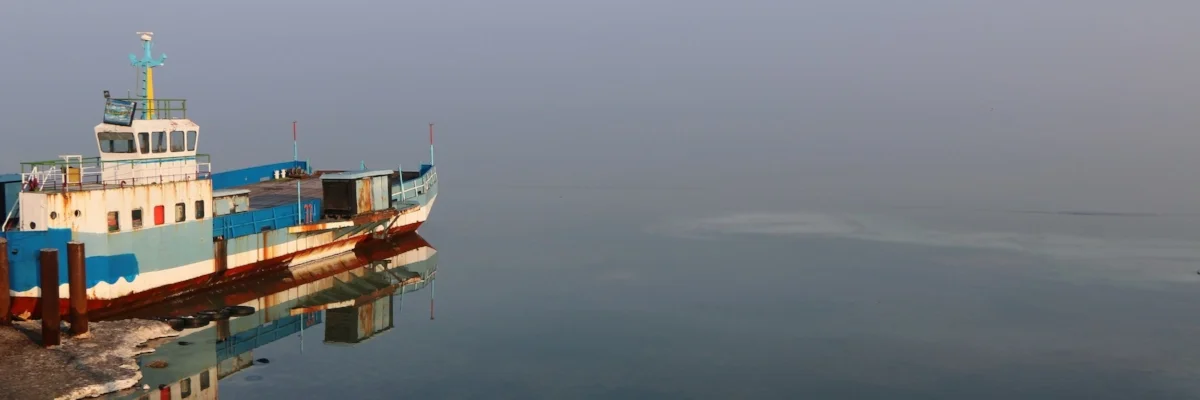
Slowly But Surely, Lake Urmia Comes Back to Life
◢ Lake Urmia was once the second largest salt-water lake in the world. But years of environmental mismanagement saw the surface area of the lake shrink by 90%.
◢ After a decade-long initiative led by the United Nations, and supported by the Iranian and Japanese governments, water levels in the lake are finally beginning to rebound.
This article was originally published on the United Nations Iran website.
Life has returned to the dying Salt Lake in North-West Iran. The effort to restore what had been broken is succeeding.
Returning to the barren landscape after almost four years, I was able to see water. Not nearly enough, but much more than last time. The lake is reviving. And this revival is the result of an immensely successful collaborative effort involving many players—some Iranian, some foreign.
Lake Urmia was once Iran’s largest lake. In its prime, it was the second largest saltwater lake in the world. But years of man-made disruption—from the frenzy of 60 years of dam-building to the massive over-use of feeder rivers—had diverted the natural flow of sweet water from the surrounding basin into the salty lake. As a result, it simply dried out. It died at the hands of humans.
I also remember thinking that if the lake dried up two main things would happen. One is that salt from the dried lake bed would blow around and get dumped on farming land and crops in what essentially becomes a salt dustbowl in a fairly large radius around the lake. Secondly, we could expect people to get sick. For example, in the vicinity of the dried-out Aral Sea in Central Asia, we already see people afflicted with allergies and respiratory diseases including cancers.
But there would be a third self-destructive phenomenon at play as well. As farmers drilled ever-deeper to pump out the aquifers at the side of the lake for farming, over-exploitation of this groundwater surrounding the lake would cause saltwater seepage into those very same wells. This would hit people’s access to potable drinking water. So we were threatened by a “perfect salt storm” affecting people’s health and livelihoods.
When our plane landed in Urmia two weeks ago, having taken the normal one hour to fly from Tehran, I wondered what I would see. I had heard tell of an improvement. But such stories often vanish in the face of requests to provide evidence. I wanted to see for myself.
It was when we started to approach the vast open expanse of lake bed that I saw the morning sun glimmering off something which had not been there when last I travelled to the lake.
Water. Not deep. But enough to cover the salt dust granules which had caused such havoc before. As we drove across the bridge which bisects the lake, the glimmering started to stretch out towards the rising sun.
I must confess I was so happy that tears were welling up in my eyes. The environmental problems we create can be fixed, I thought. And here is how it happened.
First, some numbers.
When Lake Urmia was full, say 20 years ago, it was estimated to contain around 30 billion cubic meters (bcm) of water. At the worst point, 3 to 4 years ago, it contained a mere 0.5 bcm of salt water. The number now stands at 2.5 bcm. The deadly decline has been reversed. The amount of water now keeps increasing each month.
Use slider to see before and after.
Three to four years ago, when the water level was at its worst, only 500 of Lake Urmia’s 5,000 square kilometer surface was covered by any water at all. That figure has now risen to 2,300 square kilometers. Admittedly, much of that water is spread extremely thin, and some tends to evaporate easily. But it is there, offering a protective covering for the estimated 6 billion tons of salt and dust, which now no longer finds its way so easily into the air, into our eyes and lungs, and onto the farmers’ crops.
Because the amount of annual precipitation in terms of rain and snow in the basin has not changed appreciably in the last few years, we must look elsewhere for an explanation of why the lake is now filling up.
There are three main reasons. The first is engineering works to help unblock and un-silt the feeder rivers. Second is the deliberate release of water from the dams in the surrounding hills. Third, and most difficult of all to accomplish, has been a change in the way water management in the basin happens—especially among farmers. Other approaches like banning illegal wells have also had an impact.
The third approach—better water management—took considerable time and effort to achieve. But it appears here to stay. While practicing new roles and partnership of local authorities and communities within LU restoration process, it took painstaking effort to get farmers to reconsider how they grow their crops by modifying their agricultural techniques when growing wheat, barley, rapeseed and fruit and vegetables.
The new techniques are astonishingly simple: changing farm dimensions to make for smaller plots which retain water better; not using flooding as a form of irrigation, but rather trickle-irrigation which is targeted at the crops and thus not wasted; avoiding deep tillage which causes unnecessary water loss; introducing drought-resistant crop strains; ploughing plant residue back into the soil rather than burning it.
Across the board, the crop yield—despite using less water—has also increased by 40 per cent.
Use slider to see before and after.
Here is a final reassuring set of numbers. Considering the normal hydrological conditions, the lake has an average of 5.4 meters and the maximum depth in northern part around is around 15 meters. When the lake was at its worst point, the lake’s average level had dropped to almost zero. When we compare the level of the lake taken now with what prevailed at exactly this time last year, we note a 6 centimeter rise. The monthly increases have been incremental, but sustained.
The project which has brought about the improved water management is being implemented by the UN Development Programme (UNDP). Based in West and East Azerbaijan provinces with a focus on Lake Urmia surrounding cities and villages, it works closely with local farmers, provincial and national governments and others to initiate an adaptation process by implementing the “ecosystem approach."
Following a 7 year project to introduce ecosystem approach for saving Lake Urmia, with the generous financial support from the Japanese government in recent years, as well as an inflow from the Iranian government’s own resources at both the national and provincial levels, these techniques have been successfully implemented in 90 villages. But this number represents only about 10% of the irrigated farming area in the Urmia Basin. Nonetheless, in the areas where the sustainable agriculture is being practiced, there is a water saving of about one-third of the water that would otherwise have been wasted under the old inefficient practices. This saved water can flow back into the lake, thereby replenishing it.
UNDP’s interventions to save Iranian wetlands including Lake Urmia—starting 12 years ago, but intensifying significantly with the addition of three phases of Japanese funds—have focused on working with local farmers, cooperatives and government to support a new model of partnership among stakeholders and initiate an adaptation process by implementing sustainable agriculture techniques. It has also advocated alternative livelihoods for women using micro-credit and biodiversity conservation.
At present the project’s interventions cover sites all around the lake, and most affected, part of the lake basin. To boost coverage from 10%, the plan is to move towards significant upscaling of this important initiative in an emblematic effort which is being recognized at an international level.
As I got on the plane to return home to Tehran in the evening, three takeaway lessons occurred to me.
First, we face powerful environmental challenges in Iran. But we can fix what we have broken. And this is happening—right now—in Lake Urmia.
Second, the public must educate itself and speak out on the environment. The UN received a petition in 2016, containing 1.7 million signatures, requesting action on Lake Urmia. The pressure has been relentless. Such pressure must be welcomed and acted upon.
Third, in the final analysis, these environmental problems cannot be solved if we act alone. The Lake Urmia response shows that it takes leadership by public authorities, acting in collaboration with the affected communities, and sometimes with support from the international community (technical support from UNDP and financial support from a partner like Japan) to do the trick.
What has happened in Lake Urmia is an example to inspire us all—both within and beyond Iran.
Photo Credit: United Nations Iran, Nasa
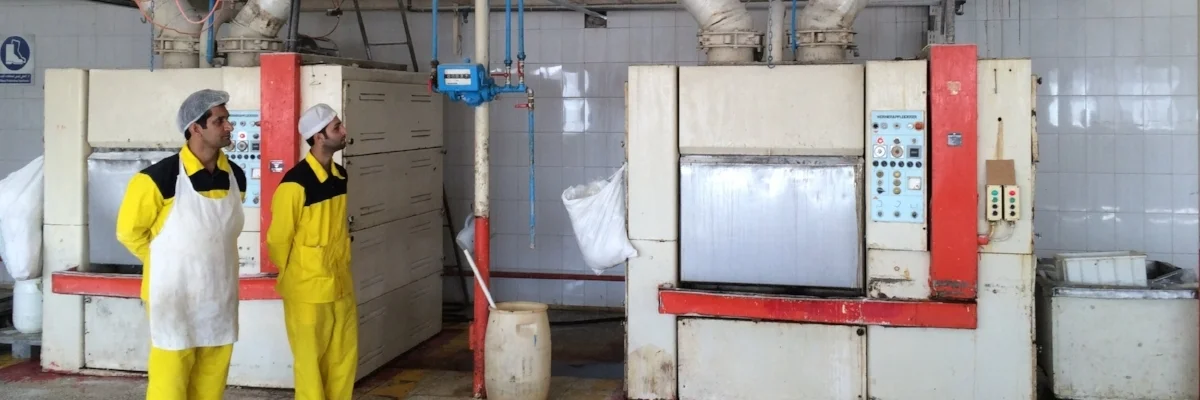
In the Future, Iran's Biscuits Will Be Made by Robots
◢ Automation will fundamentally change labor markets around the world, with the deepest impacts being felt in the manufacturing sector.
◢ While foreign direct investment in Iran will support job growth in manufacturing in the near-term, eventually the push for efficiency gains will include automation and workforce reductions.
Some of Iran’s most popular biscuits are manufactured in a facility about an hour south of Tehran. In the tea drinking country of Iran, biscuits are a staple, served to guests in living rooms and boardrooms alike. The biscuit company in question has been in business for over 50 years and occupies several buildings which house production lines for butter biscuits, chocolate cookies, and flavored wafers.
While the scents are those of a bakery, the factory’s sights and sounds are completely industrial. Conveyor belts whir on several parallel production lines, arranged in the long central hall. The oldest equipment in operation was made in 1961 by English equipment maker Simon-Vicars and can bake 500 kilos of biscuits per hour. The majority of the equipment is made by Germany’s Werner & Pfleiderer, with two lines installed in the 1970s and a third line installed in the 1990s. These ovens can bake up to 900 kilos of biscuits per hour. The most modern equipment in the factory are the two Italian Imaforni ovens, purchased second-hand, which can bake up to 600 kilos of biscuits per hour. However, the Imaforni machines are often dormant.
Across the production lines, only the mixing, baking, and cooling processes are mechanized. Packaging of the biscuits is done by hand by teams stationed at the end of each line.
In a building next door to the main factory, the baking of more complex wafer cookies requires even more human input. Not only is packaging completed by hand, but the assembly of the wafers requires the sheets of pastry to be manually fed into the machine that applies the filling.
Altogether the factory employs just under 200 people and boasts a maximum production capacity of 11,000 tonnes per year. With dormant production lines, the output is really about half that figure. By way of comparison, Mondelez International’s factory at La Haye-Foussiere in France produces 45,000 tonnes of biscuits per year with just 450 employees. With greater automation, the La Haye-Foussiere factory employs just twice the number of workers to produce at least four times the biscuits each year.
The owners of the Iranian biscuit factory had one emphatic answer when asked what they would do a new injection of capital: “We would invest in automation.”
Last week, I wrote about the importance of the blue-collar workforce to Iran’s economic recovery, and how post-sanctions growth needs to serve this stakeholder group. While in the short-term, there is clear evidence that foreign direct investment will support the type of economic growth that drives job creation, in the longer-term, the relationship between investment and job creation is less linear. Workers know this and it explains lingering doubts among the working classes about the trajectory of Iran's economic development.
Automation looms large over industrial sectors around the world, and Iran is no different. The arrival of what is being called the “Fourth Industrial Revolution” was the focus of the 2016 World Economic Forum in Davos. The “Future of Jobs” report published during as part of the annual gathering made waves for its prediction of rapid and dramatic shifts in the composition of workforces worldwide. The report predicted over 1.6 million lost jobs in the manufacturing sector by 2020 across a sample of 20 countries that included developed economies such as the United States, Germany, and Japan, as well as rising economies such as China, India, Brazil and South Africa.
While Iran was not one of the country’s sampled in the report, the findings did cover Turkey, which is a strong proxy for Iran given the similar size and composition of its labor force. Employment in the manufacturing sector will actually increase in Turkey through 2020. Similar increases are forecasted for Mexico and South Africa. The report evidences how the pace of economic growth in emerging markets in the next 5-10 years will mean an expansion, rather than contraction in blue-collar jobs. The trend should hold true for Iran.
However, the report’s authors also note that the implementation of automation technologies will only begin to gain momentum globally between 2018 and 2020, when “Advanced robots with enhanced senses, dexterity, and intelligence” which “can be more practical than human labour in manufacturing” begin to account for a greater number of the roles on the production line. Realistically, the adoption of these expensive technologies in less-developed economies such as Iran will take place later, but as adoption increases the next generation of automation technologies will become less expensive in the same period when Iranian labor begins to grow more expensive as wages rise during the post-sanctions economic recovery. This combination of events will make automation even more appealing. Inbound investment will be used to improve efficiency and productivity in the manufacturing sector and capital intensive automation will be justified based on economies of scale made possible as Iran’s exports rebound.
Already, companies like German robotic arm manufacturer Kuka have helped modernize the assembly lines at Iran Khodro and other Iranian automakers. While such improvements to efficiency have helped Iran’s auto-industry become more competitive by international standards, thereby justifying the new wave of potential investment from the likes of Renault, Daimler, and Volkswagen, the long-term profitability of these sectors could depend on reductions to the workforce.
The experience of European automakers in their domestic markets is instructive. On average, a European Union auto worker produces the equivalent of 7 vehicles per year. In Iran, which has approximately 500,000 autoworkers and an annual vehicle production of about 1 million, the worker-to-vehicle productivity ratio is just 2. In the medium-term, an improvement in Iran’s productivity ratio would necessitate both increases in automation and also reductions to the workforce.
For the Rouhani administration, this presents a stark dilemma. How do you usher in an economic agenda to serve the people, if the new agenda will also usher in technologies that could upend employment opportunities for the working classes?
Over the last few years, many of Rouhani's critics have taken to labeling him a neoliberal, the implication being that his pursuit of economic growth will come at the expense of blue-collar workers. Rouhani's ability to address the concern will depend on his ability to ensure that "knowledge transfer" follows investment.
When asked how they intend to manage impending shifts in labor markets, 65% respondents in “Future of Jobs” report cited “reskilling current employees” as the fundamental strategy for basic industries, including blue-collar work such as manufacturing and construction. But while rich countries like Switzerland and Sweden that face this dilemma can experiment with ideas such as universal income or mass retraining of the workforce, for Iran, these issues are far more delicate.
As World Economic Forum founder Klaus Schwab and board member Richard Samans write in the preface of the report:
It is critical that businesses take an active role in supporting their current workforces through re-training, that individuals take a proactive approach to their own lifelong learning and that governments create the enabling environment, rapidly and creatively, to assist these efforts.
For the biscuit company, the opportunities to retrain staff for new roles are numerous. Whereas 200 individuals work in the company, just a dozen are involved in the distribution and sales of the company's products. There are essentially no formalized teams in sales and marketing, business services, retail partnerships, human resources, or corporate and legal affairs despite robust annual revenues. So while the overall proportion of manufacturing labor may decline, the growth of companies like the biscuit maker, should also open the door to opportunities in other job roles.
Looking to the breakdown of the Mondelez workforce in the UK, of the 5000 total employees, two-thirds are directly involved in manufacturing. By this standard the Iranian biscuit company should have nearly 10 times the current number of commercial staff given the size of the manufacturing staff.
Indeed, the "Future of Jobs Report" forecasts job growth in business and financial operations, management, and sales functions across the sampled countries. For Iran, the challenge will be to make sure blue-collar employees are empowered to make the leap into these new roles.
Photo Credit: Bourse & Bazaar
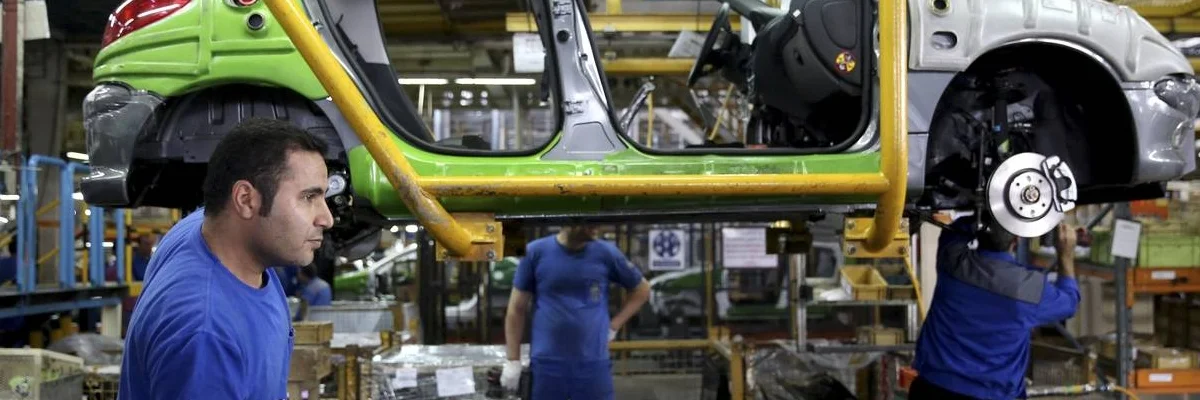
The Other "Forgotten Man": A Look at Iran's Blue-Collar Workforce
◢ Iran's blue-collar workforce is the backbone of the country's economy, but has been largely overlooked by international policymakers and business leaders as a key stakeholder group.
◢ The new populist political environment in the West requires new ways of positioning the Iran Deal. Increasing awareness of Iran's working class could be a powerful way to connect to Western electorates.
Iran will soon witness a significant boost in its industrial output. Led by a resurgence in the auto sector, the country’s factories are receiving new investment, as major multinationals seek domestic and regional dominance across market sectors. Volkswagen will be building models in partnership with Mammut Khodro, while Mammut Diesel expands its production of Scania trucks. Renault will manufacture trucks in Iran with local partner Arya Diesel. Volvo has signed an agreement to build trucks in partnership with Saipa Diesel. The finalization of Renault’s long-awaited agreement to establish a new manufacturing joint-venture in Iran is expected soon. Peugeot, Daimler, and DAF are also also exploring local production. As the boom in passenger and commercial vehicle production in Iran picks up steam, a rather simple question remains unanswered—Who will build all of these new vehicles?
Iran boasts one of the largest blue-collar workforces in the Middle East. On the back of a population boom that began following the Islamic Revolution of 1979, Iran’s labor force has surged to reach over 27 million, roughly the same size as the labor force of Turkey, and over twice that of Saudi Arabia. The Iranian economy has struggled to absorb the influx of new workers, and the official unemployment rate remains stubborn at between 12%-14%, although some analysts believe the total is even higher. This simple fact explains two fundamental aspects about the dynamism of Iran's political economy. Firstly, the blue collar working class underpins significant consumer buying power. Secondly, the perseverance of Iran’s political diversity cannot be overlooked, especially not in a region where most such diversity has withered away.

Relief for blue-collar workers was fundamental to the early success of the win-win formula that drove the nuclear negotiations between Iran and the P5+1. The initial sanctions relief provided to Iran as part of the Joint Plan of Action (JPOA) focused on sectors which accounted for Iran’s largest employers, including the automotive sector. This was a direct result of advocacy of deal supporters in Washington, who argued that galvanizing Rouhani’s political base required showing tangible benefits to Iran’s blue-collar workers. As a result of targeted sanctions relief, the production of automobiles and commercial vehicles in Iran rebounded from 743,680 units in 2013 to 1,090,846 units in 2014, with year-on-year growth swinging from a 25.6% decrease to a 46.7% increase. This early success may have been the single-most important factor in validating the Rouhani administration’s gamble on diplomacy.

In the subsequent years, however, the importance of Iran’s blue-collar worker has been largely forgotten by business leaders and policymakers working on the implementation of sanctions relief. These stakeholders remain fixated with the Iran Deal’s role in the “Great Game” of the Middle East, and business leaders are focused on the intricacies of compliance and financing challenges as they approach Iran. In both cases, the international media is happy to play into the blind spots of the respective parties.
What has been lost is an appreciation that the “normalization” of relations between Iran and the international community is as much about elevating “normal Iranians” into a global consciousness, as it is about matters of international commercial, financial, and legal integration. While there has been progress in building awareness of Iran’s young and highly educated elite, whose start-ups and entrepreneurial verve play into the inherent coverage biases of the international media, a larger swath of society remains ignored. By a similar token, the rise of the “Iranian consumer” with untapped purchasing power and Western tastes has been much heralded, but the reporting fails to appreciate that Iran’s upper-middle class rests upon a much larger base whose primary economic function is not consumption, but rather production.
The struggle of the blue-collar laborer is one of the few truly universal experiences left in the world. The international fraternity of laborers is bound by a common set of anxieties which exist as much in Iran, as they do in Europe and the United States. These concerns range from access to healthcare to economic fears—all of which culminates in the stressful and all-consuming uncertainty of providing for one’s family.
The health risks faced by Iranian workers are well-documented in Iran’s extensive body of public health research. Issues include exposure to toxins, severe back and neck pain, and the workplace accidents. Most of the completed studies were based on research originally conducted among worker populations in Europe and the United States. The findings consistently suggest that the incidence of health issues adds considerably to the work-related stress of blue-collar workers, diminishing overall satisfaction with quality of life.
Alongside health concerns, Iranian blue-collar workers, both male and female, bear the fundamental burden of providing for their families. In this regard, there remains considerable skepticism of senior management. A 2013 study which looked at the sentiment of workers from at Iran Khodro and Saipa, Iran’s two largest automakers, found that staff report “top management commitment” to high standards “is not positively related to staff degrees of freedom of choice” for the workers. This means that while the managers at Iranian auto companies may demonstrate their commitment to their staff with training programs and performance-based remuneration opportunities, Iranian auto workers still feel they are at the mercy of their superiors, ultimately hurting overall employee satisfaction. Given that Iran does not permit organized labor, this feeling of vulnerability is especially acute, particularly when companies are late making payroll or fail to improve safety standards.
In the West, the power of working class voters has reasserted itself with the Brexit referendum outcome and the election of President Trump, who boasted of his commitment to America's "forgotten man"—the blue-collar worker—in his inaugural address. Elections in France and Germany also loom large. Behind these electoral shifts is a heightened awareness of the malaise in the working-class heartlands of these countries. Yet while the frustrations of the working class are now better understood by voters across the political spectrum, the mere existence of the working class in economies such as Iran has not been fully acknowledged in these countries, despite the remarkable similarities in the Iranian blue-collar experience.
The only substantive difference between the Iranian and Western working class is that the two groups are demanding opposing solutions from their governments. Whereas voters in the United States and Europe are pushing for a protectionist turn in economic policy in order to protect jobs and wages, working-class voters in Iran have given their mandate to a plan which hinges on the forces of globalization. Having experienced the abject failure of protectionist policies in the Ahmadinejad administration, when Iran’s industrial output cratered under international sanctions and general mismanagement, Iran’s working-class is betting on the success of a different approach.
As the Iranian presidential election looms, a renewed mandate for the Rouhani administration will depend on the ability to demonstrate that sanctions relief has created high-quality employment opportunities, particularly for younger Iranians who face the highest levels of joblessness. Rouhani has succinctly described his vision in stating that “The future path of the Islamic Republic of Iran is the path of economic growth, non-oil exports, attracting domestic and foreign capital, and creating jobs for the educated.” Taking his statement as a “to-do” list, the Rouhani administration has already unlocked economic growth through economic reforms and revitalized non-oil exports through the lifting of sanctions and stimulus programs. Today, domestic and foreign investor capital is slowly being deployed. Job creation, of the kind that supports social mobility, is the remaining objective.
In accordance with Rouhani's vision and the tenor of Western populist politics, major multinationals looking to engage Iran need to consider their own blue-collar stakeholders, both in Iran and at home. Surprisingly few multinationals have touted the job-creation benefits of expanded trade with Iran. One of the few examples can be seen in Boeing’s statement following the finalization of its contract to supply 80 aircraft to Iran Air. In a clear nod to the rhetoric of the Trump administration, Boeing declared that “new orders will support nearly 100,000 U.S. jobs” within the company’s larger supply chain that “currently supports more than 1.5 million U.S. jobs.”
Troublingly, working-class voters in the West are empowering political parties that are either ambivalent or openly antagonistic towards the Iran Deal. In the United States, public sentiment towards Iran remains dire, with American voters considering Iran their second greatest enemy, only after North Korea. Many of these voters fail to recognize that their own job security could be tied to the trade opportunities represented in post-sanctions Iran. They are also unaware that the potential failure of the Iran Deal would principally hurt fellow blue-collar workers who are similarly at the mercy of forces beyond their control.
The great irony is that if there is indeed a breakdown in Iran’s new, improved relations with the international community because of electoral apathy in the West, it is Iran’s blue-collar workers who will be the first to suffer. Should sanctions "snap back", the layoffs in the manufacturing sector would be swift. In the event of possible global political conflict, Iranian conscription would draw indiscriminately from the ranks of its blue-collar labor force.
In some sense, the full range of stakeholders, including business leaders, policymakers, and the media, continue to look at the Iran Deal through a lens that dates back to 2016 when JCPOA was formally implemented. The ground has shifted since then and new ways are needed to think about the Iran Deal in the current political and economic climate. By connecting the fortunes of blue-collar workers in Iran with those of their Western counterparts, a more powerful model of normalization might be found.
Photo Credit: Atta Kenare
