
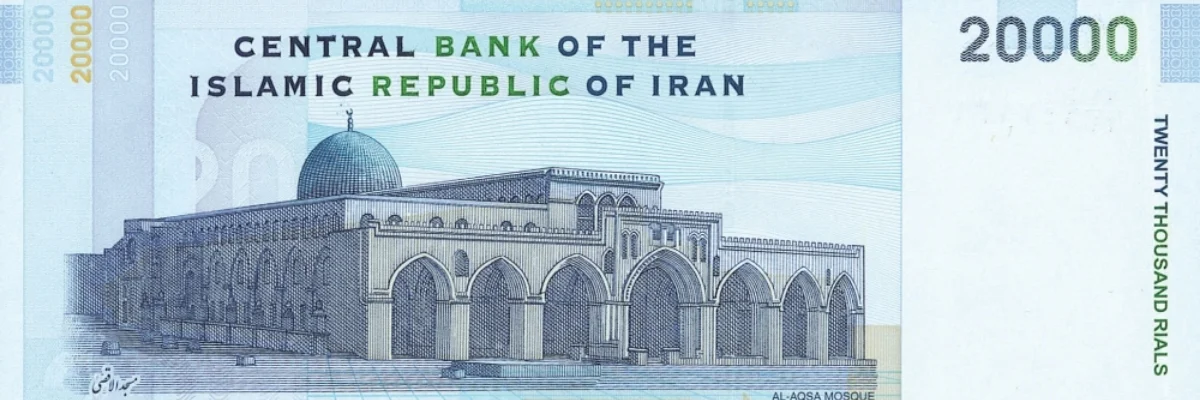
Let It Rule: Imperatives for Central Bank of Iran
◢ In most countries, central bankers wield immense influence over the economy through their monetary policy.
◢ The Central Bank of Iran has struggled to secure the power and independence of its foreign equivalents, hindering economic planning and growth.
“And God said, Let there be light: and there was light.” A central bank’s power is somewhat like God’s, at least in monetary terms, as a former governor of the Central Bank of Iran once said. This is true for the world's most influential central banks such the Fed, ECB, BOJ and BOE or the SNB. The Swiss National Bank's recent move to abandon a self-imposed peg of the Swiss franc against the euro, introduced in 2011, sent the Franc soaring against the Euro by almost 40 percent, is a testament to the power they exert.
But, the CBI is far from wielding the power and independence that its foreign counterparts enjoy.
The bank is under strict financial sanctions, which have diminished its foreign reserves. Thus it has lost face in the foreign exchange market. Gone are the days when remarks by its governor calmed traders. In recent years, even its actions have little effect. In 2012, the bank had to resort to closing down all currency trade in a bid to halt the collapse of the rial, when vows to stabilize exchange rates and financial intervention failed. At that point the bank had overplayed its hand so much so that traders saw the bank reactionary and imprudent. Little has changed in this regard.
Defenders of the bank might counter that the siege on the CBI for allegedly circumventing sanctions against Iran's nuclear energy program is the source of its ineptitude. And yes, having $100 billion trapped overseas does hurt a lot. But that's not all.
Just look at the list of issues the bank is contending with and you'll see that even with a $100 billion, the leopard doesn't change its spots!
It is struggling to bring 7,000 rogue financial institutions, including one Ayandeh bank, under its supervision. The CBI has tried and failed to decrease interest rates for the past year. But, the same institutions have not complied, leading to drainage of deposits from banks towards their coffers.
Furthermore, past monetary decisions by the central bank and the former government have led to tens of billions of dollars of toxic debt on the balance sheets of state-owned commercial lenders, in turn driving them towards property speculation. The central bank is seeking to undo this knot in a civilized way, without undue panic and bankruptcies. Results will materialize slowly, if at all.
When we consider the inability to craft effective policy, at the heart of the matter are the limitations on the central bank's legal powers and its authority to make key decisions.
In most developed countries, monetary policy is the domain of a central bank’s governors. Not so in Iran. The money and credit council, a body within the central bank but controlled by the government, sets monetary policy, not the governor and his deputies. This essentially makes the bank an arm of the Ministry of Finance.
The bank also plays the role of the treasury for the government. It receives oil revenues, and then prints rials and distributes the funds to various government branches. Sometimes the foreign receipt part doesn't take place, thus curbing the bank's control over inflation.
And even when the policies are made, the bank is too feeble to implement them. It doesn't have the capability to exert pressure on banks or the currency market, let alone combat those who defy its commands.
So how can investors and business leaders ask for inflation to be restrained, monetary policy to be set and the currency's value to be stabilized, if they are to rely on such a central bank?
Luckily, the solution is simple enough, at least on paper. A separation of powers is necessary. Monetary policy should be detached from fiscal policy, and the bank should be isolated from politics.
To do so, the bank should be given full autonomy on monetary matters, a structure similar to that enjoyed by its counterparts in developed nations. A system of governance, where by all three branches of government have a degree of influence in the bank's governance would better guarantee the bank's autonomy. But this would require a change in the constitution, a lengthy and difficult process.
Furthermore, the central bank's legal clout and ability to exert power on its turf needs augmentation. Its influence has to cut through the lobbying of vested interests. Its responses to crime must become rapid. For this it needs more legal powers and a wider array of financial tools to help it set and oversee monetary policy. Again lawmakers must empower the bank for the benefit of investor, business leaders, and the economy at large.
Many officials in the current administration have expressed their desire to give CBI greater autonomy and new legislation is under work to give the bank some new powers. But a half-hearted will not be effective. What is needed is a fully independent central bank, as enshrined in law and in the deference of the financial sector at large. After all a strong and independent central bank will help iron-out the full range of economic policies. We ought to let the governor rule his domain.
Photo Credit: mebanknotes.com
Negotiating Iran: Paving the Way for Foreign Investment
◢ Iran has spent decades pursuing self-sufficiency across major industries in what has been called a “resistance economy.”
◢ This development strategy must change if the country is going to attract much needed foreign direct investment post-sanctions.
For decades, Iran has largely gone it alone in developing its industries. If there were a global economic self-sufficiency index, Iran would be right at the top. This self-sufficiency, although impressive to the outside world, has nonetheless encouraged practices and processes that are inconsistent with global norms. As Iran and the P5+1 hammer out a nuclear deal the Islamic Republic contemplates a post-sanctions environment which will undoubtedly call for a revision of the country's economic and development strategies. Crucial to this transition will be a strategy to attract more foreign direct investment.
Foreign investors have done their homework on identifying both the unprecedented investment opportunities of a post-sanctions Iran as well as the obstacles and fundamental challenges. Given the Islamic Republic’s distinct profile and potential for growth, Iran is poised to become the next frontier market to be developed. But more homework will need to be done on Iran in order for investors to gain FDI contracts.
Although not unique to Iran, three key aspects of FDI negotiations are worth noting for investors: the capabilities and character of Iranian industries, the Islamic Republic’s hierarchy of values and the country’s overall post-sanctions economic and development strategies. Each of these aspects needs to be understood in depth and in relation to the others in order for foreign investors to gain favorable FDI contracts.
Below is a broad understanding of the three aspects of FDI negotiations specific to Iran that will be explored in greater detail in subsequent articles.
Capabilities and Characteristics of Iranian Industries
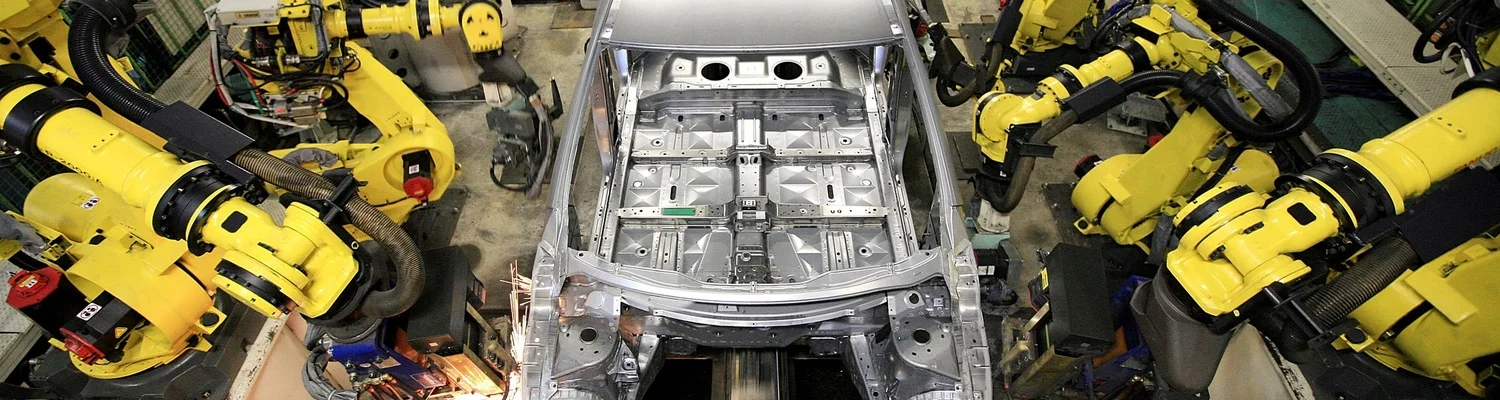
Iranian industries yield some impressive production numbers. For example, despite suffering under sanctions, Iran’s auto industry will produce 1.1 million cars in the current Iranian year which ends on March 21, 2015; up from a low of 737,000 in 2013 and nearly at the level of 1.6 million in 2011, when the EU introduced new sanctions. Save the inclusion of some components like engines and select electronics, what is significant is that this level of production in the auto industry was achieved without the benefit of value added exports afforded through a broader global value chain.
But this achievement is a double-edged sword. The vast majority of cars produced were for domestic consumption rather than for export. Moreover, decades of working largely outside of the global economy has bred production techniques and practices that might be unfamiliar to the network of global value chains in both Europe and Asia.
Consequently, the practices, techniques and overall ways of doing doing business for a variety of Iranian industries fall short of global norms (This situation is not unlike the policies of Import substitution industrialization popular in Latin American economies in the 1970s and 1980s). Before getting to the negotiating table, foreign investors will need to do their homework on not just the business opportunity but also the character and level of variance of business practices of their respective industries in Iran. For example, having been accustomed to working with a domestic set of suppliers, Iranian manufacturers will need to get accustomed to working with an international set of suppliers. Once the capabilities and characteristics of Iranian industries are understood, investors will be in a better position to offer the knowledge and technology transfer that the Islamic Republic desires in exchange for contracts.
Iran’s Hierarchy of Values
Having developed an industrial base to the level it has, Iran’s hierarchy of values brought to FDI negotiations will differ from that of other lesser developed countries. The likelihood of a walkout by Iranian officials from the negotiation room might be high with the rationale being the Islamic Republic could go without the investment and simply continue to muddle through as they have been. Hence, foreign investors need to have an adequate understanding of the Iran’s hierarchy of values. For example, Iranian manufacturers may prefer to acquire new capital for their factories rather than adopt new manufacturing techniques.
A lack of understanding also seems to be evident in the ongoing negotiations regarding Iran’s nuclear program which is currently on its second months-long extension. Foreign investors will need to have done their homework on understanding what specific values Iranian officials hold relative to them and offer a package of value added technology and knowledge transfers that reflect this understanding. In sum, Iranian decision makers more than the leaders of other lesser developed countries put more weight on outsiders understanding their hierarchy of values reasoning that the Islamic Republic could almost always return to an ‘economy of resistance’.
Post-Sanctions Economic and Development Strategies
As it looks now, all signs lead to a gradual lifting of sanctions on Iran which will in turn steadily open Iran to the global economy over years if not a decade or more. Iranian decision makers will need to overhaul the country’s economic and development strategies in order to accommodate the rapid increase in FDI inflows as well as the country’s broader integration into the global economy. The process will inevitably appear shambolic, haphazard and/or incongruent and occur at a seemingly breakneck speed. But if the foreign investor has done their homework knowing which knowledge and technology transfers Iran seeks at which phase and has a firm grasp of the hierarchy of values of Iranian decision makers vis-a-vis their own, they are more likely to be seen as part and parcel to Iran’s economic and development strategies and consequently granted FDI contracts. Finally, given the Islamic Republic’s penchant to go it alone if need be, first-mover advantage could be especially important and lucrative for foreign investors that are granted contracts.
Conclusion
Negotiations are about knowing what the other side wants in order to reach a favorable agreement. They tend to go smoothly with both sides contributing positively to the other side so as long as there is a thorough understanding of the other. If foreign investors do their homework the intricacies on the role of FDI in Iran’s post-sanctions economic and development strategies coupled with an understanding of the hierarchy of values of Iranian decision makers they can gain an advantage at the negotiating table.
Photo Credit: Financial Tribune
Risky Business: Four Categories of Iran Risk
◢ Managing risk is a key part of an Iran market entry strategy.
◢ There are four major categories of risk to consider: commercial, legal, political, and reputational.
It must be commonplace in meetings where opportunities for business development or investment in Iran are being discussed. Suddenly it becomes apparent that the pitch was half-baked-- it didn’t include an assessment of risks. With a simple question like “What’s the firm’s reputation?” or even “Is it legal?” the pitch falls flat.
A more systematic and proactive approach to risk assessment can avoid these pitfalls. An assessment should begin with four main categories of risk: commercial, legal, reputational, and political. Each of these categories needs to be explored in depth and in relation to the others in order to craft a useful and durable business development strategy. Even if you aren’t an expert in any of these categories (I certainly am not), having a structured approach helps identify gaps in knowledge early so that the right information can be sourced and solutions can be crafted before a problem arises or a tough question comes up in a pitch meeting.
Below is a basic introduction to the four types of business risk in the Iranian context, which will hopefully be explored in greater detail in subsequent articles.
1. Commercial Risk
The greatest challenge in evaluating commercial risk in Iran is the way expectations can quickly outpace reality in anticipation of a historic nuclear deal.
Articles in the The Economist, Wall Street Journal, Time, and other publications have trumpeted the impending “gold rush” or “bonanza” that would ensure if Iran is reintroduced into global markets for goods, services, and capital. The enthusiastic reporting of the many possible macroeconomic drivers of Iranian growth—a young population, an untapped manufacturing base, decent purchasing power, limited government debt etc.— makes it seem like investment in Iran is a “safe bet.”
But the reality is that within the positive forecasting for Iran on a macro scale, investors, business leaders, and entrepreneurs— whether foreign or Iranian—need to heed the dynamics of the micro scale. Investment opportunities ought to be judged on their own terms, and not solely in relation to the bigger picture of potential Iran growth.
What does this mean in practice? Whatever the opportunity in question, a commercial risk analysis needs to be done to ensure that the opportunity remains viable for a wide range of macroeconomic scenarios. It is tempting to treat investments as a “safe bet” because the macro projections are so good. For example, an investor might think that a heavily leveraged buy-out of a consumer goods factory, even one that is inefficient and poorly managed, would be worthwhile because consumer demand is likely to surge in the aftermath of the deal—an inefficient factory can still deliver good margins if the price of goods rises high enough. But what happens when this belief leads the investor to shirk the responsibility to make the factory operate better, whether through better management or equipment upgrades? The factory investment remains exposed to a fundamental commercial risk, and if consumer demand does not materialize, the heavily leveraged bet is lost.
Certainly, emerging markets investors in markets like China, Brazil, India and South Africa have the appetite for such risky bets, and sometimes they are able to execute aggressive strategies to great success. But if overly aggressive approaches become widespread in the post-sanctions investment landscape, the tendency will be to ignore or discount the true commercial risk.
Iran only has one chance to emerge from years of isolation and to position itself for long-term prosperity. The last thing the country needs is the wild speculation and risk-taking that typified foreign investment in Russia in the mid-nineties. The “only way is up” attitude towards economic growth ignores the necessary volatility in any major economic reorientation, and also overshadows the reality that a dud business is a dud business regardless of how good the economy might get. The goal should be mitigate commercial risk at the micro level so that the enterprise can prudently navigate any macroeconomic fluctuations.
2. Legal Risk
Iran remains subject to the most advanced and comprehensive sanctions program ever instituted. So it is perhaps especially frustrating that entrepreneurs and investors get excited about commercial opportunities before they have a close look at the legalities. When the “post-sanctions” future is imagined, the process of sanctions relief is often simplified as though sanctions will go from “on” to “off.” But the real opportunities will lie in navigating the legal landscape in order to find the viable opportunities first.
Sanctions regulations are complex and were legislated in a messy way. How they will be rolled back remains a point of debate. But generally speaking, where US sanctions go, EU and UN sanctions will largely follow. What is clear is that the rollback of sanctions will likely be a phased process, and therefore the legal landscape will be constantly evolving even in what seems to be a “post-sanctions” moment.
In the meantime, companies will be tempted to try and “outsmart” sanctions. But this is foolhardy. Compliance is important, and companies should invest in the best legal expertise available on an ongoing basis to learn how to craft an adaptive, compliant business strategy. Failure to comply could mean drastic and long-lasting commercial, reputational, and political damage. It is a bad habit shared by many firms that in order to keep costs low, the lawyer is only hired when the contracts are being drafted.
Additionally, companies shouldn’t forget about the need to comply with Iran’s domestic laws. There is a tendency for multinational firms to flout domestic laws when entering emerging markets. Usually, the perception of lax enforcement and corruption allows companies to think that domestic laws can be heeded selectively. This is also foolhardy. Not only is Iran’s enforcement capacity greater than the average emerging market (it has very strong state institutions, despite levels of corruption), but failure to pay taxes, ensure safety, or abide by environmental protections will earn the ire of the highly-educated Iranian public, who should be respected even more than the prosecutors.
3. Reputational Risk
I touched on the topic of reputational risk in this November article for LobeLog, and I consider it one of the most fascinating challenges of doing business in Iran. The commercial and legal risk present in Iran is commensurate with levels in numerous markets, but the level of reputational risk is perhaps the highest in the world.
A poll published by BBC World Service in June 2014 identified Iran as the most “unfavorably viewed country” by individuals worldwide. Certainly, much of the international criticism is deserved and companies need to be honest with their customers, employees, and shareholders about their corporate responsibility to support positive social outcomes in all markets, including Iran.
But from the standpoint of business development it is worth considering the specific allergic reaction often exhibited when the ideas of “Iran” and “business” are combined. Special interest groups use public campaigns to name and shame companies that do legal business in Iran. Sometimes even humanitarian trade is targeted. So when we consider the idea of normalization, we are really discussing a new normal in which the combination of the ideas “Iran” and “business” is no longer the cause for concern or condemnation.
In practical terms, managing reputational risk will require savvy branding and an excellent communications and public relations strategy. This involves everything from redesigned websites to better disclosure of company activities, announced through new mechanisms of corporate communications. Transparency will be key in order to assuage negative perceptions and present a new normal of a responsible and resurgent business community.
4. Political Risk
The fourth and final category of risk is perhaps the most difficult to evaluate. Political risk is about “street smarts”— understanding the commercial landscape of a country like Iran in a very deep way, capturing the political, social and cultural dimensions. Those seeking to do business in Iran will have a lot to learn in little time.
At the macro level, political debates around privatization and foreign ownership may impact how commercial and contract law is carried out, but there are actually existing laws written to protect foreign investment and private enterprise—they just have had limited use in a period of low FDI. Firms will need to develop skills in government relations to ensure they stay on top of these debates and the consequences for their business.
Looking to the micro level, Iranian society places great importance on personal or institutional reputation and pride. Any partnership or venture is judged on the reputation of its constituent parties. But rather than seeing reputation as a question of branding, this is a more political understanding of “reputation.”
For example, a certain individual or company might be the most commercially powerful of among the potential partners, but may also have a more questionable reputation within the industry. This partner may be best positioned to mitigate commercial risk in a given venture, but how does the politics of a potential partnership effect reputational or legal risk in the medium to long term? Would a company that is less commercially powerful, but held in higher esteem actually make a better partner?
To be clear, the need to make such political evaluations is not a trait unique to Iran. Even Silicon Valley is a place where the partner you choose or the investor you secure can drastically alter the trajectory for success. In Iran, as in Silicon Valley, political risk means knowing who are the key actors, how they are perceived, and the resources they are able to mobilize. But for a foreign investor or firm, the learning curve in a new market like Iran will be especially steep.
Conclusion
Looking at these four categories holistically, responsible companies will seek to turn risks into strengths. A proactive and careful approach to developing the commercial, legal, reputational, and political facets of a business development strategy can offer firms a competitive edge in the marketplace. Mitigating risks can be expensive and time-consuming, and may require seeking analysts, lawyers, PR consultants or other experts to help fill gaps in knowledge. But companies that can internalize and deeply understand risk/reward calculations for the new phase of Iran’s development will reap immense rewards.
Photo Credit: Morteza Nikoubazi/Reuters
