
The Brexit Risk to the Iran Deal
◢ Brexit is disrupting the key coordinating bodies responsible for implementation of the Iran Deal.
◢ Trade and investment in Iran will not be a priority for key European companies during Brexit volatility.
This article originally appeared in LobeLog.
The United Kingdom has voted to leave the European Union in a historic “Brexit” vote. The myriad ramifications of the vote will only be fully understood in the coming years, but it is clear that Brexit is as much about the return of great power politics as it is about affairs in the European sphere. Ian Bremmer has declared Brexit the “the most significant political risk the world has experienced since the Cuban Missile Crisis.” It should be no surprise that the prognosis of the Iran deal, perhaps the most significant diplomatic achievement of this decade, will be impacted by the British decision to leave the EU.
The vote has certainly made a splash in Iran. Hamid Aboutalebi, Rouhani’s deputy chief of staff for political affairs, tweeted that “Brexit is a ‘historic opportunity’ for Iran” that must be taken advantage of. On the other side of Iran’s political aisle, Brigadier General Massoud Jazayeri has praised the Brexit vote, suggesting that it represents a rejection of American policies. Whatever the logic of these statements, political actors in Iran are clearly watching the Brexit fallout with interest.
But Iranians should be wary of seeing Brexit as a benign event. The uncertainty and volatility now gripping Europe may have a significant impact on the implementation of the Iran deal. Just as Iran was working to reenter the community of nations, relying on the central coordination of the European Union, the political and economic capacity for implementation is being diverted and eroded.
Diverted Political Capacity
Although much of the debate around the progress in implementation of the nuclear deal has focused on the US-Iran relationship and the role of the U.S. State Department, the diplomatic framework for the implementation of the Joint Comprehensive Plan of Action (JCPOA) is firmly rooted within the structures of the European Union. Annex IV of JCPOA outlines the creation of a Joint Commission with the mandate to “review and consult to address issues arising from the implementation of sanctions lifting” among other non-proliferation-related responsibilities. Annex IV specifically names High Representative Federica Mogherini as the “Coordinator of the Joint Commission” for implementation of the Iran deal.
Mogherini in turn leads the European External Action Service (EEAS), the diplomatic service of the European Union, which has played the central organizational role in coordinating Iran’s negotiations with the world powers. She was a key figure during the nuclear negotiations and spoke alongside Iranian Foreign Minister Javad Zarif during the announcement that the P5+1 and Iran had reached a historic accord.
Within the EEAS, the Iran file has been held by Helga Schmid, recently promoted to secretary general of the service, in a move to give her more time to focus on the Iran deal. Below Schmid, an expert-level Iran Task Force was established in 2015. The task force, led by Portuguese diplomat Hugo Sobral is composed of seven members and works behind the scenes to iron out a wide range of issues related to implementation. Iran is unique in that it sits above most of the organizational hierarchy of the EEAS. Iran is such a complex issue, and has become so central to EU diplomacy as one of the few success stories of recent years, that the mandate for implementation is handled at the most senior levels.
Whereas EU coordination has been an asset for the Iran deal, it is now a risk. First, the diplomatic fallout of Brexit could monopolize the agenda at EEAS, with the senior leadership diverted from their work on Iran. Second, the greater the seniority of the diplomats, the greater the exposure to Europe’s impending political machinations. David Cameron has announced his resignation, and Francois Hollande and Angela Merkel will likely have to fight to keep their parties in control. The European foreign ministers who are stewarding the Iran deal—Britain’s Hammond, Germany’s Frank-Walter, and France’s Ayrault—are at risk of losing their jobs. Third, Brexit will clearly have an immense and detrimental impact on the political capacity of the EU. Already, surging populist politicians Marie Le Pen in France and Geert Wilders in the Netherlands have called for their own countries to pursue referendums on leaving the union. Whether those votes come to pass, the focus of the political establishment in Europe will turn inward, and the willpower and capacity to lead in the international arena will wane.
Eroded Economic Means
There is no other coordinating body for the Iran deal outside the EU-led framework. The EU’s central role, linking the foreign policy interests of the UK, France, and Germany (the E3 states) enabled JCPOA to emerge from a consensus including the United States, China, and Russia. That consensus was crucial to the promise of sanctions relief, which is the most important aspect of the deal from the Iranian perspective. If Iran does not see an economic boon, the Iran deal is at risk of failing.
Troublingly, Brexit will negatively impact the ability of both the UK and Europe to deliver the economic benefits of the Iran deal. The primary barrier to increased trade and investment has been the hesitation of major banks to engage opportunities in Iran. Banks are concerned about the lingering impact of US sanctions. Iranian Foreign Minister Javad Zarif has leaned on Mogherini and EU leadership to compel the US to provide greater comfort to European banks about doing business with Iran. But they have made only limited progress thus far. Additionally, banks are generally more cautious than before the 2009 financial crisis, and Iran is seen as a high-risk market with only limited near-term upsides. Most financiers and investors were hesitant to put capital into Iran prior to Brexit, and they will be even more hesitant now, slowing the inflow of FDI. As early market activity has shown, Brexit is having a significant downward impact on emerging market assets. Already stumbling, emerging markets like Iran will become a less attractive opportunity if the volatility continues.
The secondary barrier is within the UK itself. Optimists might note that one of the key arguments of the Leave campaign was that freedom from the EU would enable the UK to pursue business opportunities in key emerging markets around the world. Although the focus has been on China and India, Iran would certainly fall into that category.
Indeed, the UK has been trying to drum up trade with Iran for the past two years, but has had little to no success. In 2015, Chancellor Exchequer George Osborne was slated to lead a trade delegation to Iran, but this was cancelled largely due to political concerns from the UK’s regional allies. In May of this year, Sajid Javid, the business secretary, was meant to lead a business delegation only for it to be cancelled as the Brexit debate threw Cameron’s cabinet into disarray. The UK does have a formal “trade envoy” to Iran in Lord Norman Lamont, who has been a supporter of renewed Iran-UK ties for many years as the chairman of the British-Iranian Chamber of Commerce. But Lord Lamont has had limited success mustering British business, and the UK lags far behind France, Germany, and Italy in terms of promised FDI. Iranians find some hope in the fact that Lord Lamont supported Brexit and will thus retain or even gain political influence in the aftermath of the referendum. But faltering political will is not the only challenge facing British business with Iran.
At a structural level, the economic priorities of the UK will change. Although the Leave campaign touted an embrace of new global markets, the initial priority will be to shore up the British economy by ensuring continued access to the European Common Market. This will require that the UK negotiate a free-trade agreement with the EU-27. This process will be extremely complex and lengthy, and as the global law firm Baker & McKenzie notes, “there are concerns that the UK lacks the manpower and expertise required for such negotiations.” Michael Dougan, a professor at the University of Liverpool, has cautioned that, in terms of the push to emerging markets, “Logistically it is difficult to imagine that the UK has the internal diplomatic and civil-service capacity to negotiate more than one or two agreements at a time, let alone sixty or seventy.” The logistical challenge will also face the chief executives of major British and European companies, who will now need to focus their attentions on post-Brexit planning. They will have fewer resources to devote to developing opportunities in Iran, especially at the required senior levels. Practically speaking, Iran will not be a priority in the post-Brexit economic agenda.
A Change in Mindset
The Brexit vote took place a little less than a year following the historic announcement of the Iran deal on July 14, 2015. What is perhaps most shocking for those of us who followed the Iran deal, and rejoiced in that announcement, is the different mindset affecting the political and economic landscape today.
When the Iran deal was announced, it seemed a triumphant example of cooperation and vision where the national interests of seven different countries, representing the global community, eventually produced a single robust agreement. In many ways, Brexit is a rejection of the type of politics that brought us the Iran Deal.
This may be the final consequence, with the hardest impact to gauge. A single national referendum has shaken the collective faith in the project of formalizing consensus and cooperation in international relations. Iran is coming back into the community of nations. But with the potential demise of the EU, that community will seem less welcoming and less hopeful.
Photo Credit: The Independent
Where Iran Sanctions Relief Falls Short
◢ Limitations on the activities of advisors and consultants keeps banks and businesses wary of engaging Iran.
◢ American regulators should offer a sanctions general license to help knowledge transfer take place.
This article originally appeared in LobeLog.
Over the last few weeks, the debate about supposed U.S. obstruction of sanctions relief has reached a fever pitch. Secretary of State Kerry has brushed off criticism from Europe and Iran, making it clear that the US stands by its obligations under JCPOA. He has stated that US sanctions are used “an excuse” to hide the fact that some European companies “don’t want to do business or they don’t see a good business deal.” Jarrett Blanc, deputy lead coordinator for Iran nuclear implementation echoed this sentiment when addressing an Iran business conference in Zurich, the first time the State Department has spoken at such a gathering. He noted that hesitations go beyond US sanctions and that “business decisions, not surprisingly, in fact take into account concerns well beyond sanctions.” These statements have raised concern among deal supporters in Europe, Iran, and the United States that the deal is at risk, especially if momentum doesn’t materialize before the prospect of a Clinton or Trump presidency.
However, the recent debate about obstruction of sanctions relief overlooks the fact that compliance with US regulations requires two steps: understanding the current status of US sanctions on Iran and ensuring that any transaction facilitated by a financial institution doesn’t contravene those sanctions. It is certainly true that the U.S. Treasury and its Office of Foreign Assets Control (OFAC) could do more to elucidate precisely how they will enforce the post-JCPOA Iran sanctions since European financial institutions, given a history of hefty fines, will not tolerate such a degree of confusion and ambiguity. However, even if the US regulations were crystal clear, determining whether a given transaction is compliant will remain difficult. This second dimension to compliance is what banks call “know your customer” or KYC, and it requires a high degree of due diligence to ensure that parties in a given transaction (even the simple transfer of funds from one account to another) do not fall afoul of the remaining US sanctions. Although progress is being made on the first step of compliance, with US regulators and European bankers and businessmen opening a dialogue, the second step remains a challenge with no clear solution.
In order to put banks at ease, the onus will be on Iranian companies to raise levels of transparency and accountability. Moving from a closed, inward-looking economy to one properly integrated into the global systems for finance and trade will require new business practices. This has been well noted in the numerous country reports written by major law firms such as Dentons, Eversheds, and Clyde & Co, as well as advisory companies such as McKinsey, Control Risks, Economist Intelligence Unit, and PwC.Iran understands the need for greater transparency, but the transition is only just beginning. Most Iranian business leaders considered a nuclear deal an unlikely occurrence until quite late in the negotiations. Few began serious preparations for “post-sanctions” business development until after Implementation Day. As a result, only a handful of Iranian companies in each sector can provide investors detailed and reliable materials on investment and partnership opportunities at the present time. Companies often lack clear and comprehensive websites, let alone detailed third-party due diligence reports or feasibility studies for the projects they are touting. As such, the majority of Iran’s investment opportunities are not “bankable”—that is to say an investor cannot have a high degree of confidence in the verifiability of the project at hand. If the investor cannot be sure of fundamental details, then the cautious banks will be even more hesitant to provide financing or simply facilitate the necessary transactions. They will not be able to ensure compliance, even if the US regulations and other relevant sanctions are crystal clear.
The Blind Spot
The majority of the major deals announced since Implementation Day, which have not progressed beyond Memoranda of Understanding, are between European MNCs and Iranian partners who have a historical working relationship. Companies like Airbus, Bosch, Daimler, Danieli, NovoNordisk, Scania, and Siemens are not new in the Iranian market, and therefore the sizeable investments promised can be made with the confidence built from an iterated relationship with the Iranian counterparty. New players are facing an interesting dilemma. They are making country visits to Tehran every week and are speaking with potential partners. But while the initial conversations are almost always positive, making clear the much touted investment opportunities, the mechanics of those deals remain difficult to pin down. Reluctant to lose the positive tempo of initial visits, European companies have attributed that hesitation to the ambiguity around US sanctions—Secretary Kerry’s comments are accurate. These new entrants certainly find it far easier to blame US sanctions than to explain the inadequacy of a potential Iranian partner’s provided information. It is also hard to blame the Iranian companies that have so little recourse and support in actually producing reports and documentation to the standards Europeans desire even in a so-called “emerging market.”
Here, then, is the true blind spot of US sanctions relief for Iran. It’s not so much that banks feel uncomfortable with transactions, but actually that the third-party service providers banks and businesses rely on to provide an objective, verifiable, and bankable picture of a given opportunity, counterparty, or transaction are not able to operate. The same companies that have produced the initial flurry of reports about Iran—management consulting firms, accountancies, credit agencies, and law firms—are finding it very difficult to understand exactly how they can service Iranian clients in the current regulatory environment. These global companies have massive US operations and countless US persons working in an inherently polycentric corporate structure. They are in some ways the most multinational of all multinational corporations. These companies, which act in many respects as the architects of global standards for business practice and governance, are perhaps more hamstrung than the banks, which have relatively ring-fenced corporate structures.
This situation presents the fundamental challenge of unlocking post-sanctions Iran. The investment opportunities exist, and there is a real will to engage both in Europe and in Iran, but actionable information is in short supply. The “big four” accountancies are circling Iran, attending conferences, publishing reports, and sending non-US citizens on country visits. Despite the high levels of interest, however, work has been slow to start. It is time-consuming, costly, and logistically difficult to create a compliant Iran advisory practice within these major firms.
General License H was a much-touted development to the OFAC guidance update to US sanctions on Implementation Day. It authorized “U.S. persons, including employees and outside legal counsel and consultants to provide training, advice, and counseling on the new or revised operating policies and procedures, provided that these services are not provided to facilitate transactions in violation of U.S. law.” In short, US lawyers and consultants can now help US companies and the foreign subsidiaries of these companies get the basic architecture of their own compliant Iran strategy in place. However, the same US persons and the companies they advise, remain explicitly unable to “rely on [General License] H to “export U.S.-origin goods to Iran.” The trouble is that “U.S.-origin goods” encompasses a prohibition on “reexporting from a third country, directly or indirectly, any goods, technology, or services that have been exported from the United States.” Furthermore, beyond the initial permitted consultations, U.S. persons cannot partake in Iran-related “day-to-day operations” of a U.S.-owned or -controlled foreign entity engaging in activities with Iran, “including by approving, financing, facilitating, or guaranteeing any Iran-related transaction by the foreign entity.”
This language raises many important questions for a company whose primary service is advisory. Can the exchange of ideas and information have a national origin such that it would be defined as a service exported from the U.S.? What does “facilitation” mean in terms of consultancy or due diligence work, which will nearly always be insisted upon by one or all of the involved parties? What is the “red line” where the provision of training and advice to help devise a ring-fencing structure for a non-US subsidiary’s Iran business becomes “day-to-day” involvement in the new Iranian venture? Finally, if the advisor is a third party in a given transaction, is there a meaningful point at which the “exportation” of a service is “is intended specifically for Iran,” and thereby prohibited, or in fact intended and performed for the non-Iranian party?
What the US Should Do
We live in a global ideas economy, where some of the world’s most important companies do nothing more than ensure other firms are working in the most intelligent, strategic, and transparent ways. If Iran is going to become a responsible player in the global economy, it needs access to the free market for ideas. US sanctions policy must ensure that channels for the transfer of knowledge and expertise are left open and that the world’s leading advisory firms can take the lead in sifting through the Iranian opportunities, raising capacity in Iranian companies, and providing transparency for European banks and businesses. A new, expanded general license for advisory practices would eliminate the hassle and cost of setting up a proper Iran advisory practice and get the right expertise into the country at this crucial stage. There already exist broad exemptions for activities such as journalism, publishing, and conference organizing, which presuppose an open exchange of information. The spirit of these exemptions needs to be extended to a broader notion of knowledge transfer that allows for holistic compliance-focused advisory services to be provided to Iranian clients without the arbitrary prohibition of activities by US entities.
Policymakers would be hard pressed to find a way that a management consultant or tax expert trying to explain to an Iranian company how the world expects them to do business would contravene the purpose of US sanctions. On the contrary, policymakers might keep primary US sanctions in place until enough knowledge has been transferred to Iran to raise transparency and governance standards. This will enable US regulators to have a greater degree of confidence in the ability of private businesses to themselves judge the appropriateness of transactions at such time that the US is ready to consider a lifting of primary sanctions on Iran. To be clear, management consultants and other advisors are plainly not a panacea for Iran, but they can have a major influence in shaping the direction of intelligent commercial development. Consider the significant role played by McKinsey in formulating Saudi Arabia’s new Vision 2030 plan. Iran needs similar expertise and vision now.
The adage “trust but verify” was bandied by the Obama Administration to explain the methodology of JCPOA. The verification of the IAEA—a third party—was crucial to bringing the nuclear deal to fruition. Rather than complaining about banks and historical fines, we should realize that the economic implementation of sanctions relief under JCPOA will also require its own kind of third-party verification. Kerry is telling the banks to trust that sanctions relief is real, but he isn’t giving them the tools to verify that opportunities are actionable. This is where sanctions relief is falling short.
Marketing Iran: It's Time
◢ Iran suffers from a negative reputation worldwide, which does not match the domestic reality.
◢ Companies must master skills of marketing and communications to offer new perspecitves on the country and what it can offer.
I will be honest. When one of my close business friends invited me to visit Tehran last year, I was very excited but at the same time a bit scared. I remember spending days on google analyzing Iranian culture, reading about other people’s experiences in the country and just trying to get as much information as possible about this country that has this amazing history but at the same time seems isolated and misunderstood by the Western world.
My fears about Iran disappeared the moment I landed in Tehran.
Despite negative portrayals in the media media, the truth is that there is nothing mysterious about Iran and its people. In my personal experience, Iranians are one of the friendliest and open-minded people in the world. Iran deserves a chance on the global scene, like it or not, the country is about to become one of the world’s most important players.
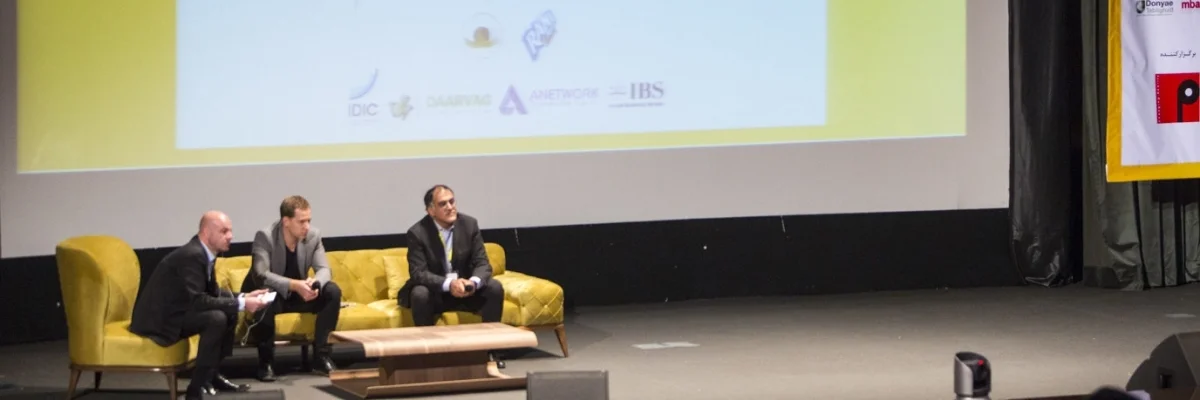
A lot has happened in the year since I first landed in Iran. This November 21-22, working with our wonderful partners from Mana Payam and Aujan Iran, we are organizing the Global Marketing Summit, Iran’s first ever business conference to feature two days of presentations by global marketing gurus.
Organizing this historical event in Iran has been the most incredible journey of my life. In the past five years my company, P World, has organized over 150 business events in 30 different countries. None of them compare to my excitement for the Global Marketing Summit in Tehran.
It is important to note that as an international company we faced serious backlash from some of the countries where we operate due to the fact that we are organizing events in Iran. The Iranian visas in my passport also resulted with me being questioned on numerous occasions by security guards at different airports about my trips to Iran and yes, at the beginning I was a bit nervous. At one point, we were receiving so many negative messages that we were seriously thinking of whether we were making a good decision by organizing an event in the country. You have to understand that we worked very hard to build a global brand and it was very important for me, as the company’s founder, that our reputation remains intact.
After several sleepless nights and very careful thinking I realized one thing. It is everyone’s responsibility, including mine as a foreigner, to help paint the real picture about Iran. It should be our responsibility to position Iran where it truly belongs and to showcase to the world the true possibilities in the country. Iran is a country of amazing potential and intellectual richness, not the enemy that the Western world is afraid of. To create the right image for Iran and Iranian companies will require better strategies in marketing and communication.
The reality is that as Iranian companies open up for international business, they must learn to adapt and follow the trends that the global superbrands are setting. As their customer base expands, they will have to be able to understand the needs of their new consumers and create marketing strategies that reflect the global marketing standards. The aim of our event is to help all Iranian marketers understand the new rules of the marketing game and to help them prepare for the new and exciting times. At the same time, international delegates must gain much needed insights about the Iranian marketing scene and the rules they have to follow if they want to successfully operate in Iran.
Today, as I am packing my bags to travel to Iran, I know that I made the right decision to host our event in the country.
Iran’s time is coming and if you cannot accept this fact, then the loss is completely yours.
Photo Credit: P World
Business Diplomacy Management: A Must-Have Skillset for Iran
◢ "Business diplomacy" has become a key skillset for multinational corporations operating in markets around the world.
◢ In Iran, the worlds of politics and business often collide making these skills part of the formula for succesful management.
As nuclear negotiations conclude and an opening to Iran’s market looms, Western companies with interests in investing in Iran need to prepare their entry strategies carefully. Beyond normal business considerations, Western companies may face challenges with obstacles emanating from outside of their direct sphere of control. To plan beyond “business as usual,” I propose that they consider applying the competencies of Business Diplomacy Management.
After so many years of strained international relations, foreign companies need to understand that Iran comes with a history fraught with political tensions that may impede business as usual. A British and American backed coup forcefully removed the democratically elected Mossadegh in 1953 to reinstall the Pahlavi Shah, who was himself subsequently removed in the Islamic revolution in 1979. Since then relations between the new Islamic Republic of Iran and Western countries have been frosty. The recent JCPOA agreement must be understood within this context.
What is Business Diplomacy?
Business diplomacy focuses on creating an environment suitable for business and reducing risk and uncertainty. It requires that Western companies understand the historical factors which influenced Iran’s economic, political-military, social and cultural forces as they all affect business in Iran today.
Diplomacy and business are not incompatible nor are they totally different. Professional boundaries between business and diplomacy have gradually become blurred especially after the end of the Cold War period. States are championing economic development and trade relations in today’s global economy which is increasingly interconnected and interdependent. Governments use economic and commercial diplomacy to represent their interests abroad and at home. However, companies are less aware that they need to develop their own diplomatic competencies in order to be successful abroad and to be less dependent on information and guidelines provided by their embassies.
Charges d’affaires or economic and trade advisors at embassies routinely read local press, meet with economic decision-makers and write briefs. These briefs are eventually passed on to the private sector by way of the ambassador. Today, the role of these briefs is no longer as important as it once was as similar information can be gathered by local corporate agencies. Multinationals regularly employ agents with local knowledge not only to gather information, but also to act as facilitators in their dealings with local authorities.
Applied to Iran, western companies investing and planning to operate in Iran should anticipate that their managers will be asked to represent their company and communicate to government officials, business partners and non-business stakeholder groups what their company is intending to do in Iran, how the products and services will help Iran’s economy to grow and how their investment will contribute to improving Iranian society at large.
The function of business diplomacy management should be placed close to other core functions of a company investing in Iran. In addition to this, the diplomatic know-how should be a company-wide responsibility and that the business diplomacy function should be under direct supervision of the CEO.
Business Diplomacy Management: The “must have” skillset for foreign investors
The success of any foreign firm’s future investments in Iran will depend not only on commercial prowess but also on sufficient support from the Iranian government. Unlike many other comparable markets, success will also depend on how the foreign investor interacts with non-business counterparts. A foreign investor has to be able to look for commonality of interests while at the same time be able to agree to disagree without falling into the trap of carrying out disagreements through conflicts. In other words, investors moving to Iran need to acquire diplomatic skills to manage the many differences between Iranian and Western business and societal contexts.
Iran’s non-business stakeholders can be very problematic for a foreign investor if the investor does not know how to respond to these non-business stakeholders in a competent and appropriate way. Business diplomacy management is for instance called for to constructively engage consumer groups, religious leaders, or powerful forces like the Revolutionary Guards who run their own businesses and are used to receive a share of Iranian companies’ profits while making the lives of local producers or retailers difficult.
As a consequence of the normalisation of economic and political relations, Iranian firms will face foreign investment and competition in their home markets while at the same time still being asked to pay a kind of licence or protection fee to the Revolutionary Guards. Hence they will be hard pressed to compete against foreign competitors and orient their business towards a more long term business venture.
Being faced by foreign competition and continuous quasi-tax costs, local firms might act very opportunistically and hence might not always be able to honour agreements with Western business partners. Non-execution of commercial agreements might follow generating a sense of insecurity on the side of the Western investor who cannot read the factors that might have led to non-traditional business practices by Iranian counterparts and who might decide to withdraw from Iran in case of broken promises or abrupt change of commitments.
The following skills and knowledge could be useful to a Western investor planning to invest in Iran:
Basic grasp of Iran’s history, specifically its modern economic history, and legal systems.
Cultural awareness, especially with regard to decision making and social norms.
Familiarity with the diplomatic process that led to resolution in the Iranian nuclear talks.
The ability to represent one’s own company in an Iranian context, with considerations for Iranian counterparts, the media, and informal pressure groups
Strategy, tactics, and procedures of negotiations with Iranians as well as recognition of Iranian negotiation behavior.
Implementing Business Diplomacy Management at Firm Level
Diplomatic know-how at the firm level of a Western investor has to be a strategic core competency as defined by Hamel and Prahalad:
“A core competence represents the sum of learning across individual skill sets and individual organizational units. Thus a core competence is very unlikely to reside in its entirety in a single individual or small team.”
Diplomatic know-how should hence be seen as a company-wide responsibility shared by top management and the respective heads of business units. In order to realize this core competence, I suggest that global companies should create a business diplomacy management function consisting of the following elements namely:
Business Diplomacy Office with a dedicated and specially trained staff answering directly to the CEO, or the most senior manager directly responsible for Iran.
Business Diplomacy Liaison in Iran directly reporting to the top manager of the central Business Diplomacy Office at headquarters.
Business Diplomacy Management Information System which contains information pertaining to Business Diplomacy (including the profiles of active non-business stakeholders at the global level and in potentially conflictual areas in Iran).
Development of a business-related socio-political perspective (e.g., Iranian stakeholder analysis).
Mandate to strengthen the overall organizational capacity in business diplomacy management at foreign owned Iran subsidiary.
Positioning the new Business Diplomacy Office under the direct supervision of the CEO should facilitate the gate keeping function of this new unit whose function is to scan the environment, interact with non-business stakeholders and engage in diplomatic missions under close direction of the CEO. Further strengthening of values and ethics linked to business diplomacy could be expected from CEOs who take an active interest in this strategically important function and accordingly support the new office’s operations through appropriate rewards and sanctions and corresponding internal communication campaigns.
Taking care of business diplomacy and ensuring competent application of business diplomacy management would greatly increase the chances of foreign investors to embark on a business venture in Iran that will be sustainable and fruitful for all parties involved in such a post-treaty undertaking.
Photo Credit: The New Yorker
Investing in Iran: A Reality Check
◢ The Iran economic opportunity has been the source of great excitement, and the market is being touted as some kind of “dream land.”
◢ But expectations are beginning to outpace reality and a more sober assessment ofthe reforms necessary to make Iran a winning market is needed.
Since 2013 when moderate President Hassan Rouhani claimed victory in country’s presidential election, many investors have kept an eye on the Iranian market.
Following the July 14 nuclear agreement between Tehran and the world powers, Iran is expected to come out of a three decades-long economic isolation.
Iran which has the fourth largest oil reserves and the largest natural gas reserves, has long been a “dreamland” for many businesses. With the EU sanctions against the country expected to be lifted in the near future, and with the prospect of US sanctions being lifted sometime thereafter, many investors have rushed to Tehran to assess the conditions first hand.
Foreign Investors
For those investors interested in high-risk markets, Iran has never been a no-go land. These investors have kept their presence in the Iranian market, although without much publicity.
But a wider pool of emerging markets investors began to keep a close eye on Iran as signs emerged in 2013 that a nuclear deal between Iran and the P5+1 group of countries could in fact be possible.
Since then, many Iranian companies have played host to foreign businessmen. Some of these foreigners have simply visited the country to have a better assessment of the situation on the ground while others have taken the opportunity to sign MOUs or even contracts with their Iranian counterparts.
With an end for sanctions in sight, some say the surprisingly developed Tehran Stock Exchange could be the first market to attract foreign investors. It may offer the most attractive vehicle for investment.
Tehran Stock Exchange
The 48-year-old Tehran Stock Exchange (TSE), Iran’s primary exchange, features over 300 listed companies classified into nearly 40 industries. The TSE is considered the most diversified market in the region.
Since 1979, the TSE -- which trades a range of shares, funds and financial instruments, including Sukuk and Islamic funds -- has sustained periods of growth in trading and market capitalization.
The TSE was viewed as a “phenomenon” by some in 2013. From 2009 to September 2013, the TSE Price Index (TEPIX) witnessed growth of more than 500%. This growth was achieved despite the lagging Iranian economy.
However, the TSE Overall Index declined 21 percent in 2014. Experts had anticipated such a correction following the sharp increase in prior years, which was largely attributable to inflation hitting the price of listed equities.
Is Iran Worth the Risk?
With an estimated gross domestic product of $406.3 billion, according to the World Bank, Iran has the potential to rank among the top 20 economies in the world. The country boasts a large middle class and has made progress in dismantling subsidies to get its macroeconomic incentives in order.
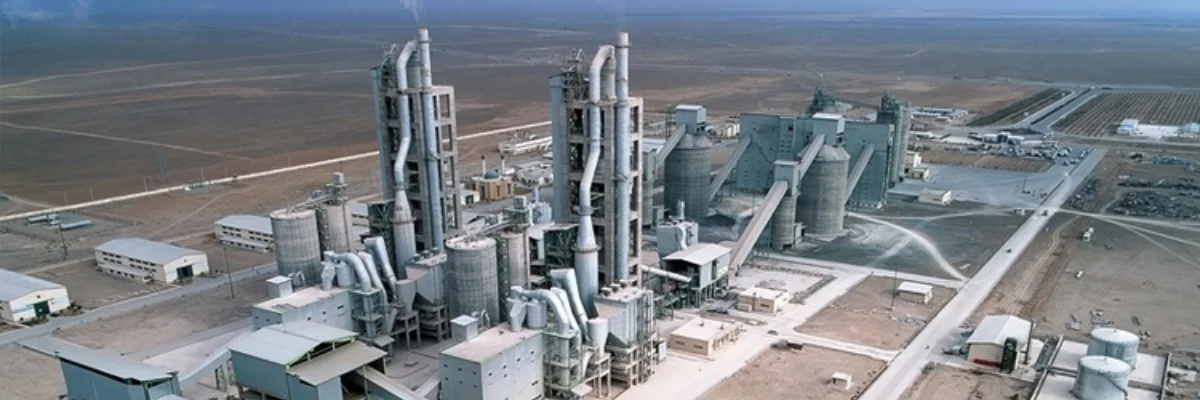
The country also has a strong, but often overlooked, industrial base. Iran is the 3rd producer of cement and 14th producer of steel in the world. It is also the largest producer of cars in the Middle East.
However, just like any other country in the world, there is a level of risk involved for investment in Iran. Great amount of government involvement in market, high inflation rate (14.2% by end of July) compared to international norms and a complicated legal system are among the risks businessmen and investors have to keep in mind before entering the market.
Tough labour rules, lack of overall transparency and the absence of a single rate foreign exchange rate could also be considered among the risks attached to investment in Iran.
Reforms
Despite all the shortcomings, the government and other state institutions like parliament have been trying to pave the way for foreign investors. The government has offered to sell state assets to foreigners as a step to cut the government's role in the economy and pledged a tight monetary policy.
Following the nuclear agreement, Iranian officials have also introduced packages which have been described as “strikingly pro-market” by experts.
The Central Bank of Iran has also introduced a bill, allowing foreign banks to open branches in Iran without having a local partner and has pledged to unify the foreign currency in the next Iranian year (starting March 21).
Iran’s Securities and Exchange Organization (SEO) which serves as the country’s financial supervisory authority, has also sought to build a trading platform that conforms to international standards. Under its new structure, Tehran’s exchange has been equipped with online trading, an arbitration board to fast-track disputes, enhanced investor protection, digital signature, surveillance mechanisms as well as post-trade systems.
Positive Outlook
But the preparation for post-sanction era has not only been limited to government institutions. Leading private brokerage companies such as Mofid Securities have also taken major steps in that direction. These companies have expanded the range of materials published for their foreign customers. New English-language reports, analysis and data about market trends and investment methods are more widely available.
Back in 2007, when Goldman Sachs named Iran among the list of “Next 11” most promising emerging markets, many investors wished for a day when investment in Iran would be possible. That day is finally here. In its recent report, World Bank has also forecasted a jump to 5% GDP growth for Iran in 2016 if the sanctions are removed.
With the positive consensus around the outlook for Iran’s economy, long term growth seems likely. But in the medium term, trading Iranian stocks could provide substantial gains, if only because of volatility alone.
Photo Credit: The Business Year

Notes on Navigating Tehran's Urban and Cultural Spaces
There is the potential of détente between Iran and the world and conciliatory dialogues are now slowly appearing in major media which had long vilified the country. Iran may provide a more welcoming and more comfortable urban space than many other Middle Eastern cities, some of which are well-trod destinations for Western expats.
Visit the US State Department travel page on Iran and you are presented with a rather worrying image; a mere visit to the country is warned against. Only recently has the UK removed similar warnings.
But the 35-year long political mistrust between the West and Iran is sharply contradicted by lived experiences of foreign tourists and professionals who have been traveling to the country Iran. Following the nuclear deal, we may soon witness an unprecedented growth in their numbers, whether tourists or business travelers.
There is the potential of détente between Tehran and world powers. A changing cultural conversation on Iran— conciliatory dialogues are now a mainstay on major networks like CNN— is presenting a major challenge to worn out representations of the country as a dangerous and undesired place to be avoided.
Tehran is a safe destination for expatriates. In fact, Tehran may provide a more welcoming and more comfortable urban space than many other Middle Eastern cities, some of which are well-trod destinations for Western expats.
Many of Tehran’s desirable urban features— accessible pedestrian paths, numerous public parks, a strong public transit system— are not present in other Middle Eastern capitals. Though crossing the street is a skill to be learned, you can feel safe in the well-designed pedestrian pathways and overhead bridges, or find a quiet space in one of the many public parks of the city, away from the noisy motorcycle engines and frequent honking of stressed drivers.
Then, there is the city’s nearly comprehensive and affordable public transit system. For about ten cents, you can ride the metro from the city’s south all the way to the famous northern square of Tajrish. It is true that the city’s buses are generally not well maintained; you can find broken seats and floors in need of repairs. But it is probably not an exaggeration to say that on a bus passes the station every minute on the rapid transit bus routes.
Where busses don’t go, there are shared taxis (called khatis) that run specific routes for 30-60 US cents and you get to meet interesting people who share the ride with you. At night (or even during the day), you can call one of the numerous taxi service companies located on every few street corners for a private taxi. A ride across the city can cost as little as 5 US dollars and you can always expect your drivers to keep you entertained talking about a variety of subjects with an all-knowing sense of confidence, including their favorite topic, politics. And if they’re having a bad day you’ll certainly be lectured about the terrible state of the economy.
However, what makes Tehran particularly accommodating is the diversity of ideas and lifestyles. The diversities of opinion do not always find public expression, but are nonetheless part and parcel of communal life. In public and especially private spaces it becomes clear that there are plenty of interpretations of politics and religion that that conflict with the state’s official reading or the reading often assumed in the West.
Moreover there is a lot to do for people of different tastes: entrepreneurs, artists, musicians, novelists, social critics, and poets can all find their niche. State practices do create an environment in which freedom of expression and association is pursued cautiously. Yet, Tehran’s creatives and professionals are able to associate and speak in many ways and venues, expressing themselves through the slight seams the Ministry of Culture and Islamic Guidance has left unwoven on its gradually shrinking curtain of censorship.
In short, the religious and irreligious, apolitical and radical, rule-oriented and free spirited can all find their comfort zones in Tehran. It is an increasingly cosmopolitan city. As with life in any metropolis Tehran has its stresses, but these are negotiated by uplifting episodes, exciting happenings, and intriguing company.
As such, the real challenge for Western expatriates will likely not be encountering Tehran as an urban space, but negotiating Iran’s professional culture. In the West (and the United States in particular, where I’ve spent much of my time), professional culture is very much task-and-role based; you are given a task that falls within the purview of your responsibilities and are supposed to complete it irrespective of your relationships with others.
In Iran, relationships really matter. Whether you’re seeking an appliance repair from a landlord, trying to get the attention of colleagues for a new idea you have, or seeking to beat competition to a contract, such interactions will depend on relationship dynamics perhaps more than in Western countries.
Surely, relationships are also important when it comes to who is hired, appointed, granted a contract, or favored in business relationships in the United States and Europe. However, the relationship-based economy runs deeper in Iranian society and specifically in the realm of business. This is not to say that Tehran is necessarily filled with a collective of nepotists with an indifference to merit and their professional duties. But business has its own culture that needs accommodating. The difference in work culture does not necessarily make one side better or worse. They simply remind us of what different cultures value and how each culture goes about carrying out business.
Iranians prioritize the cultivation of a reciprocal, respectful, and congenial relationship before things can get done. For some expatriates, this can be an exciting challenge, while for others it may prove difficult. As Iran’s markets will likely open up to significant foreign interventions in the upcoming years and an inflow of outside expertise, an understanding of its work culture for newly arrived expatriates can prove invaluable for successful economic outcomes.
Photo: Mohammad Ettefagh

Iran’s Risks and Rewards: Could You Be a Successful First-Mover?
◢ Iran is a "game-changer" market, but demographics, macroeconomics, geography, and politics introduce risks that may make companies hesitate.
◢ The role of risk managers is to protect value, but they can and should also create value for their companies through a more proactive style of opportunity risk management.
If you are in politics or business, in the Middle East or beyond, you probably have an opinion about the recent nuclear deal between Iran and the P5+1 and how it is all going to play out. You have probably heard people loudly question how crucial the agreement is, and have likely heard them disagree – ferociously at times – on its consequences for politics and security the Middle East.
When it comes to the business implications, though, the debate falls quiet.
Businesspeople of all stripes describe Iran to me as “our game-changer,” “the wild card” and “a strategic priority.” It would not be an overstatement to say that Iran’s potential re-opening compares to the collapse of the Soviet Union and the emergence of Myanmar (Burma). That said, a series of factors, including demographics, resource base and geography - not to mention diplomacy - make this opening feel a bit different.
Risk is never too far from any conversation about Iran; a justifiable dose of caution permeates many executives’ decisions about how and when to approach the Iranian market. The reasons are several: the experience of banks (particularly European) over the past few years at the hands of regulators (mainly American), all under the close watch of regulators and lobbyists. Round out the list with generous helpings of political risk, legal complexities and corruption concerns, and you can see why amid all of the enthusiasm, not everyone is rushing headlong into market entry just yet.
I thought of the two Irans—one of massive commercial opportunity and the other of massive business risk—while reading a recent article in the Harvard Business Review entitled "How to Live With Risks." The article reported on a study by Matt Shinkman of CEB, an organization with 10,000 member companies.
Executives cited in the study said risk managers and auditors prioritized value protection—financial reporting, legal controls and compliance concerns—when seeking to minimize potential threats. In other words, risk management was aimed solely at risk prevention—an exercise in trying to stop bad things from happening.
The article’s research went on, however, to show that mishandling strategic risks—rather than botching tactical risk prevention—does more damage to the long-term value of a company. While 86% of lost market value was attributable to a mishandling of strategic risk, auditors only spend 6% of their time addressing strategic issues.
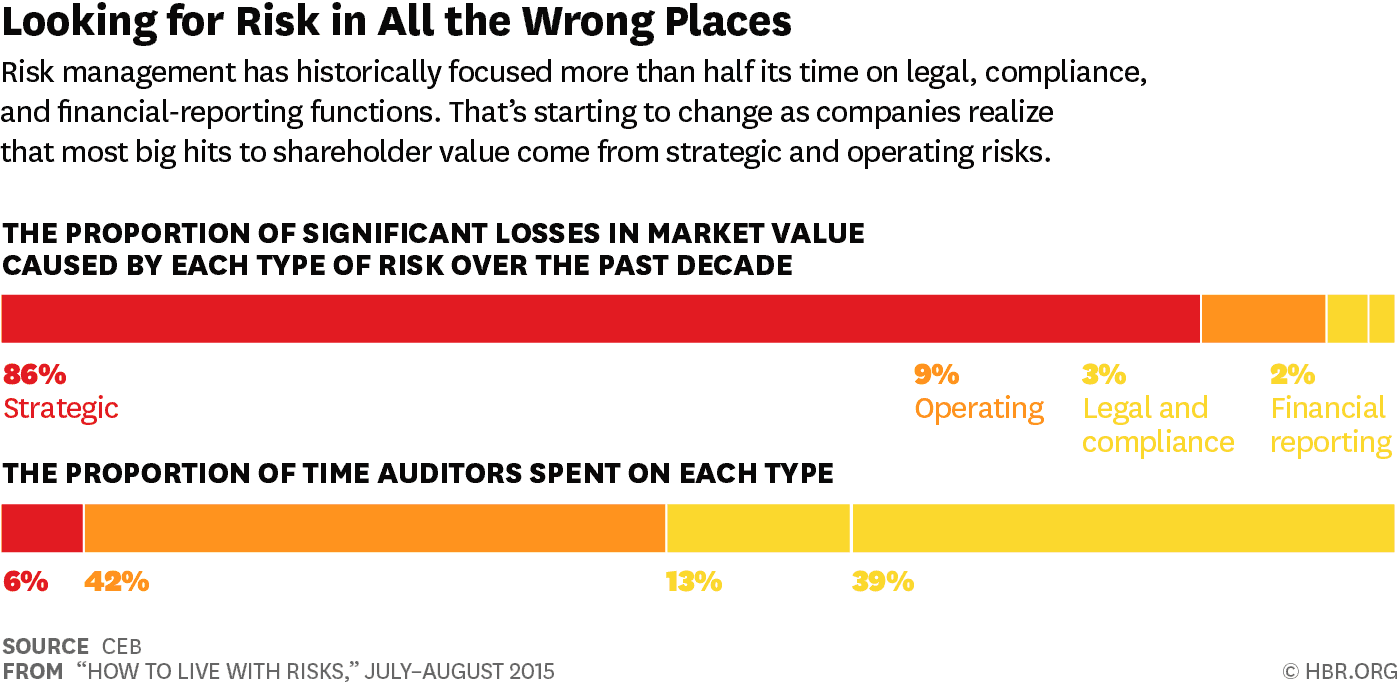
The lesson is clear. While the risk managers' role is to protect value, they can and should also create value for their companies through pro-active opportunity risk management. They can help to seize opportunities by managing strategic risks and turning them into genuine value for companies, their employees and their stakeholders.
Iran presents most companies with risks that would qualify as strategic. Why else would we be calling Iran “our game-changer,” “the wild card” and “a strategic priority?” Getting Iran wrong sounds like more than just a missed chance.
So it is fair to assume that risk management teams are going to be involved in any well-considered decision about how and when to do business in Iran. The question is: How and when will these teams be involved in your market entry strategy? Will risk managers be asked to look for bush fires, or will they be charged with scanning the horizon for the full complement of challenges and opportunities? If risk management helps build an Iran strategy from the outset, then both internal and external stakeholders can be assured that not only have preventive measure been taken, but that broader issues are under control as well.
Consider a company that has been searching for – and has finally found – a business partner in Iran. The partner meets all the commercial criteria; the terms and conditions have been served up for signature. But wait: has anyone checked whether this partner meets the company's risk, compliance and ethical standards? Fire-fighting risk management is brought in at the last moment. What happens if the partner falls short? Time and money have both been thrown away; an awkward conversation with an eager Iranian partner awaits. Oh, and will there be a chance to start again?
We see this all the time – new opportunities are vetted far too late in the decision-making process and surface uncomfortable concerns that destroy entire strategies.
Proactive risk management prevents this from happening. If business development and risk management work together on partner selection and due diligence, for example, companies create internal alignment on issues of risk. The company’s strategy – and reputation – is under better stewardship, internal resources are not wasted, and deals proceed more smoothly.
In other words, don’t vet mature opportunities, when it’s already too late. Vet your entire pipeline of opportunities at a level sensible to their stage of development.
There’s more. Can an understanding of the day-to-day risks to doing business influence whom you hire in a new market and how you train them? Can monitoring changes in a government’s foreign policy and international relations allow you to anticipate moves like deregulation, and move faster than your competitors? This is where risk management turns into opportunity enhancer. And this is what will make first movers successful.
Today, it’s Iran. Yesterday it was somewhere else, and so it will be tomorrow. The principles of risk management remain the same no matter what the market. But Iran is not just any new market, and there aren’t that many Irans left, which makes the stakes feel that much higher.
Photo Credit: Scania Oghab Afshan
The Rise of Social Entrepreneurship in Iran
◢ There is a vibrant but largely overlooked community of social entrepreneurs in Iran doing innovative work for the social good.
◢ A recent survey of 100 social entrepreneurs completed with the support of George Mason University concluded that while the sector is growing, more support and funding is needed.
The mainstream Western media often fails to present a balanced and positive view on Iran, an emerging market filled with young and visionary social entrepreneurs ("socents") who are actively pursuing innovative and sustainable ways to improve their society and alleviate economic, environmental, and social issues. Emboldened by the recent nuclear agreement reached between Iran and the P5+1 powers, many entrepreneurs are exploring the potential to find solutions to various social challenges by identifying pragmatic tools and resources, which has culminated in creation of startups and social entrepreneurship firms throughout the country. A fast and rising social venture startup scene is hard at work behind the headlines.
Iranian social entrepreneurs are as driven and savvy as their counterparts in San Francisco, New York, London, and Bangalore. They are constantly seeking and implementing innovative solutions, tools, and processes that achieve measurable sustainable impact, while addressing Iran’s pressing social, economic, or environmental challenges. Take Iran’s water problems, for example. According to recent statistics, seventy percent of Iran’s groundwater resources have been depleted. Therefore, groundwater shortages and deteriorating water quality would most likely lead to a national environmental crisis. Certainly, the government alone will not be able to solve such a herculean challenge.
From January to March 2015, we carried out a survey in partnership with George Mason University to map out a preliminary landscape of social entrepreneurship in Iran. Since we were both based in the U.S., we invited trusted and knowledgeable local partners in Iran to distribute the survey in Persian and English within their constituencies. Relying on random snowball sampling, we encouraged our local partners to distribute the survey to their own contacts, thereby linking us to their own personal or professional networks of budding Iranian social entrepreneurs throughout the country. In April 2015, we conducted structured and semi-structured interviews during a research trip to Iran. One of the most fascinating highlights of this trip for us was Azadeh’s participation in a workshop on social entrepreneurship in Iran. Overall, more than 100 entrepreneurs from around the country responded to our survey. Our findings suggest that this sector is growing rapidly and needs urgent support, nurturing, and scaling. Some of our most important findings are highlighted below:
Iran has an estimated social entrepreneurship market of 50,000 to 75,000 active participants.
83% of Iranian social entrepreneurs are currently engaged in an initiative, organization, or start-up with a social, economic, or environmental objective.
60% believe in the use of technology toward finding more effective solutions to their modern day challenges.
More than 50% of survey participants is actually pursuing the process of building and running a socent as part of their daily job.
Women who are heavily under-represented in our surveys have the highest participation rates in social enterprise startup events, weekends, and trainings.
The sector, although nascent and evolving, also faces obstacles that were highlighted in our survey in relation to the ecosystem; in particular, government red-tape, lack of regulation in favor of social enterprises, unavailability of foundations grants, impact investors, loans for social entrepreneurs, the unavailability of exchange programs, and opportunities to connect to regional and international social entrepreneurship knowledge networks.
Although some of the above-mentioned hurdles are not unique to Iran, the rise of social entrepreneurship has actually occurred surprisingly late in Iran compared to the rest of the region. In the aftermath of the Arab Spring, the UAE, Egypt, Jordan, and Lebanon have experienced a rise in number and quality of social enterprises. Many Middle Eastern social entrepreneurs’ ventures have scaled across the region and Northern Africa, receiving support from institutional donors, impact investors, and international foundations as well as organizations such as Ashoka, Echoing Green, and the Unreasonable Institute. Due to the international sanction regime and visa restrictions imposed on Iranians, many social entrepreneurs have not benefited from such outside support and opportunities for cross-pollination, and have rarely had a chance to access fellowships or exchange programs, or grant support. This puts them in an even more disadvantageous situation.
Yet, despite these obstacles, we found that exciting and socially innovative initiatives are emerging in the country, and entrepreneurs are adapting successful models in social entrepreneurship to the local and national conditions and needs. We present several of these initiatives in Iran that are led by visionary socents.
Tehran Hub is a nonpolitical and non affiliated organization combining a comprehensive co-working space, incubator and accelerator program and is about to get launched in partnership with Amirkabir University and Samsung. The director, Alireza Omidvar, has also served as a catalyst in drafting and preparing new national legislation submitted through Tehran Mayor’s office under the title of CSR Program for Municipalities, to officially recognize social enterprises as separate legal entities along side traditional charitable/nonprofit organization and for profit businesses, which is a unique undertaking. The Hub is targeting young social entrepreneurs in the country, and focuses using technology and social innovation to address pressing social, economic and environmental problems in the country, while building a resilient ecosystem for social entrepreneurship.
Other fantastic initiatives that we have learned about in our interactions with socents in Iran are those social entrepreneurs who are using technology and online platforms to solve social problems. For example Ladybug has boosted the participation of Iranian women in the technology and start-up world through content building, community, and educational programs.
Dastadast, supports indigenous artisans in Iran with business and capacity building solutions, and offers them an ecommerce platform to improve their livelihoods. The co-founder, Mrs. Faezeh Derakhshani, emphasizes the need for more education, access to international experiences, and knowledge platforms to boost the capabilities of Iran’s social entrepreneurs instead of emulating foreign models blindly. She states, “Many Iranian entrepreneurs develop their ideas” for example at social startup weekends, “and present them as social enterprises, but these initiatives are essentially duplicates of other initiatives, or not at all socially innovative or solving a social problem within a community.“ With regards to the use of technology and social innovation, she expresses the need for more sharing and learning about other successful social-tech models and educating the youth about the use and purpose of technology “not just to launch a website, but actually using technology in the design of a socially beneficial solution, take for example the use of solar energy providing electrification in remote rural areas.”
One of our favorite organizations is the Roozbeh Charity, based in Zanjan province, which focuses on the education and promotion of waste reduction and waste separation among citizens. The charity has a unique grassoots mobilizing and hybrid model aiming to prevent environmental pollution through waste collection, and has led to a considerable number of new jobs as well as an important source of revenue for the organization.
Mr. Najafi, who is a member of the board, believes that considerable attention is paid to social entrepreneurship at bootcamps, startup weekends, and other type of events and higher education institutions, and that “its revealing of a rising sense of consciousness within Iranian society that centers on community interests and no longer based on individualism.”
Overall, driven and passionate social entrepreneurs who have found creative solutions for their country’s social problems lead all of these organizations. The potential for (impact) investors, as well as the Iranian diaspora, to support these initiatives either through donations, or other resources, such as mentoring as well as connecting to transnational networks is unprecedented. Since Iran and the P5+1 recently reached a nuclear deal, the opportunity to collaborate with the Iranian social entrepreneurship community and empowering them to carve an effective, resilient, and strong ecosystem for social entrepreneurship has become a lucrative reality for Western and Iranian diaspora investors.
Photo Credit: Roozbeh Charity

A Wealth of Talent: Domestic and International Markets for Iranian Art
Over the last decade, the global market for contemporary Iranian art has witnessed an extraordinary surge in activity and sales. It is not simply international sales that characterize Iran’s art market. Domestic auctions have seen record prices in recent years and the secondary art market in Iran continues to grow and develop in the face of significant challenges.
Throughout the last decade, the global market for contemporary Iranian art has witnessed an extraordinary surge in activity and sales. According to an analysis by Roman Kräussl of the Centre for Financial Studies at Goethe University, drawing on data from the Blouin Art Sales Index (BASI), between 2000 and 2012, there were 3,500 significant sales of paintings across 59 global auction houses. Of these, 650 – comprising roughly 20% of the total – were of paintings by Iranian artists. Buyers in hotspots for contemporary Middle Eastern art such as London, Dubai, and Doha have been snapping up works by Iranian masters and emerging artists alike, amid the sound of the pounding gavel and the sensation of sweaty palms. Christie’s in Dubai and Sotheby’s in London remain the dominant auction houses in the market.
It is not simply international sales, however, that characterize Iran’s art market; domestic auctions have seen record prices in recent years. The June 2015 Tehran Auction saw the sale of 126 pieces, and generated over USD 7 million in sales. As such, the average sale price for this year has been roughly USD 55,000, slightly higher than the average price enjoyed by paintings from the MENA outside Iran. Looking to the BASI dataset for the years 2000-2012, 70% of Middle Eastern paintings sold at auctions were at prices below USD 50,000.
According to collector and Salman Matinfar, Director of Tehran’s Ab Anbar (lit. “Waterhouse”) art space, works by contemporary Iranian artists are currently selling for more inside the country, than in international markets, as higher domestic demand has raised prices. Matinfar believes that this demand is a result of two phenomena: first, some buyers are treating art as an alternative investment. A young businessperson quoted in the Financial Times report on the Tehran Auction noted how, “over the past 15 years, the value of real estate has risen by 25 times and gold by 45 times but art has gone up by 250 times.” He added that while “Iran’s art market is still small and traditional investors do not yet consider it a triple A asset … there is big room for growth”.
Second, and perhaps more commonly, Matinfar identifies a clear phenomenon where many of Iran’s nouveaux-riche have been investing as a means to “buy” entry into cultural and artistic circles, and gain credibility for themselves beyond their reputations as savvy entrepreneurs and businesspeople. The Tehran Auction, which has seen sales grow tenfold in the past three years, has caused controversy as observers have been debating whether the buyers are true patrons of Iran’s art economy, or simply speculators in a marketplace.
The concerns over patronage may be premature, though, as the overall market remains relatively small. While the international market for Iranian art enjoys a higher level of diversification and distribution as a whole, there are still more “serious” collectors of Iranian art (i.e. those buying works valued above USD 50,000) inside Iran than worldwide; but the key movers are few. According to artists and collectors, there are approximately 10-15 well-known collectors in Iran who dominate the market. The small number of serious collectors contributes to volatility.
As such, growth in secondary art sales, such as the growth seen in the Tehran Auction, is a step in the right direction towards the development of a larger secondary market for Iranian art, and, concomitantly, greater stability in terms of prices and demand. This year’s positive Tehran Auction gave many collectors, gallery owners, and artists cause for optimism.
While the growing secondary market may mean decreased volatility inside Iran, other developments have raised concerns. At the May 2015 Christie’s auction of modern and contemporary Iranian, Arab, and Turkish art in Dubai, works by Monir Farmanfarmaian and Rokni Haerizadeh set records. However, many noted that in comparison to previous years, and in relation to Arab artists, Iranian artists on the whole underperformed. Though some may take this “slump” at face value, others have pointed towards the rise in Arab nationalism among collectors and patrons in the Persian Gulf, and a preference on their part to invest in Arab artists, as opposed to Iranian ones. Perhaps the political forces that are contributing to optimism and growth in Iran’s domestic art market are also be causing shifts in how collectors treat Iranian artists in the context of Middle Eastern art.
Regardless of these shifts, one thing is certain: Iranian art is increasingly popular both at home and abroad; and, the recent nuclear deal reached between Iran and P5+1 countries will likely boost growth.
For example, according to Christie's Middle East Director Michael Jeha, Tehran will soon witness an influx of American buyers longing to lay their hands on hitherto inaccessible works of art. While this has yet to be witnessed, what one can expect to see in the States, for instance, is an increase in the availability of Iranian art, as well as an augmented presence of Iranian artists, who have long been unable to attend artist talks and conferences – and even their own exhibition openings – as a result of decades-long strained Iran-US relations.
Where prices for Iranian art are concerned, it would be natural to assume that they would surge worldwide as a result of increased demand. However, many dealers and gallery owners have been able to justify higher prices for works by domestic Iranian artists as a result of relative scarcity and the difficulty in sourcing pieces. Post-sanctions, a greater supply of art might actually temper rising prices. Opinions vary on the matter, and it is difficult to predict precisely what will happen in the international market for Iranian art. Yet, it is hard not to be optimistic. Given the wealth of talents on offer, Iranian artists will no doubt soon enjoy greater fortunes on—as the Persian idiom goes— “the other side of the water.”
Photo: Christie's
The Iran Deal in Wider Europe: The Case of Poland
◢ Post-sanctions trade and investment reporting has focused on three major countries: Germany, France, and Italy.
◢ But other European countries bring opportunities that should not be overlooked. A push to Iran by Poland's Economic Minister Janusz Piechociński reminds us that the story of Iran-Europe economic ties importantly extends to smaller economies as well.
The story of Iran’s anticipated economic windfall following the JCPOA Iran Deal has centered on trade and investment from three countries: Germany, France, and Italy. German Vice Chancellor Sigmar Gabriel’s recent visit to Iran will soon be followed by visits from France’s Foreign Minister Laurent Fabius and Italy’s EU High Representative Frederica Mogherini.
These visits bring with them the promise of political support for boosted trade and investment ties potentially worth billions of dollars. A recent research note from the macroeconomic team at Deutsche Bank made an upbeat assessment on the back of Gabriel’s visit:
If German exports to Iran were to rise towards their previous peak, this would correspond to an increase of EUR 2 bn. The increase could even come to EUR 4.5 bn if Iran's export share were to rise back to 0.6%. In the latter scenario, German GDP growth could be stimulated by an increase of, say, a maximum of 1/4% – spread over several years.
But while business reporting and research notes have focused on the prospects in Iran for Europe’s largest economic actors, other opportunities have gone less noticed.
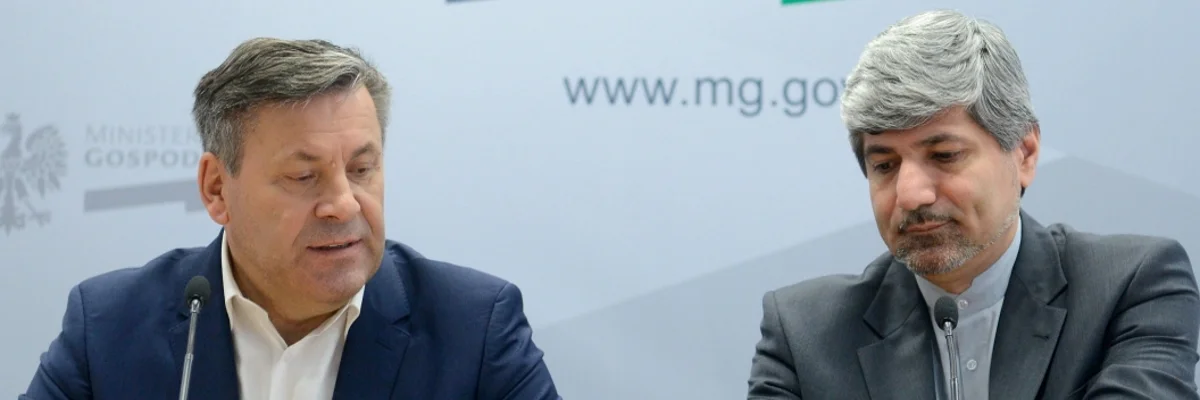
Consider Poland, Europe’s 10th largest economy. This September a Polish economic trade mission led by Economic Minister Janusz Piechociński will travel to Iran. This is one of several such visits in recent years. In May, a delegation of around 100 business people traveled to Iran with Polish Deputy Foreign Minister Katarzyna Kacperczyk. The upcoming economic mission is part of a newly established “Go Iran” program devised by the Economic Ministry. Around 50 major Polish companies are expected to participate.
The visit is likely to be well-received in Iran. Poland and Iran have historically enjoyed friendly ties. In fact, they have the longest consecutive diplomatic relations between any two countries, and on March 1, 2015, celebrated their 540th anniversary of relations. Ties were strengthened through various episodes in history, including during the Second World War when over 120,000 Polish émigrés sought refuge in the ancient city of Esfahan. Some of them remained long after the war, even marrying locals. Polish tourists continue to travel to Iran in significant numbers, which itself presents a market opportunity.
Despite this shared history and cultural affinity, however, overall trade has remained meager, especially under the pressures of sanctions. Last year, Polish exports to Iran amounted to just EUR 34.9 million, while imports to Poland were valued at EUR 22.4 million. These figures are just a tiny fraction of the EUR 2 billion in exports achieved by Germany in 2013.
However, Poland and Iran should and could have much larger economic cooperation in the near future. Over the past thirty five years, many issues have limited the potential of trade between the two countries, namely the economic influence of the Soviet Union, the USSR's subsequent collapse, and Poland seeking collaboration with Western Europe and private-sector led initiatives for its growth. But with the new geopolitical realities heralded by the JCPOA agreement, new Polish-Iranian economic opportunities could come online.
In many corporations, Poland and Iran are actually part of the same operational region. This is both true when considering companies with EMEA (Europe, Middle East, Africa) divisions, and also, more specifically, for companies with CEBAME (Central Europe, Balkans, Middle East) divisions.
The countries in Central Europe and the Middle East share similar levels of development and industrialization.
Polish and Iranian officials typically mark out three sectors for collaboration when speaking of economic opportunities: agribusiness, machinery and transportation, and oil and gas.
In the area of agricultural and food and beverage exports, Iran is an attractive market with huge demand. Poland’s agricultural sector is currently undergoing a “golden age” with agri-food exports rising to USD 27 billion in 2014. Polish food brands are already familiar to many Iranians, with E. Wedel chocolates and Pudliski sauces present on Iranian shelves.
Piechociński, the Economic Minister, reacted to the July 14 JCPOA agreement by noting that the deal could be a huge opportunity for Polish agribusiness particularly in the export of poultry and beef.
But heavy industry, transportation, and oil and gas are also sectors that could see activity. Piechociński marked out the “great opportunity to sell several thousand [train] carriages, several thousand trams, subway cars.” Machinery and transportation equipment amount to 37.8% of Polish exports, valued at around USD 60 billion.
In terms of oil and gas, Iran’s value as an engery supplier was first mooted in 2008, when the Polish gad firm PGNiG signed a tentative agreement for the import of Iranian gas. At the time, Poland was seeking to wean itself off reliance from expensive and politically risky Russian supply. Sanctions ended the scope for collaboration, but prior to the July agreement, PGNiG announced it was interested in picking up its operations in Iran again, with plans to open an office for to scope possible joint ventures.
The case of Poland reminds us that post-JCPOA economic opportunities will not be limited to major economies like Germany, France, and Italy. Smaller European countries may enjoy special advantages in being able to focus high-level political and economic resources behind trade and investment development plans. Iran clearly has many "suitors" as senior political and business delegations are expected in Iran. The question remains whether the Iranian authorities and business community will be able to coordinate activities on their end to make sure economic opportunities can be realized.
Photo Credit: Meghdad Madadi, Tasnim News Agency

Sanctions at Dusk: The Impact of JCPOA on Iran's Private Banks
◢ The Joint Comprehensive Plan of Action— a document of comprised of 159 pages, negotiated over 23 months—represents a triumph of diplomacy.
◢ Sanctions relief will be operationally challenging. Will this relief lead to investment in the Iranian banks themselves?
The Joint Comprehensive Plan of Action— a document comprised of 159 pages, negotiated over 23 months—represents a triumph of diplomacy. It also represents one of the most important single documents ever drafted for Iran’s economy.
The first attachment of the second annex lists the various Iranian entities which can expect to receive tangible sanctions relief beginning on the so-called “Implementation Day,” or the day that the IAEA verifies that Iran has successfully completed the measures required for the curtailment of its nuclear program. Most experts expect implementation to take about six months, which, in the scheme of nearly a decade of biting sanctions, seems imminent.
Sanctions relief will be operationally significant and allow free and unencumbered transfer of funds to and from Iran, the development of correspondent banking relationships, the facilitation of trade finance, and the reopening of offices and subsidiaries in Europe.
Many banks will even earn bank access to SWIFT, although those that are designated under US Iran Transactions and Sanctions Regulations (ITSR) on the Specially Designated Nationals (SDN) list will only have assured access to SWIFT after “Transition Day,” which can occur as soon as the “Director General of the IAEA submits a report stating that the IAEA has reached the Broader Conclusion that all nuclear material in Iran remains in peaceful activities.” As such, several major banks will be to wage independent campaigns to be delisted in order to gain access to SWIFT.
Even without such financial messaging services, the range of revenue-generating activities within Iran’s banking sector is set to expand. Yet, while the range of operations will expand, it is unclear to what extent Iranian banks will become more attractive targets for investment.
Looking to specific banks that are set to benefit from the JCPOA, the private banks listed on the Tehran Stock Exchange deserve particular mention. These include Eghtesad Novin (EN) Bank, Karafarin Bank, Khavarmianeh (Middle East) Bank, Mellat Bank Pasargad Bank, and Parsian Bank.
Mellat, Eghtesad Novin, Parsian, and Pasargad Bank rank among the 30 largest companies on the TSE measured by market capitalization, and when accounting for Khavarmianeh and Karafarin Banks, the total market capitalization of these firms approaches USD $10 billion.
With a wider range of banking activities available, these companies will become more attractive investment targets for individuals and institutional investors within Iran. Therefore, we should expect Iran’s banking sector to grow as a percentage of the overall economy in the next 1-2 years as domestic investment drives growth and rising valuations.
However, it is unclear if foreign investors will be among those to invest in Iranian banks. A research note from Renaissance Capital predicts that Iran will see “$1 billion of inflows to equities within a year of sanctions ending” from foreign investors, and overall “portfolio flows could be significant as early as 2016.” However, although Global Chief Economist Charles Robertson, expects, “investors to explore opportunities ahead of time, find custodians and earmark key stocks to buy” he doubts that these target stocks “will include many banks.”
The question is whether Iranian private banks are a high-risk or low-risk investment. On one hand, the regulation of the banking sector and shareholder insistence on a degree of financial transparency will mean that Iranian private banks are probably easier due diligence targets than many of the listed Iranian industrial conglomerates. The operations of the bank itself are probably not a major source of risk. This is in contrast to the much-vaunted infrastructure, energy, and extractive industries where operations can be byzantine within sprawling companies working across many verticals.
However, two other areas of risk will remain. First, many Iranian private banks have major shareholders or clients that are quasi-state funds or holding companies. For example, 30% of Mellat bank is held by “provincial investment companies,” which are entities that hold “justice shares” designed to benefit the “poorest members of society.” The justice shares program, begun under the populist economic policy of President Mahmoud Ahmadinejad, which will remain a barrier to foreign investors who will see shareholding as exposed to ongoing political risk and issues such as money laundering.
Additionally, the presence of particular Iranian institutional investors can also expose investors to legal and political risk. Parisan Bank is 10% owned by Tadbir Investment Company, a holding company long on the radar of the US Treasury Department for its connections to Iran’s political leadership in the form of quasi-state control.
Furthermore, at a practical level, most Western investors will rely on professional portfolio managers in order to gain exposure into the Iranian market. As a recent client brief on the JCPOA from the UK law firm Stephenson Harwood notes, EU banks have been “subject to investigations by US regulators” and are “generally now taking a more risk averse approach.” As such, “time will tell what appetite there is for reengagement with the Iranian banking sector.” If there is a diminished appetite for correspondent banking, trade finance, and insurance, it is unclear how European investment banks and asset management firms will approach Iran’s equities markets. Most likely, only investors with an appetite for risk, working through emerging markets specialists, will be seen investing in Iran in the next 1-2 years.
Two actions will need to be taken for Iran’s private banks to become destinations for foreign investment in their own right. First, US and EU authorities, in the lead up to “Implementation Day” will need to announce guidelines and make public statements that will enable a better understanding of the legal and political risk landscape as it pertains to Iran’s financial sector. Second, Iranian banks must actively optimize their corporate structures, reporting practices, compliance regulations, and shareholder compositions to ensure that they can be perceived as a “safe” bet with a suitably attractive set of risk and reward.
Many have said that JCPOA is an agreement based on verification, rather than trust. The same commitment to verification will be necessary for Iranian banks to prove their worthiness to investors looking for post-sanctions wins.
Photo Credit: Unkown

Don't Fear Iran's Impending Windfall
◢ The policy community in the US and Europe is very fearful that sanctions relief will provide Iran a dangerous windfall that it can use to expand its interventions in the region.
◢ But these concerns fail to recognize that Iran’s post-sanctions windfall will be domestically driven, will generate private investment, and will transform Iran’s political economy for the better.
This article originally appeared in LobeLog.
As Iran and the P5+1 look set to complete a historic nuclear agreement this week, the policy community in the US and Europe is very fearful that sanctions relief will provide Iran a dangerous windfall that it can use to expand its interventions in the region.
But these concerns fail to recognize that Iran’s post-sanctions windfall will be domestically driven, will generate private investment, and will transform Iran’s political economy for the better. A nuclear deal will actually help repair the broken relationship between consumption, savings, and private investment in Iran.
Since the imposition of broad financial sanctions on Iran in 2012, Iran’s gross national savings has fallen from 45% of GDP in 2011 to just 33% in 2015, according to data from the IMF. The drop in the savings rate has limited the capital available for business to invest for the future. The contribution of investment to Iran’s GDP fell 5% between 2011 and 2015.
To compensate, Iran’s economy has relied on consumption, particularly household consumption. Between 2013 and 2014, the share of household consumption as a proportion of Iran’s GDP jumped from 45% to 52%. Additionally, despite shrinking budgets hit by a sharp decline in oil revenues, government expenditures remained relatively stable, dropping slightly from 16% of total GDP in 2011 to 14% in 2015.
Consumption, however, does not help create long-term value for Iran, especially when the goods consumed include frivolous imports like foreign cigarettes and luxury cars. Imports were valued at 17.1% of GDP in 2014, equivalent to a fourth of consumption.
If Iran is going to mature into a diversified and competitive economic power, it will need significant investment to produce better goods and services domestically, especially in the private sector. To achieve this, Iran must grow its savings rate relative to consumption to free up financing that can spur private investment in capital assets and research and development.
Given that trade and foreign direct investment account for very small proportions of Iran’s GDP—a combined 2% in 2015—even large shifts in trade and FDI won’t have a major impact on Iran’s economic development in the near term. Even oil rents only account for 30% of Iran’s GDP, substantially less than household spending at the current time.
As such, the true engine of Iran’s post-deal economic growth will be the domestic shift from consumption to saving at the level of individual households. Households ought to seek long-term prosperity. Should they choose to save slightly more, either through bank deposits or through the purchase of securities or debt instruments, more capital would be available for enterprises, unlocking the second attribute of Iran’s nuclear windfall—private investment.
But if domestic macroeconomics trump capital inflows from the US and Europe, why is a nuclear deal important at all? How will sanctions relief affect the decision-making of Iranian households to encourage savings? The answer has to do with individual behavior.
The Short-Term Mindset
Years of economic stagnation, exacerbated by sanctions and intense domestic politicking, have conditioned most Iranians to think about personal finances with a short-term mindset. Iran’s high inflation means that money loses value over time. The country’s banking system had tried to counter this with interest rates that reached 22%. But this has had the effect of increasing the cost of financing for businesses, and inflation has remained high enough to still undercut significantly the expected return on savings for the average Iranian.
Weakness in the banking system is also reflected in the financial markets. Consider the Tehran Stock Exchange (TSE), which has a total capitalization of around $100 billion. This figure is dwarfed by the $600 billion capitalization of the Tadawul stock exchange of Saudi Arabia, a market with similarly low levels of foreign investment to-date. The GDP per capita in Saudi Arabia, measuring in purchasing power parity, is about $52,000. In Iran, the figure is $17,000 dollars. So while Saudi’s stock market is 6 times better capitalized, Saudi citizens exercise just 3 times more economic might. This suggests an untapped potential for corporate capitalization in Iran, long hampered by low levels of investor confidence.
Importantly, the Rouhani administration recognizes these structural problems and has worked laudably to introduce better monetary policy. Since 2013, the inflation rate has fallen from 42% to 15% and the administration recently agreed to lower interest rates from 22% to 20%. In 2013, the TSE reached historic highs on the basis of investor optimism around Rouhani’s economic reforms and the prospect of sanctions relief through the nuclear negotiations. This optimism has since cooled, and the TSE is down about a third over the last 18 months.
However, the conclusion of the JCPOA agreement in April of this year, which set the parameters for an eventual comprehensive nuclear deal between Iran and the P5+1, led to a 7% jump in the TEPIX index in just two days. A robust nuclear deal will no doubt kick-start trading on the exchange. The challenge will be to convert investor confidence into sustained behaviors—to temper wasteful consumption and support prudent savings.
The Opportunity Cost of Consumption
The key microeconomic issue that needs to be addressed is the opportunity cost of consumption. As seen above, there is currently little incentive for an Iranian individual or household to deposit or invest money. There are few options to turn cash into an asset that will generate a meaningful or reliable return. Even capital flight, a perennial problem for recessionary economies, has been thwarted by financial sanctions. Therefore, the tendency has been to convert cash into property or gold, which store value against inflation. But this kind of saving does not contribute to private investment.
Given the low opportunity cost of spending, individuals and institutions adopt short-term thinking. When members of the Iranian elite have $200,000 dollars, they might as well buy a Porsche. These elites have no reason to behave like the so-called “job creators” that a market economy relies on, investing in their own businesses or those of others. In this way, consumption suppresses savings, which in turn reduces the available capital for investment.
There is a corollary to this behavior among key institutional actors as well. Consider the Revolutionary Guard’s spending on its proxy militias, the same spending that policy analysts are concerned will increase following a nuclear deal windfall. The commercial monopolies operated by the military-security faction in Iran have no incentive to reinvest any profits from rents and revenues—there is no effective competition in the market. Without the need to grow its economic capital, the Guard and its affiliates focus on two activities. First, they spend within their own patronage networks in an aim to turn economic gains into political capital. The funding of foreign fighters is just a politically potent version of this consumption. Second, they entrench rent seeking through the control of grey market speculation that feed the unfettered need for Iranians to consume everything from cigarettes and luxury cars to real estate.
At a behavioral level, whether we look at the scion buying a Porsche or the general funding a militia, the inability to build true wealth leads to a fixation with appearing more powerful through prestige and patronage, the dominant currency of political capital in Iran. Yet, regardless of the purchased prestige, neither an armed fighter nor an imported Porsche makes society at large better off. This is perhaps the greatest weakness in Iran’s political economy, the way that the economic creates structural incentives for the country’s politics.
New Incentives, New Behaviors
But there is cause for optimism. The post-deal windfall will initiate a profound change in the current short-term mindset. As growth and investment begin to accelerate, the opportunity cost of consumption will increase. Every dollar spent in the present will forgo future returns. Consequently, in an environment where wealth creation is possible, individuals and institutions will change their behavior and begin to invest a larger portion of their wealth in order to secure greater economic power relative to other economic actors—the kind of competitive investment that creates jobs and drives further growth. Crucially, it will soon be savvy investment and value creation, rather than conspicuous consumption, which will define power and prestige in Iran.
The knock-on effects for Iran’s political economy could also be profound. The greater the degree to which the full range of Iranian citizens, who currently inhabit separate political and economic classes, invest in a marketplace like the TSE, the less reliant on patronage networks they become. Instead, everyone from schoolteachers to Revolutionary Guard commanders will become shareholders of a more political neutral type of capital. The segregation within Iran’s political economy, determined by the sources from which people earn their livelihoods and derive their wealth, will diminish as a prima-facie, structural reason for political antagonism between citizens.
Iran’s domestic windfall should be welcomed as the first step in a post-sanctions era of new priorities and new possibilities. No doubt, foreign trade and investment will make its contribution. But Western political and economic analysts should understand that the creation of a more prosperous and productive Iran will be led from within through incremental but profound changes in the relationship between macroeconomic conditions, microeconomic behaviors, and the political economy as a whole.
Photo Credit: Vahid Tajik, Pinterest
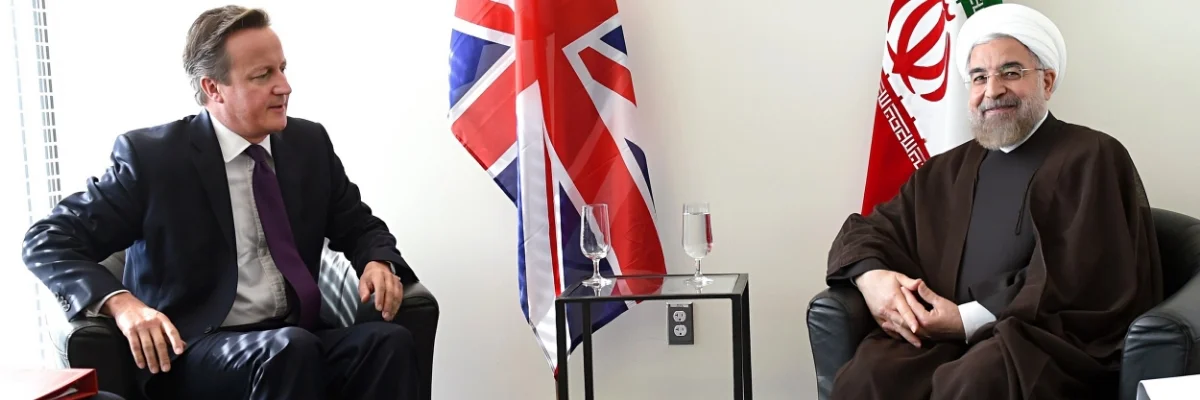
British Business in Iran: Time To Set Sail
◢ British businesses are now receiving advice to explore Iran opportunities —albeit in accordance with standing sanctions regulations — in order to prepare for a Iran's reentry into the global economy.
◢ With the door having been opened, British companies risk losing a key business advantage to their competitors in other Western states such as France and Germany if they do not act quickly.
Since the singing of the Joint Plan of Action agreement between Iran and the P5+1 in November 2013, European businesses have intensified their efforts to identify commercial opportunities in Iran. Trade delegations and fact-finding missions have become common. Even the CEOs of the world's top energy giants are traveling to Iran to conduct high level negotiations.
Yet, as French, German, and Italian companies have begun to scour the landscape in Iran, British companies have been largely left behind. For years, the British Foreign and Commonwealth Office (FCO) has taken the strictest stance in Europe when it comes to commercial engagement of Iran. The standing advice has even been to avoid business that is currently permissible under general or specific exemptions from US, EU, and UN sanctions.
But in the last few weeks, there has been a shift. Perhaps recognizing that after two years of negotiations, a comprehensive nuclear agreement is just days away, the FCO has changed its tune. British businesses are now receiving advice to explore Iran opportunities —albeit responsibly and in accordance with standing sanctions regulations — in order to prepare for a Iran's reentry into the global economy. This marks the latest development in the slow, but continuing repair of long strained UK-Iran ties.
With the door having been opened, British companies risk losing a key business advantage to their competitors in other Western states such as France and Germany if they do not act quickly.
There is a general consensus among experts and observers that that a nuclear deal is in reach and will be formalized in due course. Though implementation timetables mean this means that sanctions relief will not arrive until the end of 2015, the economic landscape in Iran will shift considerably even prior to full sanctions rollback. Companies will need to assess commercial, legal, and political risks and opportunities in the coming months to prepare strategy for 2015 and beyond.
Iran is a unique country with both massive energy reserves and a large and dynamic consumer market. It therefore has immense potential to be a trading partner with Europe and the wider world. Prior to the 1979 Islamic Revolution, British businesses had a strong presence in the country. One reminder still seen on Iran's roads is the historic "people's car" of Iran, the Paykan, which is based on the British Hillman Hunter.
But since the revolution, and certainly since the imposition of broad sanctions on the country, British business have ceded ground to French, German, and Italian conglomerates. This is despite the fact that British expertise in engineering, consumer brands, financial and professional services, pharmaceuticals and healthcare products, and other goods and services would be highly exportable.
So what should British businesses do?
The short answer is to engage with Iranian counterparts at the first opportunity. There is no barrier to speaking about potential business opportunities that may emerge following sanctions relief. Business can even currently be conducted in sectors such as retail, healthcare, and agriculture, which are subject to more limited sanctions.
Having just returned from a weeklong visit to Tehran where we enjoyed excellent access to both the private sector and government, we conclude that productive conversations can be had with Iranian business leaders about future opportunities across sectors ranging from tourism to energy. The opportunities are clear and very attractive. The challenge is finding the right partner and devising the right market strategy.
Encouragingly, the attitude of the senior decision makers within government, across various ministries, was collaborative. The current administration has an outgoing and open attitude towards international investments and long-term partnerships between Iranian and Western businesses.
Therefore, if British companies want to deal with Iran they should start building relationships now (whilst also taking care not to fall foul of the sanctions legislation before it is lifted). Securing reliable legal counsel is a key part of market exploration.
Due diligence measures will also play a large role in creating an Iran strategy. British companies need to be prepared for the almost Darwinian process of weeding out the superfluous middlemen in order to identify those individuals with the background and capability to facilitate and execute a deal. For effective relationships to be formed, both sides will need to establish a level of mutual trust and understanding.
However, within large companies, this process will raise the alarms of compliance departments, who have long resisted engagements with Iran. Business development directors and executives with foresight will need to be able to tackle internal resistance as effectively as external challenges.
The hesitation on the part of British business is shortsighted, however, especially if a robust deal is agreed between the world powers and Iran. For the sake of needless conservatism, British companies risk losing a key business advantage to their competitors in other Western states such as France and Germany.
Is it too late for the British to compete in the Iran gold rush?
There seems to be a growing fear among business leaders in London that Britain will be left behind in the Iran gold rush. But what should not be forgotten is the scale of opportunities available in the Iranian market. Contrary to popular belief, there are more than enough opportunities for all to benefit from a post-sanctions Iran. However, this does not mean that taking a passive approach will be advantageous. Building relationships now will help reduce risk for a future market entry. The learning curve will be steep.
Finally, though the focus tends to be on Western companies interested in entering Iran, we should not disregard the many Iranian firms with serious products and services are preparing to engage global markets. The entrepreneurial class in Iran has global ambitions, and like their peers in markets around the world, London will be a natural base from which to devise international expansion. The gold rush therefore may work in two directions, and Britain should prepare to host.
Photo Credit: Timothy Clary, EPA
Arab Business in Iran: Looking Beyond Regional Rivalry
◢ Most experts focus on growing antagonism between Iran and its Arab neighbors as a risk to regional prosperity.
◢ However, Iran’s large consumer-driven economy and some early success stories suggest that many GCC companies are actually very well positioned to transfer their knowhow to the Iranian marketplace.
With high disposable incomes furnished through oil rents, the GCC economies are geared towards the consumer. Famed for massive malls, expensive cars, luxury housing, and entertainments galore, perhaps no other group of countries around the world are as defined by such conspicuous consumption. To underscore the point, a recent report by Global Footprint Network, an environmental protection institute, suggests that if every person in the world consumed resources at the same level as Emiratis, we would need 5.4 planet earths to sustain humanity.
Created to answer this insatiable demand, the GCC region's most successful conglomerates are not in manufacturing or industry, but in consumer-focused sectors like food service, real estate, hospitality and leisure, luxury retail, and FMCG.
Given that Iran has a large consumer driven economy, with a middle class that will benefit from post-sanctions economic growth, GCC companies are actually very well positioned to transfer their knowhow to the Iranian marketplace. A recent study of which companies would most quickly benefit from an Iran deal was “loaded” with GCC companies, particularly those based in Dubai.
This fact complicates the political economy of regional relations in the Perisan Gulf region. Most analysis focuses on the increasing rivalry between Iran and the Gulf states, especially Saudi Arabia. However, the prospects for business tell another story, in which trade and investment can aid the development of a regional geopolitics based on mutual gain rather than mutual antagonism.
To illustrate this point, below are 5 leading companies from the GCC, which could make it big in Iran due to their consumer driven businesses.
It remains to be seen if opportunities in Iran will be enough to outweigh the rivalry in regional politics. But it wouldn't be the first time that commerce has overcome conflict.
- Majid Al Futtaim Group, Dubai, UAE- Retail Development
Revenue: USD $6.8 billion
A holding company specializing in large-scale retail and hospitality projects, MAF Group owns some of the iconic malls and hotels in the Middle East. While we might imagine an MAF backed five-star mall development in Iran one day, it is MAF’s longstanding role as the regional partner for French hypermarket chain Carrefour that has won them early success in Iran. With the first store opening in 2009, a subsequent $400 million dollar investment has seen hypermarkets open in Tehran, Shiraz, and Esfahan. The company boasts of plans to open 15 more locations, and aims to dominate the sector with a mix of hypermarkets and smaller supermarkets.
- Aujan Group Holding, Dubai, UAE- FMCG
Revenue: USD $200 million (Iran entities only)
Continuing the FMCG theme, another Arab success story in Iran can be seen in the experience of Aujan Holding Group, the regional partners for The Coca-Cola Company, which purchased 50% of the Aujan Industries subsidiary in 2011 for nearly USD $1 billion. A separate Iran-registered joint stock company, Aujan Industries Iranian Company, is the manufacturer and distributor of Rani and Coca-Cola beverages in Iran. Importantly, Coca-Cola’s tie-up with Aujan excluded the Iranian business. This leaves the door open to future capitalization and expansion, as Iran exhibits the second largest absolute value growth in MENA region soft drinks in the next few years.
- Olayan Group, Saudi Arabia- FMCG and Food Service
Revenue: Undisclosed
A diversified Saudi conglomerate, Olayan has operations in everything from business services to construction. But it is the group’s holdings in fast-moving consumer goods (FMCG) and food service that position it for an Iran market entry. In the area of consumer goods, Olayan has longstanding relationships with global giants such as Mondelez International, Nabisco, Kimberly Clark, and Colgate-Palmolive. These US-based multinationals have limited exposure to Iran’s market, and Olayan’s local supply chain could be adapted to ensure distribution to Iran. But perhaps more uniquely, Olayan is the regional franchisee of Burger King. The first firms to rollout globally recognized fast food and fast-causal chains in Iran will tap into a massive unmet demand, and Olayan is a company with the muscle to do so.
- RAK Ceramics, Ras al Kamiah, UAE- Ceramics
Revenue: USD $1 billion
It is a little known fact that the largest ceramics manufacturer in the world is located in one of the lesser-known Emirates. RAK Ceramics produces everything from toilet bowls to tableware in over 8000 designs. RAK Ceramics has a presence in Iran, but tough economic conditions and supply chain issues have depressed profits this year. The company has begun scaling back its Iran operation. RAK Ceramics boomed on the back of procurement in the GGC, as large-scale residential and hospitality developments mushroomed. In this way, the supplier’s success is connected to consumer demand. Similar construction volumes could be expected across Iran’s multiple metropolises in a post-sanctions environment. As a global leader, RAK Ceramics is certainly poised to benefit as this massive market on its doorstep becomes easier to engage.
- Damac, Dubai, UAE- Real Estate Development
Revenue: $556 million (Damac Properties only)
With over 100 buildings either complete or nearing completion, Damac has emerged as a leader in Dubai’s crowded real estate development market. Until now, groups like Damac have seen Iran as a source of high network individuals, eager to establish a residence in Dubai. But looking forward, economic growth and freer financing will make Iran the next big real estate story in the Middle East. As a private entity, Damac is likely to be less entangled in the political battles between Abu Dhabi and Dubai on the issue of engaging Iran. This differentiates it from Emaar, with its legacy as a formerly 100% government owned entity. Investors are taking note. The listed entity Damac Properties Dubai saw its stock rise over 8% immediately following the conclusion of the April JPOA framework agreement between Iran and the P5+1 powers.
Photo Credit: Koroush Complex
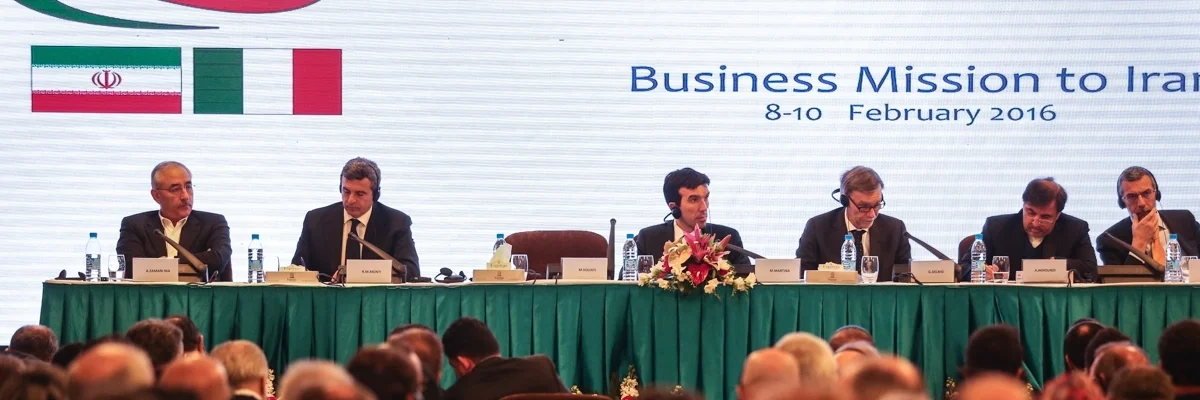
Newfound Urgency: 4 Steps for Western MNCs in the Iran Market
◢ In a recent benchmarking study conducted by Frontier Strategy Group, more than 80% of the 28 multinational companies (MNCs) surveyed said they are focused on reassessing their strategic plans for Iran.
◢ These recent survey results indicate an unprecedented interest from EU- and US-based MNCs in Iran as an emerging market.
In a recent benchmarking study conducted by Frontier Strategy Group, more than 80% of the 28 multinational companies (MNCs) surveyed said they are focused on reassessing their strategic plans for Iran. These recent survey results, along with anecdotal evidence provided by my daily conversations with clients on investing in Iran, indicate an unprecedented interest from EU- and US-based MNCs. There is good reason for this newfound urgency.
Even if a final nuclear deal is reached by the June 30 deadline or after another extension, it will be hard to anticipate an exact timetable for sanctions relief in Iran. Yet there is a growing consensus among senior executives that any market share won in 2016 or 2017 and profitable growth from 2018 onwards, would be the result of strategic planning that must take place right now. As a result, MNCs are prioritizing ready-to-execute Iran plans.
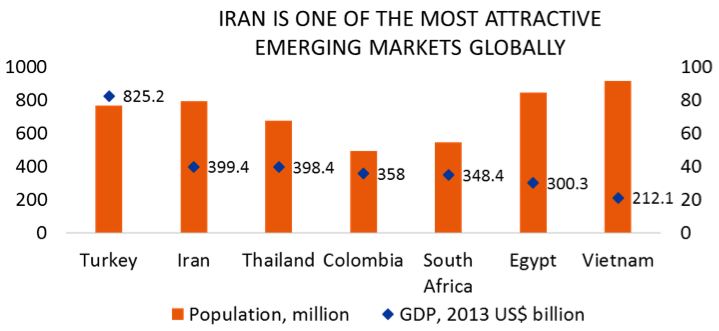
For example, a pharmaceutical company that is already allowed to work with a local distributor could assess ways that the partnership could expand once sanctions relief creates the appropriate conditions to do so. Other MNCs, especially in technology and industrial sectors, are not afforded the same opportunities given the stringent international sanctions regime that keeps them out of the market. However, senior executives from these companies are able to prepare in several other ways, including through visits to Iran, conversations with peers who are doing business there, and beginning to identify potential local partners.
In all instances, we are seeing a hunger among executives to ensure they are closely adhering to established sanctions parameters while at the same time readying their organizations to better understand and ultimately succeed in Iran. This balancing act is not an easy task, especially when you consider different dynamics presented by a company’s country of origin, industry, size, local experience, and risk appetite.
Because there is no one-size-fits-all approach to Iran, FSG has developed a four-step process to help our clients determine the right way to structure effective plans for the Iranian market. The rest of this blog post outlines a simple, four-step process that any foreign MNC can use to structure or pressure test their Iran plan.
Step 1: Confirm Market Opportunity
Despite Iran’s huge potential, the market will not be worth the risk for every foreign company. We advise MNCs to evaluate where they fall on an Iran risk spectrum by answering key questions related to industry opportunity, market prioritization, risk appetite, and organizational resources. FSG designed a short questionnaire to help senior executives pinpoint where their organizations fall on the risk spectrum, and to challenge pre-conceived notions about whether or not Iran should remain off-limits if sanctions are lifted. Given the unprecedented level of MNC focus on Iran planning, most companies we’ve spoken to move on to step two.
Step 2: Establish Working Group
The best way to align an organization on what is required to prepare for Iran’s complex operating environment is to establish a cross-functional working group. This step is especially critical for larger MNCs that could face an uphill battle in navigating organizational bureaucracy. Participants in such a group will vary by company, but it could include: Head of Middle East North Africa and/or Europe, Middle East, and Africa; Head of Strategy; Chief Financial Officer; General Counsel; Heads of Business Units, and any other relevant senior management. Setting a clear mandate upfront is important in order for the group to achieve goals, such as streamlining internal communication on Iran, educating the rest of the organization on opportunities and risks, and building or updating the Iran plan.
Step 3: Gauge Organizational Readiness
To be successful in Iran, senior executives will need to understand exactly where there are organizational strengths and weaknesses in their entry or expansion plan. To assist in this process, FSG created an “Iran readiness diagnostic” for our clients. The self-assessment tool allows senior executives to measure their level of confidence in addressing several key areas of Iran planning, such as strategy, finance, legal, operations, and customer segmentation. Typically, MNCs find that they are prepared to answer some, but not all questions that are required to build or update an effective strategy for Iran. While results will vary from company to company, this type of objective evaluation is critical for all senior executives seeking to prepare their companies for Iran.
Step 4: Develop Action Plans to Close Gaps in Iran Strategy
MNCs can use results from step 3 to begin closing the biggest gaps in their strategic plans for the Iranian market. First, senior executives should use the self-assessment results to align their organizations on where internal resources must be directed for Iran planning. Next, Iran working groups should prioritize which areas must be addressed and the required timelines before Iran entry or expansion is even possible. Finally, resolving these key questions should be done through comprehensive action plans that outline relevant analysis, follow-up steps, timelines, and key stakeholders involved.
Let the Buyer Beware
With Iran’s market opening likely to occur gradually after any finalized nuclear deal, foreign companies must be prepared with flexible entry or expansion plans to stay ahead of fierce competition. Given the Iranian market’s complexity, the traditional approach to strategic planning will not succeed. The four-step process outlined in this blog post is one way to compensate for the likelihood of a challenging and shifting Iranian investment climate in upcoming years. Without thoughtful plans prepared ahead of Iran’s opening, MNCs could expose themselves to a number of serious compliance and operational risks that would reverberate negatively across their organizations.
Photo Credit: Frontier Strategy Group

Chinese Invasion: The Future of Iran's Auto Industry
◢ Saipa, Iran's second largest auto producer, has announced a joint venture with a Chinese company called Brilliance.
◢ The arrival of Chinese designs both underscores the growing technical capacity of the Chinese auto industry, as well as the aggressive position Chinese companies are taking in Iran.
I have been an avid auto Iran industry watcher in recent years, and with sanctions relief on the horizon, opening the door to a more mature industry, it seems anything is possible.
Case in point is the announcement this week by Saipa, Iran's second largest auto producer, of a joint venture with a Chinese company called Brilliance. The two firms launched production lines for two new medium sized cars based on Brilliance designs.
The very announcement of the production of the Chinese cars has changed the playing field. For decades, the majority of so-called “montage” cars manufactured in Iran have been based on European designs. The arrival of Chinese designs both underscores the growing technical capacity of the Chinese auto industry, as well as the aggressive position Chinese companies are taking in Iran.
I previously wrote an article highlighting Peugeot's ultimately precarious position in the Iranian market. In that article I discussed two trends evidenced by the Saipa/Brilliance announcement. First, I mentioned that Peugeot's long standing position of de facto Iranian car maker, was becoming more precarious by the week, and secondly I pointed to the rise in popularity of affordable Chinese brands.
Perhaps Saipa's announcement of the ultra-affordable Brilliance cars (priced at under USD $10,000) is the first sign in the future dominance of Chinese brands.
The arrival of Chinese montage manufacturing now puts the ball in IKCO-Peugeot's court. Can they offer the same variety of cars at such affordable prices? A look at their new offering directly imported from Europe suggests they cannot. IKCO has touted repeatedly over the past 6 months about two specific models; The Renault Clio 4 and the Renault Captur, both originally hotly anticipated by the auto enthusiasts in Iran.
The fact remains that both of cars have failed to appear on the streets and their original estimated prices have grown incrementally with the months. The Captur has been pegged at just under 900 million rials or USD $30,000. Given the continuing hardships in Iran's economy, this price positions the Captur as a luxury model. But the fact remains that the Captur is not a luxury car.
The vast majority of car owners, desperate to offload their ageing Peugeot 206s, are definitely looking for a replacement, but will be loathed to spend three times the amount of the Brilliance design, a more direct replacement for the 206. Presumably Iran Khodro and Peugeot have other plans up their sleeves, though their reticence to push forward with offering new vehicles is giving Saipa the lead.
The two Chinese cars in question highlight the change in the markets ability to respond to need, or that or Saipa's ability to respond to demand. But, it's not all rosy for the likes of the Chinese firms, as scepticism about the quality and sustainability of their investments in Iran rises among the political and economic ruling class.
Recently, an article published in the Financial Tribune quoted the head of the Auto Parts Association of Iran, Arash Moheebi-Nejad, as saying that Iranian buyers would likely buy European cars over Chinese largely because of cultural affinity.
Besides sanctions, there is the issue of financing. As the rial has deeply depreciated against the US dollar in recent years, manufacturers' purchasing power and cash flow have decreased year-on-year, Moheebin-Nejad noted. "To boost the manufacturing sector, we need fresh financial resources so that dilapidated infrastructure can be renewed." Also, he added, "the sector must further benefit from contemporary global science and technology."
The statement by Moheebin-Nejad was a warning shot by the auto part manufacturers to the auto producers not to not jump in bed with the Chinese, who will privilege their own parts manufacturers, thereby reducing the prospects of Iran's domestic industry.
The local industry already under financial strain due to being owed money by the main auto players are now about to see their market share shrink further.
Moheebin-Nejad was not alone in his criticism of Chinese auto makers. In an news story published in April by IRNA, Sassan Ghorbanim the secretary general of the Iranian auto parts group said that Chinese cars "must reduce their prices by up to 20 percent" if they are to adequately incentivize Iranians away from more "loved European brands."
The Peugeot 301, pegged as the replacement for the Peugeot 405, with its 30 year old design, continues to be absent from Iranian dealer's lots, be it down to financial restrictions on the market, sanctions clogging up operations, or general hesitance on the part of Peugeot. In any case, the French are ceding market share to new entrants.
Looking at the rise of "Auto China" through the Iranian lens, misses the wider point. Audi, Mercedes Benz, Range Rover, BMW and a numerous other car buyers companies have set up production lines in China. This is proof of the maturity of Chinese manufacturing knowhow and integration into global supply chains. Moreover, the Chinese have already bought the Saab and Volvo brands outright.
Then one must consider Peugeot again. The April announcement that the French auto maker is undertaking a joint venture with Dongfeng motors, indicates the Chinese auto market is only going to grow in importance. Peugeot has traditionally seen Iran as their second largest market up until 2013 when sanctions were placed on Iran's auto makers. However, if manufacturing ramps-up in China, and continues to stagnate in Iran, this will no longer be true.
“It has been exciting and rewarding,” said Peugeot Chief Executive Carlos Tavares, referring to the first year of the partnership. “Our sales in China are quite significant and still growing so it’s an important contribution” to the recovery of PSA.
So Iranians should expect to see more Chinese cars on the street, and perhaps the next batch of Peugeot cars will be Chinese produced and delivered at Chahbahar. In the long run whether Iran's auto part makers like it or not, the Chinese are here to stay and the Brilliance/Saipa tie-up is just the beginning.
Photo Credit: Realiran.org
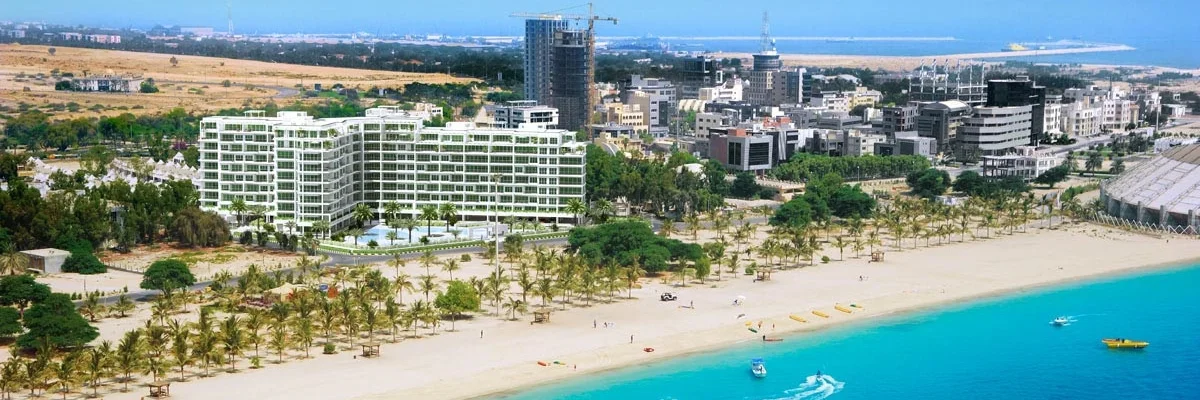
Long Walks on the Beach: Maritime Tourism in Iran
◢ For countries like Italy, Turkey, and Malaysia, tourism is among the main sources of economic value, as measured by contributions to gross domestic product (GDP).
◢ Similarly, Iran has significant tourism potential, particularly in maritime areas. This industry should be developed with international support.
The tourism industry generates over USD $6.5 trillion globally and today accounts for a significant part of direct and indirect revenues of many countries. For even substantial countries like Italy, Turkey, or Malaysia, tourism is among the main sources of economic value, as measured by contributions to gross domestic product (GDP).
This article will take a look at maritime tourism in Iran to understand the economic potential of Iran’s beaches and seaside. As a country with great natural beauty, an inviting seaside climate, and extensive coastlines, Iran is well positioned for maritime tourism on both its northern and southern coasts.
In a global context, research shows that investment in the tourism industry has consistently been a safe bet. In 2012 the number of tourists around the world exceeded 1 billion. According to the statistics of World Tourism Organization (UNWTO), for every tourist, 2 to 6 direct jobs and 9 to 15 indirect ones (including both skills and service-oriented professions) are created.
This industry, with all its extensions such as hotels, restaurants, shopping centers, travel agencies, along with all entities related to leisure activities and transport can make a great contribution to a country’s economy.
Within the region, Iran’s Persian Gulf neighbors Qatar and the United Arab Emirates, have made significant commitments to the development of their tourism industries, turning revenues from oil and gas into the budgets for national airlines, massive hospitality developments, and attractions like the Dubai 2020 World Expo and the Qatar 2022 World Cup.
In comparison with these massive projects, and despite huge potential, Iran's income from the tourism sector was only about USD $1 billion last year (the figure is inflated to USD $5-6 billion according to Iranian sources). But, encouragingly, projections suggest that the figure could rise to USD $20 billion by 2025. Maritime tourism will play a key role.
According to industry research, the definition of maritime tourism is as follows:
Maritime or marine tourism is one sector of the tourism industry that is based on tourists and visitors taking part in active and passive leisure pursuits or journeys on or in coastal waters, their shorelines and their immediate hinterlands. Marine leisure is a collective name for a full range of activities or pursuits that are undertaken by local people, tourists, and day visitors in these marine related localities.
In Europe alone, the maritime tourism sector employs over 3.2 million people and generates a total of € 183 billion in gross value added (GAD). As such, tourism represents over one third of the overall maritime economy. As much as 51% of bed capacity in hotels across Europe is concentrated in regions along the seashore.
As part of European Union's Blue Growth strategy, the coastal and maritime tourism sector has been identified as an area with special potential to foster a smart, sustainable, and inclusive Europe.
Countries with developed marine tourism constantly try to come up with new ideas and strategies to further expand this sector of the industry. For instance the EU Commission adopted a Communication on "A European Strategy for more Growth and Jobs in Coastal and Maritime Tourism" in February 2014, presenting a new strategy to enhance coastal and maritime tourism in Europe in order to unlock the potential of this promising sector. The communication was the result of a public consultation launched on European Maritime Day in 2013.
A similar strategy of public outreach and multi-stakeholder planning ought to be undertaken in Iran.
Iran enjoys hundreds of kilometers of superb coasts, with the world's largest lake, the Caspian Sea, in the north, and the beautiful coasts of the Persian Gulf in the south. These regions could benefit greatly from the income of maritime tourism provided the development of infrastructure and facilities required for expansion of the sector. Unlike many countries, Iran has two distinct coastlines, with different seasonal qualities and recreational opportunities.
But a lot of development work is needed. Safety is one of the most critical areas to properly develop before marine based tourism can succeed in Iran. The nearly 5000 km of coastlines in Iran call for the establishment of coast guard and search and rescue teams at Iran’s ports—with the requisite training and vehicles to enforce and monitor tourist safety.
The statistics on the casualties along Iran's shores should undoubtedly alarm officials and compel them to further and more precisely address the safety and security issue in maritime travels. Tourists, who are not familiar with the dangers of particular areas, remain 4 times more likely to drown than locals along parts on Iran's coast. Until safer conditions are in place, many Iranian and international travelers will continue to choose other countries seeking a seaside vacation where fewer risks (and better amenities) may await them.
Only when the safety concerns have been addressed will the efforts of Iran’s Ministry of Tourism succeed in coordinating investment opportunities to develop hospitality and leisure facilities along the Iranian coast. Areas like Kish have long been envisioned as a tourist paradise, but have yet to reach their full potential.
By developing its maritime tourism sector, Iran could not only tap into significant economic growth, but also present a better image of the country to visiting tourists from around the world.
Photo Credit: IranTours.com

The Politics of Sanctions Relief in Iran: Three Roles for the Private Sector
◢ As politicians and analysts consider the wisdom of offering Iran sanctions relief in exchange for restrictions on the country’s nuclear program, a key stakeholder group remains unaccounted for in the debate – the private sector.
◢ Private sector leaders can play three vital roles to help bring a brighter economic and political future to Iran— interlocutors, stewards, and creators.
As politicians and analysts consider the wisdom of offering Iran sanctions relief in exchange for restrictions on the country’s nuclear program, a key stakeholder group remains unaccounted for in the debate – the private sector.
Iran’s private sector stands to gain the most from sanctions relief, and they are uniquely positioned to advance the agenda of normalization through their interactions with both domestic and international business people. Corporate leaders are poised to play three vital roles— interlocutors, stewards, and creators—without which the long awaited nuclear deal will not successfully improve the economic situation in Iran in the way many Iranians anticipate. Policymakers must take account of the relationship between sanctions relief and private sector leadership for the deal to have its much-awaited impact.
In the aftermath of a deal, Iran’s private sector business leaders will be the ideal actors to pick up where the diplomats leave off. These individuals, with global outlooks and ambitions, have already begun reaching out to their peers in the West. And while this outreach is primarily about securing new investment and business opportunities for themselves, it also offers an opportunity to present Iran in a new light, and undo the effects of political vilification and cultural misconception.
The notion of “business diplomacy” has emerged in the last decade as a serious topic of strategic thought, suggesting that the business executive can serve as a special kind of “ambassador.” And in the transition from high-stakes diplomacy to the “business as usual” mentality expected from a détente between Iran and the West, business diplomacy is the essential intermediate step.
But in order to take on this role, Iran’s private sector business leaders will need a place at the table. They must be welcome to visit Western countries much the same way American and European trade delegations have begun visiting Iran. Sanctions, stigma, and arcane visa policies should not prevent an Iranian CEO from coming to London, Paris, or New York to discuss his country and his company in the hope of finding an investor or partner. On the contrary, this should be welcomed as a necessary and productive kind of engagement.
If Iran’s private sector business leaders can consolidate their economic position on the back of foreign investment and trade, they will be able to take on a vital role as stewards of a nuclear deal.
For the average Iranian, the nuclear deal has one fundamental promise: greater prosperity. The mechanism embraced by the United States and its allies of using sanctions as a coercive policy tool has had the effect of conditioning Iranians in an almost Pavlovian way— geopolitical strife begets economic pain. Consequently, the signal of political accord and the “relief” of sanctions seems to be triggering the expectation of the relief of this economic pain, and even that of economic reward. Indeed, as opinion polls suggest, President Rouhani’s legitimacy in the eyes of the Iranian public hinges on his rebuilding of the economy.
But the rollback of sanctions will not bring about relief unless it translates directly into an increased flow of goods, services, and capital into Iran. Following the change in the Iran regulatory environment, only private sector companies will be able to establish the flows necessary for economic growth— whether to introduce vital pharmaceuticals, the latest fashions, or investment funds into the country.
Iran’s private sector is uniquely positioned to create value for Iran’s long-term development. Value creation, as a concept of management, entails the proper treatment of shareholders, employees, and customers as part of corporate social responsibility. When value creation is more than the policy of a single business, and instead reflects the ethos of a whole industry or economic sector, private enterprise can take on a true social significance.
In this sense, Iran’s private sector firms, if properly empowered, can serve as the anchor for Iranian civil society. Through a commitment to corporate citizenship, companies can become advocates for the citizenry within the context of Iranian political economy.
In the current situation, the Iranian state and private enterprise compete for access to limited resources and capital. Livelihoods are either tied to a state affiliate or to a private concern Knowing this, class and cultural divisions are exacerbated by economic antagonism. Issues of public health, environmental degradation, educational policy, and legal protection will not be effectively addressed.
The Islamic Republic’s support for privatization has been surprisingly persistent, if unfulfilled. The technocrats are well aware that state owned enterprises struggle to generate economic gains of real value.
The Rouhani administration is committed to privatization and to the success of the non-governmental sector in Iran. The aim is to give new actors a voice in the wider arena of public affairs.
This commitment has been signaled since the early days of the administration's tenure, and in Rouhani's cabinet’s engagement of the current crop of Iran’s private sector business leaders. The logic is clear. The Iranian state ought to focus on security and governance, and rent seeking should be formalized through taxation.
But in the history of modern Iran, and especially in the age of globalization, economic policy has never been a national prerogative.
The imposition of sanctions and their aftermath are testament to this fact. As key actors in Iran try to turn over a new leaf, it is up to the P5+1 to empower Iran’s private sector as interlocutors, stewards, and creators, and thereby ensure that policy treats such empowerment not as an afterthought, but as an intended effect of a nuclear deal. Sanctions relief ought not to be seen as merely the quid-pro-quo of any final nuclear agreement. It is truly the sine-qua-non of everything promised by the ongoing détente.
Photo Credit: AP Photo/Michael Euler
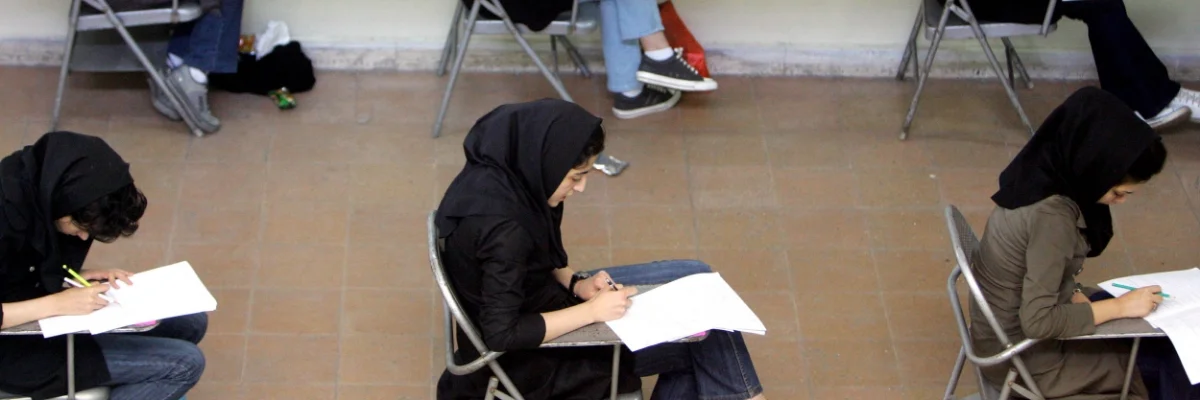
The Greatest Asset: Funding the Future of Education in Iran
Iran's higher education sector is one of the country's greatest assets, with 4.5 million women and men pursuing degrees. But for universities to offer more time and attention to its individual students and faculty, increased funding is necessary. Iranian institutions can do more to secure this based on innovative models from other countries.
Iran's higher education sector is one of the country's greatest assets, with both women and men achieving degrees. Iran's Organization for Investment, Economic and Technical Assistance issued a report in 2013, highlighting the potential of the academic sector in Iran. It stated that in that year, the country had 4.5 million active university students studying at bachelor's, master's and doctoral levels.
Scimago, in an index of global academic prowess, ranked Iran 16th worldwide in 2015. Previous editions of the index also conjectured that by 2018, Iran could become the fourth largest contributor of academic publications in the world, and the country would notably rank first among Islamic nations.
It is therefore important to support these institutions so they can continue to thrive and grow. Prior to working in Iran, I spent a considerable time in the United Kingdom. As a student in the UK, I learned about the possibility university leaders have to take advantage of alternative investment streams to support academia. Now back in Iran, in my role at Hekmat University in the Holy City of Qom, I have come to recognize that standard channels of revenue, such as tuition, can only do so much to support the growth and development of higher academic institutions.
In my daily duties at Hekmat, I am responsible for the welfare and academic progress of students during their time with us. What is clear is that these students deserve as much time and attention as possible to help them reach their goals. But for a university to offer time and attention to its individual students and faculty, funding is necessary. Iranian institutions can do more to secure this funding in innovative ways, based on model examples from the practices of other countries.
Investing in Learning Outcomes
The academic community in Iran ought to begin intelligently seeking new sources of funding. There are a few ways this can be done.
First, universities can seek to commercialize innovations. Science and engineering departments in particular can conduct large research and development projects by working with major corporations. Ideally Iran's scientists and engineers should be given the opportunity to develop their scientific models with the added support of the private sector; I must add that this is an ideal way to validate if the new innovations are even commercially viable. Universities can add to their intellectual capital as research institutions through partnerships with private-sector businesses.
Small-scale initiatives, such as startups, are also relevant. Iran’s buzzing startup scene should be considered by universities attempting to engage and support students post-graduation. Tehran University has created a successful model for such engagement through its partnership with Sarava Pars' Avatech Accelerator program.
The emphasis on developing universities as post-graduate research centers has been a focus of education policy in some countries, such as the UK, in recent years. During my stay in the UK, I noticed that the Tony Blair government was adamant about getting students in practical courses. And, beginning in 1998, the fruit of this investment helped the UK develop new industries. The value of the creative economy to Britain now stands at $120b annually. In contrast, the over-emphasis on exam performance above practical learning in Iran has weakened our overall ability to compete on an international level.
Second, education should be made available to a wider range of learners who may not be able to be full tuition-paying students of the university, but who may find value in distance and online learning. Distance learning was first developed in Iran with the inception in 1987 of Payam-e-Noor University. The institution now has 487 branches around the country, with some in very remote areas. This system has helped bring many people to higher education.
Looking forward, with the advent of mobile media and applications, we as an academic community should push for more distance learning to be done online, and possibly adopting the increasingly popular model of massively open online courses (MOOCs). Mature students are also beginning to take up a larger proportion of our classes. This in itself is an impressive feat. In recent years we have noticed 40% growth of this student segment. We believe that this portion of students will ultimately put the knowledge they’ve gained into practice in a shorter period of time than younger graduates. Online education can help so-called life-long learners retain access to top education while still in their careers.
Third, universities should begin capital campaigns to help drive the next phase of growth and development. Better campus life, including extra-curricular activities, would help improve the university experience for many undergraduates. But students often must live far from school, with a costly and inconvenient commute. If university administrators, with the help of private sector development firms, could offer quality undergraduate and post-graduate accommodation the overall campus life would improve, offering the chance for students to develop their skills further with such offerings as added classes and evening discussions, or simply time to enjoy and participate in extracurricular activities.
New campuses can also help with growth. Tehran University has made an effort, for a multitude of reasons, to shift many of their students out of Tehran to Pardis, 30 kilometers outside of the capital. This is an ideal way to create new growth for the university as many of the buildings and facilities on the older campuses are not set up to accommodate new kinds of university programs.
Overall, we must use these three new channels of investment—research centers, online learning, and campus development—to feed funding back into the new undergraduate intake. By doing so, we can develop our student potential and encourage re-investment in the cohort, which follows after them, through the fruits of their innovation and hard work.
Ultimately this is the way Iran’s academic institutions must go, but it will require a huge amount of reorganization and cooperation with companies and public agencies. The new revenue streams will ensure the tertiary education sector remains Iran’s great treasure for years to come.
Photo: Wikicommons
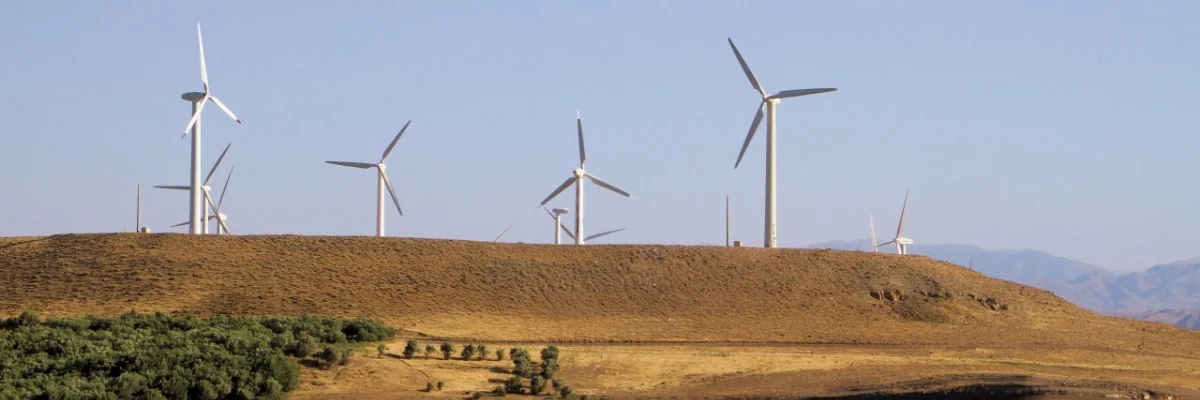
Renewable Iran: Creating the Energy Network of the Future
◢ The global energy industry continues to find greater value in efficiency and clean technology, with a rapidly growing reliance on renewable energy. But Iran lags behind.
◢ Now that Iran prepares to once again open doors to the international business community, the time is right for renewables to have a greater role in the country’s energy mix.
The global energy industry continues to find greater value in efficiency and clean technology, with a rapidly growing reliance on renewable energy. For Iran and the Middle East however, oil and gas have hardly been challenged as the dominant industry forces. But now that Iran prepares to once again open doors to the international business community, we must ask if renewables can, or even should, play a greater role in the future of Iran’s energy sector.
So, what’s the problem?
Iran is the country with the world’s largest conventional gas reserves and is the world’s third largest producer of natural gas - behind the US and Russia. Given these abundant reserves and production, you have to question why has a country of Iran’s population been a consistent net importer of natural gas during the last decade. The answer is Iran has very high per capita consumption of gas and other fossil fuels, with much of it going into power generation. In 2014, Iran burned 50 billion cubic meters of gas for power generation: that is more than in the UK, Germany, Italy, and France combined. In fact, in 2013, Iran consumed more gas than China, and was the 8th biggest energy consumer in the world, despite being the 32nd largest economy (World Bank) and the 17th most populated country.
Moreover, according to the International Energy Agency (IEA), Iran is among the top ten global emitters of CO2. Iran is the top emitter in the Middle East and accounts for almost a third of the region’s total carbon emissions. Fossil fuels account for almost 98% of Iran’s total primary energy consumption.
Of the 70 gigawatts (GW) of power generation capacity installed in the country, only around 11 GW are low carbon sources with most of that hydro (10 GW) while 1 GW is nuclear, and 0.1 GW is either solar or wind. The rest is largely old, inefficient, and polluting fossil fuel power plants burning either fuel oil or natural gas. According to Iran’s Ministry of Energy, over the past decade electricity demand has grown by almost 6% annually, and is expected to grow by at least 2% - 4% through the end of the decade. There are now more than 30 million grid connected clients in Iran, compared to less than 20 million only ten years ago.
So, Iran faces the problem, how can it meet this rapidly growing electricity demand while reducing its consumption of gas and fuel oil to eliminate imports (and facilitate exports), reducing carbon emissions to more average global per capita levels, effectively addressing the challenging air quality issues, and still attracting foreign investment and new technology?
The Role of Renewables
The answer is likely to be found in a combination of a modernisation of its power generation capacity, greater energy efficiency, and much greater reliance on renewable forms of generation.
In terms of renewables, Iran is naturally blessed with very good solar and wind conditions. Iran receives around 300 days of sunshine each year, compared to less than 64 days in Germany, the world’s leader in solar power with almost 25% of the global solar power capacity. The Global Wind Energy Council stated that some of Iran’s mountainous areas in the west and northeast have unique wind corridors that have plenty of potential for renewable generation.
The Iranian government is starting to get that renewables should now be an important part of the country’s energy strategy. In early 2014, Iran’s Ministry of Energy unveiled its plans for adding some 5 GW of renewable power capacity, mostly wind, to the country’s power fleet by 2018. Since the beginning of 2014, construction for around 400 MW of renewable capacity has started, and contracts for more than 500 MW have been awarded. The Iranian government increased its budget for renewable energy by more than 400% last year to around $60 million; although still small, the growth is going in the right direction.
Iran has also adopted a number of new policies towards renewable expansion, using similar policies to many Western European countries and opening up the sector to foreign investors. The Ministry of Energy has set up the Renewable Energy Organization (SUNA) that will administer these policies that include a feed-in-tariff scheme, under which the Ministry of Energy will buy the power generated from renewable sources at set tariffs for a 20 year period. At the set energy tariffs, investors are expect to be able to recover a full return on their investment in around four years of operations. In addition, the Iranian government is committed to providing up to 50% of the cost of installing residential solar panels, and to installing solar panels in public buildings.
Another spur to renewables growth comes from the calls to introduce a carbon emissions trading scheme. In February 2014, Iran announced that it is planning to introduce an emission trading scheme (ETS) that would cover its power sector. Although little information is available about the structure of the scheme, it is certain that such ETS's are designed to discourage the use of inefficient fossil fuel burning power plants. The emissions cap will eventually increase the power generation costs for inefficient power plants and will further support the growth of clean energy and renewables.
With all the challenges Iran is facing, renewable energy offers a unique sustainable solution for Iran to fundamentally overcome these issues, while providing significant investment opportunities for international investors, and also boosting the overall sustainability of economic growth.
Photo Credit: Wikimedia
