
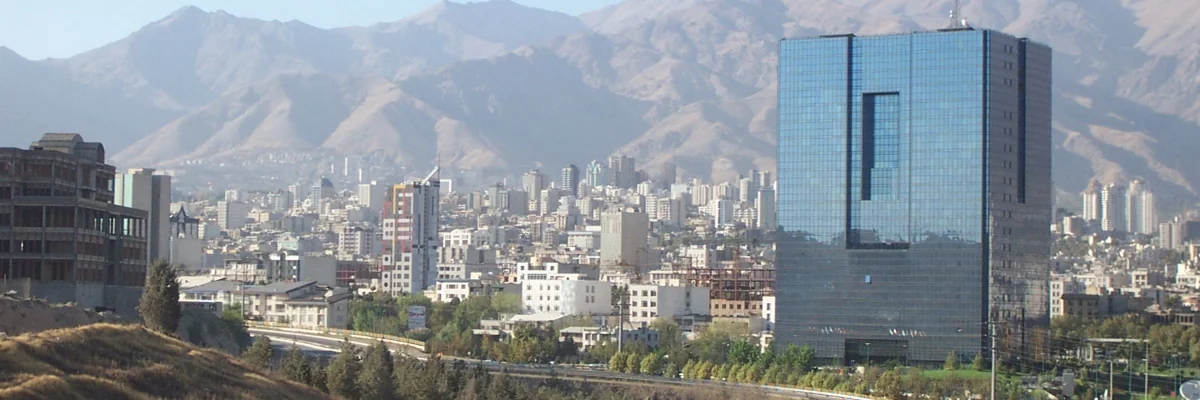
The Convoluted Role of Lending in Iran
◢ Banks dominate Iran's financial system, largely because capital markets are small and underdeveloped.
◢ Companies have relied on loans to access capital, but over-leveraging and poor lending practices have left banks in a precarious position.
Banks dominate Iran's financial system, largely because the stock market is small and underdeveloped. The only way firms can raise funding for new ventures is by borrowing from banks. This condition enslaves the businesses and the wider economy to lenders. Over reliance on loans has been exposed as sanctions and poor lending practices left banks crippled in recent years, exacerbating recessionary trends in the economy.
The notion that banks were "too big to fail" came to haunt free market economies in the global recession of 2008. But in Iran, with its largely state backed economy, this notion gains an even more troubling dimension. With the absence of developed equity markets and with bond markets at embryonic stages, combined with high business risk, savers are left with only one logical option: deposits. Iran's capital markets only raised $8.85 billion in the 2014/15 fiscal year. That would stand at just nine percent of all the lending by banks during the same period.
The reliance on banks as the sole conduit for turning savings into business investments gives banks exaggerated influence. Thus, if a bank in financial distress is not properly isolated, the effects across the wider economy could be catastrophic. Understandably, officials have never tested these waters. "The central bank and the government feel obligated to support [the banking system], but if it wasn't for that support, many banks would be in trouble," said former Central Bank of Iran governor Mahmoud Bahmani, in a recent interview with Tejarat Farda magazine.
But having a turgid function in the economy is not the only drawback of Iran's banking system.
Iran's major lenders are state-owned and even many private lenders are part-owned by state affiliates through holding entities. As such, the government gets too much say in how the banks are run.
Considering that Iran's technocrats are not shy about meddling in corporate affairs when expedient, little is left for the banks to decide in terms of strategy and policy. Recently, the CEO of Bank Melli (National Bank), Iran's largest lender, criticized parliament for interfering in Melli's governance and budget planning, citing it as the main reason for the company's poor performance. Furthermore, the Central Bank of Iran caped lending and borrowing rates, in an attempt to boost business lending, regardless of the fact that most banks are in desperate need of funds and low rates cannot attract depositors. Thus, Iranian lenders have become levers of state control, and states have a poor track record in running businesses.
Government intrusion in banking policy not only reduces their efficiency, but also endangers the entire financial system and with it the economy at large. "Compulsory facilities"– loans state-owned lenders were forced to pay at cheap rates to fund government initiated schemes– have piled up bank balance sheets with at least $938 trillion rials ($33.1 billion at official exchange rate) of bad debt. The number becomes staggering when you consider that clients borrowed 3.2 quadrillion rials ($95.2 billion at market exchange rate) from Iran's commercial lenders during 2014/15 fiscal year ending March 21, 2015.
State-owned banks had to provide "Compulsory facilities" at low interest rates, while paying upward of 22 percent on one-year deposits. To cover lost revenue, they raised lending rates and embarked on risky enterprises. Lax oversight by regulators, legal loopholes and corruption abetted the banks in this regard. Now, the government is trying to solve the mess it made, regrettably with the same method: heavy handed intervention.
Though financing is not the only reason behind meager business activity, it plays a prominent role. Until Iran's capital markets grow to an adequate size and take their place in the financing cycle, banks will continue to be the only plausible source of funding.
Even with the lifting of sanctions in sight, foreign banks are reluctant to do business with Iran, and reintroduction of Iran's banks into the global arena will take years, largely due to the issues outlined here.
Unsurprisingly, the solutions are challenging and time consuming. The state must change its culture of interference, and instead privilege measured regulation. Moreover, the central bank has to isolate itself from political matters and increase its supervision of the banking system. Bankruptcy laws must be revised and bank charters changed accordingly.
Photo Credit: Reuters
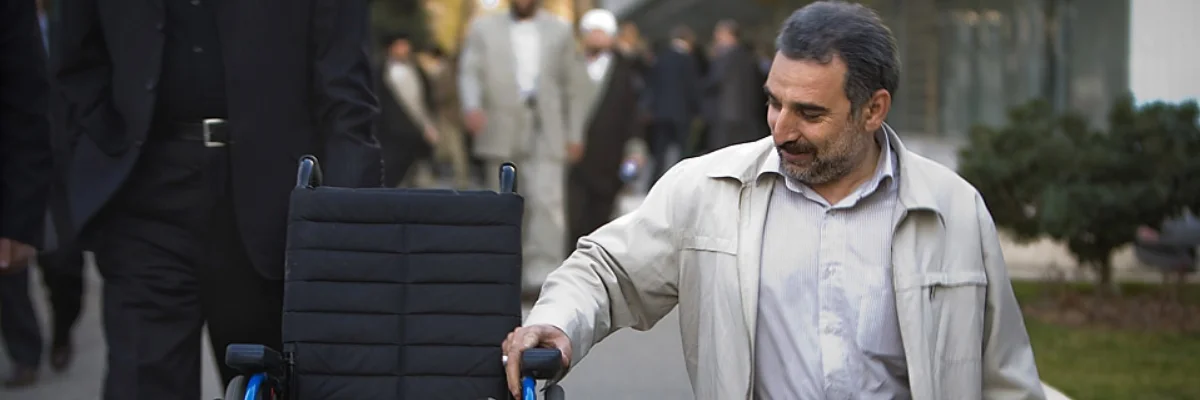
A Case for Public-Private Partnerships: Supporting Iran's Disabled
◢ There are approximately 400,000 disabled veterans in Iran, who sustained their injuries during the Iran-Iraq War.
◢ Government agencies like the Social Welfare Organization struggle to meet their needs. Public-Private Partnerships ought to be developed to help address healthcare provision for this important population.
The situation currently afflicting many in Iran’s disabled community is difficult to say the least. A staggering 400,000 of these disabled individuals—primarily men— are veterans who fought against Iraq during the 1980’s.
These brave ex-servicemen do have support of government agencies like the Social Welfare Organization of Iran and the Iranian Red Crescent Society, along with other charitable and religious organizations. However as time moves on these men’s medical needs will inevitably increase with their age. It is time we rethink how healthcare and funding for these men is provided
Care for the disabled community has primarily been in the hands of the state from the outset the Islamic Revolution of 1979. This top down approach to care was a necessary structure during the first years after the war and while the country was rebuilding itself through the Rafsanjani presidency. However, in recent years the needs of these disabled people have increased considerably, thus putting a strain on the existing medical support structure.
Moreover, the situation in the wider community of those with limited physical ability continues to be burdened under the weight of claimants coming forward with long-term issues seeking adequate care and support over long periods of time.
The State Welfare Organization (SWO) the government body which provides welfare benefits to the veterans, defines disability through four types: physical, auditory, visual, and mental. On the outset, this breakdown seems rather elementary, however the organization role is all-encompassing. The role of the SWO has expanded so much over the years that they must now care for the recently disabled as well as the groups like the veterans. Their budget—like for any organization of its kind worldwide— is finite. To overcome challenges and provide the best care possible, the Iranian government and the SWO must now understand that help can be provided in partnership with the Iranian private sector and international specialists.
Through my company, KTMA, working with the help of occupational therapists in Europe, we have spent two years researching the needs of the physically disabled, while also considering the budgets of the funding authorities. One thing I have found in my time building our company is the lack of support for more than the basics. Yet it is understandable that budgets are limited, and clearly the government, which has helped so many people, needs help itself sometimes.
What Can Be Done
This is where a unique form of public-private partnerships (PPPs) comes in. KTMA has teamed up with both the Social Welfare Organization along with the Red Crescent Society to assess the needs of the disabled and to offer solutions with its growing catalogue of equipment.
The Paralympic Committee of Iran is another worthwhile organization with which we have worked in partnership. They have been invaluable for their excellent understanding of the current needs of the physically disabled. As part of continuing efforts, they also introduced me to one paraplegic veteran whose 24-hour carer was his wife. He shared his story with me.
“Everywhere I go am I with my wife” the man said, adding "I really need more assistance in my daily activities and maybe my wife would like a day off, I hate to be a burden on her."
What surprised me most was that considering the man's severe disabilities, he was still able to get out and about. This is mainly due to the recent introduction of disability access DAF buses by the Tehran municipality. The rest of the help the family receives is either from charitable organizations or from religious groups who help with food and utility costs.
As these caring costs rise further, and Iran's revolutionary generation continue to age, there now is an opportunity for groups like my own, to help in the assistance of the disabled in Iran. However it will take a comprehensive action-plan and cooperation between the public and private sector.
Ultimately this would require the government to overhaul how it distributes its funding for the disabled and those of limited ability. It has been proven time and again that the large state organizations lose effectiveness as they grow, it is just a consequence of the burdens placed upon them. There has been no systematic review of how funding is provided to the organizations and this in itself adds another layer of inefficiency to the system.
Another serious issue afflicting the disabled is the lack of employers willing to take them on. The government did however pass a bill in 2003 that urges large state companies and state bodies to make allowances for the disabled and to get at least a small proportion of them back in to work.
How PPPs Can Help the System
What can, or rather what must be done, is that governmental agencies should relinquish some of their overall responsibilities to third party agencies to carry out specific jobs based on deep expertise. By this method, the country's coffers remain intact and waste which would normally remain in the system would be reduced. The overall quality of care provided to disabled Iranians would also likely increase, as new therapies, equipment, and even personal development opportunities are made available.
Through PPPs we can serve the needs of the disabled by empowering specialized companies to provide for each client’s specific needs.
Moreover, if partially disabled people were able to earn a living, their overall costs are reduced over a period of time. This is particularly advantageous as not only do the financial benefits mean less reliance on the state, but they also give the veterans and other disabled individuals a sense of self-worth, something that many of them have said to me would help their case.
Innovating PPPs to tackle welfare challenges is most achievable. It both helps the state and helps these men and women in many more ways. But the general hesitance of the state to deal with private organizations is holding back the quality of care and service otherwise available. Europe has shown the way in this regard and by learning from their experience we can help Iran’s veterans and disabled people by reorganizing the way these individuals are provided for from the point of first contact.
Photo Credit: Morteza Nikoubazl/Reuters
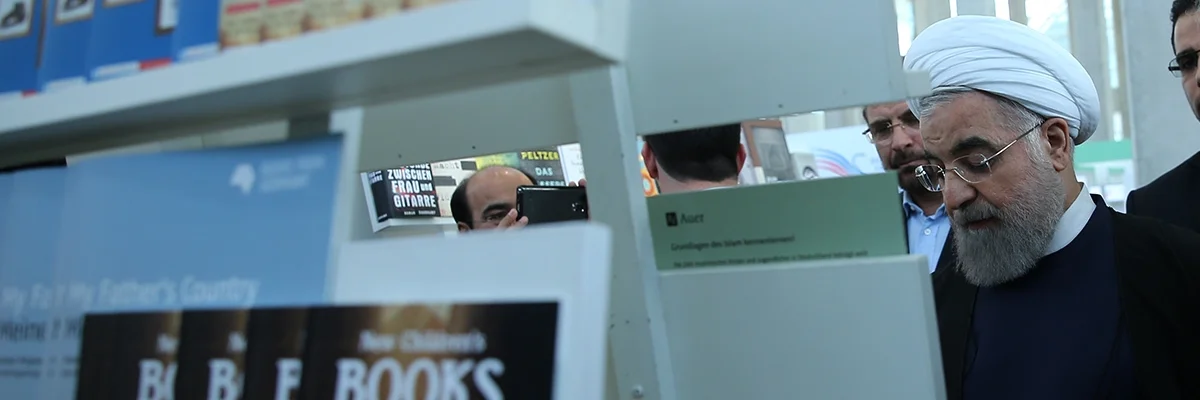
9 Must-Read Books For Doing Business in Iran
◢ There are very few business-specific books on Iran published in English, and it can be difficult to know where to gather information and insights.
◢ However, certain works by noted economists, political scientists, and other academics contain important lessons and insights for any business leader devising a Iran strategy.
Getting ready for business in Iran won’t be as simple as picking up the latest business bestseller at an airport bookstore. There are essentially no quality English-language books specifically about doing business in Iran (perhaps a reflection of the country’s relative commercial isolation).
Emerging markets best practice suggests that to truly understand Iran’s market, a businesss leader will require fluency in matters of economy, politics, society, and culture. In these areas, the business journalism in the pages of Bloomberg Businessweek or The Economist lacks depth, and the off-the-shelf market research reports of firms like BMI and Euromonitor lack context.
Fortunately, economists, political scientists and other academics have studied Iran with great diligence. Although their books and writings are not specific to commercial considerations, they nonetheless contain important lessons and insights for any business leader devising an Iran strategy.
Below is a list of nine books that every businessperson should read before pursuing business in Iran.
1. A History of Modern Iran, Ervand Abrahamian, Cambridge University Press, 2008
Abrahamian’s relatively short and accessible text is a staple of undergraduate courses that deal with Iranian history or political science. His book gives a well-researched and balanced introduction to the last century of Iranian history. Anyone seeking to invest or work in Iran ought to consider a basic grasp of the country’s history as a prerequisite. Most analysis on Iran tends to fixate on the 1979 Islamic Revolution as the key historical event that explains Iran’s current position. But as Abrahamian’s astute history shows, 1979 was merely the culmination of several political, economic, and social trends. And by the same token, the present situation in Iran has to be understood within the bounds of decades-long trajectories which are helpfully introduced in this book.
2. Iran and the Global Economy: Petro Populism, Islam and Economic Sanctions, Eds. Parvin Alizadeh and Hassan Hakimian, Routledge, 2014
An understanding of Iran’s economy will be vital for all businesspeople seeking to engage opportunities in the country. Economists tend to publish findings in papers, making it difficult for non-academics to identify the key articles with the most valuable insights. Thankfully, UK-based economists Alizadeh and Hakimian edited this volume of essays covering various aspects of Iran’s economy. Published in 2014, the collected essays include a nod to future international engagement for Iran’s economy. Subsequent work by these economists and their peers will have expanded on these issues in light of recent developments, but this collection offers a compelling primer into some key matters such as banking regulation, privatization, oil revenues, and industrial capacity.
3. Iran's Struggle for Economic Independence: Reform and Counter-Reform in the Post-Revolutionary Era, Evaleila Pesaran, Routledge, 2013
Though it predates the election of President Hassan Rouhani, whom many see as a strong advocate for further liberalization of the economy, Pesaran’s book is a compelling introduction into the high-stakes debate that has developed in Iran about economic reforms. Her analysis explores how, in Iran, the simple idea of foreign direct investment (FDI) is tied to all sorts of historical and political contingencies. For business leaders seeking to pursue FDI in Iran, this book will help put their intentions in context.
4. Business Politics in the Middle East, Eds. Steffan Hertog, Giacomo Luciani, and Marc Valeri, Hurst, 2013
It will be important for business leaders devising strategy for Iran to understand broader regional trends. The economic relationships between Iran and its neighbors are complex, and understanding trends across the region should influence how companies handle risk as it pertains to Iran. This would be one reason to read Business Politics in the Middle East. But in particular, the book includes an essay by Kevan Harris, who is perhaps the most exciting thinker on Iranian political economy today. Though he has yet to write a book on the topic, Harris’ many articles explore the role of the state in Iranian economy, and the capacity for Iran’s current economic and political systems to accommodate the kind of capitalistic activities that multinational corporations and foreign investors are mulling. His use of data from the Tehran Stock Exchange to more accurately define the governance and ownership of Iran’s largest corporations reveals the complexity of determining what constitutes a state owned enterprise (SOE) in Iran. This kind of data will be fundamental to properly accounting for legal, political, and economic risk when it comes to investment and partnership targeting in Iran.
5. Bazaar and State in Iran, Arang Keshavaziran, Cambridge University Press, 2009
Keshavarzian is a sociologist by training and his book is very much academic in purpose and tone. It is a rare example of a book on modern Iran with a singular focus—in this case the seemingly timeless institution of the bazaar. As Keshavarzian’s book explains, the bazaar is no longer as powerful as it once was. But at its height Iran’s merchant class, the bazaaris, epitomized the constructive role that commercial enterprise can play in Iranian society. Business leaders today could learn from the example of collaboration, network-building, and civil society engagement that the bazaar offers. Indeed, the financial might of the bazaar was bolstered by its particular commitment to its stakeholders—owners, employees, and customers. Iranian industries, and their international partners, will find the greatest success if they take a similar approach, one devoted to value creation over profit hunting.
6. Iran's Natural Gas Industry in the Post-Revolutionary Period: Optimism, Skepticism, and Potential, Elham Hassanzadeh, Oxford University Press, 2014
The natural gas industry will no doubt be a major target for investment and development in a post-sanctions environment. But that is not the reason that Hassanzadeh’s book is worth mentioning. Her book is a model example of a deep, interdisciplinary study of a major industry in Iran. The way she weaves political and economic history into the technical discussion of the gas industry and its development prospects should be emulated. For a businessperson trying to develop an understanding of what good market intelligence and contextual knowledge looks like, Hassazadeh provides one of the best examples. Indeed, her “unique methodological approach, presenting a multidisciplinary study of the various historical, political, and economic variables” was a deliberate innovation in the work.
7. Negotiating With Iran, John Limbert, United States Institute of Peace Press, 2009
John Limbert is famous for being one of the hostages taken in the storming of the American Embassy in Tehran in 1979. Despite that unfortunate experience—or perhaps because of it—he has followed his long diplomatic career with a turn as an academic focusing on Iran. These days, the best advice holds that emerging market strategy must take into account cultural awareness to complement market intelligence. Knowing how to operate in a market necessarily requires knowledge about how to deal with local actors. Limbert makes the argument for cultural awareness with a particular focus on the progress of US-Iran political relations, but many of his insights also have a relevance to the realization of commercial relations between Iranian and Western firms. In particular, Limbert outlines “Fourteen Steps to Success” for negotiating with Iranians, many of which are superb advice for business negotiations. Steps such as “talking to the right people” and “choosing intermediaries with care” should not be taken lightly. One might worry that Limbert, as an American, would be poorly positioned to comment on Iranian culture. But having lived and taught in Iran for many years prior to the 1979 revolution, leaving him with excellent Persian language skills, Limbert is an excellent guide to these questions for a foreign audience.
8. Going to Tehran: Why America Must Accept the Islamic Republic, Hillary Mann Leverett and Flynt Leverett, Picador, 2014
The Leveretts, a husband and wife team with experience as national security analysts in the Bush and Clinton administrations, offer suggestions for moving beyond the thirty years of distrust between the United States and Iran. They argue that negotiation between the West and Iran is the only way to address longstanding political and security concerns. In exploring this topic, the book becomes particularly useful for understanding many of the contemporary dynamics within Iran’s political arena today, and by extension wider society itself. Although not directly concerned with business, the book aims to make the reader understand the society of contemporary Iran through an analytical-political lens. Similarly to Limbert’s book, Going to Tehran also aims to give the reader a glimpse of how the “Iranian”—in this case the political actor— sees himself in the wider global and regional context. Many of the issues afflicting Iran’s relationships with an array of countries can be neatly summed up in the writings of the Leverett duo.
9. The Strangling of Persia, Morgan Shuster, Mage, 2006
Morgan Shuster was an American banker who was invited to Iran in 1911 to serve as Treasurer-General and to put the finances of the newly formed Persian constitutional monarchy in order. His efforts were stymied, however, by the competition between the British and Russian Empires, which had split Iran into two spheres of influence in a 1907 convention, only to continue meddling in domestic politics as they competed for power. Shuster’s sympathy was with the Iranian people, who were trying to establish democratic institutions with little success. Ousted from Tehran by the Russians, Shuster wrote his book to expose how the British and Russians continually denied the Iranian right to self-determination. From Shuster’s time until today, Iranians have remained sensitive to the notion that true national independence has been denied by great power politics. The recent experience of sanctions has only heightened this sentiment. As foreign firms seek to enter Iran, it would behoove business leaders to develop an awareness of this perception as many of Shuster’s observations continue to ring true today.
Photo Credit: iStock

The Business of Political Economy: Moving from Bazaar to Bourse
◢ A prospective détente between Iran and the West is dependent not only on the normalization of political ties but also on the realignment of economic ties. It is a matter of political economy.
◢ In order to envision the future role of Iran’s private sector, it helps to look to the past and the historical role of the bazaar, once the center of Iranian political economy.
Originally published on Lobelog.com
Anticipation has been building among international investors and business leaders as Iran and the P5+1 edge closer to a nuclear deal. Each week another trade delegation— whether American, or Swiss, or German—makes its way to Tehran to scope out opportunities.
I have argued before that Iran’s private sector business leaders need to play a bigger role in the country’s reengagement of the international community. Indeed, a prospective détente is dependent not only on the normalization of political ties between Iran and the West, but also on the realignment of economic ties. In this sense, détente is a question of both politics and economics. It is a matter of political economy.
In order to envision the future role of Iran’s private sector, it helps to look to the past and the historical role of the bazaar, once the center of Iranian political economy.
The Centrality of the Bazaar
We commonly think of the bazaar as a pre-modern marketplace of dark and winding corridors, full of carpets and other exotica. But the bazaar was in fact the economic heart of Iran until the end of the 20th century. It was even more important perhaps than the country’s oil refineries. In the 1970s, the economic might of the bazaar was so significant that the marketplace controlled “as much as half of the country’s handicraft production, two-thirds of its retail trade, and three-quarters of its wholesale trade.” Beyond trade, the bazaar was also a vitally important creditor. As late as the 1960s, “the bazaars in Iran were estimated to loan as much as all the commercial banks put together.” And even after a decade of expansion of modern banks, “in 1975 the bazaar was estimated to control 20 percent of the official market volume, or 3 billion in foreign exchange and 2.1 billion in loans outstanding.”
In this way, the merchants of the bazaar, known as bazaaris, constituted a powerful network of economic actors. Acting as a social class unto themselves, the bazaaris anchored Iranian civil society, granting immense political power to the Iranian people by supporting mass mobilizations such as the 1905 Constitutional Revolution and the 1953 movement to nationalize the Iranian oil industry.
In 1979, decades of political turmoil culminated in the Islamic Revolution, in which a broad coalition of Islamic and leftist political movements collaborated to oust the Shah. In the years leading up to the revolution, the bazaaris had played a critical role.
The Shah, with his drive for modernization, despised the bazaaris, whom he considered remnants of Iran’s backwards past, ridiculing them for their “worm-ridden shops.” Annoyed by the domination of the bazaar in the retail and banking sectors, the Shah sought to render them obsolete, writing in his memoirs: “’I could not stop building supermarkets. I wanted a modern country.”
The bazaaris felt threatened by the trajectory of economic planning and saw its shortcomings. Sitting within an institution visited by both the lower and upper classes, the bazaaris understood the consequences of growing inequality all too well.
The bazaars’ broad support of the Islamic Revolution, and Ayatollah Ruhollah Khomeini in particular, made all the difference for the durability of the revolutionary movement. In numerous instances, bazaaris across the country mobilized funds and people to ensure that different groups could sustain their protests. In 1977, for instance, bazaaris stepped in to cover professor salaries at Aryamehr University so that protestors could endure a suspension of pay.
Ultimately, the revolution succeeded in establishing the Islamic Republic, with Khomeini as its Supreme Leader. When Khomeini began consolidating power, he quickly sought to neutralize the bazaar, worried that a deteriorating economy would pit the bazaaris against his nascent rule. The new regime rewarded the members of the Islamic Coalition Association (ICA), a small segment of bazaaris, who had “financed and organized many political rallies and events” by making them “part of the new ruling elite.”
By cleverly creating ties of allegiance between the bazaar and the new government, Khomeini sought to eliminate the bazaar as a site for independent political contention. It was no longer an institution of the private sector. Indeed, even today, those bazaaris with ties to the political establishment are referred to as dawlati, meaning “of the government.”
Decline of the Bazaar
Since 1979, weakened by the policies of the Islamic Republic, the bazaar has ceased to be the locus of power in Iran’s political economy. Consider that in the 2009 so-called Green Movement, the bazaar played hardly any role, despite dissatisfaction with the government among many merchants. This was the first time in over a century that the bazaar was not active in a mass mobilization.
Because of the bazaar’s decline in the years following the revolution, and because of the simplistic portrait of Iranian political economy as that of a rentier state defined by oil, scholars and analysts alike have largely ignored the critical role of the bazaar. Only a few works, such as Arang Keshavarzian’s excellent Bazaar and State in Iran and recent scholarship by Kevan Harris, give the institution its due attention.
With the help of this scholarship, it is possible to identify a few key qualities of the bazaar and its merchants. First of all, the bazaaris were private actors, but with strong communal ties and a sense of civic and religious responsibility. Their political leanings were moderated because their fortunes were tied to the economic wellbeing of the wider Iranian public. And they were willing to mobilize resources to support political actors whom they felt represented the interests of the common man.
The emergence of institutional actors with these three qualities could have a profound impact on Iran in a post-sanctions environment and on the road to political reform. Unfortunately, since the weakening of the bazaar, such qualities have been largely absent in any institution of Iranian civil or commercial life. In the current environment, those commercial entities with the means to mobilize resources in politics are neither private, nor sufficiently moderate, nor beholden to a sense of civic duty. They are usually part of the country’s military-industrial complex, serving first-and-foremost their dawlati members.
Therefore, if Iranian political economy is going to once again find its fundamental institution, one that can empower civil society and bolster the middle class, new stakeholders need to step up.
Iran’s Future Political Economy
The most likely candidates are the firms of Iranian private enterprise, especially those that are publically traded and are therefore committed to a wide range of shareholders in addition to their employees and customers. Every member of civil society takes on economic roles as a customer, employee, or shareholder. If these stakeholders can be economically engaged, then Iranian civil society can once again find its capacity to mobilize and make political claims bolstered by economic clout.
In this sense, the future of Iranian political economy requires that the companies of the bourse, Iran’s stock exchange, serve the role once played by the merchants of the bazaar. We might call this the bazaar-to-bourse theory.
This is not to say that business leaders should get involved in politics directly. But when companies seek to provide goods, services, and employment within an economy, they begin to constitute what Keshavarzian calls “socially embedded networks,” which give economic systems political meaning through the everyday transactions of people. If these transactions can occur outside state-controlled channels, the Iranian people will have a better chance of holding their government accountable to promises of reform. Encouragingly, the current Iranian President Hassan Rouhani supports such a rebalancing of Iran’s political economy.
But private businesses have a long way to go. Misguided sanctions have significantly weakened their position in the economy. Shayerah Illias, a researcher at the Congressional Research Service, has noted how sanctions have only contributed to the marginalization of private enterprise begun under Khomeini, awarding more control to state-owned companies and their affiliates. Squeezed by inflation, unemployment, and without an economic anchor in the form of private businesses, Iranian civil society has suffered the most under sanctions.
It follows that, if the United States and the rest of the P5+1 are really committed to a durable political agreement, they ought to properly plan for a realignment of political economy in a post-sanctions environment. Pragmatically speaking, foreign investment cannot be an afterthought of a nuclear deal. Clear and consistent sanctions relief needs to be guaranteed early so that Iran’s private sector can get to work fast. Securing investment and boosting trade will help put businesses in a position to empower their customers, employees, and shareholders. We would expect a reduction in unemployment, lower inflation, greater purchasing power, and altogether more influence for the average Iranian in the composition of the country’s political economy.
On this basis, Iran’s private sector business leaders must aspire not only to the power and influence of the historical bazaar, but also to its sense of community and common purpose. In the bazaar, the “steady accretion of interactions blurred the divide between potentially distinct spheres of life—kinship, friendship, partnership, and commerce.”
When we think about business leaders, it is easy to dismiss them as out-of-touch “fat cats” and to expect little from a capitalist institution like a stock market. But Iran’s business leaders, like the bazaari merchants before them, have the ability to facilitate constructive social change. And Iran is one of the few countries where ideologies of politics and economics find truly syncretic forms.
So far, the signs are encouraging that the men and women of Iran’s private sector are the kind of global leaders we would want to see empowered. To leave them out of the picture of détente would be a mistake. It would also expose an all-too-typical lack of historical awareness on the part of Western policymakers.
“Corporate citizenship” can be more than a buzzword if it is woven it into the fabric of Iranian business culture. The bazaar provides the model to emulate.
Photo Credit: NPR Media
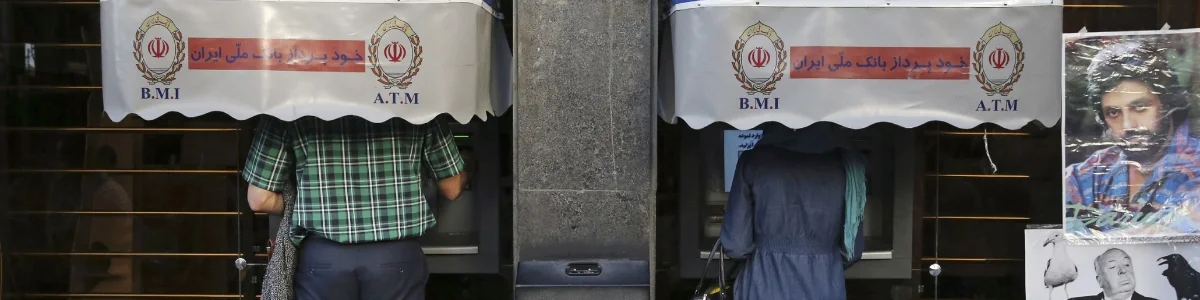
The New "Normal": Why the World's Banks Need to Rethink Iran
◢ Bank account closures of British-Iranian citizens underline the deep fear among banks of Iran-related transactions.
◢ Successful sanctions relief will depend on a concerted effort to raise the comfort level of banks with the compliance and regulation around Iran business.
On Monday April 27th, legal proceedings began at Manchester Civil Justice Centre in the United Kingdom. Blackstone Solicitors, a small legal practice led by Emma Nawaz was challenging the banking behemoth Royal Bank of Scotland (RBS) in court. On behalf of her clients, Nawaz is claiming that RBS discriminated against people of Iranian heritage, whose bank accounts were closed in 2013. The legal action was first filed in the same year, buthas taken nearly two years go to court. The case is expected to last 5 days.
The legal action is the latest in string of legal actions by Iranian individuals and companies, battling against the interference of sanctions. Normal citizens have been pit against a major financial firm, in a David versus Goliath scenario.
As reported in the international press in 2013, and most recently in the Financial Tribune, the claimants allege that RBS breached Britain's much-vaunted Equality Act of 2010 in the course of closing accounts belonging to entire families. One of the claimants was a nine-year-old girl.
Emma Nawaz, the solicitor dealing with the case said, “The decision by RBS to close the bank accounts of customers connected to Iran is shocking and goes far beyond any reasonable interpretation of the sanctions rules."
She added that, “These are ordinary people who contribute to society and have become victims of racism by a high street bank simply for wanting to have a current account”.
In response, RBS' spokesperson said that they were required to comply with their legal and regulatory obligations and were unable to comment particular cases of individuals."
One might wonder why a bank such as RBS would even bother closing the accounts of these Iranians, most of whom were UK citizens with no commercial ties to Iran. What could the aforementioned “regulatory obligations” entail?
It is worth noting that in 2013, the same year when the Nawaz’ clients had there accounts closed, RBS was fined USD $100 million by American authorities for breaching sanctions on Iran, Burma, and Cuba among other countries.
Similar fines have been levied on banks such as HSBC ($1.9 billion in 2012) and Lloyds ($350 million in 2009). Both HSBC and Lloyds have similarly closed down the accounts of individuals with Iranian heritage.
And it is not just in the UK that Iranians have had bank accounts closed. Similar actions have been taken in Canada—where Iranian university student Arash Khodadadi had his account closed by CIBC—and also in the United Arab Emirates, where blanket policies affected the many Iranians who maintain accounts in Dubai.
Looking to these facts, a pattern emerges. Banks have been regularly curtailing the activities of everyday Iranians, even in the absence of definable regulatory issues. It has simply been easier for banks to close accounts than to prove to authorities that they are not in breach of sanctions.
While account closure policies have harmed Iranians outside of Iran, the risk aversion of banks has also caused harm to Iranians within Iran. Notably, banks remain reluctant to handle funds even for projects that are permissible under specific or general licenses. For example, the volume of humanitarian trade between the West and Iran is lower than would be expected because of a lack of “comfort” among banks about trade with Iran, even trade that is clearly legal.
The implication is troubling. We would hope that the discrimination against Iranian clients should be coming to an end considering that the recent JCPOA agreement between Iran and the P5+1 world powers indicates an improving political climate. However the legacy of risk aversion may linger on for years to come, with a punitive impact on everyday Iranians.
The question is how banks will weigh the rewards and risks of engaging Iran as it approaches a “post-sanctions” era. They will surely remain vigilant when it comes to rule breakers as sanctions are partially lifted. Yet at the same time, financial firms will surely be setting up small exploratory operations, “Iran Desks” to explore the possibilities of entering the Iranian market once again.
If the nuclear deal does go-ahead by the June deadline, then Iran could expect an initial interest by a number of global banks and financial institutions. Firstly, given the risk aversion outlined above, it is highly unlikely that banks such as HSBC, RBS, Credit Suisse or any other of the major European or American players would enter the Iranian banking sector immediately after any agreement. At best, these banks may engage in humanitarian trade finance, but only if there is a high degree of confidence that they will not be stung by further fines.
To understand what might unfold in Iran, it is worth considering what has transpired in other “frontier markets.” Myanmar, with about one-fifth the gross domestic product of Iran, is the most recent example of what a post-sanctions environment is like.
Myanmar began its détente with the US in earnest in 2011. The easing of financial sanctions followed in 2013. This set the stage for foreign banks to increase their in-country activities. In October of 2014, three Japanese banks— Bank of Tokyo-Mitsubishi UFJ (BTMU), Sumitomo Mitsui Banking Corp and Mizuho Bank— were the first top-tier financial institutions to earn operating licenses for Myanmar. A further 6 banks from the Asia Pacific region won licenses, but none as large as the Japanese brand-name firms.
In April of this year, Bank of Tokyo-Mitsubishi UFJ and Sumitomo Mitsui Banking Corporation two banks that have been fined over sanctions breaches before, opened the first foreign bank branches in Myanmar.
These two banks are also notable in the case of Iran, which does significant oil trade with Japan and has continued to do so under the 2013 JPOA framework. This trade amounted to 172,154 barrels-per-day in 2014, with imports rising by 25% in the early months of 2015. Iran accepts payment for this oil in its accounts at Bank of Tokyo-Mitsubishi UFJ and Sumitomo Mitsui Banking Corporation while also maintaining a sovereign account at Bank of Japan.
These two Japanese banks therefore represent financial institutions that have been stung by fines for sanctions non-compliance, and yet have been bold enough to enter into a post-sanctions market within the first 1-2 years of its opening. Importantly, these are also banks with significant exposure to the Iranian economy. American and European banks have not exhibited the same gusto for post-sanctions markets, nor do they have such a fundamental connection to Iran trade. Therefore, we might expect Japanese banks to lead the charge.
What is encouraging is that the Japanese financial sector is highly developed and well regulated, with standards in line with global best practices. If Japanese banks lead the way, they could offer the proof-of-concept for similarly operating American and European banks to follow into Iran.
Furthermore, Iran is unlike Myanmar in one key way. It has its own domestic financial industry, with significant regulations and a wide range of institutions.
The country currently boasts thousands of branches, ATM and EPOS systems based on an clearance and automated payment system called Shetab, and consumer tools like online banking. The public and private banking industry is currently going through a shakeup courtesy of the Central Bank of Iran in order to prepare for possible foreign competition.
There is no easy way to predict how an “end of sanctions” scenario will play out, but considering the extent of Iran’s banking industry development and the attractiveness of the market, the potential rewards are clear. But as the RBS episode shows, banks will need to fundamentally “rethink” Iran itself. Hopefully somewhere in that process, everyday Iranians will start to find the world’s banks welcoming them once again.
Photo Credit: Vahid Salemi, AP
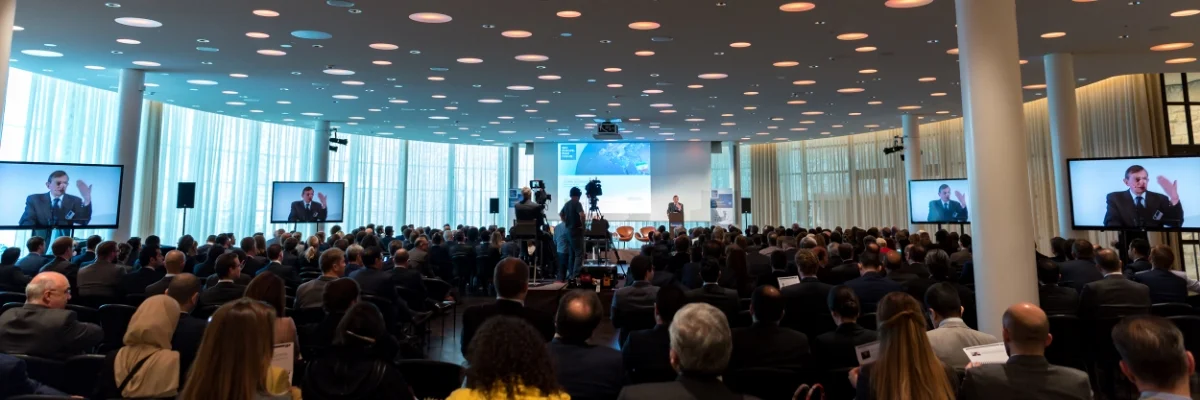
Hello My Name is Iran: Conferences and Strategic Communications
◢ Iran’s commercial opening represents the world’s greatest strategic communications challenge. Both the general public and the business community worldwide continue to understand Iran through unfavorable stereotypes.
◢ Conferences can play a critical role in helping address this communications problem among companies and individuals.
Over the past 18 months, I have become convinced that Iran’s commercial opening represents the world’s greatest strategic communications challenge. Both the general public and the business community worldwide continue to understand Iran through a handful of channels (news media, Hollywood movies, political spin) and a handful of stereotypes (rogue state, oil rich, untrustworthy).
As has been discussed in previous articles on this site, if Iran is going to achieve an economic and commercial reawakening, it will need to open new channels of communication, challenge stereotypes, and actively create a narrative of progress and prosperity.
Having outlined the problem, it is important to identify solutions. When we consider Iran’s strategic communications problems, which exist not only at the country level, but also at the level of companies and individual business leaders, conferences can play an absolutely critical role.
Over the past year, several initiatives have established the proof-of-concept for conferences as part of the solution to Iran’s strategic communications challenges.
In the exciting area of technology and startups, the iBRIDGES conferences series has brought a community-led effort to empower promising young tech entrepreneurs in Iran, tapping into the energy and excitement of Silicon Valley in an Iranian context. (Discolure: I am on the Europe Advisory Board of the iBRIDGE Berlin conference).
Recently, the TEDxKish conference leveraged an intelligent choice of location to create something remarkable: an Iranian conference, located in Iran, with strong international participation and a great deal of engagement across online platforms.
My own work has focused on the Europe-Iran Forum business conferences series. The first Forum was successfully held in London in October 2014 and the second Forum will be held in Geneva, Switzerland in September 2015. These conferences seek to connect business leaders from Europe, Iran, and worldwide to develop networks and knowhow for post-sanctions commercial engagement in open, technical, and energizing discussions.
Importantly, these three conference efforts are initiatives of the private sector, and represent collaborative efforts between Iranians from both within Iran and among the diaspora, as well as their partners from around the world. The private sector and international qualities of these projects are key aspects of their success. Such conferences can be politically neutral and smartly curated for the needs of the global audience at hand.
Certainly, there are other examples of how conferences can ameliorate the circumstances around Iran’s position in global networks of people and ideas. Within academia, the biennial conference of the International Society for Iranian Studies is particularly notable. There are also those circumstances in which Iranian actors contribute positively to non-Iran focused conferences. It bears mentioning that the introduction of the Rouhani administration to the global economic elite occurred at the World Economic Forum in Davos in January 2014. The positive impression made by President Rouhani, Foreign Minister Zarif, and the Iranian delegation at Davos bolstered the new narrative of Iran’s re-opening, a narrative to which iBRIDGES, the Europe-Iran Forum, and TEDxKish later made humble contributions.
For many in the world of business, the notion of the “conference” evokes a drab affair of business card swapping in a hotel ballroom. At this superficial level, conferences merely offer their participants—the speakers, sponsors, and delegates—the opportunity to network and build an awareness of the activities of potential partners and competitors. Sometimes, a particularly good conference program might also offer learning experiences, as experts share their insights in well-curated panels or workshops.
If we consider the largest companies—major energy firms, banks, industrial conglomerates—the benefits they accrue in speaking and attending conferences may seem limited. They almost certainly know the key players in their sector, potential partners already know them, and they have industry expertise beyond anything that can be gleaned at a conference.
So why do major firms bother with conferences? They participate in business conferences in order to achieve communications and marketing goals. Conferences allow companies and their executives to build brand awareness and demonstrate thought leadership. When a firm such as ExxonMobil or Volkswagen sponsors a conference, they do so because it is expected of them as the market leader. Such visibility cements their supremacy in the market.
But when we look to an Iran-focused conference, the dynamic is quite different. The circumstances of sanctions, and the stigmatization of Iran as a political pariah mean that Iran-focused conferences must operate by fundamentally different rules. Communications and marketing are not just things that happen at an Iran-focused conference, they represent the very strategic purpose of a conference at this juncture in time.
There are two interrelated ways in which conferences enable the kind of strategic communications that will be vital to unlocking Iran’s economic and commercial potential. First, the communications dimension of conferences matters hugely for a country and marketplace hampered by negative perceptions. Conferences allow the creation of new and constructive narratives. Second, conferences allow relationship building that is transparent and accountable, and enables Iran to become part of global networks. Taken together, these outcomes allow for a simple conference to have a profound impact on the way Iran's commercial future is to be understood and realized.
The first type of strategic communication enabled by conferences centers on the creation of narratives. A narrative is a way of understanding complex circumstances; it is a story we use to understand a part of the world. It has been many years since Iranians have been able to write their own story, and this is especially true for those within the business community. While academic and cultural events have allowed for an authentic scholarly or artistic narrative of Iran to persist under sanctions, the commercial narratives have been stiffled.
Necessarily, the limitation on commercial activity and the inward focus on most Iranian firms has prevented businesses from generating a constructive narrative around their activities. Today, this is changing. Iranian companies are increasingly outwardly focused as they seek foreign partners and investors. The story of Iranian innovation, compounding an untapped potential, now dominates business reporting about Iran. But while journalists and market analysts are important interlocutors for the narrative of Iran’s commercial opening, it is also important for business leaders to speak for themselves. This is why conferences are so important. The participation of senior executives allows for companies to send signals about their intentions for the future and tell a new story about how their particular firm is going to contribute to the larger narrative of Iran’s commercial reawakening.
Second, once the narrative is in play, conferences allow the formation of new and stronger networks between Iranian firms and their international counterparts. As mentioned above, many large companies already have access to the Iranian market through local partners. But the economic potential of these partnerships is stymied because of sanctions, and because of the stigma associated with Iran operations. Take for example Carrefour and the wildly successful Hyperstar chain it established in Iran in partnership with the Dubai-based Majjid Al Futtaim (MAF) retail conglomerate. In the press, Carrefour insists it has "no links" with the Hyperstar project despite common knowledge of their role.
For Carrefour and other companies, the inability to integrate Iran operations into global networks is challenging on numerous levels. As described above, it impacts the creation of narratives, as companies cannot discuss Iran success stories openly. Second, it means that Iran operations are segregated in specific partnerships and often subject to their own supply chains. Iran should be the regional hub for manufacturing and trade, yet across industries it exists as a kind of market unto itself. Certainly, there are structural reasons for this isolation. But it is significant that Iran is also isolated in the communications and self-presentation of companies. Germany's Rocket Internet, a start-up incubator valued at €8 billion Euros, operates in Iran under a holding group known locally as Romak. The company's aggressive expansion in Iran has been widely reported, yet Rocket makes no mention of Iran as a region of operation anywhere in its official marketing materials or on its website.
In this sense, even if major companies are present in Iran already, they will need to further develop their Iran operations with an eye towards integration into regional and global strategy. Conferences, in which Iran country-managers and their teams can introduce themselves as the empowered representatives of major multinational corporations, offer one way to begin this process of integration. In these venues, networking takes on a new dimension because the network is being introduced in an open, transparent way. It is especially important for Iranians to build relationships with global players while outside of Iran. There has been a great deal of reporting about Europeans and Americans visiting Iran to explore opportunities, but Iranian firms ought to signal their serious intentions by mobilizing resources to reach audiences in Europe and the US. In some sense, it may be the companies and investors that are not yet to take fact-finding trips to Iran who will make the best partners for new growth. In these situations, conferences will be the critical venue for brokering relationships.
There will come a day when Iran-focused conferences will be many. They will include routine investor tradeshows, real estate showcases, and tourism expos. These conferences will be organized by event management companies that know little about Iran, but a lot about logistics and marketing as they hold similar conferences about Turkey and Dubai and Brazil.
When this day comes we will know that Iran’s role in the global economy will have become clear, the idea of doing business in Iran will have become normalized, and simple marketing will be the main impetus for participating in routine events.
But for now, Iran-focused conferences remain critical for strategic communications. Companies and individuals ought to support these efforts by attending, speaking at, and sponsoring conferences with a clear understanding of the strategy involved. Each time such a conference is successfully held, whether focused on investment, on entrepreneurship, or simply powerful ideas, Iran inches closer to achieving its potential.
Photo Credit: Bourse & Bazaar
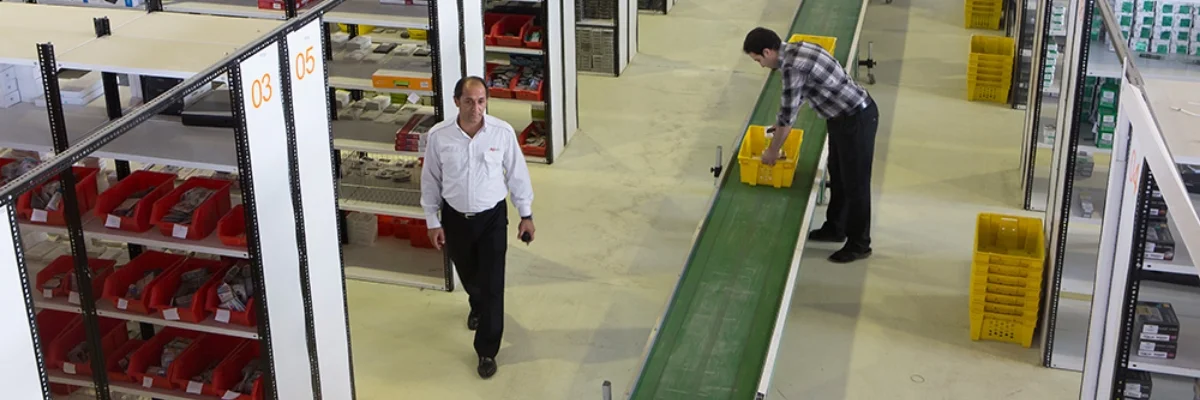
Crisis in HR: Management and the Iranian Labor Market
◢ In a post-sanctions world, Iran’s workforce can benefit from new employment opportunities and a revitalized labor market.
◢ Foreign companies seeking to enter Iran will likely poach some of the best talent to run country operations. With this increased competition, Iran’s corporate sector will need to change their approach to human resources.
Iran may be on the cusp of a landmark nuclear deal. For the country's workforce, new employment opportunities and a revitalized labor market may be just over the horizon. Foreign companies seeking to enter Iran will likely poach some of the best talent to run country operations. With this increased competition, how will Iran's corporate sector hold on to their best and brightest?
US-led sanctions and economic mismanagement have depressed the wider Iranian economic and the labor market in particular. Iran’s population is still young compared with European countries, and it is young people who have been disproportionately affected in their employment prospects and earnings.
Economists in Iran and abroad have identified a condition sometimes called “waithood.” Between 1984 and 2007, the unemployment rate for young men rose from 13.7% to 19.2%—economic growth could not keep up with population growth. Among women unemployment rose from 19.9 percent to 37.9 percent, reflecting how the economic slowdown in Iran has disproportionately affected women, who rely on job creation in the service industry. The World Bank estimates that the current unemployment hovers around 20%, though official sources claim a rate closer to 10%. Overall, those under the age of thirty represent nearly 70% of the long term unemployed in Iran.
Additionally, unemployment figures hide another concern for young Iranians. Even those young people who do find employment often have to contend with job insecurity or part time work. Labor laws were written in decades past and lean towards older workers, thus making layoffs and terminations very costly for firms.
Many companies avoid these costs by offering temporary contracts to younger workers that are not subject to these laws. In effect, many young people employed in Iran can’t plan for their economic futures for much more than a year at a time. Consistently being bounced around companies and sectors, Iranian youth aren’t able to easily kick start a career and as a result they find themselves waiting for new opportunities to emerge.
But this is not to say that Iranian youth have been passive in the face of these pressures. In an attempt to breakout of “waithood”, Iranian youth have sought to increase their levels of educational attainment. A typical response to diminished employment prospects, greater levels of educational attainment not only provides the individual additional time to seek out suitable opportunities, but is also meant to improve employability.
In 2010, the number of Iranian youth sitting the post-graduate national exam was twice the number who had done so just five years earlier. However, this increase is so great that the number of students seeking graduate degrees will soon equal those seeking undergraduate degrees. With an increasing supply of highly educated workers, there is a glut in the labor market, meaning that even a graduate degree might not be enough to break out of waithood. This dynamic helps explain to important phenomenon seen on the part of young Iranians: a growing propensity to seek education and employment abroad, and a rise in entrepreneurial pursuits, exemplified in the much vaunted Iranian online business community.
But emigration and start-ups will never be available to enough young Iranians, who need outlets to not only secure their own futures, but also to contribute to the Iranian economy through their productivity and acumen.
As such, the deficiencies in the Iranian labor market offer an immense opportunity for foreign firms seeking to enter the country. Unlike most emerging economies, Iran has a highly skilled workforce, and foreign firms can expect to find capable managers in Iran itself—improving the likelihood that firms will find the right formula for success in a shorter period of time.
For Iranian companies, increased competition in the labor market, especially from foreign firms, will result in difficult circumstances. Employees with key skills are going to be a highly sought after commodity and the prospect headhunters poaching a company’s top marketing person is a very real possibility.
Naturally, Iranian firms are going to have to take the bull by the horns in order to keep their workers committed. But this will require more favorable contract terms and higher salaries. It is unclear if some Iranian managers will be able to stomach the higher expenditure on salaries.
It is hard to measure the extent of Iranian unpreparedness, but by way of comparison a 2013 report in Entrepreneur magazine found that more than 50% of American employers polled had no formal strategy if there was a sudden walkout or loss of key staff. The figure in Iran is likely as high.
Anecdotally, conversations with Iranian CEOs reveal a worrying bias on the part of Iranian managers. They may recognize that their companies have significant problems when it comes to staff retention. Some senior managers attribute retention problems to the "fickle career attitudes" and "transient lifestyles" of Iran’s youth. Managers tend to reward those employees who seem “responsible.” In other words, promotion in professional life goes hand in hand with particular lifestyle choices like marriage and having children. Ironically, one of the key social consequences of waithood is that Iranians are getting married at older ages and many are opting to have one child or none. Without rewarding jobs, young people lack the financial means to move out of their family homes and achieve financial and social independence.
Yet it isn’t just salaries that account for employee satisfaction. Research conducted in Canada shows that salary increases only offers short-term gains on staff retention. Instead, Iranian managers need to provide a fully optimized working environment, where work is rewarding, the opportunities for advancement are clear, and the company provides important benefits like medical insurance, ample holidays, and retirement contributions.
Some in the local private sector do have good employee practices, offering similar contracts to those in the West, however it appears in some instances even they struggle to hold on to some of their vital employees.
Certainly, Iranian managers are unlikely to pamper employees with new contracts. And foreign firms will not enter the Iranian market offering the same salaries or benefits as offered in western economies. After all, lower labor costs will remain one of the main attractions of the Iranian market, especially in services and high-tech manufacturing where Iran’s skilled labor pool can match or surpass international standards.
Nonetheless, in a post-sanctions environment, a new set of circumstances will come to define Iran’s labor market. Senior executives at Iranian firms ought to make their preparations. Retaining the best talent is critical to Iranian firms taking on the role of vital partners in the domestic marketplace along with being able to compete effectively against foreign firms that will be entering at break neck speed.
In the middle of this reorganization of the labor market, young Iranian workers stand to gain so much, as a revitalized economy offers the promise of realized dreams for both personal and career progress.
Photo Credit: Washington Post
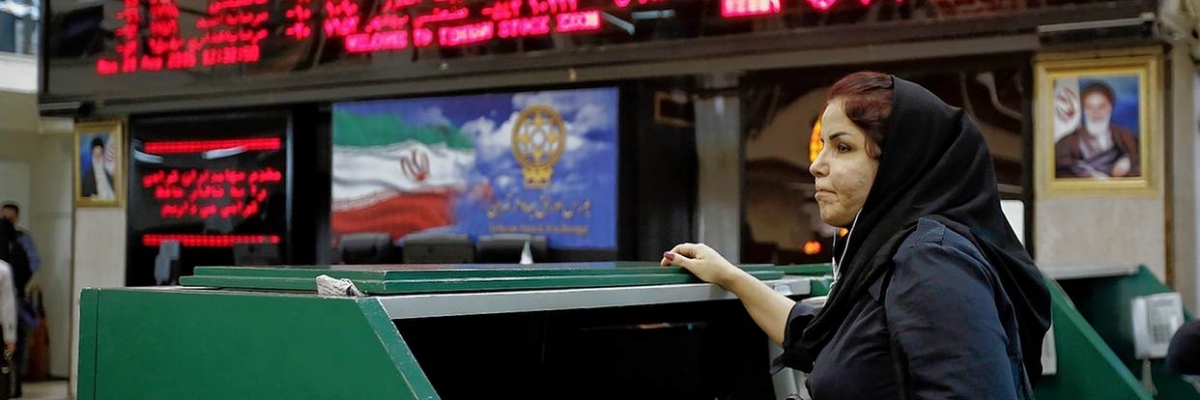
Iran’s Capital Markets: Securitizing the Future
◢ Access to finance is crucial for Iran's economic reboot, but Iran's markets are still ill equipped to accept new foreign capital.
◢ New securities need to be created in order to attract investors to Iran with a better risk/reward profile.
The future of the Iranian financial sector might be vastly different to what we—those who work in the industry– can imagine today. With this in mind, the potential for making the financial sector a driving force for Iran’s economic reboot must considered as supremely important.
For Iran to overhaul various aspects of the domestic economy, it must attract at least $1,000 billion dollars in investment during the next decade. If for any reason our economy fails to absorb the required level of investment, not only will we not achieve the goals of Iran’s 2025 Vision Plan, but we will also miss a historic opportunity to enhance our rightful position in the global economy.
Therefore, it is our obligation to obtain the much-needed investment for Iran.
The unusual hurdles imposed on our economy have culminated in an unfortunate economic stagnation. This situation has adversely impacted a country with an enormous potential, which would otherwise be most appealing to the international investor.
In order to ensure sustainable economic growth, Iran will need to divert considerable financial resources into infrastructure and large-scale projects. These projects may be unprecedented in size and complexity for Iran.
The key point is that conventional methods for promoting investment in Iran, particularly foreign direct investment, have become less appealing and are insufficient to effectively address international investors’ concerns, especially after exposure to the world economic crisis.
In the case of Iran, this is further aggravated by the harsh conditions imposed on investment due to sanctions. Knowing this, two factors have a crucial role in leading potential investors: transparency and the ease of exit from ventures, i.e. favorable exit strategies.
Iran’s finance sector leaders will need to be flexible and innovative in financial engineering and offer a range of financial instruments to investors, either domestic or foreign. This leads to the conclusion that for those of us in the sector there is no strategy more important or effective than securitization.
Securitization is the financial practice of pooling various types of debt, illiquid assets, and/or groups of assets into more liquid financial instruments in order to sell them to third party investors. Securitization promotes liquidity in capital markets by making it easier for investors to buy and sell (enter and exit) investments across sectors.
During the last decade, various new types of project financing methods have been devised for infrastructure investments in Iran. Compensation Arrangements, ranges of Build-Operate-Transfers (BOTs), and, recently, Public-Private Partnership agreements (PPPs) alongside the issuance of participating notes, corporate bonds and Sukuks are examples of our endeavors for financing projects.
Despite our achievements, we do not fully realize the imperative of giving potential investors even greater confidence through intelligent securitization. I have to stress that investors are clever people, they know how to assess projects and how to control their business risks, but they need the right vehicles.
By confidence I mean providing investors with transparent and reliable information as well as reliable platforms for transacting securitized projects and investments. Investors must be confident that whenever they decide, they are able to sell their investment at a fair price.
Therefore, I believe that securitization, though not the only way the only imperative to improve the investment climate, is nonetheless critical. Securitization offers the best and most efficient methods of financing the country’s projects in the post-sanctions era in the shortest period of time.
Now the question is what are the required grounds for new best-practices?
Certainly, we need to review our legislative environment and implement the required amendments, remove the unnecessary barriers and in general, improve our “doing-business” indices. In addition to the above, Iran’s finance marketplaces remain a vital part of this development plan. Specifically, securitization needs markets where assets can be effectively valued and traded.
A notable point is that Iran has the oldest capital market in the region, established in 1968. With almost 50 years of experience, Iran has a robust background in this area and thanks to the new Securities Market Act, ratified by the Parliament in 2004, the country has had the opportunity to modernize its financial market and establish almost all the frameworks required by global best-practice.
I will not elaborate on the structure of Iran’s capital market here, but it is worth mentioning that during the past decade, we have observed tremendous developments in the fields of financing, financial markets administration, and related technologies.
These changes include a notable portion of the privatization program within the framework of economic reforms, which was carried out through the Tehran Stock Exchange (TSE) and the Iran FaraBourse (over-the-counter market).
The Iran Mercantile Exchange and Iran Energy Exchange, too, have had an important and constructive role in improving commodity markets’ efficiency and transparency in our economy, which deserves its own detailed discussion. However, it is noteworthy that the share of the contribution of the capital markets to Iran’s GDP is still unsatisfactory.
Where the main impetus behind long-term sustainable economic growth is national and foreign capital investment, it becomes imperative that new methods based on securitization be devised, which at the same time make further development of the financial markets a necessity. We, therefore, need to introduce new players in our financial markets including new companies and entities, which can develop new and innovative methods, products, and instruments of finance based on securitization, educate a new generation of specialized experts, enter joint ventures with reputable international firms, obtain and develop new systems in the area of financial technology, and more.
International investors continue to recognize that the Iranian financial sector, with its great potential, will be one of the most active, (and hence profitable) industries in the region. But these investors will only act with confidence once sanctions are lifted and Iran’s new phase of securitization and transparent sector development begins.
Photo Credit: The Iran Project
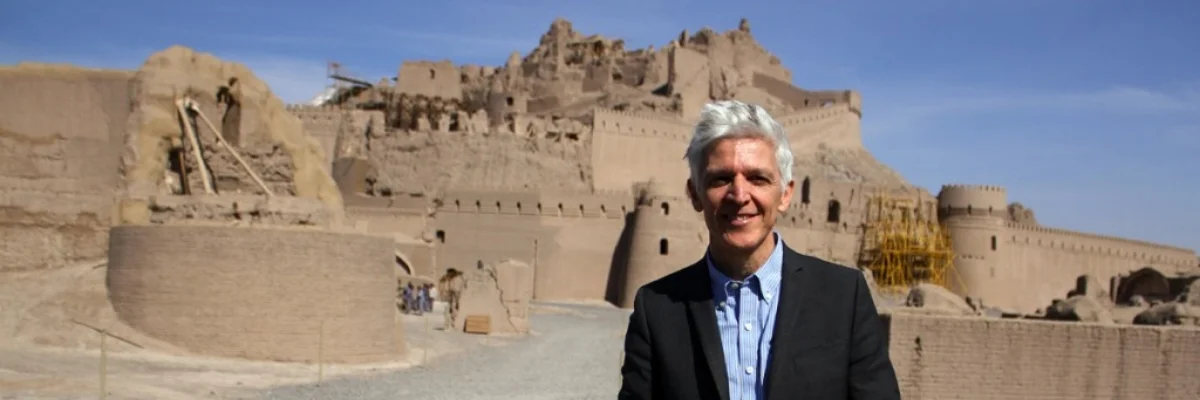
Culture and Tourism in Iran: Lessons from Italy
Cultural tourism can play a big role in improving relations between Iran and the international community. Iran can follow the Italian example in order to maximize the commercial opportunity in protecting and sharing the nation's cultural patrimony.
In this day and age, cultural tourism plays a crucial role in establishing relations between countries. Awareness is spreading about the amazing opportunities that a prudent enhancement of the cultural patrimony can deliver. The connections between diplomatic relations, commercial opportunity, and touristic exchanges are powerfully joined in the idea of cultural tourism.
Iran and Italy are two countries that are both heirs and custodians of a huge historic, artistic, and cultural heritage. In fact the preservation of such heritage has been recently been the basis for close collaboration. Italian archaeologists have worked on sites in Persepolis and Esfahan among others. The Citadel of Bam earned UNESCO World Heritage status shortly after the devastating 2003 earthquake, largely because of the reconstruction efforts of the Italian Istituto Superiore per la Conservazione ed il Restauro.
But cultural exchange is much more than a commitment to history. Cultural exchange can be a useful means of supporting the dialogue among civilizations necessary to establish a model for development and growth informed by and linked to a national heritage.
I would summon, in this regard, two scenarios where the Iranian culture has recently been able to introduce itself globally as an absolute excellency, while still showing openness to interaction with other national cultures, starting with Italian culture itself.
The first scenario is exemplified by the film industry, in which Iranian directors have been acclaimed among the world cinematic masters. These master filmmakers include Abbas Kiarostami and Mohsen Makhmalbaf, whose works have been applauded and awarded by the most important international film festivals, including the Venice Film Festival. Jafar Panahi triumphed in 2000, winning the Leone D’Or for his film The Circle. In 2008, Abbas Kiaorastami won a special honor for his remarkable contribution to cinema.
Iranian contemporary art has also made its way to Italy and the city of Ferrara, where, in 2010, six Iranian world-renowned women artists had exhibited their work as part of the Fourteenth Biennale Donna.
Reflecting on the origins of Iranian contemporary art, I also think about the exceptional importance of Iranian craftsmanship which constitutes a heritage of incredible artistic value by itself, and which should definitely be more acknowledged and appreciated worldwide, as it is one of the foundations of Iran’s national identity.
These are just a few examples of the relevance and the richness of the Iranian civilization, which could become the premise for a virtuous exchange between the civilizations of countries—even those seemingly different in regard to sensibilities and culture.
On this point, I quote a passage from the memorable speech given by President Mohammed Khatami to the United Nations on September 5th, 2000, during a round table about dialogue among civilizations:
In order to provide natural unity and harmony in form and content for global culture and to prevent anarchy and chaos, all concerned parties should engage in a dialogue in which they can exchange knowledge, experience and understanding in diverse areas of culture and civilization. Today it is impossible to bar ideas from freely travelling between cultures and civilizations in disparate parts of the world. However, in the absence of dialogue among thinkers, scholars, intellectuals and artists from various cultures and civilizations, the danger of cultural homelessness seems imminent. Such a state of cultural homelessness would deprive people of solace both in their own culture and in the vast open horizon of global culture.
While I was serving my country as Minister of Cultural Assets and Activities and of Tourism, I went on an official trip to Iran. On that occasion— and during a subsequent trip— I had the chance to recognize and appreciate the greatness of the Iranian cultural heritage. My experience made it clear that by leveraging strength of its cultural heritage Iran could stand to develop a valuable tourism model. As my former ministerial title demonstrates, the relationship between culture and tourism has been vital to Italy’s economy. The tourism sector contributes about 10% of the country’s overall GDP. Iran ought to follow in the Italian model to protect its cultural heritage, even if the pursuit of economic interests is a primary aim.
The bond between culture and tourism in Iran is clear and undeniable. Iranian artistic and environmental heritage represents one of the key resources for the creation of a sustainable tourism model, as it defines the country's identitarian traits as an attractive destination. If Iran’s heritage is properly utilized as one of the country’s fundamental touristic levers, inbound tourism would become an exceptional way to guarantee international awareness about its cultural assets, promoting efforts and providing funding to preserve and protect cultural heritage. The fruitful link between culture and tourism would emerge as a virtuous cycle, one that can enhance the potentialities of both areas, without undermining their complex and specific peculiarities.
I firmly believe that tourism related policies in Iran should follow the path of environmental, cultural and social sustainability in order to produce vital income and employment. Looking to successful practices in Italy would be my best possible advice. Future Iranian tourism policies must be correctly devised, so that development is truly respectful of the artistic and historical landscape.
In this way, Iranian tourism could represent both a means of economic growth and means to present a new image of Iran, which might overcome the prejudices towards the country to which Western nations are often induced. The point is to consider every cultural asset as a unique public good, deserving of protection and investment.
Such a commitment, by the way, is already written in the history of Iran, with its tradition of public endowments. Devising renewed commitment to public goods, and how they ought to be developed involves the analysis of the whole Iranian political, economical and social system. Cultural and environmental assets cannot be mere treasures, tightly owned and exploited.
Tourists are becoming harder to please as consumer characteristics like income, tastes, and habits diversify. Such demand could be only satisfied by similarly diversifying the possible combinations of Iran’s cultural offerings, adjusting them to more and more complex requests. To do this work, private enterprise will need to bring its energy and expertise to the table, forging new public-private partnerships. It would be also advisable to enact specific tourism policies, which promote innovation through the application of new technologies.
The future of Iran's inbound tourism will be determined by the ability to build networks, which must reflect the true potential of a country both rich in history and eagerly awaiting the future. Government bodies, private businesses, community organizations, academic institutions, and other stakeholders must actively seek synergies in the spirit of cooperation. The project to preserve and promote Iranian cultural heritage is both crucial and thrilling.
Photo Credit: Farzad Gavari
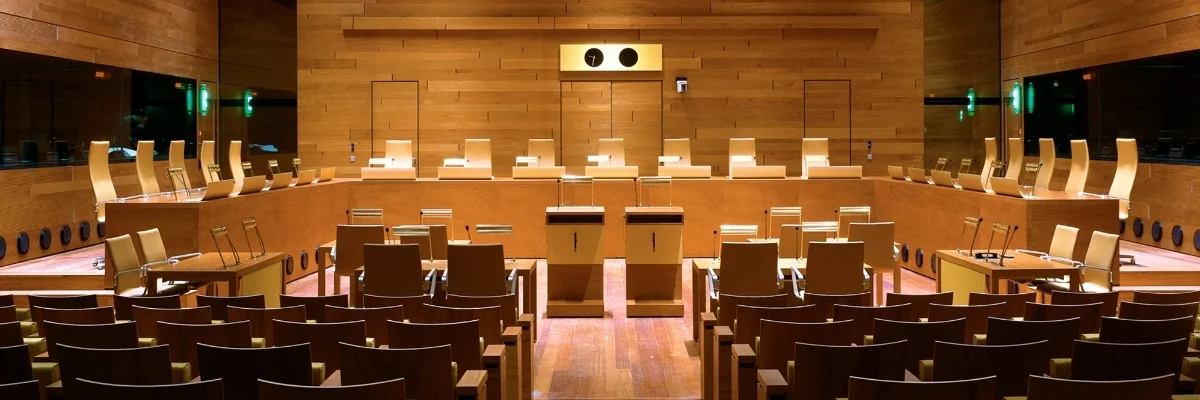
Sanctions in the High Courts: A Lawyer’s Perspective
◢ The JCPOA agreement should be heralded, but a complicated legacy of sanctions will remain.
◢ Years of vague justifications for sanctions mean that it will take time to rebuild the confidence of the business community in the intentions and abilities of regulators.
The Joint Comprehensive Plan of Action (JCPOA) framework agreement reached between the P5+1 countries and Iran relating to Iran’s nuclear programme is a welcome development. This is a historic moment, and the start of a new relationship between Iran and the West. Iran’s people, and the businesses they depend on, have been suffering because of the sanctions imposed against Iran; now their resilience has finally paid off. Over the next three months, the framework deal will be put into writing and signed, bringing an end to the long-standing dispute over Iran’s nuclear programme.
The framework deal was reached after more than a decade of halting negotiations between Iran and the West, but substantial progress was only made after the election of the current Iranian President Dr. Hassan Rouhani in August 2013. Rouhani’s election opened the door to new political opportunities.
But even before the JCPOA was being formulated by diplomats in Lausanne, progress was being made on the legal opportunities around Iran sanctions. In particular, progress could be seen in the judgment of the UK Supreme Court in the Bank Mellat case, as well as a tide of judgments from the European Court of Justice over the last 2-3 years. These judgements annulled the economic sanctions, which had wrongfully been imposed on Iranian private entities and individuals, and challenged Western officials to apply sanctions with greater discretion and legal justification.
My firm, Zaiwalla & Co has made significant contributions to these developments, by giving legal advice and appearing in Court to present the challenges brought by various Iranian individuals and businesses which were targeted under the sanctions regimes imposed on Iran by the United Kingdom, the European Union, the United States and the United Nations. We have specialised in representing overseas parties, including foreign governments, for over 30 years, and Iran disputes have posed a particular challenge in this time.
The pressure which the West built on Iran by way of a particularly wide range of blanket sanctions on the financial and oil & gas sectors of Iran’s economy was struck a blow when my firm succeeded for Bank Mellat in the EU General Court, cancelling the sanctions against Bank Mellat. The case demonstrated how sanctions, though often well-intentioned, were applied carelessly, with limited evidence for the purported justification.
I remember that during the course of the hearing before the European Court of Justice, the Chairman of the Judge’s Tribunal asked the EU’s Advocate to clearly present the evidence against Bank Mellat. The Advocate gave a vague reply, upsetting the judge. The European Court was not going to be satisfied with vague evidence and insisted on a clear legal justification for the applied sanctions. When this was not forthcoming, Bank Mellat emerged with the first-ever successful challenge in the European Court brought by an entity listed by the EU Council under Iran sanctions.
Soon thereafter the UK Supreme Court struck a further blow against the sanctions, by holding the listing of Bank Mellat by the UK Government (parallel to the EU sanctions) as both unlawful and irrational. During the course of this trial, for the first time in the history of the Supreme Court, the proceedings included a secret "closed" hearing to consider the intelligence evidence which the British Government said it had about Bank Mellat’s involvement in Iran’s nuclear proliferation. Bank Mellat’s officers and lawyers were sent outside the court for this hearing. Nonetheless, following that closed hearing the Supreme Court held that the intelligence evidence was not sufficiently credible, and gave judgment in Bank Mellat’s favour.
The Supreme Court then referred the matter back to the High Court for the assessment of the losses which Bank Mellat had suffered as a result of the sanctions— losses it could claim as damages. Bank Mellat has brought a claim in the sum of over USD $4 billion against the British Government as damages for its wrongful listing. This claim is currently before the English High Court. These two judgments, which my firm obtained from the EU Court and the UK Supreme Court, set the precendent for other Iranian entities, who could now hope to succeed with their challenges against the Iran sanctions.
The courts in these judgments said that it was unlawful for any private person or entity to be targeted with sanctions without there being evidence of any wrongdoing on that person’s part. Sanctions are strong political tools, and on many occasions prove to be an alternative to war by compelling another country to change its policies or in a way “penalise” a country for its wrongful actions. Nonetheless, the highest courts in the UK and the EU have confirmed that they must not directly damage ordinary and innocent citizens.
Furthermore, in cases of sanctions imposed by the EU, in relation to the Iranian nuclear programme, strong emphasis has been placed on the importance of two primary obligations which fall upon the EU Council: firstly, the duty to provide proper reasons for the listing of each applicant challenging the imposition of sanctions and, secondly, the duty to disclose all evidence supporting the listing, including the listing proposal by any member state, to the applicant in good time for them to respond to any such evidence.
In multiple cases, including those of Bank Tejarat and Bank Mellat, both of which were represented by Zaiwalla & Co, the failure of the EU Council to adduce sufficient evidence before the Court led to the Court granting favourable judgments in favour of the applicants. In the Bank Mellat and Bank Tejarat cases, the European Court also emphasised that the EU Council should not sanction an entity based solely on the fact that another country had already imposed sanctions. Instead the EU Council is required to conduct an independent review of the underlying evidence and satisfy itself that grounds exist before sanctioning the entity. These decisions remind policymakers that sanctions, while employed as a tool of political coercion, must remain consistent in application with legal norms.
To this extent, the UK Supreme Court and European Court judgments have undoubtedly put pressure on the West to be more realistic about the promise of sanctions relief as codified in agreements like the JCPOA. This is because the possibility of the payment of damages to wrongly sanctioned entities would have a serious effect on the economies of the UK and the EU member states, because the damages will have to be paid out of taxation. This would have also placed pressure on the US administration because it is very likely that the UK and EU Council imposed their sanctions at the insistence of the US administration.
The unjustified sanctions against these entities have caused irreparable damage to their goodwill towards and established business reputation among the international community. The agreed JCPOA framework is a big step towards re-establishing the reputations and positions of such entities in the international economy.
It is very important to note that the current wide range of blanket and targeted nuclear related sanctions in respect to Iran will remain in place until further progress of the ongoing negotiations between Iran and the P5+1 group. Although the framework agreement envisages great business opportunities in Iran for foreign companies, foreign firms and individuals must be cautious to abide by the current restrictions until they are formally lifted.
Additionally, sanctions imposed by OFAC (the US Office of Foreign Assets Control) are very extensive and could potentially cover any transactions in US dollars with an Iranian person and/or entity. Furthermore, international concerns such as those raised by the Financial Action Task Force (“FATF”), which is the global standard setting body for anti-money laundering and combating the financing of terrorism to encourage better compliance with the relevant regulations, remain in place in the case of Iran. It is therefore vital for anyone who hopes to do business in the newly open Iran to obtain extensive legal and financial advice first.
Photo Credit: New York Times
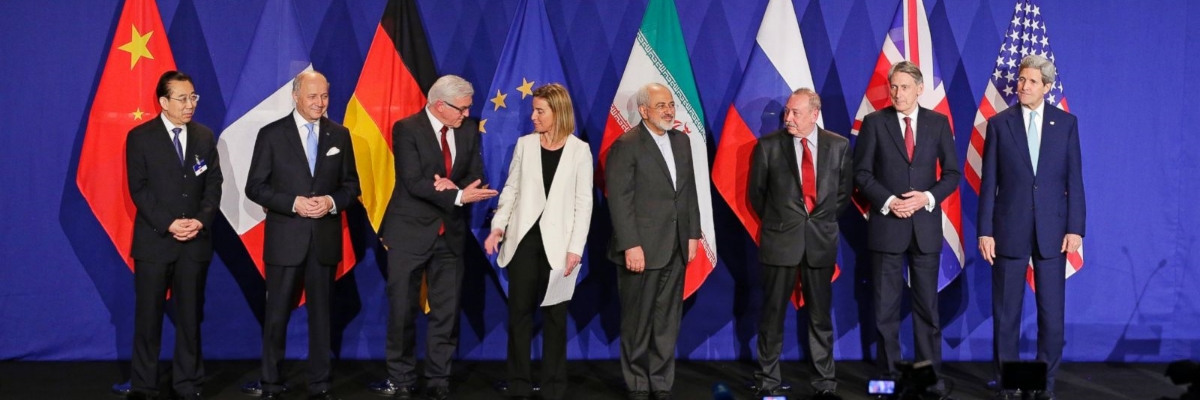
Fortune Telling: JCPOA and a New Year for Iranian Bankers
◢ The new year holiday has Iranians hoping for a brighter future and more prosperous household.
◢ At the same time, the nuclear negotiations underway in Lausanne are the source of great hope, but also trepidation for Iran's bankers.
On April 2, Iranians headed for nature on the 13th day of Farvardin in the Iranian new year, a day called sizdah be-dar. While spending time with family and conducting little ceremonies to bring good fortune, many Iranians contemplated the ongoing nuclear negotiations in Lausanne, Switzerland. The course of the new year seemed to hang in the balance as the negotiations stretched past their original deadlines.
Finally, late at night, Iranians received the best news in a decade, akin to some to the collapse of the Berlin Wall. Iran had reached a framework agreement with the six world powers of the P5+1. The agreement provided assurances for the exclusively peaceful nature of Iran’s nuclear activities, and heralded the lifting of all nuclear-related economic sanctions. The deal seemed to mark a new era of economic opportunity for all 80 million Iranians.
Perhaps no one was more relieved than the Governor of the Central Bank of Iran (CBI), Valiollah Seif, whose organization stands to gain so much through the implementation of the Joint Comprehensive Plan of Action (JCPOA) announced in the joint statement made by Iranian Foreign Minister Javad Zarif and EU foreign policy High Representative Federica Mogherini.
CBI has suffered tremendously since the intensification of financial sanctions in 2012 and the expulsion of Iranian banks from the SWIFT global interbank messaging network. CBI reportedly has between $80-100 billion dollars frozen in accounts overseas, inaccessible due to the sanctions.
Iran's commercial lenders have also been victims of the financial sanctions leveled against them by the European Union and the United States. They are cut off from their overseas businesses and transactions with their foreign counterparts, leading to crises of liquidity and leveraging.
European banks can also find cause for relief, having been hammered for failure to comply with the myriad sanctions regulations. Firms such as BNP Paribas and Commerzbank have had a rough time with US authorities, forced to pay billion dollar settlements to the US Treasury’s Office of Foreign Asset Control (OFAC). A rollback of financial sanctions will reduce the legal risk of Iran trade, and eventually these banks can carefully revive their business with Iranian banks and even enter Iran's financial markets directly.
Overall, the prospect of sanctions relief offered by the JCPOA led usually reserved bankers and investors to shout for joy.
High Hopes and a Long Road
The talks between Iran and the P5+1 - Britain, France, Germany, China, Russia and the United States - blew past a self-imposed March 31 deadline with no certainty that they would not end in failure. Yet, after eight days of marathon talks, the JCPOA was announced to much fanfare. The negotiators have until June 30 to work out the details for implantation of the final deal.
But there is a long road ahead. Diplomats close to the talks say the deal is fragile. The understandings reached on April 2 could collapse before June 30 and experts believe it will be much harder to reach a final deal than it was to agree the framework accord. Even if a final deal is reached, factoring implementation, there is still a long way to the lifting of sanctions. Therefore, the sanctions, compliance investigatons, and the general isolation faced by Iranian firms will remain in place for the coming year. As Iran’s Foreign Minister Zarif succinctly put it, "We're still some time away from reaching where we want to be.”
Based on statements made by official on both sides of the aisle, and a fact sheet released by Washington, the JCPOA contains a pathway for the removal of all nuclear related sanctions as the International Atomic Energy Agency (IAEA) verifies Iran’s commitments. Under the JCPOA terms, Iran will receive gradual relief from US and European Union nuclear sanctions as it complies with steps to eliminate or convert its nuclear facilities and increase the so-called “breakout time” that would be necessary to produce a weapons-grade nuclear material.
These terms allowed Zarif and his team to claim victory on the promise of sanctions relief by the P5+1. But as the negotiators of each country began the tough task of selling the deal to domestic constituencies, divergences emerged about exactly how gradual sanctions relief would be.
The simple fact is that implementation will take time, so CBI will need to navigate the new Iranian year of 1394 much the same way it weathered the last. It will enjoy only limited access to its foreign reserves, and continue to operate under general isolation.
Change in the Winds
Despite the sobering challenges of implementation, the JCPOA does allow Seif and the CBI bankers to think about the normalization of financial relations with the world. The positive psychological effect of the deal on Iran's foreign exchange market will definitely help the bank unify the foreign exchange regime– an elusive aim pursued by the CBI for over a year.
Notably, while the unification of the exchange rate system is a key priority, in the near term, Seif has signaled that CBI will allow the “appropriate currency rate set itself according to economic conditions.” The implication is that an improved mood among investors and business leaders will strengthen the wider economy to the point where CBI could pursue monetary policy more confidently. Already, the investment climate has improved. The Tehran Stock Exchange (TSE) saw big gains in response to the nuclear negotiations, with the rial making smaller advances against the dollar.
Of course, the removal of sanctions, coupled with the Rouhani administrations' cues about opening the market, means the prospect of increased foreign investment. All branches of the financial services industry stand to gain from this, including retail and commercial banking, asset management, investment banking, etc.
There are untold opportunities for bankers in the midst of the normalization process, even one as protracted as the JCPOA might entail. Many are getting ready for the battle that’s about to begin over market share in Iran's financial sector. For now, it seems Iran's misfortunes are coming to a (slow) end and the news could not have come on a more providential date than the 13th day of Farvardin.
Photo Credit: Guardian
Bringing FDI to Iran: 3 Key Tactics of Business Diplomacy
◢ Ensuring a potential nuclear deal remains a robust and lasting agreement will require commitments from stakeholders beyond the currently engaged diplomats.
◢ The business community in Iran and the West can play an important role in “stewarding” a nuclear deal.
Back in November, as the nuclear negotiations between Iran and the P5+1 nations seemed headed for an agreement only to result in a second extension, I wrote a piece about how the business community in Iran and abroad will need to “steward” a deal after it is signed.
Now that a preliminary agreement seems just moments away, laying the groundwork for a full agreement to be defined by June 30th, it may be time to revisit the notion of stewarding a deal.
My fascination with the question arises from a simple assessment; the deal is not an end in itself, it is merely a means to a whole range of activities that have been long overdue for Iranian businesses and the economy they serve.
The development of Iran’s economy since the Islamic Revolution in 1979 has been defined by attempts at self-sufficiency—a quality seen among most governments that have tried to cobble together a state in the aftermath of revolution.
In the pursuit of self-sufficiency, a wide range of government programs or initiatives came into effect. These included social policies, such as the expansion of the educational system across primary, secondary, and tertiary education, which boosted literacy rates nationally and the overall competitiveness of Iran’s workforce. It also included industrial policies, such as the development of domestic manufacturing capacity through import substitution industrialization.
The total consequence of these policies— though they were never instituted perfectly—has been to position Iran as a country with decent capabilities across nearly all the key factors that impact economic growth.
However, one key element has been largely missing. As a result of international sanctions and a persistently negative political climate, Iran has remained disadvantaged in its attempts to secure foreign direct investment (FDI). When compared with its regional neighbors, Iran has been left behind.
Over the last 10 years, Iran’s annual FDI inflows, measured as a percentage of GDP, have had half the magnitude of inflows in Turkey, and a third of the magnitude of inflows in the United Arab Emirates. In 2009, Iran’s FDI as percentage of GDP was a staggeringly just one-tenth of the levels seen in Qatar and Saudi Arabia.
Foreign direct investment, net inflows (% of GDP)
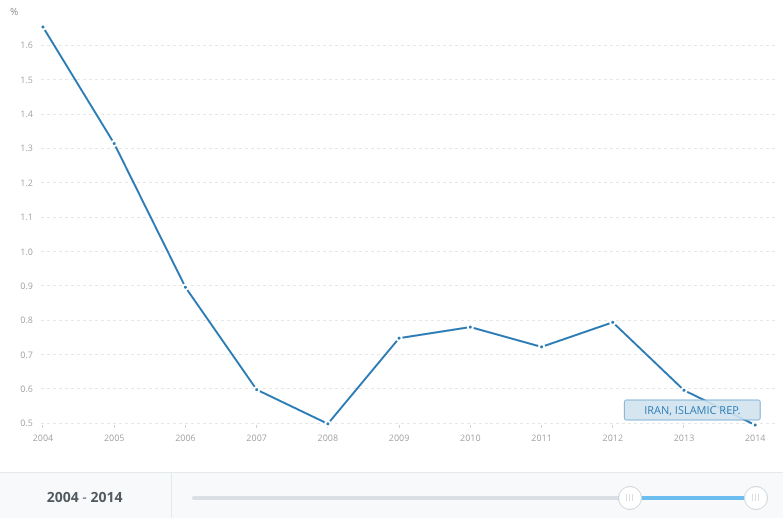
Although many reports have noted an uptick in trade relations with countries like China, India, and Brazil in an a response to sanctions, there has not been a marked improvement in FDI inflows over the last 10 years.
The stagnant figures are particularly surprising when one considers that Iran’s economy is perhaps the most diverse, mature, and demand-driven economy in the region, even surpassing Turkey in some key metrics.
Without an influx of foreign capital and the related impact on economic growth, Iran will remain unable to realize its economic potential. In this regard, a nuclear agreement will have two important impacts for the future of FDI in Iran. First, it will enable policymakers to begin the hard work of road-mapping and then enacting sanctions rollback. Second, it will markedly improve the political position of Iran in the international community, reducing the perception of the country as a rogue state or pariah.
However, both of these impacts are essentially superficial—they will not necessarily increase levels of FDI. Rather, in a post-deal scenario, Iranian businesses will have the new opportunity to pursue investments or partnership arrangements with foreign firms in a more concerted fashion.
The emphasis here is on being active. Because of the particularly longstanding isolation of Iran from international markets for goods, services, and capital, Iranian businesses cannot afford to remain passive and assume that opportunities will land on their doorstep.
Therefore, “stewarding” the deal means making the necessary strategic, operational, and tactical decisions for business development in order to capitalize on the initial improvement in the sanctions and political landscape. If Iranian businesses, working together with foreign firms, can create success stories on the ground—it will become significantly more likely that a the deal will become the basis of a larger détente.
So what are the key strategies, operations, and tactics to bring to bear? First and foremost, stewarding a deal means engaging in “business diplomacy.”
As I described in my November piece, “business diplomacy can be defined as the establishing and sustaining of positive relationships (by top executives or their representatives) with government representatives and non-governmental stakeholders with the aim of building legitimacy (safeguarding corporate image and reputation) in a difficult business environment.” This definition is taken from the excellent scholarship of Professors Raymond Saner, Lichia Yiu, and Mikael Sondergaard, who developed the concept of business diplomacy about 15 years ago.
If the strategy for Iranian businesses is to seek increased degrees of foreign investment and engagement, then business diplomacy will be a key operation. Subsequently, team members in the organization need to be able to deploy three main tactics as part of business diplomacy operations: brokerage, diffusion, and collection action.
The goal of brokerage is to enable Iranian businesses to earn a place at the negotiating table, whether that means earning access to high-level meetings with potential partners and investors, or participating in industry events overseas. Brokerage entails linking the currently unconnected groups or entities (Iranian businesses and international firms) by finding shared challenges and common ground. These linkages should extend both within and without the private sector—meaning that relations with government agencies, industry bodies, and watch groups overseas will also be important for Iranian firms. Executives will need to develop new skills to handle these relationships.
Once links are formed, the next tactic is diffusion, which is about Iranian firms beginning to have some influence on the overall economic agenda in Iran, the Middle East, and even global markets. This kind of influence is earned through claims making. Intelligent communications, public relations, and advocacy will allow for the perspective of Iranian firms to diffuse among new stakeholders. Business leaders should strive to be transparent and engage the public through interviews, conference engagements, and philanthropy among other initiatives.
Finally, when links have been formed and perspectives have been shared, Iranian firms and foreign counterparts will hopefully engage in collective action. At a basic level, collective action can represent specific joint-venture projects with multiple stakeholders. At a broader level, collective action will be necessary if Iranian businesses want to shape the future of the country. Only through collective action will businessmen and women emerge as important civil society leaders.
The tactics of brokerage, diffusion, and collective action each deserve their own detailed exploration, and this website will feature such analysis by expert authors in the coming months.
In the meantime, as we anticipate a tentative nuclear agreement, I hope that business leaders in Iran and abroad are galvanized for the incredibly difficult, but also incredibly rewarding work ahead of them. Without their efforts, a nuclear agreement will have little impact on the quality of life enjoyed by the average Iranian. But through enterprising activities such as job creation and the innovation of new goods and services, the promise of a nuclear deal can really come to life.
Photo Credit: Bourse & Bazaar
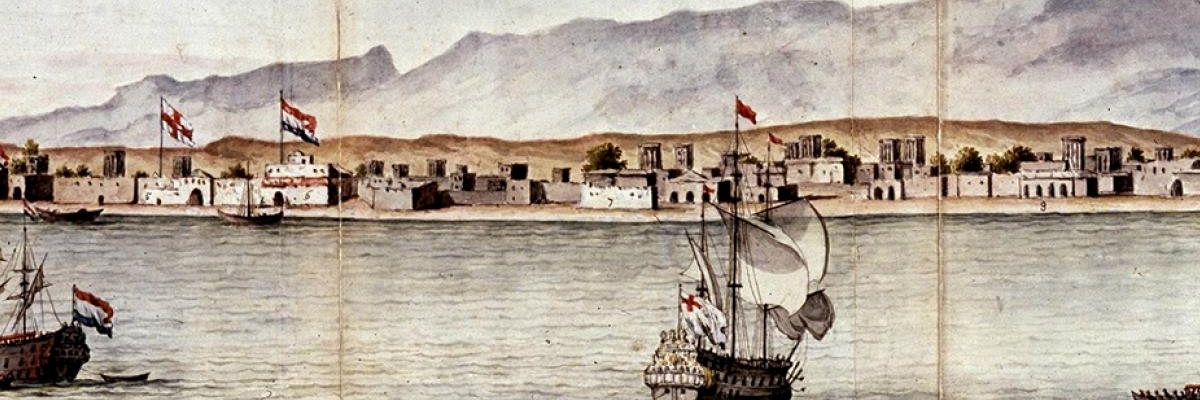
Iran and Global Trade: Lessons from the 17th Century
◢ Given the immense excitement around the potential lifting of sanctions, it might seem that Iran is opening to the West for the very first time.
◢ But Iran’s history of engagement with Western corporations dates back to the 16th and 17th centuries and history has important lessons for those seeking to enter Iran today.
With the prospect of a nuclear agreement and the lifting of sanctions, Iran has become the hottest about-to-emerge market for investors and business leaders. But the anticipated gold rush of major multinational corporations entering the Iranian market is far from new. In fact, Iran’s history of engagement with Western corporations dates back to the 16th and 17th centuries and the reign of the Safavid Shahs, particularly Shah Abbas.
The history of this first “commercial revolution” contains three important lessons for investors and business leaders eyeing Iran today.
Intense competition means no guarantees.
The first Western corporations to do business in Iran date back to the 17th century, when the English East India Company (EIC) and the Dutch Verenigde Oostindische Compagnie (VOC) integrated Iran into their global trading networks.
But before the English and Dutch built their merchant empires, it was the un-corporatized Portuguese merchants who first brought high-volume maritime trade to Iran and the Indian Ocean region, controlling the strategic ports of Hormuz in Iran, Goa in India, and Malacca in Malaysia.
Fierce competition dictated access to the Iranian market in this period. In fact, although Portuguese traders had an effective monopoly in the 16th century, the coordinated efforts of the EIC and VOC would destroy the Portuguese trading networks. Some decades later, in the early 17th century, merchants from the EIC and VOC began competing directly, and despite the initial advantage of the EIC, which enjoyed a privileged relationship with the royal court, the VOC would wrest control of Persian Gulf trade for the next century.
It is taken for granted that those companies with a presence in Iran today will be best positioned in the post-sanctions period. But as demonstrated by the rise and fall of the Portuguese, the English, and the eventually the Dutch, there are no guarantees when competition intensifies.
A pertinent example that my colleague Daniel Rad discussed in this blog on Monday is the French car manufacturer Peugeot. Despite a decades-long presence in Iran and a dominant market share, increased competition from Chinese and Korean manufacturers such as Kia, Hyundai, and Chery, has been chipping away at Peugeot’s position.
Just as Portuguese traders lost their stronghold on the Iranian market in the 17th century, the current multinational market leaders could lose their privileged positions as more companies eye Iran’s strategic market.
Connective infrastructure is of paramount importance.
The competition between the Portuguese, the EIC, and the VOC at the end of the 16th century was all about establishing global trade networks. By controlling strategic ports, goods could travel more quickly and reliably from sites of cultivation or production in the Far East and to markets for consumption in the Near East and West. More efficiency meant higher profit margins for the companies financing each voyage.
It was through the competition for these strategic ports that Iran gained a key component of its current geostrategic position—access to the Persian Gulf.
Around the time the Portuguese arrived at Hormuz, Safavid rulers had only a tenuous hold on the Southern coast of Iran. The Portuguese faced no real resistance when establishing their port, and even constructed a fortress to protect their position.
The establishment of the first directly Iranian port cities was spurred by the rise of global trade routes in the 16th century. Bandar Abbas, was founded by the Safavid ruler Shah Abbas with cooperation from both the EIC and VOC. British and Dutch forces provided the critical firepower for Persian troops to take the Portuguese fort at Hormuz and claim control over the coastline. Today, Iran has several major ports or bandaran, including Bandar Imam Khomeini, Bandar Abbas, and Chabahar.
In this way, competition over international trade spurred the Iranian state to make a greater effort to connect the country to the world.
Aside from the development of seaports (which will certainly accelerate in a post-sanctions environment— the expansion of Chabahar a particularly ambitious project) the development of Iran’s airports might provide the best modern parallel.
Airport expansion is commonly attributed to rising tourist traffic and growth in Iran’s tourism industry is to be expected. But, the recent rise in the number of business travelers and the expanded need for cargo facilities and logistics infrastructure will be the greatest drivers of airport development.
Even now, at Tehran’s Imam Khomeni International Airport, the best facilities are reserved for “Commercially Important Persons” or CIPs, who have the privilege of travelling through the newest and most modern terminal. The airport’s ambitious $2.8 billion dollar expansion plan is designed to bring the overall standard of facilities in line with those on offer at the dedicated CIP terminal.
The scholar Willem Floor, an expert on Persian Gulf trade, relays the role once played by Bandar Abbas: “In 1628 [the English traveler] Thomas Herbert confirmed the lively, cosmopolitan nature of the new port, where he reports seeing English, Dutch, Danish, Portuguese, Armenian, Georgian, Muscovite, Turkish, Arab, Indian, and Jewish merchants.”
Without the right infrastructure, Iran will struggle to attract a similarly cosmopolitan mixture of international business travellers for the 21st century. New connective infrastructure will be key.
Domestic consumption will drive growth.
When thinking about Safavid Iran’s economy in historical terms, there is a tendency to assume Iran, midway between Europe and the Far East on the famed Silk Road, was just a way station for ships and caravans passing through.
But the Safavid Empire was large and powerful, and competed for regional influence with the Ottomans in the West and the Mughals in the East. As with any empire of its size, the Safavid dynasty had an elaborate court culture, which reached its height of opulence at the time of Shah Abbas.
In this light, Shah Abbas’ cooperation with the English and Dutch merchant corporations enabled Iran itself to emerge as a consumer marketplace. Given the ousting of the Portuguese with the help of the British and French, and victories over Ottoman invaders, “the consolidation of Safavid imperial power” called for an “an enhanced culture of courtly display and consumption of luxury goods” according to a study by historians Derek Bryne, Kevin O’Gorman and Ian Baxter.
With this new courtly display, the upper classes outside the confines of the court began to emulate the new consumerist behaviors. As Rudi Matthee has argued, “Not only was Safavid Iran being incorporated into a new global matrix of commerce and consumption; Iranians played an active role in its very formation by enthusiastically embracing the new consumables and adapting them to their needs and tastes.”
The 17th century commercial revolution that brought varied commodities like “spices, textiles, tin, camphor, Japanese copper, powdered and lump sugar, zinc, indigo, sappanwood, chinaroot, gum lac, benzoin, iron, steel, and sandalwood” to Iran, helped establish the consumerist attitudes seen among Iranians today.
The Safavid ruler and his royal court were the key “early adopters.” As Byrne, O’Gorman, and Baxter have shown, “by working to overcome… cultural inhibitions among the wealthy” the royal court “established a behavioral model, a propensity to consume, that other social strata could later emulate.”
Today, the consumer appetite for foreign goods can be seen in, for example, the increased popularity of shopping malls in Iran. Once confined to small shopping arcades in the wealthier enclaves of northern Tehran, major mall development projects have sprung-up that cater squarely to Iran’s middle class. The kind of aspirational consumerism that only a Western-style mall can provide, through which the middle class can emulate the tastes of the upper class, directly reflects the ways in which the 17th century aristocracy emulated the Shah and his court.
It is likely that Iran’s post-sanctions moment will be characterized by the increased consumption of accessible luxuries. To be clear, items such as smartphones, home appliances, quality cosmetics, the latest fashions, or imported foods have been widely available in Iran. But increased competition for market share by multinational corporations will drive down prices and increase inventories in the country as these corporations cut out middlemen and invest directly into retail opportunities in Iran.
Most importantly, access to these goods will be expanded beyond the major cities of Tehran, Mashhad, Tabriz, Esfahan and Shiraz as supply chains develop. Iran’s middle and lower class consumers will benefit as their purchasing power is stretched further in malls and hypermarkets around the country.
Should the Iranian consumer be unleashed, the domestic purchasing of everyday luxuries will have a significant impact on Iran’s economic growth in an echo of trends from centuries earlier.
The legacy of EIC and VOC are historical evidence of how Western corporations can deeply shape the Iranian marketplace. Investors and business leaders, in looking to history, should come to recognize that they can potentially wield a similar capacity to shape Iran’s post-sanctions future. Whether it is building new infrastructure or influencing consumer culture, the responsibility will be profound.
Photo Credit: Archeonaut

Masters of Montage: Peugeot and Iran's Auto Industry
◢ Iran Khodro (IKCO) announced the re-entry of its French partner PSA Peugeot Citroen into the Iranian automobile market through a new joint venture.
◢ The deal will see 30 percent of jointly produced cars in Iran exported to regional markets. As Iran Khodro’s managing director Hashem Yekke-Zare emphasized, the deal promises to create a regional auto manufacturing hub in the Persian Gulf.
Earlier this month, Iran's leading auto manufacturer, Iran Khodro (IKCO), announced the re-entry of its French joint venture partner PSA Peugeot Citroen into the Iranian automobile market. The new deal carries special significance as it brings with it the potential for new models to be introduced into an Iranian market where designs created in the 1980s are still produced and sold. Additionally, the announced deal would see 30% of Iranian produced Peugeot cars exported to regional markets. As Iran Khodro’s managing director Hashem Yekke-Zare emphasized, the deal promises to create a regional auto manufacturing hub in the Persian Gulf.
Speaking to the breadth of the deal, Yekke-Zare said "the terms and conditions of the contract are not comparable with any of the previously signed agreements with Peugeot." The news of the revised auto-production deal even managed to get Iranian investors excited as shares of Iran Khodro nudged up despite a stock market still sluggish given the lack of positive indicators from the ongoing nuclear negotiations.
While news of the new joint-venture was only reported in the Iranian press, leaving its veracity unclear, the importance of a possible nuclear agreement to a resurgence in automobile manufacturing in Iran, particularly by Renault and Peugeot, has been long anticipated in the international business press.
As part of the new deal, Iran Khodro would be expected to meet Peugeot's production guidelines in an effort to bring the Iranian-made cars in line with the overall international standard. The Peugeot 405 GLX and Peugeot Pars (405 variant) remain big sellers among locally produced cars for their low price and plentiful supply of locally produced spare parts. But the overall build-quality lags behind the French-made versions, and a new manufacturing agreement would seek to remedy this.
Iran’s auto industry has typically relied on the domestic assembly of foreign models, a process known locally by the French term montage. In the mid-twentieth century, Iran Khodro democratized car ownership in Iran by producing the tough and affordable Paykan, which was based on the British Hillman Hunter design. In subsequent years, French brands became more popular.
After the Islamic Revolution of 1979, both Iran Khodro and its main competitor Saipa, struggled to sign contracts with foreign joint venture partners. Eventually, Saipa would begin the domestic assembly of the much maligned, but now ubiquitous South Korean designed Kia Pride. Iran Khodro produced a more premium product in the form of the French designed Peugeot 405 sedan and 206 hatch. All three of these models have been produced in their millions in Iran (IKCO's top year of production was 2011, with 1.7 million vehicles produced).
The sanctions relief permitted for Iran’s automotive industry as part of the 2013 Joint Plan of Action agreement did enable a 43% rise in production in 2014 (after an effective industry shut down in 2012-2013), supported by increased demand due to a stabilizing economy. In terms of market share, available figures from January 2015 suggest that the Peugeot 405 was the top selling car in Iran, outpacing the much cheaper Saipa Pride. The higher-end version of the 405, the Peugeot Pars, was also a strong seller, with a 54% increase in production.
Usually, such strong sales figures would be a signal of a healthy auto industry. But in Iran, the huge demand for these dated models speaks more to an overall dearth of options. 20 year old designs continue to roll off assembly lines, having had only minimal upgrades. Iranian consumers are ready for newer, safer, and more efficient models.
For this reason, excitement over a new deal with Peugeot serves as a reminder of the tough times that had befallen the Iranian automotive production industry over the last decade. If the reports in the Iranian press are to be believed, Peugeot is angling to take advantage of their market dominance by offering new models for montage. Yet, despite the fact that the Peugeot lion logo is affixed to so many cars in Iran, it is hard to say whether Iranians will remain brand loyal when more options arrive in the market. Already, Chinese, Korean, and even domestically designed IKCO models are chipping away at Peugeot’s traditional market share.
Time is not on the company's side. Sooner or later a nuclear deal will be reached, and Iranian car companies small and large, new and old are likely to be offered a wide variety of contracts to produce a wider range of models. How will the Iranian car auto manufacturing look in five years? The jury is out on the direction of the industry, but a look into the state of the competition serves as a potentially useful guide.
Renault, Peugeot's largest competitor in both France and Iran, has also prepared itself for an eventual easing of sanctions. The company recently offered two new "affordable" models to Iranian consumers in the way of the latest versions of the Renault Clio and Captur models.
Renault is actually the French company to most recently introduce a new model to Iran, providing complete knock-down-kits (CKDs) of its Tondar model, sold in Europe as the Dacia Logan. Significantly, Renault’s strategy offers a different look into how cars are produced and sold in Iran. Renault has not employed the same JV tactics that Peugeot has favored, rather licensing its Tondar model for production by three Iranian companies.
Further, the Wall Street Journal reported in January that Renault last year wrote off about €500 million (roughly USD $580 million) that it had accumulated over the years from sales in Iran, stating that under current banking restrictions it cannot repatriate the money. In what would be a bold strategic move, Renault executives have discussed buying a stake in Iranian manufacturer Pars Khodro using some of those stranded funds, according to people familiar with the matter.
Saipa, Iran's second largest producer has also been on the offensive in recent years. The company most notable for the multiple iterations of the 1980's boxy Kia Pride or Saipa 131 has begun producing knock-down-kits from a range of Chinese car manufacturers–nine models in all–along with a four locally produced small cars. The jump in the number of models with Chinese automotive makers underscores the tenuousness of Peugeot’s market advtantage.
Consumer reports suggest that Iranian car buyers will quite happily make the jump to other car brands, and increasingly to Chinese brands. Iranian car buyers have tired of the cars offered by the oligopoly of local producers and yearn for newer models (updated dashboard and facelifted headlights no longer suffice). Moreover, apprehensions of the quality of Chinese cars are slowly diminishing due to the continually improving safety ratings of the updated models.
Modiran Vehicle Manufacturing (MVM) produces local versions of popular low cost models of China's Chery Automobiles. MVM sought to compete directly with IKCO and Peugeot with inexpensive cars for Iranian consumers. Appreciating the up-to-date styling and features, Iranian drivers took up their offer in their droves. These days, many of the smaller vehicle manufacturers in Iran have either started producing or hope to produce variants of Chinese cars. This is likely the largest threat to Peugeot and Iran Khodro in the next 5 to 10 years. This also explains Saipa’s stance of doing away with expenditure on R&D and throwing its lot in with Chinese manufacturers.
The future of Iran’s automotive industry will drive the country’s manufacturing sector at large. Iran’s ability to both diversify its economy, and capitalize on its strong consumer base will depend on the capacity for companies like IKCO and Saipa to produce desirable cars. The principal question is whether the bulk of those cars will be of French, Korean, Chinese, or even domestic designs. The longstanding prevalence of Peugeot may be fortified in the aftermath of a nuclear agreement, but inroads by France’s Renault, Korea’s Kia and Hyundai, and Chinese brands like Chery, may change the composition of Iran’s streets and highways for good.
Photo Credit: Ran When Parked
Why Tech Companies Get Iran Wrong
◢ Iranian consumers already have access to the latest gadgets from the world's leading brands. What they lack are easy shopping experiences and after sales support.
◢ Global technology companies needs to go beyond marketing and brand appeal to win over Iranian consumers through customer service.
Iran has been touted as the greatest untapped market on earth for multinational technology companies. Bar a couple of exceptions like Samsung and HTC few of the international giants have an official presence in the country.
Articles commonly tout a handful of key demographic facts when describing Iran's potential:
Sanctions have kept 77 million Iranian consumers from Western goods and services for decades. And Iran’s population is young (two-thirds of the population is under 35), smart (the highest share of engineering graduates in the world), tech-savvy (the highest internet penetration in the Middle East) and relatively wealthy (the world’s 21st largest economy in 2013, despite sanctions, and a GDP higher than India’s).
But what do these young, smart, tech-savvy, and wealthy consumers really expect from consumer electronics?
Western consumer electronics have been sold in the Iranian market in large quantities since the mid-1990s, in step with the digital revolution. In recent years, the Iranian uptake of the iPhone demonstrates the tendency of Iranian consumers to both adopt new technology quickly, and to develop creative trade connections to ensure supply, sometimes purchasing the latest devices directly from factories in China and elswhere.
For example, I once discovered a Motorola Moto smartphone – a phone made at the time in the United States – in a Tehran store display cabinet brandishing the factory-applied logo of American carrier AT&T.
Items like this imported smartphone show how sanctions hinder both multinational manufacturers and the Iranian consumer. With these grey market imports, Motorola simply cannot gain any real data on Iranian purchasing patterns nor can it understand the local mobile telephone market. It competes in a market in which it has no direct contact with its consumers.
On the other hand, the Iranian consumer is also shortchanged. Their chosen phone lacks company support or warranty and they pay a hefty premium on each device.
In this unusual status quo, American companies, most hindered by sanctions, fare the worst. Their corporate researchers, anticipating the eventual opening of the market, rely on second, third or fourth hand information regurgitated in the media coverage of Iran's commercial potential. This coverage creates a warped view of the domestic Iranian market. Moreover, with the inconsistent and sometimes contractionary market reports produced by Iran's domestic media, this problem is only exacerbated.
But even the absence of many major multinational still doesn't fully explain why so much data on Iran is duff. For that you need to get to the finer points of publicly available reports and then it all starts to become clear.
The onus rests on the international market research firms which produce reports on the Iranian market. These firms use a myriad of unorthodox tactics to gather market data on the domestic Iranian market.
In many instances they simply use fluent Persian language speakers based abroad to read and monitor news reports about specific industries. For more granular information, they might also sometimes cold call Iranian households to ask survey questions about product preferences. These piecemeal methods unfortunately leave big gaps when the finalized data is published.
It is only with on the ground analysis and street-level market reporting that it becomes possible to decipher why certain consumer electronics companies do well in Iran, or why a given device or operating system is the most popular.
Out of all foreign companies it is the South Korean conglomerates which have the best data on Iran, owing to their official precense in the country. They are not likely to share this vital information with their American competition. A recent report on the website of Press TV's– Iran's official English-language international news service–highlights that Samsung in particular is ramping up efforts to strengthen its market position.
However, Apple has so far outpaced all other manufacturers in terms of appeal. This might be unsurprising given that it is now the world's leading smartphone manufacturer. Yet, the Cupertino firm still doesn't have an official representative in the Iranian capital, nor does it offer warranties by third or even fourth party vendors. The grey market imports available on the market are also unusually expensive. But the appeal of the iPhone 6 and Macbook continues to trounce all the other devices available to Iranian consumers.
As part of the global battle with their American foe, Samsung has had an uphill struggle against Apple in Iran. Knowing it lacks the same brand appeal, the Korean firm has invested millions of dollars to establish flagship stores across the country, battling sanctions to offer warranties and even creating Iran's most prolific corporate social responsibility (CSR) policy among foreign companies. But despite all these feathers to their hat, they still have to fight the overall brand power of their main American rival.
Bluechip Japanese electronics firms have also struggled in the Iranian environment in recent years. Some industry insiders admit that Sony, for example, spends one-tenth the amount on marketing budgeted by Samsung. JVC, has all but disappeared from the country's high streets with the last remaining stores stocking dated LCD TVs. Panasonic on the other hand seems to be increasing its presence once again. A flagship store on Shariati Street in Tehran recently saw a complete overhaul.
Yet, massive investment in Iran is no guarantee for success and consumer electronics and technology companies have blundered before. One example can be seen in the case of Nokia in 2009. The Finnish firm reigned supreme among multinationals in the Iranian market, even maintaining a major office on Bucharest Street in Tehran.
However, poorly structured telecommunications deals with their local Iranian partner, misinformation spreading like wildfire, and the firm's general unwillingness to develop a global smartphone strategy quickly put an end to their dominance. No amount of investment could rebuild the tarnished brand in the eyes of the Iranian consumer.
It isn't just hardware or device manufactures who fall short. Microsoft has also squandered an advantage in the brand appeal of its software. Even though the Obama administration eased sanctions on the sale of electronics in 2013, Microsoft has little engagement of Iranian consumers.
Microsoft has continuously punished Iranian users for their use of illegal software, forcing nearly the entire country to rely on unreliable pirated editions purchased cheaply in Iran. The lack of official product support is especially vexing for Iranians as the newest updates, patches, and features remain unavailable for all those unable to purchase an official software license. In fact the problem for the American software firm is so great that thousands of Iranians have petitioned Microsoft to offer official support. Again, despite a dominant market share, negative experiences will continue to color the Iranian view of Microsoft products.
If American, European, and East Asian technology companies want to get a grasp of the Iranian market they are going to need to understand a few things about the average Iranian consumer that data cannot capture. Firstly, as a conversation with any traders or consumers will reveal, the two largest issues for local consumers are warranties and sales support. This is something which foreign manufacturers generally only pay lip service to. For now, it seems Samsung is the exception, having smartly spent huge sums of money on after-sales support. LG comes a close second in terms of support and has also recently stepped up efforts to offer a better consumer experience in major cities like Tehran.
Secondly, rationalization of the shopping experience is a must for most consumers. The traditional bazaar shopping experience continues to this day with many consumers purchasing their electronic items from independent stores, who set inconsistent prices and cannot vouch for the authenticity of their products. This shopping experience leaves a lot to be desired, and often if any problem arises with said items, people have no recourse when something goes awry. The discrepancy between this shopping experience and the carefully calibrated environment of an Apple or Microsoft store abroad must be noted.
In sum, Iranian consumers' requirements are similar to those found in any developed market. Sanctions have not prevented access to the latest technology, but they have made the overall buying experience more strenuous and costly than in perhaps any other market. In a post-sanctions environment, the battle will not be to ensure Iranians purchase devices. Rather, multinational firms must vie to offer the best overall customer service and generate positive brand experiences. The most successful companies will be those that focus less on the hard sales data, and focus more on the more intangible needs and preferences of the Iranian consumer.
In a world of apps and product ecosystems, consumer technology is about more than just the device. The same will become true in Iran.
Photo Credit: Reuters, Raheb Homavandi

Iran, Twitter, and Business: 16 People to Follow
◢ Twitter is a popular platform among pundits, analysts, journalists, and politicians who work on Iran-related issues.
◢ Many of these individuals can be useful points of information to help augment traditional business intelligence practices with a critical awareness of key issues as they develop.
Twitter is popular amongst pundits, analysts, journalists, and politicians as a means to share information and discuss the politics of Iran. But a smaller group of individuals, encompassing business reporters, business leaders, entrepreneurs, and trade officials, also use Twitter to discuss Iran from a commercial perspective. Following members of this group can help augment more traditional business intelligence practices, and ensure a critical awareness of key issues as they develop. By following the right people, one's Twitter feed can become a source of expertly-curated business news and insight that is always up-to-date.
Here are 16 key people to follow if you are interested in Iran’s commercial future.
The Nuclear Negotiations
These accounts offer their followers a great means to track the progress of the nuclear negotiations between Iran and the P5+1.
@AliVaez -Ali Vaez, International Crisis Group
ICG is the only organization to have significantly investigated sanctions rollback scenarios. Their August 2014 report on the nuclear agreements is testament to Vaez’s expertise and overall handle on the negotiations and its many issues.
@lrozen -Laura Rozen, Al Monitor
A tour-de-force on Twitter, Rozen has a knack for distilling the general mood of the nuclear negotiations. Her insights can help followers to stay one step ahead of key developments as the talks progress.
@FaghihiRohollah -Rohollah Faghihi, Entekhab News
On the Iranian side, Faghihi helpfully updates his followers with insightful translations of the key statements made by Iranian officials to the Iranian press. These statements indicate how the nuclear negotiations are being communicated to the domestic audience in Iran.
Sanctions Law and US Policy
Sanctions law is often misunderstood. These accounts can help business leaders trace legal and political risk.
@youbsanctioned -Sam Cutler, Ferrari and Associates
Cullis know the intricacies of US sanctions regulations and use Twitter to comment on news and developments related to Iran sanctions. He commonly identifies misinterpretations of sanctions law by business leaders, journalists, and even policymakers.
@TylerCullis -Tyler Cullis, NIAC
As a legal fellow for the National Iranian American Council, a group that has led advocacy in Washington around sensible application of Iran sanctions, Tyler’s research outlines the relationship between US legislation and the way sanctions are applied in the real world.
Iran Financial Markets
Iran’s financial markets are not widely covered in the usual business and financial press. These accounts demonstrate how Twitter can serve as an alternate source of business intelligence.
@aclIran -ACL
New to Twitter, ACL is one of just a handful of Iran-focused financial services companies with an international profile. Their access to high-quality market research ensures that followers will enjoy access to accurate, granular economic and commercial data.
@FirouzehAsia -Firouzeh Asia
A brokerage on the Tehran Stock Exchnage (TSE), Firouzeh is part of the Turquoise Capital Group, among the first organizations to begin introducing Iran’s securities markets to international investors several years ago. Also follow Turquoise partner Ramin Rabii (@RabiiRamin).
@bazaartehran -Bazaar Business
A news digest, Bazaar Business gathers together the day’s most important news from leading Iranian and international economic publications in one place, saving readers a heap of trouble.
@MortezaRFT -Morteza Ramezanpour, Financial Tribune
The stock market correspondent for Iran's only English-language economic daily, the Financial Tribune, Ramezanpor keeps a close eye on on the TSE.
International Business Reporters
These journalists cover Iran commercial matters for leading international publications. Their reporting drives the general interest in Iran as an emerging market and marks the “must know” developments in the commercial landscape.
@benoitfaucon -Benoit Faucon, The Wall Street Journal
Faucon’s reporting is energetic, and his widely shared account of Apple’s potential entry into the Iranian market demonstrates his knack for finding exciting stories.
@LadaneNasseri -Ladane Nasseri, Bloomberg News
With reporting across Bloomberg’s many quality news products, Nasseri’s contributions have been key to Bloomberg’s expanding coverage of Iran over the last year.
@Najmeh_Tehran -Najmeh Bozorgmehr, The Financial Times
As Tehran correspondent for the vaunted Financial Times, Bozorgmehr has a wide range, including political and human-interest stories. But her business reporting is most unique, with the excellent insight and sourcing one would expect from FT.
@a_merat -Arron Reza Merat, Economist Intelligence Unit
Formerly with The Economist magazine, Merat’s role at EIU reflects the preparations being made my leading market research firms to study Iran more closely and with individuals on the ground in Iran.
@amirpaivar -Amir Paivar, BBC Business News
BBC, with its Persian language service, is one of the few international news agencies with a significant viewership/readership in Iran. Paivar’s bilingual tweets reflect this unique reach.
Iran Startups
Perhaps nothing is more emblematic of the excitement around Iran’s commercial reopening than the media attention on the country’s nascent start-up scene. Unsurprisingly, some of the key start-up players are active of Twitter.
@avatech_ir –Avatech
Avatech is a Tehran-based start-up incubator backed by Iranian VC Sarava. Also follow founder Mohsen Malayeri (@malayeri)
@Startupir -Iran Startups
A startup community in Iran that hosts events around the country. Also follow co-founder Mobin Ranjbar (@MobinRanjbar).
Photo Credit: Bourse & Bazaar
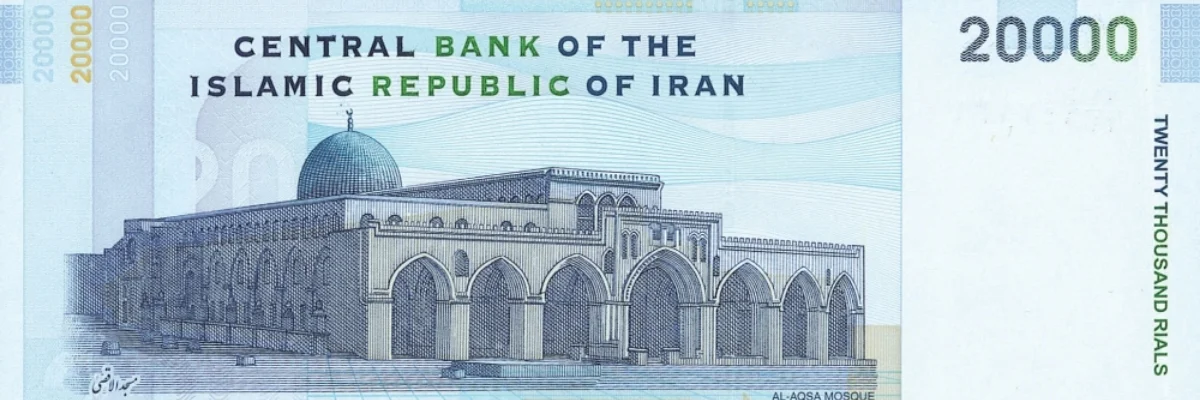
Let It Rule: Imperatives for Central Bank of Iran
◢ In most countries, central bankers wield immense influence over the economy through their monetary policy.
◢ The Central Bank of Iran has struggled to secure the power and independence of its foreign equivalents, hindering economic planning and growth.
“And God said, Let there be light: and there was light.” A central bank’s power is somewhat like God’s, at least in monetary terms, as a former governor of the Central Bank of Iran once said. This is true for the world's most influential central banks such the Fed, ECB, BOJ and BOE or the SNB. The Swiss National Bank's recent move to abandon a self-imposed peg of the Swiss franc against the euro, introduced in 2011, sent the Franc soaring against the Euro by almost 40 percent, is a testament to the power they exert.
But, the CBI is far from wielding the power and independence that its foreign counterparts enjoy.
The bank is under strict financial sanctions, which have diminished its foreign reserves. Thus it has lost face in the foreign exchange market. Gone are the days when remarks by its governor calmed traders. In recent years, even its actions have little effect. In 2012, the bank had to resort to closing down all currency trade in a bid to halt the collapse of the rial, when vows to stabilize exchange rates and financial intervention failed. At that point the bank had overplayed its hand so much so that traders saw the bank reactionary and imprudent. Little has changed in this regard.
Defenders of the bank might counter that the siege on the CBI for allegedly circumventing sanctions against Iran's nuclear energy program is the source of its ineptitude. And yes, having $100 billion trapped overseas does hurt a lot. But that's not all.
Just look at the list of issues the bank is contending with and you'll see that even with a $100 billion, the leopard doesn't change its spots!
It is struggling to bring 7,000 rogue financial institutions, including one Ayandeh bank, under its supervision. The CBI has tried and failed to decrease interest rates for the past year. But, the same institutions have not complied, leading to drainage of deposits from banks towards their coffers.
Furthermore, past monetary decisions by the central bank and the former government have led to tens of billions of dollars of toxic debt on the balance sheets of state-owned commercial lenders, in turn driving them towards property speculation. The central bank is seeking to undo this knot in a civilized way, without undue panic and bankruptcies. Results will materialize slowly, if at all.
When we consider the inability to craft effective policy, at the heart of the matter are the limitations on the central bank's legal powers and its authority to make key decisions.
In most developed countries, monetary policy is the domain of a central bank’s governors. Not so in Iran. The money and credit council, a body within the central bank but controlled by the government, sets monetary policy, not the governor and his deputies. This essentially makes the bank an arm of the Ministry of Finance.
The bank also plays the role of the treasury for the government. It receives oil revenues, and then prints rials and distributes the funds to various government branches. Sometimes the foreign receipt part doesn't take place, thus curbing the bank's control over inflation.
And even when the policies are made, the bank is too feeble to implement them. It doesn't have the capability to exert pressure on banks or the currency market, let alone combat those who defy its commands.
So how can investors and business leaders ask for inflation to be restrained, monetary policy to be set and the currency's value to be stabilized, if they are to rely on such a central bank?
Luckily, the solution is simple enough, at least on paper. A separation of powers is necessary. Monetary policy should be detached from fiscal policy, and the bank should be isolated from politics.
To do so, the bank should be given full autonomy on monetary matters, a structure similar to that enjoyed by its counterparts in developed nations. A system of governance, where by all three branches of government have a degree of influence in the bank's governance would better guarantee the bank's autonomy. But this would require a change in the constitution, a lengthy and difficult process.
Furthermore, the central bank's legal clout and ability to exert power on its turf needs augmentation. Its influence has to cut through the lobbying of vested interests. Its responses to crime must become rapid. For this it needs more legal powers and a wider array of financial tools to help it set and oversee monetary policy. Again lawmakers must empower the bank for the benefit of investor, business leaders, and the economy at large.
Many officials in the current administration have expressed their desire to give CBI greater autonomy and new legislation is under work to give the bank some new powers. But a half-hearted will not be effective. What is needed is a fully independent central bank, as enshrined in law and in the deference of the financial sector at large. After all a strong and independent central bank will help iron-out the full range of economic policies. We ought to let the governor rule his domain.
Photo Credit: mebanknotes.com
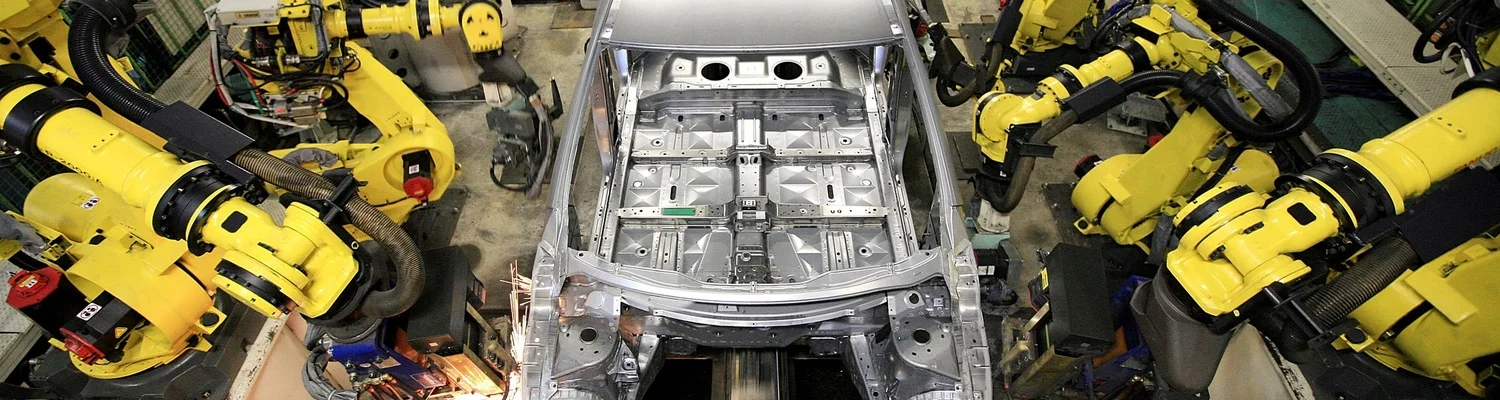
Negotiating Iran: Paving the Way for Foreign Investment
◢ Iran has spent decades pursuing self-sufficiency across major industries in what has been called a “resistance economy.”
◢ This development strategy must change if the country is going to attract much needed foreign direct investment post-sanctions.
For decades, Iran has largely gone it alone in developing its industries. If there were a global economic self-sufficiency index, Iran would be right at the top. This self-sufficiency, although impressive to the outside world, has nonetheless encouraged practices and processes that are inconsistent with global norms. As Iran and the P5+1 hammer out a nuclear deal the Islamic Republic contemplates a post-sanctions environment which will undoubtedly call for a revision of the country's economic and development strategies. Crucial to this transition will be a strategy to attract more foreign direct investment.
Foreign investors have done their homework on identifying both the unprecedented investment opportunities of a post-sanctions Iran as well as the obstacles and fundamental challenges. Given the Islamic Republic’s distinct profile and potential for growth, Iran is poised to become the next frontier market to be developed. But more homework will need to be done on Iran in order for investors to gain FDI contracts.
Although not unique to Iran, three key aspects of FDI negotiations are worth noting for investors: the capabilities and character of Iranian industries, the Islamic Republic’s hierarchy of values and the country’s overall post-sanctions economic and development strategies. Each of these aspects needs to be understood in depth and in relation to the others in order for foreign investors to gain favorable FDI contracts.
Below is a broad understanding of the three aspects of FDI negotiations specific to Iran that will be explored in greater detail in subsequent articles.
Capabilities and Characteristics of Iranian Industries
Iranian industries yield some impressive production numbers. For example, despite suffering under sanctions, Iran’s auto industry will produce 1.1 million cars in the current Iranian year which ends on March 21, 2015; up from a low of 737,000 in 2013 and nearly at the level of 1.6 million in 2011, when the EU introduced new sanctions. Save the inclusion of some components like engines and select electronics, what is significant is that this level of production in the auto industry was achieved without the benefit of value added exports afforded through a broader global value chain.
But this achievement is a double-edged sword. The vast majority of cars produced were for domestic consumption rather than for export. Moreover, decades of working largely outside of the global economy has bred production techniques and practices that might be unfamiliar to the network of global value chains in both Europe and Asia.
Consequently, the practices, techniques and overall ways of doing doing business for a variety of Iranian industries fall short of global norms (This situation is not unlike the policies of Import substitution industrialization popular in Latin American economies in the 1970s and 1980s). Before getting to the negotiating table, foreign investors will need to do their homework on not just the business opportunity but also the character and level of variance of business practices of their respective industries in Iran. For example, having been accustomed to working with a domestic set of suppliers, Iranian manufacturers will need to get accustomed to working with an international set of suppliers. Once the capabilities and characteristics of Iranian industries are understood, investors will be in a better position to offer the knowledge and technology transfer that the Islamic Republic desires in exchange for contracts.
Iran’s Hierarchy of Values
Having developed an industrial base to the level it has, Iran’s hierarchy of values brought to FDI negotiations will differ from that of other lesser developed countries. The likelihood of a walkout by Iranian officials from the negotiation room might be high with the rationale being the Islamic Republic could go without the investment and simply continue to muddle through as they have been. Hence, foreign investors need to have an adequate understanding of the Iran’s hierarchy of values. For example, Iranian manufacturers may prefer to acquire new capital for their factories rather than adopt new manufacturing techniques.
A lack of understanding also seems to be evident in the ongoing negotiations regarding Iran’s nuclear program which is currently on its second months-long extension. Foreign investors will need to have done their homework on understanding what specific values Iranian officials hold relative to them and offer a package of value added technology and knowledge transfers that reflect this understanding. In sum, Iranian decision makers more than the leaders of other lesser developed countries put more weight on outsiders understanding their hierarchy of values reasoning that the Islamic Republic could almost always return to an ‘economy of resistance’.
Post-Sanctions Economic and Development Strategies
As it looks now, all signs lead to a gradual lifting of sanctions on Iran which will in turn steadily open Iran to the global economy over years if not a decade or more. Iranian decision makers will need to overhaul the country’s economic and development strategies in order to accommodate the rapid increase in FDI inflows as well as the country’s broader integration into the global economy. The process will inevitably appear shambolic, haphazard and/or incongruent and occur at a seemingly breakneck speed. But if the foreign investor has done their homework knowing which knowledge and technology transfers Iran seeks at which phase and has a firm grasp of the hierarchy of values of Iranian decision makers vis-a-vis their own, they are more likely to be seen as part and parcel to Iran’s economic and development strategies and consequently granted FDI contracts. Finally, given the Islamic Republic’s penchant to go it alone if need be, first-mover advantage could be especially important and lucrative for foreign investors that are granted contracts.
Conclusion
Negotiations are about knowing what the other side wants in order to reach a favorable agreement. They tend to go smoothly with both sides contributing positively to the other side so as long as there is a thorough understanding of the other. If foreign investors do their homework the intricacies on the role of FDI in Iran’s post-sanctions economic and development strategies coupled with an understanding of the hierarchy of values of Iranian decision makers they can gain an advantage at the negotiating table.
Photo Credit: Financial Tribune
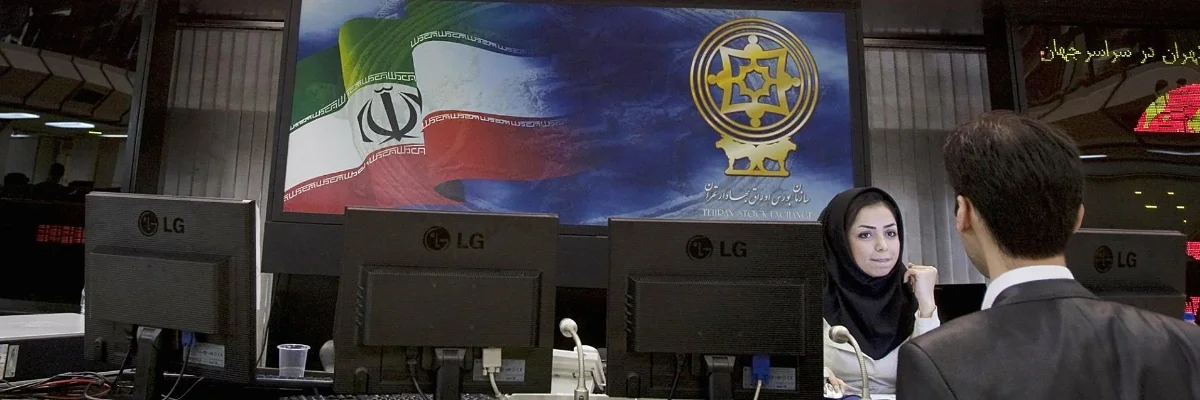
Risky Business: Four Categories of Iran Risk
◢ Managing risk is a key part of an Iran market entry strategy.
◢ There are four major categories of risk to consider: commercial, legal, political, and reputational.
It must be commonplace in meetings where opportunities for business development or investment in Iran are being discussed. Suddenly it becomes apparent that the pitch was half-baked-- it didn’t include an assessment of risks. With a simple question like “What’s the firm’s reputation?” or even “Is it legal?” the pitch falls flat.
A more systematic and proactive approach to risk assessment can avoid these pitfalls. An assessment should begin with four main categories of risk: commercial, legal, reputational, and political. Each of these categories needs to be explored in depth and in relation to the others in order to craft a useful and durable business development strategy. Even if you aren’t an expert in any of these categories (I certainly am not), having a structured approach helps identify gaps in knowledge early so that the right information can be sourced and solutions can be crafted before a problem arises or a tough question comes up in a pitch meeting.
Below is a basic introduction to the four types of business risk in the Iranian context, which will hopefully be explored in greater detail in subsequent articles.
1. Commercial Risk
The greatest challenge in evaluating commercial risk in Iran is the way expectations can quickly outpace reality in anticipation of a historic nuclear deal.
Articles in the The Economist, Wall Street Journal, Time, and other publications have trumpeted the impending “gold rush” or “bonanza” that would ensure if Iran is reintroduced into global markets for goods, services, and capital. The enthusiastic reporting of the many possible macroeconomic drivers of Iranian growth—a young population, an untapped manufacturing base, decent purchasing power, limited government debt etc.— makes it seem like investment in Iran is a “safe bet.”
But the reality is that within the positive forecasting for Iran on a macro scale, investors, business leaders, and entrepreneurs— whether foreign or Iranian—need to heed the dynamics of the micro scale. Investment opportunities ought to be judged on their own terms, and not solely in relation to the bigger picture of potential Iran growth.
What does this mean in practice? Whatever the opportunity in question, a commercial risk analysis needs to be done to ensure that the opportunity remains viable for a wide range of macroeconomic scenarios. It is tempting to treat investments as a “safe bet” because the macro projections are so good. For example, an investor might think that a heavily leveraged buy-out of a consumer goods factory, even one that is inefficient and poorly managed, would be worthwhile because consumer demand is likely to surge in the aftermath of the deal—an inefficient factory can still deliver good margins if the price of goods rises high enough. But what happens when this belief leads the investor to shirk the responsibility to make the factory operate better, whether through better management or equipment upgrades? The factory investment remains exposed to a fundamental commercial risk, and if consumer demand does not materialize, the heavily leveraged bet is lost.
Certainly, emerging markets investors in markets like China, Brazil, India and South Africa have the appetite for such risky bets, and sometimes they are able to execute aggressive strategies to great success. But if overly aggressive approaches become widespread in the post-sanctions investment landscape, the tendency will be to ignore or discount the true commercial risk.
Iran only has one chance to emerge from years of isolation and to position itself for long-term prosperity. The last thing the country needs is the wild speculation and risk-taking that typified foreign investment in Russia in the mid-nineties. The “only way is up” attitude towards economic growth ignores the necessary volatility in any major economic reorientation, and also overshadows the reality that a dud business is a dud business regardless of how good the economy might get. The goal should be mitigate commercial risk at the micro level so that the enterprise can prudently navigate any macroeconomic fluctuations.
2. Legal Risk
Iran remains subject to the most advanced and comprehensive sanctions program ever instituted. So it is perhaps especially frustrating that entrepreneurs and investors get excited about commercial opportunities before they have a close look at the legalities. When the “post-sanctions” future is imagined, the process of sanctions relief is often simplified as though sanctions will go from “on” to “off.” But the real opportunities will lie in navigating the legal landscape in order to find the viable opportunities first.
Sanctions regulations are complex and were legislated in a messy way. How they will be rolled back remains a point of debate. But generally speaking, where US sanctions go, EU and UN sanctions will largely follow. What is clear is that the rollback of sanctions will likely be a phased process, and therefore the legal landscape will be constantly evolving even in what seems to be a “post-sanctions” moment.
In the meantime, companies will be tempted to try and “outsmart” sanctions. But this is foolhardy. Compliance is important, and companies should invest in the best legal expertise available on an ongoing basis to learn how to craft an adaptive, compliant business strategy. Failure to comply could mean drastic and long-lasting commercial, reputational, and political damage. It is a bad habit shared by many firms that in order to keep costs low, the lawyer is only hired when the contracts are being drafted.
Additionally, companies shouldn’t forget about the need to comply with Iran’s domestic laws. There is a tendency for multinational firms to flout domestic laws when entering emerging markets. Usually, the perception of lax enforcement and corruption allows companies to think that domestic laws can be heeded selectively. This is also foolhardy. Not only is Iran’s enforcement capacity greater than the average emerging market (it has very strong state institutions, despite levels of corruption), but failure to pay taxes, ensure safety, or abide by environmental protections will earn the ire of the highly-educated Iranian public, who should be respected even more than the prosecutors.
3. Reputational Risk
I touched on the topic of reputational risk in this November article for LobeLog, and I consider it one of the most fascinating challenges of doing business in Iran. The commercial and legal risk present in Iran is commensurate with levels in numerous markets, but the level of reputational risk is perhaps the highest in the world.
A poll published by BBC World Service in June 2014 identified Iran as the most “unfavorably viewed country” by individuals worldwide. Certainly, much of the international criticism is deserved and companies need to be honest with their customers, employees, and shareholders about their corporate responsibility to support positive social outcomes in all markets, including Iran.
But from the standpoint of business development it is worth considering the specific allergic reaction often exhibited when the ideas of “Iran” and “business” are combined. Special interest groups use public campaigns to name and shame companies that do legal business in Iran. Sometimes even humanitarian trade is targeted. So when we consider the idea of normalization, we are really discussing a new normal in which the combination of the ideas “Iran” and “business” is no longer the cause for concern or condemnation.
In practical terms, managing reputational risk will require savvy branding and an excellent communications and public relations strategy. This involves everything from redesigned websites to better disclosure of company activities, announced through new mechanisms of corporate communications. Transparency will be key in order to assuage negative perceptions and present a new normal of a responsible and resurgent business community.
4. Political Risk
The fourth and final category of risk is perhaps the most difficult to evaluate. Political risk is about “street smarts”— understanding the commercial landscape of a country like Iran in a very deep way, capturing the political, social and cultural dimensions. Those seeking to do business in Iran will have a lot to learn in little time.
At the macro level, political debates around privatization and foreign ownership may impact how commercial and contract law is carried out, but there are actually existing laws written to protect foreign investment and private enterprise—they just have had limited use in a period of low FDI. Firms will need to develop skills in government relations to ensure they stay on top of these debates and the consequences for their business.
Looking to the micro level, Iranian society places great importance on personal or institutional reputation and pride. Any partnership or venture is judged on the reputation of its constituent parties. But rather than seeing reputation as a question of branding, this is a more political understanding of “reputation.”
For example, a certain individual or company might be the most commercially powerful of among the potential partners, but may also have a more questionable reputation within the industry. This partner may be best positioned to mitigate commercial risk in a given venture, but how does the politics of a potential partnership effect reputational or legal risk in the medium to long term? Would a company that is less commercially powerful, but held in higher esteem actually make a better partner?
To be clear, the need to make such political evaluations is not a trait unique to Iran. Even Silicon Valley is a place where the partner you choose or the investor you secure can drastically alter the trajectory for success. In Iran, as in Silicon Valley, political risk means knowing who are the key actors, how they are perceived, and the resources they are able to mobilize. But for a foreign investor or firm, the learning curve in a new market like Iran will be especially steep.
Conclusion
Looking at these four categories holistically, responsible companies will seek to turn risks into strengths. A proactive and careful approach to developing the commercial, legal, reputational, and political facets of a business development strategy can offer firms a competitive edge in the marketplace. Mitigating risks can be expensive and time-consuming, and may require seeking analysts, lawyers, PR consultants or other experts to help fill gaps in knowledge. But companies that can internalize and deeply understand risk/reward calculations for the new phase of Iran’s development will reap immense rewards.
Photo Credit: Morteza Nikoubazi/Reuters
