

Increased Competition Squeezes Air France in Iran
◢ Air France recently announced the reduction of its flights from Paris to Tehran after first switching the service on the route to its subsidiary airline JOON. At a time of uncertainty surrounding the future of the Iran nuclear deal, the reduction of flights led to speculation that the move may have been influenced by the return of sanctions. But a look to the current competitive environment shows other significant changes to the market to which Air France was forced to react.
Air France recently announced the reduction of its flights from Paris to Tehran after first switching the service on the route to its subsidiary airline JOON. At a time of uncertainty surrounding the future of the Iran nuclear deal, the reduction of flights led to speculation that the move may have been influenced by the return of sanctions. But a look to the current competitive environment shows other significant changes to the market to which Air France was forced to react.
Starting in October 2018, Air France flights will only operate on the Paris-Tehran route during the summer season. A statement from the airline said: "After two years of operations and faced with a weak economic and commercial performance, Air France took the decision to adjust this route's flight schedule to be in line with demand."
The Iranian travel market has changed considerably from when Air France resumed its flights in April 2016, first operating flights three times a week with Airbus A340 aircraft and a seating capacity for 255 passengers. At the time, Air France was the only airline flying between Paris Charles de Gaulle Airport and Tehran and the only competition facing the French national carrier was Iran Air’s weekly flight out of Paris Orly Airport.
A few months later, Mahan Air began flights to Paris three times a week with its own A340 aircraft. Just recently, Iran Air moved its flights from Paris Orly to Paris Charles de Gaulle Airport, while also upgrading its aircraft to a brand new A330. In January, Mahan Air announced that it will increase its frequencies to Paris from three weekly flights to four for the summer 2018 season.
Looking to the new competition, travelers journeying between Paris and Tehran have more options than ever before. With Iran Air and Mahan Air flying to Paris with higher frequencies and lower prices, Air France has definitely felt the competitive pressure.
According to figures from the French government, 107,317 passengers travelled between Paris and Tehran on the relaunched service in 2016, a 178 percent increase from the previous year. The following year, the number of passengers further increased to 145,896, up 36 percent. Much of this growth can be attributed to Air France's connecting passengers, traveling from Paris to other destinations.
The impending return of sanctions is likely to reduce demand from tourists and business travelers on Paris-Tehran route, making the impact of Iran Air's capacity increases and the new Mahan flights more acutely felt. The recent increase in departure taxes and currency restrictions may affect outbound travel from Iran to foreign destinations including France.
Moreover, the expansion of Iranian airlines is also in doubt as European growth is dependent on the arrival of its new aircraft. Iran Air's deals with Airbus and Boeing are now in jeopardy after President Trump withdrew from the nuclear deal, canceling licenses for aircraft sales.
Nevertheless, Air France also faces more competition with European airlines than it did in 2016. British Airways and KLM resumed flights to Tehran in late 2016, while Austrian Airlines increased its presence in Iran with additional flights to Tehran, Isfahan, and Shiraz, focusing more on Iran’s tourism industry. Aegean Airlines and Ukrainian International Airlines are attracting more connecting passengers and have also increased their presence in Iran.
With more than two years for foreign airlines to observe the Iranian market since 2015, flight adjustments and schedule changes are quite normal to react to over estimations in demand. British Airways and Alitalia have adjusted their schedules with slight decreases in frequencies or capacities to better meet the demand as Iran Air has grown its presence in both London and Rome.
Air France has been flying to Iran since 1946 with few suspensions. Despite the recent adjustments, 2018 will certainly not be the last year of a full service between Paris and Tehran.
Photo Credit: Wikicommons
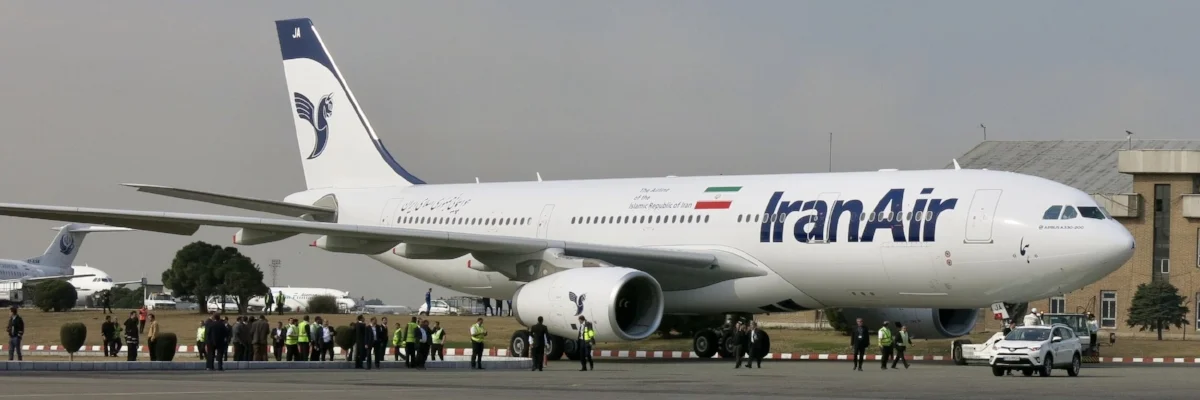
Iran Air Expands Routes Amid Uncertainty
◢ Despite recent uncertainty surrounding the 2015 nuclear deal, Iran Air has been moving forward with its expansion efforts, drastically changing its face in the airline industry.
◢ Iran Air's network has grown significantly since 2015, but remains much smaller than that of a decade ago. In 2002, the airline was serving 18 European destinations, compared to today’s 13 destinations.
Despite recent uncertainty surrounding the 2015 nuclear deal, Iran Air has been moving forward with its expansion efforts. The airline's CEO, Farzaneh Sharafbafi, attended last Friday's meeting of the JCPOA Joint Commission. Her presence indicated the significant political efforts being made to facilitate the acquisition of new aircraft which the airline needs to successfully maintain its growth.
Celebrating its 57th anniversary this year, Iran Air began flights from Tehran to Belgrade and Tbilisi on March 10 and is planning to start flights to Budapest, Malmö, and Saint Petersburg later this year.
With visa restrictions being lifted in Serbia, further optimism points to India. In a joint statement by President Rouhani and Prime Minister Modi in February, Iran and India committed to the opening of e-visa facilities for their citizens. In 2016, neighboring Armenia and Georgia lifted visa requirements for Iranians, leading to the overall flight increases between the two countries and the addition of Tehran-Tbilisi flights to Iran Air’s schedule.
Although Iran Air does not publish passenger statistics and load factors on its routes, its performance can be estimated based on frequency increases on many of its European routes in the last year. Flights to Frankfurt, Gothenburg, Stockholm, and Vienna have all seen the addition of more weekly flights and higher capacities. The Tehran-Belgrade flights, have already sold out through the summer of this year. The airline has also begun codeshare flights on Lufthansa’s Tehran flights, and expanded its codeshare services with Turkish Airlines.
Iran Air's network has grown significantly since 2015, but remains much smaller than that of a decade ago. In 2002, the airline was serving 18 European destinations, compared to 13 destinations today. Iran Air’s Asian flights to Beijing, Bangkok, Kuala Lumpur, Seoul, and Tokyo, have not been in operation for a several years.
By re-establishing these routes, Iran Air could capitalize on a hub and spoke system used by most global airlines. Better geographically positioned in the Middle East than any other Persian Gulf carrier, Tehran could serve as a connecting point for passengers traveling to East Asia and Australia from Europe and North America.
With neighboring Qatar Airways, Emirates, and Etihad Airways experiencing financial difficulties due to political tensions, increased competition, and investments in struggling European airlines, now would be an ideal time for Iran Air to revitalize its own hub and spoke strategy in order to grab market share.
However, despite the opening of new routes planned for this year, Iran Air faces an uphill battle in sustaining its growth. Because the airline's network remains limited, the success of newly launched routes is initially dependent on Iranian tourists. Economic pressures could see Iranian tourist figures fall. The Iranian departure tax may rise later this year and current proposals show increases from USD 15 to USD 45, which must be paid by all passengers departing Iran.
Furthermore, due to the existing sanctions on financial transactions, Iran Air tickets are not sold on various travel websites. Tickets are sold only through Iran Air offices or travel agents, making it difficult for those booking online from outside of Iran. This hinders growth for connecting passengers and makes competing airlines more attractive, which have already increased their Iran services. In the last two years alone, Iran Air has faced new competition from Air France, Austrian Airlines, British Airways, and KLM, all of which have resumed services or increased the number of seats on Iranian flights.
Nonetheless, Iran Air has revitalized its domestic flights with the creation of a new regional service using newly acquired ATR aircraft. Iran Air is projecting a significant rise in revenue. At the height of economic pressure in 2013, the company’s revenue was approximately USD 330 million. The airline hopes to earn around USD 1 billion annually once its new fleet has been put into service over the next decade. Plans to begin flights to many intercontinental destinations depend on the arrival of new long-haul aircraft.
The airline currently has fifteen Boeing 777-300ERs on order, most of which will be used for intercontinental flights. During a press conference in Paris, the airline’s CEO, Farzaneh Sharafbafi, confirmed that upon receipt of the Boeing aircraft, Iran Air would start or resume flights to Adelaide, Bangkok, Kuala Lumpur, and Sydney, further expanding its reach into Asia and Australia. On these planned routes, Iran Air faces little to no competition from Asian carriers.
Sharafbafi reassured all that Boeing would remain committed to its landmark contract. She also said that there are no problems in financing the orders and that Boeing and Airbus jets would be delivered in late 2018 and 2019 respectively.
But while the licenses issued by the U.S. government allowing for the sale of Airbus, Boeing, or ATR aircraft remain valid, the Trump administration continues to threaten to pull out of the Iran nuclear deal. Ultimately, the growth of Iran Air significantly depends on American adherence to the deal and the delivery of the new aircraft. It remains to be seen whether Sharafbafi will have the opportunity to pursue Iran Air's ambitious reintegration in the global airline industry.
Photo Credit: Alireza Izadi