

In Wake of Internet Shutdown, Iran's Programmers Face Uncertain Future
Iran’s programmers had to battle a suspicious state and a dismissive public to usher Iran into the digital age. Now, in the aftermath of a nationwide internet blackout, triggered in response to the recent protests, the resolve of the country’s programming community is being tested like never before.
About twenty years ago, when Milad Nouri first told his parents and university instructors that he wanted to be a programmer, they thought he was another good-for-nothing youth.
Today, Nouri is one of the veteran programmers who have helped lead Iran’s digital revolution, contributing to the launch of companies whose apps and online services are used by millions of Iranians daily, greatly contributing to country’s economy.
Nouri and his fellow programmers had to persistently battle a suspicious state and a dismissive public. Over the years, many left the fight and sought new opportunities abroad, while others remained in Iran and paved the way for the emergence of a genuine startup ecosystem—at last Iran’s has entered its digital age. But a recent nationwide internet shutdown has hit morale in the programmer community like nothing before.
On November 15 an unexpected decision to hike fuel prices threefold led to widespread protests. As part of their crackdown, the following day, Iranian authorities decided to hit a kill switch and—in an unprecedented move—cut off the nation from the World Wide Web.
The internet blackout, which lasted for nearly a week, has cast a dark shadow over Iranian online businesses and the programmer community. Many programmers are once again debating whether they should stay and fight for internet freedom in Iran, or pull up stakes and move abroad. Nouri and his peers are facing a new test of their resilience and resolve.
Alien Technology
Reflecting on the early years of his career as a programmer, Nouri recalls the beeps and screeches of the dial-up modems and that used to connect him to the internet. “I used to go online as soon as my parents went to bed,” Nouri explains, as his parents did not appreciate that the phone line was busy when he was online.
“The funny thing is that this habit got me into trouble too,” Nouri tells me. His parents, like many others, were worried about the sleepless hours he was spending behind the glare of his computer screen.
Computers were still alien technology in those years. State-run broadcasters did little to familiarize people with the nascent digital world. On the contrary, state television sowed seeds of distrust. Numerous “documentaries” were broadcast that called on parents to be vigilant because the internet would surely “corrupt the youth.” Nouri remembers these programs. “Whenever such shows came on TV, my parents and relatives would give me worried looks,” he says.
Inevitable Change
During his programming career, Nouri has seen three presidents come to power: Mohammad Khatami, Mahmoud Ahmadinejad, and Hassan Rouhani.
During Khatami’s tenure, the country’s technological infrastructure was extremely underdeveloped. The internet penetration rate and average connection speeds were low. Nouri tells me that for a long time, when friends and family asked him what he did for a living, he would lie: "I would just say, ‘I am a university student.’ Most people didn’t know what programming was. And even if they did, they wouldn’t acknowledge it as a job. To be honest, no one made money out of this line of work, so they weren’t really wrong either.”
In the late 2000s, some Iranian businesses started to invest in online advertising, but it was not until the arrival of smartphones that big money first entered the startup ecosystem.
Given political tensions during Ahmadinejad’s two terms—especially in 2009—curbs were imposed on internet access, hampering the growth of Iranian online services and, by extension, the newfound fortunes of local programmers.
But once tensions eased and more investment was directed towards digital innovation, programmers saw their incomes and social status rise again. When President Rouhani was elected for his first time in 2013, he and his administration jumped on the “digital economy” bandwagon and promoted support for such businesses as part of wider reforms to curb Iran’s overreliance on the oil industry.
Following this shift in policy, Iranian startups found room to grow. Careers in computer programming became a trendy and talented programmers were aggressively sought by employers. The same state-run TV channels that once demonized technology were broadcasting programs to teach people about computer science. As ventures grew, Iranian programmers found themselves handsomely paid. Parents began to encourage their children to study computer science at university.
In many ways these changes were inevitable. The spread of cheap smartphones and 3G networks brought millions of Iranians online. For businesses, digital services became a crucial way to reach customers. While Iran’s tech entrepreneurs acknowledge that Rouhani and his administration officials, and in particular the current ICT minister Mohammad Javad Azari Jahromi, have supported the transformations, they believe that the changes were largely inevitable.
During Rouhani’s first term,a nuclear deal was forged with the world powers, granting Iran sanctions relief and opening the country to foreign investment. An influx of foreign capital reshaped Iran’s digital economy, especially in the e-commerce sector. Iran’s political elite could no longer ignore global digital developments.
In the last fiscal year, the nominal value of Iran’s e-commerce market grew 30.5 percent and reached IRR 2.08 quadrillion ($18.4 billion), according to data published by the E-Commerce Development Center of Iran. This impressive growth has seen the senior executives of digital ventures elevated as exemplars of Iran’s dynamic economy. But as executives and investors today enjoy access to senior officials, even sitting down the president for “friendly chats,” the pioneering programmers have been somewhat forgotten.
Nerd Power
The first batch of successful Iranian startups were established by programmers who had both the technical knowledge and the vision necessary to create entirely new business models. But as the Iranian startup ecosystem has matured, tech companies have increasingly hired new managers who do not have a programming background. Coders were forced to take a back seat. “Nowadays, we are just seen as people who turn caffeine into code,” Nouri says.
The programming community has reacted by holding onto their irreverent spirit. Like their peers around the world, Iranian programmers revel in the stereotype of coffee-drinking, introverted nerds always hunched behind their laptops.
The subculture manifests itself on social media, especially on occasions like International Programmers’ Day when Iranian coders trade stories on Twitter and Instagram, or when Iranian social media users joke that it is now cooler in Iran to have a programmer as a boyfriend than a footballer.
The world’s most powerful nerds—Bill Gates, Mark Zuckerberg, and the late Steve Jobs—are revered by Iranian programmers as leaders to emulate, their triumphs known through books like Walter Isaacson’s biography Steve Jobs and movies like The Social Network.
For this reason, some Iranian politicians rail against programmer subculture as too Westernized and too progressive. While it is true that those involved in the digital economy tend to be more socially progressive, the subculture also remains male-dominated. Numerous cases of misogyny and harassment make clear that a lot of Silicon Valley’s most regressive features are also found in the Iranian ecosystem.
Uncertain Future
After the United States withdrew from the Iran nuclear deal and reimposed harsh secondary sanctions, the Iranian economy entered a period of crisis. Many businesses, including tech firms, can hardly make ends meet. The depreciation of the rial over the past two years has also hurt the purchasing power of ordinary people—programmers, like many other Iranians, are increasingly considering emigration, knowing that their skills are in demand abroad. Industry insiders say about 1 in every 5 programmers wants to emigrate.
At the Dayhim Innovation Factory in southeast Tehran, 60 young programmers were hunched behind laptops. They had gathered from across Iran for a coding boot camp held in the once-deserted industrial plant, which had been recently transformed into an innovation hub. During a short break between their classes, the students talked about their dreams and aspirations, asking that only their first names be used.
Wearing a black Linkin Park t-shirt, 20-year-old Sina, relayed his dream to leave Iran. “I grew up listening to Western music, watching Hollywood movie. Life is more fun in the west. Or that’s how it looks,” he laughs, adding, “I want to experience that fun life first hand.”
Sina was honing his programming skills to boost his chances of starting a new life abroad. Many of the young men, all of them between 16 and 24, had similar aspirations.
The internet blackout has shaken the resolve of even the most committed of Iran’s programmers. A prominent programmer known simply as Jadi, who has blogged about the internet in Iran since 2006, captured the sentiment in a widely shared tweet: “The number of people who have left [Iran] in the last two years is shocking… [So is] the number of people that are trying to find a way to leave now… And there is no way to argue, ‘Just stay.’”
But 20-year-old Esmaeil from Esfahan thinks he will stay. In his view, “Iran’s fast-growing tech market provides programmers with a golden opportunity.” Esmaeil believes that given low competition in the sector and growing investment from domestic backers, programmers can continue to make easy money in Iran.
A contrarian streak might be the only thing that can save Iran’s programmer community.
Photo: IRNA

To Transform the Fortunes of Iran’s Saffron Farmers, a Commitment to Technology and the Environment
◢ Keshmoon, an Iranian startup, connects carefully selected saffron farmers engaged in sustainable agriculture with premium consumers. The company has recently gained acclaim for its combination of ecommerce and "agritech" solutions.
◢ Starting with an initial cohort of 30 farmers in the town of Qaen in Khorasan Province, Keshmoon is encouraging a move to sustainable agriculture. The goal is to reduce water usage through means that also help the farmers improve their livelihoods.
Mohammad Qaempanah is a serial entrepreneur. His first business saw him act as a one-man internet service provider in his town, the connectivity from which he leveraged to start his next business, exporting saffron, a coveted spice with a heady aroma taken from the stigma of the crocus flower. Qaempanah exported the spice until sanctions made it impossible. He then opened a vegetarian restaurant in Mashhad with the aim of “educating people about the way in which their eating habits are linked to global warming.” Furthering his commitment to the environment, he then founded Iran’s first “nature school,” also in Mashhad, which offered programs to enable children from the city to experience and enjoy time in nature, learning about the environment. Having spurred something of a movement, there are today over 40 such schools around Iran.
Qaempanah, whose grandfather was a saffron farmer, has now turned his attention to agriculture in his hometown of Qaen, in the province of Khorasan, with a venture that combines his knowledge of saffron, his commitment to the environment, and his aptitude in technology. This latest venture, Keshmoon, has already won accolades. The company was recognized as the “Best Seed Stage Startup” at the recent Iran Web and Mobile Festival. Mohammad-Javad Jahromi, Iran’s young Minister of Communication and Information Technology, acknowledged the company in a subsequent tweet.
This early recognition reflects the scope of Keshmoon’s commercial ambition and its innovative vision for Iran’s agricultural sector. In Qaempanah’s words, Keshmoon combines an “ecommerce platform that serves consumers with an ‘agritech’ layer that serves suppliers.” In simpler terms, he explains, Keshmoon connects “carefully selected farmers engaged in sustainable agriculture with premium consumers.”
In founding the company alongside his brother, Hamza, and a friend, Siamak Khorrami, Qaempanah took inspiration from the increasingly popular model of direct trade coffee, where coffee roasters ethically source beans directly from growers, and also the popular ecommerce platform Etsy, which allows artists and craftsmen to sell their wares directly to consumers online. But while these platforms primarily reflect innovations in ecommerce, Keshmoon seeks to use technology to change the methods of agriculture itself.
Speaking about his vision, Qaempanah is careful to point out that his motivation in founding Keshmoon was “not to help farmers improve their economic situation.” Rather, his “foremost concern was water.” In his view, “unless the issue of water depletion is managed, it won’t matter what the farmers choose to grow, it will be impossible to cultivate anything.”
In the town of Qaen, where Qaempanah’s grandfather cultivated the particularly aromatic saffron that brought fame to the region, the qanats, a traditional system of underground channels which tap into the aquifer, have long been replaced by modern wells. Over the years, farmers drilled more wells to pump ever-increasing volumes of water, seeking to grow crops ill-suited to the arid climate. The water table has dropped precipitously. As Qaempanah relays, “wells that were once 15 meters deep now need to extend to 135 meters.”
Qaempanah believes that farmers are currently stuck in a self-defeating economic cycle. Presently, the use of more water enables higher yields and therefore higher earnings. Keshmoon was designed as a “technical infrastructure to change this cycle.” By incentivizing farmers to move towards the sustainable cultivation of saffron, which is naturally well-suited to Khorasan’s arid climate, farmers will be able to use less water, and yet enjoy greater earnings.
Gallery: The Farmers of Qaen
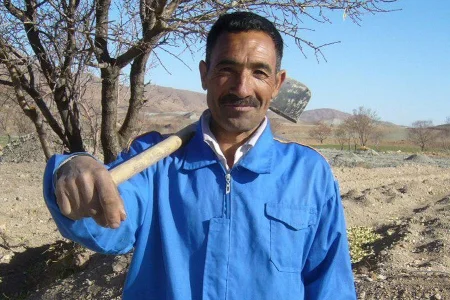
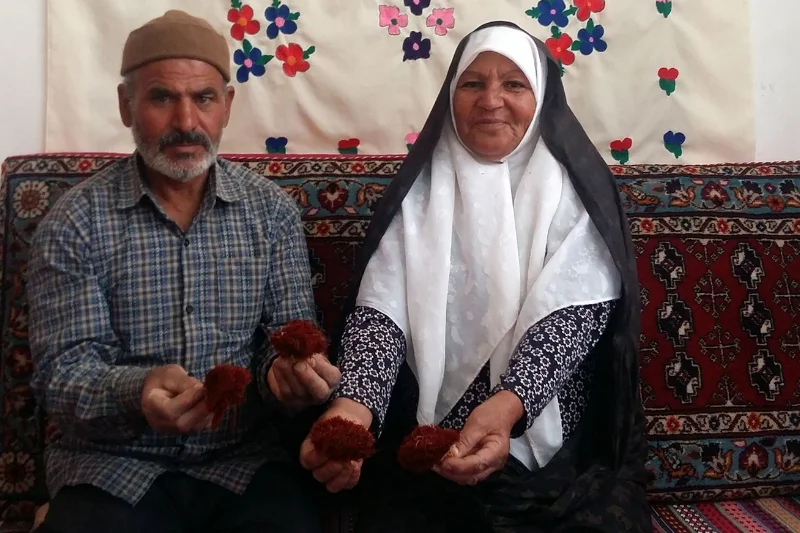
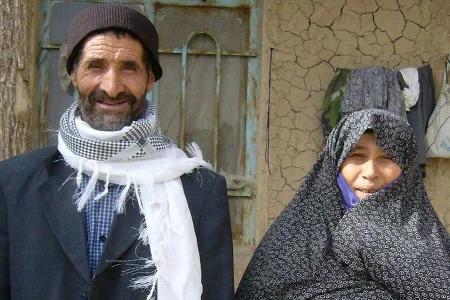
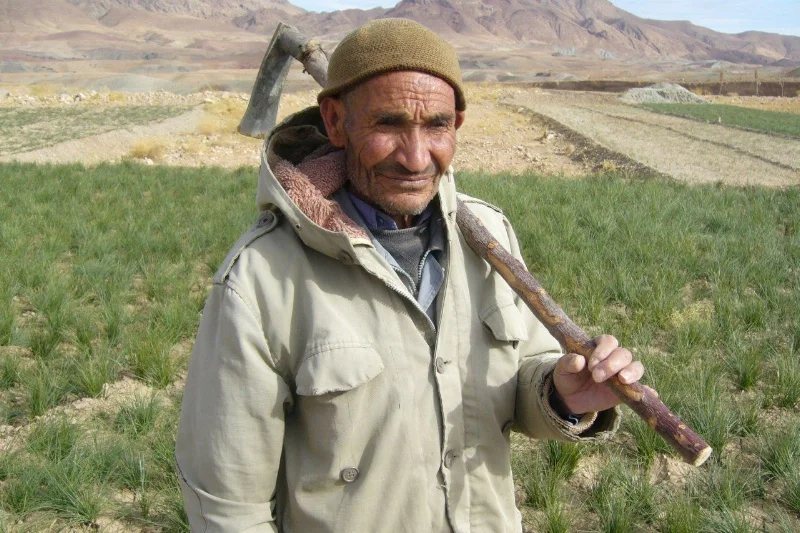
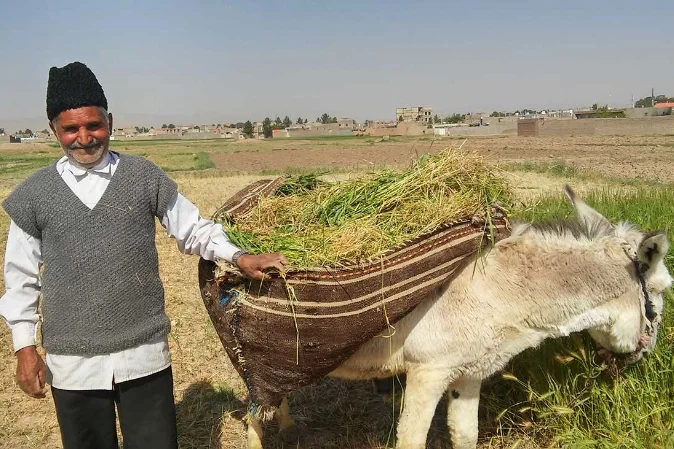
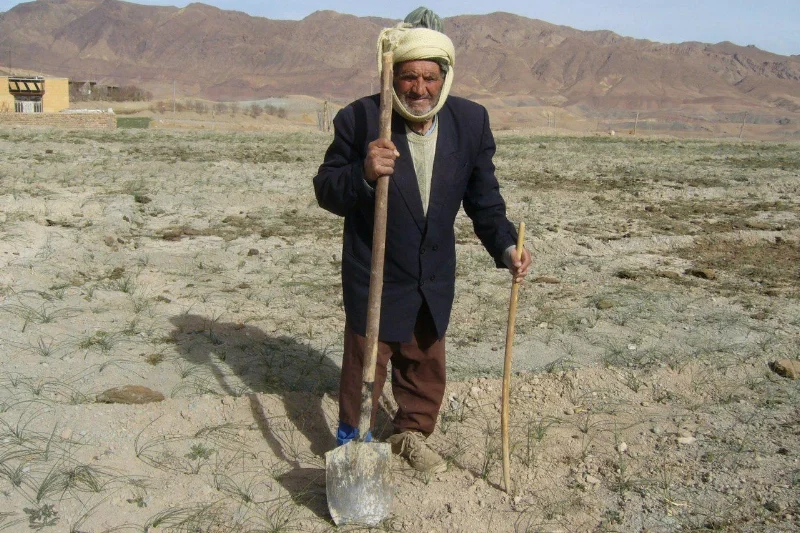
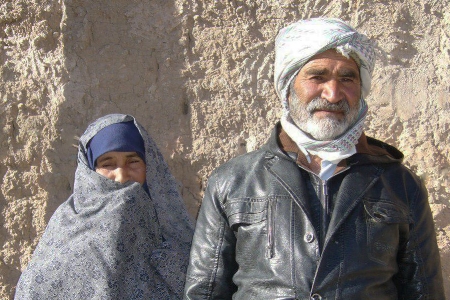
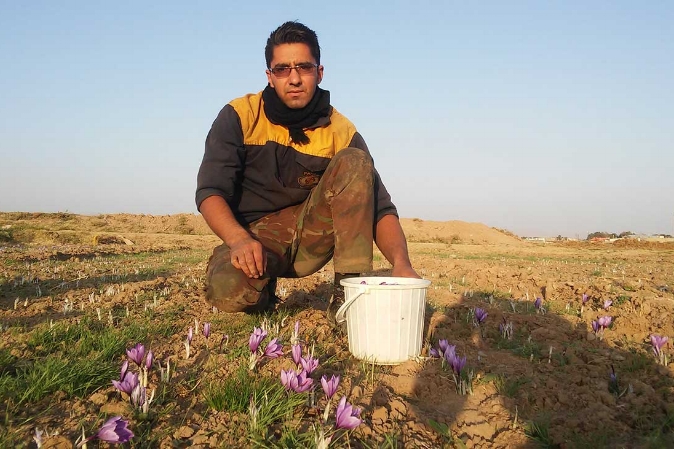
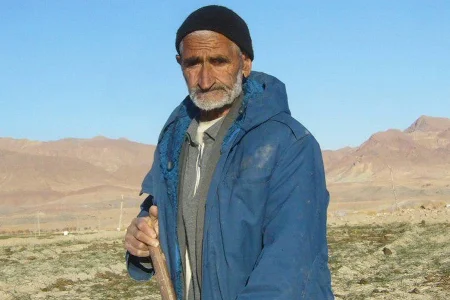
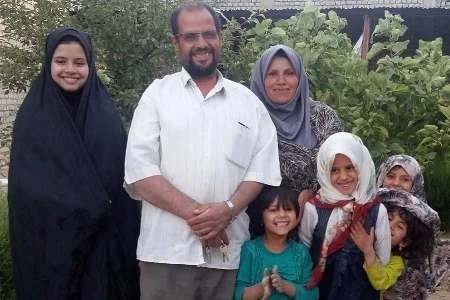
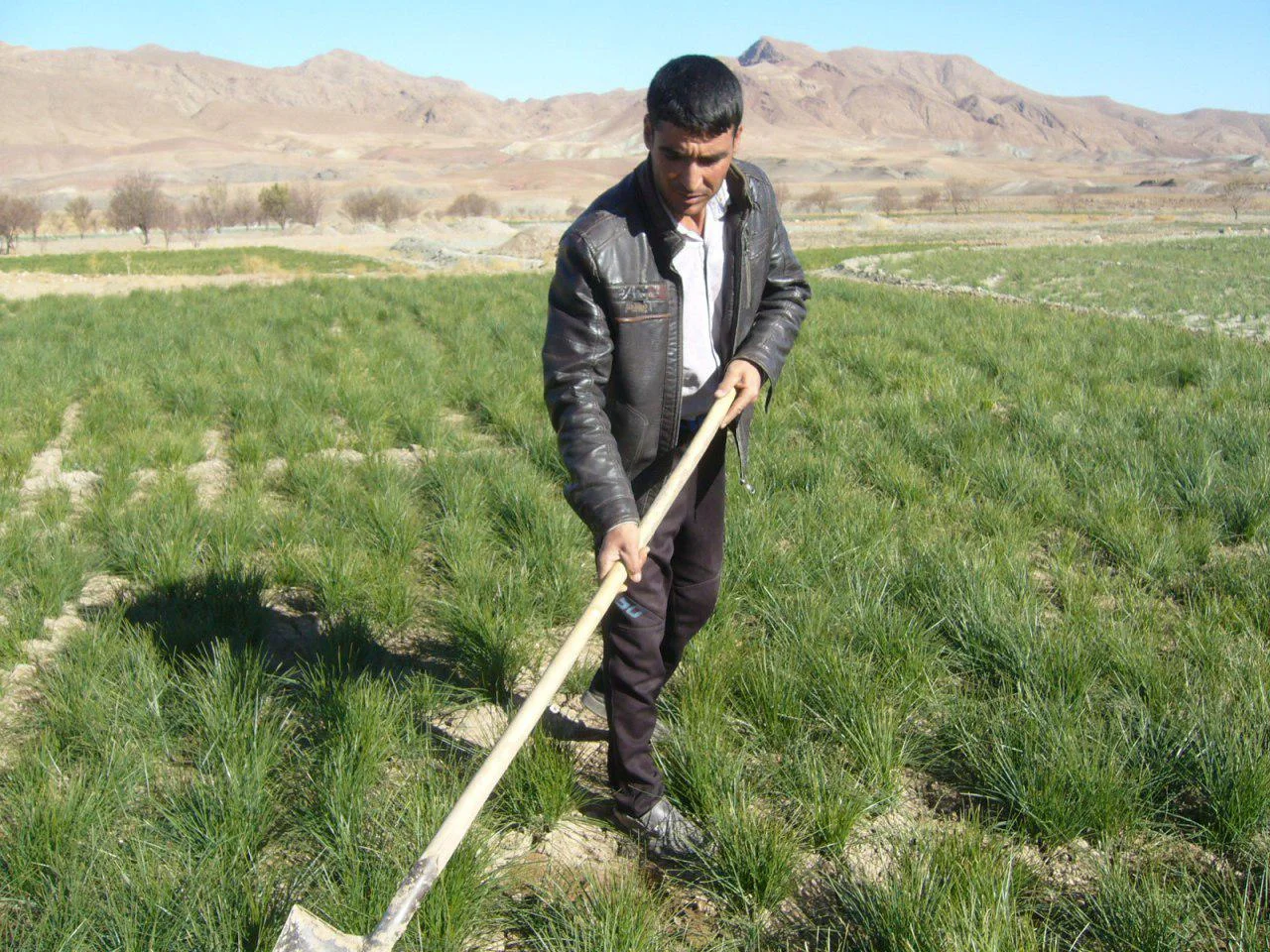
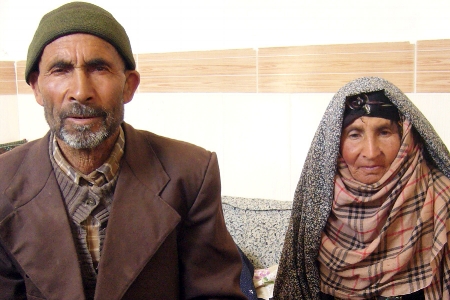
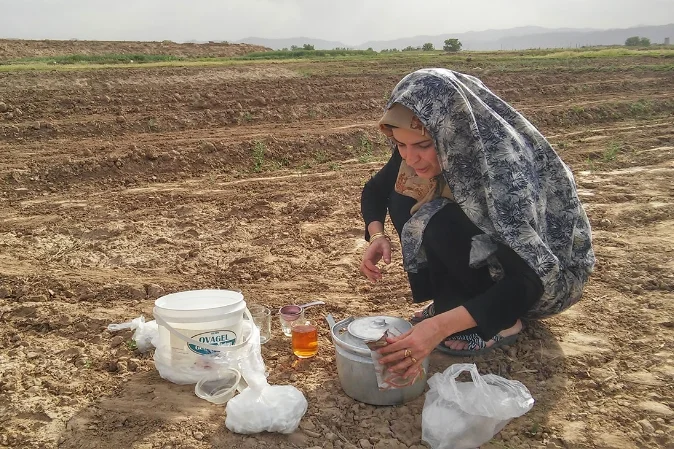
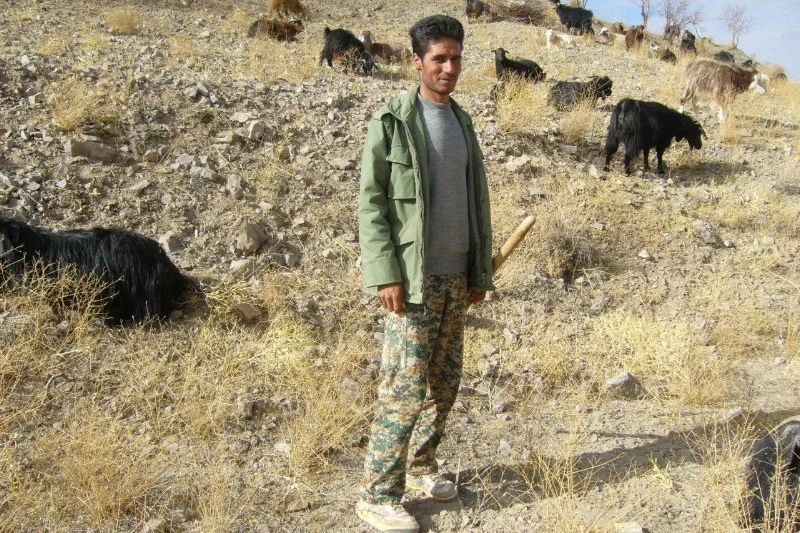
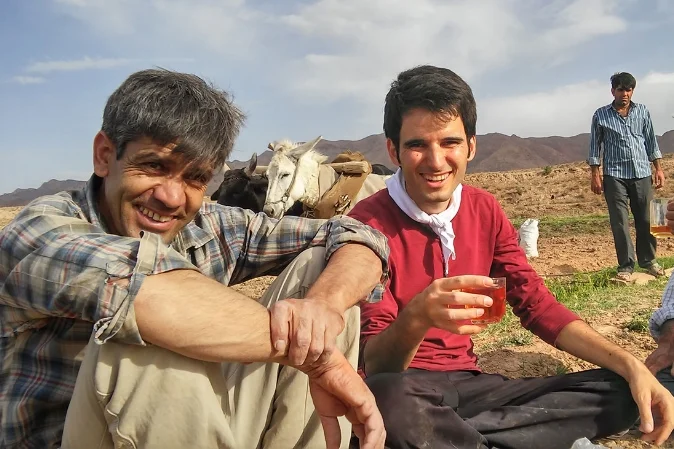
This has proven an attractive proposition to the farmers of Qaen, where Keshmoon has recruited its first cohort of 30 farmers. As Qaempanah recounts, the local saffron growers were “invited to a meeting in the town mosque, where we explained our approach, how we wanted to help, and asked them to go home and think about it.” Despite concerns that it might be hard to explain the technical aspects of the concept, the pitch worked. Today, farmers from neighboring villages and towns regularly stop by Keshmoon’s office in Qaen to learn more about the program they have heard about. The company has earned the trust of the local community.
To gain acceptance to Keshmoon’s platform, farmers need to demonstrate competency growing saffron in the traditional manner. Keshmoon will introduce more stringent requirements in the near future, introducing guidelines consistent with sustainable farming. It will take about one year to “gain critical mass and give farmers the time to make adjustments to their planting,” says Qaempanah. He foresees Keshmoon partnering with universities and other institutions to help provide training to farmers unfamiliar with growing saffron in a sustainable manner in order to help them make the switch.
For farmers, the commercial appeal of Keshmoon is the higher price achieved for their crop by selling to consumers directly, rather than selling to local traders. One drawback is that using Keshmoon will require farmers to sell their harvest incrementally, as orders come in online. Some farmers have said that they prefer selling to the local buyers, who can purchase the whole harvest in one transaction. But the price advantage is substantial. Farmers on Keshmoon can expect to generate 20-40 percent more in earnings than those who sell locally in bulk.
Laudably, Keshmoon has been very transparent about pricing for the sake of both consumers and farmers and offers a detailed breakdown on their website. Generally speaking, farmers receive 70 percent of the saffron’s retail price, while around 12 percent is earmarked for quality control, packaging, and transport, and the remaining 18 percent goes towards Keshmoon’s overhead.
Once accepted to Keshmoon, farmers need to create their online profiles. In most cases, the Keshmoon team helps by taking photos and recording the farmer’s personal details, family history, and also explanations of how the saffron is farmed. These profiles can be seen on the Keshmoon website, where consumers can even send messages to specific farmers.
Qaempanah notes that some farmers, typically those who are younger or who have had more education, have been able to author their profiles themselves. In some cases, it was the farmers’ children, many of whom own smartphones, who took responsibility for telling the story of the family farm through words and pictures. There is immense potential for the farmers to develop both some technology literacy and also their personal brand, which can help them connect with consumers more proactively. Commercial considerations aside, there is something affecting about seeing the personal portraits of the farmers and families behind Iran’s most precious crop.
A Keshmoon Giftbox
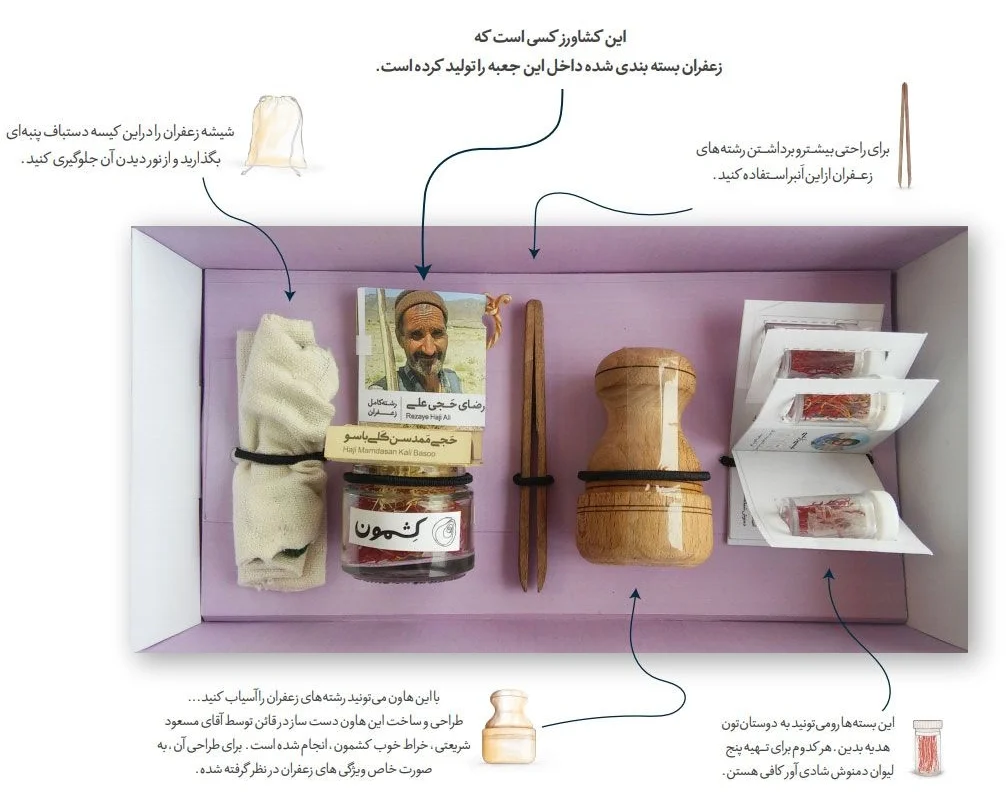
A connection to the farmers and a beautiful presentation of the saffron, including a small booklet about its origins, has proven a hit among consumers. The company has been selling online for nine months, and boasts a few hundred clients, about one-quarter of whom whom make recurring purchases. Keshmoon’s models show that it will take about 20-40 clients in order to support each farmer. At the moment, the company has stopped accepting new farmers onto its platform until is grows the client-base further. A big boost will come when the company begins selling to Europe later this year.
But while the Keshmoon story may begin with saffron, Qaempanah’s ambition is much greater. For the next few years, the Keshmoon team will focus on perfecting its “technical infrastructure,” combining ecommerce and agritech to open a new market for saffron. The big test will be in the marketing and branding. Qaempanah hopes to achieve a level of awareness such that “when people hear saffron, they think of Keshmoon.”
If this model can be developed successfully for saffron, the company plans to expand to other crops and bringing a similar model to other agricultural regions in Iran. Qaempanah imagines a situation where farmers from around the country can approach Keshmoon and receive recommendations for which crops to grow based both on analysis of the local environment and also Keshmoon’s data on which crops will sell most effectively on its marketplace. In this way, Keshmoon would serve to introduce efficiencies of scale typically reserved for large, corporatized farming. The economic and environmental impact for Iran, where the agricultural sector remains dominated by smallholder farmers, could be transformative.
But it is early days yet and the success of this grand masterplan will first depend on the successful collaboration between the saffron farmers of Qaen and the team at Keshmoon. Theirs is a collaboration that crosses talents and crosses generations—both a microcosm of the economic and environmental challenges facing Iran and a case study in the creative thinking and entrepreneurial spirit that may eventually solve those challenges.
Photo Credit: Keshmoon

Why Tech Companies Get Iran Wrong
◢ Iranian consumers already have access to the latest gadgets from the world's leading brands. What they lack are easy shopping experiences and after sales support.
◢ Global technology companies needs to go beyond marketing and brand appeal to win over Iranian consumers through customer service.
Iran has been touted as the greatest untapped market on earth for multinational technology companies. Bar a couple of exceptions like Samsung and HTC few of the international giants have an official presence in the country.
Articles commonly tout a handful of key demographic facts when describing Iran's potential:
Sanctions have kept 77 million Iranian consumers from Western goods and services for decades. And Iran’s population is young (two-thirds of the population is under 35), smart (the highest share of engineering graduates in the world), tech-savvy (the highest internet penetration in the Middle East) and relatively wealthy (the world’s 21st largest economy in 2013, despite sanctions, and a GDP higher than India’s).
But what do these young, smart, tech-savvy, and wealthy consumers really expect from consumer electronics?
Western consumer electronics have been sold in the Iranian market in large quantities since the mid-1990s, in step with the digital revolution. In recent years, the Iranian uptake of the iPhone demonstrates the tendency of Iranian consumers to both adopt new technology quickly, and to develop creative trade connections to ensure supply, sometimes purchasing the latest devices directly from factories in China and elswhere.
For example, I once discovered a Motorola Moto smartphone – a phone made at the time in the United States – in a Tehran store display cabinet brandishing the factory-applied logo of American carrier AT&T.
Items like this imported smartphone show how sanctions hinder both multinational manufacturers and the Iranian consumer. With these grey market imports, Motorola simply cannot gain any real data on Iranian purchasing patterns nor can it understand the local mobile telephone market. It competes in a market in which it has no direct contact with its consumers.
On the other hand, the Iranian consumer is also shortchanged. Their chosen phone lacks company support or warranty and they pay a hefty premium on each device.
In this unusual status quo, American companies, most hindered by sanctions, fare the worst. Their corporate researchers, anticipating the eventual opening of the market, rely on second, third or fourth hand information regurgitated in the media coverage of Iran's commercial potential. This coverage creates a warped view of the domestic Iranian market. Moreover, with the inconsistent and sometimes contractionary market reports produced by Iran's domestic media, this problem is only exacerbated.
But even the absence of many major multinational still doesn't fully explain why so much data on Iran is duff. For that you need to get to the finer points of publicly available reports and then it all starts to become clear.
The onus rests on the international market research firms which produce reports on the Iranian market. These firms use a myriad of unorthodox tactics to gather market data on the domestic Iranian market.
In many instances they simply use fluent Persian language speakers based abroad to read and monitor news reports about specific industries. For more granular information, they might also sometimes cold call Iranian households to ask survey questions about product preferences. These piecemeal methods unfortunately leave big gaps when the finalized data is published.
It is only with on the ground analysis and street-level market reporting that it becomes possible to decipher why certain consumer electronics companies do well in Iran, or why a given device or operating system is the most popular.
Out of all foreign companies it is the South Korean conglomerates which have the best data on Iran, owing to their official precense in the country. They are not likely to share this vital information with their American competition. A recent report on the website of Press TV's– Iran's official English-language international news service–highlights that Samsung in particular is ramping up efforts to strengthen its market position.
However, Apple has so far outpaced all other manufacturers in terms of appeal. This might be unsurprising given that it is now the world's leading smartphone manufacturer. Yet, the Cupertino firm still doesn't have an official representative in the Iranian capital, nor does it offer warranties by third or even fourth party vendors. The grey market imports available on the market are also unusually expensive. But the appeal of the iPhone 6 and Macbook continues to trounce all the other devices available to Iranian consumers.
As part of the global battle with their American foe, Samsung has had an uphill struggle against Apple in Iran. Knowing it lacks the same brand appeal, the Korean firm has invested millions of dollars to establish flagship stores across the country, battling sanctions to offer warranties and even creating Iran's most prolific corporate social responsibility (CSR) policy among foreign companies. But despite all these feathers to their hat, they still have to fight the overall brand power of their main American rival.
Bluechip Japanese electronics firms have also struggled in the Iranian environment in recent years. Some industry insiders admit that Sony, for example, spends one-tenth the amount on marketing budgeted by Samsung. JVC, has all but disappeared from the country's high streets with the last remaining stores stocking dated LCD TVs. Panasonic on the other hand seems to be increasing its presence once again. A flagship store on Shariati Street in Tehran recently saw a complete overhaul.
Yet, massive investment in Iran is no guarantee for success and consumer electronics and technology companies have blundered before. One example can be seen in the case of Nokia in 2009. The Finnish firm reigned supreme among multinationals in the Iranian market, even maintaining a major office on Bucharest Street in Tehran.
However, poorly structured telecommunications deals with their local Iranian partner, misinformation spreading like wildfire, and the firm's general unwillingness to develop a global smartphone strategy quickly put an end to their dominance. No amount of investment could rebuild the tarnished brand in the eyes of the Iranian consumer.
It isn't just hardware or device manufactures who fall short. Microsoft has also squandered an advantage in the brand appeal of its software. Even though the Obama administration eased sanctions on the sale of electronics in 2013, Microsoft has little engagement of Iranian consumers.
Microsoft has continuously punished Iranian users for their use of illegal software, forcing nearly the entire country to rely on unreliable pirated editions purchased cheaply in Iran. The lack of official product support is especially vexing for Iranians as the newest updates, patches, and features remain unavailable for all those unable to purchase an official software license. In fact the problem for the American software firm is so great that thousands of Iranians have petitioned Microsoft to offer official support. Again, despite a dominant market share, negative experiences will continue to color the Iranian view of Microsoft products.
If American, European, and East Asian technology companies want to get a grasp of the Iranian market they are going to need to understand a few things about the average Iranian consumer that data cannot capture. Firstly, as a conversation with any traders or consumers will reveal, the two largest issues for local consumers are warranties and sales support. This is something which foreign manufacturers generally only pay lip service to. For now, it seems Samsung is the exception, having smartly spent huge sums of money on after-sales support. LG comes a close second in terms of support and has also recently stepped up efforts to offer a better consumer experience in major cities like Tehran.
Secondly, rationalization of the shopping experience is a must for most consumers. The traditional bazaar shopping experience continues to this day with many consumers purchasing their electronic items from independent stores, who set inconsistent prices and cannot vouch for the authenticity of their products. This shopping experience leaves a lot to be desired, and often if any problem arises with said items, people have no recourse when something goes awry. The discrepancy between this shopping experience and the carefully calibrated environment of an Apple or Microsoft store abroad must be noted.
In sum, Iranian consumers' requirements are similar to those found in any developed market. Sanctions have not prevented access to the latest technology, but they have made the overall buying experience more strenuous and costly than in perhaps any other market. In a post-sanctions environment, the battle will not be to ensure Iranians purchase devices. Rather, multinational firms must vie to offer the best overall customer service and generate positive brand experiences. The most successful companies will be those that focus less on the hard sales data, and focus more on the more intangible needs and preferences of the Iranian consumer.
In a world of apps and product ecosystems, consumer technology is about more than just the device. The same will become true in Iran.
Photo Credit: Reuters, Raheb Homavandi