

Responding to Sanctions from the Supply-Side
For both policymakers applying sanctions and those seeking to resist sanctions, better policy outcomes require supply-side thinking.
One of the fundamental asymmetries of sanctions policy is that countries that apply sanctions have many opportunities to do so. Countries targeted by sanctions are usually only targeted once. Those using sanctions get to practice their economic statecraft. Those facing sanctions get a single shot to try and secure their economic survival.
The question of how countries use their one shot has been little studied, especially since the emergence of financial sanctions as the primary tool of Western economic statecraft. This is a fundamentally important area of study. The efficacy of sanctions is a function of the resilience of the target. If a target can resist the coercive effects of sanctions in the medium-run, it is less likely that the sanctions will lead to the intended change in behaviour, particularly if the intended behaviour change is significant. Being able to estimate the resilience of the target is therefore a requirement for the judicious use of sanctions.
In a recent essay, I discussed how the Russian economy might respond to sanctions. My analysis drew on the experience of Iran, a country that has proven remarkably resilient in the face of the most expansive sanctions ever imposed. President Trump’s Iran envoy, Brian Hook, once stated “Because of our pressure, Iran’s leaders are facing a decision: Either negotiate with us or manage economic collapse.” We know that Iran managed to stave economic such a collapse. But was Iran’s response to the sanctions-induced economic crisis a good one?
Iranian economic policymaking is about as deft as in most middle-income countries. The grit of firms and households, which fought hard to prevent their own financial ruin, flattered Iranian policymakers. There were some successful policy interventions, such as a move to better regulate foreign exchange through the creation of a new parallel market, and the limited use of cash transfers to soften the blow of the economic downturn on households. But overall, it is difficult to conclude that Iran is a case study for an effective policy response to a sanctions crisis.
This is not to say Iran lacks sharp minds. But in the fog of economic war, a misunderstanding of the nature of the economic crisis and a reliance on textbook economics, combined to prevent a more nimble and effective policy response. The policy failure reflected an inability to respond to the key economic impact of sanctions—higher rates of inflation—with the correct set of policy tools. The Iranian government responded to persistent high inflation through a combination of monetary and fiscal interventions. Absent was any active industrial policy. This may come as a surprise. Helmed by a “revolutionary” government, Iran might have been expected to favour economic centralisation and public investment in its response to economic crises. But as a review of the statements and commentary of leading economic policymakers and economists makes clear, whether the interventions were monetarist or Keynesian, they have generally been focused on shielding aggregate demand from the sanctions pressure by seeking to control inflation or to compensate for its effects.
In a recent op-ed in the Financial Times, Iran’s finance minister, Ehran Khandouzi declared that the Raisi administration is seeking “to change the course of fiscal policy,” by aiming to “promote economic growth, price stability, and inclusive growth.” As part of this plan, Khandouzi called for “increasing government investment,” noting that the “public sector must play a more active role in investing in physical capital.” The timing of the op-ed was curious—talks over the future of the Iran nuclear negotiations have languished. By publishing his commentary in a leading international newspaper, Khandouzi may have been aiming to signal the Raisi administration’s readiness to engage with the global economy. Even so, the message of the op-ed was calculated. While Khandouzi notes that the negotiations in Vienna “could potentially lead to positive economic outcomes for Iran,” he concludes by explaining that the country is “ready for whatever scenario emerges — pessimistic or otherwise.”
In recent years, supply-side responses to inflation have come to the fore, particularly after the COVID-19 pandemic during which Western governments experienced inflationary pressures directly related to supply chain disruptions. As Yakov Feygin has written, the COVID-19 crisis “created bottlenecks in the production of practically every commodity.” For Feygin and other supply-side economists, the pandemic was a clarifying moment that “an active industrial policy” was a necessary part of any response to the “upward pressure on prices” that emerged as households continued to demand consumer goods and durables at a time when factories were forced to cut back production. Such an industrial policy would see policymakers “use the spending power of the government to issue long-term capital to vital but low-margin sectors.”
Could Khandouzi’s call for a “change in fiscal policy” see the emergence of an active industrial policy and a true supply-side response to inflation? Iran’s Supreme Leader, Ali Khamanei, has frequently cited the need to increase domestic production, which has been interpreted as a nod to import substitution. In an address given in March marking the start of the Iranian new year, Khamenei declared that “Production is the key to solving economic problems and the path to pass through economic difficulties.” However, looking beyond the Supreme Leader’s slogans, it is notable that more economic policymakers in Iran are increasingly connecting the specific problem of high prices to the challenge of low production. In a 2020 interview, Ali Salehabadi, now serving as governor of the Central Bank of Iran, expressed a decidedly supply-side outlook. “It goes without saying that the root of inflation in our country is not only monetary, but also related to real variables such as production. That is, increasing production in the long run will reduce inflation. Therefore, the growth of production will make the preparations for improving the living and economic conditions of the people,” he said. For his part, Khandouzi highlighted how “negative net investment in recent years” is “severely undermining future production and household welfare.”
There is no doubt that sanctions induce monetary and fiscal shocks that explain a significant portion of their inflationary impact. Moves to freeze Iran’s central bank reserves led to a shortage of foreign exchange. This weakened the Iranian rial. The Iranian government also printed money to finance budget deficits caused by the impact of sanctions on government revenues, principally oil revenues. But to fully capture the macroeconomic impact of sanctions it is important to look at goods, and not money alone. Financial sanctions hurt because they are the most effective means to determine what goods a target country can buy and sell in global markets. Sure, sectoral sanctions and export controls impact trade, putting pressure on the target country’s balance of payments. But countries have a knack at finding new buyers and suppliers (and intermediaries) who are willing to skirt these measures. What proves harder is finding banks willing to facilitate payments to those buyers or suppliers. It was not until financial sanctions cut Iranian banks, including the country’s central bank, from the global financial system in 2012, that there was a major impact on Iran’s current account. If an economy is highly import dependent, these disruptions have a direct inflationary impact. If the targeted country is relatively industrialised, producing more of the goods it consumes domestically, then the impact is less direct. This is the case in Iran and likely for Russia. In Iran, a decade of diminished imports of raw materials and intermediate goods have suppressed industrial output, in turn creating upward pressure on prices. In other words, consumer prices rose because producer prices rose. Iran experienced a supply-side shock.
As the short-run shock gives way to medium-run stagnation, persistent inflation and other economic impacts, such as unemployment, will lead to reduced demand—this is demand destruction. But in the immediate period after the imposition of sanctions demand remains mostly unchanged, even as inflation mounts. Households are inherently reluctant to cut back on spending in ways that will appreciably reduce quality of life and will therefore dip into savings. As prices rise further, families will increase the proportion of their expenditure on key categories, such as food and other consumer goods, including durables—demand for these goods is relatively inelastic. These are also the goods that Iran’s manufacturing sector tends to produce, given the large domestic market. This is partly why the supply-side challenge emerges. Consider the spending behaviours of a middle-class family in the aftermath of a sanctions shock. As the economic outlook worsens and as inflation expectations rise, that family will cut back on discretionary spending. They may delay the purchase of a luxury car or cancel a planned vacation abroad. But those decisions do not alleviate broader, society-wide price pressure because that consumption was either met through imports or facilitated by the Iranian services sector and not underpinned by domestic industry.
In more formal terms, under a major sanctions programme, aggregate demand in the targeted economy will fall. But in a relatively developed economy with a large domestic manufacturing base, the contraction in aggregate demand will be smaller than the contraction in aggregate supply for two reasons. First, uncertainty over future demand will see producers reduce investment. While sceptical of government interventions, Iranian private sector business leaders have sounded the alarm that a decade of low-investment is hitting production. Second, even when firms do have the means to invest, they may not be able to do so. Sanctions can prevent firms from acquiring the needed machinery and equipment, leading to the degradation of the capital stock and a drop in output. For example, sanctions on the Iranian oil sector made the acquisition of equipment more difficult, leading to concerns over the productive capacity of oil and gas fields.
Implicit in this analysis is the assumption that in the medium-run, sanctions will be lifted. Even so, the effects of reduced investment are significant. In the short-term, as producer prices rise, aggregate supply falls faster than demand, adding to inflationary pressure. But the nature of this contraction is where the real pain of sanctions lies. The shift in aggregate supply is not temporary, and it cannot be fully reversed through the lifting of sanctions because of a change in the elasticity of aggregate supply. In other words, enduring sanctions makes it fundamentally more difficult for an economy to bounce back when sanctions are eventually lifted in the medium-run. The relationship between the elasticity of aggregate supply and extended economic recessions has not been well-studied. This may be because a normal recession, even if lengthy, does not inherently impact the components of long-run aggregate supply—land, labour, capital and, productivity. But sanctions do not cause normal recessions. Sanctions prevent investment in capital goods by prohibiting or complicating the import of machinery and equipment. In this way, the prolonged lack of investment leads to a degradation of the capital stock. Mothballed facilities can be difficult to recommission and those assembly lines that do restart may be using obsolete technology. Iran’s leading automaker still produces the Peugeot 206, which was first introduced in France in 1998. In this way, while the lifting of sanctions may lead to a recovery of demand, particularly as restored foreign exchange revenues serve to strengthen the currency and boost purchasing power, producers may not be able to rapidly increase output in response to the expansion in demand.
The implication is that policymakers ought to think about major sanctions programmes—those that induce several years of high inflation—from the supply-side. In the short-run, the primary economic impact of sanctions is higher inflation, but in the medium-run, even after the lifting of sanctions, the pain of sanctions lingers as supply remains constrained. This is also why the beneficial impact of sanctions relief on the monetary and fiscal situation of the target country may not be sufficient to lead to a normalisation in price levels. On one hand, the upfront capital expenditure necessary to overhaul productive sectors may be prohibitively high after an extended period of underinvestment—in the aggregate, the targeted economy will struggle to ramp-up production at pre-sanctions rates. On the other hand, turning to imports to compensate for the new inelasticity of domestic supply will introduce its own price pressures, particularly given the lingering effects of sanctions on foreign trade, such as higher transaction costs. Under these conditions, sanctions relief is insufficient to deliver growth. As Nicholas Mulder and I have argued, countries ravaged by sanctions require sanctions reconstruction.
This analysis suggests that true sanctions resilience requires supply-side interventions. Finding ways to prevent the contraction in output is more important than trying to shore consumption, especially given the ways in which greater inelasticity in supply will diminish the prospects for the sanctioned country to recover under conditions when sanctions are eventually lifted. Taking this view, the response of Iranian policymakers to the inflation problem is peculiar. The focus on monetary policy reflects a textbook approach. Even in the aftermath of sanctions that obviously degraded supply chains and limited production, Iranian officials primarily viewed inflation as a phenomenon related to the growing money supply, which needed to be addressed through tighter monetary policy and higher interest rates. To put it another way, the response to the crisis focused on the production of money and the price of money, even though the sanctions crisis was largely, if not predominantly, about the production of goods and the price of those goods. This is why the rise of supply-side rhetoric among Iranian economic policymakers is so intriguing.
Beyond the economic significance of any forthcoming change in Iran’s policy response to sanctions, there are political implications that ought to be considered. If belated supply-side interventions make countries like Iran more resilient to sanctions, beyond the levels of resilience currently observed following faltering and orthodox demand-side interventions, sanctions may become less effective over time, especially as those countries yet to be targeted with economic weapons learn from the experiences of those that have.
Counterintuitively, greater economic resilience among sanctions targets may also benefit those states imposing sanctions. If targeted countries can successfully devise an industrial policy that minimises the negative impact on the elasticity of aggregate supply, for example through financial support for productive firms and greater efforts to protect supply chains for machinery and equipment, it will make the economy more responsive to sanctions relief and reduce medium-run price distortions. Policymakers applying sanctions tend to do so under the false impression that sanctions can be imposed and lifted with the flip of a switch. Sanctions can certainly be imposed quickly—the sanctions imposed on Russia were applied with record speed. But their rollback is laborious, and the economic benefits can be slow to materialise, in large part due to the changes in the components of aggregate supply. Good sanctions policy requires maximising short-run pain while minimising medium-run harms. For both policymakers applying sanctions and those seeking to resist sanctions, better policy outcomes require supply-side thinking.
Photo: IRNA

For Iran Warehouse, ‘Unglamorous’ Logistics Real Estate Offers Resilience and Returns
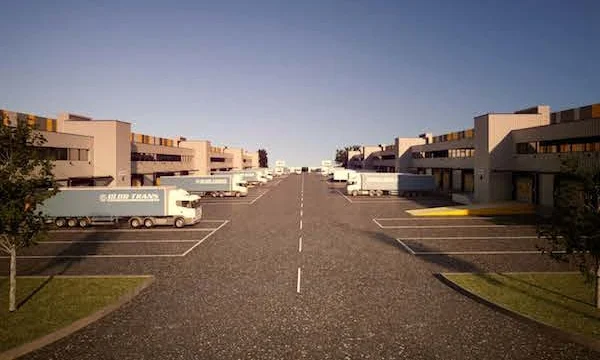
◢ The logistics industry in Iran is burgeoning with international players such as DHL Freight and Maersk Line connecting Iran's supply chains to the world. But Iran's logistics infrastructure remains underdeveloped. Iran Warehouse is making a big bet on logistics real estate and is building Iran’s first true Grade A warehouse park—a 60,000 square meter development in West Tehran.
Coco Ferguson first saw the potential in logistics real estate in East Africa, where as a co-founder of Nairobi-based Maris Limited, she raised USD 60 million to fund the development of Kenya’s first “Grade A” warehouses. Now she wants to replicate that success with Iran Warehouse, a company she founded alongside Nader Sianaki, whose family developed some of Iran’s first modern warehousing seventy-five years ago.
The logistics industry in Iran is burgeoning. International players such as DHL Freight and Kuehne + Nagel are connecting the Iranian market to the world by land, while Maersk Line and MSC create new links by sea, facilitating the significant increase in the variety of foreign goods available in Iran since the lifting of international sanctions in January of 2016. The rise of e-commerce has also led to significantly more demand for timely and reliable logistics and distribution services.

Despite these new entrants, Iran’s logistics real estate remains greatly underdeveloped. The World Bank began ranking global logistics infrastructure in 2007 with the Logistics Performance Index. The index looks at five factors: timeliness, customs, infrastructure, international shipments, competence, and tracking. The world’s top ranked country is Germany. Iran ranks 96. Though infrastructure is one of Iran’s stronger categories, its score of 2.67 is significantly below Germany’s score of 4.44. A lack of warehousing is one major reason for the shortfall.
Ferguson and Sianaki estimate that Tehran alone needs 2-3 million square meters of Grade A warehousing space. Current capacity is just 10 percent of that amount. Iran Warehouse has ambitious plans to fulfill latent demand and change the face of what Ferguson calls an “unglamorous sector.”
The company has raised 80 percent of an initial EUR 10 million funding round from a combination of European investors and Iranian banks in order to develop Iran’s first true Grade A warehouse park—a 60,000 square meter development in West Tehran, located near the junction between the Azadegan Expressway and Fath Highway. The company currently operates a 6,200 square meter facility in Shurabad. Further sites are under planning.
Iran Warehouse is entering a sector characterized by fragmentation and inefficiency. Nearly all warehouses in Iran are owner-occupied, bucking the international norm. Manufacturers and logistics firms around the world typically seek to avoid the cost and hassle of owning their own warehouses, opting instead to lease space from logistics real estate firms. The world-leading logistics real estate company is San Francisco-based Prologis, which oversees a portfolio assets worth USD 79 billion. The Chairman and CEO of Prologis is Iranian-born Hamid Moghadam. One of Europe’s largest logistics real estate companies with 630 properties, Logicor, is also led by an Iranian, Mo Barzegar.
But in Iran itself, commercial enterprises treat real estate assets as a hedge against volatility and risk. Banks have also been historically reluctant to provide loans to enterprises without real estate collateral. The incentives for companies to own their own warehouses are clear.
Owning real estate does not however mean that Iranian logistics companies value it. A 2018 study by researchers at the Iran University of Science and Technology surveyed 119 Iranian logistics providers, who were asked to rank key success factors in their industry from one to five, with five being the most important. Just ten respondents gave “fixed assets” which includes warehousing facilities, the highest score of five, while 47 respondents scored fixed assets at one. It is fair to assume that logistics providers have a limited appreciation of the additional costs and lost efficiencies represented by the current configuration of logistics real estate in Iran.
Even Iran’s largest companies often make do with numerous small warehouses, which requires them to take-on additional staff and equipment for each site. Ferguson believes that companies in Iran are paying a 30 percent premium on overhead because of such configurations. Add to this the additional costs of inventory management and distribution from multiple centers, and overall logistics costs are probably 60 percent higher than would be the case for a company with access to a well-located and professionally-managed warehouse. The additional cost is passed onto the consumer, creating wider economic consequences.
For Iran Warehouse, these high costs present a unique opportunity. Ferguson acknowledges that Iranian companies have ingrained habits, but cites early success in demonstrating to potential clients how upgraded logistics infrastructure and professional third-party management can unlock value.
The company has partnered with Niktak Freight Forwarders and Shipping, the Geodis agent in Iran, to provide distribution services in addition to the operation of its warehouses. Turn-key solutions have seen Iran Warehouse win 5-7 year leases from clients, rather than the one-year leases that have been commonplace in the warehousing market.
A rendering of Iran Warehouse's planned 60,000 square meter facility
For investors, warehouses may not seem like the most appealing assets, but Ferguson thinks those looking at Iran often overthink their strategies. “Iran is seen as a high risk market, and so investors naturally gravitate towards high-risk, high-reward businesses,” she notes. “Investors tend to ignore the very low risk opportunities in an area such as warehousing.” Warehouses, unlike other forms of real estate, can be built in phases as clients are found, limiting the risk to upfront capital.
While Ferguson expects to generate conservative returns of 15-18 percent for her investors, she notes that Iran Warehouse’s revenues are tied to contracts indexed to the Euro, eliminating exposure to volatility in foreign exchange. Given that Iran’s currency has lost over 30 percent of its value over the last year, an insulated 15 percent return is inherently attractive.
Moreover, the Iran Warehouse business model is not dependent on new companies entering the Iranian market. With political uncertainty having limited the number of new multinational companies entering Iran’s consumer markets in the last year, history shows, Ferguson believes, that the global FMCG companies currently active in Iran “are definitely sticking around.”
By focusing on the storage and handling of food and finished goods, rather than industrial products, Iran Warehouse will enjoy consistent demand however the political tides may turn. The anchor tenant for the company's new facility is global food and beverage giant Nestle, which has been operating in Iran through its local subsidiary for 15 years.
Ferguson observes that a lot of the current real estate development in Iran will necessarily require further development in warehousing: “There are 65 shopping malls being built in Tehran,” she says. “But I don’t know of a single major third-party warehousing development to actually hold the goods that are going to go into stores. Without development on the logistics side, distribution costs will remain unreasonable.”
Moreover, as zoning in Tehran is changed to reduce congestion, many smaller warehouses located in what are now centrally-located neighborhoods are being converted to residential or retail developments. Tehran Municipality therefore has an interest in seeing consolidation in logistics real estate. Newly constructed warehouses will often be situated in Tehran’s traditionally blue-collar outskirts, which have seen factories relocate further afield, to places like Qazvin. These new facilities will bring much-needed jobs. Iran Warehouse’s Azadegan site will create 250 jobs when fully developed.
A huge proportion of Iran’s economic potential remains unrealized simply because of the inefficient configuration and use of existing resources. World-class investments in logistics real estate, though unglamorous, could prove one of the most fundamental ways to create economic value. For Ferguson and Sianaki, who look upon Iranian-led Prologis and Logicor as models to emulate, the challenge is to “bring that winning mentality home.”
Photo Credit: Iran Warehouse