
Country Managers Are Making Post-Sanctions Iran Work
◢ Behind every successful multinational deal in Iran is a country manager. These executives seek to balance the commercial goals of their companies with the needs of Iran's post-sanctions economy.
◢ Country managers are a critical link in what is essentially a bureaucratic system. Policymakers need to help make this bureaucracy work better with better rules and systems so that country managers can succeed.
This article was originally published in LobeLog.
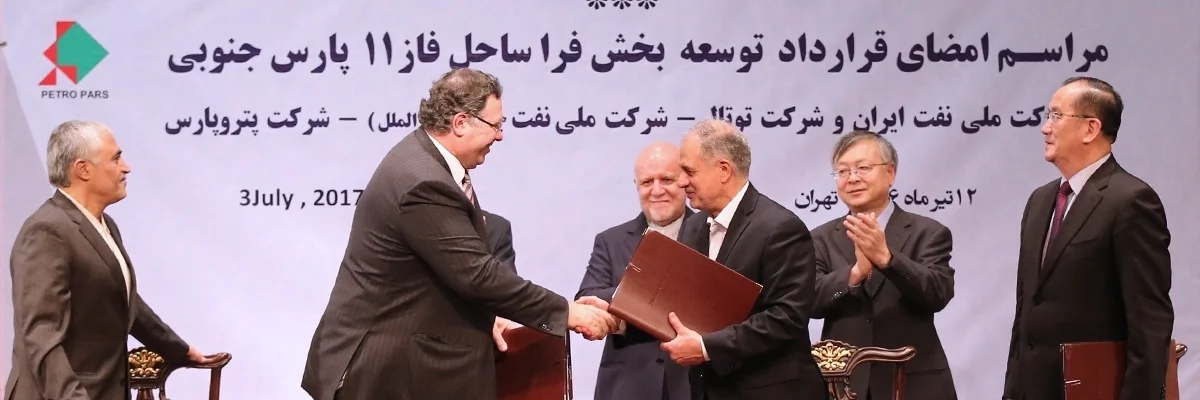
On July 3, Patrick Pouyanné, the imposing, former rugby-playing CEO of Total, arrived in Tehran to sign a landmark $5 billion contract to develop Phase 11 of Iran’s South Pars gas field in cooperation with the China National Petroleum Corporation and Petropars, an Iranian firm. The deal was a sign of Pouyanné’s ambition and resolve in the face of the Trump administration’s rhetoric towards Iran.
But the credit for the deal should not go to Pouyanné. Behind every CEO who travels to Iran to sign a deal, there is a “country manager” who paved the way. In the case of Total, it is Eric Festa, whose formal title is managing director for Iran. Erik is one of a small but growing brigade of country managers who are on the front lines of Iran’s post-sanctions economy.
These country managers are tasked to conduct business in a market, which multinationals euphemistically classify as a “growth market” or “development market.” The country managers typically assigned to Iran have experience operating within other similarly complex markets. Most country managers do not have Persian language skills, though some companies have assigned diaspora Iranians to the role. Country managers are chosen for their understanding of the need to balance relationship-based business with strict attention to issues of risk management and compliance. They also tend to have something of a taste for adventure and a willingness to adapt to a new business culture. Some have relocated to Tehran, but most travel in and out of the country every few weeks.
“Country manager” is a grab-bag term. As a rule of thumb, the formal job title of the country manager reflects the stage of the multinational corporation’s investment in Iran. At the earliest exploratory stage, the individual could merely be a head of a project office. As the commitment to the market grows, the job gains more authority, and “country manager” becomes the more common title. As the business moves to a rollout phase, the title is commonly elevated to a corporate vice president role where the individual is also the director of the Iran business unit. For the multinationals with the most advanced investments, such as a dedicated subsidiary or joint venture, a CEO or managing director with significant autonomy and authority often leads the Iran business, overseeing a staff in the hundreds.
The Western policy community has devoted significant time and resources seeking to locate influence within Iran’s political structure, often using its byzantine nature as an excuse to declare, for reasons of expediency rather than clear evidence, that a certain individual or office is the most powerful. Yet, far less attention has been given to the organizational structures that govern the flow and operation of post-sanctions international capital into Iran.
A Useful Bureaucracy
Country managers are the critical actors behind post-sanctions investment in Iran, but they remain essentially invisible in the structure and organization of that trade. It is telling that there exist more flowcharts explaining political decision-making in Iran than commercial decision-making.
The consequence of this blind spot is an inherent distortion in the way power and influence in Iran are understood. This distortion is particularly acute given the status of economic development as the fundamental political priority across Iran’s political spectrum. This economic development hinges on the success of country managers in balancing the commercial directives of their companies with the political and practical needs of Iran’s industries. At the moment, most analyses of Iran’s post-sanctions political economy presuppose that Iranian power brokers such as members of the Revolutionary Guard are unilaterally setting the terms for commercial activity. But in reality, the process of post-sanctions trade and investment is an ongoing negotiation in which country managers have meaningful leverage: the ability to withhold much-needed foreign investment.
On this basis, a full assessment of power and influence in Iran today must account for the role of the country manager. Max Weber, when he long ago posited the concept of the bureaucracy, dispelled the idea that state administration and industrial administration were distinct. Not only are the administrative methods of the state and industry effectively the same—reflected both in the technocratic tendencies of Iran’s political class and in the emergence of multinational corporations as so-called “private empires”—but the execution of large-scale trade and investment also requires the functioning of a single overarching bureaucracy involving governmental and corporate actors from both the domestic and foreign spheres. Country managers, who serve as the administrative link between these two spheres, are the central bureaucrats of post-sanctions trade and investment in Iran.
The bureaucratic nature of trade and investment, which favors rational, technical, governable, and stable decision-making, also makes the attendant processes inherently vulnerable. Although country managers may be quite influential in Iran, none would ever boast about their power or influence. Like most bureaucrats, they feel beholden to systems much greater than themselves. Iran ranks low in ease-of-doing-business, and by no means are its domestic state or industrial bureaucracies efficient. Iran’s post-sanctions reintegration with international systems for enterprise and finance has proven difficult, and country managers experience these myriad challenges firsthand.
Strengthening the Bureaucracy
To improve the expected outcomes associated with the new influx of trade and investment in Iran, the policy community that supports constructive engagement must do more to empower country managers by addressing vulnerabilities in the bureaucratic structure in which they operate. Interventions are needed on a few fronts.
Continuing to borrow from Weber, a bureaucracy depends greatly on its legitimacy. Country managers struggle to position themselves as effective negotiators because they have a difficult time signaling that their leverage within the given commercial negotiations matters. This leverage centers on the notion that country managers can withhold the investment of their multinational companies if terms are not attractive. However, so long as a narrative persists that other political forces may prevent that investment anyway, the country manager has little to no leverage. It is not the case, as some suggest, that political uncertainty is making Iranians desperate to strike deals. Iranians see little reason to engage in reforms and offer more favorable terms when the payoff is not certain. This fact explains why European governments have devoted so much effort to tightening the coordination between government and commercial actors in regards to Iran. The creation of a credible political commitment has been fundamental to the strengthening of the negotiating power of the country managers. Importantly, in this regard, European ambassadors serve as a kind of political partner to the country managers in Iran.
However, the effort to legitimize trade and investment in Iran has its limitations. The permissibility of trade and investment in Iran is no longer primarily a question of legitimacy. Although the legal basis for post-sanctions trade provides a rational, legal authority for those who wish to pursue that business, there remains a “fear factor” associated with Iran that is sometimes inherently irrational. Policymakers have been hesitant to engage concerns around the perceived moral dubiousness or danger of engaging commercially with Iran, perhaps because they see these matters as reflective of a fraught emotional politics. But there needs to be a greater understanding that these emotional issues have a direct bearing on the ability of Iran trade and investment to become more fully bureaucratic, and thereby more fully constructive. Unless steps are taken to provide assurances on the permissibility of trade and investment beyond the basic question of legality, the fuller picture of legitimacy will never be addressed, and therefore bureaucratic actors such as country managers will always remain hamstrung, unable to fully articulate the legitimacy of a proposed engagement to key stakeholders. They will constantly struggle to relay their on-the-ground knowledge of Iran to decision-makers whose impressions are shaped by threatening headlines.
The country manager must also be empowered with a rational commercial framework in which to operate. The rules that govern trade and investment in Iran remain relatively disorganized. Lingering issues around international sanctions and Iranian regulatory frameworks alike mean that companies need to continually evaluate the rules of engagement. As such, country managers who play roughly the same role within the companies across national affiliations and across industrial sectors find themselves spending inordinate amounts of time simply clarifying the rules for their own specific commercial activities.
The most significant example can be seen when multinational corporations seek a specific license for their Iran business activities, principally from the U.S. Office of Foreign Assets Control. With this licensing policy, the U.S. political establishment is using its tools of administration to exercise jurisdiction over the bureaucratic function of European trade and investment. One bureaucracy is undermining another for the ostensible purpose of protecting security interests. But in forcing Iran trade to be less bureaucratic, less regular, and less basically normal, the policy is counterproductive.
Although general licenses are meant to set non-specific, system-wide rules about the administration and operation of business in Iran, persistent ambiguities prevent the creation of a standard practice that establishes such rules. Add to this the reputational issues around engaging with Iran and the rationale for business in Iran remains a very personal decision, dependent on the resolve and risk appetite of the country managers and their superiors. On the Iranian side, a similar personal dynamic exists. The acceptability of a commercial arrangement is based to a large extent on the strictness with which key stakeholders, such as Iranian ministers or commercial partners, apply formal regulations (such as protectionist laws) and uncodified expectations (such as political resistance).
Defining Best Practices
To address both jurisdictional interference and the personal contingency of trade and investment, European governments and industrial companies must develop a more rigorous set of standard practices that establish the rational rules for engaging with Iran. To do so, far greater effort must be spent on policy research to devise and implement best practices for Iran. Just as few studies have been made to locate domestic and foreign commercial actors within Iranian power structures, little research is being conducted to examine issues of industrial policy, economic planning, and management practices within the Iranian context. Relatively few events and forums bring country managers into dialogue with experts who can help define best practices.
The existence of best-practice rules and guidelines will also improve the bureaucratic operation of trade and investment in Iran by making individual country managers more dispensable. At the moment, the entrepreneurial nature of the role means that when country managers leave their post, the learning curve for their successor is especially steep. This “key person risk” prevents the smooth functioning of trade and investment. Iran will struggle to see adequate trade and investment if deals rely too much on the quality of the individual country manager or the administrative wherewithal of the particular company. Although Total may have been the first international oil company to sign a post-sanctions contract precisely because of the company’s unique strengths, the success of post-sanctions investment depends on the emergence of durable, sector-wide competencies.
Over all, the ability for country managers to facilitate economic development in Iran that is both great in magnitude and constructive in impact will depend on the ability for trade and investment in Iran to operate along more regularized and bureaucratic lines. To do so, policymakers must recognize the central role played by country managers in the legitimization and rationalization of commercial engagements with Iran. It is easy to take bureaucracy for granted. But in the delicate effort to improve the political and economic administration of Iran’s post-sanctions trade and investment, success must be systemic.
Photo Credit: Total
The Greatest Asset: Funding the Future of Education in Iran
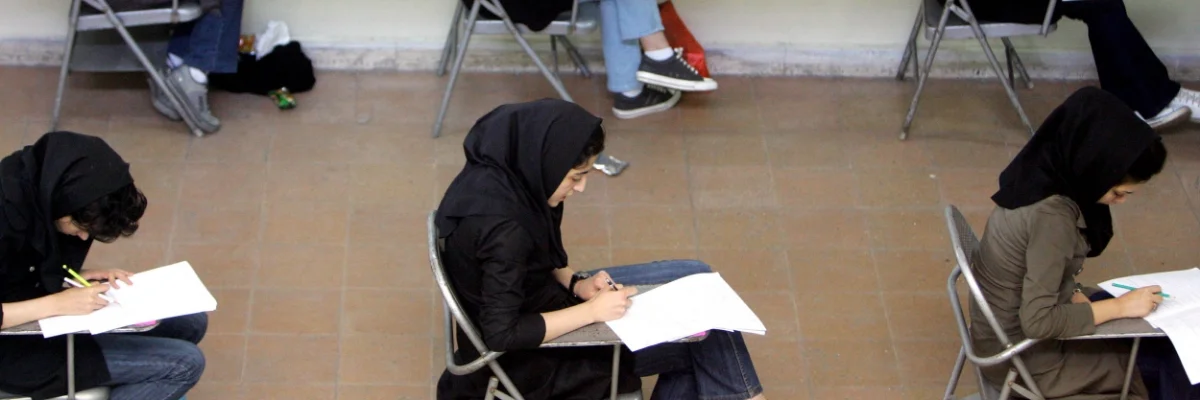
Iran's higher education sector is one of the country's greatest assets, with 4.5 million women and men pursuing degrees. But for universities to offer more time and attention to its individual students and faculty, increased funding is necessary. Iranian institutions can do more to secure this based on innovative models from other countries.
Iran's higher education sector is one of the country's greatest assets, with both women and men achieving degrees. Iran's Organization for Investment, Economic and Technical Assistance issued a report in 2013, highlighting the potential of the academic sector in Iran. It stated that in that year, the country had 4.5 million active university students studying at bachelor's, master's and doctoral levels.
Scimago, in an index of global academic prowess, ranked Iran 16th worldwide in 2015. Previous editions of the index also conjectured that by 2018, Iran could become the fourth largest contributor of academic publications in the world, and the country would notably rank first among Islamic nations.
It is therefore important to support these institutions so they can continue to thrive and grow. Prior to working in Iran, I spent a considerable time in the United Kingdom. As a student in the UK, I learned about the possibility university leaders have to take advantage of alternative investment streams to support academia. Now back in Iran, in my role at Hekmat University in the Holy City of Qom, I have come to recognize that standard channels of revenue, such as tuition, can only do so much to support the growth and development of higher academic institutions.
In my daily duties at Hekmat, I am responsible for the welfare and academic progress of students during their time with us. What is clear is that these students deserve as much time and attention as possible to help them reach their goals. But for a university to offer time and attention to its individual students and faculty, funding is necessary. Iranian institutions can do more to secure this funding in innovative ways, based on model examples from the practices of other countries.
Investing in Learning Outcomes
The academic community in Iran ought to begin intelligently seeking new sources of funding. There are a few ways this can be done.
First, universities can seek to commercialize innovations. Science and engineering departments in particular can conduct large research and development projects by working with major corporations. Ideally Iran's scientists and engineers should be given the opportunity to develop their scientific models with the added support of the private sector; I must add that this is an ideal way to validate if the new innovations are even commercially viable. Universities can add to their intellectual capital as research institutions through partnerships with private-sector businesses.
Small-scale initiatives, such as startups, are also relevant. Iran’s buzzing startup scene should be considered by universities attempting to engage and support students post-graduation. Tehran University has created a successful model for such engagement through its partnership with Sarava Pars' Avatech Accelerator program.
The emphasis on developing universities as post-graduate research centers has been a focus of education policy in some countries, such as the UK, in recent years. During my stay in the UK, I noticed that the Tony Blair government was adamant about getting students in practical courses. And, beginning in 1998, the fruit of this investment helped the UK develop new industries. The value of the creative economy to Britain now stands at $120b annually. In contrast, the over-emphasis on exam performance above practical learning in Iran has weakened our overall ability to compete on an international level.
Second, education should be made available to a wider range of learners who may not be able to be full tuition-paying students of the university, but who may find value in distance and online learning. Distance learning was first developed in Iran with the inception in 1987 of Payam-e-Noor University. The institution now has 487 branches around the country, with some in very remote areas. This system has helped bring many people to higher education.
Looking forward, with the advent of mobile media and applications, we as an academic community should push for more distance learning to be done online, and possibly adopting the increasingly popular model of massively open online courses (MOOCs). Mature students are also beginning to take up a larger proportion of our classes. This in itself is an impressive feat. In recent years we have noticed 40% growth of this student segment. We believe that this portion of students will ultimately put the knowledge they’ve gained into practice in a shorter period of time than younger graduates. Online education can help so-called life-long learners retain access to top education while still in their careers.
Third, universities should begin capital campaigns to help drive the next phase of growth and development. Better campus life, including extra-curricular activities, would help improve the university experience for many undergraduates. But students often must live far from school, with a costly and inconvenient commute. If university administrators, with the help of private sector development firms, could offer quality undergraduate and post-graduate accommodation the overall campus life would improve, offering the chance for students to develop their skills further with such offerings as added classes and evening discussions, or simply time to enjoy and participate in extracurricular activities.
New campuses can also help with growth. Tehran University has made an effort, for a multitude of reasons, to shift many of their students out of Tehran to Pardis, 30 kilometers outside of the capital. This is an ideal way to create new growth for the university as many of the buildings and facilities on the older campuses are not set up to accommodate new kinds of university programs.
Overall, we must use these three new channels of investment—research centers, online learning, and campus development—to feed funding back into the new undergraduate intake. By doing so, we can develop our student potential and encourage re-investment in the cohort, which follows after them, through the fruits of their innovation and hard work.
Ultimately this is the way Iran’s academic institutions must go, but it will require a huge amount of reorganization and cooperation with companies and public agencies. The new revenue streams will ensure the tertiary education sector remains Iran’s great treasure for years to come.
Photo: Wikicommons