
New Iran Metals Sanctions Target Jobs, Not Government Revenue
◢ The Trump administration has announced a new wave of sanctions on Iran’s steel, aluminum and copper industries. But while the administration has claimed the move is intended to deny Iran’s government foreign exchange revenue, the likelier intention behind targeting the metals industry related to the sector’s role as perhaps the single most important employer in Iran.
The Trump administration has announced a new wave of sanctions on Iran’s steel, aluminum and copper industries. A statement from President Trump declares, “Today's action targets Iran's revenue from the export of industrial metals—10 percent of its export economy—and puts other nations on notice that allowing Iranian steel and other metals into your ports will no longer be tolerated.”
It is true that Iran’s metals exports are an important source of foreign exchange revenue. But to put the overall value in perspective, Iran’s finished metals industry accounts for the same share of exports as Iran’s vegetable industry. The largest product group in metals exports, semi-finished iron (USD 503 million), earns Iran less than the largest product group in the food industry, nuts (USD 649 million).
Moreover, it is important to recognize that Iran is already struggling to repatriate foreign exchange revenues due to the severe sanctioned-related constrictions on international banking channels. So the notion that additional sanctions were necessary to constrain this particular source of foreign exchange is dubious at best. Had cutting access to foreign exchange been the specific aim, a waiver system like that formerly in place for oil exports, in which Iran’s earnings would accrue in tightly controlled escrow accounts, would have sufficed.
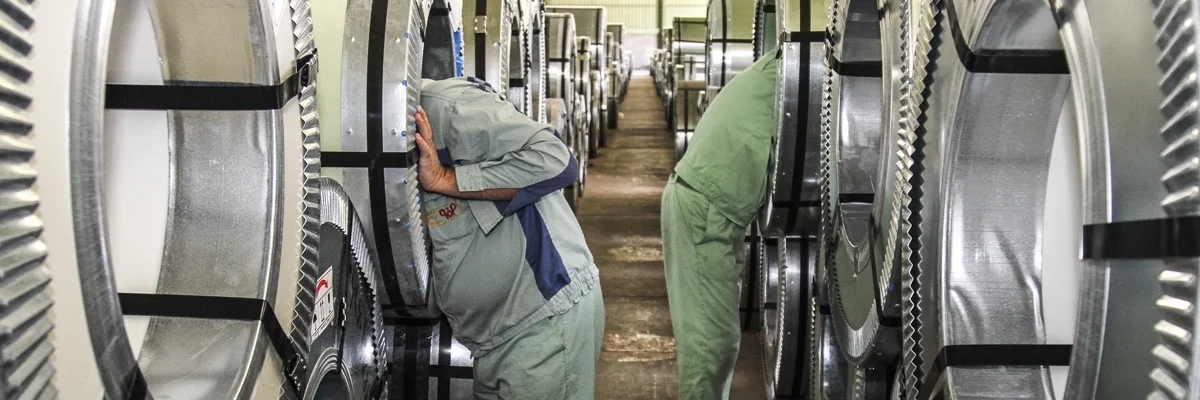
So why is it so important for the Trump administration to target the metals and mining industry? The answer is that the metals and mining industry is perhaps the single most important employer in Iran’s economy. Metals and mining companies directly employ over 600,000 workers. The country’s automotive sector, the largest consumer of Iranian steel, directly employs a further 1 million workers. Combined, the two sectors account for 6 percent of the country’s total labor force.
The new sanctions will likely hit the earnings of Iran’s major metals companies, such as Mobarakeh Steel or the National Iranian Copper Industries Company. But any impact on government revenues will be secondary. Foremost, a disruption to earnings will further deteriorate the balance sheets of Iran’s heavily indebted metals and mining companies. Even if the government steps in to prevent bankruptcies, the likely disruptions to cash flow will lead to wages going unpaid and the prospect of layoffs. Furthermore, a disruption in steel output—whether through shortages or price increases—could also impact output within Iran’s automotive sector, where production has already fallen nearly 40 percent year-on-year and where layoffs have begun to take effect. Just last week, on the occasion of International Labor Day, President Rouhani told an audience of Iranian blue collar workers that they are on the "on the front line" of an economic war.
In April, Donya-e-Eqtesad, Iran’s leading financial newspaper, ran an in depth report on prospects for Iran’s steel exports. The report observed that already significant disruptions in exports were contributing to “the cessation of production and the unemployment of thousands.”
Creating the conditions for mass unemployment—especially among the blue collar workers employed by state-owned enterprises who form the backbone of Iran’s economy—is the likely aim of the Trump administration’s latest round of sanctions. Last month, Mark Dubowitz, a principal advisor on the Trump administration’s Iran policy, called upon the US to more actively support labor mobilizations in the country, drawing an analogy to the US support for the trade-union led Solidarity movement in Poland. To this end, stoking unrest by creating mass unemployment within the metals industry would be consistent with the Trump administration’s “maximum pressure” aims, especially as administration officials have grown more open to confessing their regime change goals.
Photo: IRNA
Australia's MRC to Spend $2.4 Million on Further Iran Mining Exploration in 2018
◢ Mineral Commodities Limited, a listed Australian junior mining company, has entered the Iranian market. MRC has signed agreements that give it rights to majority stakes in two mining projects producing gold and copper in the northwest of Iran.
◢ The company has reviewed thirty projects so far, and has earmarked a USD 2.4 million dollars for further exploration in 2018.
Mineral Commodities Limited (MRC), a listed Australian junior mining company, has entered the Iranian market, announcing a series of acquisitions and exploration joint-ventures with an eye to the country’s rich copper, gold, cobalt, and lithium deposits.
In July 2017, MRC established a wholly-owned Iranian subsidiary, Madan Rahjo Kanyab Company. Bahman Rashidi has been appointed country manager and oversees a team based in Tehran.
MRC, which has experience developing projects in Australia and South Africa, is based in Western Australia and is led by brothers Mark and Jospeh Caruso. The company has moved aggressively into the Iranian market with rollout beginning just this year. In a statement, Mark Caruso, the company’s Executive Chairman highlighted Iran’s position as a “a world class geological and mining jurisdiction” which makes the market attractive “despite global rhetoric and uncertainty surrounding the lifting of sanctions in Iran.” For MRC, it was important to establish “a first-mover advantage” which has been met with “the willingness of the Iranian Government to support and reinvigorate investment in the mining sector.”
So far, the company has reviewed thirty potential “greenfield” and “brownfield” projects, and has so far executed two deals. The first deal is for Tuzlar, a gold and copper mine near Zanjan, in which MRC will exercise the option to acquire a 73.5% interest via its local subsidiary. Initially, MRC will make a USD 680,000 investment to acquire a 22.8% stake in the mine’s owner, Tuzlar Gold Mining and Industry Company, with an option to acquire the remaining 50.7% at a price of USD 2.5 million upon further study. Tulzar was one of the deposits first discovered by Anglo American when the global mining giant was exploring the Iranian market nine years ago, prior to the imposition of international sanctions.
MRC’s second deal is for Asbkhan, a copper and gold project located near Tabriz, in which MRC has the right to build a 75% stake in a special purpose vehicle established to develop and operate the mine. The company plans to spend USD 500,000 on further exploration and development work to earn its majority stake in the project pursuant to its recently concluded agreement.
MRC will fund further explorations of the local market from its operational cashflow and has earmarked USD 2.4 million for exploration budget for next year. The company has signed MOUs with the Geological Survey of Iran and Iran Minerals Production & Supply Company (IMPASCO) in order to furnish the data and site-access necessary to conduct further studies.
Iran’s geological resources have been long coveted in the global mining sector, and metallic and mineral deposits rival the country’s oil and gas reserves for overall economic value. Iran boasts 7% of the world’s total proven reserves of metallic and non-metallic deposits, according to BMI Research, a market research firm. World-leading reserves of zinc, copper, and iron ore remain largely unexploited.
Any mining company seeking to develop and operate mines in Iran will need to work with IMIDRO, the state-owned conglomerate that oversees the largely underdeveloped sector. Deputy Minister Mehdi Karbasian, who is Chairman of IMIDRO, has stated that Iran is seeking to attract USD $50 billion in investment in the mining and minerals sector by 2022. A key strategy to achieve this goal is to support privatization in the industry, which many foreign investors consider a precondition.
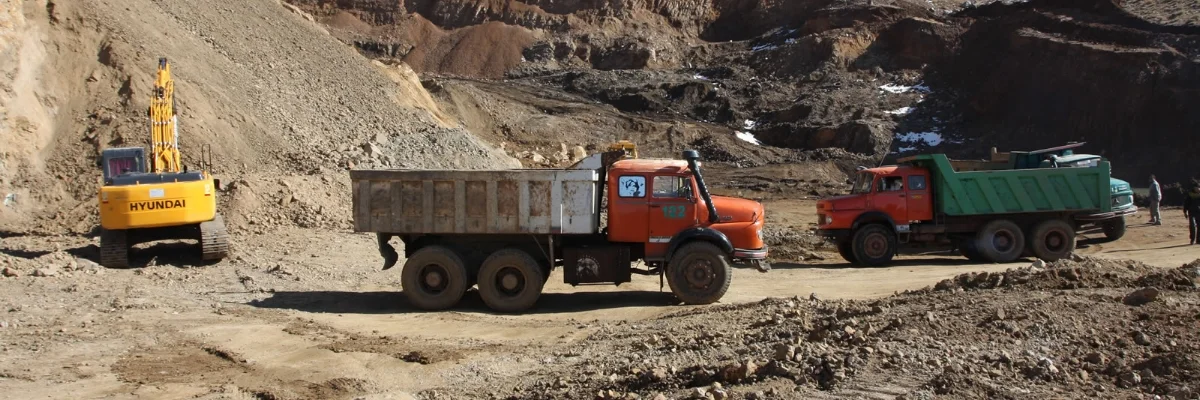
The government's ambitious investment target is somewhat mismatched with the fragmented nature of the sector. Most mining in Iran is still conducted at an “artisanal” scale, with local miners extracting from small concessions using limited machinery.
This circumstance, and the absence of the mining giants, offers junior mining companies an opportunity to enter the market and consolidate projects of surprising value. But consolidation at this scale is unlikely to lead to the scale of investment sought in the government's new five-year economic development plan. IMIDRO has been courting the major mining and commodities firms, including Rio Tinto and Glencore, but political risks have largely dissuaded investment thus far. In the meantime, as MRC's market entry demonstrates, it will be the smaller mining firms making the big moves in Iran.
Photo Credit: Wikicommons