

The Business of Political Economy: Moving from Bazaar to Bourse
◢ A prospective détente between Iran and the West is dependent not only on the normalization of political ties but also on the realignment of economic ties. It is a matter of political economy.
◢ In order to envision the future role of Iran’s private sector, it helps to look to the past and the historical role of the bazaar, once the center of Iranian political economy.
Originally published on Lobelog.com
Anticipation has been building among international investors and business leaders as Iran and the P5+1 edge closer to a nuclear deal. Each week another trade delegation— whether American, or Swiss, or German—makes its way to Tehran to scope out opportunities.
I have argued before that Iran’s private sector business leaders need to play a bigger role in the country’s reengagement of the international community. Indeed, a prospective détente is dependent not only on the normalization of political ties between Iran and the West, but also on the realignment of economic ties. In this sense, détente is a question of both politics and economics. It is a matter of political economy.
In order to envision the future role of Iran’s private sector, it helps to look to the past and the historical role of the bazaar, once the center of Iranian political economy.
The Centrality of the Bazaar
We commonly think of the bazaar as a pre-modern marketplace of dark and winding corridors, full of carpets and other exotica. But the bazaar was in fact the economic heart of Iran until the end of the 20th century. It was even more important perhaps than the country’s oil refineries. In the 1970s, the economic might of the bazaar was so significant that the marketplace controlled “as much as half of the country’s handicraft production, two-thirds of its retail trade, and three-quarters of its wholesale trade.” Beyond trade, the bazaar was also a vitally important creditor. As late as the 1960s, “the bazaars in Iran were estimated to loan as much as all the commercial banks put together.” And even after a decade of expansion of modern banks, “in 1975 the bazaar was estimated to control 20 percent of the official market volume, or 3 billion in foreign exchange and 2.1 billion in loans outstanding.”
In this way, the merchants of the bazaar, known as bazaaris, constituted a powerful network of economic actors. Acting as a social class unto themselves, the bazaaris anchored Iranian civil society, granting immense political power to the Iranian people by supporting mass mobilizations such as the 1905 Constitutional Revolution and the 1953 movement to nationalize the Iranian oil industry.
In 1979, decades of political turmoil culminated in the Islamic Revolution, in which a broad coalition of Islamic and leftist political movements collaborated to oust the Shah. In the years leading up to the revolution, the bazaaris had played a critical role.
The Shah, with his drive for modernization, despised the bazaaris, whom he considered remnants of Iran’s backwards past, ridiculing them for their “worm-ridden shops.” Annoyed by the domination of the bazaar in the retail and banking sectors, the Shah sought to render them obsolete, writing in his memoirs: “’I could not stop building supermarkets. I wanted a modern country.”
The bazaaris felt threatened by the trajectory of economic planning and saw its shortcomings. Sitting within an institution visited by both the lower and upper classes, the bazaaris understood the consequences of growing inequality all too well.
The bazaars’ broad support of the Islamic Revolution, and Ayatollah Ruhollah Khomeini in particular, made all the difference for the durability of the revolutionary movement. In numerous instances, bazaaris across the country mobilized funds and people to ensure that different groups could sustain their protests. In 1977, for instance, bazaaris stepped in to cover professor salaries at Aryamehr University so that protestors could endure a suspension of pay.
Ultimately, the revolution succeeded in establishing the Islamic Republic, with Khomeini as its Supreme Leader. When Khomeini began consolidating power, he quickly sought to neutralize the bazaar, worried that a deteriorating economy would pit the bazaaris against his nascent rule. The new regime rewarded the members of the Islamic Coalition Association (ICA), a small segment of bazaaris, who had “financed and organized many political rallies and events” by making them “part of the new ruling elite.”
By cleverly creating ties of allegiance between the bazaar and the new government, Khomeini sought to eliminate the bazaar as a site for independent political contention. It was no longer an institution of the private sector. Indeed, even today, those bazaaris with ties to the political establishment are referred to as dawlati, meaning “of the government.”
Decline of the Bazaar
Since 1979, weakened by the policies of the Islamic Republic, the bazaar has ceased to be the locus of power in Iran’s political economy. Consider that in the 2009 so-called Green Movement, the bazaar played hardly any role, despite dissatisfaction with the government among many merchants. This was the first time in over a century that the bazaar was not active in a mass mobilization.
Because of the bazaar’s decline in the years following the revolution, and because of the simplistic portrait of Iranian political economy as that of a rentier state defined by oil, scholars and analysts alike have largely ignored the critical role of the bazaar. Only a few works, such as Arang Keshavarzian’s excellent Bazaar and State in Iran and recent scholarship by Kevan Harris, give the institution its due attention.
With the help of this scholarship, it is possible to identify a few key qualities of the bazaar and its merchants. First of all, the bazaaris were private actors, but with strong communal ties and a sense of civic and religious responsibility. Their political leanings were moderated because their fortunes were tied to the economic wellbeing of the wider Iranian public. And they were willing to mobilize resources to support political actors whom they felt represented the interests of the common man.
The emergence of institutional actors with these three qualities could have a profound impact on Iran in a post-sanctions environment and on the road to political reform. Unfortunately, since the weakening of the bazaar, such qualities have been largely absent in any institution of Iranian civil or commercial life. In the current environment, those commercial entities with the means to mobilize resources in politics are neither private, nor sufficiently moderate, nor beholden to a sense of civic duty. They are usually part of the country’s military-industrial complex, serving first-and-foremost their dawlati members.
Therefore, if Iranian political economy is going to once again find its fundamental institution, one that can empower civil society and bolster the middle class, new stakeholders need to step up.
Iran’s Future Political Economy
The most likely candidates are the firms of Iranian private enterprise, especially those that are publically traded and are therefore committed to a wide range of shareholders in addition to their employees and customers. Every member of civil society takes on economic roles as a customer, employee, or shareholder. If these stakeholders can be economically engaged, then Iranian civil society can once again find its capacity to mobilize and make political claims bolstered by economic clout.
In this sense, the future of Iranian political economy requires that the companies of the bourse, Iran’s stock exchange, serve the role once played by the merchants of the bazaar. We might call this the bazaar-to-bourse theory.
This is not to say that business leaders should get involved in politics directly. But when companies seek to provide goods, services, and employment within an economy, they begin to constitute what Keshavarzian calls “socially embedded networks,” which give economic systems political meaning through the everyday transactions of people. If these transactions can occur outside state-controlled channels, the Iranian people will have a better chance of holding their government accountable to promises of reform. Encouragingly, the current Iranian President Hassan Rouhani supports such a rebalancing of Iran’s political economy.
But private businesses have a long way to go. Misguided sanctions have significantly weakened their position in the economy. Shayerah Illias, a researcher at the Congressional Research Service, has noted how sanctions have only contributed to the marginalization of private enterprise begun under Khomeini, awarding more control to state-owned companies and their affiliates. Squeezed by inflation, unemployment, and without an economic anchor in the form of private businesses, Iranian civil society has suffered the most under sanctions.
It follows that, if the United States and the rest of the P5+1 are really committed to a durable political agreement, they ought to properly plan for a realignment of political economy in a post-sanctions environment. Pragmatically speaking, foreign investment cannot be an afterthought of a nuclear deal. Clear and consistent sanctions relief needs to be guaranteed early so that Iran’s private sector can get to work fast. Securing investment and boosting trade will help put businesses in a position to empower their customers, employees, and shareholders. We would expect a reduction in unemployment, lower inflation, greater purchasing power, and altogether more influence for the average Iranian in the composition of the country’s political economy.
On this basis, Iran’s private sector business leaders must aspire not only to the power and influence of the historical bazaar, but also to its sense of community and common purpose. In the bazaar, the “steady accretion of interactions blurred the divide between potentially distinct spheres of life—kinship, friendship, partnership, and commerce.”
When we think about business leaders, it is easy to dismiss them as out-of-touch “fat cats” and to expect little from a capitalist institution like a stock market. But Iran’s business leaders, like the bazaari merchants before them, have the ability to facilitate constructive social change. And Iran is one of the few countries where ideologies of politics and economics find truly syncretic forms.
So far, the signs are encouraging that the men and women of Iran’s private sector are the kind of global leaders we would want to see empowered. To leave them out of the picture of détente would be a mistake. It would also expose an all-too-typical lack of historical awareness on the part of Western policymakers.
“Corporate citizenship” can be more than a buzzword if it is woven it into the fabric of Iranian business culture. The bazaar provides the model to emulate.
Photo Credit: NPR Media
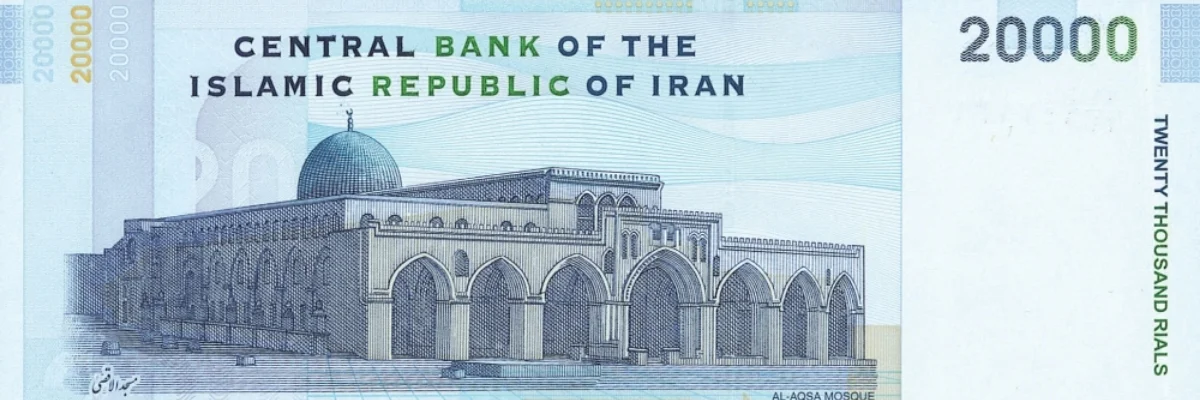
Let It Rule: Imperatives for Central Bank of Iran
◢ In most countries, central bankers wield immense influence over the economy through their monetary policy.
◢ The Central Bank of Iran has struggled to secure the power and independence of its foreign equivalents, hindering economic planning and growth.
“And God said, Let there be light: and there was light.” A central bank’s power is somewhat like God’s, at least in monetary terms, as a former governor of the Central Bank of Iran once said. This is true for the world's most influential central banks such the Fed, ECB, BOJ and BOE or the SNB. The Swiss National Bank's recent move to abandon a self-imposed peg of the Swiss franc against the euro, introduced in 2011, sent the Franc soaring against the Euro by almost 40 percent, is a testament to the power they exert.
But, the CBI is far from wielding the power and independence that its foreign counterparts enjoy.
The bank is under strict financial sanctions, which have diminished its foreign reserves. Thus it has lost face in the foreign exchange market. Gone are the days when remarks by its governor calmed traders. In recent years, even its actions have little effect. In 2012, the bank had to resort to closing down all currency trade in a bid to halt the collapse of the rial, when vows to stabilize exchange rates and financial intervention failed. At that point the bank had overplayed its hand so much so that traders saw the bank reactionary and imprudent. Little has changed in this regard.
Defenders of the bank might counter that the siege on the CBI for allegedly circumventing sanctions against Iran's nuclear energy program is the source of its ineptitude. And yes, having $100 billion trapped overseas does hurt a lot. But that's not all.
Just look at the list of issues the bank is contending with and you'll see that even with a $100 billion, the leopard doesn't change its spots!
It is struggling to bring 7,000 rogue financial institutions, including one Ayandeh bank, under its supervision. The CBI has tried and failed to decrease interest rates for the past year. But, the same institutions have not complied, leading to drainage of deposits from banks towards their coffers.
Furthermore, past monetary decisions by the central bank and the former government have led to tens of billions of dollars of toxic debt on the balance sheets of state-owned commercial lenders, in turn driving them towards property speculation. The central bank is seeking to undo this knot in a civilized way, without undue panic and bankruptcies. Results will materialize slowly, if at all.
When we consider the inability to craft effective policy, at the heart of the matter are the limitations on the central bank's legal powers and its authority to make key decisions.
In most developed countries, monetary policy is the domain of a central bank’s governors. Not so in Iran. The money and credit council, a body within the central bank but controlled by the government, sets monetary policy, not the governor and his deputies. This essentially makes the bank an arm of the Ministry of Finance.
The bank also plays the role of the treasury for the government. It receives oil revenues, and then prints rials and distributes the funds to various government branches. Sometimes the foreign receipt part doesn't take place, thus curbing the bank's control over inflation.
And even when the policies are made, the bank is too feeble to implement them. It doesn't have the capability to exert pressure on banks or the currency market, let alone combat those who defy its commands.
So how can investors and business leaders ask for inflation to be restrained, monetary policy to be set and the currency's value to be stabilized, if they are to rely on such a central bank?
Luckily, the solution is simple enough, at least on paper. A separation of powers is necessary. Monetary policy should be detached from fiscal policy, and the bank should be isolated from politics.
To do so, the bank should be given full autonomy on monetary matters, a structure similar to that enjoyed by its counterparts in developed nations. A system of governance, where by all three branches of government have a degree of influence in the bank's governance would better guarantee the bank's autonomy. But this would require a change in the constitution, a lengthy and difficult process.
Furthermore, the central bank's legal clout and ability to exert power on its turf needs augmentation. Its influence has to cut through the lobbying of vested interests. Its responses to crime must become rapid. For this it needs more legal powers and a wider array of financial tools to help it set and oversee monetary policy. Again lawmakers must empower the bank for the benefit of investor, business leaders, and the economy at large.
Many officials in the current administration have expressed their desire to give CBI greater autonomy and new legislation is under work to give the bank some new powers. But a half-hearted will not be effective. What is needed is a fully independent central bank, as enshrined in law and in the deference of the financial sector at large. After all a strong and independent central bank will help iron-out the full range of economic policies. We ought to let the governor rule his domain.
Photo Credit: mebanknotes.com