
U.S. Sanctions on Iran Set to Return: A Simple Explainer
◢ On 8 May 2018, U.S. President Trump announced that the United States “will withdraw from the Iran nuclear deal” and that the United States “will be instituting the highest level of economic sanctions”. At the same time, U.S. authorities announced that U.S. sanctions would be re-instated, at the latest by 4 November 2018. What does this mean for companies who have ties to Iran or who do business in Iran?
This client note was prepared by the German trade compliance team at Dentons Europe. It is republished here with permission.
On 8 May 2018, U.S. President Trump announced that the United States “will withdraw from the Iran nuclear deal” and that the United States “will be instituting the highest level of economic sanctions”. At the same time, U.S. authorities announced that U.S. sanctions would be re-instated, at the latest by 4 November 2018. What does this mean for companies who have ties to Iran or who do business in Iran?
In January 2016, the U.S. and the EU lifted some of the sanctions that they had imposed on Iran. This was based on an international agreement, the so-called Joint Comprehensive Plan of Action (“JCPOA”). Since 2016, many European companies engaged in business activities in Iran or extended their activities. Transactions with Iran will now meet with severe difficulties, and many companies will be forced to cease and wind down their operations.
In the following, we summarize the most important developments and applicable rules.
U.S. Companies and Their Subsidiaries
Applicable U.S. laws generally prohibit U.S. companies from engaging in any business activities with a relation to Iran. This prohibition also applies to non-U.S. subsidiaries of U.S. companies. Based on the JCPOA, the U.S. had issued General License H. This General License broadly allowed non-U.S. subsidiaries of U.S. companies to engage in business activities with Iran.
General License H will be revoked “as soon as feasible”. It will then be replaced with a “new” General License H; this new General License will, however, only authorize the wind down of existing transactions and operations that had been made possible by the “old” General License H. Wind-down operations must be completed by 4 November 2018.
Adding Parties to the U.S. List of Blocked Parties
The U.S. Government has imposed prohibitions a number of individuals, entities and groups (“Specially Designated Nationals” – “SDN”). Any dealings with SDN are prohibited. In addition, all dealings with a company in which an SDN owns at least 50% of the interest are also prohibited.
Not only U.S. nationals and U.S. companies (amongst others) must comply with this prohibition. Any party must comply with these prohibitions when that party is involved in a transaction that is made in US Dollars or when a U.S. bank or U.S. company is also involved in that transaction.
In 2016, a large number of companies and individuals were removed from the SDN List of the U.S. These parties will be added to the SDN List again. It is currently unclear when that will happen, but at the latest on 5 November 2018. Amongst these parties are Iranian banks as well as the National Iranian Oil Company, and also companies and banks established outside of Iran, e.g. in the EU.
U.S. Measures Targeting Specific Industry Sectors
Before 2016, the U.S. had adopted numerous regulations to deter also non-U.S. companies from doing business with Iran. These regulations, so-called Secondary Sanctions, threaten that the U.S. Government can impose severe measures on non-U.S. companies who enter into transactions with certain industry sectors and with certain entities and individuals in Iran.
These measures can amount to a complete exclusion of the non-U.S. company from the U.S. market and from transactions with all U.S. companies worldwide. This can also mean that companies are designated as SDN. Companies which are faced with the risk of Secondary Sanctions should carefully analyze the risks for continuing their activities. U.S. authorities have stated that they want to enforce Secondary Sanctions in the future.
These measures had been waived or lifted under the JCPOA. They will now be re-instated by 6 August 2018 and by 4 November 2018. Until then, companies engaged in the industry sectors concerned must wind down their operations if they want to avoid Secondary Sanctions.
The most important Secondary Sanctions concern the following activities:
- Wind-down by 6 August 2018
- Transactions with the automotive sector;
- Sale or purchase of graphite, raw or semi-finished metals such as aluminum and steel, and coal;
- Provision of software for integrating industrial processes.
- Wind-down by 4 November 2018
- Transactions involving ports, shipping and shipbuilding, including Iranian shipping lines;
- Petroleum-related transactions;
- Transactions with the petrochemical sector;
- Investments in the development of oil resources;
- Transactions by non-U.S. banks with certain Iranian banks, including the Iranian Central Bank;
- Forwarding of “SWIFT” messages to Iranian banks.
Commercial Aircraft and Related Services
As a result of the close global cooperation in the aircraft industry, any commercial aircraft will include material parts with U.S. origin. As a consequence, commercial aircraft and most spare parts for commercial aircraft can only be supplied to Iran with a license from U.S. authorities. Similarly, even non-U.S. companies require licenses from U.S. authorities for maintenance and other services for commercial aircraft.
Under the JCPOA, U.S. authorities granted such licenses to both U.S. and non-U.S. companies. All these licenses will be revoked. U.S. and non-U.S. companies must wind down their activities under these licenses by 6 August 2018.
The Meaning of Wind-Down
Where a wind-down of operations or business relations is required, deliveries and supplies can be made, and services can be provided, until the wind-down date, but only if the contract has been concluded before 8 May 2018.
Business activities and operations must end by the applicable wind-down date. In order to end business operations, companies are allowed to “engage in all transactions ordinarily incident and necessary to wind down” the activities. This may be necessary, for example, where contracts specify delivery dates that are later than the wind-down date.
Non-Iranian companies can receive payments even after the wind-down date, if the following two conditions are fulfilled: The contract has been concluded before 8 May 2018, and all deliveries have been made by the wind-down date. This also applies to loans or credits granted by non-Iranian banks. By contrast, Iranian banks and companies may not receive any payments after the wind-down date.
Activities that Remain Permitted
Even before 2016, U.S. authorities had issued General Licenses which permit certain business activities in Iran. The most important General Licenses are a General License that permits the export to Iran of food, foodstuffs, agricultural items, pharmaceutical products (drugs) and medical devices (often referred to as the “AgriMed” General License). In addition, U.S. authorities had issued a General License that permits the export to Iran of many standard IT items and software, if these products could be acquired without restrictions on the general market (General License D-1).
Based on information that is currently available, these General Licenses will not be revoked, and exports under these General Licenses remain permitted. These General Licenses cannot only be used by U.S. companies, but by companies from other countries as well.
EU Companies: Existing EU Sanctions Still Apply
The EU has not changed or amended the respective EU sanctions. For EU companies who have business operations in or with Iran, the EU sanctions and embargo apply in addition to the U.S. measures. The most important restrictions under EU sanctions and embargos are the following.
Sanctioned Parties and “Financial” Sanctions
The EU has imposed prohibitions to enter into business transactions with a number of individuals, entities and groups in Iran (so-called “Designated Parties”). EU companies may not make any payments and any deliveries to Designated Parties. There are also restrictions for dealing with companies which are owned or controlled by Designated Parties. These range from increased due diligence requirements to prohibitions on dealing with such subsidiary.
Export Prohibitions
The EU has adopted several lists of items which may not be supplied to Iran. It is also prohibited to conclude sales contracts for these items, to provide technical support services or the provision of export financing for these products. These prohibitions apply, e.g., for military items (arms embargo) and for certain items that could be used in a nuclear program.
Export Licensing Requirements
In addition, licenses are required to supply certain items to Iran. The items concerned are also included in several lists adopted by the EU. As with the export prohibitions, licensing requirements do not only apply for the actual export of these items, but in addition for the conclusion of the respective sales contract, the provision of technical support services for these items or for the provision of export financing of these products. Licensing requirements apply, for example, for the supply of items for the interception of telecommunication, of less important items that could be used in a nuclear program or for graphite, raw or semi-finished metals such as aluminum and steel. Depending on the product in question, licensing procedures may be quite complex, because some licenses must be reviewed by a special committee established under the JCPOA before they are granted.
Restrictions for Investments in Iran
In accordance with the EU sanctions and embargo, establishing companies in Iran or investing in companies in Iran may be prohibited or may require a license. These restrictions apply to companies which engage in certain business activities in Iran (e.g. in activities linked to the nuclear sector). The same restrictions apply for providing financing to companies in Iran.
Trading With Iran in the Future
These new unilateral U.S. measures will severely impact doing business with Iran and doing business in Iran. In addition to the prohibitions and other restrictions that apply to certain business activities directly, the U.S. measures will have a severe “chilling” effect. Companies will refrain from business activities involving Iran, and banks will refuse to provide financing for business activities in Iran.
As a result of the Secondary Sanctions threatened for sending SWIFT messages to Iranian banks, there is a risk that it will become impossible (again) to make electronic transfers of funds to and from Iranian banks. In addition, banks will now be even more reluctant with processing payments to and from Iran. EU companies will face the problem again that they may have perfectly legal business activities in Iran but will not be able to find a bank where they can receive payments.
It remains to be seen if European leaders manage to find a unified response to the new measures adopted unilaterally by the U.S.
Photo Credit: REX/Shutterstock
Trump Stance on JCPOA Nuclear Deal Poses Legal Dilemmas for Iran
◢ With the May 12 deadline for the issuing of key sanctions waivers as part of the Iran nuclear deal fast approaching, the legal impact of the collapse of the 2015 agreement ought to be considered. Regardless of how Iran responds to a change in U.S. policy, the possible withdrawal of the United States from the JCPOA will have a legal impact on its parties. Any possible change in the partnership or the provisions of the agreement will be reflected within the domain of international law.
With the May 12 deadline for the issuing of key sanctions waivers as part of the Iran nuclear deal fast approaching, what could be the impact of the collapse of the 2015 agreement? While Donald Trump's conditions for the review of the current arrangement have yet to be met and Iran's clear rejection of any amendments to the plan, the breakdown of the Joint Comprehensive Plan of Action (JCPOA) seems inevitable.
The nuclear deal is the most important multilateral agreement reached in the global nuclear non-proliferation system in the last decade. It is now at risk of collapse. There are three options for Iran should the US withdraw from the JCPOA.
First, Iran could exit the deal immediately and continue to fulfill the obligations under NPT and to the IAEA based only on the safeguard agreements with the agency. This is seen as the worst case scenario by the EU, E3 and the IAEA.
Second, Iran could exit the deal immediately, but continue to fulfill its commitments to the International Atomic Energy Agency (IAEA) based on both safeguard agreements with the IAEA agreed as part of the JCPOA and its preceding agreement, the Joint Plan of Action (JPOA). Under these safeguards Iran has suspended enrichment of uranium to 20 percent.
Third, Iran could opt to remain in the deal on the basis that the European Union and E3 (UK, France and Germany) will provide additional benefits to Iran to compensate for the negative effects of US withdrawal.Iran’s deputy foreign minister, Abbas Araghchi, one of the key architects of the JCPOA, has stated that as long as Iran continues to benefit from a removal of sanctions, it will remain committed to the deal, but has expressed doubts that the France, Germany and the UK will be able to guarantee Iran’s interests in the absence of the United States.
Regardless of which route Iran takes, the withdrawal of the United States from the JCPOA will have a legal impact on its parties. Any possible change in the partnership or the provisions of the agreement will be reflected within the domain of international law.
The Threat of Snapback
Trump has threatened not to issue the crucial waivers that have suspended US secondary sanctions on Iran. On May 12, Iran may find itself in a position not of its own making. Despite unprecedented international monitoring and scrutiny of its nuclear program, and despite the IAEA's approval of its commitments without the slightest deviation for military purposes, it may once again face significant economic sanctions, even over the vital sale of its oil. However, snapback of US secondary sanctions could actually preclude snapback of UN sanctions, if the deal remains intact following Trump’s withdrawal.
One of the provisions of the JCPOA, unprecedented in the 70-year history of the Security Council, is the decision-making process of the partners required to resume sanctions. According to Article 37 of the JCPOA, if the dispute resolving mechanism is unsuccessful, the UN Security Council will vote on a resolution to continue the lifting of sanctions.
In such a case, the United Nations Security Council would vote for a resolution to suspend sanctions. As described in a recent report by Stephen Mulligan, an attorney with the Congressional Research Service:
The ‘snapback’ mechanism thus places the onus on the Security Council to vote affirmatively to continue to lift its sanctions by stating that those sanctions will be implemented automatically unless the Security Council votes otherwise. As a permanent member of the Security Council, the United States would possess the power to veto any such vote and effectively force the reinstatement of the Security Council’s sanctions on Iran.
In this process, the vote of all five permanent members of the Council is critical. If one of these members does not agree with the suspension of sanctions, it alone can easily restore a series of Council sanctions under Article 41 and Chapter 7 of the United Nations Charter (threats to global peace and security).
However, if the United States pulls out of the JCPOA, triggering the snapback of its secondary sanctions against Iran, it may lose the ability to use the UN sanctions snapback threat which is articulated with Article 37 under JCPOA. In other words, only parties to the Iran deal are able to trigger the UN nuclear sanctions snapback procedure. If the US withdraws from the deal, it loses the ability to trigger this mechanism.
This would be a reprieve for Iran, but there are further legal pathways that should be considered in order to prevent more damages by the US to the non-proliferation regime and international law.
Recourse to the International Court of Justice
The IAEA has verified in eleven reports that Iran has fully complied with its commitments under the nuclear agreement. On this basis, Iran feels it is facing punishment without justification.
Iran can, on the basis of Clause 2 of Article 21 of the Treaty of Amity, Economic Relations, and Consular Rights (1955), file a complaint with the International Court of Justice (ICJ) against the United States on the basis that it has had a detrimental effect on its business and trade with other countries.
Punishing Iran with various economic sanctions, including the vital sale of its oil, may result in Iran’s withdrawal or limited implementation of its political commitments under JCPOA. Depending on whether Iran completely abandons JCPOA or suspends some of its commitments under the agreement, it means the end of the current inspections and the IAEA's ability to continue a complete and unprecedented monitoring of Iran's nuclear program. The result is the inability of a United Nations agency to carry out its mission.
The current situation has created a legal impediment, despite the wishes of Iran, for the IAEA and the members of its board of governors including the United Kingdom, France and Germany. According to the definition of the Vienna Convention on the Law of Treaties 1969, the JCPOA is not considered to a treaty, under which definition a violation would result in a case directly taken as a complaint to the International Court of Justice.
However the IAEA is an agency authorised by the UN and if it cannot reciprocate with its obligations to a UN member state that has been in compliance with the nuclear agreement (Iran) due to the interference of a third country, the IAEA can, on the basis of Article 96 of the UN Charter, and Clause 1 of Article 65 of the Statute of the International Court of Justice, for the first time in its history, resort to the ICJ for an advisory opinion on the legal status of the JCPOA.
There is some precedent for such a request by an international organization like the IAEA. The World Health Organisation has taken a similar action on threats to the use of nuclear weapons in armed conflict, requesting a referral from the International Court of Justice. The ICJ’s response would not be legally binding but it would be a new source of international law, and may be considered by the other parties to the nuclear agreement as an official advisory about their treatment of deadlock with the United States.
The JCPOA is an improbable achievement, an agreement reached after Iran had been subjected to the harshest sanctions regime ever imposed. In political practice and in the domain of international law, the JCPOA provides a new way of resolving disputes in support of the nuclear non-proliferation regime. the agreement collapses it would be, as in the words of Yukiya Amano, Director General of the IAEA, a “great loss for nuclear verification and for multilateralism” and in my view also for international law more generally.
Photo Credit: Wikicommons
Can Blocking Regulations Help Europe Protect Its Iran Business From Trump?
◢ In the last week, European business leaders and policymakers have grown more vocal about the possibility that the European Union would employ blocking regulations to protect European businesses from the reach of US secondary sanctions on Iran.
◢ Despite limits to their legal effectiveness, blocking regulations can serve as part of the suite of political, legal, and commercial measures employed by European governments to protect their businesses in Iran.
In the last week, European business leaders and policymakers have grown more vocal about the possibility that the European Union would employ blocking regulations to protect European businesses from the reach of US secondary sanctions on Iran. These regulations would penalize European companies for complying with secondary sanctions, which may snapback if the Trump administration decides to withdraw from the Iran nuclear agreement.
Total CEO Patrick Pouyanné became the first high-profile European executive to publically call for such measures to be considered, disclosing that Total has been in discussions with French and European authorities about “means to protect investments already made in Iran, even in the case of the return of sanctions.”
Speaking at a conference in Paris last week, Denis Chaibi, head of the Iran Task Force of the European External Action Service, stated that the EU was “looking at a number of possibilities” regarding the regulations.” In his assessment, “it is not complicated to do it legally in that the legal instrument exists, but it doesn’t require a huge internal debate,”
These public statements come as European concerns grow regarding the Trump administration's ultimatum to “fix” the Joint Comprehensive Plan of Action. The critical deadline is May 12, when the United States will need to once again waive its secondary sanctions on Iran. Failure to do so would see secondary sanctions “snapback,” exposing European companies to extraterritorial penalties for their commercial activities in Iran.
But even if the European Union finds the political will to reinstitute blocking regulations in the event of snapback, it is unclear whether they fully effective as a standalone measure to protect European trade and investment in Iran. Blocking regulations are a legal mechanism which seeks to mitigate the extraterritorial effects of sanctions under Public International Law (PIL), the body of law that governs relations between sovereign states and their unions, such as the European Union.
International trade attorney, Edward Borovikov, managing partner at the Brussels office of Dentons, a global law firm, notes that under international law “Sovereign states are expected to exercise moderation and restraint if their legal acts may affect vital economic and commercial interests of another state. But sometimes states violate the principle of restraint for their own national security considerations.” The snapback of secondary sanctions by the Trump administration would represent once such case. In such situations, “there is no efficient and universal legal avenue under PIL to challenge such non-compliance,” says Borovikov.
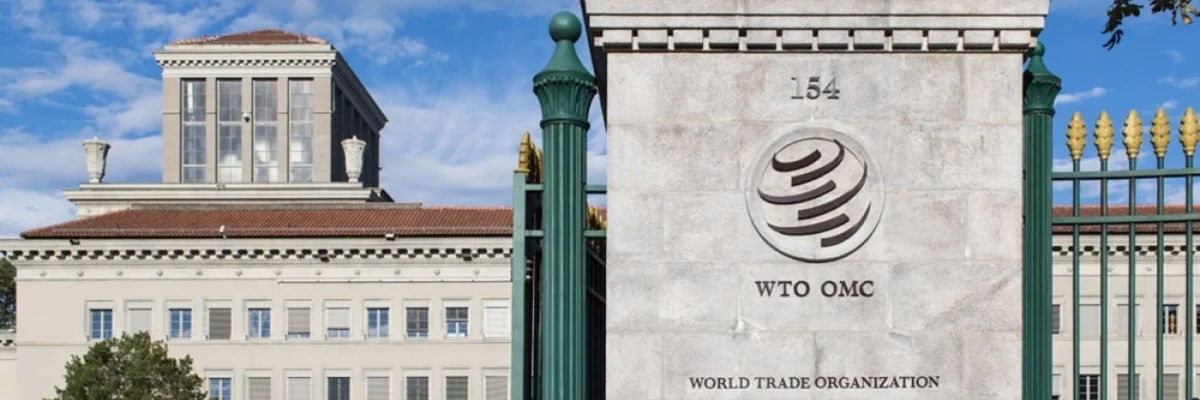
While the World Trade Organization (WTO), which was established under the authority of PIL, may seem a venue to challenge extraterritorial sanctions which restrict trade in goods and services, it is unlikely Europe would be able to successfully challenge the snapback of U.S. sanctions under the WTO’s legal authority.
Article XXI of the General Agreement on Tariffs and Trade (1994) declares that nothing in WTO rules will “prevent any contracting party from taking any action which it considers necessary for the protection of its essential security interests.” Borovikov explains that this exemption “means that member states can depart from WTO commitments on trade in goods and services” and points out that while there have been several attempts to bring to WTO adjudication disputes on the application of national security exemptions, “none of the cases ended with conclusive guidance.”
In 1996, the European Union began a dispute process against the United States with regard to extraterritorial sanctions against Cuba. This dispute reached the state of WTO consultations. But ultimately, the EU and US reached a political solution in which the US assured that its secondary sanctions would not be enforced upon European companies. The WTO case was suspended.
The political solution was necessary for a simple reason. “Even if the WTO had found in the favor of the EU, deciding that the national security exemption did not apply, the United States was never going agree with a WTO’s interpretation of its national security requirements,” observes Borovikov. “The idea that the United States would comply with WTO recommendations in such a situation is hard to believe.”
Given the dead end presented by the WTO dispute avenue, the EU has sought legal mechanisms that rely on the legal authority of the union and its member states. The legal act is the 1996 EU Blocking Regulation. This regulation was established in response to US sanctions on Iran, Cuba, and Libya. The regulations prohibit EU entities and courts from complying with foreign legal acts, such as sanctions laws, listed in an annex. Borokivov explains that “in principle any new extraterritorial laws of any third country may be added to the Annex and indeed help EU persons to continue business with a sanctioned third country.” However, the past success of such regulations in enabling European companies to continue conducting business in these jurisdictions such as Iran was the result of political rather than legal influence.
Borovikov warns that these blocking regulations “cannot provide full protection from secondary sanctions because if the EU persons doing business in the US start economic activities in the Iran, they are at risk of being penalised under the US sanctions regime.” Even if the European Union seeks to penalize its companies for complying with US sanctions, “it is clear that a lot of EU companies would simply face a dilemma between doing business in the US or Iran and where to accept the penalty,” he says.
Given the fact that the US market both frequently offers more attractive economic opportunities and poses more severe penalties and consequences for non-compliance with US law, most companies are likely to wind down their Iran operations and pay any penalties that the EU or their national governments may levy under the blocking regulations.
However, the discussion about blocking regulations is nonetheless worthwhile. Borovikov notes that the prospect of such regulations has in the past played “an important role in bringing about an acceptable solution. The regulations are secondary to the political process between the US and EU and its member states that will hopefully lead to an understanding on Iran business.”
Ellie Geranmayeh of the European Council on Foreign Relations, echoes this assessment: "The threat of reviving the EU blocking regulation in itself can be a useful political tool for Europe to create a cost for the Trump administration and make it think twice about its actions." Moreover, while the blocking regulations may only be partially effective for major multinationals, they can "provide an avenue for smaller-medium sized companies in Europe and Asia that have little or no US exposure to continue conducting business in Iran in non-dollar currencies," says Geranmayeh.
Multinational executives seem to agree. In a recent survey conducted by Bourse & Bazaar and commissioned by International Crisis Group, a substantial 54 percent of senior executives indicated that “assuming Iran remains committed to the nuclear deal,” blocking regulations, which would protect companies from U.S. penalties, would positively affect the “decision to invest in Iran.”
Blocking regulations can serve an important role as part of the suite of political, legal, and commercial measures that can be employed by European governments to protect their businesses from the consequences of snapback. At a time when the economic quid-pro-quo that underpins the nuclear deal is under threat, each and every such measure ought to be considered.
Photo Credit: WTO