

A Swedish Training Program May Hold the Answer to Iran’s Banking Challenges
◢ Iran's inability to link with the European banking system stems in part from a lack of capacity in key governance and compliance functions.
◢ In the 1990s, European governments launched substantial "training and technical assistance" programs to help post-Communist states raise standards. Iran needs similar programs, and a model from Sweden may be the most effective.
For nearly a year, “banking challenges” have vexed business leaders and investors seeking to work in Iran. While some corresponding banking relationships have been re-established between Iranian and smaller European banks, the scope and type of transactions remain limited. The largest European banks are unwilling to work with Iran. The reasons for these blockages are numerous, but the blame most often falls to the obstinance of the US Department of the Treasury, and in particular, to the Office of Foreign Assets Control, for not providing adequate guidance or licensing provisions to lend confidence to major European banks that transactions with Iran are acceptable.
However, there are additional reasons unrelated to sanctions enforcement, that have reduced the appetite for conducting business in Iran. Across Europe and the United States, new and more stringent rules for banking risk management practices, which include the introduction of personal liability for compliance officers in the event of failures, have changed the risk appetite of financial institutions. On Monday, the Financial Times reported that three of the world’s largest financial institutions—BlackRock, Vanguard, and State Street—“have expanded their corporate governance teams significantly in response to growing pressure from policymakers and clients.” The “stewardship” team at BlackRock now includes 31 specially-trained individuals. Similar expansions are taking place in compliance and risk management departments. In short, international best-practice now requires more people and more specialized training than ever before. For Iran’s banking sector, these changes raise the prospect of being left behind even in the aftermath of sanctions relief.
But history teaches us that banking sectors can catch up quickly, if provided the right support. Following the dissolution of the USSR in 1991, the former Eastern Bloc countries were struggling not merely to establish connections to Western banks, but also to adopt the fundamental structures of market economies. At the same time, financial institutions in the West were rapidly adopting new technologies, as the financial industry met with the digitalization of the economy. Just as countries like Russia, Ukraine, and Poland were reformulating their basic economic priorities, the pace of change was increasing in the world’s dominant economies.
In response to these challenges, Western governments made significant efforts to institute “capacity-building” programs across a wide range of areas including democratic governance, economic liberalization, formation of commercial law, management of industrial sectors, and reform of education systems. Naturally, banking was a crucial area of focus. The provision of financial assistance by organizations such as the International Monetary Fund and World Bank was tied to participation in “training and technical assistance” programs that sought to ensure institutions in post-Communist states were able to make responsible use of the financial support. These programs were largely successful, with banking standards rising within a decade to levels that encouraged global banks to take ownership positions in regional banks—examples include both HSBC Bank Poland and Ukraine’s Raiffeisen Bank Aval.
If capacity-building programs were able to support the establishment of extensive banking relations in countries where an independent financial sector did not even exist prior to 1990, their application in Iran should be able to generate results even faster. Iran boasts a highly sophisticated banking sector which maintained significant relations with major European banks prior to the imposition of financial sanctions in 2011. Many of Iran’s top bankers were educated in the United States and Europe. Majid Ghassemi, Chairman of Pasargad Bank, and former governor of the Central Bank of Iran, holds a PhD from the University of Southampton. Vali Zarrabieh, Chairman of Saman Bank, holds masters degrees from both CASS Business School in London and from Manchester Business School. The CEO of Middle East Bank, Parviz Aghili, holds a PhD from the University of Wisconsin. Yet, while a strong knowledge base exists in the boardrooms of many of Iran’s largest banks, there is a gap in knowledge and technical ability in middle management, particularly as many of Iran’s best and brightest young bankers seek their fortunes abroad.
Despite this fact, there has been little effort to rekindle education as a basis for the advancement of Iran’s financial sector in the post-sanctions era. In order to gain the confidence of the world's major banks, Iran's first prerogative will be to meet the standards of the Financial Action Task Force (FATF) in the areas of anti-money laundering and counter terrorist finance. While FATF officials have had an ongoing dialogue with senior Iranian bankers and financial regulators, there is little evidence of a comprehensive effort to provide training that would reflect capacity-building within the sector at large. Similarly, while senior IMF officials have visited Iran and assessed economic reform efforts, no major commitments have been made to provide training or assistance. The Governor of the Central Bank of Iran, Valiollah Seif, suggested the creation of an IMF training center in Iran during a meeting with IMF Managing Director Christine Lagarde in April, 2015. Lagarde, herself, raised the prospect of training in a meeting with Iran’s Minister of Finance Ali Tayebnia in October, 2016.
In the absence of training and technical assistance, European banks will remain skeptical that Iranian banks are applying exacting compliance and governance standards. In order to build trust in the Iranian banking sector, a more wide-ranging effort is needed to educate and train the next generation of bankers in Iran, with a specific focus on the new regulatory and governance requirements that are currently coming into force. Encouragingly, such programs already exist. These protocols have long been offered to bankers in developing sectors worldwide. It is simply a matter of getting Iranian bankers involved.
One possible model is the Risk Management in Banking International Training Program (ITP) designed by KPMG Sweden. For over a decade, the program has worked to transfer Swedish and international standard risk management practices to countries with developing financial sectors. ITP was created as part of KPMG Sweden’s commitment to corporate social responsibility, and also as a means to build deeper connections in growth markets worldwide. The program is delivered with the stewardship and funding of the Swedish International Development Cooperation Agency (SIDA).
The program seeks to improve capacity across five key areas: financial markets, lending processes, regulation and supervision, risk management, and project management. Participants hail from a wide range of countries, including African nations such as Kenya, Uganda, and Rwanda, post-Communist states such as Ukraine, Moldova, and Georgia, and countries further afield including Thailand, Indonesia, and even North Korea. Indicatively, there have been no participants from Iran. Of the participants, 82% were between 21-40 years old, reflecting an important focus on junior and mid-career training that can help establish improved practices for the routine function of the bank, while also empowering the next generation of banking leadership. A total of 216 financial institutions, of which 131 were commercial banks, were included in the program. The remaining institutions included central banks, finance ministries, pension authorities, and insurance companies.
An extensive evaluation of the KPMG program, published by SIDA in 2014, looked at the efficacy of the initiative over the previous decade, and made three key observations: the transfer of skills was broadly achieved, new technical skills were adopted in financial institutions, and finally, elements of the training were largely sustained in subsequent years. The SIDA evaluation also found that the effort, though delivered in partnership with a private company, was broadly consistent with the international development commitments of the Swedish government. While the KPMG example is among the largest and most successful in Europe, similar development programs exist in other European countries and could be extended to Iran.
With the big four advisory firms hovering and with European governments keen to support Iran’s re-entry into international markets, it would be relatively easy to coordinate the key stakeholders to make a training program similar to KPMG Sweden’s ITP available to Iranian participants. Moreover, by funding such initiatives, major European corporations and banks could address thorny reputational concerns. These companies could demonstrate their strong commitment to establishing relations with their Iranian counterparts, while simultaneously indicating that it is of the utmost importance for the Iranian financial sector to upgrade its standards. In an ideal world, even American banks and regulatory bodies could play a role in supporting capacity-building, particularly as US sanctions provide clear provisions for education and training initiatives. However, due to President Trump's brash and ill-advised executive order, the prospects of any such training remain limited.
It is clear that full banking relations between Iranian and European banks will take time to re-institute. Rather than simply wishing for change, capacity-building programs are the vital next step. There is plenty that Iran's banking sector can learn while it awaits the rightful opportunity to fully participate in the global financial marketplace.
Photo Credit: President.ir
Let It Rule: Imperatives for Central Bank of Iran
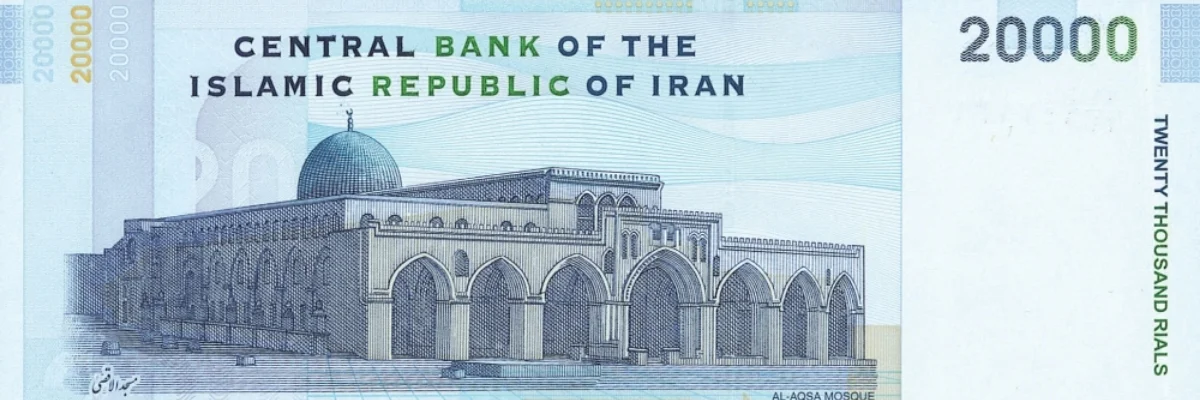
◢ In most countries, central bankers wield immense influence over the economy through their monetary policy.
◢ The Central Bank of Iran has struggled to secure the power and independence of its foreign equivalents, hindering economic planning and growth.
“And God said, Let there be light: and there was light.” A central bank’s power is somewhat like God’s, at least in monetary terms, as a former governor of the Central Bank of Iran once said. This is true for the world's most influential central banks such the Fed, ECB, BOJ and BOE or the SNB. The Swiss National Bank's recent move to abandon a self-imposed peg of the Swiss franc against the euro, introduced in 2011, sent the Franc soaring against the Euro by almost 40 percent, is a testament to the power they exert.
But, the CBI is far from wielding the power and independence that its foreign counterparts enjoy.
The bank is under strict financial sanctions, which have diminished its foreign reserves. Thus it has lost face in the foreign exchange market. Gone are the days when remarks by its governor calmed traders. In recent years, even its actions have little effect. In 2012, the bank had to resort to closing down all currency trade in a bid to halt the collapse of the rial, when vows to stabilize exchange rates and financial intervention failed. At that point the bank had overplayed its hand so much so that traders saw the bank reactionary and imprudent. Little has changed in this regard.
Defenders of the bank might counter that the siege on the CBI for allegedly circumventing sanctions against Iran's nuclear energy program is the source of its ineptitude. And yes, having $100 billion trapped overseas does hurt a lot. But that's not all.
Just look at the list of issues the bank is contending with and you'll see that even with a $100 billion, the leopard doesn't change its spots!
It is struggling to bring 7,000 rogue financial institutions, including one Ayandeh bank, under its supervision. The CBI has tried and failed to decrease interest rates for the past year. But, the same institutions have not complied, leading to drainage of deposits from banks towards their coffers.
Furthermore, past monetary decisions by the central bank and the former government have led to tens of billions of dollars of toxic debt on the balance sheets of state-owned commercial lenders, in turn driving them towards property speculation. The central bank is seeking to undo this knot in a civilized way, without undue panic and bankruptcies. Results will materialize slowly, if at all.
When we consider the inability to craft effective policy, at the heart of the matter are the limitations on the central bank's legal powers and its authority to make key decisions.
In most developed countries, monetary policy is the domain of a central bank’s governors. Not so in Iran. The money and credit council, a body within the central bank but controlled by the government, sets monetary policy, not the governor and his deputies. This essentially makes the bank an arm of the Ministry of Finance.
The bank also plays the role of the treasury for the government. It receives oil revenues, and then prints rials and distributes the funds to various government branches. Sometimes the foreign receipt part doesn't take place, thus curbing the bank's control over inflation.
And even when the policies are made, the bank is too feeble to implement them. It doesn't have the capability to exert pressure on banks or the currency market, let alone combat those who defy its commands.
So how can investors and business leaders ask for inflation to be restrained, monetary policy to be set and the currency's value to be stabilized, if they are to rely on such a central bank?
Luckily, the solution is simple enough, at least on paper. A separation of powers is necessary. Monetary policy should be detached from fiscal policy, and the bank should be isolated from politics.
To do so, the bank should be given full autonomy on monetary matters, a structure similar to that enjoyed by its counterparts in developed nations. A system of governance, where by all three branches of government have a degree of influence in the bank's governance would better guarantee the bank's autonomy. But this would require a change in the constitution, a lengthy and difficult process.
Furthermore, the central bank's legal clout and ability to exert power on its turf needs augmentation. Its influence has to cut through the lobbying of vested interests. Its responses to crime must become rapid. For this it needs more legal powers and a wider array of financial tools to help it set and oversee monetary policy. Again lawmakers must empower the bank for the benefit of investor, business leaders, and the economy at large.
Many officials in the current administration have expressed their desire to give CBI greater autonomy and new legislation is under work to give the bank some new powers. But a half-hearted will not be effective. What is needed is a fully independent central bank, as enshrined in law and in the deference of the financial sector at large. After all a strong and independent central bank will help iron-out the full range of economic policies. We ought to let the governor rule his domain.
Photo Credit: mebanknotes.com