
Trump Administration Pressures Global Financial Watchdog to ‘Blacklist’ Iran
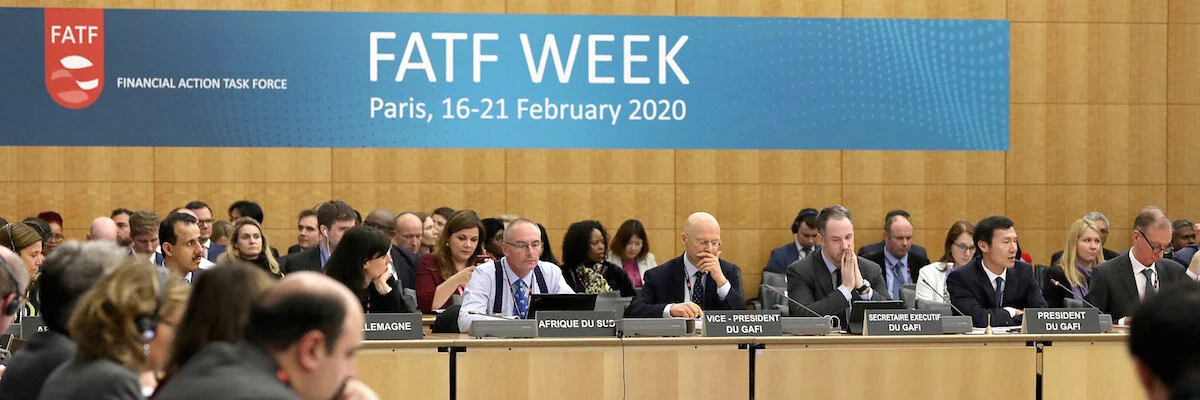
The Financial Action Task Force (FATF), a global body that sets standards to combat money laundering and terrorist finance, has placed Iran back on its infamous “blacklist,” following the failure of Iranian policymakers to enact two key bills in accordance with an action plan set in 2016.
This article was originally published by Responsible Statecraft.
The Financial Action Task Force (FATF), a global body that sets standards to combat money laundering and terrorist finance, has placed Iran back on its infamous “blacklist,” following the failure of Iranian policymakers to enact two key bills in accordance with an action plan set in 2016.
The FATF statement, issued on Friday at the conclusion of the body’s latest plenary meeting, calls on members to “to apply effective countermeasures” following Iran’s failure to implement “the Palermo and Terrorist Financing Conventions in line with the FATF Standards.”
Such countermeasures include increase monitoring, reporting, and auditing of Iran-related financial transactions for all financial institutions worldwide. While members can decide how to reimpose the countermeasures, the decision taken by FATF serves as a kind of external validation of the Trump administration’s claims that the Iranian financial system is regularly used to facilitate money laundering and terrorist finance on a massive scale. This characterization is a principle justification for the administration’s “maximum pressure” sanctions campaign and U.S. officials had been dogged in pressuring FATF to call “time out” on Iran’s reform process.
The FATF decision will be deeply disappointing to many officials in the Rouhani administration who had expended extraordinary political capital to try and get the necessary legislation enacted, succeeding in getting four key bills passed by parliament, but only managing to have two bills enacted into law. Opposition by hardliners had been fierce — the FATF issue was linked to the slow-rolling crisis around the nuclear deal and the Trump administration’s sanctions campaign. The politicization of the action plan reforms — both in Tehran and in Washington — was perhaps unprecedented in the history, putting “the task force is between a rock and a hard place,” as Tom Keatinge, as RUSI Director of the Centre for Financial Crimes and Security Studies, has recently observed.
The FATF’s decision could have a significant impact on Iran’s economy, but likely indirectly. Iranian officials who advocated for implementation of the action plan insisted that failure to do so would lead to international banks, including banks in Russia and China, to cut ties with Iran. More precisely, the reimpositon of countermeasures means that it will be exceedingly difficult for Iran to open any new cross-border financial channels. But the countermeasures set to be reimposed, including FATF’s exhortation of its members to impose enhanced supervision and reporting requirements for financial institutions handling Iran-related payments reflect a level of oversight already adopted by the few global financial institutions that continue to transact with Iran. For example, European officials do not expect the FATF decision to interfere with the operationalization of INSTEX, the mechanism established to support European trade with Iran, given the longstanding policies of the banks on which INSTEX will rely.
Existing banking channels are unlikely to be constricted for the express reason that Iran is back on the blacklist — although this does not preclude that the FATF decision will be used as a timely excuse to stop handling Iran-related payments by some banks.
The more likely damage to Iran’s economy will arise from the setback that FATF’s decision represents for the wider push for financial transparency reforms in Iran, which including everything from calls for greater fiscal transparency to the adoption of international standards for accounting. In May of last year, I wrote about how this broad campaign was suffering under the pressures of a “financial war” waged by the Trump administration. Although “transparency has become a discourse and ongoing demand” in Iran, to use the words of one reformist parliamentarian, a pervading paranoia got in the way of reforms, including those required by the FATF.
As I wrote at the time, many Iranians increasingly feared that when sanctions were being applied too aggressively, any increase in financial transparency was “akin to exposing the location of a piece of critical infrastructure and leaving it vulnerable to attack.” The Trump administration sought to actively stoke this paranoia through its use of public messaging and sanctions designations, causing a significant rift with European partners engaged in a technical dialogue with the Rouhani administration over the reform process.
I have been closely following the FATF issue for three years, during which time I have had the opportunity to discuss the action plan and its implementation with American, European, and Iranian officials as well as business leaders engaged in trade between Europe and Iran. There remain many unknowns about the economic impact and the damage the countermeasures will have. But what is profoundly clear is how easy it was for the Trump administration to seek to interfere with the apolitical work of FATF and the fragile process of financial transparency reforms in Iran, even though that process was driven in large part by the concerns of the Iranian electorate around systemic corruption.
In this way, the FATF experience offers a cautionary tale. To whatever extent the current nuclear deal will remain resilient in the face of the Trump administration’s maximum pressure and reduced compliance from Iran, and to whatever extent a new deal may be strengthened to avoid a repeat of the current crisis, any diplomatic reset with Iran will require greater protection of the myriad technical processes of reconnection and reform that will be necessary to ensure that promises are delivered. We promised to give Iran a chance. We failed those who tried to take it.
Photo: FATF
Iran’s Currency Crisis Spurs Action in Financial Reform Efforts
◢ Forced to respond by Iran’s recent currency crisis, the Central Bank of Iran is approaching regulatory reform in the financial sector with new energy. A critical deadline to meet standards set by the Financial Action Task Force is forthcoming in June. Iran needs to demonstrate progress in tackling financial crime estimated to include at least USD 27 billion in transactions annually.
In the 2017 anti-money laundering (AML) index report published by the Basel Institute on Governance, which develops standards for financial regulations and compliance, Iran topped the list of the world’s 10 highest-risk countries failing to comply with AML standards. This index, published since 2007, ranks 140 countries in terms of their efforts combatting dirty money transactions and countering terrorist financing (CTF). Iran has made little progress to date in improving its standing. Yet, the recent reunification of Iran’s exchange rates by central bank is seen to be an effective step toward more economic transparency and part of wider efforts against smuggling and rent seeking in their diverse forms.
The high-risk assessment of Iran highlighted in the Basel Institute report is primarily due to weak AML/CFT regimes practiced in the jurisdiction. High rates of perceived corruption combined with poor financial sector regulations are major drivers of the structural and functional failures in the Iranian economy. Importantly, these are among the critical issues, which the Financial Action Task Force (FATF), an intergovernmental organization which develops politics to combat financial crime, had mandated Iran to address as part of its "action plan."
Following an extension granted in February, the deadline for Iran’s compliance with FATF’s action plans is set for June 2018. This means that Iranian authorities have limited time at their disposal to earn the continued suspension of counter measures against Iran. Lack of membership in organizations such as the World Trade Organization and the FATF, in particular, has led to a myriad of problems in the implementation of the Joint Comprehensive Plan of Action (JCPOA) nuclear deal agreed by Iran and E3+3 in 2015. Due to shortcomings in meeting FATF technical requirements and Basel II and III banking regulations, Iran has failed to expand its business and correspondent banking ties with International financial institutions, with significant consequences. For example, the number of letters of credit opened since “Implementation Day” has been far lower than expected.
As such, financial reform in Iran is motivated by the need to spur economic growth. The mandate that the Supreme Leader of Iran Ali Khamenei gave to the Rouhani government to start negotiations with world powers over Iran’s nuclear program reflects the wider policy of the state to continue interacting with the international bodies on economic matters. To that end, cooperation with the FATF is set to carry on unless that authorization is withdrawn. Yet given the importance of such reforms, this authorization may remain in place regardless of what happens on May 12 with respect to President Trump’s decision to extend sanctions waivers issued as part of the JCPOA.
According to some estimates, the magnitude of organized money laundering in Iran amounts to some USD 26 billion per year. Transacting such sizeable amount of money outside the official financial system is impractical and requires that criminals abuse the conventional financial system to support their illegal activities. The Central Bank of Iran is seeking to increase its powers of supervision to monitor and prevent suspicious money transfers and smuggling of goods, ensuring the integrity of Iran’s financial system.
The central bank's recent moves to stem currency market volatility will make financing of illegal businesses in the economy more difficult. CBI’s new policies prohibit purchasing or holding of more than USD 10,000 or its equivalent in international currencies. In the same parallel, any bank account that whose aggregate debits and credits exceed IRR 50 billion rials will be subject to anti-money laundering probes to monitor for suspicious activities.
Although it will remain possible to find loopholes in the new regulations, these moves reflect significant progress after years of unfulfilled promises to unify the dual foreign exchange rate regime. The move is also viewed as an important step towards obtaining approval from FATF in respect to countering money laundering and removing the rentierism prevalent in the country’s largely state-controlled economy.
In addition, based on the new legislation, revenues from petrochemical exports that are not repatriated to the country will be subject to greater supervision. Firms in the industry will now be required to report their trade transactions in the same system used to record the oil companies’ export revenues. Previously earnings from petrochemical products sales were kept outside Iran in offshore bank accounts in the absence of proper supervision over their transactions and trades.
Interestingly, to further reinforce its oversight, the central bank has launched the an integrated system for monitoring foreign exchange deals or known as NIMA. This is a system which will monitor the activities of four groups of actors who shape the currency market: merchandise and service importers who purchase foreign currency, exporters of goods and services who earn foreign currency, banks and brokerages who act as intermediaries, and the policymakers who seek to manage supply and demand.
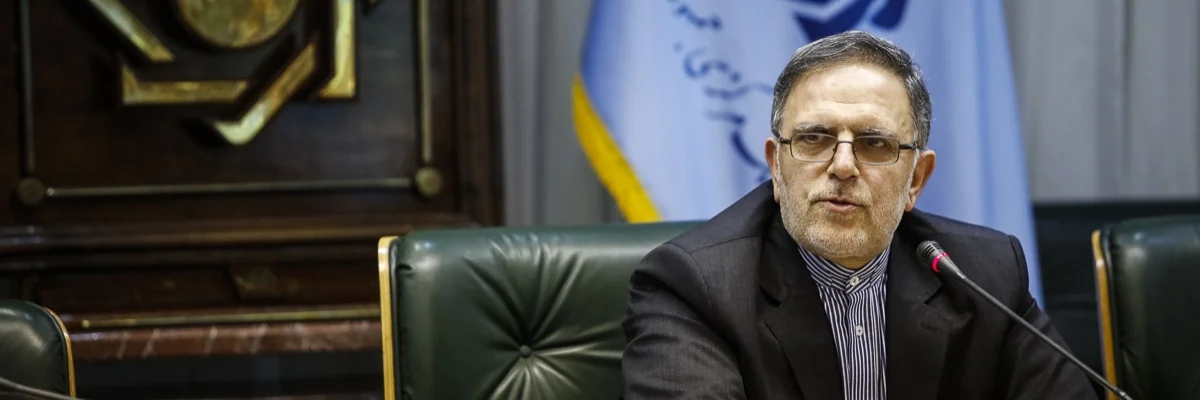
According to CBI governor, Valiollah Seif, the operationalization of the NIMA, will change CBI’s current reactionary response mechanism to one that is more proactive and will make controlling hazardous speculative or systematic fluctuations in foreign exchange markets possible by enabling the calculation of the effective demand so that the bank can aptly manage the available foreign exchange reserves.
In sum, the implementation of these targeted measures by CBI is expected to gradually put an end to capital flight and massive conversion of rial to other hard currencies. These moves can also undercut crimes such as smuggling and money laundering by increasing oversight and the likelihood of penalties for their perpetrators. But the effectiveness of CBI’s mandate will be determined by the political will of both the government and the state to fully enforce the letter and spirit of the new regulations and laws. A great deal is at stake. If the Rouhani government can continue to persist in its long-awaited macroeconomic policies and resist pressure from vested interests, then it remains possible that Iran’s economy could find new momentum after years of recession.
Photo Credit: Tasnim