
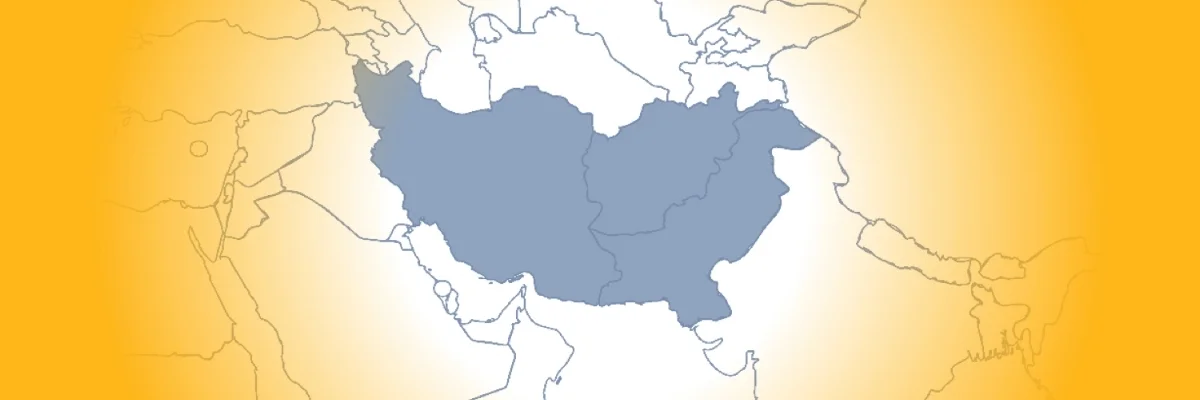
Iran, Pakistan, and Afghanistan Should Take a Regional Approach to Start-Ups
◢ Start-up ecosystems in Iran, Pakistan, and Afghanistan show great promise, but entrepreneurs in these three countries remain isolated from one another.
◢ These entreprenuers would benefit from more regional programs that encourage collaboration and shared learnings. Programs on offer in the ASEAN countries offer a compelling model.
Afghanistan, Iran, and Pakistan host some of most interesting and promising start-ups in Southwest Asia. Entrepreneurship and innovation are neither new nor foreign imports to the region. Cities and towns in Afghanistan, Iran, and Pakistan make up parts of the Silk Road, an ancient network of trade routes that once connected the East and West from China to the Mediterranean Sea. Historically, trade, innovation, and cultural exchanges have flourished along these trade routes.
Today, however, the entrepreneurs of this region operate in isolation from one another. Divergent political ideologies, cultural biases, and economic policies have prevented many entrepreneurs from exchanging ideas and collaborating, rendering them unaware of their neighbors’ achievements in areas of social innovation and entrepreneurship. Knowledge sharing and transfer, if sustained, can highlight the achievements of local and regional social and tech entrepreneurs.
While these three countries engage in active trade individually, building a regional start-up ecosystem would provide a space for entrepreneurs to share their experiences and collaborate further. Because of their shared cultures, histories, languages, and similar economies, Afghan, Iranian, and Pakistani entrepreneurs already share many common characteristics that could foster more collaboration and generate more economic growth and innovation. Therefore, we propose the formation of a regional start-up ecosystem to benefit the entrepreneurs and the economies of the above countries.
Entrepreneurs and ecosystems do not operate in a vacuum. Political, social, and economic realities influence entrepreneurs and shape start-ups. Establishing a regional start-up ecosystem would reduce border tensions, improve overall regional security, promote good governance, and allow the steady flow of goods and services across the region. Meanwhile, entrepreneurs and social innovators should focus on studying and understanding their regional markets, finding opportunities for growth and scaling within their own region.
Pakistan: An Established Player
Of the three countries, Pakistan has the most elaborate and developed start-up ecosystem. Urban areas of Karachi, Lahore, Peshawar, and Islamabad are home to some of the most renowned and internationally acclaimed entrepreneurs and social innovators (e.g payload, Healthwire, Dockit, Meezaj).
Since the security climate in the country has improved, the start-up landscape has grown and attracted venture capitalists from Silicon Valley, Malaysia and the Persian Gulf. The 2012 launch of Plan9, Pakistan’s first incubator, laid the groundwork for the start-up ecosystem. Pakistan is now home to more than 20 start-up incubators and accelerators that provide co-working, office space, mentorship, networking opportunities, and access to investors.
Undoubtedly, Pakistan has the potential to become the next emerging hub in Asia. Both high mobile penetration and the well-developed telecommunication infrastructure have given rise to tech start-ups that have disrupted almost every sector—wedding, health, fashion, payments. Success stories include Convo, a social networking platform, and have captured the attention of international investors.
Shaun Di Gregorio, CEO of Frontier Digital Ventures, a venture capital fund based in Malaysia that has previously invested in Pakistani start-ups, notes that “People who have an appetite for emerging markets will be attracted to Pakistan. It’s considered one of the next big frontier markets.”
Pakistan holds an edge over its regional counterparts primarily because of two reasons. First, Pakistan’s market does not set a limit on foreign equity, enabling investors to hold a 100 percent stake without the help of any local partners. Second, total repatriation of investment capital is allowed. Therefore, every penny earned in profit can be returned to the original investor with ease.
While serving as an example for its neighbors, Pakistan’s start-up scene continues to flourish, there is still work to do. As Khurram Zafar, executive director of Lahore University of Management Sciences’ Center for Entrepreneurship, notes “more bridges are needed between Pakistan and the outside world which are best built by the diaspora looking to stay connected with the country.” This lack of connectivity can be seen in the region. Many Afghan or Iranian start-ups are unaware of the incubators or accelerators that exist in Pakistan and unsurprisingly, there are no Iranian tech entrepreneurs in Pakistan’s accelerator programs such asInvests2Innovate or Peshawar 2.0. Collaboration among these three countries would boost productivity, increase access to investment, and promote their status to emerging markets.
Iran: A Rising Star
Iran’s entrepreneurship ecosystem remains nascent yet promising. In the past decade, Iranian policymakers have shifted their focus to entrepreneurship and innovation and there is plenty of room for progress. Iran’s overall score on the 2016 GEI Index is 28.8%, ranking 80th among the 130 countries surveyed. Among the 15 MENA countries, Iran’s ranking at 14 indicates a weak entrepreneurship ecosystem. Compared to previous years, Iran’s overall score has improved, but it has yet to fully realize its potential.
In 2008, Iranian start-ups such as Digikala emerged in the ecommerce and online retail market, becoming the largest ecommerce platform in Iran. Emulating Amazon, this start-up is considered a poster child for start-up success in Iran. In recent years, fast Internet speeds, high mobile penetration, and official support for entrepreneurship have led to creation of a flourishing start-up scene.
There are many sectors that remain bursting with potential for disruption. They include ride sharing, people to people hospitality, online furniture, design services, and payment delivery. Certainly, there is high demand for these types of start-ups because of Iran’s sophisticated and young costumers, and underserved markets, a legacy of international sanctions which has now been largely removed.
Despite its low entrepreneurship and productivity scores, Iran ranks fifth after India, China, Russia, and the U.S. for having a significant number of talented and well-educated engineers. Consequently, Iranian policymakers should divert their attention fully to exploiting Iran’s impressive human resources toward boosting competitiveness, promoting employment, and raising productivity levels.
Iran’s start-up scene is vibrant led by several savvy Western educated mentors and modeled after successful Silicon Valley companies. Start up Grind and Start-up Weekend events are held throughout the country. However, there too few incubators and those which do exist often struggle to provide adequate financing opportunities to promising businesses. Accelerators exist, but few are run professionally and optimally. Unfortunately, Iranian legal codes do not protect innovation and intellectual property rights. These obstacles have created setbacks for Iranian entrepreneurs, preventing them from robust growth and scaling.
Afghanistan: Underappreciated Potential
Although Afghanistan’s ecosystem and start-up scene is only now starting to grow. Particularly in urban areas of Kabul, Jalalabab, Kandahar, Mazar-i-Sharif, and Herat, new programs are being launched teaching youth how to code, teaching entrepreneurship, and many more related programs to increase capacity, knowledge, and skills.
Among such programs are Shetab Afghanistan, the first comprehensive incubation, co-working, and mentor program in Kabul that is helping entrepreneurs and social innovators. There is also Afghanistan Startup, Startup Valley, Startupistan, and many more that are entering the Afghan start-up scene.. A 2015 survey carried out including 27 start-ups in Afghanistan revealed that 70% of Afghan start-ups fail due to ecosystem and market start-up failures, including access to mentors, infrastructure, and more open regulatory environment, and access to finance. Contrary to conventional wisdom, security is not the top concern facing entrepreneurs. Instead, entrepreneurs face the following challenges: limited access to networks and regional markets, faster internet and related infrastructure, trade friendly regulatory environment, an end to corruption, as well as availability of supportive incubation, acceleration and co-working programs. These gaps can be filled within regional frameworks.
Why Collaboration Matters
It time to put more weight on the effective implementation of new political and economic initiatives, collaborative networks, policies, and programs to regionally link start-up ecosystems across Iran, Pakistan, and Afghanistan.
The potential benefits of collaboration across regional ecosystems outnumber the disadvantages. It would lead to increased visibility and publicity for start-ups, offering an opportunity to scale into new regional markets. It would increase technical knowledge that is localized, and could potentially open up entrepreneurs from the region to sorely needed financial and mentor resources. Beyond these concrete benefits, local governments should offer incentives to attract large corporations in these countries. After all, large corporations remain vitally important for ecosystem building because they help investment in the supply chain, contract start-ups, or even possibly acquire the most promising start-ups in the long-run.
Because of the dominant Western-centric narrative widely accepted among entrepreneurs and start-up lovers, there is an overarching tendency for entrepreneurs to take examples from the West and emulate them. Therefore, there is a gap in knowledge among young entrepreneurs in these countries about exciting and new developments in their own backyard. While it is reasonable to emulate Western models, it is equally important to adopt and adjust them considering local conditions, specifically cultures, languages, and lifestyles.
For example, initiatives could include regional conferences like a TEDx talk held in Herat focusing on regional start-ups that can incorporate Tadjik entrepreneurs. Another way to foster brainstorming and collaboration among entrepreneurs could be to swap co-working spaces, as is done in Europe, so that an entrepreneur from Lahore can learn about the Iranian social technology market to scale his mobile geo-app for car parking. In addition, Iranian, Pakistani, and Afghan member investors could use shared Linked groups as a viable means to bridge cultural biases, connect board members, and enable mentor sharing between various accelerator and incubation programs in the region.
Among the most promising initiatives would be to establish a regional exchange and scholarship program between regional universities. Again looking at the region’s ‘backyard,’ the ASEAN (Association of South Eastern Asian Nations) countries have created several programs that support cross-border innovation and collaboration. For example, the very successful ASEAN University Network has helped hundreds of exchange students to study across borders since 1995. The organizations has built partnerships with other renowned universities around the world to promote knowledge sharing, collaboration, an access to opportunity through joint project-work.
Through the ASEAN Center for Entrepreneurship, regional and global initiatives support various start-ups. Recently, the Malaysian government, through its MaGIC Program, has offered ASEAN start-ups access to a regional accelerator funding and educational support services in Kuala Lumpur. Even "pariah state" North-Korea is sending its young entrepreneurs to Singapore, a powerful start-up hub, to help them in business, law, and economic policy and to learn about Lean Canvas (with the help of Choson Exchange, an NGO).
These initiatives provide compelling models of what could be done to support the achievements of local and regional entrepreneurs and social entrepreneurs among Pakistani, Iranian, and Afghan start-ups.
Unfortunately, the international media has failed to present a full and balanced view of Iran, Afghanistan, and Pakistan. Negative images of violence and terrorism have become ingrained in many entrepreneurs’ minds and rendered them oblivious to the achievements of their neighbors in the areas of social innovation and entrepreneurship. Today’s revival of the ancient trade routes as a successful model for a regional start-up ecosystem highlights not only their historical legacy, but also their contemporary relevance to regional commerce, trade, and advancement of Southwest Asia.
Photo Credit: Bourse & Bazaar

How Entrepreneurship Can Help Address Unemployment in Iran
◢ Youth unemployment continues to be a stubborn issue in Iran, with economic growth too low to generate sufficient job opportunities.
◢ Following the examples of countries like Germany and India, Iranian policymakers could do more to spur job creation through innovative entrepreneurship programs.
Unemployment is a major concern for both labor force participants and for policymakers, especially during periods of economic downturn. Unemployment has been shown to have long-term negative effects on an individual's happiness, even after he or she finds employment. Furthermore, the resultant decrease in tax revenue from unemployment affects many aspects of an economy. Not only is infrastructure investment reduced, but social welfare payments are increased, producing strains on any government. Iran has a considerable unemployment rate (12.2% in July, 2016) and an even higher rate of youth unemployment (26.1% in July, 2016). For decades, the Iranian government has tried unsuccessfully to reverse this trend.
In a number of countries (e.g. Germany, India), self-employment is considered to be an important labor market option for the unemployed. In such countries, governments have successfully developed policies to support unemployed individuals in establishing their own businesses. In both these countries, financial subsidies are coupled with non-financial support, such as mentoring and training. In Germany, two programs (Start-up Subsidy and Bridging Allowance) have helped the unemployed to successfully reintegrate into the labor market. Participants who fulfill certain criteria enter one of these programs and are allotted a monthly salary for a specified period of time, all the while receiving mentorship and business advice. In India, several programs such as Rozgar Yojana (introduced in 2001), have incentivized candidates to start new ventures. Rozgar Yojana is exclusively designed for unemployed educated youth. Since its inception, the program has provided employment for over 3.8 million candidates.
The Iranian economy would need to achieve a sustained annual economic growth rate of 8% in order to successfully integrate all job-seekers into the labor market—a virtual impossibility even with the post-sanctions rebound. Thus, innovative solutions for unemployment, such as entrepreneurship training programs, are paramount. To date, Iranian policy-makers have neglected to explore this kind of "bottom-up" job creation, despite the fact that 16% of the labor force is already self-employed.
From a cultural standpoint, significant research suggests that Iranians hold positive attitudes toward entrepreneurship. More importantly, young Iranians have both the ambition and the confidence needed to launch new ventures. What these youth lack is strong government-supported programs and incentives for them to pursue potential self-employment.
Factors that increase the expected benefits of entrepreneurship or decrease its opportunity costs can positively influence an individuals’ tendency to become an entrepreneur. The provision of subsidies and the creation of apprenticeships for the unemployed can encourage entrepreneurship. The most significant deterrent to setting up a business is the lack of start-up capital. The government can provide subsidies to alleviate this problem, particularly as private sources for so-called venture capital remain limited.
Implementing a successful entrepreneurship program for the unemployed must include three components. Firstly, it is important to define specific eligibility criteria for potential candidates. Secondly, the performance of participants must be evaluated throughout the mentorship process. Thirdly, the government must include successful start-ups and other ventures in the design and implementation of such programs. Iran's vital business ecosystem is rife with the elements needed to greatly improve its serious unemployment problem. The government must play a more vital role in remedying the issue.
Moreover, higher levels of human capital investment have been shown to engender entrepreneurship. It is important to note that for many who have recently lost their jobs, clear access to new opportunities is important to keep confidence high. A well-designed re-integration and training program that compensates participants would allow these individuals to consider shaping their own futures through an entrepreneurial project. My research suggests that education is one of the strongest drivers of entrepreneurial performance so courses and mentorship can help unemployed persons to create successful ventures.
Even if most of these candidates eventually return to working for others, the skills and confidence they would garner would be instrumental for their future job security in a dynamic economy. As long as participants of such programs successfully re-integrate into the labor market, the entrepreneurship program will have reached its aim.
Photo Credit: Thomas Christofoletti