
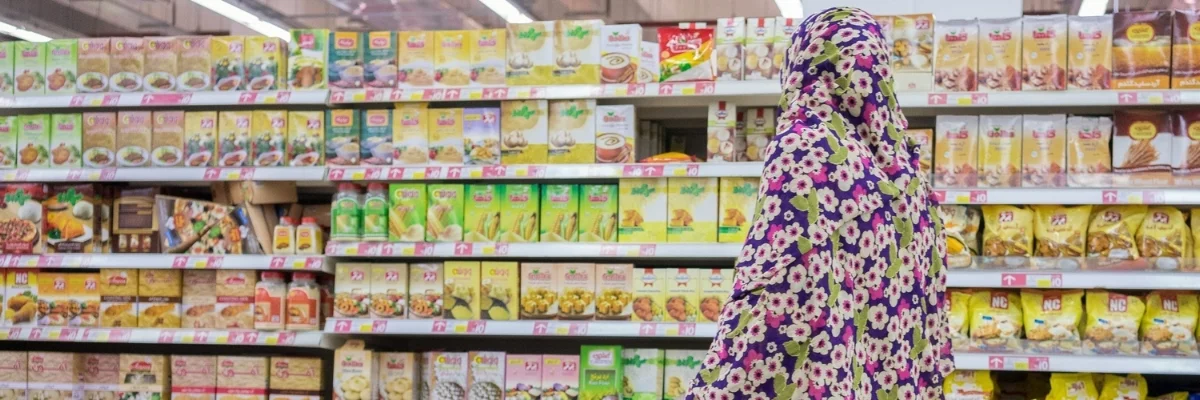
For Iran's Supermarkets, Bigger May Not Be Better
◢ Hypermarkets now account for 2% of the total value of the grocery market in Iran, and 15% of the market in Tehran.
◢ But as hypermarket growth begins to stall in Europe, retailers in Iran should take heed. Similar consumer trends are likely to manifest in Iran in the coming years. Big stores won't be enough to win sales.
Supermarkets have long been associated with modernity in Iran. The Shah, who was contemptuous of the “worm-ridden shops” of the traditional Iranian bazaar, writes in his memoirs “I could not stop building supermarkets. I wanted a modern country.” The early leaders of the Islamic Republic also wanted a modern country, and continued to build supermarkets. Most of Iran’s chain retailers are state-owned or state-affiliated enterprises. Etka Chain Stores Company, established in 1955, is controlled by the economic holding company of Iran’s armed forces. The Tehran municipality launched the Shahrvand chain in 1993. Bank Melli, Bank Tejarat, and Bank Saderat jointly launched the Refah chain the following year. Whereas the Shah was apparently building supermarkets for vainglorious reasons, the economic planners of the Islamic Republic found chain stores appealing for the ability to more directly manage supply chains and pricing.
The introduction of greater efficiency continues to motivate the modernization of Iran’s retail sector, and thereby modernize the economy at large. As part of the push for privatization that began in earnest fifteen years ago, however, the emphasis for retail sector development was moved away from state ownership. Under the Sixth Five-Year Development Plan, Iran aims to increase the share of chain stores in the retail market by 10%, but the onus of that growth is clearly on the private sector. There is plenty of potential.
Market research firm Vistar Business Monitor estimates the total value of Iran’s retail sector at USD $70 billion, of which only 8.5% can be attributed to chain stores, including hypermarkets. Traditional retailers such as neighborhood shops and bazaar vendors account for the remaining 91.5%. In Tehran, the total value of the retail market is estimated at USD 12 billion, of which 15% is attributable to chain stores.

The largest retail chain by number of stores is Etka, with nearly 500 outlets. By way of comparison, Europe’s leading food retailer, Carrefour, boasts over 6000 hypermarkets, supermarkets, and convenience stores in France alone. Given that Iran has a larger population than France, it would be easy to explain the lack of chain stores as related to the country’s lower consumer purchasing power. The average grocery-spend per household in Iran is around IRR 80 million, or roughly USD 2500. Accounting for 3-4 individuals per household, this equates to a per capita spend of roughly USD 650-800. This is on par with spending in Russia and Eastern Europe and far below the USD 3400 spent per capita in France.
Not surprisingly, purchasing power in Tehran is about three times higher than the national average. Tehran boasts a per capita grocery spend of around USD 2400, which brings this segment of the market closer to the average expenditure seen in countries like Belgium, Netherlands, and Germany. International retail brands have taken note of this spending power. The push for new retail formats coincides with Iran’s post-sanctions growth and development and the entry of international players into the Iranian market. Most notably, French retail giant Carrefour entered the Iranian market in a joint venture with Dubai-based conglomerate Majid Al Futtaim. The two companies launched “Hyperstar,” a clone of Carrefour’s highly successful hypermarket format. The first Hyperstar opened in 2009 in Tehran, and the brand has since expanded its footprint in Tehran and has added branches in Esfahan and Shiraz.

But other hypermarket brands such as France’s Auchan and Germany’s Rewe Group have yet to seriously look at Iran. Part of this reticence may be due to the fact that Iran is a difficult market to navigate from a supply chain and operations perspective, but it also reflects the fact that many of the leading grocery retailers are facing new challenges at home. While hypermarket expansion was the key driver of sector growth for the last twenty years, these massive stores, typically over 5,000 square meters in size, have begun to falter in their profitability. Across Europe, hypermarkets grew by 4.3% annually from 2004-2012. This figure is projected to fall to 2% from 2013-2018, falling below expected growth among neighborhood shops (2.6%), discounters (4.6%), and convenience stores (5.3%). Some of the drivers of the slowdown—market saturation, lack of investment, and real estate development costs—will not pose a barrier to hypermarket expansion in Iran anytime soon. However, three drivers reflect important considerations for the next wave of retail development in Iran.

First, consumers around the world are tiring of “one-stop shopping” in which a single weekly trip is made to purchase groceries and necessities in large quantities. Part of the reason for this is reduced need. Household sizes across the European Union have been dropping consistently over the last few decades and have now settled at 2.3 individuals. The most common household is a single person household, accounting for one-third of all households in the EU. While Iran’s current average household size is closer to the levels seen in Europe 50 years ago, the size is inflated by the fact that long-term economic instability has led to children continuing to live with their parents well into adulthood at higher levels than might be expected given Iran’s average levels of educational attainment and general economic development. Over the next decade, should Iran’s economic recovery gain momentum, the average household size will likely decrease, particularly as the number of single-person households rises again. Market research has shown that singles see one-stop shopping as less appealing because it requires more time and pre-planning.
Second, the global shift away from one-stop shopping is tied to growing consumer demands for convenience. In developed economies, people are increasingly busy, and two working parents often lead households, a circumstance that will become more common in Iran. This trend has led consumers to rely more on local convenience stores and to purchase groceries online. At the same time, low levels of chain store market penetration means that most Iranians continue to rely on local neighborhood stores for their daily needs. In cities where mobility is limited by traffic and poor transport links, these small shops remain far more convenient than the one-stop shopping outlets. Add to this the rapid uptake of e-commerce among Iranian consumers and the trends suggest hypermarkets may be at their most appealing right now.
Finally, consumers worldwide are insisting on a greater effort by their retailers to engage at a local or community level. The success of retailers such as Costco, Whole Foods Market, and Trader Joe’s—each of which has cultivated a reputation as a friendlier and more ethical retailer—has had a significant impact. The importance of community engagement is particularly acute in Iran, in which retailers are competing with the traditional bazaar, a unique retail space in which market transactions are deeply tied to social exchanges. Iranian consumers remain connected to the idea that purchasing a good is best done via a trusted vendor with whom a personal rapport exists.
To address these issues, Hyperstar has taken numerous steps. It has opened its locations as anchor properties within larger shopping mall developments so that a trip to the grocery store can be part of a larger retail experience. It has also begun to roll out home deliveries to better serve people’s daily needs. Furthermore, it has used in-store activations like food tastings and special events to engage at a community level. Company documents also outline a plan for Hyperstar to eventually roll out smaller “market” stores to serve neighborhoods.
Nonetheless, the combination of these trends means that while Iran’s retail market is far from saturated, Iranian and international retail companies developing entry or expansion plans for the market need to keep up with the times. Rather than replicate the business models from twenty years ago, retailers in Iran and their international partners should adapt the current best-in-class thinking about how to serve consumers. A “channel convergence” is needed in which retail brands span hypermarkets, convenience stores, discounters, and e-commerce platforms to create a multifaceted consumer offering. This is where Iran’s domestic chain stores could hold immense untapped potential. With new branding and better merchandising, these stores may be ideally positioned to benefit from the coming changes in Iranian consumer preferences.
While conventional wisdom might suggest creating a “modern” Iran will require building the biggest and brightest supermarkets possible, to be truly cutting edge, smaller stores may be the key to success.
Photo Credit: Thomas Christofoletti
Arab Business in Iran: Looking Beyond Regional Rivalry
◢ Most experts focus on growing antagonism between Iran and its Arab neighbors as a risk to regional prosperity.
◢ However, Iran’s large consumer-driven economy and some early success stories suggest that many GCC companies are actually very well positioned to transfer their knowhow to the Iranian marketplace.
With high disposable incomes furnished through oil rents, the GCC economies are geared towards the consumer. Famed for massive malls, expensive cars, luxury housing, and entertainments galore, perhaps no other group of countries around the world are as defined by such conspicuous consumption. To underscore the point, a recent report by Global Footprint Network, an environmental protection institute, suggests that if every person in the world consumed resources at the same level as Emiratis, we would need 5.4 planet earths to sustain humanity.
Created to answer this insatiable demand, the GCC region's most successful conglomerates are not in manufacturing or industry, but in consumer-focused sectors like food service, real estate, hospitality and leisure, luxury retail, and FMCG.
Given that Iran has a large consumer driven economy, with a middle class that will benefit from post-sanctions economic growth, GCC companies are actually very well positioned to transfer their knowhow to the Iranian marketplace. A recent study of which companies would most quickly benefit from an Iran deal was “loaded” with GCC companies, particularly those based in Dubai.
This fact complicates the political economy of regional relations in the Perisan Gulf region. Most analysis focuses on the increasing rivalry between Iran and the Gulf states, especially Saudi Arabia. However, the prospects for business tell another story, in which trade and investment can aid the development of a regional geopolitics based on mutual gain rather than mutual antagonism.
To illustrate this point, below are 5 leading companies from the GCC, which could make it big in Iran due to their consumer driven businesses.
It remains to be seen if opportunities in Iran will be enough to outweigh the rivalry in regional politics. But it wouldn't be the first time that commerce has overcome conflict.
- Majid Al Futtaim Group, Dubai, UAE- Retail Development
Revenue: USD $6.8 billion
A holding company specializing in large-scale retail and hospitality projects, MAF Group owns some of the iconic malls and hotels in the Middle East. While we might imagine an MAF backed five-star mall development in Iran one day, it is MAF’s longstanding role as the regional partner for French hypermarket chain Carrefour that has won them early success in Iran. With the first store opening in 2009, a subsequent $400 million dollar investment has seen hypermarkets open in Tehran, Shiraz, and Esfahan. The company boasts of plans to open 15 more locations, and aims to dominate the sector with a mix of hypermarkets and smaller supermarkets.
- Aujan Group Holding, Dubai, UAE- FMCG
Revenue: USD $200 million (Iran entities only)
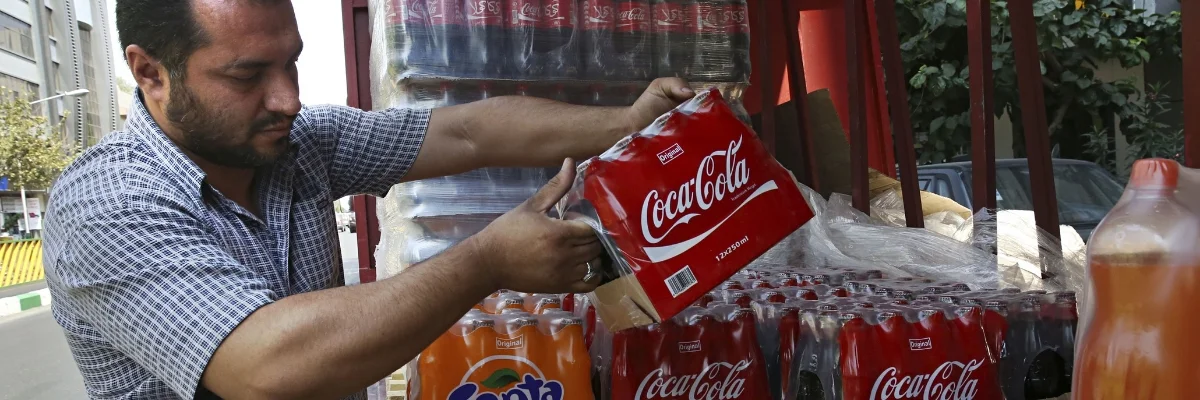
Continuing the FMCG theme, another Arab success story in Iran can be seen in the experience of Aujan Holding Group, the regional partners for The Coca-Cola Company, which purchased 50% of the Aujan Industries subsidiary in 2011 for nearly USD $1 billion. A separate Iran-registered joint stock company, Aujan Industries Iranian Company, is the manufacturer and distributor of Rani and Coca-Cola beverages in Iran. Importantly, Coca-Cola’s tie-up with Aujan excluded the Iranian business. This leaves the door open to future capitalization and expansion, as Iran exhibits the second largest absolute value growth in MENA region soft drinks in the next few years.
- Olayan Group, Saudi Arabia- FMCG and Food Service
Revenue: Undisclosed
A diversified Saudi conglomerate, Olayan has operations in everything from business services to construction. But it is the group’s holdings in fast-moving consumer goods (FMCG) and food service that position it for an Iran market entry. In the area of consumer goods, Olayan has longstanding relationships with global giants such as Mondelez International, Nabisco, Kimberly Clark, and Colgate-Palmolive. These US-based multinationals have limited exposure to Iran’s market, and Olayan’s local supply chain could be adapted to ensure distribution to Iran. But perhaps more uniquely, Olayan is the regional franchisee of Burger King. The first firms to rollout globally recognized fast food and fast-causal chains in Iran will tap into a massive unmet demand, and Olayan is a company with the muscle to do so.
- RAK Ceramics, Ras al Kamiah, UAE- Ceramics
Revenue: USD $1 billion
It is a little known fact that the largest ceramics manufacturer in the world is located in one of the lesser-known Emirates. RAK Ceramics produces everything from toilet bowls to tableware in over 8000 designs. RAK Ceramics has a presence in Iran, but tough economic conditions and supply chain issues have depressed profits this year. The company has begun scaling back its Iran operation. RAK Ceramics boomed on the back of procurement in the GGC, as large-scale residential and hospitality developments mushroomed. In this way, the supplier’s success is connected to consumer demand. Similar construction volumes could be expected across Iran’s multiple metropolises in a post-sanctions environment. As a global leader, RAK Ceramics is certainly poised to benefit as this massive market on its doorstep becomes easier to engage.
- Damac, Dubai, UAE- Real Estate Development
Revenue: $556 million (Damac Properties only)
With over 100 buildings either complete or nearing completion, Damac has emerged as a leader in Dubai’s crowded real estate development market. Until now, groups like Damac have seen Iran as a source of high network individuals, eager to establish a residence in Dubai. But looking forward, economic growth and freer financing will make Iran the next big real estate story in the Middle East. As a private entity, Damac is likely to be less entangled in the political battles between Abu Dhabi and Dubai on the issue of engaging Iran. This differentiates it from Emaar, with its legacy as a formerly 100% government owned entity. Investors are taking note. The listed entity Damac Properties Dubai saw its stock rise over 8% immediately following the conclusion of the April JPOA framework agreement between Iran and the P5+1 powers.
Photo Credit: Koroush Complex