
How to Think About Getting Foreign Firms Back into Iran
The sanctions relief afforded to Iran in January 2016 as part of the implementation of the JCPOA did not lead to a cascade—while a significant number of foreign companies did commence or resume operations in Iran, no larger, second cohort followed.
When the Joint Comprehensive Plan of Action (JCPOA) was adopted in July 2015, a wide range of companies began to explore commercial opportunities in Iran, anticipating the lifting of international sanctions that would follow about six months later. But the initial rush of commercial interest never became a cascade—while a significant number of foreign companies did commence or resume operations in Iran, there was no larger, second cohort that followed. Companies that did attempt to enter the Iranian market faced significant legal and financial challenges. The experiences of these companies deterred other entrants. Then, a little over two years after the lifting of sanctions, President Donald Trump made good on a campaign promise and withdrew from the Iran nuclear deal, unilaterally reimposing US secondary sanctions. The companies that had rushed into Iran quickly rushed out.
This history poses a dilemma for Iran’s negotiators as they seek to restore the JCPOA. While “modest progress” has been made during the 8th round of negotiations, one sticking point continues to be Iran’s demands around not only how US secondary sanctions will be lifted, but whether additional non-nuclear sanctions will be imposed by the US. In a recent interview, Iranian foreign minister Amir Abdollahian stated, “We demand guarantees that include not imposing any new sanctions, and not reimposing sanctions after lifting them under any pretext.”
Articulated this way, Abdollahian’s demand is problematic. Can Iran, with its reputation as a missile proliferator, proxy supporter, and human rights violator, really expect that the US won’t impose any new sanctions? The answer is no, but it is likely that Abdollahian knows this. His comments point to a legitimate concern as to whether sanctions relief commitments can be considered credible if sanctions imposed for transgressions beyond the nuclear file make it harder to conduct the trade and investment explicitly envisioned in the nuclear deal. For example, if the US were to maintain a tempo of human rights sanctions designations in the period of JCPOA implementation, it would contribute to a chilling effect that may deter companies and banks from proceeding with the trade and investment envisioned in the JCPOA, even if those sanctions are targeted on specific non-commercial actors. Of course, the US and Europe are not going to take sanctions, now the primary tool of Western statecraft, out of their toolkit. So how should the negotiators in Vienna balance the need to deliver economic benefits to Iran with the realistic expectation that coercive measures will continue to be used for non-nuclear reasons?
Timur Kuran’s seminal work on cascade theory—much of it completed in collaboration with Cass Sunstein—can help answer this question. Cascade theory is a heuristic that can be used to analyse a wide range of situations in which private preferences, perceptions, and thresholds combine to determine whether band wagoning will take place. While cascade theory has most often been used to analyse the decisions of individuals, it can also be applied to the commercial decision-making of firms. Firms can be understood to have their own preferences and thresholds, which are shaped by the perception of risk, whether commercial, legal, or reputational. For example, this body of research includes work on “reputation cascades” that influence political decision-making by corporations, and cascades observed in the decision making of investors in capital markets.
Along these lines, cascade theory offers a way to understand how the application of sanctions can lead to changes in firm behaviour. Major sanctions enforcement actions, such as the fines levied on a series of European banks by the Obama administration between 2012 and 2014 for knowing violations of US primary sanctions, can serve to change perceptions of perceived risk among other firms. These fines contributed to “de-risking” among many banks and multinational corporations which opted to limit their exposure to jurisdictions in which sanctions have been imposed, even in cases in which their commercial activities remained clearly compliant. In such a situation, cascade theory helps us understand how enforcement actions can serve as a signal to firms. In the cases in which the newly perceived risks exceed the firm’s threshold, behaviour is likely to change. One type of cascade occurs when companies decide to withdraw from risky jurisdictions. By 2016, responding to heightened regulatory risk, 75 percent of major banks reported having reduced their correspondent banking connections, a trend which predominantly saw major American and European banks limit ties with banks in the Global South.
The global trend of de-risking is an example of cascading among firms, triggered by the punitive and deterrent power of sanctions and related enforcement actions. But cascade theory may also be insightful examining the inverse situation—what happens when policymakers decide to lift sanctions on a country, and seek to encourage firms to engage in trade and investment? In recent years, there has been increased focus on the “credibility” of sanctions relief—while American and European governments may lift sanctions, the move does not necessarily lead to the envisioned trade and investment, compromising the diplomatic agreements in which sanctions relief is a critical part of the negotiated quid-pro-quo.
The sanctions relief afforded to Iran in January 2016 as part of the implementation of the JCPOA did not lead to a cascade. While an initial cohort of multinational companies did re-enter the Iranian market, many companies, and especially banks, opted not to reengage, perceiving that the risks remained high. The lower-than-expected level of economic engagement that followed from the implementation of the JCPOA arguably made it less costly—both politically and economically—for President Donald Trump to unilaterally withdrawal from the agreement in May 2018, at a time when Iran remained in full compliance with its nuclear commitments.
As the P5+1 and Iran continue to seek the restoration of the nuclear deal, Iranian negotiators have demanded that the world powers intervene to ensure that sanctions relief occurs “in practice” and not simply “on paper.” The difficult history of the JCPOA makes clear that successful implementation of sanctions relief requires cascading, and the design of implementation policies ought to consider how those policies will impact the perceptions and thresholds of firms. Adapting from Kuran’s general model, it can be stated that firms with different preferences and risk appetites will have different market entry thresholds (T). To illustrate this variation, we can create the following threshold sequence, notating the thresholds for ten firms:
A = (0, 20, 20, 30, 40, 50, 60, 70, 80, 100)
In this sequence, Firm 1 (T1=0) is willing to begin conducting business in Iran immediately after the lifting of sanctions. At the other end of the sequence, Firm 10 (T10 = 100) will never enter the Iranian market. But the thresholds of other firms are responsive to a value we can call S, the proportion of firms that have already entered the market. For example, Firm 2 (T1=20) will only enter the market when at least 20 percent of firms have done so—a condition not met by the market entry of Firm 1 (T1=0), the entry of which means that S=10. Under such conditions, there is no cascade—the thresholds of most firms remain too high.
The variation in thresholds across such a sequence reflects the trade-off between external and internal payoffs faced by firms. For example, even if the external payoffs represented by entering a formerly sanctioned market are clear, such as new revenue streams, the internal costs may remain too high for the firm to decide to act on the evident economic opportunity. In this way, the internal payoff can itself be expressed through a threshold sequence comprised of the departments necessary to make a firm-level decision. For example, a firm’s decision to operate in a formerly sanctioned market will typically require buy-in from the business development department, the finance department, the legal department, and often the board of directors. Top executives and individuals in legal and compliance roles in firms conducting business in sanctioned jurisdictions can be held personally liable for compliance failures. These individuals have among the highest thresholds for supporting a business decision to work in a market like Iran and can veto the plans of other departments willing to pursue the opportunity, in effect setting the threshold for the firm. Broadly speaking, engaging in business shortly after the lifting of sanctions requires evaluating a trade-off between the external reward of previously untapped business opportunities with the internal cost of onerous operational and compliance requirements. Additional sanctions designations made after the lifting of JCPOA-related sanctions will inherently impact these trade-offs.
Policymakers seeking to encourage commercial activity following the lifting of sanctions must therefore try to increase the external rewards and minimise the internal costs. This can be done through a series of policy interventions that go beyond the simple lifting of sanctions. If the sanctions relief implemented “on paper” results in a threshold sequence given by A, then we can conceptualise a different threshold sequence for sanctions relief implemented “in practice,” which we can call A*:
A* = (0, 10, 20, 30, 40, 50, 60, 70, 80, 100)
In this sequence, as in sequence A, Firm 1 (T1=0) is ready to engage in business simply because sanctions have been lifted. But let’s assume that some new policy intervention has caused the threshold of Firm 2 (T1=10) to fall from 20 to 10. This means that the decision of Firm 1 to enter the market will trigger Firm 2 to do the same because S=T2. That small change is also sufficient for A* to become a cascading sequence, as the decision of Firm 2 triggers market entry by Firm 3 and so forth until nine-tenths of the firms are active, with Firm 10 (T10=100) the only holdout. But, if some subsequent policy intervention, such as the application of new sanctions, causes the threshold of Firm 4 (T4=30) to rise, the cascade will be interrupted because S will longer be equal to T4.
What the sequence A’ illustrates therefore is that the policy intervention needed to trigger a cascade does not necessarily need to be so significant as to shift the thresholds of all firms in the sequence. Rather, it should be targeted to create a change in behaviour among those firms whose decision to enter the market would trigger the cascade. Policymakers seeking to make sanctions relief commitments more credible can therefore use cascade theory to conceptualise different sets of interventions intended to encourage more companies to engage in trade and investment in formerly sanctioned jurisdictions more quickly.
These interventions ought to focus on calibrating the external and internal payoffs. First, to change external payoffs, policymakers, including in Iran, must seek to make the economic benefits of early market entry more significant. Presently, being among the early movers after the lifting of sanctions means contending with high costs of doing business. These costs include higher transaction fees and risk premiums related to banking services and financing, or surcharges related to the importation of equipment or technology necessary to operate local facilities or infrastructure. These costs could be reduced through incentives, such as grants and loans that would see the state shoulder some of the costs and financial risks in the initial period of sanctions relief, increasing the external payoff. While some European countries did seek to provide state-backed credit lines to support companies aiming to engage in trade with Iran, the operationalisation of these credit lines was clumsy, meaning that no facilities were available to companies even two years after the lifting of US and EU sanctions, and that there was no impact on the perceived external payoff.
Second, policymakers will also need to address the internal costs that can keep companies from pursuing the opportunities afforded by sanctions relief. Practically speaking, these interventions would reduce the perceived legal risks of commercial activities in formerly sanctioned jurisdictions. Here, policymakers should provide greater legal clarity around the activities made permissible following the lifting of sanctions and provide opportunities for firms to confirm, for example through the solicitation of so-called comfort-letters, the specific permissibility of their planned activities beyond the blanket guidance currently provided by regulatory authorities. Moreover, there should be an effort to reduce the threat of personal liability around inadvertent sanctions violations. Finally, the possible impact of additional sanctions designations, such as sanctions imposed after the implementation of the JCPOA on human rights grounds, need to be considered in the context of the trade-off between internal and external payoffs. If Western governments decide that a sanctions designation must be made, the impact of that designation on internal payoffs needs to be considered. Of course, targeted sanctions imposed on human rights grounds are not intended to interfere with the broad implementation of the JCPOA, and so the unintended consequences ought to be mitigated, most likely by ensuring that the external payoff continues to outweigh the internal risks. Such an approach will increase the likelihood that firms perceive a better trade off in conducting business in formerly sanctioned jurisdictions—this will lead to a more favourable threshold sequence, in which there is a higher probability of a cascade.
Designing policy interventions to make sanctions relief more credible and effective will be crucial not only for the restoration of the nuclear deal, but also for the long-term viability of sanctions as a tool of economic statecraft. Cascade theory is a compelling heuristic to understand how such interventions will need to influence firm behaviour to create the conditions necessary for an increase in trade and investment in post-sanctions environments.
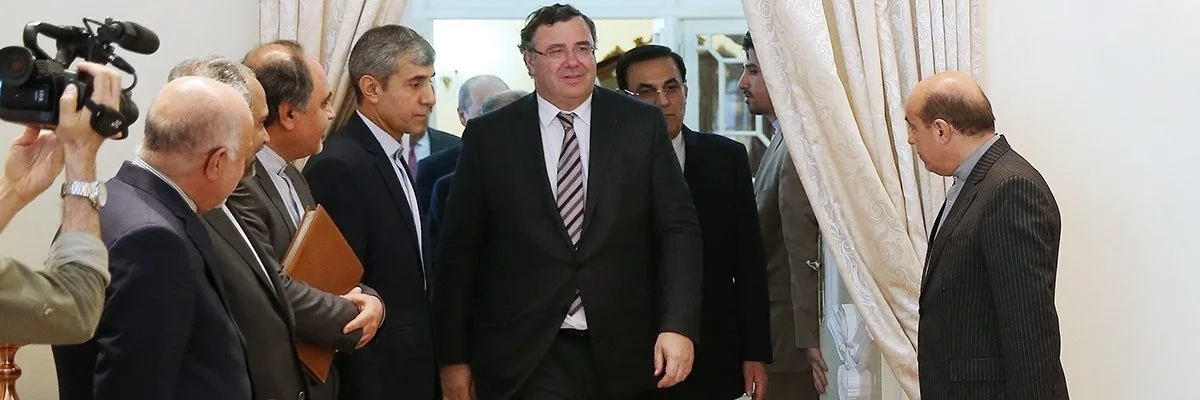
Photo: IRNA
Risky Business: Four Categories of Iran Risk
◢ Managing risk is a key part of an Iran market entry strategy.
◢ There are four major categories of risk to consider: commercial, legal, political, and reputational.
It must be commonplace in meetings where opportunities for business development or investment in Iran are being discussed. Suddenly it becomes apparent that the pitch was half-baked-- it didn’t include an assessment of risks. With a simple question like “What’s the firm’s reputation?” or even “Is it legal?” the pitch falls flat.
A more systematic and proactive approach to risk assessment can avoid these pitfalls. An assessment should begin with four main categories of risk: commercial, legal, reputational, and political. Each of these categories needs to be explored in depth and in relation to the others in order to craft a useful and durable business development strategy. Even if you aren’t an expert in any of these categories (I certainly am not), having a structured approach helps identify gaps in knowledge early so that the right information can be sourced and solutions can be crafted before a problem arises or a tough question comes up in a pitch meeting.
Below is a basic introduction to the four types of business risk in the Iranian context, which will hopefully be explored in greater detail in subsequent articles.
1. Commercial Risk
The greatest challenge in evaluating commercial risk in Iran is the way expectations can quickly outpace reality in anticipation of a historic nuclear deal.
Articles in the The Economist, Wall Street Journal, Time, and other publications have trumpeted the impending “gold rush” or “bonanza” that would ensure if Iran is reintroduced into global markets for goods, services, and capital. The enthusiastic reporting of the many possible macroeconomic drivers of Iranian growth—a young population, an untapped manufacturing base, decent purchasing power, limited government debt etc.— makes it seem like investment in Iran is a “safe bet.”
But the reality is that within the positive forecasting for Iran on a macro scale, investors, business leaders, and entrepreneurs— whether foreign or Iranian—need to heed the dynamics of the micro scale. Investment opportunities ought to be judged on their own terms, and not solely in relation to the bigger picture of potential Iran growth.
What does this mean in practice? Whatever the opportunity in question, a commercial risk analysis needs to be done to ensure that the opportunity remains viable for a wide range of macroeconomic scenarios. It is tempting to treat investments as a “safe bet” because the macro projections are so good. For example, an investor might think that a heavily leveraged buy-out of a consumer goods factory, even one that is inefficient and poorly managed, would be worthwhile because consumer demand is likely to surge in the aftermath of the deal—an inefficient factory can still deliver good margins if the price of goods rises high enough. But what happens when this belief leads the investor to shirk the responsibility to make the factory operate better, whether through better management or equipment upgrades? The factory investment remains exposed to a fundamental commercial risk, and if consumer demand does not materialize, the heavily leveraged bet is lost.
Certainly, emerging markets investors in markets like China, Brazil, India and South Africa have the appetite for such risky bets, and sometimes they are able to execute aggressive strategies to great success. But if overly aggressive approaches become widespread in the post-sanctions investment landscape, the tendency will be to ignore or discount the true commercial risk.
Iran only has one chance to emerge from years of isolation and to position itself for long-term prosperity. The last thing the country needs is the wild speculation and risk-taking that typified foreign investment in Russia in the mid-nineties. The “only way is up” attitude towards economic growth ignores the necessary volatility in any major economic reorientation, and also overshadows the reality that a dud business is a dud business regardless of how good the economy might get. The goal should be mitigate commercial risk at the micro level so that the enterprise can prudently navigate any macroeconomic fluctuations.
2. Legal Risk
Iran remains subject to the most advanced and comprehensive sanctions program ever instituted. So it is perhaps especially frustrating that entrepreneurs and investors get excited about commercial opportunities before they have a close look at the legalities. When the “post-sanctions” future is imagined, the process of sanctions relief is often simplified as though sanctions will go from “on” to “off.” But the real opportunities will lie in navigating the legal landscape in order to find the viable opportunities first.
Sanctions regulations are complex and were legislated in a messy way. How they will be rolled back remains a point of debate. But generally speaking, where US sanctions go, EU and UN sanctions will largely follow. What is clear is that the rollback of sanctions will likely be a phased process, and therefore the legal landscape will be constantly evolving even in what seems to be a “post-sanctions” moment.
In the meantime, companies will be tempted to try and “outsmart” sanctions. But this is foolhardy. Compliance is important, and companies should invest in the best legal expertise available on an ongoing basis to learn how to craft an adaptive, compliant business strategy. Failure to comply could mean drastic and long-lasting commercial, reputational, and political damage. It is a bad habit shared by many firms that in order to keep costs low, the lawyer is only hired when the contracts are being drafted.
Additionally, companies shouldn’t forget about the need to comply with Iran’s domestic laws. There is a tendency for multinational firms to flout domestic laws when entering emerging markets. Usually, the perception of lax enforcement and corruption allows companies to think that domestic laws can be heeded selectively. This is also foolhardy. Not only is Iran’s enforcement capacity greater than the average emerging market (it has very strong state institutions, despite levels of corruption), but failure to pay taxes, ensure safety, or abide by environmental protections will earn the ire of the highly-educated Iranian public, who should be respected even more than the prosecutors.
3. Reputational Risk
I touched on the topic of reputational risk in this November article for LobeLog, and I consider it one of the most fascinating challenges of doing business in Iran. The commercial and legal risk present in Iran is commensurate with levels in numerous markets, but the level of reputational risk is perhaps the highest in the world.
A poll published by BBC World Service in June 2014 identified Iran as the most “unfavorably viewed country” by individuals worldwide. Certainly, much of the international criticism is deserved and companies need to be honest with their customers, employees, and shareholders about their corporate responsibility to support positive social outcomes in all markets, including Iran.
But from the standpoint of business development it is worth considering the specific allergic reaction often exhibited when the ideas of “Iran” and “business” are combined. Special interest groups use public campaigns to name and shame companies that do legal business in Iran. Sometimes even humanitarian trade is targeted. So when we consider the idea of normalization, we are really discussing a new normal in which the combination of the ideas “Iran” and “business” is no longer the cause for concern or condemnation.
In practical terms, managing reputational risk will require savvy branding and an excellent communications and public relations strategy. This involves everything from redesigned websites to better disclosure of company activities, announced through new mechanisms of corporate communications. Transparency will be key in order to assuage negative perceptions and present a new normal of a responsible and resurgent business community.
4. Political Risk
The fourth and final category of risk is perhaps the most difficult to evaluate. Political risk is about “street smarts”— understanding the commercial landscape of a country like Iran in a very deep way, capturing the political, social and cultural dimensions. Those seeking to do business in Iran will have a lot to learn in little time.
At the macro level, political debates around privatization and foreign ownership may impact how commercial and contract law is carried out, but there are actually existing laws written to protect foreign investment and private enterprise—they just have had limited use in a period of low FDI. Firms will need to develop skills in government relations to ensure they stay on top of these debates and the consequences for their business.
Looking to the micro level, Iranian society places great importance on personal or institutional reputation and pride. Any partnership or venture is judged on the reputation of its constituent parties. But rather than seeing reputation as a question of branding, this is a more political understanding of “reputation.”
For example, a certain individual or company might be the most commercially powerful of among the potential partners, but may also have a more questionable reputation within the industry. This partner may be best positioned to mitigate commercial risk in a given venture, but how does the politics of a potential partnership effect reputational or legal risk in the medium to long term? Would a company that is less commercially powerful, but held in higher esteem actually make a better partner?
To be clear, the need to make such political evaluations is not a trait unique to Iran. Even Silicon Valley is a place where the partner you choose or the investor you secure can drastically alter the trajectory for success. In Iran, as in Silicon Valley, political risk means knowing who are the key actors, how they are perceived, and the resources they are able to mobilize. But for a foreign investor or firm, the learning curve in a new market like Iran will be especially steep.
Conclusion
Looking at these four categories holistically, responsible companies will seek to turn risks into strengths. A proactive and careful approach to developing the commercial, legal, reputational, and political facets of a business development strategy can offer firms a competitive edge in the marketplace. Mitigating risks can be expensive and time-consuming, and may require seeking analysts, lawyers, PR consultants or other experts to help fill gaps in knowledge. But companies that can internalize and deeply understand risk/reward calculations for the new phase of Iran’s development will reap immense rewards.
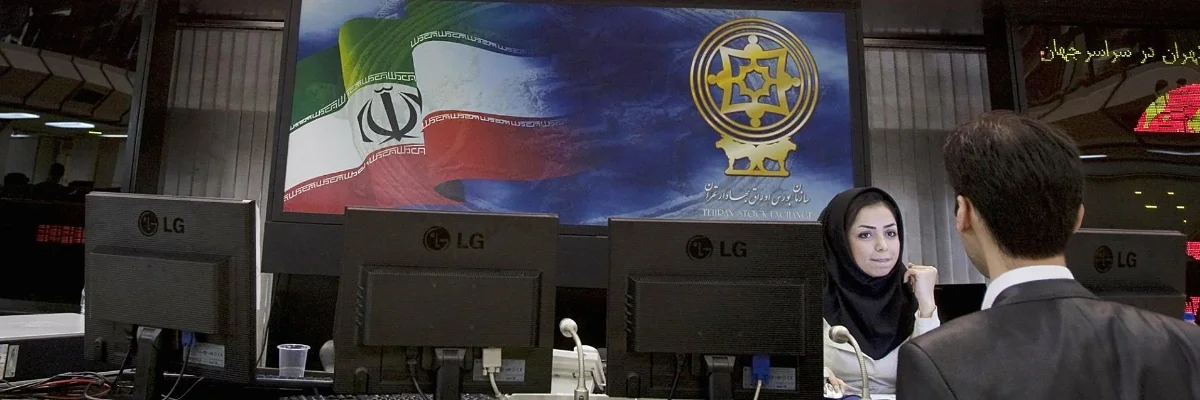
Photo Credit: Morteza Nikoubazi/Reuters