
Fears Grow That Trump Sanctions Will Throttle Iran's Humanitarian Trade
◢ The second and final sanctions deadline of November 4 is drawing near. After this date, unilateral US sanctions on Iran’s financial sector will once again come into force. According to Iranian bankers and government officials, this could mean that Iran struggles to import humanitarian goods, including basic foodstuffs, despite longstanding exemptions for trade in these goods.
The second and final sanctions deadline of November 4 is drawing near. After this date, unilateral US sanctions on Iran’s financial sector will once again come into force. According to Iranian bankers and government officials, this could mean that Iran struggles to import humanitarian goods, including basic foodstuffs.
The sale of essential foodstuffs and medicine to Iran is exempt from sanctions, giving latitude to US officials to reiterate their claims that sanctions are targeted and not intended to hurt the Iranian people. However, while no direct legal barriers might exist for trade in humanitarian goods, potential restrictions slapped on banks that facilitate the necessary transactions might yet cause problems.
Prior to the nuclear deal, Iran’s private sector banks were exempt from secondary sanctions and thereby to be able to handle humanitarian trade payments. As sanctions are set to be reimposed, ambiguities about the scope of the returning restrictions forthcoming from the Office of Foreign Assets Control (OFAC) of the U.S. Department of Treasury have left bank leaders and government officials in Iran with more questions than answers.
To understand the growing fears around the maintenance of humanitarian trade, Bourse & Bazaar spoke to several senior bankers and government officials in Iran and executives from global trading companies who are key stakeholders in this trade. All requested to remain unnamed given the sensitive subject matter.
A veteran banker and a board member of a major Iranian private bank described two possible scenarios. "U.S. officials have said they aim to reinstate sanctions that were lifted as a result of the nuclear deal. If we use this as the basis, the interpretation is that private banks that were previously exempt from secondary sanctions and any foreign banks working with them on humanitarian trade will once again be exempt," he said.
But he warned that this time may very well be different given that the US has hardened its rhetoric and promised “maximum pressure” from the sanctions. "Your guess is as good as mine,” he quipped.
He said his bank is currently conducting business as usual but has seen some foreign counterparts take preemptive measures to reduce their transaction volume ahead of the November deadline.
“Some banks are implementing a number of limitations over concerns about what happens next. They are already doing some of the things that will be expected of them once sanctions return on November 5,” he said.
An official at the international department of another major Iranian bank expressed the same feeling of uncertainty, and highlighted concerns that private sector banks like his will not be spared from secondary sanctions this time around.
“We are already facing issues with imports of some essential goods even before [the November] sanctions snap back,” he said. In his assessment, if the bank becomes subject to secondary sanctions, there is little to nothing Iran’s central bank can do to support them.
While Iranian bankers may feel powerless to prevent the return of secondary sanctions, they are also concerned about risks stemming from an area in which Iranian stakeholders do have control—compliance with the Financial Action Task Force (FATF) action plan, which outlines steps for Iran to improve anti-money laundering and combating financing of terrorism standards.
Iran has until mid-October to demonstrate sufficient progress to the FATF or its already embattled banking system will become more isolated than ever. Time is running out for Iran to pass the required legislation in the face of domestic pushback from local interest groups and persistent lobbying by FATF member states including the US and Israel.
“If we don’t pass the bills related to the FATF, we are effectively sanctioning ourselves,” stated the deputy chairman of one of Iran’s largest private sector banks.
These external and internal threats to routine banking between Europe and Iran could have significant knock-on effects for humanitarian trade.
Speaking on background, an executive at a major multinational commodity company described how even if food sales to Iran remain permitted under US sanctions, the imposition of secondary sanctions on Iran’s private sector banks could make the trade effectively impossible.
The Government Trading Corporation of Iran (GTC), the trading arm of country’s agriculture ministry, confirmed these concerns but insisted that contingency planning is underway.
A senior official involved in foreign trade for GTC said, “We are at the moment implementing measures to ensure that we won’t have problems concerning humanitarian trade.”
The official could not share further details, beyond explaining that any such measures will fall outside the boundaries of the banking system—a likely allusion to the use of barter trade, a method which helped sustain imports in the previous sanctions period.
“We will continue to conduct our business even after November sanctions are in place because we have had the experience of working under sanctions before and the sanctions didn’t stop us,” the official said. “You can be sure that sanctions will only serve to increase costs, not close the way entirely.”
The recent announcement that the European Union would be establishing a special purpose vehicle to facilitate humanitarian trade will offer some encouragement that a significant disruption to food imports can be avoided. But with the sanctions deadline just weeks away, the risks of dangerous supply shocks are rising by the day.
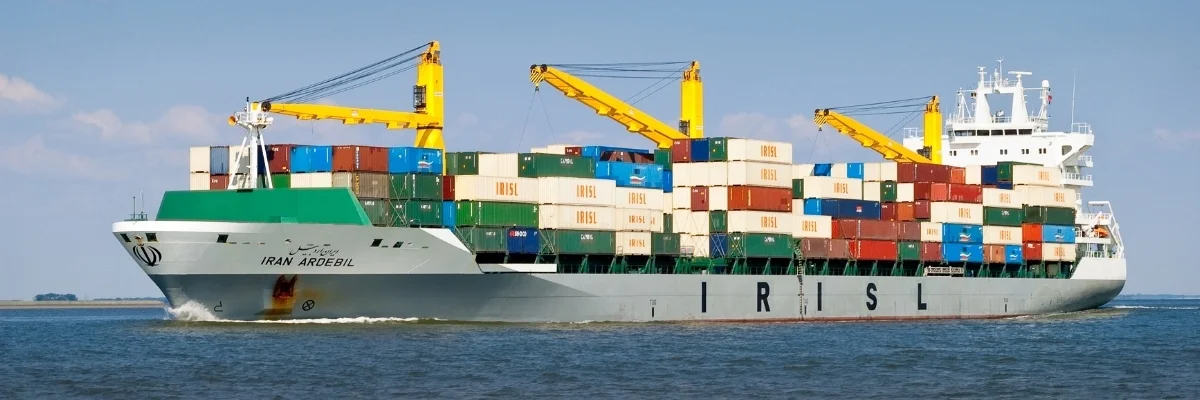
Photo Credit: IRISL
Ambiguity in Trump Sanctions Could Put Humanitarian Trade with Iran at Risk
◢ In the years when Iran was under broad international sanctions, the country saw shortages in key foodstuffs and life-saving medicines. Despite attestations to the contrary, international sanctions hurt the Iranian people in cruel ways. As Iranians prepare for the return of U.S. sanctions, concerning ambiguity in OFAC’s new sanctions guidance may undermine the longstanding exemptions for humanitarian trade and the carve-outs for the Iranian banks which facilitate these sales.
In the years prior to the nuclear deal, when Iran was under broad international sanctions, the country saw shortages in key foodstuffs and life-saving medicines. Despite attestations to the contrary by proponents of the economic blockade, who spoke of its "targeted" nature, international sanctions hurt the Iranian people in cruel ways.
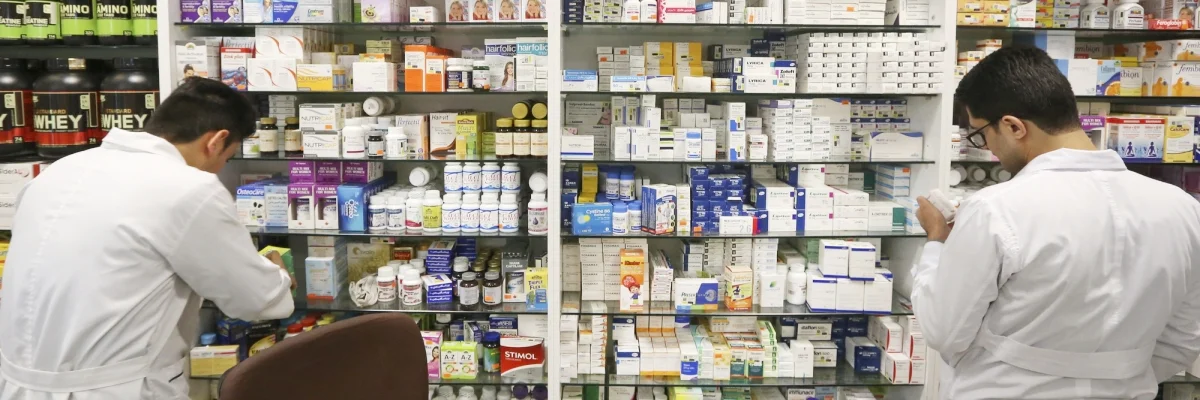
According to Iran's Food and Drug Administration, the list of medicines subject to shortages in Iran extended to 350 drugs in the sanctions period. Shortages were precipitated by a number of factors. Several multinational corporations downsized their operations or withdrew from the Iranian market. Interruptions in banking channels saw payments turn from the use of industry-standard letters of credit and deferred payment terms to cash-in-advance payments using exchange houses. Transaction and operational costs skyrocketed, with costs being passed on to the consumer, whose buying power was eroded by currency devaluation.
After the lifting of international sanctions as part of the Iran nuclear deal, the situation improved dramatically. Today, the number medicines subject to shortage has dropped to 65 drugs. Yet, it is important to realize that the shortages precipitated by sanctions would have been even worse had it not been for specific carve-outs for humanitarian trade established by the United States’ sanctions enforcement agency, the Office of Foreign Assets Control (OFAC), part of the Department of Treasury.
As per OFAC’s own guidance on the matter, “the U.S. maintains broad authorizations and exceptions that allow for the sale of food, medicine, and medical devices” to Iran by both U.S. and non-U.S. persons. During the sanctions period, the more committed multinational companies, often those with longstanding ties to the Iranian market, took advantage of these exemptions to maintain their sales to Iran. While a commercial incentive reigned supreme, the Iranian people benefited to the extent that the country was not under a total blockade.
Now, with U.S. sanctions poised to return, more suffering seems to be on the horizon. The Trump administration has announced that it will be reinstating all primary and secondary sanctions removed as part of the Joint Comprehensive Plan of Action (JCPOA). This total reapplication of sanctions, which is to take place despite Iran’s proven compliance with its commitments under the nuclear deal, has taken many by surprise given its extreme and unjustified breadth. But take a closer look at the mechanics of the so-called “snapback” and what the Trump administration is seeking to do could prove much more dangerous than anything Iran has been subjected to before.
There is exists an important caveat to OFAC’s exemptions for humanitarian transactions with Iran. These sales “do not trigger sanctions under U.S. law… so long as the transaction does not involve certain U.S.-designated persons (such as Iran’s Islamic Revolutionary Guard Corps or a designated Iranian bank) or proscribed conduct.” The emphasis on banks is what matters here.
Iran’s private sector banks play a vital role in facilitating humanitarian trade. The major multinational corporations selling and manufacturing agricultural commodities (eg. Cargill, Bunge), food (eg. Nestle, Danone), and medicines and medical devices (eg. Sanofi, Novartis, GE Healthcare) depend on these types of banks to access the financial services necessary for day-to-day operations in Iran.
Importantly, while Iran’s private sector banks were targeted as part of efforts to isolate Iran from the international financial system and were included on the SDN list, this was done under designations for which secondary sanctions did not apply.
Foreign companies and financial institutions were prohibited from transacting with Iranian financial institutions under the Iran Freedom and Counter-Proliferation Act (IFCA) in 2012 and Executive Order 13645 in 2013. However, there was a notable carve-out created for those "Iranian depository institution[s] whose property and interests in property are blocked solely pursuant to E.O. 13599." The Iranian financial institutions included in the E.O. 13599 list include the country's private sector banks. The unique status of the banks on this list partly reflects that these entities maintain higher compliance standards and clearer governance structures, lack exposure to government or IRGC shareholders, and have no known history of financial crime or terrorist financing.
The Trump administration has made clear that it intends to re-list all of the entities that had been removed from the SDN list as part of the JCPOA (these entities are listed in the attachments to Annex II of the nuclear deal). What remains unclear is whether Trump’s intended re-listing of these entities means returning them to their precise status prior to the nuclear deal. Legal experts and former government officials are coming to different interpretations of the relevant sanctions guidance. OFAC’s FAQs document issued following Trump’s announcement of the U.S. withdrawal from the JCPOA addresses precisely this question for entities on the E.O. 13599 list. The entry reads:
Will the persons that were placed on the List of Persons Identified as Blocked Solely Pursuant to Executive Order 13599 (E.O. 13599 List) on JCPOA Implementation Day (January 16, 2016) be put back on the SDN List?
The provided answer is concerning (emphasis added):
No later than November 5, 2018, OFAC expects to move persons identified as meeting the definition of the terms “Government of Iran” or “Iranian financial institution” from the List of Persons Blocked Solely Pursuant to E.O. 13599 (the “E.O. 13599 List”) to the SDN List. OFAC will not add these persons to the SDN List on May 8, 2018, to allow for the orderly wind down by non-U.S., non-Iranian persons of activities that had been undertaken prior to May 8, 2018, consistent with the U.S. sanctions relief provided for under the JCPOA involving persons on the E.O. 13599 List. The Government of Iran and Iranian financial institutions remain persons whose property and interests in property are blocked pursuant to E.O. 13599 and section 560.211 of the ITSR, and U.S. persons continue to be broadly prohibited from engaging in transactions or dealing with the Government of Iran and Iranian financial institutions. Beginning on November 5, 2018, activities with most persons moved from the E.O. 13599 List to the SDN List will be subject to secondary sanctions. Such persons will have a notation of “Additional Sanctions Information – Subject to Secondary Sanctions” in their SDN List entry.
The guidance indicates that the entities moved from the E.O. 13599 list to the SDN list “will be subject to secondary sanctions." In practical terms, the guidance can be interpreted to mean that all of Iran’s private sector banks will be listed with a designation more restrictive than was the case prior to the nuclear deal. In this scenario, after November 5, 2018, any company that transacts with Iran’s private sector banks will be exposed to U.S. secondary sanctions.
Several sanctions experts, speaking on background given the sensitivity of the subject, pointed to this concerning lack of clarity. In the assessment of an attorney specializing in U.S. sanctions, "It is not clear whether the mere placement of persons identified on the E.O. 13599 List back on the SDN List will subject private Iranian banks—not otherwise designated pursuant to an authority other than E.O. 13599—to secondary sanctions. If it returns to the pre-JCPOA sanctions, then it will revert to the rules established by IFCA and E.O. 13645." But if the new guidelines do reflect an intention to make secondary sanctions for Iranian banks that were previously exempt, "OFAC has the discretion to do so," the attorney noted.
This reading was echoed by a former U.S. government official: "One could read [the FAQs] to suggest the pre-JCPOA identifications, which is what E.O. 13599 was created to address, are all becoming SDNs. This would be a significant escalation. Most of the private banks on E.O. 13599 were never subject to secondary sanctions because we never had evidence of bad behavior."
If this interpretation holds, the typical exemptions for humanitarian trade will no longer apply for the multinational companies bringing vital foodstuffs and medicines to Iran. This is because the private sector banks that they have customarily used to facilitate this trade will be considered “a designated Iranian bank" exposing their counter-parties or clients to secondary sanctions. Re-listing Iran’s private sector banks in this manner would prove devastating to humanitarian trade.
Several major international law firms are advising clients that the re-listing will not exceed the restrictions of the pre-deal designations. In this assessment, the transactions that were not sanctionable pre-JCPOA should not be sanctionable on November 5. The problem is that such a fundamental question, with a direct bearing on humanitarian trade, should not be a matter for interpretation. OFAC has historically offered clear and reliable guidance is these fundamental areas.
It remains possible that OFAC has simply made a mistake in leaving things ambiguous regarding E.O. 13599 entities. In the assessment of many sanctions attorneys, the FAQs released on May 8 are sloppy and incomplete—perhaps an indication of the last-minute nature of their preparation as President Trump announced his decision on the nuclear deal earlier than expected. If this is just an error in the guidance, OFAC must immediately update its FAQs and provide clarity on the matter.
However, if the re-designation is intended as an escalation, and the United States does aim to designate Iran’s private sector banks as SDNs and target their multinational clients with secondary sanctions, the international community must use all available means to compel the Trump administration to restore full and unfettered humanitarian exemptions for Iran trade. Thousands of lives are at stake.
Photo Credit: IRNA