

Iranians Forced to Forgo Meat Staples as Prices Soar
◢ Working class Iranians could look forward to a hearty meal of meat stew or kabob at least once a week. But with meat prices soaring to all-time highs, Iranians are having to cut back on their consumption in yet another example of falling living standards as Iran’s economy falters under the pressure of sanctions and mismanagement.
Working class Iranians could look forward to a hearty meal of meat stew or kabob at least once a week. But with meat prices soaring to all-time highs, Iranians are having to cut back on their consumption in yet another example of falling living standards as Iran’s economy falters under the pressure of sanctions and mismanagement.
As of the first week of May, a kilo of beef sold for prices ranging from IRR 950,000-1,200,000 rials (USD 22-28) in butcheries across the capital Tehran. In October, prior to the reimposition of US secondary sanctions on Iran, the price of meat was just USD 11. By comparison, the minimum monthly wage of a menial worker in Iran has been set at approximately USD 361 dollars for the current Iranian year. An Iranian worker wanting to purchase one kilo of meat each week for their family would need to spend a staggering one-third of their monthly salary.
The rapid increase in the price of meat has been blamed on a variety of factors, including from corruption, profiteering, and misuse of hard currency subsidies granted to importers. The Iranian government has so far failed to slow the price increases as inflation continues to rise. Inflation has been driven by the sharp devaluation of the rial over the past year, accelerated by the reimposition of US sanctions on Iran after President Trump withdrew from the Joint Comprehensive Plan of Action (JCPOA) last May.
Iran has never been fully self-sufficient in meeting demand for beef. In the past decade, the country's meat industry suffered a significant decline in its cow population, which fell from 18 million in 2010 to just eight million in 2018, most of which are dairy cows. Widespread droughts in the past two decades have also diminished pastures and significantly dwindled domestic livestock food supplies, requiring greater reliance on imported feed and making animal husbandry less profitable than ever.
In order to try and limit the impact of devaluation on the price of imported foods, the Iranian government decided last August to subsidize imports of 27 "essential products.” Under the new regulations, importers of those commodities would receive allocations of foreign exchange at the official rate of IRR 42,000 to the dollar, a rate far below the free market rate, which climbed as high as IRR 185,000 in October. Meat products and feed for livestock were included on the list as part of the government push to help alleviate the economic burden on Iranian households.
But the price of meat and other key foodstuffs has continued to rise, suggesting the foreign exchange subsidies were a failed policy. Disruptions in the importation of both animal feed and meat products added costs for importers and created constraints on supply. But more damagingly, the falling value of the rial and the availability of foreign currency at an artificially low price lured many importers into smuggling out livestock or imported food in significant quantities to neighboring countries, where they found a lucrative market, causing shortages back in Iran. In countries such as Iraq, smugglers could sell livestock and double their investment. In one reported case, a network led by an unassuming middle-aged woman collected sheep from villages in the southwestern Khuzestan province, loading them onto trucks and smuggling them to abattoirs across the Persian Gulf. Profiteering has also come to include hoarding. Iran’s state broadcasters have aired videos of raided warehouses, where tons of meat are shown stored, with owners waiting for prices to increase further before bringing the meat to market.
An investigative report by Iran Newspaper, and republished by the ISNA news agency, points to the existence of a “meat mafia” which has caused much of the turbulence in meat markets. According to documents the paper says it has seen, one of the tycoons received over EUR 35.7 million in subsidized currency, but distributed the product after calculating the prices on the free market exchange rate, meaning he inflated prices by 92 percent. While much of the blame for high prices has been attributed to smuggling, the report challenges this explanation, suggesting smuggling accounts for just a small portion of the problem. According to the report, the smuggling explanation is an organized effort to cover up rampant corruption in meat production, supply and distribution. This claim is corroborated by an Iranian police report that put the total amount of smuggled meat at around "10,000 tons, while the annual national consumption is one million tons." An unnamed official at Iran's agriculture ministry even alluded to political motives, claiming, "The organized plot is not just about economic gains. There are other purposes behind it as well."
But if such a mafia exists, critics of the Rouhani administration have shown no understanding, blaming the government for its inability to tackle the problem. Iran’s judiciary has sought to take some initiative through much publicized arrests and even executions of businesspeople convicted of major corruption unrelated to the meat industry. But such shows of force seem to have had little effect.
More recently, the government has sought to import frozen meat to address shortages and try and induce lower prices. This triggered long queues as ordinary Iranians sought to purchase the subsidized meat. The lines themselves served to deepen public anger and sparked broad debates about how the government was insulting the "dignity" of Iranians by keeping them waiting for hours just to purchase low-quality meat.
Iranian civil society leaders have also sought to step in. Campaigns have been launched urging Iranians to reduce their meat consumption, for reasons ranging from reducing harm to the environment to improving health. In a controversial interview on state TV, Iranian actress Behnoush Bakhtiari suggested that the high prices might be a blessing in disguise that would push people to a healthier vegetarian diet. The comments spurred swift backlash on social media as the actress was accused of downplaying the government’s failure to assure Iranians a basic standard of living.
The government also sought to impose price controls on butchers in an effort to ease pressure on consumers. But that move “only cost many butchers their job," a senior member of the Tehran Butchers' Trade Union told Bourse & Bazaar asking not to be named due to the sensitivity of the matter. "Many of our colleagues found it no longer profitable to continue. They had to shut down their shops and start planning a new business.”
At last, having failed to regulate prices directly, the government has decided to eliminate the subsidized foreign exchange rate for importers. The move has been hailed by many economic commentators as a step towards exchange rate unification, a move, which proponents argue, will eliminate the space for arbitrage. But the impact of the move has yet to be seen.
Whatever the reasons behind the turbulence in the meat market, the impact on ordinary Iranians is undeniable. 36-year old Ramin, who asked his last name not be used, owns a small butchery in Tehran's affluent northwestern Sa'adat Abad neighborhood and has seen the collapse in purchasing power up-close. "I know costumers who used to buy at least five kilos of beef a month, but now their purchase has dropped to two kilos," he told Bourse & Bazaar. "There are even those who have completely removed meat from their baskets, buying only bones just to have a flavor of meat in their cooking. And I'm talking about this rich neighborhood. You can imagine how those in [less-affluent] southern Tehran are being squeezed."
Photo: Depositphoto

Californian Farmers Waged 'War' on Iranian Pistachios and Won
A forthcoming documentary by journalist Yasha Levine and filmmaker Roman Wernham explores the fiercely political and highly lucrative world of pistachio farming in California, and its connections to US policy towards Iran.
The great pistachio war began—unintentionally—fifty years ago. In 1971, the United States changed its tax codes to eliminate loopholes exploited by almond and citrus farmers, “setting off a rush to plant pistachios,” which had been left out of the new rules. One year later, the Shah of Iran mandated that “small packets of protein-rich pistachios be given to schoolchildren as part of a free breakfast program,” reducing Iran’s exports of the nut. Just as American pistachios farms began to “come into serious production,” cultivating trees bred from Iranian cutting brought to California, Iran was thrust into its 1979 revolution.
Eager to win marketshare first in the US and then abroad, Californian pistachio farmers considered the chaotic situation in Iran to be “opportune.” Among them were Stewart and Lynda Resnick, an entrepreneurial couple who had stumbled into pistachio farming as a safe haven from inflation and taxes. But as journalist Yasha Levine and filmmaker Roman Wernham detail in a forthcoming documentary entitled Pistachio Wars, the “shrewd” Resnicks, “quickly realized that there was an opportunity” to be seized in growing the humble pistachio.
The documentary, which just surpassed its initial fundraising goal on Kickstarter, explains how, more than anyone else, the Resnicks have been responsible for both making the pistachio into a ubiquitous snack food in the US while also eating away at Iran’s global marketshare. They have become billionaires in the process.
The Resnicks’ enterprise, The Wonderful Company, is the largest producer of pistachios in the US with annual revenue of around USD 4 billion. The company also produces POM Wonderful, a pomegranate juice, and Fiji Water, a luxury spring water, among other food and beverage products.
Levine first learned of the Resnicks while reporting in what he calls, “Oligarch Valley,” a 450 stretch of irrigated farmland bounded by Silicon Valley in the north and Los Angeles in the south. As the name suggests, Oligarch Valley is home to some of the largest and most lucrative agricultural operations in the US, including 90 percent of the country’s pistachio production. The California pistachio crop was valued at USD 3.6 billion this year.
For Levine, his time driving down Interstate 5 was eye-opening. “When people think of California, people tend to focus on Hollywood or Silicon Valley as the state’s most powerful industries. That’s where they think the action happens. No one thinks about farmers,” Levine says. Yet farmers own the water and the land and “nothing happens in California without those two things. Farmers are in a lot of ways the true power brokers in California.”
Levine’s experience with powerful elites dates back to his time as a journalist chronicling the roaring years in Russia after the fall of the Soviet Union, when rapid privatizations and a bonanza of foreign investment collided to create a new class of oligarchs.
Drawing a comparison between oligarchs in Russia and the US, Levine notes that while there are “differences between the oligarchic power structures,” these details “are almost irrelevant when you consider the root political problem: state policy being crafted by and for the benefit of a tiny elite.”
The idea that pistachio farmers can rise to the political and business elite will not surprise Iranians. Asadollah Asgaroladi, one of Iran’s richest men, built his fortune as Iran’s leading exporter of pistachios and nuts. Former Iranian President Akbar Hashemi Rafsanjani was born to a wealthy family of pistachio farmers in Kerman Province.
Surprising as it may be, American pistachio farmers are no less politically ambitious. Led by the Resnicks, they have sought to bend policy to suit their interests. One of their main efforts, as documented by Levine and Wernham, has been to exert control over water resources, by undermining environmental protections and pushing the Californian government to commoditize water in a marketplace which they can dominate. To achieve this, they have become major political donors. Levine explains that while the Resnicks “cultivate a liberal, progressive image,” notably through their association with celebrity comedian Stephen Colbert, they are “not party purists because business comes first.”
Southern California generally votes democrat, but California’s farmland lies in Republican enclaves, in part because of the Republican candidates are “pro-big business, pro-agriculture and always in favor of projects that direct more water to California farmers,” says Levine. Over the years, the Resnicks have donated to three Republican congressmen: David Valadao, Kevin McCarthy, and Devin Nunes.
All three politicians have been outspoken opponents of the Joint Comprehensive Plan of Action (JCPOA), the nuclear deal which granted Iran sanctions relief. Nunes believed that the JCPOA “open[ed] the door for the IRGC to exploit the global economy to finance the growth of the IRGC’s web of terrorism to every corner of the planet.” Valadao argued that sanctions relief would provide Iran financial resources that would be used to “make the Middle East even less stable and increase the likelihood of war in the region.” McCarthy praised President Trump’s withdrawal from the nuclear deal earlier this year.
The Resnicks have also donated to prominent Washington lobby groups and think tanks which advocate a confrontational stance on Iran, including the American Jewish Committee and the Washington Institute on Near East Policy, where Reza Pahlavi, son of Iran’s deposed Shah, recently gave a speech calling for a policy of regime change.
Over the years, US sanctions on Iran have been good for the Resnicks. As Levine describes, “the US pistachio industry as a whole is very aware that its success has been born out of the sanctions against Iran.” In his travels in Oligarch Valley, Levine met farmers who were “openly angry about diplomatic measures like Obama's Iran nuclear deal.”
Back in 1986, American growers shored their newfound dominance of the domestic market by successfully lobbying for a 300 percent tariff of pistachio imports from Iran. From that point, American growers began to turn their attention to international markets.
The US became the leading exporter of pistachios to the European Union in 2005, before international sanctions on Iran were tightened. In the years since the imposition of sanctions, Iran’s pistachio exports have remained flat, while US exports have since more than doubled.
Trade in pistachios is not subject to US sanctions for non-US persons if they avoid using the US financial system to conduct the trade. But general restrictions in banking and logistics services suppress the ability of Iranian growers to get their products to market. Add to this the aggressive marketing and business development activities spearheaded by The Wonderful Company and it is clear that American growers have an edge over Iranian counterparts, even if the Iranian product is widely considered to have a superior taste.
Can Iran fight back in the pistachio war? Iran continues to be a leading producer and a significant exporter of the beloved nut. A few years of poor harvests in California and some better export promotion by Iranian growers could see Iran claw back some of its lost marketshare, especially in Europe. No doubt, the Resnicks will remain vigilant.
Photo Credit: The Wonderful Company

To Transform the Fortunes of Iran’s Saffron Farmers, a Commitment to Technology and the Environment
◢ Keshmoon, an Iranian startup, connects carefully selected saffron farmers engaged in sustainable agriculture with premium consumers. The company has recently gained acclaim for its combination of ecommerce and "agritech" solutions.
◢ Starting with an initial cohort of 30 farmers in the town of Qaen in Khorasan Province, Keshmoon is encouraging a move to sustainable agriculture. The goal is to reduce water usage through means that also help the farmers improve their livelihoods.
Mohammad Qaempanah is a serial entrepreneur. His first business saw him act as a one-man internet service provider in his town, the connectivity from which he leveraged to start his next business, exporting saffron, a coveted spice with a heady aroma taken from the stigma of the crocus flower. Qaempanah exported the spice until sanctions made it impossible. He then opened a vegetarian restaurant in Mashhad with the aim of “educating people about the way in which their eating habits are linked to global warming.” Furthering his commitment to the environment, he then founded Iran’s first “nature school,” also in Mashhad, which offered programs to enable children from the city to experience and enjoy time in nature, learning about the environment. Having spurred something of a movement, there are today over 40 such schools around Iran.
Qaempanah, whose grandfather was a saffron farmer, has now turned his attention to agriculture in his hometown of Qaen, in the province of Khorasan, with a venture that combines his knowledge of saffron, his commitment to the environment, and his aptitude in technology. This latest venture, Keshmoon, has already won accolades. The company was recognized as the “Best Seed Stage Startup” at the recent Iran Web and Mobile Festival. Mohammad-Javad Jahromi, Iran’s young Minister of Communication and Information Technology, acknowledged the company in a subsequent tweet.
This early recognition reflects the scope of Keshmoon’s commercial ambition and its innovative vision for Iran’s agricultural sector. In Qaempanah’s words, Keshmoon combines an “ecommerce platform that serves consumers with an ‘agritech’ layer that serves suppliers.” In simpler terms, he explains, Keshmoon connects “carefully selected farmers engaged in sustainable agriculture with premium consumers.”
In founding the company alongside his brother, Hamza, and a friend, Siamak Khorrami, Qaempanah took inspiration from the increasingly popular model of direct trade coffee, where coffee roasters ethically source beans directly from growers, and also the popular ecommerce platform Etsy, which allows artists and craftsmen to sell their wares directly to consumers online. But while these platforms primarily reflect innovations in ecommerce, Keshmoon seeks to use technology to change the methods of agriculture itself.
Speaking about his vision, Qaempanah is careful to point out that his motivation in founding Keshmoon was “not to help farmers improve their economic situation.” Rather, his “foremost concern was water.” In his view, “unless the issue of water depletion is managed, it won’t matter what the farmers choose to grow, it will be impossible to cultivate anything.”
In the town of Qaen, where Qaempanah’s grandfather cultivated the particularly aromatic saffron that brought fame to the region, the qanats, a traditional system of underground channels which tap into the aquifer, have long been replaced by modern wells. Over the years, farmers drilled more wells to pump ever-increasing volumes of water, seeking to grow crops ill-suited to the arid climate. The water table has dropped precipitously. As Qaempanah relays, “wells that were once 15 meters deep now need to extend to 135 meters.”
Qaempanah believes that farmers are currently stuck in a self-defeating economic cycle. Presently, the use of more water enables higher yields and therefore higher earnings. Keshmoon was designed as a “technical infrastructure to change this cycle.” By incentivizing farmers to move towards the sustainable cultivation of saffron, which is naturally well-suited to Khorasan’s arid climate, farmers will be able to use less water, and yet enjoy greater earnings.
Gallery: The Farmers of Qaen
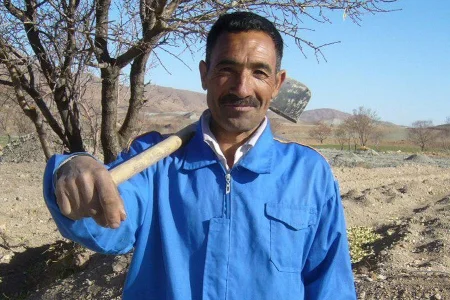
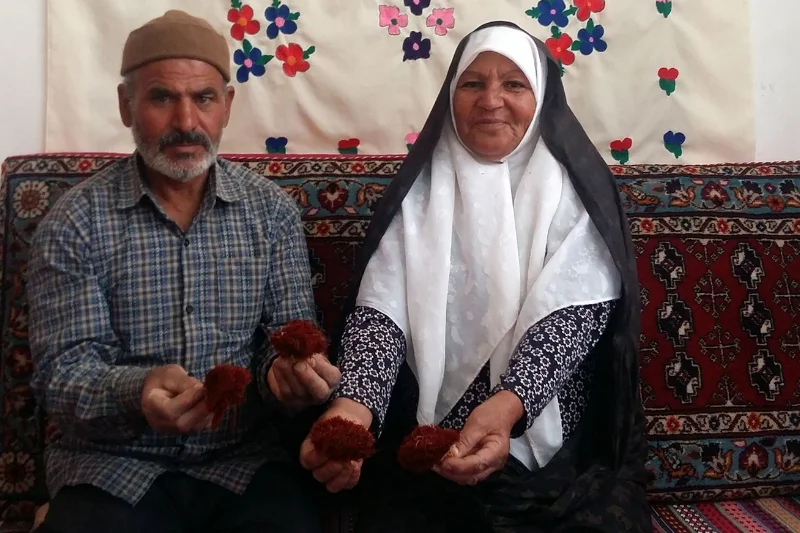
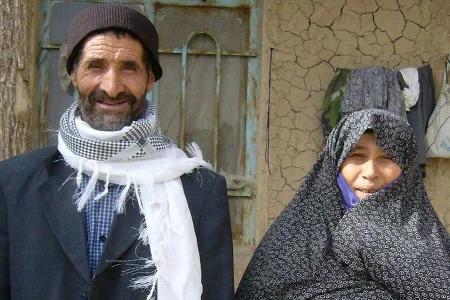
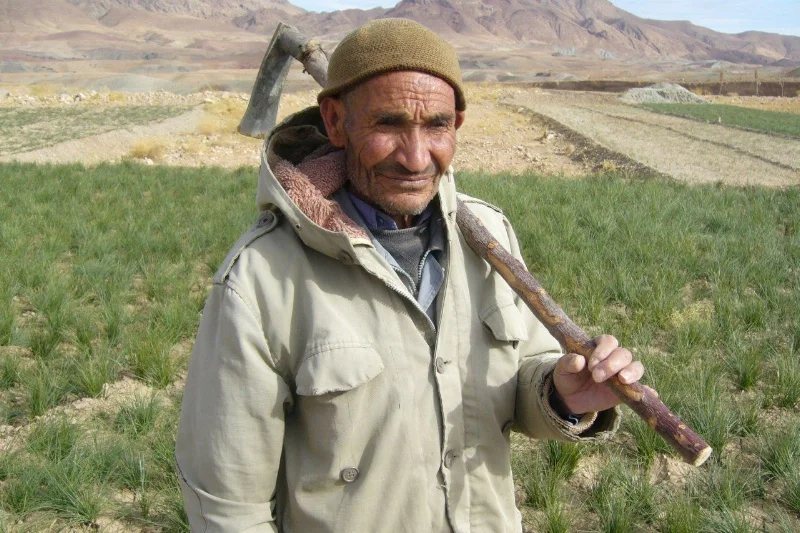
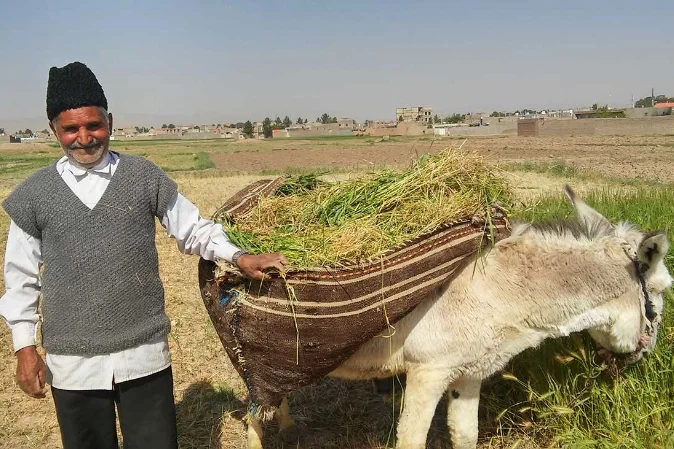
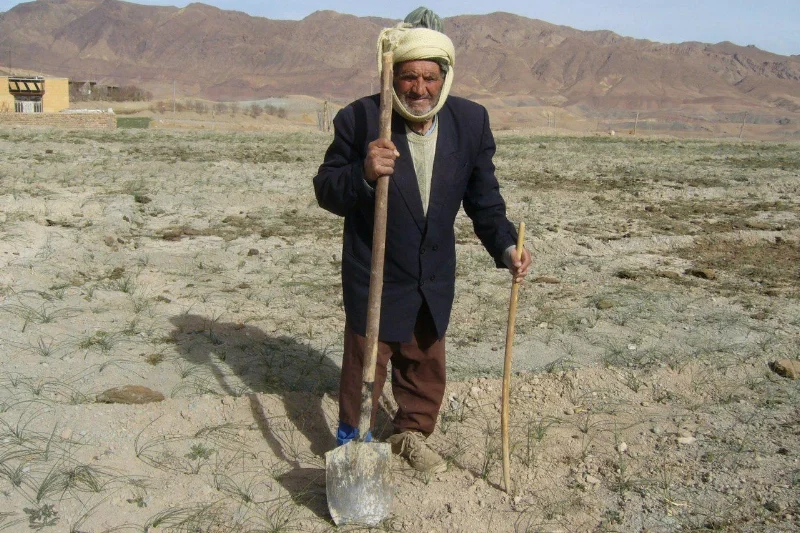
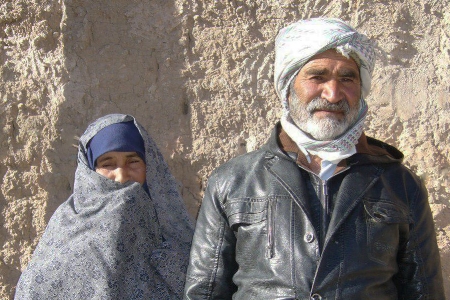
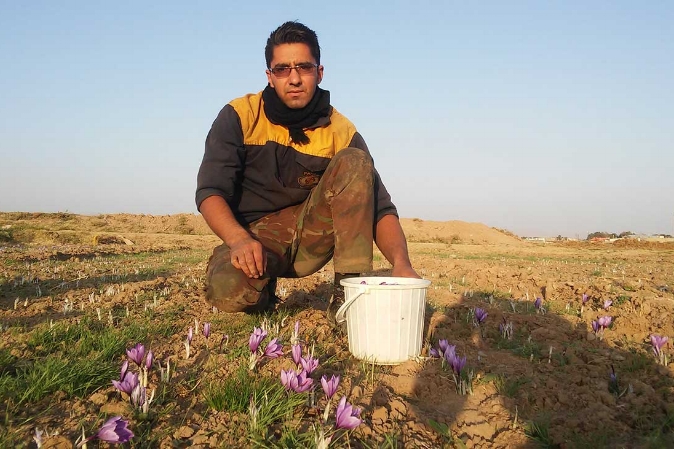
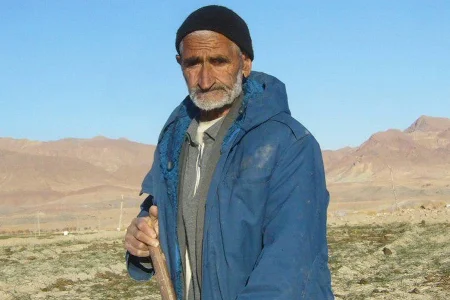
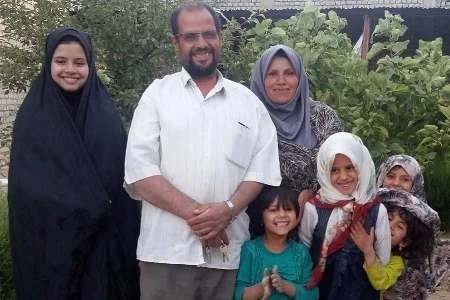
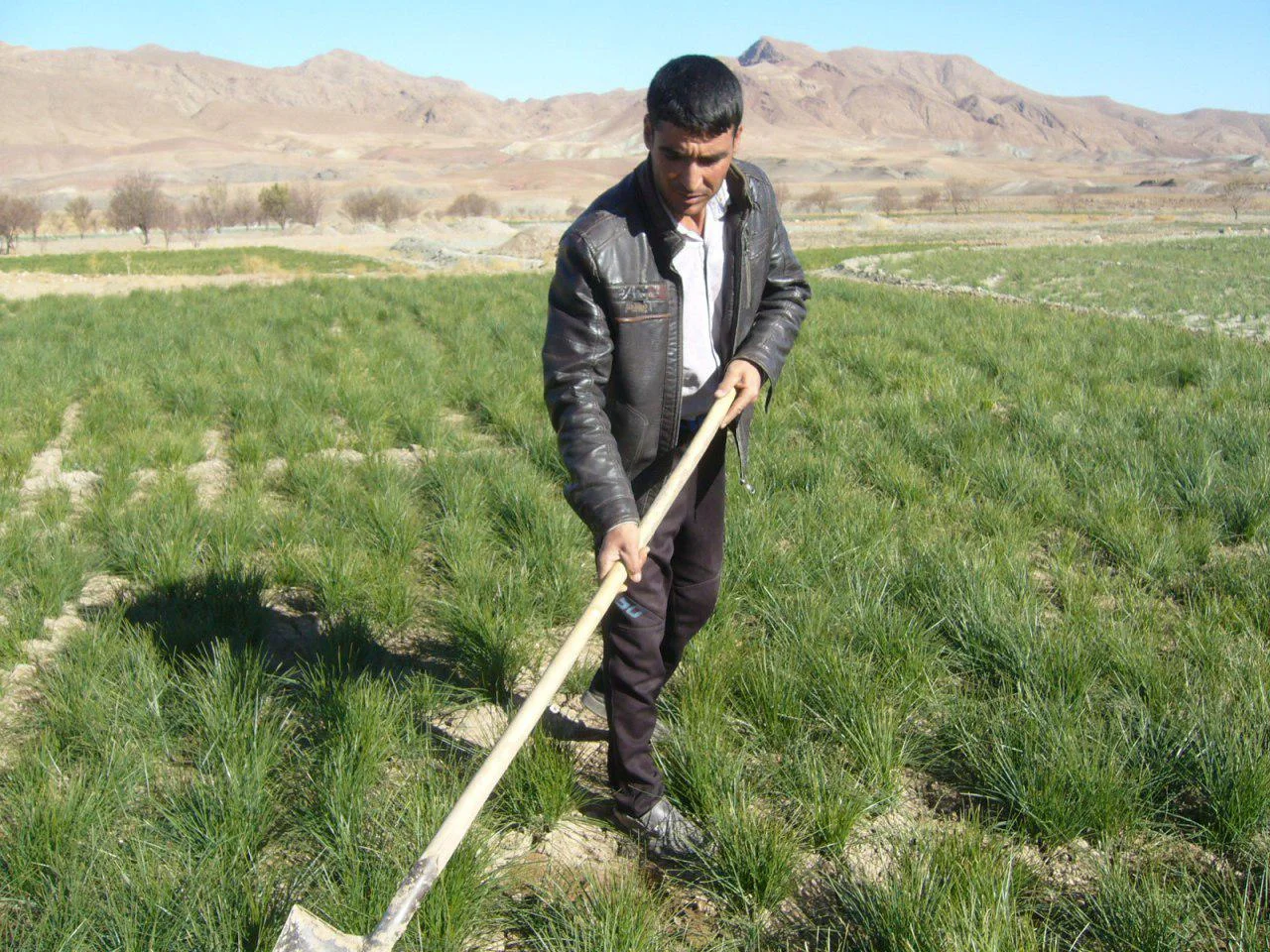
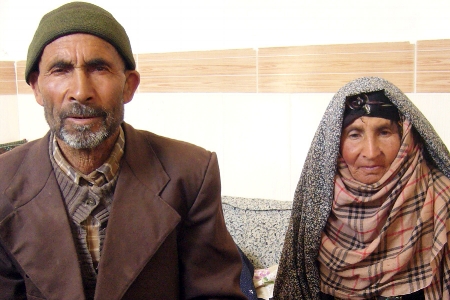
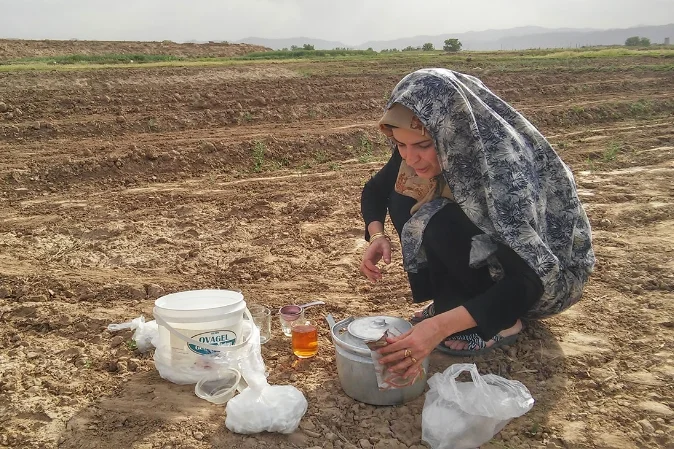
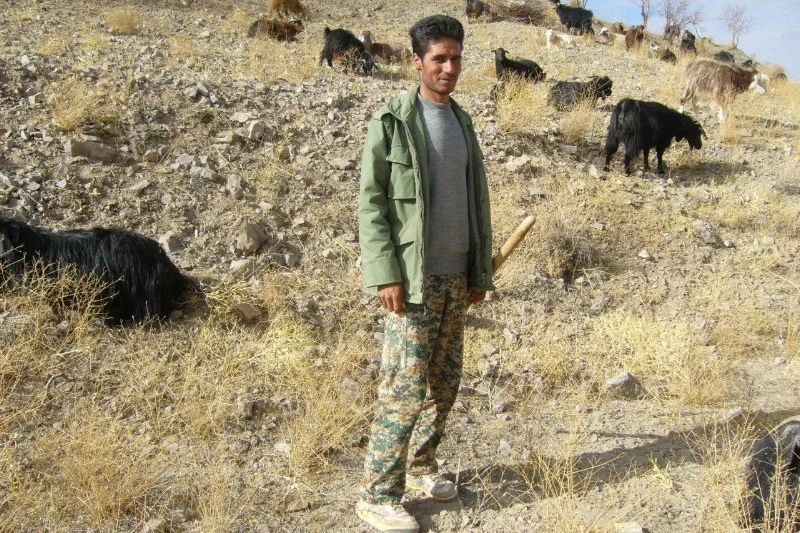
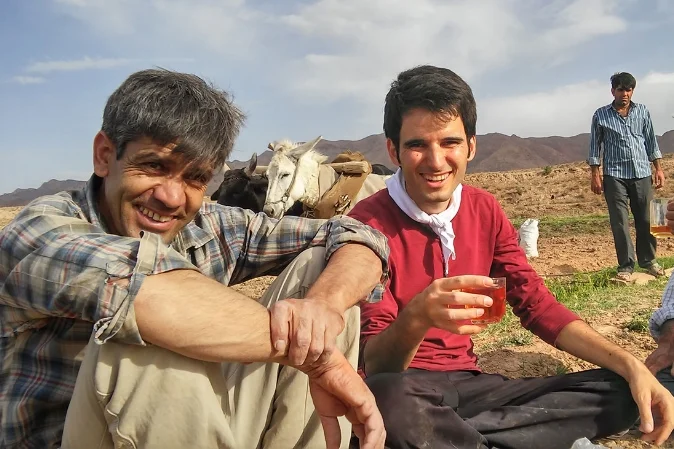
This has proven an attractive proposition to the farmers of Qaen, where Keshmoon has recruited its first cohort of 30 farmers. As Qaempanah recounts, the local saffron growers were “invited to a meeting in the town mosque, where we explained our approach, how we wanted to help, and asked them to go home and think about it.” Despite concerns that it might be hard to explain the technical aspects of the concept, the pitch worked. Today, farmers from neighboring villages and towns regularly stop by Keshmoon’s office in Qaen to learn more about the program they have heard about. The company has earned the trust of the local community.
To gain acceptance to Keshmoon’s platform, farmers need to demonstrate competency growing saffron in the traditional manner. Keshmoon will introduce more stringent requirements in the near future, introducing guidelines consistent with sustainable farming. It will take about one year to “gain critical mass and give farmers the time to make adjustments to their planting,” says Qaempanah. He foresees Keshmoon partnering with universities and other institutions to help provide training to farmers unfamiliar with growing saffron in a sustainable manner in order to help them make the switch.
For farmers, the commercial appeal of Keshmoon is the higher price achieved for their crop by selling to consumers directly, rather than selling to local traders. One drawback is that using Keshmoon will require farmers to sell their harvest incrementally, as orders come in online. Some farmers have said that they prefer selling to the local buyers, who can purchase the whole harvest in one transaction. But the price advantage is substantial. Farmers on Keshmoon can expect to generate 20-40 percent more in earnings than those who sell locally in bulk.
Laudably, Keshmoon has been very transparent about pricing for the sake of both consumers and farmers and offers a detailed breakdown on their website. Generally speaking, farmers receive 70 percent of the saffron’s retail price, while around 12 percent is earmarked for quality control, packaging, and transport, and the remaining 18 percent goes towards Keshmoon’s overhead.
Once accepted to Keshmoon, farmers need to create their online profiles. In most cases, the Keshmoon team helps by taking photos and recording the farmer’s personal details, family history, and also explanations of how the saffron is farmed. These profiles can be seen on the Keshmoon website, where consumers can even send messages to specific farmers.
Qaempanah notes that some farmers, typically those who are younger or who have had more education, have been able to author their profiles themselves. In some cases, it was the farmers’ children, many of whom own smartphones, who took responsibility for telling the story of the family farm through words and pictures. There is immense potential for the farmers to develop both some technology literacy and also their personal brand, which can help them connect with consumers more proactively. Commercial considerations aside, there is something affecting about seeing the personal portraits of the farmers and families behind Iran’s most precious crop.
A Keshmoon Giftbox
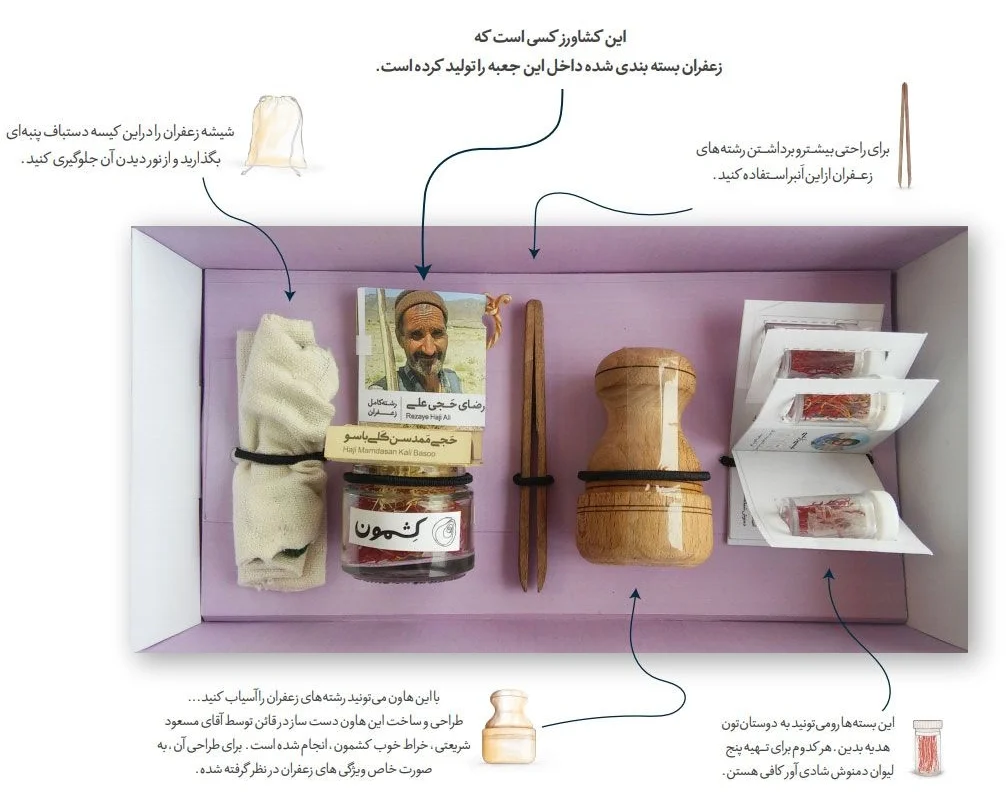
A connection to the farmers and a beautiful presentation of the saffron, including a small booklet about its origins, has proven a hit among consumers. The company has been selling online for nine months, and boasts a few hundred clients, about one-quarter of whom whom make recurring purchases. Keshmoon’s models show that it will take about 20-40 clients in order to support each farmer. At the moment, the company has stopped accepting new farmers onto its platform until is grows the client-base further. A big boost will come when the company begins selling to Europe later this year.
But while the Keshmoon story may begin with saffron, Qaempanah’s ambition is much greater. For the next few years, the Keshmoon team will focus on perfecting its “technical infrastructure,” combining ecommerce and agritech to open a new market for saffron. The big test will be in the marketing and branding. Qaempanah hopes to achieve a level of awareness such that “when people hear saffron, they think of Keshmoon.”
If this model can be developed successfully for saffron, the company plans to expand to other crops and bringing a similar model to other agricultural regions in Iran. Qaempanah imagines a situation where farmers from around the country can approach Keshmoon and receive recommendations for which crops to grow based both on analysis of the local environment and also Keshmoon’s data on which crops will sell most effectively on its marketplace. In this way, Keshmoon would serve to introduce efficiencies of scale typically reserved for large, corporatized farming. The economic and environmental impact for Iran, where the agricultural sector remains dominated by smallholder farmers, could be transformative.
But it is early days yet and the success of this grand masterplan will first depend on the successful collaboration between the saffron farmers of Qaen and the team at Keshmoon. Theirs is a collaboration that crosses talents and crosses generations—both a microcosm of the economic and environmental challenges facing Iran and a case study in the creative thinking and entrepreneurial spirit that may eventually solve those challenges.
Photo Credit: Keshmoon