
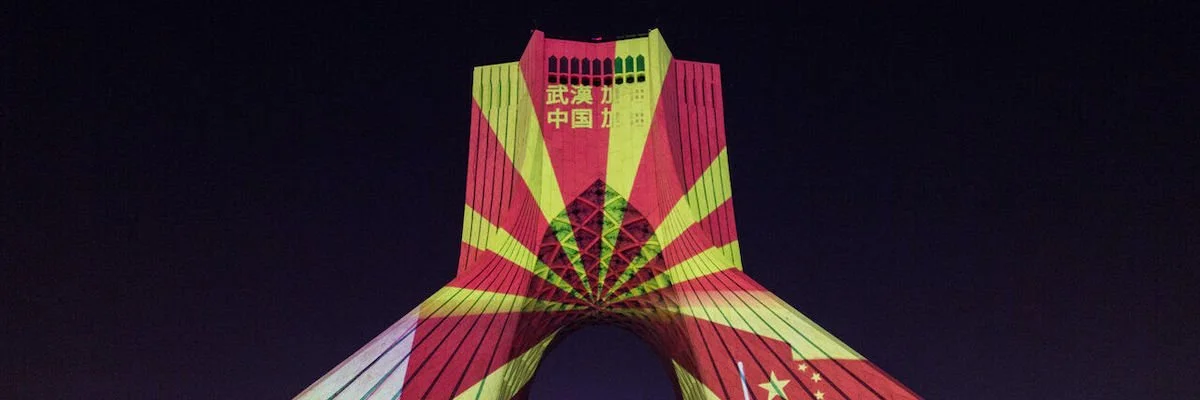
When it Comes to Iran, China is Shifting the Balance
Xi Jinping’s recent trip to Riyadh, his first foreign visit to the Middle East since the pandemic, suggests that China may no longer seek to treat Iran and its Arab neighbours as equals.
In 2016, during his first trip to the Middle East, Chinese Premier Xi Jinping visited both Riyadh and Tehran, a reflection of China’s effort to balance relations among the regional powers of the Persian Gulf. But Xi’s recent trip to Riyadh, his first visit to the Middle East since the pandemic, suggests that China is no longer aiming to treat Iran and its Arab neighbours as equals.
Following the meetings in Riyadh, China and the GCC issued a joint statement. Four of the eighteen points that comprise the joint statement directly pertain to Iran. In the declaration, China and the GCC countries called on Iran to cooperate with the International Atomic Energy Agency as part of its obligations under the beleaguered Joint Comprehensive Plan of Action (JCPOA). Using strong and direct language, the statement additionally called for a comprehensive dialogue involving regional countries to address Iran’s nuclear programme and Iran’s malign activities in the region. The language used was less neutral than that typically seen in Chinese communiqués and instead took the tone of Saudi and Emirati talking points regarding Iran.
Iranian officials were especially vexed to see that China had effectively endorsed longstanding Emirati claims to three islands: Greater Tunb, Lesser Tunb, and Abu Musa. The islands, located in the Strait of Hormuz, were occupied by the Imperial Iranian Navy in 1971 after the withdrawal of British forces. Ever since, Iran has considered the three islands as part of its territory. The United Arab Emirates (UAE) has made periodic attempts over the last four decades to regain control of the islands, claiming that before the British withdrawal, the territories were administered by the Emirate of Sharjah. While the statement does not go so far as to declare that the islands belong the UAE, China’s call for negotiations over their status inherently undermines Iran’s claims.
The reaction of Iranian officials and the public has been sharp. The day after the statement was published, Iranian newspapers featured bitter headlines. One newspaper even provocatively questioned China’s claim over Taiwan. Iranian Foreign Minister Hossein Amir-Abdollahian tweeted that the three Persian Gulf islands belong to Iran and demanded respect for Iran’s territorial integrity. Meanwhile, Iran’s Assistant Foreign Minister for Asia and the Pacific met with the Chinese Ambassador to Iran, Chang Hua, to express “strong dissatisfaction” with the outcome of the China-GCC summit.
Amid the polemic generated by the China-GCC statement, the Chinese official news agency Xinhua announced that Vice Premier Hu Chunhua would visit Iran and the UAE next week. If the stopover in Tehran was intended as a Chinese gesture to ease tensions, the move is likely to backfire. While “Little Hu” had been expected to gain a prestigious seat in the Politburo Standing Committee during the recent National Congress of the Chinese Communist Party (CCP), he was instead demoted from the Politburo and is expected to be removed as Vice Premier in March 2023. Considering Xi’s triumphal visit to Riyadh, the optics surrounding Hu’s planned visit to Tehran are especially bad.
As Xi begins his third term as China’s leader, he appears to be viewing relations with Iran through the prism of liability, rather than opportunity. Despite the fanfare surrounding the beginning of Iran’s long-awaited accession to the China-led Shanghai Cooperation Organisation (SCO) in September, this was a relatively shallow political move. The SCO is an organisation with a limited institutional capacity and substantial internal divisions—Iran’s accession did not herald the opening of a new era in Sino-Iranian relations.
Two issues appear to be hampering China-Iran relations. First, negotiations to restore the JCPOA have failed. With sanctions in place, Iran has struggled to attract Chinese investment and cooperation, especially when compared to Saudi Arabia and the UAE. As I argued in March, economic ties are a pillar of the Comprehensive Strategic Partnership (CSP) that China and Iran have devised, but relaunching economic relations between the two countries requires successful nuclear diplomacy and the lifting of US secondary sanctions. Beijing and Tehran announced the beginning of the CSP implementation phase last January when the nuclear talks appeared likely to succeed. Today, the prospects for implementing the CSP are nill and China-Iran trade is continuing to languish at around $1 billion in total value per month.
Second, Iran’s decision to sell military drones to Russia, thereby becoming actively involved in the war in Ukraine, is proving a significant strategic miscalculation. By actively supporting Russia’s war of aggression, Iran has taken itself out of a large bloc of countries, nominally led by China, that have adopted an ambiguous position towards the conflict. This bloc, which notably includes the GCC countries, is neither aligned with Ukraine and NATO nor openly against Russia and its coalition of hardliner states. In short, Iran’s overt alignment with Russia is at odds with China’s approach.
Meanwhile, the evident strains in US relations with Saudi Arabia and the UAE have created an opening for China to deepen ties with the two regional powers. In some respects, this opening has diminished China’s need to cultivate a deeper partnership with Iran. Ties with Tehran had long been attractive as a means to counterbalance US influence in the region. But Beijing’s success in building deeper relations with Riyadh and Abu Dhabi, two capitals that have long taken their cues from Washington, suggests that China is gaining new means to check US power in the Middle East.
China-Iran relations have seesawed plenty over the years, but the outcome of Xi’s visit to Saudi Arabia suggests a new and more negative outlook for bilateral ties. While Iran tries in vain to “turn East,” China may be shifting away.
Photo: IRNA
Can SCO Members Achieve Connectivity in the Face of Conflict?
If the SCO is to mature as an organisation and make good on its vision of connectivity, it must also serve as a platform for conflict resolution.
The two-day Shanghai Cooperation Organisation (SCO) summit took place last week in Samarkand, Uzbekistan. Aside from agreeing to the Samarkand Declaration, which summarises the intention of SCO members to foster deeper economic partnerships, the gathered leaders also signed 44 documents consisting of numerous memorandums, roadmaps, and action plans for cooperation in tourism, artificial intelligence, and energy.
The SCO leaders mostly focused on the importance of new transit routes and economic cooperation. Chinese President Xi Jinping, who travelled to the summit as part of his first foreign tour since the COVID-19 pandemic, touted ambitious plans to expand economic cooperation with Central Asian states.
Negotiations over the China–Kyrgyzstan–Uzbekistan railway took place in the sidelines of the summit and the three parties agreed to conduct a feasibility study with a view to constructing the new route. Uzbek officials also lobbied for another transit corridor from Uzbekistan through Afghanistan and Pakistan, but support among SCO members has been tepid given the need to engage with the Taliban government in Kabul.
Uzbekistan also signed 17 cooperation agreements with Iran focused primarily on transport and trade. Tashkent is seeking further access to Iran’s Chabahar port for its economic development. The Iranian delegation, led by president Ebrahim Raisi, signed a Memorandum of Obligations that paves the way for full SCO membership. Iran’s accession process could be completed in less than a year. The presence of Turkish President Recep Tayyip Erdogan and Belarusian President Aleksandr Lukashenko reflected the SCO’s interest in expanding its influence, even among non-member countries.
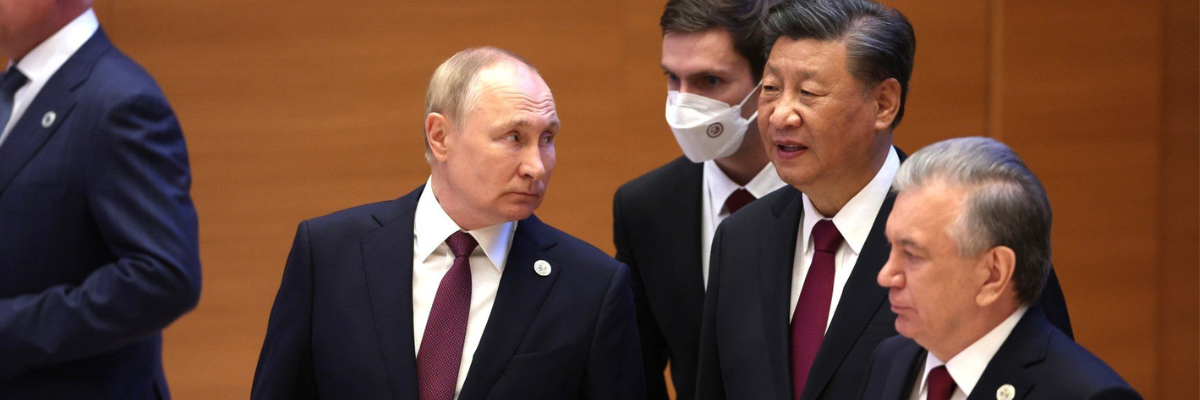
But the spirit of cooperation and the visions of connectivity were undermined by reminders of the numerous conflicts in which SCO member countries are involved. During the summit, Russian President Vladimir Putin’s interactions with fellow leaders were tainted by the war in Ukraine. While there were no official statements about the Ukraine invasion during the summit, most member states found their way to express dissatisfaction with the economic turmoil and destabilisation caused by Russia's invasion. Indian Prime Minister Narendra Modi told his Russian counterpart that “now is not an era of war.” Several leaders, including Kyrgyz President Sadyr Japarov, made Putin wait in front of cameras before meeting him—a power move that Putin has famously used in recent years.
China, too, expressed its concerns over the consequences of the current events in Ukraine. The strongest message came in the form of vocal support for Kazakhstan. In a statement, Xi said that “no matter how the international situation changes, we will continue to resolutely support Kazakhstan in protecting its independence, sovereignty, and territorial integrity.” Russian hawks had recently threatened Kazakhstan after Kazakh leaders took steps to distance themselves from Moscow.
But the war in Ukraine was not the only conflict to cast a shadow over the summit. During the summit, clashes began between two member states, Tajikistan and Kyrgyzstan. Meanwhile, tensions also rose between Armenia and Azerbaijan, an SCO dialogue partner whose president, Ilham Aliyev was in attendance at the summit.
The border between Tajikistan and Kyrgyzstan has been troubled since the demise of the Soviet Union. The former Soviet Republics have failed to properly demarcate their shared border due to complicated geographic terrain, mixed ethnic populations, and general political instability. But since last year, the regular border clashes have become more dangerous and more deadly. New clashes between Tajik and Kyrgyz forces erupted during the SCO summit, leaving dozens dead and hundreds injured. As the clashes between the two Central Asian republic escalated, Russia attempted to show its influence. Just after the summit, Putin spoke with the Tajik and Kyrgyz presidents and called on them to "prevent further escalation." Both countries are members of the Russia-led Collective Security Treaty Organization. A tenuous ceasefire is now in place.
Other SCO member states and dialogue partners may be implicated in the conflict if it escalates further. Earlier this year, Tajikistan began production of Iranian-designed drones as part of a novel joint venture. Meanwhile Kyrgyzstan has purchased Bayraktar drones from Turkey.
The Samarkand Summit demonstrated the value of the SCO as a platform for bilateral and multilateral initiatives of its member and associate countries. The SCO is especially attractive for strong personalist leaders, whose politics prevent active participation in other international rules-based blocs and bodies. However, because the SCO does not contribute to a rules-based order, the organisation has struggled in the face of conflict—such as the clashes that took place last week between Tajikistan and Kyrgyzstan.
If the SCO is to mature as an organisation and make good on its vision of connectivity, it must also serve as a platform for conflict resolution. Until now, SCO member states have viewed longstanding tensions among other members as something outside the bounds of the bloc. India is assuming presidency of the SCO and Modi did chide Putin over his invasion of Ukraine during their bilateral meeting. Will far-flung conflicts in Eastern Europe, the Caucasus, and Central Asia, be of little concern or too costly to ignore?
Photo: Kremlin.ru
As China-Led Bloc Heads to Samarkand, Leaders Struggle to Find Common Aims
Members of the China-led Shanghai Cooperation Organisation will meet later this week in Samarkand. But the assembled leaders may struggle to find common ground in the face of regional and global crises.
This week, Uzbekistan is hosting the Shanghai Cooperation Organisation (SCO) in Samarkand. The two-day summit begins on September 15. The leaders of China, Russia, India, Pakistan, Iran and other member and observer states are expected to attend. It will be the first time since the 2019 summit in Bishkek, Kyrgyzstan, that leaders will meet face to face in the SCO format.
The upcoming summit in Samarkand aims to present the organisation as a stable, capable, and evolving bloc with the capacity to address regional and global crises. For the host nation, Uzbekistan, the summit is a chance to promote the “Spirit of Samarkand” and to encourage global cooperation over global competition.
For years, the Uzbek government has sought to deepen its relations with other SCO member states. Having the opportunity to host the summit cements Uzbekistan’s position as a valuable member of the SCO community and allows it to push its regional agenda forward. Connectivity, cooperation, and the promotion of regional stability are at the core of President Shavkat Mirziyoyev’s goals, outlined on the eve of the summit.
Iran Takes Next Membership Step
One of the most important events expected to take place during the summit is Iran’s signing of binding documents related to its admission as a full member of the organisation. Iran’s accession will mark only the third time since its founding in which the SCO has admitted a new member—India and Pakistan joined in 2017. While Iran’s membership will not become official for at least another year, the procedures for its full membership will commence at the summit. Iranian leaders have faced a long wait for admission—it has been 15 years since Iran formally applied to join the bloc.
Tehran views joining the SCO as an important diplomatic achievement. The SCO represents a platform for non-western alignment and provides a platform for negotiations on tangible security and economic projects with other member states. Taking Iran on board, however, does not automatically guarantee either significant immediate benefits for Iran or an increase in the bloc’s capacity to effectively address security and economic challenges facing Asia, particularly while Iran remains under US secondary sanctions.
Eyes on Afghanistan
The situation in Afghanistan has proved strategically important for all SCO members, and especially the Central Asian republics. Security and humanitarian issues in Afghanistan were discussed in a large international conference hosted by Uzbekistan in July.
Among the Central Asian states, Uzbekistan is the loudest supporter of a taking a proactive approach towards the Taliban. While there are clear political issues with the Taliban, the Uzbek government realises that the critical south-eastern infrastructure corridor runs through Afghanistan. Development of this route promises significant economic benefits for Uzbekistan. The Uzbek president has stated that the SCO “must share the story of its success with Afghanistan.” In other words, it is a task for all regional states to engage with Kabul, and this task may become a benchmark for the capacity of SCO as an organisation. However, Afghanistan must become stable and a reliable partner to allow for its own development, as well to enable regional infrastructure projects to advance.
Tajikistan has a fundamentally different view towards the regime now in charge in Kabul. Dushanbe remains highly critical of the Taliban, raising concerns regarding terrorism and the safety of the Tajik ethnic groups in Afghanistan. However, neither Mirziyoyev or Emomali Rahmon, his Tajik counterpart, wishes to see Afghanistan further destabilised. China, India, and Russia basically hold the same position. Most regional countries are facing security threats from the Islamic State Khorasan Province and its affiliated groups. To add to the worries of the Central Asian states, Pakistan, a major player in Afghanistan, has itself faced political turmoil in the past year following the ousting of Prime Minister Imran Khan.
A Russian Dilemma
Russian president, Vladimir Putin, will face a difficult task in presenting his country as a global power in the face of unsuccessful military operations in Ukraine and economic strains caused by sanctions. The countries of Central Asia have close economic ties to Russia and are suffering the inevitable consequences of Moscow’s isolation.
As most regional countries are engaged in efforts to find ways to mitigate the negative impact of the Russian invasion of Ukraine, Moscow is expecting a not-so-warm welcome in Samarkand. Recently reported battlefield losses in Ukraine have incentivised some SCO member states to more forcefully resist Moscow's ongoing attempts to influence their foreign policy, including their aims and activities within the organisation.
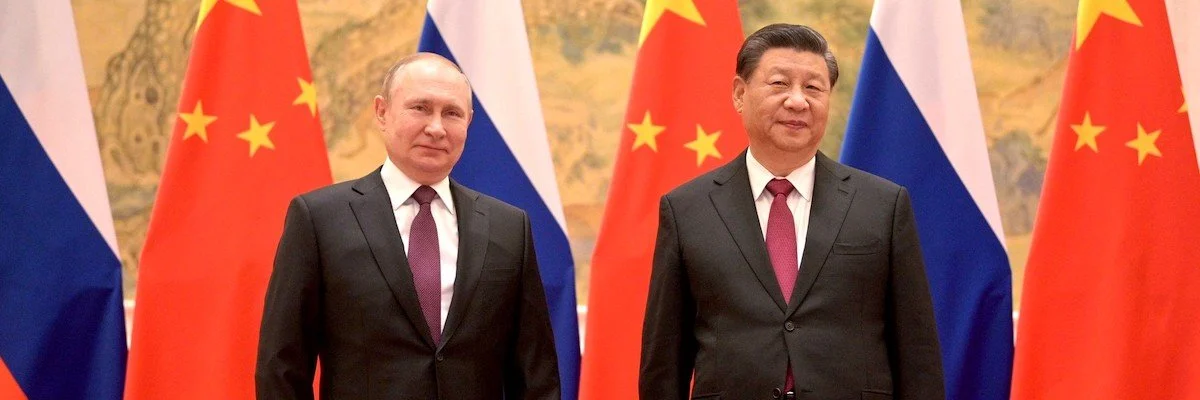
The SCO is largely dominated by China rather than Russia, but Russia has long been seen as a key partner in shaping the bloc’s political and economic aims. But it appears that Russia’s future position and influence within the organisation will be increasingly determined by the priorities of other member states and not Moscow’s ambitions. Moreover, while Russia’s ties with China have been described as a “partnership with no limits” by Chinese officials, the upcoming summit will be the first time Xi and Putin meet in-person since the start of the Ukraine invasion. Their engagements on the side-line of the summit will be telling of the extent of the bilateral partnership, particularly within the framework of the SCO.
Struggling for Common Aims
According to the Uzbek foreign ministry, numerous agreements on cooperation in specific areas, ranging from digital security to climate change, are will be discussed at the summit. The SCO is also seeking to establish partnerships with countries outside its primary geographical core, namely with Egypt, Saudi Arabia, and Qatar, in an effort to further extend the bloc’s political reach.
Until now, the greatest advantage of the SCO was that the bloc did not impose strict rules or apply pressure to prevent its members from cooperation with non-member states, even those who may be perceived as adversaries to China and Russia. This flexibility has been particularly important for Central Asian states who maintain significant security and economic relations with the United States and Europe alongside their partnerships with China, Russia, and India—as required by their multi-vector foreign policies.
Since the Russian invasion of Ukraine, however, that flexibility seems at risk. For example, Russian politician Nikolai Patrushev recently declared that military training provided by the United States to certain SCO members poses a threat to Russia. Such accusations will no doubt colour bilateral and multilateral engagements in Samarkand.
Issued at the end of the summit, the "Samarkand Declaration" will present "a comprehensive political declaration on the SCO's position on international politics, economy and a range of other aspects." To what extent the SCO will be able to accommodate its members' varied and even contradictory aims is a question yet to be answered. The Samarkand summit will convene an organisation still searching for its trajectory.
Photo: Wikicommons
UAE Earns Big as Iran Sells Oil to China
Leaders in the United Arab Emirates are eyeing an economic windfall should the Biden administration succeed in its effort to return to Iran nuclear deal. But they have not waited for the lifting of sanctions to begin earning billions from Iran.
Leaders in the United Arab Emirates are eyeing an economic windfall should the Biden administration succeed in its effort to return to the Joint Comprehensive Plan of Action (JCPOA). But they have not waited for the lifting of sanctions to begin earning billions from Iran.
During a press conference on Monday following consultations in Abu Dhabi, US Special Envoy for Iran Rob Malley told reporters that “all” of the Biden administration’s regional interlocutors had made clear they would seek “to find ways to engage Iran economically consistent with the lifting of sanctions that would occur” if the JCPOA were restored, a step that would also require Iran to return to full compliance with its nuclear commitments under the deal.
Malley added that should Iran and the P5+1 manage to restore the nuclear deal, it “would also allow countries in the region to develop closer ties economically with Iran.” Malley had understood from his conversations with GCC counterparts that this was “one of [their] goals.”
The comments were notable in light of recent developments in bilateral trade between the UAE and Iran. At first, the UAE was fully on board with the “maximum pressure” sanctions imposed by Trump on Iran in 2018 and so far maintained by Biden. In the Iranian calendar ending March 2019, roughly one year following the Trump administration’s decision to withdraw from the JCPOA and reimpose secondary sanctions on Iran, Iranian imports from the UAE declined 30 percent from around USD 8.2 billion to USD 5.7 billion, while exports to the UAE declined 11 percent from USD 6.7 billion to USD 6 billion. In this period, UAE leaders sought to tamp down on the burgeoning trade between the UAE and Iran, principally channelled through Dubai. Iranian companies and businesspeople were essentially hounded out of the country, as customers severed relationships and banks shut accounts.
But in 2019, the first signs of a change in policy began to emerge. Fearing a further deterioration in the regional security situation after limpet mines were detonated on commercial vessels in the Gulf of Oman in May and June of that year, the UAE opened a tentative dialogue with Iran. Trump’s Iran envoy, Brian Hook, traveled to Abu Dhabi in September 2019 to try and keep the UAE on board with the maximum pressure strategy. One month later, reports emerged that the UAE had released USD 700 million of Iranian assets that had been frozen as part of the UAE’s support for the U.S. sanctions campaign. A thaw in economic relations was underway.
In the Iranian calendar year ending March 2021, total Iranian imports from the UAE exceeded USD 9 billion, back to pre-sanctions levels. In the first five months of the current Iranian calendar year, imports have totalled over USD 5 billion, meaning that total annual imports are on course to exceed USD 12 billion by March 2022. The UAE is a major re-export hub, meaning that Iran sources goods from a wide range of countries from suppliers in the UAE. The growth in Iranian imports from the UAE has been so rapid that the Arab entrepôt has now replaced China as Iran’s top import partner.
In an interview in September, Farshid Farzanegan, head of the Iran-UAE Joint Chamber of Commerce, attributed the UAE’s rise as Iran’s top import partner to increased purchases of agricultural commodities from Dubai-based traders and an overall decline in China-Iran trade. But he also notes that the growth in imports is taking place despite continuing challenges in cross-border banking between Iran and the UAE related to the fact that US secondary sanctions remained in place. Moreover, the recovery in Iranian exports to the UAE has been comparatively modest—total exports are on track to be just USD 4.5 billion this year, still below their pre-sanctions levels. So how is Iran able to buy so much more from the UAE?
The answer probably has to do with the decline in China-Iran trade. Over the course of the last year, China has significantly increased its purchases of Iranian oil. These purchases, which are made in direct defiance of US secondary sanctions, are not reflected in the data produced by China’s customs authority. This is because Iran is not delivering oil directly to China. Iran’s deliveries are intermediated, meaning that the oil is taken to a third country, before being transferred onto tankers that deliver to Chinese refiners. When this oil arrives in China, it is declared as an import from the country serving as the waypoint. The two biggest countries playing that role are Malaysia and the UAE.
Looking at customs data for Chinese oil imports, the rise in imports from Malaysia and the UAE occurs precisely around the time that China begins to reduce direct imports of oil from Iran. At first glance, it might seem that China is simply buying more oil from existing customers as Iran ceases to be an option. But the volumes being purchased from Malaysia and the UAE are so great that the oil cannot come from the production of those two countries—it must be Iranian oil.
The amount of oil China is importing from Malaysia, estimated by dividing the monthly value of declared imports by the average monthly oil price is 94 percent higher so far in 2021 than it was in the six months leading up to the Trump administration’s full imposition of sanctions on Iranian oil in May 2019. Looking to the UAE, the same figure is 31 percent higher. Looking across the two periods, the crude oil price is just 4 percent higher meaning that the surge in the value of Chinese imports is not merely a function of higher oil prices.
The inclusion of Iranian oil in the Chinese customs data is even clearer when comparing that data to OPEC estimates for Malaysia and UAE oil exports. According to OPEC, Malaysia exported an average of 280,000 barrels per day of oil in 2020, the equivalent of just over 100 million barrels over the whole year. Based on the 2020 average market price of USD 41.75, China’s declared oil imports from Malaysia, which are valued at USD 13.6 billion, are the equivalent of 330 million barrels (some of this total is Venezuelan oil, also being imported by China via Malaysia). Doing the same calculation, the UAE’s export total, as reported by OPEC, is about 880 million barrels in 2020. The barrel equivalent of total imports declared by China is 290 million, meaning that China would account for one-third of all UAE oil exports—an implausible proportion.
Looking back to the significant trade deficit Iran is running with the UAE, the likeliest explanation for how Iran is able to finance this deficit, which may total nearly USD 8 billion in this Iranian calendar year, is that it is drawing on revenues related to the UAE’s role as an intermediary in oil sales to China. Iran is clearly not spending the money it is being paid by Chinese customers in China—there has been no rise in Iranian imports of goods from China in the period in which we know China has increased its purchases of Iranian oil. Rather, that hidden surplus in China-Iran trade is being spent, at least in part, in the UAE, and thereby making a direct contribution to the UAE economy during a critical period of post-pandemic recovery. Facilitating Chinese purchases of Iranian oil also allows the UAE to reduce the risks of regional escalation. Iran has repeatedly threatened to prevent exports by the UAE and other producers if its own exports are blocked by sanctions.
So it should be no surprise that GCC leaders told Malley that they seek to deepen economic engagement with Iran if the US lifts secondary sanctions. They have already increased economic ties to levels approaching those last seen before US sanctions were reimposed, even while sanctions remain in place. The thaw in economic relations between the UAE and Iran is an overlooked aspect of the recent developments in regional diplomacy and could prove an important driver for continued talks in bilateral and multilateral formats. The recent growth in trade also suggests that there has been a fundamental shift in the attitudes of Emirati policymakers, who rebuffed President Obama’s request for an increase in Arab diplomatic and economic engagement with Iran made during the 2016 US-GCC summit. In this way, the shared interests of Iran, China, and the UAE appear to be giving the Biden administration new and much-needed space to pursue diplomacy.
Photo: Chinese Foreign Ministry

Iran’s Pact With China Is Bad News for the West
Tehran’s new strategic partnership with Beijing will give the Chinese a strategic foothold and strengthen Iran’s economy and regional clout.
By Alam Saleh and Zakieh Yazdanshenas
A recently leaked document suggests that China and Iran are entering a 25-year strategic partnership in trade, politics, culture, and security.
Cooperation between China and Middle Eastern countries is neither new nor recent. Yet what distinguishes this development from others is that both China and Iran have global and regional ambitions, both have confrontational relationships with the United States, and there is a security component to the agreement. The military aspect of the agreement concerns the United States, just as last year’s unprecedented Iran-China-Russia joint naval exercise in the Indian Ocean and Gulf of Oman spooked Washington.
China’s growing influence in East Asia and Africa has challenged U.S. interests, and the Middle East is the next battlefield on which Beijing can challenge U.S. hegemony—this time through Iran. This is particularly important since the agreement and its implications go beyond the economic sphere and bilateral relations: It operates at the internal, regional, and global level.
Internally, the agreement can be an economic lifeline for Iran, saving its sanctions-hit, cash-strapped economy by ensuring the sale of its oil and gas to China. In addition, Iran will be able to use its strategic ties with China as a bargaining chip in any possible future negotiations with the West by taking advantage of its ability to expand China’s footprint in the Persian Gulf.
While there are only three months left before the 2020 U.S. presidential election, closer scrutiny of the new Iran-China strategic partnership could jeopardize the possibility of a Republican victory. That’s because the China-Iran strategic partnership proves that the Trump administration’s maximum pressure strategy has been a failure; not only did it fail to restrain Iran and change its regional behavior, but it pushed Tehran into the arms of Beijing.
In the long term, Iran’s strategic proximity to China implies that Tehran is adapting the so-called “Look East” policy in order to boost its regional and military power and to defy and undermine U.S. power in the Persian Gulf region.
For China, the pact can help guarantee its energy security. The Persian Gulf supplies more than half of China’s energy needs. Thus, securing freedom of navigation through the Persian Gulf is of great importance for China. Saudi Arabia, a close U.S. ally, has now become the top supplier of crude oil to China, as Chinese imports from the kingdom in May set a new record of 2.16 million barrels per day. This dependence is at odds with China’s general policy of diversifying its energy sources and not being reliant on one supplier. (China’s other Arab oil suppliers in the Persian Gulf region have close security ties with the United States.)
China fears that as the trade war between the two countries intensifies, the United States may put pressure on those countries not to supply Beijing with the energy it needs. A comprehensive strategic partnership with Iran is both a hedge and an insurance policy; it can provide China with a guaranteed and discounted source of energy.
Chinese-Iranian ties will inevitably reshape the political landscape of the region in favor of Iran and China, further undermining U.S. influence. Indeed, the agreement allows China to play a greater role in one of the most important regions in the world. The strategic landscape has shifted since the 2003 U.S. invasion of Iraq. In the new regional order, transnational identities based on religious and sectarian divisions spread and changed the essence of power dynamics.
These changes, as well as U.S. troop withdrawals and the unrest of the Arab Spring, provided an opportunity for middle powers like Iran to fill the gaps and to boost their regional power. Simultaneously, since Xi Jinping assumed power in 2012, the Chinese government has expressed a stronger desire to make China a world power and to play a more active role in other regions. This ambition manifested itself in introducing the Belt and Road Initiative (BRI), which highlighted the strategic importance of the Middle East.
China grasps Iran’s position and importance as a regional power in the new Middle East. Regional developments in recent years have consolidated Iran’s influence. Unlike the United States, China has adopted an apolitical development-oriented approach to the region, utilizing Iran’s regional power to expand economic relations with nearby countries and establish security in the region through what it calls developmental peace—rather than the Western notion of democratic peace. It’s an approach that authoritarian states in the Middle East tend to welcome.
U.S. President Donald Trump’s withdrawal from the nuclear deal with Iran in 2018, and the subsequent introduction of the maximum pressure policy, was the last effort by the U.S. government to halt Iran’s growing influence in the region. Although this policy has hit Iran’s economy hard, it has not been able to change the country’s ambitious regional and military policies yet. As such, the newfound strategic cooperation between China and Iran will further undermine U.S. leverage, paving the way for China to play a more active role in the Middle East.
The Chinese-Iranian strategic partnership will also impact neighboring regions, including South Asia. In 2016, India and Iran signed an agreement to invest in Iran’s strategic Chabahar Port and to construct the railway connecting the southeastern port city of Chabahar to the eastern city of Zahedan and to link India to landlocked Afghanistan and Central Asia. Iran now accuses India of delaying its investments under U.S. pressure and has dismissed India from the project.
While Iranian officials have refused to link India’s removal from Chabahar-Zahedan project to the new 25-year deal with China, it seems that India’s close ties to Washington led to this decision. Replacing India with China in such a strategic project will alter the balance of power in South Asia to the detriment of New Delhi.
China now has the chance to connect Chabahar Port to Gwadar in Pakistan, which is a critical hub in the BRI program. Regardless of what Washington thinks, the new China-Iran relationship will ultimately undermine India’s interests in the region, particularly if Pakistan gets on board. The implementation of Iran’s proposal to expand the existing China-Pakistan Economic Corridor along northern, western, and southern axes and link Gwadar Port in Pakistan to Chabahar and then to Europe and to Central Asia through Iran by a rail network is now more probable. If that plan proceeds, the golden ring consisting of China, Pakistan, Iran, Russia, and Turkey will turn into the centerpiece of BRI, linking China to Iran and onward to Central Asia, the Caspian Sea, and to the Mediterranean Sea through Iraq and Syria.
On July 16, Iranian President Hassan Rouhani announced that Jask Port would become the country’s main oil loading point. By placing a greater focus on the development of the two strategic ports of Jask and Chabahar, Iran is attempting to shift its geostrategic focus from the Persian Gulf to the Gulf of Oman. This would allow Tehran to avoid the tense Persian Gulf region, reduces the journey distance for oil tankers shipping Iranian oil, and also enables Tehran to close the Strait of Hormuz when needed.
The bilateral agreement provides China with an extraordinary opportunity to participate in the development of this port. China will be able to add Jask to its network of strategic hubs in the region. According to this plan, regional industrial parks developed by Chinese companies in some Persian Gulf countries will link up to ports where China has a strong presence. This interconnected network of industrial parks and ports can further challenge the United States’ dominant position in the region surrounding the strategically vital Strait of Hormuz.
A strategic partnership between Iran and China will also affect the great-power rivalry between the United States and China. While China remains the largest trading partner of the United States and there are still extensive bilateral relations between the two global powers, their competition has intensified in various fields to the point that many observers argue the world is entering a new cold war. Given the geopolitical and economic importance of the Middle East, the deal with Iran gives China yet another perch from which it can challenge U.S. power.
Meanwhile, in addition to ensuring its survival, Tehran is going to take advantage of ties with Beijing to consolidate its regional position. Last but not least, while the United States has been benefiting from rivalry and division in the region, Chinese-Iranian partnership could eventually reshape the region’s security landscape by promoting stability through the Chinese approach of developmental peace.
Alam Saleh is a lecturer in Iranian studies at Australian National University’s Centre for Arab and Islamic Studies. He is also a council member of the British Society for Middle Eastern Studies. Follow him at @alamsaleh1.
Zakiyeh Yazdanshenas is a research fellow at the Center for Middle East Strategic Studies. Her expertise mainly focuses on great-power rivalries in the Middle East. Follow her at @YzdZakiyeh.
Photo: IRNA
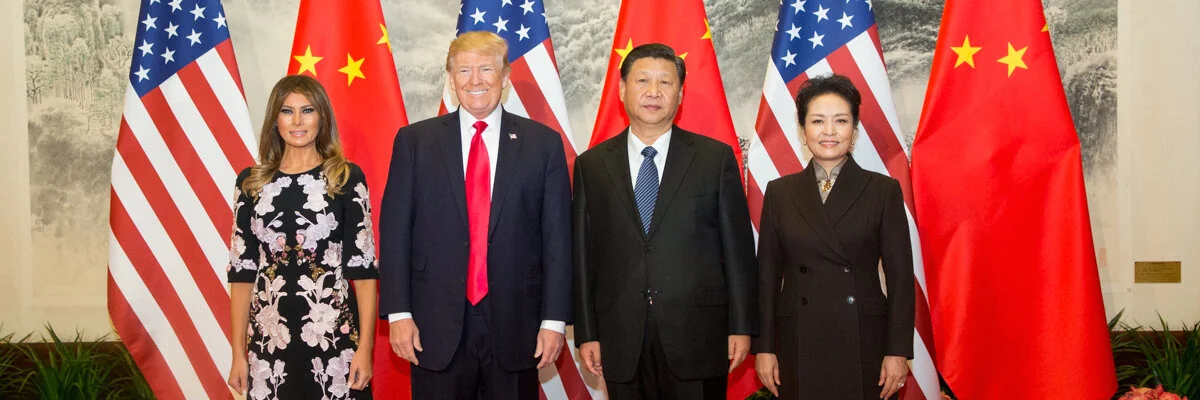
Concern in Iran Over China Commerce as Trump Gets Trade Deal
The contents of an email shared with Bourse & Bazaar by an official at Iran’s communications ministry suggest that China’s Bank of Kunlun is weighing whether to cease processing Iran-related payments. There is growing concern in Tehran that China may be planning to downgrade its trade relationship with Iran.
Last week, an official from Iran’s communications ministry received an email from a Chinese supplier informing them that Bank of Kunlun, the state-owned bank at the heart of China-Iran bilateral trade, is weighing whether to cease processing Iran-related payments.
The email warned that after an April 9 deadline, “Kunlun may stop handling payment [sic] from Iran. For the exact situation then, we can only wait for further notice from the bank.”
The bank was set to inform clients that “all the payment [sic] should be received and goods should be shipped before April 9, and all PI (pro forma invoice) dates should be before January 10.”
The official, who shared the contents of the email with Bourse & Bazaar on condition of anonymity, speculated that the change in policy at Bank of Kunlun could be related to the recent agreement reached between Chinese and American negotiators over the first phase of a new trade deal.
If the email proves accurate, this would not be the first time that Kunlun has suddenly changed its policy in response to political developments in Washington. The bank paused its Iran business for one-month period following the Trump administration’s reimposition of secondary sanctions on Iran in November 2018. When Iran transactions were resumed, a new policy limited payments for trade in “humanitarian and non-sanctioned goods and services between Iran and China,” minimizing direct contravention of U.S. sanctions.
Reached for comment, Wu Peimin, the economic counselor at the Chinese embassy in Tehran, stated the embassy had not been made aware of any impending change in policy at Kunlun and that concerns amount to a “hypothetical situation.”
As analysts Julia Gurol and Jacopo Scita detail in a recent report, China’s has continued to purchase Iranian oil in defiance of U.S. sanctions in an “attempt to appease Iran and avoid a full-scale conflict in the Persian Gulf.” Although China has rebalanced its imports in favor of Saudi Arabia and could easily find an alternative supplier for the low volumes of oil still imported from Iran, recent incidents such as the attack on the Aramco facilities in Abqaiq and Khurais have made clear the risks to Chinese energy security if Iran acts on threats to prevent all exports through the Strait of Hormuz in the event it is prevented from exporting its oil.
But while China’s strategic interests are well-served by maintaining trade ties with Iran, albeit at reduced levels, there remains the possibility that China may have made tactical concessions related to Iran as part of its trade negotiations with the United States. For their side, U.S. officials have insisted that they would not reduce sanctions pressure on Chinese firms trading with Iran in order to gain concessions from Beijing related to the trade deal.
Chinese trade with Iran has fallen due to sanctions pressures, but remains a pillar of Iran’s economic resiliency in the face of the Trump administration’s “maximum pressure” sanctions campaign. Iran’s bilateral trade with China totaled USD 23 billion last year. While the annual total has fallen 34.5 percent, Iran has sustained significant oil and non-oil exports to China, totaling just over USD 13.2 billion dollars. The earnings from this trade have enabled Iran to afford continued imports of Chinese raw materials, parts, and machinery that support Iran’s manufacturing sector—total imports were USD 9.7 billion in 2019.
Much of this trade was facilitated through the payment channels available at Kunlun, a so-called “bad bank” sanctioned by the United States in 2012 for its critical role in supporting Chinese trade with Iran, particularly oil purchases by major state refiners like CNPC and Sinopec.
Mohammad Reza Karbasi, who is responsible for international affairs at the Iran Chamber of Commerce, expressed confidence that even if Kunlun proceeds to eliminate its Iran business, other smaller Chinese banks will step-in to support the longstanding bilateral trade between China and Iran.
“Iran is important to China and the same is true the other way round as well. Sure, there are attempts by Western governments to try and interfere with the expansion of ties between us, but we believe the Chinese won’t let them succeed given the trust that has been built between our two counties through years of cooperation,” Karbasi said.
In a recent interview focused on the trade deal, Treasury Secretary Steven Mnuchin stated that the Trump administration was “working closely with [China] to make sure that they cease all additional activities [with Iran]." The Trump administration has continued to sanction Chinese firms engaged in Iran trade, most recently targeting several buyers of Iranian oil.
Mnuchin also stated that “China state companies are not buying oil from Iran.” The statement remains factually incorrect—Chinese firms such as CNPC remain directly engaged in Iran oil purchases—but it may refer to a new understanding between China and the United States that is yet to be implemented.
Richard Nephew, who led sanctions policy at the State Department during the Obama administration, recently told S&P Platts that he does not expect such designations and the related pressure to compel China to drop it’s Iran trade outright.
However, reports that Iran’s January oil exports are significantly higher than the monthly average since May 2019 may reflect stockpiling of cheap Iranian oil by Chinese refiners ahead of an expected change in policy and reduction in imports. A similar pattern was observed when exports peaked in March 2019 ahead of the May 2019 revocation of the waiver permitting Chinese purchases of Iranian oil.
Given the timing, concerns in Tehran center on whether China will further downgrade its trade with Iran in order to avoid jeopardizing its new understanding with the Trump administration on larger issues of economic policy.
Massoud Maleki, the director of the Bureau for Developing Countries at the Tehran Chamber of Commerce said he was skeptical of reports Kunlun would bring an end to its Iran business, but warned of the consequences if there were such disruptions.
“Iran and China’s trade is not a paltry amount for it to be carried out through suitcase trade or exchange bureaus. If this is true, then I’m afraid that we will have to deal with a whole lot of hardship. This, I presume, is unlikely, but if it’s confirmed we must prepare and take necessary measures,” said Maleki.
Farhad Ehteshamzad, an Iranian industrialist and former head of Iran Auto Importers Association, echoed the call for preparations in case the U.S.-China trade deal has changed China’s intentions regarding trade with Iran.
“Transactions through the Bank of Kunlun had already been made difficult during the past two or three months. Kunlun in China was like one of our small credit institutions in Iran before being trusted with the responsibility to handle Iran payments. It gets all its reputation via collaboration with Iranian businesses.’
He added that if the industry ministry official had received such an email, the Central Bank of Iran has also been forewarned and urged officials to ensure that the Iranian funds currently held in accounts at Kunlun are not blocked.
“An emergency meeting should be held to determine how much capital lies in the bank and to inform traders and economic players before their money gets blocked. Also, if there is the possibility for certain goods to be shipped before April 9, this has to be done. If there isn’t, then money has to be transferred from Kunlun bank to other banks as quickly as possible before the money is out of reach.”
Ehteshamzad estimates that around 80 percent of payments made to support China-Iran bilateral trade are currently processed via Kunlun. “Yet, this does not mean if the bank stops its services, trade will come to a halt,” he insisted.
Citing the creativity and resolve of Iran’s private sector, Ehteshamzad noted that Iranian business boast “a myriad ways to circumnavigate the U.S. sanctions. The only downside to this is that transaction costs will rise, meaning goods will take longer to be delivered and will cost more.”
For now, Iran’s business community is waiting nervously to see whether decisions made in Washington and Beijing will force them to put their creative powers to use once again.
Photo: U.S. Embassy Beijing
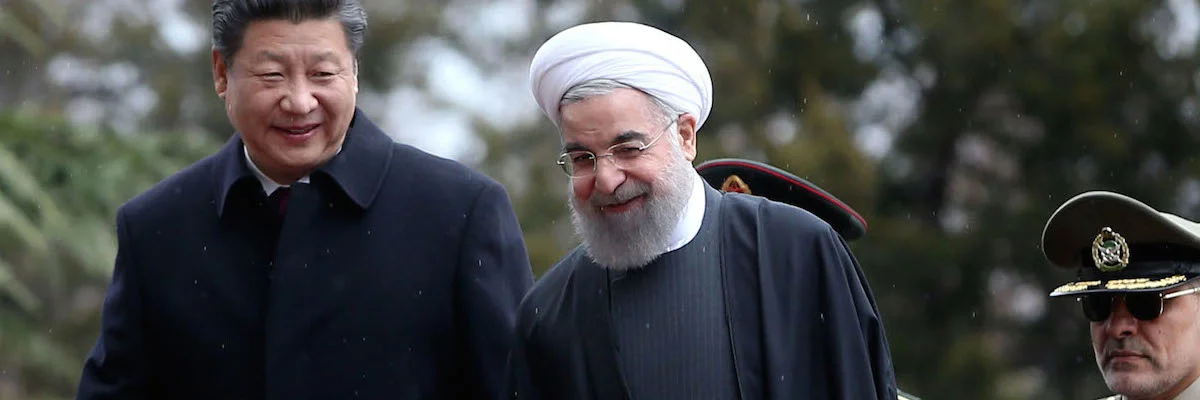
No, China Isn't Giving Iran $400 Billion
◢ A recent report from the London-based publication Petroleum Economist offers a cautionary tale of “fake news.” The claim that China will extend a $400 billion credit line to Iran is poorly sourced and inconsistent with both recent trends in China-Iran trade and the scope of China’s Belt and Road Initiative.
A recent report from the London-based publication Petroleum Economist offers a cautionary tale of “fake news” having spurred an unprecedented debate in about Sino-Iranian relations.
Quoting an anonymous senior source “closely connected” to Iran’s petroleum ministry, the article claims the existence of a major new agreement between Tehran and Beijing that could reflect “a potentially material shift to the global balance of the oil and gas sector.” The figures presented to back up this claim are astronomical—China will invest a total of $400 billion in Iran over the next 5 years, split between $280 billion in the development of Iran’s energy sector and $120 billion for infrastructure projects. This first round of investments is claimed to be part of a 25-year plan with capital injected in the Iranian economy every five years. Despite the attention that the report garnered, with follow-up articles in Forbes and Al Monitor among other publications, Petroleum Economist’s figures do not appear plausible.
China and Iran signed a comprehensive strategic partnership, the highest level in the hierarchy of Beijing’s partnership diplomacy, in 2016. On the occasion, Xi Jinping and Hassan Rouhani signed a comprehensive 25-year deal which included a series of multi-sector agreements intended to boost bilateral trade to $600 billion within a decade. Even considering the potential for trade following the listing of international sanctions after the implementation of the JCPOA, the goal was extremely ambitious, if not totally unrealistic.
Indeed, the re-imposition of US secondary sanctions in November 2018 has deeply impacted the level of China-Iran trade. As detailed in a Bourse & Bazaar special report, in the last trimester of 2018 Chinese exports to Iran dropped by nearly 70 percent, falling from the already low figure of $1.2 billion in October to a dramatic low of $400 million in December. Exports to Iran have now stabilized at just under $1billion each month.
Meanwhile, the flow of crude oil from Tehran to Beijing—undoubtedly the engine of Sino-Iranian trade—suffered a major slowdown due to the revocation of US oil waivers expired in May 2019. Despite China continuing buying Iranian oil in defiance of US sanctions, using ship-to-ship transfers and ghost tankers, the level of imports remain about half of pre-sanctions levels.
Post-November 2018 trade figures show a clear picture. Although China remains Iran’s most important foreign partner, Beijing has adopted a mixed policy vis-à-vis US sanctions—certainly bolder than European states, but still cautious. In short, the pattern of China-Iran trade suggests that a five-year, three-digit investment program is not credible, especially with oil imports at their minimum, secondary sanctions in place, and the poor record for project delivery of Chinese infrastructure projects in Iran. Moreover, it is unrealistic that Iran’s suffering economy could absorb such a massive injection of capital.
Petroleum Economist’s figures look even less realistic if looked from a broader perspective. According to Morgan Stanley, the total Chinese investment in the Belt and Road Initiative could reach $1.2-1.3 trillion in 2027. In May 2017, Ning Jizhe, the vice-chairman of China’s National Development and Reform Commission (CNDR), declared that Beijing’s investments in the BRI for the following five years (2017-2022) were expected to be between $600 billion and $800 billion. Therefore, it is hard to believe that China will invest almost the equivalent of two-thirds of its planned budget for its most ambitious and largest foreign project in Iran alone. If the Chinese were indeed set to spend $400 billion on Iran, the recent French proposal to extend a $15 billion credit line to restore JCPOA’s economic benefits would be completely useless given Chinese largesse.
The anonymous source painted an idealistic picture for Petroleum Economist, claiming that China has agreed to keep increasing its import of Iran’s oil in defiance of the United States and “to put up the pace on its development” of Phase 11 of South Pars gas field—which, ironically, represents one the clearest examples of Beijing’s difficulties in delivering its projects.
Most perplexingly, the source claimed that the deal “will include up to 5000 Chinese security personnel on the ground in Iran to protect Chinese projects.” Such a claim directly contradicts Beijing’s strategy of remaining disengaged from the Persian Gulf, especially considering the current tensions. Indeed, China’s apolitical approach to the region and good relations with Saudi Arabia and the UAE—with which China has comprehensive strategic partnerships—would be severely undermined by the presence of a Chinese armed contingent on the ground in Iran. The presence of foreign troops is also a political impossibility in Iran, where the refueling of Russian bombers at an Iranian airbase caused a political scandal last year.
With the exception of a Fars News piece quoted by Middle East Monitor, practically no Iranian nor Chinese official and semi-official news outlet have reported or confirmed the figures presented by Petroleum Economist. State news agency IRNA, which launched its Chinese channel only days before the news came out, had no corroborating report. When asked, Iran’s oil minister Bijan Zanganeh denied rumors about the $400 billion investment plan, succinctly stating: “I have not heard such a thing.” The head of the Iran-China Chamber of Commerce called the reports “a joke” and urged people to be more careful about the news they share.
The figures quoted by Petroleum Economist do not accurately reflect the future of Chinese investment in Iran. Nevertheless, the news achieved what could be assumed to be its original goal— to bait clicks.
No doubt, Iran is trying to put some pressure on the West, and perhaps on China itself, by reinforcing the idea of a strong, growing, and unique relationship between Tehran and Beijing. It should also be noted that before his trip to China at the end of August, Iran’s foreign minister, Javad Zarif published an op-ed in Global Times—a practice that is typical of Xi Jinping—calling, with quite unprecedented audacity, for a new phase in Sino-Iranian relations.
However, ties between Iran and China should not be overestimated and deserve careful consideration. In the short-term, Beijing represents Iran’s minimum insurance against US sanctions; in the long-term Tehran may be forced to more expansive eastward shift. But this will happen at the pace of China’s “strategic patience,” and there will be no $400 billion bonanza.
Photo: IRNA
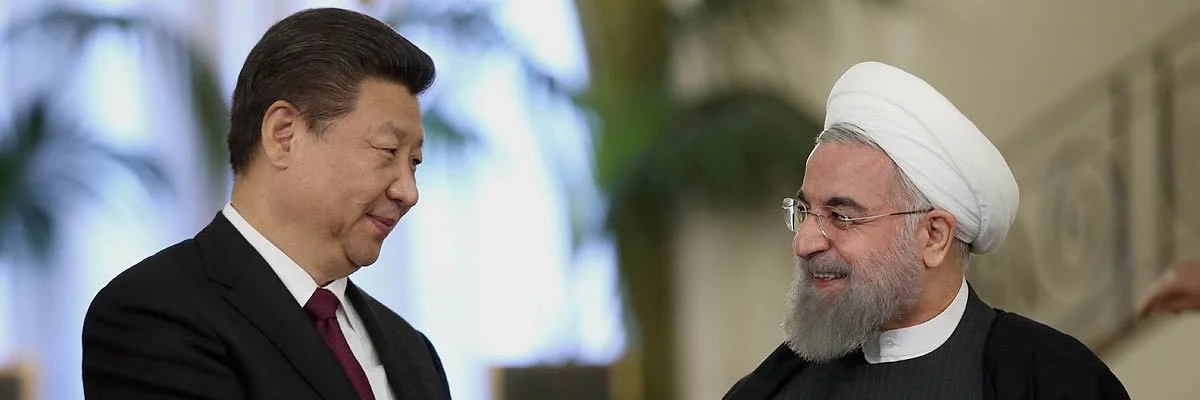
Why China Isn’t Standing By Iran
◢ Last week, Iran’s economic minister was in Beijing for talks on bilateral trade and investment. An official readout of the discussions from China’s commerce ministry describes China and Iran as “comprehensive strategic partners.” Unfortunately for Iran, the data tells a different story from the official rhetoric.
Last week, Iran’s economic minister was in Beijing for talks on bilateral trade and investment. An official readout of the discussions from China’s commerce ministry describes China and Iran as “comprehensive strategic partners.” This echoes the language used by President Xi Jinping a few weeks earlier, when he welcomed a delegation that included Iran’s foreign minister, oil minister and parliament speaker. Xi declared that “No matter how the international and regional situation changes, China’s resolve to develop a comprehensive strategic partnership with Iran will remain unchanged.”
Unfortunately for Iran, the data tells a different story from the official rhetoric.
The reimposition of U.S. secondary sanctions on Iran in November has significantly slowed Chinese-Iranian bilateral trade. Chinese exports to Iran—mainly crucial machinery and parts for Iran’s manufacturing sector—fell from USD 1.2 billion in October to just USD 428 million in February. Exports had averaged $1.6 billion a month in the period from 2014 until the beginning of 2018.
Imports from Iran, mainly crude oil, which had fallen to $1 billion in October, rose after November, when the Trump administration granted China a waiver to permit continued oil purchases. Imports hit USD 1.3 billion in February, of which USD 866 million is attributed to oil imports. These figures are consistent with the monthly averages in the period from 2014 until the beginning of 2018.
In short, while China is continuing to benefit from Iran’s energy resources, Iran is struggling to use its earnings to purchase Chinese exports.
This challenges the long-standing assumption in Tehran that China would stand by Iran despite sanctions pressures. In the previous sanctions period from 2008 to 2016, Chinese businesses significantly expanded their commercial presence in Iran, stepping in as Western companies exited the market. Iranians welcomed commercial partnerships with a country they believed to be economically minded, and unconcerned by Iran’s regional activities or its domestic governance.
These hopes received an early jolt in October, when the Iranian business community was left scrambling after Bank of Kunlun, the state-owned bank at the heart of China-Iran trade, suspended most financial transactions with Iran. Although the bank resumed trade in January, it announced a new policy: It would only service trade exempt from U.S. secondary sanctions. This means trade in food, medicine and consumer goods, for which China is not Iran’s leading source of imports. Bank of Kunlun’s move is consistent with the terms of the oil waiver, which requires Iran’s earnings be paid into an escrow account and used exclusively for non-sanctioned bilateral trade.
Seen through the prism of short-term considerations, China’s policy adjustments at the expense of its trade with Iran are easy to understand. As Pedram Soltani, vice president of the Iran Chamber of Commerce, has observed, the roiling trade war with the U.S. remains a much higher priority for China. Additionally, the arrest of Huawei executive Meng Wanzhou has made Chinese enterprises, particularly those with the most global reach, reticent to engage opportunities in Iran for fear of being similarly targeted by American authorities.
But China’s acquiescence to secondary sanctions is inconsistent with Beijing’s stated opposition to extraterritorial sanctions. In October, foreign ministry spokesperson Hua Chunying told reporters: “China always opposes the unilateral sanctions and long-arm jurisdiction. China’s normal cooperation with Iran under the framework of the international law is reasonable, legitimate and legal, and it should be respected and upheld.”
While Europe has made extraordinary efforts to both assert its economic sovereignty and preserve the nuclear deal, even going so far as to establish a new state-owned trade financial intermediary, China has taken no commensurate effort to shield its own trade from the long arm of American law.
Also, by downgrading the trading relationship with Iran, Beijing is in effect signaling to Washington that secondary sanctions can be used to stymie China’s economic ambitions abroad. As the U.S. struggles to respond to China’s Belt-and-Road strategy and its new role as a Eurasian superpower, there will be a temptation to use sanctions to raise barriers to China’s expansion. By failing to resist secondary sanctions on Iran now, China is inviting more pressure on key trade and investment relationships in the future, while also shirking its obligation to help preserve the nuclear deal.
It is possible that Chinese-Iranian trade could recover to a new steady state later this year, and that Beijing could designate a new bank to facilitate non-oil exports. But when the waivers come up for renewal in early May, the Trump administration could make such a waiver contingent on China continuing to downsize its non-oil trade with Iran. Since Iran is more important for China as an energy supplier than as an export market, China will likely sacrifice its exports to sustain oil imports—especially since it is unclear that Iran has sufficient leverage to insist that China avoid making such a trade-off.
Photo Credit: IRNA