

Total CEO Pouyanné: Transatlantic Partners Risk Gifting Iran to 'China and Russia'
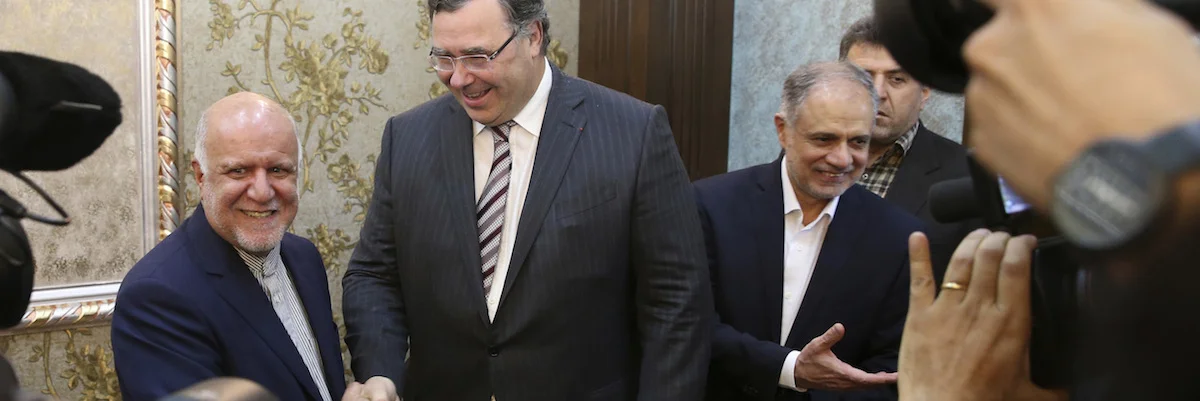
◢ Speaking on Thursday at the Center for Strategic and International Studies, a Washington D.C. think tank, Total CEO Patrick Pouyanné faced several questions about his company’s recently announced decision to wind down operations in Iran following the reapplication of secondary sanctions by the Trump administration. Pouyanné warned that the “Atlantic allies” risk giving “all the Middle East region to China and Russia.”
Speaking on Thursday at the Center for Strategic and International Studies, a Washington D.C. think tank, Total CEO Patrick Pouyanné faced several questions about his company’s recently announced decision to wind down operations in Iran following the reapplication of secondary sanctions by the Trump administration.
With his trademark candor, Pouyanné left no doubt that Total was obligated to comply with U.S. sanctions in regards to the USD 5 billion South Pars gas project launched in July 2017, stating “Secondary sanctions mean that the U.S. president can decide that Total cannot have access to any U.S. banks. I cannot run a company in 130 countries without access to U.S. banks.”
For Total, the South Pars project in Iran was only considered “because of the JCPOA, which meant the end of secondary sanctions.” With the nuclear deal in doubt, and sanctions set to return, “there is no possibility for us,” Pouyanné declared, further noting the role of American shareholders and the significant portfolio of American assets of the French oil company.
But the imposing, formerly rugby-playing executive, did not shut the door to Iran completely. Reiterating a point made in the company’s press release regarding South Pars, Pouyanné stated, “The only way we can proceed is with a project waiver from the U.S.”
Acknowledging a contractual obligation to the Iranians to seek all possible means to remain in the project, Pouyanné confirmed that Total was engaging “with the French government and the U.S. authorities” to raise the prospect of such a waiver, which will not be “easy to obtain.”
Looking to the wider political context, Pouyanné pointed to the early measures being taken by European governments, which may have a bearing on the effort to secure a waiver, reminding the audience that “in 1996-1997 when we made the first South Pars project, [Total] had such a waiver. It was the result of a diplomatic discussion between Europe and the U.S."
The prospects of a diplomatic discussion are dim and Pouyanné recognized that the disagreement over Iran policy is “a big test for the U.S.-Europe relationship" and one that is “beyond Total, as a commercial operation."
Nonetheless, Pouyanné issued a warning: “What would be not good neither for the U.S., nor for Europe, is if that at the end only Russia and China can do business in Iran.” Earlier on Thursday, Iranian authorities had announced that Total’s joint-venture partner in South Pars, Chinese state oil company CNPC, would be assuming Total’s share of the project. Pouyanné was also likely alluding to the presence of Russia state oil company Zarubezhneft, which has signed two major oil deals in Iran. He warned the “Atlantic allies” to consider whether they “want to give all the Middle East region to China and Russia, as this is what we are doing step after step.”
The geopolitical implication of blocking companies such as Total from working in Iran may form the basis of the companies lobbying to receive a waiver from the Trump administration.
Reflecting on what the pullout from the Iranian market meant, Pouyanné struck a philosophical tone, highlighting the importance of loyalty in the oil industry. Responding to a question about Total’s perseverance in Venezuela in an increasingly hostile environment, Pouyanné pointed to the case of Iran, noting “You have to stay as long as you can, because people remember... They remember the company when it stands together in difficult times.”
In the oil industry, he explained “leaving a country is a very tough decision, because it takes a lot of time to convince people that we can come back. It is a question of loyalty.”
Photo Credit: Wikicommons
Iran’s Energy Sector Takes Stock After Year of Ambivalent Results
◢ The last Iranian year, which ended in March, saw several interesting developments for Iranian energy, both domestically and internationally. Despite persistent challenges, Iran is keen to build on the momentum of last year’s developments. In doing so, the question of whether the Trump administration will stay in the JCPOA and renew sanctions waivers on May 12 will have great importance.
This article was adapted from a report originally published by the Oxford Institute for Energy Studies.
The last Iranian year, which ended in March, saw several interesting developments for Iranian energy, both domestically and internationally.
Numerous challenges remain, hampering the growth of the country’s energy industry – not the least due to complex politics in Iran and abroad. In particular, Iranian energy is overshadowed by mounting uncertainty due to the standoff over the future of the nuclear deal. Nevertheless, there has been progress not seen in years.
Internationally, Iran commenced natural gas exports to Iraq in June 2017. This was Tehran’s first successful natural gas export project in over a decade.
Moreover, Tehran concluded its first two international energy contracts following the introduction of a new fiscal scheme, the Iran Petroleum Contract (IPC), and the implementation of the Joint Comprehensive Plan of Action (JCPOA), as the nuclear deal is formally known.
In July 2017, Petropars formed a consortium with French major Total and China’s to develop the eleventh phase of the giant South Pars natural gas field. In March 2018, the National Iranian Oil Company concluded a contract with Russia’s Zarubezhneft and private Iranian company Dana Energy to increase output at the Aban and West Payedar oil fields.
These events constitute important milestones on Iran’s journey to re-connect with global energy. At the same time, it would be wrong to assume that the obstacles hampering the growth of Iran’s energy sector are now overcome—not only because of Trump and the uncertain future of the JCPOA.
Rather, in each of these cases, the circumstances have been rather unique. As for Iraq, close political ties with Baghdad allowed for the project to succeed. This distinguishes the Iraq project from other export plans, where political and commercial issues remain complicated—for example Oman and Pakistan (ongoing) or the United Arab Emirates (in the early 2000s).
Shortly after natural gas exports to Iraq commenced, the Total/CNPC contract was signed. But here, too, the circumstances are rather unique. First, the company has a long history with Iran and the complicated international politics accompanying the country’s energy sector. Already in the 1990s, the French company’s planned engagement in Iran played a key role in the EU’s action to push back against extraterritorial US sanctions. These were introduced by Washington under the 1996 Iran and Libya Sanctions Act (ILSA). In response to ILSA (as well as US extraterritorial sanctions against Cuba), the EU introduced so-called “Blocking Regulations” legislation and filed a dispute against the US at the World Trade Organisation.
The EU’s moves forced the Clinton administration into adopting sanctions waivers, which suspended the implementation of US secondary sanctions and allowed Total to proceed in Iran. Ever since, despite being forced to leave the country in 2010 due to EU sanctions, Total has remained committed to Iran, openly criticised sanctions against the country, and always kept its office in Tehran open—different from other companies.
Second, Total is able to bring its own finance to Iran. The company affords the initial $1 billion investment from its own reserves. With the reluctance of major international banks to return to Iran, fearing punitive measures by the US, finance for large projects remains a huge problem. Being able to bring its own finance sets Total apart.
Last but not least, Total is investing in Iranian natural gas, not oil. In the political economy of Iranian energy, the two hydrocarbons differ markedly. More than half of Iran’s oil production is exported, while less than 5% of the country’s natural gas output is sent abroad. An advancement of Iranian natural gas capacities frees some oil for exports. But the link between increases in production and export revenue is much weaker. Thus, investing in natural gas does not immediately lead to more hard currency at the disposal of the Iranian state.
In light of this, a case can be made that investments in Iranian natural gas projects are more acceptable to Washington than oil. At any rate, both before and after the conclusion of the South Pars contract, Total has frequently acknowledged the importance of the US position for its engagement.
Iran’s second international energy contract, with Zarubezhneft, was particular, too. It combined two firsts in one contract: the deal marked Iran’s first upstream contract with a Russian company and also the first international contract awarded to a private Iranian company, Dana Energy.
Beyond this, the deal is further testimony to the fact that Zarubezhneft, controlled by the Russian government, seems unimpressed by the Trump administration’s harshening stance towards Iran. Unlike Western IOCs, Russian (and also Chinese) state-owned companies might benefit from being able to take a different position when it comes to assessing political and economic risks related to Iranian energy.
The significance of different risk-assessments cannot be underestimated: Iran’s energy sector continues being surrounded by multiple and complex political and economic challenges. These include ample supplies in global energy, efforts by conventional producers to keep barrels away from markets, domestic political opposition to international and especially Western companies in Iran, and—almost overshadowing everything else—the prospect of the US leaving the JCPOA.
Parallel to the ups and downs at the international level, the domestic politics of Iranian energy saw interesting developments, too. In January 2018, Supreme Leader Khamenei reportedly told the Revolutionary Guards (IRGC) to divest from those parts of their wide-spanning business conglomerate that are “irrelevant” to their core purpose. If followed up by meaningful action, this would have wide-ranging consequences for Iran’s energy sector, where the IRGC maintain a considerable presence.
However, several economic and political questions in this regard remain unresolved until now. Politically, it will need to be defined which of the IRGC’s economic activities are actually considered being “irrelevant." Arguing Iran should reduce international dependencies, conservatives might call for the IRGC to maintain a certain presence in strategically vital sectors, including energy. Economically, it is unclear who could actually take over businesses from the guards. Considering the sheer size of the IRGC’s economic holdings, Iran’s private sector seems unprepared to stem a larger IRGC divestment. Meanwhile, foreign ownership remains highly problematic in Iran.
All this suggests that IRGC divestment from the energy sector and the broader economy would at best be slow and gradual. Somewhat, the process has already begun as the administration of president Rohani reduced the number of public contracts awarded to the IRGC in recent years. Still, the IRGC have yet to indicate their willingness to actually divest. It would therefore likely take years until the IRGC have meaningfully reduced their economic profile.
Moving forward, Iran is keen to build on the momentum of last year’s developments. In doing so, the question of whether the Trump administration will stay in the JCPOA and renew sanctions waivers on May 12th will have great importance.
At the same time, a withdrawal of the US from the JCPOA and the re-imposition of nuclear-related US sanctions would not immediately bring Iran back to its pre-sanctions position. In particular, it is unlikely that Tehran’s oil exports would collapse to pre-JCPOA levels.
Europe’s role is crucial here: As long as Tehran fulfils its commitments under the JCPOA, the EU is unlikely to bring back its energy and finance sanctions against Iran. These, however, were deceive in forcing down Iranian oil exports by more than half after 2012.
Some Asian countries, most likely Japan and South Korea, might voluntarily reduce parts of their imports of Iranian oil. But without Europe joining the sanctions effort, the re-imposition of US nuclear sanctions is unlikely to dramatically affect Iranian oil exports.
Nevertheless, if the US decides to withdraw from the JCPOA on May 12th, this would obviously still hit Iranian energy hard. Very likely, it would effectively prevent further European IOCs from engaging in the country—and thereby significantly hamper the growth of Iran’s energy sector.
Photo Credit: AP/REX
Is France Ready to Stand Up to Trump on Iran?
◢ With new U.S. sanctions on Russia and Iran set to come into force, the French Foreign Ministry issued a firm statement suggesting new U.S. sanctions could contravene international law.
◢ While Germany is likely to lead on the push back against additional Russia sanctions, the importance of the Iranian market to French enterprise may mean that Macron is best positioned to intervene with Trump to help preserve the JCPOA.
This article was originally published in LobeLog.
On July 26th, the French foreign ministry issued a declaration about the package of new sanctions targeting Russia and Iran making its way through Congress to President Trump’s desk in the Oval Office.
In the estimation of the French foreign ministry, “the extraterritorial scope of [the sanctions] appears to be unlawful under international law.” The statement outlined the need for the Europeans to “adapt our national mechanisms and update European mechanisms” to protect themselves from the U.S. legislation. The French foreign ministry called for coordination with European partners to address American overreach.
Although Germany is likely to lead the fight against additional Russian sanctions because of its reliance on Russian energy supplies, the French are likely to lead on the European pushback on new Iran sanctions, and even more urgently, to advocate for the preservation of Iran nuclear deal, otherwise known as the Joint Comprehensive Plan of Action (JCPOA).
In a recent interview with the Wall Street Journal, Trump stated, “If it was up to me, I would have had [Iran] noncompliant 180 days ago.” Subsequent reports suggest that the administration may be seeking additional access to Iranian nuclear sites. The combination of Trump’s statement and the rumored actions has put the survival of the JCPOA at risk.
France as Lead Investor
For the French, the timing of the new Iran sanctions and Trump’s statements on the nuclear deal are especially troubling. French companies have reached important milestones in the past few weeks that could be jeopardized if political uncertainty begins to undermine business confidence.
On July 3, French energy giant Total signed a landmark $5 billion contract to develop Iran’s South Pars Gas field. Twenty days later, French transportation company Alstom signed a major joint-venture agreement to produce metro carriages in Iran. French carmaker Renault is expected to conclude its long-awaited contract defining the operation of a full-fledged Iran business unit in the next week. At the same time, a steady stream of smaller French investments have brought activity to other corners of Iran’s economy. Sushi Shop, a French fast-casual restaurant chain, opened its first branch in Tehran this week. Add to this Airbus and ATR’s sale of aircraft to Iranian airlines, the mooted market entry of telecommunications giant Orange, and the local expansion of hospitality giant Accor, and the scope of French enterprise is quite large. For France, Iran is a cornerstone market, a rare country where French companies have market-leading positions in strategic sectors.
The success of French enterprises in Iran is a crucial part of France’s program to boost its global competitiveness. In a recent interview, French Minister of Foreign Affairs Jean-Yves Le Drian, noted France’s dismal trade deficit, amounting to 48 billion euros in 2016. Le Drian drew a comparison to France’s European neighbors: “France suffers from a lack of exporting companies: there are only 125,000—half of which work with only one country. We aren’t competitive enough in this respect.”
Le Drian was no doubt referencing the export prowess of Germany. This prowess also explains the differing positions of Germany and France vis-a-vis Iran. Despite being Iran’s largest trading partner prior to the imposition of sanctions, Germany sees Iran as only a part of a wider portfolio of trade partners, one of which is the United States. Tellingly, the value of German exports to the US was $114 billion in 2016, whereas French exports were valued at just $47 billion. The respective 2016 export figures for Iran are 2.9 billion euros for Germany and 1.7 billion euros for France. So, although French trade to the US dwarfs the total value of French trade with Iran, in relative terms, Iran is a more important market for France than for Germany.
This is especially true for foreign investment. French companies are increasingly establishing majority-owned business units in Iran. These units, when they become revenue generating, will deliver significant shareholder value. The best example of this is Peugeot, whose sales in the first half of 2017 dipped in both Europe and China, only to remain positive overall because of strong performance in Iran. Importantly, Peugeot does not sell cars in the United States. Although Peugeot may be an extreme case of reliance on the Iranian market, Iran-based revenues can certainly deliver increased shareholder value to French companies.
For Emmanuel Macron, who faces a massive task in revitalizing French business, the economic boon of the Iran deal will prove strong incentive to advocate for its preservation over and above the fundamental security gains that the deal was able to achieve.
France as Deal Saver?
Although coordinated action from all European allies will be necessary to convince the Trump administration to stay the course with the deal, which the international community believes to be working, France may be the country best positioned to lead on the issue. There are a few reasons why.
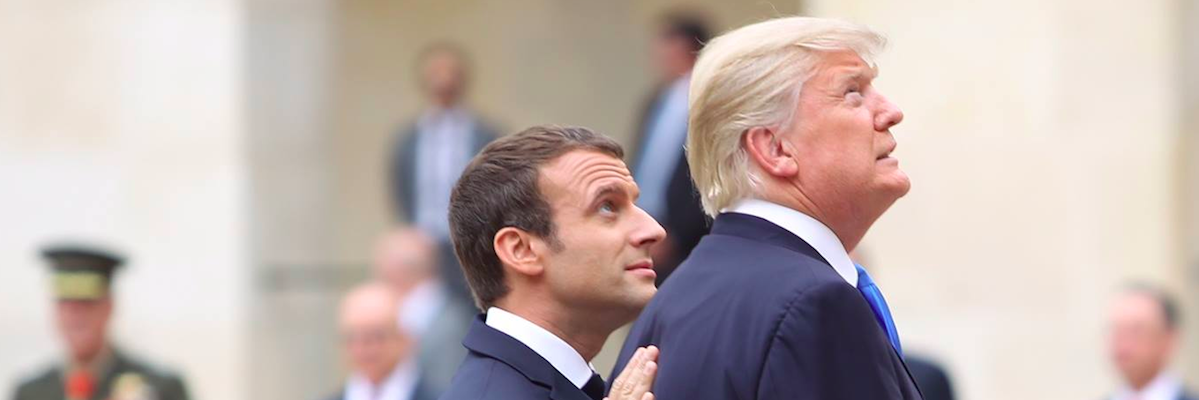
First, Macron has spent a considerable amount of time with Trump both in Washington and Paris, and has developed a personal relationship that constitutes, if not out-and-out rapport, then at least a kind of understanding between two self-styled “alpha males.” This relationship should give Macron the chance to appeal to Trump more directly, not necessarily relying on communications via his fractured circle of advisors, for whom Trump has “great respect” but to whom he may not listen.
Second, the timing for French leadership on the issue is right. Macron remains energized by his recent election triumph, and one recent study has seen France rise from fifth to first in a world-ranking of soft power, due to both Macron’s popularity and the influence of France’s diplomatic network. Both qualities would be brought to bear in any multilateral outreach to preserve the Iran deal in Washington. Moreover, Germany’s Angela Merkel and her government are set to enter an election contest in September, monopolizing attention during this critical period of equivocation from Trump. It would also be wise to separate the advocacy on Russia and Iran sanctions issue given the complicated ways in which the political circumstances of the two countries are both related and unrelated.
Finally, France could prove the most credible advocate for the Iran deal in Europe, since it was the toughest of the European negotiating parties of the JCPOA. Laurent Fabius, the then-French foreign minister, was seen as a potential spoiler of the deal given the firmness of French demands. The French insistence on strict Iranian adherence to the deal was underscored when Macron emphasized the point in his phone call congratulating President Hassan Rouhani on his reelection. Moreover, to the extent that the conversation around Iran’s non-compliance has been conflated in Washington with a discussion of regional security issues like support for terrorism, French intervention could be key. France is the European country most engaged on confronting global terrorism and could credibly mediate between Iranian and American political and military leaders around some of these issues.
Whether or not Macron and his team are ready to spend the time and energy to safeguard the deal is yet to be seen. But like Trump, Macron needs to show that he is “winning.” French businesses are winning in Iran right now, and the loss of the deal could mean the loss of a significant market once more.
Photo Credit: Wikicommons