

Iran's Oil Sector is Breaking Out
Iran’s oil exports are rising and the sector is growing for the first time in two years. The recovery poses a dilemma for Biden, who faces a growing constituency in Tehran unsure if there's enough to be gained should the US be allowed to rejoin the JCPOA.
In August 2019, Mike Pompeo took something of a victory lap. Speaking to MSNBC, he declared that the Trump administration had “managed to take almost 2.7 million barrels of [Iranian] crude oil off of the market.” A few months prior, the United States had reimposed secondary sanctions on Iran’s oil sector, revoking eight waivers that allowed Iran’s major oil customers to temporarily continue purchasing Iranian oil. Without the waivers, just one major buyer remained—China. At the time of Pompeo’s boast, China was buying a negligible volume of Iranian oil in direct violation of US sanctions. Beijing protested loudly about the extraterritorial impact of US sanctions, but proved unable or unwilling to instruct its major refiners, banks, and tanker companies to sustain the previous level of imports from Iran.
In Tehran, the loss of oil revenues was adding to the political and fiscal pressures felt by the Rouhani administration, already reeling from the economic fallout following Trump’s withdrawal from the Joint Comprehensive Plan of Action (JCPOA). Iran’s oil minister, Bijan Zanganeh, vowed in October 2019 to “use every possible way” to sustain Iran’s oil exports. In the subsequent year, Iran made its tankers “go dark,” engaged in ship-to-ship transfers off the coast of the UAE and Malaysia to hide the provenance of its oil, sold to opportunistic new customers including Syria and Venezuela, and intensively lobbied China to resume purchases at higher volumes.
Today it is Zanganeh who is taking a victory lap. He told reporters last week that Iran’s oil exports are “much better than many assume,” and the oil ministry has announced that it would begin ramping-up oil production. Data from TankerTrackers.com, which observes the number of tankers leaving Iran’s ports in order to estimate oil exports, suggests a steady uptick in sales. January 2021 will be the fifth month in a row that Iran has exported in excess of 1 million barrels per day of crude oil and condensates. The new monthly level marks a significant increase from the average of 695,000 barrels per day Iran managed in the 12 months following the Trump administration’s revocation of the oil waivers.
Should the Iranian oil industry recover in the first half of 2021, buoyed by the rise in oil prices from their pandemic lows, the sector would cease to be the deadweight holding Iran’s economy back. The second quarter of this Iranian calendar year marked the first in over two years in which Iran’s oil and gas sector was not in contraction. The International Monetary Fund, the World Bank, and the Institute for International Finance all project Iran’s economy to return to growth in 2021 on the basis of conservative projections for oil production and exports achieved in the absence of sanctions relief. Iran appears poised to match those projections.
Iran’s rising oil exports pose a dilemma for President Joe Biden, who intends to bring the US back into the nuclear deal. There is a significant political constituency in Tehran that believes that allowing the US to rejoin the JCPOA would be a strategic mistake. The Biden administration has signalled that JCPOA re-entry would serve as the foundation for follow-on talks, a prospect that has Iranian hardliners concerned that the international community will try to force Iran into making painful concessions on strategic issues such as the country’s ballistic missile program.
The Rouhani administration remains strongly in favor of renewed talks and has indicated that it would welcome reentry into the JCPOA should the Biden administration decisively lift the sanctions imposed by Trump and thereby deliver Iran an economic uplift. But the attractiveness of Rouhani’s preferred approach depends entirely on the perceived opportunity cost should Iran fail to engage in new talks. This cost appears to be shrinking as Iran’s economic recovery picks-up steam and as the ferocity of political opposition Biden faces on the JCPOA becomes clear. Iran’s Supreme Leader, Ali Khamenei, presented “defusing sanctions and overcoming them” as the preferred alternative to Rouhani’s efforts for “lifting sanctions” in a important speech last November—a nod to the growing doubts that negotiations are necessary in the short-term.
For now, Iran’s political establishment remains open to negotiations because the country would be entering new talks from a position of relative strength. But that same strength will enable Iran’s hardliners to close the door on diplomacy should Biden dither.
Biden may be tempted to address the dilemma he faces be reasserting economic leverage. But attempting to drive down the oil exports with further sanctions would be a mistake. The only measures that might serve to stop China’s purchases of Iranian crude would require designations on China’s state-owned refiners such as Sinopec and CNPC, subsidiaries of which are widely represented in the portfolios of American and European institutional investors. Such a move would not only risk triggering a true economic war with China, but it would also cause a significant disruption to energy and financial markets.
Moreover, the risks of Iranian retaliation remain high. Iranian leaders have consistently warned that it would seek to deny oil exports by neighbors should it be prevented from selling its own oil. The September 2019 cruise missile attacks on Saudi Aramco’s Abqaiq and Khurrais facilities, which caused production capacity to drop by half, serves as an example of the very real nature of that threat.
Clearly, Biden has no easy means to bring Iranian exports back down. So long as China continues buying, Iranian persistence will ensure the barrels reach the buyers. A few more months of sustained recovery in exports may be enough to convince Iran’s ascendent hardliners that the country’s economic outlook under sanctions is no longer so negative as to be a political or practical liability, meaning their opposition to the JCPOA will carry no real cost. Biden needs to move fast if he is to save the basic quid-pro-quo that underpins the nuclear deal.
To do so, Biden must take steps to widen the opportunity cost between diplomacy and defiance once again. His administration ought to immediately issue new, temporary oil waivers in order to enable Iran to export oil without directly contravening US sanctions. Such a move would benefit US allies such as Italy, South Korea, Japan, and India, which count among Iran’s historical oil customers—US sanctions policy would no longer be at odds with their energy security.
The waivers would also help de-escalate tensions with China enabling cooperation on the creation of a stronger non-proliferation framework for the Middle East. The Trump administration used Iran sanctions as a means to target major Chinese enterprises including telecommunications firms Huawei and ZTE and shipping giant COSCO. These designations and the systemic threat their proliferation posed to the Chinese economy have spurred Chinese authorities to begin development of an alternative to the SWIFT bank messaging system and to instruct state lenders to prepare contingencies for further US sanctions pressure. Similar measures have even been contemplated by European governments. These moves foreshadow how the overuse of US sanctions threatens their long-term efficacy. Issuing new oil waivers would see Biden remove the primary impetus for these mitigation efforts in China and other countries.
Restoring the waivers would also be welcomed by Iran, which could expect to see oil exports double, rising above the level possible through the complex and expensive methods of sanctions evasion currently in use. The additional foreign exchange revenue afforded by the waivers would help Iran more fully address its balance of payments crisis, easing pressure on the country’s currency and thereby reducing the rampant inflation that has led to hardship for millions of Iranians. The Biden administration can be confident that the additional revenues would have this effect because of the restrictions in place around their use. The waiver system, first designed during the Obama administration, sees revenues accrue in escrow accounts carefully monitored by authorities in the countries which have been granted the waivers. This oversight ensures that the funds are used for the purchase of sanctions-exempt goods and not for what the Trump administration termed “malign activities.” The funds cannot be transferred to Iran nor any third country without specific approvals.
Despite these restrictions, for Iranian stakeholders, the issuing of new waivers would represent an important gesture, indicating Biden’s seriousness about restoring the economic benefits originally envisioned under the JCPOA, and setting the stage for US-Iran talks on the sequencing of steps to restore mutual compliance with the nuclear deal. Should those talks fail, Biden would surely revoke the waivers and Iran would return to selling oil in defiance of US sanctions. But should the talks succeed, the early provision of the waivers will have served to accelerate the reestablishment of Iran’s sales to oil customers, helping the country win back coveted market share.
Iran’s oil industry is breaking out. Issuing new oil waivers is the best way to ensure Iran ceases to seek leverage by reducing its compliance with the nuclear deal and begins to believe again in the potential for “win-win” diplomacy with the United States.
Biden needs to give up some pressure in order to gain back control.
Photo: SHANA

Iran’s Oil Exports Rise Month-to-Month Ahead of Sanctions Deadline
◢ A new report from TankerTrackers.com indicates that Iran exported an average 2.2 million bpd of crude oil in the first two weeks of October, a 10 percent rise from the September average. October’s higher export volumes could reflect long-standing customers buying more oil ahead of planned reductions in November, when sanctions are expected to prevent many refiners from taking Iranian crude.
A new report from TankerTrackers.com indicates that Iran exported an average of 2.2 million bpd of crude oil in the first two weeks of October, a 10 percent rise from the September average.
October’s higher export volumes may reflect long-standing customers buying more oil ahead of planned reductions in November, when sanctions are expected to prevent many refiners from taking Iranian crude.
But the exports are nonetheless significantly higher than what many market analysts had projected and so far constitute just a 10 percent reduction average export volumes prior to President Trump’s withdrawal from the nuclear deal in May. Reports had suggested exports would fall to just over 1 million bpd in October.
Add to this the news that refiners like Turkey’s Turpas and India’s MRPL may receive sanctions waivers that will allow them to sustain purchases of Iranian crude and it looks increasingly possible that Iran will be able to sustain export volumes well-above 1 million barrels per day following the reimposition of sanctions on November 5.
When broad sanctions were last introduced on Iran’s oil sector in 2012, exports fell from 2.6 million bpd to just 1.4 million bpd in 2014 as countries tapered their imports of Iranian crude.
Should Iran manage to sustain export volumes around 2014 levels, it would be a significant achievement both because of the Trump administration’s effort to drive Iran’s exports to “zero” and also because of the important factor of oil prices. Back in 2014, oil prices fell 40 percent between June and December, settling to below USD 40 per barrel in 2015.
With today’s oil price double that figure, Iran is approaching November with a more bullish outlook than many had predicted. Iranian oil minister Bijan Zanganeh recently stated that the United States “has done most of the things it could do, and there is not much left to do against Iran,” with the aim of restricting exports.
On the other hand, as David Sheppard of the Financial Times writes, “While there may be more crude than first anticipated in the market for now, should the US ultimately succeed in hammering Iran’s exports lower the market could be in for a sharp shock after November 4.”
It looks like we are heading for a photo finish.
Photo Credit: IRNA
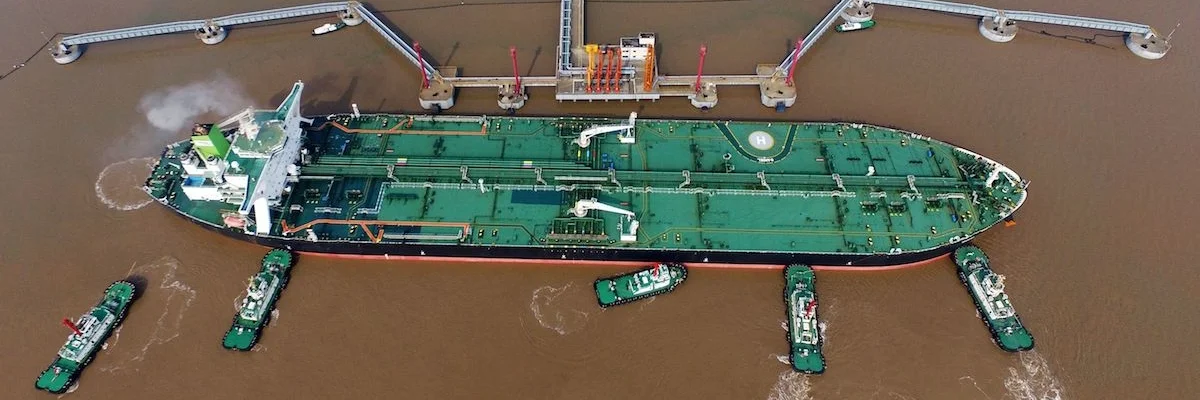
Iran’s Oil Exports May Be More Resilient Than Headlines Suggest
◢ Iran is resorting to “Houdini tricks” to sustain oil exports as US sanctions loom and new data suggests the magic might be working. While S&P Global Platts has reported Iran’s September exports at about 1.7 million bpd, marking an 11 percent decline from August, data from TankerTrackers.com, puts the export volume at just over 2 million bpd. The divergence in the datasets represents not merely 300,000 bpd, but also the difference between two narratives about the state of Iran’s exports in the face of returning US sanctions.
Iran is resorting to “Houdini tricks” to sustain oil exports as US sanctions loom. New data suggests the magic might be working. With new sleights of hand including disappearing oil tankers, the use of floating storage, and ship-to-ship transfers, tracking Iranian exports is getting harder than ever, leading to divergent estimates from oil analysts.
While S&P Global Platts has reported Iran’s September exports at about 1.7 million bpd, marking an 11 percent decline from August, data from TankerTrackers.com, a service which reports shipments and storage of crude oil globally, puts the export volume at just over 2 million bpd. The divergence in the datasets represents not merely 300,000 bpd, but also the difference between two narratives about the state of Iran’s exports in the face of returning US sanctions.
As part of S&P Global Platts’ announcement of the September figures, Paul Sheldon, chief geopolitical adviser at company, stated, "Iranian export losses have already accelerated faster than we expected.” On this basis, Platts is predicting Iran’s exports will fall to 1.1 million bpd by November, when U.S. sanctions on Iran’s oil industry are set to return. Similar analysis from Bloomberg and Reuters has contributed to the sense that Iran’s exports are dropping fast. But these assessments may be leaving a significant number of barrels uncounted by failing to properly capture tankers which have turned off their geolocation transponders.
Samir Madani, founder of TankerTrackers.com, emphasizes that such tactics are making life more difficult for those trying to measure Iran’s export volumes. "September was a very resource-demanding month from a vessel tracking perspective for not just us at TankerTrackers.com but at some of the other trackers in the industry,” he said.
For Madani and his team, properly tracking tankers laden with Iranian oil requires extensive use of satellite imagery. “The reason is because roughly half of the exports were cloaked, meaning vessel crews switched off their AIS geolocation transponders before arriving into Iran to arrange the collection of crude oil,” Samir explained. “Their transponders were switched back on many days later, once they were already out of the immediate Gulf area.”
To overcome these cloaking tactics, Madani uses daily satellite imagery to “factor in vessels that were no longer broadcasting their positions.” This methods helps explain the significant discrepancy between his September estimate of Iran’s exports to China and that published by Platts. According to Madani, Iran’s state-owned National Iranian Tanker Company is particularly adept at cloaking exports in this manner, drawing on a playbook perfected in the previous sanctions period.
Any underlying resilience of Iranian exports is particularly important following reports that the United States is “actively considering waivers on Iran oil sanctions.” The exploration of waivers represents a break with the Trump administration’s previously communicated intention that “exports of Iranian oil and gas and condensates drops to zero.”
The level of imports covered by such “significant reduction exemptions” or SREs is typically determined by looking to historical import levels and the level of imports that can be reasonably restricted by sanctions. In this context, that Iran has been able possibly sustain over 2 million bpd in exports just one month before the reimposition of US sanctions bodes well for the extent of the waivers that may be offered. In likely anticipation of waivers from US authorities, India has already announced that it plans to import at least 9 million barrels of Iranian crude in November.
In an interview conducted during the United Nations General Assembly, President Hassan Rouhani told NBC’s Lester Holt that “The United States is not capable of bringing our oil exports to zero” and describe the Trump’s administration's threats as “empty of credibility.” Despite hopeful signs, Iran’s oil exports magic show is still in its first act. Whether Rouhani can outdo the great Houdini is yet to be seen.
Photo Credit: Imaginechina
