
Europe Can Preserve the Iran Nuclear Deal Until November
After a humiliating defeat at the U.N. Security Council, Washington will seek snapback sanctions to sabotage what’s left of the nuclear deal. Britain, France, and Germany can still keep it alive until after the U.S. election.
By Ellie Geranmayeh and Elisa Catalano Ewers
The United States just lost the showdown at the United Nations Security Council over extending the terms of the arms embargo against Iran. The U.S. government was left embarrassingly isolated, winning just one other vote for its proposed resolution (from the Dominican Republic), while Russia and China voted against and 11 other nations abstained.
But the Trump administration is not deterred: In response to the vote, President Donald Trump threatened that “we’ll be doing a snapback”—a reference to reimposing sanctions suspended under the 2015 nuclear deal from which the United States withdrew in 2018.
The dance around the arms embargo has always been a prelude to the bigger goal: burning down the remaining bridges that could lead back to the 2015 deal.
The Trump administration now seeks to snap back international sanctions using a measure built into the very nuclear agreement the Trump White House withdrew from two years ago. This latest gambit by the Trump administration is unsurprisingly contested by other world powers.
On the one hand, Russia and China are making a technical, legal argument against the U.S. move, namely that the United States forfeited its right to impose snapback sanctions once it exited the nuclear deal. This is based on Security Council Resolution 2231 that enshrined the nuclear agreement, which clearly outlines that only a participant state to the nuclear deal can resort to snapback. This is a legal position that even former U.S. National Security Advisor John Bolton—an opponent of the nuclear deal and under whose watch Trump left the agreement—has recently endorsed.
In the end, however, this is more a political fight than a legal one. The political case—which seems to be most favored by European countries—is that the United States lacks the legitimacy to resort to snapback since it is primarily motivated by a desire to sabotage the multilateral agreement after spending the last two years undermining its foundations.
The main actor that will decide the fate of the nuclear deal after snapback sanctions is Iran itself. Iran has already acted in response to the U.S. maximum pressure campaign, from increasing enrichment levels and exceeding other caps placed on its nuclear program, to attacking U.S. forces based in Iraq and threatening to exit the Nuclear Nonproliferation Treaty.
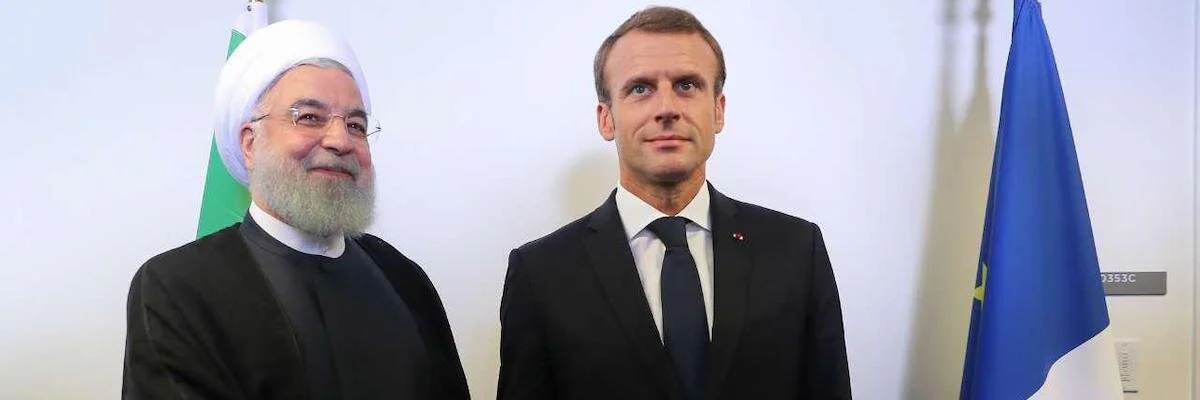
But the calculations of decision-makers in Tehran will be influenced by the political and practical realities that follow snapback sanctions. And here, the response from the remaining parties to the nuclear deal—France, the United Kingdom, Germany, China, and Russia—will be critical. These countries remain committed to keeping the deal on life support—at least until the U.S. presidential election in November.
Seizing on its failure to extend the arms embargo, the United States now claims it can start the clock on a 30-day notification period, after which U.N. sanctions removed against Iran by the nuclear deal are reinstated. This notification will be timed deliberately to end before October—when the arms embargo is set to expire, and also when Russia takes over presidency of the U.N. Security Council: a time when Washington could face more procedural hurdles.
What is likely to follow snapback is a messy scene at the U.N. in which council members will broadly fall into three groups. First, the United States will seek to build support for its case—primarily through political and economic pressure—so that by the end of the 30-day notice period some U.N. member states agree to implement sanctions. The Trump administration will likely use the threat of U.S. secondary sanctions, as it has done successfully over the last 18 months, if governments don’t move to enforce snapback sanctions.
Even if most governments around the world disagree that the United States has any authority to impose snapback sanctions, some countries may be forced to side with Washington given the threat that the United States could turn its economic pressure against them.
The second group will be led by China and Russia, both of which have already started to push back. Not only will this group refuse to implement the U.N. sanctions that the U.S. government claims should be reimposed, but they likely will throw obstacles into the mix, such as blocking the reinstitution of appropriate U.N. committees that will oversee the implementation of such sanctions. This group may also see it as advantageous to seek a determination by the International Court of Justice on the legal question over the U.S. claim.
The third grouping will be led by the France, Britain, and Germany, who remain united in the belief that the deal should be preserved to the greatest extent possible. In a statement in June, the three governments already emphasized that they would not support unilateral snapback by the United States. But it is unclear if this will translate into active opposition—and their approach will certainly not include the obstructionist moves that Russia and China may make.
This bloc will look to stall decisions to take the steps necessary to implement the U.N. sanctions. This is a delicate undertaking, as European countries are not in the habit of blatantly ignoring the binding framework of some of the U.N.’s directives, and will want to balance their actions against the risk of eroding the security council’s credibility further. But they will also take advantage of whatever procedural avenues are in place to delay full enforcement of the sanctions, buying time to urge Iranian restraint in response to the U.S. moves.
Countries such as India, South Korea, and Japan are likely to favor this approach. These governments may even go so far as to send a significant political signal to Iran and back a joint statement by most of the security council members vowing not to recognize unilateral U.S. snapback sanctions.
As part of this approach, the 27 member states of the European Union could embark on a prolonged consultation process over how and if to implement snapback sanctions. The separate EU-level sanctions targeting Iran’s nuclear program are unlikely to be reimposed so long as Iran takes a measured approach to its nuclear activities.
Reimposing EU sanctions against Iran will entail a series of steps, the first of which requires France, Britain, and Germany, together with the EU High Representative, to make a recommendation to the EU Council. The return of EU sanctions would then require unanimity among member states, a goal which will take time to achieve in a context where Washington is largely viewed as sabotaging the nuclear deal.
In this process, the EU should seek to preserve as much space as possible to salvage the deal and avoid the reimposition of nuclear-focused sanctions against Iran—at least until the outcome of the U.S. election is clear. The U.K., in the run-up to Brexit, may well lean toward a similar position rather than tying itself too closely to an administration in Washington that may be on its way out.
Until now, the remaining parties to the nuclear deal have managed to preserve the deal’s architecture despite its hollowing out. The aim has been to stumble along until the U.S. election to see if a new opening is possible to resuscitate the agreement with a possible Biden administration in January.
While a Trump win could spell the end of the deal and further dim the prospects of diplomacy between the United States and Iran, the two sides could come to a new understanding over Iran’s nuclear program at some point during the second term that is premised on the original deal. Judging by the pace of the Trump administration’s nuclear diplomacy with North Korea, this will be a Herculean process with no certain outcome.
In Tehran, there will be some sort of immediate response to the snapback—most likely involving further expansion of its nuclear activities. However, Iran may decide to extend its strategic patience a few weeks longer until the U.S. election. A legal battle by Russia and China against snapback, combined with non-implementation of U.N. sanctions by a large number of countries and continued hints from the Biden camp that Washington would re-enter the nuclear deal could provide the Rouhani administration with enough face-saving to stall the most extreme responses available to Iran.
But with Iranian elections coming in the first half of 2021, there will be great domestic pressure from more hardline forces to take assertive action, particularly on the nuclear program, to give Iran more leverage in any future talks with Washington.
If Iran takes more extreme steps on its nuclear activities, such as a major increase in its enrichment levels or reducing access to international monitors, it will make it nearly impossible for the Britain and the EU to remain committed to the deal in the short term. There are also factors outside Iranian and U.S. control that could have an impact, such as a potential uptick in Israeli attacks against Iranian nuclear targets.
Over the course of the Trump administration, Europe and Iran have managed to avert the collapse of the nuclear deal. Having come so far, and just 11 weeks away from the U.S. election, they will need to work hard to prevent the total collapse of the agreement. Even if Biden—who has vowed to re-enter the deal if Iran returns to compliance—is elected, the remaining parties will need to continue the hard slog to preserve it until January.
Those opposed to the nuclear deal with Iran may see the last two months of a Trump administration as a window to pursue a scorched-earth policy toward Iran’s nuclear program. That leaves Britain and Europe with the job of holding what remains of the deal together, for as long as they can.
Ellie Geranmayeh is a senior policy fellow at the European Council on Foreign Relations. Follow her at @EllieGeranmayeh.
Elisa Catalano Ewers is an adjunct senior fellow at the Center for a New American Security and a former U.S. State Department and National Security Council official.
Photo: IRNA
Trump Stance on JCPOA Nuclear Deal Poses Legal Dilemmas for Iran
◢ With the May 12 deadline for the issuing of key sanctions waivers as part of the Iran nuclear deal fast approaching, the legal impact of the collapse of the 2015 agreement ought to be considered. Regardless of how Iran responds to a change in U.S. policy, the possible withdrawal of the United States from the JCPOA will have a legal impact on its parties. Any possible change in the partnership or the provisions of the agreement will be reflected within the domain of international law.
With the May 12 deadline for the issuing of key sanctions waivers as part of the Iran nuclear deal fast approaching, what could be the impact of the collapse of the 2015 agreement? While Donald Trump's conditions for the review of the current arrangement have yet to be met and Iran's clear rejection of any amendments to the plan, the breakdown of the Joint Comprehensive Plan of Action (JCPOA) seems inevitable.
The nuclear deal is the most important multilateral agreement reached in the global nuclear non-proliferation system in the last decade. It is now at risk of collapse. There are three options for Iran should the US withdraw from the JCPOA.
First, Iran could exit the deal immediately and continue to fulfill the obligations under NPT and to the IAEA based only on the safeguard agreements with the agency. This is seen as the worst case scenario by the EU, E3 and the IAEA.
Second, Iran could exit the deal immediately, but continue to fulfill its commitments to the International Atomic Energy Agency (IAEA) based on both safeguard agreements with the IAEA agreed as part of the JCPOA and its preceding agreement, the Joint Plan of Action (JPOA). Under these safeguards Iran has suspended enrichment of uranium to 20 percent.
Third, Iran could opt to remain in the deal on the basis that the European Union and E3 (UK, France and Germany) will provide additional benefits to Iran to compensate for the negative effects of US withdrawal.Iran’s deputy foreign minister, Abbas Araghchi, one of the key architects of the JCPOA, has stated that as long as Iran continues to benefit from a removal of sanctions, it will remain committed to the deal, but has expressed doubts that the France, Germany and the UK will be able to guarantee Iran’s interests in the absence of the United States.
Regardless of which route Iran takes, the withdrawal of the United States from the JCPOA will have a legal impact on its parties. Any possible change in the partnership or the provisions of the agreement will be reflected within the domain of international law.
The Threat of Snapback
Trump has threatened not to issue the crucial waivers that have suspended US secondary sanctions on Iran. On May 12, Iran may find itself in a position not of its own making. Despite unprecedented international monitoring and scrutiny of its nuclear program, and despite the IAEA's approval of its commitments without the slightest deviation for military purposes, it may once again face significant economic sanctions, even over the vital sale of its oil. However, snapback of US secondary sanctions could actually preclude snapback of UN sanctions, if the deal remains intact following Trump’s withdrawal.
One of the provisions of the JCPOA, unprecedented in the 70-year history of the Security Council, is the decision-making process of the partners required to resume sanctions. According to Article 37 of the JCPOA, if the dispute resolving mechanism is unsuccessful, the UN Security Council will vote on a resolution to continue the lifting of sanctions.
In such a case, the United Nations Security Council would vote for a resolution to suspend sanctions. As described in a recent report by Stephen Mulligan, an attorney with the Congressional Research Service:
The ‘snapback’ mechanism thus places the onus on the Security Council to vote affirmatively to continue to lift its sanctions by stating that those sanctions will be implemented automatically unless the Security Council votes otherwise. As a permanent member of the Security Council, the United States would possess the power to veto any such vote and effectively force the reinstatement of the Security Council’s sanctions on Iran.
In this process, the vote of all five permanent members of the Council is critical. If one of these members does not agree with the suspension of sanctions, it alone can easily restore a series of Council sanctions under Article 41 and Chapter 7 of the United Nations Charter (threats to global peace and security).
However, if the United States pulls out of the JCPOA, triggering the snapback of its secondary sanctions against Iran, it may lose the ability to use the UN sanctions snapback threat which is articulated with Article 37 under JCPOA. In other words, only parties to the Iran deal are able to trigger the UN nuclear sanctions snapback procedure. If the US withdraws from the deal, it loses the ability to trigger this mechanism.
This would be a reprieve for Iran, but there are further legal pathways that should be considered in order to prevent more damages by the US to the non-proliferation regime and international law.
Recourse to the International Court of Justice
The IAEA has verified in eleven reports that Iran has fully complied with its commitments under the nuclear agreement. On this basis, Iran feels it is facing punishment without justification.
Iran can, on the basis of Clause 2 of Article 21 of the Treaty of Amity, Economic Relations, and Consular Rights (1955), file a complaint with the International Court of Justice (ICJ) against the United States on the basis that it has had a detrimental effect on its business and trade with other countries.
Punishing Iran with various economic sanctions, including the vital sale of its oil, may result in Iran’s withdrawal or limited implementation of its political commitments under JCPOA. Depending on whether Iran completely abandons JCPOA or suspends some of its commitments under the agreement, it means the end of the current inspections and the IAEA's ability to continue a complete and unprecedented monitoring of Iran's nuclear program. The result is the inability of a United Nations agency to carry out its mission.
The current situation has created a legal impediment, despite the wishes of Iran, for the IAEA and the members of its board of governors including the United Kingdom, France and Germany. According to the definition of the Vienna Convention on the Law of Treaties 1969, the JCPOA is not considered to a treaty, under which definition a violation would result in a case directly taken as a complaint to the International Court of Justice.
However the IAEA is an agency authorised by the UN and if it cannot reciprocate with its obligations to a UN member state that has been in compliance with the nuclear agreement (Iran) due to the interference of a third country, the IAEA can, on the basis of Article 96 of the UN Charter, and Clause 1 of Article 65 of the Statute of the International Court of Justice, for the first time in its history, resort to the ICJ for an advisory opinion on the legal status of the JCPOA.
There is some precedent for such a request by an international organization like the IAEA. The World Health Organisation has taken a similar action on threats to the use of nuclear weapons in armed conflict, requesting a referral from the International Court of Justice. The ICJ’s response would not be legally binding but it would be a new source of international law, and may be considered by the other parties to the nuclear agreement as an official advisory about their treatment of deadlock with the United States.
The JCPOA is an improbable achievement, an agreement reached after Iran had been subjected to the harshest sanctions regime ever imposed. In political practice and in the domain of international law, the JCPOA provides a new way of resolving disputes in support of the nuclear non-proliferation regime. the agreement collapses it would be, as in the words of Yukiya Amano, Director General of the IAEA, a “great loss for nuclear verification and for multilateralism” and in my view also for international law more generally.
Photo Credit: Wikicommons