
Iran Resorts to New Financial Tools to Shore-Up Economy
The COVID-19 crisis has forced Iran’s government to turn to little-used financial tools to help stabilize the economy and address a widening fiscal deficit.
The COVID-19 crisis has forced Iran’s government to turn to little-used financial tools to help stabilize the economy and address a widening fiscal deficit.
In the arena of monetary policy, the crisis is the first test of the new Open Market Operation (OMO) powers announced by the Central Bank of Iran (CBI) on January 18. To address the fiscal deficit, the Rouhani administration has pushed forward with long-planned privatization plans, conducting an Initial Public Offering (IPO) for SHASTA, the investment arm of the country’s largest social security provider. But the government faces hurdles as it resorts to largely unproven measures.
An underdeveloped interbank lending market will hamper OMOs. The interbank lending market in Iran was first established in June 2008. Despite the fact that the number and volume of transactions has grown substantially in recent years, with over 20,000 transactions registered in the last Iranian calendar year, the market remains hampered by the fact that Iranian banks do not maintain large reserves, meaning there are often too few banks with surplus liquidity in the market. As a result, it will be difficult for OMOs undertaken by CBI to influence the interest rate in the interbank market, limiting the central bank’s capacity to enact monetary policy through the bank-lending channel.
Iran’s interbank lending market also presents instrumental limitations. The most common mechanism by which needy banks secure liquidity is by direct borrowing from surplus banks, or, in times of emergency, turning to CBI as a lender of last resort. These loans are typically made without collateral and sometimes even without a formal contract. But given the prevalence of unsecured loans, there remains the possibility that the borrower might default.
While this possibility is generally understood to be low, it has likely increased given the current economic crisis. Iranian businesses will be seeking cheap financing to help them get through the difficult times. But given that Iranian banks struggle to determine the creditworthiness of their clients, any rapid expansion in lending could lead to greater issues with non-performing loans, particularly among the weaker banks.
The Central Bank of Iran had intended to use OMOs to adjust the inflation rate in accordance with its target for the current financial year, which is set at 20 percent—the annual inflation rate reached 41.2 percent in 2019-20.
On one hand, if the central bank aims to enable the country’s banks to lend to ailing businesses, the shift to the expansionary use of OMOs will be at odds with the inflation goals. On the other hand, now that the government is facing a record fiscal deficit, some Iranian economists are worried that the central bank may be pushed to use OMOs as a tool to generate government revenue, issuing bonds to finance expenditures. At a time when markets need clear leadership from regulators, the central bank’s priorities remain unclear.
While the central bank pursues new tools of monetary policy, the Rouhani administration has sought to tackle a fiscal deficit. The government’s IPO of SHASTA, also known as the Social Security Investment Company, was the largest IPO in Iranian history by market capitalization. The public offering of 10 percent of the company’s shares on April 15 generated USD 437 million in revenue for the government.
The strong performance of the Tehran Stock Exchange over the last year, despite the overall economic malaise, suggests that privatization of state-owned enterprises is a viable means for the government to generate much-needed revenues.
The Rouhani administration has long-pushed privatizations as a means to improve the finances of currently state-owned enterprises, to increase transparency, to improve corporate governance, and to reduce the footprint of the government in Iran’s economy. But any rush to privatize enterprises may lead to the loss of a “golden opportunity” as the government pursues public offerings to compensate for budget deficits without ensuring that the companies and their management become fully accountable to the public markets.
Iran has been grappling with serious challenges in the areas of fiscal and monetary policy in recent years. The Rouhani administration and the Central Bank of Iran have smartly sought to create new tools and establish new policies in response. But as the economy reels from the impact of COVID-19, these challenges have reached a point of crisis—the new tools may not be enough.
Photo: IRNA
Iran Starved of Investor Capital Needed to Fuel Extensive Privatizations
◢ Morteza Lotfi, the newly appointed head of SHASTA has recently announced a new effort for SHASTA to divest from a large portion of its portfolio, offering a second chance at the privatizations pursued a decade ago.
◢ But political barriers and a dearth of capital, particularly from foreign investors, risks rendering SHASTA's plan dead on arrival as Iran seeks to liberalize without crucial liquidity.
Iran’s long but troubled drive for privatization received a boost earlier this month. Morteza Lotfi, the recently appointed head of Iran’s Social Securities Investment Company (SHASTA), the country’s largest pension provider, announced that SHASTA would list the remaining 25% of its subsidiary companies not currently on the Tehran Stock Exchange. The move was intended to make the companies “more competitive and their financial status more transparent.”
A few weeks later, Lofti made a further announcement that SHASTA plans to sell its stake in 130 companies in a two stage process. An initial tranche of 40 companies has reportedly been prepared for this divestment. Taken together, the two announcements suggest a renewed push for privatization, taking enterprises out of the limbo of SHASTA’s quasi-state ownership in which they have largely languished.
While the market value of the proposed privatization was not given, SHASTA is known to have around 200 subsidiary companies and its holdings are cumulatively valued at USD 9 billion. On this basis, the 130 companies poised for sale could therefore have an estimated value of around USD 5.5 billion, with the caveat that the companies to be offloaded are likely the underperforming firms, with lower valuations than the portfolio average. Nonetheless, in terms of the number of companies and their likely market value, SHASTA’s move would be another historic step in Iran’s economic liberalization.
But there are reasons to doubt that SHASTA’s push for privatization will proceed as planned. SHASTA’s own holdings are a legacy of previous failures in Iran’s faltering drive to reduce state control of the economy. SHASTA’s portfolio of assets expanded most rapidly beginning 10 years ago, when privatization efforts overseen by the Ahmadinejad administration fell short in the face of political pressure, economic unpreparedness, and general mismanagement.
In the course of privatizations in this period, a staggeringly small percentage of the formerly state-owned assets actually passed into the true private sector. As Kevan Harris writes, citing a 2010 parliamentary commission report, “Out of seventy billion USD worth of assets of SOEs divested since 2006 only 13.5 percent of the shares had gone to the private sector.” The vast majority of assets were transferred to the control of "parastatals" and cooperatives such as SHASTA. Critics saw this privatization as merely a “relocation” of state-ownership.

Today, the political barriers to the proposed asset sale remain strong. SHASTA is the investment arm of the Social Securities Organization, which provides healthcare entitlements and pensions benefits for a large proportion of Iran’s middle and working-class members of the labor force. SHASTA’s financial returns are intended to cover the costs of these welfare benefits, and are therefore highly politicized. As Harris explains, “Pensioners would hardly accept a selloff of SHASTA’s investment portfolio to the private sector without major guarantees of future entitlements by the state.” The Rouhani administration has committed to reducing entitlements, but given that SHASTA provides a pension to nearly 40% of the Iranian population, any major change to its portfolio could be a flash-point for opposition.
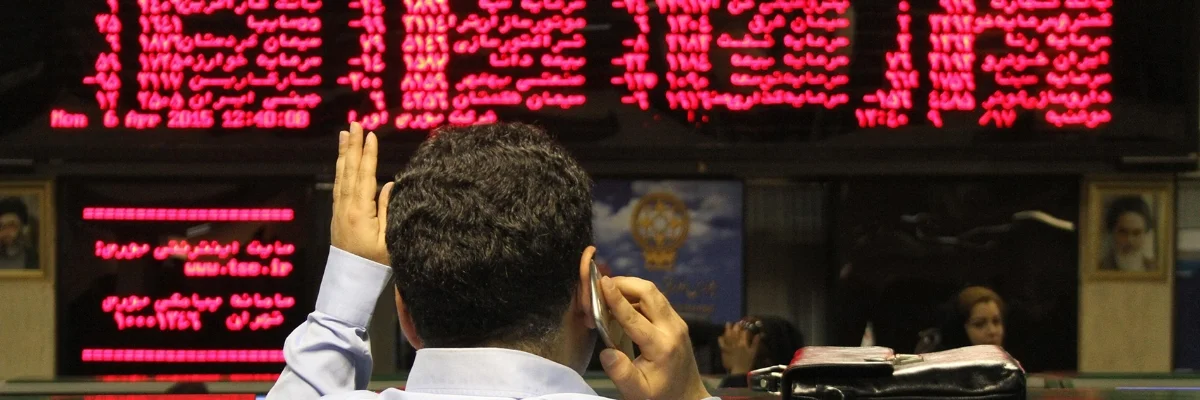
Aside from the political barriers, SHASTA’s bold plan faces another major obstacle. Iran’s equities markets are insufficiently capitalized to facilitate the sale of the 130 companies at sufficiently high prices.The current market capitalization of the Tehran Stock Exchange is about USD 100 billion. Relative to the overall size of the market, a USD 5 billion divestment by SHASTA, already the market’s single largest shareholder, would be difficult to absorb by other investors, particularly investors outside the circle of bonyads and other quasi-state holding companies.
Some within Iran’s financial sector see Lotfi’s announcements as an empty gesture. As relayed by one financial executive in Tehran, who preferred to remain anonymous, “We are used to these kind of gestures from high new management of SHASTA. They need the money and everyone knows it. But they don’t have the guts to push the button when it’s time.”
The Rouhani administration is well aware of this structural barrier to privatization, and has hoped that in the course of the post-sanctions economic rebound, new injections of capital by foreign investors would boost privatization prospects by alleviating the liquidity problem. Recent developments such as the partnership between Italy’s Azimut and Iran’s Mofid Entekhab bode well for the role of foreign institutional asset managers in the TSE, but there remains a long way to go before Iran can witness the foreign capital fueled privatizations that helped rapidly liberalize the BRIC economies. While the overall number of foreign investors trading on the TSE rose following the lifting of international sanctions and although foreigner trading value has doubled in the last year, this progress is measured from a very low base.
By comparison, around 60% of shares on the Borsa Istanbul are owned by foreign investors. Acknowledging the important role foreign investors will need to play to see through the off-selling, Lotfi disclosed, “Talks are underway with the Turkish government for dual listing of some of [SHASTA’s] subsidiaries on Borsa Istanbul, which would be a positive step toward attracting foreign investment.”
SHASTA's intended move reflects the precise kind of privatization efforts that Western economic policymakers have long advocated in liberalizing markets. But unlike in other liberalization scenarios, Iran's economic actors find themselves hamstrung by structural challenges that few in the international community seem keen to address. As SHASTA looks to right the wrongs of past privatization efforts, a more concerted effort should be made to support inflows of foreign investment. If success in privatization is to be achieved this time around, Iran's equity market investors will need foreign investors to help carry the burden and unlock the opportunity.