
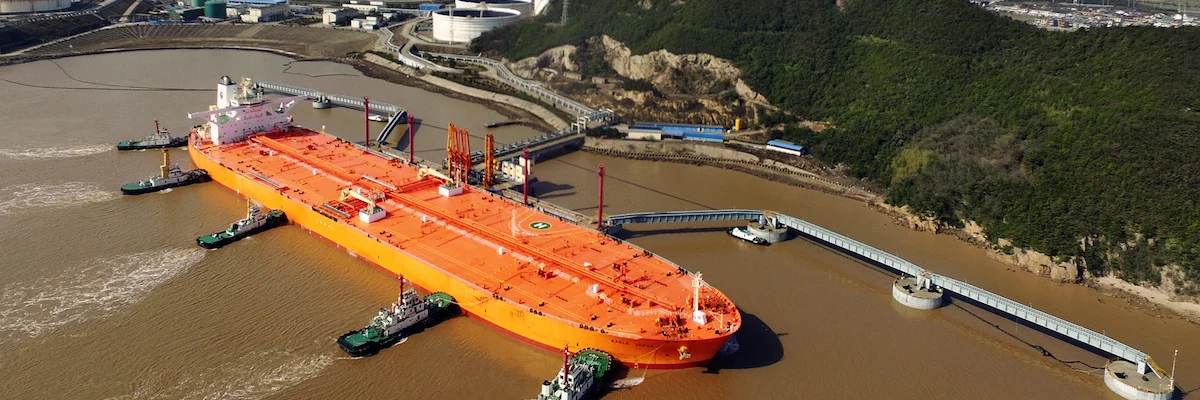
China’s Declared Imports of Iranian Oil Hit a (Deceptive) New Low
◢ New data from China’s customs administration show a significant drop in purchases of Iranian oil. The declared value of September imports was just USD 254 million, down 34 percent from August and down 80 percent from the same month last year. But observed exports from Iran remain high, suggesting that the customs data is not capturing the full value of Iranian oil sales to China.
New data from China’s customs administration show a significant drop in purchases of Iranian oil. The declared value of September imports was just USD 254 million, down 34 percent from August and down 80 percent from the same month last year.
The September data appears to end a period of relative stability for Chinese imports of Iranian oil following the Trump administration’s revocation of a key sanctions waiver in May, since when China has continued to purchase Iranian oil in direct violation of U.S. sanctions.
But the decline in purchases of Iranian oil was not matched by a decline in Chinese purchases of non-oil goods. Non-oil imports from Iran exceeded USD 500 million in September, a level of monthly trade that has remained stable since April of this year and which is consistent with the monthly average observed over the last two years.
This suggests that the fluctuation in oil purchases is not related to a system-wide disruption in China-Iran trade such as the banking difficulties that stymied commerce late last year. Additionally, Chinese exports to Iran did not decline month-on-month in September.
According to data provided by TankerTrackers.com, fewer barrels of oil were observed departing Iran in August than in July. Observed exports amounted to around 670,000 bpd in August, down by about 130,000 bpd from the previous month. This drop in observed exports offers one explanation as to why Chinese declared imports of Iranian oil were lower in September than in August—export levels in a given month tend to appear as declared imports in the following month given the four week journey of tankers at sea.
Notably, any decision to scale back imports of Iranian oil in September would have predated the Trump administration’s move to sanction tanker subsidiaries of Chinese state shipping giant COSCO involved in the transport of Iranian oil. The Chinese government has reportedly asked the Trump administration to remove sanctions on COSCO as part of its ongoing trade negotiations.
In July, U.S. officials had publicly expressed concern about continued Chinese purchases of Iranian oil, suggesting that China was given prior warning that its tanker fleet could be targeted with sanctions designations. This may have spurred China to reduce the use of its own VLCC tankers in the transport of Iranian oil. The fleet of the National Iranian Tanker Company (NITC) has long been the primary means by which Iranian oil is exported to China, but having fewer Chinese tankers picking up oil from terminals in Iran would nonetheless reduce export capacity, depressing overall imports.
However, data on observed exports from Iran does not correspond to the drop in declared imports in September’s customs data. The value of the observed exports is considerably higher than the USD 250 million in Chinese purchases declared for September. The market value of Iran’s August exports is over USD 1.2 billion. Syria is the only other customer currently purchasing Iranian oil and imports significantly less than China. So where is the additional oil going?
Some tankers which departed Iran for China in August are still in transit, waiting for ship-to-ship transfers that will take the Iranian crude to its final port destination. Other tankers may have delivered their oil into bonded storage, meaning that the oil has not yet been sold to China and is therefore not captured in the customs data.
But the most obvious explanation for why declared imports lag observed exports is actually captured in the customs data—just not in the entry for Iran. Reports earlier this summer noted ship-to-ship transfer activity off the coast of Malaysia that appeared to be tied to exports from Iran. Chinese customs data from the last few months illustrates how the drop declared imports from Iran is concurrent with a marked increase in imports from Malaysia.
Since May of this year, Malaysia has exported an average of USD 1.2 billion worth of oil to China each month. The monthly average in the twelve months leading up to May was just USD 1 billion. Re-export of Iranian oil via Malaysia allows China to overcome the capacity problem introduced by the threat of sanctions on major players like COSCO. China can use smaller tankers for the final leg of the journey from Iran, picking up oil from Iranian VLCCs.
Looking ahead, TankerTrackers.com has reported total Iranian exports of around 485,000 bpd in September, a decline of 185,000 bpd when compared to the previous month. With less crude at sea, the value of oil imports declared in China’s October customs data may even fall below the September level. Yet there is little evidence that China is making a strategic decision to further decrease imports of Iranian oil. On the contrary, the strategy to sustain a baseline of imports appears to be growing more sophisticated.
Photo: Depositphoto
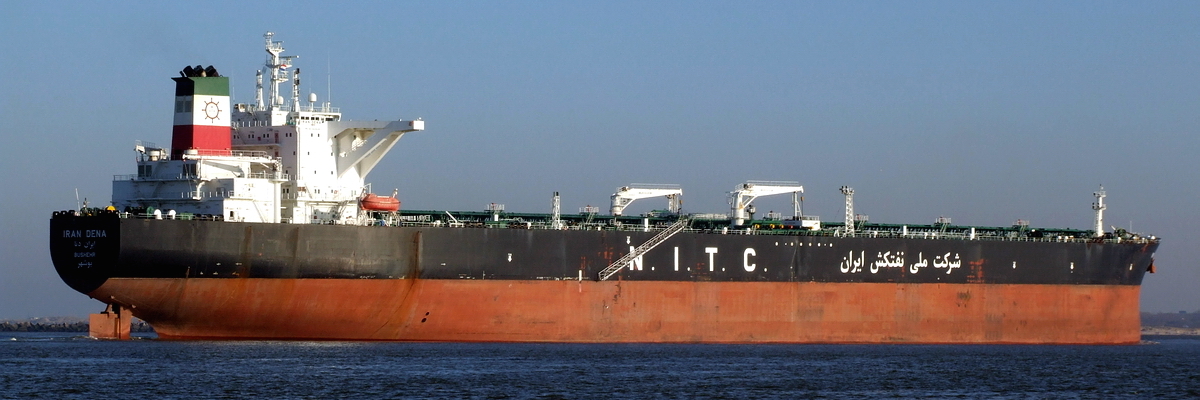
China Takes More Iranian Oil, Intensifying Sanctions Challenge
◢ China has taken its second Iranian cargo of crude oil after US waivers expired in early May, further defying US sanctions on Iran’s oil exports. The HORSE, a VLCC owned by the National Iranian Tanker Company (NITC) discharged its oil at Tianjin port in northern China, data provided by market intelligence firm Kpler shows.
China has taken its second Iranian cargo of crude oil after US waivers expired in early May, further defying sanctions on Iran’s oil exports. The HORSE, a VLCC owned by the National Iranian Tanker Company (NITC) discharged its oil at Tianjin port in northern China, data provided by market intelligence firm Kpler shows. The crude could be destined to Sinopec’s Tianjin refinery. This comes ten days after Iran’s first shipment of oil to the CNPC-operated Jinxi refinery, previously reported by Bourse & Bazaar.
Senior analyst Homayoun Falakhsahi shared Kpler’s analysis: “The HORSE arrived at Tianjin on 29 May and discharged 2.12 million barrels of crude oil it had loaded from Iran’s Kharg Island on May 6th. After its departure from Kharg the following day, the cargo went offline for a few weeks before reappearing passing Singapore on its way towards China.”
In the past, HORSE has delivered crude and condensate to refineries in China and India. The tanker’s latest voyage provides further confirmation that China has restarted importing Iranian oil after a brief pause following the expiration of US waivers. Due to their significant exposure to the US financial system, state oil companies CNPC and Sinopec had initially ceased importing Iranian oil in May, citing the risk of sanctions penalties.
China, traditionally Iran’s largest oil customer, holds the key to the future of the country’s oil exports. Under the 6-month waiver period, China imported 600 kbd of crude and condensate on average from Iran, 43 percent of the country’s oil exports in the period.
In the run-up to the revocation of the waivers, China’s imports from Iran reached an all-time high of 913 kbd in April before decreasing to 299 kbd in May, when the final vessels to have departed Iran before the waiver revocation arrived in port. Against the backdrop of the trade war with the US, Beijing now appears to be undermining Washington’s goal of bringing Iran’s oil exports down to zero. Kpler data suggests that Chinese imports in June currently total 186 kbd, including two cargoes that left Iran before May 2nd.
The resumed imports reflect state policy. “The fact that state-owned CNPC and possibly Sinopec have restarted taking Iran’s oil indicates Beijing has given the green light to do so,” said Falakshahi. China has an interest in receiving Iranian oil not just for its energy security, but also because of outstanding debts owed by Iran. Around 100 kbd of Iran’s oil to China is used by the National Iranian Oil Company in repayment of costs and remuneration for Chinese investment in the country’s upstream oil and gas sector. In the last decade, CNPC and Sinopec invested a total of $3.8 billion in the Azadegan North and Yadavaran oil fields respectively, two of Iran’s West Karun projects.
Since the revocation of US sanctions waivers, Iran has struggled to find a home for its oil. Iranian oil minister Bijan Zanganeh has said that the oil export situation is much worse than during the Iran-Iraq War, noting, “We can’t sell our oil under Iran’s name”. Shipments of oil have slumped from 1.32 mbd in April to 984 kbd in May and 515 kbd in June.
However, as much as 75 percent of these exports could reflect Iran’s recourse to floating storage as wells continue to pump more oil than buyers are willing to take. Aside from China, the other traditional buyers of Iranian oil—India, Turkey, Japan and South Korea—have fully halted their imports so far, though India says it is considering importing Iranian oil again. Iran will be hoping it’s other customers are inspired to follow China’s lead.
Photo: Shana.ir
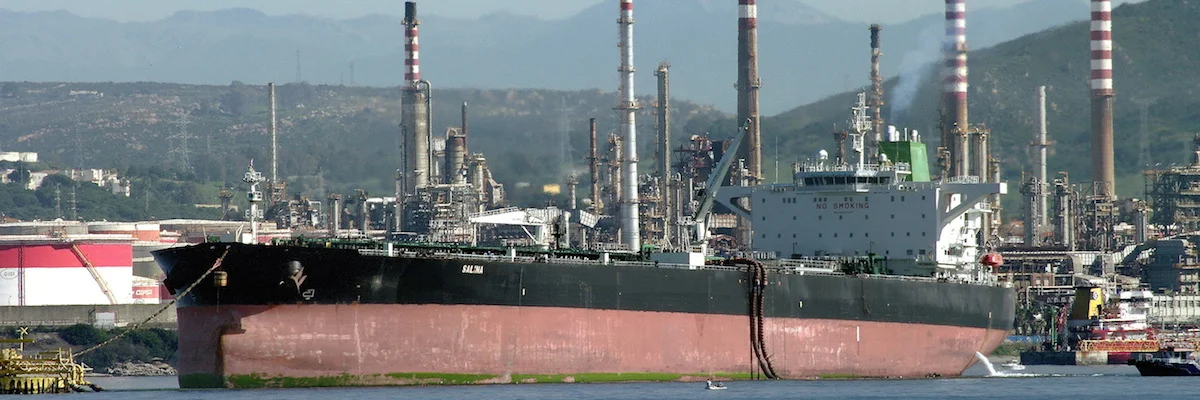
Iran Completes Delivery of First Chinese Oil Purchase Since May
◢ According to analysis provided by TankerTrackers.com, a tanker owned by the National Iranian Tanker Company (NITC) has delivered oil to the Jinxi Refining and Chemical Complex in China, marking the first confirmed delivery of Iranian crude purchased after the Trump administration’s revocation of waivers permitting the sale of Iranian oil on May 2.
A tanker owned by the National Iranian Tanker Company (NITC) has delivered oil to the Jinxi Refining and Chemical Complex in China, marking the first confirmed delivery of Iranian crude purchased after the Trump administration’s revocation of waivers permitting the sale of Iranian oil on May 2.
Analysis provided by TankerTrackers.com shows that the medium-sized Suezmax vessel, named SALINA, departed from Iran’s Kharg Island terminal on May 24. SALINA loaded approximately one million barrels of Iranian oil before departing on May 28.
A few weeks later, on June 20, the vessel arrived at the Jinxi Refinery, located near the Port of Jinzhou, near Beijing. Notably, Jinxi is owned and operated by PetroChina, which is affiliated to China National Petroleum Corporation (CNPC), a long-time buyer of Iranian oil and the parent company of Bank of Kunlun, the financial institution that has been at the heart of China-Iran trade for the last decade.
Iran has been delivering significant volumes of crude oil into bonded storage in China over the last year, selling that oil to China in subsequent months. CNPC’s nearby storage facility—part of China’s Strategic Petroleum Reserve—can hold 19 million barrels. But in the absence of waivers, the storage of Iranian oil would still contravene US sanctions, making it likely that the delivered oil was taken by CNPC as a purchase.
SALINA’s journey serves to confirm earlier reports that China had resumed purchasing Iranian petroleum products, including crude oil and liquid petroleum gas, despite the fact that such purchases would run afoul of US sanctions. Several other tankers are expected to arrive in China in the coming weeks.
The central role of state-owned CNPC, China’s second largest energy conglomerate, suggests that China has resumed purchases of Iranian oil as a matter of government policy. During a visit to Beijing in May, Iranian foreign minister Javad Zarif was reassured by his Chinese counterpart, Wang Yi, that China would continue to support Iran, so long as Iran remained in compliance with the Joint Comprehensive Plan of Action (JCPOA) nuclear deal. However, Chinese and Iranian officials continue to deny that any purchases have been made since May, preferring to maintain ambiguity over the exports.
The Chinese General Administration of Customs declared USD 585 million in imports of Iranian petroleum products in May, down sharply from USD 1.6 billion in April. But imports are expected to rebound in June, based on the significant number of tankers that remain en route to Chinese ports.
Photo: Justo Prieto
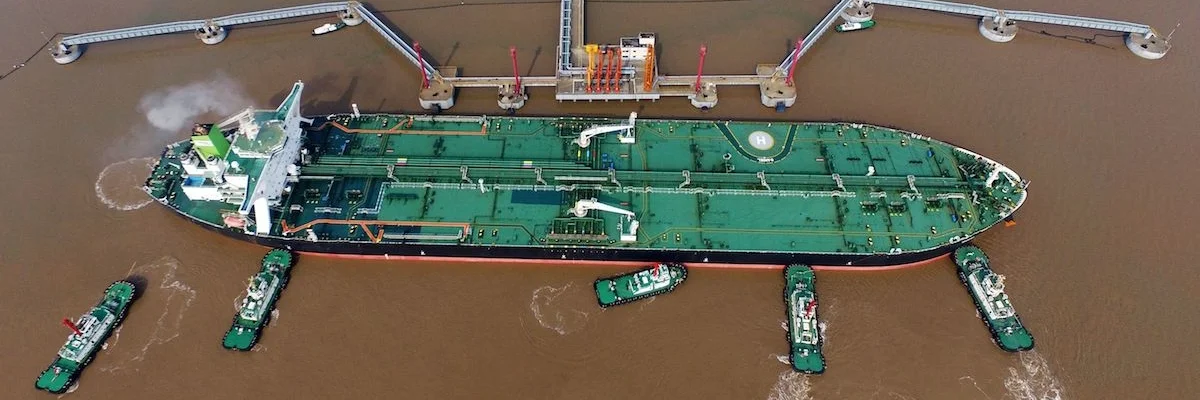
Iran’s Oil Exports May Be More Resilient Than Headlines Suggest
◢ Iran is resorting to “Houdini tricks” to sustain oil exports as US sanctions loom and new data suggests the magic might be working. While S&P Global Platts has reported Iran’s September exports at about 1.7 million bpd, marking an 11 percent decline from August, data from TankerTrackers.com, puts the export volume at just over 2 million bpd. The divergence in the datasets represents not merely 300,000 bpd, but also the difference between two narratives about the state of Iran’s exports in the face of returning US sanctions.
Iran is resorting to “Houdini tricks” to sustain oil exports as US sanctions loom. New data suggests the magic might be working. With new sleights of hand including disappearing oil tankers, the use of floating storage, and ship-to-ship transfers, tracking Iranian exports is getting harder than ever, leading to divergent estimates from oil analysts.
While S&P Global Platts has reported Iran’s September exports at about 1.7 million bpd, marking an 11 percent decline from August, data from TankerTrackers.com, a service which reports shipments and storage of crude oil globally, puts the export volume at just over 2 million bpd. The divergence in the datasets represents not merely 300,000 bpd, but also the difference between two narratives about the state of Iran’s exports in the face of returning US sanctions.
As part of S&P Global Platts’ announcement of the September figures, Paul Sheldon, chief geopolitical adviser at company, stated, "Iranian export losses have already accelerated faster than we expected.” On this basis, Platts is predicting Iran’s exports will fall to 1.1 million bpd by November, when U.S. sanctions on Iran’s oil industry are set to return. Similar analysis from Bloomberg and Reuters has contributed to the sense that Iran’s exports are dropping fast. But these assessments may be leaving a significant number of barrels uncounted by failing to properly capture tankers which have turned off their geolocation transponders.
Samir Madani, founder of TankerTrackers.com, emphasizes that such tactics are making life more difficult for those trying to measure Iran’s export volumes. "September was a very resource-demanding month from a vessel tracking perspective for not just us at TankerTrackers.com but at some of the other trackers in the industry,” he said.
For Madani and his team, properly tracking tankers laden with Iranian oil requires extensive use of satellite imagery. “The reason is because roughly half of the exports were cloaked, meaning vessel crews switched off their AIS geolocation transponders before arriving into Iran to arrange the collection of crude oil,” Samir explained. “Their transponders were switched back on many days later, once they were already out of the immediate Gulf area.”
To overcome these cloaking tactics, Madani uses daily satellite imagery to “factor in vessels that were no longer broadcasting their positions.” This methods helps explain the significant discrepancy between his September estimate of Iran’s exports to China and that published by Platts. According to Madani, Iran’s state-owned National Iranian Tanker Company is particularly adept at cloaking exports in this manner, drawing on a playbook perfected in the previous sanctions period.
Any underlying resilience of Iranian exports is particularly important following reports that the United States is “actively considering waivers on Iran oil sanctions.” The exploration of waivers represents a break with the Trump administration’s previously communicated intention that “exports of Iranian oil and gas and condensates drops to zero.”
The level of imports covered by such “significant reduction exemptions” or SREs is typically determined by looking to historical import levels and the level of imports that can be reasonably restricted by sanctions. In this context, that Iran has been able possibly sustain over 2 million bpd in exports just one month before the reimposition of US sanctions bodes well for the extent of the waivers that may be offered. In likely anticipation of waivers from US authorities, India has already announced that it plans to import at least 9 million barrels of Iranian crude in November.
In an interview conducted during the United Nations General Assembly, President Hassan Rouhani told NBC’s Lester Holt that “The United States is not capable of bringing our oil exports to zero” and describe the Trump’s administration's threats as “empty of credibility.” Despite hopeful signs, Iran’s oil exports magic show is still in its first act. Whether Rouhani can outdo the great Houdini is yet to be seen.
Photo Credit: Imaginechina