
The Optimistic Case for Biden and Iran
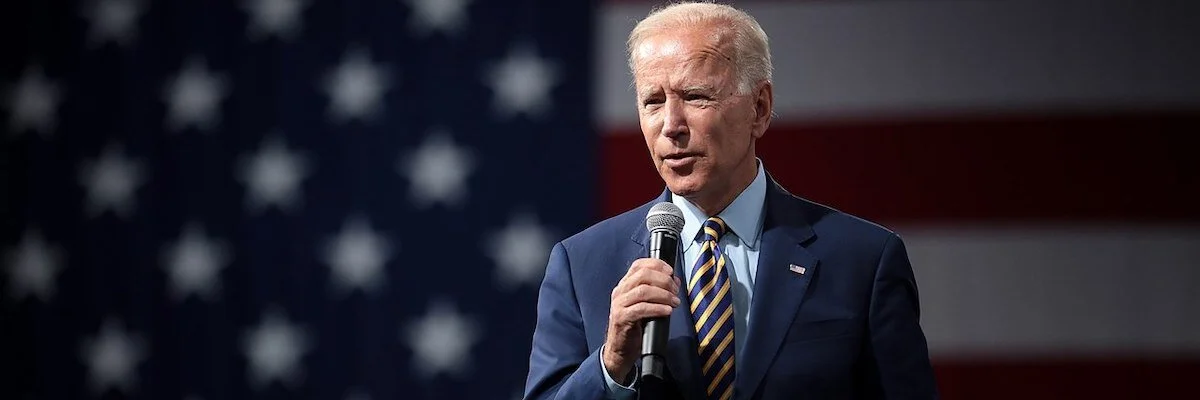
In Tehran and Washington alike, the impact of Biden’s election on US-Iran relations has been the subject of strategizing for months. Now, the Biden presidency is a real political fact.
“It’s over.”
So reads the November 8 headline of Hamshahri, one of the leading newspapers in Iran. The past four years have been brutal for ordinary Iranians. The Trump administration waged an economic war on Iran that exacerbated the political and social tensions endemic to the country. Iranians are hoping that the election of Joe Biden and Kamala Harris will enable a return to the optimism they experienced in the short period between the implementation of the Joint Comprehensive Plan of Action (JCPOA) in January 2016 and the dismaying election of Donald Trump in November of the same year.
In a CNN op-ed published in September, Biden made clear his intention to “rejoin the [JPCOA] as a starting point for follow-on negotiations” so long as “Iran returns to strict compliance with the nuclear deal.” Here, Biden is accepting the basic premise of “compliance-for-compliance.” In response to Trump’s withdrawal from the nuclear deal, Iran has reduced its own commitments to the deal, particularly by increasing its levels of uranium enrichment beyond what is permitted by the JCPOA. These moves, which have dismayed the remaining parties to the agreement—France, Germany, the United Kingdom, Russia, and China—are nonetheless perceived as tactical and reversible. The administration of Iranian president Hassan Rouhani remains committed to the JCPOA and appears ready to welcome the U.S. back into the deal so long as the U.S. policymakers accept “to be held responsible for damages” caused to “the people of Iran” as a result of Trump’s withdrawal, while also providing “guarantees” that such an event would not be repeated. Notably, Iranian foreign minister Javad Zarif has described the stance of the Biden administration as “promising.”
Despite these encouraging statements by both the Biden camp and officials in the Rouhani administration, there is a remarkable degree of pessimism surrounding the prospect of a U.S. reentry to the JCPOA. These assessments highlight pressure, particularly from U.S. allies in the Middle East, to build on the nuclear deal and achieve diplomatic breakthroughs on issues such as regional security and Iran’s missile program. They also point to the ascendency of Iran’s hardliners, a loose coalition of politicians who savaged Rouhani and his moderate bloc as the nuclear deal faltered. The vocal anti-Americanism of these conservative politicians and their labeling of figures such as Rouhani and Zarif as either naïve or knowing traitors, has furnished dire predictions for the future of U.S.-Iran diplomacy under the hardline president expected to prevail in Iran’s elections next year.
In a recent piece, Ariane Tabatabai and Henry Rome seek to account for the likely victory of a hardliner president, arguing that “the United States shouldn’t rush to secure a deal in the hopes of shaping Iran’s domestic politics, or for fear that the window of opportunity will close.” They observe astutely that “the new administration shouldn’t assume that without Rouhani, diplomacy wouldn’t stand a chance.” Tabatabai and Rome explain that the next Iranian president “will almost certainly be more conservative,” but note that the decision to engage in diplomacy with the United States will not be the prerogative of this hardline figure. Rather, such decisions require “buy-in from the whole system.” So long as Iran’s national security interests would be advanced by negotiations, it is reasonable to expect a receptiveness to talks, even with the U.S.
According to Tabatabai and Rome, it follows that the new Iranian administration will “have no choice but to negotiate” with the U.S. principally because of the country’s weak economic position. But this assessment likely underestimates the ability of the Iranian economy to limp along under sanctions pressure—even for four or more years. Before the COVID-19 pandemic hit the country, the Iranian economy was already returning to growth despite two years under Trump’s maximum pressure sanctions. High inflation has emerged as the single most significant challenge facing Iranian policymakers, but as the case of Venezuela shows, even the most extreme circumstances of hyperinflation can prove insufficient to coerce policymakers to the negotiating table.
Trump’s national security advisor, Robert O’Brien, recently conceded that the administration was seeing diminishing returns from economic coercion, having imposed “so many sanctions” that there was little pressure to add. This view reflects the assessments of the U.S. intelligence community, which is developing a more sophisticated understanding of the Iranian economy and its adaptability to sanctions pressure. The takeaway is that Trump’s sanctions offer Biden no real leverage on Iran and that it will not be possible to coerce Rouhani nor his successor into talks.
Despite this, Tabatabai and Rome are still correct to claim that Biden will have a shot at diplomacy—a very good one at that. To understand why, it is important to look beyond Trump’s withdrawal from the nuclear deal as the critical political act of the last three years. Far more significant is the fact that Iran remains in the agreement. Sure, Iran has reduced its compliance with key aspects of the deal. But the extraordinary political price paid by the Rouhani administration, spurred by a creditable commitment to diplomacy for its own sake and also by the strategic considerations of the wider Iranian “system,” suggests that understanding the logic of Iran’s persistence with the deal is the key to understanding the prospects for U.S.-Iran talks.
Back in 2018, on the eve of John Bolton’s appointment to lead the National Security Council, it appeared that the writing was on the wall for the Iran deal. As I wrote at the time, “by any conventional assessment, then, the Iran deal is dead.” Implementation of the deal was already faltering, and Bolton was hellbent on killing the agreement outright. But I foresaw a different outcome, arguing that “the Iran deal cannot be killed” because of a set of “several undeniable truths about Iran and its place in the world.” My argument focused on three structural factors that underpin Iran’s diplomatic engagement: the geopolitical influence of Iran, the demographic and economic drivers of the Iranian policy of engagement, and the fact that the United States has limited leverage because there is no credible or affordable military threat behind diminishing sanctions pressure.
Each of these structural factors is even more pronounced today. The Islamic Republic is less isolated diplomatically than ever before because it opted to remain in the JCPOA following the U.S. withdrawal. In the face of reduced oil revenues, the Iranian economy is more dependent on economic diversification, including in its trade partnerships. The combination of sanctions overuse and the American public’s calls for a pullback from the Middle East will leave Biden with less scope to coerce or threaten Iran.
The notion that Iran’s commitment to engagement (and the nuclear deal) is structural was underscored in a November 3 speech by Iran’s Supreme Leader, Ali Khamenei. Addressing the possible impact of U.S. elections on U.S.-Iran relations, Khamenei stated, “We follow a sensible, calculated policy which cannot be affected by changes of personnel.” Many took the statement to be Khamenei’s way of pouring cold water on the prospect of a Biden victory revitalizing the JCPOA. But again, in the Iranian assessment, the deal is not yet dead. The calculated policy to which Khamenei is referring is the policy of keeping the nuclear deal alive in accordance with Iran’s strategic interests.
This structural commitment means that the Biden administration does not need to rush to make a deal with Iran—the window of opportunity will not close when Iran elects a new president next summer. However, that does not mean Biden will not need to make some early gestures to signal the depth of his own commitment to diplomacy. In an excellent report envisioning a roadmap for the Biden administration’s reengagement of Iran, Ilan Goldenberg, Elisa Catalano Ewers, and Kaleigh Thomas, point to the importance of an early “de-escalation” phase, stating that the Biden administration “should start with immediate, modest unilateral confidence-building measures” in order to achieve both compliance-for-compliance on the nuclear file and “calm-for-calm” when it comes to regional tensions.
As Edoardo Saravalle has convincingly argued, the Biden administration can use executive orders to implement its sanctions relief commitments under a compliance-for-compliance framework in under sixty days. These moves can be made tangible by coordinating moves with European allies and international bodies to deliver tangible economic benefits to Iran. For example, this coordination can ensure that sanctions relief enables the unfreezing of foreign exchange reserves and the provision of Iran’s requested COVID-19 relief loan by the International Monetary Fund—moves that would ease inflation, delivering appreciable economic relief for ordinary Iranians. Should the Biden administration choose incentivization over coercion and thereby prove itself a credible counterparty for follow-on negotiations by the time of the Iranian election in the early summer of 2021, it is more than likely that any Iranian president elected—even a so-called hardliner—will take up the mantle of new talks.
The fierce opposition of hardliners to the nuclear deal was far more about the stakes of domestic politics than the terms of the deal itself. Even before talks had concluded, hardline politicians were gripped by anxiety that the successful implementation of the nuclear deal would grant Rouhani, a savvy political operator, a diplomatic and economic triumph that would consolidate the dominance of reformist politics in Iran for a generation. The opposition to the nuclear deal, which extended to efforts to undermine the deal itself, was intended to take Rouhani from the heights of popularity—he won two stunning mandates in high-turnout elections—to the depths of disgrace. The hardliners succeeded in this cynical mission and Rouhani was battered. But tellingly, the nuclear deal, as a product of Iran’s largely apolitical strategic decision-making, has survived.
A hardline president in Iran can be confident of his ability to run the country for an initial four-year term without needing a détente with Biden. The economy will limp along, regional tensions will remain high, and domestic unrest will simmer. But the presidential administration will be able to coordinate with state organs to keep Iran resilient to external and internal pressure—even as the Iranian people continue to suffer from the country’s stagnation.
But what president would choose to preside over a constant slow-moving crisis, particularly one that was not of his own making? For hardliners, 2021 represents an extraordinary political opportunity. For the first time since 1989, Iran and the United States will have first-term presidents at the same time. Meanwhile, Iran’s conservative politicians are increasingly concerned about the political legacy and legitimacy of the Islamic Revolution as it enters its fifth decade. Negotiations with the Biden administration offer Iran’s next president, and his political backers, the opportunity to give to the Iranian people that long-awaited gift—a robust, transformational deal with the world powers, chief among them the United States.
The impact of Biden’s election on U.S.-Iran relations has been the subject of strategizing for months. Today, what was once a hypothetical has become a reality. The impetus for U.S.-Iran talks arises from both an emergent political opportunity and the unchanged structural factors that push both sides towards engagement. The mechanics and sequencing of an American reentry into the JCPOA remain to be determined, but it will not be harder than when the deal was originally struck, when taboos needed to be broken in Tehran and Washington alike. Much has been learned over the last four years about what it takes to implement an “Iran Deal” successfully. We ought to be optimistic about comes next.
It’s a beginning.
Photo: Wikicommons
Europe Still Needs INSTEX to Help Solve the Iran Crisis
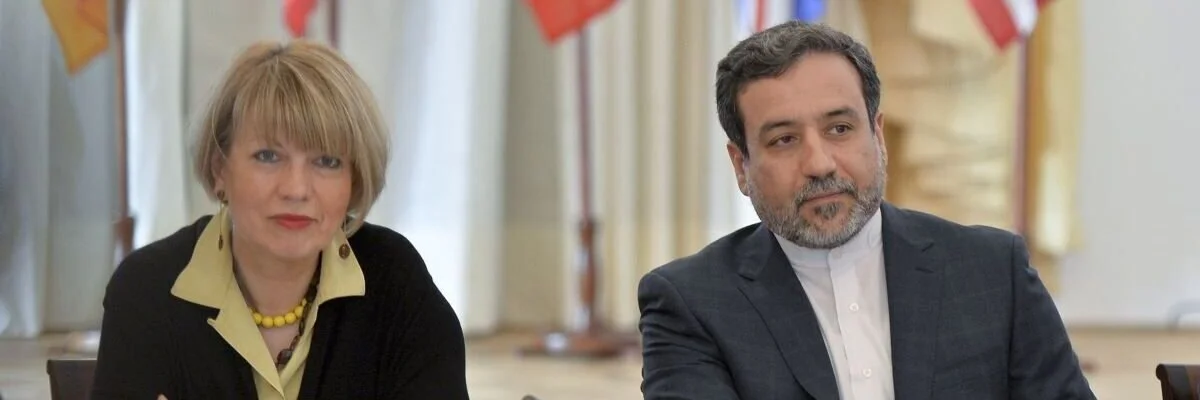
At a time when constructive diplomatic relations between Europe and Iran may prove instrumental in efforts to stave off a regional conflict, the speedy operationalization of INSTEX remains an imperative—a point underscored by EU foreign policy chief Josep Borrell following his first trip to Tehran earlier this month.
This article was originally published by the European Leadership Network.
Over the last few months, the mission of INSTEX has grown significantly more complicated. Tensions between the United States and Iran have reached new highs following the assassination of Iranian Major General Qassem Soleimani, and European leaders have called for de-escalation as fears grow of direct conflict. Iran’s recent elections, marked by historically low turnout, have ushered in a more conservative parliament, sceptical of Western intentions. Already hamstrung by delays, the intended political function of INSTEX—to encourage Iran to remain in compliance with the Joint Comprehensive Plan of Action (JCPOA)—has been thrown further into doubt.
However, at a time when constructive diplomatic relations between Europe and Iran may prove instrumental in efforts to stave off a regional conflict, the speedy operationalisation of INSTEX remains an imperative—a point underscored by EU foreign policy chief Josep Borrell following his first trip to Tehran earlier this month.
INSTEX has quietly increased the tempo of its consultations with its Iranian counterpart, the Special Trade and Finance Instrument (STFI), in Tehran and other European capitals. The project was buoyed by the decision of six European countries–Belgium, the Netherlands, Sweden, Denmark, Finland, and Norway–to join the company as shareholders.
The new shareholders will provide further capital to enable INSTEX to grow its team and operational capacity. Having relied on support from staff at E3 foreign and economic ministries until late last year, INSTEX now has its own full-time staff members. The new hires have helped the company present itself more credibly with key stakeholders in Europe and Iran who now perceive the company to be a serious, long-term undertaking.
As has been reported, a first transaction was nearly completed on the eve of the December 6 meeting of the JCPOA Joint Commission. But rather than pursue quick wins, INSTEX and STFI are now resolved that the first transactions serve as a proof-of-concept for the operationalisation of the core service.
The core service INSTEX will offer, which can be referred to as a “cross-border clearing mechanism,” aims to eliminate the need for companies trading goods and services between Europe and Iran to make payments between the financial systems of the two jurisdictions. At a time when few European banks are willing to send or receive Iran-related payments, INSTEX can help make European trade with Iran both more reliable and affordable.
INSTEX has made progress in defining its onboarding procedures and compliance guidelines as part of an overall business model designed in collaboration with a wide range of stakeholders. The company is now in a position to ramp-up its engagement with potential clients this year, and there is a significant interest among European enterprises. Until now, such interest has been channelled through companies’ respective foreign ministries. Importantly, these companies are not only small and medium enterprises but also include major multinational companies with active sales or manufacturing business in Iran. The wide-range of interest is critical information for INSTEX as it begins its own proactive outreach.
INSTEX intends to be less expensive than all other payment solutions available to conduct trade with Iran. The significant transaction costs associated with foreign exchange conversions and wire transfers currently required to conduct trade between Europe and Iran have been a significant driver of the increased cost of imports, particularly humanitarian goods, adding to inflationary pressure in Iran and hardship for ordinary Iranians. The goal is to deliver a solution that facilitates trade at a meaningful scale to help ameliorate these conditions.
This has been the main point of scepticism about INSTEX—a severe imbalance in trade has been taken to mean that the value of Iranian exports to Iran will act as a ceiling for the value of trade that can be cleared through the mechanism. Here, those familiar with INSTEX express confidence. Working with E3 policymakers, INSTEX has identified a source for the required liquidity, allowing the mechanism to work without perfect balance in credits and liabilities.
There have also been longstanding concerns that the reimposition of countermeasures by the Financial Action Task Force (FATF) might interfere with the operationalisation of INSTEX. But given the robust due diligence framework established by INSTEX, Iran’s return to the so-called FATF “blacklist” is not expected to prevent the mechanism from maintaining the banking services necessary for its operation.
While the business case and operational model for INSTEX are clearer than ever before, the company continues to face political headwinds in Washington, European capitals, and Tehran. The first transaction is being pursued at precisely the moment when both the American government is doubling down on “maximum pressure” and European and Iranian governments are reconsidering their strategies in light of wider developments.
European governments have opted to trigger the JCPOA’s Dispute Resolution Mechanism (DRM) given growing concerns regarding Iran’s progressive steps to reduce its compliance with the agreement’s nuclear restrictions and the eroded credibility of the agreement’s credibility as a non-proliferation agreement. Triggering the DRM will no doubt complicate the overall political environment, particularly as UN and EU sanctions snapback remains a possibility should the subsequent negotiations fail to address concerns. But there remain several clear reasons why European and Iranian authorities should proceed with the operationalisation of INSTEX.
First, trade in food and medicine will remain permissible even if EU sanctions are reimposed as demonstrated by the perseverance of European economic operators active in the sale of food and medicine during the sanctions period of 2008-2016. There is a clear role for INSTEX to play in safeguarding and facilitating humanitarian trade even in a scenario where Europe-Iran diplomatic ties deteriorate considerably. In this sense, even if INSTEX fails to save the Iran nuclear deal, its innovative mechanism has a role to play as a tool for humane European foreign policy and the defence of European economic sovereignty.
Second, Iran has emerged as an epicentre of the global public health crisis caused by the spread of the COVID-19 coronavirus. Iranian authorities have already received support and diagnostic kits from the World Health Organization as they seek to contain the spread of the virus, which has so far killed at least sixteen people. Should the public health crisis in Iran intensify, further medication and equipment may be needed. Presently, the indirect effect of sanctions on humanitarian trade makes it difficult for Iranian authorities to source products from new suppliers—onerous due diligence requirements for humanitarian trade discourage financial institutions from onboarding new clients. Such restrictions may encumber Iran’s response to the coronavirus. INSTEX can be used to ensure Iran remains able to make payments to European suppliers and receive speedy and reliable deliveries of the equipment necessary to deal with the coronavirus outbreak.
Finally, as made clear in the aftermath of the assassination of Qassem Solaimani, tensions between the United States and Iran may yet lead to outright war. The Iranian escalatory steps that would contribute to the initiation of any such conflict would no doubt test European resolve to operationalise INSTEX as presently intended. However, in the context of war, Europe’s humanitarian obligations will be even more important. Facilitating the flow of food and medicine to the Iranian population will be crucial should Europe wish to reduce harm to the civilian population and present itself as a credible mediator between the United States and Iran. In this context, and given the existing pressures on humanitarian trade, an operational INSTEX would be a crucial tool for peace-minded European foreign policy. In short, further political and economic investment in the INSTEX project is consistent with European preparedness for such worst-case scenarios.
European policymakers have few tools with which to influence the direction of the brewing security, economic, and public health crises in the Middle East. Against this backdrop of uncertainty and instability, INSTEX deserves greater high-level political support as a key means by which Europe can reassert its credibility as the only major global actor whose economic operators are significantly invested in the economic and humanitarian wellbeing of the people of Iran and the wider Middle East.
Photo: IRNA
Three Years Later: Europe’s Last Push on the Iran Nuclear Deal
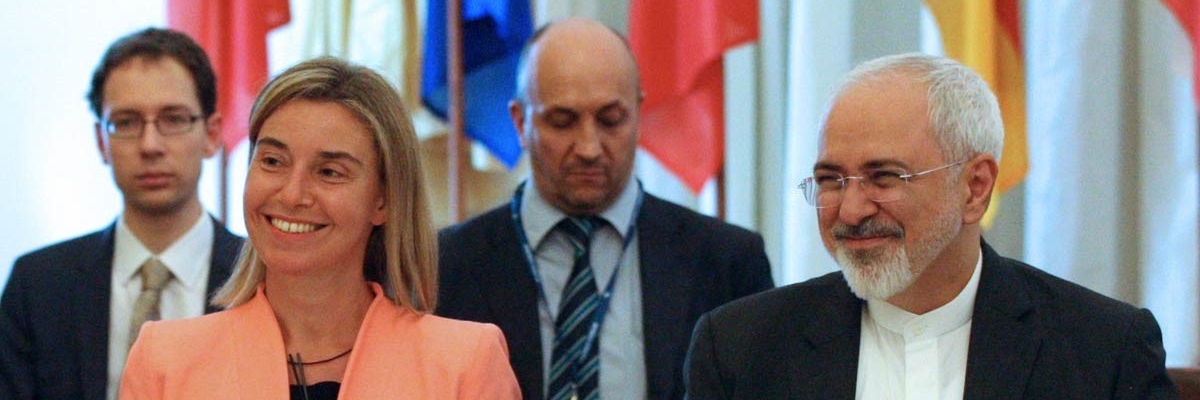
◢ The Iran nuclear agreement marked its third anniversary in a gloomy state. Many hoped that the resolution of the nuclear dispute would result in a new understanding between the West and Iran, opening a pathway for detente rather than confrontation. Relations between Europe and Iran have certainly made gains in this direction, but the Trump administration’s maximalist stance on Tehran has created an extremely hazardous environment for all remaining stakeholders in the nuclear deal.
This article has been republished with permission from the European Council on Foreign Relations.
The Iran nuclear agreement marked its third anniversary in a gloomy state. Despite repeated attempts to keep him on board, US President Donald Trump withdrew the United States from the deal – signed on 14 July 2015 under the formal title the Joint Comprehensive Plan of Action (JCPOA) – and thereby pulled the rug from under Europe’s feet. European policymakers are now focused on salvaging the agreement. For a growing number of European corporate decision-makers, the deal is already dead. In reality, the JCPOA is on life support and the next few months could open either its next or final chapter. Despite the significant challenges they face, European governments have some limited time to avert the deal’s collapse.
In 2015, global powers unanimously hailed the agreement as a historic achievement that proved the effectiveness of multilateral diplomacy. Indeed, the JCPOA provides unprecedented oversight of Iran’s nuclear programme. Furthermore, the agreement states that parties anticipate it will “positively contribute to regional and international peace and security." Many hoped that the resolution of the nuclear dispute would result in a new understanding between the West and Iran, opening a pathway for detente rather than confrontation. Relations between Europe and Iran have certainly made gains in this direction, but the Trump administration’s maximalist stance on Tehran has created an extremely hazardous environment for all remaining stakeholders in the nuclear deal.
Washington's Pressure Package
Since the formal US exit from the agreement in May this year, the Trump administration has sought to sabotage European efforts to sustain the agreement. This has involved a policy of relentlessly threatening and otherwise pressuring any country or company inclined to maintain economic channels with Iran, by weaponising US secondary sanctions. Reportedly, the US administration recently rejected an appeal by the EU foreign ministers to negotiate broad exemptions to such sanctions for European companies. The US clearly intends to specifically target European trade with Iran – although there remain questions about its ability to do so and the reach of US enforcement.
Together with its allies in the Middle East – particularly Israel, the United Arab Emirates, and Saudi Arabia – the Trump administration is increasing its efforts to squeeze Iran on multiple fronts. As a new report by the European Council on Foreign Relations outlines, this anti-Iran front views the collapse of the JCPOA as the trigger for a wider policy aimed at confronting Iran. The policy seeks to cause a deep economic crisis in the country, creating domestic divisions intended to bring about regime change. As part of this, the Trump administration has signalled its willingness to go further than any previous administration by choking off Iran’s oil exports.
European Resistance to US Sanctions
European leaders’ have repeatedly stated their commitment to upholding the JCPOA. Policymakers are making genuine efforts to find an economic package that minimises the impact of looming US secondary sanctions to sustain Iranian compliance with the deal. But these efforts have yet to generate an environment in which a reasonable number of European entities can make a firm commercial decision to continue doing business with Iran.
Although the European Union’s leaders remain unified in their support of the JCPOA, divisions are emerging between the 28 member states over how far they are willing to test the limits of US secondary sanctions. Moreover, several proposed ideas for safeguarding European companies against extraterritorial US sanctions would require months or even years to implement, as they require alternative financial mechanisms that are ring-fenced from US exposure. European governments are also falling short in the political momentum needed to salvage the nuclear deal. For instance, Germany and the United Kingdom are now far more preoccupied with challenges at home than they were in 2015, and EU institutions are focused on averting further transatlantic divide on trade and NATO.
Unsurprisingly, many European firms have little confidence that European policymakers will create the conditions necessary to protect them from US secondary sanctions, including by providing alternative mechanisms for doing business with Iran that are compliant with US sanctions. This has resulted in a wave of pre-emptive corporate overcompliance with impending US regulations and a decline in European business with Iran even before sanctions come into force.
Iran's Patience Wearing Thin
This month, the foreign ministers of France, the UK, Germany, Russia, and China (the E3+2) met with Iran to discuss political and economic pathways through which they could safeguard the JCPOA. And Iran’s president, Hassan Rouhani, visited Austria and Switzerland to deliver two overarching messages. The first was that Iran’s patience was wearing thin and its full compliance with the JCPOA was only feasible if it continued to receive tangible benefits from the agreement. The second was that Tehran would abandon the agreement if it became unable to maintain oil exports and, accordingly, its share in global energy markets.
Rouhani’s visit followed a tense OPEC meeting, Trump’s call for Saudi Arabia to increase oil production, and weeks of speculation about the extent to which the US could pressure other countries to halt exports of Iranian oil. In Europe, Rouhani stated: “assuming that Iran could become the only oil producer unable to export its oil is a wrong assumption”.
The leader of Iran’s Islamic Revolutionary Guard Corps (IRGC) was quick to emphasise that elite forces were prepared to act on Rouhani’s words, noting: “we will make the enemy understand that either everyone can use the Strait of Hormuz or no one”. Iran has issued such warnings in the past, including during the 1980-88 Iran-Iraq war and in 2011 in advance of the EU and US embargo on Iranian oil. Iran may retaliate against any US attempts to curb its oil exports by disrupting regional crude shipments in the strait, through which 35% of all seaborne oil exports pass. Such measures seem unlikely for now – given the risk of military escalation with US and regional naval forces, and of damaging relations with China and Russia, which wish to keep energy markets stable.
Rouhani’s statement suggests that Iran is hardening its position. Qassem Suleimani, commander of the IRGC’s Quds Force, unexpectedly welcomed Rouhani’s threat.
Despite the significant political and economic challenges shaping Iranian domestic politics, the Trump administration’s maximalist posture may inadvertently lead to a consensus between the Rouhani government and the military elite on how to respond to national security threats. This may abruptly or gradually prompt the Iranian political establishment to shift away from diplomacy with Europe and towards confrontation with the US. Calculations on whether the JCPOA can be sustained will heavily influence this decision.
Iran is likely to continue implementing the JCPOA and engaging in diplomacy with Europe for at least a few more months, as it assesses the impact of US sanctions on its economic relations with Europe, China, and India (particularly in relation to oil exports), as well as the likely trajectory of US domestic politics in the aftermath of midterm elections.
Necessary European Action
Unless one side backs down, Tehran and Washington will escalate their dispute in a manner that poses real risks to European interests in non-proliferation, security in the Middle East, and global energy supply. It is imperative that in the coming weeks and months European governments redouble their efforts to sustain the nuclear agreement and ease regional tensions.
Firstly, they should continue to explicitly warn the US and their partners in the Middle East that they will not support a strategy aimed at destabilising Iran internally or pursuing regime change in the country. Such an approach risks destabilising a country of 80 million people close to Europe’s border. At the same time, European governments should address their many areas of disagreement with Iran – most urgently, those involving regional security. As ECFR’s new report recommends, this should be done in a strategically careful manner that avoids fuelling further conflict in the Middle East.
Secondly, European governments must strive to fulfil their commitments under the JCPOA. They have made a good start by incorporating US secondary sanctions into the EU Blocking Regulation, due to be amended in August. But they need to quickly implement more practical solutions that will affect companies’ calculations on Iran (for a detailed list of recommendations, see the box below). Otherwise, there will be an exodus of European firms from the Iranian market.
European efforts to keep Iran in the JCPOA will face major challenges, including US attempts at sabotage. The Trump administration will look to use the JCPOA as a bargaining chip in its bilateral negotiations with Europe, China, and Russia on trade policy, tariffs, and sanctions. Therefore, European leaders must make important decisions about how far they are willing to go to secure a nuclear agreement borne out of more than a decade of diplomacy. They can only do so if they act collectively and firmly. Yet they must do so to prevent escalation between the West and Iran that will have disastrous consequences for global security.
Recommendations
The EU/E3 should accelerate measures to establish a foundation for sustaining financial channels (including SWIFT) with Iran before November, when the US will introduce secondary sanctions designed to hit Iran’s oil and banking sector. In this, European central and state banks will have act as a bridging mechanism. While there are ways of moving funds to and from Iran, state banks will have to engage in operations that provide settlement and clearing facilities. At the same time, European governments should remind Iran that their banking relationship can only continue if the country follows the Financial Action Task Force’s road map.
The EU and member states should devise a financial framework within which European companies (particularly small and medium-sized enterprises) can do business with Iran while complying with US sanctions. Technical experts have called for the creation of special purpose vehicles or “gateway banks” (supported by European state banks). These mechanisms will need to avoid direct links between Iranian entities and European private banks. Cooperation on this should extend into a larger structure that crosses a coalition of willing member states, thereby sharing risk between them.
The EU and member states (particularly leading importers of Iranian oil such as France, Greece, Italy and Spain) should increase their coordination with China and Russia on measures to minimise the impact of US secondary sanctions on Iranian oil exports. European countries should firmly reject any proposed US framework for significant oil reduction from Iran in return for waivers to continue limited oil exports. This would amount to legitimising the US secondary sanctions architecture. Russia and Iran are already in talks over significant Russian investment in the Iranian energy market, which could reportedly involve increased purchases of Iranian oil that could be reprocessed for global distribution via Russia. The E3 and China, together with other relevant private sector entities, should investigate whether it is feasible to offset potential reductions in Iranian oil exports through oil-swap arrangements with non-signatories to the JCPOA such as Turkey and Iraq.
The European Commission should incorporate clear guidelines for European companies into amendments to the EU Blocking Regulation. The regulation includes a compensation mechanism (Article 6) that allows European entities to seek compensation if they become subject to extraterritorial US financial penalties. As this mechanism has rarely been enforced, its limits remain unclear. The European Commission should work with member states, regulators and the private sector to clarify and facilitate access to compensation, particularly for small and medium-sized enterprises that do business with Iran.
The European Commission should mandate a competent body to facilitate legitimate European business with Iran. The body should provide comprehensive oversight of the US Treasury’s enforcement of extraterritorial sanctions. This should involve a reporting mechanism that assesses the legal and other tactics the US Treasury adopts against European companies, pursuant to secondary sanctions. The body should also assist European companies subject to US investigations.
The European Commission should address discrimination and overcompliance relating to trade and investment with Iran in the European banking sector. As this problem is a direct consequence of US secondary sanctions, European leaders should primarily address it through regulatory measures that set a burden of proof requiring company boards to certify that their decisions are legally grounded under European law. The Blocking Regulation can provide a foundation for such measures. European regulatory bodies should provide greater oversight of European commercial banks’ decisions to block the flow of funds relating to Iran, reducing the likelihood that such decisions will be arbitrary.
The E3/EU should not invest heavily in attempts to negotiate with the US administration on exemptions from secondary sanctions, given the Trump White House’s clear lack of interest in treating European allies amicably. The E3/EU should shift to a more firm and robust negotiating posture similar to their stance on US trade tariffs. They should warn the US about the costs for Western energy consumers of reducing purchases of Iranian oil at a time when Libyan, Venezuelan, and Nigerian exports have been disrupted, given that it remains uncertain whether Saudi Arabia and Russia will increase production to offset this disruption. European governments should limit the US Treasury’s space to demonstrate the power of sanctions in Europe. EU member states should urgently engage in private consultations to prepare countermeasures against US attempts to pressure SWIFT and its board members or to target European entities – using specially designated nationals lists – for doing business with Iran deemed legitimate under EU law.
Photo Credit: IRNA
Iran Shows New Savvy in Defining Outcome of Key Nuclear Deal Meeting
◢ Iran has finally learned how to use the Joint Commission of the nuclear deal to tackle its economic challenges. Iranian foreign minister Javad Zarif got what he needed from the ministerial meeting. Two months following Trump’s abrogation of the nuclear deal, the remaining parties to the agreement proved able to present a consensus position on the need to protect Iran’s economic interests in direct contravention of the declared US policy. On practical implementation, bilateral exchanges are the preferred route forward.
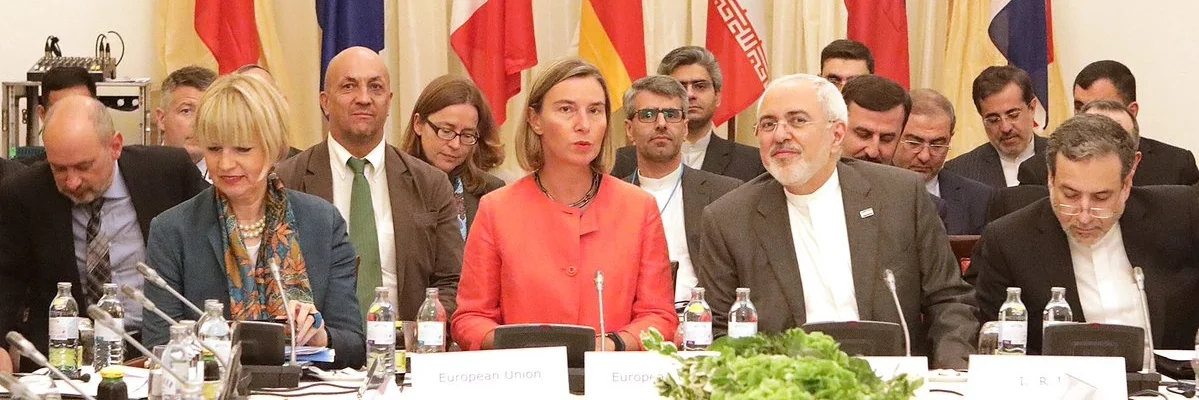
Following two months of rising uncertainty after President Trump decided to withdraw from the nuclear deal despite Iran’s continued compliance with its commitments, the remaining parties to the Joint Comprehensive Plan of Action (JCPOA) assembled in Vienna on Friday. The meeting of foreign minister was convened at Iran's request.
Iranian expectations of the meeting centered on an “economic package” that was to be offered by Europe—with the support of Russia and China—to keep Iran in the nuclear deal. As Iranian foreign minister Javad Zarif made clear in a tweet prior to the meeting, in the view of Iran, “sanctions and JCPOA compliance are mutually exclusive.” In short, if Europe, Russia, and China are to expect Iran to remain committed to the nuclear deal, they must neutralize the negative effects of US secondary sanctions.
Up until last week the foremost concern had been whether Iran would be able to maintain viable banking channels in the face of a more aggressive US sanctions posture, especially given the limited progress that had been made in reintegrating Iran into the global financial system since Implementation Day. Yet, the announcement that the US would not be providing significant reduction exceptions to allow Iran’s oil customers to maintain their imports when sanctions return in November, will prove Iran’s most significant challenge. Iran relies on oil exports for 40 percent of government revenue.
Iran engaged in expectation management regarding the package ahead of the meeting, perhaps indicating that the Rouhani government has finally learned the consequences of overselling the economic promises made during JCPOA-related talks. The president’s office released two statements Thursday evening indicating that Rouhani had held phone calls with his German and French counterparts. Most pointedly, Rouhani told Macron that the economic package prepared by Europe "does not include all of [Iran's] demands,” but that Iran remained hopeful that the joint commission meeting would help fill the gaps.
In this way, Friday’s meeting of the joint commission was cast as a test for the French, German, British, Russian, and Chinese diplomats. Would the diplomats be able to develop the necessary economic countermeasures to keep Iran in the deal? Would they be able to show concrete progress on the positive commitments that had been made in the days following Trump’s withdrawal? When drafting the JCPOA, the diplomats had relegated the economic aspects of the deal to an annex, where implementation languished on all sides, slowing trade and investment, until Trump made his fateful decision—was it too much to expect practical solutions to emerge now?
In this context, the joint statement released by the European External Action Service and EU High Representative Federica Mogherini, who chaired the ministerial meeting, was underwhelming. The statement reiterated that “in return for the implementation by Iran of its nuclear-related commitments, the lifting of sanctions, including the economic dividends arising from it, constitutes an essential part of the JCPOA.” As part of this commitment, the statement “affirmed” the commitment of the participants to measures focused on the “promotion of wider economic and sectoral relations with Iran” as well as “the preservation and maintenance of effective financial channels.” Most importantly given Trump’s declared intention to drive Iran’s oil exports to zero, the participants affirmed their intention to defend “Iran’s export of oil and gas condensate, petroleum products and petrochemicals,” among other areas of economic intervention.
The statement was comprehensive in detailing the areas in which Iran wishes to see concrete measures taken, but it did not provide much greater detail than similar statements issued in the weeks immediately following Trump’s withdrawal of the deal. Besides noting that “that the EU is in the process of updating the EU ‘Blocking Statute’" and "the European Investment Bank’s external lending mandate to cover Iran”—two measures first announced in May—no specific tactics were declared in the statement. Of course, it would be a mistake for parties to the JCPOA to reveal their proposed countermeasures too soon, as this would invite American authorities to find ways to undermine them. Yet, nothing in the statement itself seemed to dissuade those hoping for meaningful solutions from a sense of disappointment.
It was therefore notable that Zarif very proactively shared a positive assessment of the meetings upon their conclusion. On one hand, Iran’s foreign minister showed trademark deference to Iran’s other power-brokers, telling reporters that the proposal presented to Iran—“not precise and not a complete one”—should be implemented before the next round of US sanctions come into force in August and that it “is up to the leadership in Tehran to decide whether Iran should remain in the deal” on the basis of this implementation.
Yet, speaking to Iranian media, Zarif highlighted his satisfaction that the parties to the JCPOA, including three “close allies” of the United States, had remained firm in their desire to withstand US pressure. He also highlighted in these interviews and in subsequent tweets that the discussions were “moving in right direction on concrete steps for timely implementation of commitments.” He was remarkably upbeat.
That Iran had achieved a political success was made clear as French foreign minister Jean-Yves Le Drian told reporters that the parties to the deal were trying to deliver an economic package “before sanctions are imposed at the start of August and then the next set of sanctions in November. He added, “ For August it seems a bit short, but we are trying to do it by November.” Le Drian also implored Iran to “stop threatening to break their commitments to the nuclear deal," a statement that may have been taken to undercut the French willingness to help Iran achieve an economic package.
But on the contrary, such as statement proves that Iran retains leverage in the negotiations. Whether signaling the resumption of enrichment activities or the closure of the Strait of Hormuz, a coordinated messaging campaign by the Rouhani administration, which includes public statements by Rouhani himself, by Zarif, by Iran’s atomic energy chief Ali Akbar Salehi, and even by IRGC Quds Force commander Qasem Soleimani, has served to remind the world powers of the significant consequences should Iran withdraw from the deal. The assembled foreign ministers were clear that an economic package is the desired political outcome because they need Iran to remain in the deal. Zarif got what he needed from the ministerial meeting. Two months following Trump’s abrogation of the nuclear deal, the remaining parties to the agreement proved able to present a consensus position on the need to protect Iran’s economic interests in direct contradiction of the declared US policy.
Moreover, while headlines from the likes of Reuters and Bloomberg heralded “no breakthroughs” and “unresolved” issues given the unspecific statement, Zarif’s positive assessment speaks to the fact that Iran was given some indication during the proceedings of what Wall Street Journal reporter Laurence Norman referred to as “real work and genuine ideas” to help Iran both on the banking challenges and the preservation of the all-important oil exports. To this end, Zarif made clear that progress on implementation would follow “direct bilateral efforts.”
It is important to note that the ministerial meeting was far from the only diplomatic or technical dialogue in which Iran has participated since the survival of the nuclear deal was plunged into doubt by Trump’s violation in May. In just the last week, President Rouhani held successful official visits to Switzerland and Austria, two longstanding trading partners. This follows, an important official visit by Rouhani to China, as well as working-level dialogues in France, Sweden, Belgium, the Netherlands, and the United Kingdom. These meetings have included officials from the Central Bank of Iran, Ministry of Industry, and Ministry of Transportation among executives from state and private sector enterprises. It is these bilateral exchanges, not joint commission dialogues, which have given Iran a more precise indication as to how its economic interests might be protected.
The fact that Iran is back under US secondary sanctions is a failure of multilateralism. But Iran has now recognized that the solution to this failure will not be found in a multilateral format. Whether looking to the European Union or the JCPOA parties, the need to generate politically driven consensus on economic countermeasures will prove cumbersome. As noted by Eldar Mamedov, even the European Parliament is an arena prone to “sabotage." Mamedov, a parliamentarian, illustrates this fact by recounting recent efforts to block the European Investment Bank’s mandate to fund projects in Iran.
A Bourse & Bazaar white paper published in January on the “economic implementation of the nuclear deal” correctly diagnosed that “the joint commission itself is poorly suited to conduct [economic] coordination given the divergent views” of its parties on “matters of sanctions and economic implementation.” In recognition of this fact, the paper recommended that the “European External Action Service (EEAS), which has taken the mantle of leadership on the nuclear deal since the change in American administrations, would be well positioned to convene… a new multi-agency commission for economic implementation, formed in accordance with European commitments under the JCPOA,” In effect, the paper envisioned a joint commission-type body specifically for economic matters. While the joint commission convenes foreign ministers and their diplomatic teams, an economically focused commission would seek to convene economic ministers and their technical staff.
Such a proposal would seem to be supported by the particularly strong stance taken by French economic minister Bruno Le Maire on the need for France to defend its economic interests in Iran in the face of US secondary sanctions. From the Iranian perspective, the inclusion of Laya Joneydi, Iran’s well-regarded vice president for legal affairs, in Iran’s delegation to the joint commission meeting was a positive step, in part because, as noted by Adnan Tabatabai, it was refreshing to see an Iran represented by a female official.
Yet, it is probably the case that convening technocrats into a multilateral format would only serve to limit their effectiveness in the near-term. The political limitations faced by nuclear experts Salehi and US secretary of energy Ernest Moniz during the JCPOA negotiations offers a compelling case study. The Rouhani administration is now aware that given the limited timeframes, Iran’s will need to assemble a patchwork of solutions from various countries, particularly by expanding focus beyond France, Germany and the United Kingdom to seek direct cooperation with a wider ranger of EU member states. Based on institutional and economic factors, some countries will be better able to devise solutions on oil imports, others on banking channels, and others on insulating their multinational corporations or promoting their SMEs. To underscore the point, even the revival of the blocking regulation, a piece of EU law, will depend on the individual implementation and enforcement of member states. When it comes to technical matters and economic implementation, only bilateral dialogues can really deliver.
But if Rouhani and Zarif have learned the limitations of the joint commission and how to work within those limitations, they must also recognize their own limitations. It is impractical for the majority of outreach on the economic package to depend on Zarif and Iran’s foreign ministry. While the lion-like Bijan Zanganeh ably leads the oil ministry, there is a glaring lack of leadership in key bodies such as Iran’s central bank, ministry of economic affairs, and ministry of industry. Both Rouhani and his first vice president Ehsaq Jahangiri have been signaling for several months that a cabinet reshuffle may be on the cards. The politicking behind such a reshuffle is complicated, as parliament would need to confirm new ministers, opening Rouhani to a new round of attacks. But the urgency of new leadership could not be clearer.
If Iran is to succeed in “direct bilateral efforts” to ensure the implementation of an economic package, it must be able to send capable ministers to Europe, Russia, China, and other trading partners to meet with their counterparts in these critical coming months. Zarif can certainly craft a conducive political environment, as evidenced by the positive joint commission outcome, but the foreign ministry cannot orchestrate the defense of Iran’s economy singlehandedly, if for no other reason than the fact that when it comes to the economy, internal challenges greatly outnumber the external ones which Iran's diplomats can reasonable consider within their domain.
Iran demonstrated real savvy in defining the outcome of the joint commission meeting. No longer seeking to unsatisfactorily bend political commitments into practical solutions for its longstanding economic problems, the Iranian delegation proved willing to aptly designate matters of implementation to the numerous bilateral dialogues currently underway. This allowed a relatively positive political outcome to be taken on its own terms, especially with an Iranian audience in mind. If the Rouhani administration can assemble the right teams for these bilateral exchanges, the vital economic package can still be delivered upon. Hope persists.
Photo Credit: EEAS