

New Trump Admin Channel for Iran Humanitarian Trade Comes With a Killer Catch
◢ The Treasury Department has announced that it will operationalize a financial channel to facilitate humanitarian trade with Iran, after privately acknowledging to European officials that recent sanctions imposed on the Central Bank of Iran (CBI) risked encumbering trade in food and medicine. But the new channel may cause more problems than it solves.
The Treasury Department has announced that it will operationalize a financial channel to ease humanitarian trade with Iran, after acknowledging to European officials that recent sanctions imposed on the Central Bank of Iran (CBI) risked encumbering trade in food and medicine.
The channel, which was originally expected to become operational in February 2019, was first was first proposed by the Swiss government in the aftermath of the Trump administration’s reimposition of secondary sanctions on Iran in November of last year.
Switzerland is a leading exporter of pharmaceutical products to Iran. The Swiss government had sought to safeguard its bilateral trade by seeking legal clarity from the Treasury Department on behalf of Swiss banks. But the National Security Council, then led by John Bolton, blocked its operationalization despite support for the channel within the State Department.
The new announcement expands the scope of the channel to include any American or foreign financial institution engaged in humanitarian trade with Iran. This expanded scope and the timing of the move likely reflect concerns over the impact to humanitarian trade resulting from the Trump administration’s move to designate Iran’s central bank under a terrorism authority. That sanctions designation eliminated a long-standing exemption permitting a role for CBI in trade in food and medicine.
Over the last few weeks, European multinationals involved in the sale of humanitarian goods to Iran have been scrambling to understand the impact of the new designation on CBI. The Treasury Department failed to issue guidance in the aftermath of the designation to inform changes to compliance policies.
In particular, European companies engaged in the sale of food and pharmaceuticals were unclear as to whether the reliance of their customers on foreign currency allocations made by the Central Bank of Iran constitutes exposure to the new designation. Bourse & Bazaar contacted treasury managers and compliance officers at six European multinational companies in the days following the designation of the central bank. All refused to provide comment, but confirmed that the new sanctions had triggered internal reviews.
The move to finally launch the humanitarian channel appears to be an attempt to manage the unintended consequences of CBI’s terrorism designation. Over the last few weeks, European officials raised concerns with American counterparts about the impact of humanitarian trade. Speaking on background, a European official confirmed to Bourse & Bazaar that U.S. officials had described the launch of the humanitarian channel as a way to assuage those concerns.
Under the new framework, financial institutions which accept payments related to the sale of food and medicine to Iran will be permitted to “seek written confirmation from Treasury that the proposed financial channel will not be exposed to U.S. sanctions.” For years, European banks have sought “comfort letters” from the Office of Foreign Assets Control (OFAC) for humanitarian trade. It has been OFAC policy not to provide such letters and humanitarian transactions are not eligible for the licensing process due to the exempt nature of the trade. In this regard, the new framework represents a significant shift in policy.
But the new framework may introduce more problems than it solves. In order to receive such comfort letters, the financial institutions must undertake an enhanced due diligence process, reporting to Treasury “a great deal of information on a monthly basis.” The due diligence requirements go far beyond what has been considered the industry standard process for companies engaged in trade with Iran. Considering the significant costs and administrative burdens of such reporting, the requirement will likely limit the uptake of the new framework to those financial institutions engaged in the greatest volume of humanitarian trade with Iran.
The reporting requirements will also raise concerns among Iranian banks. Among the information requested by the Treasury Department are the “monthly statement balances with the value, currency, and balance date of any account of an Iranian financial institution” held at the foreign bank and used for humanitarian trade.
Concurrently with its announcement of the new channel, the Treasury Department identified Iran as “a jurisdiction of primary money laundering concern under Section 311 of the USA PATRIOT Act.” As Tyler Cullis warned in Bourse & Bazaar in July, this move could independently have a devastating impact on humanitarian trade:
Under the proposed rule, US banks would be required to undertake “special due diligence” with respect to correspondent accounts maintained on behalf of foreign financial institutions. Such “special due diligence” does not require that US banks close the accounts of foreign banks that themselves maintain accounts for Iranian banks so long as such banks do not permit Iran indirect access to the US correspondent account. But US banks are unlikely to narrowly tailor their conduct to the precise nuances of law and will show reluctance to continue banking foreign correspondents that themselves bank Iran. As a result, European banks that maintain accounts on behalf of Iranian financial institutions are likely to take steps to shutter such accounts so as to sustain their own accounts at US banks.
It is unclear whether companies can opt not to seek comfort letters through the new framework. Some financial institutions may prefer to maintain trade without the additional legal clarity as they have done since the reimposition of secondary sanctions last year, relying on the existing general licenses issued by the Treasury Department to permit humanitarian trade.
But the Treasury Department’s pursuit of “unprecedented transparency into humanitarian trade” and its allegations of Iran’s use of “so-called humanitarian trade to evade sanctions and fund its malign activity,” may see Trump administration officials pressure companies to use the new framework, requiring disclosures of sensitive financial information that will be unacceptable to Iranian banks and companies wary of U.S. intentions. The Trump administration’s latest gesture to ease humanitarian trade may end up doing just the opposite.
The Treasury Department’s announcement may be intended to pre-empt next week’s launch of a major report from Human Rights Watch that is expected to show significant failures on the part of the United States to safeguard humanitarian trade in accordance with its own sanctions policies. The administration continues to claim that its “unprecedented economic pressure” is “not directed at the people of Iran.”
Photo: IRNA
With Bolton Gone, Iran Must Seize Opportunity for De-Escalation
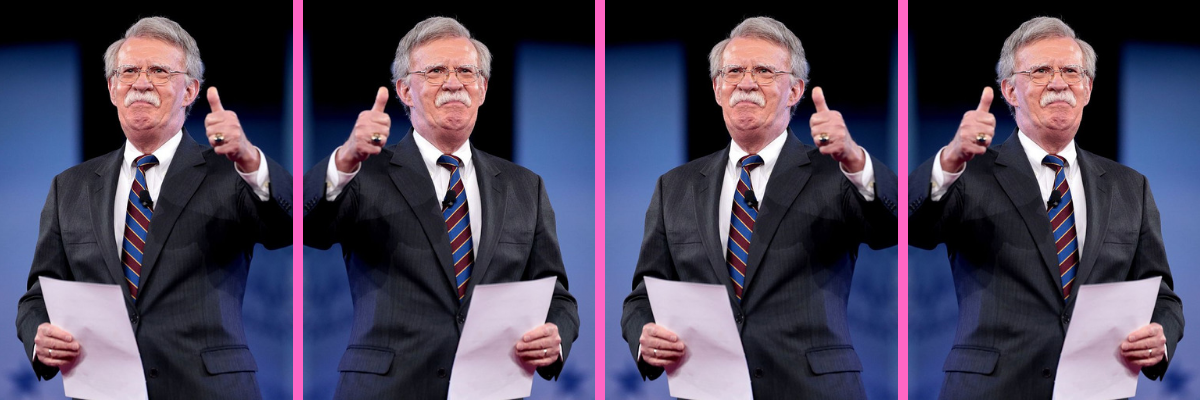
◢ John Bolton doggedly pursued maximum pressure, pushing aside the concerns expressed the secretary of state, secretary of treasury, military leaders and intelligence officials alike. While Trump’s antagonism towards the Iran nuclear deal predates his appointment of Bolton, the transformation of the Trump administration’s Iran policy into one of “economic war” was nonetheless dependent on Bolton’s ideological fixations.
The news that Trump has fired John Bolton—though the former national security advisor insists he resigned—will be well received in Tehran. Iranian foreign minister Javad Zarif had taken to branding Bolton as a member of the “B-Team”—alongside Israel’s Bibi Netanyahu, Saudi Arabia’s Mohammad bin Salman, and the UAE’s Mohammad bin Zayed—as a group that had been gunning for war in the Middle East. Iranian officials saw Bolton as a spoiler for diplomacy, a perception borne out by reporting on his role shaping and sharpening the Trump administration’s Iran policy over the last year.
Bolton’s ouster represents a real opportunity for the Trump administration to walk back from maximum pressure as more pragmatic officials outside the NSC find the space to assert their views once more. Despite the active roles played by the State Department’s Iran envoy, Brian Hook, and the Treasury Department’s undersecretary for terrorism and financial intelligence, Sigal Mandelker, in pushing forward the administration’s uncompromising messaging on Iran, the maximum pressure policy developed because Bolton was able to leverage his unique access to the president. Over the last year, Bolton repeatedly used this access to push the administration’s policy towards the extreme.
In March, Bolton and Pompeo were at loggerheads as to whether the Trump administration should revoke waivers permitting eight countries to continue to purchase Iranian oil on the condition that revenues were paid into tightly controlled escrow accounts. Bolton eventually prevailed. The revocation of the oil waivers in May led to insecurity in the Persian Gulf as Iran threatened the passage of maritime traffic through the Strait of Hormuz in retaliation for the restrictions on their oil exports.
In April, the Trump administration designated the Islamic Revolutionary Guard Corps (IRGC), part of Iran’s armed forces, a “Foreign Terrorist Organization,” in a move that had been debated by administration officials since late 2017, when the U.S. imposed a similar if less severe designation on the IRGC. Once again, Bolton was the key voice in favor of the move, despite the warnings of military and intelligence leaders that such a designation could make American troops in Iraq and Syria targets for retaliation.
In July, Bolton’s NSC advocated the revocation of the waivers which permit civil nuclear cooperation projects critical for the implementation of the JPCOA. European officials feared that the revocation of the waivers would effectively kill the nuclear deal. Trump eventually sided with Treasury Sectretary Steve Mnuchin who argued in favor of renewal, allowing the JCPOA to limp along.
Later that month, the Trump administration took the unprecedented step of sanctioning Zarif, despite reports earlier in the month that objections from Mnuchin and Pompeo had staved the move, strongly advocated by Bolton, to designate Iran’s foreign minister. The eventual designation caused an outcry in Iran, uniting figures across the political spectrum in condemnation of the U.S..
At each step Bolton doggedly pursued maximum pressure, pushing aside the concerns expressed the secretary of state, secretary of treasury, military leaders and intelligence officials alike. While Trump’s antagonism towards the Iran nuclear deal predates his appointment of Bolton, the transformation of the Trump administration’s Iran policy into one of “economic war” was nonetheless dependent on Bolton’s ideological fixations and mastery of the interagency process, qualities of which he has bragged.
Earlier this summer, several U.S. officials relayed to me their concern that the Trump administration’s Iran policy increasingly consisted of steps that created political costs for the United States—straining relationships with allies in Europe while deepening rifts with adversaries like China—while adding little meaningful economic pressure on Iran. The departure of Bolton may come as a relief to many of the career officials in the State and Treasury Departments who felt a growing incoherence—and their own irrelevance—in the administration’s policy.
It is certainly possible that President Trump will name another hawk to the role—there is no shortage of national security professionals in Washington wary of Iranian power—but it is highly unlikely that the replacement will have such a strong fixation on maximum pressure for its own sake. It is also unlikely that the new national security advisor will be as effective as John Bolton in working the bureaucratic machine of the White House.
In the hours following Bolton’s departure, Mnuchin insisted that the administration will maintain its maximum pressure campaign on Iran. But the need for that insistence is itself reflective of the opportunity now presented for the administration to slowly rollback aspects of its maximum pressure campaign and for Iran to offer the Trump administration a credible path to de-escalation.
With Bolton out, the prospects of direct talks between the US and Iran on the sidelines of the United Nations General Assembly later this month have certainly improved—Trump repeated his interest in meeting Iranian president Hassan Rouhani the same day he fired Bolton. But even if that remains a bridge too far for the Rouhani administration, who may consider it too risky to negotiate Trump in a moment of flux, there are more practical gains to be had. The simple restoration of the oil waivers, perhaps in accordance with the proposal advanced by French president Emmanuel Macron, could see Iran cease the resumption of uranium enrichment activities as part of its reduced compliance with the JCPOA.
Iran’s political predicament and economic pains are not John Bolton’s fault. But Bolton consistently pushed U.S. policy in directions that were perceived by Iranians as “war by other means.” Over the last few months, Iran has responded in kind. Bolton’s departure therefore is a useful reminder that while conflict may have structural roots—it is only as inevitable as the selection of a warmonger as national security advisor.
Photo: Wikicommons
Trump’s NSC ‘Blocks’ Swiss Effort to Ease Iran Humanitarian Trade
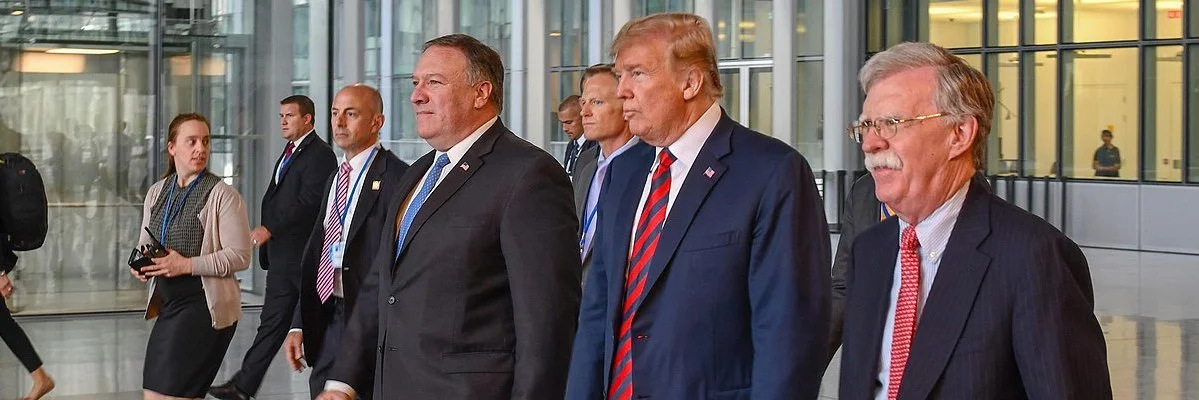
◢ Last year, the Swiss government opened negotiations with the Trump administration to ensure that Switzerland’s significant sales of pharmaceutical products and medical devices—technically exempt from U.S. sanctions—could continue unimpeded. But the National Security Council has so far prevented the Swiss effort to ease trade in food and medicine in a remarkable subversion of longstanding U.S. protections for humanitarian trade with Iran.
In November of last year, as the Trump administration reimposed secondary sanctions on Iran and embarked on its “maximum pressure” policy, the Swiss government opened discussions with the Treasury and State Departments to ensure that Switzerland’s significant sales of pharmaceutical products and medical devices—technically exempt from U.S. sanctions—could continue unimpeded.
But the hardline sanctions policy being pushed by the National Security Council has so far prevented a Swiss effort to ease trade in food and medicine in a remarkable subversion of longstanding U.S. protections for humanitarian trade with Iran.
According to Swiss customs data, in 2017 Switzerland exported CHF 236 million in pharmaceutical products to Iran. Last year, the total fell to just CHF 164 million, hampered by both the Trump administration’s withdrawal from the Iran nuclear deal and volatility in Iran’s foreign exchange market. In the first half of this year, exports have totaled CHF 79 million.
European companies engaged in trade with Iran have become adept at finding payment solutions in the absence of normal correspondent banking. Some European and Swiss banks continue to process Iran-related transactions for sanctions-exempt trade, particularly for large clients with longstanding commercial relationships in Iran.
But when trade manages to flow despite the direct and indirect effects of sanctions, it is often with higher transaction costs for all parties, which are then passed onto the consumer. Additionally, many advanced therapies or specific medical devices are produced by smaller Swiss companies, which do not have the same capacity as major Swiss pharmaceutical firms to find alternative payment solutions to sustain their trade with Iran. Hidden in the trade data is the reality that specific medications are not being sold to Iran as reliably, contributing to the shortages that have compromised the treatment of many of the most vulnerable Iranians, particularly those with chronic illnesses.
In light of such challenges, which were first experienced under Obama-era sanctions, the Swiss government entered into discussions with the Trump administration, seeking additional clarity for Swiss banks engaged in humanitarian trade around “two key challenges.” As described by a Swiss official to Bourse & Bazaar, the Swiss government was seeking “some sort of ‘certainty’ for banks involved [in humanitarian trade with Iran] so that they will not be excluded from the US market.” Additionally, the Swiss government was hoping to provide their banks clarity on the permissibility of “the transfer of Iranian-origin funds into the Swiss accounts” when Iranian importers pay Swiss importers for humanitarian goods.
Early discussions proceeded quickly, not least because the Swiss were seeking to reinstate a compliance model that had been used by the Treasury and State Departments before, during the period in which the Obama administration was tightening its secondary sanctions on Iran. In late January, several reports indicated that the payments channel had become operational—that was incorrect. Despite delays, Swiss officials believed they were in the “final stages” of launching the payment channel in February. They too were mistaken.
Six months on, the Swiss government and Swiss banks have yet to receive any meaningful clarity from the Trump administration on their proposed channel for humanitarian trade. As NBC’s Dan de Luce reported in March, administration officials were still debating “a proposal from Switzerland to set up a humanitarian payment channel that would encourage Swiss banks to handle sales of medicine, medical devices and other items to Iran without fear of violating U.S. sanctions.”
Importantly, what the Swiss are proposing is entirely consistent with existing U.S. sanctions laws and does not seek to undermine secondary sanctions powers. The Swiss approach does not entail the creation of a special purpose vehicle in the manner of INSTEX, the company established by the French, German, and U.K. government to support their sanctions-exempt trade with Iran. The INSTEX project was itself launched after the Trump administration rejected a request by the E3 governments for expanded waivers covering humanitarian trade.
European officials with knowledge of the Swiss negotiations tell Bourse & Bazaar that while officials at the State Department and Treasury Department had quickly understood the intention and importance of the Swiss request and moved to provide the requested assurances, the necessary administrative actions were later “blocked” by officials at the National Security Council, which has taken an unusually active role in sanctions policy in this administration.
The debate over the Swiss humanitarian trade mirrors similar disagreements among key administration officials about the reasonable limits of the Trump administration’s maximum pressure campaign. Led by John Bolton, the NSC has taken the same hard stance in debates around the revocation of the oil waivers permitting controlled exports of Iranian oil, around the sanctions designation of Iran’s Islamic Revolutionary Guard Corps (IRGC), and around the partial revocation of waivers that permit civil nuclear projects central to the non-proliferation commitments of the JCPOA.
Earlier this week, the State Department published a video in which Special Envoy for Iran Brian Hook sought to dispel several “myths about sanctions that continue to be promoted by the Iranian regime,” including “myth” that sanctions target humanitarian trade. Back in December of last year, the State Department provided a supportive statement to the Financial Times in response to questions about the Swiss payment channel, declaring: “We understand the importance of this activity since it helps the Iranian people. It has never been, nor is it now, U.S. policy to target this trade.” Officials at the NSC apparently disagree.
Photo: Wikicommons
Why The Iran Nuclear Deal Still Matters for Europe
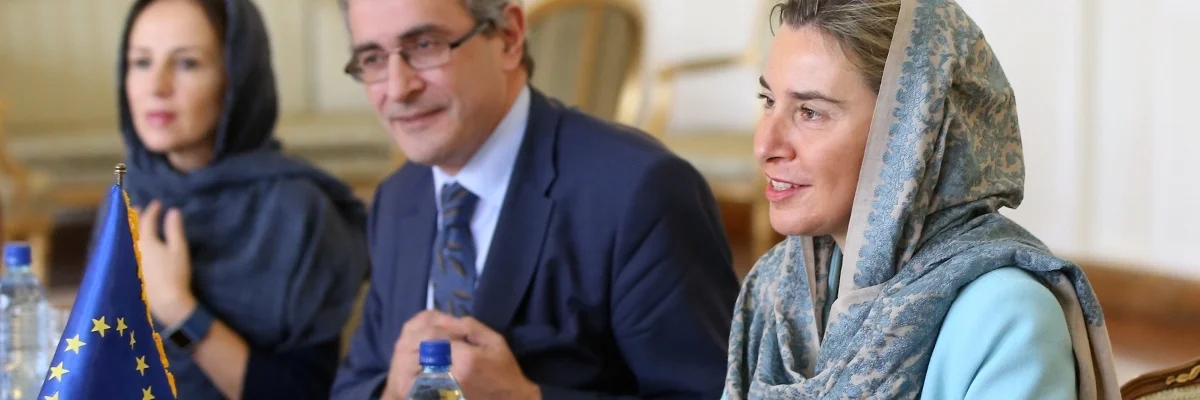
◢ The JCPOA continues to hang together—but only just. There are growing indications of signatory states’ fatigue and frustration in attempting to prevent the collapse of the JCPOA, following the US withdrawal from it last May. In this climate, it is important for the deal’s stakeholders to remember why it remains valuable
Three years ago, Iran and global powers implemented the Joint Comprehensive Plan of Action (JCPOA), curtailing the country’s nuclear weapons program in exchange for sanctions relief. The deal continues to hang together—but only just. There are growing indications of signatory states’ fatigue and frustration in attempting to prevent the collapse of the JCPOA, following the US withdrawal from it last May. In this climate, it is important for the deal’s stakeholders to remember why it remains valuable:
The JCPOA is the product of more than a decade of negotiation. The West worried that Iran’s expanding nuclear programme posed a major nuclear proliferation risk. Most troublingly for Europe, there was a possibility that the United States, Israel, or both would launch military attacks on a country of 80 million people. After the invasions of Afghanistan in 2001 and Iraq in 2003, Europeans wanted to avoid further instability in their neighborhood.
The JCPOA is imperfect for all sides. But it centers on a political compromise that addresses the core concerns of both Iran and P5+1 (the US, France, the United Kingdom, China, Russia, and Germany). According to US estimates, the JCPOA increased the period it would take Iran to create a nuclear bomb – its “break-out time” – from two or three months to roughly one year. In return, Tehran received relief from UN, EU, and US nuclear-related sanctions. Although the US has reimposed the sanctions it originally lifted under the JCPOA, the UN and the EU have refrained from doing so.
Under the JCPOA, Iran shipped out 98 percent of its enriched uranium; capped its level of uranium enrichment at 3.67 percent; removed two-thirds of its installed centrifuges; agreed to convert Fordow enrichment plant into a research facility; redesigned the Arak heavy water reactor; and provided international inspectors with broader access to its nuclear facilities. (For more on this, see ECFR’s JCPOA explainer.)
The International Atomic Energy Agency (IAEA), which oversees the JCPOA, has produced more than ten reports verifying that Iran continues to comply with the deal. The country has done so despite President Donald Trump’s abrogation of US responsibilities under the deal. Trump did so despite the US intelligence community’s confirmation of IAEA conclusions on Iranian compliance.
Besides its nuclear benefits, the JCPOA created a political opening for the West and Iran to gradually ease their mutual hostility on the nuclear issue – and to perhaps work towards eventually normalising their relationship.
This normalisation is an outcome that Iran’s foes in the Middle East fear most. Thus, Israel and Saudi Arabia have stepped up their efforts to precipitate the collapse of the JCPOA. The United States’ withdrawal from the deal and “maximum pressure” campaign—as Trump calls it—is a gift to both this camp and to hardliners in Tehran, all of whom seek to undermine relations between Europe and Iran.
Europe faces growing pressure from the US, Israel, and Saudi Arabia to downgrade its ties with Iran at all levels and jump onto the maximum pressure bandwagon. The summit on the Middle East (which will reportedly focused on Iran) that the US and Poland plan to host in Warsaw next month forms part of this strategy to drive a wedge between Europe and Iran.
Until now, despite the difficulties facing the JCPOA, mounting US pressure, and recent strains on relations with Iran, European governments and the EU have continued to engage with Tehran. Europe’s strong political commitment to the nuclear deal, not least through its promise to create a special purpose vehicle (SPV) designed to facilitate trade with Iran, is one of the key factors in the country’s adherence to the JCPOA.
Given the severity of the latest US secondary sanctions, Iran is likely to only continue complying with the nuclear deal if Europe, China, and Russia provide it with far more tangible reasons for doing so. There are growing signs that Iran’s patience will not last forever, especially given that its oil sales, a critical source of revenue for the country, have reportedly fallen by almost 60 percent since the US reimposed its sanctions.
Ultimately, all signatories to the JCPOA recognise that it will only fully function once the US re-engages with it in some fashion, at least easing its secondary sanctions on foreign firms that do business with Iran. Until then, Europe must maintain its efforts to hold the JCPOA together. This will require the registration and operationalisation of the SPV (while genuine work on the measure is under way, it is reportedly still weeks away from completion). China must also do its part to address the recent decline in trade with Iran rather than waiting to see whether it can benefit from a European SPV.
The collapse of the JCPOA would create a real risk of further military conflict in the Middle East. Indeed, influential figures in the Trump administration, especially National Security Advisor John Bolton, have long advocated a US military operation against Iran. As recent history suggests, such an intervention would come at a high cost for Europe – and it is an outcome that Europe must do all it can to avoid.
Photo Credit: IRNA
The Iran Deal is Dead, Long Live the Iran Deal
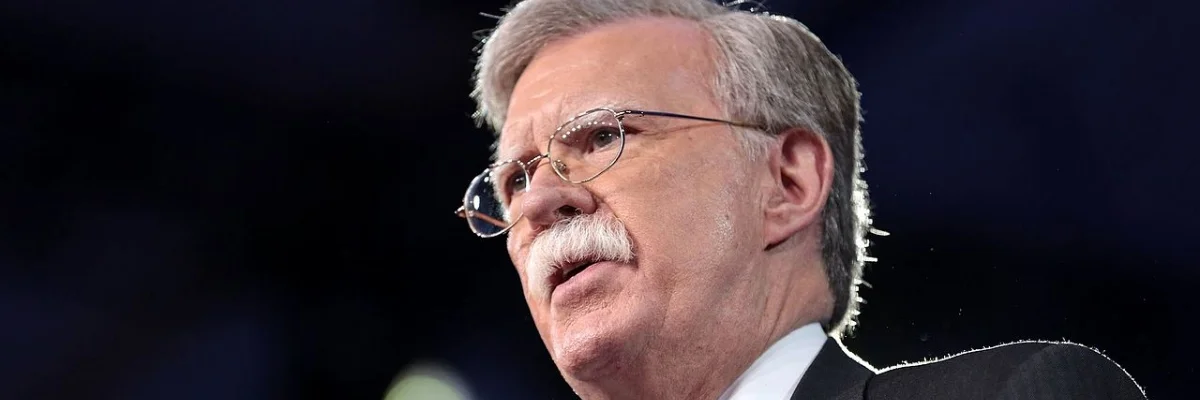
◢ John Bolton's appointment as Trump's new national security advisor likely spells the end of the JCPOA as we know it. Bolton is a vocal opponent of the deal and seeks military confrontation with Iran.
◢ But while Trump may finally nix the Iran Deal, he will cannot impede the forces that brought it into existence. In the long run, Iran's geopolitical significance and need for engagement will outlast Trump and keep Iran at the table alongside reasonable actors in the international community.
This article was originally published in LobeLog.
With the news that John Bolton will be Trump’s new national security advisor, the death of the Iran Deal is all but assured. Bolton has vocally advocated for war with Iran, which he sees not as an option of last resort but as the only appropriate course of action.
Add to Bolton’s hiring the impending arrival of Mike Pompeo as Trump’s new secretary of state and it is clear that the president will have no shortage of cheerleaders for his more destructive impulses. It is almost impossible to see how Trump would do anything other than fail to renew sanctions waivers and effectively withdraw from the Iran Deal on May 12.
The sudden ascendency of Bolton and Pompeo has also exposed how poorly the governments of France, Germany, and the United Kingdom have handled their negotiations with the Trump administration on a “fix” for the Iran deal. By seeking to appease Trump by extracting greater concessions from the Iranians on security matters clearly outside the bounds of the Joint Comprehensive Plan of Action (JCPOA), the Europeans have exposed their weakness, degraded trust with the Iranians, and wasted valuable time negotiating with administration officials who have since left their positions.
Even if by some miracle Trump were to once again waive sanctions in May, the politicization of the Iran deal is so complete that the waivers themselves will cease to have real meaning. The evidence is clear that the current posture of the Trump administration towards Iran, now turning towards an even more hostile stance, has been sufficient to dissuade the majority of possible trade and investment in Iran.
Moreover, Trump’s Treasury Department has failed to issue a single new license for commercial activities in Iran to date. Sanctions attorneys note that even applications that would have been “no-brainers” in the Obama years are currently being denied under Trump. The Office of Foreign Assets Control (OFAC) has long been staffed by pragmatic civil servants whose commitment to sanctions enforcement was based on the creation of a predictable and clear regulatory environment. Today, however, the letter of the regulations no longer suffices to determine the permissibility of commercial activities in Iran.
By any conventional assessment, then, the Iran deal is dead. But what conventional analysis fails to recognize is that the Iran deal cannot be killed. The JCPOA is not merely an arms control agreement or a pact that sought to deliver sanctions relief. It is a historic acknowledgement of several undeniable truths about Iran and its place in the world.
The first truth is that Iran is a mighty geopolitical actor. Despite the recent claims of Saudi Crown Prince Mohammad bin Salman to the contrary, Iran does not need a large military force or diplomatic clout to carry weight in the international system. Accidents of geography (such as the keystone position between Europe, Russia, and China) and accidents of history (such as the legacy of the Iraq war) have only served to increase the strategic position of Iran in the Middle East and within the larger Eurasian landmass. The collapse of the Iran deal will do nothing to change these geopolitical realities, and the necessity for Europe, Russia, and China to continue to engage Iran may even be heightened should the United States return to a pronounced confrontational stance.
The second truth is that an increase in Iran’s international engagement is a reliable bet. Demographic and economic factors are necessarily pushing Iran towards greater diplomatic and economic outreach. Whereas a foreign policy of engagement was once the begrudging choice of a revolutionary government, today engagement is a political necessity driven by structural factors. The eighteenth largest economy in the world cannot grow larger in any manner other than through greater international trade and investment. Cognizant of this, Iranians overwhelmingly support greater engagement with the international community because they believe such trade and investment will improve their livelihoods.
Moreover, the Iranian people are now their own ambassadors to the world, linked to the international community in the digital domain. Although the nuclear deal may seem like the creation of the Rouhani administration, and in particular the brainchild of Javad Zarif, the impulse that drove Iran’s government to seek a win-win agreement at the negotiating table derives from the aspirations and ambitions of the Iranian people, whose resilience will outlast the collapse of this particular agreement. Washington may sow uncertainty, but in the inertia of these forces a kind of certitude will persist. These forces will outlast Trump, as they will outlast their opponents in Iran as well.
The third truth is that the United States has little leverage over Iran. The debate over the viability of the Iran deal in the face of a U.S. withdrawal overstates the importance of American policy as a strategic consideration for Iran. On one hand, the deal’s collapse, and the costly snapback of sanctions, precipitated by the U.S., would suggest that Trump retains great power to constrain Iran. But seen another way, the debate around the deal shows that the JCPOA is the sole mechanism through which the United States currently enjoys substantial leverage over Iran. The U.S. had so successfully isolated Iran in the sanctions period that the creation of the JCPOA represented a rare instance in which it increased its leverage. When Trump withdraws from the agreement, he will remove his only “free” means to seek changes in Iranian behavior. The remaining options, mostly military options, will come at a great toll to the United States.
Trump is old and has a few years left in his term. The forces that brought the JCPOA to fruition may have been interrupted by his erratic governance and distorted worldview, but those forces will certainly outlast him. The imminent demise of the Iran deal should not obscure the fundamental reality of what the JCPOA was—a reminder to the international community that it must deal with Iran and that dialogue can be fruitful if conducted on the basis of trust and mutual goals. Even if the JCPOA falls apart, the lesson cannot be dismissed.
There remain reasonable actors in Europe, Russia, China and the wider international community who understand that they will need to continue constructively dealing with Iran in many arenas. There are many more “Iran deals” to be struck, in politics and commerce, both big and small. For the many hundreds of potential deals Trump will scupper with his actions, thousands more wait to be concluded as a matter of political and economic necessity and through the endeavors of those who still believe in the promise of diplomacy.
Photo Credit: Wikicommons