
New EU Top Diplomat Will Seek Continuity on Iran—if Circumstances Allow
◢ Josep Borrell, the current foreign minister of Spain, is a worthy nominee to replace Federica Mogherini as the EU’s top diplomat. His views on Iran suggest continuity with Mogherini’s pro-engagement policy and willingness to push back on the Trump administration’s unilateralism. But as the crisis over the JCPOA accelerates, the situation Borrell will inherit in a few months may prevent him from keeping the EU engaged in constructive dialogue with Iran.
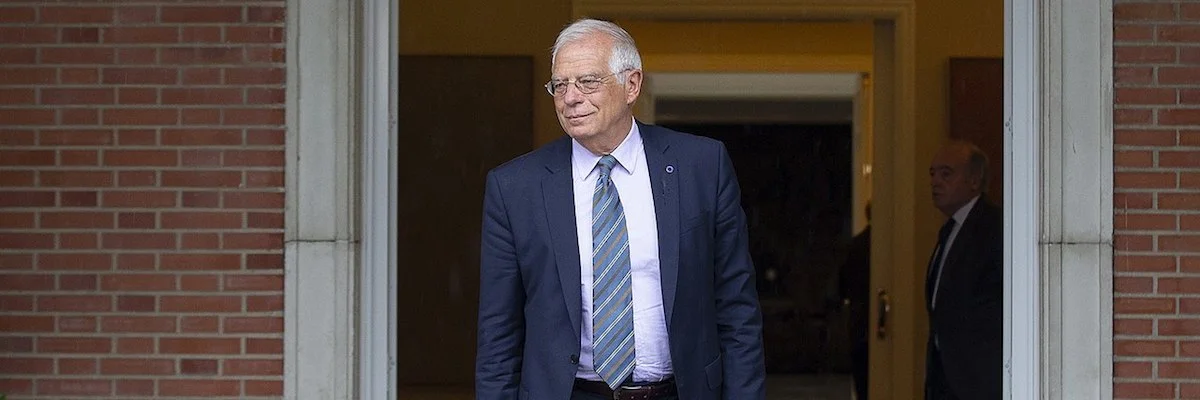
While the recent nominations for European Union’s top posts sparked some controversy, there is broad consensus in Brussels that Josep Borrell, the foreign minister of Spain, is a worthy nominee to replace Federica Mogherini as the EU’s High Representative for foreign policy.
The European Parliament will vote on the new European Commission in October. Prior to that, Borrell—who will also wear the hat of the Commission’s vice-president—will have to face hearings in the Parliament’s foreign affairs committee. These hearings are not a mere formality and nominees have stumbled in the past. But given Borrell’s profile, there is little doubt he will pass muster.
In Borrell’s favor speaks his ample experience in Spanish and European politics. He is a veteran member of the Spanish Socialist party. He honed his skills in Brussels as the president of the European Parliament from 2004 to 2007. Since June 2018 he is the foreign minister of Spain. To both his supporters and detractors, Borrell is known as an intellectual powerhouse. Although some diplomats fret that he may be “too outspoken” for the High Representative role, his directness could help Europe’s foreign policy find a voice that goes beyond bland statements reflecting the minimum consensus between EU member states.
Borrell’s statements made after securing the nomination show that he sees saving the Joint Comprehensive Plan of Action (JCPOA) as an immediate priority for the EU. In comments to the Spanish media, he expressed hope that “sanity will prevail” and that “worst will be avoided” in the brewing crisis following the violation of the nuclear deal by the United States. He stressed that Iran fulfilled its part of the agreement, and that the recent surpassing of the limits of the low enriched uranium are due to “technical reasons”, not Iran’s “will to violate the pact.”
He also criticized the decision of the United Kingdom to detain a tanker carrying Iranian oil—allegedly at the request of the United States—off the coast of Gibraltar. While Borrell’s comments must be understood in the context of the long-running dispute between Madrid and London over the status of Gibraltar, the fact that Spain protested a seizure of a tanker with Iranian oil says as much about its rejection of the extra-territorial American sanctions as it does about its feelings of its sovereignty being infringed by the British.
These are not random views expressed in reaction to particular political events. Rather, they are reflective of Borrell’s broader outlook. The fact that Spain is traditionally one of the EU countries with a pragmatic and moderate view of Iran—a group that also includes Sweden, Finland, Belgium, Austria, Netherlands and, under the previous government, Italy—certainly plays a role. As surely does Borrell’s socialist background. His predecessors in the role of the EU foreign policy chief—another Spaniard Javier Solana, Catherine Ashton, and Federica Mogherini—each hail from this political family and each endeavored to pursue nuclear diplomacy and broader engagement with Iran.
Borrell himself displayed a nuanced understanding of Iran on the occasion of the 40th anniversary of the Islamic revolution in February of this year. In a series of tweets savaged by the right-wing media as “appeasement of the ayatollahs” he noted how Iran’s literacy rates increased since the revolution from 35 percent to 84 percent. He also recognized Iran as a key power in the Middle East, while contrasting the United States’ attitude to Vietnam and Iran, two countries that “inflicted heavy defeats on the super-power in 1970s.” In Borrell’s assessment, while relations with Vietnam are “now excellent”, Iran is still “an obsession of the American government, with no diplomatic relations and Trump’s decision to withdraw from the nuclear agreement and re-impose sanctions.” In conclusion, Borrell stated that Iran “could survive the sanctions if Trump is not re-elected, but, in the opposite case, could re-active its nuclear program and multiply its interventions in the region.”
Such views led some Israeli and Emirati media outlets to accuse Borrell, preposterously, of being “a supporter of the Iranian regime,” conflating his advocacy for a dialogue with Tehran with the defense of its regime—a favorite tactic of those opposed to diplomatic engagement with the Islamic Republic.
Borrell’s views on Iran suggest continuity with Mogherini’s pro-engagement policy. However, the Spaniard will face two serious challenges on this path. First, he must preserve unity among member states facing the Trump administration’s relentless “maximum pressure” campaign. Already, some European states are showing signs that they may be inching closer to Washington, among them Brexiting Britain and the populist-led Italy. Some eastern European countries, like Hungary and Poland, which maintain excellent relations with both the Trump administration and Israeli prime minister Benyamin Netanyahu, may follow suit.
Borrell was outspoken in his steadfast opposition of the United States’ sanctions on Iran. If his previous statements are any guide, he could well be inclined to push back more aggressively against American unilateralism than has been the case until now, but his ability to rally the member states will be tested. Borrell himself pointed to the unanimity rule as a major impediment for the EU to play a more effective international role. One solution could be for a wider group of member states to join,the “E3” countries of Britain, France and Germany and become shareholders in INSTEX, the mechanism devised to support bilateral trade with Iran.
The second challenge Borrell faces has to do with the fact that by the time he assumes his position in November, (provided the European Parliament approves the new Commission), he could well face a scenario very different from today. If Iran does not obtain sanctions relief from Washington, nor economic assistance from the remaining parties to the JCPOA, it may well follow through on its warnings and pursue escalation, whether by reducing its compliance with the JCPOA or by retaliating against American allies in the Persian Gulf.
Even if European governments blame the United States for igniting the crisis, they can hardly be expected to condone continued Iranian non-compliance with its commitments under the nuclear deal. The next couple of months will thus be crucial in determining whether the tensions between America and Iran will de-escalate, or degenerate into military confrontation. For now, piloting the EU through this crisis remains Federica Mogherini’s responsibility. Thus, Borrell’s ability to steer the EU policy on Iran will depend not just on his own views, but also on the nature of the crisis he will inherit.
The views and opinions expressed in this article are those of the author and do not necessarily reflect the positions of the European Parliament.
Photo: Wikicommons
Europe’s SPV Will Be a ‘Rare Victory’ Only if Iran Makes it So
◢ Technical work on Europe’s SPV for Iran trade continues to move forward. Meanwhile, the Iranian government seems content to exercise “strategic patience” as it waits for the new mechanism to come online. But while this patience is commendable, Iran should be taking a much more active role in shaping the SPV to suit its needs.
This article was originally published in Persian in Etemad Newspaper.
In a recent speech, President Rouhani declared that Iran had achieved a “rare victory” insofar as Europe is seeking ways to sustain its trade with Iran in the face of US sanctions. While this may be true in a political sense, practically speaking, the President is declaring victory too soon. Iran should be doing much more to ensure Europe’s efforts result in solutions that can maximize the flow of trade while banking ties remain restricted.
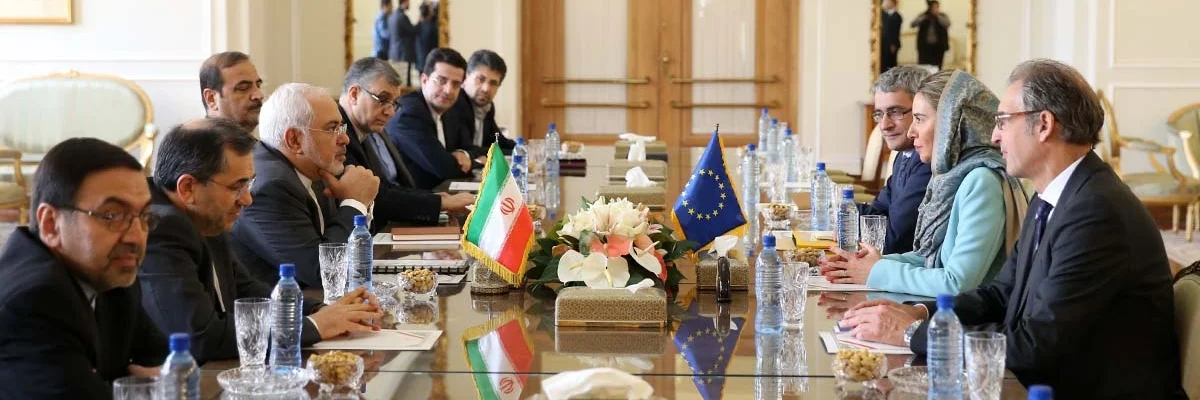
As US sanctions are reimposed, European efforts to sustain trade center on the creation of a new “special purpose vehicle” (SPV) which will serve to reduce the reliance of Europe-Iran commerce on the international financial system. The SPV, which will be owned by a group of European states with strong commercial ties to Iran and will help coordinate the “netting” of Europe-Iran trade, minimizing the need for cross-border financial transactions. There seems to be serious political will. In an interview with the Financial Times, French economy minister Bruno Le Maire expressed his hope that the SPV would evolve into a “real intergovernmental institution that will serve as the financial instrument of Europe’s independence.” The new mechanism “should allow us to trade in any product, with any country, so long as it is in line with international law and Europe’s commitments.”
The necessary technical work is proving complex, but continues to move forward. While the SPV is expected to be legally registered in the next few weeks, it will take more time for the new entity to become fully operational. The Iranian government seems content to exercise “strategic patience” as it waits for the SPV to come online. But while this patience is commendable, Iran should be taking a much more active role in shaping the SPV to suit its needs.
There is a precedent for Iran to take a more active role in implementing new financial mechanisms. When the Joint Plan of Action (JPOA), the precursor to the JCPOA, was agreed on November 24, 2013, Iran received its first round of sanctions relief. This relief included the creation of a channel to facilitate humanitarian-related transactions including trade in food and medicine at a time when strict banking sanctions remained in place.
The OFAC guidelines issued upon implementation of the JPOA outline that the “[foreign financial institutions] whose involvement is sought by Iran in hosting this new mechanism will be contacted directly by the USG and provided specific guidance.” What this means is that Iranian technical assistance was crucial in helping the United States identify the foreign banks that could facilitate humanitarian trade if given the proper assurances.
Today, same kind of Iranian input is necessary to ensure the European SPV is effective, particularly for the sake of sustaining humanitarian trade. There are two areas where Iran must play a more active role in advising its European partners on the structure and operation of the SPV.
First, Iran should ensure Europe to establishes multiple SPVs so that sanction-exempt humanitarian trade can be facilitated through a separate channel from sanctionable trade such as oil exports. Presently, only a single SPV is being considered by European governments. While facilitating all trade through a single entity is consistent with EU law, which does not see trade in food as different from trade in oil, for example, creating a single SPV will make the new mechanism more vulnerable to US sanctions. Given that in the short term, the SPV will be focused on humanitarian trade, it would be sensible to create a dedicated channel for these transactions. US officials have publicly promised they do not seek to inhibit humanitarian trade. Any mechanism focused exclusively on humanitarian trade is unlikely to be targeted by additional sanctions.
Second, the SPV will need to conduct due diligence on each of transactions it facilitates. This will be a costly and time-intensive process. In order to maximize the volume of trade that the SPV can facilitate, Iran should create tools that will make it easier for the managers of the SPV to conduct the necessary due diligence. For example, the SPV could be given access, via a portal administered by the Central Bank of Iran, to registration and ownership information of Iranian companies currently only available to Iranian banks. Iran could also nominate a list of well-established companies authorized to use the SPV, reducing the risk that the SPV will be overwhelmed with unprofessional requests or abused by untransparent actors.
If the SPV can be implemented successfully, it would indeed be a rare victory in which Iran’s trading relationships will become less vulnerable to US economic warfare. But this opportunity is as urgent as it is historic and, over the next few months, Iran must take a more active role in shaping the planned European mechanisms to ensure their optimal operation.
Photo Credit: IRNA
Here's How the European Commission Will Allocate EUR 18 Million in Iran
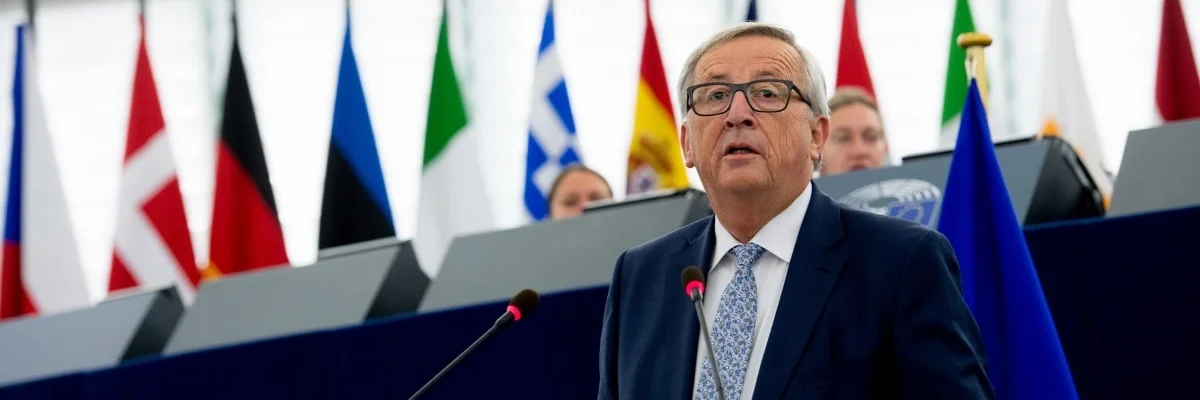
◢ This month, the European Commission approved an initial tranche of EUR 18 million in development funding from an larger package of EUR 50 million that has been allocated to support projects in Iran. This represents a highly significant, “first-of-its-kind,” intervention to support Europe-Iran trade and investment. However, the funding is not primarily intended as an attempt to mitigate the effect of returning U.S. secondary sanctions. As made clear in the “action document” which details how the development funding will be distributed, the European Commission has allocated the funding “in line with the European Consensus on Development” to provide “targeted support in the areas of Prosperity, Planet and People.”
For Iran, EUR 18 million represents just a drop in the bucket in terms of the foreign direct investment that the country needs for its economic development. But in terms of development funding, this amount, an initial tranche of a larger EUR 50 million bilateral allocation introduced by the European Commission and the European External Action Service this month, represents a highly significant, “first-of-its-kind,” intervention to support Europe-Iran trade and investment.
Iran is an unusual recipient for European development aid—by the usual metrics, the country is too rich. But after some internal political wrangling, the European Commission decided to proceed with a “special measure” in order to support the policy priorities of the European Union, namely the preservation of the Joint Comprehensive Plan of Action (JCPOA).
However, the funding is not primarily intended as an attempt to mitigate the effect of returning U.S. secondary sanctions. Rather, as made clear in the “action document” which details how the development funding will be distributed, the European Commission has allocated the funding “in line with the European Consensus on Development” to provide “targeted support in the areas of Prosperity, Planet and People.”
In the area of “Prosperity,” the European Commission will seek “increased and diversified trade in goods and services” by supporting better trade policy, more effective investment promotion activities, and greater support for entrepreneurship and innovation. In the area of “Planet,” the European Commission will seek “the decoupling of economic growth from environmental degradation” by supporting programs that improve waste management and reduce water and air pollution through technologies that improve efficiency and greater awareness among policymakers and the general public. Finally, in the area of “People,” the Commission seeks to support “comprehensive and evidence-based drug use prevention, treatment, rehabilitation and social reintegration” with a special focus on the use of opiates such as heroin and its role in spreading HIV/AIDS. The “Prosperity” and “Planet” areas have been allocated EUR 8 million in funding, while “People” has been allocated EUR 2 million.
The implementation of the funding differs in each area and will use both direct and indirect management, with the Commission ensuring that “that the EU appropriate rules and procedures for providing financing to third parties are respected” in all cases.
Funding in the area of “Prosperity” will be allocated through the International Trade Center (ITC), a United Nations agency. The ITC will assist Iran’s Trade Promotion Organization, a agency of the Ministry of Industry, Mine and Trade to develop a “national export strategy” with a particular focus on boosting the capacity of small and medium-sized enterprises (SMEs) as well as the internal managerial and technological capacity of TPO. ITC and TPO will also collaborate to develop a “Youth Trade Accelerator Program” which will youth-led enterprises. Initial meetings have already been held between ITC officials and Iran’s TPO and the cooperation envisioned and funded by the Commission builds on an MOU signed between ITC and TPO in 2016.
In the area of “Planet,” the European Commission will directly administer the funding on the bases of grants and will reply upon “pillar-assessed” organizations from its member states, a designation that applies to those organizations which have been pre-approved to implement resources from the European Union’s general budget. Efforts in this area will build on the EU-Iran framework for technical cooperation on the environment signed by Iran’s vice president for environment Masoumeh Ebtekar and EU environment commissioner Karmenu Vella in Brussels in September 2016. A consortium of member-state organizations is expected partner with Iranian stakeholders to drive the implementation of pilot projects that “contribute to enhancing Iran’s self-reliance in the areas of addressing water pollution and integrated water resources management, air pollution, waste management and soil degradation.”
Finally, in the area of “People,” funding will be directly managed and dispersed via grants. The Commission will issue a single call in the “first trimester of 2019” for proposals “to finance projects aiming at comprehensive and evidence-based drug use prevention, treatment, rehabilitation and social reintegration, with special emphasis on high-risk groups.” Interestingly, these grants will not be made directly to Iranian institutions. Instead, eligibility criteria mandate that grants flow to “agency, non-governmental organization, public sector operator, local authority, international research organization, university or university related organization” from an EU member state or a small group of international organizations. While the public health benefits of these grants will no doubt be substantial, these restrictions raise the question of how much of the financial impact of the EUR 2 million in grant funding allocated for the area of “People” will be felt in Iran.
Overall, the Commission’s efforts are encouraging for their scope and the clear willingness to deepen bilateral ties between the European Union and Iran at a fraught political moment. But beyond good intentions, implementation will be key. To this end, the Commission outlines a series of “assumptions” which underpin the feasibility of the planned cooperation with Iran.
The envisaged cooperation requires that “Iran ensures the necessary human, financial and material resources to facilitate the implementation of projects as far as cooperation with national authorities is required” and—in a crucial consideration given still-unexplained arrests of Iranian environmentalists—that “technical exchanges and cooperation between public sector and civil society actors… remain non-sensitive and feasible.”
Photo Credit: European Commission