
Can Europe Defend Itself And Iran From U.S. Sanctions?
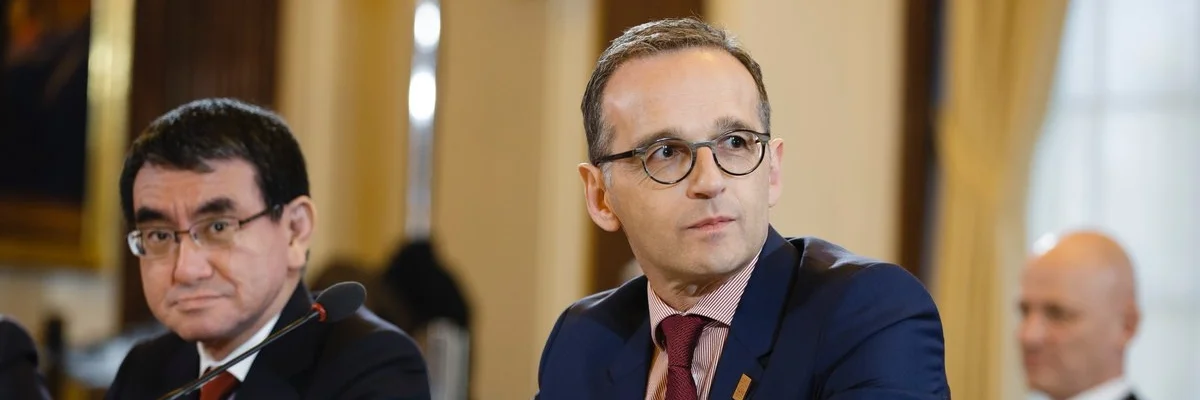
◢ In an op-ed published in the German newspaper Handelsblatt, German Foreign Minister Heiko Maas declared that the “the US and Europe have been drifting apart for years.” In order to defend the JCPOA and protect European companies active in Iran from U.S. sanctions, Maas has outlined three initiatives: “establishing payment channels independent of the US, a European monetary fund, and an independent SWIFT [payments] system.” This has given many in Iran hope that Europe might still be able to create an “economic package” to save the JCPOA. But Maas’s vision is not an economic package. It is an economic process, which may prove transformative, but only in the long term.
This article was originally published in LobeLog.
In an op-ed published in the German newspaper Handelsblatt, German Foreign Minister Heiko Maas declared that the “the US and Europe have been drifting apart for years.” Nowhere is this clearer than in the disagreement between the United States and Europe over the fate of the Iran nuclear deal. When President Trump withdrew from the Joint Comprehensive Plan of Action (JCPOA) and announced his intention to reimpose secondary sanctions that would impact European businesses, he made clear that he wouldn’t treat Europe in what Maas called a “balanced partnership.” In response, Maas believes that Europe must “bring more weight to bear” in global affairs.
In order to defend the JCPOA and protect European companies active in Iran from U.S. sanctions, Maas outlined three initiatives: “establishing payment channels independent of the US, a European monetary fund, and an independent SWIFT [payments] system.” These initiatives echo ideas expressed by French economy minister Bruno Le Maire in the aftermath of Trump’s withdrawal from the JCPOA. Le Maire has called for European governments to work together to protect Europe’s economic autonomy by creating “independent, sovereign European financial institutions which would allow financing channels between French, Italian, German, Spanish and any other countries on the planet.” Le Maire has declared that “the United States should not be the planet’s economic policeman.”
It will be difficult to realize the political designs of Maas and Le Maire within the economic structures that link Europe and global markets, including Iran. As Maas concedes, “the devil is in thousands of details.” It should be no surprise, therefore, that speaking to President Hassan Rouhani’s cabinet last week, Supreme Leader Ali Khamenei declared that Iran “must not pin hope on the Europeans for issues such as the JCPOA or the economy,” noting that promises must be examined with “skepticism.”
Iran should not take for granted the hopeful vision of more resolute European leadership, especially if that leadership promises to deliver fairer political and economic outcomes for Iran. But in light of the present economic crisis, the Iranian government and Iranian people can no longer afford to take a long-term view when it comes to fundamental questions like access to the international financial system, whether or not that system continues to be dominated by the United States. As such, it is important to try and discern the specific and short-term implications of the new political vision espoused by leaders like Maas and Le Maire.
First, there has been the greatest progress in designing possible payment channels that would help sustain transactions in the face of U.S. secondary sanctions. As an initial step, the central banks of France, Germany, the United Kingdom, Austria, and Sweden have indicated their openness to establishing payment channels with the Central Bank of Iran that would be immune to sanctions since the U.S. government is unlikely to take the extreme step of sanctioning European central banks for transacting with Iranian entities. Importantly, these central banks, which would be facilitating transactions on an ad hocbasis, would not need to rely on payment systems such as SWIFT.
However, the central banks have established a pre-condition: Iran must fully implement the Financial Action Task Force (FATF) action plan. But even if Iran does successful implement the FATF reforms, and even if European central banks fulfill their promise, the creation of limited payment channels does not amount to an independent financial system. In such a scenario, the impact of U.S. sanctions on European and Iranian banks will continue to prevent trade and investment in meaningful volumes.
Second, the creation of an independent payment messaging system is essential to enabling those smaller European banks that lack a “U.S nexus” to transact with Iranian banks, thereby enabling trade and investment at higher volumes. To this end, Maas has called for the creation of “an independent SWIFT [payments] system.” Notably, Maas’ statement makes it clear that European leaders do not expect to successfully defend the independence of SWIFT in its current form. SWIFT, headquartered near Brussels, is a cooperative owned by its member financial institutions, including major American banks such as Citibank and JP Morgan. Even so, SWIFT represents a rare global financial institution in which the United States is not dominant, but dependent. Some analysts, among them former officials from the U.S. Department of Treasury, have observed that it would be harmful to U.S. economic interests to sanction SWIFT. In fact, when SWIFT disconnected Iranian banks from its system in 2012, this was only because the organization voluntarily agreed to do so in accordance with European sanctions policy at the time, not because of the realistic threat that the U.S. would sanction the entity.
It is not entirely clear whether Maas wants Europe to insist on SWIFT’s independence or to devise new messaging systems altogether. A new system would be technically easy to establish but would prove difficult to monitor for possible money laundering or terrorist financing, an important political consideration. Although the former approach would certainly deliver Iran a more immediate solution on banking challenges stemming from U.S. sanctions, given that Iranian banks were reconnected to the SWIFT following implementation of the nuclear deal, Europe will more likely take the latter, more time-intensive approach. German Chancellor Angela Merkel responded to Maas’ op-ed (which she called an “important contribution”) by noting that “on the question of independent payment systems, we have some problems in our dealings with Iran…on the other hand we know that on questions of terrorist financing, for example, SWIFT is very important.” Merkel’s comments suggest that political capital will most likely be spent creating a minimal, ad hoc messaging system in support of transactions with Iran rather than defending the independence of SWIFT in the face of a U.S. sanctions threat.
Finally, if payment channel and payment messaging solutions can be devised, Europe will need to ensure financing flows through these channels to Iran, in order to spur economic growth and support infrastructure and energy projects led by European companies. Here, Maas has pointed to the creation of a European Monetary Fund. Plans for the creation of such a fund have been circulating in European capitals for over a year and are based on upgrading the European Stability Mechanism (ESM), the entity that managed the bailouts of Eurozone states made necessary by the global financial crisis. Currently, ESM borrows on capital markets by issuing bonds. Such a reliance on capital markets has proven the critical barrier to the European Commission’s effort to get the European Investment Bank (EIB), which finances capital projects around the world, to invest in Iran. Like ESM, EIB raises capital by selling bonds, often to American institutional investors. Understandably, the CEO of EIB has publicly rejected calls to invest in Iran, stating that to do so “would risk the business model of the bank.”
The creation of a European Monetary Fund would be supported by financing drawn directly from European central banks and not capital markets, limiting exposure to U.S. investors, and therefore to the risk of U.S. sanctions. Such an institution would also reduce European reliance on the International Monetary Fund and World Bank, which remain politically dominated by the United States. Whereas countries such as Turkey and Egypt have readily used IMF financing to fuel growth and weather economic crisis, longstanding tensions between the United States and the Islamic Republic mean that Iran has been unable to secure IMF loans.
European governments are aware of the need to support Iran’s economic development through capital allocation. The European Commission’s recent move to allocate to Iran 18 million euros of a planned 50 million euros of development aid in order to “widen economic and sectoral relations” demonstrates the desire to fund growth. The European Commission simply lacks the right financial institutions to provide such capital to Iran at a meaningful scale.
Overall, Maas’ message contains real, practical ideas about how to not only sustain trade and investment in Iran in the face of secondary sanctions but also strengthen Europe’s economic sovereignty in lasting ways. However, Iran must recognize that there is no readymade “economic package” that Europe can deliver to save the JCPOA. There is only an “economic process” where improvements in the facilitation of trade and investment will occur over time and in sequence.
In the coming months, it will be feasible to institute a payment channel between central banks. In the coming year, it will be feasible to establish a new payment messaging system. Finally, over the course of several years, Iran could benefit from the creation of a European Monetary Fund, financing from which could truly transform prospects for Iran’s economy. For its part, Iran must remain willing to undertake its own economic process, beginning with critical FATF reforms. In this way, if Europe and Iran each grow stronger, through a renewed insistence on independence and autonomy, the prospects for political and economic cooperation will actually improve. The United States cannot be the fulcrum on which all partnerships must balance.
Photo Credit: German Federal Foreign Office
Brexit Britain Must Match EU Efforts to Save Iran Nuclear Deal
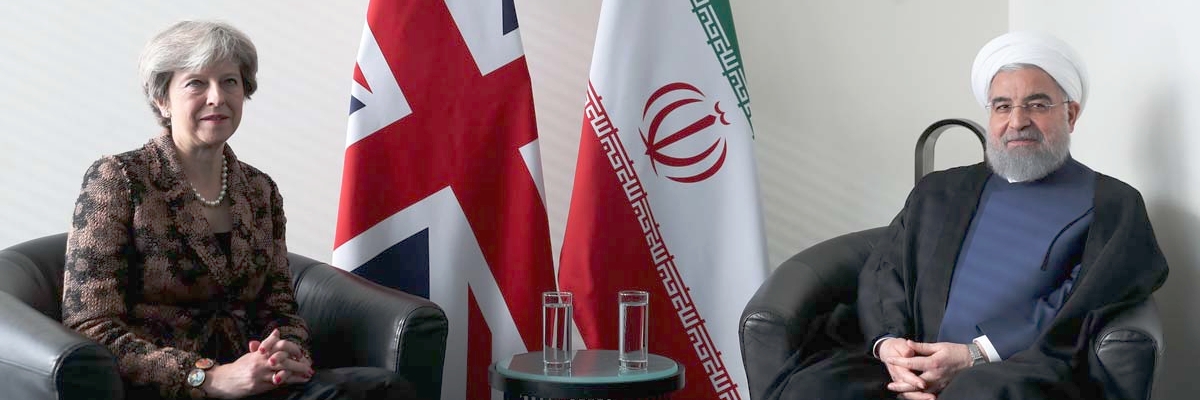
◢ With the UK poised to leave the European Union, Brexit Britain can no longer rely on EU economic measures to protect the Iran nuclear deal. The UK government needs to parallelize its efforts with those of the EU, following the example of EU member states such as France and Austria in order to explore the use of state-owned financing entities to open sanctions-compliant investment channels. The Iranian government should insist that the UK shows greater initiative as a party to the JCPOA.
The European Union and its member states have been scrambling to to preserve the economic benefits of the Joint Comprehensive Plan of Action (JCPOA) for Iran following President Trump’s withdrawal from the agreement on May 8. In the last month, the European Commission has moved to add Iran to the investment mandate of the European Investment Bank (EIB), the EU’s long-term lending institution (even in the face of significant resistance from EIB’s management). Similarly, the European Commission’s Directorate-General for International Cooperation and Development (DEVCO) has set-aside a pool of funding to support projects in Iran. The European External Action Service is also coordinating discussions around central bank payment channels and the European Commission’s revival of the blocking regulation, which prohibits European compliance with extraterritorial sanctions.
As a core party to the JCPOA, the UK government has a strong interest in seeing these European efforts succeed. However, in March of 2019, at the end of the Brexit process, the UK will likely leave the EU, meaning that it will end its participation as stakeholder in European institutions, including EIB, as well as European legal frameworks, such as the blocking regulation.
While the Bank of England is exploring the creation of payment channels with the Central Bank of Iran, the UK government has shown little real initiative to match European efforts to sustain economic engagement with Iran. In recent weeks, Iranian authorities have indicated that they believe bilateral efforts will prove the most successful in delivering solutions to protect trade and investment in the face of US secondary sanctions. Countries like France, Germany, Austria, Italy and Sweden have been exploring whether it may be possible to use state investment vehicles and financial institutions to facilitate investments to Iran. The UK has not, pointing to the EIB's expanded mandate. But given that EIB is unlikely to finance projects in Iran, and given that the UK is set to exit the EU anyway, the UK government can no longer lean on European efforts in devising an economic package for Iran.
To demonstrate its commitment to the JCPOA, the UK should parallelize its Iran policy with that of EU member states and seek its own mechanisms through which to support access to financing in Iran’s economy—both because of the clear national security implications of maintaining the the nuclear deal, but also to take advantage of economic opportunities in a major emerging market, particularly one in which UK companies can continue to make inroads from a low base of activity.
The reimposition of US sanctions means that the UK government cannot reasonably rely on British private sector financiers to engage in project finance in Iran. Just as European governments are exploring state-owned entities through which to provide financing, so will the UK financing entity need to be state owned. Helpfully, such an institution exists.
CDC Group is the overseas investment arm of the UK government. The group is a state-owned development bank overseen by the Department for International Development. It currently overseas an investment portfolio of around GBP 5 billion and primarily funds projects in Africa and South Asia, with a strong focus in countries where were formerly part of the British Empire and now part of the Commonwealth.
CDC has a wide portfolio of investments in infrastructure, health, manufacturing, food and agriculture, and construction. The investment philosophy is focused on “sectors where growth leads to jobs” and the institutions “decision-making process ranks sectors based on their likelihood of creating jobs.” Investments take the form of both equity and debt financing.
On the basis of its focus on emerging markets and its investment philosophy focused on job creation, there is justification for the UK government to extend the investment mandate of CDC Group to include projects in Iran. Such a move would parallel the EU’s attempted move in regards to EIB and the still planned funding via DEVCO, as well as the various efforts at the member-state level.
If CDC’s investment mandate is extended to Iran, the challenge will be to ensure that the relevant capital can be deployed in Iran. For this purpose, the UK government should seek to use the UK-regulated branches of Iranian financial institutions. These institutions will be able to maintain correspondent banking relationships with their Iranian parent banks in the face of US sanctions. If the UK government can institute additional due diligence protocols around the transfer of funds via this channel, it should be possible to deploy capital in Iran without the need to rely on the UK’s tier one banks.
Importantly, in order to encourage the UK to make such a move, the Iranian government must be prepared to offer a privileged pipeline of investment opportunities to CDC Group, particularly with regard to public-private partnership projects in Iran that would include the participation of UK multinationals or SMEs. For example, CDC Group financing could help support the strong inroads made by UK solar energy developers in the Iranian market. Furthermore, the Iranian government should explore export credit or sovereign guarantee arrangements that would project CDC Group’s investments in order to lower the assessed risk behind a given project in Iran.
The Iranian government should actively seek a UK commitment to facilitate development financing in Iran. Politically, such a move would be consistent with the ambitions of “Brexit Britain” as the UK will need to replace its reliance on EU institutions in regards to engaging global growth through proactive investments. As with bilateral relations with other European countries, an expansion in economic engagement could reduce pressure on political relations. The UK will no doubt expect to see progress on its consular cases as part of trust-building and the deepening of ties with Iran.
Beyond challenges of structuring, the continued political uncertainty in the UK, including the recent change in foreign minister, will make such plans complicated to execute. But Iran can leverage its relationships with key stakeholders within the Foreign and Commonwealth Office as well as in the House of Parliament and House of Lords in order to seek a structured dialogue on this matter. Whether through CDC Group or another special purpose vehicle, Brexit Britain should be pushed to at least match EU proposals to support trade and investment in Iran, and thereby to safeguard the nuclear deal.
Photo Credit: IRNA