
The Optimistic Case for Biden and Iran
In Tehran and Washington alike, the impact of Biden’s election on US-Iran relations has been the subject of strategizing for months. Now, the Biden presidency is a real political fact.
“It’s over.”
So reads the November 8 headline of Hamshahri, one of the leading newspapers in Iran. The past four years have been brutal for ordinary Iranians. The Trump administration waged an economic war on Iran that exacerbated the political and social tensions endemic to the country. Iranians are hoping that the election of Joe Biden and Kamala Harris will enable a return to the optimism they experienced in the short period between the implementation of the Joint Comprehensive Plan of Action (JCPOA) in January 2016 and the dismaying election of Donald Trump in November of the same year.
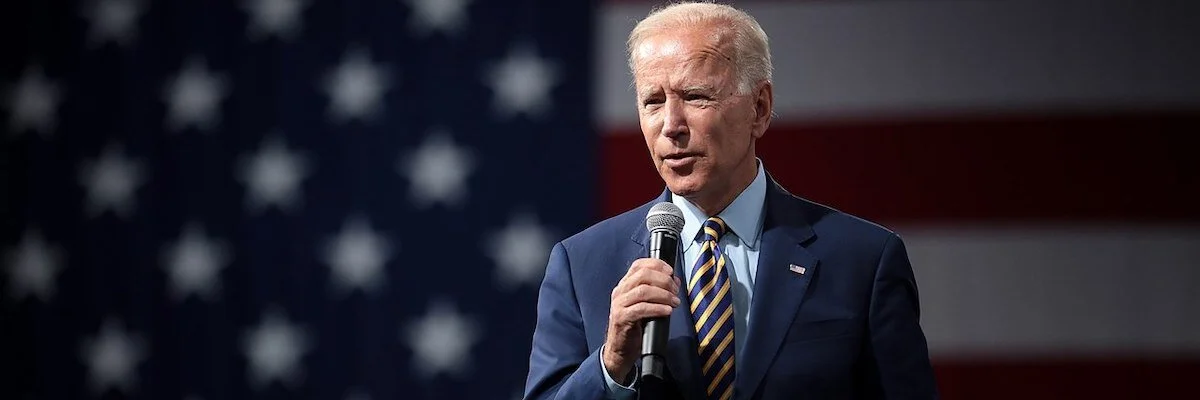
In a CNN op-ed published in September, Biden made clear his intention to “rejoin the [JPCOA] as a starting point for follow-on negotiations” so long as “Iran returns to strict compliance with the nuclear deal.” Here, Biden is accepting the basic premise of “compliance-for-compliance.” In response to Trump’s withdrawal from the nuclear deal, Iran has reduced its own commitments to the deal, particularly by increasing its levels of uranium enrichment beyond what is permitted by the JCPOA. These moves, which have dismayed the remaining parties to the agreement—France, Germany, the United Kingdom, Russia, and China—are nonetheless perceived as tactical and reversible. The administration of Iranian president Hassan Rouhani remains committed to the JCPOA and appears ready to welcome the U.S. back into the deal so long as the U.S. policymakers accept “to be held responsible for damages” caused to “the people of Iran” as a result of Trump’s withdrawal, while also providing “guarantees” that such an event would not be repeated. Notably, Iranian foreign minister Javad Zarif has described the stance of the Biden administration as “promising.”
Despite these encouraging statements by both the Biden camp and officials in the Rouhani administration, there is a remarkable degree of pessimism surrounding the prospect of a U.S. reentry to the JCPOA. These assessments highlight pressure, particularly from U.S. allies in the Middle East, to build on the nuclear deal and achieve diplomatic breakthroughs on issues such as regional security and Iran’s missile program. They also point to the ascendency of Iran’s hardliners, a loose coalition of politicians who savaged Rouhani and his moderate bloc as the nuclear deal faltered. The vocal anti-Americanism of these conservative politicians and their labeling of figures such as Rouhani and Zarif as either naïve or knowing traitors, has furnished dire predictions for the future of U.S.-Iran diplomacy under the hardline president expected to prevail in Iran’s elections next year.
In a recent piece, Ariane Tabatabai and Henry Rome seek to account for the likely victory of a hardliner president, arguing that “the United States shouldn’t rush to secure a deal in the hopes of shaping Iran’s domestic politics, or for fear that the window of opportunity will close.” They observe astutely that “the new administration shouldn’t assume that without Rouhani, diplomacy wouldn’t stand a chance.” Tabatabai and Rome explain that the next Iranian president “will almost certainly be more conservative,” but note that the decision to engage in diplomacy with the United States will not be the prerogative of this hardline figure. Rather, such decisions require “buy-in from the whole system.” So long as Iran’s national security interests would be advanced by negotiations, it is reasonable to expect a receptiveness to talks, even with the U.S.
According to Tabatabai and Rome, it follows that the new Iranian administration will “have no choice but to negotiate” with the U.S. principally because of the country’s weak economic position. But this assessment likely underestimates the ability of the Iranian economy to limp along under sanctions pressure—even for four or more years. Before the COVID-19 pandemic hit the country, the Iranian economy was already returning to growth despite two years under Trump’s maximum pressure sanctions. High inflation has emerged as the single most significant challenge facing Iranian policymakers, but as the case of Venezuela shows, even the most extreme circumstances of hyperinflation can prove insufficient to coerce policymakers to the negotiating table.
Trump’s national security advisor, Robert O’Brien, recently conceded that the administration was seeing diminishing returns from economic coercion, having imposed “so many sanctions” that there was little pressure to add. This view reflects the assessments of the U.S. intelligence community, which is developing a more sophisticated understanding of the Iranian economy and its adaptability to sanctions pressure. The takeaway is that Trump’s sanctions offer Biden no real leverage on Iran and that it will not be possible to coerce Rouhani nor his successor into talks.
Despite this, Tabatabai and Rome are still correct to claim that Biden will have a shot at diplomacy—a very good one at that. To understand why, it is important to look beyond Trump’s withdrawal from the nuclear deal as the critical political act of the last three years. Far more significant is the fact that Iran remains in the agreement. Sure, Iran has reduced its compliance with key aspects of the deal. But the extraordinary political price paid by the Rouhani administration, spurred by a creditable commitment to diplomacy for its own sake and also by the strategic considerations of the wider Iranian “system,” suggests that understanding the logic of Iran’s persistence with the deal is the key to understanding the prospects for U.S.-Iran talks.
Back in 2018, on the eve of John Bolton’s appointment to lead the National Security Council, it appeared that the writing was on the wall for the Iran deal. As I wrote at the time, “by any conventional assessment, then, the Iran deal is dead.” Implementation of the deal was already faltering, and Bolton was hellbent on killing the agreement outright. But I foresaw a different outcome, arguing that “the Iran deal cannot be killed” because of a set of “several undeniable truths about Iran and its place in the world.” My argument focused on three structural factors that underpin Iran’s diplomatic engagement: the geopolitical influence of Iran, the demographic and economic drivers of the Iranian policy of engagement, and the fact that the United States has limited leverage because there is no credible or affordable military threat behind diminishing sanctions pressure.
Each of these structural factors is even more pronounced today. The Islamic Republic is less isolated diplomatically than ever before because it opted to remain in the JCPOA following the U.S. withdrawal. In the face of reduced oil revenues, the Iranian economy is more dependent on economic diversification, including in its trade partnerships. The combination of sanctions overuse and the American public’s calls for a pullback from the Middle East will leave Biden with less scope to coerce or threaten Iran.
The notion that Iran’s commitment to engagement (and the nuclear deal) is structural was underscored in a November 3 speech by Iran’s Supreme Leader, Ali Khamenei. Addressing the possible impact of U.S. elections on U.S.-Iran relations, Khamenei stated, “We follow a sensible, calculated policy which cannot be affected by changes of personnel.” Many took the statement to be Khamenei’s way of pouring cold water on the prospect of a Biden victory revitalizing the JCPOA. But again, in the Iranian assessment, the deal is not yet dead. The calculated policy to which Khamenei is referring is the policy of keeping the nuclear deal alive in accordance with Iran’s strategic interests.
This structural commitment means that the Biden administration does not need to rush to make a deal with Iran—the window of opportunity will not close when Iran elects a new president next summer. However, that does not mean Biden will not need to make some early gestures to signal the depth of his own commitment to diplomacy. In an excellent report envisioning a roadmap for the Biden administration’s reengagement of Iran, Ilan Goldenberg, Elisa Catalano Ewers, and Kaleigh Thomas, point to the importance of an early “de-escalation” phase, stating that the Biden administration “should start with immediate, modest unilateral confidence-building measures” in order to achieve both compliance-for-compliance on the nuclear file and “calm-for-calm” when it comes to regional tensions.
As Edoardo Saravalle has convincingly argued, the Biden administration can use executive orders to implement its sanctions relief commitments under a compliance-for-compliance framework in under sixty days. These moves can be made tangible by coordinating moves with European allies and international bodies to deliver tangible economic benefits to Iran. For example, this coordination can ensure that sanctions relief enables the unfreezing of foreign exchange reserves and the provision of Iran’s requested COVID-19 relief loan by the International Monetary Fund—moves that would ease inflation, delivering appreciable economic relief for ordinary Iranians. Should the Biden administration choose incentivization over coercion and thereby prove itself a credible counterparty for follow-on negotiations by the time of the Iranian election in the early summer of 2021, it is more than likely that any Iranian president elected—even a so-called hardliner—will take up the mantle of new talks.
The fierce opposition of hardliners to the nuclear deal was far more about the stakes of domestic politics than the terms of the deal itself. Even before talks had concluded, hardline politicians were gripped by anxiety that the successful implementation of the nuclear deal would grant Rouhani, a savvy political operator, a diplomatic and economic triumph that would consolidate the dominance of reformist politics in Iran for a generation. The opposition to the nuclear deal, which extended to efforts to undermine the deal itself, was intended to take Rouhani from the heights of popularity—he won two stunning mandates in high-turnout elections—to the depths of disgrace. The hardliners succeeded in this cynical mission and Rouhani was battered. But tellingly, the nuclear deal, as a product of Iran’s largely apolitical strategic decision-making, has survived.
A hardline president in Iran can be confident of his ability to run the country for an initial four-year term without needing a détente with Biden. The economy will limp along, regional tensions will remain high, and domestic unrest will simmer. But the presidential administration will be able to coordinate with state organs to keep Iran resilient to external and internal pressure—even as the Iranian people continue to suffer from the country’s stagnation.
But what president would choose to preside over a constant slow-moving crisis, particularly one that was not of his own making? For hardliners, 2021 represents an extraordinary political opportunity. For the first time since 1989, Iran and the United States will have first-term presidents at the same time. Meanwhile, Iran’s conservative politicians are increasingly concerned about the political legacy and legitimacy of the Islamic Revolution as it enters its fifth decade. Negotiations with the Biden administration offer Iran’s next president, and his political backers, the opportunity to give to the Iranian people that long-awaited gift—a robust, transformational deal with the world powers, chief among them the United States.
The impact of Biden’s election on U.S.-Iran relations has been the subject of strategizing for months. Today, what was once a hypothetical has become a reality. The impetus for U.S.-Iran talks arises from both an emergent political opportunity and the unchanged structural factors that push both sides towards engagement. The mechanics and sequencing of an American reentry into the JCPOA remain to be determined, but it will not be harder than when the deal was originally struck, when taboos needed to be broken in Tehran and Washington alike. Much has been learned over the last four years about what it takes to implement an “Iran Deal” successfully. We ought to be optimistic about comes next.
It’s a beginning.
Photo: Wikicommons
After UN Showdown, INSTEX Can Help Sustain Iran Nuclear Deal
INSTEX alone cannot save the JCPOA, the future of which essentially depends on US-Iranian relations. INSTEX can nevertheless help maintain the nuclear agreement until, or even after, diplomatic solutions are found.
In return for limits to Iran’s nuclear activities under the 2015 agreement, or the Joint Comprehensive Plan of Action (JCPOA), the other side—the United States, the EU/E3 (France, Germany and the UK), China and Russia—were supposed to lift sanctions on the country. The US opted out of this compromise in May 2018 by withdrawing from the JCPOA. By deterring most private sector actors from Iran-related activities, US secondary sanctions have also prevented other JCPOA parties from living up to their end of the deal. In addition to a deep socio-economic crisis within Iran, US sanctions have undermined Iranian people’s access to basic humanitarian goods--and pushed the country to reduce its nuclear commitments. The EU and E3 efforts to protect the JCPOA under these circumstances have offered a grim lesson about the limits of European autonomy in a dollar-dominated world economy.
When the Trump administration withdrew from the JCPOA, the EU stressed its commitment to ensuring continued sanctions lifting and to upholding the agreement. This determination was also expressed in practical measures. In summer 2018 the EU included the upcoming US sanctions on Iran in the so-called Blocking Regulation, thus banning EU companies from complying with them. In September 2018 the EU and the E3 announced that they would develop a special trade instrument to facilitate European-Iranian trade, including in oil, which was to be targeted by US secondary sanctions.
However, the Trump administration’s obliviousness to the Blocking Regulation soon exposed the absence of an effective enforcement mechanism to enforce it, and in practice US law took priority over EU law in the private sector’s risk assessments. Apparently recognizing their lack of political and economic leverage over US policy, by January 2019 the E3 had reduced the mission of the trade instrument—then named Instrument in Support of Trade Exchanges (INSTEX)— to trade in humanitarian goods.
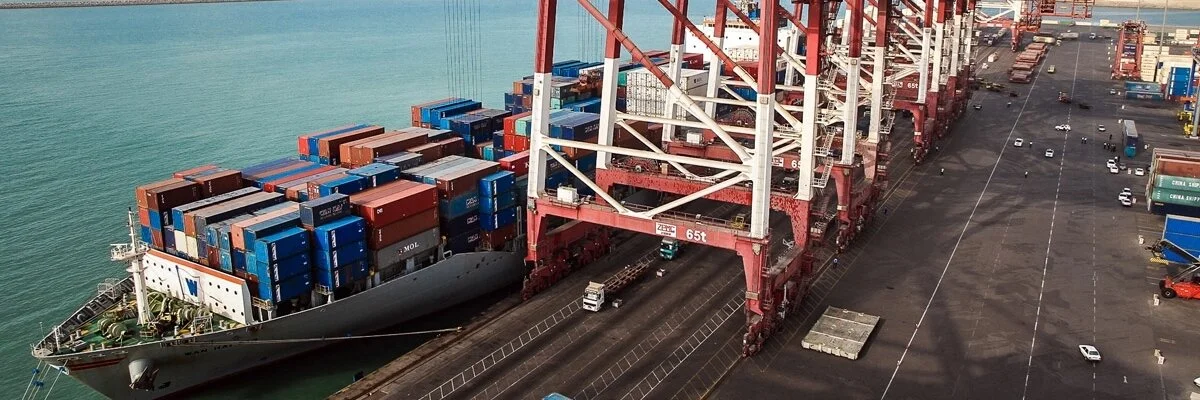
While its limited focus fell short of previous expectations that the EU could counter or even significantly minimize the negative effects of US sanctions, INSTEX addresses a critical problem created by them. Humanitarian trade, which is in principle exempt from sanctions, has also been hit by the banking sector’s fear of US penalties, leading to a medicine shortage in Iran. In addition to being urgent, addressing this particular area of sanction over-compliance is also practical, as humanitarian trade runs a lower risk of being targeted by US sanctions than other trade areas.
INSTEX seeks to enable the exchange of humanitarian goods or services between Europe and Iran without the transfer of currency, thus minimizing the risk of US penalties. European exporters are to be compensated with funds located in Europe, based on the value commensurate with the value of imports from Iran. INSTEX’ Iranian counterpart, the Special Trade and Finance Instrument (STFI), is similarly tasked to coordinate payments within Iran.
INSTEX can reassure banks and companies through its joint ownership by the E3 and four other European states—Belgium, Denmark, the Netherlands and Norway, as well as Finland and Sweden, which are expected to join soon. In addition to providing a high level of trust in the instrument’s due diligence procedures, governmental ownership raises the threshold for the USA to impose sanctions on INSTEX.
Having processed only one pilot transaction thus far, INSTEX still needs to overcome major obstacles to function as intended. One key challenge is that the value of European exports to Iran exceeds the value of Iranian exports to Europe. Potential solutions to the problem include paying European exporters using Iran’s revenues currently frozen in foreign banks, or offering Iran a loan to buy humanitarian goods. However, the US is seeking to block these options.
The chances of striking a functioning trade balance could also be increased through the expansion of INSTEX to non-European companies, and extension of the INSTEX mandate to non-humanitarian trade that are not targeted by the USA but are impeded by fear of secondary sanctions. While INSTEX is unlikely to deliberately go against US sanctions, the E3 might decide to take further steps to protect is economic sovereignty if the instrument is targeted by the USA.
Currently it might seem that INSTEX is being taken over by political events, in particular the 2020 US presidential elections. Democratic Party victory in the elections could open the door for the US re-entry into the JCPOA, which would appear to make INSTEX less relevant. However, restoring the JCPOA or reaching any new agreements with Iran is dependent on sanctions lifting. This is likely to be difficult given the private sector’s disillusionment with the Obama administration’s previous assurances about the safety of engaging with Iran. INSTEX could help address this problem by providing additional guarantees to risk-averse banks and companies fearing the next U-turn in US policy towards Iran.
Alternatively, the possibility of Trump’s re-election as US president—or a snapback of UN Security Council sanctions on Iran—could lead to the collapse of the JCPOA. While this can be expected to reduce European commitment to INSTEX, its humanitarian mission should be pursued as a matter of ethical necessity, even without the JCPOA.
Clearly, INSTEX alone cannot save the JCPOA, the future of which essentially depends on US-Iranian relations. INSTEX can nevertheless help maintain the nuclear agreement until, or even after, diplomatic solutions are found. In addition to demonstrating solidarity on the JCPOA and commitment to basic humanitarian principles, INSTEX can also been seen as a test case of a more independent European foreign policy.
Photo: IRNA
Europe Can Preserve the Iran Nuclear Deal Until November
After a humiliating defeat at the U.N. Security Council, Washington will seek snapback sanctions to sabotage what’s left of the nuclear deal. Britain, France, and Germany can still keep it alive until after the U.S. election.
By Ellie Geranmayeh and Elisa Catalano Ewers
The United States just lost the showdown at the United Nations Security Council over extending the terms of the arms embargo against Iran. The U.S. government was left embarrassingly isolated, winning just one other vote for its proposed resolution (from the Dominican Republic), while Russia and China voted against and 11 other nations abstained.
But the Trump administration is not deterred: In response to the vote, President Donald Trump threatened that “we’ll be doing a snapback”—a reference to reimposing sanctions suspended under the 2015 nuclear deal from which the United States withdrew in 2018.
The dance around the arms embargo has always been a prelude to the bigger goal: burning down the remaining bridges that could lead back to the 2015 deal.
The Trump administration now seeks to snap back international sanctions using a measure built into the very nuclear agreement the Trump White House withdrew from two years ago. This latest gambit by the Trump administration is unsurprisingly contested by other world powers.
On the one hand, Russia and China are making a technical, legal argument against the U.S. move, namely that the United States forfeited its right to impose snapback sanctions once it exited the nuclear deal. This is based on Security Council Resolution 2231 that enshrined the nuclear agreement, which clearly outlines that only a participant state to the nuclear deal can resort to snapback. This is a legal position that even former U.S. National Security Advisor John Bolton—an opponent of the nuclear deal and under whose watch Trump left the agreement—has recently endorsed.
In the end, however, this is more a political fight than a legal one. The political case—which seems to be most favored by European countries—is that the United States lacks the legitimacy to resort to snapback since it is primarily motivated by a desire to sabotage the multilateral agreement after spending the last two years undermining its foundations.
The main actor that will decide the fate of the nuclear deal after snapback sanctions is Iran itself. Iran has already acted in response to the U.S. maximum pressure campaign, from increasing enrichment levels and exceeding other caps placed on its nuclear program, to attacking U.S. forces based in Iraq and threatening to exit the Nuclear Nonproliferation Treaty.
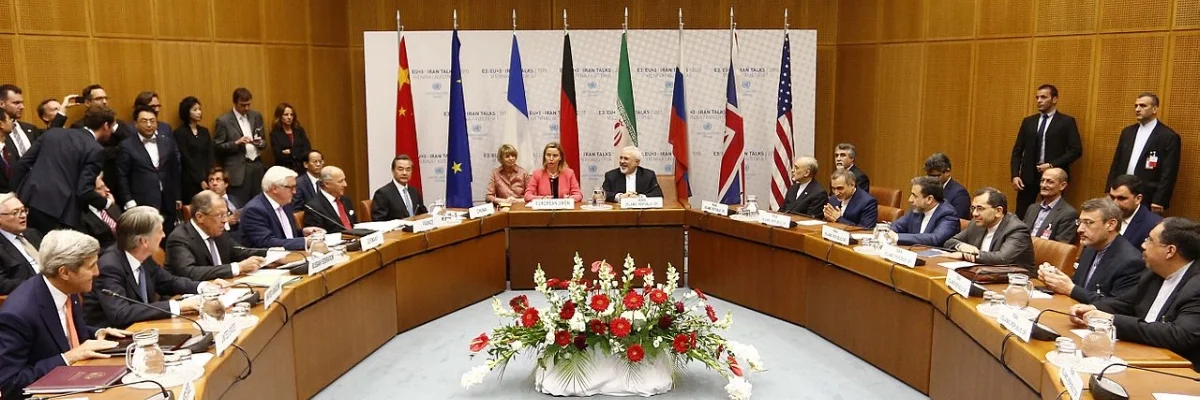
But the calculations of decision-makers in Tehran will be influenced by the political and practical realities that follow snapback sanctions. And here, the response from the remaining parties to the nuclear deal—France, the United Kingdom, Germany, China, and Russia—will be critical. These countries remain committed to keeping the deal on life support—at least until the U.S. presidential election in November.
Seizing on its failure to extend the arms embargo, the United States now claims it can start the clock on a 30-day notification period, after which U.N. sanctions removed against Iran by the nuclear deal are reinstated. This notification will be timed deliberately to end before October—when the arms embargo is set to expire, and also when Russia takes over presidency of the U.N. Security Council: a time when Washington could face more procedural hurdles.
What is likely to follow snapback is a messy scene at the U.N. in which council members will broadly fall into three groups. First, the United States will seek to build support for its case—primarily through political and economic pressure—so that by the end of the 30-day notice period some U.N. member states agree to implement sanctions. The Trump administration will likely use the threat of U.S. secondary sanctions, as it has done successfully over the last 18 months, if governments don’t move to enforce snapback sanctions.
Even if most governments around the world disagree that the United States has any authority to impose snapback sanctions, some countries may be forced to side with Washington given the threat that the United States could turn its economic pressure against them.
The second group will be led by China and Russia, both of which have already started to push back. Not only will this group refuse to implement the U.N. sanctions that the U.S. government claims should be reimposed, but they likely will throw obstacles into the mix, such as blocking the reinstitution of appropriate U.N. committees that will oversee the implementation of such sanctions. This group may also see it as advantageous to seek a determination by the International Court of Justice on the legal question over the U.S. claim.
The third grouping will be led by the France, Britain, and Germany, who remain united in the belief that the deal should be preserved to the greatest extent possible. In a statement in June, the three governments already emphasized that they would not support unilateral snapback by the United States. But it is unclear if this will translate into active opposition—and their approach will certainly not include the obstructionist moves that Russia and China may make.
This bloc will look to stall decisions to take the steps necessary to implement the U.N. sanctions. This is a delicate undertaking, as European countries are not in the habit of blatantly ignoring the binding framework of some of the U.N.’s directives, and will want to balance their actions against the risk of eroding the security council’s credibility further. But they will also take advantage of whatever procedural avenues are in place to delay full enforcement of the sanctions, buying time to urge Iranian restraint in response to the U.S. moves.
Countries such as India, South Korea, and Japan are likely to favor this approach. These governments may even go so far as to send a significant political signal to Iran and back a joint statement by most of the security council members vowing not to recognize unilateral U.S. snapback sanctions.
As part of this approach, the 27 member states of the European Union could embark on a prolonged consultation process over how and if to implement snapback sanctions. The separate EU-level sanctions targeting Iran’s nuclear program are unlikely to be reimposed so long as Iran takes a measured approach to its nuclear activities.
Reimposing EU sanctions against Iran will entail a series of steps, the first of which requires France, Britain, and Germany, together with the EU High Representative, to make a recommendation to the EU Council. The return of EU sanctions would then require unanimity among member states, a goal which will take time to achieve in a context where Washington is largely viewed as sabotaging the nuclear deal.
In this process, the EU should seek to preserve as much space as possible to salvage the deal and avoid the reimposition of nuclear-focused sanctions against Iran—at least until the outcome of the U.S. election is clear. The U.K., in the run-up to Brexit, may well lean toward a similar position rather than tying itself too closely to an administration in Washington that may be on its way out.
Until now, the remaining parties to the nuclear deal have managed to preserve the deal’s architecture despite its hollowing out. The aim has been to stumble along until the U.S. election to see if a new opening is possible to resuscitate the agreement with a possible Biden administration in January.
While a Trump win could spell the end of the deal and further dim the prospects of diplomacy between the United States and Iran, the two sides could come to a new understanding over Iran’s nuclear program at some point during the second term that is premised on the original deal. Judging by the pace of the Trump administration’s nuclear diplomacy with North Korea, this will be a Herculean process with no certain outcome.
In Tehran, there will be some sort of immediate response to the snapback—most likely involving further expansion of its nuclear activities. However, Iran may decide to extend its strategic patience a few weeks longer until the U.S. election. A legal battle by Russia and China against snapback, combined with non-implementation of U.N. sanctions by a large number of countries and continued hints from the Biden camp that Washington would re-enter the nuclear deal could provide the Rouhani administration with enough face-saving to stall the most extreme responses available to Iran.
But with Iranian elections coming in the first half of 2021, there will be great domestic pressure from more hardline forces to take assertive action, particularly on the nuclear program, to give Iran more leverage in any future talks with Washington.
If Iran takes more extreme steps on its nuclear activities, such as a major increase in its enrichment levels or reducing access to international monitors, it will make it nearly impossible for the Britain and the EU to remain committed to the deal in the short term. There are also factors outside Iranian and U.S. control that could have an impact, such as a potential uptick in Israeli attacks against Iranian nuclear targets.
Over the course of the Trump administration, Europe and Iran have managed to avert the collapse of the nuclear deal. Having come so far, and just 11 weeks away from the U.S. election, they will need to work hard to prevent the total collapse of the agreement. Even if Biden—who has vowed to re-enter the deal if Iran returns to compliance—is elected, the remaining parties will need to continue the hard slog to preserve it until January.
Those opposed to the nuclear deal with Iran may see the last two months of a Trump administration as a window to pursue a scorched-earth policy toward Iran’s nuclear program. That leaves Britain and Europe with the job of holding what remains of the deal together, for as long as they can.
Ellie Geranmayeh is a senior policy fellow at the European Council on Foreign Relations. Follow her at @EllieGeranmayeh.
Elisa Catalano Ewers is an adjunct senior fellow at the Center for a New American Security and a former U.S. State Department and National Security Council official.
Photo: IRNA
Europe’s Balancing Act on the Nuclear Deal: Wooing Trump Without Losing Iran
◢ European leaders have been assiduous in lobbying Washington on the nuclear deal. But Europe must step up its diplomacy to ensure it does not lose Tehran in the process and should further make a strong case to the Iranian government and public as to why the nuclear deal can continue to serve Iran’s security and economic interest even without the US.
This piece was originally published on the website of the European Council on Foreign Relations.
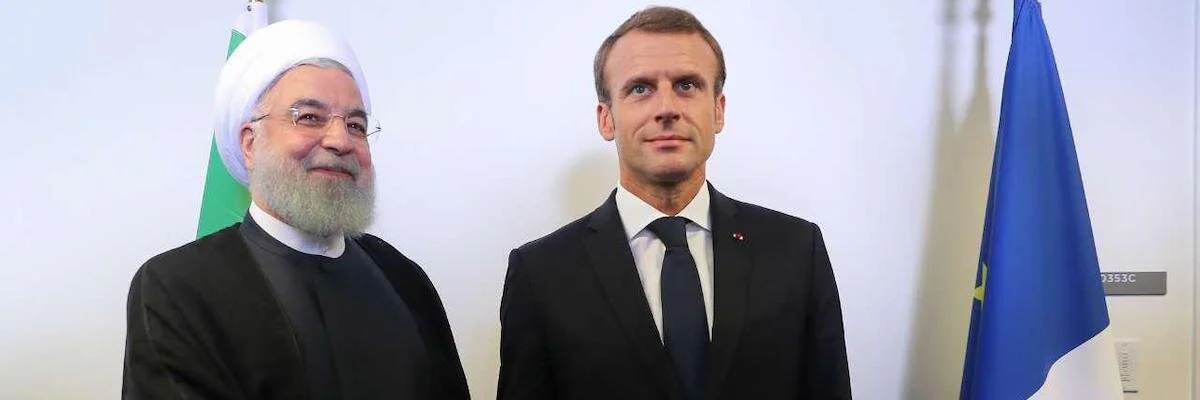
For much of Iran’s political elite, and its overwhelmingly young population, the nuclear deal is becoming a story of failure. This situation risks impacting on Tehran’s willingness to engage politically and to reach diplomatic compromises with Western powers. Last week European leaders were in Washington for a last push to keep the United States on board ahead of the 12 May deadline for Donald Trump to issue waivers required under the nuclear deal. During his visit, Emmanuel Macron suggested that the US and Europe could work on a “new deal” with Iran – one which preserves but expands on the 2015 accord. But with Iran kept out of the European-US talks, Hassan Rouhani has questioned the legitimacy of proposals now put forward by Macron and Angela Merkel for Iran to negotiate further deals on its nuclear programme and regional issues. In the process of wooing Washington on this bigger and better deal, Europe must ensure it does not end up losing Tehran, whose buy-in will be essential to succeeding in this effort.
Iran's Rethink on Europe
Despite increasing pressures coming from Trump, Iran has continued to fulfil its part of the deal, as verified by the International Atomic Energy Agency 11 times since the deal was implemented in January 2016. Iran has waited to see what actions Trump would take and carefully assessed the ability and willingness of Europe to safeguard the nuclear deal. In October, Tehran sent out clear signals that it would consider sticking to the deal so long as Europe, China, and Russia could deliver a package that served Iran’s national security interests. But as talks between the US and the EU3 (Germany, France, and the United Kingdom) have stepped up over the last few months, Iranian thinking on European positioning has begun to sour.
Officials and experts from Iran, interviewed on condition of anonymity over the past month, outlined a growing perception inside Tehran that Europe is unable and/or unwilling to deliver on the nuclear agreement without the US. Even those who defend the nuclear deal inside the country are finding it difficult to continue to do so, not just because of Trump but also because of European tactics, which one Iranian official described as “appeasement by Europe to reward the violator of the deal and Iran’s expense”.
This perception has contributed to considerably hardened Iranian rhetoric in recent weeks around a possible US withdrawal. The secretary of Iran’s Supreme National Security Council (SNSC), which includes the most important decision-makers inside the country, warned that Iran may not only walk away from the nuclear deal, but also withdraw from the Non-Proliferation Treaty. Such public statements from senior figures signal that a rethink may be taking place over Iran’s foreign policy orientation and openness to engaging with the West. Decision-makers in Europe should be alert to the gravity of such political shifts.
Keeping Iran on Board
Iranian officials have repeatedly outlined that Iran will abide by the nuclear deal so long as the US does not violate the agreement. If Europe wants to keep Iran on board with the agreement in the scenario where Trump does not issue the sanctions waivers required, or to even sell a new European-US framework to Iran, it will need to shore up its fast-diminishing political capital with Tehran. While Macron’s hour-long call with Rouhani on Sunday was a good start, greater activity is urgently needed.
First, Europeans should seek to alleviate growing Iranian fears that the price of saving the deal will be a wider “pressure package”, one which returns their relations to the pre-2013 policy of isolation and sanctions. While the focus is understandably now on securing ongoing US support for the deal, the EU3 should not neglect the fact that any new framework agreed will require at least some Iranian buy-in to make it workable. In the current political climate in Iran, this is not a given.
As such, the EU3 should, as a unified coalition, work at the highest level with Iran’s foreign ministry to shore up confidence regarding the nuclear deal. In advance of the 12 May deadline, if it looks increasingly likely that Trump will not waive sanctions, the newly appointed German foreign minister should follow up on Macron’s call to Rouhani with a visit to Tehran to meet with their Iranian counterpart and consider contingencies (some measures for which are outlined below).
Second, EU member states should delay the prospect of new sanctions targeting Iranian regional behaviour, at least until firmer guarantees are in place regarding Trump’s decision on the nuclear deal. The timing of such sanctions has reportedly been the topic of heated debate among the 28 member states. At a minimum, the countries supporting such measures should step up their public messaging to communicate the reasons and the targeted nature of new sanctions, including a commitment that these are not the start of more far-reaching sanctions that will hurt the wider Iranian economy. This is particularly the case with Iran’s private sector, which constantly meets new hurdles placed in its way when seeking to do business with Europe.
Third, European governments should double down on efforts to maintain Iranian compliance to the nuclear deal if Trump fails to renew waivers due on 12 May. Such action by the White House would result in the snap-back of US secondary sanctions and are likely to be viewed in Tehran as significant non-performance of the nuclear deal. Europe will need to coordinate with Russia and China to persuade Iran to continue adhering to its nuclear obligations, at least for a period of time. The exhaustion of the dispute resolution mechanism under the nuclear deal can buy time (estimated to be between 2-3 months) for contingency planning while allowing Iran to save face.
In this scenario, European governments will need to convince the US that it will be in their mutual interest to agree on an amicable separation on the nuclear deal. Europeans will need to argue that such a settlement would allow Trump to claim victory with his base for withdrawing US participation in the JCPOA, while avoiding deeper damage to transatlantic relations and possibly maintaining Europe’s quiet compliance on regional issues. This path should also allow the US to reverse its course (Europeans should continue to encourage such a reversal, whatever the 12 May decision).
As part of this contingency plan, to keep Iran on board Europeans will need to offer some degree of economic relief. It will be critical to reach a pan-European deal with the Trump administration to limit the extent to which the US secondary sanctions that may snap back are actually enforced by US regulators. This should include a series of exemptions and carve-outs for European companies already involved in strategic areas of trade and investment with Iran, with the priority being to limit the immediate shock to Iranian oil exports.
European governments should further make a strong case to the Iranian government and public as to why the nuclear deal can continue to serve Iran’s security and economic interest even without the US. They should emphasize the immediate economic benefits of continued oil exports to Europe and possible longer-term commitments for investments in the country. Sustained political rapprochement between Europe and Iran could also influence Asian countries that closely watch European actions (such as Japan, South Korea, and India) to retain economic ties with Iran.
Finally, regardless of the fate of the nuclear deal, Europe should keep the pathway open for regional talks with Iran. Germany, France, the UK, and Italy should establish and formalize a regular high-level regional dialogue with Iran that builds on those held in February in Munich. It is a positive sign that a second round of such talks is reportedly due to be held this month in Rome. Such engagement will become even more important if the US withdraws from the nuclear deal, increasing the risk of regional military escalation that is already surfacing between Israel and Iran in Syria. Europeans should focus these talks on damage limitation and de-escalation in both Yemen and Syria, to help create an Israeli-Iranian and Saudi-Iranian modus vivendi in both conflict theaters (something which the US seems uninterested in).
Ultimately, Iran’s willingness to implement any follow-up measures on regional issues will be heavily influenced by the fate of the nuclear deal and how the fallout over Trump’s actions is managed. Europe may well not be capable of salvaging the deal if the US withdraws from or violates it. But Europe must at least attempt to do so and demonstrate its political willingness through actions that serve as a precedent for the international community. To do otherwise is likely to have an immediate and consequential impact on Iranian foreign policy and significantly reduce Europe’s relevance for the Iranian political establishment. For Iran’s youth, as the largest population bloc in the country, this will be an important experience in how far Europe is willing to go in delivering on its promises to defend the nuclear deal, whose collapse would affect the Iranian psyche and domestic political discourse for years to come.
Photo Credit: Wikicommons
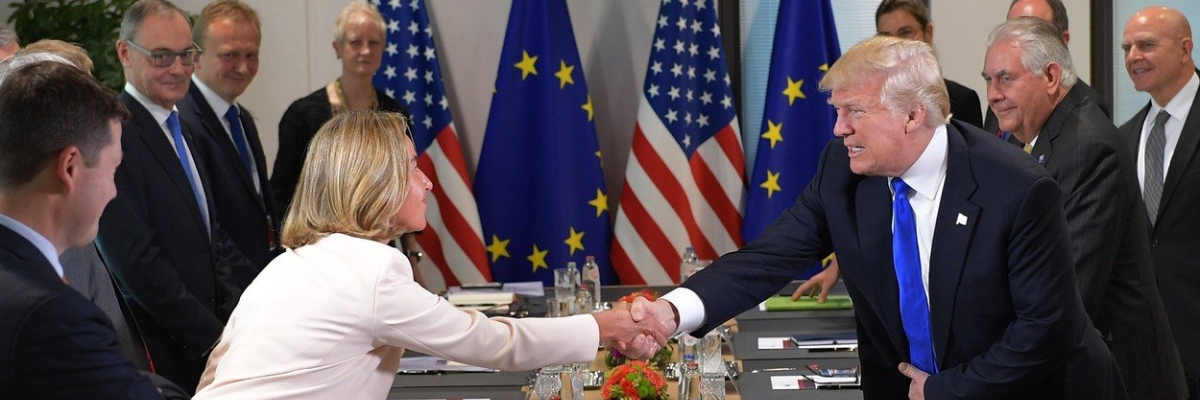
Europe Should Strike a Tough Pose With Trump on the Iran Nuclear Deal
◢ If Europe is serious about saving the nuclear deal, then the appointment of Pompeo, an Iran-hawk in Washington, should serve as an urgent prompt to rethink its current strategy.
◢ Europeans should be clear-eyed about the chances of success of current talks with the United States. Based on recent precedent, Trump is likely to perceive Europe’s flexibility and accommodation over Iran policy as a weakness that he can exploit to raise the benchmarks of demands.
This article is re-published with permission from the European Council on Foreign Relations. Since the initial publication of this article, John Bolton has been named Trump's new national security advisor.
France, the United Kingdom, and Germany (the ‘E3’) appear set to intensify ongoing talks with the US in an effort to convince Donald Trump to stick to the Iran nuclear deal. Trump has threatened to withdraw from the agreement in May unless certain preconditions were met. Europeans hope the ongoing discussions will be able to find a middle way to both safeguard the nuclear deal and address outstanding areas of concern with Iran, such as on missiles and regional issues. However, Trump’s recent nomination of Mike Pompeo as US secretary of state increases the risk that this approach will backfire on Europe.
European policymakers largely viewed Rex Tillerson as a voice of moderation within the White House and as someone who, together with secretary of defense James Mattis, influenced Trump towards a more pragmatic position on Iran. If Europe is serious about saving the nuclear deal, then the appointment of Pompeo, an Iran-hawk in Washington, should serve as an urgent prompt to rethink its current strategy.
Some in European policy circles hoped that Trump’s statement on the nuclear deal on 12 January this year was part of his maximalist negotiating tactics, and that if Europe showed some flexibility, the president would be climb down from these demands. But one of the reasons Trump cited when firing Tillerson was their disagreement over the Iran nuclear deal. This should indicate that the moderate voices in the White House have been unable to bridge gaps between Trump and Europe over the nuclear deal.
Trump, meanwhile, remarked on the “very similar thought process” he and Pompeo share on a number of issues. Pompeo has been especially outspoken on Iran: he opposed the nuclear deal, supported regime change, and downplayed the costs of war with Iran. With Pompeo now in charge of US diplomacy, Europeans are likely to face a tougher and non-accommodating negotiating posture from the Trump administration over the nuclear deal. This comes against a backdrop of rising regional tensions between Iran and Israel, in addition to repeated pledges from Trump to confront Iran, most recently in his Nowruz message marking the Iranian new year.
Trump’s deal-making during his term in office should create doubt as to whether he would actually implement a side framework agreement of the type that his administration is currently seeking to strike with Europe over Iran policy. On foreign policy matters, Trump has remained dangerously unpredictable, and threatened everything from trade war to nuclear war. The pattern of negotiations between his administration and the US Congress over immigration and healthcare suggests that, even if Trump’s counterparts make concessions to fulfil his demands, there is no guarantee that he will, in the end, accept it.
Europeans should therefore be clear-eyed about the chances of success of current talks with the United States. Based on recent precedent, Trump is likely to perceive Europe’s flexibility and accommodation over Iran policy as a weakness that he can exploit to raise the benchmarks of demands. Moreover, by threatening imminent withdrawal from the nuclear deal, Trump is increasingly pressuring the E3 to jump on board with his efforts to undermine the agreement. Republican lawmakers such as Senator Bob Corker have also adopted this stance and warned that, unless the E3 sign up to the side framework agreement that meets US demands, Trump is unlikely to extend sanctions waivers due in May.
Yet, in their attempt to save the nuclear agreement through reaching a broader understanding with the Trump administration on Iran policy, the E3 must ensure that Europe does not become complicit in hollowing out the nuclear agreement. So far, the International Atomic Energy Agency has repeatedly verified that Iran is fulfilling its nuclear-related obligations. However, Iran has firmly indicated it will take reciprocal action to match any US backtracking from the deal. A potential side agreement between the E3 and the US with respect to the nuclear deal therefore risks a tit-for-tat exchange between Tehran and Washington that could alter and muddy their respective commitments under the agreement and cumulatively cause it to unravel.
So, what should Europe do?
In light of Pompeo’s appointment, the E3 should harden their negotiating tactics on the nuclear deal in ways that match the mindset of the Trump administration. First, Europeans should take a unified and more assertive position in forthcoming talks with the US to underscore that they will not be party to, nor accept as permissible, violations of a multilateral and United Nations Security Council-enshrined agreement. The E3 should continue to outline that it will not, and indeed cannot, alter expiration dates of the terms in the nuclear deal (so-called “sunset provisions”) as Trump has demanded. If Trump wants to kill the deal, he must take full responsibility, and Europe should avoid guilt by association.
Second, Europe should continue to show openness to working with the US administration on a follow-up to the nuclear agreement with Iran once the current deal has reached a more mature stage of implementation. The E3 should also have a candid exchange with Iran on regional security and demonstrate to the Trump administration that a range of tools exists to address concerns related to Iran. But in return for this flexibility, Europeans should outline an expectation that Washington will adhere to its existing obligations under the multilateral agreement and minimize the unpredictability surrounding Trump’s waivers of sanctions.
The sequencing of European measures and flexibility will be important to strengthening the E3’s position. For example, the European Union should first receive firm assurances that Trump will waive nuclear-related sanctions in May before it even debates the tougher measures against Iran’s missiles program proposed by the US and reportedly supported by the E3 during a meeting with EU foreign ministers on Monday this week. The E3 should also consider how political and legislative measures within the US could better guarantee US commitments to the nuclear deal. This could entail extensions in the length of time between each waiver of US secondary sanctions related to Iran’s nuclear program (thereby easing the unpredictability surrounding Trump’s actions), and pressing for progress in the Airbus aviation deals with Iran explicitly permitted under the nuclear deal.
Third, Europeans should prepare for the worst-case scenario – namely, a US withdrawal from the agreement and snap-back sanctions in May – and minimise the damage that will ensue. Pompeo’s appointment should be a trigger for European policymakers and companies to step up contingency planning to salvage the deal even without the US. For Iran to continue implementing the restrictions on its nuclear program, there must be a degree of political and economic incentives. As outlined elsewhere, Europe could provide this package to Iran by using a range of political and technical tools that ring-fence companies from the enforcement of US secondary sanctions through legal carve-outs, sector-specific exemptions, political understandings, and reviving the EU Blocking Regulation.
In current talks with the US, Europe should privately stress its willingness to pursue alternative options to preserve the nuclear agreement. A significant benefit of outlining a contingency plan at this stage is the deterrence impact it may have on Trump’s decision to kill the deal through highlighting the isolation the US would face. In short, Europe should outline, as it has done on the issue of trade and the Paris climate accord, that it will work with like-minded coalitions to fill the gaps left by US withdrawal.
This strategy may not, in the end, alter the decision by Trump to execute his campaign promise to “dismantle” the “disastrous deal” with Iran. But this approach at least provides Europe with the political capital to try to salvage the agreement and thereby secure its own non-proliferation goals. If Iran’s nuclear program expands in respond to Trump’s withdrawal, other regional powers, such as Saudi Arabia, have warned that they will do the same. A firm European position in defense of the diplomatic accord may also reduce the growing risk of confrontation between Washington and Tehran in the Middle East, for which Europe will inevitably bear the cost. This approach also sets a precedent that Europe is a credible international partner, demonstrating political willingness to safeguard international norms at a time when global leadership is lacking.
Photo Credit: EU