
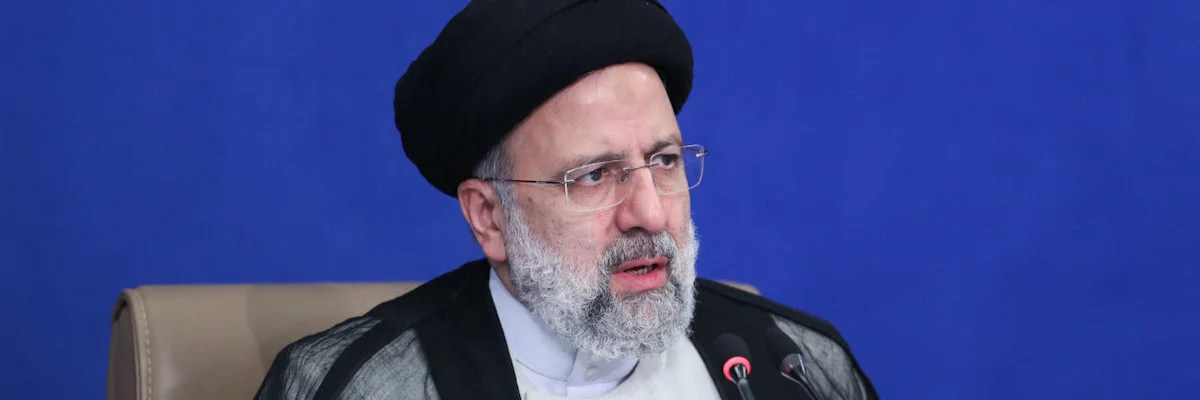
As Iran Faces Domestic Crises, Raisi Must Seek Stability in Foreign Policy
The Raisi administration must ensure that Iran’s foreign policy serves to minimise external challenges, so that the capacity of the government can be focused on the domestic crises where the needs are most acute.
This article was originally published in Persian in the Iranian newspaper Etemad.
The Raisi administration faces numerous challenges. In the domestic sphere, the resurgence of COVID-19, the limping economy, and the spectre of a climate emergency have tested the patience and resilience of the Iranian public, who increasingly doubt the ability of the government to respond to the many crises facing the country. The Raisi administration must make these internal crises its foremost priorities.
But in order to do so, the administration must ensure that Iran’s foreign policy serves to minimise external challenges, so that the capacity of the government can be focused where the needs are most acute. In this regard, the Raisi administration is not unique—governments throughout the region and the world are responding to unprecedented internal crises. The regional and global situation therefore requires a foreign policy doctrine that is rooted in pragmatism and multilateralism. For the Raisi administration, such a doctrine should focus on three priorities.
First, Iranian leaders have rightly pointed out that the sanctions relief provided by the P5+1 following the implementation of the JCPOA was imperfect, lacking the necessary “verification.” While trade did rebound, Iran’s reintegration into the global economy was impeded by the hesitance of banks to engage in Iran-related transactions. By the time President Donald Trump withdrew from the JCPOA in May 2018, reimposing secondary sanctions, little foreign direct investment had materialised, and the most important energy and infrastructure projects had yet to break ground. For this reason some Iranian leaders, consider the JCPOA fundamentally flawed. But the Raisi administration must recognise that the only means for addressing issues related sanctions relief is to remain a party to the nuclear deal, ensuring the U.S. renters the agreement, and then demanding greater attention to issues of implementation from the P5+1. There were only 11 months between the implementation of the JCPOA and the election of Donald Trump—too short a time for many of the complex issues surrounding sanctions relief to be solved. Of course, arriving at solutions will also require economic reforms by Iran, such as full adoption of the FATF action plan. These reforms will also take time as they are carefully considered by Iranian lawmakers. Should the Raisi administration move swiftly and confidently to restore the JCPOA on the basis of mutual compliance, there will be at least three years under the Biden administration, and possibly seven years, in order to work with the P5+1 in a multilateral manner to ensure that the trade and investment promised under the JCPOA materialise, returning Iran’s economy to robust growth.
Second, President Raisi needs to expand Iran’s regional policy to more successfully include multilateral diplomacy with Central Asia. One of the most positive developments of the last year has been an upswing in regional diplomacy. Iran has resumed bilateral negotiations with Saudi Arabia and the United Arab Emirates. The recent initiative of Iraqi Prime Minister Mustafa al-Kadhimi to organise a regional summit in Baghdad is an excellent opportunity to build on this recent dialogue in a larger multilateral format. But there have also been important developments to Iran’s northeast, with a growing effort among the Central Asian states to address regional challenges through multilateral formats. Despite the shared interests over regional connectivity, economic development, and security, Iran has yet to participate in these formats in a serious way. The deteriorating situation in Afghanistan will in particular require coordination with Central Asian neighbours. Javad Zarif completed a tour of Central Asia earlier this year, showing the potential for high-level engagement. But the Raisi administration must develop a clearer strategy for multilateral engagement in Central Asia in parallel with its engagement with Arab neighbours, thereby completing a regional policy that encompasses all of West Asia.
Finally, for the sake of multilateral diplomacy, the Raisi administration must ensure that the Iranian public can access global digital and communications platforms. While the debate in Iran has largely considered it an internal issue, definitive filtering of cyberspace would negatively impact foreign policy in two ways. First, it is important consider that Iran’s most effective diplomats are its own people, who have an outsized impact on the global discourse through their presence on social media platforms. To deny Iranians access to these platforms would prevent Iranians from seeing themselves as global citizens, engaging in a global exchange of ideas, and participating in global commerce. Second, limiting access to cyberspace in the manner proposed would fundamentally change the perception of Iran in the international community, making it more difficult for Iran to engage as an equal and respected party in multilateral formats. In short, should Iran isolate itself in cyberspace it will isolate itself on the world stage.
Iranian has demonstrated remarkable resilience in a period when the country has been isolated and embattled. Because Iran’s strength will not be doubted, the Raisi administration should confidently pursue a foreign policy of pragmatism and multilateralism, ensuring that the country does face the many crises alone.
Photo: IRNA
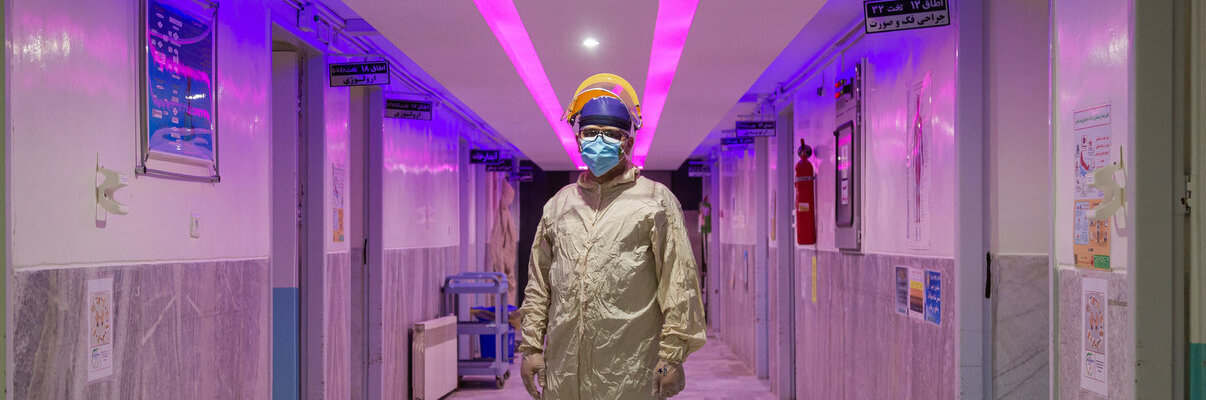
Survey Shows Iranian Pessimism on Economy, Pride in Healthcare Response
A public opinion survey conducted in October by researchers at the University of Maryland provides insights into how the Iranian public is reacting to an economy battered by U.S. sanctions and ravaged by the COVID-19 pandemic
Recent Western reporting and analyses of Iran depict dire circumstances and make natural assumptions about how the population must be reacting to an economy battered by sanctions from the United States and ravaged by the COVID-19 pandemic. A public opinion survey conducted in September and early October by the University of Maryland’s Center on International and Security Studies and IranPoll provides data to compare with these assumptions. The telephone survey included a national probability sample of 1,004 respondents. Some results are surprising, and some are remarkably similar to public attitudes about the pandemic in the United States and European countries.
The survey finds that Iran’s public is more pessimistic about the economy than they were earlier in the Trump administration’s maximum pressure campaign. But domestic mismanagement and rising inflation appear to be bigger factors in this shift than the sanctions per se. Those most directly affected by COVID-19 are more negative about the economy. Yet, the Iranian public is generally satisfied by the government’s response to the pandemic and support public health efforts, even when they make a bad economic situation worse.
Reactions to the Economy
Those Iranians who believe the economy is very bad and getting worse are more numerous now than at any time since CISSM first asked these questions in 2015. When asked to rate Iran’s economic situation, 74 percent called it either somewhat bad (22 percent) or very bad (now a 53 percent majority). Throughout 2018 and into fall 2019, those seeing the economy as “very bad” fluctuated between 40 and 45 percent. The October 2020 level of those saying “very bad” is a marked increase—13 points higher than a year ago. When asked about the direction of economic conditions, 72 percent said they were getting worse—18 points higher than a year ago (October 2019). Only 22 percent said they were getting better.
Optimism about Iran’s economic future has declined unevenly over time. The last time our polls recorded a plurality thinking the economy was getting better was in May 2015, shortly before the nuclear deal was signed. When JCPOA conditions for suspension of nuclear-related sanctions were met in January 2016 but the economy did not show tangible gains, pessimism began to gain ground. Its previous peak was in April 2018, shortly before the Trump administration fulfilled its threat to withdraw from the JCPOA if Iran did not make more concessions. As the Trump progressively ratcheted up its maximum pressure campaign by reimposing sanctions the Obama administration had lifted and adding new sanctions on Iran, the public remained generally pessimistic. Yet, the percentage holding that view declined ten points from April 2018 to October 2019 as the negative effects of new sanctions had less impact on everyday life than anticipated, unemployment decreased, and currency devaluation slowed.
Respondents with higher nominal monthly incomes were progressively more likely to see Iran’s economy as very bad and getting worse. For example, of those in the highest income bracket (average household monthly income over 6 million tomans), 64 percent said the economy was “very bad” and 88 percent said it was “getting worse.” In the lowest income bracket (under 1 million tomans), a lesser 52 percent said the economy was currently “very bad” and 60 percent thought it was getting worse.
This suggests that the recent jump in economic pessimism is related to Iran’s steep currency de-valuation. Average consumer prices have increased by 30 percent this year, which is high – but lower than 41 percent last year. Higher-income Iranians have experience even steeper inflation, because the currency has depreciated sharply despite government efforts to stabilize it in mid-2019. The open exchange rate went from 11,369 tomans to one U.S. dollar in October 2019 to 29,740 tomans to one dollar in October 2020--a 162 percent increase.
We periodically ask Iranians what has the greatest negative impact on their economy: foreign sanctions and pressures, or domestic economic mismanagement and corruption. Given the emphasis placed by Western media and policy experts on “crippling economic sanctions,” it would be natural to expect that a majority of Iranians see this factor as paramount, but that has never been true in CISSM surveys.
In our most recent survey, 57 percent saw domestic issues as the bigger factor, while 36 percent blamed sanctions more. Before the Trump administration withdrew from the JCPOA, a slightly higher 63 percent called domestic mismanagement the more important issue. If the renewed US sanctions have affected general public attitudes at all, they have caused more Iranians to blame foreign pressures rather than their own government. Iranians with higher monthly incomes, however, are progressively more likely to attribute bad economic conditions to domestic mismanagement, with 75 percent of those at the top holding this view.
Reactions to the Pandemic
Iran’s weak economy and the ravages of COVID-19 are mutually reinforcing. When Iranians think about how their society should respond to the pandemic, large but not overwhelming majorities endorse strong measures, while a significant minority disagrees—a pattern similar to that found in Western countries. This is striking given the severity Iranians clearly see in the country’s economic situation. A clear majority of 58 percent thought the government should close restaurants and “workplaces where people work in close proximity” to prevent the virus’ spread--“even if this would damage Iran’s economy.” Twenty-nine percent disagreed, saying “it is more important for the government to encourage economic activities, even if this would lead to more people getting sick.”
Experience of the virus in one’s own circle is a majority phenomenon in Iran. Fifty-nine percent knew someone who has gotten sick “among…family, friends, and acquaintances,” while 41 percent did not. Over a third (37 percent) report personally knowing someone who has died from the disease. The virus’ economic impact has also been harsh, with one in five (19 percent) Iranians reporting that someone had lost a job in their own household. Iranians who know somebody who has died from the virus or who have suffered a pandemic-related job loss are about ten points more likely to say that economic conditions are very bad than those who have not had these experiences.
For comparison with the United States, Kaiser Family Foundation found in September that a lesser 24 percent of Americans knew someone who has lost their life to COVID-19. On the pandemic’s job costs, Kaiser asked a broader question in the United States—whether someone in one’s household had “lost a job, [has] been placed on furlough, or had…income or hours reduced because of the coronavirus outbreak.” In October, 45 percent of Americans said yes. It appears that in the early fall, somewhat more Americans had been affected by job loss, while somewhat fewer had lost somebody they knew to COVID-19 than was the case in Iran.
Despite the strain that the coronavirus has placed on Iran’s public health care system, we did not find widespread dissatisfaction. Asked to “rate the performance of the public healthcare system in Iran,” a strikingly high 85 percent called it “very good” (38 percent) or “somewhat good” (47 percent), with only 15 percent calling it somewhat poor (9 percent) or very poor (6 percent). Rural respondents viewed the system especially warmly, with 45 percent calling it “very good” (urban respondents, 35 percent). This may reflect past investments Iran has made in building out basic healthcare in more isolated areas.
Although Iran has been hard-hit compared to other countries in the region, most Iranians seem relatively satisfied with their government’s performance. We asked respondents to think of “other countries that are similar to Iran” and then ponder whether Iran’s response has been more effective, less effective, or about the same. Given this subjective yardstick, only 25 percent thought Iran had been less effective. Thirty percent thought it had been about the same, and 40 percent thought Iran had been more effective than other similar countries. The more dissatisfied quarter of respondents tended to be more urban, and more pessimistic about the economy than the average Iranian.
These numbers suggest that Iranians are less pleased with their government’s handling of the pandemic that citizens of some advanced countries are, but more positive than people in the United States and the United Kingdom. The Pew Summer 2020 Global Attitudes Survey asked respondents in 14 advanced countries whether their country had done a good job or a bad job with COVID-19. Top scores went to Denmark (95 percent) and Australia (94 percent), and Sweden (71 percent) was comparable to Iran, while the U.S. (47 percent) and U.K. (46 percent) had the lowest satisfaction levels.
We asked about personal compliance with COVID-19 guidelines and about closing schools during the pandemic. The responses were similar to attitudes in the United States. A clear majority of Iranians supports public health measures, but this is not unanimous. Thus, 91 percent said they “wear a mask over [their] mouth and nose” when going out in public, but only 57 percent said they “always” do so. When a vaccine “becomes available in Iran and is approved by Iran’s Ministry of Health,” only 10 percent said they would not take it; however, less than two thirds (62 percent) said they would definitely get themselves vaccinated. Nearly two-thirds (67 percent) said schools should remain closed while 27 percent responded that they should be open for in-person classes.
In conclusion, Iran’s public has a consensus that the country’s economic situation is worse than any time since at least 2015. But they do not see the United States as the primary cause of the country’s troubles. Iranians also seem quite aware that Iran is not the only country in crisis now. Their attitudes toward the pandemic are not different in kind from those found in richer countries, and they are generally proud of their public health service’s response.
Photo: IRNA

For Tourism in Iran, It Wasn't Supposed to Be Like This
With a favorable exchange rate, a famous culture of hospitality, and numerous UNESCO World Heritage Sites, Iran should be a highly sought-after destination for international travelers. But that isn’t how it has played out.
This article is the second in a five-part series.
Read Part 1 here
Iran has many enticements for the intrepid foreign traveler. With its culture and history, its cuisine and its arts, Iran is a highly desirable destination. But for many throughout the world, Iran’s negative portrayal in the media has a major impact on how it is viewed. For the past forty years, Iran has been depicted as a rogue state, an international pariah, and a land of religious fanatics chanting “Death to America” and “Death to Israel.” From George W. Bush branding Iran as a member of the “axis of evil” to Donald Trump’s designation of Iran as the world’s “leading sponsor of terrorism,” a particular narrative has taken root in Anglophone media that positions Iran as a dangerous, hostile, and unwelcoming country.
Dissenting voices, however, do exist. Most important among them are journalists, such as Dutch New York Times correspondent Thomas Erdbrink, whose 2018 Frontline special feature Our Man in Tehran, provides a much needed corrective on Iranian society, focusing on human-interest stories which show Western audiences slices of life in Iran. In vivid sequences, among many other topics, Erdbrink documents “ordinary Iranians’ love of country, love of travel, of music, of fun, the craving for respect and national stature, fascination with America, hatred of injustice, and reverence for parents.”
But perhaps even more important than journalists are travel-show hosts, who show through their own personal experiences just how transformative actually visiting Iran can be. Take for example, Anthony Bourdain, who captured the effect that being in Iran can have on perception of the place and its people in his CNN show Parts Unknown. He narrates his confusion in a street-scene montage at the beginning of his famous Iran episode: “It wasn’t supposed to be like this. Of all the places, of all the countries, of all the years of traveling, it’s here—in Iran—that I’m greeted most warmly by total strangers.” Seated at a kabob restaurant, as he rips apart a piece of noon-sangak, a popular flatbread, he says directly to the camera: “Good to be here, finally—it’s taken some time. Like, a lot of time—like, four years, I’ve been trying. Finally!” Over a shot of meat and vegetable kabobs being prepared and served, Bourdain invites the viewer to “forget about the politics for a moment, if you can,” before extoling the virtues of Iran’s rich, complex cuisine, highlighting Iranian hospitality, and noting that Iranians tend to kill guests with kindness.
While food and hospitality are featured by Bourdain, Rick Steves, another famous travel-show host, highlights the allure of Iran’s other major attraction for travelers and tourists. In the first minute of Steves’ “Iran: Yesterday and Today,” images of Persepolis appear three times, Iran’s 2500-year legacy of civilization is praised, and the viewer is primed for footage of the “splendid monuments of Iran’s rich and glorious past.”
The significance of Iran’s cultural heritage in capturing the imagination of foreign travelers is further reflected in the plot of the 2006 Iranian adaptation of My Big Fat Greek Weeding, titled in Farsi Ezdevaj be Sabk-e Irani (Marriage, Iranian Style). One day while working at her father’s tour agency, the female lead Shirin meets an American, David Howard (Davood), when he comes into the office to schedule a tour to Shiraz. The scene is painfully awkward for both characters—and the viewer, I should add—but through this brief encounter, a budding courtship begins. Shirin’s father is particularly displeased and seeks to distance the two, but her Uncle Mehdi and mother Akram-Khanoum conspire to arrange for Shirin to join the tour as a guide. The first steps of a flirtatious dance between the David and Shirin occur on the tour—upon the Apadana of Persepolis itself no less—and culminate in David’s declaration of his love for Shirin at the Tomb of Hafez. The choice of these settings is far from accidental, connecting the intercultural romance—and by extension, the relationship between the protagonists’ two countries—directly to Iranian heritage.
***
The significance of Iran’s cultural heritage sites, beyond their clear symbolic importance to Iran’s national identity, is reflected not just in media representations of the country, but in the fact that tourism and cultural heritage have been coupled administratively in Iran since their merger into a single government agency in 1982. In its various organizational forms, this agency has overseen the development of a network of museums and foundations, academic departments and research centers, contractors, and traditional craft producers, as well as charitable trusts and religious endowments. In 2019, the former Organization for Cultural Heritage, Handicrafts and Tourism (ICHHTO) was upgraded to the status of an official government ministry (the Ministry of Cultural Heritage, Tourism and Handicrafts or MCTH). While my sources tell me that this has not resulted in significant changes to the structure of the organization or its personnel, it has increased its prestige, and crucially, its budget. Whatever the motives for and ultimate effects of this administrative reorganization might be, the change reflects the important role that tourism has come to play in Iran’s government, public policy, and economy.
According to Mohammad-Hossein Asgharpour, MCTH’s Director General of the Office of Facilities and Resources, in its first year, the ministry oversaw the execution of approximately 750 projects, representing investments of USD 153.6 million, providing direct employment for 7266 people. These projects include everything from the development of hotels, eco-tourism resorts, guesthouses, and health villages, to supporting museums and restoration/conservation efforts. As indicated by a recent statement from the MCTH’s Director General of the Office for Tourism Studies and Training, considerable investments are being made in capacity-building and human capital. In the first six months of the Iranian year 1399 (2020-21), at least 10,000 stakeholders and professionals attended trainings sponsored by the Ministry in a range of domains. These include workshops on topics such as: facilities management, ecotourism and sustainability, applications of new technologies, quality management, financial management, etiquette and hospitality, and training and retraining tour guides. While it is difficult to ascertain the exact proportion of the ministry’s budget spent on human capital and tourism, as opposed to heritage protection, preservation, restoration, and research, there can be no doubt that archaeological sites and museums are a major draw for tourists and represent focal points of infrastructural investment in the tourism industry.
***
With a favorable exchange rate, a famous culture of hospitality, and numerous UNESCO World Heritage Sites, not to mention all the investment outlined above, Iran should by all accounts be a highly sought-after destination for international travelers. Major tour operators targeting foreign tourists are certainly keen to highlight Iran’s cultural heritage on their websites and in their advertising. These firms emphasize above all else the depth of history and culture in Iran, spotlighting ancient monuments as well as Iran’s rich artistic and architectural traditions. One operator currently provides seven main tour packages, three of which are specifically focused on heritage, but all of which involve visiting heritage sites. Another tour leads its pitch with an invitation to experience “the wondrous remains of the ancient capital of Persepolis – the scale and grandeur will leave you in no doubt that this was once the center of the known world.” Welcome to Iran’s Iran Historical Tours describes Iran as a land with an “ancient civilization, rich history, [and] historical monuments,” highlighting Iran’s archaeological heritage as a particular draw for tourists interested in art and history.
English-speaking tourists who might have come into contact with this advertising copy, however, constitute only a fraction of all the tourists traveling to and within Iran. After the United States pulled out of the JCPOA, despite specific targeted attempts to attract foreign tourists to Iran from Europe and China, arrivals from these countries decreased by 25-40%, whereas arrivals from neighboring countries such as Iraq, Azerbaijan, Afghanistan, Turkey, Pakistan, and Turkmenistan increased substantially. According to MCTH, many of these “tourists” are actually pilgrims, who have come to Iran to experience the country’s Islamic—rather than ancient—heritage. In terms of visas issued, the number of pilgrims exceeded tourists in 1396 (2017-18) by approximately 100,000, and in 1397 (2018-2019) by over 1 million.
Regardless of the origins and motivations of tourists coming to Iran, heritage is clearly a draw and is recognized as potentially big business. Prior to and immediately following the signing of the JCPOA, experts and policymakers had hoped that the tourism industry would not only benefit from the normalization of Iran’s international relations, but in fact become a central part of the Iranian economy, providing a sustainable base for employment and revenue for years to come. By MCTH’s own accounting, nearly 1.3 million people are employed in the tourism industry in Iran. In 2016, the economic activity of the sector represented approximately 2 percent of the country’s GDP and all indicators suggest that it continued to grow until early 2020. Before COVID-19 struck, despite American sanctions, the Iranian heritage and tourism sector was flourishing, attracting 8 million foreign tourists in the Iranian calendar year 1397 (2018-19). This represents significant growth from ten years prior, when Iran recorded only 3 million foreign arrivals.
Ultimately, it appears that American sanctions did not significantly slow the arrival of foreign tourists to Iran, though it may have had an impact on who visited Iran and from where. In the first three months of 1399 (2020-21), however, only 74 foreign tourists visited Iran, and with inter-provincial travel subject to stiff restrictions, the tourism industry has been one of the hardest hit by the pandemic, with estimates of losses across the industry exceeding two billion dollars in the first six months of 1399. Regardless of the pandemic, however, because of the pressure of sanctions, the MCTH’s long-term strategic outlook was already focused on fostering the growth of domestic tourism as a pillar of sustainable development. Between 1397 (2018-19) and 1398 (2019-20), domestic tourism reportedly increased by 20 percent. Two European colleagues related that between 2016-2018, while there were increased numbers of Italian, French, German, and Chinese tourists visiting the sites where they were working, the overwhelming majority of tourists were Iranian. It is important to note, however, that while there is substantial domestic demand, spending by Iranian nationals is seen to be lower than that of foreign visitors, even though foreign tourists must travel with cash as it is presently impossible to make payments using international credit cards. Despite obstacles to capitalizing on the available opportunities and the Coronavirus pandemic, this sector is still seen by policymakers as one with great potential for growth.
***
At the present juncture, however, it is difficult to gauge the direct and specific effect of American sanctions on the economics of the Iranian cultural heritage management sector. But by recognizing the importance of Iranian cultural heritage to the tourism industry and examining the impact of American policy on that sector, we can obliquely approximate the consequences of maximum pressure on heritage management. Currently, it appears that American sanctions have had two outcomes: first, there has been a decrease in foreign tourists from Europe and China coupled with an increase in foreign tourists from neighboring countries, presumably for pilgrimage; and second, policymakers have shifted their attention to stimulating demand for domestic tourism. By all measures, however, the industry has been severely handicapped by the COVID-19 pandemic, suffering job losses estimated at around 13,000 by August 2020 among tour guides alone, not to mention in hotels and travel agencies. Prognoses for the future remain bleak, as demand is not likely to rebound soon, and promised government support for the industry has been slow to materialize.
Yet, the importance of tourism for improving Iran’s image on the world stage is clear. According to the results of MCHT-internal surveys, tourists reported a “very positive view” of Iran after visiting, noting how much their opinion of the country had changed after seeing it with their own eyes, rather than through the lens of the media. Ali Asghar Mounesan, the Minister in charge of MCTH, recently observed that tourists are cultural ambassadors all over the world, but nowhere more so than in Iran. Indeed, according to Mounesan, tourism has the ability to bring nations closer together. Iran’s heritage plays a role in cultural diplomacy that goes far beyond tourism, however. In the next article in this series, we will explore in greater depth the impact of American sanctions on museum exchanges and inter-institutional cooperation in the heritage sector.
Click here to read Part 3 of this five-part series.
Photo: Wikicommons

Executives Describe Bottlenecks, Red Tape in Iran's Pharmaceutical Sector
In these interviews, two Iranian pharmaceutical executives detail an acute need for some medicines and shed light on some of the regulatory, operational, and integrity risks that foreign pharmaceutical companies face on the ground.
Iran has made strides in the development of its domestic pharmaceutical sector. When measuring by dosage, just 3 percent of pharmaceutical products consumed last year were imported. But when looking to sales value, imports accounted for USD 1.6 billion of the USD 3.6 billion in total sales last year. Many of the pharmaceuticals that Iran imports are expensive therapies, having been produced using advanced technology that Iran currently does not possess.
Given the importance of many of these imported medications are for the treatment of life-threatening diseases, Iran’s Ministry of Health and Medical Education (MoHME) regularly publishes a list of pharmaceuticals that the country needs and is allowed for import. The list for August included pharmaceuticals needed to treat a range of life-threatening diseases, including Lymphoma, Morquio syndrome, Crohn’s disease, and prostate cancer.
US sanctions have made the import of these pharmaceuticals and the raw materials needed to domestically manufacture more basic pharmaceuticals increasingly challenging. While US sanctions ostensibly do not target the humanitarian sector, international financial institutions remain wary of processing humanitarian transactions with Iran due to fear of falling foul to US sanctions, contributing to medicine shortages.
I interviewed two individuals working in Iran’s pharmaceutical sector in late August to discuss medicine shortages and some of the challenges that foreign and local companies operating have faced since the reimposition of US sanctions. Both interviewees, while highlighting an acute need for some medicines, shed light on some of the regulatory, operational and integrity risks that foreign pharmaceutical companies face on the ground.
Ara (A) owns a pharmacy and is a business development specialist for a company that manufactures pharmaceutical products. Fariba (F) works in pharmaceutics in the manufacturing and production of drugs. Their names have been changed to protect their identities.
Has there been an increase in medicine shortages in recent years?
F: Before, it was very easy to import some medicines like Paladix or Aspirin, but now their import is very limited. Branded pharmaceuticals are limited in availability. A lot of the products that are available in pharmacies are from prior to the reimposition of sanctions.
Do you have an example of a pharmaceutical product that witnessed a shortage in the market in recent years?
F: We had massive problems importing insulin pens, which used to be imported through a foreign pharmaceutical company because they cannot be manufactured in Iran. I believe we are still having problems importing them. When you go to pharmacies nowadays it’s very difficult to find insulin pens. We were forced to tell people who had diabetes and needed the pens to go back to their old ways of injecting insulin so that they don’t use insulin pens anymore. Now, Iran is moving towards the direction of manufacturing insulin domestically.
Are shortages of raw materials needed to produce pharmaceutical products contributing to medical shortages?
A: It’s even become more challenging for domestic companies to manufacture pharmaceuticals for which there is a shortage of in the market because they are having difficulty obtaining the raw materials needed to manufacture finished pharmaceutical products. Foreign companies have been less willing to send us raw materials. India and China are some of the big suppliers, but even importing raw materials form China has become increasingly difficult in the past year. Indian companies are better, but if we want to import raw materials from Europe or elsewhere, it’s very difficult. So even if companies have active licenses to manufacture a product, they are unable to because they don’t have the raw materials needed, causing medicine shortages. However, despite these shortages due to the inability to import raw materials, the IFDA [the Food and Drug Administration of Iran] sometimes won’t allow the finished product to be imported, citing companies that have an active license to manufacture the product in Iran. Part of the reason the IFDA does this is that it wants to spur domestic production—including for raw materials—in the pharmaceutical sector.
F: A huge problem is the import of the raw materials that we need. A lot of raw materials are made by our own chemists, but sometimes we don’t have the products we need to manufacture the finished pharmaceutical product (i.e tablets). For example, for my own work, I order some of my products from two foreign pharmaceutical companies, but it’s become harder for us to import it from them. The shipping times have become longer and there’s also the issues of sanctions and COVID-19. In another example, I wanted to work on Posaconazole, an anti-fungal medication for which the needed raw material is expensive. Posaconazole is needed for people who are in the ICU because they have a fungal infection that isn’t responding to routine medication. We are looking for a company that will be willing to ship it to us, even in small quantities, but we can’t find any willing company. Posaconazole is not being manufactured in Iran, and with the countries that do produce it, there are problems with the shipping and exchange rate. Before the sanctions, we were going to order some products from Spain, Italy, and Holland, but when the sanctions were re-imposed, all of these got cancelled.
Has it become more challenging to import drugs from foreign manufacturers in the past two years?
A: Yes. Foreign companies need to look at the list of pharmaceuticals published by the MoHME that Iran needs and is allowing to be imported. It has become very hard for pharmaceutical companies operating in Iran to import drugs that are manufactured in the country and the chances of importing them is very low. For the drugs that the country needs, like drugs that they cannot locally manufacture because they use advanced technology, IFDA will usually issue companies a conditional license to import the product. For example, the IFDA will issue a company a conditional license in which it will allow the import of a pharmaceutical product for a short period of time on the condition that next year the company will manufacture the product domestically. In some instances, when the renewal time comes for an active license to import a pharmaceutical product, if it is now being manufactured in Iran, the ministry will not renew the license.
F: The MoHME’s budget is now going more towards hospitals and ensuring that they have what they need to combat COVID-19, so the import of some drugs has reduced, especially the ones that can be manufactured in Iran generically.
Has it become harder for foreign companies to get the necessary license and permits for their operations and has it become easier for domestic companies in recent years?
F: No, you can’t say that exactly. It’s true that we are trying to locally manufacture some drugs, but for some drugs while we have the ability to manufacture the medicine, we currently don’t have the technology needed for the device needed to deliver the drug. For example, for insulin pens, the problem isn’t the medicine, it’s the technology of the pen. Sometimes, it’s not that that it’s too hard to locally manufacture a drug that’s the issue, it’s that it’s too expensive to produce, so it’s not worth it for the manufacturers to produce. However, when sanctions were re-imposed, local manufacturers were forced to try and make some drugs that they otherwise wouldn’t pursue, because there is a need.
What are some things that Iran has been doing to strengthen domestic production in the pharmaceutical sector?
A: If a company now wants to import a pharmaceutical product, the MoHME will sometimes, for example, give the company a license to import only 5 percent of the drug’s market share. In other words, they won’t let one company take control of the whole market for a drug. Before, it was more common that when domestic companies were manufacturing a drug that some companies could import the drug alongside it. But now, the ministry has made it much more difficult to do this. Because of this, the underground market has also become stronger.
F: One way that the government has been trying to drive domestic production of pharmaceuticals that we currently cannot manufacture is through a program called markaze roshd [Growth Center]. If university students have an idea to manufacture a pharmaceutical product, some public universities will provide them funding for up to two years to create it. The University of Tehran and Shahid Beheshti University currently have this program. If the students are not successful in creating the product, it is okay, but if they are successful, they will have to give the university a portion of their profits.
Has the underground market for pharmaceuticals become stronger in the past two years?
A: On the one hand, it’s become harder to import products, but on the other hand, the underground market has thrived in the past few years. Many doctors continue to only approve branded products, so when they prescribe patients pharmaceuticals, they’ll advise their patients to definitely opt for the branded version. Since branded products have become less available in pharmacies, the patient goes towards the underground market to find the product, which could pose a reputational risk to those brands.
How do pharmaceuticals enter the underground market?
A: A lot of kolbars [Kurdish porters who smuggle goods between the Kurdish areas of Iran, Iraq, Syria and Turkey] bring products from Kurdistan in neighboring Iraq. A lot of the products in the underground market come from Turkey, since the price for them is low there. Some travelers from other countries bring products to sell. There are many ways.
Photo: IRNA
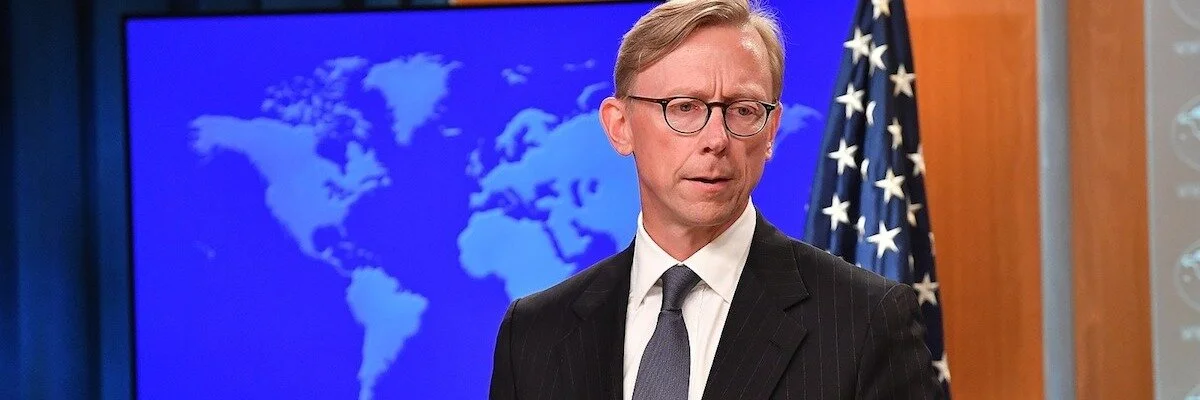
As Iran Faces Virus, Trump Admin Fails to Use Swiss Channel to Ease Medical Exports
A Swiss payment channel touted by the Trump administration as a solution to ease humanitarian trade with Iran under sanctions has so-far failed to process any transactions during Iran’s COVID-19 outbreak.
The report is published in partnership with the European Leadership Network.
Just a few days after Iran announced its first deaths from COVID-19 in February, the Trump administration’s Special Envoy for Iran Brian Hook was asked during a briefing for an update on the Swiss Humanitarian Trade Arrangement (SHTA), a payment channel intended to ease the sale of medicine and medical devices by Swiss companies to Iran. Responding to the question, Hook acknowledged that no further exports had been processed since a pilot sale of $2.55 million of medication a month earlier, but insisted that there were “more transactions coming.”
Two months later, over 6,000 Iranians have lost their lives to COVID-19, and the Swiss channel has yet to process any further transactions.
Since the Trump administration reimposed secondary sanctions on Iran in November 2018, the Swiss government has worked to establish a dedicated banking channel to ease the export of medical supplies to Iran. Switzerland is the second largest supplier of medicine to Iran after the European Union. While technically exempt from sanctions, the sale of medical supplies has been made more difficult as banks refuse to process Iran-related transactions. In a recent client note, former Director of the US Office of Foreign Asset Control (OFAC) John Smith detailed how “the Trump administration’s maximum pressure campaign has likely dissuaded many companies from exporting medicine and medical devices to Iran that they otherwise could.”
New data from the Swiss Federal Customs Administration makes clear that the export of medicine to Iran has weakened over the last year. As a result of these disruptions, ordinary Iranians face rising prices and shortages of sorely-needed medication, a situation all the more unacceptable during a global pandemic.
As COVID-19 spread in Iran, the Trump administration faced increased pressure to ease humanitarian trade. A statement organized by the European Leadership Network and The Iran Project and signed by 24 former senior officials from the United States and Europe warned that “failure to provide relief could have significant and long-lasting consequences for the reputation of the United States and Europe among the Iranian people.” But the administration has yet to respond to these calls with any sense of urgency, deflecting questions on humanitarian trade by pointing to the channel “set up through the Swiss to help the Iranian people.”
While Swiss officials originally hoped the payment channel would be ready in February 2019, it took nearly a year to complete negotiations with the Trump administration and launch the framework. Hawkish officials, including John Bolton, saw the channel as an unnecessary concession to Iran. The administration also proceeded with new sanctions designations that complicated implementation of the channel, including a move in September 2019 to impose new sanctions on the Central Bank of Iran that eliminated long-standing exemptions allowing the bank to play a role in humanitarian trade. The Swiss channel was only “finalized” by the US Treasury Department on 27 February, the same day a new general license was issued restoring key humanitarian exemptions for Iran’s central bank.
The failure to process further transactions through the channel over the last three months is surprising given the reported interest among “dozens” of Swiss companies. But the Trump administration has failed to address two key impediments.
First, companies wishing to use the channel are faced with extraordinary reporting requirements. European officials have likened these requirements to a “fishing expedition” for information about Iran’s financial sector. Rather than simply revive the arrangement that enabled Swiss entities to sustain sales of medicine to Iran after the Obama administration imposed devastating financial sanctions on Iran, the Trump administration increased the documentation and reporting requirements, demanding unprecedented disclosures by Swiss companies on the financial holdings of the Iranian banks from which they expect to receive payment. Even if Swiss exporters are prepared to overcome these hurdles, the channel is obviously ill-suited as a means to ease trade during a global pandemic when purchases of medical supplies need to be made quickly and reliably. Peter Harrell, who worked on Iran sanctions in the Obama administration, has argued that the Treasury Department ought to “temporarily relax some of the most oversight stringent requirements for this” in light of COVID-19.
Second, the Trump administration apparently failed to ensure that there was sufficient liquidity available to allow Iranian importers to pay their Swiss suppliers, leaving Swiss officials in a lurch. The Central Bank of Iran is believed to maintain CHF 50 million in reserves at Banque de Commerce et de Placements (BCP), the bank which has long played a central role in Swiss-Iran bilateral trade and around which SHTA has been designed. In addition, several Iranian private sector banks also hold funds at BCP. A rough estimate of the combined holdings is CHF 150 million. By comparison, Switzerland’s total exports of pharmaceutical products to Iran in 2019 was just over CHF 150 million.
Iranian authorities are reluctant to draw down these reserves, which would be nearly impossible to replenish while the country remains under “maximum pressure” sanctions. In a revealing interview from last December, Brian Hook suggested that Iran maintains access to just 10 percent of its foreign currency reserves. Notably, Iran’s central bank governor, Abdolnasser Hemmati, has suggested that Iran’s request for an emergency loan from the International Monetary Fund (IMF) could help address liquidity issues facing SHTA, stating that the IMF loan could be paid out via the Swiss channel in order to assuage concerns voiced by the Trump administration over the potential misuse of funds.
The successful operationalization of SHTA requires Iranian buy-in. Authorities in Tehran will be concerned about funneling critical trade of medical supplies through a channel made unreliable due to precarious access to financial resources. Meanwhile, recent enforcement actions taken against Halkbank in Turkey and the Industrial Bank of Korea—two banks that have historically supported humanitarian trade but which failed to maintain rigorous compliance standards—will test the resolve of executives at BCP. In another warning shot, OFAC last week announced a $7.8 million settlement agreement with Swiss technology firm SITA, which inadvertently used US-based servers to provide baggage handling services to an Iranian airline making it the “the first company to pay a large settlement merely for routing otherwise lawful transactions through U.S. computer servers.”
The troubled launch of the Swiss channel offers a cautionary tale for other countries seeking to ease humanitarian trade with Iran through good faith engagement with the Trump administration. Since November of last year, the South Korean government has been in discussions with the Trump administration over measures that could revive falling humanitarian exports to Iran. In December 2019, Korean pharmaceutical exports to Iran were down 47 percent year-on-year. Recently, Korean authorities announced that they had made some headway and that they are working to establish the Korean Humanitarian Trade Arrangement, an analogue of the Swiss channel that would be built around Woori Bank.
The Swiss government is advising the Korean government on how to meet the stringent requirements set-forth by officials in Washington. While South Korea is not a major exporter of pharmaceutical products to Iran, it is a former buyer of Iranian oil and Iran maintains significant reserves in the country. One possible solution to the liquidity problems facing SHTA may be to allow Iran’s central bank to draw on reserves held in South Korea in order to make payments to Swiss exporters. In March, Iranian Foreign Ministry Spokesperson Abbas Mousavi complained that the United States was “creating an obstacle for the transfer of Iran’s financial resources into the channel,” and cited an effort to draw “other financial resources in various countries” for use in SHTA.
Against this backdrop, references made by Trump administration officials to SHTA as evidence of efforts to protect humanitarian trade with Iran have been deceptive, if not deceitful. The Treasury Department’s recent reply to congresswoman Alexandria Occasio-Cortez’s letter warning of sanctions impacts on Iran's COVID-19 response, tellingly omits any reference to the Swiss channel, suggesting that the administration is aware that their failure to operationalize the channel during the COVID-19 crisis undermines voiced commitments to humanitarian trade.
Swiss officials should be applauded for continuing to pursue operationalization of the channel despite the hurdles put in front of them. They remain confident that further transactions will be made soon and note progress on a solution that would give Iran freer use of its foreign currency reserves. But the Trump administration abjectly failed to ensure its much-touted channel eased Iran’s access to medical supplies at the moment of greatest need for the Iranian people.
Photo: State Department
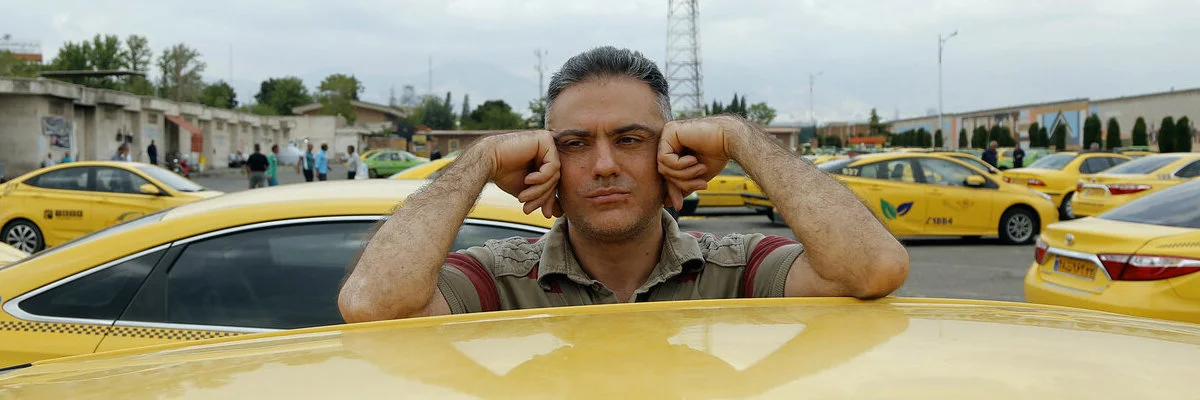
Why Hassan Rouhani Ended Iran’s Lockdown
Iran could face a devastating second wave of coronavirus infections as the country re-opens, but keeping the economy closed down without a safety net would have likely led to unrest.
By Saheb Sadeghi
As businesses resume their activities in Iran at the behest of President Hassan Rouhani, many experts have criticized the government’s decision and warned of a second wave of the coronavirus outbreak. Some even have accused Rouhani of favoring the economy over the health of the people.
According to the latest official figures, there are more than 95,000 confirmed coronavirus cases in Iran, and the death toll has exceeded 6,000.
On April 22, Rouhani described the reopening of businesses as “a necessity for the country.”
To understand the reasons behind Rouhani’s risky and possibly dangerous decision, one needs to look back at the Iranian economy’s condition before the coronavirus outbreak. Iran’s economic growth rate was negative 7 percent. Stagflation had put the economy into a serious crisis.
After the United States’ 2018 withdrawal from the nuclear deal and reimposition of sanctions, Iran’s foreign trade and oil exports declined dramatically—and political tensions with Gulf neighbors spiked as the United States deepened the crisis.
In the meantime, the International Monetary Fund had predicted that Iran’s economy would shrink 9.5 percent last year, and according to the Central Bank of Iran, the annual inflation rate reached 41 percent, the highest level in 25 years. The number of unemployed people had already reached about 3 million before the coronavirus crisis, and some estimates would suggest the number to be even higher.
Then came the coronavirus outbreak. After the government’s decision to shut down businesses, at least half of Iran’s economy, which is dominated by service sector jobs, was seriously affected. The living conditions and welfare of an estimated 7.3 million people became precarious as millions lost their jobs and others had their wages or hours cut.
The shutdown came at a time when many businesses were expecting almost 50 percent of their annual income during the last two months of the Iranian year before Nowruz, the Persian New Year, at the end of March.
Every year during the last Iranian month of Esfand (beginning in February and ending in March) and before the New Year people usually do most of their shopping. Esfand is followed by the first month of the year, Farvardin (March 20-April 19), which is generally a month of holidays and tourism. During Farvardin, many businesses—including restaurants, travel agencies, and hotels—tend to witness a boom, but this year their revenues reportedly fell by more than 90 percent.
Estimates suggest that Iran’s GDP has now decreased by about 15 percent as a result of the disruption to businesses, and that the economy will shrink further compared to last year. Businesses have reduced their activities as well as their workforce, and statistics show that about 36,000 people are applying for unemployment insurance each day.
Although the increase in the unemployment rolls caused by coronavirus outbreak has not been officially announced yet, some estimates indicate that 1 million Iranians have lost their jobs during the crisis, while other figures put the number at 2 million.
Under such circumstances, government support could have eased the pain, but extending a safety net was not an option in Iran. While income support measures were introduced all over the world to deal with the economic consequences of the coronavirus outbreak, Rouhani’s government could not afford to assist affected businesses due to a lack of financial resources, largely because U.S. sanctions have denied Iran access to its assets and money held in foreign banks.
The financial assistance amount that Rouhani has so far promised to support affected businesses is 100 trillion tomans ($6.25 billion), most of which is supposed to be paid to businesses in the form of loans. (One toman is equivalent to ten rials. Although the rial is the official currency, Iranians use the toman in everyday life.)
These loans have a three-year repayment term with a 12 percent interest rate. In the event of a second coronavirus outbreak and a bad economic situation, the government will give these loans to businesses; in normal times, bank loans would come with a higher 20 percent interest rate.
According to the Iranian economist Mohammad Hashem Botshekan, this economic package was more like a monetary policy than an economic stimulus; if the government were seriously considering an economic survival package, it would need to give interest-free loans to businesses, and it would provide free economic assistance to the people. Furthermore, the amount spent by the government compared to the volume of Iran’s GDP was insignificant.
After all, the U.S. government’s package accounts for approximately 10 percent of the country’s total GDP, the German and Japanese support packages are equivalent to about 20 percent of their GDPs, while the economic packages of some Persian Gulf countries accounts for about 30 percent of their GDPs. But the offered economic survival package from the Iranian government only equates to 2 percent of the country’s GDP.
Rouhani’s government also announced that it would give a 1 million-toman loan (about $62) to low-income families—an interest-free loan that would be repaid in 24 monthly installments, sparking widespread criticisms. This amount is equivalent to half of the minimum monthly salary of a laborer in Iran and would not do much to help people with their economic hardships.
But the Rouhani government’s revenues have shrunk dramatically. Since the coronavirus pandemic began, demand for oil has declined, pushing prices down. Moreover, another source of revenue for the Iranian government—taxes—has been seriously eroded due to the closure of businesses. Indeed, the government has stopped collecting taxes from some businesses that have been financially damaged as a result of the coronavirus pandemic—but it is the government that will decide which businesses receive a three-month deferment of tax payment.
In the end, Rouhani had only two options: Either he could go on with the shutdown of businesses and government bodies until the virus is brought under control and the medical and health system of the country is restored to normal, or, due to the dire economic situation, he could allow the businesses and government offices to resume their activities.
He opted for the latter and reopened the markets and government offices on April 11, a decision that sparked a great deal of criticism from medical experts as well as some high-ranking government officials such as the head of the judiciary, who criticized the government for prioritizing the economy over the health of the people.
Rouhani ordered almost all economic sectors, including financial markets and shopping centers to fully resume their activities. Some high-risk businesses such as sports clubs, big restaurants, and cinemas are not still allowed to reopen. Even now, several weeks after the decision was implemented, Iranian health officials are still declaring their opposition to it.
Since the reopening of businesses and government bodies, social distancing measures in Iran have not been observed; in a matter of few days, people began to act as if the coronavirus crisis was over and life had returned to normal.
Although the pace of coronavirus-related deaths has decreased recently, more than 1,200 new cases and about 100 deaths from the virus are still being reported each day. According to health officials in some cities, such as Tehran, the number of people infected with the coronavirus is increasing. Many doctors and officials in Iran’s health sector are scared, saying that the government’s decision to lift social distancing restrictions may soon lead to a second wave of infections.
Indeed, a resurgence of the pandemic could have a much more devastating impact. The illness and death of tens of thousands of people in a second wave would force businesses to close once again, and the Iranian health care system would come under immense pressure. Under such circumstances, the government would barely be able to keep the economy alive and stable. The government’s revenues would further shrink, and it would probably not be able to support poor and low-income families. In such a situation, millions of people could lose their jobs and a greater economic recession might put Iran’s economy at risk of collapse.
While Rouhani’s move could lead to a new outbreak with all the devastating consequences it brings, his unpopular decision has, for now, saved the economy from further deterioration and possible protests.
Rouhani’s decision was based on the view that Iran has passed through the first major wave of the coronavirus outbreak and that continuing curbs on economic activity are no longer justifiable. According to this view, an ongoing economic lockdown would have dangerous consequences for the country. The unemployment rate would rise sharply, many businesses would go bankrupt, and social unrest could follow.
While Rouhani is well aware that there is a risk of a second wave, the country cannot keep the lockdown in place for another month or two because the government cannot make up for the losses suffered by businesses, as wealthier governments in Europe and North America have done. That is why he is insisting on bringing the economy and society back to normal as soon as possible.
The country has yet to leave behind last November’s public protests against the substantial increase in the prices of gasoline, fear of reemergence of public protests and riots was evident in a letter sent to Rouhani by 50 economists on April 3. They cautioned him that the economic consequences of the coronavirus crisis could lead to unrest in the second half of the Persian Year 1399, which has just begun, and that the next year, 1400, would be a year of crisis.
Saheb Sadeghi is a columnist and foreign-policy analyst on Iran and the Middle East. Follow him at @sahebsadeghi.
Photo: IRNA
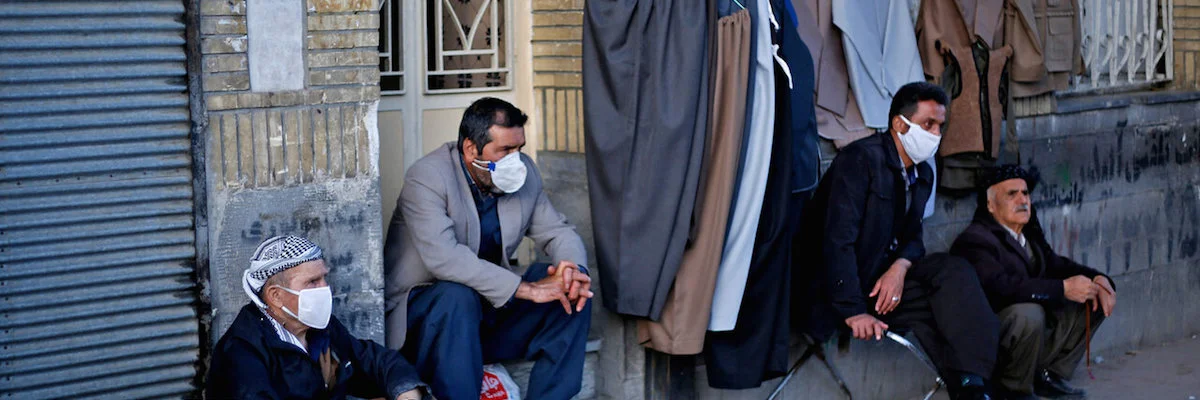
Bleak Estimates of Economic Impact Spur Iran to End Virus Lockdown
Several reports released by key ministries and research centers over the last few weeks warned of dire economic if the government did not rollback the lockdown, despite warnings from health experts about the risks of new infections.
Following two years of recession triggered by the Trump administration’s “maximum pressure” sanctions campaign, Iran was showing signs of economic recovery in the last quarter of 2019. But when authorities announced the country’s first confirmed deaths from COVID-19 in mid-February, Iran was thrust into a new crisis. According to official statistics, COVID-19 has caused over 5,000 deaths and 83,500 infections to date.
Fears that authorities were slow to contain the crisis have now been replaced by a new concern—like many developing economies, Iran may not be able to afford the protracted lockdown necessary to bring the virus fully under control.
Iran entered a partial lockdown on March 13, one week before the Nowruz holiday. The lockdown measures were further tightened on April 4, just after the holiday period ended. But on Saturday, authorities allowed some businesses to begin reopening, including shops and bazaars. The decision to rollback the containment measures despite the continued risk of infection was informed by a set of reports, which presented dire assessments of the virus’ economic impact.
A 17-page report published earlier this month by the Majlis Research Center, a highly-regarded research organization affiliated with Iran’s parliament, called on the Iranian government to focus on two goals: o provide more support for businesses through tax breaks and delaying debt servicing in order to prevent mass layoffs and to stimulate demand while shielding the most vulnerable in society from the economic blow of the pandemic. In support of containment measures, the report explained that “a maximal reduction in social interactions will be necessary for the coming month” in order to slow the spread of COVID-19. But at the same time it warned of the steep economic costs of any protracted lockdown.
Similarly focused on the impact of the lockdown on Iran’s service sector, an assessment by the Ministry of Welfare, Labor and Social Affairs suggested that lockdown measures put 4 million people at risk of long-term unemployment, a figure that includes 700,000 individuals who are informally employed.
The macroeconomic impact of the slowdown is also captured in new projections from the International Monetary Fund, which has revised its estimate for Iran’s 2020 economic growth from flat growth to a contraction of 6 percent, which would mark three consecutive years of substantial recession.
Iran’s Ministry of Economy released its own report on the eight challenges facing the Iranian economy for in the coming year. Foremost among these challenges is the impact of intensifying U.S. sanctions on Iran’s access to its foreign currency reserves—an challenge made more acute given that Iran’s foreign exchange earnings will be hit by both the historic low oil price and the slowdown in global trade, which will depress Iran’s non-oil exports. The report also noted the impact of the economic crisis on consumption. While consumption in Iran had remained relatively stable in the face of sanctions pressures, the lockdown and reduced purchasing power have reduced demand.
Efforts to provide relief to ordinary Iranians and boost consumption are straining government budgets already unbalanced by the low price of oil. The Rouhani government’s ratified budget for the current fiscal year—ending March 20, 2021—accounted for substantial oil exports and a global oil price of USD 50 per barrel. Although the government budgets are in disarray, the government has moved to introduce a fiscal stimulus to soften the economic blow of the lockdown.
The Rouhani administration has introduced a cash stimulus package that will provide between IRR 2 million to IRR 6 million in supplementary transfers (equivalent to USD 12 to USD 36 at the free market rate) to households already receiving welfare support. This “coronavirus transfer” will be paid for an initial period of four months. In addition, the government will make available a one-time no-interest loan of IRR 10 million (equivalent to USD 62) to the 24 million households which currently receive welfare transfers.
But the stimulus measures have been criticized as insufficient given the extent of the economic crisis and the hardship facing millions of Iranians. Acknowledging the shortcomings of the stimulus plan, central bank governor Abdolnasser Hemmati expressed regret, saying that if it were not for U.S. sanctions the government would have greater resources to support the public.
As is tradition, Iran’s Supreme Leader, Ali Khamenei, have a televised address on March 20 outlining his policy goals for the coming year. For this year, Khamenei has called for a “leap in production.” But as the government struggles to manage tradeoffs between public health crisis and economic welfare, the country’s policymakers are set to make a leap into the unknown.
Photo: IRNA
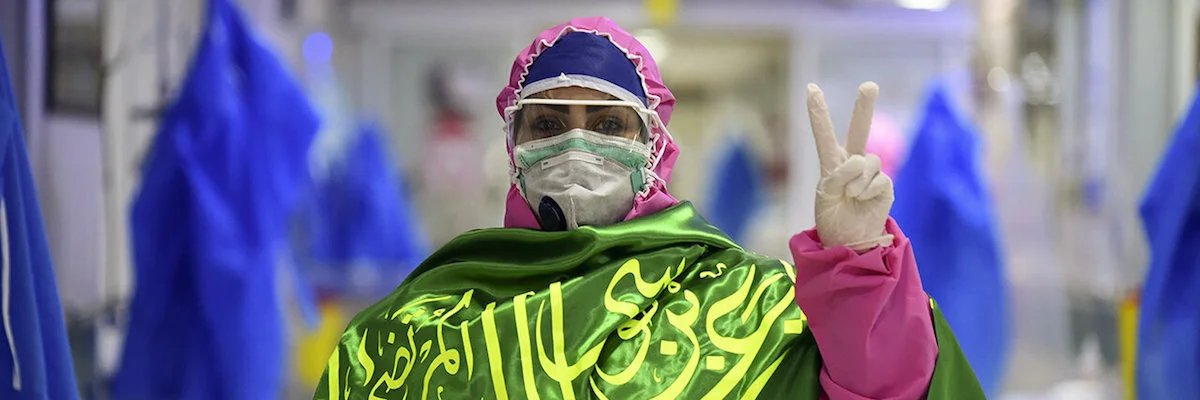
Iran’s Nurses Are Martyrs to Trump’s Maximum Pressure
The Trump administration’s sanctions have made it impossible for Iranian medical personnel to keep themselves safe amid the pandemic.
By Negar Mortazavi
Narjes Khanalizadeh was a 25-year-old nurse in Gilan, a province along the Caspian Sea in northern Iran. In late February, after working with coronavirus patients at a hospital in the city of Lahijan, she fell sick. Within a few days, she was dead.
A week later, results from a coronavirus test that had been administered before her death came back positive, sparking anger and fear among the country’s nurses. Khanalizadeh, who had been working without adequate protective gear, is one of more than a dozen nurses who have died from the coronavirus since February, despite desperate warnings from nurses about shortages of personal protective equipment at hospitals, including at Khanalizadeh’s.
Upwards of 100 Iranian health workers have died from the coronavirus, prompting Iranian Supreme Leader Ayatollah Ali Khamenei to announce in March that doctors and nurses who die from the infection will be recognized as “martyrs,” an honorific usually used for soldiers who sacrifice themselves in battle and that authorizes the families of the deceased to receive certain benefits, such as subsidized housing and education. But Iran’s official response to the crisis has been slow and inefficient, and U.S. sanctions are making things worse. In 2018, U.S. President Donald Trump pulled out of the Iran nuclear deal and reimposed harsh economic sanctions on the country, hampering access to desperately needed medical supplies and equipment.
Now, Iran’s nurses—the majority of whom are women—are among those bearing the worst of the brunt of U.S. sanctions. Official death counts from the Iranian government aren’t broken out by profession and are widely believed to understate coronavirus fatalities. A group of doctors in Iran that has been tracking the deaths of health care workers puts the number of nurses who have died at at least 15 between late February and mid April, but even that almost certainly underestimates the toll as health workers have reportedly been instructed by government officials not to reveal information about shortages, infections, or deaths. Dozens more nurses have been infected, in part as a result of restrictions imposed by the Trump administration.
While food and medicine are exempt from U.S. sanctions, many medical supplies and certain types of equipment are not. To sell some protective items to Iran, including full face mask respirators and some decontamination systems used to sterilize them, companies need a special license from the U.S. Treasury Department (see here for a list of items requiring special authorization). In March, the Washington Post reported that the Trump administration has reduced the number of licenses granted to companies that export medical supplies to Iran.
Even when a license isn’t required to ship humanitarian items, some companies and banks avoid doing business with Iran altogether for fear of being penalized. The country also has far fewer financial resources available to purchase necessary supplies due to sanctions. “This year, Iran is running its largest ever fiscal deficit—50 percent of its budget,” said Hadi Kahalzadeh, a former economist for Iran’s Social Security Organization. “Iran’s health sector, especially hospitals and pharmacies, don’t have enough liquidity to purchase essential supplies. And the Iranian government doesn’t have the financial means to fill the gap.”
Alan Veisi, a biomechanics engineer at Baran MicroTech, a company in Iran that produces some medical equipment that the country isn’t able to import due to sanctions, said even one of Tehran’s most prominent hospitals, Imam Khomeini, has shortages of N95 masks, gloves, and protective gear. “They need 500 to 1000 masks every day,” he said. “But get only 300.” Other hospitals are experiencing similar shortages.
For Iran’s nurses, the risks of contracting the coronavirus are compounded by low wages, poor working conditions, and severe overwork. It begins with the fact that there are far too few of them. According to World Bank data from 2015, Iran has 1.9 nurses per 1,000 people, compared with 2.3 in China, 5.9 in Italy (in 2017), and 8.6 in the United States. Iran’s nurses are under intense psychological pressure, working long hours and even sleeping at hospitals. Some haven’t seen their children or families for days or weeks.
The toll hasn’t been merely psychological. Testing in Iran has so far been restricted only to severe cases, so the dozens of officially reported infections among nurses are likely a vast undercount. Meanwhile, the number of Iranian nurses who have died from the coronavirus is roughly on par with the number of nurses who have died in Italy, even though the official overall death toll there is more than four times higher, suggesting that Iranian nurses are disproportionately at risk. Many experts and human rights groups also believe the Iranian government is underreporting coronavirus deaths to dispel criticism of its response.
Where official mismanagement and harsh U.S sanctions are failing Iranian nurses and health care workers, nonprofit organizations are partially stepping into the void. Some of the need for protective equipment is being filled by humanitarian groups that already have licenses from the U.S. government to operate in Iran. One of these organizations, Relief International, has been importing N95 masks and Tyvek 400 protective coveralls. UNICEF Iran has also been importing two types of high-filtered respiratory surgical masks, N95 masks, and surgical gowns for Iranian health personnel. But even these organizations have had to overcome supplier reluctance to ship to Iran, and the need for protective equipment far surpasses what they are able to provide.
Domestic producers have picked up some of the slack, but many medical supplies produced in Iran still rely on foreign equipment and raw materials imported from abroad—at prices far higher than what they would get if they could buy from countries directly. “Iranian importers have to pay around 30 to 50 percent more for goods through third countries,” said Bijan Khajehpour, a managing partner at Eurasian Nexus Partners. “This means that for a total annual import figure of $50 billion, Iran will end up paying about $15 billion more than the value of the goods.”
There is bipartisan precedent in the United States for sanctions relief for Iran in times of crisis. After an earthquake devastated the country in 2003, the usually hawkish George W. Bush administration eased sanctions for three months to expedite aid and assistance. The Obama administration took similar measures after another earthquake hit Iran in 2012, easing sanctions for 45 days to facilitate humanitarian aid.
But despite both domestic and international calls for Trump to follow suit, the current administration is showing no signs of giving Iran any relief during the pandemic, other than vaguely worded offers to “assist the Iranian people in their response efforts.” Tehran rejected the overture as “insincere” and politically motivated. Last week, the State Department called the Iranian government’s requests for broader sanctions relief a “scam,” and the Trump administration has said it will block Iran’s request for $5 billion in emergency assistance from the International Monetary Fund to deal with the outbreak.
In March, Mohammad Sharifi Moghaddam, the head of a leading nurses’ union in Iran, told a local news organization that the death toll for nurses in Iran during the coronavirus pandemic has been “unnatural” compared with other countries that have been hit hard by the virus, blaming government mismanagement, staff shortages, and lack of protective equipment. While there is little question that the Iranian government’s response to the coronavirus has been a failure, U.S. sanctions have made the situation worse by disrupting other avenues for humanitarian aid—and the likely result is many more Iranian nurses and health care workers being made into martyrs.
Negar Mortazavi is an Iranian-American journalist covering Iran in English and Persian.
Photo: IRNA
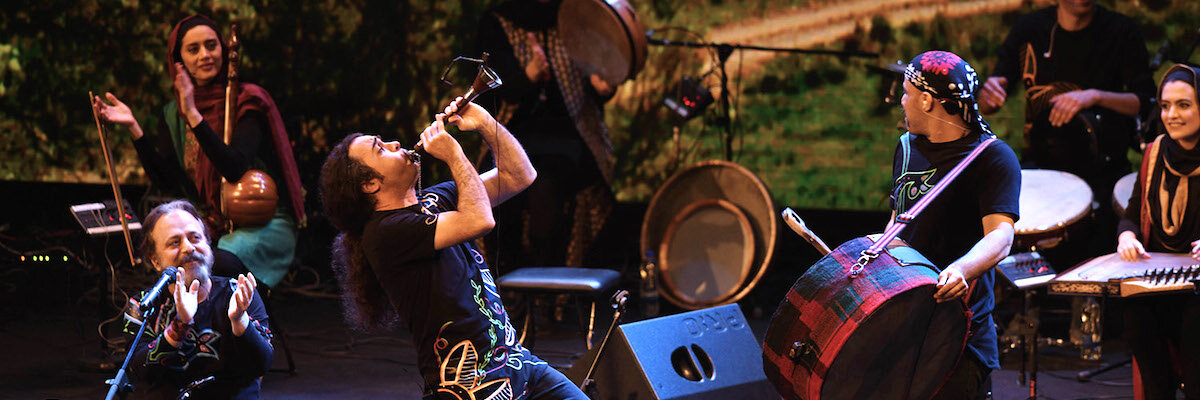
In a Time of Crisis, Iranians Seek Comfort, Connection Through Music
The coronavirus outbreak has wrecked Iran’s cultural calendar, putting strain on finances of theaters and livelihoods of performers. But Iranian artists are rising to the occasion, finding ways to ensure their music reaches audiences at a time when it is needed most.
Iran is enduring one of the world’s worst outbreaks of COVID-19. Over 73,000 infections have been confirmed in official figures. Faced with uncertainty and isolated during a national lockdown, Iranians have sought comfort and connection through music.
The coronavirus outbreak has wrecked Iran’s cultural calendar, straining the finances of theaters and the livelihoods of performers. But Iranian artists are rising to the occasion, finding ways to ensure their music reaches audiences at a time when it is needed most.
Concerts are being given in empty performance halls, but streamed to millions online. Musicians are practicing in the solitude of their homes, but connecting with fans on social media.
Alternative band Bomrani, whose sound combines influences from traditional Iranian music, jazz, and gypsy punk, had planned to give four concerts in March—all canceled due to the outbreak. The band decided to experiment with an online concert
With Bomrani’s six members social distancing, they decided to release a recording of a concert performed last year on the grounds of Sa’dabad Palace. They used Instagram to stream the concert. The platform’s chat function allowed the band to connect with fans during the stream.
“It was really nice. The whole band was online. We were chatting with each other, making jokes, and fooling around. This created an intimate atmosphere,” said lead singer Behzad Omrani.
“People later told us that it felt as if Bomrani had thrown a party and we were sitting next to them listening to the music,” he added.
The band had tried live-streaming performances before. “But we didn’t take it that seriously. You can’t compare anything with the joy of performing in front of an audience but we have to make do with what we've got.”
Despite the serious times, Omrani explains that the band isn’t taking their online performances too seriously. “I don’t look at these concerts as doing society a service,” Omrani explained. “That’s not what art is to me. Giving online concerts is a way for me to express myself, to be myself, and to enjoy myself.”
Despite this, Bomrani do not shy away from difficult topics in their music. “We’ve got an album in the pipeline, ‘Probably There Is No Hero’. It’s about all we have been through over the past year both personally and as a country,” he said.
Iranians rang in Nowruz, the Persian New Year, three weeks ago, just as the coronavirus crisis mounted. Omrani describes the year just passed as “really harsh” and “totally unprecedented.”
He thinks the music industry in Iran will be changed by the experience of the coronavirus. “The outbreak has catalyzed a transformation. Five or six years ago no one would have believed that one day musicians would throw online concerts in Iran. Things are changing and they are changing fast.
Power of Music
Iranian authorities have also sought to use the power of music. But the concerts have not been without controversy.
As part of a broad “stay at home” campaign, Tehran Municipality organized a series of online concerts between March 27 and April 9. The concerts were recorded live at the central hall of Tehran’s iconic Milad Tower and streamed online, reaching a staggering five million viewers.
The popularity of the first concert caught the attention of the leadership of IRIB, the state broadcaster and de facto media regulator. Reports emerged that IRIB had prohibited the concert organizers from streaming video of the performers on stage.
On March 28, a performance by musician Omid Jahani was streamed with scenes from nature rather than video of the performer. But the following day, IRIB denied imposing any such rules and the concerts were streamed as originally planned, bringing performances from the likes of Roozbeh Bemani, Reza Yazdani, Sadollah Nasiri and Mohsen Sharifian into the living rooms of Iranians across the country.
Peace of Mind
Musician Siavash Mollaeian plays the kamancheh, a traditional string instrument that features in Iranian, Kurdish, and Azerbaijani music. He is an unlikely convert to online performances. “I’ve never been into social media and giving online concerts. It was never my thing,” he said.
“Following the outbreak, I was feeling down. Then a friend reached out to me and asked me totally out of the blue, ‘Why aren’t you giving concerts on Instagram? It would be really nice and you’d enjoy it.’”
After mulling it over for a few days, Mollaeian decided to give it a shot.
Now, regularly gives live performances for his followers on Instrgram. “I received messages telling me that my music instills a sense of calmness and rekindles hope. I didn’t expect that,” he said.
Mollaeian believes that the uncertainty introduced by the pandemic has taken a toll on people, who are increasingly anxious about the future. “My music is a reflection of my personal struggles. I think coming across works of art, people see what they long for. And these days what people need is peace of mind and hope.”
In a time of crisis, a deeper sense of community has emerged. “People are working hard to rekindle long lost friendships. They are more willing to go the extra mile to get in touch with strangers, to forge new fellowships, to go beyond boundaries,” Mollaeian explained.
Bridging the Gap
Two weeks ago, Mollaeian reached out to Aida Shahghasemi with a simple invitation: to perform a duet.
Shahghasemi is an Iranian-born singer and kamancheh player living in Minneapolis, Minnesota. She and Mollaeian have never met in person—they got to know one another through social media.
“We have known each other for years. We had discussed doing a joint project but had never managed to do so,” Mollaeian said.
The pandemic provided the two artists with a chance to bridge the 10,000-kilometer gap between Iran and the United States.
Shahghasemi is a music teacher who has also had to adapt as the coronavirus outbreak in the United States worsened. “My husband and I, along with our dog, have been self-isolating since March 13. Following the outbreak, I had to switch to giving online classes,” she said.
She has seen a surge in demand for classes over the past few weeks as people search for new hobbies to pass the time. But Shahghasemi thinks that for most of her new students, learning music, like the lockdown, will be temporary. “I think many of them might not have enough time to continue taking lessons after the pandemic is over,” she noted, wryly.
After agreeing to play a duet, Mollaeian and Shahghasemi did a trial run to test their Internet connection. But otherwise, they decided improvise their performance. On April 3, they performed a few pieces live on Instagram.
For Shahghasemi, the online performance lacked the ritual and the connection with the other musicians that make concerts special. “With these online performances, artists go online, people pop in, listen to half a song, get distracted by notification on their phones and drop out. It certainly wasn’t as fulfilling as performing in front of an audience,” she admitted.
Shahghasemi is hesitant to give it another try. “Maybe I’m holding myself back but I’m open to collaborating with my fellow artists and friends.”
But for Mollaeian the concert still felt meaningful, perhaps because of the lack of context. “While playing the duet it felt as if she was sitting next to me. So far, yet so close. We are practicing social distancing, but are we really distancing from each other? To me, it doesn’t seem that way. The crisis is bringing people together. New connections are being made.
“Iranian, American. In the face of this pandemic, these differences are immaterial,” Mollaeian said, referring to the longstanding animosity between the governments of the United States and Iran.
“Humans have been divided by borders and boundaries for ages. Technology has afforded us the opportunity to cross such boundaries—and with our music we have.”
Photo: Amir Jadidi
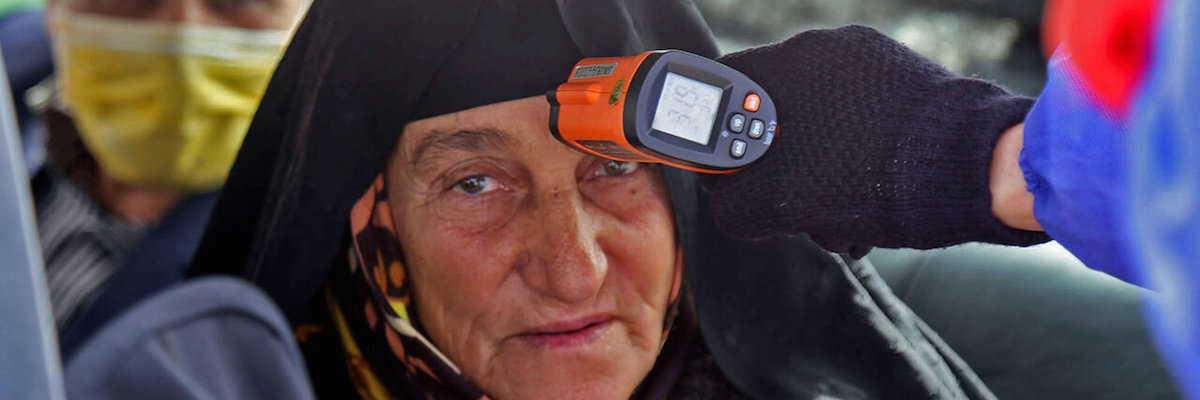
How Europe Can Help Iran Fight COVID-19
The Iranian healthcare system is reliant on long-standing relations with European suppliers to see it through the COVID-19 crisis. European governments should press the US to strengthen the humanitarian exemptions in its Iran sanctions.
This analysis was originally published by the European Council on Foreign Relations.
Iran became an early epicentre of the COVID-19 outbreak due to its close political and economic relations with China. Yet the Iranian healthcare sector overwhelmingly depends on European medicine and medical devices—products that China has been unable to replace. While the European Union and its member states must prioritize their own fight against the virus, they should also protect this important humanitarian connection with Iran.
The Iranian healthcare system is reliant on long-standing relations with European suppliers to see it through the crisis. If there is a grave breakdown in either this supply chain or Iran’s healthcare sector, it will spell trouble for Europe. Given that Iran continues to be the epicenter of the pandemic in a fragile Middle East, the coronavirus is likely to lead to increased refugee flows (particularly among Afghan communities) to Europe. Despite their conflicting opinions on the leadership in Tehran, Europe’s Iranian diaspora community – who, until recently, often travelled to Iran – broadly agree on the need for enhanced humanitarian assistance to Iran, which could save hundreds of thousands of people.
Following two years of recession linked to systematic mismanagement, falling oil prices, and the unique pressure created by US sanctions, Iran’s government is facing extreme trade-offs between the optimal public healthcare response and the need to prevent a full-blown economic crisis. These sanctions hamper Iran’s immediate response to COVID-19.. Despite their humanitarian exemptions, the measures make the import of medicine and medical equipment – as well as the raw materials needed to produce many of these goods in Iran – both slower and more expensive. This erodes the capacity of the Iranian healthcare system to replenish its inventories as Iran’s outbreak moves into its third month. Moreover, the Iranian government cannot afford the type of economic stimulus packages that governments across the globe have implemented to reduce the impact of lockdowns.
While the US has made general offers to send aid to Iran, leaders in Tehran will perceivethem as disingenuous for so long as the sanctions are in place. Given the sharp downturn in US-Iranian relations under the Trump administration, it is unrealistic to think that either the United States will provide full sanctions relief or that Iran will accept aid from a country it believes to be pursuing regime change in Tehran. Although the more hard-line elements within the Iranian system are suspicious of European assistance (as recently reflected in Iran’s sudden rejection of aid from Médecins Sans Frontières), there is some breathing room for the country to cooperate with Europe on this front.
Building on recent announcements by the EU, France, the United Kingdom, and Germany, European governments should continue to provide financial assistance and other aid to Iran’s public healthcare system and trusted NGO partners working in the country. European companies can also boost humanitarian trade via the Instrument in Support of Trade Exchanges (INSTEX) – which has now processed its first transaction, targeting Iran’s core public healthcare needs in the fight against COVID-19..
The European Commission has implemented export controls on key items in the fight against COVID-19, to minimize shortages in Europe. This move puts Iran and other low-income and developing countries at even greater risk, given their significant reliance on European exports. Rather than cut these supply chains, which forces Iran to turn to China and Russia, the EU should explore whether Iran could ramp up its production of basic medical equipment, such as surgical masks, to help meet demand in Europe. This would allow European manufacturers to focus on the production of more advanced items, such as face shields – the surplus of which it could/ sell to Iran.
Most importantly, European governments and the EU should press the US to strengthen the humanitarian exemptions in its sanctions. European leaders should urge the US Treasury to expand and clarify the scope of these exemptions to directly include products Iran needs to combat COVID-19 effectively. Such clarification, which could take the form of a “white list” of goods, should allow European companies to apply General License No. 8, under which the Central Bank of Iran can help facilitate humanitarian trade.
Given the unprecedented humanitarian fallout from the COVID-19 crisis, European governments should also urge the US administration to issue comfort letters to European banks that already conduct enhanced due diligence on trade with Iran. This would help reassure these banks that the US Office of Foreign Assets Control will not penalise them for providing payment channels to exporters of humanitarian goods. The Trump administration recently took the unprecedented step of issuing such a letter to Swiss bank BCP under the Swiss Humanitarian Trade Arrangement. As former US official Richard Newphew has argues, the US could provide similar letters to manufacturers and transport firms, helping reassure companies across the entire medical supply chain that they can facilitate sales to Iran.
While the International Monetary Fund reviews Iran’s $5 billion loan request, European governments should press the Trump administration to temporarily allow Tehran to access Iranian foreign currency reserves. In this, the administration could restore the escrow system that enabled Iran to use its accrued oil revenues to purchase humanitarian goods prior to May 2019. These funds (including those in Europe) could be subject to existing enhanced due diligence requirements and spent within the countries in which they are currently located. The funds in Europe could also be linked to INSTEX.
Such US measure could be connected to humanitarian steps by Iran, not least the release of American detainees. In particular, France and the UK – some of whose nationals Tehran has released from prison (either permanently or temporarily) in recent weeks – should stand ready to support these efforts. Europeans actors should emphasize that targeted relief need not change the substance of the Trump administration’s policy on Iran or reduce its leverage in potential negotiations with the country. Should Europe and the US fail to provide relief to Iran in such grave circumstances, this would turn the Iranian public against them for generations. And it would give ammunition to those in Iran who favor confrontation with the West.
Photo: IRNA
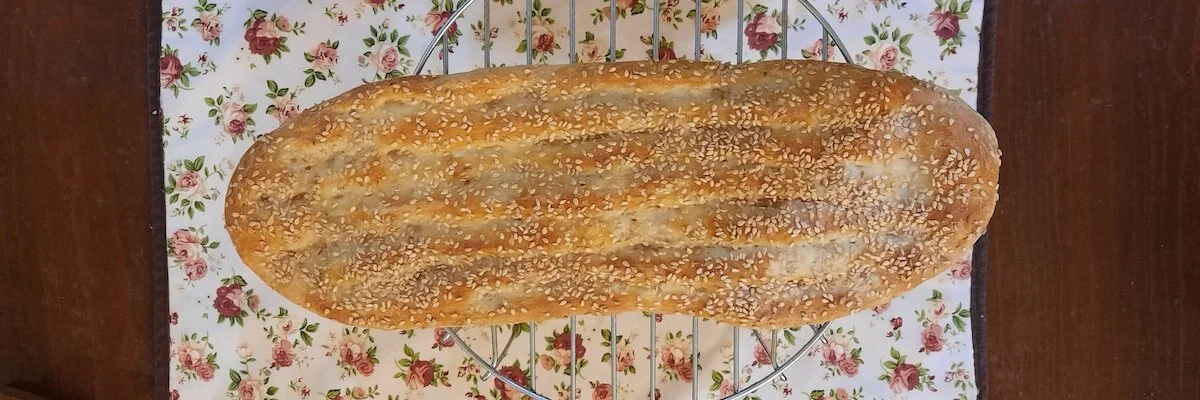
Under Lockdown, Iranians Rediscover the Joys of Baking Bread
Iranians are staying at home, doing their part to “flatten the curve” as the country confronts COVID-19. Adjusting to confinement at a stressful and uncertain time, many Iranians have found a new and creative pastime—baking bread.
Iranians are staying at home, doing their part to “flatten the curve” as the country confronts COVID-19. Adjusting to confinement in a stressful and uncertain period, many have found a new pastime—baking bread.
The bustling streets of Iran’s cities are now deserted, although the country’s lockdown measures are not as strict as those in Italy or France. The government has instructed bakeries to keep normal working hours and bakers continue to be well-supplied with flour, which is heavily subsidized in Iran.
Some customers continue to line up—keeping a safe distance from one another—and many bakeries have stopped accepting cash to avoid bakers handling spare change. But many Iranians have opted to stop visiting bakeries, if only to limit their time outside.
Unable to get fresh bread each day, Iranians have turned to store-bought brands. Others have bought bread to freeze, hoping it would last them during the lockdown.
On March 13, armed forces chief of staff Mohammad Bagheri, announced that security forces would begin enforcing restrictions on intercity travel, a move many interpreted to mean that a full lockdown was imminent. Iranians rushed to stock up on essentials.
Hearing the news, Ahmad, who declined to share his last name, headed to the nearest bakery. Married and with two children, he bought stacks of bread that could sustain his family for at least a week. “At the time I thought if the government imposed a lockdown, at least we’d have bread to eat.”
Although Iranian cuisine is often associated with rice, bread is the true staple. Iranian per capita bread consumption is 160 kilograms each year—by some accounts the second highest level in the world. It should be no surprise then that the global “bread-baking boom” would reach Iran.
Nasim Moghaddam is a manager at an Iranian startup. She is immune-compromised and has been self-isolating since early March. Four weeks into her quarantine, with ample time to take on a new project, she tried her hand at baking Lavash and Barbari, two of the most popular Iranian flatbreads.
“I have always been into cooking and baking. I had even tried baking bread once or twice before. Bread-baking takes time and effort, but time is something I’ve got in abundance these days,” she said.
Moghaddam explained that baking helps her wind down during these stressful days. “Baking takes your mind off all the tensions. You need to concentrate on what you are doing or you will simply ruin what you are making.”
Maryam Keshtparvar, a psychologist, believes many Iranians are seeking ways to cope with the profound psychological effects of the pandemic. “The first priority for everyone has become the urge for survival and people feel that that they have been deprived of the many securities of modern life. This can trigger fear and anxiety,” she said.
Keshtparvar notes that as people settle into a new routine at home while they wait out outbreak, new pastimes are gaining popularity. “Some of these activities may be considered throwbacks to an earlier age. People have started growing vegetables and baking bread at home. They find themselves experimenting with soil, plants, and flour. This newfound familiarity with the elements rekindles calm in people.”
Artist Pooya Shahsiah and her husband Ehsan started baking bread a few months before COVID-19 outbreak. But they have taken their baking to new heights since beginning self-isolation. The pair have come to see baking bread as a “creative experience that has a prevailing presence during your daily life.”
Pooya recalled the origin of their hobby in an Instagram post, writing, “One day I woke up and found Ehsan trying to bake bread. A new hobby, I thought to myself, which he’d give up on soon. But he didn’t. This still comes as a surprise to me, but we have not bought bread even once over the past six months.” In the same post, she explains the basics of baking sourdough bread.
Their loaves have won fans. “We have been receiving calls from friends asking us to bake them a loaf or two,” she said, laughing boisterously. “We might even start selling bread.” The couple is currently going through as much as 8 kilograms of flour a week.
Speaking by phone, the couple explained that for them, baking has an emotional significance. “For years, Ehsan longed for the taste of bread his late aunt baked. Sourdough was the answer,” Shahsiah explained. “Some even name their sourdough starters as if they were newborn babies. We don’t, but we certainly pamper our starter.”
Posting about their baking exploits on social media, the couple was asked by friends to share their starter, which helps speed the fermentation process. “We did, just to give them a head start in the process. But I was worried that they wouldn’t take proper care of it. You need to pay attention to minuscule details. The smallest details can change the outcome.”
The pair learned how to bake by watching YouTube tutorials, accessed by VPN.
Over the past few weeks, as the coronavirus outbreak grew worse, similar tutorials have been uploaded to Aparat, Iran’s leading video-sharing platform. Even IRNA, a state news agency, has published an article entitled “How to Make Taftoon Bread at Home: An Enjoyable Pastime.”
Those who have tried it tend to agree.
Photo: Nasim Moghaddam
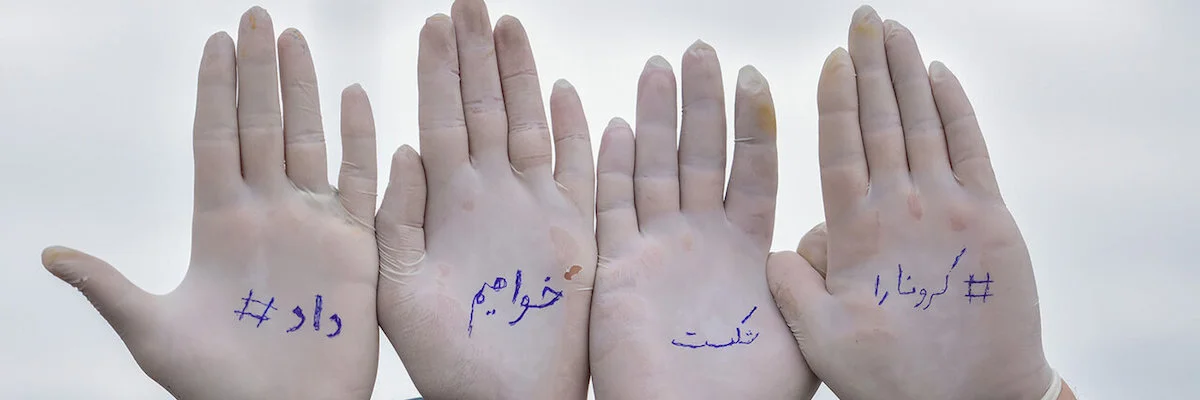
As Coronavirus Spreads, Iranian Doctors Fear the Worst
The combination of Iran’s physical interconnectivity and its relative political and economic isolation pose unprecedented challenges for international public health, particularly as U.S. sanctions constrain the supply of raw materials and imported medical supplies.
By Esfandyar Batmanghelidj and Abbas Kebriaeezadeh
Iran is often described as an isolated country, but the spread of the coronavirus has made clear that the Islamic Republic is less isolated than often assumed. Iran’s significant trade links with China, where COVID-19 originated, left the country vulnerable to the spread of the virus.
The outbreak in Iran is one of the world’s largest, with more than 2,300 confirmed cases and 77 declared deaths. Many of the first cases registered in other places—including Iraq, Lebanon, Georgia, Qatar, New Zealand, and even New York—are attributable to individuals who had traveled from Iran. Clearly, notwithstanding the attempts of U.S. President Donald Trump’s administration to isolate Iran politically and economically, Iran remains connected to the world. It follows that Iran’s success or failure to manage its coronavirus outbreak will directly impact the threat of a pandemic.
The combination of Iran’s physical interconnectivity and its relative political and economic isolation pose unprecedented challenges for international public health. The first two weeks of Iran’s coronavirus outbreak have been similar to those in other countries. Authorities were slow to take measures such as closing of schools and universities and canceling of public gatherings, including briefings and government meetings that contributed to the infection of numerous officials.
As the severity of the crisis became clearer, members of the public became anxious, adding to the strain on Iran’s health care system. People rushed to pharmacies and stores to purchase supplies. They rushed to hospital emergency rooms worried that a persistent cough could be COVID-19.
These are understandable reactions and are always preferable to indifference—any successful public-health campaign requires individual members of the public to take responsibility and proactive action. But as the number of confirmed cases mounted, so too did demand for respiratory masks and contamination suits, symptom relief medication, and immunity-boosting vitamins, as well as disinfectants, detergents, and related hygiene equipment.
Given its sophisticated manufacturing base, Iran produces many of these products domestically, limiting the initial impact of sanctions on the availability of medicine and equipment. However, inventories in pharmacies and shops are running low. Importers are struggling to get their hands on new inventory and factories are struggling to ramp up local production to keep up with the rising demand. U.S. sanctions are largely to blame for these disruptions.
The Iranian companies producing medicine, disinfectants, and protective clothing also have a supply-chain problem; they are dependent on imported ingredients and materials. For example, even though antiviral drugs are manufactured in Iran, the raw materials are almost entirely supplied from China and India. Should Iranian manufacturers run out of these raw materials, it will be very difficult, if not impossible, to effectively contain and treat COVID-19 in Iran. U.S. sanctions are constraining the supply of raw materials and imported goods in two ways.
First, there is the issue of transport links. Even before the outbreak of the virus, the Trump administration’s reimposition of secondary sanctions on Iran in November 2018 saw many airlines and international shipping companies end their presence in the Iranian market. As a result, for a country of its size, Iran is unusually reliant on regional hubs for both air travel and freight forwarding.
As neighbors impose travel restrictions, Iran is facing difficulties in sustaining imports, particularly for time-sensitive deliveries by air. The World Health Organization recently faced delays in supplying Iran with coronavirus testing kits “due to flight restrictions” that prevented their dispatch from the United Arab Emirates.
The kits were eventually delivered via a commercial flight from Baghdad, but that route may also be closed as Iraq as now announced its first confirmed cases of the virus. A subsequent delivery of equipment did arrive in Tehran from Dubai—but only after the Emirati government arranged a military transport at the request of the World Health Organization.
Second, even if a viable means of delivery can be found, it has been well documented how U.S. secondary sanctions have restricted humanitarian trade with Iran by scaring off most banks from facilitating the necessary payments.
The imports that do take place—from major suppliers such as Germany, Switzerland, and China—reflect long-standing business relationships in which the foreign exporter and Iranian importer have put the facilitating bank (usually a small merchant bank) at ease by preparing extensive compliance documentation.
The fact that humanitarian trade is currently conducted in this manner—a slow, inflexible process—makes it inherently difficult for Iranian entities, particularly governmental entities such as the Ministry of Health and Medical Education, to quickly identify new suppliers and purchase the required goods during a public health crisis. Moreover, sanctions have both weakened Iran’s currency and made it difficult for Iran to access its foreign exchange reserves, further adding to the time and cost of any emergency purchases.
Medical professionals in Iran are seeing the early signs of shortages. They are calling the Iranian vendors of respiratory masks, surgical gowns, and ventilators only to hear that the goods are out of stock. They are struggling to get antiviral medication even to those patients exhibiting the most acute symptoms.
While much of the global attention towards Iran’s response to coronavirus has focused on the question of whether or not the Iranian government has adequately managed the outbreak, there is a far more urgent concern among Iran’s doctors. If Iranian pharmaceutical companies and medical equipment manufacturers are unable to establish speedy and reliable means to import raw materials, the country could soon face a humanitarian catastrophe.
The Trump administration has made an offer of humanitarian assistance to Iran—but has provided no detail. To address the impact of sanctions on Iran’s ability to import and manufacture key items, it would be straightforward for the administration to provide greater legal clarity to exporters and the banks on which they rely—for example by expanding the definition of “humanitarian” goods so as to include items needed to fight COVID-19, such as respiratory masks and disinfection equipment, as well as raw materials, within the scope of existing general licenses.
Given that it is unlikely that the United States will take any such steps, it is commendable that the governments of France, Germany, and the United Kingdom have dispatched “equipment for laboratory tests as well as… protective body suits and gloves” to Iran. They will also be providing “urgent additional financial support close to €5 million to fight the COVID-19 epidemic affecting Iran, through the WHO or other UN agencies.” But these are stopgap measures.
To address the vulnerabilities of Iran’s domestic medical and medical equipment manufacturers, European governments could utilize the Instrument in Support of Trade Exchanges (Instex) trade mechanism, which was established to ease humanitarian trade between Europe and Iran by creating a standard compliance protocol and by eliminating the need for European banks to receive payments directly from Iranian banks.
The company, which boasts nine European states among its shareholders, has yet to make its first transaction. Nonetheless, policymakers are adamant that the company is nearly operational. Aiding Iran in its fight against coronavirus could provide INSTEX a renewed sense of purpose.
Of course, Western governments are increasingly preoccupied with their own coronavirus outbreaks, and further assistance may be difficult to coordinate. The Iranian health care system and the companies that supply the nation’s hospitals will continue to fight coronavirus without all the resources they need—a situation that has drawn parallels to the country’s experience during the Iran-Iraq War.
Nevertheless, Iran’s experience with COVID-19 offers a cautionary tale about the intersection of sanctions policy and international public health. The economic vulnerabilities that sanctioning countries seek to create in target countries never exist in true isolation. Just as a virus will attack the most vulnerable members of any given population, the coronavirus is now attacking the global health system at its most vulnerable points—before spreading everywhere else.
Esfandyar Batmanghelidj is the founder of Bourse & Bazaar. Follow him at @yarbatman.
Abbas Kebriaeezadeh is a professor of pharmacology at the Tehran University of Medical Sciences He is vice chairman of the Iranian Pharmaceutical Industries Syndicate and chairman of Baran Chemical and Pharmaceutical Company.
Photo: IRNA
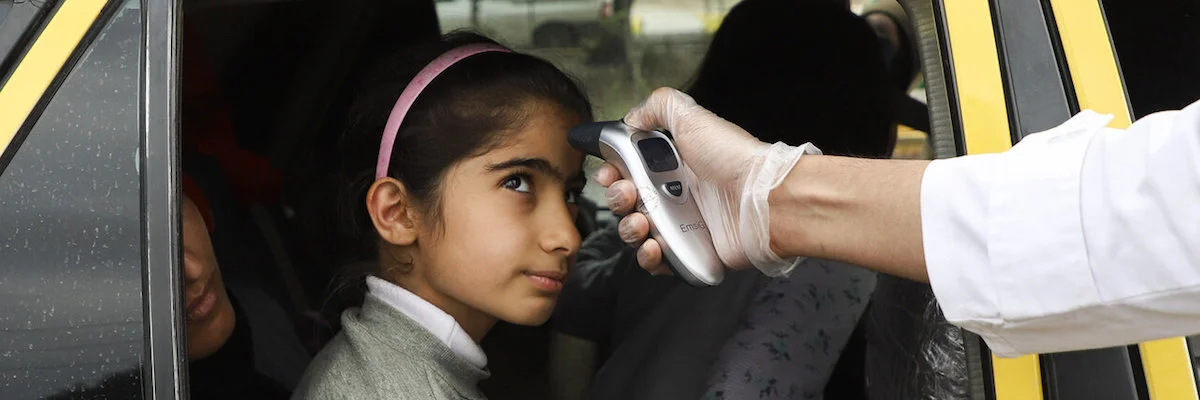
The Coronavirus Crisis Is a Diplomatic Opportunity for the United States and Iran
Washington and Tehran could use the COVID-19 public health emergency to show goodwill, dial down tensions while saving face, and avoid a dangerous confrontation.
By Robert Malley and Ali Vaez
If Iran’s leaders thought things couldn’t get worse, they were wrong. The country faces three simultaneous crises: a public health emergency that is worsening by the hour, tensions with the United States that have once again grown in the past few days, and an economic picture that could go from troubled to dire in a matter of months.
The confluence of a coronavirus pandemic, security threats, and financial troubles has deepened the political system’s legitimacy crisis in the wake of last month’s parliamentary elections that saw the lowest turnout in the Islamic Republic’s history. Washington might view this as a validation of its so-called maximum pressure strategy against Tehran, but if it fails to capitalize on this moment to de-escalate tensions and lay the groundwork for a mutually beneficial diplomatic settlement, the leadership in Tehran is likely to become more aggressive in the region, increasing the risk of a conflict that neither side appears to want.
Since the dramatic escalations of late 2019 and early 2020, which culminated in the killing of the Islamic Revolutionary Guard Corps commander Qassem Suleimani and Iranian missile strikes on Iraqi bases hosting U.S. forces, both Iran and the United States appeared content to return to their respective corners.
But there has been a steady stream of incidents in Iraq, with at least seven attacks near U.S. diplomatic facilities inside Baghdad’s Green Zone and U.S. military installations in Iraq throughout January and February. These attacks spiked on March 11 following a barrage of rockets that killed three members of the U.S.-led coalition, including two Americans, and injured more than a dozen others at an Iraqi army base, Camp Taji, north of Baghdad.
U.S. Secretary of Defense Mark Esper subsequently assessed that “Iranian-backed Shiite militia groups” were responsible. Secretary of State Mike Pompeo warned that “those responsible must be held accountable.” A day later, the United States retaliated against an Iranian-backed Iraqi militia in Iraq, which in turn fired more rockets into Camp Taji on March 14 and again on March 17.
This latest moment of peril is playing out against the backdrop of a dramatic COVID-19 outbreak in Iran, which has the third-highest number of confirmed cases and fatalities anywhere in the world. The Iranian government was slow in responding to the outbreak; and when it finally realized its scale and scope, Tehran was hampered by shortages caused by sanctions. Moreover, the government has kept a worryingly tight grip on the information flow to save face, prompting fears that the death toll—currently listed as 988—is probably much higher than the official figures suggest.
With Tehran’s initial response being dismissive of the risks of the virus’s spread and slow to mobilize against it, the government is now pleading for international assistance. Having already scored several calamitous own goals in recent months—raising fuel prices with little warning in November 2019, then violently suppressing subsequent protests, and in January downing a Ukrainian civilian airliner in the apparent belief it was an incoming U.S. missile—the government’s response to the coronavirus crisis could increase the population’s sense that its leadership is incompetent.
Meanwhile, the impact of the rapidly spreading disease and collapse in oil prices will likely present almost unprecedented challenges to an economy that is already beset by government mismanagement and under siege from U.S. sanctions.
One Iranian official calculated a drop of 18 percent in trade as a result of the pandemic—and that was before Iraq, a key regional trade partner, announced a full closure of the two countries’ common land borders and the price of crude tumbled below $30 per barrel. (While Iran’s exports have been blocked by the United States since April 2019, it has continued to make sales to China, albeit at sharply reduced levels.) The combination of reduced regional trade, evaporation of remaining oil revenue, and COVID-19’s impact on domestic business could prove catastrophic.
But that doesn’t mean that Tehran will bow to U.S. pressure and back down. Indeed, since May 2019, when the Iranian government chose to counter U.S. maximum pressure with a blend of nuclear and regional provocations, the system’s hard-liners have contended that high-risk brinkmanship yields greater dividends than restraint.
The coronavirus outbreak has now put more pressure on the leadership’s calculus. Feeling besieged and with no obvious diplomatic exit ramp, Iran might conclude that only a confrontation with the United States might change a trajectory that’s heading in a very dangerous direction.
This is also the view of Gen. Kenneth McKenzie, the head of U.S. Central Command, who told Congress on March 10 that the outbreak “probably makes them, in terms of decision-making, more dangerous rather than less dangerous.”
With U.S. President Donald Trump focused on the domestic economic and electoral effects of the coronavirus and the Iranian leadership highly reluctant to display any weakness to the United States, neither side is likely in the mood to engage the other.
That would be a missed opportunity. Indeed, both Washington and Tehran have floated ideas that, if acted upon, could break the current vicious cycle. Pompeo has urged the Iranian government—which furloughed tens of thousands of convicts due to fears of an epidemic in prisons—to free U.S. prisoners and other dual and foreign nationals on humanitarian grounds. The death of any of those inmates from COVID-19 would be a stain Iran might find hard to erase.
Conversely, Iran has asked the International Monetary Fund for emergency funding and a substantial list of essential equipment ranging from gloves and masks to portable respiration and X-ray machines. If the Trump administration stands in the way of such basic needs—by voting against an IMF loan to Iran—the United States would find it hard to overcome the impression that it had acted inhumanely.
The most logical and mutually beneficial outcome would be a two-phased humanitarian de-escalation. Iran would need to first agree to furlough all detained foreigners as the U.S. facilitates the transfer of medicine and medical equipment Iran needs to contain the outbreak and save lives without any sanctions-related delays.
In the second phase, the U.S. government could agree not to block the IMF loan to Iran while Tehran freezes its nuclear escalation and reins in its allied groups in Iraq, preventing any further attacks on U.S. forces and assets. This phase could also comprise another prisoner swap, either on par with the one-for-one exchange that happened back in December or, even better, a broader exchange of prisoners. This would be a win-win: putting tensions with Iran on ice, providing Trump with another success in his efforts to free Americans detained abroad, and providing Tehran with some economic reprieve and the means to save lives at home.
Since 2018, when the Trump administration pulled out of the nuclear deal with Iran, Washington and Tehran have been on a collision course pitting unrealistic U.S. demands against Iranian inflexibility. For either side to let a possible diplomatic off-ramp pass by would mean that a dangerous and deadly situation might again take a turn for the worse.
Robert Malley is president and CEO of the International Crisis Group. He served as a special assistant for the Middle East under President Barack Obama. Follow him at @Rob_Malley.
Ali Vaez is the director of Iran Project at the International Crisis Group and an adjunct professor at Georgetown University's School of Foreign Service. Follow him at @AliVaez
Photo: IRNA
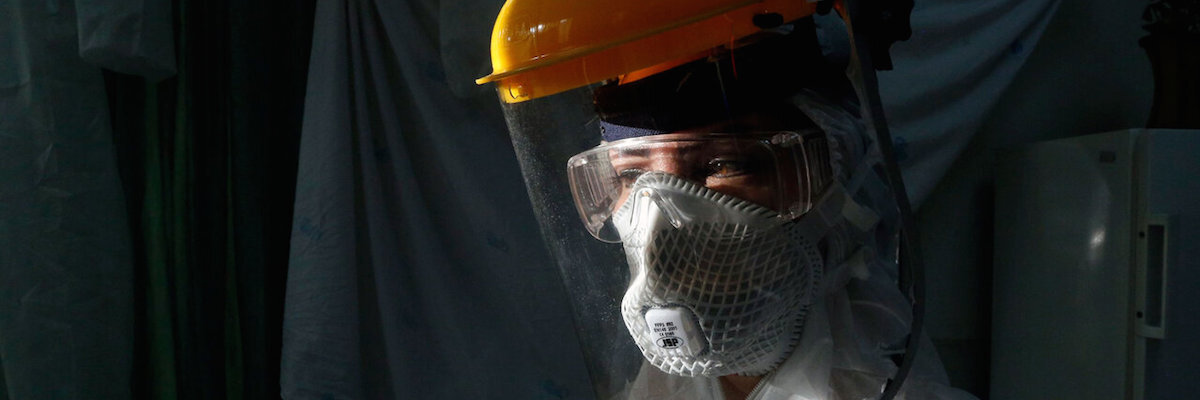
New European Limits on Medical Gear Exports Put Iranians at Risk
The European Commission has announced a new regulation that will establish export controls for Personal Protective Equipment (PPE), a category of goods that includes the face shields, gloves, masks, and other protective gear. The new policy could make it more difficult for Iran to source the equipment necessary to protect doctors and nurses fighting COVID-19.
As the world grapples with shortages of the medical equipment needed to fight the COVID-19 pandemic, the European Commission has announced a new regulation that will establish export controls for Personal Protective Equipment (PPE), a category of goods that includes the face shields, gloves, masks, and other protective gear that help medical professionals limit their exposure to bacteria and viruses. The regulation will limit the sale of these PPE items to countries outside the European Union (EU)—exports of these items were valued at USD 12 billion last year.
Analysis by Chad Bown of the Peterson Institute for International Economics makes clear how the European Commission’s move could have significant consequences for non-European countries that largely supply their healthcare systems with protective equipment made by European firms. Bown argues that the new policy could prove “self-defeating,” both because it may serve to “disrupt supply chains” and also because the new act could “block EU exports of vital equipment to the world’s poorest victims of the pandemic.”
The European Union is home to many of the world’s largest producers of medicine and medical equipment. With the support of their governments, these firms have encouraged “developing countries to open up their markets to imports, facilitating a system in which these countries have come to rely on EU suppliers for their essential medical equipment.” Iran is one such country.
When looking at EU exports to Iran of the PPE items specifically covered under the new regulation, two things become clear. First, Iran was importing significantly more of these goods prior to the Trump administration’s reimposition of secondary sanctions beginning in May 2018. Total exports to Iran fell from EUR 39 million to just EUR 13 million last year, suggesting that Iran’s healthcare system was already grappling with limited inventories of face shields, gloves, and other protective equipment even before the COVID-19 outbreak.
Second, despite the fall in trade, it is clear that EU is a significant supplier of PPE items to the Iranian healthcare system—a fact that leaves Iranian doctors and nurses vulnerable as the bloc begins to enforce the newly announced export controls. This vulnerability is made more clear when looking to EU exports in proportion to exports from Iran’s other leading trade partner: China. In the category of face shields, which account for around half the total value of world PPE exports to Iran, 35 percent of exports were dispatched from the EU.
This figure is lower than the proportion identified by Bown for many countries that trade with Europe, reflecting how sanctions have deterred European suppliers from the Iranian market over the last decade, enabling Chinese suppliers to expand market share. Nonetheless, the EU accounts for about one-fifth of all PPE exports in value terms, meaning that Iran’s healthcare system will be hit as the new export controls are implemented. Already struggling to procure goods through existing supply chains, Iranian importers—and the hospitals that depend on them—may find the supply chains cut altogether.
Moreover, the administrative burden of complying not only with the new export control regime but also with new sanctions regulations will put Iranian buyers at the back of the line for any sales that are to be licensed. European manufacturers of personal protective equipment will want to get whatever limited inventory available for sale to third party countries to the buyers who can make payment and take delivery in the shortest amount of time—Iranian importers are not those buyers.
The new regulation does indicate that some accommodations will be made for the provision of European aid. The regulation states, “exports of certain quantities of specific products may be authorized under specific circumstances such as to ensure assistance provided to third countries.” Iran has already received aid from France, Germany, and the United Kingdom as well as assistance provided by the EU itself. But the regulation has the effect of cutting long-standing commercial relationships between European manufacturers and importers in countries like Iran, and replacing them with a highly political procurement channel. It is not clear how European policymakers will prioritize who receives aid including PPE items—will it be the countries currently facing the most acute outbreaks, such as Iran, or will it be the countries where Europe sees the most favorable political and economic relations, such as Norway.
In the face of such uncertainty, China has mobilized resources to increase aid shipments and commercial sales of medical equipment to countries around the world, including Iran. But Chinese suppliers cannot replace European suppliers in each and every country as the COVID-19 pandemic spreads. As Bown, concludes, “to ensure the hospital equipment to fight the pandemic arrives where and when it is needed the most, policymakers must coordinate and cooperate globally.” The European Union is the only global actor that could effectively marshall such an approach.
As a country with a large manufacturing base, Iran can be part of the solution. Iranian firms have already taken steps to increase production of face masks, disinfectants, hospital beds and other products and equipment for which there is growing global demand. Rather than seek to cut its supply chains with non-EU countries, European authorities could seek to increase imports of basic PPE items such as surgical masks or gowns from countries like Iran, leaving European firms to focus on ramping up production of more advanced equipment such as face shields, generating a surplus for export. In short, the same notions of comparative advantage that led to the creation of today’s complex supply chains should inform their retooling during the COVID-19 crisis. Abandoning economic interdependence will put everyone at greater risk.
Photo: IRNA

Shutters Come Down for Iran’s Cafés and Restaurants
While Iran’s economy has struggled over the last two years, the country has nonetheless seen a boom in new restaurant and café openings, especially in the bustling capital, Tehran. But the COVID-19 outbreak has brought the shutters down at establishments across the country, leaving the owners to wonder if they will ever open again.
While Iran’s economy has struggled over the last two years, the country experienced a boom in new restaurant and café openings, especially in the bustling capital, Tehran. Even in times of financial hardship, a foodie culture has seen Iranians of all walks of life enthusiastically patronize new restaurants, cafés, and fast-food joints.
But the COVID-19 outbreak, which has now led to the infection of more than 15,000 Iranians according to official figures, has brought the shutters down at establishments across the country, leaving the owners to wonder if they will ever open again.
“Many businesses will not be able to survive this crisis if it lasts for a month or two. Even if they survive, the crisis will lead to layoffs and a sharp surge in prices,” said Shahram Rajabi, owner of Sakura Sushi Restaurant, which is located in Ava Center, a mall in the upscale Aqdasiyeh neighborhood of Tehran.
Rajabi owns two other food businesses in Ava Center—a bakery and a café. In total, he employs 70 people—it is not clear how much longer he can afford to keep them on the payroll. “Only the bakery is still open. Sales have dropped 80 percent, but we have kept the doors open. The café and restaurant’s employees are all on paid leave.”
Nowruz—a two-week period during with Iranians celebrate the new year—is fast approaching. Before Iran found itself in the midst of a public health crisis, bakeries were already working around the clock to prepare the confections and treats that Iranians traditionally enjoy during the holiday. But this year there is little cause for celebration.
“With the fear of coronavirus hanging over everything, no one is in the mood to celebrate. People aren’t buying ready-made confectionaries. These businesses will be forced to dump what they had baked. All that money and effort will go to waste,” Rajabi said. “The pandemic is taking a harsh toll on businesses and is pushing many to the verge of bankruptcy. I don’t know how long we can survive,” he added.
Social Media Outreach
Behzad Mosayyebi is the owner of Café Hedayat in Shiraz, where he employs around 25 people. He too is struggling to keep his business afloat.
“A week after news broke about COVID-19 spreading in Iran, our sales plummeted by 70 percent. Initially, we tried to keep business going but a week into the outbreak, with sales nose-diving we were forced to shutter the café,” Mosayyebi said.
Currently, his employees are on paid leave. “Employees are the most valuable assets of any business. We have invested in training our staff. But if the situation does not improve in a month or so we’ll be forced to let our staff go.”
Mosayyebi acknowledged that even after the epidemic is over, the café might need to hike prices to cover its losses—but he hopes his customers will remain loyal even if they go weeks or months without visiting.
In order to keep his clientele engaged, Mosayyebi has launched a campaign on Instagram, which features his employees and social media influencers offering easy recipes and cooking tutorials for everything from dal to pasta.
Other restaurants have also launched similar campaigns. Vitrin Kitchen, a trendy eatery located in Tehran’s A.S.P Towers, recently closed in light of the spread of COVID-19. Vitrin’s chef, Armin Milani, has self-quarantined at home. But from his kitchen, he continues to keep the restaurant’s Instagram active by posting pictures of his latest creations, accompanied by short reflections on being in isolation. His posts reach over 60,000 followers.
Some restaurants, especially fast-food chains, have endeavored to remain open despite the outbreak. These establishments have turned to social media to reassure buyers that they are doing their best to keep their food “COVID-19 Free.” Popular burger joint Burgerator has posted a video on Instagram that shows the body temperature of its staff being checked and explains how “every surface is sanitized.” The video ends with a tag line, “We care for you.”
Famous fast-food chain Barooj is sending out text messages to customers announcing a new offer: “half-cooked” pizza. Customers are meant to finish cooking the pizza in their home oven. The text message explains that “high temperature kills coronavirus.” One of the oldest delivery pizza shops in Tehran, Dar-be-Dar, has likewise started selling par-baked pizza.
Perseverance
Just a few days after Iran announced its first confirmed case of COVID-19, employees at Yerma House café off Karimkhan Street in downtown Tehran, were geared-up with latex gloves and face masks.
Located in a chic pre-Islamic Revolution building, Yerma House is part gallery and part café. A large self-portrait by Frida Kahlo dominates the space and the aroma of freshly roasted coffee and spices usually waft through the air.
Startled by the staff’s appearance, a customer asked “what was the hassle for.” The cashier, her headscarf fashioned as a turban, replied, “We are just trying to keep you safe, love.” Later the same day, the manager decided to shutdown the café until further notice.
Yerma’s manager, Neda Hengami, is worried. “The COVID-19 outbreak hit us hard. Right now I am trying to help people get through the crisis and pass time while social distancing by conducting a writing contest.”
Hengami feels a responsibility to sustain the business and find a way to keep paying her employees as they face difficult times. She said that she is considering setting up a take-away-only service. “But I’m not certain whether it’d work. We can’t do much, can we?”
At the end of the interview she recalled a passage from Strait is the Gate, a novel written at the turn of the 20th century by André Gide. “I read the book ages ago,” she explained. “There is a section where Gide describes a Bible sermon.” Hengami proceeded to quote from memory: “Enter ye in at the strait gate: for wide is the gate and broad is the way that leadeth to destruction, and many there be which go in thereat. Because strait is the gate, and narrow is the way, which leadeth unto life, and few there be that find it.”
“The passage has stuck with me over the years. It has helped me through the hard times,” she said.
Photo: IRNA