
Concern in Iran Over China Commerce as Trump Gets Trade Deal
The contents of an email shared with Bourse & Bazaar by an official at Iran’s communications ministry suggest that China’s Bank of Kunlun is weighing whether to cease processing Iran-related payments. There is growing concern in Tehran that China may be planning to downgrade its trade relationship with Iran.
Last week, an official from Iran’s communications ministry received an email from a Chinese supplier informing them that Bank of Kunlun, the state-owned bank at the heart of China-Iran bilateral trade, is weighing whether to cease processing Iran-related payments.
The email warned that after an April 9 deadline, “Kunlun may stop handling payment [sic] from Iran. For the exact situation then, we can only wait for further notice from the bank.”
The bank was set to inform clients that “all the payment [sic] should be received and goods should be shipped before April 9, and all PI (pro forma invoice) dates should be before January 10.”
The official, who shared the contents of the email with Bourse & Bazaar on condition of anonymity, speculated that the change in policy at Bank of Kunlun could be related to the recent agreement reached between Chinese and American negotiators over the first phase of a new trade deal.
If the email proves accurate, this would not be the first time that Kunlun has suddenly changed its policy in response to political developments in Washington. The bank paused its Iran business for one-month period following the Trump administration’s reimposition of secondary sanctions on Iran in November 2018. When Iran transactions were resumed, a new policy limited payments for trade in “humanitarian and non-sanctioned goods and services between Iran and China,” minimizing direct contravention of U.S. sanctions.
Reached for comment, Wu Peimin, the economic counselor at the Chinese embassy in Tehran, stated the embassy had not been made aware of any impending change in policy at Kunlun and that concerns amount to a “hypothetical situation.”
As analysts Julia Gurol and Jacopo Scita detail in a recent report, China’s has continued to purchase Iranian oil in defiance of U.S. sanctions in an “attempt to appease Iran and avoid a full-scale conflict in the Persian Gulf.” Although China has rebalanced its imports in favor of Saudi Arabia and could easily find an alternative supplier for the low volumes of oil still imported from Iran, recent incidents such as the attack on the Aramco facilities in Abqaiq and Khurais have made clear the risks to Chinese energy security if Iran acts on threats to prevent all exports through the Strait of Hormuz in the event it is prevented from exporting its oil.
But while China’s strategic interests are well-served by maintaining trade ties with Iran, albeit at reduced levels, there remains the possibility that China may have made tactical concessions related to Iran as part of its trade negotiations with the United States. For their side, U.S. officials have insisted that they would not reduce sanctions pressure on Chinese firms trading with Iran in order to gain concessions from Beijing related to the trade deal.
Chinese trade with Iran has fallen due to sanctions pressures, but remains a pillar of Iran’s economic resiliency in the face of the Trump administration’s “maximum pressure” sanctions campaign. Iran’s bilateral trade with China totaled USD 23 billion last year. While the annual total has fallen 34.5 percent, Iran has sustained significant oil and non-oil exports to China, totaling just over USD 13.2 billion dollars. The earnings from this trade have enabled Iran to afford continued imports of Chinese raw materials, parts, and machinery that support Iran’s manufacturing sector—total imports were USD 9.7 billion in 2019.
Much of this trade was facilitated through the payment channels available at Kunlun, a so-called “bad bank” sanctioned by the United States in 2012 for its critical role in supporting Chinese trade with Iran, particularly oil purchases by major state refiners like CNPC and Sinopec.
Mohammad Reza Karbasi, who is responsible for international affairs at the Iran Chamber of Commerce, expressed confidence that even if Kunlun proceeds to eliminate its Iran business, other smaller Chinese banks will step-in to support the longstanding bilateral trade between China and Iran.
“Iran is important to China and the same is true the other way round as well. Sure, there are attempts by Western governments to try and interfere with the expansion of ties between us, but we believe the Chinese won’t let them succeed given the trust that has been built between our two counties through years of cooperation,” Karbasi said.
In a recent interview focused on the trade deal, Treasury Secretary Steven Mnuchin stated that the Trump administration was “working closely with [China] to make sure that they cease all additional activities [with Iran]." The Trump administration has continued to sanction Chinese firms engaged in Iran trade, most recently targeting several buyers of Iranian oil.
Mnuchin also stated that “China state companies are not buying oil from Iran.” The statement remains factually incorrect—Chinese firms such as CNPC remain directly engaged in Iran oil purchases—but it may refer to a new understanding between China and the United States that is yet to be implemented.
Richard Nephew, who led sanctions policy at the State Department during the Obama administration, recently told S&P Platts that he does not expect such designations and the related pressure to compel China to drop it’s Iran trade outright.
However, reports that Iran’s January oil exports are significantly higher than the monthly average since May 2019 may reflect stockpiling of cheap Iranian oil by Chinese refiners ahead of an expected change in policy and reduction in imports. A similar pattern was observed when exports peaked in March 2019 ahead of the May 2019 revocation of the waiver permitting Chinese purchases of Iranian oil.
Given the timing, concerns in Tehran center on whether China will further downgrade its trade with Iran in order to avoid jeopardizing its new understanding with the Trump administration on larger issues of economic policy.
Massoud Maleki, the director of the Bureau for Developing Countries at the Tehran Chamber of Commerce said he was skeptical of reports Kunlun would bring an end to its Iran business, but warned of the consequences if there were such disruptions.
“Iran and China’s trade is not a paltry amount for it to be carried out through suitcase trade or exchange bureaus. If this is true, then I’m afraid that we will have to deal with a whole lot of hardship. This, I presume, is unlikely, but if it’s confirmed we must prepare and take necessary measures,” said Maleki.
Farhad Ehteshamzad, an Iranian industrialist and former head of Iran Auto Importers Association, echoed the call for preparations in case the U.S.-China trade deal has changed China’s intentions regarding trade with Iran.
“Transactions through the Bank of Kunlun had already been made difficult during the past two or three months. Kunlun in China was like one of our small credit institutions in Iran before being trusted with the responsibility to handle Iran payments. It gets all its reputation via collaboration with Iranian businesses.’
He added that if the industry ministry official had received such an email, the Central Bank of Iran has also been forewarned and urged officials to ensure that the Iranian funds currently held in accounts at Kunlun are not blocked.
“An emergency meeting should be held to determine how much capital lies in the bank and to inform traders and economic players before their money gets blocked. Also, if there is the possibility for certain goods to be shipped before April 9, this has to be done. If there isn’t, then money has to be transferred from Kunlun bank to other banks as quickly as possible before the money is out of reach.”
Ehteshamzad estimates that around 80 percent of payments made to support China-Iran bilateral trade are currently processed via Kunlun. “Yet, this does not mean if the bank stops its services, trade will come to a halt,” he insisted.
Citing the creativity and resolve of Iran’s private sector, Ehteshamzad noted that Iranian business boast “a myriad ways to circumnavigate the U.S. sanctions. The only downside to this is that transaction costs will rise, meaning goods will take longer to be delivered and will cost more.”
For now, Iran’s business community is waiting nervously to see whether decisions made in Washington and Beijing will force them to put their creative powers to use once again.
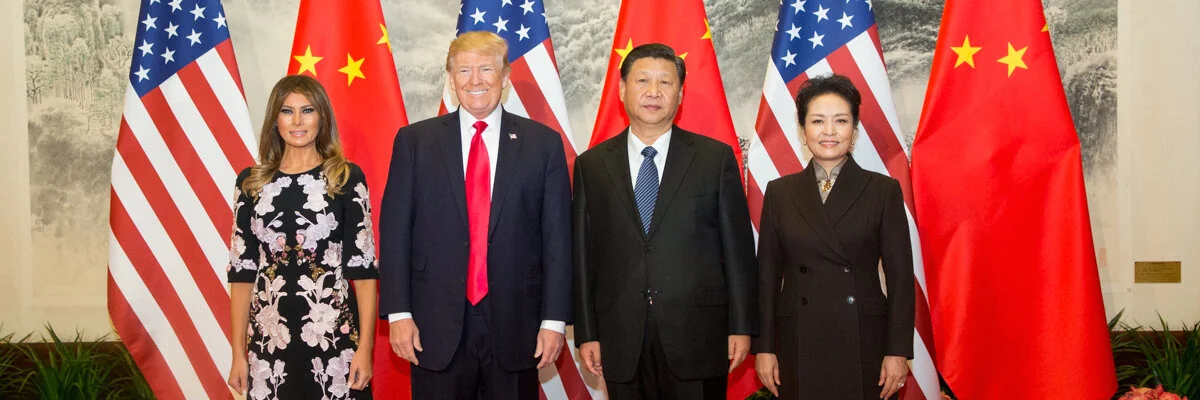
Photo: U.S. Embassy Beijing
Iran Completes Delivery of First Chinese Oil Purchase Since May
◢ According to analysis provided by TankerTrackers.com, a tanker owned by the National Iranian Tanker Company (NITC) has delivered oil to the Jinxi Refining and Chemical Complex in China, marking the first confirmed delivery of Iranian crude purchased after the Trump administration’s revocation of waivers permitting the sale of Iranian oil on May 2.
A tanker owned by the National Iranian Tanker Company (NITC) has delivered oil to the Jinxi Refining and Chemical Complex in China, marking the first confirmed delivery of Iranian crude purchased after the Trump administration’s revocation of waivers permitting the sale of Iranian oil on May 2.
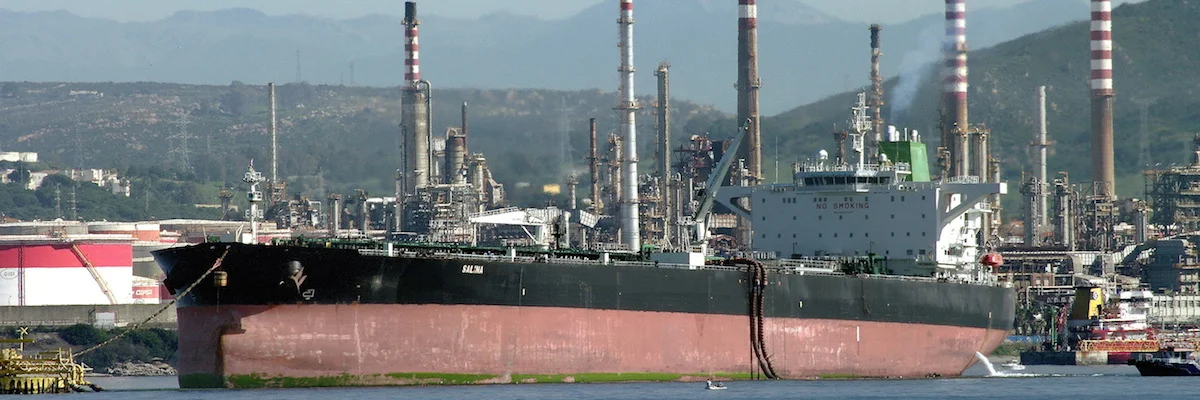
Analysis provided by TankerTrackers.com shows that the medium-sized Suezmax vessel, named SALINA, departed from Iran’s Kharg Island terminal on May 24. SALINA loaded approximately one million barrels of Iranian oil before departing on May 28.
A few weeks later, on June 20, the vessel arrived at the Jinxi Refinery, located near the Port of Jinzhou, near Beijing. Notably, Jinxi is owned and operated by PetroChina, which is affiliated to China National Petroleum Corporation (CNPC), a long-time buyer of Iranian oil and the parent company of Bank of Kunlun, the financial institution that has been at the heart of China-Iran trade for the last decade.
Iran has been delivering significant volumes of crude oil into bonded storage in China over the last year, selling that oil to China in subsequent months. CNPC’s nearby storage facility—part of China’s Strategic Petroleum Reserve—can hold 19 million barrels. But in the absence of waivers, the storage of Iranian oil would still contravene US sanctions, making it likely that the delivered oil was taken by CNPC as a purchase.
SALINA’s journey serves to confirm earlier reports that China had resumed purchasing Iranian petroleum products, including crude oil and liquid petroleum gas, despite the fact that such purchases would run afoul of US sanctions. Several other tankers are expected to arrive in China in the coming weeks.
The central role of state-owned CNPC, China’s second largest energy conglomerate, suggests that China has resumed purchases of Iranian oil as a matter of government policy. During a visit to Beijing in May, Iranian foreign minister Javad Zarif was reassured by his Chinese counterpart, Wang Yi, that China would continue to support Iran, so long as Iran remained in compliance with the Joint Comprehensive Plan of Action (JCPOA) nuclear deal. However, Chinese and Iranian officials continue to deny that any purchases have been made since May, preferring to maintain ambiguity over the exports.
The Chinese General Administration of Customs declared USD 585 million in imports of Iranian petroleum products in May, down sharply from USD 1.6 billion in April. But imports are expected to rebound in June, based on the significant number of tankers that remain en route to Chinese ports.
Photo: Justo Prieto
China Restarts Purchases of Iranian Oil, Bucking Trump’s Sanctions
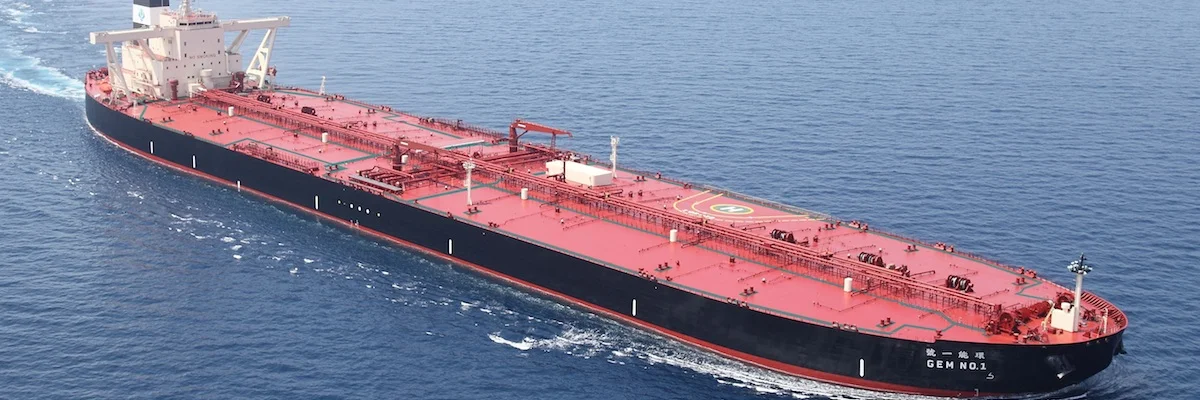
◢ On the same day that Iranian foreign minister Javad Zarif traveled to Beijing for talks on "regional and international issues,” the Chinese oil tanker PACIFIC BRAVO began to head east, having loaded approximately 2 million barrels of Iranian oil from the Soroosh and Kharg terminals in the Persian Gulf over the past few days, according to analysis provided by TankerTrackers.com.
On the same day that Iranian foreign minister Javad Zarif traveled to Beijing for talks on "regional and international issues,” the Chinese oil tanker PACIFIC BRAVO began traveling eastward, having loaded approximately 2 million barrels of Iranian oil from the Soroosh and Kharg terminals in the Persian Gulf over the past few days, according to analysis provided by TankerTrackers.com.
PACIFIC BRAVO is currently reporting its destination as Indonesia, but the tanker was recently acquired by Bank of Kunlun, a financial institution that is owned by the Chinese state oil company CNPC. TankerTrackers.com believes China is the ultimate destination for the oil on board.
PACIFIC BRAVO is the first major tanker to load Iranian crude after the Trump administration revoked waivers permitting the purchases by eight of Iran’s oil customers. The revocation of the waivers, which sent shockwaves through the global oil market, was a major escalation of Trump’s “maximum pressure” campaign on Iran.
The purchase of Iranian oil in the absence of a waiver exposes the companies involved in the transaction—including the tanker operator, refinery customer, and bank—to possible designation by the U.S. Treasury Department, threatening the links these companies may maintain with the U.S. financial system.
Bank of Kunlun has long been the financial institution at heart of China-Iran bilateral trade—a role for which the company was sanctioned during the Obama administration. Despite already being designated, Bank of Kunlun ceased its Iran-related activities in early May when the oil waivers were revoked. PACIFIC BRAVO’s moves point to a change in policy.
China-Iran trade slowed dramatically after the reimposition of U.S. secondary sanctions in November, suggesting the Chinese government had chosen to subordinate its economic relations with Iran to the much more important issue of its ongoing trade negotiations with the United States. But these negotiations have since broken down. This week, President Trump announced plans to impose tariffs on a further $300 billion in Chinese imports in addition to punitive measures against Chinese telecommunications giant Huawei, which has been targeted in part for its alleged violations of Iran sanctions.
These announcements stoked anger in China, which has vowed to fight back. Last week, foreign ministry spokesman Geng Shuang told reporters that China “resolutely opposes” unilateral sanctions on Iran. But until now, there had been little evidence that the Chinese government was encouraging its companies to ignore or evade U.S. sanctions in the interest of maintaining trade with Iran. While Chinese multinationals will likely remain wary of trading with Iran due to the risks posed to their increasingly global businesses, China’s apparent decision to use state-enterprises to purchase at least some Iranian oil represents a direct and significant challenge to U.S. sanctions. Earlier this week, Trump trade advisor Peter Navarro singled out China’s sanctionable activities in Iran’s metals industry in a Financial Times op-ed. With this kind of messaging, the Trump administration has made it impossible for China to keep the trade war separate from its disagreements with the United States over Iran sanctions.
For Iran, China’s decision to continue to purchase at least some Iranian oil could prove a vital lifeline as it struggles to withstand the Trump administration’s “maximum pressure” sanctions campaign. The failure of Europe, China, and Russia—the remaining parties of the Iran nuclear deal—led Iran to announce last week that it would begin to reduce its compliance with parts of the Joint Comprehensive Plan of Action (JCPOA) in 60 days.
Iran’s announcement greatly concerned European officials who have urged continued compliance with nuclear commitments under the JCPOA. In private, European officials acknowledge that the decision by the Trump administration to revoke the oil waivers was a significant escalation to which Iran was compelled to respond. Noting that economic pressures are fueling political opposition to the JCPOA in Tehran, European officials have been urging Chinese and Russian counterparts to do more to support bilateral economic ties with Iran. Dispatching PACIFIC BRAVO may be just the first step.
Photo: IRNA