
Making Peace With Iran and North Korea Could Be Good for U.S. Workers
Trump tied American jobs to endless wars in the Middle East. Biden should link them to renewed diplomacy.
By Christopher Lawrence
When now-retired Republican Sen. Bob Corker put a hold on U.S. arms sales to Saudi Arabia in 2017, White House trade advisor Peter Navarro drafted a memo titled “Trump Mideast arms sales deal in extreme jeopardy, job losses imminent.” The memo, along with the Trump administration’s subsequent decision to lift the hold, is often framed as cynical trade-off: Billions of dollars’ worth of U.S.-made military hardware were helping to sustain a humanitarian crisis in Yemen, but those same dollars could help support thousands of American jobs. Faced with the choice between workers at home and human rights abroad, the Trump administration appeared to have put “America first.”
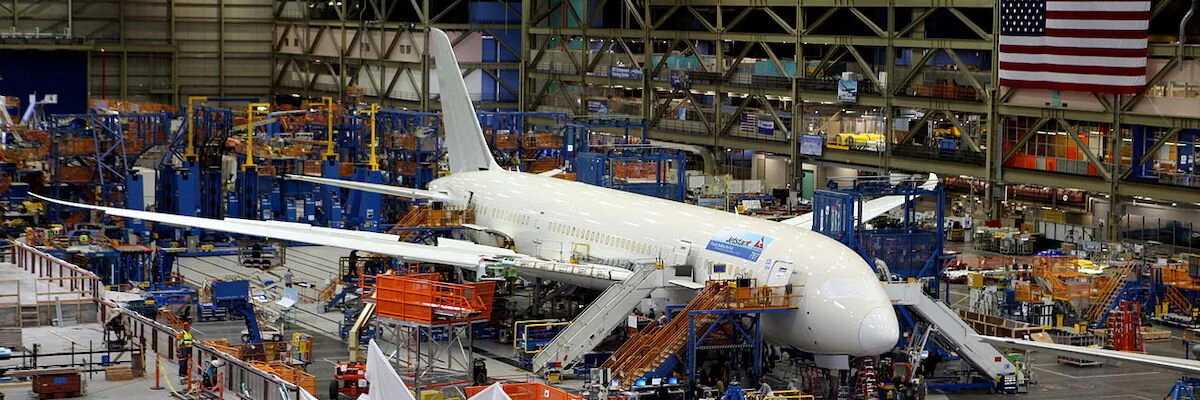
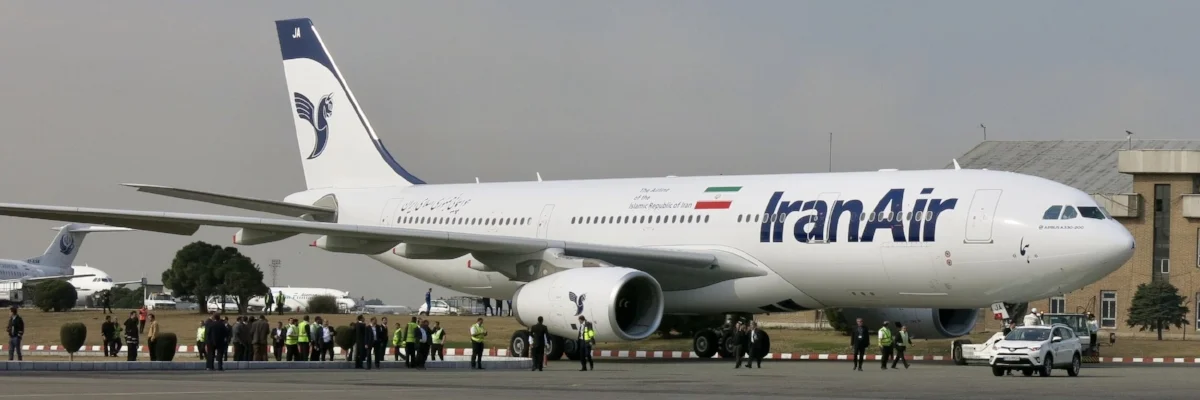
But bombs aren’t the only thing the American worker can build for the Middle East. Just as President Donald Trump was ramping up arms sales in the Gulf, he was also working to kill the Iran nuclear deal. A primary component of that deal was economic—as sanctions lifted, Western companies could help rebuild Iran’s aging civilian infrastructures by resuming trade and investment in Iran. One of the earliest contracts that Iran signed called for American aerospace manufacturer Boeing to build 110 jumbo jets—worth roughly $20 billion—to help revive Iran’s civilian air fleet. The estimated nearly 20,000 U.S. manufacturing jobs the civilian contract could have created was strikingly similar to number associated with the Saudi arms deal, yet it was terminated when Trump backed out of the Iran deal and reimposed sanctions.
These two episodes highlight what could be a turning point for U.S. foreign policy. Trump and his challenger Joe Biden both campaigned on promises to revitalize U.S. manufacturing and reduce U.S. military interventions abroad. Yet for the last four years, both Trump and his critics painted a false trade-off between those endeavors by overlooking the economic dimensions of U.S. diplomacy. Now that Biden is president, his administration can either accept that false trade-off or design new policies that pursue his domestic and diplomatic agendas in tandem. One of his biggest foreign-policy challenges is to reengage Iran and North Korea, two countries whose regimes have sought political and economic relations with the West for decades.
Under U.S. sanctions, Iran’s and North Korea’s infrastructures are in disrepair, their natural resource sectors are underdeveloped, and their populations are largely cut off from Western economies. But absent sanctions, Western firms could pursue untapped opportunities in such sectors as oil and mineral extraction, transportation, and port infrastructure, many of which would involve industrial equipment that U.S. workers could build at home.
Connecting diplomacy with domestic economics could help resolve a fatal defect of past nonproliferation agreements: They’ve generally lacked substantial domestic stakeholders in the United States with a vested interest in implementing America’s diplomatic commitments. In the case of the Iran deal, this meant that even though the Obama administration had sunk considerable political capital in crafting an effective solution to the Iran nuclear crisis, the subsequent Trump administration faced little political cost in abandoning it.
Another promising nonproliferation deal—the 1994 Agreed Framework, which substantially set back North Korea’s nuclear program—suffered a similar fate when a hostile George W. Bush administration entered office and scuttled it. In both cases, American negotiators focused on enforcing strict nuclear constraints to guard against cheating from the other side, but they neglected to ensure implementation of U.S. commitments or protect their diplomatic achievements from future U.S. administrations.
Had those deals been better connected with domestic economic benefits, they might have been more robust in the face of changing political tides. Today, now that the credibility of U.S. nonproliferation diplomacy is in tatters, other governments will expect a Biden administration to future-proof U.S. commitments by cultivating supporters of diplomacy at home.
But could economic development in a country help curb its nuclear program? History suggests that it can, and the Agreed Framework is an illustrative case. In that deal, North Korea agreed to dismantle its plutonium-production reactors in exchange for civilian power reactors from the West. North Korean negotiators explicitly described the civilian reactor project as an “indication of U.S. good faith” and a sign that the U.S. government might end its “hostile policy” toward North Korea. As construction on the civilian reactors commenced, the regime essentially gutted its plutonium infrastructure. This suggests that economic engagement can help a regime feel less committed to nuclear weapons.
Critics of engagement will reject any policy that appears to reward a country for simply abiding by the international nonproliferation norms that the rest of the international community already respects. But this misses the point of economic diplomacy. Experts have long warned that in order to truly resolve nuclear proliferation crises in Iran and North Korea, the United States must fundamentally change its relationships with those countries.
The trick, however, is that after decades of animosity and unpredictable policies, U.S. negotiators can’t simply promise to change those relationships. Instead, the U.S. government must commit some durable act that goes beyond mere words and written agreements.
In the case of the 1994 Agreed Framework, this was the point of building civilian power reactors in North Korea. In the words of one U.S. diplomat, nuclear reactors “are not the sort of things a country gives to an enemy,” and had those reactors been fully constructed, the United States and its regional allies would have been “hardwired” into the technological and economic relationships that would be required to safely operate those reactors in North Korea. Thus, reactor-construction steps helped signal that the United States would eventually normalize diplomatic relations with North Korea if the Agreed Framework were to survive, and this was just what the regime needed to feel secure in rolling back its nuclear weapons program.
A similar opportunity was missed with Iran in the 1990s, when Iranian President Akbar Hashemi Rafsanjani sought to collaborate with U.S. oil company Conoco to develop its oil infrastructure. His political goal was to facilitate a durable form of Iran-U.S. engagement to pave the way for broader reconciliation, and U.S.-based opponents of that reconciliation quickly foiled his plan. But the U.S.-Iran relationship might look different today if that project had gone forward.
Physical investments like these, if properly designed and carried out, could create a shared vested interest in preserving more positive relationships that might transcend partisan politics in Washington and regime politics in Tehran and Pyongyang. And they can send a more credible signal that nuclear rollback will lead to the secure and prosperous future that the U.S. government has promised in previous campaigns of nonproliferation diplomacy.
As Biden attempts to reengage Iran and North Korea, he should seek to establish a form of economic diplomacy that outlasts his administration. And infrastructure investments that promote both nonproliferation objectives and American jobs might finally do the trick.
Ironically, the Trump administration may have left Biden with the perfect tool for connecting diplomacy with U.S. manufacturing: a revived U.S. Export-Import Bank. While Trump reauthorized the Ex-Im Bank as part of his strategy to counter China’s Belt and Road Initiative, it could be the key to linking nonproliferation diplomacy with U.S. manufacturing.
When the Iran deal was signed and Western companies sought to do business in Iran, the main barrier they faced was that major banks did not want to finance their projects for fear that sanctions might be reimposed. The Boeing deal was among the contracts that were delayed for this reason. Facilitating some of these transactions will need to be a major part of resurrecting the Iran deal. Meanwhile, the Ex-Im Bank specializes in underwriting international transactions that benefit U.S. workers, and it has a long history of enabling U.S. businesses in exactly the sectors that need to be developed in Iran.
As for engaging North Korea, South Korean President Moon Jae-in has already proposed a series of ambitious development projects in North Korea under the heading of his “New Economic Map,” but these projects are currently barred under sanctions. If renewed U.S.-North Korea negotiations unfold, the Biden administration should not only put sanctions relief on the table but also offer Ex-Im Bank financing for some of those projects in exchange for nuclear rollback steps in North Korea. For example, if U.S. financing could help develop North Korea’s mining infrastructure to tap its deposits of rare-earth minerals, that could give North Korea a new and influential role on the world stage that doesn’t depend on nuclear weapons. At the same time, the U.S. government could tie ultimate completion of those projects to future rollback steps.
In both the Iran and North Korea cases, economic engagement that connects nonproliferation diplomacy to U.S. jobs offers the most promising path both for rolling back nuclear programs and for incentivizing future administrations to continue building on U.S. diplomatic achievements rather than squandering them and starting from scratch.
Christopher Lawrence is Assistant Professor of Science, Technology and International Affairs in the Walsh School of Foreign Service at Georgetown University. Follow him at @cclawr_law2.
Photo: Wikicommons
An Opportunity in Iran’s Latest Tragedy
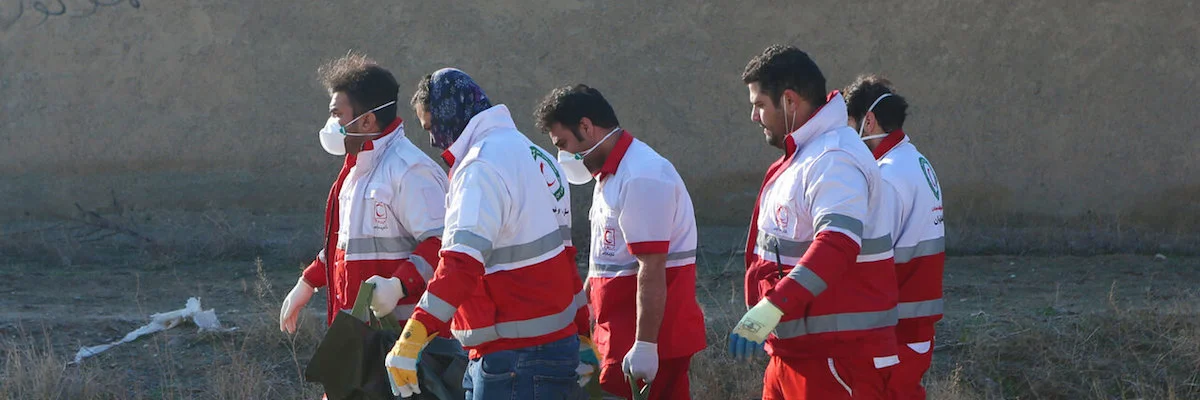
The Ukraine International Airlines Flight 752 tragedy presents the Trump administration an opportunity to demonstrate its often-stated goodwill toward the Iranian people by responding to the formal invitation from Iran and enabling the participation of US experts from Boeing and investigative body NTSB.
Iran has sought international assistance in the investigation of the crash of Ukraine International Airlines Flight 752, which killed all 176 people onboard on Wednesday. But the ongoing tensions between Washington and Tehran threaten to prevent the involvement of American experts in the investigation of what brought down the Boeing 737-800 aircraft.
The U.S. National Transportation Safety Board faces two quandaries. It must determine whether the Trump administration’s sanctions on Iran prohibit engagement with Iranian authorities in the investigation, and whether it is safe to send investigators to the crash site at a time when the two countries are in a heightened state of confrontation.
NTSB experts are widely recognized as among the best crash investigators in the world and they regularly participate in investigations at the behest of foreign governments, under a process outlined in Annex 13 of the Convention on International Civil Aviation.
Boeing Co. has said it is ready “to assist in any way needed,” but the airplane maker, too, must reckon with sanctions restrictions.
American sanctions on Iran require NTSB investigators to procure a license from the Treasury Department in order to work with Iranian counterparts—such clearances can take as long as a year to be issued.
The tragedy presents the Trump administration an opportunity to demonstrate its often-stated goodwill toward the Iranian people by immediately issuing the licenses. In return, the U.S. should seek public assurances about the safety of American experts who would travel to Iran, and for these experts to be provided access to the plane’s black boxes—which Iranian officials are reportedly reluctant to provide.
Part of this reluctance stems from the fact that Iranian civil aviation officials believe their own efforts to improve the safety of Iran’s airlines have been significantly hampered by the Trump administration’s “maximum pressure” sanctions policy. Boeing’s contracts to sell 100 aircraft to Iranian airlines were cancelled when the U.S. withdrew from the Iran nuclear deal in May 2018—Iranian airlines fly some the oldest aircraft still in service anywhere in the world. The reimposition of secondary sanctions also blocked Iran’s ability to purchase spare parts from U.S. suppliers for its existing fleet, and even prohibited the sale of training manuals and technical documentation.
The International Civil Aviation Organization, a United Nations body, has long gathered evidencedemonstrating that U.S. sanctions hamper the safety of the Iranian aviation industry. A 2010 ICAO Universal Safety Audit found that “Iranian carriers are unable at present to fulfill most requisite ICAO aviation safety and maintenance standards and recommended practices (SARPs)… because they were denied access to updated aircraft and aircraft spare parts and post-sale services around the world.” The rate of passenger fatalities in Iran is 5.5 times higher than in the rest of the world.
As a foreign carrier, the safety of the Ukraine International Airlines flight is unlikely to have been impacted by these sanctions issues. But the death of over 100 Iranian nationals in the crash has compounded the grief for a country where planes all-too-regularly experience catastrophic accidents.
When issuing licenses to enable U.S. participation in the investigation, the Trump administration should also respond to the wider concerns around aviation safety in Iran by issuing licenses for planemakers such as Airbus SE, Boeing and ATR to resume sales of safety-related materials, including flight manuals used in pilot training and schematics used in aircraft maintenance. These limited licenses would in no way undermine the Trump administration’s “maximum pressure” policy, but could generate some trust between American and Iranian authorities seeking to de-escalate tensions.
This would not be the first time that the U.S. has sought space for understanding and cooperation with Iran under tragic circumstances. In the aftermath of the devastating 2003 Bam Earthquake, American search and rescue teams traveled to Iran to provide disaster aid and medical assistance to survivors—without in any way compromising the U.S. position on Iran’s nuclear program.
This is another moment for that kind of cooperation.
Photo: IRNA
For Iranian Passengers, Old Planes and Few Parts Make Air Travel 5.5 More Times Deadly
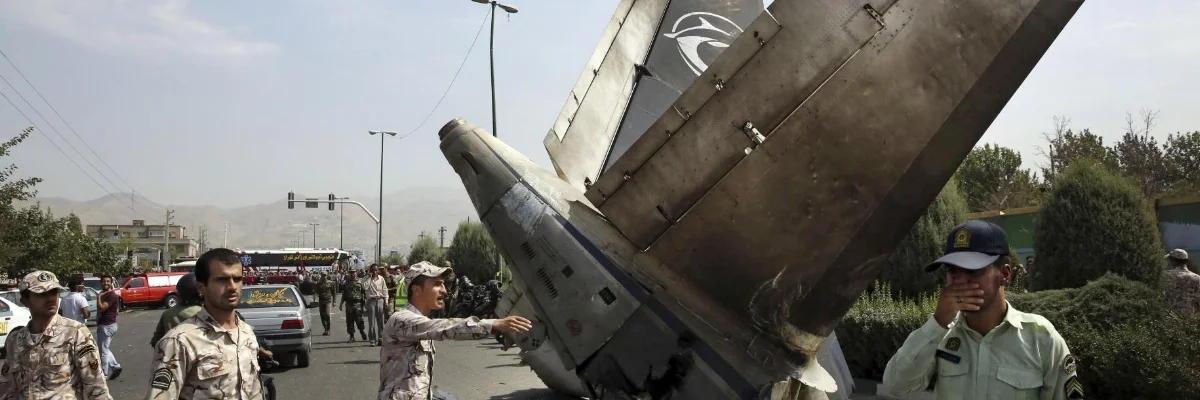
Statistically speaking, air travel in Iran is still safe. But even if the overall risk of an accident remains statistically low, the risk still far exceeds expected levels.
In November, Kim Hjelmgaard of USA Today reported on the misery and danger faced by Iran’s air travelers as US sanctions return. Hjelmgaard’s interviewed with former airline pilot Houshang Shahbazi who heroically “saved the lives of more than 100 passengers and crew in 2012 when he successfully landed a 747 commercial airplane with a disabled wheel carriage.” His report also included data on aviation safety in Iran complied by Bourse & Bazaar. A closer look at that data is presented here.
To measure the risks posed to air travelers in Iran, it is possible to look to deaths per passenger journey. This is considered the “most accurate measure” for the mortality risks posed by flying as it accounts for the difference between long and short haul flights, which operate different types of aircraft.
Passenger journeys are tabulated by the International Civil Aviation Organization, and accessible via the World Bank’s data portal. Air accidents and fatalities in Iran are recorded by the Air Safety Network, an industry database. For the purposes of this analysis, we will compare global fatalities with passengers fatalities from accidents involving Iranian-registered commercial aircraft within Iran.
The period examined is 1997 to 2017, a 20 year period which includes the most recent available data. This is also the period which covers the intensification of international sanctions on Iran, beginning with the Iran Libya Sanctions Act signed into law by the Clinton administration in 1997. The International Civil Aviation Organization (ICAO), a United Nations body, has long gathered evidence which suggests that US sanctions contribute to the poor safety record of Iran’s aviation industry. A 2010 ICAO Universal Safety Audit found that “Iranian carriers are unable at present to fulfill most requisite ICAO aviation safety and maintenance standards and recommended practices (SARPs)… because they were denied access to updated aircraft and aircraft spare parts and post-sale services around the world.”
Looking to the data on risk of death, Iran’s 20 year average is 1.89 deaths per 1 million passenger journeys. The same figure for the rest of the world is 0.34 deaths. By this measure, flying in Iran is on average 5.5 times more deadly than flying in the rest of the world, in aggregate. Notably, this does not include 2018 figures, a year where Iran has had 66 fatalities.
When depicted in a chart, the ratios help illustrate the frequency with which Iran experiences serious air accidents. There have been accidents in 18 of the last 20 years, with an average of 2 accidents per year. Accidents do not always lead to fatalities. Fatalities are recorded in 9 of the last 20 years. But deaths can quickly mount when accidents occur at higher than normal levels. In 2009, Iran tragically experienced 7 aviation accidents, resulting in 189 deaths.
Statistically speaking, air travel in Iran is still safe. This is in large part due to the efforts of Iranian pilots and maintenance crews to keep aircraft operable despite limited resources. But even if the overall risk of an accident remains statistically low, the risk still far exceeds expected levels. Over the last 20 years, Iran has witnessed 41 accidents, accounting for 6 percent of the global total. But the country accounts for just 0.6 percent of passenger journeys made worldwide in the same period. By this measure, the frequency of accidents in Iran is 10 times higher than the global norm.
To help put the risk of death in context, one French study found that the rate of fatalities for motorcyclists in France is 1.26 deaths per million journeys. By this jarring measure, a journey on a commercial flight in Iran is more dangerous than a journey on a motorcycle. Iranian passengers put up with these risks because they must—it is the only way to visit family, conduct business, or travel for pleasure. But the situation remains unacceptable.
As Shabazi poignantly told Hjelmgaard, "Everybody knows the risks Iranians face in the air… and everybody's scared."
Photo Credit: IRNA
Iran Sanctions Hopes Fly on Possible Delivery of Eight ATR Aircraft
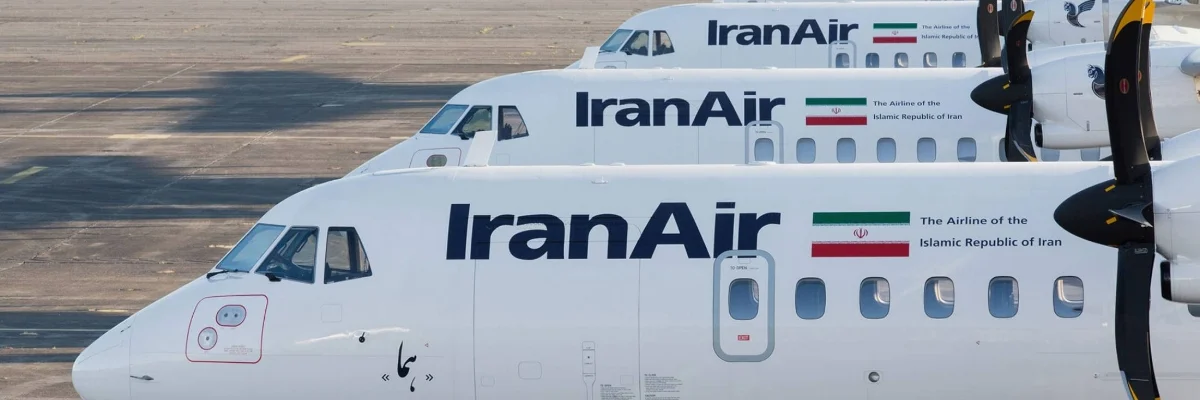
◢ In a recent interview, French Economy Minister Bruno Le Maire expressed optimism for the delivery of eight ATR turboprops to Iran as part of a contract with Iran Air, the country’s national airline. Le Maire spoke of being “hopeful that the United States will provide authorization to deliver these aircraft.” The ATR deliveries, like the three Airbus deliveries made prior to President Trump’s withdrawal from the Iran nuclear deal, are highly symbolic of the hope and expectations for increased trade and investment following the implementation of the Joint Comprehensive Plan of Action (JCPOA).
In a recent interview, French Economy Minister Bruno Le Maire expressed optimism for the delivery of eight ATR turboprops to Iran as part of a contract with Iran Air, the country’s national airline.
The encouraging comments come after Le Maire disclosed two weeks ago that the United States had rejected a joint European letter requesting a broad range of waivers and exemptions that had been sent to Secretary of Treasury Steve Mnuchin and Secretary of State Mike Pompeo in June.
In a change of tone, Le Maire spoke of being “hopeful that the United States will provide authorization to deliver these aircraft.” The ATR deliveries, like the three Airbus deliveries made prior to President Trump’s withdrawal from the Iran nuclear deal, are highly symbolic of the hope and expectations for increased trade and investment following the implementation of the Joint Comprehensive Plan of Action (JCPOA).
Le Maire described the intention for ATR to deliver eight aircraft prior to the August 6 sanctions deadline. At least four ATR 72-600 aircraft have been registered to Iran Air. A further four aircraft have been photographed in Iran Air livery, but have not yet had their registrations altered. These eight aircraft can be identified as follows:
- F-WWEP (now EP-ITI)
- F-WWEU (now EP-ITJ)
- F-WWEF (now EP-ITK)
- F-WWEG (now EP-ITL)
- F-WWEC
- F-WWED
- F-WWEE
- F-WWEX
To date, Iran Air has received an initial eight ATR aircraft, having signed a contract in April 2017 for 20 planes. Iran Air is using these planes as part of a new regional service.
The ATR contract, like so many others, was immediately put in doubt following President Trump's withdrawal from the nuclear deal on May 8 and the announcement that the US would be reimposing secondary sanctions that had been removed as part of the JCPOA. Having already manufactured the aircraft on specification for Iran Air, only to see delivery delayed by financing issues related to sanctions concerns, ATR announced it would seek a new license from the US Treasury to permit the delivery of the aircraft following the US withdrawal form the nuclear deal.
In July, US Department of Treasury assistant secretary of terrorist financing Marshall Billingslea downplayed the likeliness of any such licenses being granted, telling FlightGlobal, "At this stage, I think we are not in a position to suggest we would be issuing such licenses.” Billingslea cited an inability to “show flexibility on transactions.”
But Le Maire’s comments will give rise to new hope that the US authorities may be adopting a more flexible stance. The French minister disclosed that he has been “negotiating for weeks” with his counterpart, Mnuchin, “fighting so that in the health sector, in the agri-food sector, which are now sanctions exempt, there may be funding channels that remain open."
In the context of this fight, the delivery of the ATR aircraft will prove the most clear indication of US flexibility. There are three reasons US authorities might decide to issue a waiver. First, ATR’s smaller aircraft are used for regional routes. This limits concerns of possible “dual use” of the aircraft for military applications. US authorities have sanctioned Iranian airlines and aircraft for conducting “resupply” flights to the conflict in Syria. Such concerns clouded the Airbus and Boeing contracts for larger commercial aircraft.
Second, unlike Airbus aircraft, ATR turboprops, manufactured under a joint venture between Airbus and Italian aerospace company Leonardo, have limited US parts content. According to ATR executives, US components account for “slightly over 10%” of total parts content, or just above the sanctions threshold. Additionally, the aircraft are already manufactured, meaning that there is no further activities necessary with US entities along the supply chain.
Finally, there is a clear humanitarian justification. As shown by the tragic crash of an Aseman Airlines ATR 72 in February, smaller aircraft are especially vulnerable to accidents caused by aging and poor maintenance. Improving air safety has been a primary consideration for Iranian authorities as they sought to acquire new aircraft following the lifting of sanctions.
A focus on delivering eight turboprops and protecting banking channels for sanctions exempt sectors does not equate to a full-defense of French business interests in Iran. It is clear that Iran contracts of leading French enterprises such as Total, Peugeot, Alstom, and Airbus remain outside the scope of compromise with the US Treasury.
However, even a small victory would be important for Le Maire, as it would push the Trump administration into a mindset of negotiated compromise rather than blanket rejection. The Trump administration is unlikely to announce any softening in their position. So the clearest indicator will be whether the eight ATR aircraft make their long-awaited flights to Tehran. The eyes of a nation will be watching.
Photo Credit: ATR
Iran Air Expands Routes Amid Uncertainty
◢ Despite recent uncertainty surrounding the 2015 nuclear deal, Iran Air has been moving forward with its expansion efforts, drastically changing its face in the airline industry.
◢ Iran Air's network has grown significantly since 2015, but remains much smaller than that of a decade ago. In 2002, the airline was serving 18 European destinations, compared to today’s 13 destinations.
Despite recent uncertainty surrounding the 2015 nuclear deal, Iran Air has been moving forward with its expansion efforts. The airline's CEO, Farzaneh Sharafbafi, attended last Friday's meeting of the JCPOA Joint Commission. Her presence indicated the significant political efforts being made to facilitate the acquisition of new aircraft which the airline needs to successfully maintain its growth.
Celebrating its 57th anniversary this year, Iran Air began flights from Tehran to Belgrade and Tbilisi on March 10 and is planning to start flights to Budapest, Malmö, and Saint Petersburg later this year.
With visa restrictions being lifted in Serbia, further optimism points to India. In a joint statement by President Rouhani and Prime Minister Modi in February, Iran and India committed to the opening of e-visa facilities for their citizens. In 2016, neighboring Armenia and Georgia lifted visa requirements for Iranians, leading to the overall flight increases between the two countries and the addition of Tehran-Tbilisi flights to Iran Air’s schedule.
Although Iran Air does not publish passenger statistics and load factors on its routes, its performance can be estimated based on frequency increases on many of its European routes in the last year. Flights to Frankfurt, Gothenburg, Stockholm, and Vienna have all seen the addition of more weekly flights and higher capacities. The Tehran-Belgrade flights, have already sold out through the summer of this year. The airline has also begun codeshare flights on Lufthansa’s Tehran flights, and expanded its codeshare services with Turkish Airlines.
Iran Air's network has grown significantly since 2015, but remains much smaller than that of a decade ago. In 2002, the airline was serving 18 European destinations, compared to 13 destinations today. Iran Air’s Asian flights to Beijing, Bangkok, Kuala Lumpur, Seoul, and Tokyo, have not been in operation for a several years.
By re-establishing these routes, Iran Air could capitalize on a hub and spoke system used by most global airlines. Better geographically positioned in the Middle East than any other Persian Gulf carrier, Tehran could serve as a connecting point for passengers traveling to East Asia and Australia from Europe and North America.
With neighboring Qatar Airways, Emirates, and Etihad Airways experiencing financial difficulties due to political tensions, increased competition, and investments in struggling European airlines, now would be an ideal time for Iran Air to revitalize its own hub and spoke strategy in order to grab market share.
However, despite the opening of new routes planned for this year, Iran Air faces an uphill battle in sustaining its growth. Because the airline's network remains limited, the success of newly launched routes is initially dependent on Iranian tourists. Economic pressures could see Iranian tourist figures fall. The Iranian departure tax may rise later this year and current proposals show increases from USD 15 to USD 45, which must be paid by all passengers departing Iran.
Furthermore, due to the existing sanctions on financial transactions, Iran Air tickets are not sold on various travel websites. Tickets are sold only through Iran Air offices or travel agents, making it difficult for those booking online from outside of Iran. This hinders growth for connecting passengers and makes competing airlines more attractive, which have already increased their Iran services. In the last two years alone, Iran Air has faced new competition from Air France, Austrian Airlines, British Airways, and KLM, all of which have resumed services or increased the number of seats on Iranian flights.
Nonetheless, Iran Air has revitalized its domestic flights with the creation of a new regional service using newly acquired ATR aircraft. Iran Air is projecting a significant rise in revenue. At the height of economic pressure in 2013, the company’s revenue was approximately USD 330 million. The airline hopes to earn around USD 1 billion annually once its new fleet has been put into service over the next decade. Plans to begin flights to many intercontinental destinations depend on the arrival of new long-haul aircraft.
The airline currently has fifteen Boeing 777-300ERs on order, most of which will be used for intercontinental flights. During a press conference in Paris, the airline’s CEO, Farzaneh Sharafbafi, confirmed that upon receipt of the Boeing aircraft, Iran Air would start or resume flights to Adelaide, Bangkok, Kuala Lumpur, and Sydney, further expanding its reach into Asia and Australia. On these planned routes, Iran Air faces little to no competition from Asian carriers.
Sharafbafi reassured all that Boeing would remain committed to its landmark contract. She also said that there are no problems in financing the orders and that Boeing and Airbus jets would be delivered in late 2018 and 2019 respectively.
But while the licenses issued by the U.S. government allowing for the sale of Airbus, Boeing, or ATR aircraft remain valid, the Trump administration continues to threaten to pull out of the Iran nuclear deal. Ultimately, the growth of Iran Air significantly depends on American adherence to the deal and the delivery of the new aircraft. It remains to be seen whether Sharafbafi will have the opportunity to pursue Iran Air's ambitious reintegration in the global airline industry.
Photo Credit: Alireza Izadi