
Here's What Iran Wants From Sanctions Relief
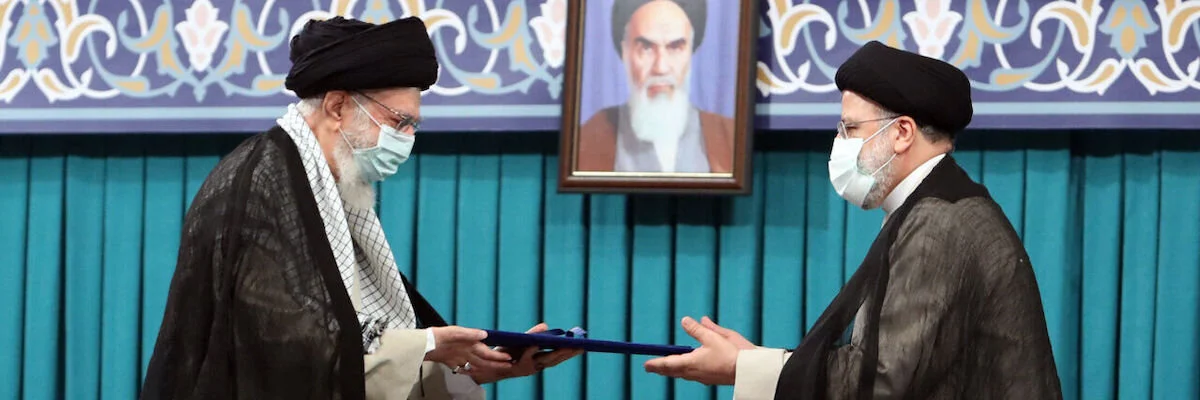
A new report from the Majlis Research Center offers the first assessment of what “verified” sanctions relief might look like, providing a glimpse into how negotiators will take forward a key demand set out by Iran’s Supreme Leader.
Back in February, Iran’s Supreme Leader, Ali Khamenei, set out an early condition for new negotiations over the fate of the JCPOA. In a major speech outlining Iran’s “final” stance on U.S. reentry into the nuclear deal, Khamenei declared that sanctions relief must be implemented “in practice” and not just “on paper.” Iran would also “verify” that sanctions relief commitments had been met before fulfilling its own commitments under the restored agreement.
Khamenei’s demands were shaped by the bitter experience of the Trump administration’s withdrawal from the JCPOA and unilateral reimposition of sanctions. The issues surrounding sanctions relief and Khamenei’s demands hung over six rounds of negotiations in Vienna. They are again being cited as a possible reason for the Raisi administration’s slow return to the nuclear talks. But what exactly Iranian leaders envision for verifiable sanctions relief has been unclear.
A new report, published by the Office of the Deputy for Economic Research of the Majlis Research Center, the influential research body of the Iranian parliament, offers the first detailed assessment of what verified sanctions relief might look like. The report, entitled “Verifying Sanctions Relief,” does not represent the official position of the Raisi administration, but given the timing of its publication and the affiliation with parliament, it likely represents an emerging consensus about how best to meet Khamenei’s demands while also assuaging the concerns of Iranian parliamentarians who feel the JCPOA is inherently unfair. Many of the details in this new report are drawn from an April 2021 report published by the same research centre that also looked at issues around the verification of sanctions relief. But the new report is more detailed in its diagnosis of the problem sanctions verification seeks to address and the mechanisms that should be used.
In particular, the report aims to address the perceived imbalance between paragraphs 26 and 36 of the JCPOA. Iran interprets paragraph 26 to allow it to lessen its commitments under the deal if sanctions relief is not fully implemented—an interpretation that is disputed by the P5+1. Paragraph 36, meanwhile, allows any party to trigger the dispute resolution mechanism and begin the process of “snapback” of sanctions—a provision that Iran considers a tool for the West to renege on the deal. Additionally, the report outlines an asymmetry in the ways in which Iran’s nuclear commitments under the JCPOA and the sanctions commitments of the P5+1 are overseen and implemented. Unlike nuclear commitments, sanctions relief commitments lack a verification and monitoring mechanism, can be obstructed, are slow to implemented, and can be undone unilaterally through snapback. The report summarises this asymmetry in the following table (translated here):
To address this asymmetry, the report calls for measures to be taken in three broad areas. What is striking about these measures is their practicality. The report basically calls for a more institutional and technical approach to sanctions relief in which a checklist provides Iranian policymakers an ability to assess the implementation of sanctions relief on an ongoing basis. As part of this approach, the report also sets out targets for oil exports and bilateral trade with Europe.
New Verification Body
The report calls for the designation of an Iranian body or institution to oversee verification of sanctions relief. This could be the Supreme National Security Council or it could be a new body established with its own staff and active secretariat. The body would have three tasks:
Observe and assess the actual impact of sanctions removal.
Establish a mechanism so that any Iranian person or entity can submit a complaint about issues related to sanctions relief.
Prepare an action plan for decreasing nuclear commitments in the event that other parties to the JCPOA renege on their commitments. Actions might include ceasing the voluntary application of the Additional Protocol, producing uranium metal, increasing enrichment above 20 percent, or expanding the number of operational IR6 centrifuges.
Verification Checklist
The new verification body would perform its mission in accordance with a defined “checklist.” The checklist would have two sections. The first section relates to specific actions and targets related to American and European sanctions relief commitments. The stipulations include:
Iran should be able to export oil and gas condensate according to its rightful market share of 2.5 million barrels per day (bdp) with an initial target of 2 million bdp.
This target is feasible—during the sanctions relief afforded Iran under the JCPOA in 2016-2018, Iran exports hovered between 2 and 2.5 million bpd.
Iran should be able to increase bilateral trade with key European partners and conduct normal banking transactions to facilitate that trade. The report stipulates an initial monthly target of $3 billion in transactions with EIH Bank in Germany, rising to $4.2 billion. Monthly transactions with the French branch of Tejarat Bank are targeted at $1 billion, rising to $1.5 billion.
Here, the report has highlighted Iranian-controlled financial institutions in Europe as the key conduits, perhaps reflecting how in recent years Europe-Iran trade has been increasingly run through smaller European banks without Iranian ownership or management. While the report stipulates “transactions,” the targets here are high when likely trade totals are considered. Even if we interpret that key Germany and France-based banks may process most EU-Iran trade, the total initial transaction volume envisioned of $48 billion is significantly higher than the total value of EU-Iran trade in 2016 following the lifting of sanctions. That year, bilateral trade reached just over EUR 20 billion. While the transaction targets could include foreign investment in Iran, it is unlikely that either EIH or Tejarat Bank can scale-up to handle the envisioned volumes.
Iran will also seek to verify a range of sanctions lifting measures taken by the Biden administration. This includes the removal of executive orders issued by “two American presidents,” a likely reference to Trump and Biden that suggests a desire for non-nuclear sanctions designations, such as the Foreign Terrorist Organization designation of the Islamic Revolutionary Guard Corps, to be lifted. In addition, the report calls for the update of the website of the Office of Foreign Assets Control (OFAC), the sanctions enforcement body of the U.S. Department of Treasury. OFAC is to cease publishing notices, advisories, and fact sheets that dissuade trade with Iran and should increase the issuance of licenses and exemptions to ease trade
This stipulation that means the report authors understand U.S. primary sanctions will continue to pose a challenge for Iran’s engagement with the global economy.
The second section of the checklist focuses on ongoing efforts to decrease the risks of doing business with Iran once sanctions have been lifted. These stipulations reflect the perception in Iran that following the lifting of sanctions “on paper” in January 2016, the Obama administration took a lackadaisical approach to supporting the normalisation of global trade and investment in Iran. The continued characterisation of Iran as a high-risk jurisdiction is seen to have hampered economic engagement. Therefore, the checklist would require:
The removal of all measures that have presented Iran as a jurisdiction with high risk of money laundering and adoption of measures to normalise economic relations with Iran.
Changing the basis of guidance to banks issued by the Treasury Department’s Financial Crimes Enforcement Network (FinCEN) from risk-based to rule-based.
Maximal removal of sanctioned individuals and entities from the SDN list and a substantive review of SDN and non-SDN sanctions lists.
Removal of statements by OFAC and other institutions that dissuade humanitarian trade and maritime trade with Iran. In addition, there should be new licenses issued to all banks that hold Iranian oil revenues in order to ensure the timely release of frozen assets.
A written commitment from neighbouring countries not to take action against foreign entities willing to engage Iran economically.
Official statements proclaiming that medium and long-term economic engagement with Iran is permissible and refraining from any action that would damage engagement with Iran.
Notably, the report does not indicate that Iran would make progress on key measures such as implementation of the Financial Action Task Force (FATF) action plan that would substantially change the perceived risk associated with engaging with the Iranian financial system. While the demand that FinCEN changes its guidance from risk-based to rule-based is unrealistic, it does point to a desire for a more prescriptive approach from the U.S. government that may create a basis for reciprocal regulatory reforms in Iran. Here, the report is pointing to the issue of over-compliance by international banks, which deem the risks and costs of transacting with Iran, even in support of clearly permissible trade, to be too high. FinCEN’s risk-based guidance essentially places the burden on financial institutions to determine the appropriate level of due diligence, putting bank managers in an uncomfortable position where minimising risk means maximising administrative burdens. A more prescriptive approach, like the rule-based approaches taken by some European regulators, may reduce the incidence of over-compliance by eliminating the uncertainty around just how much due diligence is required to mitigate anti-money laundering or counter-terrorist financing risks.
Ongoing Monitoring
Finally, the report envisions that the verification of JCPOA-related sanctions relief will be take place on an ongoing basis. The verification body would produce a quarterly report that would certify that Iran is benefiting from sanctions relief in accordance with the checklist. This monitoring function would track developments in five key sectors: baking and finance, transportation and logistics, oil, gas, and petrochemicals, aviation, and industry and mining. The body would also consult across government and with the private sector. As part of its report, the body would offer its recommendation as to whether Iran should remain in the JCPOA, decrease its commitments, or cease participation. The quarterly reports would be used by Iran to inform its engagement with the JCPOA Joint Commission. Interestingly, the report envisions an Iranian body tasked with verification and does not outline the creation of an international third-party body that would be the true analogue for the IAEA. This may reflect a lack of trust that the third-party body would be impartial.
Outlook for Negotiations
As the Raisi administration has delayed its return to the Vienna negotiations, fears have grown that Iran will not continue the talks where they left off in the sixth round, instead returning to the table with new and unreasonable demands. But there is little to indicate that Khamenei’s “final” stance on the talks have changed since February, meaning that the key unknown is how reasonable Iranian negotiators will be in seeking to secure his core demand for verified sanctions relief. To this end, the new report from the Majlis Research Center should be reassuring. While some of the demands are unreasonable, for example the high targets for Europe-Iran trade and the insistence on changes to how FinCEN provides guidance, they are undeniably technical. Should this report reflect an emerging consensus about how to “improve” the JCPOA not by changing its terms, but by improving its implementation, then the outlook for negotiations may be less dire that many predict. A focus on technical shortcomings rather than political or strategic flaws indicates that Iran sees the value of a restored JCPOA but wishes the benefits to be assured and durable. Should the Biden administration be prepared to acknowledge the shortcomings in the sanctions relief provided to Iran between 2016-2018, there are ways in which verification can be addressed within the context of the deal.
Photo: IRNA

Despite Public Outcry, Consensus Builds For China-Iran Deal
Iranian officials hope that the economic uplift of an implemented partnership agreement with China will win the hearts and minds of a wary public.
The relationship between Iran and China has improved considerably over the past two decades, but the two countries are far from enjoying the mutual understanding that is necessary for deeper strategic ties. Iranian public perceptions of China are increasingly, negative particularly in the aftermath of the coronavirus crisis.
In April, while the coronavirus was raging in Iran, health ministry spokesperson Kianoush Jahanpour called China’s official death toll a “bitter joke”. He then traded barbs with Chang Hua, China’s ambassador to Tehran, on Twitter. The Chinese envoy urged the Iranian official to “respect the great efforts of Chinese people.” This heated exchange drew the attention of many in Iran, while Jahanpour’s “unconsidered” remarks enraged conservatives.
Jahanpour later backtracked and was eventually replaced, but Iranian public opinion had turned against China, and social media users reprimanded the Rouhani administration for not standing behind their official. Things got so tense that the Chinese ambassador blocked a number of Iranian users on Twitter including a famous Iranian singer. Reformists also jumped into the fray, slamming Rouhani's government for its “unbalanced” ties with China.
It speaks to the complicated politics around Iran-China relations that the Rouhani administration has been accused of both being too dismissive and too dependent on China. Conservative politicians in Iran, who are eager for closer ties with China, have laid blame at the feet of the Rouhani administration for the dismal state of bilateral relations.
Ahmad Tavakoli, an influential conservative, has argued that Rouhani failed to welcome Xi Jinping warmly enough during a state visit to Tehran in 2016, sending his foreign minister to receive him on the tarmac. Hamid-Reza Taraghi, a political activist, recently claimed that “Some of [Iran’s] government officials have the wrong behavior towards our Chinese partners, and even the trip of Chinese President [ended up being useless] while it could have been the beginning of massive developments.”
Majid Reza Hariri, the Chairman of Iran-China Chamber of Commerce, told the hardline newspaper Kayhan, that following the implementation of the nuclear deal officials, in the Rouhani administration “talked to any Chinese official coming to Iran [in a way], as if [they] were his servants. He was [so] rest assured that Renault, Siemens and Total have formed a line [to invest in Iran] that he formally and publicly told Chinese that they are at the end of the line.”
While Xi Jinping signed a Comprehensive Strategic Partnership (CSP) agreement with Iran during his state visit, little was implemented in the subsequent four years. Mahdi Safari, Iran’s former envoy to Beijing, stated recently that “The Chinese tell us that ‘you see us as spare parts, and when you get into trouble with Westerners and your relationship with them goes sour, you come to us.’” Adding that “We need to build trust to correct this perception.”
According to Gholamreza Mesbahi-Moghaddam, a former conservative MP, as the Rouhani administration exhibited “no determination” to pursue the CSP, Ayatollah Khamenei intervened, sending the then parliament speaker Ali Larijani on an important mission to Beijing last year in order to revive the languishing agreement. now that the Rouhani administration is belatedly pursuing a new 25-year framework for the CSP agreement with China, that Khamenei’s intervention is bearing fruit.
But the public sentiment towards China threatens to prevent the deal from progressing. As a leaked 18-page document detailing negotiating points for the new CSP circulated on social media and critics labelled the terms as another Turkmenchay—the 1828 treaty between Persia and Imperial Russia under which the Persian government ceded control of territory in the South Caucasus. Rumors circulated on social media that the deal would see Iran host Chinese military forces and to cede the island of Kish to the Chinese, prompting denials from Iranian authorities.
Even conservative political figures, perhaps surprised by the public reaction to news of the deal, sought to turn the criticism towards the Rouhani administration. The conservative camp had itself been subject to similar criticism when President Mahmoud Ahmadinejad signed a deal with Chinese officials in 2008 in an effort to safeguard oil exports in the face of international sanctions. The deal, which restricted Iran’s access to its own oil revenues, was also compared to Turkmenchay.
Hojjatollah Abdolmaleki, a prominent conservative political figure, cast doubt on the Rouhani administration’s ability to garner public support for the deal. Conservative figures even sought to amplify the rumors of embarrassing concessions. Mahmoud Ahmadi Bieghash, a newly elected radical MP, told claimed in an interview on state TV that the rumors about Iran ceding Kish to China were correct, but that “the [reaction] of people and parliament” forced a change in plans.
According to Fereidoun Majlesi, a former Iranian diplomat, the hardline politicians have found an issue around which to engage the wider public. “The radicals know that a large number of people are disappointed. Therefore, to attract their votes in the coming presidential election in 2021, they are bringing up such rumors to discredit their rivals, while portraying themselves as patriots,” Majlesi explained in an interview.
Despite their electoral ambitions, the strategic logic of an upgraded partnership deal between Iran and China is undeniable for Iranian authorities across the political spectrum. The conservative Farhikhtegan newspaper heralded the deal as “[the best opportunity] through which Iran can target the core of the maximum pressure policy,” referring to the sanctions reimposed by the Trump administration in November 2018.
Prominent economist Saeed Laylaz recently stated the agreement with China “will return balance to Iran’s foreign relation, while averting the exceeding demands of US and is [also] a response to Europe’s inaction,” adding that “Those who [care] for Iran should welcome this agreement. Because it both reduces the pressure on the country and increases our bargaining power against the West.”
Laylaz explained that Iran has no option but to pursue a more functional relationship with China. “If we do not use this opportunity with China, the West will never give us a chance. [Our] experience has shown that the West is nothing but the United States until further notice. Counting on Germany or the European Union is similar to building a house on the sands by the sea,” he said.
This view was echoed by Diako Hosseini, a senior director at the Centre for Strategic Studies, which is affiliated with the presidency. “Prior to US withdrawal from the JCPOA, strategic cooperation of Iran and China was just a choice. After US withdrawal, it was turned into a 'preference,” he tweeted. Hosseini added that the Trump administration’s maximum pressure sanctions made such a deal a “priority,” and that further economic pressure would make the deal as “necessity,” describing any such agreement as the “price the [U.S.] should pay.”
Clearly, there is a growing consensus that an agreement with China would bolster Iran’s hand in future negotiations with the U.S. by increasing the means by which to survive the pressure of U.S. sanctions. However, some in Tehran are worried about Beijing’s ability to take advantage of Tehran’s current weak economic position.
Majlesi told Bourse & Bazaar that “Iranians are naturally worried that the Chinese will follow the playbook of Russians regarding Iran. For a period of time, Russia used Iran as a winning card to solve its own problems with the U.S. However, I strongly believe that China has unique abilities and if they decide to help us, they are certainly able to do so. “
Despite these headwinds, the Rouhani administration appears newly determined conclude this agreement. Mahmoud Vaezi, chief of staff to the president, has asserted that the negotiations on the document are likely to be "concluded by the end of the [Persian] year” (before March 2021).
An informed source told Bourse & Bazaar that this agreement “will be implemented during Rouhani’s presidency for sure,” adding that the political consensus in Iran is now clear, despite the public rhetoric. “Currently, there is no problem with implementing the agreement on the side of Iran, and everything is now dependent to China.”
No matter what administration is to come next, the Iranian political system and Ayatollah Khamenei will adamantly pursue the 25-year deal in order to more fully implement the CSP first signed in 2016. The hope will be that an economic uplift from China’s renewed commitment to Iran will win the hearts and minds of a wary public.
Photo: IRNA
Iran’s Supreme Leader Emphasizes Practical—Not Political—Economic Aims
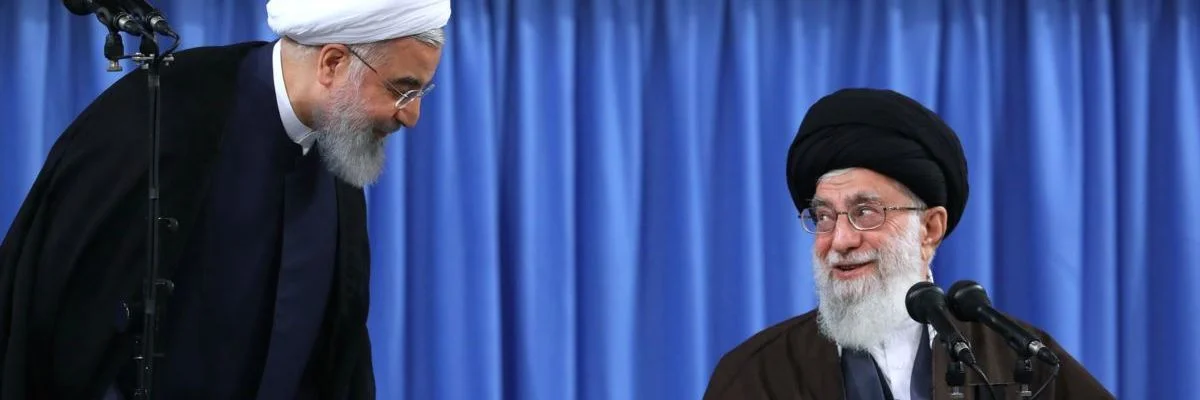
◢ During a meeting with the Islamic Republic's political elite, Supreme Leader Ayatollah Ali Khamenei reiterated calls for a “resistance economy,” but also placed new emphasis on the “increasing the ease of doing business.” The specificity of some of Khamenei’s advice and observations about Iran’s economy suggests a greater appreciation for the practical importance of economic reforms that go beyond well-worn political slogans.
Two weeks ago, during a high-level meeting with the Islamic Republic's political elite, Supreme Leader Ayatollah Ali Khamenei reiterated familiar calls for a “resistance economy,” but also placed new emphasis on the “business environment and increasing the ease of doing business.” While it is not unusual for Khamenei to focus on Iran’s economic challenges in such addresses, the specificity of some of his statements suggests a new appreciation for the importance of practical economic reforms that go beyond political slogans.
Pointing to several chronic “illnesses” of the Iranian economy during the meeting—attended by President Hassan Rouhani, Parliament Speaker Ali Larijani, and Chief Justice Ibrahim Raeisi—Khamenei declared, "If those illnesses are cured under the current sanctions, Iran's economy will experience a leap forward."
Khamenei outlined four main challenges facing the Iranian economy: oil dependence, including the spending of oil revenues on “living expenses” rather than long-term development; unnecessary government interference in the economy, including the failure to fully implement the privatization programs outlined in Article 44 of the constitution; the poor business environment, which is hampered by a cumbersome government bureaucracy; and budgetary reform, which extends to government-led reform of the banking sector.
The supreme leader’s latest speech build on an earlier deadline he set for the Rouhani administration, tasking the government to restructure the its budget and overhaul banking regulations. Khamenei took the opportunity to remind government officials that there remain just "two months left for the task to be accomplished.”
Over the years Khamenei has given his assent to various economic reforms, including privatization and banking reforms. But he has also extolled the virtues of import substitution and the need for Iranian industries to indigenize new technologies to help reduce the Iran’s vulnerability to sanctions. These aims have given his messaging a predominantly political outlook.
Over the last two decades, the slogans chosen by Khamenei to indicate the focus of economic policy for the Iranian new year—“boosting production,” “supporting domestic commodities,” “economy of resistance and job creation” etc.—have offered a general goal towards which government policies ought to be directed. But there is a new specificity in the supreme leader’s recent statements that suggest a growing awareness—perhaps triggered by the economic protests of early 2018—of how economic circumstances have a direct bearing on the perceived legitimacy of the political establishment.
In his recent comments, Khamenei admitted that Iran’s economic struggles are squeezing the poor and the middle class. But he expressed confidence that the country had not reached a “dead-end in the true sense of the word." While conceding that U.S. sanctions on Iran are “unprecedented,” he insisted that "the Islamic Republic is made up of a strong metal,” and that this strength derives from the Iranian people and their mentality of “resistance.”
The concept of resistance has long been a central motif of Khamenei’s political messaging. In an economic context, the supreme leader uses the word to describe policies that “fortify and lay solid foundations for the economy.” For economic planners and the business community, the concept of the “resistance economy,” has spurred the launch of programs that seek to improve the resilience of the Iranian economy to external shocks, whether fluctuations in the oil price or sanctions.
First Vice President Eshaq Jahangiri leads a recently established department responsible for implementation of such programs. Khamenei even offered a few words of rare praise for steps taken by the Rouhani government within Iran's ambitious self-sufficiency drive, including achievements in wheat production and a recent declaration of gasoline production independence.
Importantly, Khamenei’s latest call to boost industrial production included an acknowledgement that Iran’s industries cannot be fully disconnected from global markets. The supreme leader stated, “At times we may need a certain part or raw material which has to be imported. Financial transactions [for those purchases] are not possible. There are problems. But we need to make a push and produce them indigenously.”
Khamenei also pointed to the phenomenon of Iran’s high interest rates, which are a response in part to chronic high inflation. He relayed an encounter with an industrialist who had told him he “can put his capital in the bank and benefit from the high returns,” but had decided not to do so because “the country needs production.” Khamenei stated that “such people are few” in Iran, and therefore reforms are needed to correct incentives.
Perhaps most remarkably, speaking about the country’s poor business environment, Khamenei stated, “I have heard that in some countries of the world, half the time is needed to launch a new business, but [in Iran] there are many challenges and barriers.” The allusion to “doing business” rankings, which measure the ease of establishing a new business in countries around the world, points to an awareness that successful reform will also require Iran to adopt international best practices, a notion that could have a bearing on the success of key reforms such as those required by the Financial Action Task Force (FATF) action plan.
The new specificity in the supreme leader’s comments on the economy may have spurred Rouhani’s speech last week, in which he insisted that he ought to be granted special powers to enable his government to more effectively respond to the “economic war” waged by the United States. Rouhani’s request, which pointed to the provision of such authorities during Iran’s eight-year war with Iraq, was accompanied by a clarification that opening negotiations with the Trump administration is “absolutely” not his government’s preferred policy at this time.
Some critics have accused Khamenei of seeking to distance himself from the nuclear deal and the widespread disappointment brought about by the reimposition of sanctions. The supreme leader advised political leaders not to explain away Iran’s economic woes by blaming sanctions, nor to expect the lifting of sanctions at any point in the near future. In a veiled criticism of the Rouhani administration’s economic policy thus far, Khamenei suggested it was a mistake for the country’s economic plan to depend on sanctions relief, stating "[This has been] one of our problems from the outset… We should not make our economy conditioned on [sanctions relief].”
But Rouhani may sense an opportunity in the supreme leader’s more practical interest in economic issues. Having been significantly weakened by the turmoil surrounding the nuclear deal, the Rouhani administration nonetheless retains well-respected ministers in key posts. Rouhani appears to be making the case that should supreme leader truly wish to see some progress on economic reforms, his cabinet deserves renewed political capital as it enters a final two years in office.
Photo: Khamenei.ir