
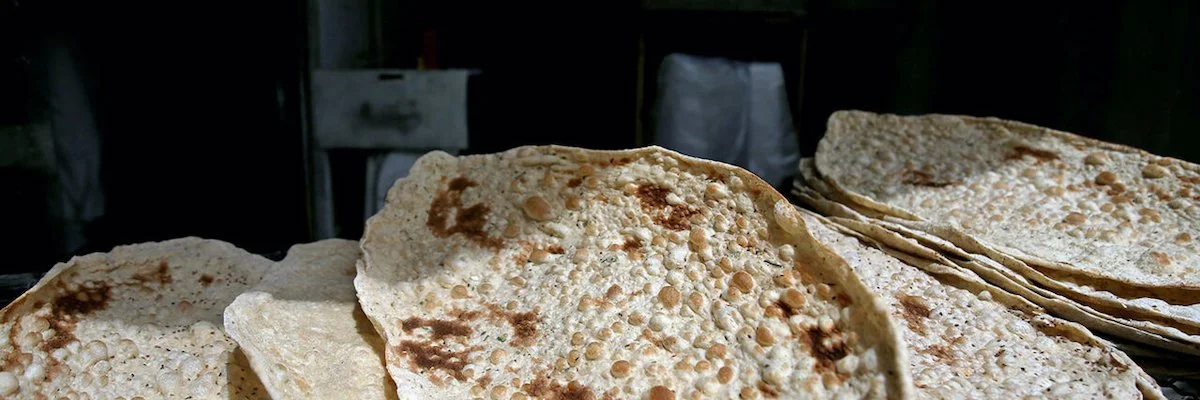
Is Iran's 'Bread' Subsidy Reform a Half-Baked Idea?
A new round of protests has begun in Iran. People are taking to the streets following a controversial subsidy cut perceived as an increase in the price of bread.
A new round of protests has begun in Iran. People are taking to the streets following a controversial subsidy cut perceived as an increase in the price of bread. These protests were inevitable in a country in which there are so many economic and political grievances and in which civil society and labour groups, demoralised about their ability to influence policymaking through the ballot box, have turned to mobilisations to get their voices heard and their anger registered.
The policy that has triggered the protests has been widely reported as a cut to a “bread subsidy” that has suddenly increased the cost of bread and cereal-based products. This is inaccurate. The subsidy that has been eliminated was an exchange rate subsidy. The government had been providing Iranian importers allocations of hard currency below market prices. This policy indirectly subsidised the purchase of wheat and a few other foodstuffs by the importers. It did not directly subsidise the purchase of bread by ordinary people.
Importers could apply for foreign exchange allocations from the Central Bank of Iran to import wheat. In theory, this would allow them to bring wheat to the Iranian market at a lower price. But in practice, the subsidy had long ago stopped working. Several distortionary effects of the policy were likely generating inflationary pressure across the economy.
First, the exchange rate subsidy was poorly targeted. To put it simply, the Iranian government was intervening to make foreign money cheaper, not bread prices themselves. The subsidy was therefore ill-suited to stabilise prices when Iran’s import needs rose, a periodic occurrence when the domestic harvest falls short of targets. It was also unable to counteract the effects of global increases in the price of wheat. Breads and cereals prices have risen steadily in Iran for years, quadrupling since 2018.
Second, providing foreign exchange at a subsidised rate was exacerbating Iran’s fiscal deficit. Financing this deficit is a major driver of inflation in Iran. The official subsidised exchange rate diverged from the exchange rate on which Iran’s government budget is balanced in 2015. Since then, the spread between the two rates has increased dramatically. The subsidised exchange rate has been fixed at IRR 42,000 since 2019. The exchange rate in the Iranian government budget for the year beginning March 2022 is IRR 230,000. As this spread widened, the Central Bank of Iran faced increasing difficulty in meeting demand among importers for subsidised foreign exchange, creating a foreign exchange liquidity crunch that made it harder to stabilise Iran’s currency outright. In recent years, the Iranian government was spending around $12 billion in hard currency on a subsidised basis.
Third, this additional exchange rate volatility has increased the pass-through effects related to Iran’s dependence on imports more broadly. The Central Bank of Iran has had partial success in stabilising the exchange rate by introducing a centralised foreign exchange market for importers and exporters called NIMA. But Iran’s economic policymakers were tying their own hands in the stabilisation of this exchange rate, which is far more critical for Iran’s economic performance, by diverting precious foreign exchange resources towards essential goods importers. When it comes to inflation generally, the government ought to focus on intermediate goods on which “made in Iran” products depend. The exchange rate subsidy for essential goods was making it harder to stabilise the exchange rate for all other goods.
Fourth, the exchange rate subsidy was always subject to abuse. Particularly in the early years, importers were known to seek and receive allocations of subsidised foreign exchange and either pocket those allocations or turn around and sell on the hard currency to other firms at the market rate. This kind of profiteering was difficult to police. As more scrutiny came upon the allocations, importers with political connections were most likely to continue receiving allocations from the Central Bank of Iran, making enforcement politically fraught.
The evidence that the exchange rate subsidy had failed can be seen in consumer price index data. Bread and cereals inflation has outpaced general inflation since last summer. This is a likely reflection that, in practice, a diminishing volume of wheat imports were being conducted using the subsidised exchange rate—the reform was already being priced-in by the newly elected Raisi government. The sudden price increases were are seeing now are more likely the result of price gouging. Firms across the food supply chain are using the policy reform as an opportunity to raise prices, knowing the blame will be cast on the government.
Whether or not the reform is half-baked, the idea has been cooking in the oven for a long time. The subsidy cut was years in the making and the preferential exchange rate was nearly nixed in 2019, as the Iranian economy underwent a painful adjustment following the reimposition of U.S. secondary sanctions. At the time, the Iran Chamber of Commerce, the voice of the country’s private sector, issued a strong statement calling for the elimination of the subsidy. But the reform was eventually shelved—the Rouhani administration had been cowered by the 2017 and 2018 economic protests, which were instrumentalised by their political rivals.
In the end, the Central Bank of Iran took a different tack. They kept the exchange rate in place but began to eliminate the range of imports eligible for the rate. Initially, importers could apply for subsidised foreign exchange allocations for the purchase of 25 essential goods and commodities. As of September 2021, that list was cut down to just seven goods—wheat, corn, barley, oilseeds, edible oil, soybeans and certain medical goods.
These were preparatory steps for the elimination of the subsidy. In practice, many Iranian grain importers had stopped using the subsidised exchange rate, both in anticipation of its elimination and because it was impractical. One of the fundamental problems facing Iran’s food supply chain is that even when Iranian importers can identify buyers and arrange logistics—difficult things to do when under sanctions—the payments that need to be made for those purchases are often delayed. Importers that were applying to the Central Bank of Iran for allocations of subsidised foreign exchange might wait weeks before the money hit their accounts. Cargo ships would sit idle off Iran’s shores, unable to deliver the grain until the seller received their funds. These delays added costs. The Iranian importers were on the hook for huge fees as the ships they chartered remained out of service. Importers that opted to use the NIMA rate have been able to make payments to their suppliers more quickly and reliably. This is because there is far more liquidity in the NIMA market, in which foreign exchange is supplied by Iranian exporters who are repatriating their export revenues as required by law.
Overall, there is a sound economic argument for eliminating the subsidised exchange rate. But that does not mean that there will not be pain for ordinary people in the short term and the protests are motivated in part by an expectation of further pain. The abject failure to communicate a plan around the subsidy reform will lead to its own distortionary effects, including predatory pricing. Failing to communicate directly and clearly with the Iranian public about this major reform is its own kind of contempt, even if the reform itself is not contemptuous.
In that vein, the elimination of the subsidised exchange rate has been criticised as “neoliberal” and in many respects, it is. As part of the continuity in economic policy, the Raisi administration appears to be continuing the Rouhani administration’s commitment to austerity, seeking relief from inflation through fiscal tightening. The national protests in 2017 and 2018 were triggered by the same anxieties around the government’s perceived failure to protect economic welfare within the Islamic Republic’s social contract.
But on the other hand, this is not a simple economic reform. Iranian officials have likened it to “economic surgery” necessary to repair an economy weakened by sanctions. The reform also does not preclude other redistributive policies. The subsidised exchange rate was a poorly designed and inefficient policy that did more for a small number of elites than it did for Iran’s poor.
The Raisi administration has promised to soften the blow of the reform by providing targeted cash transfers (for two months) to the most vulnerable in Iranian society. Electronic coupons are also being provided. Iran has a good track record with cash transfers, which do something the exchange rate subsidy did not. Such transfers directly boost the consumption of ordinary people in the face of rising prices. If the government can use the fiscal savings from the elimination of an inefficient and poorly targeted policy to shore the economic welfare of Iran’s poor more directly, while also addressing long-running distortions in the foreign exchange markets, this reform may succeed yet. But if the government fails to communicate clearly about its implementation of the reform, the Iranian public will continue to only see failure.
Photo: IRNA

Tracing the Duality of Iran’s New Central Banker
The appointment of Ali Salehabadi as Iran’s new central bank governor reflects the generational shift underway in Iranian policymaking—he was born just one year before the revolution that led to the establishment of the Islamic Republic.
The appointment of Ali Salehabadi as Iran’s new central bank governor reflects the generational shift underway in Iranian policymaking—he was born just one year before the revolution that led to the establishment of the Islamic Republic. But beyond tapping youth, Iranian president Ebrahim Raisi, has also, at least on paper, appointed an individual with technocratic credentials and managerial experience. Since 2014, Salehabadi has served as the CEO of the Export Development Bank of Iran (EBDI). From 2006 to 2014, he led the Securities and Exchange Organisation, Iran’s capital markets regulator. In that role Salehabadi was largely successful in driving the development of the Tehran Stock Exchange, despite then-President Mahmoud Ahmedinejad’s skepticism of capital markets development.
Salehabadi holds a PhD in Financial Management from the University of Tehran. He is a faculty member at Imam Sadeq University, where he completed his master’s degree. His affiliation with Imam Sadeq University, which is shared by economy minister Ehsan Khandoozi and social welfare minister Hojjatollah Abdolmaleki, firmly places Salehabadi in the network of “revolutionary experts” from which Raisi has drawn his cabinet members focused on economic policy.
Perhaps even more so than Khandoozi or Abdolmaleki, Salehabadi’s education and subsequent experience have given him a grounding in both conservative political thought and liberal economic planning. As journalist Fatemeh Bahadori observed in a profile of Salehabadi published last year, “in his books and articles, you can see the combination of these two [educations].” It is this duality that has enabled Salehabadi to hold senior positions in state entities during both the Ahmadinejad and Rouhani administrations. Now, as Raisi pursues syncretic policymaking by his revolutionary experts, Salehabadi finds himself in the most important role in Iranian economic policy.
The Central Bank of Iran (CBI) is on the frontlines of the “economic war” that Iran currently faces. U.S. sanctions policy has directly targeted the operations of Iran’s central bank through designations and measures intended to interfere with the bank’s routine operations, especially the management of the country’s foreign exchange reserves. Salehabadi replaces Abdolnasser Hemmati, who oversaw the response in Iranian monetary policy to the reimposition of sanctions following his appointment in July 2018, just a few months after the Trump administration’s decision to withdraw from the Joint Comprehensive Plan of Action and to reimpose secondary sanctions on Iran.
Hemmati, who left the central bank during his ill-fated run for the presidency earlier this summer, was largely successful in steering the bank through the sanctions-induced crisis. He implemented a centralised foreign exchange market that streamlined the repatriation and sale of currency by Iranian exporters for the benefit of Iranian importers. He also embarked on economic diplomacy, engaging officials in China, Iraq, and South Korea to pursue greater access to the foreign exchange reserves frozen as part of the Trump administration’s maximum pressure sanctions.
These efforts helped defend the value of Iran’s currency, and by extension alleviated inflationary pressures, at least for a time. Salehabadi will need to continue using the playbook set out by Hemmati—there are few better options. In the current environment, in which the Biden administration has maintained maximum pressure sanctions, Iran’s central bank lacks the policy space to fully shape Iran’s macroeconomic conditions. Exogenous forces, particularly the impact of sanctions on the country’s balance of payments, will determine Iran’s economic prospects—the central bank’s role is to mitigate the damage caused.
Salehabadi appears to understand the mitigation strategies that are necessary. While leading EBDI, he had a hand in the Rouhani administration’s efforts to shore the economy, particularly as the Trump administration’s sanctions hit oil exports and access to foreign exchange reserves. Today, Iran retains ready access to just 10 percent of its foreign exchange.
Salehabadi has highlighted the role of non-oil exports in providing Iran resilience in the face of sanctions. In an October 2019 statement reflecting on Iran’s first year weathering Trump’s maximum pressure sanctions, Salehabadi highlighted the role that non-oil exports played in supporting the country’s economy. “Simultaneously with the intensification of sanctions and the reduction of oil revenues, there was a belief that non-oil exports could meet the country's foreign exchange needs, and fortunately this has been largely achieved through the repatriation of foreign exchange,” he noted. EBDI was also one of the banks through which money from the National Development Fund of Iran, the country’s sovereign wealth fund, was lent to Iranian exporters in order to support private companies during the economic downturn. As part of this strategy, Salehabadi helped facilitate increased lending to “knowledge-based” exporters, as part of the Rouhani administration’s wider strategy to achieve greater economic resilience through diversification.
Raisi made big economic promises during his presidential campaign and also vowed to fulfil these promises within a “resistance economy” model, which is largely focused on boosting domestic production. But production can only rise in step with demand, and at a time of diminished domestic consumption, increased exports remain the best option for Iran’s economy to return to sustained economic growth. As such, truly restoring policy space for the central bank will require the lifting of sanctions.
Here, Salehabadi has experience that could help Iranian negotiators address the thorny problems surrounding the implementation of sanctions relief, especially the restoration of correspondent banking with a wider range of trade partners. While European export credit agencies favoured cooperation with private sector Iranian banks, Salehabadi was nonetheless involved in negotiations around increased bilateral banking ties during his time at EBDI. Despite initial enthusiasm, European export credit agencies ultimately failed to extend financing for trade with Iran due to the reluctance of European banks to process the related payments—a failure that cannot be repeated if sanctions relief commitments made under a restored nuclear deal are to be successfully met.
Of course, the policy space afforded to CBI is also a function of the bank’s independence. Hemmati was an adept political operator and mostly succeeded in insulating CBI from the political attacks that dogged the Rouhani administration in its second term. This independence also improved the perception of bank among Iran’s business community. Hemmati made clear that financial corruption was a systemic problem in Iran and implemented policies to reduce opportunities for corruption. During his bid for the presidency, Hemmati claimed to have “dried the roots of corruption” while at the bank. While that claim is probably an overstatement, Hemmati himself was never implicated in a corruption scandal.
It remains to be seen whether Salehabadi, who is both young and drawn from conservative networks, will be able to assert his own independence and that of the bank. But what is clear is that a great deal is riding on his tenure. In a sense, Salehabadi’s success in steering Iran’s economy back to sustained growth would legitimate “revolutionary expertise” as the new dualism in Iranian economic policymaking.
Photo: IRNA

Did Presidential Hopeful Hemmati Successfully Defend Iran's Currency?
Iran’s economic stagnation and widening inequality are top concerns for Iranian voters. It is therefore no surprise that during the three televised debates, candidates ganged up on Abdolnasser Hemmati, until recently Iran’s central bank governor.
Iran’s economic stagnation and widening inequality are top concerns for Iranian voters ahead of the presidential election on Friday. It is therefore no surprise that during three televised debates, candidates ganged up on Abdolnasser Hemmati, until recently Iran’s central bank governor. Frontrunner and head of the judiciary Ebrahim Raisi railed against Hemmati, promising voters that he would reduce the impact of exchange rates on prices, succeeding where Hemmati failed. Former IRGC officer Mohsen Rezaei claimed that Iran’s currency had lost so much value under Hemmati’s watch “the train of the revolution has turned into a scooter.”
It is true that Iran’s currency suffered a steep devaluation while Hemmati was central bank governor, but the attacks from the likes of Raisi and Rezaei are spurred not by the failure, but rather the demonstrable success of Hemmati’s management of Iran’s economic crisis. At least in the narrow area of currency policy, Hemmati made considerable progress in returning stability to foreign exchange markets at each point of crisis, meanwhile reducing the ability for special interests to profit from Iran’s system of multiple exchange rates.
When Hemmati was appointed governor of the Central Bank of Iran in July 2018, Iran’s currency had already begun to lose value. Beginning in April 2018, Iran’s currency markets responded to the news that the Trump administration was to reimpose secondary sanctions on the country. The accelerating currency crisis would be the first test of a platform the Central Bank of Iran had introduced earlier that year—a new Integrated Foreign Currency Trading System, known by its Persian acronym “NIMA.”
NIMA is part of Iran’s Comprehensive Trade Platform (NTSW), a set of registries and systems that enable companies to receive licenses to conduct certain kinds of trade and to purchase and sell foreign exchange as part of that trade. NIMA is paired with another platform called “SANA,” the Persian acronym for Foreign Currency Control System. The main difference between these two platforms is that NIMA is for international transactions with importers and exporters, while SANA is for transactions of foreign currency within the country, for instance between exchange bureaus.
Using NIMA companies no longer needed to seek allocations of foreign exchange from the Central Bank of Iran or commercial banks, a system that disadvantaged companies with less established banking relationships and less political clout. All importers and exporters are required to use NIMA.
The implementation of NIMA was slow and Hemmati, coming into office at a moment of crisis, struggled to get companies to use the new platform. By September 2018, the price of the dollar had reached a historic high of IRR 170,000 as supply-side pressure grew in advance of the full reimposition of secondary sanctions in November 2018. Imported intermediate and finished goods grew more expensive as suppliers dropped out of the market. At the same time, the Iranian financial system faced reduced liquidity in key currencies such as the Euro. As foreign exchange revenues declined, the central bank was unable to tap into foreign reserves. The Trump administration moved aggressively to freeze these reserves, even for use in humanitarian trade, leading just 10 percent of Iran’s overall reserves freely accessible by the end of 2019. To address these pressures, Hemmati sought to ensure that Iranian companies earning foreign currency made that currency available for sale through NIMA.
As per the guidelines issued by the central bank in November 2018, all exporters have a “foreign currency repatriation obligation.” According to these regulations, companies earning more than EUR 10 million a year in export revenue are obligated to repatriate 90 percent of those earnings through NIMA.
At first, adherence to the guidelines was disappointing. Hemmati publicly criticised large exporters, particularly petrochemical companies, that were failing to repatriate revenues. These companies were delaying in order to profit in rial terms as the currency continued its slide. In February 2019, CBI made a further announcement and instituted an incentive package, in which the exporters were categorised based on their performance in complying with the rules set in the market. Exporters with higher compliance—those who repatriated funds most reliably—would benefit from lower obligations for supply of foreign currency in NIMA.
Over time, the public pressure and improved incentives led to greater uptake of the NIMA system. The electronic platform significantly increased transparency in Iran’s foreign exchange market. The earnings of exporters are linked to their export licenses, exchange bureaus bought foreign currency according to offers in which the currency, exchange rate, total value, and origin of funds are all known. Importers register their offers to buy foreign currency from exchange bureaus. Each transaction is duly recorded in NIMA.
Hemmati claimed moderate success by March 2019, noting that $19 billion of export revenue had been repatriated via the NIMA system. This was still just a fraction of Iran’s overall export revenue. But the impact of the foreign exchange market was noticeable. When combined with the economy’s structural adjustments to the reimposition of sanctions, the currency policy instituted by Hemmati saw the value of the currency remain below the September 2018 peak for the duration of the next year. A steady decline in the price of the dollar began in May 2019, at which point the price reached IRR 160,000 following the Trump administration’s revocation of waivers permitting Iran to export limited volumes of oil. By the end of 2019 the dollar price was around IRR 130,000.
In the first quarter of 2020, Iran’s economy faced a new shock—the pandemic. The impact of the pandemic was in many respects similar to the impact of sanctions—supply chain disruptions made imported goods more expensive. But at the same time, Iran’s non-oil exports fell due to the impact of lockdowns on production, logistical constraints, and reduced demand, particularly in regional markets. Iran was facing an acute balance of payments crisis. The value of the rial began to slide in earnest around February 2020, when the pandemic hit Iran. The value of the dollar peaked in October 2020 at IRR 330,000, an increase that had contributed to high rates of inflation. The situation may have been worse had NIMA not been in place. During the Iranian calendar year ending March 2021, Iranian exporters repatriated 72 percent of their foreign exchange earnings, around $52 billion.
After the dollar hit its peak price in October 2020, the rial recovered value quickly because of two factors. Iran’s economic recovery was picking-up steam. Greater oil exports to China and greater regional demand for non-oil goods had buoyed export revenue. Iran’s economic was actually returning to growth. Meanwhile, in Washington, the re-election prospects for Donald Trump were fading, and the notion that Iran could once again benefit from sanctions relief reduced demand for foreign currency, especially among ordinary Iranians who frequent exchange bureaus and purchase dollars and euros as a hedge against inflation.
Iran’s currency has been remarkably stable since October and in another indication of the success of the NIMA platform, the spread between the free market rate and the NIMA rate has been reduced significantly. Combined with a reduction in the number of goods eligible for the subsidised exchange rate of IRR 42,000, this has resulted in a de facto unification of Iran’s three-tiered exchange rate system. Given that one of the largest sources of corruption in the country has been the arbitrage between these rates, including situations in which companies would receive fraudulent allocations of foreign currency at the subsidised rate only to turn around and sell that currency at the free market rate, Hemmati’s interventions can be said to have had a significant impact on corruption—a point he alluded to during the debates.
To understand Hemmati’s impact, it is perhaps best to compare the case of Iran with that of Turkey or Lebanon, two countries where the devaluation of national currencies is continuing unabated, precisely because leaders at the central bank lack the means or the might to arrest the decline. Hemmati saw that the train of the revolution was at risk of careening into the abyss and at least he sought to keep it on track. His opponents may not prove so adept.
Photo: IRNA
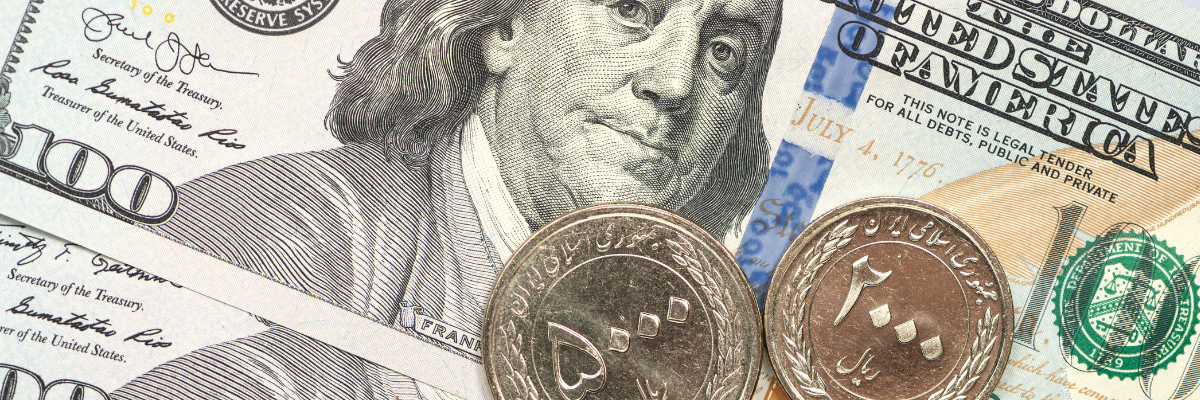
What's the Deal with Iran's Foreign Exchange Reserves?
A new IMF estimate has led to claims that Iran’s gross international reserves have been “wiped out.” But a closer look at the data makes clear that this is far from the case.
Editors note: The IMF has now updated the footnote referenced in this piece to reflect their estimate of Iran’s gross international reserves in 2020, which stood at $115.4 billion.
When it comes to Iran, even economic data can cause controversy. The International Monetary Fund’s latest regional report for the Middle East and Central Asia places Iran’s gross international reserves at $4 billion in 2020, a tiny fraction of the $122.5 billion of reserves Iran held in 2018, and down further from the estimate of $8.8 billion published in October of last year.
For some, the IMF data was evidence of Iran’s stunning economic decline, achieved through “maximum pressure” sanctions. Former Wall Street Journal reporter Jay Solomon tweeted a screenshot of a table from the IMF report, stating that “accessible foreign exchange reserves plunged to $4 billion in 2020 from $123 billion in 2018.” Former Secretary of State Mike Pompeo, a key architect of the Trump administration’s maximum pressure policy, responded to Solomon’s tweet, boasting that “over 96% of Iran’s foreign exchange reserves have been wiped out.”
Radio Farda ran a story claiming that Iran’s gross international reserves had collapsed to $40 billion, a figure they reached by concluding that the $4 billion of accessible reserves reflects 10 percent of Iran’s total reserves. Faced with these dire estimates, Iran’s central bank governor Abdolnasser Hemmati responded on Instagram, criticising the IMF and stating that they had used incorrect data in their report.
The controversy stems from a misunderstanding of the assumptions made by the IMF in estimating Iran’s gross international reserves. A footnote in the statistical appendix of the latest Regional Economic Outlook report explains that the gross international reserves data for Iran “has been amended to reflect the amount of external assets that is readily available and controlled by the monetary authorities after the re-introduction of financial sanctions.”
Since the Trump administration reimposed sanctions on Iran’s financial system in 2018, Iranian authorities have been unable to use most of their foreign assets, a situation exemplified by the current dispute over $7 billion of frozen assets held in banks in South Korea. For this reason, IMF economists estimate that only “only 10 percent of the previously reported gross international reserves are readily available for [balance of payments] purposes from 2019.” This estimate is likely derived from statements made by Trump administration Iran envoy Brian Hook in December 2019. Hook claimed that Iran retained access to just 10 percent of its $100 billion of reserves due to sanctions—Pompeo probably had this soundbite in mind when he tweeted that the $4 billion estimate meant that 96 percent of Iran’s reserves had been “wiped out.”
Given that Iran’s financial assets are a target of US sanctions, Iranian authorities do not publish their own figures on gross international reserves, although they do publish information on quarterly data on changes to reserves and a more general figure for “foreign assets.” That leaves the IMF little option but to run with the 10 percent figure to estimate what proportion of Iran’s reserves are readily accessible. Another assumption made by the IMF is that any balance of payments deficit Iran runs will need to be financed exclusively from that smaller pool of accessible reserves—this is indicated in the footnote, but it could have been made clearer.
Working backwards, the $4 billion figure reflects 10 percent of 2019 total reserves minus Iran’s balance of payments deficit in 2020, which can be estimated from the difference between the 2019 and 2020 estimates for accessible reserves—$8.4 billion. Given the decline in accessible reserves it attributable to the balance of payments deficit, there has been no dramatic fall in Iran’s gross international reserves, which are estimated at $123.8 billion for 2019 and down by $8.4 billion to $115.4 billion for 2020. The relative stability of such reserves is corroborated by data from the Central Bank of Iran on changes to international reserves, which decreased by an average of just $1.15 billion per year between March 2017 and March 2020. Logically, if Iran is unable to access or spend the money, there is no real way for its reserves to be “wiped out.”
Iran’s dwindling accessible reserves pose a major challenge for authorities—$4 billion is equivalent to just under three weeks of Iran’s annual import total. Iranian officials will hope that the resumption of trade post-pandemic and the resurgence of Iranian oil sales will ease the country’s balance of payments crisis. Indeed, the IMF sees accessible reserves rising to $12.2 billion this year, suggesting a balance of payments surplus of $8.2 billion. Importantly, this projection does not take into account sanctions relief Iran may receive as part of ongoing negotiations with the United States.
For now, what a closer inspection of the data makes clear is that those who claimed that Iran’s foreign exchange reserves have collapsed are wrong—total reserves today are higher than in 2019, when Hook was boasting about the success of maximum pressure. Iran remains a wealthy country, albeit without the means to use much of its wealth.
Photo: Getty Images

U.S.-Iran Talks Will Falter Unless Abdolnaser Hemmati Is at the Table
Unwinding sanctions will be central to reviving the nuclear deal. If the Biden administration wants a lasting solution, it must involve Iran’s central bank governor.
By Esfandyar Batmanghelidj and Saheb Sadeghi
The United States and Iran may soon be sitting at the negotiating table once again. In just the last week, the Biden administration has offered to restart negotiations, and Iran has struck a deal with the International Atomic Energy Agency to slow moves to limit inspections of its nuclear program. A window of opportunity has emerged for the two sides to talk, likely in a format facilitated by the European Union. If and when the United States and Iran sit across from one another again, there is a key figure who ought to be present—Abdolnaser Hemmati, the governor of Iran’s central bank.
In many respects, Iran’s central bank was the primary target of former U.S. President Donald Trump’s economic war on Iran. Much of the economic hardship that Iran has experienced due to the reimposition of secondary sanctions can be attributed to the Trump administration’s success in limiting the central bank’s access to its foreign exchange reserves.
According to the International Monetary Fund (IMF), Iran retains access to just $8.8 billion of readily available foreign currency, roughly one-tenth of its total reserves. Without access to its reserves held in countries like Iraq, South Korea, Japan, and Germany, the central bank has struggled to forestall the weakening of Iran’s currency, which is today worth less than one-fifth of its value prior to Trump’s withdrawal from the nuclear deal, formally known as the Joint Comprehensive Plan of Action (JCPOA). This deep depreciation made imported goods more expensive, contributing to annual inflation rates of nearly 50 percent.
Hemmati, a veteran banker, was appointed as central bank governor in July 2018, parachuting in just a few months before secondary sanctions were fully reimposed on Iran. He has performed remarkably well in difficult circumstances. Iran’s currency was regaining value for most of 2019, a trend disrupted by the COVID-19 crisis, which hit the country’s economy hard, throwing trade into disarray.
Since reaching a historic low in October 2020 of just over 320,000 rials to the dollar on the free market, the currency has since stabilized at around 250,000 rials to the dollar—with this stability helping to undergird Iran’s slow economic recovery. Along the way, Hemmati has proved an adept communicator, using his Instagram account, the central bank’s website, and even select interviews with international media to outline his priorities and reassure the Iranian public about the bank’s capacity to defend the rial from hyperinflation.
Iran has not faced a full-blown economic meltdown, despite the best efforts of the Trump administration. But the country finds itself in a painful period of economic stagnation, and sanctions relief will be needed should any government wish to deliver on promises of prosperity. However, Trump sought to make sanctions relief more difficult.
In September 2019, the Trump administration designated Iran’s central bank under a terrorism authority, a move that jeopardized long-standing exemptions permitting the bank to play a crucial role in facilitating the purchase of humanitarian goods such as food and medicine.
In February 2020, the U.S. Treasury Department issued a new general license to allay those concerns. But more troubling was the intention behind the terrorism designation, which was applied to Iran’s central bank for the express purpose of making it harder for a potential Democratic administration to lift sanctions on the bank in the future.
The Biden administration will likely need to remove this designation to bring the bank back to its original status under the JCPOA—but removing a designation ostensibly tied to Iran’s purported support for terrorism may prove politically tricky as part of U.S. reentry into an agreement focused exclusively on the country’s nuclear program.
Lifting sanctions was difficult even before the Trump administration’s cynical moves. Iran’s experience of sanctions relief following the implementation of the JCPOA was disappointing. International banks remained hesitant to process Iran-related transactions, citing unclear guidance on how to conduct business in a compliant manner and the risks of punitive fines if the remaining sanctions were inadvertently violated.
This limited the rebound in trade and, particularly, investment in Iran. While there had been some technical exchanges on banking during the JCPOA negotiations, including working-level exchanges with Iran’s central bank, these were largely focused on the unfreezing of Iran’s assets—the challenges Tehran faced in mundane banking blindsided the JCPOA parties.
In March 2016, then-Treasury Secretary Jacob Lew noted that the “experience with Iran demonstrates how difficult [sanctions lifting] can be.” Despite what Lew referred to as “widespread global outreach” by officials at the U.S. Treasury and State departments, the banking challenges persisted and continued to stymie trade and investment until Trump’s eventual withdrawal from the nuclear deal.
In an interview last July, Valiollah Seif, who was central bank governor at the time of the JCPOA negotiations, suggested that Iran had not had the right experts in the room. “The JCPOA could solve the problem related to oil sales at that time, but it could not solve our banking problems. … Our economic and banking expert team was weak in the JCPOA talks,” he said.
Understandably, Iranian leaders are keen to get sanctions relief right this time around. In a recent speech, Iran’s supreme leader, Ayatollah Ali Khamenei, insisted that any sanctions relief offered by the United States must take place “in practice” and not just “on paper.” Moreover, the efficacy of that sanctions relief will need to be “verified.”
What’s clear is that as new negotiations approach, the JCPOA parties cannot rely on diplomats to untangle the complex knots that have constricted Iran’s banking ties for so long. To ensure sanctions relief succeeds, Hemmati ought to be in the room as part of a high-level technical dialogue, which could eventually include top officials such as U.S. Treasury Secretary Janet Yellen and French Finance Minister Bruno Le Maire.
There are a few reasons why a dialogue on sanctions relief, which would be similar in structure to the pre-JCPOA exchanges on nuclear issues between then-U.S. Energy Secretary Ernest Moniz and Ali Akbar Salehi, the head of Iran’s atomic energy agency, ought to center on Hemmati.
First, Hemmati has emerged as a key figure of Iran’s economic diplomacy. In the last two years, he has made trips to Iraq, Oman, South Korea, and China in order to ensure Iran retained functional financial channels with key trade partners while the Trump administration sought to put pressure on the governments of these countries. His participation in the new talks would be a natural extension of this global outreach, and most of the sanctions relief benefits promised by the United States will need to be delivered via third countries. Hemmati is the only stakeholder to have full technical knowledge of the challenges U.S. sanctions have posed in economic relations with key trade partners.
Second, Hemmati’s stewardship will be critical for the implementation of both early and late-stage sanctions relief measures. Whether it is the easing of access to foreign reserves or the granting of Iran’s COVID-19 IMF loan—both under consideration as early economic gestures by the Biden administration—or the consideration of new economic incentives such as reauthorization of the “dollar U-turn,” an exemption revoked in 2008 that allowed U.S. banks to process Iran-related transactions in cases where a payment is being made between two non-Iranian foreign banks, effective implementation depends on Iran’s central bank.
Importantly, the international community will also expect Iran to continue to reform its banking sector in line with international standards. On this point, Hemmati has been a key champion, stating recently that if the JCPOA were revived, Iran would need to complete adoption of the action plan set forth by the Financial Action Task Force, a standards-setting body, in order to see the benefits of sanctions relief in the banking sector.
Finally, Hemmati would bring some technocratic continuity to the economic implementation of a restored JCPOA. There is considerable concern that the possible arrival of a new Iranian president in August could leave any diplomatic agreement vulnerable to changing politics in Tehran.
While it may be possible for some of Iran’s top diplomats to remain in their posts in a new administration, it is Hemmati, whose term ends in 2023, who is best positioned to offer institutional continuity on implementation issues. He has proved to be an adept political operator. By insisting on the central bank’s technocratic independence, he has largely avoided the attacks regularly made against members of the Rouhani government.
He also maintains a good relationship with Khamenei and has been able to turn to the supreme leader to insulate the bank’s policies from political attacks. It is often argued that restoring the JCPOA would help boost the fortunes of Iran’s political moderates, but it is equally important for U.S. President Joe Biden to strengthen the hand of Iran’s technocrats who work on policies, not politics.
The Biden administration’s early appointments made clear that when it comes to Iran, personnel is policy. The same holds true in Tehran. If the right people are not in the room during upcoming negotiations, not only will the agreed policies be deficient, but so too will implementation falter. The United States, the other permanent members of the U.N. Security Council, and Germany need to provide Iran a pathway to the normalization of its banking ties—to do so, it would make sense to engage Iran’s top banker.
Esfandyar Batmanghelidj is the founder of the Bourse & Bazaar Foundation.
Saheb Sadeghi is a columnist and foreign-policy analyst on Iran and the Middle East.
Photo: IRNA
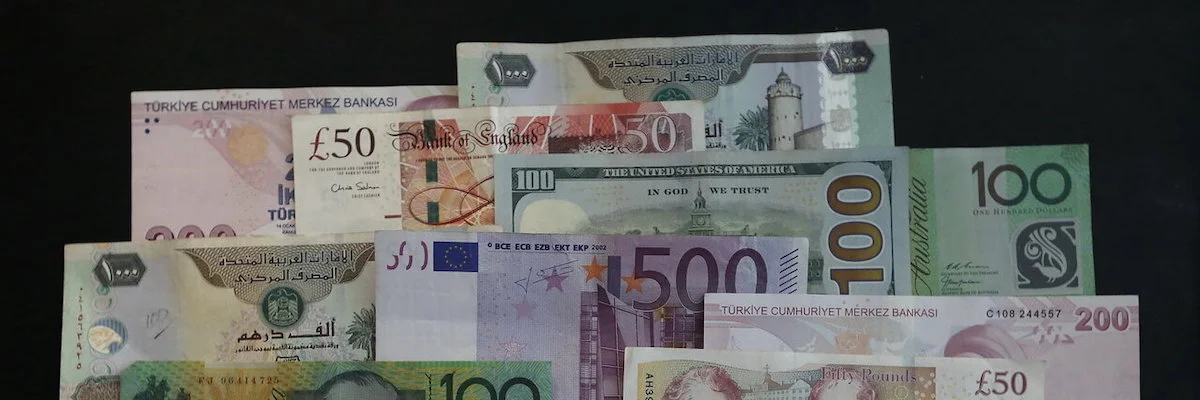
What You Should Know About Iran's Weakening Currency
The rollercoaster ride that has taken the rial to a historic low of IRR 215,000 to the dollar does not tell us as much about the health of the Iranian economy as is widely assumed.
The Iranian rial has hit a historic low against the dollar, adding to the perception that the country is in the throes of a deepening economic crisis. But the figures that are most concerning for Iranian economic policymakers (there are many) are rarely the most dramatic or those that make the headlines. The rollercoaster ride that has taken the rial to a historic low of IRR 215,000 to the dollar does not tell us as much about the health of the Iranian economy as is widely assumed.
Reporting on Iran’s currency focuses on the azad or free market rate, which is the price of purchasing a single, physical dollar bill at an exchange bureau in Tehran. The buying and selling of eskenas, or hard currency, represents a small proportion of the overall foreign exchange market in Iran, likely accounting for less than 20 percent of all foreign exchange transactions.
There is also a fixed subsidized rate of IRR 42,000 for each dollar. This rate is made available to importers of critical goods such as food and pharmaceutical products, but the Iranian government has been seeking to shrink the number of goods eligible to be imported at this rate.
The most important rate, which is rarely cited in reporting on Iran’s currency woes, is the rate available in the NIMA exchange, a centralized electronic system established by the Central Bank of Iran in 2018 to streamline the purchase and sale of foreign exchange among Iranian companies. The NIMA rate has hit just over IRR 168,000 in the past week, also a historic low.
The NIMA rate has also risen in recent months, reflecting the reported shortages of foreign exchange available in the market due to trade disruptions brought-on by COVID-19 as well as the underlying difficulties facing Iranian banks, and particularly the Central Bank of Iran, in accessing foreign exchange held in accounts at foreign financial institutions.
After approaching convergence in the summer of 2019, the spread between the free market and NIMA rates has widened considerably, meaning that the devaluation of the rial in the free market is not the best indicator of the strength of the rial, nor an accurate reflection of concerns around inflation.
Since the NIMA exchange began operating in earnest in the last quarter of 2019, inflation, as measured by the consumer price index, has tracked most closely the NIMA rate and not the free market rate. This is to be expected. The NIMA rate reflects the price at which most foreign currency is bought and sold in Iran and crucially it reflects the price at which Iranian companies purchase foreign exchange in order to pay for imported goods.
On one hand, the devaluation of the rial over the last decade has benefited Iranian exporters, making their goods more attractive to foreign buyers. The more liberal approach to foreign exchange policy has helped Iran grow its non-oil exports—a lifeline for the economy as oil exports are constrained by sanctions.
But on the other hand, the more liberal approach to the exchange rate has had an impact on the price of imported goods, whether those are finished goods or raw materials and parts used in the manufacturing of finished goods in Iran. This relationship is most clear when comparing the changes in the NIMA rate with the price index for consumer durables, a category of goods more likely to have imported parts content. When the NIMA rate increases, so does the price of durable goods, contributing to the total cost of the consumer basket.
Often, reports about the plunging value of the rial suggest that the appreciation of the dollar in the free market reflects the erosion of Iranian purchasing power. But the relationship between the rial’s free market rate and inflation is limited. Unlike in other economies that have experienced currency crises, such as Lebanon, Iran’s economy is not dollarized. When ordinary Iranians exchange rials for physical dollars, they are acquiring an asset that they will most likely exchange back into rials at some future point, preserving the value of their savings in the process. Iranians purchase dollars for the same reason they purchase gold, real estate, and even used cars—they are seeking a hedge against inflation. Hard currency dollar appreciation does not depress the value of the rial as a medium of exchange.
However, the free market rate could be a signal for price makers about expectations of future inflation, and therefore may influence producers and retailers to increase prices. Moreover, the free market rate may also have an impact on the price of real estate, which is also used as a hedge against inflation. In both instances, the devaluation of the rial in the free market could contribute to higher prices for Iranian households.
But when considering that the free market represents a small proportion of the overall foreign exchange market in Iran, fluctuations in the free market rate are perhaps best understood as a response to inflation, among other economic indicators. In fact, at a time when the central bank is pumping historic amounts of liquidity into the Iranian economy, the conversion of rials into dollars may actually serve to absorb some liquidity.
This is perhaps the other parallel that can be drawn between the purchase of dollars and assets such as stocks and gold—the currency free market has some of the hallmarks of a bubble, particularly as the spread with the rates available on the NIMA exchange widen. The devaluation of the rial that can be observed in the NIMA exchange, which is equivalent to the rial losing about a third of its value since Iran reported its first two cases of COVID-19 in February, lags behind the devaluation in the free market exchanges, which has seen the rial lose half of its value in the same period.
Given the media attention both inside and outside of Iran to the rial’s free market fluctuations, it is perhaps no surprise that psychological factors may be responsible for the recent devaluation episode. Given that the NIMA rate is a better indicator of the vulnerability of the Iranian economy to inflation, both when considering how much foreign exchange is available in the market, but also when considering changes in the money supply in Iran, it is notable that the free market rate has deteriorated more sharply.
This divergence, which the central bank had worked hard to limit, is beneficial to a wide range of actors within Iran’s financial system, including those engaged in corruption. The arbitrage between the two rates incentivizes commercial enterprises that earn foreign exchange revenue to circumvent the NIMA system. The panic buying of dollars by working class Iranians benefits wealthy Iranians who are more likely to maintain a large portion of their savings in hard currency, or who can bring hard currency back to the country from abroad. Ironically, in the short term, the devaluation of the rial has probably created more wealth than it has destroyed
Nonetheless, Iranians should be worried about inflation. The COVID-19 crisis has widened Iran’s fiscal deficit and also given rise to balance of payments challenges. There is growing concern that inflation will rise in the coming months as the central bank prints money.
Iran’s central bank governor, Abdolnasser Hemmati, has sought to calm nerves by arguing that increased liquidity is a “structural phenomenon” in the Iranian economy. His statements have yet to reduce demand for dollars, which has risen in anticipation of increased inflation. Nonetheless, the increased demand does not itself mean that Iran is presently experiencing or is set to experience the scenarios of “hyperinflation” that have been long predicted. Rather, those purchasing dollars in the free market are betting that the policymakers will fail to keep inflation under control as it edges towards 30 percent.
Photo: IRNA
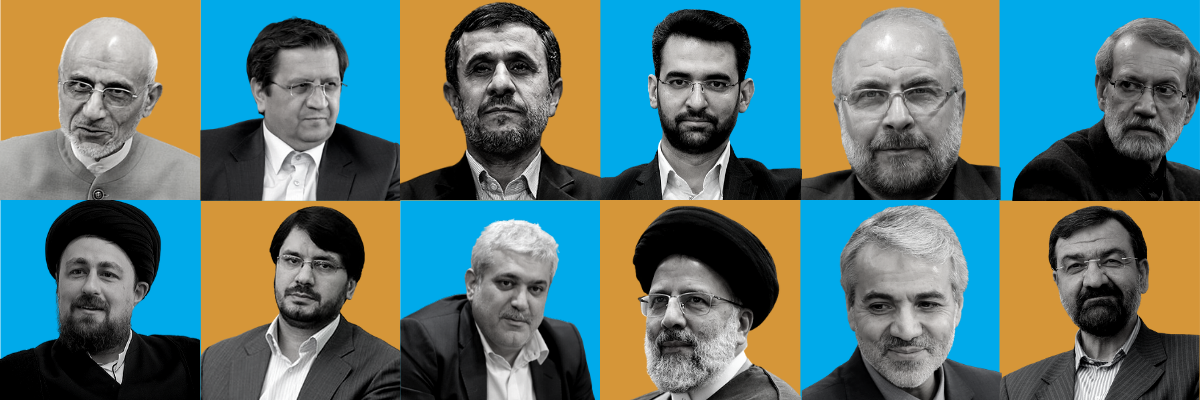
Young Candidates Enter Fray for Iran Presidency
With less than a year until Iran’s presidential election, political camps are making preparations for what is expected to be a watershed contest to decide who will succeed moderate president Hassan Rouhani.
With less than a year until Iran’s presidential election, political camps are making preparations for what is expected to be a watershed contest to decide who will succeed moderate president Hassan Rouhani.
The state of Iran’s economy will be the key issue for most Iranian voters, and by extension, there will be a fierce debate among hardline camps, which now control the parliament and the judiciary, as to whether the country should continue the pro-engagement politics introduced by Rouhani and his political allies following the 2013 election.
But alongside this political debate, another question has emerged—whether it is time for younger candidates to come to the fore.
“I have stressed time and again that I do believe in a young and religiously committed administration,” said Supreme Leader Ali Khamenei in a May 17 virtual meeting with representatives of student unions.
Khamenei, however, made it clear that the notion of a young government does not mean electing a president who is “say 32 years old.” Rather, Khamenei called for “an administration … within an age range capable of working hard, one that is not fatigued.”
The supreme leader’s speech has spurred new names to be added to the already long list of candidates expected to run for president. Iranian media have touted three rising figures who may be aiming to succeed Rouhani.
Topping the list of young candidates is Mohammad Javad Azari Jahromi, the country’s 39-year-old minister communications minister, who has positioned himself as a progressive technocrat. Jahromi has sought to earn the trust of younger Iranians by seeking to make his ministry more transparent and by vowing to protect access to social media platforms such as Instagram.
“Let them rest easy that I will not run for president,” Jahromi told reporters when asked whether his push for transparency was a stunt to gain popularity ahead of the election. Of course, Iranian politicians typically deny their ambitions for as long as possible, and Jahromi’s statements have not put an end to speculation that he is planning to run.
Another young would-be candidate is Sorena Sattari, the Rouhani administration’s Vice President for Science and Technology. The son of a late air force commander, Sattari is seen as someone who maintains ties on both ends of the Iranian political spectrum. Trained as a mechanical engineer, he is understood to maintain strong ties to the supreme leader’s office. But he is also seen as forward-looking and has won praise for his relentless support of the country’s start-up ecosystem, hardly a bastion of conservatism.
Sensing that a generational shift is underway in Iranian politics, conservative camps have also sought to elevate younger politicians. Now 40 years old, Mehrdad Bazrpash, began his political career at the age of 25 and has been ruthless in his criticism of the Rouhani administration, especially with regards to the state of the economy and efforts to normalize ties with the West.
But for all the appeals of youth, the old guard is not ready to step aside just yet. Within the reformist-moderate bloc that supported President Rouhani, debate continues about the candidacy of former parliament speaker Ali Larijani, one of the most powerful politicians in the history of the Islamic Republic, who underwent a transformation over the last decade from a conservative firebrand to a moderate figurehead. Rouhani owes much of the internal backing for the nuclear deal to Larijani.
Still, reformists remain divided about Larijani and his loyalties. “The Reformists will not resort to a proxy candidate,” said Hamid-Reza Jalaeepour, a key voice in reformist circles. But other leading reformists, including Mohammad Atrianfar, consider Larijani the only viable candidate to continue the political project Rouhani began. In a recent interview, Atrianfar argued that Larijani had “significantly distanced himself from the hardline conservatives in recent years and insists on maintaining this distance.”
Parviz Fattah, an IRGC member and the head of the Mostazafan Foundation, one of the country’s largest bonyads, or charitable endowments, has also been touted as an attractive presidential candidate in hardliner circles. Fattah is seen as someone who, if not young himself, may be able to galvanize conservative-minded youth through his uncompromising ideological outlook.
With the economy looming large in the minds of voters, a theme of technocratic competence has also emerged much like the theme of youth. There is growing speculation that the governor of Iran’s central bank, Abdolnasser Hemmati, could come forward as a candidate, allowing the reformists and moderates to avoid some of the internecine tensions that would surround a Larijani candidacy. Hemmati’s performance at Iran’s central bank has not been without controversy, with some questioning his heavy-handed approach to the country’s turbulent foreign exchange markets. But he is broadly seen as someone who has reinstated the relative independence of Iran’s central bank, instituting policies that have eased some of the impacts of U.S. secondary sanctions.
In a similar vein, Mohammad Bagher Nobakht, the head of the country’s Plan and Budget Organization and a longstanding figure in Iranian economic policy, has fueled speculation about his own candidacy after several trips to Iranian provinces, which included campaign-style posters and press conferences. Nobakht has, nevertheless, dismissed speculation of his candidacy as “unfounded.”
But if the reformists and moderates are to recapture some of the enthusiasm that thrust Hassan Rouhani to two landslide election victories, charisma may be key. Hossein Kanani-Moghaddam, founder of the center-right Green Party of Iran, has suggested that the greatest hope for those wishing to preserve the political project begun under Rouhani comes in the form of Hassan Khomeini, the grandson of Ayatollah Rouhollah Khomeini, the founder of the Islamic Republic. The 47-year-old cleric is a close ally of the spiritual leader of the reform movement, Mohammad Khatami, but has largely stayed away from the political scene and has declined calls to run in past presidential elections.
Whomever the reformists and moderates put forth, the most difficult hurdle will be the vetting process carried out by the Guardian Council, a body dominated by conservative clerics. In a worrying sign, the council purged the majority of pro-reform candidates ahead of the February parliamentary vote, a move which contributed to the lowest turnout in any major election since the founding of the Islamic Republic.
Akbar Torkan, a veteran moderate politician and a former senior aide to Rouhani, believes that the presidential election will have much in common with the parliamentary polls, warning that the Guardian Council will “select the candidates on their own just to have the public approve them at the ballot box.”
Outspoken political scientist Sadegh Zibakalam has made an even more pessimistic predication, arguing that the “reform movement is over.” In his view, those who voted for Rouhani in 2017 have become disillusioned, contributing to low turnout. “It’s not about names, even someone like Khatami cannot garner votes,” he said of the dwindling popularity of the reformist camp.
Zibakalam believes that a low-turnout election will favor a hardline figure who can mobilize his base, perhaps even Mahmoud Ahmadinejad, the controversial former president who refused to rule out plans for his candidacy in a recent interview. Ahmadinejad, who has cultivated a populist image by focusing on the grievances of Iran’s lower classes, has already begun touring the country, mustering large crowds that give credence to Zibakalam’s warnings.
Ahmadinejad was barred by the Guardian Council from the 2017 presidential race. But he is reportedly engaged in behind-the-scene talks with the vetting body to get the green-light for next year’s election “An Ahmadinejad candidacy could disrupt all the calculations,” said prominent conservative politician Morteza Talaee, noting that the ex-president technically belongs to no major camp after breaking away from the hardliners, who once supported him unequivocally.
Ahmadinejad’s national profile is matched by just a few other potential candidates—prominent political figures who continued to eye the presidency after failed bids.
Former Tehran mayor, Mohammad Bagher Ghalibaf, who was named the new parliament speaker in June, has failed to become president in 2005, 2013, and 2017. In recent years, Ghalibaf has cast himself as a conservative stalwart in an attempt to galvanize the new generation of “revolutionary” youth behind his leadership.
Chief Justice Ibrahim Raisi, who came second to Rouhani in the 2017 election is also expected by many pundits to be considering a second run. But another election defeat would dent Raisi’s hopes of becoming the country’s next supreme leader and he may wish to focus on the ambitious anti-corruption drive widely seen as a gambit to increase his chances of succeeding Khamanei.
Finally, Mohsen Rezaee, a former commander of the Islamic Revolutionary Guard Corps, who has already had three failed bids for the presidency, appears to be warming up for another fight. As a proponent of “resistance economy”, Rezaee has recently sharpened his attacks against the Rouhani government’s economic performance, including a slogan-like tweet issued last week. “I can give our people assurances that by pushing aside the pro-Americans from power … our national currency will become the strongest in the entire region,” Rezaee declared.
Iranian voters have a long wait to see who will appear on their ballots. But the crowded field makes it clear that Iran is set to have a watershed election, one that will combine a likely shift away from progressive reformism with the potential emergence of a new generation of political leaders.
Photo: Various
Iran Resorts to New Financial Tools to Shore-Up Economy
The COVID-19 crisis has forced Iran’s government to turn to little-used financial tools to help stabilize the economy and address a widening fiscal deficit.
The COVID-19 crisis has forced Iran’s government to turn to little-used financial tools to help stabilize the economy and address a widening fiscal deficit.
In the arena of monetary policy, the crisis is the first test of the new Open Market Operation (OMO) powers announced by the Central Bank of Iran (CBI) on January 18. To address the fiscal deficit, the Rouhani administration has pushed forward with long-planned privatization plans, conducting an Initial Public Offering (IPO) for SHASTA, the investment arm of the country’s largest social security provider. But the government faces hurdles as it resorts to largely unproven measures.
An underdeveloped interbank lending market will hamper OMOs. The interbank lending market in Iran was first established in June 2008. Despite the fact that the number and volume of transactions has grown substantially in recent years, with over 20,000 transactions registered in the last Iranian calendar year, the market remains hampered by the fact that Iranian banks do not maintain large reserves, meaning there are often too few banks with surplus liquidity in the market. As a result, it will be difficult for OMOs undertaken by CBI to influence the interest rate in the interbank market, limiting the central bank’s capacity to enact monetary policy through the bank-lending channel.
Iran’s interbank lending market also presents instrumental limitations. The most common mechanism by which needy banks secure liquidity is by direct borrowing from surplus banks, or, in times of emergency, turning to CBI as a lender of last resort. These loans are typically made without collateral and sometimes even without a formal contract. But given the prevalence of unsecured loans, there remains the possibility that the borrower might default.
While this possibility is generally understood to be low, it has likely increased given the current economic crisis. Iranian businesses will be seeking cheap financing to help them get through the difficult times. But given that Iranian banks struggle to determine the creditworthiness of their clients, any rapid expansion in lending could lead to greater issues with non-performing loans, particularly among the weaker banks.
The Central Bank of Iran had intended to use OMOs to adjust the inflation rate in accordance with its target for the current financial year, which is set at 20 percent—the annual inflation rate reached 41.2 percent in 2019-20.
On one hand, if the central bank aims to enable the country’s banks to lend to ailing businesses, the shift to the expansionary use of OMOs will be at odds with the inflation goals. On the other hand, now that the government is facing a record fiscal deficit, some Iranian economists are worried that the central bank may be pushed to use OMOs as a tool to generate government revenue, issuing bonds to finance expenditures. At a time when markets need clear leadership from regulators, the central bank’s priorities remain unclear.
While the central bank pursues new tools of monetary policy, the Rouhani administration has sought to tackle a fiscal deficit. The government’s IPO of SHASTA, also known as the Social Security Investment Company, was the largest IPO in Iranian history by market capitalization. The public offering of 10 percent of the company’s shares on April 15 generated USD 437 million in revenue for the government.
The strong performance of the Tehran Stock Exchange over the last year, despite the overall economic malaise, suggests that privatization of state-owned enterprises is a viable means for the government to generate much-needed revenues.
The Rouhani administration has long-pushed privatizations as a means to improve the finances of currently state-owned enterprises, to increase transparency, to improve corporate governance, and to reduce the footprint of the government in Iran’s economy. But any rush to privatize enterprises may lead to the loss of a “golden opportunity” as the government pursues public offerings to compensate for budget deficits without ensuring that the companies and their management become fully accountable to the public markets.
Iran has been grappling with serious challenges in the areas of fiscal and monetary policy in recent years. The Rouhani administration and the Central Bank of Iran have smartly sought to create new tools and establish new policies in response. But as the economy reels from the impact of COVID-19, these challenges have reached a point of crisis—the new tools may not be enough.
Photo: IRNA
Bleak Estimates of Economic Impact Spur Iran to End Virus Lockdown
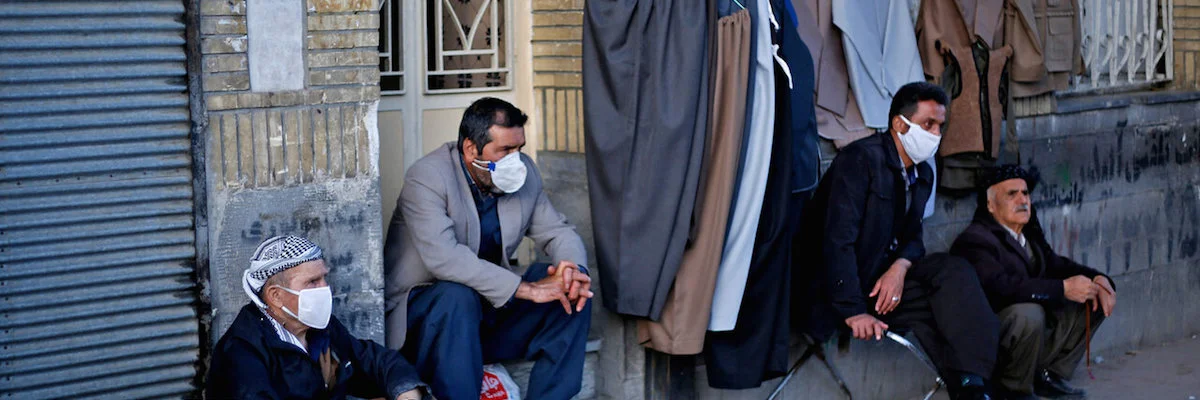
Several reports released by key ministries and research centers over the last few weeks warned of dire economic if the government did not rollback the lockdown, despite warnings from health experts about the risks of new infections.
Following two years of recession triggered by the Trump administration’s “maximum pressure” sanctions campaign, Iran was showing signs of economic recovery in the last quarter of 2019. But when authorities announced the country’s first confirmed deaths from COVID-19 in mid-February, Iran was thrust into a new crisis. According to official statistics, COVID-19 has caused over 5,000 deaths and 83,500 infections to date.
Fears that authorities were slow to contain the crisis have now been replaced by a new concern—like many developing economies, Iran may not be able to afford the protracted lockdown necessary to bring the virus fully under control.
Iran entered a partial lockdown on March 13, one week before the Nowruz holiday. The lockdown measures were further tightened on April 4, just after the holiday period ended. But on Saturday, authorities allowed some businesses to begin reopening, including shops and bazaars. The decision to rollback the containment measures despite the continued risk of infection was informed by a set of reports, which presented dire assessments of the virus’ economic impact.
A 17-page report published earlier this month by the Majlis Research Center, a highly-regarded research organization affiliated with Iran’s parliament, called on the Iranian government to focus on two goals: o provide more support for businesses through tax breaks and delaying debt servicing in order to prevent mass layoffs and to stimulate demand while shielding the most vulnerable in society from the economic blow of the pandemic. In support of containment measures, the report explained that “a maximal reduction in social interactions will be necessary for the coming month” in order to slow the spread of COVID-19. But at the same time it warned of the steep economic costs of any protracted lockdown.
Similarly focused on the impact of the lockdown on Iran’s service sector, an assessment by the Ministry of Welfare, Labor and Social Affairs suggested that lockdown measures put 4 million people at risk of long-term unemployment, a figure that includes 700,000 individuals who are informally employed.
The macroeconomic impact of the slowdown is also captured in new projections from the International Monetary Fund, which has revised its estimate for Iran’s 2020 economic growth from flat growth to a contraction of 6 percent, which would mark three consecutive years of substantial recession.
Iran’s Ministry of Economy released its own report on the eight challenges facing the Iranian economy for in the coming year. Foremost among these challenges is the impact of intensifying U.S. sanctions on Iran’s access to its foreign currency reserves—an challenge made more acute given that Iran’s foreign exchange earnings will be hit by both the historic low oil price and the slowdown in global trade, which will depress Iran’s non-oil exports. The report also noted the impact of the economic crisis on consumption. While consumption in Iran had remained relatively stable in the face of sanctions pressures, the lockdown and reduced purchasing power have reduced demand.
Efforts to provide relief to ordinary Iranians and boost consumption are straining government budgets already unbalanced by the low price of oil. The Rouhani government’s ratified budget for the current fiscal year—ending March 20, 2021—accounted for substantial oil exports and a global oil price of USD 50 per barrel. Although the government budgets are in disarray, the government has moved to introduce a fiscal stimulus to soften the economic blow of the lockdown.
The Rouhani administration has introduced a cash stimulus package that will provide between IRR 2 million to IRR 6 million in supplementary transfers (equivalent to USD 12 to USD 36 at the free market rate) to households already receiving welfare support. This “coronavirus transfer” will be paid for an initial period of four months. In addition, the government will make available a one-time no-interest loan of IRR 10 million (equivalent to USD 62) to the 24 million households which currently receive welfare transfers.
But the stimulus measures have been criticized as insufficient given the extent of the economic crisis and the hardship facing millions of Iranians. Acknowledging the shortcomings of the stimulus plan, central bank governor Abdolnasser Hemmati expressed regret, saying that if it were not for U.S. sanctions the government would have greater resources to support the public.
As is tradition, Iran’s Supreme Leader, Ali Khamenei, have a televised address on March 20 outlining his policy goals for the coming year. For this year, Khamenei has called for a “leap in production.” But as the government struggles to manage tradeoffs between public health crisis and economic welfare, the country’s policymakers are set to make a leap into the unknown.
Photo: IRNA
Iran Delays Currency Reform Demanded by Private Sector
◢ Despite sharp criticism from the private sector, the Rouhani administration has delayed a key reform to Iran’s currency policy, frustrating the country’s beleaguered business leaders. In late June, government spokesman Ali Rabiei stated definitively that the administration has no plans to eliminate the subsidized foreign exchange rate made available to importers of essential goods.
Despite sharp criticism from the private sector, the Rouhani administration has delayed a key reform to Iran’s currency policy, frustrating the country’s beleaguered business leaders.
In late June, government spokesman Ali Rabiei stated definitively that the administration has no plans to eliminate the subsidized foreign exchange rate made available to importers of essential goods.
Iran’s current currency policy was April 2018 in the aftermath of a devaluation crisis that had formed in anticipation of the re-imposition of U.S. secondary sanctions as Donald Trump moved closer to his decision to withdraw from the JCPOA nuclear deal in May 2018. Subsequent rounds of sanctions and particularly restrictons on Iran’s oil exports have added further pressure to Iran’s currency markets.
Iranian policymakers responded to these pressures and the fast-rising cost of imported goods with a policy that plays into Iran’s multiple exchange rates and entails allocating foreign currencies to importers of essential goods at the “official” rate of 42,000 IRR/USD—a far lower rate than the current “open market” rate of around 120,000 IRR/USD.
The government operates a third rate, the NIMA rate, which is named for the online currency system that was established by the Central Bank of Iran (CBI) also in April 2018. The system is made available to exchange houses and banks that buy foreign currency and is where exporters are obligated to repatriate their export yields. In recent months, the NIMA rate has inched closer to the open market rate and now stands at around 110,000 IRR/USD.
For the private sector, the convergence of the NIMA and open market suggests the time is right to simplify the currency market. In late July, the Iran Chamber of Commerce, Industries, Mines and Agriculture (ICCIMA), the main representative body of the private sector, released a statement calling for the elimination of the subsidized rate and a long-term move toward rate unification.
The subsidized rate, the ICCIMA argues, contributes to already rampant inflation, enables rent-seeking activities and corruption, reduces general trust in government economic policy, and makes it harder for local manufacturers to compete with imports. Moreover, in the assessment of chamber members, the current policy of subsidization failed to prevent price increases for imported essential goods, which have outpaced inflation.
The ICCIMA has called on the Rouhani administration to eliminate the subsidized rate and move toward rate unification in the long-term by decreasing the gap between NIMA and open market rates in addition to levying capital gains tax on foreign currency trades. It has also said the government should redirect resources away from importers and instead subsidize the consumption of low-income households through cash subsidies, while also providing financing to local manufacturers to help reduce reliance on imports. Finally, the ICCIMA statement calls for the government to ease economic pressure on the private sector by repaying its outstanding liabilities to suppliers and contractors.
“Since the open market and NIMA rates have gotten so much closer, this is absolutely the right time to eliminate the subsidized rate,” ICCIMA board member Ferial Mostofi told Bourse & Bazaar.
“Let us accept that the official rate does not reflect the true value of our currency and try to focus on repatriating non-oil exports using the real rates so that we can have a chance at competing in international markets,” the prominent woman business leader added.
In early March, just before the start of the current Iranian year, the administration showed signs that it mulling whether to end the subsidization policy. CBI Governor Abdolnasser Hemmati admitted in a frank statement that subsidization had failed. “In effect, allocating subsidized currency to essential goods has failed to prevent their price hikes in the medium term due to the nature of market in the economy and the weakness of the distribution and supervision systems,” he said.
But in a June 23 televised interview, Hemmati did claim some success for the policy, noting that the price of essential goods rose by 40% on average during the previous Iranian year, whereas imported goods that did not receive the subsidized rate surged by 98%.
Furthermore, he argued that scraping the current three-tier currency policy during the current Iranian year was simply not worth the hassle. However, he did suggest that the government was trying to reduce the burden of the subsidized rate.
According to Hemmati, from the $14 billion that was approved by the parliament to be allocated to subsidize foreign exchange used to import essential goods in the current Iranian year, more than $3 billion was effectively eliminated when the government decided on April 28 to reassign four items previously listed as essential goods. Those items included meat products—which had experienced extreme price increase despite qualifying for subsidized foreign exchange– tea, butter, and beans.
From the remaining figure of less than $11 billion, Hemmati said, $5 billion was allocated by the time of his interview. Subtract an additional $3 billion that the central bank has said is required to ease imports of medicine and eliminating the remaining subsidy of less than $3 billion is deemed by Hemmati to be “not worth a new country-wide inflationary shock.”
Many private sector business leaders disagree. “There is no doubt that eliminating the subsidized currency policy will entail a price shock, but that shock will be short-term and very much worth it when compared to the long-term detrimental effects of the current policy,” ICCIMA’s Mostofi said.
In her view, if the main goal of the policy is to help middle to low-income families, policies should be adopted that do not spur corruption and waste away the country’s precious foreign currency reserves while the country is contending with a “maximum pressure” sanctions campaign.
Photo: IRNA
Iran’s Currency Begins to Shrug Off Trump’s ‘Battle Rial’
◢ Over the last 18 months, the Iranian rial has lost nearly 70 percent of its value, hammered by the Trump administration’s decision to reimpose secondary sanctions on Iran in violation of the JCPOA. But new interventions by the Central Bank of Iran appear to have helped stabilize the currency, leading some commentators to proclaim that the rial is no longer vulnerable to Trump’s maximum pressure campaign.
Over the last 18 months, the Iranian rial has lost nearly 70 percent of its value, hammered by the Trump administration’s decision to reimpose secondary sanctions on Iran in violation of the Joint Comprehensive Plan of Action (JCPOA).
A darkening economic outlook and rising inflation led Iranians to rush to exchange bureaus in order to purchase dollars, considered a safe-haven asset. Iranian companies struggled, or in some cases refused, to repatriate their foreign currency earnings, constraining supply in the foreign exchange market and leaving the market vulnerable to shocks.
Each time the Trump administration announced a new aspect of its maximum pressure campaign; the value of the rial would fluctuate. When the Trump administration took the dramatic step of targeting the IRGC under a new terrorist designation, the rial lost 4 percent of its value in just a few hours.
But there is a growing sense in Tehran that the currency market may have stabilized. When two oil tankers were attacked in the Sea of Oman on June 13—attacks widely attributed to Iran—the United States vowed a forceful response. But there was surprisingly little movement in the value of the rial.
Two weeks later, when the Islamic Revolutionary Guard Corps (IRGC) shot down a US spy drone near the strategic Strait of Hormuz, ordinary Iranians and currency speculators again braced themselves for a free-fall in the rial’s value. But the foreign exchange market barely moved—even after news broke that the US had been minutes from executing a retaliatory strike.
That the rial has strengthened about 13 percent since the first week of May, corresponding to a period in which the United States revoked waivers permitting purchases of Iranian oil and in which Iran announced it would begin loosening its compliance with the JCPOA, has led some economic commentators in Iran to conjecture that the Iran’s foreign exchange market has developed an immunity to the escalating political tensions. The rial may be shrugging off the Trump administration’s “maximum pressure” campaign.
One possible explanation for the newfound stability in Iran’s currency markets is that while the Trump administration has nearly maxed-out its own maximum pressure sanctions campaign, the Central Bank of Iran has only recently begun to assert its control over the foreign exchange market. Late last month, Abdolnasser Hemmati, the governor of Iran’s central bank, struck a confident tone in an interview with state broadcaster IRIB, stating, “I promise to strengthen the value of the national currency—the situation is improving, the recovery can be felt.”
To defend the rial, the Central Bank has made several interventions. It has implemented a central marketplace to increase transparency and reduce arbitrage in Iran’s foreign exchange market. The Integrated Foreign Exchange Deals System, known by its Persian acronym, NIMA, has improved the reliability with which Iranian importers in need of foreign exchange can purchase currency, taking advantage of a rate slightly lower than the free market rate. Iranian exporters are required to sell their foreign exchange earnings through the NIMA system, ensuring that vital foreign exchange is not sold to currency speculators on the free market. Additionally, the central bank has for the first time engaged in open market operations, in an attempt to try and slow the inflation that has fed demand for foreign exchange.
While some of the stabilization is likely attributable to these interventions, it is also possible that the rial has stabilized due to the fact that the current exchange rate better reflects the relative purchasing power of the rial and the dollar. The rial had long been kept artificially strong by the Iranian government.
Looking at the demand side, it may be the case that the Iranian public has been inured to the economic uncertainty brought about by the reimposed US sanctions or that there is greater confidence in the management of the foreign exchange market by authorities. In both cases, individuals and companies are less inclined to flock to the dollar as a safe-haven asset, even if Iran’s general economic malaise—marked by high unemployment—persists.
The stability of the currency is all the more remarkable as the Trump administration drives down Iran’s oil exports. The revocation of waivers covering imports of Iranian crude has left China and Syria as Iran’s sole customers. Iran’s oil minister, Bijan Zanganeh, has insisted that Iran has the means to get its oil to global markets, though it is clear that exports have fallen sharply. While the Trump administration has crowed that reduced oil sales deprive Iran of vital foreign currency, it is worth considering that under the waiver system that governed Iran’s oil exports for much of the last decade, Iran had a limited ability to repatriate its foreign currency earnings. In that sense the current circumstances are not new.
There remain measures that the Trump administration can pursue to try and spur a new devaluation episode in Iran. Reports that the White House may finalize the designation of Iran as a “primary money laundering concern,” a move that could cut the country’s few remaining correspondent banking links, reflect one such measure. But for now, as economist Djavad Salehi-Esfahani has recently written, “Fears of ‘Venezuelaization’ of the Iranian economy (collapse) have subsided, allowing the government to revive its long neglected public investment program, which could boost employment and production.” The Iranian public, made weary by a year of economic hardship, will certainly hope that the stabilization of the currency is the first step to a broader recovery.
Photo: IRNA
Confronting Failure, Iran Government Mulls New Currency Policy
◢ Despite mounting evidence that the Iranian government’s policy of allocating subsidized foreign currency for the importation of essential goods has failed, the Rouhani administration has signaled that it plans to maintain the policy for at least another year. But lawmakers and Rouhani’s own cabinet ministers may force the administration to change course.
Despite mounting evidence that the Iranian government’s policy of allocating subsidized foreign currency for the importation of essential goods has failed, the Rouhani administration has signaled that it plans to maintain the policy for at least another year. But lawmakers and Rouhani’s own cabinet ministers may force the administration to change course.
On March 2, Iran’s parliament approved the allocation of USD 14 billion in oil export revenues for the import of essential goods, including food and medicine, during the upcoming Iranian year (beginning March 20). In doing so, MPs gave the green light for the Rouhani administration to continue to make foreign exchange available to importers of essential goods at the subsidized rate of IRR 42,000 to the dollar.
However, lawmakers also encouraged the government to consider an alternative approach that would require essential goods importers to purchase foreign exchange at the IRR 90,000 rate available on the centralized NIMA marketplace. The government would then redirect the savings from the elimination of the currency subsidy towards programs that directly assist Iranian consumers and manufacturers.
Despite the nudge from parliament to consider a new approach, it appears that the administration is intent on maintaining the subsidy for at least another year. The head of the Management and Planning Organization, Mohammad Baqer Nobakht, confirmed this to be the administration’s position in an interview just prior to the parliamentary vote.
The Rouhani government “unified” the country’s dual foreign exchange rates at IRR 42,000 to the dollar in early April as the rial hit new lows due to political uncertainty surrounding Iran’s nuclear deal and the possible reimposition of sanctions by the United States. The foreign exchange rates diverged again shortly thereafter, but the Rouhani administration has persisted in using the “unified” fixed rate for the importation of essential goods.
Rouhani recently claimed that he personally disagreed with the fixed rate when it was first proposed and only consented to rate unification after dozens of top economists backed the move. His administration has since maintained that the allocation of subsidized foreign exchange continues to be the best policy to stabilize prices of essential goods.
Meanwhile, high levels of inflation have dimmed prospects for Iran’s middle and lower classes. The Iranian public has felt the pressure of price hikes, and essential goods have not been spared, despite Rouhani promising otherwise on national television.
Beyond the lived experience of Iranians, new research has also cast doubt on the effectiveness of subsidization. On February 22, the Parliament Research Center published its findings of the government subsidized currency allocation policy. According to the PRC, the price of essential goods as a category increased by 42 percent during the first three quarters of the current Iranian year that ended on December 21.
By comparison, the price of imported goods not eligible for the subsidized rate increased 73 percent in the same period. However, the consumer price index increased by nearly 40 percent, meaning that the increase in the price of essential goods still outpaced general inflation by a significant margin. The question for policymakers is whether this minimal impact on the price of essential imports is worth the many adverse side effects for the wider economy.
At time when Iran’s foreign exchange revenues are being squeezed by the Trump administration’s “maximum pressure” policy, the Iranian government cannot afford to misallocate USD 14 billion in oil revenue to a subsidization program that may serve to increase corruption and rent-seeking.
Iran’s central bank governor Abdolnasser Hemmati also admitted as much in a frank statement. “In effect, allocating subsidized currency to essential goods has failed to prevent their price hikes in the medium term due to the nature of market in the economy and the weakness of the distribution and supervision systems,” he wrote in a March 9 Instagram post. “Therefore, in most cases the subsidies have gradually moved away from consumers and benefited importers.” Hemmati signaled that a change in the policy may be in order by stating the government will “make the best decision.”
Economy minister Farhad Dejpasand later echoed Hemmati’s view, stating that “The government is currently studying several policies, and we definitely will adopt an approach to minimize the pressure on the poorest sections of society.
“Based on competitive open market principles, any fixed rates that diverge from the open market rate, such as the subsidized IRR 42,000 dollar exchange rate, are a mistake,” Mohammad Mahidashti, a macroeconomic analyst currently serving as an advisor at Iran’s Ministry of Economic Affairs and Finance told Bourse & Bazaar.
“There is simply no positive aspect in this subsidized currency allocation by the government, perhaps save for giving it a justification and a populist slogan to show that the administration is trying to decrease prices of essential goods,” he said.
Mahidashti believes the way forward is for the government to cut its losses as soon as possible by eliminating the subsidized rate and moving toward true rate unification, which he considers both doable and absolutely necessary.
Indeed, the PRC report also called on the Rouhani administration to either fully eliminate subsidized currency allocation or significantly trim the list of essential goods eligible to receive cheap currency. Even in the event of choosing the second route, the parliamentary think-tank said the subsidized rate must be higher and the IRR 42,000 rate is no longer justifiable.
Iran’s private sector, which has for years called for true rate unification would surely embrace such a move. Shortly after Hemmati’s admission of the failure of the subsidized foreign exchange policy, deputy president of the Iran Chamber of Commerce Pedram Soltani welcomed the announcement as a sign that things may be changing. He tweeted, “Subsidized currency is the source of rent and misuse. Let’s stop the flow!”
Photo Credit: IRNA