The Bourse & Bazaar Foundation is a think tank committed to economic development, economic diplomacy, and economic justice in West and Central Asia.
Our Initiatives
The Bourse & Bazaar Foundation works according to an “initiative” model. We identify areas where we believe our research, convenings, and advocacy can make an impact, usually responding to gaps in the policy space. Each initiative comprises of a multi-year programme of activities and outputs and is underpinned by grant funding and institutional partnerships.
-
Launched in 2023, the Integrated Futures Initiative is dedicated to strengthening regional diplomacy through deeper economic integration across West and Central Asia.
-
Launched in 2025, the Rihla Initiative for Green Economic Growth aims to mobilize capital and expertise from Gulf countries to support green economic growth in Global Majority countries.
-
Launched in 2025, the Bologna Initiative for Sanctions Relief seeks to reform sanctions and other policies of economic coercion to minimize their harms.
-
Launched in 2020, the Vision Iran Initiative aims to put forth ideas, frameworks, and policy recommendations to direct Iranian development towards more positive and just outcomes.
Our Analysis
We publish analysis by our fellows and our global network of collaborators on a dedicated Substack platform. Our assessments are read by policymakers, executives, analysts, scholars, journalists, and members of the general public eager to understand developments in West and Central Asia. You can see all of our publications by clicking here.
Our Principles
Established in October 2020 as a non-profit entity in the United Kingdom, the Foundation began as a digital publisher of the same name in 2015.
Our work imagines security, prosperity, sustainability, and cultural flourishing in the region spanning from Turkey to Afghanistan and from Yemen to Kazakhstan. The countries West and Central Asia are home to around 600 million people. These countries are charting a new course as part of a politically ambitious, economically integrated, and socially dynamic macroregion. Against this backdrop, our research and convenings help policymakers, business leaders, and civil society stakeholders to understand critical events and trends and to identify further pathways for inclusive and sustainable development. Our work is distinguished by the following principles:
We focus on economic issues, ranging from national development models to the daily challenges of ordinary people. We believe that a disproportionate focus on security and political challenges in policy circles has prevented more holistic visions for West and Central Asian advancement.
We are innovative, producing research and analysis that offers new and incisive perspectives on the economic, political, and social remaking of West and Central Asia.
We are intensely collaborative, working in partnership with leading institutions in West and Central Asia and across the world to produce new research and to build networks of likeminded people.
We actively create opportunities for the next generation of researchers and scholars to contribute to policy formation in West and Central Asia at the highest levels.

Our Team
-
Esfandyar Batmanghelidj
Founder and CEO
-
Mehran Haghirian
Director of Research and Programmes
-
Naser Alsayed
Policy Fellow
-

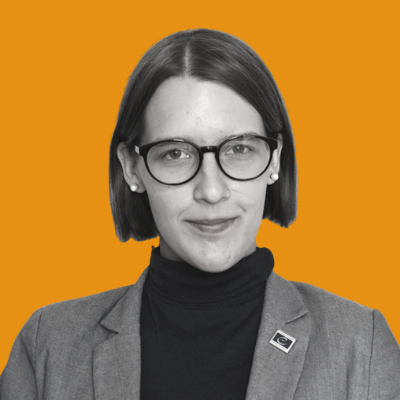
Josefine Petrick
Policy Fellow
-

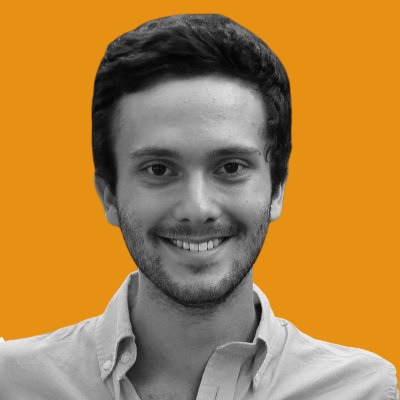
Matthew MacGeoch
Policy Fellow
-
Henna Moussavi
Editorial Fellow
-

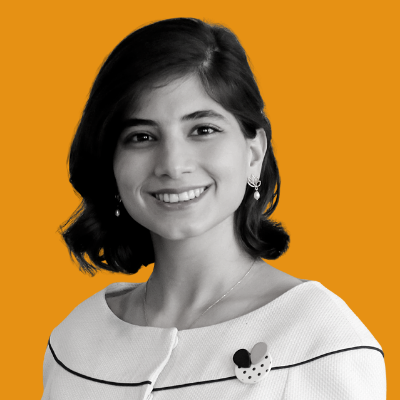
Shakhlo Kamaladinova
Initiative Coordinator
-
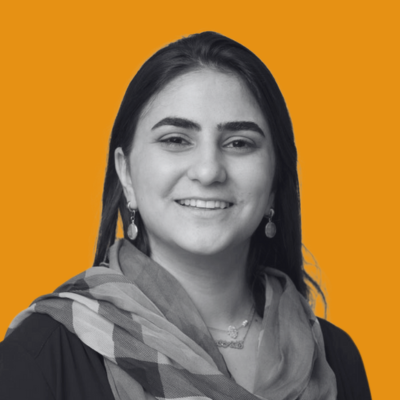
Khuzama Wardeh
Initiative Coordinator
-

Vuyiswa Hlongwane
Initiative Coordinator
-

Nguyen Dang Dao
Initiative Coordinator
Our Board
Our board includes leaders with a range of practical experience in issues of economic development, economic diplomacy, and economic justice in West and Central Asia.
-
Ellie Geranmayeh is a senior policy fellow and deputy head of the Middle East and North Africa programme at the European Council on Foreign Relations. She specialises in European foreign policy in relation to Iran, particularly on the nuclear and regional dossiers and sanctions policy.
Geranmayeh advised European governments and companies on the nuclear negotiations between Iran and world powers from 2013-2015 and continues to brief senior policy makers on how to effectively safeguard the implementation of the nuclear agreement. Her research focus also covers wider regional dynamics including post-ISIS stabilisation and geopolitical trends in the Middle East.
Prior to joining ECFR, Geranmayeh worked at Herbert Smith Freehills law firm. She graduated in Law from the University of Cambridge.
-
Ambassador Luca Giansanti, now retired, is a former Italian diplomat. Luca entered the diplomatic service in 1984 and held various positions, including: Director General for Political Affairs/Political Director, Ambassador to Iran, Ambassador to the EU Political and Security Committee, Director General for Multilateral Political Cooperation and Human Rights, Deputy Director General for European Integration.
He is the former Head of European Government Affairs for Eni based in Brussels. He graduated in Political Science from the Institut d'Etudes Politiques in Paris (Sciences-Po) and the LUISS university in Rome.
-
Zuhra Halimova is one of Central Asia’s leading policy practitioners. She is a Senior Advisor to CAPS Unlock, an independent policy think tank based in Almaty, Kazakhstan. She also conducts research on the digital transformation of the Central Asia region, working with organizations including the World Bank and GIZ. Zuhra is also a strategic advisor to Women in Digital Transformation.
For more than 20 years, she was the executive director of the Open Society Institute Assistance Foundation in Dushanbe, Tajikistan. In this role, she worked closely with governmental and non-governmental stakeholders and international organizations, in addition to independent media and business.
Zuhra holds a master’s degree in international relations from the Fletcher School of Law and Diplomacy at Tufts University.
-
Pirouzan Parvine is a partner in the Corporate and M&A practice of Dentons Europe LLP. Based in Paris, he has more than 20 years’ experience providing quality legal advice in markets in transition across Europe, the Middle East and Africa.
To respond to the growing demand for advice on legal matters pertaining to Iran following the lifting of UN sanctions in 2016, Pirouzan set up and led Dentons Europe LLP’s Iran Desk. The team quickly developed into a market leader in advising international clients on investing and operating safely and legally within the Iranian market, as well as on market exit and wind down of business operations.
Pirouzan is consistently ranked in Chambers Global and The Legal 500 EMEA as a leading lawyer in his field. He is a French-qualified lawyer, a graduate of Sorbonne University as well as Duke Law School, where he was a Fulbright Scholar.
A passionate advocate for diversity and inclusion, Pirouzan is a member of the Europe Women’s Advancement Committee at Dentons, and has been active in mentoring talented women lawyers to partnership.
-
Djavad Salehi‐Isfahani received his PhD in Economics from Harvard University in 1977. He has taught at the University of Pennsylvania and Virginia Tech, where he is currently Professor of Economics. He is a Research Affiliate at the Middle East Initiative at the Belfer Center, Harvard Kennedy School, Research Fellow at the Economic Research Forum (ERF) in Cairo, and a member of the Board of Directors of the International Iranian Economic Association.
He was a Nonresident Senior Fellow at the Global Economy and Development, the Brookings Institution 2009-2021, served on the Board of Trustees of the Economic Research Forum in Cairo, the Middle East Economic Association, and as Associate Editor of the Middle East Development Journal.
His current research is on economic inequality and economics of the family in the Middle East. His opinion pieces have appeared in Al Monitor, Brookings, Foreign Affairs, Foreign Policy, The Los Angeles Times, Project Syndicate, and the New York Times.
-
Louis Skyner is an English-qualified solicitor and a partner in the Corporate and M&A practice and Energy group at Dentons.
He joined Dentons in May 2017, after having worked in the project finance and energy practice of a leading international law firm and as a leading legal counsel at Norwegian-headquartered energy company Equinor.
Aside from his legal practice, Louis has authored numerous articles on Eurasian energy market regulation, economics and politics, from 2005 to 2011 as an associate fellow at Chatham House in London, and from 2012 to 2014 as an adjunct professor of the New Economic School in Moscow.
-
Peter Tejler is a retired Swedish diplomat with deep experience in the Middle East and Central Asia, including posts as ambassador to Iran, Pakistan, and Afghanistan. He has also been posted as deputy chief of mission to Syria and Washington D.C. Between 1991 and 1994 he was head of the Swedish Foreign Minister’s office. Between 2003 and 2008, Tejler led the Middle East and North Africa Department at the Swedish Ministry for Foreign Affairs. From 2008 to 2012 he was Sweden’s ambassador to South Africa and a few more countries in that region. From 2012 to 2016 Tejler was Sweden’s ambassador to Iran.
After leaving the Swedish foreign service in 2016, Tejler was appointed senior advisor at Magnusson, a leading Swedish law firm with global operations including in the Middle East, a position he held until 2018. Since retirement, Tejler has also headed several election observation missions (EOM) of the OSCE/ODIHR. In 2016, he led the EOM to Uzbekistan and in 2020 to Azerbaijan. He is a graduate of the universities of Uppsala and Lund.
Our Funding
We believe that it is important for those reading and engaging with our work to understand how that work has been funded. Below you will find a list of organisations which have provided funding to the Bourse & Bazaar Foundation. We only accept funding from those organisations which we believe are committed to economic development, economic diplomacy, and economic justice in West and Central Asia and are therefore aligned with the values of the Bourse & Bazaar Foundation. Whether the funding is provided via grants or project-based consultancy, full editorial and intellectual independence is an absolute prerequisite. For this reason, while funding may come from donors, the ideas expressed in our publications and events are purely those of the author or speaker.
The Bourse & Bazaar Foundation is registered as a company limited by guarantee. The foundation has been certified by NGOSource as equivalent to a Certified Public Charity.
-
Status: Ongoing
The Open Society Foundations supports the Bourse & Bazaar Foundation with a grant intended to broadly support the foundation’s work in economic diplomacy, economic development, and economic justice in the Middle East and Central Asia.
Why did we accept this funding?
The Open Society Foundations supports organisations seeking to chart a progressive foreign policy approach to the Middle East, one that aims at de-escalation and conflict mitigation across the region. The Open Society Foundations, as one of the largest philanthropic organisations in the world, is working to build inclusive, accountable states and societies. They see the work of the Bourse & Bazaar Foundation, especially the focus on economic justice and development, as conducive to these goals.
-
Grant Period: August 2023 - May 2024
The Rockefeller Brothers Fund has provided a grant in support of the Integrated Futures Initiative, a project led by the Bourse & Bazaar Foundation to facilitate research and convenings supporting future regional diplomacy through economic integration in the Middle East, with a particular focus on the Persian Gulf region.
Why did we accept this funding?
Rockefeller Brothers Fund has a long track record supporting peacebuilding in the Middle East as well as work to reduce geopolitical tensions, including between the United States and Iran. This grant presented an opportunity to examine whether economic integration can serve peacebuilding aims, building on the recent trend of deescalation between Iran and its Arab neighbours.
-
Project Periods: October - November 2022 and July - November 2023
Ploughshares Fund has made two grants in support of research reports published by the Bourse & Bazaar Foundation. The first report, prepared for a Track 2 meeting in November 2022, pertained to the effects of sanctions on Iran’s economy and implications for US policy. The second research report, which is currently in progress, is focused on potential for China to take a more assertive role in non-proliferation diplomacy in the Middle East.
Why did we accept this funding?
Ploughshares has been a committed donor supporting policy research and advocacy focused on non-proliferation diplomacy, including around nuclear diplomacy with Iran. These two research reports represented a valuable opportunity to help policymakers and policy experts find new frameworks to support non-proliferation and risk reduction efforts related to Iran.
-
Project Period: March 2021 – March 2022
Esfandyar Batmanghelidj, CEO of the Bourse & Bazaar Foundation, is supporting ECFR’s Iran work as a Visiting Fellow for a period of one year, contributing original research and supporting convenings.
Why did we accept this funding?
ECFR’s research and advocacy has been instrumental to creating space for productive Europe-Iran diplomatic relations, particularly around the JCPOA. This project is an opportunity to enable better decionmaking by European policymakers at a critical time.
-
Project Periods: March - May 2022 and March - May 2023
The Fourth Freedom Forum has engaged the Bourse & Bazaar Foundation to support an ongoing project studying the use and possible reform of sanctions. The Bourse & Bazaar Foundation has developed a detailed case study on the humanitarian impacts of sanctions in Iran that will serve as an input to the Fourth Freedom Forum’s policy-oriented research.
Why did we accept this funding?
The Bourse & Bazaar Foundation has made a significant contribution to the understanding of the humanitarian harms of sanctions in Iran. This project is an important opportunity to update that body of research and present the findings to academics and policymakers working on sanctions issues who may not have familiarity with the Iran case or its lessons.
-
Project Period: October 2020 – November 2021
Bourse & Bazaar Foundation staff are contributed to the SNIS funded project “When Money Cannot Buy Food or Medicine” which examines the humanitarian impact of sanctions in Iran, Venezuela, Syria, and North Korea.
Why did we accept this project?
This project is highly interdisciplinary in nature and offers an opportunity to examine the humanitarian harms of sanctions from multiple standpoints. The project’s focus on the ways in which diminished banking channels inhibit humanitarian trade is a key theme in the Bourse & Bazaar Foundation’s research on sanctions.