

Iran's Year Under Maximum Pressure
Since the Trump administration reimposed secondary sanctions on Iran in November 2018 as part of its “economic war,” the Iranian economy has faced higher inflation, disruption in trade, and a manufacturing slowdown. But over the least year, there are signs of resilience and readjustment that suggest that Iran’s economy is unlikely to be brought “to its knees,” despite the fact that the economy continues to face significant hurdles.

Download Report
January 2020 - 14 Pages
Please enter your email address in order to download the full report.
Executive Summary
Since the Trump administration reimposed secondary sanctions on Iran on November 5, 2018 as part of its campaign of “economic war” on the Islamic Republic, there has been a great deal of speculation as to whether unilateral sanctions would prove sufficient to bring Iran’s economy “to its knees.” One year later, the serious impacts of the Trump administration’s “maximum pressure” policy are impossible to deny. The International Monetary Fund (IMF) projects that Iran’s economy will contract by 9.5 percent this year, the largest contraction since the height of the Iran-Iraq War in 1984. However, there are already signs of readjustment in the Iranian economy. The IMF’s also projects that Iran will return to zero growth in 2020—a rebound that would parallel Iran’s experience in 2012-2013, in which Iran rebounded from a 7.4 percent contraction to minor 0.2 percent contraction the following year.
In the second half of 2019, marked improvements in several areas of Iran’s economy suggest that the country may emerge from its recession in 2020. Foreign exchange markets have largely stabilized, manufacturing activity is expanding, and non-oil sectors of the economy are beginning to generate new jobs. However, significant risks remain. A recent move by the Supreme National Security Council to reduce a long-standing fuel subsidy, which effectively tripled the price of gasoline, triggered widespread protests beginning in the nighttime of November 15. The subsequent violent crackdown, which led to more than 300 deaths and thousands of arrests, no only gave rise to a crisis in state-society relations in Iran, but has also threatened to undo much of the progress in the government’s efforts to stabilize the economy. The Iranian rial lost 10 percent of its value in the weeks following the protests. Events at the outset of 2020, including the airstrike that killed Qods Force commander Qassem Soleimani and the accidental downing of Ukrainian International Airlines Flight 572 by Iranian air defense, have further contributed to political and social instability in Iran, which may have a bearing on economic resiliency moving forward.
Trump administration officials have pointed to the unrest in Iran to argue that their maximum pressure campaign is working, and have warned that Iran’s government is poised to collapse. These prognostications are premature, despite the seriousness of the recent protests and the strain in state-society relations. Macroeconomic indicators point to a considerable ability among Iranian government institutions and economic operators to adapt to the headwinds. This report will present a narrative analysis of the Iranian economy in order to describe both the factors that continue to stave Iran’s economic collapse as well as areas of ongoing vulnerability.

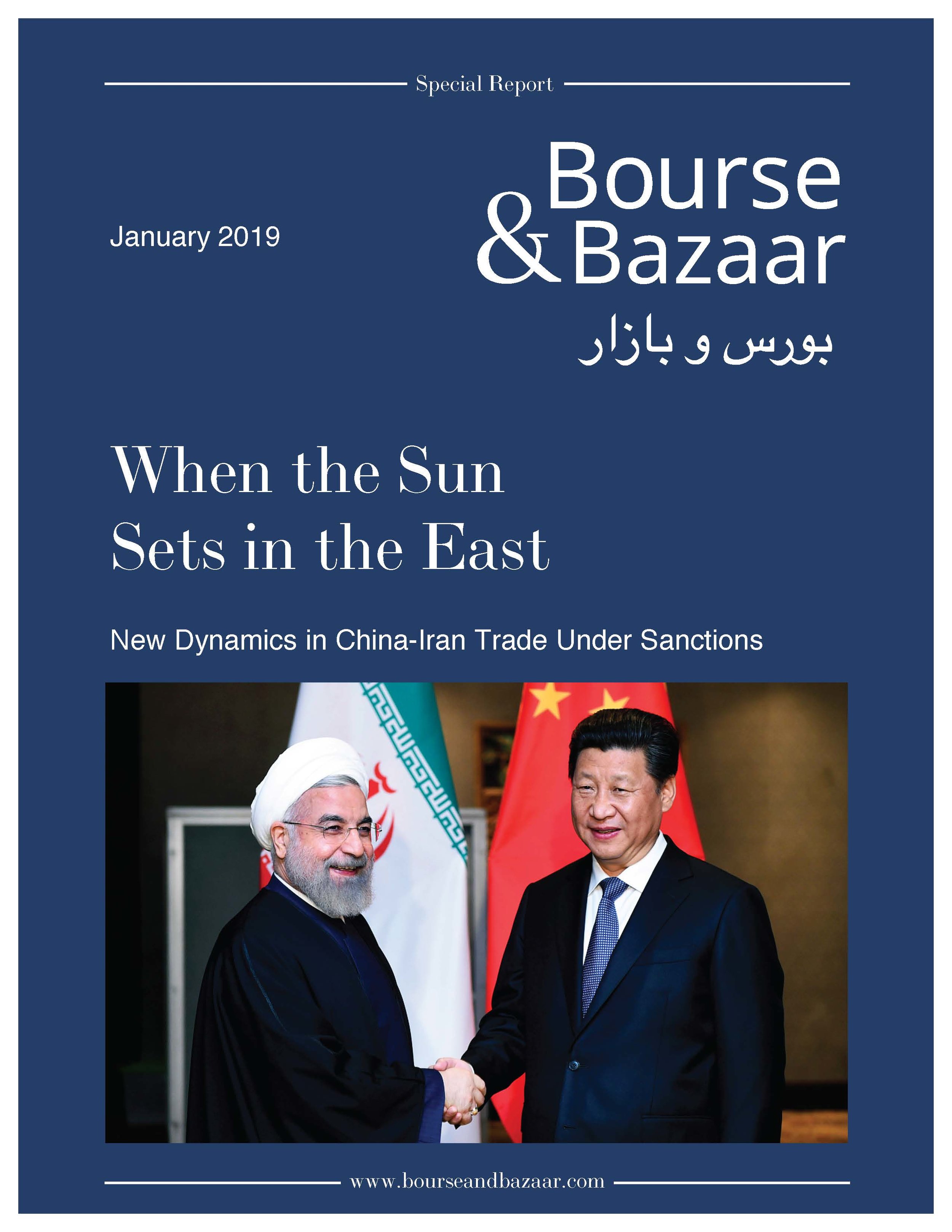
New Dynamics in China-Iran Trade Under Sanctions
A review of trade data from the General Customs Administration of the People’s Republic of China shows that China-Iran trade has fallen dramatically in the two months following the reimposition of US secondary sanctions. Chinese exports to Iran have collapsed from about USD 1.2 billion in October 2018 to just USD 391 million in December 2018—a fall of nearly 70 percent.
Download Report
January 2019 - 12 Pages
Please enter your email address in order to download the full report.
Executive Summary
A review of trade data from the General Customs Administration of the People’s Republic of China shows that China-Iran trade has fallen dramatically in the two months following the reimposition of US secondary sanctions. Chinese exports to Iran have collapsed from about USD 1.2 billion in October 2018 to just USD 391 million in December 2018—a fall of nearly 70 percent.
Looking to trade data and recent developments, this paper suggests that China may be abandoning the policy of sustaining trade with Iran in direct contravention of US sanctions, introducing both economic risks in regards to Iran’s continued industrialization and political risks in regards to Iran’s continued compliance with the JCPOA.
If China remains unwilling or unable to sustain trade ties with Iran in the face of US sanctions, the consequences in Iran will prove significant. While pressures were expected in Europe-Iran trade, the addition of pressures stemming from China will further weaken Iran’s economy. The slowdown in exports of food, medicine, and consumer goods from Europe will contribute to inflation, while the slowdown in exports of machinery and equipment from China will lead to decreasing production and layoffs in the manufacturing sector. A recent survey of members conducted by the Tehran Chamber of Commerce identified that 72 percent of enterprises expect to business conditions will worsen for their firm over the coming year.
To the extent a change in policy in Beijing will contribute to layoffs across Iran in the coming months, the trajectory of China-Iran trade may prove more consequential than Europe-Iran trade for Iran’s ability to remain in the JCPOA.