
Iran Allows UN Access to Alleged Nuclear Sites
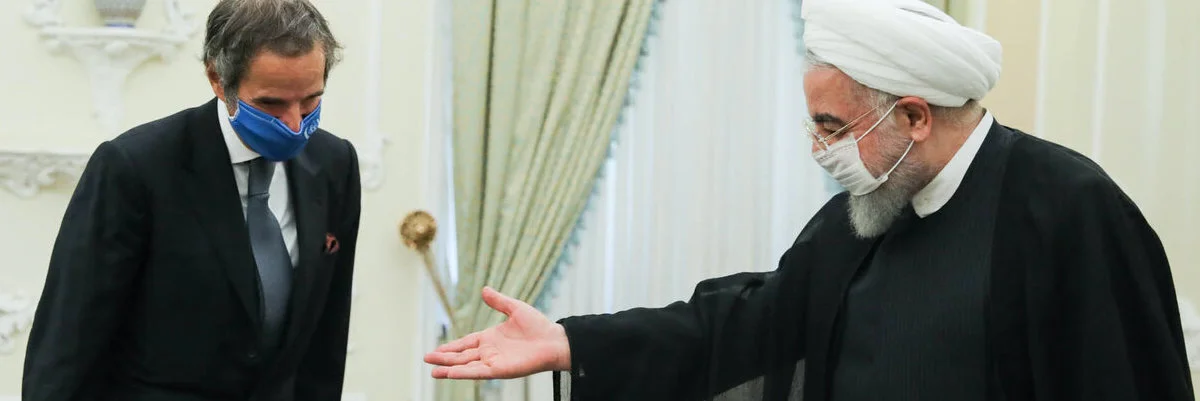
Iran agreed Wednesday to allow a UN watchdog the access it has requested to two alleged nuclear sites, as the head of the agency ended his first visit to Tehran.
Iran agreed Wednesday to allow a UN watchdog the access it has requested to two alleged nuclear sites, as the head of the agency ended his first visit to Tehran.
The announcement came only hours after Iran's arch foe the United States suffered a humiliating defeat when the United Nations blocked its controversial bid to reimpose international sanctions on the Islamic republic.
The US move had threatened to torpedo a historic 2015 accord under which Iran had agreed to curb its nuclear program in exchange for sanctions relief.
The deal known formally as the Joint Comprehensive Plan of Action (JCPOA) has been hanging by a thread since US President Donald Trump's unilateral decision to withdraw from it in 2018.
Iran has retaliated by gradually reducing its commitments to the JCPOA ever since.
But it agreed on Wednesday to grant the International Atomic Energy Agency the access it has sought to two sites that were suspected of having hosted undeclared activity in the early 2000s.
"Iran is voluntarily providing the IAEA with access to the two locations specified by the IAEA," the two sides said in a joint statement, adding they had agreed on dates for the access and the verification activities there.
The announcement came at the end of IAEA director general Rafael Grossi's first visit to Iran since the Argentine took the post last year.
In their statement, the two sides said the agreement followed "intensive bilateral consultations" and that the IAEA had no further access requests.
"Based on analysis of available information to the IAEA, the IAEA does not have further questions to Iran and further requests for access to locations," they said.
"Both sides recognize the independence, impartiality and professionalism of the IAEA continue to be essential in the fulfillment of its verification activities," they added.
'Sworn Enemies'
The IAEA's board of governors had passed a resolution in late June put forward by Britain, France and Germany, urging Tehran to provide inspectors access to the two disputed sites.
Grossi met with Iran's President Hassan Rouhani on Wednesday before wrapping up his visit.
"Iran, like before, is ready to closely cooperate with the agency in the framework of safeguards," Rouhani said, according to the government's official website.
He called the agreement "favorable" and said it can help "finally settle issues".
Rouhani also called on Grossi to consider that Iran has "sworn enemies" with nuclear weapons who do not cooperate with the IAEA and are "always seeking to cause issues" for Tehran.
The IAEA monitors Iran's nuclear activities as part of the 2015 nuclear agreement between the Islamic republic and the five permanent members of the UN Security Council -- Britain, China, France, Russia and the United States -- plus Germany.
Since the US pullout, the remaining participants to the deal have been struggling to save it.
Access to the two disputed sites had been blocked for months, prompting a diplomatic row.
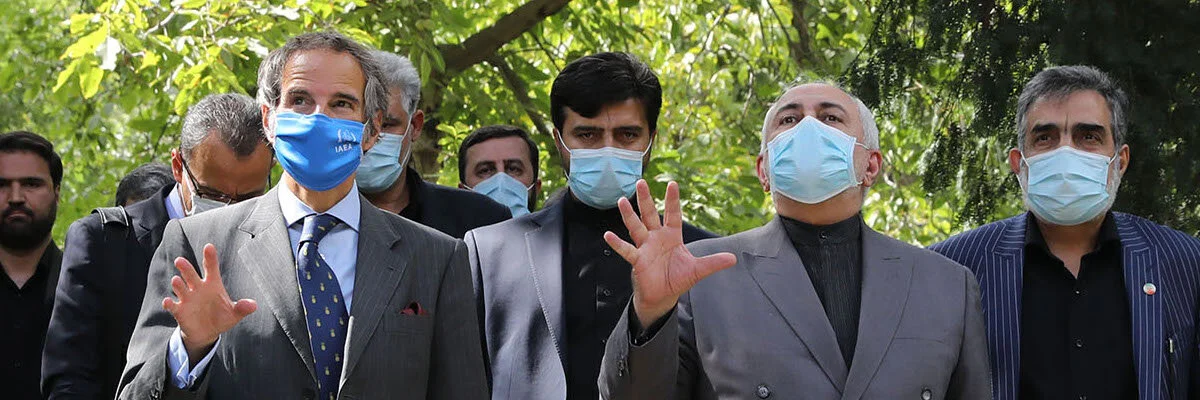
According to the spokesman for Iran's nuclear body, one of the two is located in central Iran between Isfahan and Yazd provinces, and the other is close to Tehran.
Iran had argued that the IAEA's access requests are based on allegations from Israel and have no legal basis.
After meeting Grossi, head of Iran's atomic agency, Ali Akbar Salehi, said a "new chapter" had started in relations between the country and the agency.
Photo: IRNA
Iran Hails 'Constructive' Talks With Visiting IAEA Chief
Iran's nuclear body said it held "constructive" talks on Tuesday with the visiting head of the International Atomic Energy Agency amid tensions over a US bid to reimpose UN sanctions.
By Amir Havasi
Iran's nuclear body said it held "constructive" talks on Tuesday with the visiting head of the International Atomic Energy Agency amid tensions over a US bid to reimpose UN sanctions.
The trip is Rafael Mariano Grossi's first to the Islamic republic since the Argentine took the helm of the Vienna-based UN agency last year.
It comes more than two years after US President Donald Trump pulled out of a landmark international agreement that put curbs on Iran's nuclear program in exchange for sanctions relief.
Grossi first met with the head of the country's atomic agency, Ali Akbar Salehi. Later he is due to meet Foreign Minister Mohammad Javad Zarif.
"A new chapter has started with this visit," Salehi said after the meeting, quoted by state news agency IRNA.
"Today's talks were constructive," he added.
"It was decided that the agency continue its work professionally and independently and Iran, too, act in the framework of its commitments."
Salehi said Iran's "enemies will not rest" but noted that Tehran has "so far been able to manage the issue".
‘Safeguards Verification'
Access to the two disputed sites has been blocked for months, prompting a diplomatic row.
Iran has argued that the IAEA's access requests are based on allegations from the country's arch-enemy Israel and have no legal basis.
The two sides were working on a statement which will be announced "in due time", Salehi added.
Grossi said later in a tweet that the two sides were working on "reaching an agreement on IAEA's safeguards verification activities in Iran."
In a statement before the talks, the nuclear body had said Iran expects the IAEA to "maintain neutrality in any situation and refrain from entering international political games."
The UN agency's board of governors had passed a resolution in late June put forward by European states, urging Tehran to provide inspectors access to two sites to help clarify whether undeclared nuclear activity took place there in the early 2000s.
According to the spokesman for Iran's nuclear body, one of the two is located in central Iran between Isfahan and Yazd provinces, and the other is close to Tehran.
He hinted in a Monday interview with Iran's Al-Alam television network that access may be granted if the agency does not demand more.
"To prevent enemies from exploiting the situation... we are seeking ways to alleviate our concerns and say there is access, see there's nothing," Behrouz Kamalvandi was quoted as saying.
"But this issue must be resolved once and for all... meaning that they would not demand afterwards to inspect somewhere else in the same way," he added.
US 'Snapback' Bid
Grossi's visit comes amid tensions between the US and its European allies over Washington's bid to maintain an arms embargo on Iran and reimpose UN sanctions.
It also takes place shortly before a September 1 meeting of the joint commission on the 2015 nuclear agreement.
Washington controversially maintains it has the right to force the reimposition of sanctions through the agreement's "snapback" mechanism, despite its withdrawal.
Britain, France and Germany rejected the move, saying it frustrated their efforts to salvage the accord.
The deal has been on life-support and tensions escalating since Trump's decision to pull out of the deal formally known as the Joint Comprehensive Plan of Action, or JCPOA.
In retaliation, Iran has progressively abandoned nuclear commitments under the accord.
Grossi is also expected to meet Iran's President Hassan Rouhani on Wednesday before flying back to Vienna.
Photo: Twitter
Iran Says 'Sabotage' Caused Natanz Nuclear Site Blast
Iran's Atomic Energy Organization said on Sunday that "sabotage" was the cause of an explosion that damaged the Natanz nuclear facility last month.
Iran's Atomic Energy Organization said on Sunday that "sabotage" was the cause of an explosion that damaged the Natanz nuclear facility last month.
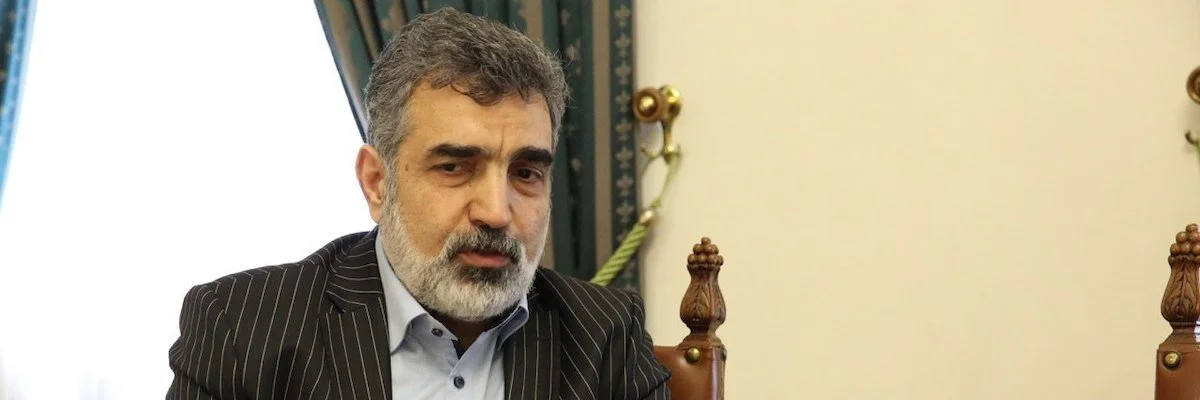
"Security investigations confirm this was sabotage and what is certain is that an explosion took place in Natanz," said spokesman Behrouz Kamalvandi.
"But how this explosion took place and with what materials... will be announced by security officials in due course," he was quoted as saying by state news agency IRNA.
Iran said after the July 2 incident that it had determined its cause but declined to release details due to "security concerns".
Natanz governor Ramezan-Ali Ferdowsi said a fire had broken out at the site, but the country's atomic agency said it caused no casualties or radioactive pollution.
At the time, IRNA published an editorial warning Iran's arch-foes against hostile actions, saying unnamed Israeli social media accounts had claimed the Jewish state was behind it.
The incident came six days after an explosion near a military complex rocked Tehran.
The blast in the Parchin area southeast of the Iranian capital was due to "leaking gas tanks", the defense ministry said.
The Islamic republic resumed uranium enrichment at the Natanz complex, in central Iran, in September last year.
The move came after the United States unilaterally withdrew in 2018 from an international accord that gave Iran relief from sanctions in exchange for curbs on its nuclear program.
Tehran has always denied its nuclear program has any military dimension.
Photo: IRNA
IAEA Head to Make First Visit to Iran on Monday
The head of the UN atomic watchdog will to go Tehran on Monday for meetings with senior Iranian officials aimed at improving cooperation on Iran's nuclear activities, the IAEA said.
The head of the UN atomic watchdog will to go Tehran on Monday for meetings with senior Iranian officials aimed at improving cooperation on Iran's nuclear activities, the IAEA said.
The visit comes amid tensions between the US and its European allies over Washington's bid to maintain an arms embargo on Iran and reimpose UN sanctions dating back to 2006.
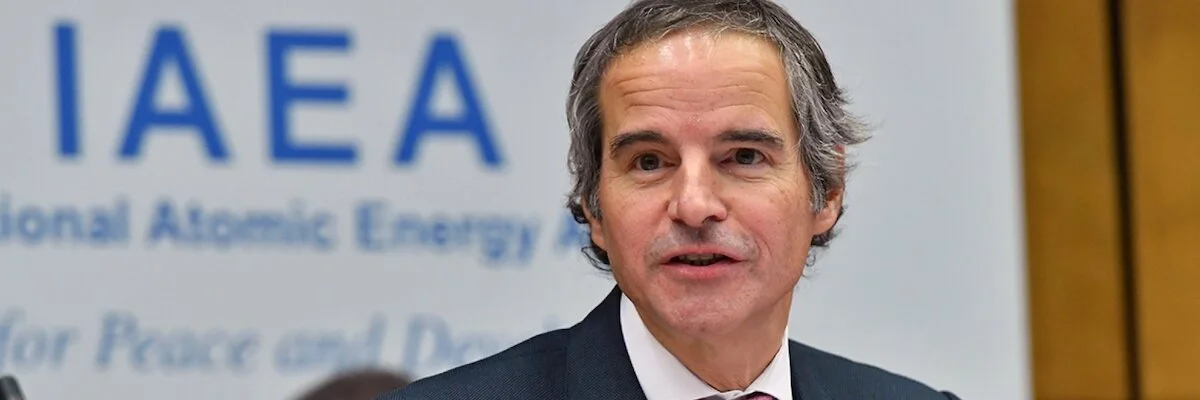
It will be the first visit to Iran by Rafael Mariano Grossi since he became director general of the International Atomic Energy Agency in December.
The IAEA said in a statement on Saturday that Grossi will address Iran's cooperation with the agency and in particular access for its inspectors to certain sites.
"My objective is that my meetings in Tehran will lead to concrete progress in addressing the outstanding questions that the agency has related to safeguards in Iran and, in particular, to resolve the issue of access," he said.
“I also hope to establish a fruitful and cooperative channel of direct dialogue with the Iranian Government which will be valuable now and in the future.”
His visit takes place shortly before a September 1 meeting in Vienna of the joint commission on the landmark 2015 deal between Iran and global powers that aims to prevent Tehran from developing a nuclear bomb.
The US and European nations are at loggerheads after Washington began the process Thursday of activating a controversial mechanism aimed at restoring UN sanctions on Iran.
Britain, France and Germany rejected the move, saying it frustrated their efforts to salvage the 2015 accord that US President Donald Trump pulled out of two years ago.
Washington controversially maintains it has the right to force the reimposition of sanctions through the agreement's "snapback" mechanism despite its withdrawal.
Photo: IAEA
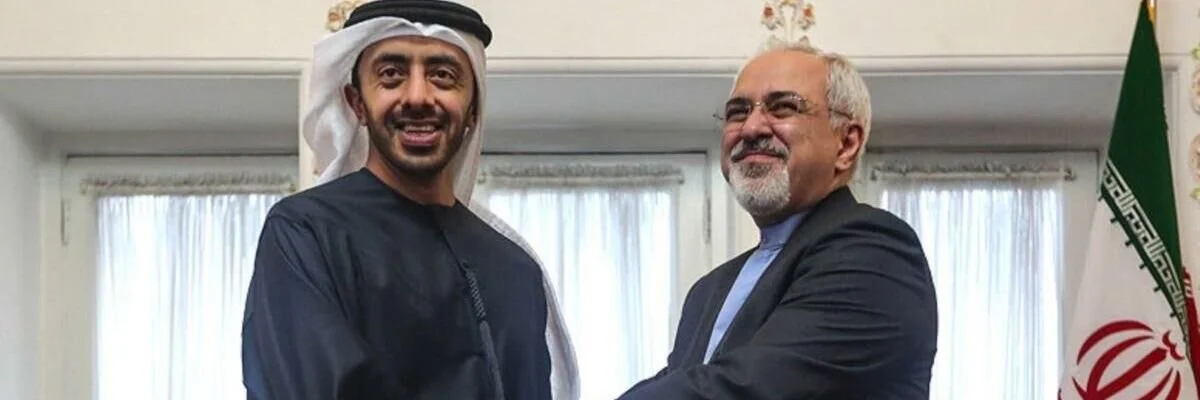
Iran Says Holding UAE Boat After Fishermen Deaths
Tehran said Thursday it seized an Emirati boat following a Persian Gulf incident in which two Iranian fishermen died, stoking tensions after the UAE said it would establish ties with Israel.
Tehran said Thursday it seized an Emirati boat following a Persian Gulf incident in which two Iranian fishermen died, stoking tensions after the UAE said it would establish ties with Israel.
The Iranian foreign ministry said it also summoned the UAE charge d'affaires to protest the maritime incident, which took place on Monday.
UAE coastguard vessels had "opened fire on several Iranian fishing boats... leading to the deaths of two fishermen", a statement by the ministry said.
An "Emirati boat was seized by coast guards of the Islamic Republic of Iran because it was sailing illegally in our waters, and its crew have been arrested," it added.
The official Emirati news agency WAM said eight fishing boats had violated its own territorial waters on Monday, without giving their nationality.
"The coastguard boats attempted to stop the fishing boats but they did not comply with the orders, therefore, rules of engagement were applied", WAM added.
Iran's foreign ministry said the UAE had on Wednesday expressed "its deep regret" and said it would provide compensation.
Iran and the UAE have longstanding economic links and the Emirates are home to a significant Iranian expatriate community.
But tensions have spiked between the two nations following last week's surprise announcement that the UAE has agreed to normalize ties with Israel under a US-brokered deal.
Iran condemned the agreement, with President Hassan Rouhani calling it a "big mistake" and warning "against opening the path of Israel to the region", without elaborating on what that would mean.
Rouhani's remarks were seen as "threats" by the UAE which on Sunday summoned the Iranian charge d'affaires in Abu Dhabi to protest "unacceptable and inflammatory" rhetoric.
The UAE, which downgraded its relations with Iran in 2016 amid fierce rivalry between Tehran and Emirati ally Saudi Arabia, said the remarks "had serious implications for security and stability in the Gulf region.”
Photo: IRNA
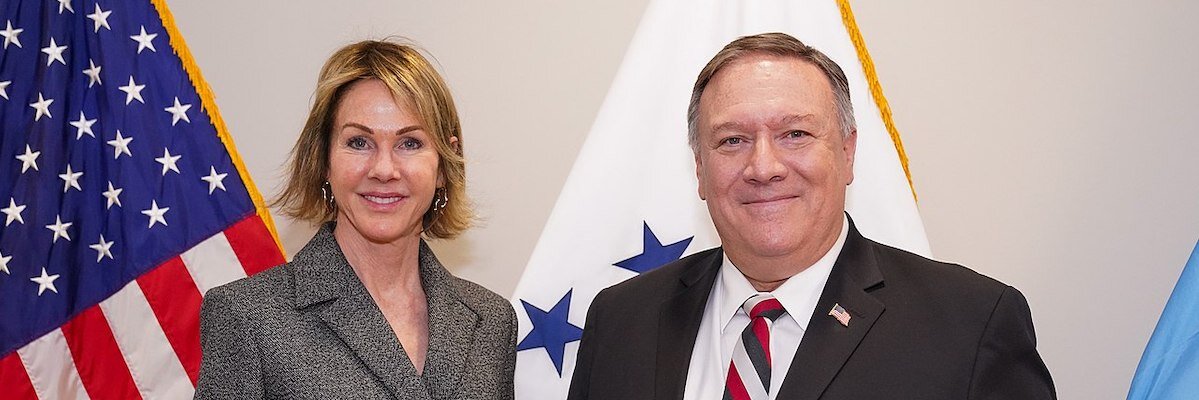
US Bid to 'Snapback' Iran Sanctions Immediately Rejected
The United States formally began the process Thursday of activating a controversial mechanism aimed at reimposing sanctions on Iran, a move that was immediately rejected by European allies fighting to save the Iranian nuclear deal.
By Peter Hutchinson
The United States formally began the process Thursday of activating a controversial mechanism aimed at reimposing sanctions on Iran, a move that was immediately rejected by European allies fighting to save the Iranian nuclear deal.
Secretary of State Mike Pompeo accused Britain, France and Germany of "siding with the ayatollahs" after they insisted Washington had no legal right to trigger the disputed procedure called "snapback."
Pompeo personally submitted a letter to the president of the UN Security Council and Secretary-General Antonio Guterres in New York, accusing Iran of "significant" non-compliance with the terms of the 2015 historic accord, according to a copy seen by AFP.
It is intended to launch the start of the process to snapback sanctions on Iran that threatens to torpedo the historic 2015 nuclear accord and threatens to plunge the Security Council into crisis.
It also widens the gulf between the US and almost every other Security Council member on Iran policy, which began when President Donald Trump withdrew from the nuclear agreement in 2018.
The procedure, never before used, comes after the US suffered a humiliating defeat at the Security Council last week when it failed to muster support for a resolution to extend a conventional arms embargo on Iran.
The snapback aims to restore all international sanctions against Iran that were lifted as part of the nuclear agreement with Tehran in exchange for it agreeing not to develop nuclear weapons.
But it also threatens to sink that historic deal, known officially as the Joint Comprehensive Plan of Action (JCPOA), which Britain, France and Germany—along with Russia and China—are trying to save.
Britain, France and Germany released a joint statement saying they would not support the action "which is incompatible" with efforts to preserve the JCPOA.
"We call on all UNSC members to refrain from any action that would only deepen divisions in the Security Council or that would have serious adverse consequences on its work," they said.
Pompeo accused them of a "failure of leadership" and said their actions would "endanger" people living in the Middle East and their own citizens as well.
'Lasting Damage'
The European trio says it has serious concerns about the conventional arms embargo expiring on October 18 but believe the safest way to keep Iran in check is through the JCPOA.
A Security Council resolution ratifying the accord, which was negotiated by former president Barack Obama, says participating states can unilaterally reimpose sanctions if Iran has failed to significantly comply with the agreement.
The snapback procedure is supposed to lead to the re-establishment of sanctions after 30 days, without the possibility of any members, namely Russia and China, wielding their vetoes.
European countries on the Security Council say the US gave up their right as a participant when Trump pulled out of the deal in May 2018 and reimposed American sanctions as part of his "maximum pressure" campaign against the Iranian regime.
Iran has since taken small but escalating steps away from compliance with the nuclear accord as it presses for sanctions relief.
Pompeo insists that America can trigger a snapback because it was a participant when the deal was signed and insisted it would successfully lead to the automatic renewal of sanctions in 30 days and an extension of the arms embargo.
The US accuses Russia and China of planning to sell arms to Iran when the embargo expires.
Iranian Foreign Minister Javad Zarif tweeted that Washington's move was "illegitimate and felonious."
A Chinese spokesperson said it has "no legal ground" and would not be considered as starting a snapback process.
"It is nothing but a political show staged by the United States," the spokesperson said in a statement.
Experts say the snapback attempt raises questions about the legitimacy of its resolutions.
They foresee a situation in which the United States acts as if the sanctions have been reimposed -- and the rest of the Council continues as before.
"There's no doubt the Trump White House is using snapback as a desperate last gambit to burn the JCPOA house down before the US elections," Ellie Geranmayeh, an Iran expert at the European Council on Foreign Relations, told AFP.
"This move will leave the UN Security Council in one big mess, with competing narratives among world powers over if the UN sanctions against Iran should be reinforced," she said.
"What it does do is leave a lasting damage for the UN Security Council and further isolates the US position on Iran."
Photo: Wikicommons
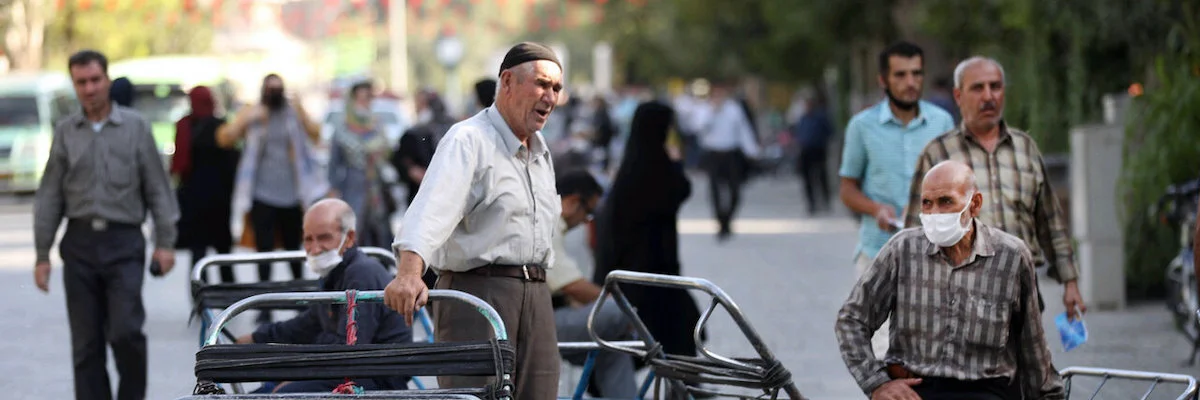
Iran Says COVID-19 has Killed 20,000 in Six Months
Iran's novel coronavirus death toll has surpassed 20,000, the government said Wednesday, six months after announcing the start of what quickly became the Middle East's deadliest outbreak.
Iran's novel coronavirus death toll has surpassed 20,000, the government said Wednesday, six months after announcing the start of what quickly became the Middle East's deadliest outbreak.
The health ministry said Covid-19 claimed 153 more lives in the past 24 hours, bringing the country's overall toll to 20,125 dead.
Its spokeswoman, Sima Sadat Lari, told a televised news conference there had been another 2,444 cases of infection in the last 24 hours.
The Islamic republic has now reported 350,279 coronavirus infections since announcing its first cases—two deaths in the Shiite holy city of Qom—on February 19.
Lari described the situation as "concerning" in 26 of Iran's 31 provinces, among them Tehran.
She also stressed health protocols should be observed during the holy Shiite mourning month of Moharram, which starts on Friday.
"In no case should Moharram ceremonies be held in closed spaces," she said.
There has been skepticism at home and abroad about Iran's official figures, amid concerns the real toll could be much higher.
Authorities have not imposed a mandatory lockdown on the population across Iran.
Schools were shut, public events cancelled and travel between provinces banned in March.
Restrictions were gradually lifted in April as the coronavirus pandemic exacerbated a sharp downturn for Iran's sanctions-hit economy.
But deaths and infections have risen in the Islamic republic since hitting a months-long low in May, leading to a reimposition of some protocols.
Photo: IRNA
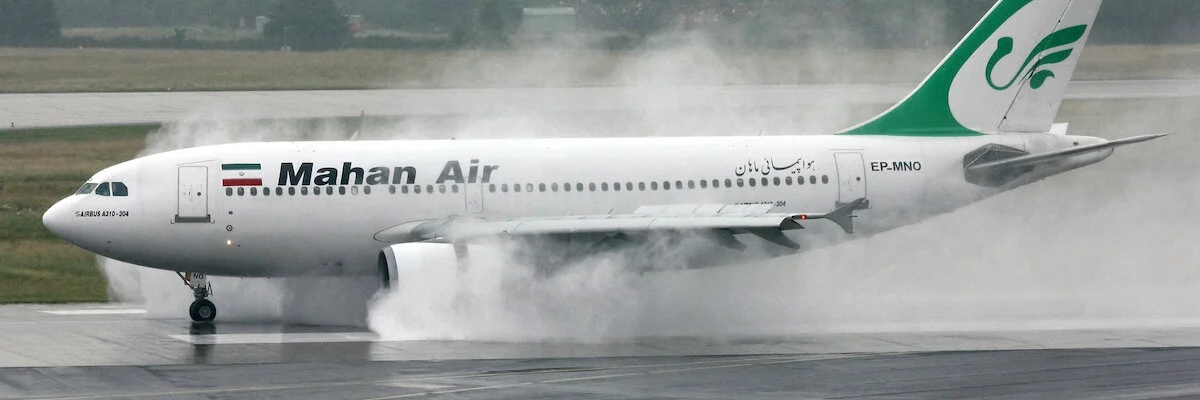
US Blacklists UAE Firms for Supporting Iran Airline
The US Treasury placed two United Arab Emirates-based companies on its sanctions blacklist Wednesday for their support of Iran's already-sanctioned Mahan Air.
By Giuseppe Cacace
The US Treasury placed two United Arab Emirates-based companies on its sanctions blacklist Wednesday for their support of Iran's already-sanctioned Mahan Air.
UAE-based Parthia Cargo and Delta Parts Supply FZC "have provided key parts and logistics services for Mahan Air," the Treasury said.
The two companies were involved in obtaining spare parts and materials for US-made jets that Mahan operates—sanctions block Iran from freely acquiring those parts.
Mahan, one of Iran's leading carriers, has been blacklisted under US counterterrorism regulations for its close relationship with the Islamic Revolutionary Guard Corps-Quds Force, which Washington says carries out terror activities in the Middle East.
Mahan Air especially has been used by the Revolutionary Guards to support the regimes of Syrian leader Bashar al-Assad and Venezuelan President Nicolas Maduro, according to the Treasury.
"The Iranian regime uses Mahan Air as a tool to spread its destabilizing agenda around the world, including to the corrupt regimes in Syria and Venezuela, as well as terrorist groups throughout the Middle East," said Treasury Secretary Steven Mnuchin in a statement.
"The United States will continue to take action against those supporting this airline."
The Treasury also placed sanctions on UAE-based Iranian national Amin Mahdavi, who the Treasury said either owns or controls Parthia Cargo.
The sanctions aim at blocking those targeted from accessing global financial and commercial networks by forbidding anyone from trading with them.
In a parallel move, the US Justice Department filed criminal charges in federal court in Washington against Mahdavi and Parthia for "participating in a criminal conspiracy to violate US export laws and sanctions against Iran."
Photo: Wikicommons
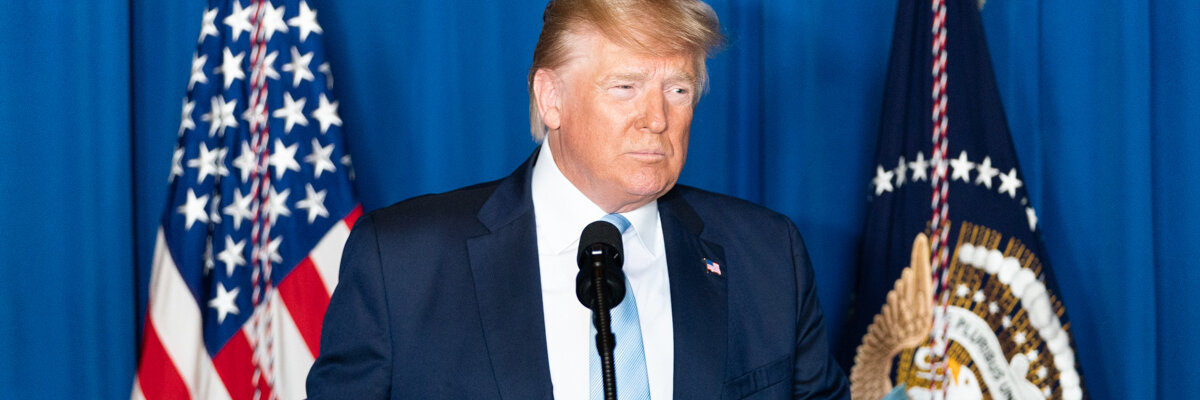
Trump Vows 'Snapback' to Force Return of UN Iran Sanctions
US President Donald Trump vowed Saturday to use a controversial technique to unilaterally reinstate UN sanctions on Tehran, a move with huge repercussions for the Iran nuclear deal.
By Sebastian Smith with David Vujanovic
US President Donald Trump vowed Saturday to use a controversial technique to unilaterally reinstate UN sanctions on Tehran, a move with huge repercussions for the Iran nuclear deal.
His declaration came a day after the UN Security Council overwhelmingly rejected a US resolution to extend an Iranian arms embargo.
"We'll be doing a snapback," Trump said during a news conference at his New Jersey golf club. "You'll be watching it next week."
The president was referring to the contested argument that the US remains a "participant" in the 2015 Iran nuclear deal—despite Trump's withdrawal from it—and therefore can force a return to sanctions if it sees Iran as being in violation of its terms.
Iranian President Hassan Rouhani said the US had failed to kill off what he called the "half alive" deal with major powers that gave Iran relief from sanctions in exchange for curbs on its nuclear program.
"The United States failed in this conspiracy with humiliation," said Rouhani.
"This day will go down in the history of our Iran and in the history of fighting global arrogance."
Only two of the Council's 15 members voted in favor of the US resolution seeking to extend the embargo, highlighting the division between Washington and its European allies since Trump withdrew from the nuclear accord in 2018.
The Europeans on the Council all abstained, and Iran mocked the Trump administration for winning the support of just one other country, the Dominican Republic.
"In the 75 years of United Nations history, America has never been so isolated," foreign ministry spokesman Abbas Mousavi tweeted.
People on the streets of Tehran had mixed reactions.
"This is an American political game. One day they give a resolution to the Security Council, the next they say they have taken" Iranian fuel, said a worker at the city's Grand Bazaar who gave his name only as Ahmadi.
A drugstore employee named Abdoli told AFP she was happy Iran won, but added that it "should interact with the United States and establish relations.
Crisis
European allies have been skeptical on whether Washington can force sanctions, with experts saying a "snapback" threatens to plunge the Council into one of its worst-ever diplomatic crises.
Trump also said Saturday he would "probably not" take part in a summit proposed by Russian President Vladimir Putin on addressing the situation.
"I think we'll wait until after the election," he said, with the US set to hold its presidential poll in November.
Putin had appealed to China, France, Britain, the US, Germany and Iran to convene an emergency video summit to avoid an escalation of tensions in the Gulf.
US Secretary of State Mike Pompeo, on a visit to Poland on Saturday, made it clear the United States would press on.
"It is unfortunate that the French and the United Kingdom... didn't support what the Gulf states have demanded, what the Israelis have demanded... I regret that deeply," Pompeo told reporters.
"The United States is determined to make sure that the Iranians and this regime, this theocratic regime does not have the capacity to inflict even more harm on the world."
Israeli Prime Minister Benjamin Netanyahu denounced a "scandalous" UN vote.
"Iranian terrorism and aggression threaten the peace of the region and the entire world. Instead of opposing weapons sales, the Security Council is encouraging them," he said.
Threatened
The embargo on conventional arms is due to expire on October 18 under the terms of a resolution that blessed the Iran nuclear deal, officially known as the Joint Comprehensive Plan of Action.
Since Trump pulled out of the JCPOA and slapped unilateral sanctions on Iran, Tehran has taken small but escalatory steps away from compliance with the accord as it presses for sanctions relief.
European allies of the United States—who, along with Russia and China, signed the deal with Iran—have voiced support for extending the 13-year-long conventional arms embargo, saying an expiry threatens stability in the Middle East.
However, their priority is to preserve the JCPOA.
The US text at the Security Council on Friday, seen by AFP, effectively called for an indefinite extension of the embargo on Iran, which diplomats said would threaten the nuclear deal.
Iran says it has the right to self-defense and that a continuation of the ban would mean an end to the agreement.
Apart from 11 abstentions, Russia and China opposed the resolution.
"The result shows again that unilateralism enjoys no support, and bullying will fail," China's UN mission tweeted.
Photo: Wikicommons
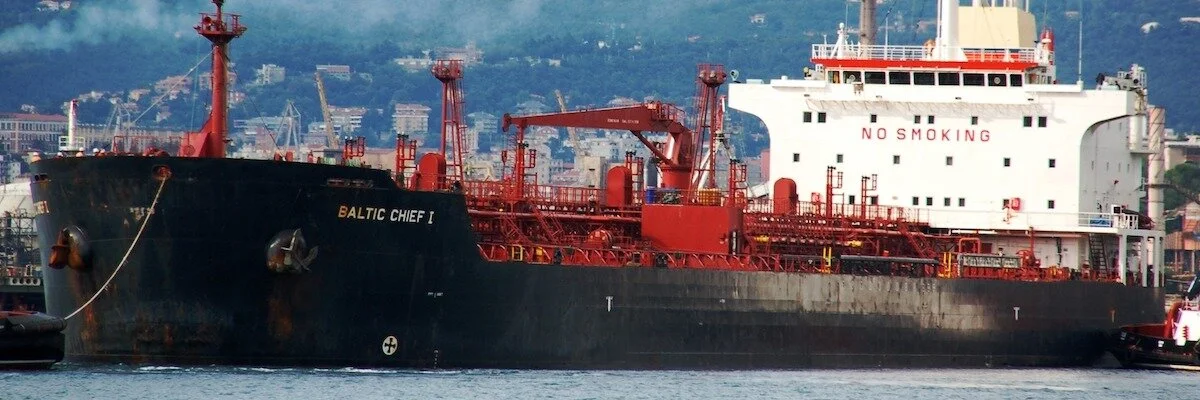
US Seizes Iranian Petrol Destined for Venezuela
The United States has seized the cargo on four tankers allegedly loaded with Iranian gasoline destined for Venezuela, the Wall Street Journal reported.
The United States has seized the cargo on four tankers allegedly loaded with Iranian gasoline destined for Venezuela, the Wall Street Journal reported.
The US Justice Department issued a warrant last month to seize the cargo of the tankers Bella, Bering, Pandi and Luna, tying the shipments to Iran's Revolutionary Guards, which Washington has labelled a terror group.
The four ships were seized at sea and were now en route to Houston, Texas, the Journal reported Thursday, citing US officials.
The US court complaint says that Iranian businessman Mahmoud Madanipour, who allegedly had links to the Revolutionary Guards, arranged shipments for Venezuela using offshore front companies and ship-to-ship transfers to avoid sanctions on Iran.
Iran's ambassador to Venezuela said reports that Iranian tankers had been seized were "yet another lie and psychological warfare" by the United States.
"The ships are not Iranian, and neither the owner nor its flag has anything to do with Iran," Hojat Soltani said on Twitter in Spanish.
Venezuela is almost entirely dependent on its oil revenues but its production has fallen to roughly a quarter of its 2008 level and its economy has been devastated by six years of recession.
Washington's sanctions against President Nicolas Maduro's regime have forced Venezuela, which used to refine enough oil for its own needs, to turn to allies such as US nemesis Iran to alleviate a desperate gasoline shortage.
Iran sent several tankers of gasoline to Venezuela earlier this year to help ease shortages.
Photo: Fleetmon
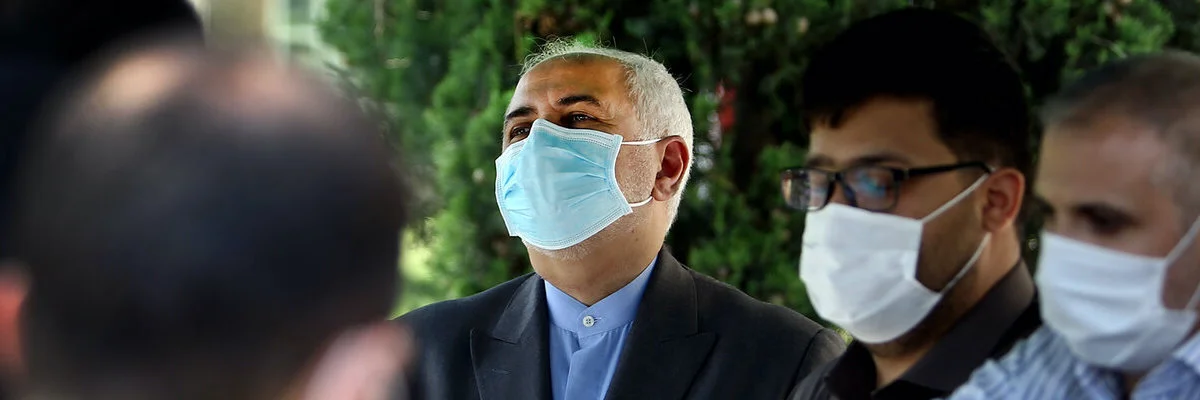
Iran's Zarif to Meet With Officials in Lebanon on Friday
Iran's Foreign Minister Mohammad Javad Zarif will meet with officials in Lebanon on Friday, the ministry said in a statement, following the massive blast that destroyed swathes of Beirut.
Iran's Foreign Minister Mohammad Javad Zarif will meet with officials in Lebanon on Friday, the ministry said in a statement, following the massive blast that destroyed swathes of Beirut.
Zarif is set to discuss the "latest developments following the recent devastating blast, ongoing Iranian aid and other bilateral issues," the foreign ministry said Thursday, without specifying which officials Zarif would meet.
The massive explosion at Beirut's port on August 4 killed 171 people and injured 6,500.
Zarif's visit will be the first by an Iranian official since the blast, and comes after a planned trip by First Vice President Eshaq Jahangiri was cancelled.
Jahangiri had been expected on Monday but the trip was called off after Lebanese prime minister Hassan Diab announced the resignation of his government, ISNA news agency reported.
Iran wields huge influence in Lebanon through the Shiite group Hezbollah, which was strongly represented in the outgoing government and has an alliance with the faction of Christian President Michel Aoun.
Photo: IRNA
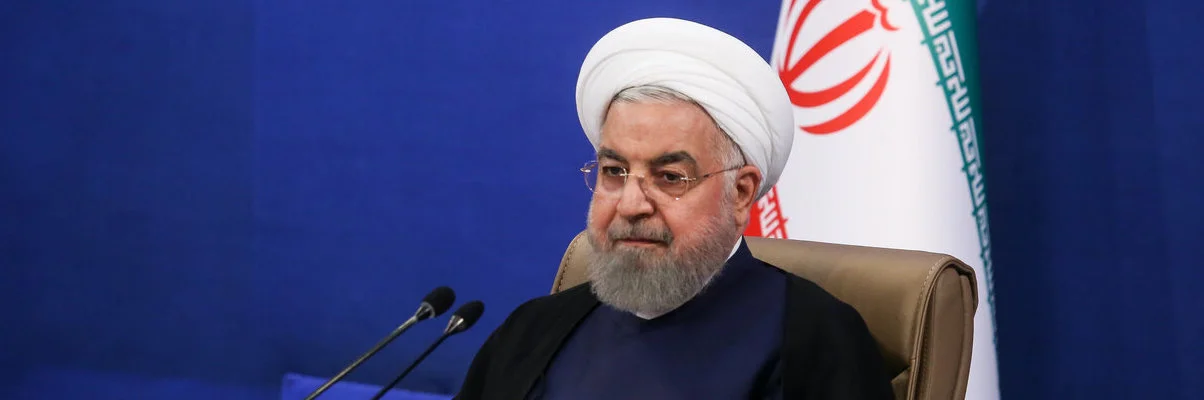
Iran's Rouhani Hopeful US Arms Embargo Push Will Fail
Iran's President Hassan Rouhani expressed "great hopes" Wednesday that a US bid to extend an arms embargo on his country will fail, warning of consequences if the UN Security Council backs it.
By Amir Havasi
Iran's President Hassan Rouhani expressed "great hopes" Wednesday that a US bid to extend an arms embargo on his country will fail, warning of consequences if the UN Security Council backs it.
Rouhani's remarks came after Iran's ambassador to the United Nations said the US would have to redraft its proposed resolution on the issue after being "rebuffed" by Security Council members.
"We have great hopes that America will fail," Rouhani told a televised meeting of his cabinet.
The ban on selling weapons to Iran is set to be progressively eased from October under the terms of Resolution 2231, which blessed the Iran nuclear deal that world powers agreed in July 2015.
But a UN embargo on materials and technology that Iran could use for its ballistic missile program is to remain in place until 2023.
The European Union has said it will continue to enforce its own embargo against Iran after the lifting of the first UN restrictions.
Under the accord officially known as the Joint Comprehensive Plan of Action, Iran committed to limiting its nuclear program in exchange for sanctions relief.
The JCPOA has been on life-support since the US under President Donald Trump withdrew from it and reimposed unilateral sanctions in 2018.
Iran has since taken small but escalatory steps away from compliance with the agreement as it presses for the sanctions relief it was promised.
'Blatant Violation'
"We have great hopes that America will realize its failure and see its isolation," the Iranian president said.
"But our stance in any case is clear. If such a resolution comes to pass... it means a blatant violation of the JCPOA," he added, warning the "consequences will rest with the perpetrators of this act".
Iran's envoy to the UN, Majid Takht Ravanchi, said on Wednesday that the US "was forced to retreat" from its draft resolution after being "rebuffed by UNSC members" and had to propose a fresh version.
"The new draft is similar—in its NATURE and GOAL—to the previous. Confident that the Council will—again—reject this move."
Foreign Minister Mohammad Javad Zarif said earlier the new draft was a "five-page resolution reduced to five sentences", and added that by presenting it as new, the US was disrespecting Security Council members.
The original US text, seen by AFP in New York, effectively called for an indefinite extension of the arms embargo on Iran and used hawkish rhetoric.
'Unholy Mess'
A new US-drafted resolution also seen by AFP was slimmed down from that one, but it still calls for an indefinite extension.
With most European countries in the 15-member Council expected to abstain, the new text is unlikely to get the nine votes it needs to pass.
If it does, China and Russia intend to veto the resolution.
Richard Gowan, a New York-based UN expert at the International Crisis Group, said the US had "mishandled the diplomatic choreography over this resolution.”
"They wanted to push their hardline draft and then make a show of compromising on a shorter text, which they hoped Estonia or Tunisia would introduce," he said.
"But the Estonians and Tunisians, like most other Council members, seem to have decided that they want as little to do with this unholy mess as possible.
"After talks on Monday, both turned down the opportunity to table the compromise text," he told AFP in New York.
"So now the US has had to do that itself. But the goal, which is to move towards snapback, remains the same."
European allies of the US—Britain, Germany and France, who along with Russia and China, are parties to the JCPOA—have voiced support for extending the conventional arms embargo but their priority is to preserve the nuclear deal.
Washington has threatened to use a contested argument that it remains a "participant" in the JCPOA—despite its withdrawal—and if UN sanctions are not extended, it can force their return if it sees Iran as being in violation of the accord's terms.
Photo: IRNA
Iran Policy in Holding Pattern Before Elections
The sudden departure of Brian Hook leaves the Trump administration scrambling to snatch some victory after two years of “maximum pressure” on Iran.
By Robbie Gramer and Jack Detsch
Brian Hook’s abrupt departure as the Trump administration’s top Iran envoy leaves an uncertain future for the White House’s biggest Middle East policy, two years after President Donald Trump abandoned the Iran nuclear pact and proclaimed he could secure a “new and lasting deal.”
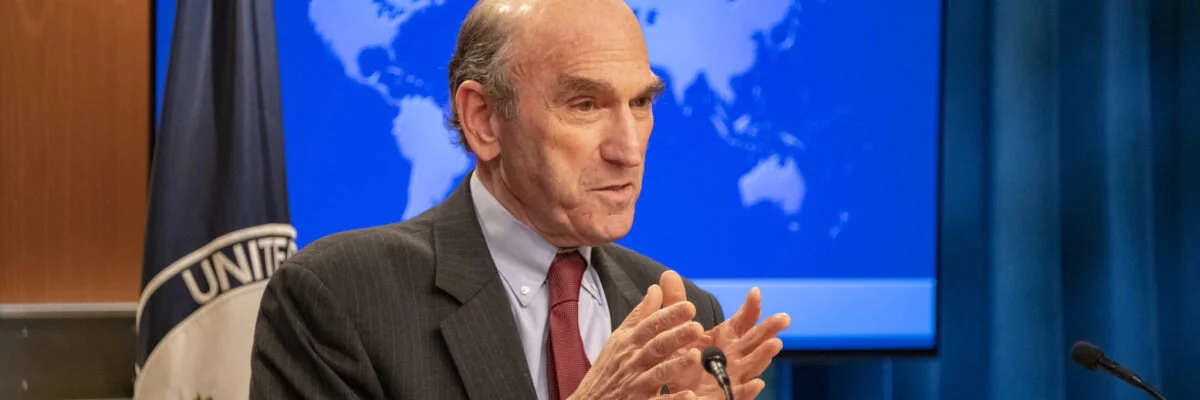
Hook’s replacement, Elliott Abrams, will simultaneously continue as the administration’s envoy for Venezuela, making him responsible for two defining Trump foreign-policy initiatives—neither of which has yielded the kind of high-profile victory the White House once hoped for.
The big question now is who wins this November’s U.S. presidential election. Iran has been rocked by mysterious explosions for weeks and may privately suspect U.S. involvement, but it is wary about rocking the boat before seeing if Trump wins reelection. But there’s also little chance for any last-minute outreach to Iran to secure a new and improved deal before the vote.
“The administration is sunk in a deep rut of its own devising, with no pathway to negotiations,” said Barbara Leaf, a former U.S. ambassador to the United Arab Emirates during the Obama and Trump administrations. “And needless to say, Tehran will not pick up the phone if Washington rings before November 3rd.”
Abrams, the longtime foreign-policy hawk taking over from Hook, would also bring potential baggage to the new role. He is perhaps best known for pleading guilty for lying to Congress over the Iran-Contra scandal during the Ronald Reagan administration. Some former officials think Abrams might use the remaining months before the election to tighten the screws on Iran, whether through an increase in the mysterious attacks inside the coronavirus-racked country or by further deepening U.S. relations with Israel.
“I think Abrams is much smarter than Hook. He may be more effective,” one former U.S. official said. “They don’t have time to get things done, but they do have time to make trouble.”
Iran’s challenge will be to lie low until it knows whom it will be dealing with next year.
“I think the Iranians are concerned about Trump because of how unpredictable he’s been, and I think they see the U.S. as implicated in the explosions,” said Ariane Tabatabai, a Middle East fellow at the German Marshall Fund of the United States who specializes in Iran. “But they’re careful not to talk too much about it because of the fact that then they’d have to do something and they don’t want to rock the boat.”
If Trump does win, some administration officials expect that Iran might finally come to the table to discuss a new nuclear accord, due to the unsustainable pressure from loads of U.S. economic sanctions that have pushed Iran’s economy to the brink.
“When it comes to Iran, the election is a big part of their calculation,” one U.S. official said. “If Trump ends up winning the election, I think you’re going to end up seeing some movement on these things.”
“We still believe the only way the current Iranian government has ever come to the table is pressure,” the official added.
Hook shepherded the so-called “maximum pressure” campaign on Iran for two years, overseeing a substantial expansion of U.S. sanctions that put the administration squarely at odds with European allies who have tried to keep afloat the Iran nuclear deal, formally called the Joint Comprehensive Plan of Action (JCPOA).
Hook, considered a moderate Republican, became an influential behind-the-scenes fixture first under former Secretary of State Rex Tillerson and later as point man on Iran. He long argued, including in a Q&A with Foreign Policy, that the onus was on Tehran to come to the table for new talks after the Trump administration pulled out of the deal in 2018.
Instead of agreeing to talk, Iran shook off the deal’s constraints on uranium enrichment and nuclear development, potentially shortening its breakout time to acquire nuclear capability. Former administration officials pointed to Iran’s stepped-up activity, a series of attacks on oil tankers in the Persian Gulf, and the downing of an American drone as evidence that Hook was increasingly the spokesperson for a failed strategy.
“I don’t think the [White House] will admit the strategy was a failure,” a former senior Trump administration official told Foreign Policy. “But Iran is breaking the JCPOA limits on enrichment and storage, so it will be super difficult to say it is working.”
News of Hook’s departure comes as the Trump administration faces likely defeat on his major diplomatic initiative at the U.N. Security Council next week: a U.N. resolution to extend a conventional arms embargo on Tehran. China and Russia, veto-wielding members of the Security Council, are unlikely to back the resolution, several diplomatic sources said. Hook will stay in his role to see through the U.N. fight, a State Department official told Foreign Policy.
Some former officials see Trump’s Iran policy as a way to try to fence in Joe Biden should he win. The former vice president has expressed a willingness for the United States to return to compliance with the 2015 Iran nuclear deal. By extending the arms embargo and triggering snapback sanctions, the United States could potentially shatter the legal framework underpinning the deal, experts suggested.
“At this stage, the Trump administration’s Iran policy is all about preparing for Trump’s loss and trying to pin down a future President Biden in his options with Iran,” said Jarrett Blanc, the former State Department coordinator for Iran nuclear implementation during the Obama administration and now a senior fellow at the Carnegie Endowment for International Peace. “I think they’re likely to fail at that effort.”
Photo: Wikicommons

US Pointman on Iran Hard Line Quits
The envoy leading President Donald Trump's hardline push on Iran quit on Thursday, months before an election that could reorient US policy.
Bu Shaun Tandon
The envoy leading President Donald Trump's hardline push on Iran quit on Thursday, months before an election that could reorient US policy.
Brian Hook, a stalwart Republican considered one of the most powerful figures at the State Department, decided to return to the private sector, Secretary of State Mike Pompeo said.
Hook "has achieved historic results countering the Iranian regime," Pompeo said in a statement.
Hook will be replaced by Elliott Abrams, an intellectual architect of the 2003 invasion of Iraq who has been leading Trump's unsuccessful campaign to oust Venezuela's leftist president, Nicolas Maduro.
Abrams, known in the 1980s for his staunch defense of right-wing strongmen in Latin America, will handle both Iran and Venezuela, Pompeo said.
Hook has been at the forefront of Trump's campaign against Iran's clerical state which has included pulling out of a nuclear accord and imposing punishing unilateral sanctions.
Hook's decision to head to the private sector comes three months before US elections in which Trump is trailing Democrat Joe Biden in the polls.
Biden was a strong backer of the nuclear deal negotiated under former president Barack Obama and has promised to salvage a diplomatic solution.
Hook exits just as the Trump administration readies a key effort on Iran—seeking to extend an arms embargo on Tehran through the UN Security Council.
If the effort fails, Pompeo and Hook have threatened to employ a disputed legal procedure aimed at forcing UN sanctions against Iran.
'Crisis of Legitimacy'
A dour, bespectacled lawyer whose formal manner seems more out of Britain than his Midwestern home state of Iowa, Hook was put in charge of strategic planning at the State Department following Trump's election.
After becoming secretary of state in 2018, Pompeo made 12 sweeping demands of Iran that included giving up its activities across the Middle East and soon put Hook in charge of the effort.
Tensions soared to a new high in January this year when Trump ordered a drone strike that killed a top Iranian general, Qasem Soleimani, at Baghdad's airport.
Critics say that the effort led by Hook badly backfired with Iran only expanding its regional operations and taking steps out of the nuclear deal with which it had been in compliance.
"Few human beings have done more to advance the Iranian nuclear program than Brian Hook," said Ben Rhodes, one of Obama's closest foreign policy aides.
"It was rolled back when he took his job, now it's moving forward," he wrote on Twitter.
Taken to task on his record at an event Wednesday, Hook said that Iran was facing its worst economic crisis since the 1979 Islamic revolution and that mass protests in Iraq and Lebanon showed opposition to Tehran.
"They're facing a crisis of legitimacy and credibility with their own people. The regime today clings to power on the basis of brute force," Hook told the Aspen Security Forum.
"And these are not things that we were talking about three and a half years ago when we came into office."
Hook played the lead role in the release of two US citizens imprisoned in Iran, Princeton scholar Xiyue Wang and military veteran Michael White.
He was also faulted by the State Department's internal watchdog over the ousting of a department employee of Iranian descent.
The inspector general did not find that Hook shared bias but said he did not distance himself from a smear campaign.
Hook rejected the findings of the report and Trump later sacked the inspector general, Steve Linick, who had also been conducting an unrelated probe into Pompeo.
Photo: IRNA
Not Cashing In: Virus Hits Iraq's Iran-US Money Trade
In Iraq's Kurdistan region and at the country's Muslim Shiite holy sites, money exchange between Iran and Iraq has been hard hit by lockdown restrictions to stop the spread of COVID-19, and by deep economic woes in both countries.
By Shwan Nawzad
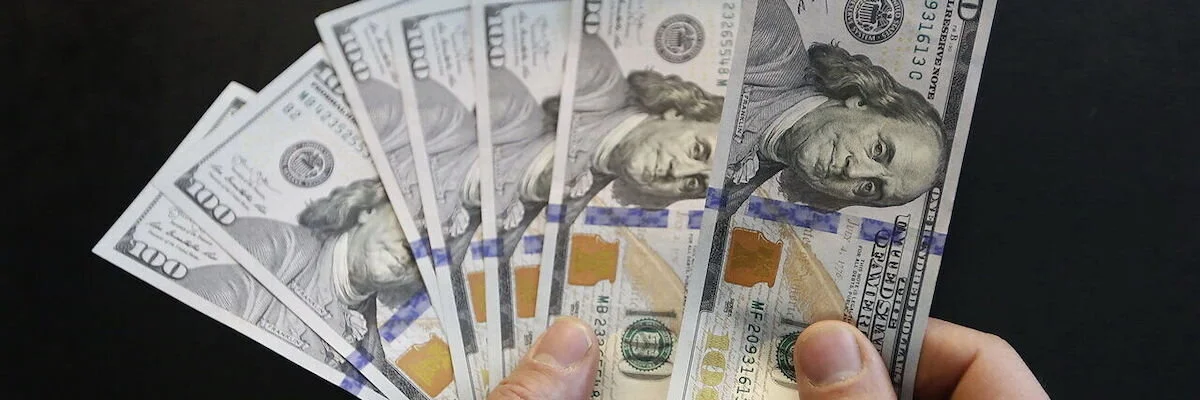
In Iraq's Kurdistan region and at the country's Muslim Shiite holy sites, trading US dollars for rials from Iran was once big business.
But the money exchange trade has been hard hit by lockdown restrictions to stop the spread of COVID-19, and by deep economic woes in both countries.
Traders in Sulaimaniyah, the second city of Iraqi Kurdistan and close to the border with Iran, have seen dramatic changes.
In March, before restrictions to stem the pandemic which has killed more than 5,000 Iraqis and infected more than 130,000 others, one dollar traded for 150,000 Iranian rials.
Today, one dollar fetches 250,000 rials, money changer Amanaj Saleh told AFP.
Tehran and Washington may be at loggerheads—coming close to open war in Iraq at the beginning of the year -- but Iraqis have no problem keeping a mix of the rival banknotes in their wallets.
Betting on a rebound in the Iranian currency—and hoping the coronavirus crisis would pass quickly -- many Iraqis rushed to snap up rials on the cheap.
The dollar-rial trade seemed like a welcome alternative income during the financial turmoil, which has destroyed countless livelihoods.
A survey by the International Rescue Committee (IRC) aid organization has found 87 percent of people questioned said they could no longer work because of the disease.
Big Losses
Iraq is going through its worst economic crisis in its recent history, hit by a slump in oil prices that account for almost all public revenues.
Government austerity cuts are expected to be severe.
"Since the appearance of coronavirus and the economic crisis it has caused, people who can no longer work are investing in Iranian currency to make their capital work," said Saleh.
But the trader, a man with a small grey moustache sitting under a huge framed reproduction $100 bill, warned that not all had found profit in the gamble.
"Those who had bought Iranian rials at the exchange rate of 200,000 rials for one dollar, now resell them at the lower rate: 250,000 rials for a dollar," he said.
Many Iraqis use American dollars and their own dinars interchangeably, with the rates stable between the two currencies.
It is the big swings between dollars and Iran's rial that attract those hopeful of winning on the difference.
American sanctions have long stifled the Iranian economy, and the closure of official border crossings between Iran and Iraq has added to the woes.
Hazar Rahim, a laborer in Sulaimaniyah, found this out the hard way.
"A few days ago, I bought five billion Iranian rials," he told AFP. "I was betting on the market but I was taken by surprise. In a few hours, the rial dropped, and I'd lost 13,000 dollars."
Religious Tourism Frozen
Two of the most holy sites for Shiites, Karbala and Najaf, are both in southern Iraq. Millions of Shiite pilgrims, the majority from Iran, visit every year.
They bring Iranian rials to spend and trade. In past years, the visitors brought in up to five billion dollars -- crucial in a country where almost all tourism is to religious sites.
It also provided hundreds of thousands of jobs and accounted for around 2.5 percent of GDP, according to official figures.
But with travel restrictions in place because of the virus, the shops and restaurants once busy with visitors are closed.
Iranian arrivals had already slowed amid deep economic woes at home since the United States in 2018 withdrew from the Iranian nuclear agreement and reinstated punishing sanctions.
Coronavirus in Iran -- the worst in the region with more than 17,000 deaths and 310,000 infections -- has only worsened the situation of the country.
The crisis has reduced Iran's exports, causing devaluation and inflation.
According to the International Monetary Fund, Iran's GDP is expected to shrink six percent in 2020, after contracting 7.6 percent last year.
In Iraq, meanwhile, tougher times loom as well. The economy is expected to contract almost 10 percent this year.
But with few apparent alternatives, dozens of Iraqis keep coming to the money traders in the hope that times will change, the rial will rise, and they can cash in.
Photo: IRNA
Iran Airs Support for 'Resilient' Lebanese After Blasts
Iran's top diplomat expressed Tehran's support for the "resilient" people of Lebanon after Beirut was rocked by devastating explosions on Tuesday.
Iran's top diplomat expressed Tehran's support for the "resilient" people of Lebanon after Beirut was rocked by devastating explosions on Tuesday.
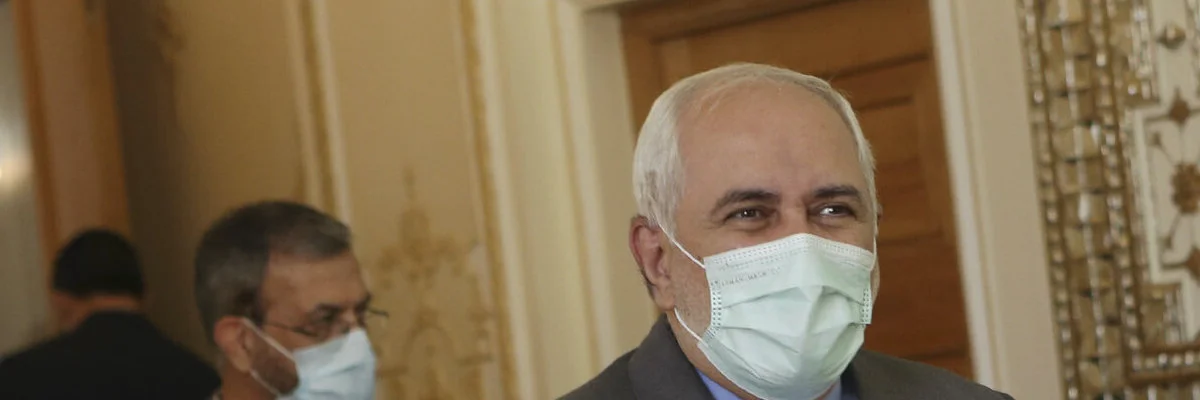
"Our thoughts and prayers are with the great and resilient people of Lebanon," Mohammad Javad Zarif tweeted.
"As always, Iran is fully prepared to render assistance in any way necessary," he said.
"Stay strong, Lebanon," added the Iranian foreign minister.
At least 27 people were killed and 2,500 injured, according to "preliminary estimates" announced by Lebanese Health Minister Hamad Hassan.
The explosions hit Beirut's port, flattening buildings in the vicinity and sending out shockwaves for kilometres (miles).
The cause was not immediately known.
Photo: IRNA
Iran Reports Highest Virus Cases for Nearly a Month
Iran on Sunday reported its highest single-day novel coronavirus infection count in nearly a month, warning that most of its provinces have been hit by a resurgence of the disease.
Iran on Sunday reported its highest single-day novel coronavirus infection count in nearly a month, warning that most of its provinces have been hit by a resurgence of the disease.
Iran has been battling the Middle East's deadliest outbreak of COVID-19 since late February.
After a lull in deaths and infections from April to May, it now appears that the provinces first hit, including the holy city of Qom, are back in the same place as figures have been on the rise.
Health ministry spokeswoman Sima Sadat Lari said that 2,685 more people had tested positive for COVID-19 in the past 24 hours, the country's highest single-day count since July 8.
This raises total cases identified since late February to 309,437, she added.
Another 208 people also died during the same period, bringing the overall toll to 17,190.
According to Lari, the situation is "concerning" in 25 out of Iran's 31 provinces.
"Sadly, since late June, daily infections have been on a rising trajectory" in Qom in central Iran, she said.
"We are concerned that trivializing the situation and lax observance of health protocols may lead to a worsening of the outbreak in the province."
Lari warned against travel to Mazandaran, a popular northern tourist resort at the vanguard of the outbreak where daily infections had more than quadrupled in the past six weeks.
Official figures show a marked increase in deaths and infections since the end of June.
As a result, mask-wearing was made compulsory in covered areas and provinces were given powers to reimpose restrictive measures.
Iranian media said that renowned Iranian filmmaker Khosro Sinai, 79, had died from the virus on Saturday.
Celebrated and awarded in numerous Iranian and international festivals, Sinai was the latest high-profile figure to succumb to COVID-19 in Iran following several government officials and politicians.
Photo: IRNA
Iran, UAE Top Diplomats Discuss Virus in Rare Talks
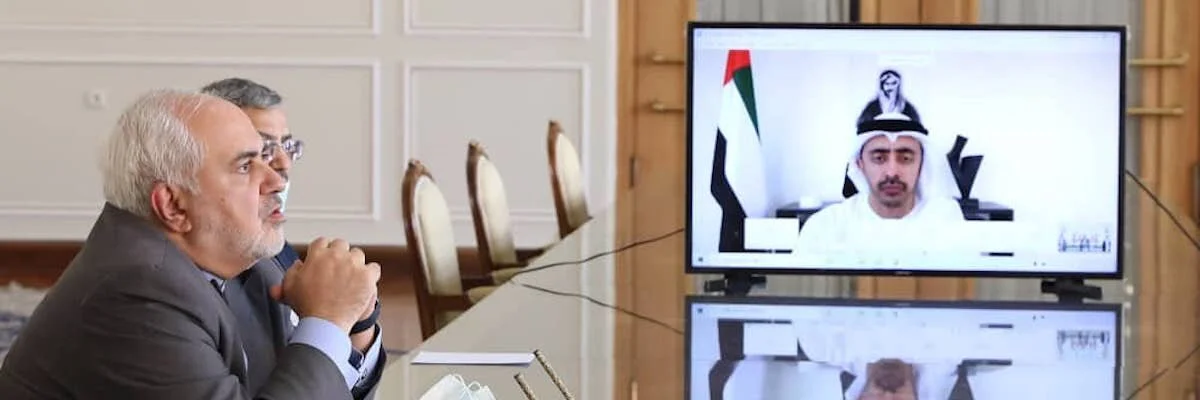
Iran's Foreign Minister Mohammad Javad Zarif said he discussed the region's coronavirus outbreaks and other issues with his Emirati counterpart in rare talks held via a videoconference call on Sunday.
Iran's Foreign Minister Mohammad Javad Zarif said he discussed the region's coronavirus outbreaks and other issues with his Emirati counterpart in rare talks held via a videoconference call on Sunday.
"Just had a very substantive, frank and friendly video conversation with UAE FM" Sheikh Abdullah bin Zayed Al Nahyan, Zarif wrote on Twitter.
"We agreed to continue dialogue on theme of hope -- especially as region faces tough challenges, and tougher choices ahead," he added.
According to UAE state news agency WAM, the top diplomats exchanged greetings for the Eid al-Adha Muslim holiday and discussed efforts to control the COVID-19 pandemic in the region.
Bin Zayed emphasised "enhancing international cooperation, solidarity and synergy between all countries" to tackle the virus, WAM said.
The UAE downgraded its relations with Iran in January 2016 amid fierce rivalry between close Emirati ally Saudi Arabia and the Islamic republic.
It came following the storming of Saudi Arabia's embassy in Tehran in response to Riyadh's execution of a prominent Shiite cleric.
Tensions between Tehran and Riyadh and its allies also increased last year following a series of mysterious attacks on tankers in sensitive Gulf waters, with Washington blaming them on Iran. Tehran denied the charges.
Saudi Arabia and Iran, the region's two leading powers, back opposing sides in several conflicts, including in Syria and Yemen.
Photo: IRNA
Iran's Khamanei Says Sanctions Failed, No Talks With Trump
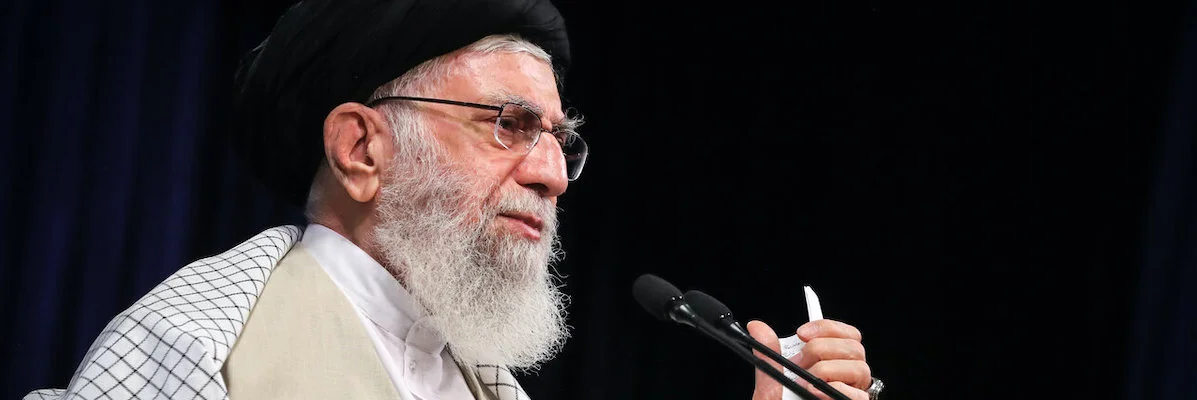
Iran will not open talks with the United States that will only benefit Donald Trump, supreme leader Ayatollah Ali Khamenei said Friday, insisting the US president's sanctions policy had failed.
Iran will not open talks with the United States that will only benefit Donald Trump, supreme leader Ayatollah Ali Khamenei said Friday, insisting the US president's sanctions policy had failed.
Decades-old tensions between Tehran and Washington have soared in the past year or so, with the sworn enemies twice appearing to come to the brink of war.
The tensions have been building since 2018, when Trump withdrew the United States from a landmark nuclear accord and unilaterally reimposed crippling sanctions.
"There is no doubt that sanctions are a crime," Khamenei said in a televised speech.
"But the smart Iranian has made the best use of this attack, this animosity and benefited... by using sanctions as a means to increase national self-reliance."
Khamenei said Western "think-tanks admit that the maximum pressure (policy) of sanctions and US force has not succeeded".
The 2015 deal between Tehran and major powers promised relief from sanctions in return for limits on Iran's nuclear program..
After abandoning the accord, the United States reimposed sanctions on Iran's vital oil exports and its access to the international banking system, and pressured allies and rivals alike to fall in line.
Iran has responded by trying to boost its non-oil exports, particularly to neighboring countries.
"This has caused the country's economy to be naturally less reliant on oil," Khamenei said, casting the development in a positive light.
Khamenei condemned calls for Iran to open new talks with the United States, saying he would not agree to meetings that were aimed only at boosting Trump's re-election hopes.
The 81-year-old even called Trump an "old man", even though he is seven years older than the US president.
"This old man in charge, he apparently made some propaganda use out of his negotiations with North Korea. Now he wants to use (talks with Iran) for the (November 3 US presidential) election."
Khamenei said that in return for new talks, the US would demand: "Reduce your defensive capability, destroy your regional power and give up the vital nuclear industry."
"No logic dictates giving into the aggressor's demands," he said.
He also accused European partners to the nuclear deal of "having done nothing" to provide Iran with the economic benefits of the accord and said their payment system designed to bypass US sanctions was a "useless plaything."
The system, called INSTEX, is meant to function as a clearing house and allow European companies to deliver medical supplies to Iran without being exposed to sanctions.
European signatories said in March they had delivered medical goods to Iran in the first transaction under INSTEX, more than a year after the mechanism was announced.
Photo: IRNA
Pompeo Warns of UN Sanctions if Iran Arms Ban Ends
Secretary of State Mike Pompeo on Thursday gave his clearest indication yet that the United States would seek to force UN sanctions on Iran if an arms embargo lapses.
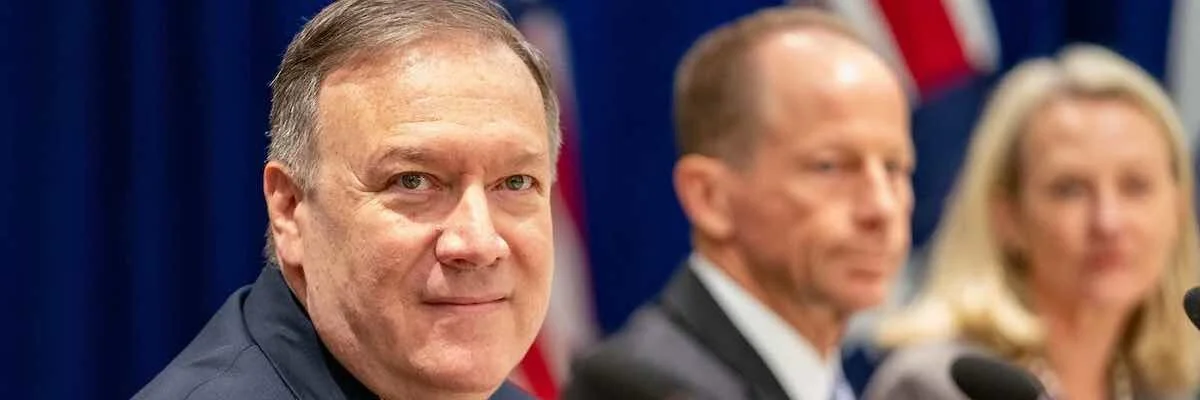
Secretary of State Mike Pompeo on Thursday gave his clearest indication yet that the United States would seek to force UN sanctions on Iran if an arms embargo lapses.
Russia and China, two of the Permanent Five nations that enjoy veto power on the Security Council, want the UN embargo on selling conventional weapons to Iran to end on October 18 as laid out under a 2015 resolution.
Pompeo told the Senate Foreign Relations Committee that the United States would introduce a resolution to extend the embargo "in the near future" which "we hope will be met with approval from other members of the P5."
"In the event it's not, we're going to take the action necessary to ensure that this arms embargo does not expire," he said.
The United States has previously said it has the authority to "snap back" UN economic sanctions that were lifted as part of a nuclear deal with Iran.
"We have the capacity to execute snapback and we're going to use it in a way that protects and defends America," Pompeo told the committee.
The 2015 resolution had blessed a denuclearization deal with Iran negotiated by former president Barack Obama from which President Donald Trump pulled out in 2018.
Trump has since repeatedly denounced the accord, but Pompeo argues that the United States remains a "participant" in the accord -- with the right to snap back UN sanctions for violations -- as it was listed in the 2015 resolution.
Even US allies are skeptical about the legal argument and warn that such a move could damage the Security Council as an institution.
France and Britain, the other nations in the P5, support extending the arms embargo but say the greater priority is maintaining a diplomatic solution to stop Iran's nuclear program.
The embargo issue could come to a head days before the US presidential election. Trump's rival Joe Biden backs the Iran agreement.
After leaving the accord, Trump unilaterally imposed US sanctions aimed at strangling Iran's economy and reducing its regional influence.
The Trump administration has demanded that all nations stop buying Iran's oil, its biggest export.
Pompeo on Thursday announced a further expansion of sanctions enforcement, saying the United States would punish anyone who transfers 22 specific metals including forms of aluminum and steel that could be used in Iran's weapons programs.
Photo: State Department