

EU Urges International Aid for Iran in Virus Fight
◢ The EU on Monday urged the international community to send humanitarian aid to Iran to help its coronavirus fight, arguing that such steps would not breach US sanctions. The bloc is preparing to send 20 million euros' worth of humanitarian aid to Iran, where new coronavirus has killed more than 1,800 people, making it one of the countries hit hardest by the pandemic.
The EU on Monday urged the international community to send humanitarian aid to Iran to help its coronavirus fight, arguing that such steps would not breach US sanctions.
The bloc is preparing to send 20 million euros' worth of humanitarian aid to Iran, where new coronavirus has killed more than 1,800 people, making it one of the countries hit hardest by the pandemic.
Josep Borrell, the EU's chief diplomat, said Brussels would support requests for help made by Iran and Venezuela—also heavily sanctioned—to the International Monetary Fund.
"We are going to support this request because these countries are in a very difficult situation mainly due to the US sanctions that prevent them from having income by selling their oil," Borrell said after talks with EU foreign ministers.
Tehran and Caracas are both under swingeing US sanctions aimed at starving their regimes of income, but Borrell said that shipments of food, medicine and medical equipment should not be affected.
"This has to be reaffirmed because many believe that if they participate in this kind of humanitarian trade they can be sanctioned," he said.
"This is not the case but it has to be reaffirmed in order for everybody to understand that they can participate in this kind of humanitarian help."
The EU and US have been at loggerheads over Iran since President Donald Trump abruptly withdrew from the Iranian nuclear deal in 2018 and reimposed sanctions.
European countries have battled to save the accord, arguing it is the best way to prevent Tehran acquiring the bomb.
US Secretary of State Mike Pompeo signaled on Twitter that Washington was unreceptive to the Islamic republic's first-ever request for a loan from the IMF, where America effectively holds a veto.
He accused the regime of funding "terror abroad" and accused the Iranian leadership of lying about the pandemic, after Tehran rejected a US offer of aid.
Photo: IRNA
Iran President Foresees Virus Relief, Even as Death Toll Tops 1,500
◢ Iranian President Hassan Rouhani on Saturday said authorities' efforts to combat the COVID-19 epidemic would produce significant results within 15 days, as the country's official death toll from the virus surpassed 1,500. "The principle is that, as much as possible, people do not leave their homes," Rouhani said. He also urged "shopping centers where large numbers of people gather" to close.
Iranian President Hassan Rouhani on Saturday said authorities' efforts to combat the COVID-19 epidemic would produce significant results within 15 days, as the country's official death toll from the virus surpassed 1,500.
There were 123 more fatalities—taking the country's death toll to 1,556—and 966 more cases of the novel coronavirus reported in Iran over the past 24 hours, health ministry spokesman Kianoush Jahanpour announced in a televised address.
He added that 20,610 people were now known to have been infected so far in the Islamic republic.
Despite the increasing toll, Rouhani said the government's response to the virus is producing "a lot of impact", indicating "the situation will change automatically within 10 to 15 days" if "everyone observes the directives", according to a statement by the presidency.
Iran is among the three countries hardest hit by the virus, with an official death toll behind only Italy and China. In contrast with these countries, Iran has not enforced isolation measures.
"The principle is that, as much as possible, people do not leave their homes," Rouhani said. He also urged "shopping centers where large numbers of people gather" to close.
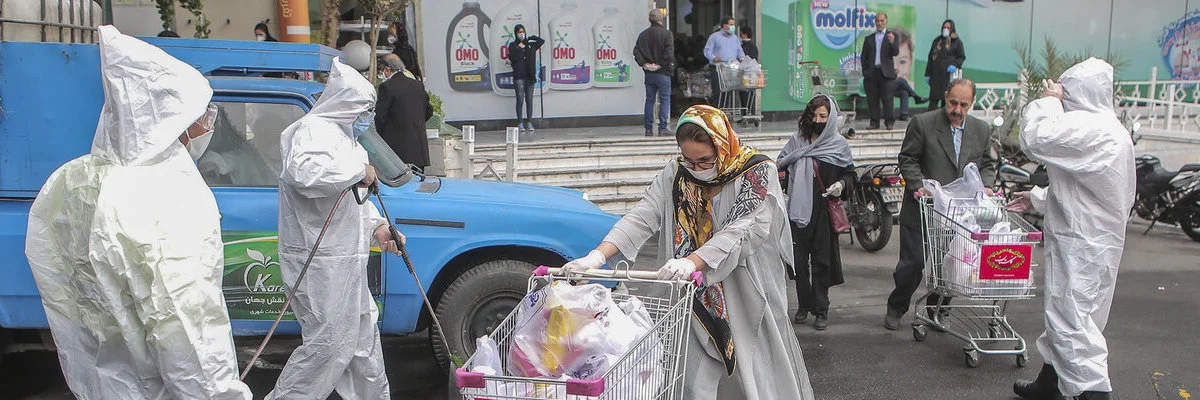
The country's largest shopping centre, Iran Mall, located in the west of the capital Tehran, has shuttered and a section is being converted into a makeshift health centre able to accomodate up to 3,000 patients, an AFP journalist reported on Saturday.
The mortality rate from coronavirus in Iran is around 7.5 percent and the rate of recovery 37 percent, according to the figures provided by Jahanpour.
A total of 7,635 people have recovered from the disease across the country, he said.
All 31 of Iran's provinces have reported cases, with the northeastern province of Semnan reporting the largest number of infections per capita.
For weeks ahead of the Persian New Year holidays, which began on Friday and usually see large numbers of Iranians take to the roads for tourism or to visit relatives, authorities have asked people to avoid all travel.
But the pleas have been ignored by many.
The Iranian Red Crescent said on Friday that around three million people have left the 13 most virus-affected provinces by road since March 17, but Rouhani said that overall travel had declined sharply.
Jahanpour said there was "a minority who did not follow the guidelines", warning that provinces popular with tourists would not welcome visitors for the Nowruz holiday.
Some provinces have ordered hotels and other accommodation to close.
Photo: IRNA
Iran Leaders Vow to Defeat Virus in Holiday Messages
◢ Iran's supreme leader and president promised Friday that the country would overcome one of the world's deadliest coronavirus outbreaks just as it had faced down sweeping US sanctions. Khamenei paid tribute to the sacrifices of the country's doctors and nurses in tackling COVID-19.
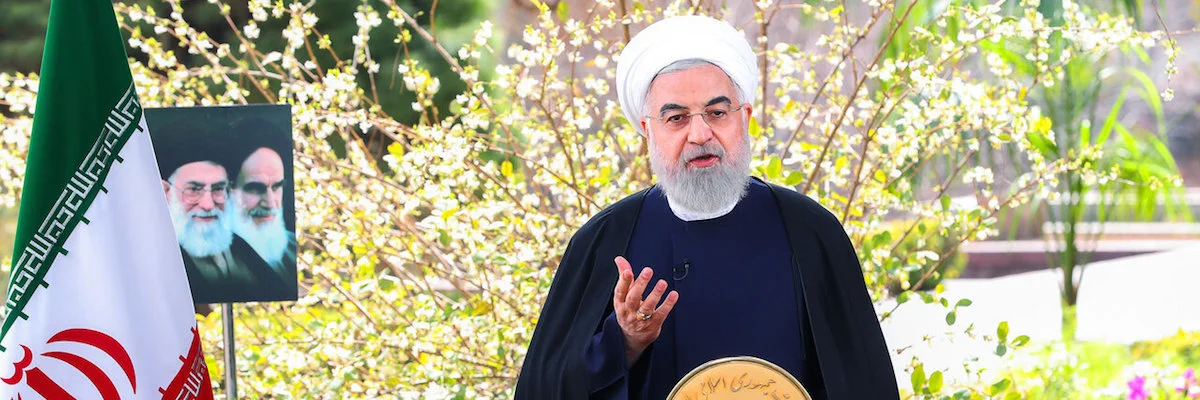
Iran's supreme leader and president promised Friday that the country would overcome one of the world's deadliest coronavirus outbreaks just as it had faced down sweeping US sanctions.
In messages marking the Persian New Year holiday Nowruz, Ayatollah Ali Khamenei and President Hassan Rouhani both acknowledged that the past year had been difficult.
Khamenei paid tribute to the sacrifices of the country's doctors and nurses in tackling the coronavirus, which has infected 18,407 people in Iran and killed 1,284, according to an official tally.
He prayed that the coming 12 months would see "great victories" after a "turbulent" year that saw open hostilities between Tehran and its archfoe Washington.
Khamenei insisted that the economy had begun to improve, despite the reimposition of US sanctions since 2018 when President Donald Trump quit a landmark nuclear agreement between major powers and Iran.
But he acknowledged that it had not affected the lives of ordinary Iranians.
In November, fuel price increases imposed by the government triggered nationwide protests that were violently suppressed with the loss of at least 300 lives, according to Amnesty International.
In his message to Iranians, broadcast shortly after the supreme leader's, Rouhani trumpeted Iran's success in withstanding US sanctions on the country's vital oil sector.
"Faced with the most severe sanctions in history imposed by the international terrorists on the oil industry... our people have written a heroic new page by keeping the wheels of the economy turning without oil," he said.
“We have not been defeated... We have emerged victorious from this test.
“Soon we will overcome the COVID-19 outbreak too," the president pledged.
Photo: IRNA
US Targets UAE-Based Firms for Shipping Iranian Oil
◢ The United States on Thursday slapped sanctions on five companies based in the United Arab Emirates for allegedly shipping oil from Iran in defiance of President Donald Trump's unilateral sanctions. The sanctions mark a rare US action against firms in the UAE, a close ally of Washington in its campaign against Tehran.
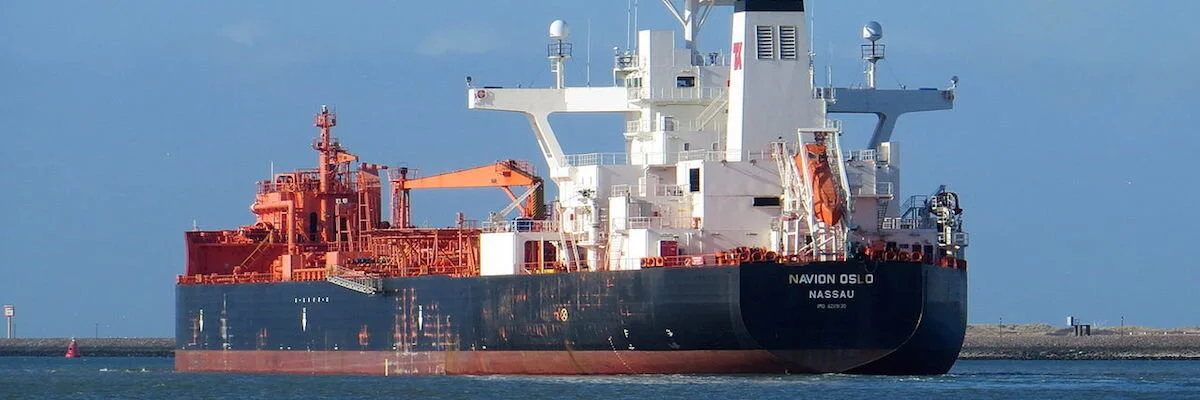
The United States on Thursday slapped sanctions on five companies based in the United Arab Emirates for allegedly shipping oil from Iran in defiance of President Donald Trump's unilateral sanctions.
The Treasury Department said that the five companies bought hundreds of thousands of metric tons' worth of oil last year from Iran's state oil company, declaring it to be from Iraq or otherwise disguising its origin.
The sanctions mark a rare US action against firms in the UAE, a close ally of Washington in its campaign against Tehran but also a major trading hub with a significant Iranian expatriate community.
"The Iranian regime uses revenues from petroleum and petrochemical sales to fund its terrorist proxies, like the IRGC-QF, instead of the health and well-being of the Iranian people," Treasury Secretary Steven Mnuchin said in a statement.
He was referring to the Revolutionary Guards' elite Qods force, whose commander, Qassem Soleimani, was killed in a US drone strike in January at Baghdad's airport.
The sanctions will block any US assets of the five companies and prohibit any transactions with them.
The five companies are Petro Grand FZE, Alphabet International DMCC, Swissol Trade DMCC, Alam Althrwa General Trading LLC and Alwaneo LLC Co.
Trump in 2018 bolted from an internationally backed deal under which Iran scaled back its nuclear program and demanded that all countries stop buying the cleric-ruled nation's oil, its key export.
With the notable exception of China, most countries have reluctantly stopped buying oil from Iran for fear of punishment from the United States.
Trump, who is closely allied with Iran's regional rivals Saudi Arabia and Israel, has vowed to curb Tehran's regional influence.
Photo: Wikicommons
Iran in Record Virus Deaths as Calls Mount for Stricter Curbs
◢ Iranian authorities on Thursday announced 149 new deaths from the novel coronavirus, raising the toll to 1,284 in a country that is one of the worst hit by the pandemic. While Thursday's death toll surpassed that of the previous day's—147 were reported on Wednesday—the number of new cases has fallen, according to figures provided by Deputy Health Minister Alireza Raisi.
Iran on Thursday announced 149 new deaths in 24 hours from the novel coronavirus—one every 10 minutes—as calls mounted for the government to take stricter measures against the disease.
The latest toll was a daily record for Iran, where the overall toll of 1,284 dead makes it one of the countries worst hit by the pandemic.
But Deputy Health Minister Alireza Raisi said the daily number of new cases had fallen.
A total of 18,407 people have contracted the disease in Iran, with 1,046 new cases confirmed in the past 24 hours, he said.
However, health ministry spokesman Kianoush Jahanpour painted a grimmer picture, tweeting that the rate of new infections had risen to 50 an hour and "one (patient) dies every 10 minutes".
But "in 11 provinces" out of 31, "the number of infections has decreased because people have followed our guidelines", Raisi said, reiterating calls for Iranians to stay home.
Tehran province had the highest number of new cases, with 137 reported, followed by the central province of Isfahan with 108 and Gilan in the north with 73.
Jahanpour appealed for Iranians to "make a conscious decision concerning travel, days out and family visits during Nowruz", the Persian New Year holiday.
The Nowruz holiday, which this year is from Friday until April 3, usually sees millions of Iranians travel to visit family.
Iran also said it would free "around 10,000 prisoners" in an amnesty to mark Nowruz.
That would "reduce the number of prisoners in light of the sensitive situation in the country", said judiciary spokesman Gholamhossein Esmaili.
For several weeks, Iranian authorities, who have so far refused to impose confinement or quarantine measures, have asked the population to refrain from travelling and to take the virus "seriously".
Several provinces have ordered the closure of hotels, and Iran has announced the rare shuttering of four important Shiite holy sites.
In an open letter to President Hassan Rouhani, published on state television's website, five former health ministers urged the government to "strictly bar unnecessary movement and travel between provinces".
Failure to do so would amount to "playing with people's lives" and risk the disease spinning out of control, they warned.
"We must disrupt the chain of contacts between healthy people and the sick."
A prominent professor at Tehran's Sharif University of Technology, Alinaqi Machayekhi, on Thursday gave projections of the disease's advance in the country.
In the case of "responsible behavior", the disease could cost 12,000 lives out of a total of 120,000 infections, he said.
But a worst case scenario with no coercive measures, with Iran's medical services overrun, could see the death toll shoot up to 3.5 million out of a population of 81 million, he said.
He did however stress that his models had not been validated.
Photo: IRNA
103-Year-Old Iranian Woman Survives Coronavirus
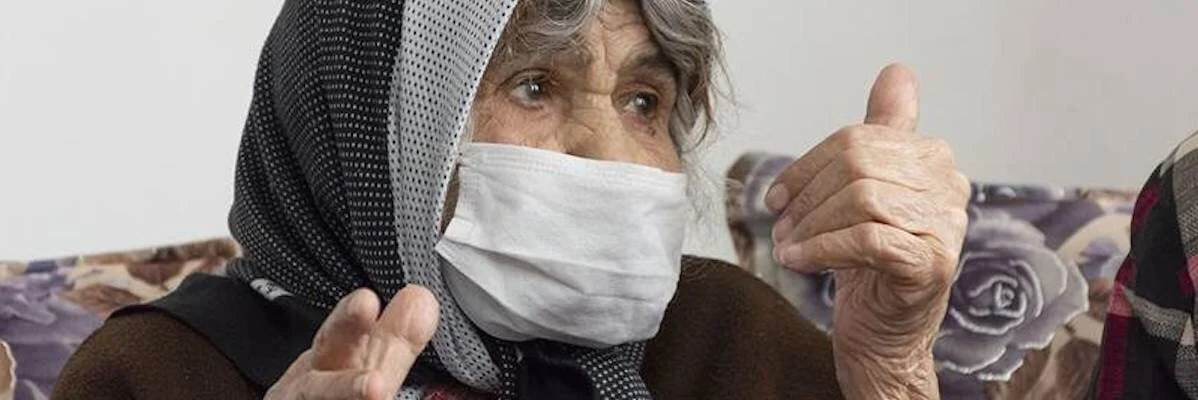
◢ A 103-year-old woman in Iran has recovered after being infected with the new coronavirus, state media reported, despite overwhelming evidence the elderly are most at risk from the disease. The unnamed woman had been hospitalized in the central city of Semnan for about a week, IRNA news agency said.
A 103-year-old woman in Iran has recovered after being infected with the new coronavirus, state media reported, despite overwhelming evidence the elderly are most at risk from the disease.
The unnamed woman had been hospitalized in the central city of Semnan for about a week, IRNA news agency said.
But she was "discharged after making a complete recovery", Semnan University of Medical Sciences head Navid Danayi was quoted as saying by IRNA late Tuesday.
The woman was the second patient of advanced age in Iran to have survived the disease.
The other was a 91-year-old man from Kerman, in the southeast of Iran, the news agency said.
After being sick for three days, he recovered on Monday despite having pre-existing medical conditions including high blood pressure and asthma, it added.
The report did not say how the pair were treated.
Since Iran announced its first deaths on February 19, the novel coronavirus has spread to all of the country's 31 provinces and killed nearly 1,000 people.
The elderly are the most vulnerable to the disease, which first emerged in China late last year.
The World Health Organization this month estimated the novel coronavirus kills 3.4 percent of all those infected.
But for people aged over 80 the fatality rate was 21.9 percent, according to a report the WHO carried out with the Chinese authorities.
Photo: Fars
Iran's Rouhani Defends Virus Response Despite No Lockdown
◢ Iran's President Hassan Rouhani on Wednesday defended the response to the new coronavirus outbreak by his administration, which has yet to impose a lockdown to stop the disease spreading. Rouhani's government says the virus has killed 1,135 people and infected 17,161 others in the month since it first emerged in the Islamic republic.
By Amir Havasi
Iran said its novel coronavirus death toll surpassed 1,000 on Wednesday as President Hassan Rouhani defended the response of his administration, which has yet to impose a lockdown.
The COVID-19 outbreak in sanctions-hit Iran is one of the deadliest for any country outside China, where the disease originated.
Rouhani's government reported another 147 deaths -- a record high for a single day in the month since it announced the emergence of the disease.
The virus has now killed 1,135 people in Iran out of 17,361 cases of infection based on official figures.
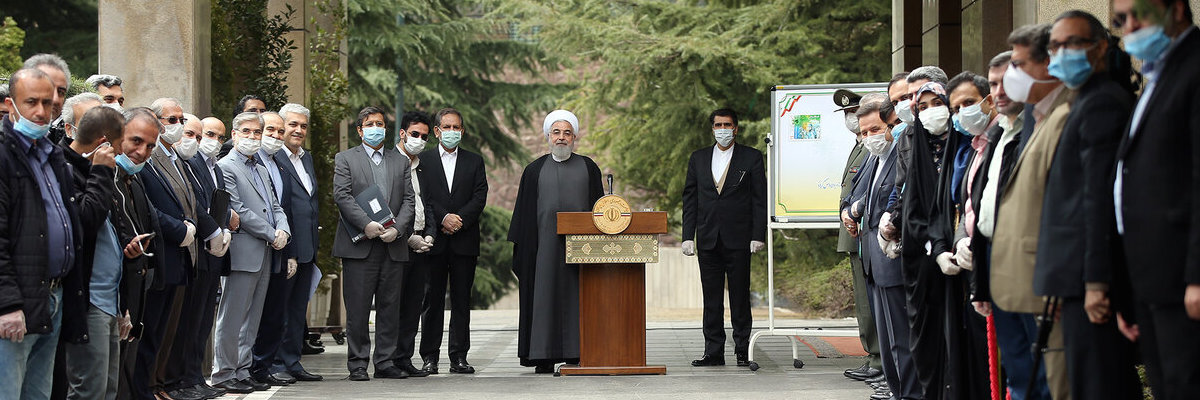
"Some ask why the government isn't intervening, but I think we have intervened significantly," said Rouhani.
"Great things have been done (including) measures no other country has taken," he said in televised remarks after a weekly meeting of his cabinet.
"We will get past these hard days," added Rouhani, who was flanked by ministers wearing face masks.
Official tolls given at the national level have usually lagged behind reports by local media and have sometimes been contradicted by provincial authorities.
The health ministry said 5,710 people have overcome the virus.
One person who recovered was a 103-year-old woman, state news agency IRNA reported, despite overwhelming evidence that the elderly are the most at risk.
The unnamed woman had been hospitalised in the central city of Semnan for about a week.
But she was "discharged after making a complete recovery", Semnan University of Medical Sciences head Navid Danayi was quoted as saying.
IRNA did not say how she was treated.
Officials have repeatedly called on Iranians to stay home for the country's approaching New Year holidays.
'Be Patient'
Since it announced its first two deaths in the holy Shiite city of Qom on February 19, Iran has taken a series of steps to contain the virus.
It has closed schools and universities until early April and also four key Shiite pilgrimage sites, including the Fatima Masumeh shrine in Qom.
Iran has also discouraged travel, cancelled the main weekly Friday prayers and temporarily closed parliament.
Few officials have directly commented on why a lockdown has not been imposed.
But Tehran's mayor has said the economy may not be able to handle the cost of doing so, especially while it is under crippling US sanctions.
"In a normal situation and a good economy, we could have imposed a lockdown," Pirouz Hanachi was quoted as saying by Mehr News agency.
"But what comes next, like providing necessary goods or compensating for losses across Iran, is not possible, so a complete lockdown cannot be done."
The United States withdrew from a landmark nuclear deal and began reimposing punishing sanctions on Iran in 2018, blocking banking transactions and oil sales, among other sectors.
Iran has intensified calls for sanctions relief during the outbreak.
As part of that campaign, it sought to rally the Non-Aligned Movement to condemn the sanctions in a statement, but some members including Bahrain, Morocco and Saudi Arabia opposed the move.
"It is very unfortunate that some Arab and Islamic states would do such a thing against the people of Iran during these dire circumstances and disregard the requisites of good neighbourship," foreign ministry spokesman Abbas Mousavi said.
"If the fight against this global epidemic pauses or fails, it will become a global catastrophe that no country will be safe from."
Iran said the outbreak could take longer to overcome if people keep travelling, especially during the holidays.
"Now everyone knows about this disease, and what is very strange is that some don't take it seriously," Deputy Health Minister Alireza Raisi said.
"If people help, we can control it, and if not, then expect it to last more than two months."
Raisi complained that in Tehran "bazaars are busy" and that people travel in their cars despite warnings not to do so.
"Just be patient for these two weeks so that, God willing, we can overcome this virus."
Nowrouz, which starts on Friday this year and will last until early April, normally sees many travel to popular northern provinces like Gilan and Mazandaran, two of the worst-hit by the coronavirus.
Photo: IRNA
Iran Announces 135 New Virus Deaths, Taking Total to 988
◢ Iran said 135 new coronavirus deaths took the country’s overall toll to nearly 1,000 Tuesday, as it curtailed new year celebrations in a bid to contain the disease. Officials reiterated calls for Iranians to stay at home during the outbreak and asked them to report possible symptoms on a ministry website.
Iran said 135 new coronavirus deaths took the country’s overall toll to nearly 1,000 Tuesday, as it curtailed new year celebrations in a bid to contain the disease.
The COVID-19 outbreak in Iran is one of the deadliest outside China, where the illness originated.
The latest deaths, announced by health ministry spokesman Kianoush Jahanpour in a televised news conference, take the total death toll in Iran to 988.
Since it announced its first two deaths in the holy Shiite city of Qom last month, Iran has taken a series of steps to contain the virus.
However it has yet to impose any lockdowns and the outbreak has spread to all 31 of the country’s provinces.
In its latest attempt to contain the virus, police banned celebrations marking the traditional fire festival that comes before Nowrouz—the Persian New Year.
Chaharshanbe Soori falls on the last Wednesday of the Iranian calendar before the country’s New Year’s eve, which is on March 20 this year.
Celebrations start on Tuesday evening with Iranians traditionally jumping over fires and lighting fireworks, with many suffering burns resulting in hospitalisation.
“Those who go out can be infected with the coronavirus and make things harder for themselves and their families,” state news agency IRNA quoted Tehran police official Keyvan Zahiri as saying.
Authorities in other provinces such as Isfahan, Golestan and Khuzestan had also cautioned people against observing the festival, IRNA reported.
The latest health ministry figures showed the COVID-19 disease was spreading fastest in Tehran province.
“Reports by more than 56 laboratories indicated that we have had 1,178 new confirmed cases of COVID-19 infection in the past 24 hours,” Jahanpour said Tuesday.
“This brings the total number of confirmed cases to 16,169 as of today noon,” he added.
Jahanpour also said 5,389 people who were infected had been discharged from hospitals “with general good health”.
’15 Million Screened’
Tehran province recorded 273 fresh cases of infection.
Alborz, to the west of Tehran, was next with 116 new cases, followed by East Azerbaijan with 78.
“As of this morning, more than 15 million of our countrymen have been screened” for symptoms, he said.
The official reiterated calls for Iranians to stay at home during the outbreak and asked them to report possible symptoms on a ministry website.
The site identifies the individual using their national identity number and asks if they have symptoms such as coughing or fever.
It also asks if they live with anyone suspected of carrying the virus, anyone under treatment or anyone who has recently recovered.
If the symptoms are not serious, the advice is to stay at home. The site tells people where their nearest healthcare centre is located.
According to the health ministry, the trend of rising reported infections is due to the increasing number of tests being carried out.
It says many patients started showing symptoms days after they were infected.
Official tolls given at the national level, announced every 24 hours, have usually lagged behind reports by local media and have sometimes been contradicted by provincial authorities.
Foreign Minister Mohammad Javad Zarif took to Twitter on Tuesday to say that US sanctions were “impairing” Iran’s ability to fight the COVID-19 disease.
“Join the growing global campaign to disregard US sanctions on Iran,” he wrote.
The United States began reimposing crippling sanctions on the Islamic republic in 2018 after unilaterally withdrawing from an international accord on its nuclear programme.
Iran Closes Key Religious Sites as Virus Death Toll Hits 853
◢ Iran on Monday closed four key Shiite pilgrimage sites to stop a coronavirus outbreak that has killed over 850 people out of nearly 15,000 cases recorded in the country. People angry over the decision protested outside Qom's Fatima Masumeh shrine, some chanting "religious slogans" and damaging the entrance door, IRNA reported.
By Amir Havasi
Iran on Monday closed four key Shiite pilgrimage sites to stop a coronavirus outbreak that has killed over 850 people out of nearly 15,000 cases recorded in the country.
The holy shrines of Imam Reza in Mashhad, Fatima Masumeh in Qom and Shah Abdol-Azim in Tehran were shut until further notice "upon the orders of the anti-coronavirus headquarters and the health minister," state television said.
Qom's Jamkaran mosque also said it would close its doors, the official IRNA news agency reported.
People angry over the decision protested outside Qom's Fatima Masumeh shrine, some chanting "religious slogans" and damaging the entrance door, IRNA reported.
The coronavirus outbreak has spread to all of Iran's 31 provinces since it first emerged last month in Qom, which is among the worst-hit regions along with Tehran and Khorasan Razavi, where Mashhad is located.
Health Minister Saeid Namaki said the shrines and "other holy sites" had agreed to close until after the New Year holidays, which start on Friday.
The move came after Iran said the COVID-19 disease killed another 129 people, taking the country's overall toll to 853 dead out of 14,991 cases of infection.
"Our plea is that everyone take this virus seriously and in no way attempt to travel to any province," health ministry spokesman Kianoush Jahanpour said.
The disease has now killed at least 12 Iranian politicians and officials, both sitting and former, and infected 13 more who have either been quarantined or are being treated.
The latest was Ayatollah Hashem Bathayi Golpayegani, a member of the Assembly of Experts—an 88-strong body of clerics that appoints and monitors the country's supreme leader.
The ayatollah, who was 78, died two days after testing positive for the disease and being hospitalized, state news agency IRNA reported.
The novel coronavirus also claimed the life of prominent economist and political activist Fariborz Rais-Dana on Monday.
A prolific writer with a PhD from the London School of Economics, he had spent time in prison after being convicted of spreading propaganda against the system.
Prisoners Released
Iran has been scrambling to contain the rapid spread of COVID-19 since the authorities announced the first two deaths in Qom on February 19.
It has since shut schools, postponed cultural and sports events and discouraged travel ahead of the New Year holidays.
Iran has also cancelled the main weekly Friday prayers, closed parliament and put off the second round of legislative elections.
In addition, the judiciary has sent 83,000 inmates on temporary leave from jails, apparently over concerns of the virus spreading in the prison system.
But Iran has yet to impose a lockdown, and the official number of deaths and infections has continued to grow exponentially.
According to the health ministry, the rising trend is due to the increasing number of tests being carried out.
It says many patients started showing symptoms days after they were infected.
Official tolls, which are given every 24 hours, have usually lagged behind reports by local media and have sometimes been contradicted by provincial authorities.
Confusion
President Hassan Rouhani reiterated his call for people to refrain from travelling.
Speaking in a videoconference with Iran's anti-coronavirus headquarters in Tehran, he expressed hopes the outbreak would soon be brought under control.
"God willing, this year-end will go down in history... as days of victory over this dangerous virus," he said.
But the head of a Tehran hospital said he was doubtful the virus could be contained without more stringent measures.
"We are told by the people that you want us to stay home, but how can we when (government) organisations are not closed?" said Alireza Zali of the Shahid Beheshti medical university.
"We should not be confusing people," he was quoted as saying by ISNA news agency, adding that many vulnerable groups such as pregnant women and those with autoimmune diseases were not given leave from work.
The health ministry's latest figures showed that Tehran province had the highest number of new infections with 200 cases.
The central province of Isfahan followed with 118 cases, with Mazandaran in the north of Iran coming next with 96.
Photo: IRNA
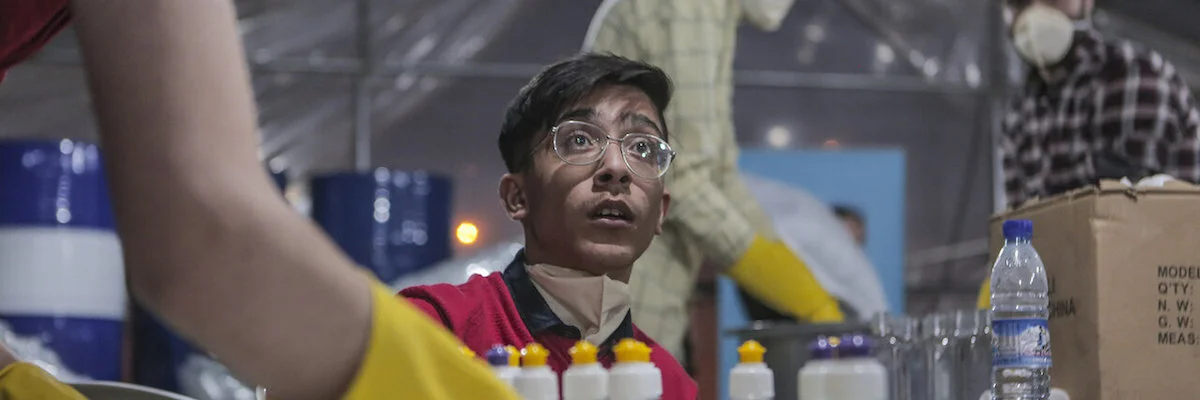
Iran Urges People to Stay Home As Virus Kills 113
◢ Iran appealed Sunday to its citizens to stay at home to halt a coronavirus outbreak it said has claimed over 700 lives and infected nearly 14,000 people. President Hassan Rouhani denied lockdowns had been imposed on entire areas, and said provincial officials were not allowed to decide on the issue.
Iran shut a key Shiite tomb and appealed Sunday to its citizens to stay at home to halt a coronavirus outbreak it said has claimed over 700 lives and infected nearly 14,000 people.
The new overall tolls announced by the health ministry included another 113 deaths and 1,209 new confirmed cases of COVID-19 infection.
People "should cancel all travel and stay at home so that we may see the situation improving in the coming days," ministry spokesman Kianoush Jahanpour said.
In line with measures to stop the virus, the tomb of Imam Reza in Iran's holy Shiite city of Mashhad was closed to pilgrims until further notice.
"Currently, the porches of the mausoleum and generally all the covered spaces of the holy shrine are closed," a spokesman for the shrine told AFP.
All collective prayers had also been cancelled "except in open spaces and courtyards" of the shrine, he added.
Jahanpour said the total number of confirmed cases of COVID-19 infection across Iran was now 13,938.
Tehran province had the highest number of new infections with 251 fresh cases.
But Khorasan Razavi province, home to the holy city of Mashhad, followed with 143 new cases to a total of 568.
"Cases there will probably increase," the official said, calling on everyone to refrain from travelling to the northeastern province.
Mashhad's Imam Reza shrine receives many devout Iranians every year, especially around the country's New Year holidays, which start on March 20.
The province has already closed hotels and other tourist accommodation in a bid to dissuade people from travelling there, according to ISNA news agency.
Mashhad's mayor Mohammad Kalaei said on Saturday that "circumstances in Mashhad have become more serious and worrying" as infections grow.
The mayor also urged officials to "impose a quarantine" on the holy city.
The outbreak in Iran is one of the deadliest outside of China, where the disease originated.
Jahanpour called on Iranians to "take the coronavirus seriously" and especially be mindful of elderly relatives who are most vulnerable to the infection.
'No Quarantine'
Despite such warnings people were still seen on state television crowding public areas.
Between feel-good programming of bloopers and comedy, it showed a bank manager at a busy branch calling on people to do their transactions online.
Iran said on Friday that security forces would clear streets nationwide within 24 hours so all citizens can be checked for coronavirus.
But Iranian media gave no indication of the operation taking place on Sunday and officials made no mention of the measure.
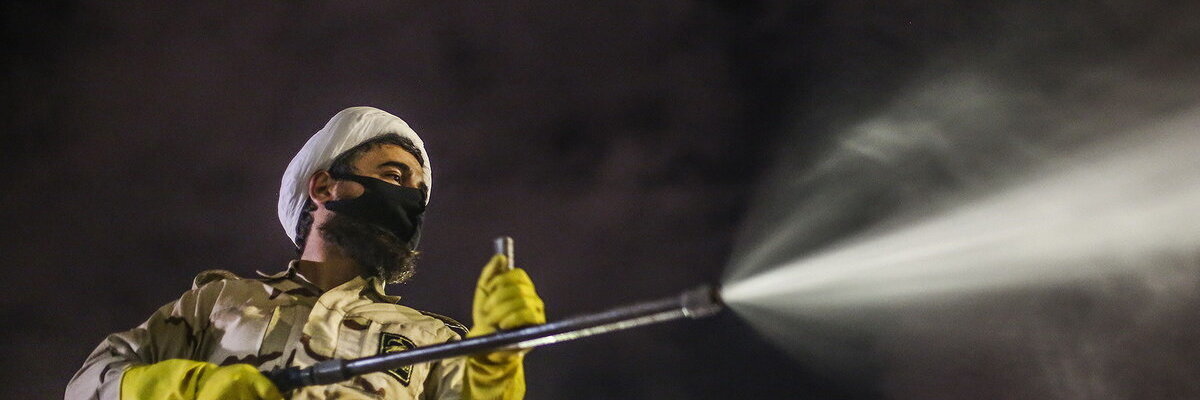
Members of the Basij, a volunteer militia loyal to Iran's establishment, were involved in helping people by handing out sanitary items on Tehran's streets.
Several politicians and officials, both sitting and former, have been infected with the virus, and some have died from the illness.
The latest suspected case was Ayatollah Hashem Bahtayi Golpayegani, a member of the Assembly of Experts, which is tasked with appointing and monitoring Iran's supreme leader.
President Hassan Rouhani denied lockdowns had been imposed on entire areas, and said provincial officials were not allowed to decide on the issue.
"Neither today, nor during Nowrouz and before or after it, we have no quarantine and all businesses are free and government services will continue," Rouhani said at a televised news conference with business-owners.
"Provinces are under no circumstances allowed to decide regarding closures," he added, noting all decisions would be made by the Tehran-based headquarters tasked with fighting coronavirus.
Rouhani announced a set of measures designed to ease pressure on businesses, including later deadlines for the payment of taxes, loans and bills.
Cash handouts of up to six million rials ($38) would go to three million impoverished households whose main breadwinners are "peddlers" or in temporary jobs.
Another four million households would receive low-interest loans from between 10-20 million rials ($63-$127) with the government subsidizing part of their payment.
Photo: IRNA
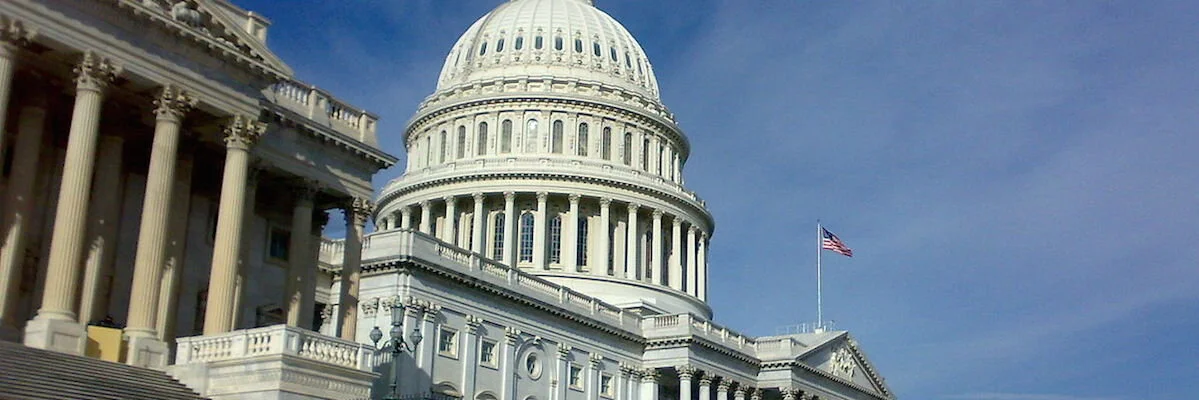
US Congress Passes Final Resolution to Restrain Trump on Iran
◢ The US Congress on Wednesday gave its final approval to a resolution to restrain President Donald Trump from attacking Iran after months of soaring tensions. The House of Representatives voted 227-186 to join the Senate in support of the resolution, which bars any military action against Iran without an explicit vote from Congress.
The US Congress on Wednesday gave its final approval to a resolution to restrain President Donald Trump from attacking Iran after months of soaring tensions.
The House of Representatives voted 227-186 to join the Senate in support of the resolution, which bars any military action against Iran without an explicit vote from Congress.
But the resolution is virtually certain to be vetoed by Trump, and the coalition of most Democrats and a handful of war-skeptic Republicans lacks the votes to override him.
The House voted moments after a rocket fired on a military base north of Baghdad killed an American soldier, a British soldier and a US contractor, in the deadliest attack on foreign forces in Iraq in several years.
A previous attack in December that killed a US contractor set off a chain of escalation after the United States blamed Iranian-aligned Iraqi Shiite militias.
On January 3, Trump ordered a drone strike that killed Iran's most powerful general, Qassem Soleimani, at the Baghdad airport.
Supporters of the resolution said they wanted to ensure that Congress has the unique power to declare war, as outlined in the US Constitution.
"There are a lot of countries in the world where one person makes the decision. They're called dictators," said Representative Steny Hoyer, the second highest-ranking Democrat in the House.
"Our Founding Fathers did not want dictators running America," he said.
The Soleimani strike angered Iraqi leaders, who called for the departure of US forces, with some questioning whether Shiite militias carried out the attack in a country that still has virulently anti-Western Islamic State fighters.
Photo: Wikicommons
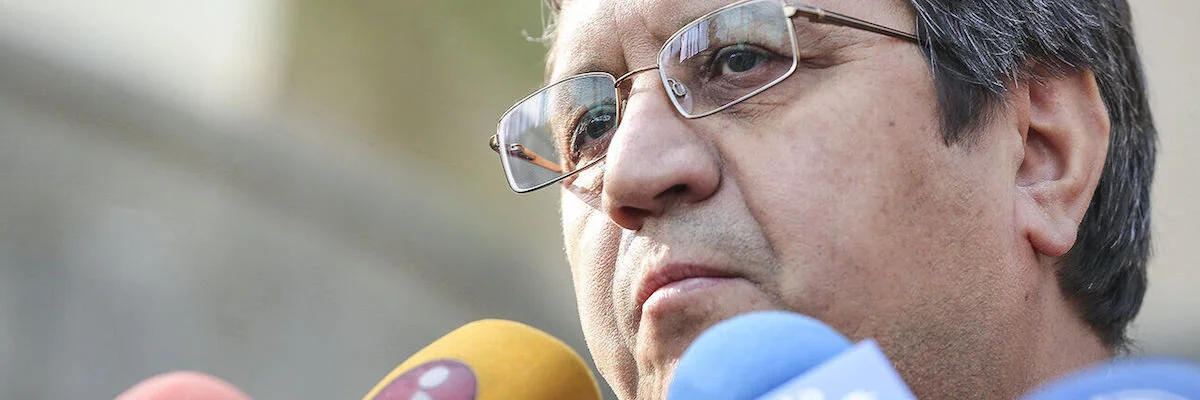
Iran Asks IMF for First Loan in Decades to Combat Virus
◢ Iran said on Thursday that it has sought immediate financial assistance from the International Monetary Fund to help it combat one of the world's deadliest coronavirus outbreaks. The various loans that can be granted by the IMF must be approved by the institution's executive board, where the United States practically has a veto on decisions.
Iran said on Thursday that it has sought immediate financial assistance from the International Monetary Fund to help it combat one of the world's deadliest coronavirus outbreaks.
According to a tweet by Iran's top diplomat, IMF chief Kristina Georgieva had "stated that countries affected by #COVID19 will be supported via Rapid Financial Instrument (RFI)".
"Our central bank requested access to this facility immediately," Foreign Minister Mohammad Javad Zarif added on his Twitter account.
Iran has not received assistance from the IMF since a "standby credit" issued between 1960 and 1962, according to the fund's data.
Zarif said the IMF and its board "should adhere to fund's mandate, stand on right side of history and act responsibly".
The various loans that can be granted by the IMF must be approved by the institution's executive board, where the United States practically has a veto on decisions.
The United States is currently pursuing a policy of "maximum pressure" aimed at crippling the finances of Iran's government.
In an Instagram post picked up by state news agency IRNA, central bank governor Abdolnasser Hemmati claimed to have formally requested access to RFI by letter on March 6.
"Given the widespread prevalence of coronavirus in our country and the need to continue to take strong measures to prevent and cure (the disease), and to address its economic impact," Iran was asking for "about $5 billion" in assistance, Hemmati wrote on his Instagram account.
Iran on Thursday reported 75 new deaths from COVID-19, the highest single-day toll since the Islamic republic announced the first deaths from the outbreak on February 19.
It took the overall death toll to 429 out of a total of more than 10,000 confirmed cases of infection.
The World Health Organization called for Iran to be given more support in its fight to bring the outbreak under control.
"Iran is doing its best... We are trying to mobilise more support for Iran," WHO chief Tedros Adhanom Ghebreyesus told reporters in Geneva, adding that the country needed more supplies.
According to the IMF's website, the RFI "provides rapid financial assistance, which is available to all member countries facing an urgent balance of payments need."
Photo:
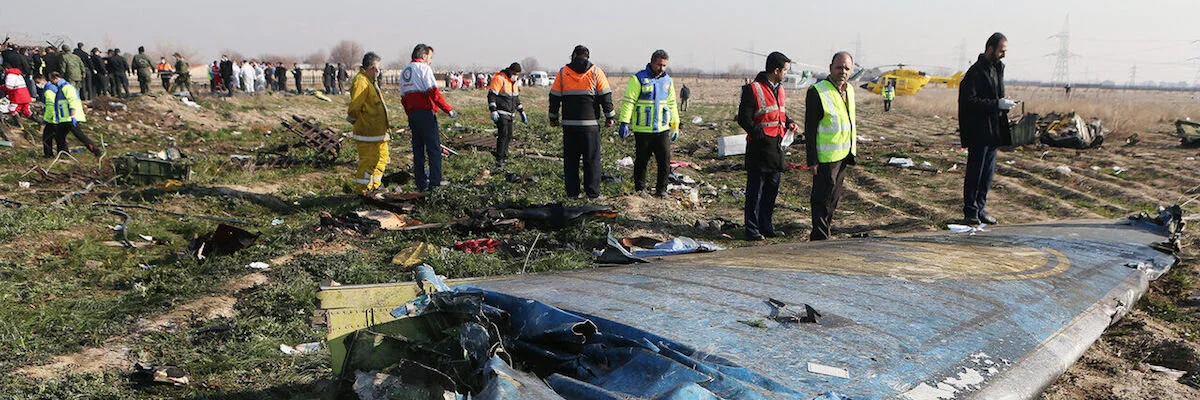
Iran Agrees to Hand Over Downed Jet's Black Boxes to Ukraine
◢ Iran pledged Wednesday at a meeting of UN civil aviation agency to hand over black boxes from downed Flight 752 to Ukraine or France for analysis—a move welcomed by Canada and Ukraine. Iran's representative at the International Civil Aviation Organization in Montreal, Farhad Parvaresh, said the devices would be sent to Kiev.
Iran pledged Wednesday at a meeting of UN civil aviation agency to hand over black boxes from downed Flight 752 to Ukraine or France for analysis—a move welcomed by Canada and Ukraine.
Iran's representative at the International Civil Aviation Organization in Montreal, Farhad Parvaresh, said the devices would be sent to Kiev, sources confirmed to AFP.
They are expected to contain information about the last moments before the Ukraine International Airlines jetliner was struck by a missile and crashed shortly after taking off from the Tehran airport on January 8.
In Ottawa, Canadian Foreign Minister Francois-Philippe Champagne "welcomed" Iran's commitment to finally share the black boxes, saying this was "a step in the right direction by Iran."
"I take Iran at their word," he said, "but I would rather judge their actions once the black boxes are in Europe and we have our own experts who have been able to analyze (them)."
Ukraine's ambassador to Canada, Andriy Schevchenko, in a tweet said his country also "welcomes Iran's decision" to hand them over, adding that "if additional expertise is needed," the flight data recorders would be forwarded to France for analysis.
Iran has admitted that the two black boxes were damaged and that it lacked the technical ability to extract data from them, but for two months it has waffled about what to do with them.
Countries whose citizens died in the disaster -- which included mostly Iranians but also Afghans, Britons, Canadians, Swedes and Ukrainians -- had criticised Iran's refusal to hand the plane's black boxes to Ukraine or one of the few countries capable of recovering and analysing the data they contain.
Canada repeatedly asked Iran to hand the plane's black boxes over to Ukraine or France for expert analysis.
At the ICAO meeting, Canadian Transportation Minister Marc Garneau stepped up the pressure, saying: "We cannot learn from the tragic shoot-down of PS752 unless all the facts are known and analysed.
"Two months after the fact, we should all be increasingly concerned with Iran's failure to arrange for the readout of the flight recorders despite repeated requests," he said, according to his speaking notes.
"Iran must act now to arrange the readout of the flight recorders as a demonstration of continued willingness to provide a full and transparent account of this event that is consistent with their international obligations. Canadians and the international community simply cannot wait any longer."
The ICAO also pressed the Islamic republic "to conduct the accident investigation in a timely manner" in compliance with international accident investigation provisions.
The disaster unfolded as Iran's defences were on high alert in case the US retaliated to Iranian strikes hours earlier on American troops stationed in Iraq -- which were themselves in response to the US assassination of a top Iranian commander.
In the immediate aftermath, Iranian civilian authorities insisted the crash was likely caused by a technical malfunction, vehemently denying claims the plane was shot down.
But in the early hours of January 11, the Iranian military admitted that the plane was shot down due to "human error," killing 176 people.
Photo: IRNA
Iran Announces 63 New Virus Deaths, Taking Total to 354
◢ Iran on Wednesday reported 63 new deaths from the novel coronavirus, the highest single-day toll in the three weeks since the Islamic republic announced the first deaths from the outbreak. It is yet to officially impose quarantines but authorities have repeatedly called on people to refrain from traveling.
Iran on Wednesday reported 63 new deaths from the novel coronavirus, the highest single-day toll in the three weeks since the Islamic republic announced the first deaths from the outbreak.
The outbreak of the coronavirus in Iran is one of the deadliest outside China, where the disease originated.
"Based on new lab results, we have identified 958 new confirmed cases of COVID-19 infection in the country, bringing the total number of cases to 9,000," health ministry spokesman Kianoush Jahanpour said in a televised news conference.
"Unfortunately in the past 24 hours, we have had reports of 63 deaths and overall 354 have lost their lives" to the virus, he added.
The capital Tehran had the most new infections with 256 cases.
The central province of Isfahan followed with 170, and Semnan, to the east of Tehran, had 63.
Bushehr as well as Kohgiluyeh and Boyerahmad in the southwest had no new cases.
Iran announced its first coronavirus deaths, in the Shiite holy city of Qom, on February 19.
It is yet to officially impose quarantines but authorities have repeatedly called on people to refrain from traveling.
They have closed schools and universities and resorted to shutting hotels and other tourist accommodation to discourage travel.
Jahanpour said the number of infections was still on the rise and that Iran would not be "celebrating the end of coronavirus" during the country's new year holidays, which start on March 20.
Poisoning Deaths
President Hassan Rouhani also called on people to limit their movements in order to contain the virus.
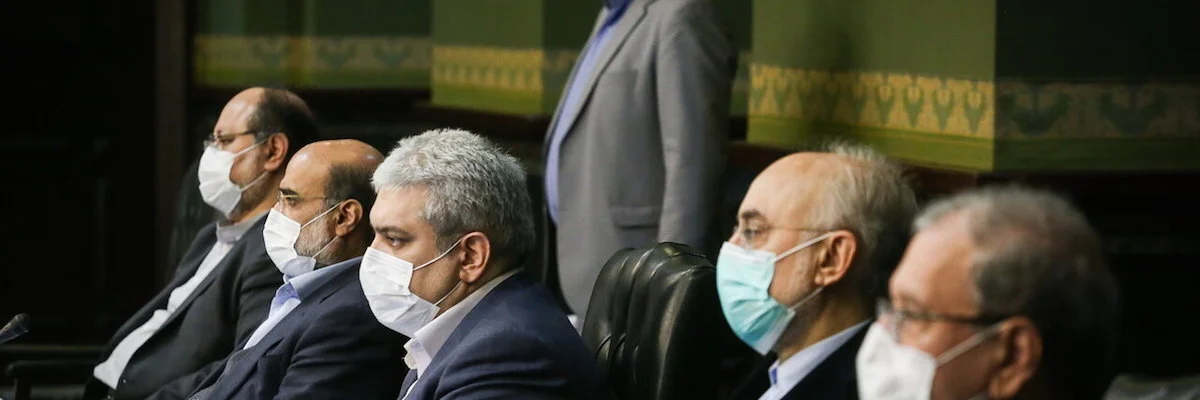
"Movements must be reduced to the possible minimum, unless it is absolutely necessary," Rouhani said during a cabinet meeting, flanked by ministers wearing masks.
"Everyone must pay attention to protocols and be careful so the virus's spread can be contained," he added.
Rouhani also warned against "exaggerating" the number of dead through non-official tolls and causing "fear and anxiety" among the public.
Apart from direct fatalities, 84 people have died from methanol poisoning in Iran after rumours circulated that drinking alcohol can help cure or protect from the virus.
In some provinces such as Khuzestan in the southwest, the death toll from poisoning is higher than that from the coronavirus.
Separately, Iran's foreign ministry expressed concern over the health of Iranian prisoners in the United States because of what it called President Donald Trump's mismanagement of the coronavirus outbreak there.
Spokesman Abbas Mousavi made the remarks after the United States demanded the release of American prisoners from virus-hit Iran.
"We're worried about the health of some Iranian prisoners taken hostage" in the US, he told a news conference that was held online because of the outbreak.
Mousavi criticized the US over what he called its "imaginary projects like a wall, a carefree president, and needless and illegal presence in other countries" and urged Washington to use its resources better to ensure the health of its citizens.
Photo: IRNA
Iran Air Says Resuming Flights to Europe
◢ Iran Air said Tuesday it would resume flights to Europe, lifting a two-day suspension apparently linked to a ban on the carrier's planes entering European airspace. According to several specialized sites, the European Aviation Safety Agency (EASA) on February banned some Iran Air aircraft from European airspace.
Iran Air said Tuesday it would resume flights to Europe, lifting a two-day suspension apparently linked to a ban on the carrier's planes entering European airspace.
"All flights will be resumed except to Vienna, Stockholm and Gothenburg, which have stopped flights due to the coronavirus outbreak," it said in a statement.
The national carrier had suspended flights to Europe on Sunday, citing European "restrictions" imposed for "unknown reasons", without mentioning the novel coronavirus epidemic.
The announcement came as Iran's health ministry reported 54 new deaths from COVID-19, the highest toll within 24 hours since the start of the outbreak in the country.
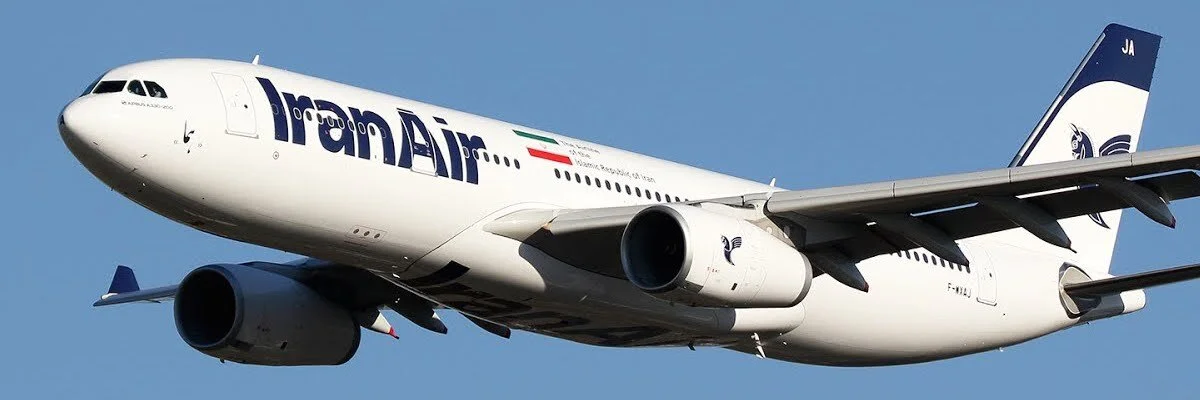
According to several specialized sites, the European Aviation Safety Agency (EASA) on February banned some Iran Air aircraft from European airspace.
The ban covered an Airbus A321-200 and two Airbus A330-200 planes that had not undergone necessary software upgrades for authorization to fly in Europe.
The flight resumption announcement came after talks by the Iran Civil Aviation Organisation and the foreign ministry with European officials, Iran Air's statement said.
The carrier, whose fleet was hit by US sanctions reimposed after Washington quit a nuclear deal with Iran, operates flights to multiple European destinations including Paris, London, Amsterdam, Stockholm, Frankfurt, Vienna and Rome.
Photo: IRNA
Iran Reports 54 New Coronavirus Deaths, Highest One-Day Toll
◢ Iran on Tuesday reported 54 new deaths from the novel coronavirus in the past 24 hours, the highest single-day toll since the start of the country's outbreak. The latest deaths bring the number of those killed by the virus in the Islamic republic to 291, the health ministry's spokesman Kianoush Jahanpour said in a televised conference.
Iran on Tuesday reported 54 new deaths from the novel coronavirus in the past 24 hours, the highest single-day toll since the start of the country's outbreak.
The latest deaths bring the number of those killed by the virus in the Islamic republic to 291, the health ministry's spokesman Kianoush Jahanpour said in a televised conference.
He added that 881 new cases had been confirmed, bringing the total number of people infected to an official 8,042.
But "2,731 people, which is about 10 times the number of dear countrymen we've lost, have recovered and been discharged from hospitals," Jahanpour said.
The outbreak of the virus in Iran is one of the deadliest outside China, where the disease originated.
With 2,114 cases, the capital Tehran remains the worst-hit province.
The northern province of Mazandaran climbed to second place with 253 new cases, bringing the total there to 886, followed by 751 in Qom, the Shiite pilgrimage city south of Tehran where the country's first cases were reported.
Mazandaran is a popular tourist spot bordering the Caspian Sea, and is particularly popular during holidays for the Iranian New Year, which this year starts on March 20.
Iran is yet to officially impose quarantines but authorities have repeatedly called on people to refrain from traveling and have resorted to closing hotels and other accommodation to discourage travel.
"As we said and expected in recent days, Mazandaran has almost reached the top of the chart" in terms of infections and is second only to Tehran, Jahanpour said.
"Our warnings against traveling to Mazandaran may be more understandable today," he added.
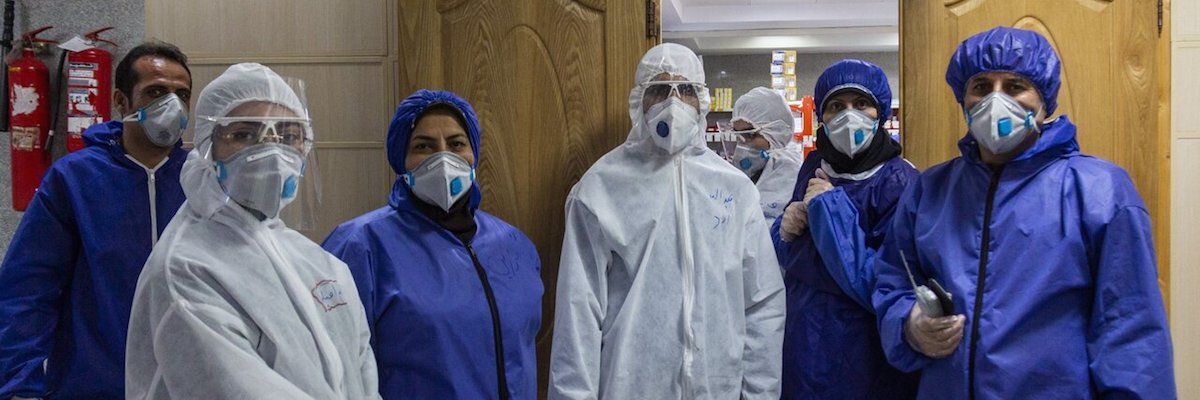
Iran's fatalities include several politicians and government officials, as well as some hospital staff.
Iran's supreme leader Ayatollah Ali Khamenei agreed on Tuesday to designate hospital staff who died after contracting the virus as "martyrs", following a suggestion by the health minister, according to the official IRNA news agency.
In the Islamic republic, the families of those designated martyrs usually receive financial aid and other benefits from the state.
The supreme leader also cancelled his annual speech in Mashhad city to mark the Persian new year due to concerns about the virus outbreak and health authorities' calls "to avoid gatherings and travel.”
According to health ministry figures, 222 people have been infected by the virus in the Khorasan Razavi province, where Mashhad is located.
Apart from direct fatalities, 44 people have died from methanol poisoning in Iran after rumors that drinking alcohol could help cure or protect from the disease.
Photo: IRNA
Iran's Khamenei Cancels Persian New Year Speech Due to Virus
◢ Iran's supreme leader has cancelled an annual speech marking the start of the Persian new year, his office announced Monday, as the country's death toll from novel coronavirus mounts. The speech given by the supreme leader in Mashhad each year usually sets out the country's key objectives for the 12 months to come.
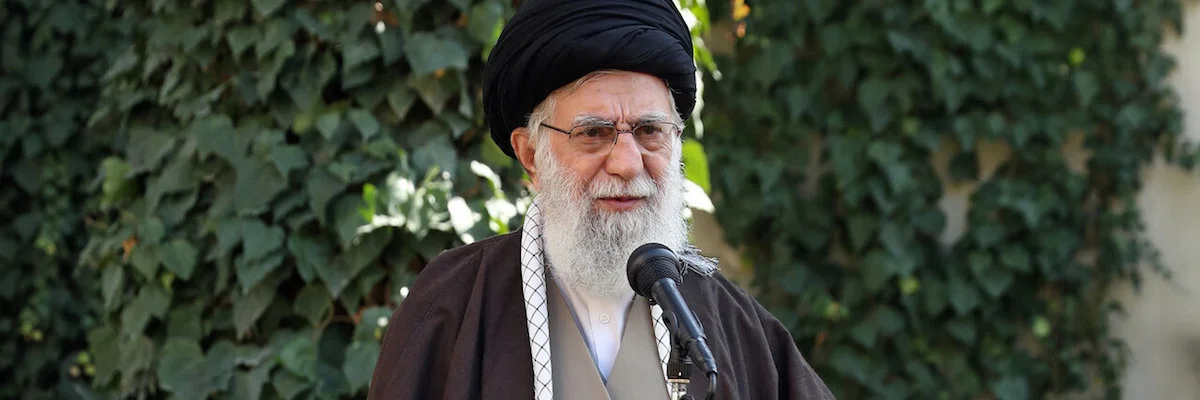
Iran's supreme leader Ayatollah Ali Khamenei has cancelled an annual speech marking the start of the Persian new year, his office announced Monday, as the country's death toll from novel coronavirus mounts.
"The ceremony of the speech of the supreme leader, which takes place every year at the sacred mausoleum of Imam Reza... will not take place this year" and Khamenei will not travel to the city of Mashhad, the statement said.
With a death toll of 237 as of Monday, Iran is one of the worst hit countries, after China and Italy.
The speech given by the supreme leader in Mashhad each year usually sets out the country's key objectives for the 12 months to come.
The statement added that the decision to cancel this year was taken "due to the spread of the coronavirus and the strict advice of medical and health experts and officials to avoid gatherings and travel... to slow the spread of the illness".
Mashhad is a key Shiite holy city. It is also Khamenei's birthplace and the capital of the Khorasan Razavi province.
According to the most recent health ministry figures, 183 people have been infected by the virus in the province.
There are currently over 7,000 confirmed cases in Iran spread across all 31 of the country's provinces.
The Persian new year—to be celebrated this year on March 20—is often a time when people travel and visit family.
But in light of the spread of coronavirus, several provinces have issued orders to close hotels and other tourist accommodation to discourage people from travelling.
The government has been scrambling to contain the virus since it reported its first cases in mid-February, shutting down schools and universities as well as urging Iranians to stay at home.
Photo: IRNA
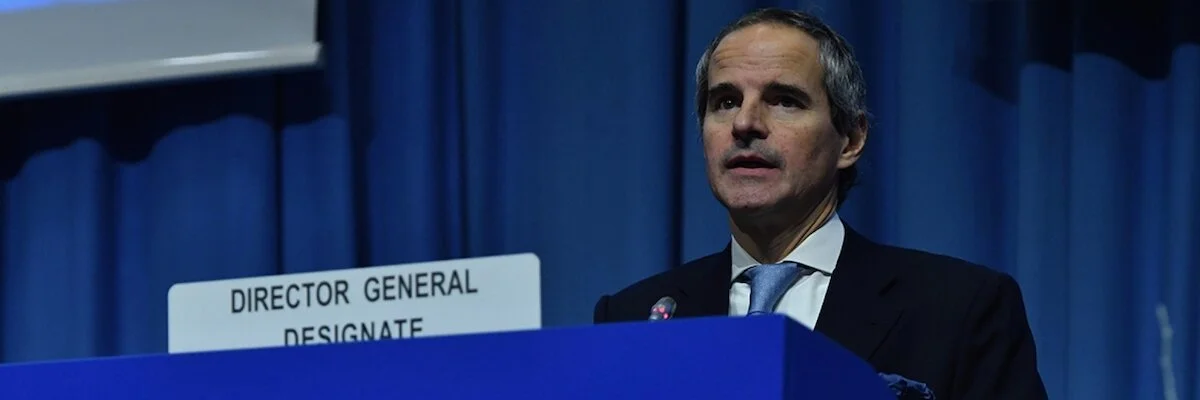
UN Nuclear Watchdog Asks Iran to 'Immediately' Cooperate
◢ The head of the UN's atomic watchdog on Monday urged Iran to "cooperate immediately and fully" with a landmark nuclear agreement with world powers that is hanging by a thread. An IAEA report last week revealed that Tehran refused the agency access in January to the two sites.
The head of the UN's atomic watchdog on Monday urged Iran to "cooperate immediately and fully" with a landmark nuclear agreement with world powers that is hanging by a thread.
The agency called on Iran to provide access to two locations, and said Tehran had failed to engage "in substantive discussions" to clarify the agency's questions, said Rafael Grossi, the new chief of the International Atomic Energy Agency (IAEA).
Grossi said the IAEA had raised questions "related to possible undeclared nuclear material and nuclear-related activities at three locations that have not been declared by Iran.”
He added that the lack of access to two of the three sites and Iran's failure to engage in talks was "adversely affecting the agency's ability... to provide credible assurance of the absence of undeclared nuclear material and activities in Iran".
An IAEA report last week revealed that Tehran refused the agency access in January to the two sites.
Diplomats say these are related to Iran's alleged military nuclear projects in the 2000s, and not its current activities.
But the renewed focus on Iran's historic program could add to current tensions.
Iran's UN ambassador in Vienna, Kazem Gharib Abadi, said last week that Tehran had no obligation to grant IAEA access to sites if it deems the requests to be based on "fabricated information", accusing the US and Israel of trying to "exert pressure on the agency.”
Israel has claimed that its intelligence services have new information on the alleged previous nuclear weapons program in Iran.
A second IAEA report last week outlined Iran's continued breaches of the terms of the 2015 nuclear accord, but did not report any restrictions in access to nuclear facilities.
Speaking at a quarterly meeting of IAEA's 35-member Board of Governors, Grossi said "to date, the agency has not observed any changes to Iran's implementation of its nuclear-related commitments" since January when Tehran announced it would cease all obligations.
The 2015 accord—offering Tehran sanctions relief in exchange for restrictions on its nuclear activities -- has been faltering since the US withdrew from it in 2018 and re-imposed harsh sanctions on Iran.
This has prompted Tehran to progressively abandon the accord's restrictions since last year.
Other parties to the deal—China, Britain, Germany, France and Russia—have been meeting with Tehran to try to save the accord.
Photo: IAEA

Iran Air Says Suspending Europe Flights
◢ Iran Air on Sunday announced the suspension of all its flights to Europe until further notice, a decision apparently linked to a ban on the carrier's planes from entering European airspace. The statement issued by the company made no mention of the novel coronavirus epidemic as a cause, citing only "restrictions" imposed by European authorities for "unknown reasons.”
Iran Air on Sunday announced the suspension of all its flights to Europe until further notice, a decision apparently linked to a ban on the carrier's planes from entering European airspace.
The statement issued by the company made no mention of the novel coronavirus epidemic as a cause, citing only "restrictions" imposed by European authorities for "unknown reasons.”
The announcement came as Iran's health ministry reported 49 new deaths from COVID-19, the highest toll within 24 hours since the start of the outbreak in the country.
According to several specialized sites, the European Aviation Safety Agency (EASA) on February 3 banned Iran Air aircraft from European airspace.
The ban covered an Airbus A321-200 and two Airbus A330-200 planes that had not undergone necessary upgrades for authorization to fly in Europe.
On March 2, however, Sweden announced it was temporarily suspending Iran Air flights on the advice of health officials who said Tehran was "not in control" of the coronavirus outbreak on its soil.
The carrier, whose fleet is hit by US sanctions reimposed after Washington quit a nuclear deal with Iran, operates flights to multiple European destinations including Paris, London, Amsterdam, Stockholm, Frankfurt, Vienna and Rome.
Photo: IRNA
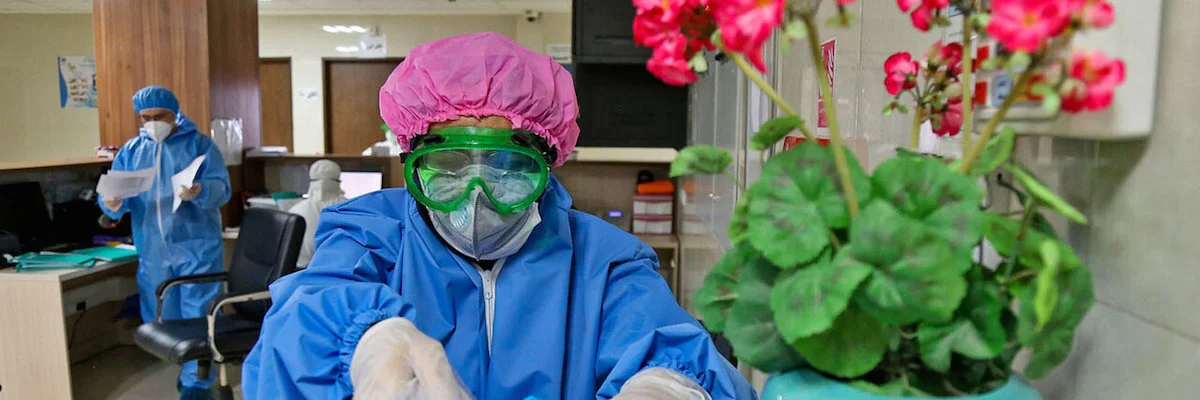
Iran Coronavirus Death Toll Jumps to 145
◢ Iran's official death toll from the new coronavirus rose by 21 Saturday, with a lawmaker among the latest fatalities, while the government accused Washington of hampering Tehran's response to the virus. "More than 16,000 people are currently hospitalized as suspect cases," a health ministry official said during a televised news conference.
Iran's official death toll from the new coronavirus rose by 21 Saturday, with a lawmaker among the latest fatalities, while the government accused Washington of hampering Tehran's response to the virus.
Health ministry spokesman Kianoush Jahanpour said that the 21 deaths took the country's total death toll to 145, while 1,076 additional cases had been confirmed in the past 24 hours, bringing the total number of confirmed cases to 5,823.
"More than 16,000 people are currently hospitalized as suspect cases," Jahanpour said during a televised news conference.
Iran's Foreign Minister Mohammad Javad Zarif later said American sanctions—reimposed from 2018, after Washington pulled out of a multilateral nuclear deal—were undermining Iran's battle against coronavirus.
US President Donald Trump "is maliciously tightening US' illegal sanctions with the aim of draining Iran's resources needed in the fight against #COVID-19—while our citizens are dying from it" Zarif tweeted on Saturday.
"The world can no longer be silent as US #EconomicTerrorism is supplanted by its #MedicalTerrorism," he said.
Jahanpour said Saturday that 1,669 people who were sick with the COVID-19 illness have recovered.
The Islamic republic is battling one of the world's deadliest outbreaks of the disease outside China.
On Saturday, a newly elected conservative Tehran lawmaker became the second legislator to be killed by the virus, state news agency IRNA reported.
Fatemeh Rahbar, 55, served as a lawmaker from 2004 to 2016 and won a seat in February's legislative election.
Seven other politicians and government officials have died in Iran's outbreak.
The capital Tehran remains the worst-hit province in the country, although all 31 provinces have reported infections.
Iran has closed schools and universities until early April, and suspended major cultural and sporting events.
The number of infections is climbing in northern provinces in particular, Jahanpour said.
More than 300 of the new cases reported on Saturday were in Mazandaran, a popular tourist destination on the Caspian sea.
Jahanpour said that the province had been hit by people travelling there for holidays, which he described as ill-avised.
Several provinces, including in northern and central Iran, have said they will not accomodate tourists in an effort to dissuade people from travelling.
Police in Gilan and Mazandaran from Friday started preventing cars without local license plates from entering the provinces.
But according to an adviser to the health minster Alireza Vahabzadeh, some locals were bypassing the restrictions by giving non-residents lifts across provincial borders.
Like all areas of Iran's economy, the health sector has struggled in the face of renewed US sanctions.
Humanitarian goods, especially medicine and medical equipment, are technically exempt.
But international purchases of such supplies are forestalled by banks wary of conducting any business with Iran for fear of falling foul of the US sanctions.
Representatives of the World Health Organization currently in Iran praised the country's healthcare system.
"Iran has one of the strongest healthcare systems of all the countries in the eastern Mediterranean region," said delegation head Richard Brennan at a press conference in Tehran.
"Elements of the response here (to the outbreak) have progressed further than in a number of other countries," he added.
WHO's representative in Iran, Christoph Hamelmann, said his organization can help cushion "the impact of unilateral sanctions on the health sector, mainly through assistance with procurement and supply of essential medicines."
Photo: IRNA