
Iran Says 15 New Coronavirus Deaths Raise Toll to 107
◢ Iran on Thursday reported 15 new deaths from the novel coronavirus, raising the national toll to 107, and said it would keep schools and universities closed until early April. But the number of the dead could be higher, according to a tally reported by state news agency IRNA.
Iran on Thursday reported 15 new deaths from the novel coronavirus, raising the national toll to 107, and said it would keep schools and universities closed until early April.
But the number of the dead could be higher, according to a tally reported by state news agency IRNA.
Data gathered by the agency from medical universities across Iran as of Wednesday night show at least 126 have died, as it lists the toll in Tehran and Gilan—two of the worst-hit provinces—as "unknown".
Iran has already suspended major cultural and sporting events and reduced working hours across the country, which is one of the worst hit after China.
"Schools and universities will be closed until the end" of the current Iranian year, health minister Saeed Namaki said in a televised press conference.
The Iranian year ends on March 19 and national holidays then last until early April.
"People should not consider this as an opportunity to go traveling," the minister said. "They should stay home and take our warnings seriously.
"This virus is highly contagious. It is a serious matter, do not joke about it."
The Islamic republic also reported 591 additional confirmed cases of the COVID-19 illness, bringing the total to 3,513 infected.
"Until today, samples have been taken of 23,327 suspected cases, only 3,513 of which have been confirmed," said ministry spokesman Kianoush Jahanpour.
According to Jahanpour, Tehran province is the worst-hit with 1,352 confirmed cases, followed by Qom with 386, Gilan with 333 and Esfahan with 238.
The Shiite holy city of Qom, south of Tehran, is the epicentre of Iran's coronavirus outbreak and where its first deaths were reported on February 19.
Authorities have since scrambled to halt its rapid spread.
"But there is some good news, of the increasing rate of recovery," Jahanpour said, noting that 739 of the confirmed cases had made recoveries.
All Provinces Infected
The southern province of Bushehr reported its first three confirmed cases on Thursday, with COVID-19 now officially infecting all of Iran's 31 provinces.
Namaki asked people not to travel as it is "very dangerous" and said reports show "many cars on the roads are taking the virus with them" to uninfected areas.
"If you do not treat the situation with special care we will be struggling with this disease for a long time," he said.
The minister called on Iranians to stay home and said even the special coronavirus committee he chairs will hold its meetings remotely online.
Limitations on domestic movements will intensify with more checkpoints across the country.
"If we identify anyone at city entrances suspected of infection or infected with the virus we will certainly quarantine them for 14 days," Namaki added.
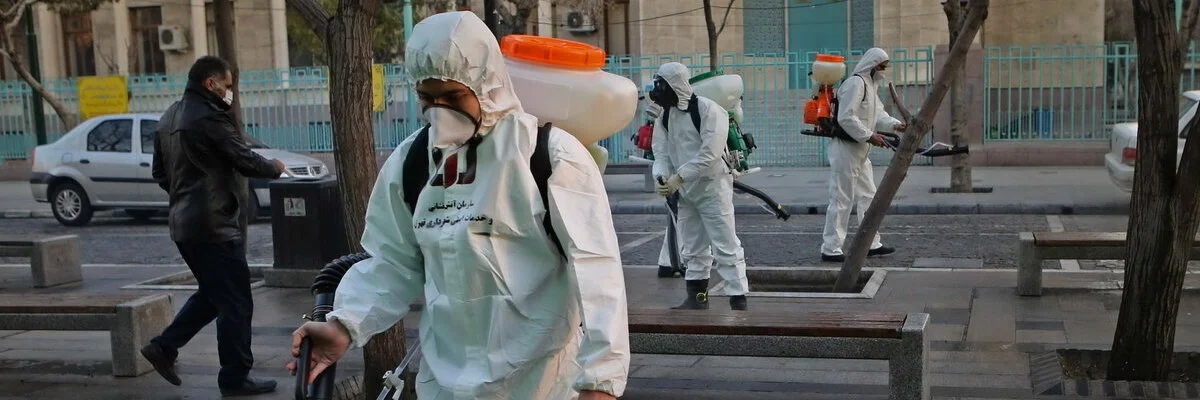
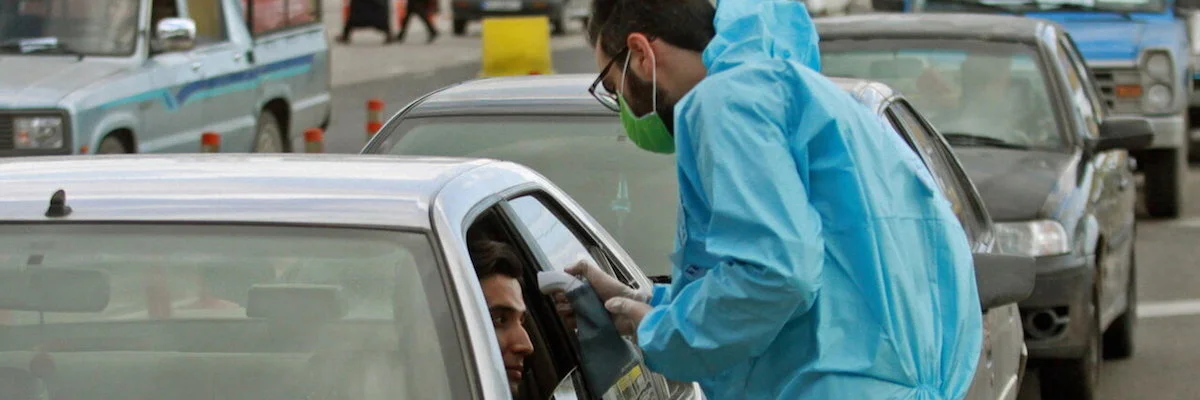
Photos published by state news IRNA showed checkpoints at Tehran-Qom highway where drivers and passengers were checked for fever.
According to the minister, the government is considering incentives for nurses and paramedics who voluntarily transfer to centers and hospitals fighting the virus, and is also considering alternatives to cash in daily transactions.
Photo: IRNA
Iran Says 92 Dead as Virus Reaches All But One Province
◢ Coronavirus has killed 92 people in Iran, officials said Wednesday, as the outbreak spread to all but one of the country's provinces. Iran's President Hassan Rouhani meanwhile dismissed a US offer to help it fight the novel coronavirus outbreak, charging that Washington hides behind a "mask of sympathy" while sanctions are depriving the country of medicine.
By Amir Havasi
Coronavirus has killed 92 people in Iran, officials said Wednesday, as the world's deadliest outbreak outside China spread to all but one of the country's provinces.
Iran's President Hassan Rouhani meanwhile dismissed a US offer to help it fight the novel coronavirus outbreak, charging that Washington hides behind a "mask of sympathy" while sanctions are depriving the country of medicine.
The Islamic republic reported 15 new deaths from COVID-19 and 586 additional cases, bringing the overall toll to 92 dead and 2,922 infected.
"This virus doesn't have wings to fly. We're the ones spreading it," health ministry spokesman Kianoush Jahanpour, who gave the latest figures, told a televised news conference.
"We have to cut down on unnecessary interactions. We have to be extra careful in the coming weeks," he added, calling on the public to refrain from travelling and gathering at events such as weddings.
The provinces of Tehran and Qom were the worst-hit with 253 and 101 new cases of COVID-19 respectively, according to the spokesman.
The Shiite holy city of Qom, south of Tehran, is the epicentre of Iran's coronavirus outbreak and where its first deaths were reported on February 19.
Authorities have since scrambled to halt its rapid spread.
Schools have been shut, major cultural and sporting events suspended, and working hours reduced.
Tehran's streets were considerably quieter than usual on Wednesday, with few shops open.
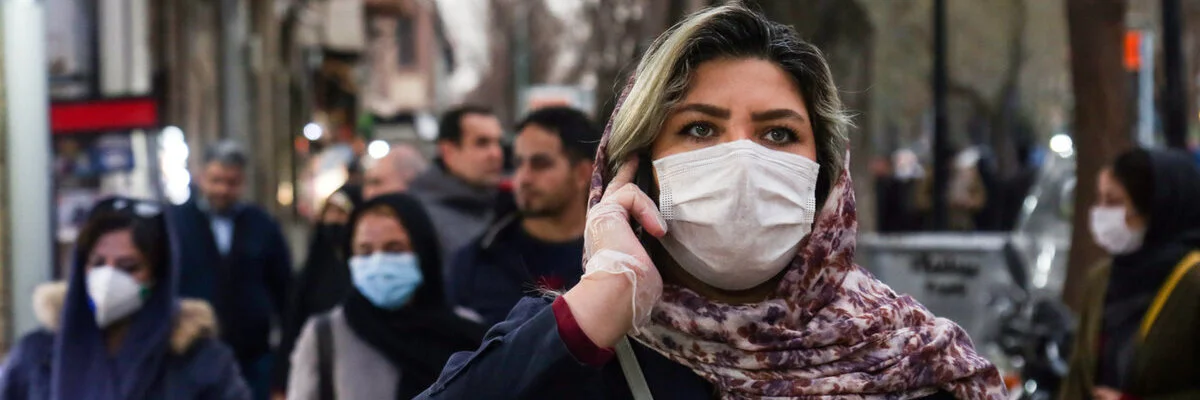
Many people wore masks as they walked along streets hung with large posters on preventing infection.
- 'Mask of sympathy' -
Despite the preventive measures, the novel coronavirus is now present in all but one of Iran's 31 provinces, according to the latest figures.
The provinces of Chaharmahal and Bakhtiari, North Khorasan and Zanjan were added to the list on Wednesday, leaving only Bushehr in the south unaffected.
US President Donald Trump said Saturday he was ready to aid Iran with the virus outbreak.
"If we can help the Iranians with this problem, we are certainly willing to do so... All they have to do is ask. We will have great professionals over there," he said.
His counterpart in Tehran dismissed the offer, saying "our people know well that you are lying" with American sanctions still in place that block Iran's access to medicine.
"Those who have deprived the people of even medicine and food through sanctions, who have done the most vicious things... they appear with a mask of sympathy and say that we want to help the nation of Iran," Rouhani said, in a clear reference to the United States.
Washington pulled out of a landmark nuclear deal and reimposed crippling sanctions on Tehran in 2018.
Humanitarian goods, especially medicine and medical equipment, are technically exempt.
But international purchases of such supplies are forestalled by banks wary of conducting business with Iran for fear of falling foul of the US sanctions.
Rouhani said the US must lift sanctions blocking medicine purchases to prove its honest intent to help.
"This is the first step... to free banking relations for purchasing medicine, transferring medicine and shipping medicine and food," he said.
The novel coronavirus has so far infected some high-profile Iranian officials.
The national emergency services chief Pirhossein Kolivand was the latest such infection announced on Tuesday.
It came a day after the virus claimed the life of Mohammad Mirmohammadi, a member of the Expediency Council which advises Iran's supreme leader Ayatollah Ali Khamenei.
It also comes a week after the country's deputy health minister, Iraj Harirchi, fell ill with COVID-19.
Photo: IRNA
Coronavirus Now Well-Established in Iran: WHO
◢ The new coronavirus is well-established in Iran, UN health officials said on Tuesday, warning that a lack of protective gear for healthcare workers was complicating efforts to control the outbreak. “It is not an easy situation,” Michael Ryan, who heads the World Health Organization’s emergencies program, told reporters in Geneva.
The new coronavirus is well-established in Iran, UN health officials said on Tuesday, warning that a lack of protective gear for healthcare workers was complicating efforts to control the outbreak.
“It is not an easy situation,” Michael Ryan, who heads the World Health Organization’s emergencies program, told reporters in Geneva.
The outbreak which has claimed 77 lives and infected more than 2,300 people across the country is affecting multiple cities, he pointed out.
“Like in some other countries, the disease is now well-established,” he said.
Ryan said rooting out the virus in countries where it has become established “is not impossible” but “it is difficult.”
“Doctors and nurses have concerns that they do not necessarily have enough equipment, supplies, ventilators, respirators, oxygen,” he said of Iran.
The WHO said on Tuesday that supplies of protective gear worldwide were rapidly depleting, threatening the overall response to the outbreak, which has killed more than 3,100 people – mostly in China.
But the problem is particularly serious in Iran.
“Those needs are more acute for the Iranian health system then they are for most any other health system,” Ryan said.
In a first step towards addressing the problem, a WHO team of experts arrived in Iran on Monday to help with the response, bringing with them medical supplies and enough laboratory kits to test roughly 100,000 people.
Iran has shut schools and universities, suspended major cultural and sporting events and cut back on work hours in response to the outbreak.
On Tuesday, it announced another 11 deaths and 835 new infections – the biggest increase in a single day since the COVID-19 outbreak began nearly two weeks ago.
National emergency services chief Pirhossein Kolivand was the latest high-profile official to contract the illness, a spokesman for the services told AFP.
Mohammad Mirmohammadi, 72, a member of the Expediency Council which advises Iran’s supreme leader, died from the virus this week, according to Tasnim news agency.
The country’s deputy health minister Iraj Harirchi fell ill with COVID-19 last week.
Ryan said that while the spike in numbers could appear to be a very bad thing, it reflected “a more aggressive approach to surveillance and case detection.”
“Things tend to look worse before they get better,” he said, adding: “You have to find your problem, you have to recognize your problem and then deal with your problem.”
Photo: IRNA
IAEA Chief Demands 'Clarifications' on Iran's Nuclear Program
◢ The head of the UN's atomic watchdog on Tuesday sounded the alarm at Iran's cooperation with the agency and demanded "clarifications" over an undeclared site in Tehran where uranium particles were found late last year. The IAEA issued two reports, one on Iran's current nuclear program and the other detailing its denial of access to two sites the agency wanted to visit.
By Didier Lauras and Jastinder Khera
The head of the UN's atomic watchdog on Tuesday sounded the alarm at Iran's cooperation with the agency and demanded "clarifications" over an undeclared site in Tehran where uranium particles were found late last year.
It comes on the same day as the IAEA issued two reports, one on Iran's current nuclear program and the other detailing its denial of access to two sites the agency wanted to visit.
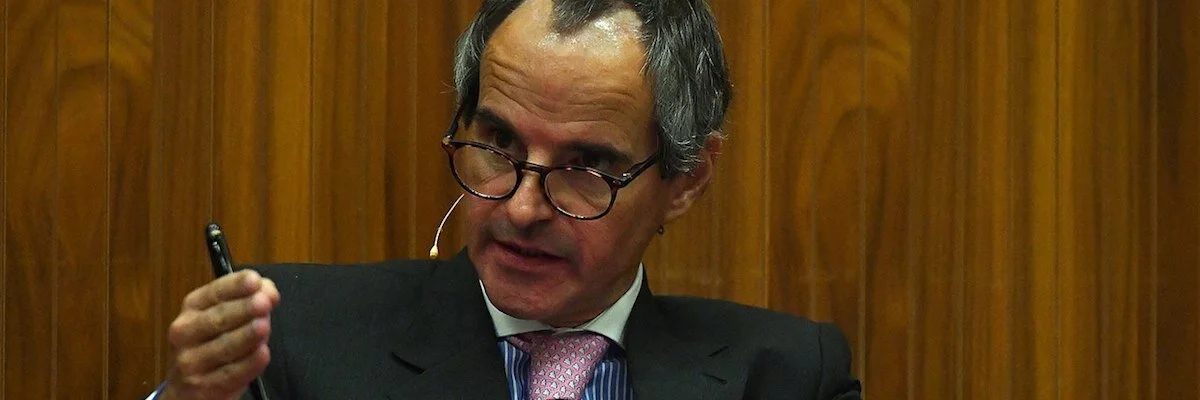
Rafael Grossi, the new head of the International Atomic Energy Agency (IAEA), who was in Paris to meet President Emmanuel Macron, told AFP: "Iran must decide to cooperate in a clearer manner with the agency to give the necessary clarifications."
"The fact that we found traces (of uranium) is very important. That means there is the possibility of nuclear activities and material that are not under international supervision and about which we know not the origin or the intent.
"That worries me," Grossi added.
The IAEA has for months been pressing Tehran for information about the kind of activities being carried out at the undeclared site where the uranium particles were found.
While the IAEA has not identified the site in question, diplomatic sources told AFP the agency asked Iran about a site in the Turquzabad district of Tehran, where Israel has alleged secret atomic activity in the past.
In addition, according to a report issued by the IAEA on Tuesday, "the Agency identified a number of questions related to possible undeclared nuclear material and nuclear-related activities at three locations in Iran".
At one of them the report said the IAEA had from early July 2019 observed "activities... consistent with effort to sanitize part of the location".
A diplomatic source said that the three locations were separate to Turquzabad.
The source also said that the agency's queries were thought to relate to Iran's historic nuclear activities and not to its compliance with the 2015 nuclear deal with world powers.
The IAEA report says the agency first raised questions about the sites last year and that Iran refused access to two of them that the agency wished to visit in late January.
Iran then sent the IAEA a letter saying it did "not recognize any allegation on past activities and does not consider itself obliged to respond to such allegations".
Deal in Danger
The second report from the agency detailed Iran's current breaches of several parts of a landmark 2015 international deal on scaling back its nuclear programme.
The report showed Iran's stockpile of enriched uranium now stands at more than five times the limit fixed under the accord.
It said that as of February 19, 2020 the Iranian stockpile stood at the equivalent of 1,510 kilogrammes, as opposed to the 300 kg limit set under the agreement.
Some experts consider this amount to provide sufficient material to produce a nuclear weapon, depending on its exact level of purity.
However, it would still need several more steps, including further enrichment, to make it suitable for use in a weapon.
The report says that Iran has not been enriching uranium above 4.5 percent.
An enrichment level of around 90 percent would be needed for weapons use.
Richard Nephew, a former lead US sanctions expert during the negotiations for the 2015 deal, pointed out that while the latest figures were "a problem (that)... needs to be addressed", Iran's uranium stockpile remains a fraction of what it was before the deal actually came into force.
"This remains not yet a crisis and we have time to fix it diplomatically, if anyone in Washington or Tehran is still so inclined," he said on Twitter.
The 2015 deal has been hanging by a thread since the US withdrew from it in May 2018 and went on to impose stinging sanctions on Iran, in particular targeting its vital oil sector.
The latest IAEA reports come just days after a meeting in Vienna of the remaining parties to the deal ended without a clear plan to keep the accord alive.
The 2015 agreement promised Iran an easing of very damaging economic and other sanctions in return for scaling back its nuclear programme.
Tehran has been progressively reducing its commitments to the accord in retaliation for the US move.
Photo: Wikicommons
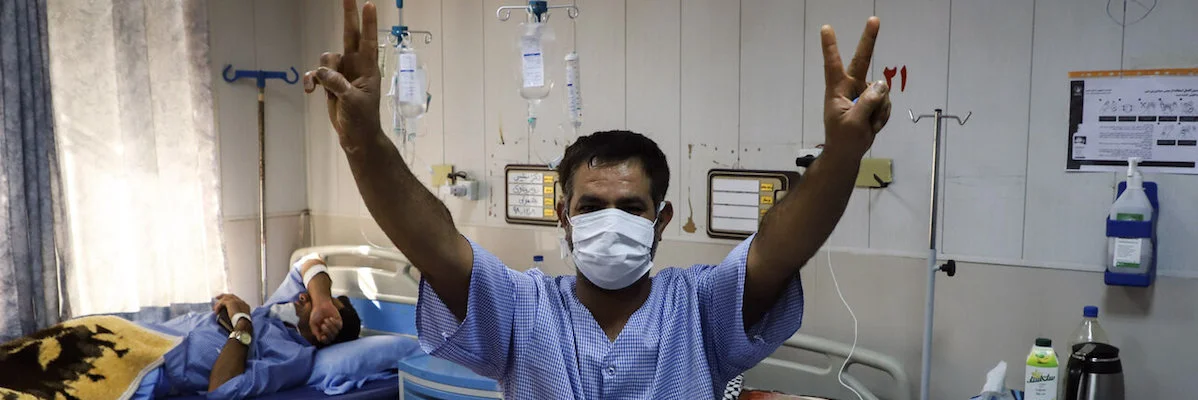
WHO Medics, Aid Flown Into Iran as Virus Toll Jumps to 66
◢ A plane carrying UN medical experts and aid touched down Monday in Iran on a mission to help it tackle the world's second-deadliest outbreak of coronavirus as European powers said they would send further help. Iran's confirmed cases leapt Monday by 523 on the previous day, hitting 1,501, said Deputy Health Minister Alireza Raisi.
A plane carrying UN medical experts and aid touched down Monday in Iran on a mission to help it tackle the world's second-deadliest outbreak of coronavirus as European powers said they would send further help.
As the official death toll rose by 12 to 66, the Islamic republic turned down an offer for assistance from Washington, dismissing it as "propaganda.”
The World Health Organization said a flight arrived from Dubai carrying medical supplies and experts on a fact-finding mission and to "provide guidance on strengthening and scaling up the response to the ongoing outbreak."
Germany, France and Britain, for their part, said they would send emergency medical supplies including testing equipment, body suits and gloves as well as five million euros ($5.5 million) to help tackle the outbreak.
Iran's confirmed cases leapt Monday by 523 on the previous day, hitting 1,501, said Deputy Health Minister Alireza Raisi.
State news agency IRNA reported the death of Mohammad Mirmohammadi, 72, a member of the Expediency Council which advises Iran's supreme leader Ayatollah Ali Khamenei.
It did not specify the cause of death but said he had died at Tehran's Massih Danechvari Hospital, the capital's main centre for coronavirus patients.
The outbreak that originated in China has sparked concern among Iran's neighbours, with the Gulf Arab states confirming 130 cases including, on Monday, Saudi Arabia's first case.
The health ministry in Riyadh, another key rival of Tehran, said the man had tested positive after returning from Iran.
Many of the Persian Gulf's other victims are pilgrims returning from Iran, especially the Shiite holy city of Qom where the country's first case was reported.
US President Donald Trump had Saturday offered: "If we can help the Iranians with this problem, we are certainly willing to do so... All they have to do is ask."
But Tehran rejected the offer, charging that Trump, who has heaped sanctions and a campaign of "maximum pressure" on Iran, was offering help "for propaganda purposes".
"We are suspicious of the intentions of the Americans and do not count on this aid," said foreign ministry spokesman Abbas Moussavi, quoted by IRNA.
Germany, France and Britain, who remain as signatories to a 2015 nuclear deal with Iran despite Trump's withdrawal, expressed "their full solidarity with all impacted by COVID-19 in Iran".
Beijing, also a signatory to the nuclear deal, said an expert team from China had arrived Saturday in Tehran "to provide what assistance it can in terms of epidemic prevention and control and medical relief".
‘Supplies Running Low'
The WHO said it had sent Iran "medical supplies and protective equipment to support over 15,000 health care workers, as well as enough laboratory kits to test and diagnose nearly 100,000 people".
As the goods worth more than $300,000—including gloves, surgical masks and respirators—were loaded onto an Emirati transport plane in Dubai, WHO's Robert Blanchard warned that global supplies were running low.
"What we see now is that demand has greatly exceeded our available stocks... and we are struggling to get access to more supplies."
The six-member medical team is made up of doctors, epidemiologists and laboratory specialists to help Iran detect and control the virus, Blanchard said.
WHO operations manager Nevien Attalla said the supplies were the "first big shipment which supports the response to coronavirus".
"Iran is a challenging country. You don't have always easy approvals to go," she said.
The UAE provided the military transport plane for the flight despite having downgraded its relations with the Islamic republic amid fierce rivalry between Iran and close UAE ally Saudi Arabia.
Persian Gulf states have announced a raft of measures to cut links with Iran to curb the spread of the virus, cutting off transport links and telling citizens not to visit.
"Aid should reach all people regardless of their background," said Sultan Mohammed al-Shamsi, the UAE's undersecretary for humanitarian affairs.
IRNA reported the death of Mohammad Mirmohammadi, 72, a member of the Expediency Council which advises Iran's supreme leader Ayatollah Ali Khamenei.
It did not specify the cause of death but said he had died at Tehran's Massih Danechvari Hospital, the capital's main centre for patients suffering from the new coronavirus.
Photo: IRNA
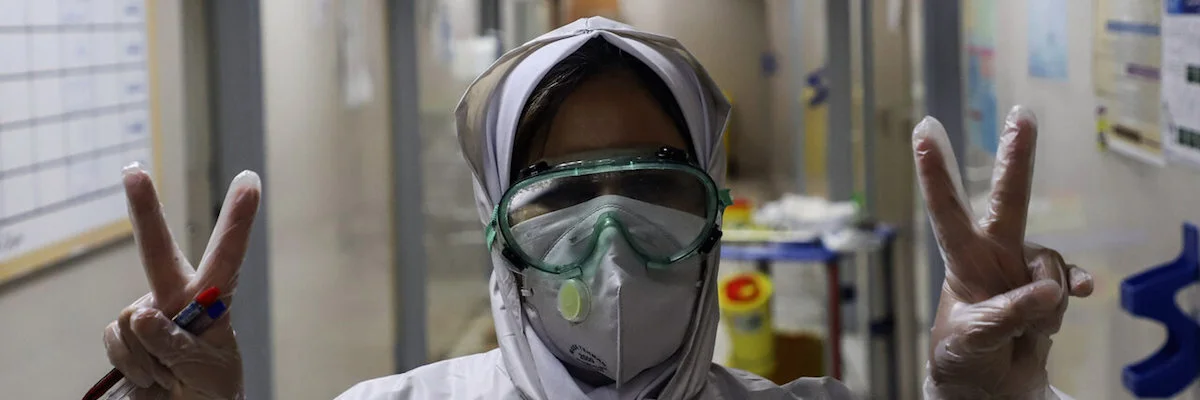
Iran Reports New Surge in Coronavirus Cases
◢ Iran on Saturday reported a surge in new coronavirus cases as the number of deaths jumped to 43, but it dismissed as "rumors" a report the real toll was much higher. The office of Tehran's governor announced a reduction in working hours in a bid to reduce the chances of the virus spreading, state television reported.
Iran on Saturday reported a surge in new coronavirus cases as the number of deaths jumped to 43, but it dismissed as "rumors" a report the real toll was much higher.
Since it announced its first deaths from COVID-19, Iran has scrambled to bring the outbreak under control, shutting schools, suspending cultural and sporting events and halting meetings of the cabinet and parliament.
The health ministry on Saturday reported nine new deaths and a 53 percent jump in infections over the previous 24 hours, taking the overall totals to 43 deaths among 593 cases.
That was the highest number of new cases for a single day since February 19, when Iran announced its first two deaths in Qom, a centre for Islamic studies and pilgrimages, including from abroad.
Citing unnamed sources in Iran's health system, the BBC's Persian-language service said on Friday that at least 210 people had died in the COVID-19 outbreak.
Most of the dead were in Qom or Tehran, the London-based broadcaster said.
Health ministry spokesman Kianoush Jahanpour accused foreign media of spreading misinformation about the outbreak.
"Given the rumours and false and contradictory content that may be published from satellite networks or media which are not well-intentioned towards Iranian people, I must say that what we publish as definitive statistics is based on the latest definitive findings of laboratory tests," he said.
Fear of the virus is palpable on the streets of Tehran, which have been less crowded than usual as people apparently stayed at home.
'Rock Bottom'
Traffic was flowing more freely than normal in the capital on Saturday morning, when it usually chokes the streets at the start of the working week.
The office of Tehran's governor announced a reduction in working hours in a bid to reduce the chances of the virus spreading, state television reported.
Shops and pharmacies have been struggling to meet demand as people stock up on bleach, disinfectant wipes, face masks and other sanitary products, as well as non-perishable food.
"Business... has hit rock bottom because of the coronavirus," said Hadian, owner of one of Tehran's now empty restaurants.
"If the government had informed us earlier we would have tried to buy less. Now we have to throw away a lot of food every day and lose money," he told AFP.
"With this loss we have to pay the workers and rent too, and this is very difficult for us."
Large posters have gone up on advertising billboards in the capital urging people to follow hygiene guidelines such as washing hands and not touching handrails and other objects in public places.
Clinic Torched
In Bandar Abbas, on Iran's Gulf coast, residents reportedly set alight a clinic rumoured to be treating people infected with coronavirus on Friday night.
"The unsubstantiated rumour that several coronavirus patients were being held at the clinic... provoked some residents to set fire to it," Fars news agency said, adding the facility denied it had any such patients.
Police and firefighters arrived and calm was restored before the blaze was extinguished, Fars reported.
Iran's coronavirus death toll is the highest for any country other than China, where COVID-19 first emerged.
One of Iran's seven vice presidents, Massoumeh Ebtekar, and Deputy Health Minister Iraj Harirchi are among several senior officials who have been infected.
Jahanpour said on Saturday that 205 cases had been detected in the previous 24 hours, increasing the total of confirmed infections to 593.
Among the latest infections were a new outbreak of 22 cases in Golestan, a northeastern province on the Caspian Sea coast.
Many of the country's neighbours have reported coronavirus infections in people linked to Iran, and most have imposed restrictions on travel to and from the Islamic republic.
On Wednesday, Iranian authorities announced domestic travel restrictions for people with confirmed or suspected infections.
The United States and Paris-based media watchdog Reporters Without Borders have accused Iran of concealing information about the outbreak, which has claimed an unusually high proportion of the lives of those infected in the Islamic republic.
Photo: IRNA

Swiss Humanitarian Channel to Iran Takes Effect
◢ A new Swiss payment mechanism allowing food, medicine and other humanitarian aid to be sent to Iran without stumbling over US sanctions has officially taken effect, Bern said Thursday. Iran has been facing severe medical shortages since the US pulled out of a landmark nuclear deal and reimposed crippling sanctions on the country in 2018.
A new Swiss payment mechanism allowing food, medicine and other humanitarian aid to be sent to Iran without stumbling over US sanctions has officially taken effect, Bern said Thursday.
The system was created to allow Swiss companies in the food, pharmaceutical and medical sectors to make aid shipments to Iran without drawing the wrath of Washington for breaching a vast range of sanctions against the Islamic country.
"The Swiss Humanitarian Trade Arrangement (SHTA), a payment mechanism to enable humanitarian goods to be delivered to Iran, came into effect on 27 February," the Swiss economic affairs ministry (SECO) said in a statement.
Iran has been facing severe medical shortages since the US pulled out of a landmark nuclear deal and reimposed crippling sanctions on the country in 2018.
Washington had exempted humanitarian goods, especially medicines and medical equipment from its punitive measures.
But international purchases of such supplies are forestalled by banks being wary of conducting any business with Iran, for fear of falling foul of sanctions themselves.
This has sent medicine prices in Iran soaring and has had severe consequences, especially for people suffering from rare or special diseases that require imported medication.
An Iranian representative, Farhad Memelohi, for instance told the UN Human Rights Council in Geneva Thursday that "at least 15 Iranian children with epidermolysis bullosa (EB) had died due to the lack of medication and equipment, resulting from US sanctions."
He said the Swedish pharmaceutical company supplying protective bandages for patients who suffer from the genetic condition that results in easy and dangerous blistering of the skin, "halted their supplies due to the restrictions."
The new coronavirus epidemic, which has hit Iran particularly hard, has put further pressure on the health system and there is a shortage of face masks.
SECO said Swiss authorities had been working "intensively" since late 2018 to implement a humanitarian payment mechanism, hailing that the SHTA agreement had finally taken effect.
"In this way, Switzerland is helping to supply the Iranian population with agricultural commodities, food, medicines and medical equipment ... in keeping with Switzerland's humanitarian tradition," it said.
Under the agreement, the US Treasury Department will provide involved Swiss banks and companies "with the necessary assurances that financial transactions can be processed in accordance with US legislation."
In return, the exporters and banks will provide SECO with "detailed information about their business activities and business partners in Iran and the transactions they carry out," the statement said.
Swiss authorities will then make that information available to their US counterparts, and they will work together to ensure "increased due diligence" regarding the transactions, it added.
A pilot transaction was conducted last month after the Swiss government approved the agreement in principle, allowing for an initial payment for the shipment of cancer drugs and medicines required for organ transplants to Iran.
Photo: Fars
Iran Coronavirus Deaths Jump to 26, Top Officials Infected
◢ The coronavirus epidemic in Iran has cost 26 lives, the health ministry announced Thursday, with a vice president becoming the latest top official to be infected as the spread appeared to accelerate. The Islamic Republic has the highest death toll from the virus outside China, where COVID-19 first emerged.
By Amir Havasi
The coronavirus epidemic in Iran has cost 26 lives, the health ministry announced Thursday, with a vice president becoming the latest top official to be infected as the spread appeared to accelerate.
Health ministry spokesman Kianoush Jahanpour told a news conference that the tally of infections had risen to 245 with 106 more cases confirmed—the highest number for a single day since Iran announced its first infections on February 19.
The Islamic Republic has the highest death toll from the virus outside China, where COVID-19 first emerged.
Among the latest coronavirus sufferers is one of Iran's seven vice presidents, Massoumeh Ebtekar, who oversees women's affairs.
Ebtekar, a former spokeswoman for students who took 52 Americans hostage at the US embassy in Tehran in 1979, is being treated at home and members of her team have been tested, state news agency IRNA reported.
Mojtaba Zolnour, head of parliament's national security and foreign affairs committee, also contracted the virus, appearing in a video posted by Fars news agency saying he was in self-quarantine.
The cleric is a deputy for the Shiite holy city of Qom in central Iran where the country's first cases were detected.
According to media reports, among the deceased in Qom on Thursday was theologian Hadi Khroroshahi, who in 1981 was named Iran's first ambassador to the Vatican.
The announcement by Zolnour comes two days after another top official, deputy health minister Iraj Harirchi, head of the government's coronavirus task force, said he too had contracted the virus.
Must 'Not Gather'
On Wednesday, Iranian authorities announced domestic travel restrictions for people with confirmed or suspected infections.
They also placed curbs on access to major Shiite pilgrimage sites, including the Imam Reza shrine in second city Mashhad and the Fatima Masumeh shrine in Qom.
Visitors to the shrines will be allowed to visit on condition they are provided "with hand-washing liquids, proper (health) information, masks", Health Minister Saeed Namaki said.
They must "not gather together in groups but just pray and leave", he said.
In a rare move, authorities announced the cancellation of the main Friday weekly prayers in Tehran, Qom and Mashhad as well as in the capitals of 22 of Iran's 31 provinces and other infected areas.
School closures have been extended in affected areas and universities are to remain closed for another week starting from Saturday.
"All of these decisions are temporary and if the situation changes, we might intensify or ease them," Namaki said.
In a message of thanks to doctors and nurses, Iran's supreme leader Ayatollah Ali Khamenei said he hoped their efforts would help "eradicate this sinister virus soon.”
International health experts have expressed concern about Iran's handling of the outbreak. But Tehran insists the situation has been "improving.”
Photo: IRNA
Virus-Hit Iran Slaps Curbs on Travel, Shrine Visits
◢ Iranian authorities on Wednesday announced domestic travel restrictions for people with confirmed or suspected cases of the novel coronavirus, which has claimed 19 lives in the country—the highest tally outside China where the disease originated. The authorities also slapped curbs on visits to major Muslim pilgrimage sites.
By Amir Havasi
Iranian authorities on Wednesday announced domestic travel restrictions for people with confirmed or suspected cases of the novel coronavirus, which has claimed 19 lives in the country—the highest tally outside China where the disease originated.
The authorities also slapped curbs on visits to major Muslim pilgrimage sites.
"Instead of quarantining cities, we are going to implement movement restrictions for those suspected of infection or those infected," Health Minister Saeed Namaki said at a news conference.
He said teams of inspectors had already been placed at the entrance of cities "that see a lot of movement", without naming them.
The teams will take people's temperatures and stop those who are infected or suspected of infection, who will be quarantined for 14 days.
Namaki said access to several Shiite holy sites would be restricted, including the Imam Reza shrine in Mashhad and the Fatima Masumeh shrine in Qom.
Iran last week announced its first two deaths from the coronavirus in Qom, a centre for Islamic studies and pilgrims from abroad.
According to official figures, the virus has killed a further 17 people out of 139 confirmed cases of infection.
Visitors to the shrines will be allowed to visit on condition they are provided "with hand-washing liquids, proper (health) information, masks", the minister said.
They must "not gather together in groups but just pray and leave", he said.
In affected areas, school closures will be extended for three days, and universities for another week starting from Saturday, he said.
Also in these regions, weekly Friday prayers will be suspended, Namaki said.
"All of these decisions are temporary and if the situation changes, we might intensify or ease them," Namaki added.
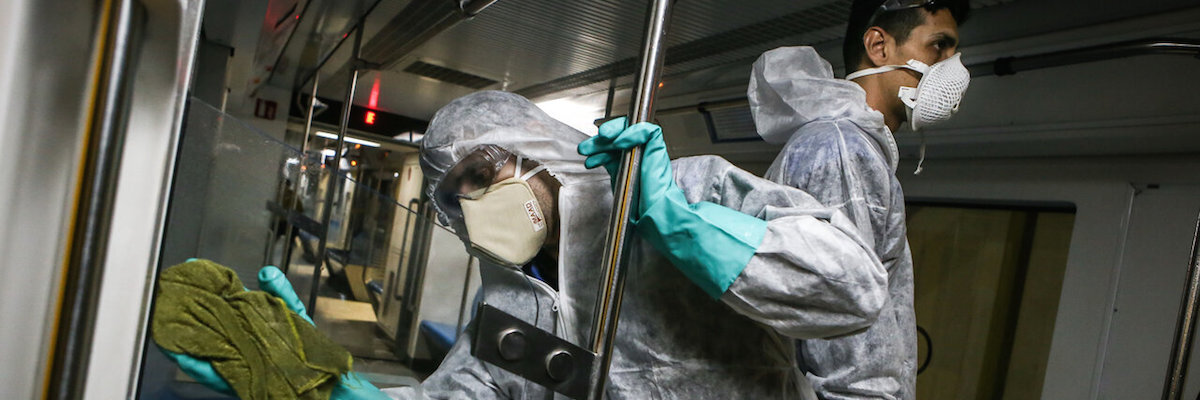
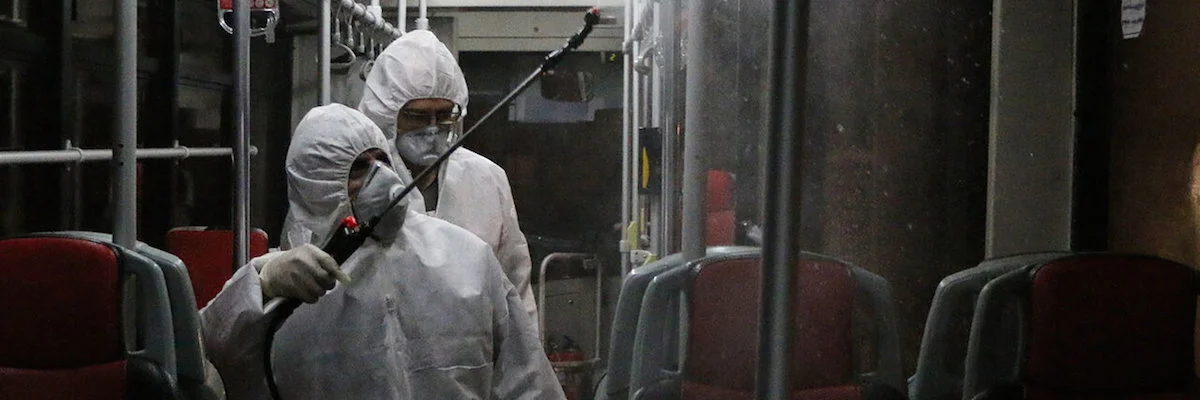
Apart from school closures, sporting events have been cancelled and teams of sanitary workers deployed to disinfect buses, trains and public spaces.
International health experts have expressed concern about Iran's handling of the outbreak.
Such worries mounted on Tuesday when the head of the taskforce combatting the virus, Deputy Health Minister Iraj Harirchi, admitted he himself had been infected.
But health ministry spokesman Kianoush Jahanpour said Wednesday that the situation was "improving", even as he announced four more deaths and 44 new infections including in six previously unaffected provinces.
'Concealing Information'
The head of a newly established cyber police unit, meanwhile, announced the arrest of 24 people accused of online rumour-mongering about the spread of the virus.
They were handed over to the judiciary, while 118 other internet users were briefly detained and received warnings, Vahid Majid said, cited by semi-official news agency ISNA.
The arrests were carried out after the establishment of a special unit to "combat rumour-mongers regarding the 'spread of coronavirus in the country'", he was quoted as saying.
Paris-based media watchdog Reporters Without Borders (RSF) charged that Iran "seems to be concealing information about the epidemic".
It condemned what it termed "Iran's persecution of media outlets and journalists publishing independent information".
"Respect for the public's right to full, independent, diverse and quality news reporting... is the best way to protect the population and combat rumours," said Reza Moini, head of the group's Iran desk.
Going on the offensive, Iranian President Hassan Rouhani accused Iran's arch foe the United States of trying to use propaganda about the virus to instil "fear" against his country.
The Americans "themselves are struggling with coronavirus", Rouhani said in a weekly cabinet meeting.
He added that "16,000 people have died of influenza there but they don't talk about their own (dead)".
His remarks came a day after US Secretary of State Mike Pompeo accused Iran of concealing the full extent of the outbreak, saying "Tehran may have suppressed vital details".
The latest health ministry figures show the virus has spread across the country.
There were 15 new cases in Qom, central Iran, nine in Gilan in the north, four in the capital Tehran and three in Fars in the south, it said.
'Slightly Concerning'
The ministry added that Markazi, Kermanshah, Ardebil, Mazandaran and Semnan provinces each had one new case. Newly hit regions included Khuzestan in the southwest.
The health ministry's spokesman, Jahanpour, appeared optimistic about the situation in the worst-hit province of Qom, south of Tehran.
"Every 24 hours, at least 10 percent of those hospitalised or suspect cases are discharged with good general health," the official said.
But in Gilan, "things are slightly concerning", he added.
The province has had the second highest number of new cases, including people who had visited other provinces.
Iran has not quarantined any of the infected cities such as Qom, a method authorities dismissed as outdated and ineffective.
Photo: IRNA
Iran Virus Deaths Rise to 15, Deputy Minister Among Infected
◢ Iran said Tuesday its coronavirus outbreak, the deadliest outside China, had claimed 15 lives and infected nearly 100 others—including the country's deputy health minister. According to the health ministry, most of the deaths and infections outside Qom are among people who have recently visited the holy city.
By Amir Havasi
Iran said Tuesday its coronavirus outbreak, the deadliest outside China, had claimed 15 lives and infected nearly 100 others—including the country's deputy health minister.
The Islamic republic's neighbours have imposed travel restrictions and strict quarantine measures after reporting their first cases in recent days, mostly in people with links to Iran.
The United Arab Emirates was the latest to clamp down on Tuesday, halting all passenger and cargo flights to and from Iran, a similar move to other nearby countries including Armenia, Kuwait, Iraq and Turkey.
Iran has been scrambling to contain COVID-19 since Wednesday last week when it announced the first two deaths in Qom, a centre for Islamic studies and pilgrims that attracts scholars from abroad.
The country's deputy health minister put on a brave face as he admitted he too was infected.
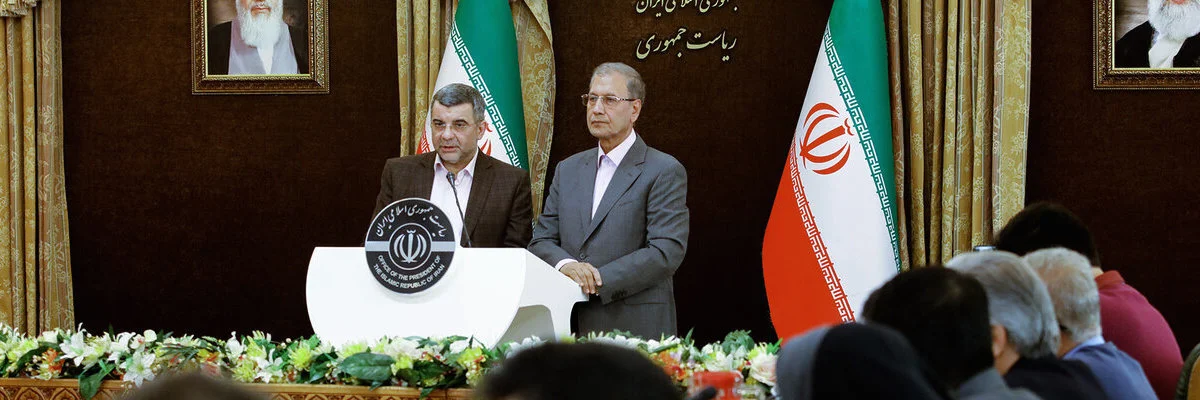
Iraj Harirchi had coughed occasionally and wiped sweat from his brow repeatedly during a news conference in Tehran on Monday with government spokesman Ali Rabiei.
At the time he denied a lawmaker's claim that 50 people had died from the virus in the Shiite shrine city of Qom, saying he would resign if the number proved to be true.
"I too have been infected with coronavirus," Harirchi said on Tuesday in a video apparently shot by himself.
"I wanted to tell you that... we will definitely be victorious against this virus in the next few weeks," the official declared.
But he warned Iranians to be careful as the "virus does not discriminate" and could infect anyone.
Disinfection Teams
Outspoken reformist MP Mahmoud Sadeghi also confirmed in a tweet he had tested positive for the virus, adding that he did not "have much hope of staying alive".
The health ministry confirmed three new deaths and 34 new infections, bringing the overall tally to 15 deaths and 95 cases.
Two of the deaths were of elderly women in Markazi province, and the other was a patient in Alborz province, state news agency IRNA said.
According to the health ministry, most of the deaths and infections outside Qom are among people who have recently visited the holy city.
Its spokesman Kianoush Jahanpour said 16 of the new cases were confirmed in Qom, while nine were in Tehran, and two each in Alborz, Gilan and Mazandaran.
The virus appeared to be spreading to new parts of Iran, as one new case was also reported in each of the provinces of Fars and Khorasan Razavi, as well as Qeshm island.
Despite being Iran's epicentre of the outbreak, Qom has yet to be quarantined.
However, religious events have been put on hold at its main hotspot, the Masumeh shrine revered by Shiite Muslims, while teams were deployed to disinfect it.
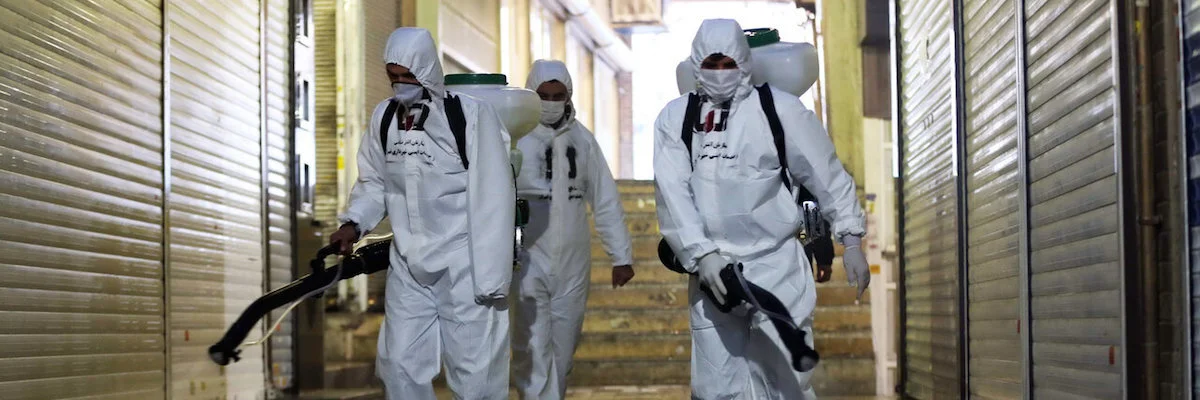
Photos published by local news agencies showed masked men in blue uniforms spraying disinfectant on walls and objects inside the shrine, while unprotected worshippers prayed and kissed the ornate structure enclosing a tomb.
In other provinces including Tehran, teams have been disinfecting underground train carriages and municipal buses at night, according to reports.
Run on Masks, Gloves
The sight of Iranians wearing masks and gloves is now common in much of the country.
Sales of masks, disinfectant gels and disposable gloves have soared, with officials vowing to prevent hoarding and shortages by boosting production.
President Hassan Rouhani expressed confidence the authorities were on the right track.
"The reports I have received from the health minister are promising. We are moving towards controlling the virus," he said.
The United States, however, expressed concern that Iran may have "suppressed vital details" about the outbreak.
"All nations including Iran should tell the truth about the coronavirus and cooperate with international aid organisations," said US Secretary of State Mike Pompeo.
Iran, which has shut schools, universities and cultural centres until the end of the week, has yet to find the source of the country's outbreak.
But the health minister, Saeed Namaki, has said that one person who died of coronavirus in Qom was a businessman who had made several trips to China.
A World Health Organization spokesman told AFP that a mission to Iran was "still being planned" but "it is not happening today.”
Photo: IRNA
Iran Nuclear Deal Commission to Meet in Vienna
◢ The remaining parties to the Iran nuclear deal will meet in Vienna on Wednesday, the EU's diplomatic service announced, after Britain, France and Germany launched a dispute process over Iran's successive pullbacks. The meeting will be chaired by senior EU official Helga Schmid.
By Damon Wake
The remaining parties to the Iran nuclear deal will meet in Vienna on Wednesday, the EU's diplomatic service announced, after Britain, France and Germany launched a dispute process over Iran's successive pullbacks.
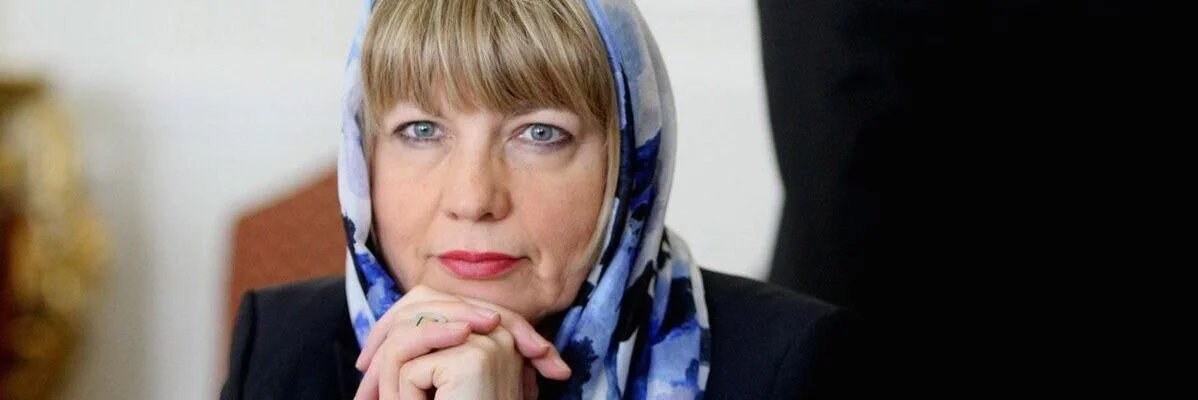
The office of EU diplomatic chief Josep Borrell—who is tasked with convening the commission under the dispute mechanism—said the get-together would be chaired on his behalf by senior official Helga Schmid.
The meeting comes as the European parties try to find a way to persuade Iran to come back into line with the deal after Tehran made a series of steps away in protest at the US pulling out and reimposing sanctions.
The 2015 agreement to curb Iran's nuclear program in return for sanctions relief has been slowly crumbling since US President Donald Trump unilaterally withdrew in 2018, describing the accord signed by his predecessor Barack Obama as a bad deal.
The EU has led efforts to try to save the deal, arguing that it is vital for international security, but after repeated warnings over Iran's moves, Germany, Britain and France triggered the dispute process on January 14.
In its last announcement, Tehran said it would no longer observe limits on the number of centrifuges used to enrich uranium. It was its fifth step away from the deal since Trump's pullout.
Borrell has said he believes all the countries still in the deal -- which also include Russia and China -- are determined to save the accord.
Iran Looking for Concessions
Western diplomats recognize it is highly unlikely Iran will heed calls to come back into full compliance without substantial concessions in return—such as an end to US sanctions or Europe taking measures to offset their economic impact.
Instead they hope to use the dispute process, which can be strung out for quite some time, to convince Iran not to take any more moves away from the deal, giving space for back-channel diplomacy aimed at bringing Washington and Tehran back into alignment.
At a major international security conference in Munich earlier this month, Iran's Foreign Minister Mohammad Javad Zarif said Tehran would be prepared to move back towards the deal if Europe provides "meaningful" economic benefits.
Crucially, Iran has said it will continue to cooperate with the Vienna-based International Atomic Energy Agency ( IAEA ) which carries out regular detailed inspections on the ground.
Europe has set up a special trading mechanism called INSTEX to try to enable legitimate humanitarian trade with Iran, but it has yet to complete any transactions and Tehran regards it as inadequate.
The renewed US sanctions have almost entirely isolated Iran from the international financial system, driven away oil buyers and plunged the country into a severe recession.
Photo: IRNA
Iran Denies Virus Coverup After Claim of 50 Deaths
◢ Iran's government vowed Monday to be transparent after being accused of covering up the deadliest coronavirus outbreak outside China, dismissing a lawmaker's claim the toll could be as high as 50. Authorities have ordered the closure of schools, universities and other educational centers across the country as a "preventive measure.”
By David Vujanovic
Iran's government vowed Monday to be transparent after being accused of covering up the deadliest coronavirus outbreak outside China, dismissing a lawmaker's claim the toll could be as high as 50.
The authorities in Iran have come under mounting public pressure since it took days for them to admit to "accidentally" shooting down a Ukrainian airliner last month, killing 176 people.
The government announced Iran's coronavirus death toll had jumped by four to 12—by far the highest outside China—as several regional countries reported their first cases on Monday, even after imposing travel restrictions and strict quarantine measures.
But Ahmad Amirabadi Farahani, a lawmaker from the holy city of Qom, south of Tehran, alleged Iran's government was "lying" about the death toll.
"As of last night, about 50 people have died" from the COVID-19 outbreak in Qom alone, he was quoted as saying by ILNA news agency after a closed session of parliament on the crisis.
The government rejected the claim.
"I ask our brother who declared this figure of 50 deaths to provide us with a list of their names," said Deputy Health Minister Iraj Harirchi.
"If the number of deaths in Qom reaches half or a quarter of this figure, I will resign."
Suspicion on Streets
But people on Tehran's streets were also suspicious.
"State TV gives us statistics, but when we go to hospitals we see something different. The number of people who died is much more," said Elahe Zarabi, 56, a housewife carrying bags of bleach.
Shoaib, a 24-year-old pharmacy employee, said the shop was running out of stocks as it had gone from selling 500 face masks a day to 10,000.
"The mullahs are saying Muslims are immune because of their faith," he said. "How will they quarantine a huge city like Tehran when they cannot even quarantine a hospital?"
Iran has been scrambling to contain COVID-19 since Wednesday when it announced the first two deaths in Qom, a centre for Islamic studies and pilgrims that attracts scholars from abroad.
Authorities have ordered the closure of schools, universities and other educational centers across the country as a "preventive measure".
But it has not all been doom and gloom.
A video has gone viral of young men greeting each other by tapping their feet together to avoid infection, instead of shaking hands or the increasingly common fist-bump.
Transparency Pledge
The government also vowed to be open about the disease's spread.
"We will announce any figures (we have) on the number of deaths throughout the country. We pledge to be transparent about the reporting of figures," spokesman Ali Rabiei said.
Assadollah Abbassi, a spokesman for Iran's parliament, announced the latest four deaths among 61 infections after Monday's session.
Citing Health Minister Said Namaki, he said "the cause of coronavirus infections in Iran are people who have entered the country illegally from Pakistan, Afghanistan and China".
After reporting two deaths in Qom, Iran has yet to give a breakdown of where the other patients died.
The province worst hit by infections is Qom, with 34 cases, according to official figures.
The others are in Tehran with 13 infections, Gilan with six, Markazi with four, Isfahan with two and one each for Hamedan and Mazandaran.
The health minister said one person who died in Qom was a businessman who had made trips to China.
Namaki said direct flights between Iran and China had been suspended, but the Qom businessman had travelled there "on a connecting flight".
Iran's Mahan Air said it had stopped China services this month, apart from eight flights to deliver virus aid to China and return people under the health ministry's supervision.
Border Closures
Since it emerged in December, the new coronavirus has killed nearly 2,600 people in China.
Iran now accounts for nearly half of the 30 deaths so far reported elsewhere in the world.
Many of Iran's neighbours have reported infections in people who had travelled to the Islamic republic.
Afghanistan on Monday reported its first case in a person who had been to Qom.
Baghdad and Muscat also reported their first cases -- an elderly Iranian citizen living in Iraq's Najaf and two Omani women who had returned from the Islamic republic.
Iraq has shut its border with Iran and imposed a travel ban, while Oman halted flights to and from the virus-hit country.
Preventive measures have been imposed by Afghanistan, Armenia, Pakistan and Turkey.
Kuwait and Bahrain also confirmed their first novel coronavirus cases, all of whom had come from Iran.
Photo: IRNA
Iran Coronavirus Death Toll Jumps to 12
◢ Four more people have died of coronavirus in Iran, a spokesman for parliament said Monday, bringing the country's overall death toll to 12—by far the most outside China. "The minister of health announced the deaths of 12 people and 47 cases of infection in the country," Assadollah Abbassi was quoted as saying by semi-official news agency ISNA after a closed session of parliament.
Four more people have died of coronavirus in Iran, a spokesman for parliament said Monday, bringing the country's overall death toll to 12—by far the most outside China.
"The minister of health announced the deaths of 12 people and 47 cases of infection in the country," Assadollah Abbassi was quoted as saying by semi-official news agency ISNA after a closed session of parliament.
Abbassi gave the same death toll in reports by Fars news agency and the Young Journalists Club, a branch of state television, but they quoted him as saying there were "around" 47 infections.
Quoting Abbassi, ISNA added that "according to the health minister... the cause of coronavirus infections in Iran are people who have entered the country illegally from Pakistan, Afghanistan and China".
On Sunday, Health Minister Said Namaki said one person who died of coronavirus in Qom, south of Tehran, was a businessman who had made several trips to China.
Namaki had unsuccessfully pleaded in January for Iran's government to order the suspension of all commercial flights between Iran and China.
In his remarks to state television on Sunday, the minister said direct flights between Iran and China were now suspended, but the Qom businessman had travelled there "on a connecting flight".
Iran has been scrambling to contain the COVID-19 outbreak since it announced the first two deaths in the holy city of Qom on Wednesday last week.
Authorities have since ordered the closure of schools, universities and other educational centres across the country as a "preventive measure".
Since it emerged in December, the new coronavirus has killed more than 2,500 people in China.
Iran now accounts for nearly half of the deaths elsewhere in the world, which currently stand at 30.
Photo: IRNA
Conservatives Claim Victory in Iran Polls After Record Low Turnout
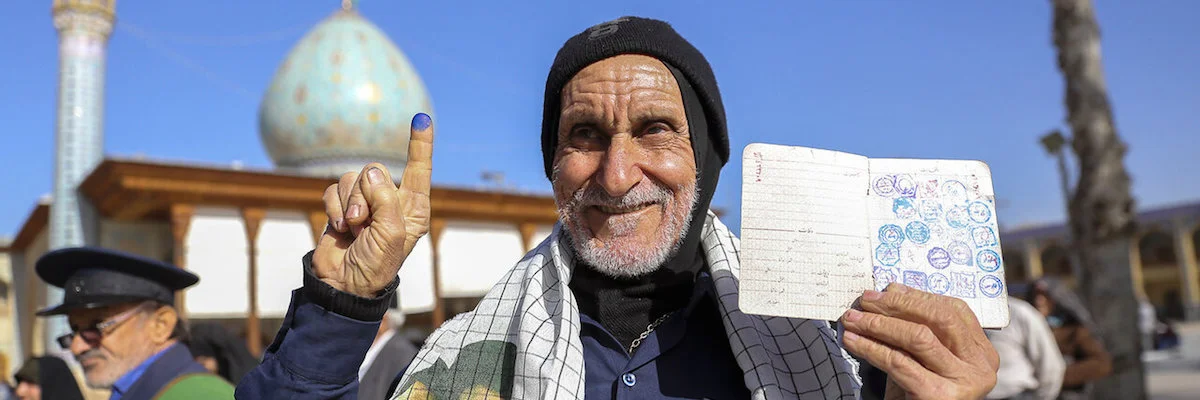
◢ Conservatives took a lead Saturday as the first results of Iran's parliamentary election came in, boosted by a predicted low turnout following the disqualification of nearly half the candidates. The conservative and ultra-conservative alliance appeared to have a comfortable edge in the capital in preliminary results, the committee's spokesman Esmail Mousavi said.
By Amir Havasi
Conservatives took a lead Saturday as the first results of Iran's parliamentary election came in, boosted by a predicted low turnout following the disqualification of nearly half the candidates.
Friday's election followed months of steeply escalating tensions between Iran and its decades-old arch foe the United States.
Voters had been widely expected to shun the polls, disillusioned by unfulfilled promises and struggling to cope in a country whose economy has buckled under harsh US sanctions.
About half of the 16,000-odd candidates were barred. Among them were many reformists and moderates—including dozens of sitting lawmakers.
By midday Saturday, votes had been counted in 71 constituencies out of 208, according to National Elections Committee figures reported by semi-official news agency ISNA.
Tehran is the biggest catch in the election with 30 seats.
The conservative and ultra-conservative alliance appeared to have a comfortable edge in the capital in preliminary results, the committee's spokesman Esmail Mousavi said.
Most votes went to the first three names on the alliance's list, he said.
Leading the race was Mohammad Bagher Ghalibaf, a three-time presidential candidate, former police chief and member of the Revolutionary Guards who was Tehran mayor from 2005 to 2017.
Reformists and moderates hardly figured in the 37 other names of "leading Tehran candidates", Mousavi said.
Final results for both the capital and other provinces would be announced by early Sunday at the latest, he added.
Landslide Win
The interior ministry announced results of 95 percent of the 208 constituencies in Friday's election, declaring the names of the winning candidates but without specifying their political affiliation.
"Victory for the anti-American candidates, a new slap for Trump," crowed the ultra-conservative Kayhan newspaper.
"The people have disqualified the reformists," it added, alluding to Rouhani's backers, who have been weakened by President Donald Trump pulling the US out of a landmark nuclear deal and by a slew of economic and political crises.
Seventeen women were elected, the website of the government newspaper Iran said—the same number as in the outgoing 290-seat parliament.
Interior Minister Abdolreza Rahmani Fazli announced the participation rate was 42.6 percent—the lowest in four decades.
The election came two days after Iran announced its first cases of the deadly new coronavirus that emerged in China.
"We held these elections when there were various incidents in the country: we had bad weather, there was this coronavirus disease, there was the plane crash," Rahmani Fazli said, referring to the January 3 downing of a Ukrainian airliner which killed 176 people.
He said that in such a scenario "the turnout rate seems perfectly acceptable for us."
"A lot of people voted in the previous parliamentary election, but the enthusiasm faded away every day after that," Ali, a Tehran taxi driver, told AFP.
"And now there's nothing to be hopeful about to go and vote," added the 53-year-old, who abstained.
With official figures still coming in, news outlets close to conservatives and ultra-conservatives have predicted a landslide win for their candidates across Iran.
The state television website said most of the 56 winners announced on Saturday were fresh faces and only 10 were former members of parliament.
Fars tweeted that turnout in Tehran was 1.9 million out of more than nine million eligible voters.
Many in the capital seem to have sat out the election, including Arghavan Aram, who manages an NGO for transsexuals.
"An election with only one faction is not an election, it's a selection," she said.
'Natural' Turnout
Political figures across the spectrum discussed the cause of what may be a historically low turnout, even though final figures have yet to be released.
"Such a turnout is natural in an election where progressive reformists couldn't present candidates due to unprecedented disqualifications," Emad Bahavar, a reformist activist, tweeted.
Abdollah Ganji, editor-in-chief of ultra-conservative Javan daily, asked his Twitter followers about the low turnout, and those who responded said economic problems were the main cause.
Tweeting his congratulations to conservatives, prominent right-wing figure Ezzatollah Zarghami said it would be "very important" to get to the root cause of the low turnout.
The 11th parliamentary election since the 1979 Islamic Revolution comes after a surge in tensions between Tehran and Washington, and Iran's accidental downing of a Ukrainian airliner that sparked anti-government protests.
Turnout was estimated at around 40 percent nationwide and 30 percent in Tehran at the scheduled close of polls on Friday, according to Fars.
But authorities extended polling for another six hours to allow as many people as possible to vote.
Fars said the official turnout figure would be released on Saturday, while official results are not expected to be announced until Sunday.
Schools were closed in dozens of urban centres on Saturday while the count went ahead.
Iran fell into a deep recession after US President Donald Trump reimposed sanctions following Washington's unilateral withdrawal from a landmark nuclear deal in 2018.
Photo: IRNA
Iran Reports Fifth Coronavirus Death, Most Outside Far East
◢ Iran on Saturday ordered the closure of schools and universities in two cities hit by a coronavirus outbreak that has killed five people in the country—the most outside the Far East. The move came as Iranian authorities reported one more death among 10 new cases of the virus.
By David Vujanovic
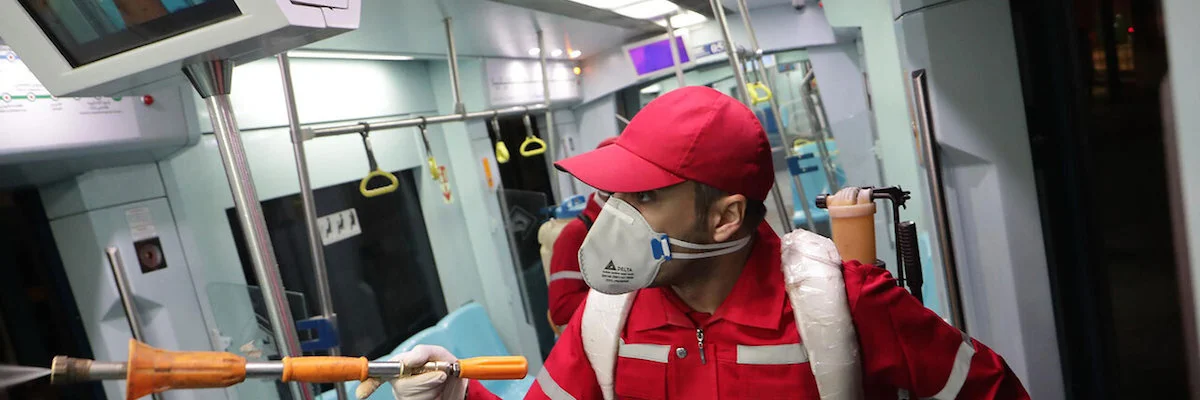
Iran on Saturday ordered the closure of schools and universities in two cities hit by a coronavirus outbreak that has killed five people in the country—the most outside the Far East.
The move came as Iranian authorities reported one more death among 10 new cases of the virus.
Since it emerged in December, the new coronavirus has killed 2,345 people in China, the epicentre of the epidemic, and 16 elsewhere in the world.
The COVID-19 outbreak in Iran first surfaced on Wednesday, when authorities said it claimed the lives of two elderly people in Qom, a Shiite holy city south of the capital.
They were the first confirmed deaths from the disease in the Middle East.
"We have 10 new confirmed cases of COVID-19," Iran's health ministry spokesman Kianoush Jahanpour told state television on Saturday.
"One of the new cases has unfortunately passed away," he added, noting that eight of them had been hospitalised in Qom and two in Tehran, without specifying where the death occurred.
The latest cases take to 28 the total number of confirmed infections in Iran.
Based on official figures, nearly 18 percent of those infected with the new coronavirus in Iran have died, compared with little more than three percent in China.
School Closure
As a "preventive measure", authorities ordered the closure of schools, universities and other educational centres in Qom and the nearby city of Arak from Sunday, state television reported.
The World Health Organization has expressed concern over the speed at which COVID-19 has spread in Iran, as well as it being exported from the Islamic republic to other countries including Lebanon.
"The concern is... that we have seen an increase in cases, a very rapid increase in a matter of a few days," said Sylvie Briand, director of the WHO's global infectious hazard preparedness department.
"We are just wondering about also the potential of more exported cases in the coming days," she added.
The Iranian outbreak emerged in the lead-up to a parliamentary election on Friday.
State media said the disease had failed to dampen "the revolutionary zeal of Qom's people" to turn out to vote.
Iranians have been snapping up surgical face masks in a bid to avoid catching the virus.
Online retailer Digikala—Iran's equivalent of Amazon—said on Friday that it had sold 75,000 masks within a 36-hour period.
It said it was not claiming a commission on its mask sales, amid concerns that demand was causing prices to skyrocket on the black market.
'Epidemic has Started'
"Besides the high demand, we stand against the unusual price increase," Digikala tweeted.
"We stand alongside our dear suppliers and by providing fresh supplies, we hope we can meet a part of the country's demand."
The health ministry said tests had been carried out on 785 suspected coronavirus cases since the outbreak began.
"Most of the cases are either Qom residents or have a history of coming and going from Qom to other cities," its spokesman said.
Iran has yet to confirm the origin of the outbreak, but one official speculated that it was brought in by Chinese workers.
"The coronavirus epidemic has started in the country," state news agency IRNA quoted the health ministry's Minoo Mohraz as saying.
"Since those infected in Qom had no contact with the Chinese ... the source is probably Chinese workers who work in Qom and have travelled to China," she added.
But the official did not provide any evidence to support her claim, and it has not been reported elsewhere in Iranian media.
All of those who lost their lives are believed to be Iranian citizens.
Qom is a centre for Islamic studies and pilgrims, attracting scholars from Iran and beyond.
Following the announcement of the deaths, neighbouring Iraq on Thursday clamped down on travel to and from the Islamic republic.
The Iraqi health ministry announced that people in Iran were barred from entering the country "until further notice".
Kuwait's national carrier Kuwait Airways also announced it would suspend all flights to Iran.
Photo: IRNA
Iran Says Two More Deaths Among 13 New Coronavirus Cases
◢ Iran on Friday reported two more deaths among 13 new cases of coronavirus in the Islamic republic, bringing the total number of deaths to four and infections to 18. The COVID-19 outbreak first appeared in Iran on Wednesday, when officials said it killed two elderly people in the Shiite holy city of Qom.
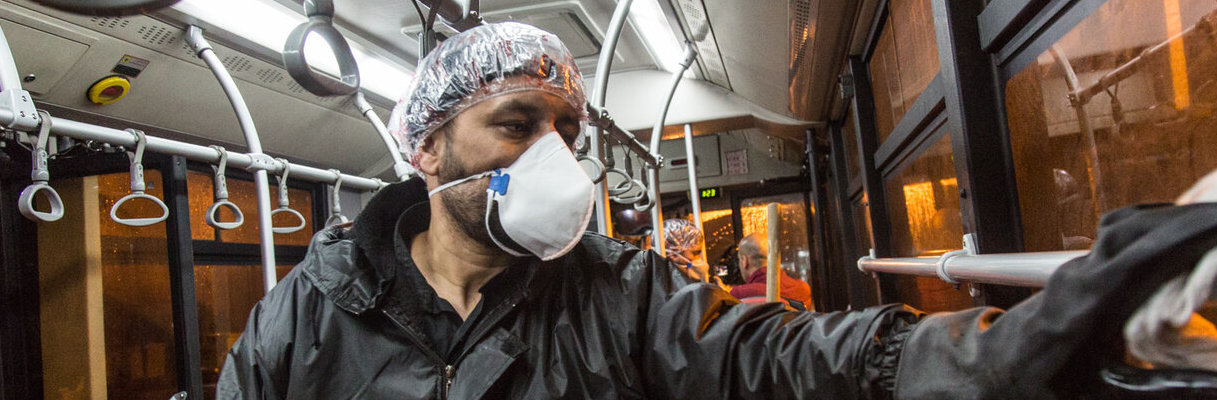
Iran on Friday reported two more deaths among 13 new cases of coronavirus in the Islamic republic, bringing the total number of deaths to four and infections to 18.
The COVID-19 outbreak first appeared in Iran on Wednesday, when officials said it killed two elderly people in the Shiite holy city of Qom.
They were the first confirmed deaths from the disease in the Middle East.
"Thirteen new cases have been confirmed," Iran's health ministry spokesman Kianoush Jahanpour said. "Unfortunately two of them have lost their lives."
The newly reported cases included "seven in Qom, four in Tehran, and two in Gilan" on the Caspian Sea coast, Jahanpour tweeted.
"Most of the cases are still either Qom residents" or were people who had come from Qom to other provinces "in recent days and weeks", he added.
He did not comment on the suspected origins of the outbreak in the Islamic republic.
He added that Iran had so far received from the World Health Organization four shipments of medical kits used to detect COVID-19.
Qom is a centre for Islamic studies and tourists, attracting scholars from Iran and beyond.
However, a government official said the first two people who died of the disease had not left Iran.
Spread in Mideast
Following the announcement of those deaths, Iraq on Thursday clamped down on travel to and from the Islamic republic.
The health ministry in Baghdad said people from Iran had been barred from entering Iraq "until further notice".
Kuwait's national carrier Kuwait Airways also announced it would suspend all of its flights to Iran.
Iran was holding a parliamentary election on Friday, with state media saying that the coronavirus had not been able to dampen "the revolutionary zeal of Qom's people" to turn out to vote.
The new coronavirus has now claimed the lives of 13 people outside mainland China.
The United Arab Emirates last month became the first country in the Middle East to report cases of the coronavirus strain. It now has nine cases.
Egypt has also reported one case.
Israel on Friday became the latest country in the region to confirm a case of coronavirus, in a citizen who flew home from Japan after being quarantined on a stricken cruise ship.
Iran's health sector has been hit by sanctions imposed by the United States since Washington withdrew in 2018 from a landmark nuclear deal between the Islamic republic and world powers.
Photo: IRNA
Three New Coronavirus Cases in Iran After Two Deaths
◢ Iran has confirmed three new coronavirus cases following the deaths of two elderly men, the health ministry told AFP on Thursday, as Iraq banned travel to and from its neighbor. The pair who died were elderly Iranian citizens and residents of the city of Qom. They were the first confirmed deaths from the COVID-19 virus in the Middle East.
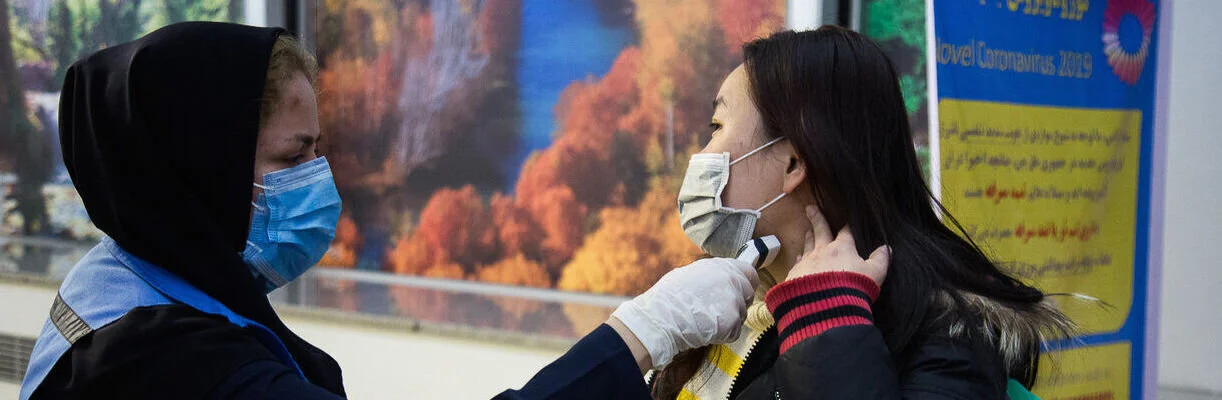
Iran has confirmed three new coronavirus cases following the deaths of two elderly men, the health ministry told AFP on Thursday, as Iraq banned travel to and from its neighbor.
The pair who died were elderly Iranian citizens and residents of the city of Qom. They were the first confirmed deaths from the COVID-19 virus in the Middle East.
Health ministry spokesman Kianush Jahanpour said two of the new cases were also in Qom and the other was in Arak, south of the holy city.
"In total there were five cases... of which two have been fatal," he said.
Qom is a centre for Islamic studies and tourists, attracting scholars from Iran and beyond. However, a government official said the deceased men had not left Iran.
Following the announcement of the deaths, Iraq on Thursday clamped down on travel to and from the Islamic republic, with Iraq's health ministry announcing people in Iran were barred from entering the country "until further notice".
"Iranians are prohibited from entering (Iraq)," a senior official told AFP, adding that border crossings with Iran are now closed, with only returning Iraqis allowed to pass through.
These Iraqis will be examined and, if necessary, they will be placed "in quarantine for 14 days", the health ministry said.
Iraqi nationals are also not allowed to travel to Iran, according to the ministry.
The border closure followed a backlash against a Wednesday announcement of visa waivers for Iranian nationals wishing to travel to Iraq by the interior ministry.
Iraqis took to social media using the hashtag "close the border" and local officials called for a ban on the entry of goods and people through various border crossings with the Islamic republic.
Iraqi airports are already screening travellers for the virus and national carrier Iraqi Airways has suspended flights to Iran.
Each year, millions of Iranian pilgrims visit holy Shiite sites in Iraq, providing the Iraqi state with significant revenue.
Earlier Thursday, Iran's government spokesman Ali Rabiei said Tehran would set up a top-level body of government and defence officials to fight the virus' spread, according to state news agency IRNA.
"We, however, need global action (by authorities) and the cooperation of all citizens," Rabiei said on Twitter.
‘Hid the Truth'
The deaths in Iran were reported by local media on Wednesday, just hours after Tehran said there were two cases in the country.
On social media, several people accused the government of keeping silent to prevent panic ahead of Friday's parliamentary elections.
"Just four hours separated the announcement that two compatriots were infected... and their deaths," journalist Javad Heydarian tweeted.
"This signifies that the virus had been around for some days but they hid the truth."
Public confidence in government pronouncements has plummeted since the downing of a Ukrainian passenger plane on January 8 that killed 176 people.
The government initially denied responsibility, but later admitted the plane had been fired on due to "human error" and blamed a jittery missile operator.
The culture ministry has asked local media to only publish official information from government officials and denounced what it claimed was a proliferation of fake news on social media regarding the virus.
Since December, the novel coronavirus has killed 2,118 people in China—the epicenter of the epidemic—excluding Hong Kong and Macau.
Elsewhere in the world, the virus has killed 11 people and spread across some 25 countries.
Photo: IRNA
U.S. Sanctions Iranian Election Officials Who Bar Candidates
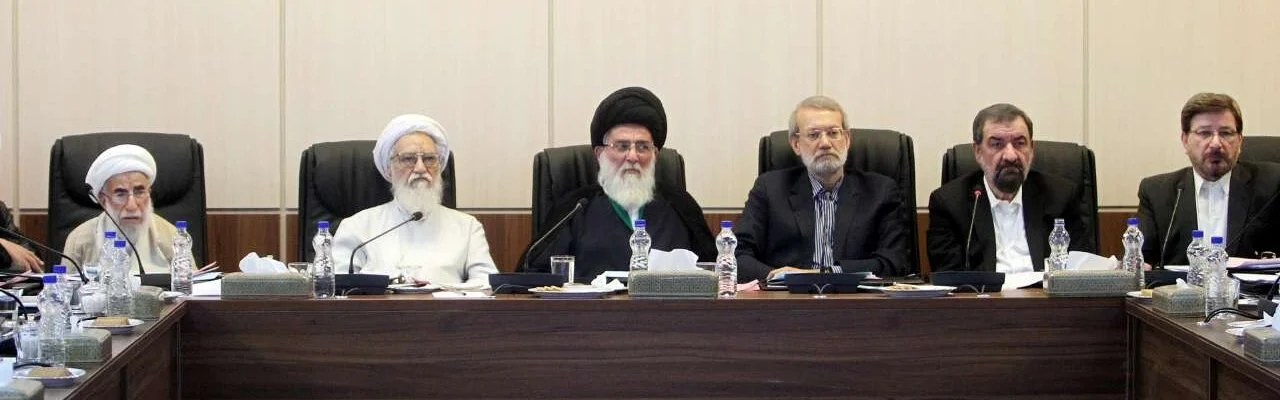
◢ The U.S. said it has sanctioned members of an Iranian government agency that it says rigs elections in the country by disqualifying candidates who don’t echo the political ideology of Ayatollah Ali Khamenei. Five members of Iran’s Guardian Council and its Elections Supervision Committee, who are appointed by Khamenei, were added to the U.S. sanctions list on Thursday.
By Alex Wayne and Golnar Motevalli
The U.S. said it has sanctioned members of an Iranian government agency that it says rigs elections in the country by disqualifying candidates who don’t echo the political ideology of Ayatollah Ali Khamenei.
Five members of Iran’s Guardian Council and its Elections Supervision Committee, who are appointed by Khamenei, were added to the U.S. sanctions list on Thursday, the Treasury Department said in a statement.
“The Trump administration will not tolerate the manipulation of elections to favor the regime’s malign agenda, and this action exposes those senior regime officials responsible for preventing the Iranian people from freely choosing their leaders,” Treasury Secretary Steven Mnuchin said in the statement. “The United States will continue to support the democratic aspirations of Iranians.”
The commander of Iran’s powerful Islamic Revolutionary Guard Corps, General Hossein Salami, urged Iranians to turn out for parliamentary elections on Friday in defiance of the U.S. and said “every vote by the people is a slap in the face of an enemy who is hoping for a low turnout,” the semi-official Tasnim news reported.
The government is concerned about low turnout for the election after the Guardian Council and its elections committee issued mass disqualifications of reformist and moderate candidates. Treasury said in its statement that “several thousand” candidates were ruled ineligible for the election, “including several incumbent legislators.”
Brian Hook, the State Department’s special representative for Iran, told reporters Thursday that the balloting is “political theater” because “the real election took place in secret long before any ballots were cast.”
Photo: IRNA
A Mother’s Pain Bares the Rifts Tearing Iran Apart
◢ When Hassan Rouhani was elected president of Iran in 2013, supporters pinned their hopes on him to revive the country’s fortunes and rehabilitate its relationship with the rest of the world. For retired teacher Manzar Zarabi, that hope crumbled into more insecurity, economic stagnation—and then unspeakable loss with the shooting down of an airplane that killed four close members of her family.
By Golnar Motevalli
When Hassan Rouhani was elected president of Iran in 2013, supporters pinned their hopes on him to revive the country’s fortunes and rehabilitate its relationship with the rest of the world.
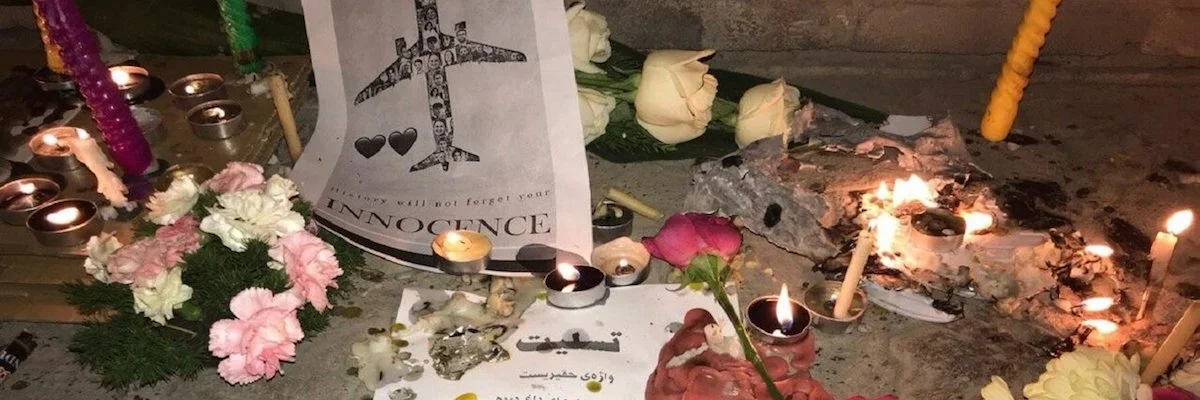
For retired teacher Manzar Zarabi, that hope crumbled into more insecurity, economic stagnation—and then unspeakable loss with the shooting down of an airplane that killed four close members of her family.
As Iranians vote in parliamentary elections this weekend, Zarabi’s story is a tragic reminder of how the country has alienated the very people who swept Rouhani to power seven years ago.
Rather than spearheading a new era, the educated, aspirational class that backs reform and global engagement remains caught in conflicts—both geopolitical and between state institutions at home. The destruction of the Ukrainian passenger jet full of Iranians by their own military last month provided the brutal denouement.
Zarabi just wanted the best for her children. She and her husband voted for Rouhani hoping for an end to the sanctions and escalating tension with the U.S. that were strangling the country. But the respite was short lived.
Last year, in the face of worsening economic conditions, the return of U.S. sanctions and a business environment overrun with cronyism, her 29-year-old son and youngest child, Alvand Sadeghi, gave up trying to start his own company and decided to depart for Canada. Her daughter, Sahand Sadeghi, 38, had already moved there several years earlier and started a family with her husband. Daughter Sophie Emami was born in 2014.
“They only left because of the economic pressures, otherwise they loved this country,” Zarabi, 64, said in an interview from Tehran as the 40 day memorial of their deaths approached. “Alvand left with tears in his eyes, he had to tear himself away. The economic situation had a big impact on his life, he just couldn’t sort out a proper life for himself here.”
Just like Sahand before him, Alvand sold his small, Iranian-assembled Peugeot 206 car and with some help from his parents started a new life in Toronto with his wife, Negar Borghei, who embarked on a master’s degree at McGill University. He was hired by an engineering firm and earned a good salary, his mother said.
The night before the four of them were due to head to the airport in Tehran, Zarabi said she was relieved that they were all leaving Iran. The country appeared to be on the brink of direct conflict with the Americans after they killed General Qassem Soleimani, Iran’s most revered military commander, in early January in a targeted hit in Iraq.
“When I saw that night that there was an attack and there could be a war, I just wanted them to leave the country sooner, to be safer,” Zarabi said.
Alvand, Negar, Sahand and five-year-old Sophie were killed within minutes of taking off from Imam Khomeini International Airport when two Iranian missiles hit their plane after the Islamic Revolutionary Guard Corps mistook it for a cruise missile. All 176 people on board lost their lives. Hours earlier, Iran had started its retaliatory operation on U.S. bases in Iraq.
The disaster seemed to crystallize the fortunes of the middle class, the traditional constituency of the reformist and moderate factions of Iran’s tightly controlled political sphere. Many have even less reason to engage now as hundreds of reformist candidates have been barred from standing in Friday’s election.
For the past two years in particular, as tensions with Washington worsened, educated Iranians feel increasingly adrift from the political institutions that govern their lives and financially crushed by U.S. sanctions and President Donald Trump’s “maximum pressure” strategy.
“We’ve reached a historic peak in the division between society and the state,” Saeed Laylaz, an economist who was adviser to former reformist president Mohammad Khatami said. “It’s definitely growing, unfortunately, and I haven’t seen it as bad as this in the past 40 years.”
Authorities covered up their culpability for the missile strike for three days. Rouhani said he didn’t know the truth until the afternoon of Friday, Jan. 10, suggesting that the highest level of government had been kept in the dark by its own military.
Iran is still investigating the incident, but that’s been fraught. The Ukrainian government has repeatedly called on Tehran to release the plane’s flight recorders to a country that has the technology to decode their data. Foreign Minister Mohammad Javad Zarif said this week his country won’t let the black boxes leave Iran and be decoded without the presence of Islamic Republic envoys.
“Hate and disgust,” Zarabi described her feelings immediately after learning what happened. “The lies on top of lies and a complete indifference to them having been actual human beings.”
U.S. sanctions have left few people in Iran unscathed. The collapse of the currency, the rial, by more than two thirds and the return of double-digit inflation mean only the country’s elites and industries protected by the state have been buffered from the worst effects of the downturn.
The impact on the squeezed middle is most keenly felt in a decline in living standards and spending power. The pressure is also hurting the value of their retirement incomes and the ability of their children to find jobs.
About 4 million people who used to be in the middle class according to the standard of $11 purchasing power parity are no longer there, according to calculations by Djavad Salehi-Isfahani, professor of economics at Virginia Tech.
Zarabi and her family all voted for Rouhani and they fully supported the Iran nuclear deal. While she sees the U.S. as the primary cause of the regional insecurity that culminated in her children’s deaths, she says the men in charge of Iran’s government and armed forces are directly to blame for what happened, and she wants full accountability.
For the first time in the Islamic Republic’s history, the commander of the Revolutionary Guards, Iran’s most powerful institution, appeared before parliament to apologize and express his grief and regret over the incident.
But within days, hard-core supporters of Supreme Leader Ayatollah Ali Khamenei and the guards were invited onto panel shows to argue that the plane’s downing wasn’t a big deal and that it was tantamount to a jet flying into a mountain. Clips circulated on Twitter and Instagram caused outrage.
Iran’s state media have interviewed or profiled some families who lost loved ones on the Ukrainian International Airlines plane. All of them were either devout or have expressed strong support for Khamenei.
The news cycle has continued to be dominated by coverage of Soleimani’s revenge operation and tributes to his military talents and religious devotion. No resignations have so far been announced over the plane tragedy, but the judiciary said last month that an unspecified number of people had been arrested.
A week after the disaster, Rouhani called for national unity, asking the judiciary to establish a special court to investigate. Striking a different tone two days later, Khamenei questioned whether those who protested the attack on the jet were the real people of Iran, or whether those who turned out in their millions to mourn Soleimani were more representative.
“The middle class is now between a government that has become increasingly more repressive and a U.S. that has become increasingly more aggressive,” said Ali Vaez, senior analyst and director of the Iran Project at the Washington-based International Crisis Group.
Two weeks after the tragedy, Zarabi received a call that four suitcases, belonging to her children, grandchild and daughter-in-law, would be delivered to her. The luggage was intact and unscathed, the neatly organized effects of a family life that no longer exists. The pilot had decided to offload some cargo because the plane was too heavy, Ukraine’s foreign minister said.
Zarabi’s days are now about finding reasons to keep going. Her husband speaks of ending his life. She hopes that she can summon the energy to find purpose again. “Our lives ended that day,” she said. “Nothing has any meaning for us anymore.”
Photo: IRNA
Iran Defends Barring of Candidates as Campaign Ends
◢ Iran's electoral watchdog on Wednesday defended its decision to disqualify thousands of candidates for a crucial parliamentary election in two days, as a lackluster campaign neared its end. Conservatives are expected to make an overwhelming resurgence in Friday's vote.
By David Vujanovic
Iran's electoral watchdog on Wednesday defended its decision to disqualify thousands of candidates for a crucial parliamentary election in two days, as a lackluster campaign neared its end.
Conservatives are expected to make an overwhelming resurgence in Friday's vote, which comes after months of steeply escalating tensions between Iran and its decades-old arch foe the United States.
Their gains would be made at the expense of those who back President Hassan Rouhani, a moderate conservative who was re-elected in 2017 promising people more freedoms and the benefits of engagement with the West.
But many people in Iran feel their lives have been crippled by an economic slump exacerbated by harsh US sanctions since President Donald Trump pulled the United States out of a landmark nuclear deal with the Islamic republic in 2018.
A week of campaigning, which has seen posters go up but only a few low-key gatherings, comes to an end on Wednesday, before a day of silence on the eve of polling day.
The interior ministry said around half of the 16,033 hopefuls would contest the election after the Guardian Council barred thousands, most of them moderates and reformists.
But the Council said it was "neutral" in its dealings with all political camps and acted in accordance with the law when it blocked their candidacy.
"The Guardian Council follows the laws and regulations parliament has passed at different times," said its spokesman Abbas Ali Kadkhodaee.
Disillusionment
"This time, just like at previous (elections), we have tried to properly follow the law," he told a news conference.
"The Council has never had a political view... It approaches political factions with closed eyes.
"What it does judge is the evidence in the cases of the candidates and then it only acts in accordance with the law passed by parliament."
Commentators expect disillusionment among the 57 million-strong electorate in the sanctions-hit country to result in a low turnout.
Many people on the streets of Tehran have expressed dissatisfaction with politicians ahead of the election, saying they failed to keep their word or to raise living standards.
Supreme leader Ayatollah Ali Khamenei on Tuesday urged Iranians to vote, saying it was a "religious duty".
Rouhani issued a similar call on Wednesday, saying that taking part would give Iran the "strength and unity" needed in its stand against the United States.
"We are going to the polls to choose the best people for parliament, which is a very important institution," he said in televised remarks after a meeting of his cabinet.
"We are under severe sanctions and pressure by the global arrogance, and we have to break these sanctions and improve people's lives," he added, referring to the United States.
"Sanctions are a terrorist and tyrannical act against Iran.
"One cannot say sanctions have no effect and the government should be doing more... It's lies, it's supporting America."
Turnout at Iran's past 10 elections averaged 60.5 percent, said the interior ministry.
'Tyrannical' Sanctions
The Guardian Council said it expected at least 50 percent of registered voters to cast ballots in the election.
"Our forecast is that we will have a good turnout in the upcoming election, and the average turnout has usually not been under 50 percent, and we will witness a turnout of 50 percent turnout in this election too," its spokesman Kadkhodaee said.
Iranians have been feeling the strain after months of turmoil.
The economy has been battered since Trump abandoned the nuclear deal in 2018 and reimposed sanctions as part of a "maximum pressure" campaign.
In November, demonstrations over petrol price hikes spread across Iran and turned violent before being crushed in a deadly crackdown.
Tehran and Washington have nearly gone to war twice in the past seven months, most recently after the US killed prominent Iranian general Qasem Soleimani on January 3.
The "martyrdom" of the hugely popular general provoked an outpouring of grief in Iran.
Millions of people turned out to mourn his death, but that unity suffered a blow after Iran admitted it "accidentally" shot down a Ukrainian airliner, killing 176 people.
Voting for Iran's 290-seat parliament, or Majles, opens at 8:00 am (0430 GMT) on Friday and lasts 10 hours, but can be extended. The first results are expected on Sunday.
Photo: IRNA