
Trump Thanks Tehran as American Freed in Prisoner Swap
◢ President Donald Trump thanked Tehran for a "very fair" negotiation Saturday after an American scholar detained in the country was released in exchange for an Iranian scientist held in the United States. Coming at a time of soaring tensions, the prisoner swap took place in neutral Switzerland.
By Elodie Cuzin
President Donald Trump had rare positive words for Iran on Saturday, thanking the US foe for a "very fair" negotiation to successfully pull off a prisoner swap that saw an American released from Iranian detention amid soaring tensions.
The exchange, which took place in neutral Switzerland, involved a Princeton graduate student jailed in Iran for espionage since 2016 and an Iranian national arrested over a year ago in Chicago.
"Thank you to Iran on a very fair negotiation," tweeted Trump, as Xiyue Wang made his way home to his family. The US leader was expected to welcome Wang in person when he arrives in the United States, after a stop in Germany for medical evaluations.
"It was a one-on-one hostage swap," Trump told reporters. "I think it was great to show than we can do something. It might have been a precursor as to what can be done."
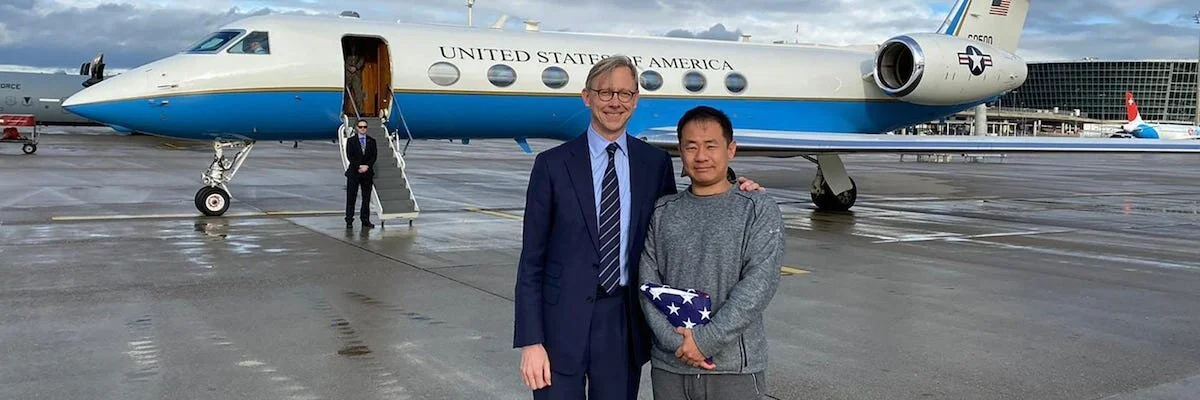
A photo tweeted by the American Embassy in Bern showed Wang on a rainswept tarmac in Zurich with an official blue and white US jet in the background, hugging Ambassador Edward McMullen.
The Chinese-born American was in apparent good health and in "very, very good humor," said a senior US administration official.
Tehran had announced the release of its national, Massoud Soleimani, shortly before Trump revealed that Wang was returning home.
"Glad that Professor Massoud Soleimani and Mr Xiyue Wang will be joining their families shortly," Iran's Foreign Minister Mohammad Javad Zarif tweeted—along with a photograph of himself and the scientist on a plane under the words "Going home."
"Many thanks to all engaged, particularly the Swiss government," which has looked after US interests in Iran in the absence of diplomatic ties, Zarif said.
The Swiss foreign ministry confirmed that the exchange—which it called a "humanitarian gesture"—took place on its territory. Both the US and Iran credited Switzerland with an intensive diplomatic effort to secure the men's release.
"Our country stands ready for further facilitation," the foreign ministry statement said.
‘Hopeful' Sign
The United States and Iran have not had diplomatic ties since 1980, and relations have sharply worsened since Trump withdrew from an international accord giving Iran sanctions relief in return for curbs on its nuclear program.
The arch-enemies came to the brink of military confrontation in June this year when Iran downed a US drone and Trump ordered retaliatory strikes before cancelling them at the last minute.
Secretary of State Mike Pompeo said the United States was "pleased that Tehran has been constructive in this matter."
Briefing reporters on condition of anonymity, the senior US official noted that Trump "remains committed to talks with Iran without preconditions" -- about Tehran's nuclear program, its "malign activities" in the Middle East, and the deadly mass protests that have gripped the country.
While Iran has so far rebuffed US offers of talks, the official said: "We're hopeful that the release of Mr Wang is a sign that the Iranians may be willing to come to the table to discuss all these issues."
The official also voiced hope that Wang's release signals "the Iranians are realizing that the practice of hostage-taking diplomacy really should come to an end."
A doctoral candidate at Princeton, Wang was conducting research for his dissertation on late 19th- and early 20th-century Eurasian history when he was imprisoned in August 2016. He was serving 10 years on espionage charges.
"He was not a spy, he was not involved in espionage and, and was wrongfully detained from the start," the US official said.
A statement on the Iranian judiciary's Mizan Online website said Wang had been "freed on Islamic clemency."
Soleimani, a professor and senior stem cell researcher at Tehran's Tarbiat Modares University, was arrested on arrival at an airport in Chicago in October 2018 for allegedly attempting to ship growth hormones, according to Iranian media.
The US official confirmed the Justice Department has dropped charges against Soleimani, calling the swap a "reciprocal humanitarian gesture" and a "very, very good deal for the United States."
"There's been absolutely no payments of cash or lifting of sanctions or any sort of concessions or ransom," the official said.
Spying Allegations
Rob Malley, president of the International Crisis Group consultancy, called it a "rare bit of good news on US-Iran front."
"But several other Americans remain unjustly detained in Iran and they should be released too," he cautioned. "They should not be used as pawns in the two countries' fraught relationship."
Foreign nationals still held in Iran include former US soldier Michael R. White, British-Iranian mother Nazanin Zaghari-Ratcliffe, French academic Roland Marchal and Australian university lecturer Kylie Moore-Gilbert.
Two other Australians, travel bloggers Jolie King and Mark Firkin, were released in October by Iran, in another apparent swap for Iranian student Reza Dehbashi.
In September, Negar Ghodskani, an Iranian woman sentenced in the United States for violating sanctions against Tehran was released and returned home after giving birth in custody.
An unknown number of Iranians are detained abroad.
Photo: U.S. Department of State
Iran Nuclear Deal Parties Meet as Accord Nears Collapse
◢ The remaining signatories to the faltering 2015 Iran nuclear deal will meet in Vienna on Friday with the survival of the landmark agreement at stake after Tehran vowed to continue to breach the deal's limits on its nuclear program. On the eve of what was already likely to be a strained meeting, Britain, France and Germany accused Iran of developing nuclear-capable ballistic missiles, in a letter to the UN on Thursday.
The remaining signatories to the faltering 2015 Iran nuclear deal will meet in Vienna on Friday with the survival of the landmark agreement at stake after Tehran vowed to continue to breach the deal's limits on its nuclear program.
Envoys from Britain, France, Germany, China, Russia and Iran will take part in the meeting, which is the first time the six parties will have gathered in this format since July.
Since May, Iran has taken a series of measures, including stepping up uranium enrichment, in breach of the 2015 deal, with another such move likely in early January.
Iran insists that under the agreement it has the right to take these measures in retaliation for the US's withdrawal from the deal in 2018 and reimposition of crippling sanctions.
Since last month, European members have in turn begun raising the possibility of triggering the so-called "dispute resolution mechanism" foreseen in the accord, which could lead to the resumption of UN sanctions on Iran.
On the eve of what was already likely to be a strained meeting, Britain, France and Germany accused Iran of developing nuclear-capable ballistic missiles, in a letter to the UN on Thursday.
Iranian Foreign Minister Javad Zarif dismissed the allegation as "desperate falsehood".
However, despite the mounting tension observers say Britain, France and Germany are unlikely to trigger the dispute resolution mechanism on Friday when their diplomats attend the joint commission meeting chaired by senior EU official Helga-Maria Schmid.
Analysts say if UN sanctions are re-imposed and the deal falls apart, Iran could also withdraw from the Treaty on the Non-Proliferation of Nuclear Weapons (NPT).
"It's not clear whether that's worth the benefit," Ali Vaez from the International Crisis Group told AFP.
But he warned the risk of the deal collapsing was increasing as Iran was "running out of measures that are easy to reverse and non-controversial".
"Both sides are locked into an escalatory cycle that is just very hard to imagine that they would step away from," he said.
Francois Nicoullaud, former French ambassador to Iran, also says tensions were expected to continue to rise.
"Maybe it won't be this time, but (the deal falling apart) will certainly be in the background of the discussions," Nicoullaud told AFP.
'No Breathing Space'
Iranian parliament speaker Ali Larijani warned Sunday that if European partners triggered the dispute mechanism, Tehran may "seriously reconsider" its commitments to the UN nuclear watchdog, the International Atomic Energy Agency (IAEA), which monitors the deal's implementation.
European efforts to shield Iran from the effects of US sanctions by creating a mechanism to carry on legitimate trade with the Islamic republic have borne little fruit, much to Tehran's frustration.
The EU is growing increasingly concerned by Tehran rowing back from its commitments.
The dispute resolution mechanism in the deal has numerous stages, but it can eventually culminate in the UN Security Council voting on whether Iran should still have relief from sanctions lifted under the deal.
In such a scenario, says Vaez, "we will have a major non-proliferation crisis on our hands in the sense that the Russians and the Chinese have already declared they would not recognize the return of (sanctions)".
Vaez said in the end the path to a diplomatic solution would depend on Washington's next moves and whether it would at least be willing to relax its attempts to prevent sales of Iranian oil, a vital source of income for the country.
"The remaining parties to the deal have proved incapable of providing Iran with any kind of breathing space," Vaez said.
Iranian President Hassan Rouhani said Wednesday that Tehran is willing to return to the negotiating table if the United States first drops sanctions.
Photo: IRNA
Iran Retains 'Strong Voice' in OPEC ahead of Key Meeting
◢ Iran, hit by year-long US oil sanctions and recent protests over domestic fuel price hikes, retains a "strong voice" in the OPEC producing cartel which meets this week, analysts say. OPEC descends on its plush Vienna headquarters Thursday and Friday and is expected to maintain output cuts alongside its partners—or perhaps even go deeper.
By Benoit Pellegrin
Iran, hit by year-long US oil sanctions and recent protests over domestic fuel price hikes, retains a "strong voice" in the OPEC producing cartel which meets this week, analysts say.
The Islamic republic suffers from tumbling output yet remains a significant player in the Organization of the Petroleum Exporting Countries (OPEC), whose 14 nations from Africa, the Middle East and Latin America together pump 40 percent of the world's oil.
Washington had re-imposed sanctions last year on Tehran's exports after withdrawing from a 2015 nuclear deal.
"They still have a strong voice," SEB analyst Bjarne Schieldrop told AFP ahead of this week's gathering of both OPEC and its partners that include Russia.
OPEC descends on its plush Vienna headquarters Thursday and Friday and is expected to maintain output cuts alongside its partners—or perhaps even go deeper.
The cuts of 1.2 million barrels per day from October 2018 levels were originally fixed in December last year and were already extended at OPEC's last meeting in July.
Crucially however, Iran was exempt from the deal, which is aimed at shoring up world oil prices and protecting precious revenues.
Yet the republic's output has been shredded by US sanctions that prevent it exporting oil abroad.
According to OPEC data, Iran produced 2.192 million barrels of crude oil per day (mbpd) in the third quarter of 2019.
That contrasted sharply with the 3.813 mbpd of production which the Middle Eastern nation averaged in 2017.
PVM analyst Tamas Varga told AFP that Iran was suffering as a result of "maximum pressure from the United States.”
"Oil export exports are falling," he added.
At the same time, some OPEC nations like Iraq and Kuwait have been able to keep their own output levels unchanged despite the cartel's pact, Schieldrop said.
"The situation is unfair seen from Iran's side," he told AFP.
Meanwhile, Iran's regional rival Iraq has not curbed its output, instead exceeding its own quota despite criticism from OPEC's de-facto leader Saudi Arabia.
In the absence of US sanctions on Iran, oil prices would currently be trading far lower, according to Schieldrop.
"If that was not happening, we would have very low prices today," he noted. Iran—a founding OPEC member which sits on the world's fourth-biggest oil reserves and second-largest gas reserves -- still retains its authority within the cartel.
It has been vocal critic of Russia's increasingly powerful role within the so-called OPEC+ grouping.
But analysts note that Iran now faces social unrest linked to the impact of US sanctions.
Protests broke out across the country from November 15 and were ignited by a price hike on fuel—a heavily subsidized commodity in Iran—as part of an effort to ease pressure on the sanctions-hit economy.
"Iran is suffering economically and socially," Varga said.
Videos emerged this week showing harrowing scenes of bleeding protesters, burning roadblocks and snipers on rooftops after Iran lifted a near-total internet blackout.
The footage has opened a window onto what analysts say was one of Tehran's bloodiest crackdowns.
Many videos from some of the estimated 100 areas where demonstrations erupted appear to show security forces firing at close range at unarmed demonstrators or beating them with batons.
Meanwhile, The US State Department announced that Secretary of State Mike Pompeo would meet Wednesday in Portugal with Israeli Prime Minister Benjamin Netanyahu, who was expected to call for increased US pressure on the "tottering" Iranian government.
Photo: IRNA
Iran Says Still Ready for Talks if US Lifts Sanctions
◢ Iran is willing to return to the negotiating table if the United States first drops sanctions, President Hassan Rouhani said Wednesday, after a fuel price hike sparked deadly violence ahead of elections. "If they are prepared to put aside the sanctions, we are ready to talk and negotiate, even at the level of heads of the 5+1 countries," Rouhani said in remarks aired live on state television.
Iran is willing to return to the negotiating table if the United States first drops sanctions, President Hassan Rouhani said Wednesday, after a fuel price hike sparked deadly violence ahead of elections.
European countries have been pushing for talks with Iran to salvage a 2015 nuclear deal that has all but collapsed since the United States withdrew and reimposed sanctions last year.
Rouhani has long demanded the lifting of US sanctions for Iran's return to talks under the auspices of the so-called P5+1 that reached the deal—the five veto-wielding permanent members of the UN Security Council plus Germany.
His latest statement comes after a shock announcement in mid-November that the price of petrol was going up by as much as 200 percent triggered demonstrations across Iran that turned deadly.
The decision came at a sensitive time ahead of a February parliamentary election.
It is a rise many Iranians can ill afford in a country whose sanctions-hit economy is expected to contract by 9.5 percent this year.
"If they are prepared to put aside the sanctions, we are ready to talk and negotiate, even at the level of heads of the 5+1 countries," Rouhani said in remarks aired live on state television.
"We are under sanctions. This situation... is (because of) incitement by the Zionists and the region's reactionary," he said, referring to Iran's regional rivals Israel and Saudi Arabia.
His remarks came after France and Germany raised the possibility of triggering a mechanism in the deal that could lead to the reimposition of UN sanctions.
‘Cruel Act'
Rouhani described the sanctions as "a cruel act by the White House".
"We have no choice but to resist and persevere," he said. "At the same time, we have not closed the window for negotiations.
"I tell the nation of Iran that any time America is prepared to lift and put aside its wrong, cruel, unlawful, incorrect, terrorist sanctions, immediately the heads of 5+1 can meet and we have no problem."
The landmark 2015 deal gave Iran relief from economic sanctions in return for curbs on its nuclear programme.
It has been at risk of falling apart since US President Donald Trump unilaterally withdrew from it in May last year and reimposed sanctions.
Known formally as the Joint Comprehensive Plan of Action (JCPOA), it was agreed between Britain, China, France, Russia and the United States, plus Germany.
Twelve months on from the US pullout, Iran began reducing its commitments to the deal hoping to win concessions from those still party to the accord.
Its latest step back came last month, when engineers began feeding uranium hexafluoride gas into mothballed enrichment centrifuges at the underground Fordow plant south of Tehran.
In his remarks, Rouhani said his government strived to remain in the nuclear deal despite "pressures" that were on it.
‘Utter Lies'
The statement comes after angry demonstrations erupted against a shock decision to raise petrol prices on November 15.
London-based human rights group Amnesty International said on Monday that at least 208 people were killed in a crackdown on the demonstrations, citing what it called credible reports.
Iran's judiciary spokesman Gholamhossein Esmaili on Tuesday rejected as "utter lies" unofficial casualty figures given by "hostile groups" based abroad.
On Monday night, state television charged that foreign media had been "hyping up" the death toll.
It said "the security forces had no choice but to resort to authoritative and tough confrontation... and a number of rioters were killed".
The unrest started hours after it was announced that the price of petrol would rise from 10,000 rials per litre to 15,000 (12 US cents) for the first 60 litres, and to 30,000 rials for any extra fuel bought after that each month.
Rouhani has said proceeds would go to the most needy.
State news agency IRNA said the payments had since been made in three installments between November 18 and 23.
Photo: IRNA
Iran for First Time Acknowledges Protesters Were Shot Dead
◢ Iran for the first time acknowledged that its security forces shot and killed protesters last month during violent crackdowns. State television on Tuesday reported that “rioters” had been shot dead in several areas as they joined anti-government protests, including in Tehran, the capital, and Mahshahr in the country’s southwest.
By Yasna Haghdoost
Iran for the first time acknowledged that its security forces shot and killed protesters last month during one of the most violent crackdowns on dissent since the 1979 Islamic revolution.
State television on Tuesday reported that “rioters” had been shot dead in several areas as they joined anti-government protests, including in Tehran, the capital, and Mahshahr in the country’s southwest. The latter has a sizable Arab population, and the report claimed security forces clashed with a separatist group there.
The Islamic Revolutionary Guard Corps said on Saturday that it was investigating reports that its forces had targeted and shot protesters, the semi-official Iranian Labour News Agency reported, citing Brigadier General Mohammadreza Yazdi.
Separately, official figures showed 300 protesters remain in custody in Tehran. Judiciary spokesman Gholam Hossein Esmaeili said most of those arrested during the unrest had been freed, and that the demonstrations have died down.
Iran was rocked by protests in November after the government increased gasoline prices by as much as 300% and introduced rationing as the economy struggles under crippling U.S. sanctions meant to curtail Iranian influence in the Middle East and weaken its leadership.
The International Monetary Fund expects Iran’s recession to deepen this year, with gross domestic product contracting 9.5%.
The unrest soon took a broader anti-establishment turn and authorities responded with a swift crackdown, severing access to most of the internet in a move that made it difficult to track the demonstrations and the government response.
On Tuesday, President Donald Trump, who reimposed the sweeping penalties on Iran’s crucial oil exports, urged the world to take a closer look at the security operation. “The word is that thousands of people are being killed that are protesting. Not just small numbers,” he said in London, where he’s attending a NATO summit.
According to the London-based Amnesty International rights group at least 208 people have died. New York-based Human Rights Watch estimated that up to 7,000 people were arrested.
Iranian officials have put the death toll much lower.
Photo: IRNA
Taken to Brink by Trump, GCC States Are Backpedaling on Iran
◢ Spooked by the prospect of a catastrophic war with Iran and its proxy militias across the region, Arab monarchies are in the midst of a strategic rethink regarding the Persian Gulf. The U.A.E., whose economic model relies in large part on its international links, quickly realized it had most to lose from a military escalation.
By Zainab Fattah
An expanded soccer tournament, a direct flight, clandestine meetings and a pledge to release prisoners of war; diplomacy is breaking out as Gulf Arab nations back away from a Donald Trump-inspired confrontation with Iran. And the signs are everywhere.
Last week, Saudi Arabia, the United Arab Emirates and Bahrain played their first games of the 2019 Arabian Gulf Cup in Qatar after a last-minute decision to take part—an apparent breakthrough in a 30-month feud that saw them halt trade and flights over Qatar’s links with Iran and support for Islamist groups.
Meanwhile, the Saudi-led coalition that’s fought Iranian-backed Houthi rebels in Yemen since 2015 began releasing jailed Houthis, as efforts to end the conflict gather momentum. Oman is quietly hosting high-level meetings, according to people familiar with the matter, and even Iranian President Hassan Rouhani has hinted at direct channels with the U.A.E.
Spooked by the prospect of a catastrophic war with Iran and its proxy militias across the region, Gulf monarchies are in the midst of a strategic rethink. The U.A.E., whose economic model relies in large part on its international links, quickly realized it had most to lose from a military escalation. It had removed most of its troops from Yemen by the end of a turbulent summer that saw oil tankers targeted and a U.S. drone downed in the Gulf without significant American response.
While the humanitarian catastrophe unleashed by the Yemen war trained an unwelcome spotlight on Saudi Arabia, it took a brazen strike on Saudi oil installations—which knocked out half the country’s crude production—to ram home the risks and prove that Trump was not about to ride to his allies’ rescue.
“The attacks shattered any illusion of this magical U.S. security umbrella,” said David Roberts, an assistant professor at King’s College London who studies the Gulf. “It burst the bubble and showed that Iran had the willingness to both do something astonishing like the attack on Aramco facilities and the capability to carry it out.”
Iran denies U.S. and Saudi assertions it carried out the Sept. 14 strikes, pointing to Houthi claims of responsibility. But people familiar with investigations into the attacks say they were almost certainly launched from southwestern Iran -- an explosive escalation in Tehran’s pushback against an economic offensive unleashed by Trump and enthusiastically backed by the Saudis.
The Trump administration withdrew last year from the 2015 deal meant to prevent Iran from developing a nuclear bomb, and reimposed sanctions that have crippled its oil exports. But the “maximum pressure” policy is designed to coax Tehran into more concessions not to drag the U.S. into a new Middle East war just as it draws down troops in Syria.
Rolling back Shiite Muslim Iran’s power remains a priority for the Sunni Gulf Arab leadership. There’s an increasing recognition, however, that no one stands to gain from a military escalation in the world’s top oil-exporting region.
Saudi Arabia’s Center for International Communication didn’t respond to an email seeking comment. The U.A.E. declined to comment. But in a Nov. 10 speech, Minister of State for Foreign Affairs Anwar Gargash said he saw “a path to a deal with Iran that all parties might soon” be ready to embark on if Tehran demonstrated commitment.
War to ‘Cold Peace’
In search of a breakthrough, Pakistani Prime Minister Imran Khan, a former cricketer elected with the backing of a powerful army that provides extensive support for the Saudi military, shuttled between Tehran and Riyadh in October. He met Iran’s supreme leader, Ayatollah Ali Khamenei and Rouhani, as well as Saudi Arabia’s King Salman and Crown Prince Mohammad bin Salman, describing talks as “encouraging.”
Khan said he traveled at the request of Trump and Saudi Minister of State for Foreign Affairs Adel Al-Jubeir said the diplomacy wasn’t prompted by the kingdom. But deepening unease in the Persian Gulf catalyzed the effort.
Turning these overtures into lasting peace between countries that have grown further apart since the 1979 Iranian revolution remains far off.
The Gulf states resent Iran’s deep reach into Arab nations. While ongoing protests in Iraq and Lebanon suggest Iran has reached the limit of its regional influence, they are unlikely to reverse political and military advances decades in the making.
“Cold peace is possible but we are certainly far from a grand bargain,” said Afshin Molavi, senior fellow at the Foreign Policy Institute at Johns Hopkins. “For that, both Riyadh and Abu Dhabi would have to accept a role for Iran in Arab countries such as Iraq, Syria, Lebanon and Yemen.”
As they explore ways forward, Gulf states are moving at different speeds.
The U.A.E. broke with the U.S. and Saudi Arabia by not naming Iran as the culprit behind attacks in May and June on oil tankers as they sailed toward the Strait of Hormuz, the world’s foremost oil shipping chokepoint.
It sent coast guard officials to Iran for the first time in six years and Rouhani hinted at other meetings with senior U.A.E. officials. “We’re moving toward improved relations,” he said Oct. 14. Saudi Arabia is catching up.
Chokepoint
Washington built a multilateral naval operation to protect shipping in the Persian Gulf after the attacks and sent more troops to Saudi Arabia. Both actions resulted in a “down tick” in Iranian actions,” U.S. Defense Secretary Mark Esper said Nov. 13. “The Iranians should not mistake our restraint for weakness.”
Where the U.S. holds back, however, others are crowding in. Besides his role in saving Bashar al-Assad’s regime, Russian President Vladimir Putin has forged a partnership with Iran, created an oil alliance with Saudi Arabia and built ties with Egypt’s Abdel-Fattah El-Sisi, who was warned by the U.S. last month against plans to purchase Russian jets.
Putin traveled to Saudi Arabia and the U.A.E. in October after visits by the Saudi king and the U.A.E.’s de-facto leader Mohammad bin Zayed to Moscow. The two Gulf countries and Russia have signed deals valued at billions of dollars.
For Iran’s Rouhani, the case for regional engagement is obvious.
“Don’t you know that Iran is going to stay here and we will remain neighbors throughout history?” he has said, referring to Iran’s Arab neighbors. “Trump will only be around for a few years and will go back to whatever it was he was doing.”
Photo: IRNA
Iran Says May 'Reconsider' Atomic Watchdog Commitments
◢ Iran warned Sunday it may "seriously reconsider" its commitments to the UN atomic watchdog if European parties to a nuclear deal trigger a dispute mechanism that could lead to sanctions. "If they use the trigger (mechanism), Iran would be forced to seriously reconsider some of its commitments to" the International Atomic Energy Agency, said parliament speaker Ali Larijani.
Iran warned Sunday it may "seriously reconsider" its commitments to the UN atomic watchdog if European parties to a nuclear deal trigger a dispute mechanism that could lead to sanctions.
The 2015 nuclear accord has been unravelling since last year when the United States unilaterally withdrew from it and began reimposing sanctions on Iran.
The three European countries still party to the deal—Britain, France and Germany—have been trying to salvage it but their efforts have so far borne little fruit.
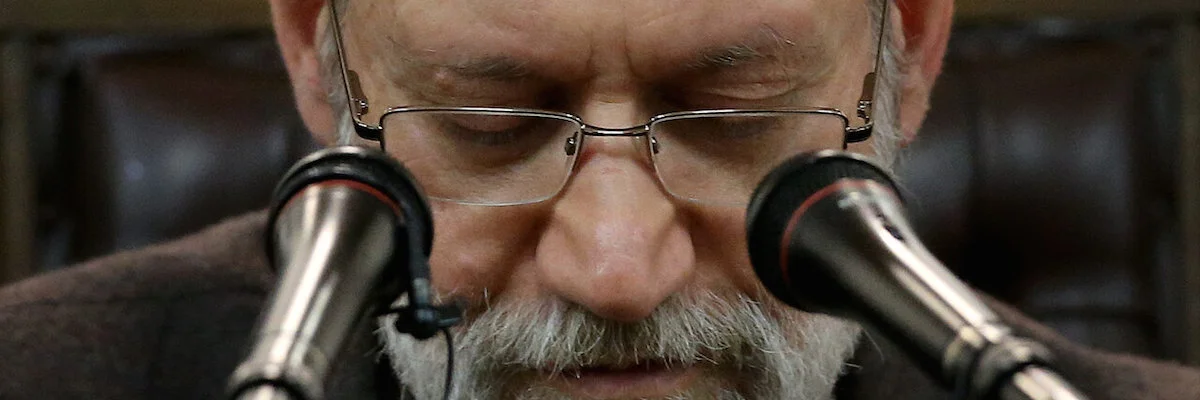
"If they use the trigger (mechanism), Iran would be forced to seriously reconsider some of its commitments to" the International Atomic Energy Agency, said parliament speaker Ali Larijani.
"If they think doing so is more beneficial to them, they can go ahead," he told a news conference in Tehran.
In May, one year after the US pullout, Iran began retaliating by scaling back its commitments to the deal—known formally as the Joint Comprehensive Plan of Action.
Following its latest step back this month, the European parties warned the JCPOA's dispute resolution mechanism could be triggered if Iran continued down that path.
It covers various stages that could take several months to unfold, but the issue could eventually end up before the UN Security Council, which could decide to reimpose sanctions.
Larijani also suggested the current deadlock with the United States could be "fixed" if Iran's arch-foe learns from the past.
Ahead of the 2015 deal, then US president Barack "Obama wrote a letter and said that I accept Iran's enrichment, now let's negotiate," he said.
"If the American officials have just as much wisdom, to use past experiences, then they can fix this issue."
The JCPOA set out restrictions on Iran's nuclear program in exchange for the lifting of Western sanctions.
Photo: IRNA
Smog in Iran Shuts Schools, Universities
◢ Air pollution forced the closure of schools and universities in parts of Iran on Saturday, including Tehran, which was cloaked by a cloud of toxic smog, state media reported. The young and elderly and people with respiratory illnesses were warned to stay indoors and sporting activities were suspended.
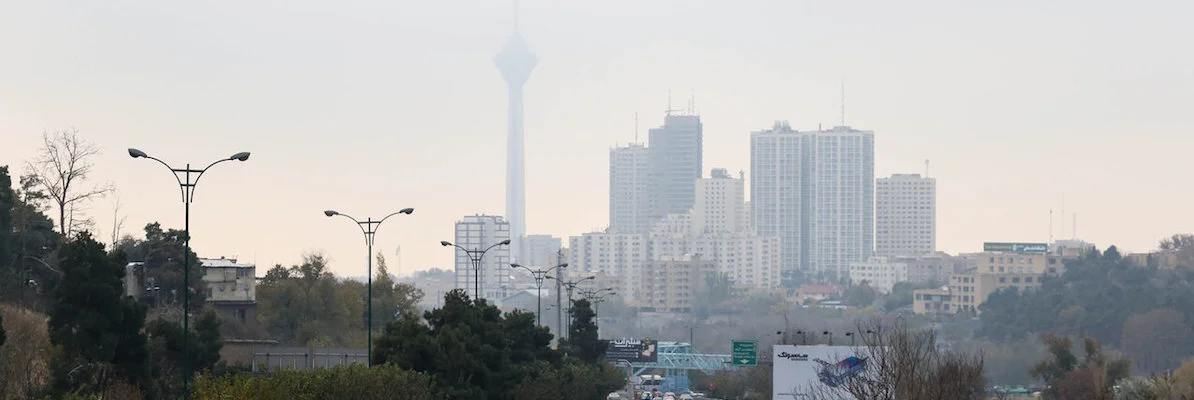
Air pollution forced the closure of schools and universities in parts of Iran on Saturday, including Tehran, which was cloaked by a cloud of toxic smog, state media reported.
The young and elderly and people with respiratory illnesses were warned to stay indoors and sporting activities were suspended for the start of the working week in the Islamic republic.
The decision to shut schools and universities in the capital was announced late Friday by deputy governor Mohammad Taghizadeh, after a meeting of an emergency committee for air pollution.
"Due to increased air pollution, kindergartens, preschools and schools, universities and higher education institutes of Tehran province will be closed," he said, quoted by state news agency IRNA.
Schools in the capital would also be closed for a second day on Sunday, Taghizadeh said later.
"Having examined the index of pollutants in Tehran... it was decided for all schools to be closed tomorrow in Tehran province, except for the counties of Firuzkuh, Damavand and Pardis," he was quoted as saying.
An odd-even traffic scheme was imposed on Saturday to restrict the number of private vehicles on roads in the capital and trucks were banned outright in Tehran province, IRNA reported.
The scheme would be lifted on Sunday, but heavy vehicles would still be barred from the city, said Taghizadeh.
Industry to be Halted
But activities would be halted on Sunday for all sand mines and industries in Tehran that contribute to air pollution, he added, without specifying which ones.
Schools were also closed on Saturday in the northern province of Alborz and in the central province of Esfahan, IRNA reported, citing officials.
Other areas where schools were shut included the northeastern city of Mashhad, Orumiyeh city in northwestern Iran and Qom city, south of Tehran.
In Tehran, average concentrations of hazardous airborne particles reached 146 micrograms per cubic meter on Saturday morning, according to air.tehran.ir, a government-linked website.
By mid-afternoon, the index had dropped to 107 after winds blew away some of the pollution hanging over the capital.
The World Health Organization's advised maximum level is 50.
The pall of pollution has shrouded the sprawling city of eight million for days and is only expected to clear on Monday when rain is forecast.
Air pollution was the cause of nearly 30,000 deaths per year in Iranian cities, state media reported earlier this year, citing a health ministry official.
The problem worsens in Tehran during winter, when a lack of wind and the cold air traps hazardous smog over the city for days on end—a phenomenon known as thermal inversion.
Most of the city's pollution is caused by heavy vehicles, motorbikes, refineries and power plants, according to a World Bank report released last year.
Photo: IRNA
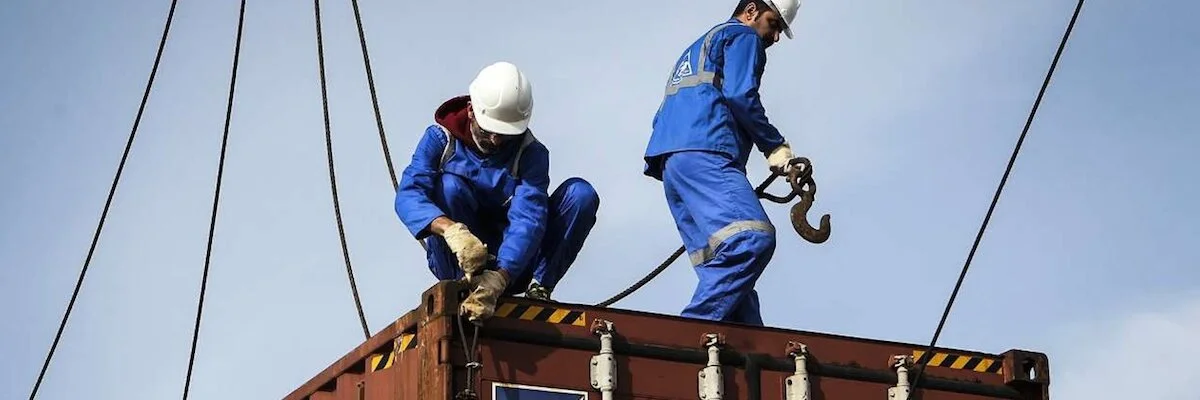
Six European Countries Join INSTEX Mechanism for Iran Trade
◢ Paris, London and Berlin on Saturday welcomed six new European countries to the INSTEX mechanism, which is designed to mitigate the effects of US sanctions on European trade with Iran. They also insisted Iran must return to full compliance with its commitments under the deal "without delay.”
Paris, London and Berlin on Saturday welcomed six new European countries to the INSTEX mechanism, which is designed to mitigate the effects of US sanctions on European trade with Iran.
"As founding shareholders of the Instrument in Support of Trade Exchanges (INSTEX), France, Germany and the United Kingdom warmly welcome the decision taken by the governments of Belgium, Denmark, Finland, the Netherlands, Norway and Sweden, to join INSTEX as shareholders," the three said in a joint statement.
The Paris-based INSTEX offers a netting service enabling companies to avoid cross-border financial transactions between the European and Iranian financial systems.
The system has not yet enabled any transactions.
Washington in 2018 unilaterally withdrew from the international agreement governing Iran's nuclear programme and reinstated heavy sanctions against Tehran.
The accession of the six new members "further strengthens INSTEX and demonstrates European efforts to facilitate legitimate trade between Europe and Iran", France, Germany and Britain said.
It represents "a clear expression of our continuing commitment to the Joint Comprehensive Plan of Action"—the 2015 Iranian nuclear deal—the trio added.
They insisted Iran must return to full compliance with its commitments under the deal "without delay.”
"We remain fully committed to pursuing our efforts towards a diplomatic resolution within the framework of the JCPOA."
The 2015 deal set out the terms under which Iran would restrict its nuclear program to civilian use in exchange for the lifting of Western sanctions.
Since the US pullout, Iran has taken four steps back from the accord.
The latest was on November 4 when its engineers began feeding uranium hexafluoride gas into mothballed enrichment centrifuges at the underground Fordow plant south of Tehran.
Photo: IRNA
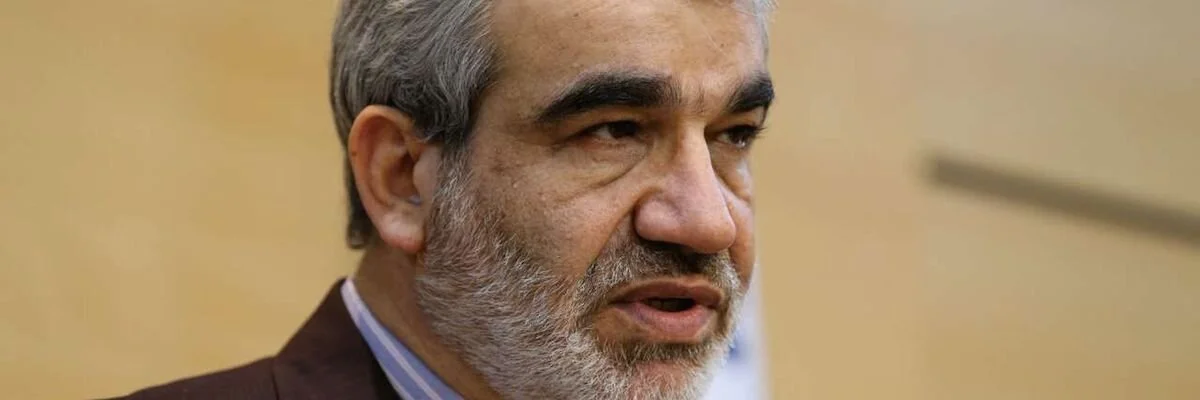
Iran Official Points to More Open Elections
◢ A senior Iranian official has suggested in an interview with AFP that authorities may be more open than in the past in approving candidates for a looming parliamentary election. "We don't consider ourselves immune from criticism," said Guardian Council spokesman Abbas Ali Kadkhodaee.
By Marc Jourdier
A senior Iranian official has suggested in an interview with AFP that authorities may be more open than in the past in approving candidates for a looming parliamentary election.
"We don't consider ourselves immune from criticism. We may also accept that mistakes have been made in the past," said Guardian Council spokesman Abbas Ali Kadkhodaee.
"But for the next legislative elections we are trying to reduce our mistakes and respect the rights of candidates."
Kadkhodaee was speaking to AFP on the eve of the opening on Sunday of the registration of candidates for the parliamentary election to be held on February 21.
The Guardian Council, which is under the control of ultra-conservatives, is responsible for organising and monitoring elections in Iran, including vetting candidates.
"If we insist on enforcing the law, we'll be able to satisfy as many candidates as possible," said Kadkhodaee.
In past elections, the council has faced accusations in Iran, particularly by reformists, of barring candidates more on political than constitutional grounds.
In November, President Hassan Rouhani, a moderate conservative, called on the council to stick to the letter of the law in view of the forthcoming election.
At Iran's last parliamentary election in February 2016, the council authorized 6,229 candidates for the 290 seats at stake—just over 51 percent of those who sought to stand.
In the interview, Kadkhodaee said a higher number of successful candidates should also lead to a "higher participation rate".
The opening of the registration period, which runs until Saturday, comes two weeks after around 100 cities and towns in sanctions-hit Iran saw protests against a shock fuel price hike that turned violent.
Authorities say they have restored calm after "rioting" backed by enemies of the Islamic republic, including the United States, Israel and Saudi Arabia.
London-based human rights group Amnesty International said 161 demonstrators were killed in a crackdown.
'Unjust Economic Sanctions'
But Iran's deputy interior minister, Jamal Orf, said such figures were "exaggerated", in remarks published on Saturday by state news agency IRNA.
For Kadkhodaee, the unrest was not a sign of the rejection of the political system of the Islamic republic.
The people would "continue to support the country despite the difficulties, as they have patiently endured the unjust economic sanctions imposed by Western countries," he said.
They would "continue to support the Iranian political system", he added.
Iran's economy has been battered since last year when the United States withdrew from a landmark 2015 nuclear deal and began reimposing crippling sanctions.
The International Monetary Fund expects the country's economy to shrink by 9.5 percent this year.
"Sometimes the participation rate can be low when the people are not happy with the country's economic situation," said Kadkhodaee.
"But we are sure that we will have a good participation rate, even if it is lower than it may have been in the past," said the Guardian Council spokesman.
"Generally in Iran, the participation rate is between 50 and 70 percent, depending on the economic and social situation in the country," he told AFP.
"Even if the turnout is low, it does not endanger the Iranian political system. We know that there are ups and downs depending on elections.
"Personally I expect and hope that the rate will be higher than 50 percent."
Photo IRNA
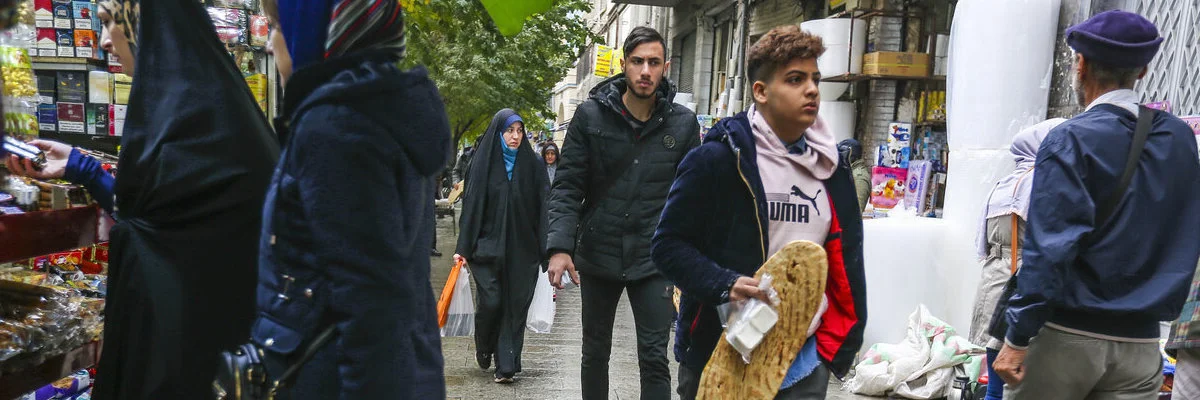
Internet Outage Forces Iranians to Resort to Old Ways
◢ Iranians struggled to adjust to life offline for almost a week and were forced to resort to old ways due to a near-total internet blackout imposed amid violent protests. The country has a thriving online economy, with its own equivalents for apps like Airbnb, Amazon and Uber.
Iranians struggled to adjust to life offline for almost a week and were forced to resort to old ways due to a near-total internet blackout imposed amid violent protests.
The demonstrations flared on November 15, hours after a shock decision announced at midnight to raise the price of petrol by up to 200 percent in the sanctions-hit country.
The timing of the announcement was seen as a bid to forestall chaos, such as caused by motorists stocking up on fuel before the hike took effect.
The internet restrictions, for their part, apparently aimed to temper shows of dissent and anger over the move and stop footage of the unrest from being shared.
Brigadier General Salar Abnoosh, a deputy head of the Basij volunteer militia, said Friday that the internet outage had helped to "disrupt the complicated" plans by Iran's enemies.
On Saturday—day seven of the internet restrictions and the start of the working week in Iran -- people in Tehran were trying to overcome problems brought on by the outage.
Some said they had been forced to make long journeys to carry out simple transactions that they used to be able to do in a couple of clicks online.
"We have no other choice," said a woman in her 30s who only gave her name as Asgari.
"What I could have done by using internet now I have to do by telephone or some other means," she told AFP.
"I've taken today off from work to come into town to do something which I could've done by using the internet."
Others said they were having difficulty reaching loved ones overseas.
"I wanted to call my children but I couldn't," said Taheri, a man in his 70s. "They were worried and had to go and get a card to call us. This is not right."
Economic Impact
For many in Iran, the lack of internet access was more than just a hindrance to social activity.
The country has a thriving online economy, with its own equivalents for apps like Airbnb, Amazon and Uber.
They have come through the outage largely unscathed as people can still access domestic applications on their phones.
However, smaller businesses that rely heavily on social media to stay in touch with their clients suffered during the outage.
Among them were travel agencies whose services were badly disrupted.
"An acute problem has been created for all travel agencies," said Hormatollah Rafiei, head of the Travel Agents Guild Association.
"The sale of foreign tickets and reservations for foreign hotels reached zero and some travel agencies closed due to financial losses," he said, quoted by ILNA news agency.
Connectivity in Iran "began to fluctuate on Friday evening (November 15) before a sequence of cuts that saw levels fall to a nadir of four percent" compared with normal levels, said Netblocks, a site that monitors global internet disruptions.
“Apart from fluctuations on Sunday, access to the outside world flatlined consistently until Thursday when limited connectivity appeared across most regions," it said
On Saturday, connectivity was back up, the monitor added.
'What Can We Do?'
Iran's arch-enemy the United States slapped sanctions on its telecommunications minister overnight "for restricting internet access".
The minister, Mohammad-Javad Azari Jahromi, said he was just another Iranian made to suffer the consequences of sanctions that the US reimposed after withdrawing from a 2015 nuclear deal.
"I'm not the only member of club of sanctioned persons," he tweeted.
"Before me, Iran ICT startups, Developers, Cancer patients and EB children were there," he said, referring to epidermolysis bullosa (EB).
Iran says the US sanctions have hindered its access to drugs for EB, a skin condition that afflicts children, causing several deaths.
The government said it would unblock the internet only when it was sure it would not be abused.
Mina, a woman in her 50s, said she had little choice but to sit tight
"My family lives abroad and I was always in touch with them but now I have no contact with them," she told AFP.
"I need to get a phone card because it's too expensive to call abroad (from a fixed line phone)," she added.
"What can we do? We are trying to stay patient."
Photo: IRNA
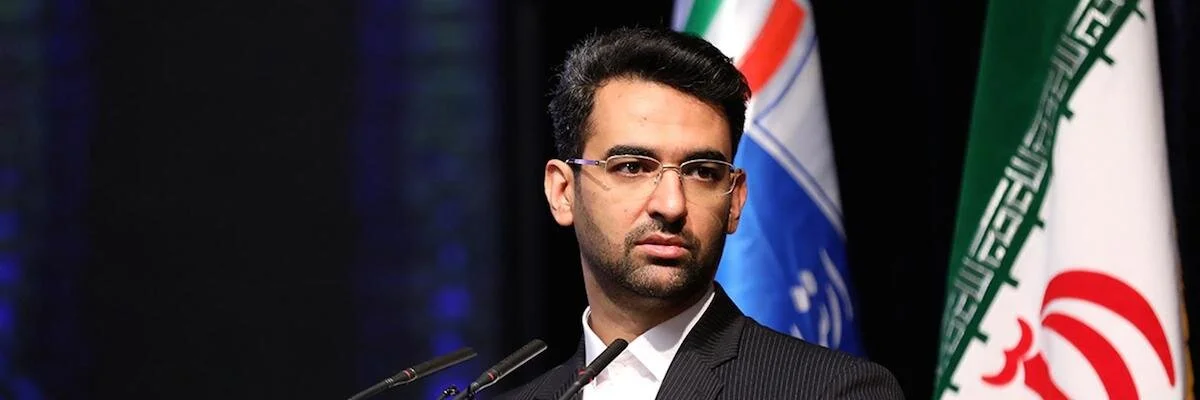
US Sanctions Iran Minister Over Internet Censorship
◢ The US Treasury slapped punitive sanctions on Iran's communications minister, Mohammad Javad Azari Jahromi, Friday after Tehran blocked internet communications amid violent protests triggered by a petrol price hike. On Thursday, President Donald Trump accused Iran of blocking the internet to cover up "death and tragedy" resulting from the protests.
The US Treasury slapped punitive sanctions on Iran's communications minister, Mohammad Javad Azari Jahromi, Friday after Tehran blocked internet communications amid violent protests triggered by a petrol price hike.
"We are sanctioning Iran's Minister of Information and Communications Technology for restricting internet access, including to popular messaging applications that help tens of millions of Iranians stay connected to each other and the outside world," said Treasury Secretary Steven Mnuchin in a statement.
"Iran's leaders know that a free and open internet exposes their illegitimacy, so they seek to censor internet access to quell anti-regime protests," Mnuchin said.
The protests erupted across the country on November 15, after the price of petrol was raised by as much as 200 percent.
Officials have confirmed five deaths, while Amnesty International said that more than 100 demonstrators were believed to have been killed after authorities reportedly used live ammunition to quell the protests, which brought attacks on police stations and petrol stations and some looting of shops.
The Treasury said Azari Jahomi is a former official of the Ministry of Intelligence who has “been involved in surveillance against opposition activists," the Treasury said.
Internet service remained mostly blocked on Friday for a sixth day, with officials and news agencies saying the blackout was gradually being rolled back.
The sanctions would freeze financial assets and property Azari Jahomi has in US jurisdictions and forbid Americans or US businesses, especially banks, from dealing with him.
On Thursday, President Donald Trump accused Iran of blocking the internet to cover up "death and tragedy" resulting from the protests.
"Iran has become so unstable that the regime has shut down their entire Internet System so that the Great Iranian people cannot talk about the tremendous violence taking place within the country," Trump tweeted.
"They want ZERO transparency, thinking the world will not find out the death and tragedy that the Iranian Regime is causing!" he wrote.
Photo: IRNA
Nuclear Agency Urges Iran to Explain Uranium Particles at Undeclared Site
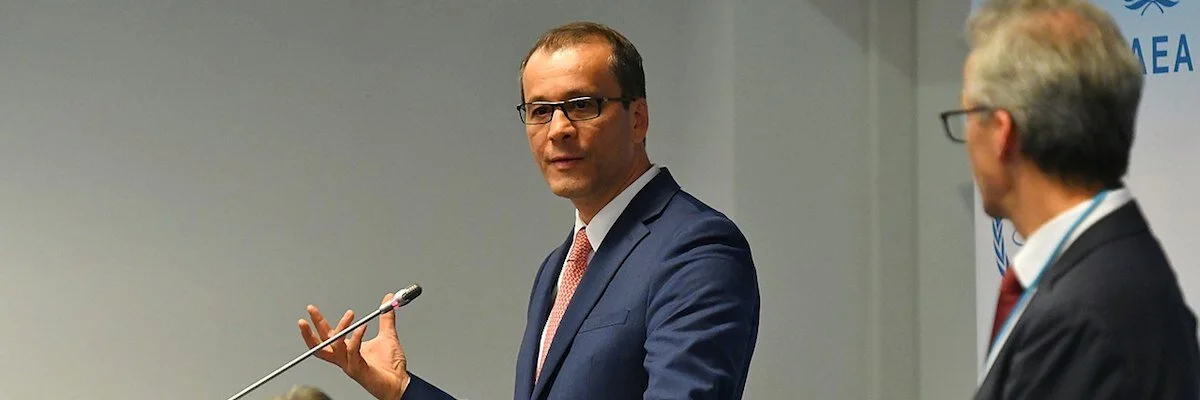
◢ The UN nuclear watchdog on Thursday urged Iran to explain the presence of uranium particles at an undeclared site, as a landmark deal aimed at curbing Tehran's atomic activities threatens to collapse. The agency's acting head Cornel Feruta said IAEA and Iranian officials would meet in Tehran next week to discuss the matter, adding that the UN body had not received any additional information.
By Julia Zappei
The UN nuclear watchdog on Thursday urged Iran to explain the presence of uranium particles at an undeclared site, as a landmark deal aimed at curbing Tehran's atomic activities threatens to collapse.
The International Atomic Energy Agency (IAEA) said in a report made public last week that its inspectors had "detected natural uranium particles of anthropogenic origin at a location in Iran not declared to the agency".
The agency's acting head Cornel Feruta said IAEA and Iranian officials would meet in Tehran next week to discuss the matter, adding that the UN body had not received any additional information.
"The matter remains unresolved... It is essential that Iran works with the agency to resolve this matter promptly," he told IAEA member states at a meeting of the agency's board of governors.
A diplomatic source told AFP that the IAEA would send a high-ranking technical delegation to Iran next week.
The particles are understood to be the product of uranium which has been mined and undergone initial processing, but not enriched.
While the IAEA has not named the site in question, diplomatic sources have previously said the agency asked Iran about a site in the Turquzabad district of Tehran where Israel has alleged secret atomic activity in the past.
Sources say the IAEA took samples from the site in the spring and that Iran has been slow in providing answers to explain the test results.
The 2015 deal between Iran and world powers has been faltering since last year when the United States pulled out and started to reinstate punishing sanctions on Tehran, leaving the other signatories struggling to salvage the agreement.
Over the past few months, Iran has breached several parts of the deal it signed with the US as well as Britain, China, France, Germany and Russia, in which it committed to scaling back its nuclear programme in exchange for sanctions relief.
But Britain, France and Germany have said they are extremely concerned by Iran's actions in stepping up its uranium enrichment and other breaches.
Enrichment is the process that produces fuel for nuclear power plants but also, in highly extended form, the fissile core for a warhead.
On Monday, the IAEA confirmed Iran's stock of heavy water for reactors has surpassed the 130-tonne limit set under the agreement.
Heavy water is not itself radioactive but is used in nuclear reactors to absorb neutrons from nuclear fission.
Heavy water reactors can be used to produce plutonium for nuclear weapons as an alternative to enriched uranium.
The IAEA has also said one of its inspectors was briefly prevented from leaving Iran, calling her treatment "not acceptable".
Iran has cancelled the inspector's accreditation, saying she triggered a security check at the entrance gate to the Natanz enrichment plant last month.
The IAEA has disputed the Iranian account of the incident, without going into details.
Photo: IRNA
Iran to Seek Advanced Arms as UN Embargo Expires, Pentagon Says
◢ Iran will seek to modernize its forces by purchasing advanced weapons systems once a United Nations arms embargo expires next year, the Pentagon is warning in a new report. Iran wants to purchase weapons “it has largely been unable to acquire for decades” when the embargo expires in October 2020.
By David Wainer and Tony Capaccio
Iran will seek to modernize its forces by purchasing advanced weapons systems once a United Nations arms embargo expires next year, the Pentagon is warning in a new report.
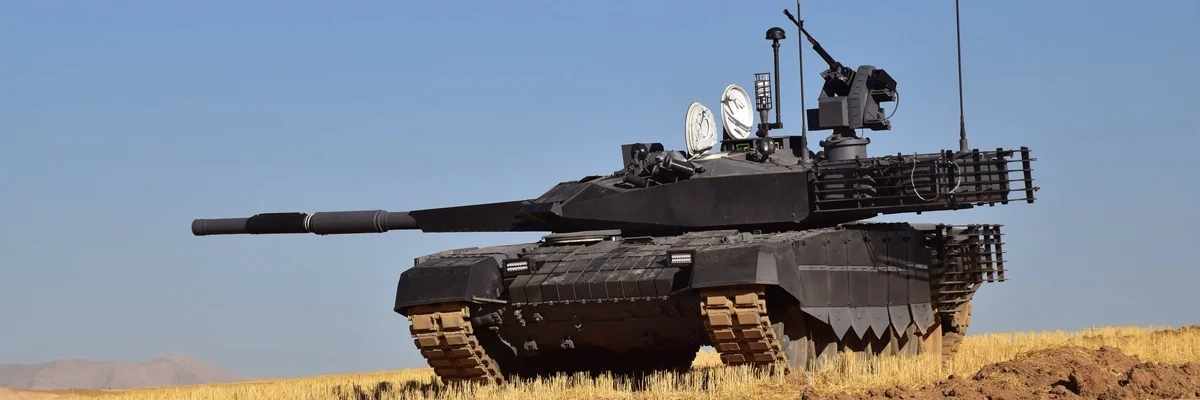
Iran wants to purchase weapons “it has largely been unable to acquire for decades” when the embargo expires in October 2020 in a compromise that’s part of the 2015 nuclear accord with world powers, according to an assessment released Tuesday by the Defense Intelligence Agency. Iran will be permitted to purchase weapons that it’s unable to produce domestically, such as advanced fighter aircraft and main battle tanks.
While U.S. President Donald Trump withdrew from the nuclear accord, his administration is pushing the international community to keep Iran from purchasing advanced weapons, arguing it will add to instability in the region. During a UN Security Council meeting in August, Secretary of State Michael Pompeo warned that the expiration of the embargo will unshackle Iran “to create new turmoil.”
“Because of the flawed Iran deal, the UN arms embargo on Iran will expire in one year,” Pompeo tweeted last month. “Countries like Russia and China will be able to sell Iran sophisticated weapons. The Iranian regime will be free to sell weapons to anyone. This will trigger a new arms race in the Middle East.”
Russian Weapons
Iran is already evaluating and discussing military hardware for purchase, primarily from Russia, but also to a lesser extent from China, the Pentagon report found. Iran’s potential acquisitions include Russian Su-30 fighters, Yak-130 trainers and T-90 tanks. Iran has also shown interest in acquiring the S-400 air defense system and Bastian coastal defense system from Russia, it said.
The report also highlights Iran’s growing use of unconventional tactics to deter large Western countries such as the U.S. Iran maintains an estimated inventory of more than 5,000 naval mines, which it can rapidly deploy in the Persian Gulf and Strait of Hormuz using high-speed small boats, it said.
It also warns that Iran’s forces are becoming “increasingly survivable, precise, and responsive.” It said the Islamic Republic’s capabilities, such as “swarms of small boats, large inventory of naval mines, and arsenal of antiship missiles” are a significant threat to maritime traffic in the Strait of Hormuz.
Kenneth Katzman, the primary Iran expert for the nonpartisan Congressional Research Service, said the report reinforces a “growing consensus in the expert community that Iran is close to accomplishing its core national security goals—the ability to project power in all corners of the region and thereby deter any regional or international actor from attacking Iran.”
Photo: IRNA
Iran Unrest Shows No Signs of Subsiding
◢ Three security personnel have been killed by "rioters" in Iran, the latest deaths in protests that showed no sign of subsiding Tuesday despite a wave of arrests and an internet shutdown. The United Nations expressed alarm on Tuesday "that the use of live ammunition has allegedly caused a significant number of deaths across the country.”
Three security personnel have been killed by "rioters" in Iran, the latest deaths in protests that showed no sign of subsiding Tuesday despite a wave of arrests and an internet shutdown.
The deaths take to at least five the number of people confirmed to have been killed in the nationwide demonstrations that erupted on Friday against a shock decision to impose petrol price hikes.
The situation on the streets remains unclear largely due to the government-imposed internet outage which has entered a third day.'
The United Nations expressed alarm on Tuesday "that the use of live ammunition has allegedly caused a significant number of deaths across the country.”
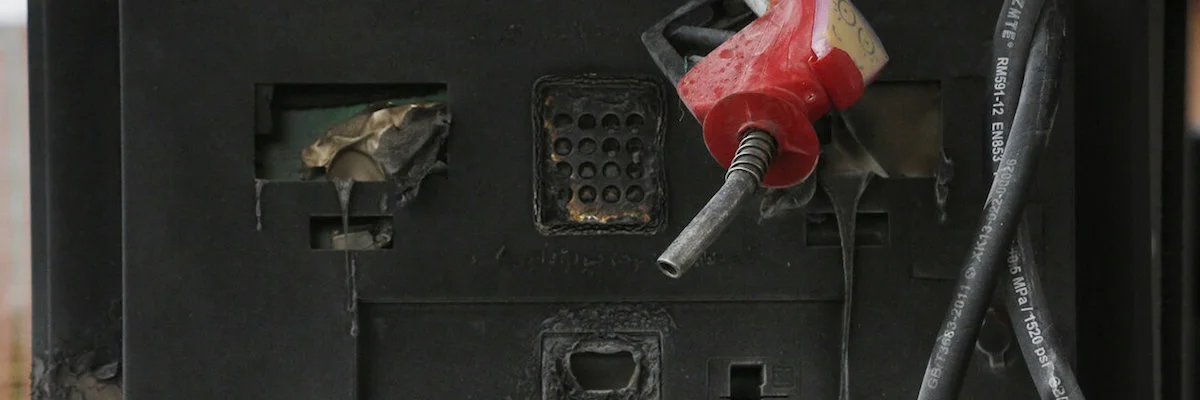
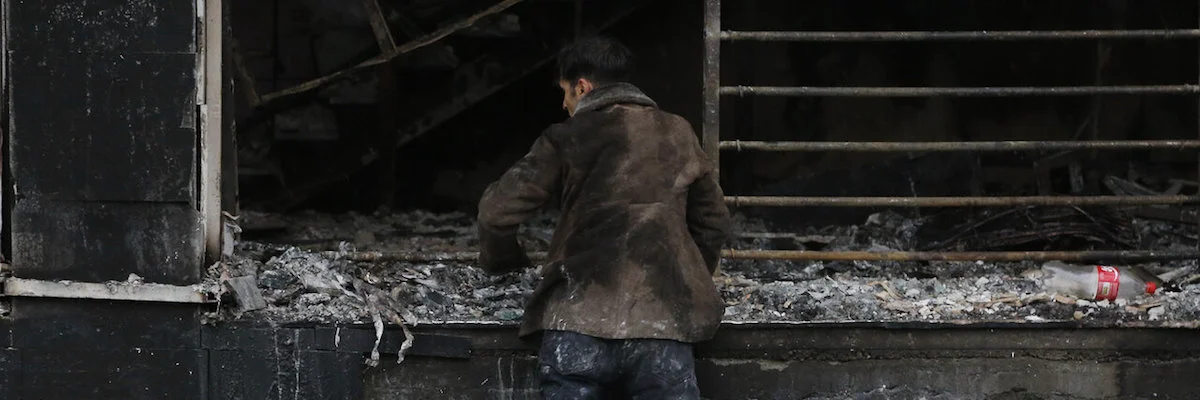
On Tuesday morning, AFP journalists saw two petrol stations in central Tehran gutted by fire and damage to other infrastructure including a police station and pedestrian overpass.
But they were prevented from filming as hundreds of riot police stood guard at entrances to major squares in the Iranian capital with armoured vehicles and water cannon.
When the demonstrations broke out on Friday, drivers stopped their vehicles on major thoroughfares in Tehran to block traffic.
They soon turned violent and spread to more than 20 cities and towns across Iran, with banks, petrol stations and other public property set alight and shops looted.
The demonstrations erupted after it was announced the price of petrol would be raised by 50 percent for the first 60 litres purchased over a month and 200 percent for any extra fuel after that.
Iran's economy has been battered since May last year when President Donald Trump unilaterally withdrew the US from a 2015 nuclear agreement and reimposed crippling sanctions.
Ambush
Footage of masked young men clashing with security forces has been broadcast on state television, which rarely shows any signs of dissent.
In a new video aired Monday night, a man can be seen firing what appears to be an assault rifle as others hurl stones apparently at security forces in the western city of Andimeshk.
In the latest bloodshed, assailants wielding knives and machetes ambushed and killed three security personnel west of Tehran, the ISNA and Fars news agencies reported late Monday.
One of the three was identified as Morteza Ebrahimi, a commander of the Islamic Revolutionary Guard Corps and father of a newborn child, according to Fars.
The other two were Majid Sheikhi, 22, and Mostafa Rezaie, 33. Both served in the Basij militia, a volunteer force loyal to the establishment.
The overall toll—which also includes a civilian and policeman—is expected to rise, with unofficial reports saying that at least six other people have been killed.
It is the worst violence since at least 25 lives were lost in protests over economic hardship that started in Iran's second city Mashhad in December 2017 before spreading to other urban centers.
Internet Outage
In response to the violence, the authorities say they have arrested more than 200 people.
The internet outage has stemmed the flow of videos shared on social media of protests or associated acts of violence.
"National connectivity remains at just five percent of normal levels, leaving Iranians cut off from the world," tweeted Netblocks, a website that monitors global net shutdowns.
Iran announced the decision to impose petrol price hikes and rationing at midnight Thursday-Friday, saying the move was aimed at helping the needy with cash handouts.
The plan agreed by a council made up of the president, parliament speaker and judiciary chief comes at a sensitive time ahead of February parliamentary elections
It has received the public support of Iran's supreme leader Ayatollah Ali Khamenei.
President Hassan Rouhani has defended the price hike saying the proceeds will be used to make welfare payments to 60 million Iranians.
The United States has condemned Iran for using "lethal force".
Iran hit back at its arch-enemy on Monday, slamming US Secretary of State Mike Pompeo after he tweeted "the United States is with you" in response to the demonstrations.
Germany called for dialogue between the government and "legitimate" protesters while France reiterated its support for the right to peaceful demonstration and voiced regret over the deaths.
Judiciary spokesman Gholamhossein Esmaili warned on Tuesday that the authorities would deal firmly with those who endanger security and carry out arson attacks.
In televised remarks, he also called on citizens to inform on "seditionists" who have committed acts of violence.
Photo: IRNA
US Ends Sanction Waivers for Iran's Fordow Nuclear Plant
◢ The United States announced Monday it would halt sanctions waivers for Iran's Fordow plant, likely ending a key component of a landmark nuclear deal after Tehran said it had resumed enrichment activities. US waivers remain in place for other nuclear sites including Bushehr, a nuclear power plant off the Gulf coast being developed with Russia under safeguards.
By Shaun Tandon
The United States announced Monday it would halt sanctions waivers for Iran's Fordow plant, likely ending a key component of a landmark nuclear deal after Tehran said it had resumed enrichment activities.
Piling pressure as protests hit Iran, the move is intended to discourage work led by Russia's state-owned nuclear company Rosatom at the once-secret site, which was supposed to be transformed into a civilian research center under the 2015 agreement.
Secretary of State Mike Pompeo pointed to Iranian President Hassan Rouhani's announcement of renewed activity at Fordow—one of a series of steps taken by Tehran as it presses Europeans to make good on sanctions relief promised for compliance.
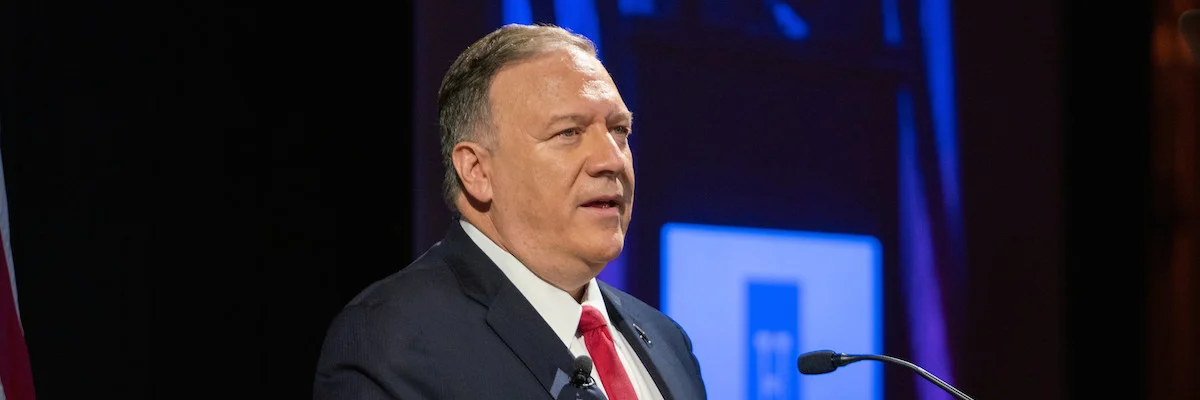
"Therefore the United States will terminate the sanctions waiver related to the nuclear facility at Fordow effective December 15, 2019," Pompeo told a news conference.
"The right amount of uranium enrichment for the world's largest state sponsor of terror is zero," Pompeo said.
"There is no legitimate reason for Iran to resume enrichment at this previously clandestine site. Iran should reverse its activity there immediately," he said.
President Donald Trump last year withdrew from the denuclearization accord and reimposed sweeping sanctions on Iran, aiming to inflict economic pain and reduce the Shiite clerical regime's influence in Arab countries.
But the Trump administration has still granted waivers to let other nations implement the nuclear deal, which was negotiated under former president Barack Obama, without facing penalties in the United States.
Critics of Trump have said that the waivers proved the administration saw the benefits of the deal, which sharply expanded access for international inspectors. Iran had been in compliance before the US withdrawal.
US waivers remain in place for other nuclear sites including Bushehr, a nuclear power plant off the Gulf coast being developed with Russia under safeguards.
Hawkish Republicans have been pressing on Pompeo to end the waivers. Senator Tom Cotton praised the decision as he pointed to the weekend protests in Iran over gas price hikes.
"The mullahs are playing with atoms in an underground bunker at Fordow instead of helping their own people, who are demonstrating in the street," he tweeted.
Latest Step by Iran
Iran, which insists its nuclear program is exclusively peaceful, has taken a series of measures that fall well short of developing a nuclear weapon but are meant to put pressure on European powers.
The UN's nuclear watchdog said Monday that Iran's stock of heavy water for reactors had crossed the level agreed upon in the 2015 accord for the first time.
Iran's stock of heavy water—which can be used to produce plutonium for nuclear weapons as an alternative to enriched uranium—was 131.5 tons, above the 130-ton limit, said a spokesperson for the agency in Vienna.
At Fordow, Iran said it began feeding uranium hexafluoride gas into mothballed enrichment centrifuges.
Britain, France, Germany and the European Union said Iran's decision was "inconsistent" with the nuclear deal.
Iran has accused European nations of hypocrisy over the nuclear deal and also attacked the United States for its statements of support for protesters.
Major roads have been blocked, banks torched and shops looted since Friday's abrupt hike in gas prices.
Pompeo again voiced solidarity with the protesters, saying: "The world's watching."
"The Iranian people will enjoy a better future when their government begins to respect basic human rights, abandons its revolutionary posture and its destabilizing foreign policy in the region, and behaves simply like a normal nation," he said.
Photo: State Department
Iran 'Calmer' Despite More Riots Over Oil Price Hikes
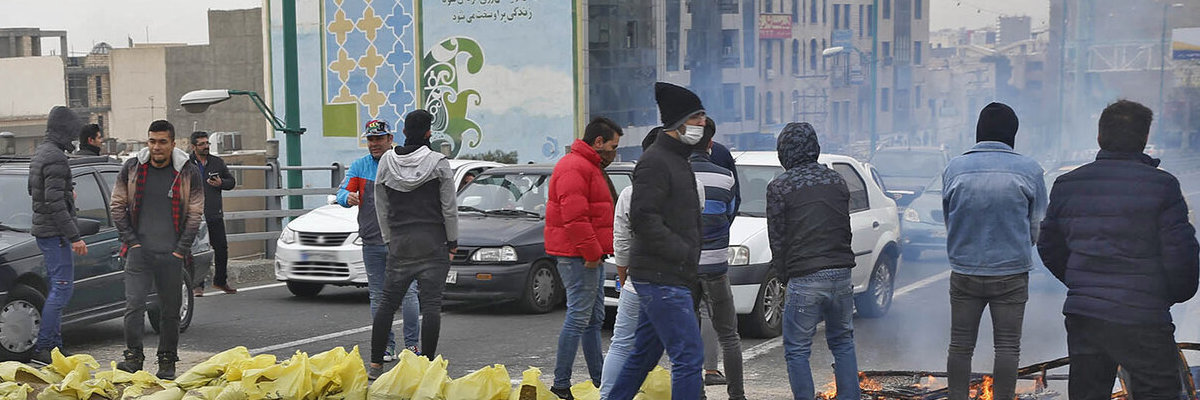
◢ Iran said it still faces "riots" even though the situation was calmer Monday after days of violent protests sparked by a shock decision to hike petrol prices in the sanctions-hit country. Major roads have been blocked, banks torched and shops looted in the nationwide unrest that has left at least two dead—a civilian and a police.
By Amir Havasi
Iran said it still faces "riots" even though the situation was calmer Monday after days of violent protests sparked by a shock decision to hike petrol prices in the sanctions-hit country.
Major roads have been blocked, banks torched and shops looted in the nationwide unrest that has left at least two dead—a civilian and a policeman.
Footage of the violence showing masked young men on debris-strewn streets setting buildings ablaze has been aired on state television, which rarely shows any signs of dissent.
The Basij militia, whose commander Brigadier General Gholamreza Soleimani said "America's plot (had) failed", reported looting, according to semi-official news agency ISNA.
Demonstrations broke out on Friday after it was announced that the price of petrol would be raised by 50 percent for the first 60 litres and 200 percent for any extra fuel after that each month.
The authorities in the Islamic republic say they have arrested more than 200 people and restricted internet access.
Netblocks, a website that monitors net traffic, tweeted: "40 hours after #Iran implemented a near-total internet shutdown, connectivity to the outside world remains at just 5% of ordinary levels".
Government spokesman Ali Rabiei said the situation was "calmer" on Monday.
But there were still "some minor issues and tomorrow and the day after we won't have any issues with regard to riots", he told a news conference, without elaborating.
"There have been gatherings in some cities, in some provinces," he said.
Pressed to give figures on the number of casualties in the unrest, he said: "What I can tell you today is that gatherings are about 80 percent less than the previous day."
The situation on the streets has been unclear largely due to the internet outage that has stemmed the flow of videos shared on social media of protests or associated acts of violence.
Iran's economy has been battered since May last year when President Donald Trump unilaterally withdrew the US from a 2015 nuclear agreement and reimposed crippling sanctions.
'Lethal Force'
The US on Sunday condemned Iran for using "lethal force" against demonstrators.
"The United States supports the Iranian people in their peaceful protests against the regime that is supposed to lead them," said White House press secretary Stephanie Grisham.
Iran's foreign ministry slammed US Secretary of State Mike Pompeo after he tweeted "the United States is with you" Saturday in response to the demonstrations.
In a statement issued late Sunday, the ministry said it was reacting to Pompeo's "expression of support... for a group of rioters in some cities of Iran and condemned such support and interventionist remarks".
"The dignified people of Iran know well that such hypocritical remarks do not carry any honest sympathy," ministry spokesman Abbas Mousavi was quoted as saying.
"The acts of a rioter and saboteur group supported by the likes of (Pompeo) have no congruity with the conduct of the wise Iranian people."
The statement blasted Washington's "ill-intent" over its decision to reimpose sanctions on Tehran after withdrawing from the nuclear deal.
"It's curious that the sympathising is being done with the people who are under the pressure of America's economic terrorism," Mousavi said.
‘Welfare Payments’
For its part, Germany called Monday for dialogue between the government and "legitimate" protesters in Iran.
"It is legitimate and deserving of our respect when people courageously air their economic and political grievances, as is currently happening in Iran," said Chancellor Angela Merkel's spokeswoman Ulrike Demmer.
"The Iranian government should respond to the current protests with a willingness to engage in dialogue," she added.
Iran announced the decision to impose petrol price hikes and rationing at midnight Thursday-Friday, saying the move was aimed at helping the needy with cash handouts.
The plan agreed by a council made up of the president, parliament speaker and judiciary chief comes at a sensitive time ahead of February parliamentary elections.
It won support on Sunday from Iran's supreme leader Ayatollah Ali Khamenei.
Khamenei blamed "hooligans" for damaging property and said "all the centres of the world's wickedness against us have cheered" the street protests.
President Hassan Rouhani on Sunday defended the controversial petrol price hike whose proceeds are to be used to make welfare payments to 60 million Iranians.
Rouhani also announced the first payments would be made to 20 million people on Monday evening.
But he also warned that Iran could not allow "insecurity.”
"Protesting is the people's right, but protesting is different from rioting. We should not allow insecurity in the society," said Rouhani.
The intelligence ministry said at the weekend that it has identified those behind the unrest and that measures would be taken against them.
Forty people have already been arrested in the central city of Yazd, ISNA reported on Sunday.
Another 180 people were arrested in the past three days in the southern province of Khuzestan, state news agency IRNA said Monday.
Fars news agency, which is close to Iran's Revolutionary Guards, said it was unclear when the internet restrictions would be lifted, citing an informed government source.
Photo: IRNA
Rouhani Warns Protest-Hit Iran Cannot Allow 'Insecurity'
◢ Iran's supreme leader on Sunday threw his support behind a decision to hike petrol prices, a move that sparked nationwide unrest in which he said "some lost their lives.” The protests flared hours after it was announced that the price of petrol would be raised by 50 percent for the first 60 liters and by 300 percent for anything above that each month.
By Amir Havasi
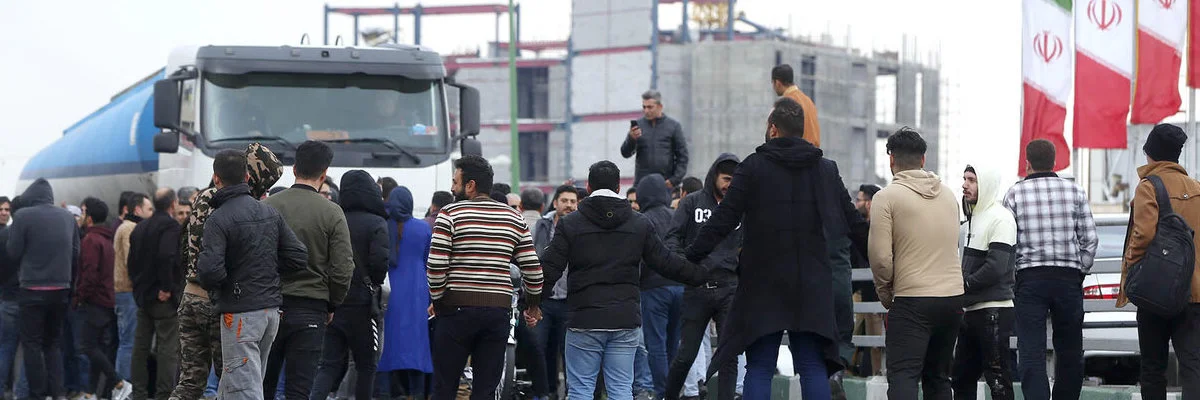
IPresident Hassan Rouhani warned Sunday that riot-hit Iran could not allow "insecurity" after two days of unrest killed two people and saw authorities arrest dozens and restrict internet access.
"Protesting is the people's right, but protesting is different from rioting. We should not allow insecurity in the society," he said.
Rouhani defended the controversial petrol price hike that triggered the protests -- a project which the government says will finance social welfare spending amid a sharp economic downturn.
The unrest erupted on Friday, hours after it was announced the price of petrol would rise to 15,000 rials per litre (12 US cents) from 10,000 for the first 60 litres, and to 30,000 rials for any extra fuel bought after that each month.
It is a rise many consumers can ill afford, given that Iran's economy has been battered since May last year when President Donald Trump unilaterally withdrew the US from a 2015 nuclear agreement and reimposed crippling sanctions.
The rial has plummeted, inflation is running at more than 40 percent and the International Monetary Fund expects Iran's economy to contract by 9.5 percent this year and stagnate in 2020.
The petrol plan is expected to generate 300 trillion rials ($2.55 billion) per annum, from which the government says about 60 million needy would receive payments.
"For this... we should either increase taxes on the people, export more oil... or reduce subsidies and return the revenues to the people in need," said Rouhani.
‘Centers of Wickedness’
Iran's supreme leader Ayatollah Ali Khamenei said "some lost their lives" in the violence and blamed "hooligans".
"All the centres of the world's wickedness against us have cheered" the street protests, he said.
The latest death was a policeman shot in a clash with "rioters" in the western city of Kermanhshah.
Several people were also wounded and dozens arrested in the demonstrations that saw motorists block highways and others torch public property.
A 24-hour internet blackout appeared to have stemmed the flow of images shared on social media, with only officials' accounts and local news agencies still active.
Semi-official news agency ISNA said the protests had "mostly subsided" by Sunday evening, a report that could not be verified due to the online outage and limited news from agencies.
The petrol pricing plan was agreed by the High Council of Economic Coordination made up of the president, parliament speaker and judiciary chief.
Khamenei said that "I am not an expert and there are different opinions but I had said that if the heads of the three branches make a decision I will support it.
"Some people would definitely get upset over this decision... but damaging and setting fire (to property) is not something (normal) people would do. It is hooligans."
Following his speech, parliament cancelled a motion to reverse the price hike, semi-official news agency ISNA reported.
A lawmaker resigned Sunday to protest the decision which circumvented parliament, saying the presence of MPs was now "meaningless".
Internet Blocked
Access to the internet was restricted a day after the demonstrations broke out.
Netblocks, an internet monitoring website, tweeted Saturday that "Iran is now in the midst of a near-total national internet shutdown".
It came after a decision by the Supreme National Security Council, according to ISNA.
"Upon the decision of the Security Council of Iran and communicated to internet operators, access to internet has been limited as of last night and for 24 hours," it said, quoting an informed source at the information and communications technology ministry.
Some of the worst violence seen so far was in the central city of Sirjan, where acting governor Mohammad Mahmoudabadi said a civilian was killed and fuel stations were among the public property attacked and damaged.
In Kermanshah, a policeman died Sunday, a day after a "confrontation with a number of rioters and thugs," the provincial police chief told IRNA.
In Tehran on Saturday, protesters were seen burning tyres on a street and shouting slogans.
Similar scenes were witnessed in the cities of Shiraz, Isfahan and Bushehr, where security forces fired tear gas and water cannon at demonstrators.
Forty "disruptors" were arrested in the central city of Yazd after clashing with police, the province's public prosecutor told ISNA on Sunday. Most were not locals, he added.
Police said security forces would "not hesitate to confront those disrupting peace and security and will identify the ringleaders and field forces and confront them".
The intelligence ministry said those behind the unrest "have been identified" and that measures would be taken against them, according to ISNA.
Photo: IRNA
Iran Moves on Ultra-Cheap Petrol
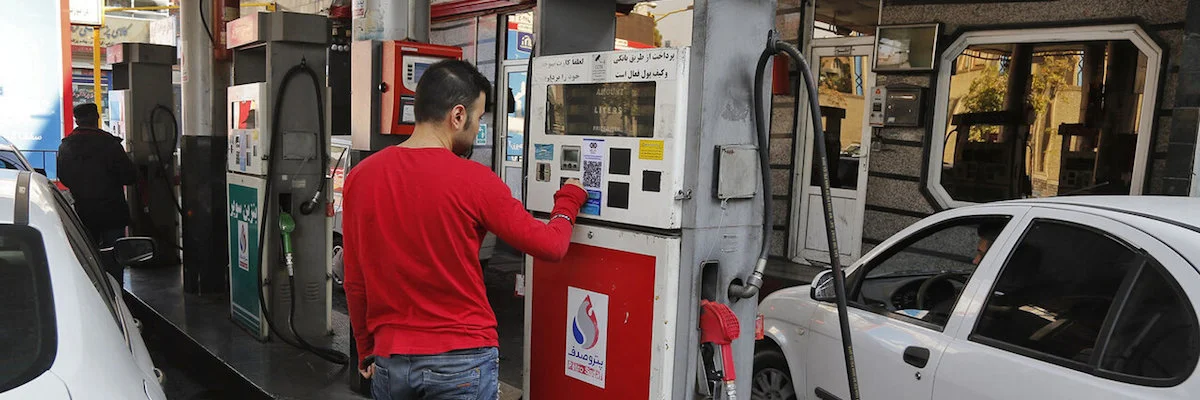
◢ Iran imposed petrol rationing and raised pump prices by 50 percent or more on Friday, in a new move to cut costly subsidies that have fueled high consumption and rampant smuggling. Each driver with a fuel card will now have to pay 15,000 rials (13 US cents) per liter for the first 60 liters of petrol bought each month.
Iran imposed petrol rationing and raised pump prices by 50 percent or more on Friday, in a new move to cut costly subsidies that have fueled high consumption and rampant smuggling.
The Islamic republic provides some of the most heavily subsidized petrol in the world, with the pump price previously standing at just 10,000 rials (less than nine US cents) a liter.
Each driver with a fuel card will now have to pay 15,000 rials (13 US cents) per liter for the first 60 liters of petrol bought each month, the state-run National Iranian Oil Products Distribution Company said.
Each additional liter will be charged at 30,000 rials.
Fuel cards were first introduced in 2007 with a view to reforming the subsidies system and curbing large-scale smuggling.
The head of Iran's Planning and Budget Organization, Mohmmad Bagher Nobakht, said the proceeds from the price hike will be used to provide additional subsidies for 60 million people in need.
He said President Hassan Rouhani had insisted that "all extra revenues from the petrol price reform should be paid back to the people.”
"The first payments will be handled within the next week or 10 days," Nobakht told state news agency IRNA.
Ulta-low petrol prices have led to high consumption, with Iran's 80 million population buying an average of 90 million litres per day, according to state news agency IRNA.
They have also fuelled very high levels of smuggling—estimated at around 10 to 20 million litres per day, IRNA said.
Smuggling has intensified as the rial has plummeted against the dollar since Washington unilaterally abandoned a 2015 nuclear deal with Tehran and reimposed crippling sanctions last year.
Inflation is now running at more than 40 percent and the International Monetary Fund projects that the troubled economy will contract by nine percent this year and stagnate in 2020.
Photo:
Air Pollution Shuts Schools in Iran's Capital
◢ Schools in Tehran were ordered to be closed on Wednesday after the Iranian capital was cloaked in dangerously high levels of air pollution, authorities said. Average concentrations of hazardous airborne particles hit 133 micrograms per cubic meter in the city and were as high as 150 for 10 districts.
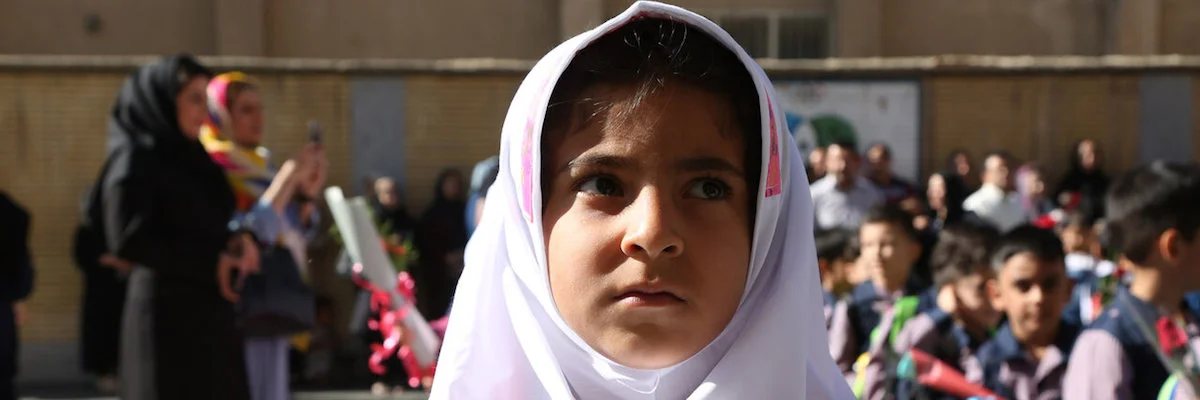
Schools in Tehran were ordered to be closed on Wednesday after the Iranian capital was cloaked in dangerously high levels of air pollution, authorities said.
Governor Anoushiravan Mohseni-Bandpey said kindergartens, preschools and primary schools would be shut in the city and the counties of Gharchak, Pishva and Varamin.
"The air quality index for the city of Tehran still has not passed the unhealthy status for sensitive groups," he was quoted as saying by state news agency IRNA.
Average concentrations of hazardous airborne particles hit 133 micrograms per cubic meter in the city and were as high as 150 for 10 districts, he said.
That is far above the World Health Organization's recommended maximum of 25 micrograms per cubic meter on average over a 24-hour period.
Many people were seen wearing face masks to avoid fumes as they waited for buses on the sides of traffic-choked streets of southern Tehran during morning rush-hour.
A layer of thick smog covered Tehran on Tuesday, but it appeared to dissipate in northern areas on Wednesday morning with fewer school buses on the roads.
Air pollution was the cause of nearly 30,000 deaths per year in Iranian cities, IRNA reported earlier this year, citing a health ministry official.
Each winter, Iran's sprawling capital suffers some of the worst pollution in the world through thermal inversion—a phenomenon that traps hazardous air over the city.
According to a World Bank report last year, most of the pollution in the city of eight million inhabitants is caused by heavy duty vehicles, motorbikes, refineries and power plants.
Photo: IRNA
