
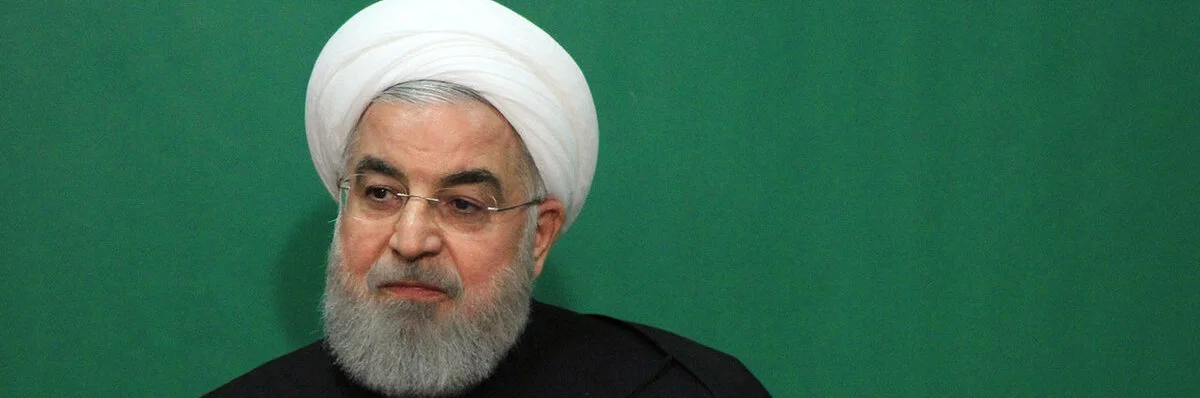
France, UK, Germany, EU 'Extremely Concerned' by Iran's Nuclear Deal Breach
◢ France, Germany, Britain and the European Union said Monday they are "extremely concerned" by Iran's decision to re-start nuclear activities at one of its key sites, in breach of a landmark 2015 deal with international powers. The IAEA, in its latest report on Iran on Monday, said it has detected uranium particles at an undeclared site in Iran.
France, Germany, Britain and the European Union said Monday they are "extremely concerned" by Iran's decision to re-start nuclear activities at one of its key sites, in breach of a landmark 2015 deal with international powers.
"The Foreign Ministers of France, Germany and the United Kingdom and the High Representative of the European Union are extremely concerned by the latest announcements that Iran is restarting uranium enrichment activities at the Fordow facility, as confirmed by the International Atomic Energy Agency (IAEA) in its November 11 report," they said in a joint statement.
Paris, Berlin, London and Brussels said that Iran's action was "inconsistent" with the 2015 Joint Comprehensive Plan of Action, or JCPOA, under which Tehran had agreed to curb some of its nuclear activities—notably uranium enrichment—in return for a lifting of economic sanctions.
But the Islamic republic has said it no longer feels bound by the JCPOA after the US unilaterally pulled out of the accord last year.
Tehran's latest decision "represents a regrettable acceleration of Iran's disengagement from commitments under the JCPoA, including exceeding the maximum allowed low enriched uranium stockpile and the maximum allowed enrichment limits," the joint statement said.
The IAEA, in its latest report on Iran on Monday, said it has detected uranium particles at an undeclared site in Iran.
The report also confirmed that Iran has ramped up uranium enrichment, with its stockpile now reaching the equivalent of 551 kilograms, as opposed to the 300-kilogram limit laid down in the JCPOA.
"We underline the importance of the full and effective implementation of the JCPOA by all sides and confirm our determination to continue all efforts to preserve the agreement, which is in the interests of all," the joint statement from France, Germany, Britain and the EU said.
“Iran must return to full implementation of its commitments under the JCPOA without delay."
Photo: IRNA
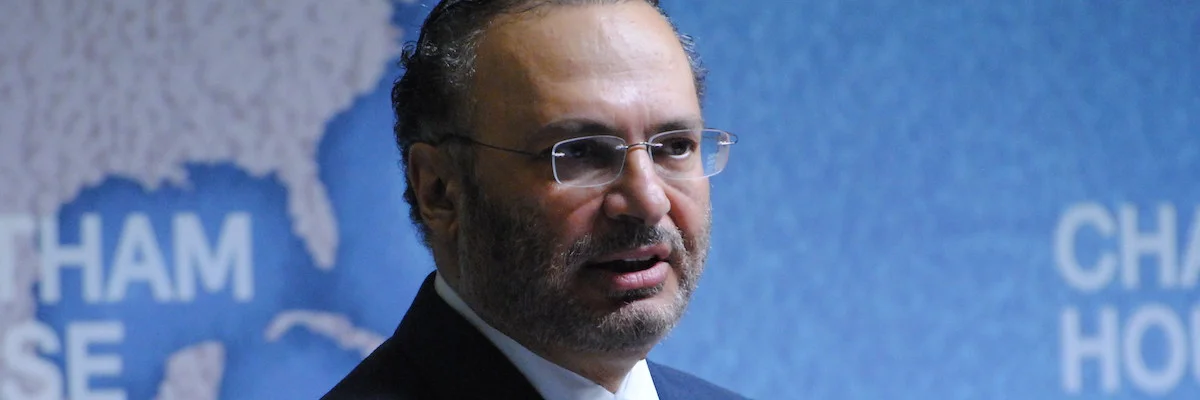
UAE Says Diplomatic Efforts Needed for Agreement with Iran
◢ UAE state minister of foreign affairs Anwar Gargash on Sunday said Arab Gulf states should take part in negotiations with Iran amid increased tensions between Washington and Tehran. "We strongly believe that there is room for collective diplomacy to succeed," he said, adding that talks with Iran should involve the international community as well as Arab Gulf states.
A top UAE official on Sunday said Arab Gulf states should take part in "collective diplomacy" to reach an agreement with Iran amid increased tensions between Washington and Tehran.
UAE state minister of foreign affairs Anwar Gargash's statements come following a string of attacks that Washington and its allies blamed on Tehran. Iran denies the allegations.
Animosity between the Islamic republic and the United States has soared since President Donald Trump unilaterally abandoned a landmark 2015 nuclear accord with Iran and reimposed crippling US sanctions.
"When it comes to dealing with Iran, we should not fall for the false choice between war on the one hand or a flawed (nuclear deal) on the other," Gargash said.
"This moment requires a renewed, robust and realistic diplomatic effort to reach a more sustainable agreement," Gargash told a political conference in Abu Dhabi. Garagash said escalation serves no one.
"We strongly believe that there is room for collective diplomacy to succeed," he said, adding that talks with Iran should involve the international community as well as Arab Gulf states. "Gulf states would need to be at the negotiating table," he said. A "meaningful political process" was needed, he said.
"For such a process to work, it is essential that the international community is on the same page, especially the US and the EU, as well as the Arab Gulf states."
A US-led naval coalition officially launched operations in Bahrain Thursday to protect shipping in the troubled waters of the Persian Gulf after a string of attacks that Washington and its allies blamed on Iran.
The latest attack was on September 14 against two key Saudi oil installation that temporarily knocked out half of the kingdom's production.
Iran denied any involvement in the attacks which were claimed by the Tehran-backed Houthi rebels in Yemen. The UAE is part of a Saudi-led coalition battling the Houthis in Yemen.
Photo: Chatham House
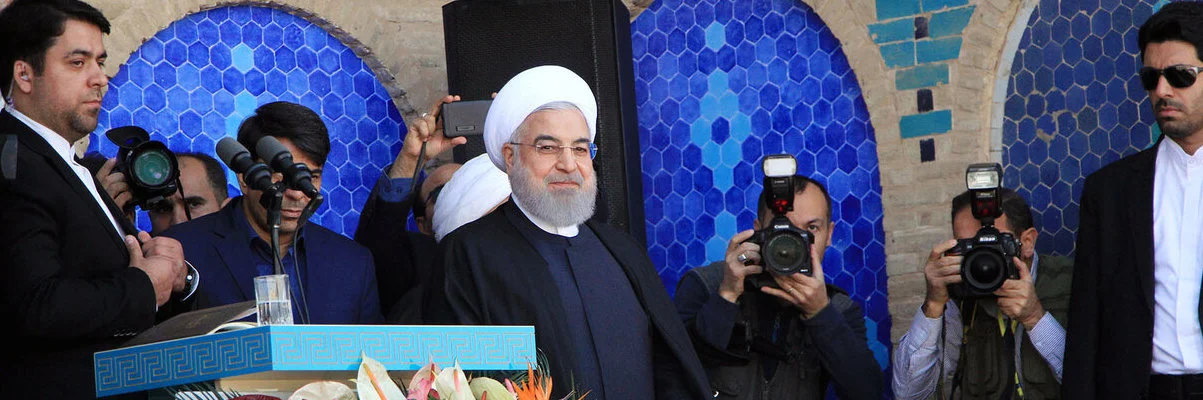
Iran Says Oil Field Found With 53bn Barrels of Crude
◢ Iran has discovered a new oil field containing 53 billion barrels of crude, President Hassan Rouhani said Sunday, a find that would increase Iran's proven reserves by over a third. The 80-meter deep field stretches nearly 200 kilometres from Khuzestan's border with Iraq to the city of Omidiyeh.
By Amir Havasi
Iran has discovered a massive new oil field, President Hassan Rouhani said Sunday, a find that would boost its proven reserves by about a third in a rare piece of "good news" for an economy battered by US sanctions.
In a speech aired on state TV, Rouhani said the country's economy had stabilised despite punishing US measures against its senior leaders, banking and finance sectors.
The vast field in the southwestern province of Khuzestan holds an estimated 53 billion barrels of crude, he said.
The 80-meter deep reservoir stretches nearly 200 kilometres from Khuzestan's border with Iraq to the city of Omidiyeh.
"This is a small gift by the government to the people of Iran," he said in a speech from the central city of Yazd.
"We announce to America today that we are a rich nation, and despite your enmity and cruel sanctions, Iranian oil industry workers and engineers discovered this great oil field."
The find would add around 34 percent to the OPEC member's current proven reserves, estimated by energy giant BP at 155.6 billion barrels.
Iran, a founding member of the Organization of the Petroleum Exporting Countries, sits on what were already the world's fourth-biggest oil reserves.
The new reserves, if proven, would lift it to third place, just before regional arch-rival Saudi Arabia.
'Unconventional' Sales
But it remains to be seen how much the country can benefit from the new field.
Iran has struggled to sell its oil since US President Donald Trump withdrew from a landmark 2015 nuclear deal last year and reimposed unilateral sanctions.
In May, Washington ended temporary sanctions waivers it had granted to the eight main buyers of Iranian oil, ratcheting up the pressure on holdouts China, India and Turkey to find other suppliers.
Tehran does not report exact figures, but says some crude is still exported via "unconventional" means.
It has hit back at the US with a series of countermeasures, stepping up its nuclear activities and threatening to go further unless the deal's promised economic benefits materialise.
It insists its moves are transparent and easily reversible, calling on the deal's other parties to honor their commitments.
The remaining parties to the 2015 accord—Britain, China, France, Germany and Russia—have been working on measures to help it avoid US sanctions, but with few results so far.
Since the US withdrawal, tensions have cranked up in the Gulf with a series of mysterious attacks on tankers and Saudi oil installations, with Tehran and Washington narrowly avoiding an armed confrontation after the downing of a US drone over Iranian territory.
Economic 'Disruptors'
Iran has experienced a sharp economic downturn this year, fuelled in part by US sanctions, with a plummeting currency sending inflation skyrocketing and hiking the prices of imports.
But Rouhani insisted the economy had now stabilised.
"Our people weathered hard days in the past year ... (but) I believe America is now hopeless," he said.
The IMF has said Iran's economy will contract by a massive 9.5 percent this year, its worst performance since 1984 when the Islamic republic was at war with neighbouring Iraq, but notes the growth is expected to stabilise at zero next year.
Authorities have cracked down hard on "economic disruptors"—Iranians accused of exploiting shortages and fluctuations in gold and currency prices, with dozens tried and some executed.
"I call on the judiciary... to explain billion-dollar corruption cases to the people," Rouhani said during his speech in Yazd.
"Where has the money gone?"
He pointed to a "$2.7 billion case" whose suspect has been "arrested, sentenced to die and is now in prison"—but in which the money is yet to be recovered.
He appeared to be referring to business magnate Babak Morteza Zanjani, on death row after being convicted in 2016 of embezzling $2.7 billion while helping the government circumvent international sanctions.
Photo: IRNA
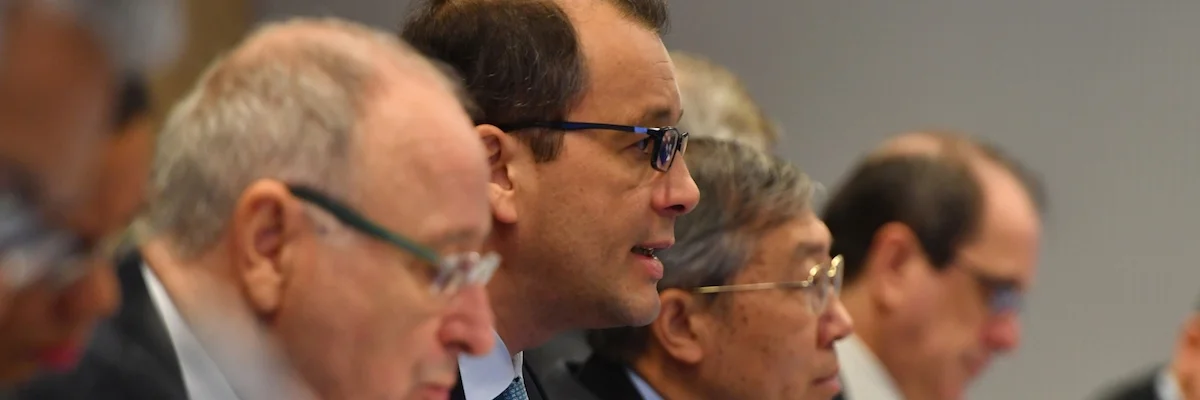
Iran Nuclear Crisis Escalates With New Inspections Report
◢ Iran accused an international atomic monitor of setting off explosives detectors at its main enrichment plant, ratcheting up tensions that threaten to tip the nation into a new nuclear crisis. The IAEA inspector triggered alarms during routine screening on Oct. 28 at Iran’s Natanz enrichment facility, Ambassador Gharib Abadi said at a briefing in Vienna.
By Jonathan Tirone
Iran accused an international atomic monitor of setting off explosives detectors at its main enrichment plant, ratcheting up tensions that threaten to tip the nation into a new nuclear crisis.
The International Atomic Energy Agency inspector triggered alarms during routine screening on Oct. 28 at Iran’s Natanz enrichment facility, Ambassador Gharib Abadi said at a briefing in Vienna. The IAEA recalled the inspector after she was questioned by Iranian authorities over traces of explosives detected in her handbag.
The IAEA refuted the charge. “The agency does not agree with Iran’s characterization of the situation involving the inspector, who was carrying out official safeguards duties,” it said in an email. Iran shouldn’t have delayed her departure, the agency said.
The Iranian allegation was made shortly after IAEA officials said Iran had failed to cooperate with its probe into radioactive samples discovered at a site identified by Israel.
“There were suspicious materials involved in this incident,” Abadi said. “Iran expects the necessary level of cooperation during the investigation.” U.S. ambassador to the IAEA, Jackie Wolcott, called the detention of the monitor for questioning an “outrageous and unwarranted act of intimidation,” according to a statement.
The agency’s top inspector, Massimo Aparo, had told diplomats in a closed-door meeting in Vienna on Wednesday that Iran is evading attempts to discover the source of man-made and natural uranium particles detected at a warehouse in Tehran earlier this year, according to two officials familiar with the briefing who asked not to be identified.
New Front
IAEA acting director General Cornel Feruta convened an extraordinary meeting of the 35-member board of governors Thursday to discuss the new concerns. The Romanian diplomat said only last month that Iran had taken “a step in the right direction” in attempting to clarify matters troubling inspectors.
“Iran should provide full and timely cooperation,” the IAEA said in an emailed statement. “The IAEA is ready to continue interactions with Iran with a view to resolving the matter as soon as possible.”
The findings threaten to open a new front in the tense confrontation that has erupted over Iran’s nuclear program since the U.S. withdrew from the multi-power nuclear deal with Tehran last year and reimposed punishing economic sanctions. Iran, which has vowed to return to the nuclear deal once the U.S. does the same, this week announced it would begin enriching uranium at Fordow, a fortified site built into the side of a mountain.
European signatories say they remain committed to the nuclear accord but have struggled to devise a mechanism that wouldn’t expose European companies to penalties if they trade with the Islamic Republic.
Secretary of State Mike Pompeo on Thursday urged the world to address what he called Iran’s nuclear “extortion.”
Safeguards Obligations
The IAEA has satellite images showing that the Turquz-Abad site where the particles were found was cleared out after Israeli Prime Minister Benjamin Netanyahu presented documents that Mossad spies smuggled out of a secret warehouse in Tehran. Those files allegedly show Iran lied about a weapons project that operated until 2003, and then intensified efforts to hide its atomic archive after agreeing to the 2015 nuclear accord. Iran denies its nuclear program is aimed at producing weapons.
The U.S. is expected to press European allies that remain committed to the pact to support authorizing IAEA inspectors to broaden their investigation, according to the diplomats. That effort would be led by Argentina’s Rafael Grossi, who’ll replace Feruta as director general next month.
The suggestion that Iran could be providing incomplete information has potentially serious consequences. The entire international apparatus of rules that the IAEA enforces is based on verifying the correctness and completeness of nations’ declared nuclear material and nuclear-related activities.
The IAEA’s board referred Iran to the United Nations Security Council in 2006 for failing to fulfill safeguards obligations. The council then imposed crippling international sanctions that were only lifted after the 2015 agreement was agreed.
Photo: IAEA
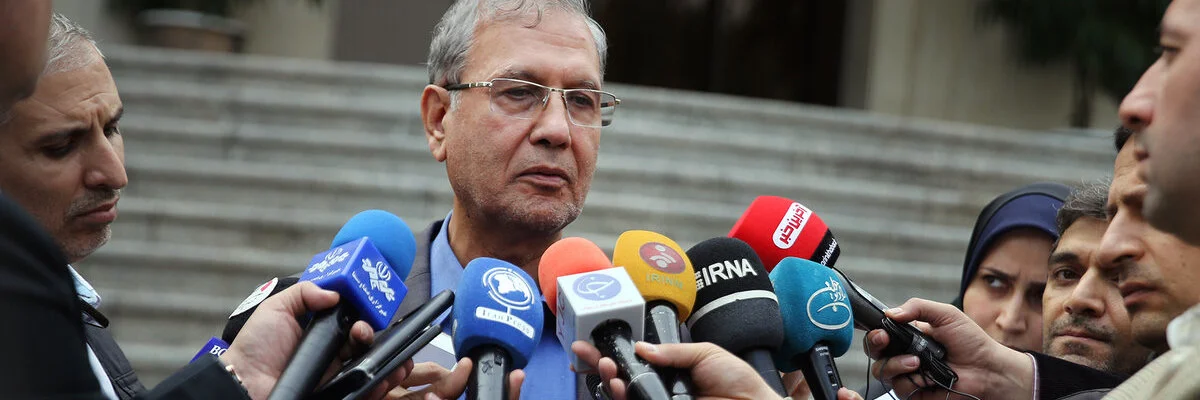
Iran Begins Fordow Enrichment in Major Nuclear Deal Rollback
◢ Iran has begun the process of enriching uranium at its Fordow research plant, in the most dramatic rollback of its commitments under its unraveling nuclear deal with world powers. About 2,000 kilograms of uranium hexafluoride gas were brought to the facility on Wednesday, under the watch of the IAEA.
By Yasna Haghdoost
Iran has begun the process of enriching uranium at its Fordow research plant, in the most dramatic rollback of its commitments under its unraveling nuclear deal with world powers.
About 2,000 kilograms (4,400 pounds) of uranium hexafluoride gas were brought to the facility on Wednesday, under the watch of the International Atomic Energy Agency, a United Nations watchdog, Iranian state news agencies reported.
By Saturday, the level of uranium enrichment will reach 4.5%, according to Behrouz Kamalvandi, the spokesperson for the Atomic Energy Organization of Iran. The organization also said that last week it prevented a UN inspector from entering the Natanz testing facility, another uranium enrichment site, because she was carrying “suspicious material” that had set off alarms.
The renewed activities at Fordow will add to a stockpile of enriched uranium that has already exceeded caps.
“The decision to expand nuclear activities at Fordow is Iran’s most serious violation of the nuclear deal to date,” Eurasia Group said in a report. “Iran’s latest violation represents a significant escalation, not a continuation of incremental steps away from its nuclear commitments.”
Even so, the work at Fordow doesn’t mark a qualitative leap because Iran has already been enriching to 4.5%. That’s above the 3.67% purity level set down in the deal, but far from the 90% needed for weapons, or the 20% level required for research reactors.
Tehran began gradually retreating from the 2015 accord after U.S. President Donald Trump unilaterally withdrew from the agreement last year and reimposed crippling sanctions, rendering the pact barely functional. European signatories say they remain committed, but have struggled to devise a mechanism that wouldn’t expose European companies to U.S. penalties if they trade with the Islamic Republic.
While Iran acknowledges it’s breached limits set under the pact, it rejects that it has violated the accord. That’s because the document allows participants to cease meeting commitments “in whole or in part” in the event of an unresolved dispute. Tehran argues that Europe has an obligation to help it avoid the new U.S. penalties.
The standoff over the deal has provoked tit-for-tat attacks on Gulf oil facilities, drones and shipping traffic that has raised fears of a new military confrontation in the Middle East.
Photo: IRNA
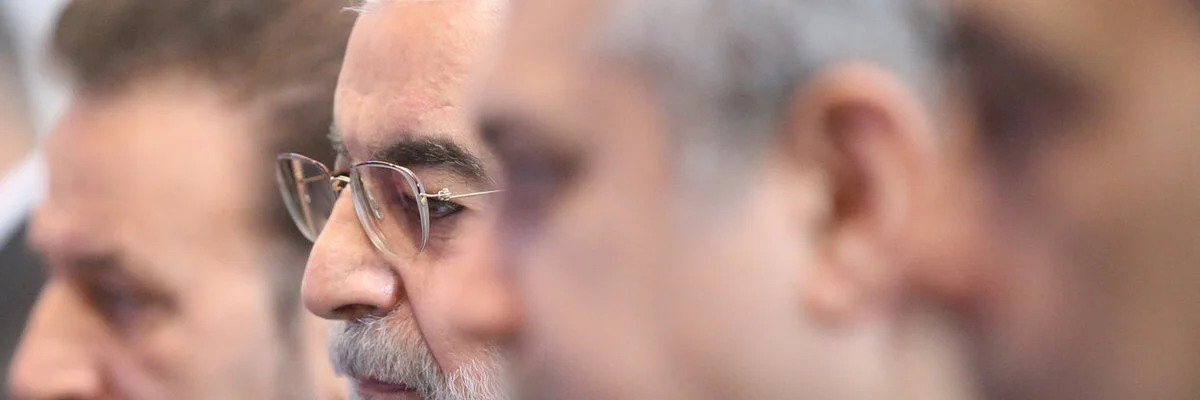
Iran Says to Resume Enrichment at Underground Plant
◢ President Hassan Rouhani said Tuesday that Iran would resume uranium enrichment at an underground plant south of Tehran in its latest step back from a troubled 2015 agreement with major powers. The suspension of all enrichment at the Fordow plant in the mountains near the Shiite holy city of Qom was one of the restrictions in the JCPOA.
President Hassan Rouhani said Tuesday that Iran would resume uranium enrichment at an underground plant south of Tehran in its latest step back from a troubled 2015 agreement with major powers.
The suspension of all enrichment at the Fordow plant in the mountains near the Shiite holy city of Qom was one of the restrictions on its nuclear activities that Iran accepted in return for the lifting of international sanctions.
But Washington's abandonment of the deal in May last year followed by its reimposition of crippling sanctions prompted Iran to begin a phased suspension of its own commitments in May this year.
Rouhani recalled that under the terms of the agreement Iran had retained more than 1,000 centrifuges at the plant which had been running empty since it went into effect.
"Starting from tomorrow (Wednesday), we will begin injecting (uranium hexafluoride) gas at Fordo," Rouhani said in a speech broadcast by state television.
His announcement came a day after tensions flared anew on the 40th anniversary of the US embassy siege and hostage crisis, with thousands in Tehran taking to the streets and Washington imposing fresh sanctions.
Iran said the resumption of enrichment at Fordow would be carried out transparently and witnessed by inspectors from the UN nuclear watchdog, the International Atomic Energy Agency.
But Russia, which has close ties with Iran, expressed concern about the latest move.
"We are monitoring the development of the situation with concern," President Vladimir Putin's spokesman Dmitry Peskov told reporters.
"We support the preservation of this deal."
At the same time, Peskov said Moscow understood Tehran's concerns over the "unprecedented and illegal sanctions" imposed by Washington.
The move is the fourth announced by Iran since it began responding to Washington's abandonment of its commitments.
'Committed to Negotiations'
Iran has repeatedly warned the remaining parties to the deal—Britain, China, France, Germany and Russia—that the agreement can only be rescued if they help it circumvent US sanctions.
European governments have strived to come up with a mechanism that would allow foreign firms to continue to do business with Iran without incurring US penalties.
But to Iran's mounting frustration, their efforts have so far failed to have any significant impact.
Rouhani stressed that Iran remained committed to efforts to save the 2015 agreement despite its phased suspension of some of its commitments.
"The fourth phase, like the three previous ones, is reversible," he said.
"We are committed to all the behind-the-scenes negotiations we have with some countries for a solution.
"Over the next two months, we will negotiate more."
Rouhani said Iran wanted to return to a situation in which "we can easily sell our oil, we can easily use our money in banks."
If that were achieved, "we will completely go back to the previous situation."
The European Union warned Monday that its continued support for the deal depended on Tehran fulfilling its commitments.
Maja Kocijancic, spokeswoman for EU diplomatic chief Federica Mogherini, said the bloc "remains committed" to the deal but "our commitment... depends on full compliance by Iran".
"We have continued to urge Iran to reverse such steps without delay and to refrain from other measures that would undermine the nuclear deal."
On July 1, Iran said it had increased its stockpile of enriched uranium to beyond a 300-kilo maximum set by the deal, and a week later, it announced it had exceeded a 3.67-percent cap on the purity of its uranium stocks.
On September 7, it fired up advanced centrifuges to boost its enriched uranium stockpiles.
On Monday, Iran announced a more than tenfold increase in enriched uranium production as a result of the steps back from the nuclear deal it had already undertaken.
Enriched uranium production has reached five kilogrammes per day, Ali Akbar Salehi, the head of Iran's Atomic Energy Organisation, told reporters.
That compares with the level of 450 grams two months ago.
Photo: IRNA
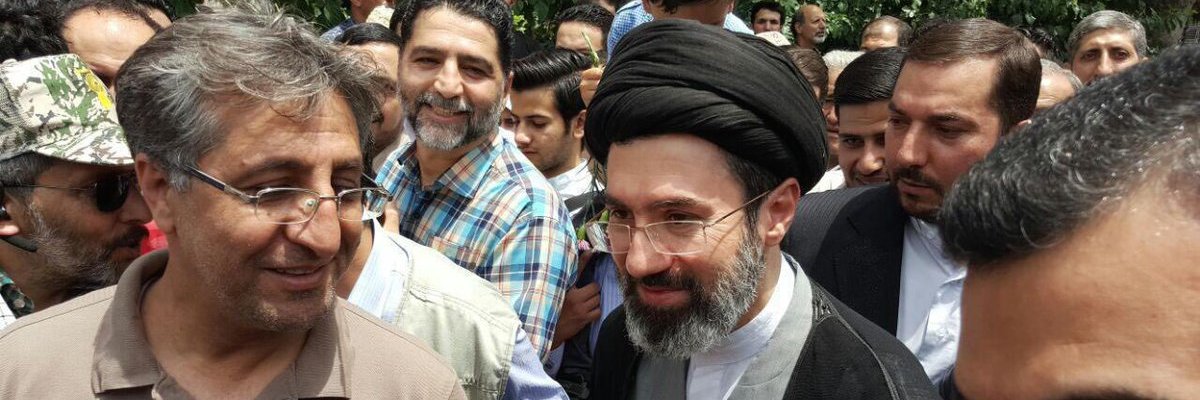
U.S. Sanctions Key Iranians Reporting to Supreme Leader
◢ The U.S. used the 40th anniversary of the Iran hostage crisis to sanction key officials reporting to Supreme Leader Ali Khamenei. Mojtaba Khamenei, was targeted “for representing the Supreme Leader in an official capacity despite never being elected or appointed to a government position aside from work in the office of his father.”
By Josh Wingrove
The U.S. used the 40th anniversary of the Iran hostage crisis to sanction key officials reporting to Supreme Leader Ali Khamenei, including his son, and called on the Islamic Republic to release Americans believed to be held in the country.
The U.S. said Monday that the officials include those involved in terrorist attacks in Lebanon and Argentina. Three Trump administration officials, briefing reporters on condition of anonymity, also announced a $20 million reward for information leading to the return of American Robert Levinson, a former FBI agent who disappeared in 2007.
“Today the Treasury Department is targeting the unelected officials who surround Iran’s Supreme Leader, Ayatollah Khamenei, and implement his destabilizing policies,” Treasury Secretary Steven Mnuchin said in a statement. “These individuals are linked to a wide range of malign behaviors by the regime, including bombings of the U.S. Marine Barracks in Beirut in 1983 and the Argentine Israelite Mutual Association in 1994, as well as torture, extrajudicial killings, and repression of civilians.”
The move comes as tensions between Washington and Tehran remain high over the breakdown of the 2015 Iran nuclear accord and military maneuvers in the Persian Gulf region. Iranian nuclear chief Ali Akbar Salehi on Monday said Iran has increased the number of advanced centrifuges it is running to enrich uranium and additional milestones in the country’s nuclear program may be announced later this week.
Iran has been scaling back its compliance with the beleaguered 2015 deal since May as it resists the “maximum pressure” offensive of President Donald Trump, who unilaterally left the accord last year and later imposed sweeping economic sanctions including the total ban on oil sales.
But the troubled history between the two countries dates back to at least the Carter administration.
The taking of more than 50 diplomats at the American embassy in Tehran in November 1979 became a defining moment in U.S.-Iran relations for more than a generation. The two countries have not had diplomatic relations since the hostage crisis, which ended 444 days after it began.
Among those targeted for inclusion on Treasury’s sanctions list on Monday are Ebrahim Raisi, the head of the country’s judiciary, for involvement in cracking down on public protests in 2009, according to the statement. Also designated was Mohammad Mohammadi Golpayegani, the Supreme Leader’s chief of staff, and Ali Akbar Velayati, a senior adviser to the Supreme Leader who Treasury said helped the Iranian regime extend credit lines to Syrian President Bashar al-Assad’s regime.
Mojtaba Khamenei, a son of the leader, was targeted “for representing the Supreme Leader in an official capacity despite never being elected or appointed to a government position aside from work in the office of his father.”
With an economic crisis looming, Iran announced on May 8 it would gradually withdraw from the nuclear agreement unless the remaining parties find a way to ease its pain. It first stopped complying with a 300-kilogram cap on the storage of enriched uranium and heavy water imposed by the multilateral accord, and then broke the 3.67% limit on uranium purity.
While officials have said the country will “set aside” restrictions on uranium enrichment, it has so far held off enriching to anywhere near 20%, the level required for research reactors. Weapons-grade uranium needs to have an enrichment level of 90% or higher.
Photo: Tasnim
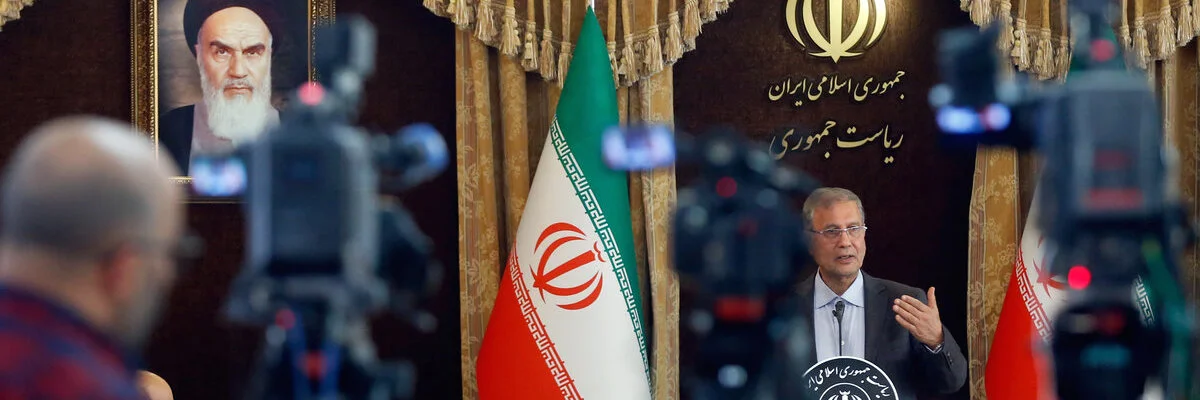
Iran Announces Sharp Rise in Enriched Uranium Production
◢ Iran announced Monday a more than tenfold increase in enriched uranium production following a series of steps back from commitments under a 2015 nuclear deal abandoned by the U.S.. Iran has also developed two new advanced centrifuges, one of which is undergoing testing, said Ali Akbar Salehi, the head of Atomic Energy Organization of Iran.
By Amir Havasi
Iran announced Monday a more than tenfold increase in enriched uranium production following a series of steps back from commitments under a 2015 nuclear deal abandoned by the United States.
The Islamic republic has also developed two new advanced centrifuges, one of which is undergoing testing, Ali Akbar Salehi, the head of the Atomic Energy Organisation of Iran, announced.
Enriched uranium production has reached five kilograms per day, Salehi told reporters at the Natanz facility in central Iran in remarks broadcast by state television.
That compares with the level of 450 grams two months ago.
Tehran decided in May to suspend certain nuclear commitments, a year after US President Donald Trump withdrew from the deal between world powers and Iran and reimposed sanctions on the country.
Tehran has so far hit back with three packages of countermeasures and threatened to go even further if the remaining partners to the deal -- Britain, China, France, Germany and Russia -- fail to help it circumvent US sanctions.
After the latest announcement, the European Union warned that its support for the nuclear deal depends on Tehran fulfilling its commitments.
"We have continued to urge Iran to reverse such steps without delay and to refrain from other measures that would undermine the nuclear deal," said Maja Kocijancic, spokeswoman for EU diplomatic chief Federica Mogherini.
Although the EU "remained committed" to the accord, "we have also been consistent in saying that our commitment to the nuclear deal depends on full compliance by Iran", she told reporters in Brussels.
On July 1, Iran said it had increased its stockpile of enriched uranium to beyond a 300-kilo maximum set by the deal, and a week later, it announced it had exceeded a 3.67-percent cap on the purity of its uranium stocks.
It fired up advanced centrifuges to boost its enriched uranium stockpiles on September 7.
Salehi said Iranian engineers "have successfully built a prototype of IR-9, which is our newest machine, and also a model of a new machine called IR-s ... all these in two months.”
EU Deadline Over
Iran has removed all of its IR-1 centrifuges—the sole deal-approved machines—and is now using advanced models, leading to the sharp increase in enriched uranium production, he added.
"We must thank the enemy for bringing about this opportunity to show the might of the Islamic republic of Iran, especially in the nuclear industry," Salehi said.
"This is while some say (Iran's) nuclear industry was destroyed!" he said, laughing.
Iran will take the fourth step of walking back on the nuclear accord on Tuesday, semi-official news agency ISNA reported without specifying details.
The announcement came as Iranians held mass rallies four decades to the day after revolutionary students stormed the US embassy in the capital and took dozens of American diplomats and staff hostage.
It took a full 444 days for the crisis to end with the release of 52 Americans, but the US broke off diplomatic relations with Iran in 1980 and ties have been frozen ever since.
Monday also marked the end of the 60-day deadline Iran gave to Europe to either provide it with the economic benefits of the nuclear agreement or see even more commitments abandoned.
The European parties to the Vienna deal have repeatedly called on Iran to stay within the accord's framework but their efforts to skirt unilateral US sanctions have so far borne no fruit.
Iran's supreme leader Ayatollah Ali Khamenei called French President Emmanuel Macron's efforts to set up talks between Iran and the US to break the impasse "naive".
Macron's efforts to initiate a phone call between US President Donald Trump and his Iranian counterpart Hassan Rouhani on the sidelines of the UN General Assembly in September ended in failure.
Rouhani stressed he would only hold talks with the US if sanctions were lifted first.
Photo: IRNA
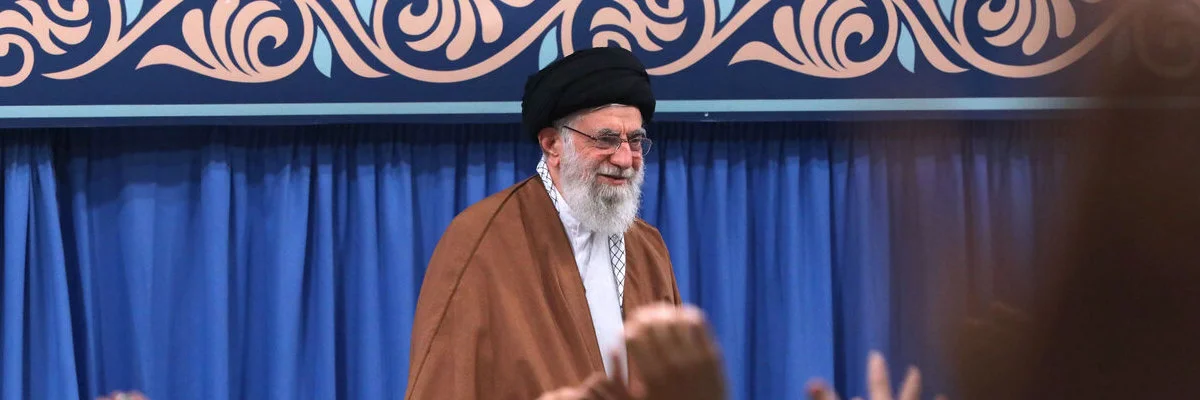
Iran's Khamenei Rules Out Talks with US
◢ Iran's supreme leader on Sunday again ruled out negotiations with Washington, a day before the 40th anniversary of the hostage crisis at the US embassy in Tehran. "Those who see negotiations with the US as the solution to every problem are certainly mistaken," Ayatollah Ali Khamenei said during a speech to mark the anniversary.
By Amir Havasi
Iran's supreme leader on Sunday again ruled out negotiations with Washington, a day before the 40th anniversary of the hostage crisis at the US embassy in Tehran.
"Those who see negotiations with the US as the solution to every problem are certainly mistaken," Ayatollah Ali Khamenei said during a speech to mark the anniversary, according to his official website.
"Nothing will come out of talking to the US, because they certainly and definitely won't make any concessions."
On November 4, 1979, less than nine months after the toppling of Iran's American-backed shah, students overran the embassy complex to demand the United States hand over the ousted ruler after he was admitted to a US hospital.
It took a full 444 days for the crisis to end with the release of 52 Americans, but the US broke off diplomatic relations with Iran in 1980 and ties have been frozen ever since.
Khamenei, however, said the Iran-US "disputes" did not start with the embassy takeover.
"It goes back to the 1953 coup, when the U.S. overthrew a national govt.—which had made the mistake of trusting the U.S.—and established its corrupt and puppet govt. in Iran," his Twitter account said in English.
That CIA-organised coup, supported by Britain, toppled the hugely popular prime minister Mohammad Mossadegh who was responsible for nationalising Iran's oil industry.
The coup reestablished the rule of country's last shah, Mohammad-Reza Pahlavi, who had fled the country in August 1953 after trying to dismiss Mossadegh.
Tensions have escalated again between Tehran and Washington since US President Donald Trump withdrew from the 2015 Iran nuclear deal last year and reimposed unilateral sanctions.
Khamenei pointed to North Korea's negotiations with the US as a sign of Washington's untrustworthiness, tweeting that "they took photos and praised each other, but the Americans did not lift sanctions even a bit.
"That's how they are in negotiations; they'll say we brought you to your knees and won't make any concessions at the end."
'American Demands'
Khamenei called French President Emmanuel Macron's efforts to set up talks between Iran and the US "naive".
He said Tehran had tested Washington by calling on it to lift sanctions and return to the nuclear deal, known as the Joint Comprehensive Plan of Action (JCPOA), which gave Iran sanctions relief in return for curbs on its nuclear programme.
Macron's efforts to initiate a phone call between US President Donald Trump and his Iranian counterpart Hassan Rouhani on the sidelines of the UN General Assembly in September ended in failure.
Rouhani stressed he would only hold talks with the US if sanctions were lifted first.
Khamenei said Macron had considered a meeting with Trump to be "the solution to all of Iran's problems," making the French president either "very naive" or the "accomplice" of the United States.
And "for the sake of testing and to clarify for everyone, I said despite the fact that America had made a mistake in leaving the JCPOA, if they lift all sanctions, they (the US) can take part in the JCPOA although I knew they would not accept, as they did not," he added.
Slamming the seemingly unending "American demands", Khamenei said that after telling Iran to not be "active in the region" and end its production of missiles, Washington will next "say give up religious laws and don't insist on the issue of the hijab."
Tehran has hit back three times with countermeasures since May in response to Washington's withdrawal from the nuclear deal by suspending parts of its compliance with the agreement's terms.
It has threatened to go even further if remaining parties to the deal —Britain, China, France, Germany and Russia—cannot help it circumvent US sanctions.
Photo: IRNA
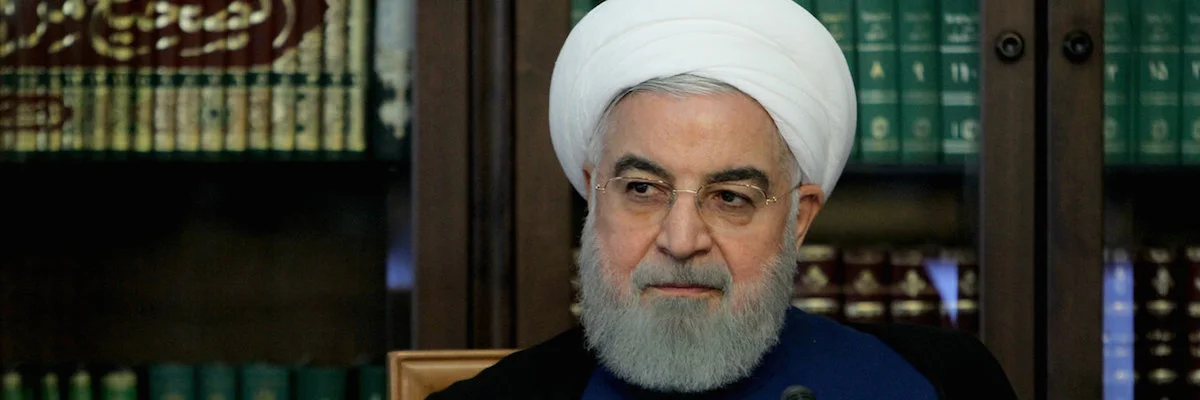
Iran Says Cooperation Plan Sent to Persian Gulf Neighbors
◢ Iran said Saturday it has sent Iraq and Arab states of the Persian Gulf the text of its security and cooperation project first unveiled by President Hassan Rouhani at the UN in September. Rouhani "sent the full text (of the initiative) to the heads" of the Gulf Cooperation Council and Iraq and "asked for their cooperation in processing and implementing it,” the foreign ministry said.
Iran said Saturday it has sent Iraq and Arab states of the Persian Gulf the text of its security and cooperation project first unveiled by President Hassan Rouhani at the UN in September.
Rouhani "sent the full text (of the initiative) to the heads" of the Gulf Cooperation Council and Iraq and "asked for their cooperation in processing and implementing it,” the foreign ministry said.
The GCC is a six-nation bloc that groups Saudi Arabia, the United Arab Emirates, Bahrain, Kuwait, Qatar and Oman.
Ties have been tense between Iran and GCC members Saudi Arabia and the UAEnited Arab Emirates, both allies of the United States and leading members of a military coalition battling Iran-backed Huthi rebels in Yemen.
In September, Rouhani proposed in a speech at the UN General Assembly a "Coalition for Hope" that would unite all regional countries in a pledge of non-aggression and non-interference in each others' affairs.
It came after a string of mysterious attacks on oil tankers in the Persian Gulf and Saudi oil installations, which the United States blamed on Tehran. Iran denied any involvement in the attacks.
"The security of the region shall be provided when American troops pull out," Rouhani said at the General Assembly.
"In the event of an incident, you and we shall not remain alone. We are neighbors with each other and not with the United States," he added.
Tensions between Tehran and Washington have escalated sharply since US President Donald Trump unilaterally withdrew last year from the 2015 Iran nuclear deal.
He has since reimposed unilateral sanctions as part of its "maximum pressure" campaign.
The arch-foes came to the brink of a military confrontation in June when Iran downed a US drone and Trump ordered retaliatory strikes before canceling them at the last minute.
Photo: IRNA
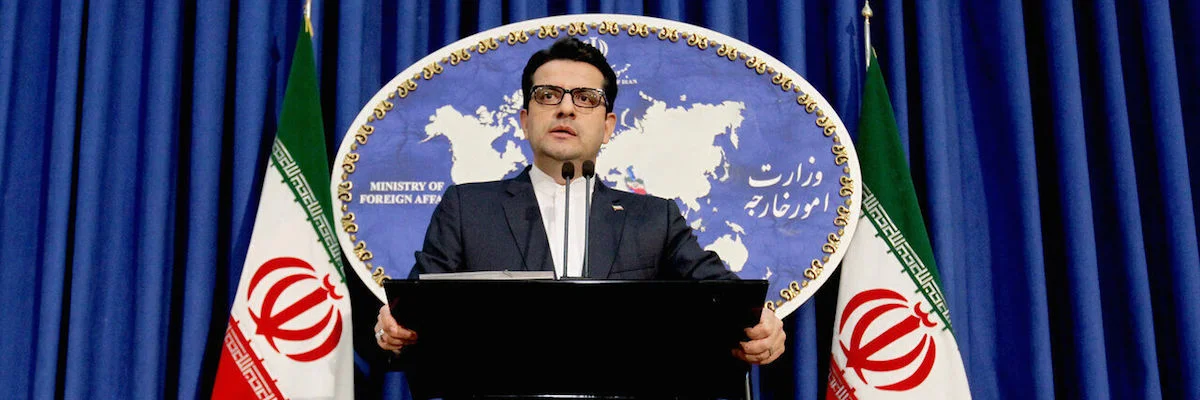
Iran Hopes New UN Nuclear Chief Will Act 'Neutrally'
◢ Iran said Thursday it hopes the UN nuclear watchdog will act “neutrally” under its new head and vowed to maintain cooperation with its inspectors monitoring a landmark 2015 nuclear deal. Argentina’s Rafael Grossi took the helm of the International Atomic Energy Agency on Tuesday following the death of his predecessor, Yukiya Amano of Japan, in July.
Iran said Thursday it hopes the UN nuclear watchdog will act “neutrally” under its new head and vowed to maintain cooperation with its inspectors monitoring a landmark 2015 nuclear deal.
Argentina’s Rafael Grossi took the helm of the International Atomic Energy Agency on Tuesday following the death of his predecessor, Yukiya Amano of Japan, in July.
The UN agency is tasked with monitoring Tehran’s nuclear activities to assess its compliance with the 2015 agreement with major powers, which has been severely undermined by Washington’s abandonment of it in May last year.
Iran hopes that during Grossi’s tenure, the IAEA “can neutrally and professionally undertake its international responsibilities and sensitive missions,” foreign ministry spokesman Abbas Mousavi said in a statement.
“Iran is ready to maintain and expand interaction and cooperation with the agency with goodwill and mutual respect,” he added.
Tensions with the United States have escalated sharply since it began reimposing crippling unilateral sanctions lifted under the nuclear deal.
The European parties to the deal—Britain, France and Germany—have repeatedly said they are committed to saving the accord, but their efforts have so far borne little fruit.
Tehran has hit back by suspending its compliance with parts of the deal until sanctions relief is restored.
“The path for diplomacy is open… the Europeans and especially the French are still trying to act on their commitments,” Mousavi told state television.
Yet the attempts have so far “failed to reach any tangible results” and “if the situation goes on as it is, (Iran) will most probably take the fourth step,” he added.
Iran has said it will unveil a fourth package of measures on Monday.
Photo: IRNA
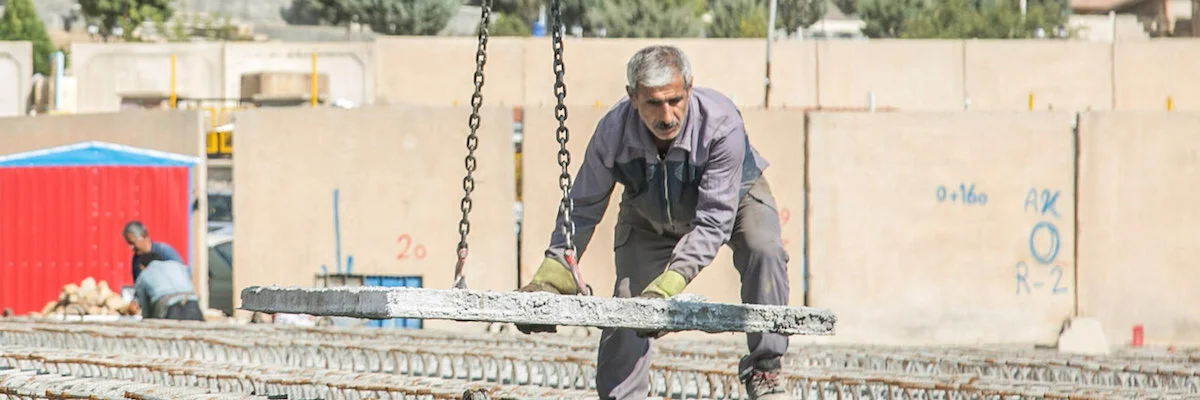
US Targets Iran Construction Sector with New Sanctions
◢ The United States on Thursday extended its sanctions on Iran by taking aim at its construction sector, which Washington linked to the country's Revolutionary Guards. The sanctions, it said, would also target "four strategic materials as being used in connection with Iran's nuclear, military, or ballistic missile programs."
The United States on Thursday extended its sanctions on Iran by taking aim at its construction sector, which Washington linked to the country's Revolutionary Guards.
The sanctions, it said, would also target "four strategic materials as being used in connection with Iran's nuclear, military, or ballistic missile programs."
Secretary of State Mike Pompeo imposed the sanctions after the construction sector was identified as "being controlled directly or indirectly by the Islamic Revolutionary Guard Corps (IRGC)," spokeswoman Morgan Ortagus said in a statement.
Iranian tensions with the United States have escalated sharply since US President Donald Trump last year withdrew from the Iran nuclear deal and began reimposing crippling unilateral sanctions.
Tehran has hit back by suspending its compliance with parts of the nuclear deal until sanctions relief is restored.
The latest sanctions "will help preserve oversight of Iran's civil nuclear program, reduce proliferation risks, constrain Iran's ability to shorten its 'breakout time' to a nuclear weapon, and prevent the regime from reconstituting sites for proliferation-sensitive purposes," Ortagus said.
Just Tuesday, the UN's nuclear watchdog, the International Atomic Energy Agency (IAEA), elected Argentina's Rafael Grossi as its new head.
The IAEA is tasked with monitoring Iran's nuclear activities to ensure they abide by the terms of the 2015 deal known as the Joint Comprehensive Plan of Action (JCPOA).
The deal has become more shaky since the US pullout. However its European parties have repeatedly said they are committed to saving the accord, but their efforts have so far borne little fruit.
The decision to continue with restrictions on Iran's nuclear program gives the United States additional authority "to prevent Iran from acquiring strategic materials for the IRGC, its construction sector, and its proliferation programs," Ortagus said.
Tehran has hit back three times with countermeasures in response to the US withdrawal from the nuclear deal.
On July 1, Iran said it had increased its stockpile of enriched uranium to beyond a 300-kilogramme maximum set by the deal, and a week later it announced it had exceeded a 3.67-percent cap on the purity of its uranium stocks.
In its latest move it fired up advanced centrifuges to boost its enriched uranium stockpiles on September 7.
Photo: IRNA

US Sanctions Threaten Iranians' Right to Health: HRW
◢ Washington's sanctions against Tehran have drastically reduced available channels for humanitarian imports and are threatening the health rights of Iranians, Human Rights Watch said Tuesday. Iranian patients have struggled with a foreign medicine shortage and price hikes for over a year both due to reimposed US trade sanctions as well as a battered economy with a free-falling currency.
Washington's sanctions against Tehran have drastically constrained its ability to pay for humanitarian imports and are threatening the health rights of Iranians, Human Rights Watch said Tuesday.
US President Donald Trump unilaterally withdrew from the 2015 Iran nuclear deal last year and reimposed punishing sanctions as part of a stated campaign of "maximum pressure" against the Islamic republic.
Officially, the punitive measures make exceptions for food, medicine and other humanitarian goods, but most companies are unwilling to do any trade with Iran for fear of repercussions in the world's largest economy.
Trump "administration officials claim they stand with the Iranian people, but the overbroad and burdensome US sanctions regime is harming Iranian's right to health, including access to live-saving medicines", said Sarah Leah Whitson, Middle East director at HRW.
"The comprehensive web of US sanctions has led banks and companies to pull back from humanitarian trade with Iran, leaving Iranians who have rare or complicated diseases unable to get the medicine and treatment they require," she added.
The sanctions include previously suspended nuclear-related embargoes including on Iran's oil exports and financial transactions, with new ones added.
The US Treasury said they were imposed to make Iran's leaders "cease support for terrorism, stop proliferating ballistic missiles, end destructive regional activities, and abandon their nuclear ambitions".
In a 47-page report, HRW documents how the US-built exemptions for humanitarian imports into its sanctions regime have failed to offset the strong reluctance of US and European companies and banks to finance humanitarian goods.
Iranian patients have struggled with a foreign medicine shortage and price hikes for over a year both due to reimposed US trade sanctions as well as a battered economy with a free-falling currency.
Medicine importers get subsidised currency rates from the government, yet foreign drugs and medical equipment cannot always be found in state-owned pharmacies.
Iran produces 96 percent of the drugs it uses but imports more than half the raw materials to make them, according to the Syndicate of Iranian Pharmaceutical Industries.
It also has to import special medicine which patients with rare diseases require.
HRW called on the US to "get serious about addressing the harm resulting from its cruel sanctions regime".
Washington must create "a viable financial channel with reasonable requirements for companies, banks and groups to provide humanitarian goods for people in Iran," it said.
Photo: IRNA
Argentina's Grossi Elected Head of UN's Nuclear Watchdog
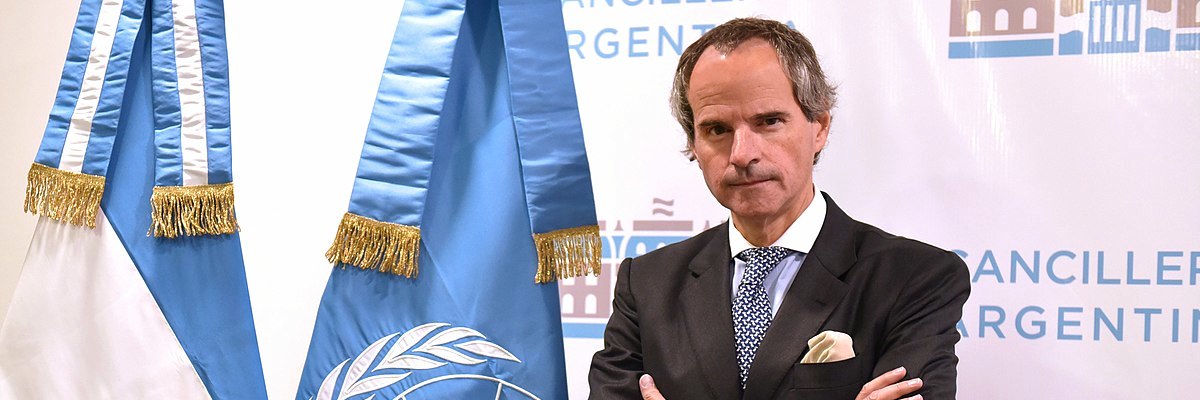
◢ Argentina’s Rafael Grossi was elected on Tuesday to head the UN's nuclear watchdog, which is tasked in particular with monitoring the implementation of the increasingly shaky Iran nuclear deal. Grossi received 24 votes to Feruta's 10 from the IAEA's 35-member Board of Governors in the third official round of voting.
By Julia Zappei
Argentina's Rafael Grossi was elected on Tuesday to head the UN's nuclear watchdog, which is tasked in particular with monitoring the implementation of the increasingly shaky Iran nuclear deal.
Grossi beat Romanian diplomat Cornel Feruta to become director general of the International Atomic Energy Agency (IAEA) following the death of the former head Yukiya Amano of Japan in July.
The election of Grossi, Argentinia's ambassador to the IAEA, comes at a critical time for the Vienna-based agency as Iran is decreasing its commitments under the 2015 landmark deal.
US President Donald Trump last year withdrew from the agreement and proceeded to re-introduce sanctions, leaving Iran to press the remaining signatories to hold up economic benefits in return for its nuclear programme cutbacks.
Grossi received 24 votes to Feruta's 10 from the IAEA's 35-member Board of Governors in the third official round of voting, reaching the two-thirds majority needed to become the new director general, according to a diplomatic source.
"With Rafael Grossi securing a qualified majority in the board of governors, IAEA has taken a decisive step towards electing its director general," Xavier Sticker, the French ambassador to the United Nations in Vienna, said on Twitter.
An IAEA general conference is expected to approve the board's choice.
Feruta had been the organisation's acting director general since the death of Amano, who had led the agency since 2009.
‘Broker for All'
Grossi, who becomes the first IAEA head from Latin America and is believed to have had the backing of the US, has said he wants to be "an honest broker for all" without a "hidden agenda".
"My approach with Iran will be very firm but very fair," the 58-year-old told AFP in a September interview.
Grossi, a seasoned diplomat, became Argentina's permanent representative to the United Nations in Vienna in 2013.
Prior to that he was at the IAEA from 2010, latterly as the assistant director general for policy and chief of cabinet.
Both Grossi and Feruta had been lobbying strongly for the post with two other contenders—Lassina Zerbo of Burkina Faso and Marta Ziakova of Slovakia—dropping out earlier in the race.
"I think Grossi's style would be to shake things up a little more," one diplomat told AFP ahead of this week's voting, describing the Argentinian as hard-working and engaged.
"You can't fault his work ethic," the diplomat added.
The IAEA is tasked with monitoring Iran's nuclear activities to ensure they abide by the terms of the 2015 deal known as the Joint Comprehensive Plan of Action (JCPOA).
Tensions have been escalating between Iran and the United States since May last year when Trump pulled out of the nuclear accord and began reimposing sanctions.
The remaining partners in the deal with Iran are Britain, China, France, Germany and Russia.
The European parties have repeatedly said they are committed to saving the accord, but their efforts have so far borne little fruit.
Tehran has already hit back three times with countermeasures in response to the US withdrawal from the deal.
On July 1, Iran said it had increased its stockpile of enriched uranium to beyond a 300-kilogramme maximum set by the deal, and a week later it announced it had exceeded a 3.67-percent cap on the purity of its uranium stocks.
In its latest move it fired up advanced centrifuges to boost its enriched uranium stockpiles on September 7.
Photo: Wikicommons

Key Senators Circulate Legislation Banning Iran Nuclear Waivers
◢ Two of the U.S. Senate’s staunchest opponents of the Iran nuclear deal drafted legislation that would bar President Donald Trump from renewing waivers allowing Iran to maintain a limited civil nuclear program. The bill from Lindsey Graham and Ted Cruz would end three waivers allowing work at a reactor at Arak, an enrichment facility at Fordow, and the Tehran Research Reactor.
By Nick Wadhams
Two of the U.S. Senate’s staunchest opponents of the Iran nuclear deal drafted legislation that would bar President Donald Trump from renewing waivers allowing the Iran to maintain a limited civil nuclear program.
The legislation from Republicans Ted Cruz of Texas and South Carolina’s Lindsey Graham is part of a broader effort by hardline opponents of the 2015 Joint Comprehensive Plan of Action, which Trump withdrew the U.S. from last year, to end the few remaining benefits Iran still gets from the accord. They circulated their draft legislation to officials at the Departments of Treasury, State and Energy this week, according to a U.S. official familiar with the matter.
When Trump backed out of the nuclear accord, he imposed a raft of new sanctions designed to choke Iran’s economy and compel it to agree to stricter limits on its nuclear and missile programs. But he left intact a set of sanctions waivers allowing Iran to work with nations that remain in the deal. The point was to limit nuclear weapons proliferation and ensure Iran doesn’t enrich uranium to high levels.
The bill from Graham and Cruz would end three waivers allowing work at a reactor at Arak, an enrichment facility at Fordow, and the Tehran Research Reactor, according to the draft. The administration renewed those waivers for 90 days on July 31 and has been debating whether to do so again.
The State Department didn’t immediately respond to a request for comment.
Iran moved in recent months to exceed the 2015 deal’s limits on enriched uranium stockpiles, though President Hassan Rouhani’s government insists it is still meeting the terms of the accord.
Proponents of the legislation say the Tehran government channeled a covert nuclear-weapons program through civil nuclear projects in the early 2000s. They also argue that ending the waivers would make it harder for a Democratic president to revive the deal should Trump not be re-elected next year.
Photo: wikicommons
U.S.-Sanctioned Cosco Unit Gets Two-Month Wind-Down Period
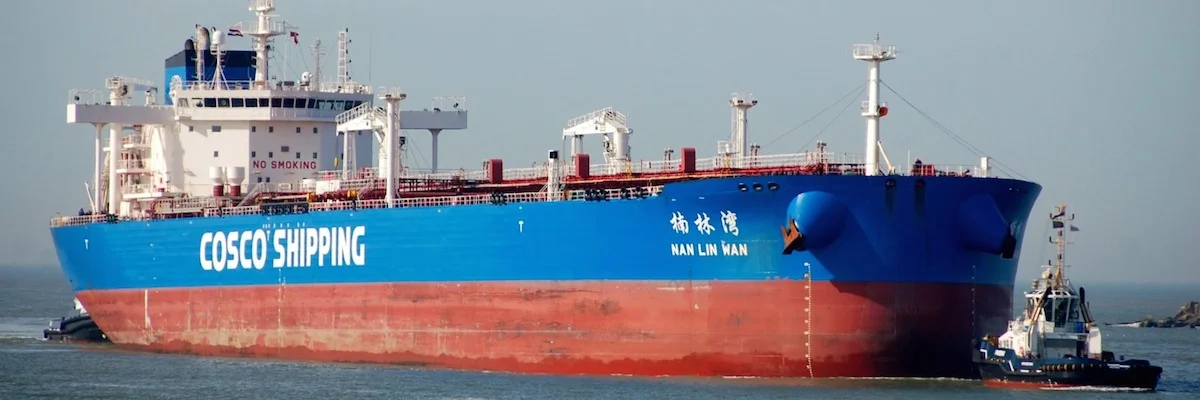
◢ Companies still doing business with a U.S.-sanctioned unit of China’s biggest shipping company have less than 60 days to wind down their transactions. The temporary reprieve comes after last month’s surprise announcement of sanctions against the Dalian units of China COSCO Shipping Corp.
By Stephen Cunningham
Companies still doing business with a U.S.-sanctioned unit of China’s biggest shipping company have less than 60 days to wind down their transactions.
The temporary reprieve comes after last month’s surprise announcement of sanctions against the Dalian units of China COSCO Shipping Corp. caused freight rates to skyrocket as traders canceled charters linked to the parent company.
The U.S. on Thursday issued a license permitting activities deemed necessary to the “maintenance or wind down of transactions” with one of the units, Shipping Tanker (Dalian) Co., until Dec. 20, according to a statement.
Tanker stocks DHT Holdings Inc, Nordic American Tankers Ltd., Frontline Ltd. and Teekay Corp. fell following the announcement.
The Treasury Department sanctioned the Dalian units in September for allegedly hauling Iranian crude. Four other Chinese entities were also sanctioned at the same time. The penalties bar U.S. citizens and companies from dealing with the firms, effectively blocking them from American banks at the heart of the global financial system.
Tanker rates soared after the sanctions as shippers scrambled to find replacement ships, depressing refining margins and affecting normal crude flows around the world.
The sanctions also created uncertainty among among shippers on whether cargoes that had already been loaded onto the vessels of sanctioned firms could be delivered or not.
Photo: Fleetmon
The Secretive Election of the World’s Top Nuclear Peacekeeper
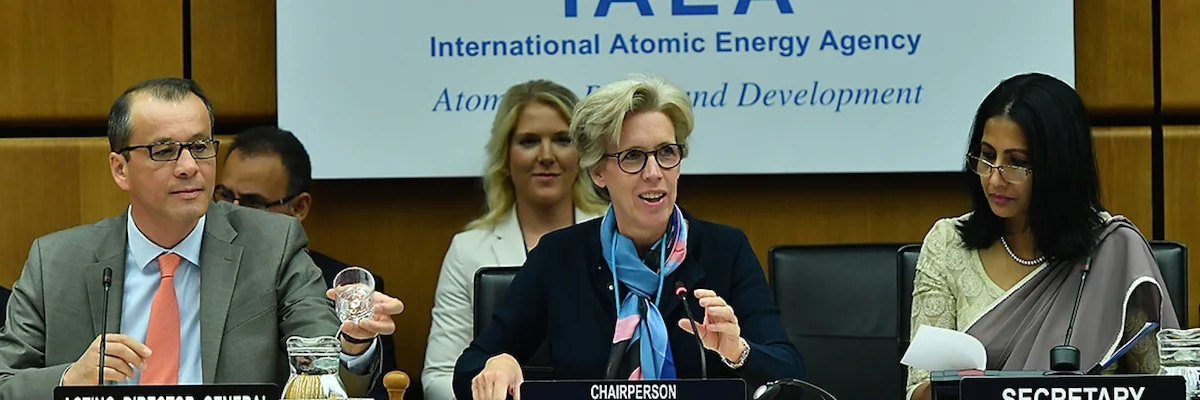
◢ When the head of the world’s nuclear watchdog died in July, his death was kept secret for four days. Many people didn’t even know Yukiya Amano was sick. The process that will see his post finally filled this week is shrouded in just as much mystery.
By Jonathan Tirone
When the head of the world’s nuclear watchdog died in July, his death was kept secret for four days. Many people didn’t even know Yukiya Amano was sick. The process that will see his post finally filled this week is shrouded in just as much mystery.
The ambassadors of the 35 nations on the International Atomic Energy Agency’s board will enter a sealed chamber at its headquarters in Vienna on Monday. Two lawyers acting as witnesses will stand guard as one-by-one each envoy slips a paper ballot into a wooden box. Votes are counted and if nobody receives two thirds, the process is repeated.
It will be only the sixth time since the dawn of the nuclear age that the IAEA’s board of governors convenes for the odd ritual, which has been compared to the conclave, the gathering of Catholic cardinals who select the new pope.
“It’s a somber occasion, almost like those meetings in the Sistine Chapel,” said former IAEA policy coordinator Tariq Rauf.
The agency’s wood-paneled halls may lack the grandeur of being in the presence of Michelangelo’s Last Judgement, but whoever is chosen can wield significant power in some of the world’s most vexing hotspots.
The new leader will oversee inspections in Iran as well as the clean-up of Japan’s Fukushima meltdowns and negotiate a safeguards agreement with Saudi Arabia. And then there’s President Recep Tayyip Erdogan wondering why Turkey shouldn’t have nuclear weapons and North Korea still holding tight to its arsenal.
Argentine diplomat Rafael Grossi is the slight favorite to succeed Amano, according to two informal straw polls. He’s facing off against acting Director General Cornel Feruta from Romania and Burkina Faso’s Lassina Zerbo.
The winner inherits a built-in conflict at the core of this Cold war-era institution. It’s won a Nobel Peace Prize for helping prevent nuclear power from being misused for weapons -- but its diplomats, lawyers and scientists are still promoting the spread of nuclear technology at at time when the mood has swung toward renewable energy.
“There are a lot of challenges out there right now,” said U.S. Secretary of Energy Rick Perry last month in Vienna, who tabbed Grossi as a good fit for the job. “Our message to other countries is ‘don’t drag this out.’ To not have a director general in place is problematic.”
U.S. President Dwight Eisenhower founded the agency in 1957 just months before the Soviet Union launched its Sputnik satellite into orbit, prompting concern the U.S. could lose the technology race. Choosing the capital of a neutral country to host its headquarters appealed to actors on either side of the Iron Curtain who used it as a base for espionage.
Unlike the International Monetary Fund or World Health Organization, the IAEA’s board doesn’t publish a job description outlining the minimum qualifications to become its chief. Four IAEA director generals have been lawyers and just one, Sigvard Eklund of Sweden, was a scientist.
The Cardinals
Western countries that dominate the agency want it to strictly keep watch over other nations investigating the mysteries of the atom, according to Britain’s former IAEA ambassador, Peter Jenkins, who added “the cardinals don’t like to be hemmed in by other objective criteria in choosing a leader.”
The language of religion often infuses the atomic Jesuit cabal. The agency’s so-called Safeguards codes are referred to as “the bible” atop which all other activity rests, said one senior diplomat who asked not to be named. IAEA information circulars are to heads of state what Papal encyclicals are to Catholic souls, said another official. Altogether, the rules allow inspectors to track gram-levels of nuclear materials stored in secretive sites around the world.
Rauf, the former IAEA policy coordinator, held court during the 2009 vote when Amano was elected after a record six rounds of balloting. That race was characterized by intense behind-the-scenes lobbying to elect the Japanese diplomat, who was perceived as “solidly in the U.S. court,” according to State Department cables published at the time by WikiLeaks.
Now Rauf’s advocating for more transparency in the selection process to avoid any appearance of “diplomatic corruption and deal making.” The agency’s future could hinge on building trust over how its 377 million euros ($419 million) is administered, he said.
The IAEA has taken some steps to appear less secretive and lessen the legacy of a bygone era, publishing video clips of candidate speeches and pictures of preliminary voting.
“We live in 2019, so I think it was a natural thing,” said Sweden’s Ambassador Mikaela Kumlin Granit, who’s in charge of organizing the voting. “The IAEA should be an organization that keeps up with the times.”
Photo: IAEA
Halkbank Charged in U.S. Indictment With Fraud, Laundering
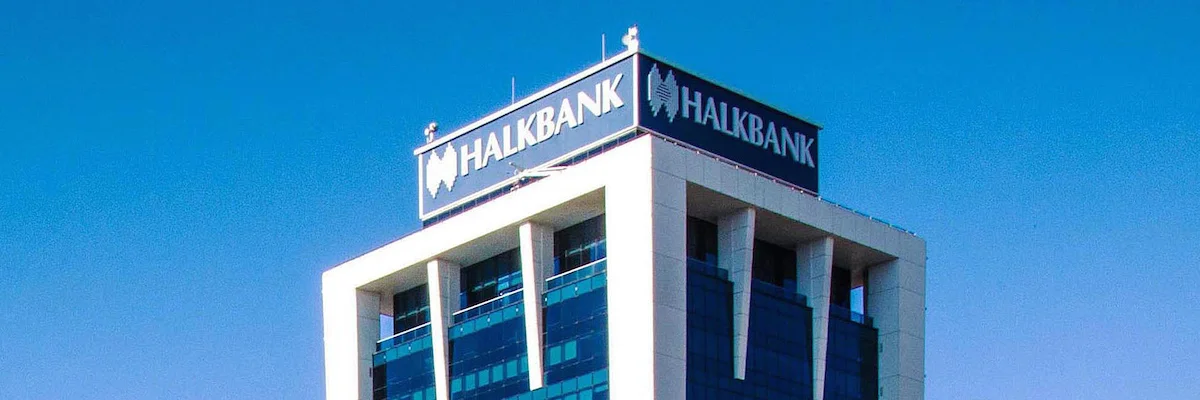
◢ U.S. prosecutors filed criminal charges against Turkey’s Halkbank, accusing it of fraud, money laundering and violating U.S. sanctions against Iran, in a case that Turkish President Recep Erdogan had pressed both President Donald Trump and President Barack Obama to dismiss.
By David Glovin
U.S. prosecutors filed criminal charges against Turkey’s Halkbank, accusing it of fraud, money laundering and violating U.S. sanctions against Iran, in a case that Turkish President Recep Erdogan had pressed both President Donald Trump and President Barack Obama to dismiss.
Prosecutors accused the bank of participating in a sweeping scheme to violate prohibitions on Iran’s access to the U.S. financial system, involving high-ranking government officials in Iran and Turkey.
The indictment was filed Tuesday in Manhattan federal court.
Senior Halkbank management’s participated “in this brazen scheme to circumvent our nation’s Iran sanctions regime,” U.S. Attorney Geoffrey Berman said in a statement. “Halkbank’s systemic participation in the illicit movement of billions of dollars’ worth of Iranian oil revenue was designed and executed by senior bank officials.”
Two people were previously convicted in the case, which led to the airing in a Manhattan courtroom of many of Halkbank’s activities.
At the center of the U.S. case was Reza Zarrab, a flamboyant Turkish gold trader who said he’d helped Iran tap funds from overseas oil sales that was frozen in foreign accounts. He became the star witness in the case against a Halkbank executive, Mehmet Hakan Atilla, who was convicted in early 2018.
The proceedings gripped Turkey. Some testimony sent its markets into gyrations, in part because prosecutors aired evidence that tied the scheme to Turkish officials and their families. An ex-finance minister was charged in absentia.
Zarrab, who’s married to a Turkish pop star, had a tabloid lifestyle of yachts, fast cars and an office in a Trump Tower in Istanbul. After he was detained during a 2016 trip to the U.S., he added Rudy Giuliani, Trump’s confidante, to his legal team.
Giuliani attempted to broker a diplomatic deal with Turkey to extract Zarrab from U.S. custody, attempting to swap him for an American pastor, Andrew Brunson, who was in Turkish custody.
Giuliani’s role apparently went deeper. At Giuliani’s urging, in the second half of 2017, Trump asked then-Secretary of State Rex Tillerson to press the Justice Department to drop its case against Zarrab, Bloomberg News reported last week.
Giuliani, in an interview last week, said he talked to the State Department in his role as Zarrab’s lawyer and said he behaved ethically and legally. He would have been a hero had he arranged the swap with Brunson, he said.
Photo: Halkbank
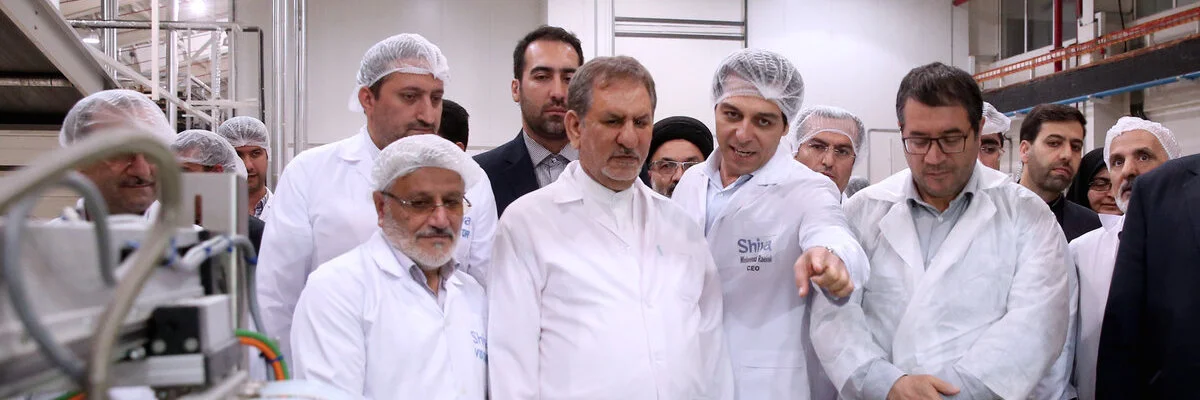
IMF Sharply Cuts Iran, Saudi Growth Forecasts
◢ The IMF has sharply downgraded growth projections for Saudi Arabia and Iran, the two largest Mideast economies, citing the impact of US sanctions, geopolitical tensions and low oil prices. Iran has "been or continues to be experiencing very severe macroeconomic distress," the IMF said, adding that growth in 2020 will be flat.
By Omar Hassan
The International Monetary Fund on Tuesday sharply downgraded growth projections for Saudi Arabia and Iran, the two largest Mideast economies, citing the impact of US sanctions, geopolitical tensions and low oil prices.
In its World Economic Outlook, the global lender cut forecasts for almost all countries in the Middle East and North Africa (MENA) as the region is buffeted by biting sanctions on Iran and nail-biting anxiety over last month's attacks on Saudi oil facilities.
The IMF said Iran's economy will contract by a massive 9.5 percent this year, its worst performance since 1984 when the Islamic republic was at war with neighboring Iraq.
The figure is 3.5 percentage points lower than the IMF's April projections, reflecting a rapid deterioration in Tehran's economy after the US implemented tighter sanctions on its oil exports, the nation's main source of income.
This is the second year in a row that Iran's economy is mired in recession, after it shrank by 4.8 percent in 2018.
Iran has "been or continues to be experiencing very severe macroeconomic distress," the IMF said, adding that growth in 2020 will be flat.
The forecast for Saudi Arabia, the region's largest economy, was also cut to just 0.2 percent for 2019, a substantial 1.6 percentage points lower than April's projections.
The outlook is the worst since 2017 when the kingdom's economy contracted by 0.7 percent.
But the IMF raised its Saudi growth forecast for next year to 2.2 percent, slightly above April's projections, on expectations that the non-oil sectors will strengthen following subsidy reforms.
The oil giant has substantially cut power and fuel subsidies as well as imposed fees on expatriate visas and a five-percent value added tax as part of a reform programme to decrease its dependence on oil.
Fitch Ratings in September downgraded Saudi Arabia's credit rating by one notch following the devastating attacks on key oil facilities that knocked out half its production -- a strike that has been blamed on Iran.
Gloomy Regional Outlook
The IMF also cut its forecast for MENA growth to a meagre 0.1 percent this year, 1.2 percentage points lower than April projections, reflecting weakening economies in a region rattled by conflict.
The cut to MENA growth is "largely due to the downward forecast revision for Iran and Saudi Arabia," it said.
"Civil strife in some other economies, including Libya, Syria, and Yemen, weigh on the region's outlook."
The global lender said that the price of oil and gas, the main source of income for the region, dropped 13 percent between April and October and that oil prices will continue to decline until 2023.
It said the September 14 attacks on Saudi oil facilities have stoked tension and uncertainty in the region, especially following tanker attacks in the strategic Strait of Hormuz through which 20 percent of oil trade passes.
Growth projections for the United Arab Emirates, the most diversified economy in the region, was cut sharply to 1.6 percent from 2.8 percent in April, due to weak oil growth in Abu Dhabi and a general slowdown in Dubai.
The IMF also cut forecasts for other hydrocarbon exporters Qatar, Kuwait and Oman but raised the outlook for Iraq, the region's second largest crude exporter, following a 0.6 percent contraction last year.
Photo: IRNA
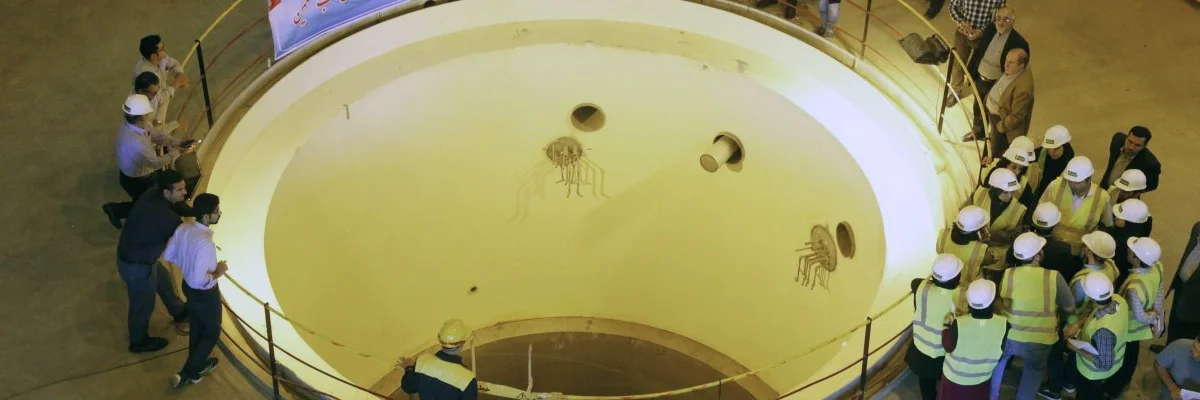
British Experts in Iran to Upgrade Arak Reactor
◢ A team of British experts arrived in Iran on Monday to begin work to upgrade the Arak heavy water nuclear reactor, the UK embassy in Tehran said. Iran removed the core of the Arak facility and filled part of it with cement as part of a 2015 deal that gave the country relief from sanctions in return for curbs on its nuclear program.
A team of British experts arrived in Iran on Monday to begin work to upgrade the Arak heavy water nuclear reactor, the UK embassy in Tehran said.
Iran removed the core of the Arak facility and filled part of it with cement as part of a 2015 deal that gave the country relief from sanctions in return for curbs on its nuclear program.
Located southwest of Tehran, the reactor is to be modernized with the help of foreign experts under the deal known as the Joint Comprehensive Plan of Action.
"A team of British nuclear experts led by UK Chief Scientific Adviser Professor Robin Grimes arrived in Tehran today to take forward the next stages of the modernization of the Arak reactor, alongside a team of Chinese experts," said the British embassy.
"The experts will hold talks with the Atomic Energy Organisation of Iran on international technical assistance to the reactor construction," it said in a statement.
The British experts would remain in Iran for three days, the embassy told AFP.
"This visit forms part of our commitment to ensuring that the Joint Comprehensive Plan of Action (JCPOA) provides benefits for both Iran and the wider international community," said the statement.
"That is why we are upholding our obligations to cooperate with Iran to modernise the Arak reactor, helping Iran to develop a modern and up to date civil nuclear programme.
"Our work with Iran on the Arak project has made important progress in the past year," it said.
Tensions have been escalating between Iran and the United States since May last year when President Donald Trump pulled out of the nuclear accord and began reimposing sanctions.
The remaining partners in the deal with Iran include Britain, China, France, Germany and Russia.
The European parties have repeatedly said they are committed to saving the accord, but their efforts have so far borne little fruit.
Tehran has already hit back three times with countermeasures in response to the US withdrawal from the nuclear deal.
On July 1, Iran said it had increased its stockpile of enriched uranium to beyond a 300-kilogramme maximum set by the deal, and a week later, it announced it had exceeded a 3.67-percent cap on the purity of its uranium stocks.
In its latest move it fired up advanced centrifuges to boost its enriched uranium stockpiles on September 7.
Photo: IRNA