

Trump Discussed Easing Iran Sanctions, Prompting Bolton Pushback
◢ President Donald Trump discussed easing sanctions on Iran to help secure a meeting with Iranian President Hassan Rouhani later this month, prompting then-National Security Advisor John Bolton to argue forcefully against such a step, according to three people familiar with the matter.
By Jennifer Jacobs, Saleha Mohsin, and Jenny Leonard
President Donald Trump discussed easing sanctions on Iran to help secure a meeting with Iranian President Hassan Rouhani later this month, prompting then-National Security Advisor John Bolton to argue forcefully against such a step, according to three people familiar with the matter.
After an Oval Office meeting on Monday when the idea came up, Treasury Secretary Steven Mnuchin voiced his support for the move as a way to restart negotiations with Iran, some of the people said. Later in the day, Trump decided to oust Bolton, whose departure was announced Tuesday.
The White House has started preparations for Trump to meet with Rouhani this month in New York on the sidelines of the annual United Nations General Assembly the week of Sept. 23, according to the people. It’s far from clear if the Iranians would agree to talks while tough American sanctions remain in place.
One scenario, shared by two of the people, would be that Trump joins a meeting between Rouhani and French President Emmanuel Macron. The people said they had no indication it would actually happen.
Brent oil prices fell more than 2% to $61.05 a barrel on the news.
While Trump has made no secret of his willingness to sit down with Iranian leaders -- a move that would break more than four decades of U.S. policy -- there are considerable political hurdles Trump would have to navigate if he wants it to happen. Nevertheless, Bolton’s ouster on Tuesday improves the odds of a meeting.
Bolton built his career on a hard-line approach toward Iran, long calling for preemptive strikes on the country to destroy its nuclear program. His sudden dismissal immediately fueled speculation—and worry in some quarters—that the U.S. “maximum pressure” campaign might ease in a bid to lure Iranian leaders to the negotiating table.
Easing any sanctions without major concessions from Iran would undercut the pressure campaign that not only Bolton, but also Secretary of State Michael Pompeo and Trump have said is the only effective way to make Iran change its behavior.
America’s European allies, frustrated by Trump’s withdrawal from the 2015 nuclear accord and stymied by U.S. sanctions in their bid to trade with Iran, have been desperate to find a way to broker a deal between Washington and Tehran. Macron even invited Iran’s foreign minister, Javad Zarif, to talks on the sidelines of the Group of Seven summit in France last month and won verbal support from Trump for a sanctions reprieve. Then nothing happened.
Israeli Prime Minister Benjamin Netanyahu’s government, on the other hand, may have lost one of its staunchest allies with Bolton’s departure. Israeli officials, worried about legitimizing Iranian leaders, are concerned that the chances for such a meeting are increasing. Their chief fear is that U.S. sanctions could be scaled back and pressure on the regime eased, an Israeli official said, speaking on condition of anonymity.
But Iranian leaders, at least publicly, have spurned the suggestion of a Trump-Rouhani encounter, which would be strongly opposed by more conservative factions in Iran.
Secretary of State Michael Pompeo who last year set out 12 demands that he said Iran must fulfill in order to become a “normal country,” may try to prevent Trump from softening his stance too drastically. He has, however, recently taken a more moderate tone in lockstep with the president, saying the U.S. is prepared to talk without preconditions.
One thing all sides agree on is that tensions have soared in recent months, with a spate of attacks on oil tankers in and around the Persian Gulf that have been blamed on Iran. The Islamic Republic shot down an American drone it said was over its territorial waters, prompting Trump to consider military strikes that he said he called off at the last minute.
Charles Kupchan, a senior fellow at the Council on Foreign Relations, said that at the very least, Bolton’s exit reduces the chances of a military escalation.
UN Meeting
“It’s too hard to say if a meeting will happen given the question of whether it’s politically palatable for both leaders,” said Kupchan. “But the likelihood of a meeting has gone up because one of its main detractors is now out of a job.”
If it happens, the most likely venue would be on the sidelines of the United Nations General Assembly meeting later this month. But that doesn’t mean it will.
Top Iranian officials have in recent weeks sought to stamp out talk of a direct meeting between the leaders, with Zarif calling it “unimaginable” and Rouhani saying he’s not interested in a photo-op with the American president. That’s a subtle reference to America’s outreach with North Korea, which despite three meetings between Trump and Kim Jong Un hasn’t resulted in any breakthrough.
Oman Talks
For Rouhani, sitting down with Trump would be an immense political gamble with his nation’s economy weighed down by crippling American sanctions and no guarantee of an agreement that would allow Tehran to again legally sell oil. Mindful of the political risk of talks with the U.S., Iranians have long favored quiet discussions instead. The 2015 nuclear deal was preceded by years of back channel diplomacy among lower-level officials in Oman.
Nevertheless, Rouhani adviser Hesameddin Ashena tweeted on Tuesday that Bolton’s departure is a “decisive sign of the failure of the U.S. maximum pressure strategy in the face of the constructive resistance from Iran.”
Trump, with his 2020 re-election campaign already underway, would also have to overcome considerable political obstacles to reach any deal with Iran. Isolating and weakening the Islamic Republic is one foreign policy issue Republican lawmakers and conservative national security experts broadly agree upon. It’s also a rallying cry for conservative Jewish supporters of Israel and key Trump backers, such as casino magnate Sheldon Adelson.
Obama Handshake
Regardless of whether a direct meeting takes place, diplomatic efforts to address Iran-U.S. tensions will be at the forefront of the UN gathering. Impromptu chats and sideline diplomacy are a hallmark of the annual gathering.
In 2015, a backstage handshake between President Barack Obama and Zarif generated headlines across the Middle East—and accusations by Iranian hardliners that Zarif was “unrevolutionary.” At this year’s assembly, Macron as well Japan’s Shinzo Abe plan to meet Rouhani as they try to break the impasse.
Bolton’s departure also leaves Pompeo, who had clashed with Bolton over several issues, in the unchallenged role as Trump’s closest aide on foreign policy. While Bolton often made his differences with the president clear, Pompeo has spent more than two and a half years in Trump’s orbit without letting much daylight come between himself and the president.
Asked on Tuesday if he could foresee a meeting between Trump and Rouhani during the UN meeting, Pompeo responded: “Sure,” adding, “The president’s made very clear, he is prepared to meet with no preconditions.”
Photo: Wikicommons
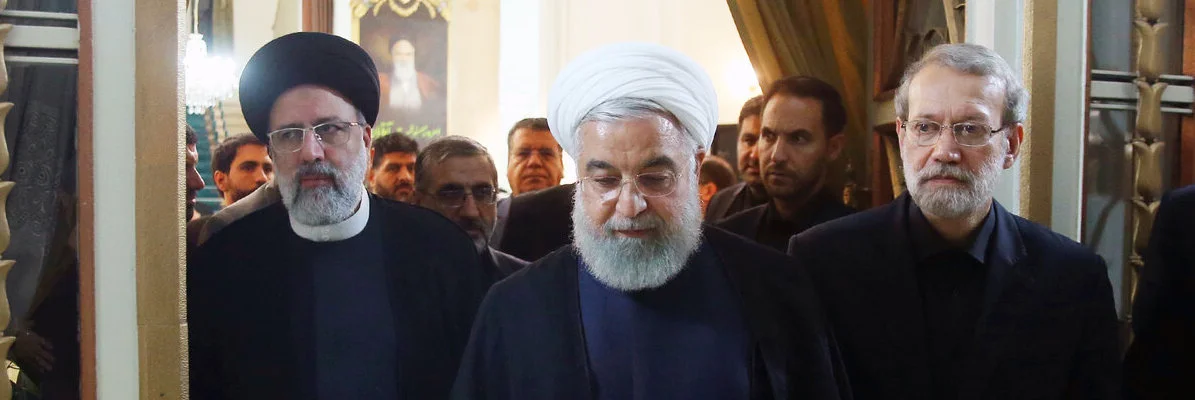
Trump-Rouhani Meeting Odds Improve After John Bolton's Exit
◢ Donald Trump has made no secret he’s willing to sit down with Iranian President Hassan Rouhani, a move that would break more than four decades of U.S. policy. With John Bolton’s ouster as national security adviser, the odds of that meeting just got better. But Iranian leaders, at least publicly, have spurned the suggestion of a Trump-Rouhani encounter, which would be strongly opposed by more conservative factions in Iran.
By David Wainer
Donald Trump has made no secret he’s willing to sit down with Iranian President Hassan Rouhani, a move that would break more than four decades of U.S. policy. With John Bolton’s ouster as national security adviser, the odds of that meeting just got better.
Bolton built his career on a hardline approach toward Iran, long calling for preemptive strikes on the country to destroy its nuclear program. His sudden dismissal on Tuesday immediately fueled speculation—and worry in some quarters -- that the U.S. “maximum pressure” campaign might ease in a bid to lure Iranian leaders to the negotiating table.
America’s European allies, frustrated by Trump’s withdrawal from the 2015 nuclear accord and stymied by U.S. sanctions in their bid to trade with Iran, have been desperate to find a way to broker a deal between Washington and Tehran. French President Emmanuel Macron even invited Iran’s foreign minister, Javad Zarif, to talks on the sidelines of the Group of Seven summit in France last month and won verbal support from Trump for a sanctions reprieve. Then nothing happened.
“Bolton made sure to block any and all avenues for diplomacy w/ Iran, including a plan being brokered by Macron,” Suzanne DiMaggio, a senior fellow at the Carnegie Endowment for International Peace, said on Twitter. “The French are offering Trump a facing-saving way out of a mess of his creation. He should grab it.”
Israeli Prime Minister Benjamin Netanyahu’s government, on the other hand, may have lost one of its staunchest allies with Bolton’s departure. Israeli officials, worried about legitimizing Iranian leaders, are concerned that the chances for such a meeting are increasing. Their chief fear is that U.S. sanctions could be scaled back and pressure on the regime eased, an Israeli official said, speaking on condition of anonymity.
But Iranian leaders, at least publicly, have spurned the suggestion of a Trump-Rouhani encounter, which would be strongly opposed by more conservative factions in Iran.
Secretary of State Michael Pompeo who last year set out 12 demands that he said Iran must fulfill in order to become a “normal country,” may try to prevent Trump from softening his stance too drastically. He has, however, recently taken a more moderate tone in lockstep with the president, saying the U.S. is prepared to talk without preconditions.
One thing all sides agree on is that tensions have soared in recent months, with a spate of attacks on oil tankers in and around the Persian Gulf that have been blamed on Iran. The Islamic Republic shot down an American drone it said was over its territorial waters, prompting Trump to consider military strikes that he said he called off at the last minute.
Charles Kupchan, a senior fellow at the Council on Foreign Relations, said that at the very least, Bolton’s exit reduces the chances of a military escalation.
UN Meeting
“It’s too hard to say if a meeting will happen given the question of whether it’s politically palatable for both leaders,” said Kupchan. “But the likelihood of a meeting has gone up because one of its main detractors is now out of a job.”
If it happens, the most likely venue would be on the sidelines of the United Nations General Assembly meeting later this month. But that doesn’t mean it will.
Top Iranian officials have in recent weeks sought to stamp out talk of a direct meeting between the leaders, with Zarif calling it “unimaginable” and Rouhani saying he’s not interested in a photo-op with the American president. That’s a subtle reference to America’s outreach with North Korea, which despite three meetings between Trump and Kim Jong Un hasn’t resulted in any breakthrough.
Oman Talks
For Rouhani, sitting down with Trump would be an immense political gamble with his nation’s economy weighed down by crippling American sanctions and no guarantee of an agreement that would allow Tehran to again legally sell oil. Mindful of the political risk of talks with the U.S., Iranians have long favored quiet discussions instead. The 2015 nuclear deal was preceded by years of back channel diplomacy among lower-level officials in Oman.
Nevertheless, Rouhani adviser Hesameddin Ashena tweeted on Tuesday that Bolton’s departure is a “decisive sign of the failure of the U.S. maximum pressure strategy in the face of the constructive resistance from Iran.”
Trump, with his 2020 re-election campaign already underway, would also have to overcome considerable political obstacles to reach any deal with Iran. Isolating and weakening the Islamic Republic is one foreign policy issue Republican lawmakers and conservative national security experts broadly agree upon. It’s also a rallying cry for conservative Jewish supporters of Israel and key Trump backers, such as casino magnate Sheldon Adelson.
Obama Handshake
Regardless of whether a direct meeting takes place, diplomatic efforts to address Iran-U.S. tensions will be at the forefront of the UN gathering. Impromptu chats and sideline diplomacy are a hallmark of the annual gathering.
In 2015, a backstage handshake between President Barack Obama and Zarif generated headlines across the Middle East—and accusations by Iranian hardliners that Zarif was “unrevolutionary.” At this year’s assembly, Macron as well Japan’s Shinzo Abe plan to meet Rouhani as they try to break the impasse.
Bolton’s departure also leaves Pompeo, who had clashed with Bolton over several issues, in the unchallenged role as Trump’s closest aide on foreign policy. While Bolton often made his differences with the president clear, Pompeo has spent more than two and a half years in Trump’s orbit without letting much daylight come between himself and the president.
Asked on Tuesday if he could foresee a meeting between Trump and Rouhani during the UN meeting, Pompeo responded: “Sure,” adding, “The president’s made very clear, he is prepared to meet with no preconditions.”
Photo: IRNA
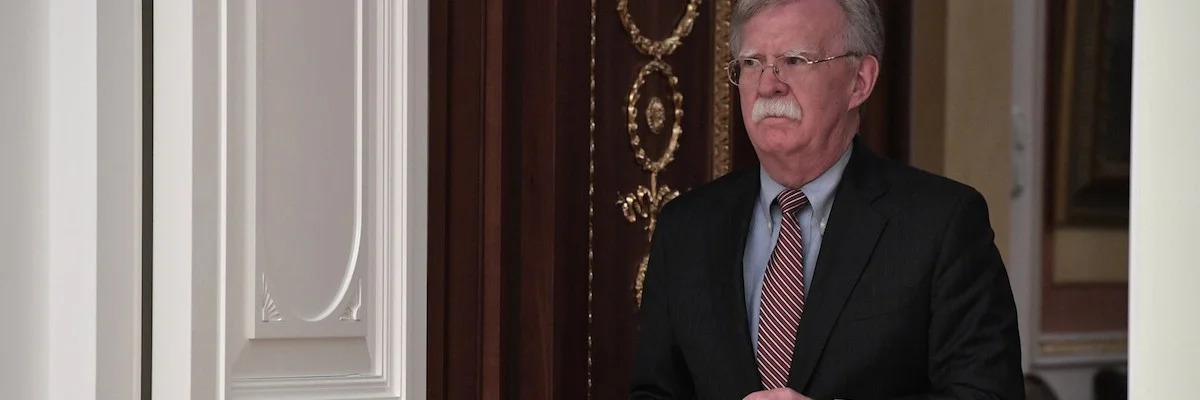
Trump Fires Bolton as Top Security Adviser, Citing Disagreements
◢ President Donald Trump ousted National Security Adviser John Bolton because he “disagreed strongly” with many of his positions, ending a tumultuous tenure marked by several setbacks in U.S. foreign policy. “I asked John for his resignation, which was given to me this morning,” Trump tweeted. “I thank John very much for his service. I will be naming a new National Security Advisor next week.”
By Jennifer Jacobs, Nick Wadhams and Jennifer Epstein
President Donald Trump said he fired his hawkish national security adviser, John Bolton, after disagreeing “strongly” with many of his positions, ending a tumultuous tenure marked by multiple setbacks in U.S. foreign policy.
Bolton, known for his hardline approach to U.S. adversaries, including Iran, North Korea and Venezuelan President Nicolas Maduro, was the third person to formally occupy the White House’s highest-ranking national security job under Trump.
“I informed John Bolton last night that his services are no longer needed at the White House,” Trump said in a pair of tweets. “I thank John very much for his service. I will be naming a new National Security Advisor next week.”
Bolton had been scheduled to take part in a White House press briefing Tuesday on terrorism. Minutes after Trump’s announcement, Bolton contradicted the president on Twitter, saying that he had offered to resign Monday night and Trump deferred the discussion.
Trump and Bolton had disagreed on “many, many issues,” White House Press Secretary Stephanie Grisham said. Most recently, Bolton had advised the president against a meeting he had planned with the Taliban at Camp David to complete negotiations to end the war in Afghanistan.
Bolton was also skeptical of Trump’s overtures to Kim Jong Un. He was conspicuously absent in June when Trump made a snap decision to meet the North Korean leader at the Demilitarized Zone; Bolton instead traveled to Mongolia to meet with officials there.
Bolton’s departure is a boon for Secretary of State Michael Pompeo, who had clashed with the national security adviser and now assumes an unchallenged role as Trump’s closest adviser on foreign policy. Charlie Kupperman, the deputy national security adviser, will assume Bolton’s position on an acting basis, deputy White House press secretary Hogan Gidley said.
Kupperman is a Bolton confidant who has counseled the former national security adviser for more than 30 years, Bolton has said. Grisham said it was “too soon to say” whether Bolton’s National Security Council staff would remain in their jobs.
Possible Bolton replacements discussed by Trump associates include Robert O’Brien, who is the president’s envoy for hostage affairs, and Brian Hook, Pompeo’s senior policy adviser. Additionally, the U.S. ambassador to Germany, Richard Grenell, is expected to return to Washington and meet with Trump on Saturday, according to a person familiar with the matter.
Foreign Setbacks
Gidley said in an interview on Fox News after Trump’s announcement that it had become “very clear that John Bolton’s policies and priorities did not align with President Trump’s.”
The break came days after Trump abandoned his plan to meet with the Taliban at Camp David, capping a tough week. On Friday, the president’s adviser on North Korea said negotiations have been stalled for months. On Thursday, Middle East envoy Jason Greenblatt announced his intention to depart; the vaunted Israeli-Palestinian peace plan he’s been working on has yet to be unveiled. The U.S.-China trade war drags on.
Crude oil futures reversed an earlier gain in New York, falling 0.8% to settle at $57.40 a barrel.
Bolton, 70, joined the White House in April 2018, bringing an interventionist view into Trump’s inner circle.
From the outset, Bolton seemed like an odd fit for a president who champions an “America First” agenda and campaigned on disengaging the U.S. from wars prosecuted by his predecessors. At times, Bolton pursued his own longstanding foreign policy priorities, creating tension with top administration officials and the president himself.
Bolton came to the post best known for his ardent support of the 2003 U.S. invasion of Iraq while serving in the George W. Bush administration. He was later a Fox News contributor and senior fellow at the conservative American Enterprise Institute.
Since joining Trump’s White House, Bolton sought to break Iran financially, shield Americans from the reach of the International Criminal Court and toughen U.S. posture toward Russia. Bolton was a leading voice promoting U.S. support for the ouster of Venezuelan President Nicolas Maduro, an effort that hasn’t been successful.
Western diplomats view Bolton’s departure as a sign that a meeting between Trump and Iranian President Hassan Rouhani is increasingly likely to happen at the U.N. General Assembly later this month, according to a person familiar with the situation.
Trump has offered to meet Rouhani to discuss a new agreement to prevent the country from obtaining nuclear weapons, but the Iranians have demanded that the U.S. first relax sanctions on Tehran. Bolton has been an outspoken critic of the 2015 nuclear deal with Iran that Trump abandoned and has urged increased economic pressure on the Islamic Republic.
‘Naive Worldview’
Bolton’s departure drew mixed reactions from Republican lawmakers.
Senator Mitt Romney, the Utah Republican, said it was a “huge loss” for the administration. Bolton’s “point of view is not always the same as everyone else in the room. That’s why you want him there,” Romney said.
Senator Rand Paul, the Kentucky Republican, said the threat of war “goes down exponentially with John Bolton out of the White House.”
“I think his advocacy for regime change around the world is a naïve worldview and I think the world will be a much better place with a new adviser,” Paul said.
Weeks before joining the administration, Bolton wrote a Wall Street Journal op-ed arguing for a preemptive strike against North Korea, only for Trump to instead pursue diplomacy with Kim. Bolton said that his personal views were “now behind me” and that “the important thing is what the president says and what advice I give him.”
Kelly Conflict
Bolton also took a hard line on immigration policy, and clashed with former White House Chief of Staff John Kelly over the administration’s approach to border crossings.
Last year, Kelly and Bolton engaged in a heated argument outside the Oval Office over immigration and the performance of then-Homeland Security Secretary Kirstjen Nielsen. Bolton was among the officials who urged Trump to fire Nielsen.
Bolton, whom the president sometimes called “the Mustache” because of his trademark facial hair, clashed with Pompeo and Treasury Secretary Steven Mnuchin over sanctions against Iran. Bolton has argued that waivers for the sanctions were too generous toward Iran.
Bolton had been scheduled to brief reporters at the White House with Mnuchin and Pompeo on Tuesday.
Bolton suffered the loss of his top deputy, Mira Ricardel, in November after first lady Melania Trump called for her ouster. Melania Trump issued an unusual public statement demanding Ricardel leave the White House after clashes between Bolton’s deputy and the first lady’s staff over her trip to Africa last year.
Trump’s first national security advisor, Michael Flynn, resigned after less than one month in the job following revelations that he was under investigation for his communications with Russian officials prior to Trump’s inauguration. Flynn pleaded guilty in December 2017 to lying to federal agents about the contacts.
A retired Army general, H.R. McMaster, replaced Flynn in the role and endured public criticism from his boss during his tenure, which lasted just over a year. Trump chastised McMaster on Twitter for telling a forum in Germany that it was “incontrovertible” that Russia had interfered in the 2016 presidential election. Trump said McMaster must have forgotten to say the meddling hadn’t impacted the results of the vote.
Photo: Wikicommons
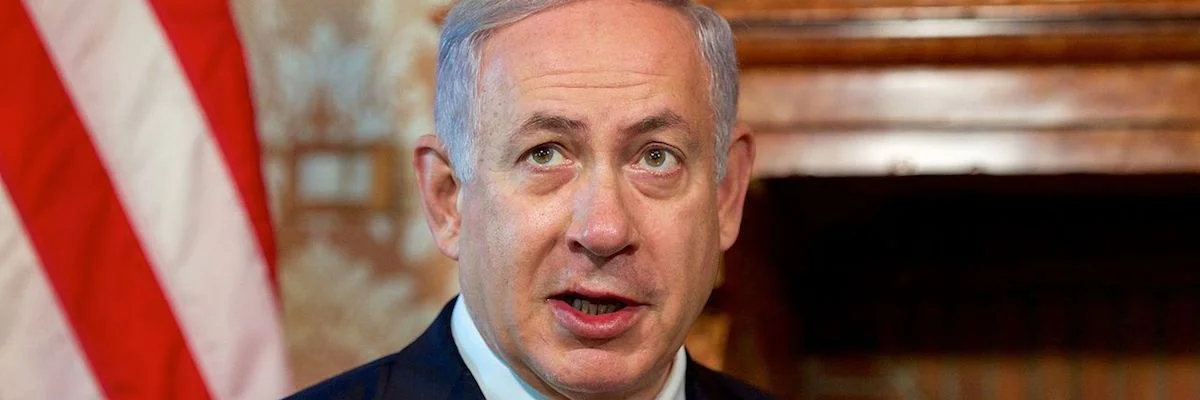
US Joins Israel in Accusing Iran as Nuclear Deal Flounders
◢ The United States on Tuesday joined Israel in alleging "possible undeclared nuclear activities" by Iran, further straining European-led attempts to salvage a multinational deal. Iran denounced the accusations leveled on Monday by Israeli Prime Minister Benjamin Netanyahu, who said that the clerical regime operated a previously undisclosed site aimed at developing nuclear weapons.
By Shaun Tandon
The United States on Tuesday joined Israel in alleging "possible undeclared nuclear activities" by Iran, further straining European-led attempts to salvage a multinational deal.
Iran denounced the accusations leveled on Monday by Israeli Prime Minister Benjamin Netanyahu, who said that the clerical regime operated a previously undisclosed site aimed at developing nuclear weapons but destroyed it after it was detected.
US Secretary of State Mike Pompeo, without directly referencing Netanyahu, urged Iran to comply with the UN nuclear watchdog, the International Atomic Energy Agency.
"The Iranian regime's lack of full cooperation with @iaeaorg raises questions about possible undeclared nuclear material or activities," Pompeo tweeted.
"The world won't fall for it. We will deny the regime all paths to a nuclear weapon."
The new charges come in a fraught political climate, with French President Emmanuel Macron leading efforts to save a 2015 nuclear accord with Iran from which President Donald Trump withdrew the United States.
Macron proposed a summit between Trump and the Iranian leadership, a prospect that sparked interest from the mogul-turned-president but which is adamantly opposed by Netanyahu, who is facing elections next week and sees Iran as an existential threat.
In an address on live television, Netanyahu showed pictures of an alleged site near Abadeh, south of Isfahan, where he said Iran conducted experiments to develop nuclear weapons.
Netanyahu said Israel found out about the site during a daring, previously announced raid into Tehran and that the regime demolished the site sometime between late June and late July after realizing that the Jewish state was aware.
Responding to Netanyahu, Iranian Foreign Minister Mohammad Javad Zarif pointed out that Israel itself has a secret, but widely known, nuclear program.
"The possessor of REAL nukes cries wolf -- on an alleged 'demolished' site in Iran," he tweeted, as he also pointed to Netanyahu's comments as a private citizen in 2002 in support of invading Iraq.
Call for Prompt Answers
The acting head of the IAEA, Cornel Feruta, called Monday for Iran to "respond promptly" to questions from the agency.
But despite Pompeo's charges of lack of cooperation, the IAEA chief said his exchanges with Iranian officials have been "very substantial" and that he was "pleased with the tone and the input we received."
Daryl Kimball, executive director of the Arms Control Association, a non-governmental organization in Washington, said that the United States and Israel should recognize that IAEA access in Iran came thanks to the 2015 nuclear accord.
"If any IAEA member-state including the United States or Israel has credible information, they should give it to the agency rather than make a public-relations show out of this," Kimball said.
"As with many allegations about particular sites, it's the agency that needs to investigate because it's the only authority that has the technical means and objectivity to come up with the right conclusions," he said.
Kimball believed there was still a window for Macron's efforts to succeed, especially as Trump relishes an unorthodox approach to diplomacy.
But he warned that time may be running out, with Iran taking a series of steps to come out of strict compliance with the 2015 accord.
Series of Nuclear Steps
In the latest move, the IAEA confirmed that Iran was installing centrifuges at its Natanz facility that were more advanced than those allowed under the nuclear deal.
Iran wants to take small but symbolic steps to show its disappointment that it has not reaped benefits from the nuclear accord, under which it was promised sanctions relief in return for compliance.
Trump has imposed sweeping unilateral sanctions that include a ban on all oil sales from Iran.
In one incident that raised further concerns, Britain said that an Iranian oil tanker that had been held for six weeks in Gibraltar had gone ahead to Syria.
Britain said Iran had breached assurances that the ship would not go to Syria, which is under EU sanctions over President Bashar al-Assad's devastating civil war campaign.
US national security advisor John Bolton said that the episode showed that Iran is "working overtime on deception."
Photo: IRNA
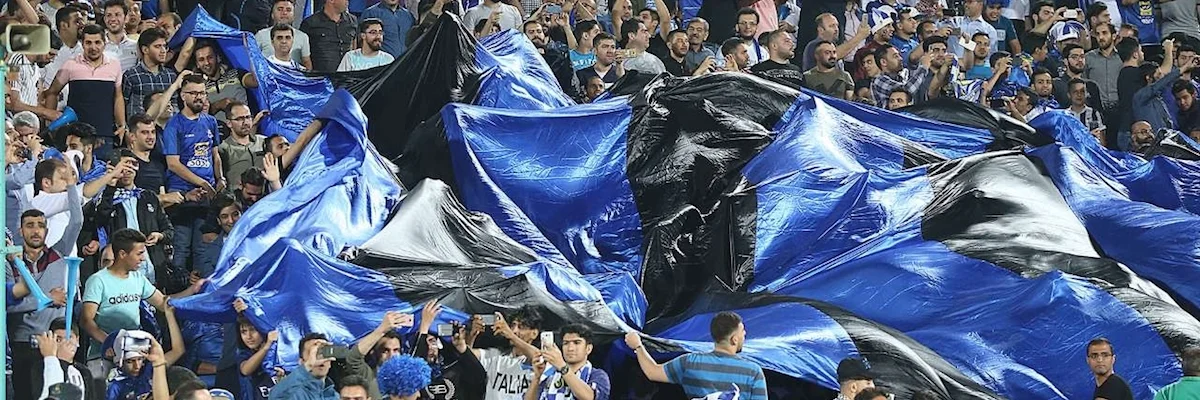
Iran’s ‘Blue Girl’ Dies for Watching Soccer, Blacklash Explodes
◢ Sahar Khodayari loved watching soccer, and ended up paying for it with her life. In Iran, entering sports arenas is a jailable offense for women. Rather than face the prospect of months in prison for having dared to assert such a small right, Khodayari set herself on fire.
Sahar Khodayari loved watching soccer, and ended up paying for it with her life.
In Iran, entering sports arenas is a jailable offense for women. Rather than face the prospect of months in prison for having dared to assert such a small right, Khodayari set herself on fire.
There’s been an outpouring of grief and outrage on social media over the grisly death of this woman in her 20s who’s come to be known as the “blue girl,” a reference to the colors of Esteghlal F.C., the club she went to cheer in the capital, Tehran.
A photo purportedly showing her prone on a hospital bed, her wounds tightly bound in head-to-foot bandages like a mummy, has been widely shared on Instagram and Twitter. Kodayari, which is not her real name, media have reported, apparently slipped into the match covered up, a photo circulated on Twitter has suggested.
The incident has revived calls in some quarters to end the state’s restrictive policies toward women. Some of Iran’s most popular soccer players have called for a boycott of stadiums, and FIFA, the world soccer organization, demanded protection for women fighting to lift the stadium ban.
“She wasn’t just the ‘blue girl’. Sahar was the ‘Iran girl,’ where men decide the fate of women and can deprive them of their most basic human rights, and where there are women who are anti-women and who assist them in this blatant cruelty,” reformist lawmaker Parvaneh Salahshouri tweeted on Tuesday. “We are all responsible for the jailing and the self-immolation of all of the Sahars of this country.”
Soccer Ball Heart
Ali Karimi, a retired soccer player with 4.5 million followers on Instagram, shared a widely circulated meme of a female silhouette, her arms aloft and a soccer ball where her heart would be. A popular former Esteghlal player, midfielder Farhad Majidi, tweeted a photo of an Empty stadium with the caption, “Sahar, my dear, the stands at Azadi stadium will forever yearn to see you.”
So far the only government official to comment is the vice president of women’s and family affairs, Masoumeh Ebtekar, who wrote Tuesday on Telegram that she was assured that the government would take unspecified action.
“This is really the height of misery for a society, and exposes how, in the 21st century, a girl can set herself on fire for not being afforded the smallest of rights for any citizen, and not a single official seems to care,” one Twitter user in Iran lamented. “If this doesn’t stop, then it will be the future of an entire youth whose dreams and happiness have been trampled on.”
FIFA Frowned
Most of the public outrage has been directed at Iranian authorities for failing to amend a law that could harm Iran’s standing within FIFA, the global body that organizes soccer’s World Cup. Hundreds of Twitter users have urged FIFA to penalize Iran, and the organization urged authorities “to ensure the freedom and safety of any women engaged in this legitimate fight to end the stadium ban for women.”
FIFA had set an Aug. 31 deadline for Iran to allow women to enter sports venues, but Iranian authorities have only promised to allow women to attend an Oct. 10 World Cup playoff, the semi-official Mehr news agency has reported.
When FIFA President Gianni Infantino last visited Tehran in November, he attended an Asian Champions League match, where hundreds of handpicked women were allowed entry and seated in a special “family section.”
But it was a one-off gesture, designed to placate the most powerful body in football, and authorities reinstated the ban after he left. Such gestures are not enough for those Iranians who want the conservative clergy to loosen its grip on social mores.
“Where else in the world is watching soccer a crime, its penalty death?” an Iranian asked on Twitter.
Photo: IRNA
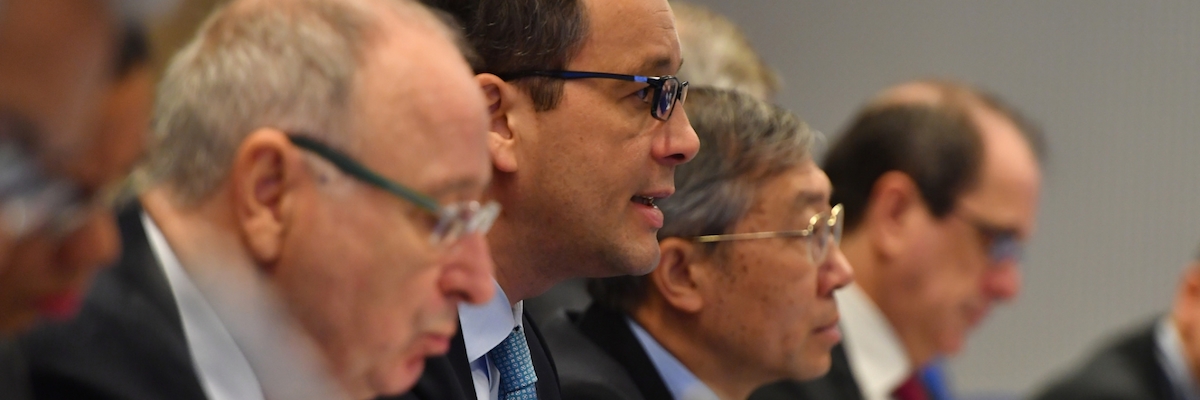
'Time is of the Essence' in Iran Co-Operation: UN Nuclear Watchdog
◢ The acting head of the UN nuclear watchdog on Monday called on Iran to "respond promptly" to the agency's questions regarding Tehran's nuclear program. He said that in his meetings he "stressed the need for Iran to respond promptly to Agency questions related to the completeness of Iran's safeguards declarations", adding "Time is of the essence."
By Jastinder Khera
The acting head of the UN nuclear watchdog on Monday called on Iran to "respond promptly" to the agency's questions regarding Tehran's nuclear program.
Cornel Feruta was addressing the quarterly board meeting of the International Atomic Energy Agency (IAEA) a day after meeting high-level Iranian officials in Tehran.
He said that in his meetings he "stressed the need for Iran to respond promptly to Agency questions related to the completeness of Iran's safeguards declarations", adding: "Time is of the essence."
Earlier Monday, the IAEA confirmed that Iran was installing advanced centrifuges, a move that puts further pressure on the troubled 2015 nuclear deal with world powers.
The IAEA's latest statements come a day after Tehran hit out at European powers, saying they had left Iran little option but to scale back its commitments under the 2015 Joint Comprehensive Plan of Action (JCPOA).
In its statement, the IAEA added that the centrifuges had been installed at Iran's Natanz facility and all of them "had been prepared for testing with UF6 (uranium hexafluoride), although none of them were being tested with UF6 on 7 and 8 September 2019".
Iran has also informed the IAEA that it will take steps to accomodate "a cascade of 164 IR-4 centrifuges and a cascade of 164 IR-2m centrifuges".
Under the JCPOA Iran is only meant to enrich uranium using the less advanced IR-1 centrifuge model.
‘Wrong Approach'
Iran has said that notwithstanding its reduction of commitments under the JCPOA, it will continue to allow access to IAEA inspectors who monitor its nuclear programme.
Iran has already broken the limits on uranium enrichment levels and the overall stockpile of enriched uranium laid down in the JCPOA.
The landmark accord has been under mounting pressure since the US withdrew from it in May 2018 and then re-introduced sanctions on Iran.
Earlier Monday, China—a signatory to the JCPOA along with France, Germany, Britain and Russia—called on the US to "give up its wrong approach such as unilateral sanctions and extreme pressure against Iran.
"At the same time, all parties to the agreement should also commit themselves to the full and effective implementation" of the JCPOA, Chinese foreign ministry spokeswoman Hua Chunying told reporters in Beijing.
"We hope that the relevant parties can meet at halfway and push for the easing of tensions around the Iranian nuclear issue," Hua said.
Photo: IAEA
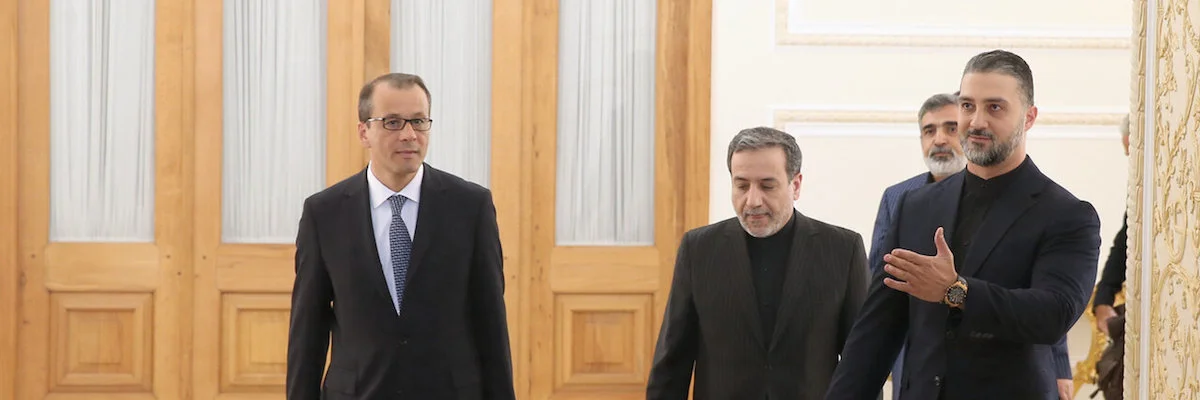
Iran Slams European Powers as Nuclear Deal Unravels
◢ Iran's atomic agency chief hit out Sunday at European powers, saying their broken promises gave the Islamic republic little choice but to scale back its commitments under a nuclear deal. "The European Union was supposed to be the replacement of the US but, unfortunately, they failed to act on their promises," Salehi told reporters.
By David Vujanovic
Iran's atomic agency chief hit out Sunday at European powers, saying their broken promises gave the Islamic republic little choice but to scale back its commitments under a nuclear deal.
Ali Akbar Salehi was speaking to reporters alongside Cornel Feruta, the acting head of the International Atomic Energy Agency who was on a one-day visit to Tehran.
The IAEA official's visit came less than 24 hours after Iran said it was firing up advanced centrifuges that enrich uranium at a faster rate—the latest blow to the landmark 2015 nuclear deal.
It was the third step in a strategy Iran implemented in May, reducing its nuclear commitments in a bid to force the deal's remaining parties to deliver on promises of relief from crippling US sanctions.
Britain, France and Germany have been trying to save the nuclear deal, which began unravelling last year when US President Donald Trump withdrew from it and began reimposing the punitive measures against Iran.
"The European Union was supposed to be the replacement of the US but, unfortunately, they failed to act on their promises," Salehi told reporters.
"We heard the EU spokesperson say they would be committed to the JCPOA as long as Iran is," he said, referring to the deal by its formal name, the Joint Comprehensive Plan of Action.
"I am wondering. Are they committed to non-adherence? Are they committed to breaking promises? Unfortunately, the Europeans have done this so far."
'One-Way Street'
The head of Iran's Atomic Energy Organisation said the JCPOA was now just a "one-way street.”
"The street was supposed to be two-way. If it's going to be one-way, the Islamic Republic of Iran will definitely make the right decisions at the right time like it has done with these three steps," said Salehi.
During his visit, Feruta was informed about Iran's "announced activities related to its centrifuge research and development", according to a statement from the Vienna-based IAEA.
The UN nuclear watchdog said "ongoing interactions... require full and timely cooperation by Iran," which diplomats said may hint at worries about information sharing.
In a report on August 30, the IAEA said it was continuing to verify compliance through cameras and on-site inspections.
France, which has been leading the European efforts to rescue the nuclear deal, on Sunday urged Iran to halt its steps away from the accord.
"The channels for dialogue are still open, including today... (but) Iran must give up such actions," said Foreign Minister Jean-Yves Le Drian.
The crumbling accord was meant to give Iran relief from sanctions in return for curbs on its nuclear program.
IAEA Scrutiny
Iran has taken a series of retaliatory steps to reduce compliance with the deal since the US withdrawal in May 2018.
On July 1, it said it had increased its stockpile of enriched uranium to beyond the 300-kilogram limit set by the agreement.
A week later, the Islamic republic announced it had exceeded the deal's uranium enrichment level of 3.67 percent.
On Saturday, Iran's Atomic Energy Organisation said it had taken another step by starting up 20 IR-4 and 20 IR-6 advanced centrifuges.
Under the Joint Comprehensive Plan of Action, Iran was allowed to enrich uranium using only first generation—or IR-1—centrifuges.
Despite the latest move, the agency said Iran would allow the IAEA to continue monitoring its nuclear facilities in accordance with the 2015 agreement.
Feruta also held talks on Sunday with Iran's top diplomat Mohammad Javad Zarif.
The watchdog said he would report the findings from his visit to Iran to the agency's board of governors when it convenes for a quarterly meeting in Vienna on Monday.
Photo: IRNA
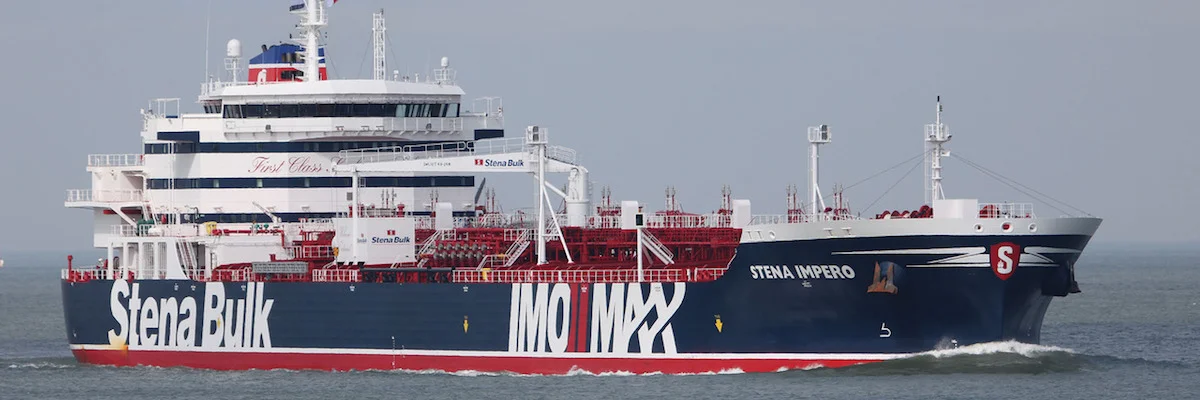
Iran Says It Could Release UK-Flagged Tanker Within Days
◢ Iran on Sunday hinted that it could release "within days" a UK-flagged oil tanker it had seized in July in sensitive Gulf waters amid rising hostilities with Britain's ally the United States. Foreign ministry spokesman Abbas Mousavi told state television the "necessary steps" to set the Swedish-owned ship free were "underway.”
Iran on Sunday hinted that it could release "within days" a UK-flagged oil tanker it had seized in July in sensitive Gulf waters amid rising hostilities with Britain's ally the United States.
Foreign ministry spokesman Abbas Mousavi told state television the "necessary steps" to set the Swedish-owned ship free were "underway.”
"The final steps of the legal procedure are underway and, God willing, the boat will be released in the coming days," he said, without giving further details.
The seizure of the Stena Impero was seen as a tit-for-tat move after British authorities detained an Iranian tanker off Gibraltar in July on suspicion it was shipping oil to Syria in breach of EU sanctions.
Gibraltar released the ship—formerly called the Grace 1 but since renamed the Adrian Darya 1—on August 18 after receiving written assurances from Iran that it would not head to countries under EU sanctions.
Tehran denied it had made any promises about the destination of the ship laden with 2.1 million barrels of oil, which had been elusive since leaving Gibraltar .
On Sunday, Mousavi said the Adrian Darya "has reached its destination and the oil has been sold", without providing further details.
Mousavi did not specify if the Adrian Darya had unloaded its cargo
"It is in the Mediterranean," he said, facing the coast of a country he did not name.
Iran last month said it had "sold the oil" aboard the tanker and that the owner will decide the destination, but it did not identify the buyer.
Maritime tracking service TankerTrackers said that as of Sunday night the Adrian Darya was off the coast of Syria's Tartus but had not unloaded the oil.
Iran's Islamic Revolutionary Guard Corps seized the Stena Impero on July 19 in the Strait of Hormuz with 23 crew members on board, claiming it broke "international maritime rules".
On Wednesday, the Swedish foreign ministry said that some of the crew had been released, after the vessel's owners said they expected seven to be set free on that day.
Tensions between arch-enemies Iran and the US have soared ever since Washington stepped up its campaign of "maximum pressure" against Tehran and reimposed sanctions after leaving the landmark 2015 nuclear deal last year.
Photo: Fleetmon
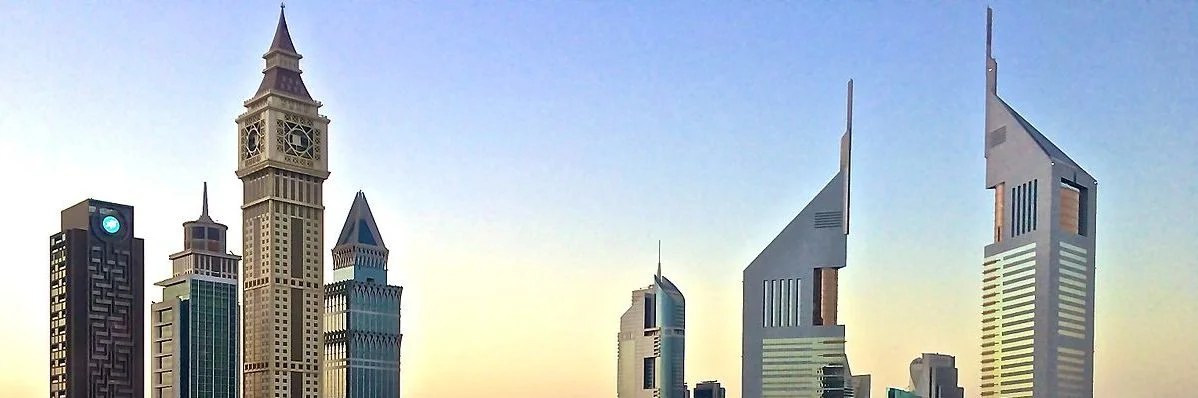
US to Press UAE CEOs to Tighten Financial Screws on Iran
◢ A senior U.S. Treasury official is in the United Arab Emirates to meet with the chiefs of the country’s banks and shipping companies as the Trump administration seeks to further tighten sanctions against the Iranian regime. Sigal Mandelker, the Treasury’s undersecretary for terrorism and financial intelligence, will be meeting the chief executive officers of seven U.A.E. banks on Sunday and Monday.
By Zainab Fattah
A senior U.S. Treasury official is in the United Arab Emirates to meet with the chiefs of the country’s banks and shipping companies as the Trump administration seeks to further tighten sanctions against the Iranian regime.
Sigal Mandelker, the Treasury’s undersecretary for terrorism and financial intelligence, will be meeting the chief executive officers of seven U.A.E. banks on Sunday and Monday. She will also hold talks with officials before heading to Switzerland and Israel.
“We’re discussing ways to work together to counter terrorism and Iran’s destabilizing influence in the region and around the world,” Mandelker told reporters in the capital, Abu Dhabi, on Sunday.
The trip marks the latest effort by the U.S. to turn up the pressure on Iran, which has so far refused to negotiate unless American sanctions are lifted. President Donald Trump pulled the U.S. out of the multiparty 2015 nuclear deal and began to reimpose penalties last year. Earlier in 2019, the U.S. suspended waivers that allowed countries to buy Iranian oil.
The Treasury has issued over 30 rounds of curbs targeting more than 1,000 Iran-related entities, Mandelker said.
Last week, a major shipping network was also sanctioned after selling millions of barrels of of Iranian crude, she said. It allegedly supports the Qods Force, the international brigade of Iran’s Revolutionary Guard Corps, which has been shipping oil to help the regime of Syrian President Bashar Al Assad and Lebanon’s Hezbollah, she added.
The U.S. is also targeting those who engage in other trade and financial activities related to Iran’s petrochemical and metal production, Mandelker said. On June 7, Iran’s largest petrochemicals group was sanctioned, and two of its designated sales agents were based in the U.A.E., she said.
“As we’ve seen historically, that kind of trade has happened right here in the U.A.E.,” she said. “And we want to make sure that that sector understands that there are similar consequences to continuing to engage in that kind of trade.”
Photo: Wikicommons
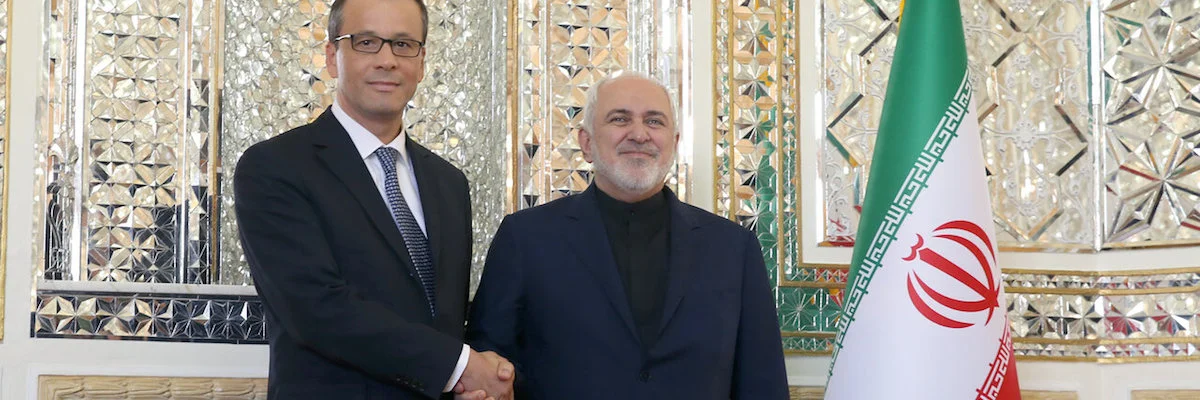
Atomic Watchdog Chief in Iran for High-Level Talks
◢ The acting head of the UN atomic watchdog, Cornel Feruta, arrived in Tehran on Sunday for high-level talks with Iranian officials, the semi-official ISNA news agency reported. The International Atomic Energy Agency official's visit comes a day after Iran announced its latest step in reducing its commitments to a 2015 nuclear deal.
The acting head of the UN atomic watchdog, Cornel Feruta, arrived in Tehran on Sunday for high-level talks with Iranian officials, the semi-official ISNA news agency reported.
The International Atomic Energy Agency official's visit comes a day after Iran announced its latest step in reducing its commitments to a 2015 nuclear deal.
The Romanian diplomat was to meet Iran's Atomic Energy Organisation chief Ali Akbar Salehi, Foreign Minister Mohammad Javad Zarif, and Ali Shamkhani, secretary of Iran's Supreme National Security Council, ISNA said.
The IAEA said the visit was part of its "ongoing interactions" with Tehran, including "verification and monitoring in Iran under the Joint Comprehensive Plan of Action (JCPOA)," the technical name for the 2015 deal.
The accord gave Iran relief from sanctions in return for curbs on its nuclear programme.
Iran's Atomic Energy Organisation said on Saturday that it had fired up 20 IR-4 and 20 IR-6 advanced centrifuges -- a third step it has taken back from the nuclear deal.
Despite the latest move, the agency said Iran would allow the IAEA to continue monitoring its nuclear facilities in accordance with the 2015 agreement.
In response, the IAEA said it had noted Iran's latest move and indicated its inspectors were ready to check its compliance.
"Agency inspectors are on the ground in Iran and they will report any relevant activities to IAEA headquarters in Vienna," spokesman Fredrik Dahl said.
Iran has taken a series of retaliatory steps to reduce compliance with the deal after the United States withdrew from it last year and began reimposing sanctions against the Islamic republic.
On July 1, Iran said it had increased its stockpile of enriched uranium to beyond the 300-kilogramme limit set by the agreement.
A week later, it announced it had exceeded the deal's uranium enrichment limit of 3.67 percent.
Feruta's visit to Tehran comes a day before the IAEA board of governors convenes for a quarterly meeting in Vienna, at which its verification and monitoring mission in Iran will be discussed.
In its latest report on August 30, the watchdog said it was continuing to verify compliance through cameras and on-site inspections.
But in an apparent hint at worries about access, it said "ongoing interactions... require full and timely cooperation by Iran.”
Photo: IRNA
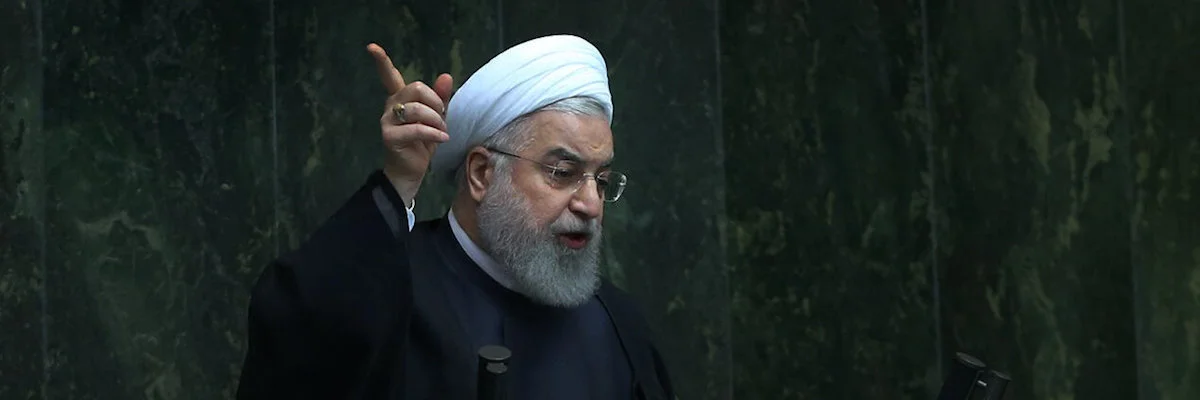
Iran Fires up Advanced Centrifuges in Latest Nuclear Step
◢ Iran said Saturday it has fired up advanced centrifuges to boost its enriched uranium stockpiles, in the latest scaling back of commitments under a crumbling 2015 nuclear deal. The country's Atomic Energy Organization said, however, that it would honor commitments to give UN inspectors access to monitor its nuclear sites.
By Amir Havasi
Iran said Saturday it has fired up advanced centrifuges to boost its enriched uranium stockpiles, in the latest scaling back of commitments under a crumbling 2015 nuclear deal.
The country's Atomic Energy Organisation said, however, that it would honor commitments to give UN inspectors access to monitor its nuclear sites.
Three European countries—Britain, France and Germany—have been engaged in talks to try to rescue the 2015 deal that gave Iran relief from sanctions in return for curbs on its nuclear program.
Tensions have been escalating between Iran and the United States since May last year when President Donald Trump pulled out of the accord and began reimposing sanctions that have crippled its economy.
The arch-foes were on the cusp of confrontation in June when Iran downed a US drone and Trump ordered retaliatory strikes before canceling them at the last minute.
On Saturday, Iran's Atomic Energy Organisation said it had activated 20 IR-4 and 20 IR-6 centrifuges as its latest step back in rolling back its commitments.
"The centrifuge machines, as they are engaged in research and development, will help with increasing the stockpile," said the agency's spokesman, Behrouz Kamalvandi.
"The capacity of these machines is many times more than the previous machines. This started as of yesterday (Friday)," he told a news conference in Tehran.
But Kamalvandi said Iran would allow the International Atomic Energy Agency (IAEA) to continue monitoring its nuclear program, as it has done under the 2015 accord.
"Regarding the monitoring and accesses of the IAEA... so that everything is clear (Iran's) commitments regarding transparency will be followed as before," he said.
Europe 'Must Hurry'
The European Union on Friday emphasized its reliance on the UN nuclear watchdog to monitor Iran's activities as it voiced "great concern" over the country's decision to roll back its commitments.
The IAEA in its latest report, on August 30, said it continues to verify compliance through cameras and on-site inspections.
But in an apparent hint at worries about access it said "ongoing interactions... require full and timely cooperation by Iran.”
The latest move by Iran came after EU members Britain, France and Germany were unable to find a way to offset the impact of sanctions on the country before a September 7 deadline set by the Islamic republic.
"If Europe wants to do something, it must hurry, because returning to the situation before reducing commitments could take time," Kamalvandi said on Saturday.
Tehran has already hit back twice with countermeasures in response to the US withdrawal from the 2015 deal.
On July 1, Iran said it had increased its stockpile of enriched uranium to beyond the 300-kilogram maximum set by the deal.
A week later, it announced it had exceeded a 3.67-percent cap on the purity of its uranium stocks.
On Saturday, however, Iran indicated it had no plans to step up the enrichment of uranium to higher levels.
"We currently do not need 20 percent enrichment, and if we do so at some time, we will first increase the 4.5 percent stockpile and then act," said Kalamvandi.
The announcement came on the eve of a visit to Iran by the acting head of the IAEA, Cornel Feruta. Kamalvandi said Feruta would meet the head of Iran's Atomic Energy Organisation, Ali Akbar Salehi, and Foreign Minister Mohammad Javad Zarif.
Photo: IRNA
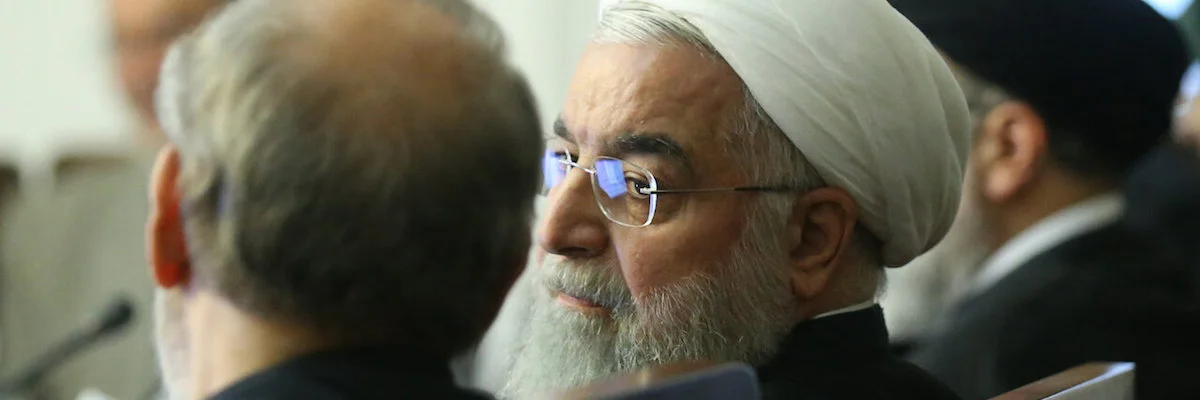
Iran's Rouhani Orders Lifting of All Nuclear R&D Limits
◢ Iran's President Hassan Rouhani on Wednesday ordered all limits on nuclear research and development to be lifted, the country's third step in scaling down its commitments to a 2015 deal with world powers. His announcement came shortly after the US hit the Islamic Republic with further sanctions, the latest in a series of punitive measures including an embargo on Iranian oil exports.
By David Vujanovic and Shaun Tandon
Iran's President Hassan Rouhani on Wednesday ordered all limits on nuclear research and development to be lifted, the country's third step in scaling down its commitments to a 2015 deal with world powers.
His announcement came shortly after the US hit the Islamic Republic with further sanctions, the latest in a series of punitive measures including an embargo on Iranian oil exports.
Iran and three European countries -- Britain, France and Germany -- have been engaged in talks to reduce tensions and save the nuclear deal that has been unravelling since US President Donald Trump withdrew from it in May last year.
But late Wednesday, Rouhani made good on a declared intention to take another step away from the multilateral deal signed with the permanent five United Nations Security Council powers and Germany (P5+1).
"I, as of now, announce the third step," he said on state television.
"The atomic energy organisation (of Iran) is ordered to immediately start whatever is needed in the field of research and development, and abandon all the commitments that were in place regarding research and development," he said.
He referred to "expansions in the field of research and development, centrifuges, different types of new centrifuges, and whatever we need for enrichment".
Iran in July abandoned two other nuclear commitments: to keep its stockpile of enriched uranium below 300-kilogrammes, and a 3.67-percent cap on the purity of its uranium stocks.
Rouhani had earlier on Wednesday told a cabinet meeting: "I don't think that... we will reach a deal".
But the Iranian president had also said Tehran and the European powers had been getting closer to an agreement on a way to resolve burning issues.
"If we had 20 issues of disagreement with the Europeans in the past, today there are three issues," he said.
French President Emmanuel Macron, meeting Trump last month in France, encouraged him to offer economic incentives for Tehran and dangled the possibility of a summit between the US and Iranian presidents.
Trump made clear Wednesday that he was still interested in meeting Rouhani when the Iranian leader visits New York for the annual UN General Assembly.
"Sure, anything is possible," Trump told reporters.
US Firm on Sanctions
But Rouhani has already ruled out a summit without sanctions relief, and on Wednesday the Trump administration issued its third set of sanctions on Iran in less than a week.
In the latest salvo, the Treasury Department put on its blacklist a shipping network of 16 entities, 10 people and 11 vessels that it said was selling oil on behalf of Iran's elite Revolutionary Guards' Qods Force.
The network sold more than $500 million worth of oil this spring, mostly to Syria, benefitting both President Bashar al-Assad and militant Lebanese allies Hezbollah, the Treasury Department said.
A US official said that the move showed Washington's position on relaxing sanctions -- and warned that more would come.
"We can't make it any more clear that we are committed to this campaign of maximum pressure and we are not looking to grant any exceptions or waivers," Brian Hook, the State Department coordinator on Iran, told reporters.
Iran has said it will resume full compliance with the nuclear deal if it reaches a deal with France on a $15-billion credit line, which Tehran would repay once it resumes oil exports.
The US is currently trying to block such shipments with unilateral sanctions.
Hook stopped short of criticising the credit line itself, saying there was no "concrete" proposal.
'Part' of Tanker Crew Freed
Speaking days after a trip to France, deputy foreign minister Abbas Araghchi ruled out renegotiation of the 2015 accord, known as the Joint Comprehensive Plan of Action (JCPOA).
"Returning to full implementation of the JCPOA is subject to receiving $15 billion over a period of four months, otherwise the process of Iran reducing its commitments will continue," said Araghchi, quoted by the state news agency IRNA.
Hawks in the Trump administration adamantly oppose any easing of pressure, saying their goal is not only to contain Iran's nuclear programme but to curb the clerical state's influence across the Middle East.
Iran had long threatened to carry out a third set of nuclear countermeasures by Friday unless other parties to the deal offset the effect of US sanctions in return for its continued compliance.
Tensions rose significantly in July since Iran took the first two steps away from the nuclear deal and seized a British-flagged tanker—the Stena Impero—in the Strait of Hormuz for "failing to respect international maritime rules".
But some members of the crew of this Swedish-owned tanker have been released, Stockholm said late Wednesday.
"A part of the crew of the Stena Impero... has been released," Sweden's foreign ministry said in a message to AFP, without giving details of how many of the crew had been freed.
Photo: IRNA
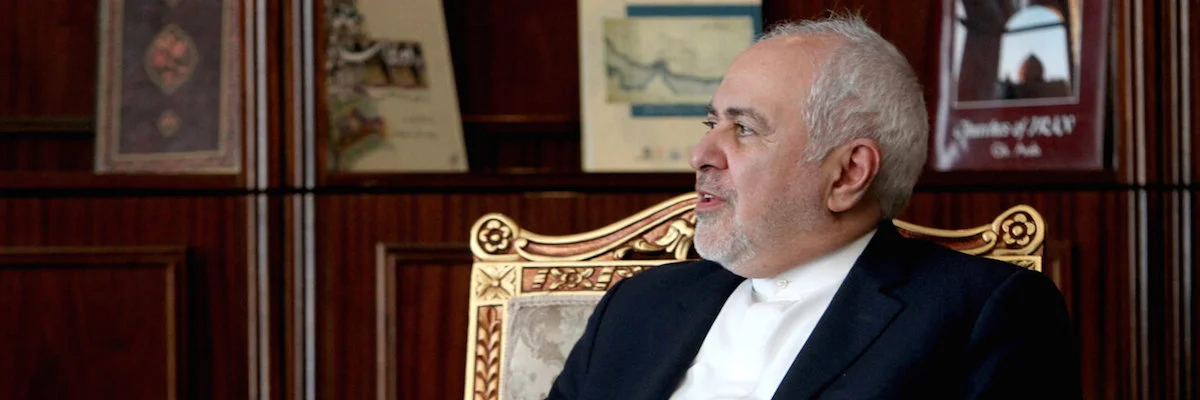
US Adds to Iran Sanctions as French Seek to Restart Oil Sales
◢ The U.S. placed new sanctions on Iran, and a top American official signaled more measures are coming while deflecting questions about French diplomatic efforts meant to help Tehran restart oil sales. Brian Hook, the U.S. special envoy for Iran, said Wednesday that the U.S. will “continue to drive up the costs” for Tehran’s efforts to develop ballistic missiles and take other actions.
By Nick Wadhams and Saleha Mohsin
The U.S. placed new sanctions on Iran, and a top American official signaled more measures are coming while deflecting questions about French diplomatic efforts meant to help Tehran restart oil sales.
Brian Hook, the U.S. special envoy for Iran, said Wednesday that the U.S. will “continue to drive up the costs” for Tehran’s efforts to develop ballistic missiles and take other actions soon after the Treasury Department imposed new restrictions on a shipping network controlled by Iran’s Islamic Revolutionary Guard Corps.
“There will be more sanctions coming,” Hook told reporters at the State Department. “We can’t make it any more clear than that,” he said, adding “we are not looking to grant any exceptions or waivers.”
But Hook wouldn’t directly address diplomatic efforts, led by French Finance Minister Bruno Le Maire, which would offer Iran a $15 billion economic lifeline allowing pre-purchases of some Iranian oil. The Trump administration would need to grant waivers to existing sanctions on Iran’s energy sector for the credit line to go into effect.
Asked repeatedly about that proposal at his briefing Wednesday, Hook declined to clarify what the U.S. stance was other than to say that there’s no “concrete proposal” for the administration to consider. The French plan, still in development, “doesn’t exist,” Hook said, without explicitly ruling it out.
Muddled Message
It was the latest sign of an increasingly muddled U.S. message on Iran. At the G-7 meeting in Biarritz, France, last month, President Donald Trump said he’d support French President Emmanuel Macron’s proposal to extend a “letter of credit” to Iran, secured by oil, to help the country meet short-term financial obligations. “It would be from numerous countries,” Trump said, and “it would be paid back immediately.”
The president’s top aides have since labored to clarify those comments, as well as repeated statements from Trump that he’s open to having direct talks with Iran’s leaders. Hook said Trump’s interest in meeting Iranian leaders isn’t new and depends on the country meeting specific American demands as part of its “maximum pressure” campaign.
Trump, speaking at the White House on Wednesday, said his goal is to ensure Iran doesn’t obtain nuclear weapons, adding that the U.S. doesn’t need to work through Macron to secure a deal.
New Sanctions
“We can deal directly if we want,” Trump said.
The latest U.S. comments followed the announcement of new sanctions on the IRGC shipping network. The Treasury Department said the organization has helped move hundreds of millions of dollars of oil to the Lebanese militant group Hezbollah, Syrian President Bashar al-Assad’s regime and other illicit actors. It designated about 16 entities and 10 individuals to its sanctions list and issued an advisory warning of the sanctions risks related to oil shipments to Syria, including those from Iran, according to a release on its website.
A day earlier, Treasury announced sanctions against the Iran Space Agency and two affiliated research groups, accusing them of advancing Tehran’s missile programs. The U.S. also announced a $15 million reward to anyone providing information that could disrupt Iran’s economy.
‘Well-Off in Old Age’
That followed an unusually direct move by Hook to persuade tanker captains to steer ships laden with Iranian oil away from their destinations. In one Aug. 26 email, Hook offered the Indian captain of one tanker millions of dollars to steer his vessel to a country where it could be impounded by the U.S. The contents of Hook’s email were first reported by the Financial Times and confirmed by two senior administration officials who asked not to be identified discussing private communications.
“With this money you can have any life you wish and be well-off in old age,” Hook wrote in another email to the captain. “If you choose not to take this easy path, life will be much harder for you.”
Amid all the shuttle diplomacy by the French, Iranian officials have been threatening to ramp up their nuclear activities this week in a further violation of the nuclear deal. French officials have said such a move would send the wrong signal.
On state television on Wednesday, President Hassan Rouhani said Iran would set aside all commitments spelled out in the 2015 nuclear agreement linked to its nuclear research and development activity. That work will include accelerating efforts to advance centrifuge technology and do “whatever needed” to enrich uranium.
Wednesday’s sanctions against the shipping network also come shortly after a tanker carrying Iranian crude disappeared from satellite-tracking not far from Syria’s coast. The disappearance prompted speculation that the ship was about to transfer its cargo to another vessel out of the view of global ship-monitoring systems.
The last signal from the supertanker Adrian Darya 1, thought to have 2 million barrels of oil on board, was received on Monday afternoon, according to ship-tracking data compiled by Bloomberg.
Previously called Grace 1, the vessel was seized near Gibraltar by the U.K. military and local police in early July on suspicion of supplying crude to Syria. The British overseas territory released the carrier last month, saying it received assurances the vessel wouldn’t sail to any entity sanctioned by the European Union.
Photo: IRNA

US Offered Millions in Cash to Captain of Iranian Tanker
◢ A senior US official personally offered several million dollars to the Indian captain of an Iranian oil tanker suspected of heading to Syria, the State Department confirmed Wednesday. The Financial Times reported that Brian Hook, the State Department point-man on Iran, sent emails to captain Akhilesh Kumar in which he offered "good news" of millions in US cash.
By Shaun Tandon
A senior US official personally offered several million dollars to the Indian captain of an Iranian oil tanker suspected of heading to Syria, the State Department confirmed Wednesday.
The Financial Times reported that Brian Hook, the State Department point-man on Iran, sent emails to captain Akhilesh Kumar in which he offered "good news" of millions in US cash to live comfortably if he steered the Adrian Darya 1 to a country where it could be seized.
"We have seen the Financial Times article and can confirm that the details are accurate," a State Department spokeswoman said.
"We have conducted extensive outreach to several ship captains as well as shipping companies warning them of the consequences of providing support to a foreign terrorist organization," she said, referring to Iran's elite Revolutionary Guards.
The Adrian Darya 1 was held for six weeks by the British overseas territory of Gibraltar on suspicion that it was set to deliver oil from Iran to its main Arab ally Syria -- a violation of European Union sanctions on President Bashar al-Assad's iron-fisted regime.
Gibraltar released the ship, formerly called the Grace 1, on August 18 over US protests after receiving written assurances that the vessel would not head to countries sanctioned by the European Union.
Iranian Foreign Minister Mohammad Javad Zarif mocked Hook's initiative as he pointed to the Financial Times story.
"Having failed at piracy, the US resorts to outright blackmail -- deliver us Iran's oil and receive several million dollars or be sanctioned yourself," Zarif tweeted.
State Department chief spokeswoman Morgan Ortagus hit back using Zarif's exact words, accusing Iran of "outright blackmail" with its call for $15 billion from European powers to be paid back from Iran's future oil sales.
Iran says that, if it receives the credit line, it will come back into full compliance with a 2015 nuclear accord from which US President Donald Trump withdrew.
No Reply from Captain
US authorities said that Kumar, 43, took over as captain in Gibraltar. After he apparently did not respond to the US offer, the Treasury Department on Friday imposed sanctions both on the ship and on Kumar himself, freezing any assets he may have in the United States and criminalizing any US financial transactions with him.
"Any US or foreign persons that engage in certain transactions with designated persons or entities may themselves be exposed to sanctions," the first State Department spokeswoman said.
The Adrian Daya 1 has been elusive since sailing off from Gibraltar, with monitors reporting that it has been moving in the eastern Mediterranean near Lebanon.
The United States also announced Wednesday that it was imposing sanctions on a shipping network alleged to be tied to the Revolutionary Guards -- and offering up to $15 million for information that could disrupt the unit's finances.
The shipping network sold more than $500 million this spring, mostly in Syria, according to the Treasury Department.
After pulling from the nuclear accord, the United States has unilaterally threatened sanctions aimed at ending all oil sales by Iran in a bid to diminish the clerical regime's regional influence.
Photo: IRNA
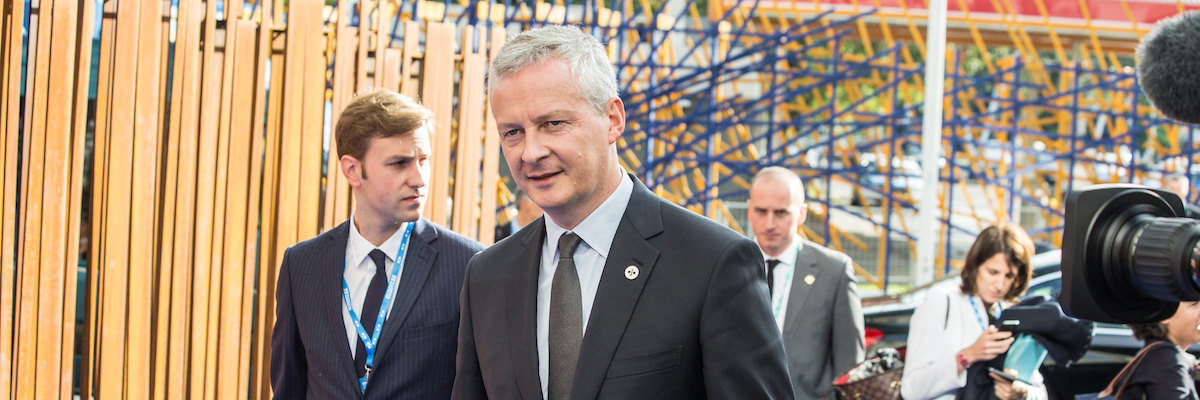
France Seeks to Rescue Iran Nuclear Deal With Washington Talks
◢ French Finance Minister Bruno Le Maire met with U.S. authorities in Washington as part of a plan to offer Iran a $15 billion economic lifeline and rescue the Iran nuclear accord.. “Iran’s and France’s points of view have grown closer,” Iranian government spokesman Ali Rabiei told reporters at a news conference in Tehran.
By Gregory Viscusi and Helene Fouquet
French Finance Minister Bruno Le Maire met with U.S. authorities in Washington as part of a plan to offer Iran a $15 billion economic lifeline and rescue the Iran nuclear accord, an idea a Trump administration official said was a non-starter.
The scheduled talks were officially about a French digital tax that has riled President Donald Trump, but they’ve been extended to look at ways that Iran could receive waivers from U.S. sanctions, French officials said.
The U.S. visit is part of a flurry of talks aimed at rescuing the 2015 nuclear deal after a series of maritime confrontations that have threatened shipping near Iranian waters. While the talks are a sign of progress, the French officials said Tehran would be sending the wrong signal if it went ahead with threats to ramp up its nuclear activities this week in a further violation of the accord.
Iran Foreign Minister Mohammad Javad Zarif met with counterpart Sergei Lavrov in Moscow Monday while his deputy Abbas Araghchi went to Paris with a team of economists and central bank officials. Araghchi discussed a French proposal for a $15 billion letter-of-credit to help restore Iran’s oil exports, the backbone of its economy, according to Iranian press and officials. French officials wouldn’t confirm the size or details of the letter of credit.
Washington Talks
Le Maire met his U.S. counterpart Steven Mnuchin and tweeted afterwards that he had constructive talks about the digital tax, without mentioning Iran. He’s due to later meet with Trump’s economic adviser Lawrence Kudlow, and chief U.S. trade negotiator Robert Lighthizer. According to a French official, Le Maire discussed waivers for companies that would allow Iran to sell oil. China, India and Japan would be the expected clients.
A senior U.S. administration official, who asked not to be identified discussing internal deliberations, poured cold water on the idea, saying Trump has been clear that Iran won’t receive any economic benefit from the U.S. for reverting back to the nuclear accord. The official said European nations are desperate to save what the administration believes is a terrible deal.
Araghchi’s talks in Paris lasted 10 hours, state-run Islamic Republic News Agency reported, without giving details. It was Araghchi’s second trip to the French capital in less than six weeks, continuing the most substantive negotiations between Iran and a western power since Trump exited the nuclear accord last year and slapped a slew of crippling sanctions on Iranian oil and other sectors.
According to an Iranian lawmaker, the French proposal—hammered out in hours of telephone negotiations between Iranian President Hassan Rouhani and French President Emmanuel Macron, and at a recent meeting with Zarif—includes a $15 billion credit line to Iran for oil “pre-purchases,” the semi-official Tasnim news reported, citing an interview with conservative lawmaker Ali Motahari.
France has suggested the money be paid in three installments and in return, Iran would lift its threat to ramp up atomic activities on Sept. 6 and eventually revert back to full compliance with the accord, Motahari said. Macron and Rouhani spoke for two hours this weekend, French officials said.
The difficulty the proposal will face is that any likely buyer of Iranian oil would need the U.S. to waive sanctions restricting such sales. But those sanctions have been a key part of Trump’s “maximum pressure” campaign aimed at forcing Iran back to talks to come up with a new nuclear deal.
Rapprochement With Tehran
“Iran’s and France’s points of view have grown closer,” Iranian government spokesman Ali Rabiei told reporters at a news conference in Tehran, adding that Iran was “moving forward and advancing” in its efforts to resolve the crisis through talks.
Araghchi said Saturday that discussions between Trump and Macron at the Group of Seven summit last week “have shown flexibility with regard to Iran’s oil,” according to the semi-official Iranian Students’ News Agency. Trump said at the meeting in Biarritz that he’d agree to have other countries extend a letter of credit to Iran, secured against oil sales.
Photo: Aaron Urb
US Imposes Sanctions on Iran Space Program
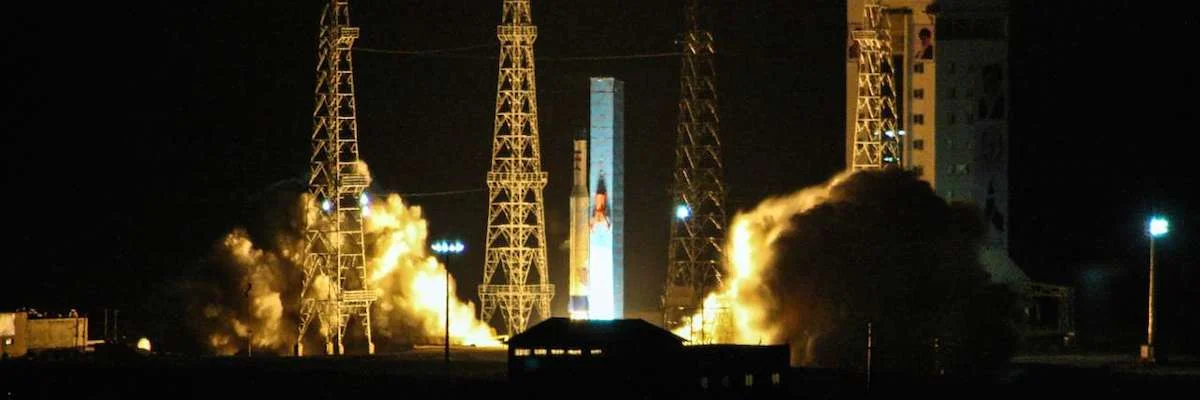
◢ The United States on Tuesday imposed sanctions on Iran's space program, saying that a recent explosion on a launch pad was a sign of missile work. "The United States will not allow Iran to use its space launch program as cover to advance its ballistic missile programs," Secretary of State Mike Pompeo said in a statement.
The United States on Tuesday imposed sanctions on Iran's space program, saying that a recent explosion on a launch pad was a sign of missile work.
"The United States will not allow Iran to use its space launch program as cover to advance its ballistic missile programs," Secretary of State Mike Pompeo said in a statement.
"Iran's August 29 attempt to launch a space launch vehicle underscores the urgency of the threat," he said.
Pompeo said that the United States was imposing sanctions on the Iran Space Agency as well as two affiliated research centers.
Under the orders, all US citizens or residents would be held criminally responsible for interacting with Iran's space program.
"These designations should serve as a warning to the international scientific community that collaborating with Iran's space program could contribute to Tehran's ability to develop a nuclear weapon delivery system.
President Donald Trump on Friday tweeted a high-resolution picture pointing to damage at a satellite launch pad and said the United States had nothing to do with it.
The tweet gathered wide attention not only for Trump's denial but due to speculation the president was taking to his favorite medium to show US intelligence that was likely classified.
While Trump focused on denying a role by the United States—which has widely been reported to have used clandestine means to set back Iranian military development—Pompeo said that the launch showed a threat from Iran.
Iranian government spokesman Ali Rabiei on Monday confirmed an explosion at a satellite launch pad in the north of the country and blamed a technical fault.
Photo: IRNA
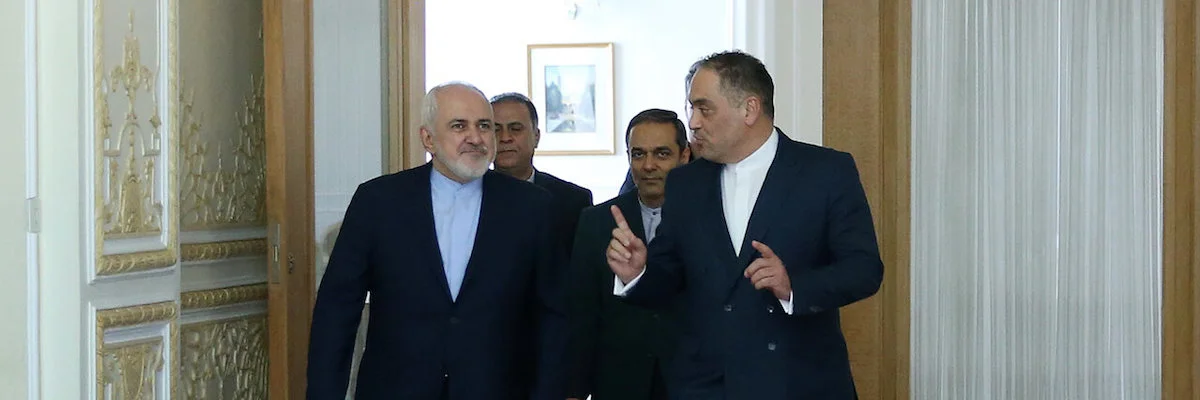
Iran Makes Big Diplomatic Push to Find Fix for Nuclear Staredown
◢ Iran’s top envoy Mohammad Javad Zarif held talks in Moscow with counterpart Sergei Lavrov as the threat of another erosion of Iran’s compliance with the accord looms. His deputy Abbas Araghchi went to Paris with a team of economists and central bank officials to discuss a French proposal to help restore Iran’s oil exports, the backbone of its economy.
By Abbas Al Lawati and Arsalan Shahla
Iran is ramping up negotiations as signs gather that it’s closer to ending a showdown with Europe over the wobbling 2015 nuclear deal and easing a security crisis in the Persian Gulf.
Iran’s top envoy Mohammad Javad Zarif held talks in Moscow with counterpart Sergei Lavrov as the threat of another erosion of Iran’s compliance with the accord looms. His deputy Abbas Araghchi went to Paris with a team of economists and central bank officials to discuss a French proposal to help restore Iran’s oil exports, the backbone of its economy.
The talks in Paris lasted 10 hours, state-run Islamic Republic News Agency reported, without giving details. It was Araghchi’s second trip to the French capital in less than six weeks, continuing the most substantive negotiations between Iran and a Western power since U.S. President Donald Trump exited the nuclear accord last year and slapped a slew of crippling sanctions on Iranian oil and other sectors.
Talks related to the agreement also took place in Vienna, Zarif’s spokesman Abbas Mousavi said.
According to an Iranian lawmaker, the French proposal—hammered out in hours of telephone negotiations between Iranian President Hassan Rouhani and French President Emmanuel Macron, and at a recent meeting with Zarif—includes a $15 billion credit line to Iran for oil “pre-purchases,” the semi-official Tasnim news reported, citing an interview with conservative lawmaker Ali Motahari.
France has suggested the money be paid in three installments and in return, Iran would lift its threat to ramp up atomic activities on Sept. 6 and eventually revert back to full compliance with the accord, Motahari said.
“Iran’s and France’s points of view have grown closer,” Iranian government spokesman Ali Rabiei told reporters at a news conference in Tehran, adding that Iran was “moving forward and advancing” in its efforts to resolve the crisis through talks.
Araghchi said Saturday that discussions between Trump and Macron at the Group of Seven summit last week “have shown flexibility with regard to Iran’s oil,” according to the semi-official Iranian Students’ News Agency. Trump said at the meeting in Biarritz that he’d agree to have other countries extend a letter of credit to Iran, secured against oil sales.
The U.S. withdrawal from the nuclear deal, formally known as the Joint Comprehensive Plan of Action, in May 2018 and crippling sanctioning of Iran’s economy triggered a security crisis that has rocked the Persian Gulf region with tanker attacks, tit-for-tat vessel seizures and the downing of military drones.
Washington’s actions also left Europe scrambling for an effective way to keep the deal alive without running afoul of U.S. sanctions.
“The French initiative is the last best hope for salvaging” the deal, said Ali Vaez at the International Crisis Group. “The key for its success is to provide Iran with some economic reprieve in the form of increased oil exports in return for compliance with the JCPOA and commitment to engage in new negotiations.”
Photo: IRNA
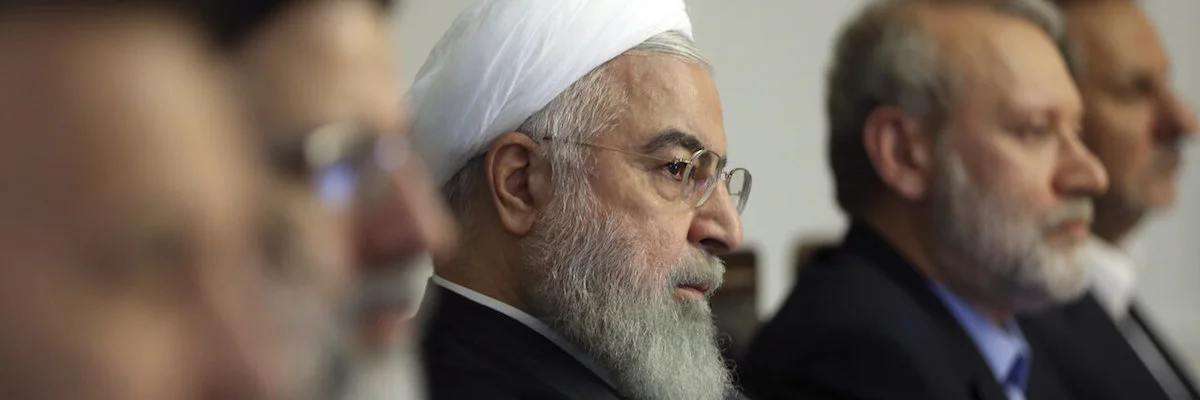
Iran's Rouhani Warns Macron of Looming Nuclear Step
◢ President Hassan Rouhani spoke with French counterpart Emmanuel Macron on Saturday, warning him Iran would take the next step in reducing its nuclear commitments unless Europe lives up to its own undertakings. "If Europe cannot operationalize its commitments, Iran will take its third step to reduce its JCPOA commitments," Rouhani told Macron in a phone call, quoted by the government website.
By David Vujanovic
President Hassan Rouhani spoke with French counterpart Emmanuel Macron on Saturday, warning him Iran would take the next step in reducing its nuclear commitments unless Europe lives up to its own undertakings.
Tensions have spiked in the Gulf since May last year when President Donald Trump unilaterally withdrew the US from a nuclear deal between Iran and world powers—known formally as the Joint Comprehensive Plan of Action (JCPOA).
The escalation has seen ships attacked, drones downed and tankers seized in the Strait of Hormuz, a chokepoint for around a third of the world's sea-borne oil.
At the height of the crisis, Trump ordered strikes against Iran on June 21 before cancelling them at the last minute.
Macron has been leading efforts to de-escalate the situation, and expressed hopes at a G7 meeting last week of bringing Rouhani and Trump together for a meeting.
But Rouhani has played down the likelihood of that happening unless the United States first lifts crippling sanctions that it has slapped on Iran since pulling out of the deal.
"If Europe cannot operationalize its commitments, Iran will take its third step to reduce its JCPOA commitments," Rouhani told Macron in a phone call, quoted by the government website.
However, "this step, just like the other ones, will be reversible," he added.
"Unfortunately after this unilateral move by the US, European countries did not take concrete measures to implement their commitments.
"The contents of JCPOA are unchangeable and all parties must be committed to its contents," he said.
Rouhani said Iran had two priorities: for all parties to the JCPOA to fully implement their obligations and "securing the safety of all free maritime transportation in all waterways including the Persian Gulf and Strait of Hormuz.”
Economic Delegation
In a statement from his office, Macron stressed the importance of "the current dynamic to create the conditions for a de-escalation through dialogue and building a durable solution in the region".
A French diplomatic source said it was important, after recent discussions between Paris and Tehran, to establish that Rouhani was "still ready to negotiate. And that is the case".
Twelve months after the US pulled out of the nuclear deal, Iran began reducing its commitments under the accord.
The UN nuclear watchdog, the International Atomic Energy Agency, said Friday that just over 10 percent of Iran's uranium stockpile was now enriched up to 4.5 percent, above the 3.67 percent limit stipulated in the 2015 deal.
It also said Iran's total stockpile of uranium, which under the accord should be no more than the equivalent of 300 kilograms (661 pounds) of uranium hexafluoride, now stood at roughly 360 kilograms.
Iran has not specified what its third step might be in reducing its commitments to the deal.
Foreign Minister Mohammad Javad Zarif said on Tuesday in an interview with the Sueddeutsche Zeitung newspaper that the step would be taken on September 6.
Rouhani's chief of staff Mahmoud Vaezi said the third step would be taken "in the event Iran's demands are not met.”
"A committee decides the third step and we will decide... two or three days prior to the deadline," he said late Saturday, quoted by state news agency IRNA.
Vaezi said Deputy Foreign Minister Abbas Araghchi would head an Iranian economic delegation travelling to France on Monday to discuss proposals aimed at salvaging the nuclear deal.
Macron has urged the US to offer some sort of relief to Iran, such as lifting sanctions on oil sales to China and India, or a new credit line to enable exports in return for its compliance with the nuclear deal.
Photo: IRNA
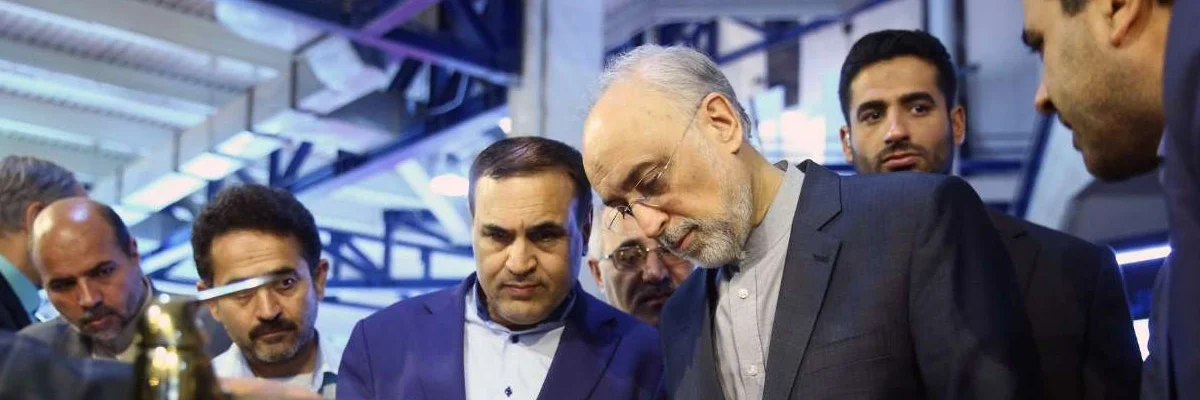
Iran Continues Breaching Uranium Stockpile and Enrichment Limits
◢ International inspectors reported that Iran continued to exceed nuclear limits imposed under its landmark deal with world powers, a breach that has complicated European efforts to salvage the accord abandoned by U.S. President Donald Trump.
By Jonathan Tirone
International inspectors reported that Iran continued to exceed nuclear limits imposed under its landmark deal with world powers, a breach that has complicated European efforts to salvage the accord abandoned by U.S. President Donald Trump.
The International Atomic Energy Agency said Friday that Iran’s enriched uranium stockpile stood at 357 kilograms (787 pounds) and that it had enriched the heavy metal to a maximum purity of 4.5%, according to the six-page restricted document seen by Bloomberg News. The 2015 deal allows Iran to accumulate only 300kg of uranium enriched to 3.67%.
“The agency has continued to evaluate Iran’s declarations,” acting Director General Cornel Feruta wrote in the quarterly assessment sent to the IAEA’s board. “The agency continues to verify the non-diversion of declared nuclear material” while assessments of potential “undeclared nuclear material and activities for Iran remain ongoing,” Feruta said.
It’s the first inspections report since the death of IAEA Director Yukiya Amano in July and arrives at a sensitive diplomatic juncture. Monitors have come under intense U.S. and Israeli pressure to re-activate a probe into Iran’s past work on military uses for its nuclear know-how, an act that Tehran’s government says is unnecessary and would be antagonistic.
‘All Sites’
The report reiterated that over the last three months the IAEA had been allowed access “to all the sites and locations in Iran which it needed to visit.” The Vienna-based agency has hundreds of inspectors monitoring Iran, both on the ground daily at the country’s nuclear sites, as well as remotely using surveillance technologies.
Monitors urged Iran to provide “timely and proactive cooperation” regarding all sites. They said “technical discussions” continue on new, advanced nuclear equipment undergoing testing.
Ensuring the IAEA keeps wider inspections powers granted under the agreement is one reason top European foreign ministers met Friday in Helsinki. “The nuclear deal is the only deal on the table that prevents Iran from getting a nuclear weapon,” U.K. Foreign Secretary Dominic Raab said before meeting his French and German counterparts.
While Iran acknowledges it’s breached limits set under the so-called Joint Comprehensive Plan of Action, it rejects that it has violated the accord. That’s because the document allows participants to cease meeting commitments “in whole or in part” in the event of an unresolved dispute. Tehran’s government argues that Europe has an obligation to help it avoid reimposed U.S. sanctions, something the bloc has so far struggled to do.
Iran has warned that if it’s not able to resume oil sales, it’s prepared to escalate the nuclear dispute even further by enriching uranium to levels closer to what would be needed for military purposes.
The standoff over oil exports, that’s included the tit-for-tat seizing of tankers by U.K. and Iranian authorities, has also fueled concerns of a military confrontation in the Persian Gulf.
Photo: IRNA
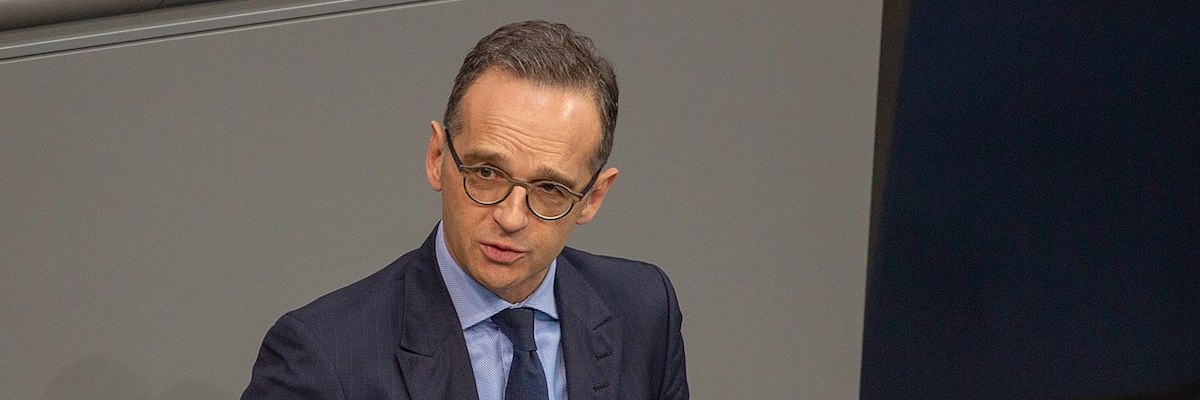
Britain, France, Germany to Hold Iran Talks
◢ Britain, France and Germany will hold talks Friday on how to preserve the beleaguered Iran nuclear deal and protect shipping in the Persian Gulf. Ahead of the meeting, British foreign minister Dominic Raab said they would aim to "build on the momentum of the positive G7 talks on Iran.”
By Damon Wake
Britain, France and Germany will hold talks Friday on how to preserve the beleaguered Iran nuclear deal and protect shipping in the Persian Gulf.
Tensions have spiked recently in the strategic shipping lane where Iran has seized Western tankers as Tehran and Washington have locked horns over the 2015 deal.
US President Donald Trump last year unilaterally pulled out of the accord that handed Iran relief from sanctions in return for curbs on its atomic programme.
The move alarmed European powers, which see the deal as the best way to stop Iran acquiring nuclear weapons, and infuriated the Islamic republic.
The foreign ministers of Britain, France and Germany -- the three European parties to the deal -- will be joined by EU diplomatic chief Federica Mogherini for talks on the sidelines of an EU meeting in Helsinki
All have repeatedly said they are committed to saving the deal, but efforts to shield Iran's economy from the reimposition of US sanctions have so far borne little fruit.
The G7 summit last weekend brought a glimmer of hope as Trump indicated willingness to talk to Iran and Mogherini said the EU would support such a move -- provided the current deal was preserved.
'Build on Momentum'
Ahead of the meeting, British foreign minister Dominic Raab said they would aim to "build on the momentum of the positive G7 talks on Iran.”
As well as mooting the summit with his Iranian counterpart Hassan Rouhani, Trump also appeared open to a French suggestion that Iran be given a line of credit to help stabilise its economy.
"The nuclear deal is the only deal on the table that prevents Iran from getting a nuclear weapon and we will continue working together to encourage Iran to uphold the agreement in full," Raab said.
"We also need the broadest international support possible to tackle the threats to international shipping in the Strait of Hormuz."
Britain, along with Australia and Bahrain, has joined Washington's Operation Sentinel mission to protect commercial shipping on the crucial oil trade routes through the Gulf, in particular at the Strait of Hormuz.
Other European countries have been cool on the idea, fearing greater naval presence in the region could risk escalating an already febrile situation still further.
The idea has been floated of a European observation mission in the Strait of Hormuz, a strategic choke point at the mouth of the Gulf, but a number of EU countries have voiced reservations.
Mogherini on Thursday gave a cautious welcome to the idea of US-Iran talks but stressed that "first and foremost what is existing needs to be preserved" -- including the 2015 deal.
In response to the US pulling out of the deal and reimposing sanctions, Tehran has breached certain limits on its nuclear production imposed by the accord, but the EU insists Iran has so far not taken any irreversible steps.
Photo: Wikicommons