
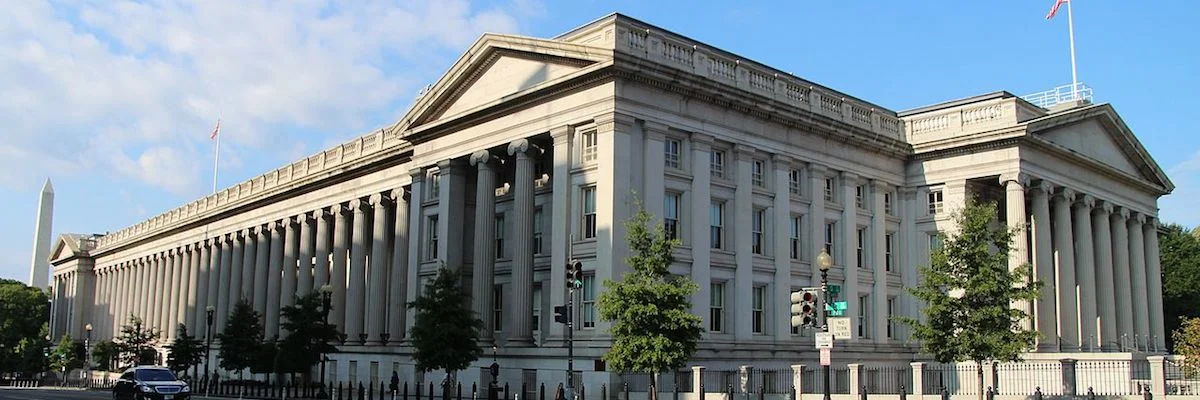
US Hits Iran 'Nuclear Enrichment Network' with Sanctions
◢ The US Treasury named a group of companies in Iran, Belgium and China to its sanctions blacklist Thursday for acting as a supply network for Tehran's nuclear enrichment program. The companies served as a procurement network for Iran's Centrifuge Technology Company (TESA), which produces enrichment centrifuges for the Atomic Energy Organization of Iran (AEOI), the Treasury said.
The US Treasury named a group of companies in Iran, Belgium and China to its sanctions blacklist Thursday for acting as a supply network for Tehran's nuclear enrichment program.
The companies served as a procurement network for Iran's Centrifuge Technology Company (TESA), which produces enrichment centrifuges for the Atomic Energy Organization of Iran (AEOI), the Treasury said.
The network was led by Iranian firm Bakhtar Raad Sepahan and its overseas affiliates. It also included a Chinese firm, Henan Jiayuan Aluminum Industry Company, which was also sanctioned.
Other sanctioned entities are front companies based in China and Belgium, the Treasury said.
"Treasury is taking action to shut down an Iranian nuclear procurement network that leverages Chinese- and Belgium-based front companies to acquire critical nuclear materials and benefit the regime's malign ambitions," said Treasury Secretary Steven Mnuchin in a statement.
“Iran cannot claim benign intent on the world stage while it purchases and stockpiles products for centrifuges."
The sanctions were announced ten days after AEOI said its resumed enrichment operations had surpassed limits placed by the 2015 nuclear deal, a deliberate move to press other parties into keeping their side of the bargain.
US President Donald Trump withdrew from the deal between Iran and six world powers in May 2018 and has since reimposed sanctions on many sectors including the crucial oil and financial industries.
Iran demanded the other parties—France, Germany, Britain, China and Russia—take steps to guarantee the economic benefits Iran was promised for the drastic limitations imposed on its nuclear program.
Trump warned last week that sanctions against Iran would be "increased substantially" after Tehran surpassed the enrichment cap in the 2015 deal.
Photo: Wikicommons

Trump Says U.S. Warship Downed Iran Drone Near Strait of Hormuz
◢ President Donald Trump said the U.S. “immediately destroyed” an Iranian drone that approached the USS Boxer near the Strait of Hormuz, the latest sign of escalating military tensions around the critical oil chokepoint. The drone was a threat to the ship and its crew, Trump said at the White House on Thursday.
By Jennifer Jacobs and Josh Wingrove
President Donald Trump said the U.S. “immediately destroyed” an Iranian drone that approached the USS Boxer near the Strait of Hormuz, the latest sign of escalating military tensions around the critical oil chokepoint.
The drone was a threat to the ship and its crew, Trump said at the White House on Thursday. The president said he’s calling “on other nations to protect their ships as they go through the Strait.” The Boxer is an amphibious assault ship.
“The Boxer took defensive action against an Iranian drone which had closed into a very, very near distance—approximately 1,000 yards, ignoring multiple calls to stand down and was threatening the safety of the ship and the ship’s crew,” Trump said.
Oil futures in New York clawed back a bit of the day’s 2.6% loss, climbing 34 cents a barrel after the announcement.
Pentagon spokesman Jonathan Hoffman said in a statement that at 10 a.m. local time the Boxer “was in international waters conducting a planned inbound transit of the Strait of Hormuz” when a drone “closed within a threatening range” and “the ship took defensive action.”
The confrontation comes as tensions between Washington and Tehran remain high over a spate of attacks on cargo ships, the downing of an American drone and the British seizure of a tanker carrying Iranian oil.
Earlier in the day, the U.S. condemned Iranian naval activity in the Persian Gulf and demanded that the Islamic Republic release a small tanker and its crew that its forces seized this week. A State Department official who asked not to be identified discussing the issue cited the Islamic Revolutionary Guard Corps’ “continued harassment” of vessels in and around the Strait.
Iranian Foreign Minister Mohammad Javad Zarif said in an interview with Bloomberg News on Wednesday that said his country is capable of shutting the Strait of Hormuz, but doesn’t want to.
“We certainly have the ability to do it, but we certainly don’t want to do it because the Strait of Hormuz and the Persian Gulf are our lifeline,” Zarif said in New York. “It has to be secured. We play a big role in securing it, but it has to be secure for everybody.”
About one-third of the world’s seaborne crude and fuels passed through the Strait of Hormuz last year, highlighting its key role in global oil markets. In May and June, six tankers were attacked in the region. While Iran has been blamed for attacks on merchant shipping, it has denied responsibility.
“It’s dangerous because it is very crowded,” Zarif said, adding that the last time the area was this crowded, the U.S. shot down an Iranian commercial airliner with 290 passengers in 1988. “We feel the danger and that is why we want to avoid a dangerous escalation, but we cannot give up defending our country.”
Photo: Wikicommons
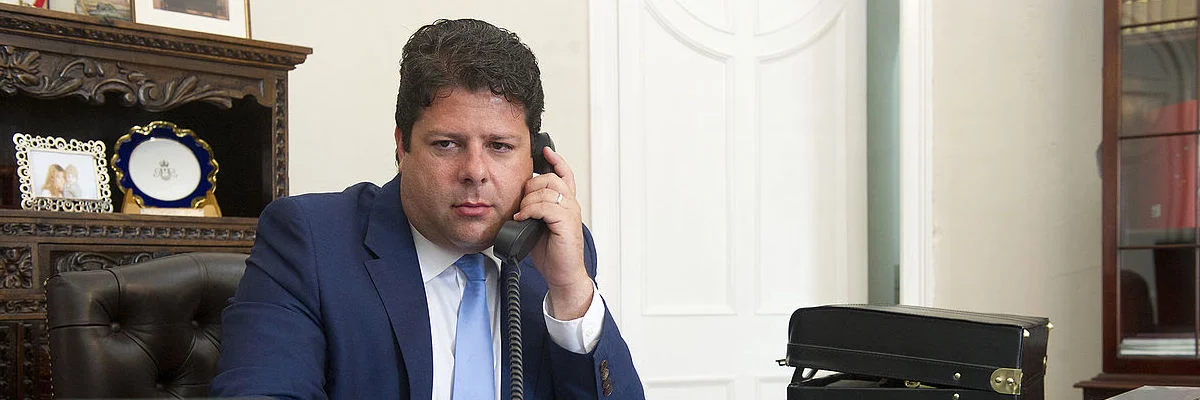
Gibraltar, Iran Officials Hold Talks on Seized Oil Tanker
◢ Gibraltar's Chief Minister Fabian Picardo said Thursday he had a "constructive and positive" meeting with Iranian officials in London aimed at defusing tensions around an oil tanker carrying Iranian oil being held in the British territory's waters. Picardo's government said the meeting took to discuss the continued detention of the Grace One tanker "and to seek to de-escalate all aspects of the issues arising.”
Gibraltar's Chief Minister Fabian Picardo said Thursday he had a "constructive and positive" meeting with Iranian officials in London aimed at defusing tensions around an oil tanker carrying Iranian oil being held in the British territory's waters.
In a statement, Picardo's government said the meeting took place on Wednesday and to discuss the continued detention of the Grace One tanker "and to seek to de-escalate all aspects of the issues arising.”
It did not identify which Iranian officials participated.
The Grace One supertanker, carrying 2.1 million barrels of oil, was intercepted by British Royal Marines and Gibraltar's police as it transited through waters claimed by Gibraltar, which is located on Spain's southern tip.
US officials believed the tanker was destined for Syria to deliver oil, in violation of separate sets of EU and US sanctions.
Iran has reacted with fury at what it termed "piracy" and warned it would not let the interception go unanswered.
Last week, a British warship in the Gulf warned off armed Iranian boats that tried to stop a UK supertanker. London has since announced the deployment of two more warships to the Gulf region for the coming months.
Increased Concern in the Gulf
British Foreign Secretary Jeremy Hunt last weekend said he held talks with his Iranian counterpart Mohammad Javad Zarif about the Grace One that he also termed "constructive". He tweeted that he promised he would "facilitate" the release of the tanker "if we received guarantees that it would not be going to Syria".
An order by Gibraltar's supreme court authorising the detention of the Grace One tanker lapses after Friday, though it can be renewed for up to three months.
Iran on Thursday announced it had seized a foreign tanker in international waters in the Strait of Hormuz at the entrance to the Gulf, claiming it was involved in "fuel smuggling". Video it released showed the vessel to be the MT Riah, a Panama-flagged ship whose ownership has not been established.
The US military, which maintains a naval base in the Gulf and regularly patrols the area, said it will work "aggressively" with allies to ensure safe civilian shipping in the region.
Bahrain said Thursday it will host a conference on "maritime and air navigation security" and "find ways to deter the Iranian threat and ensure freedom of navigation in this strategic region", the Gulf kingdom's BNA state news agency said.
The Strait of Hormuz is the conduit for nearly a third of the world's crude oil.
Bahrain, which hosts the US Fifth Fleet, said it would co-host the conference with the US and Poland. It did not specify a date for the meeting.
Photo: Wikicommons
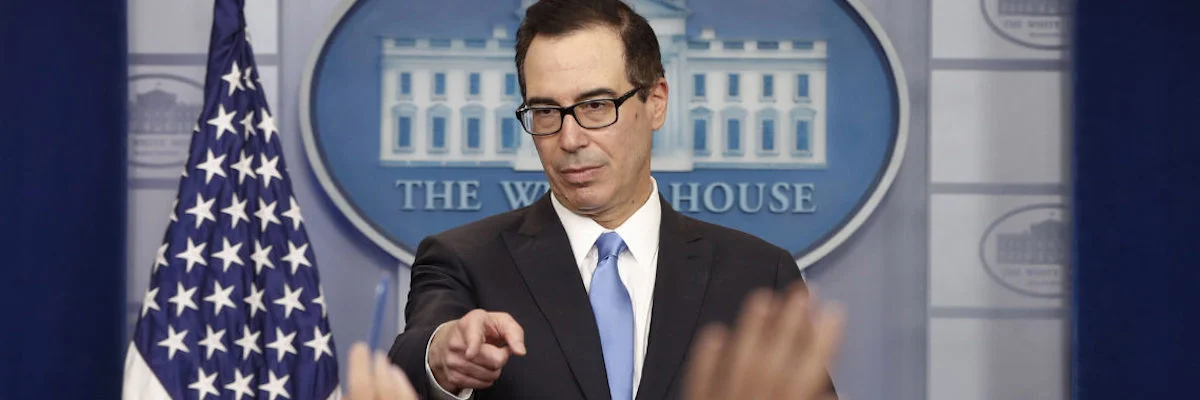
Mnuchin Warns Europe Not to Breach U.S. Sanctions on Iran
◢ Treasury Secretary Steven Mnuchin made clear that participating in the U.S. financial system means abiding by its sanctions amid a European effort to sidestep American economic pressure on Iran to continue trade. “We’ve been very clear that we expect U.S. sanctions to be adhered to,” Mnuchin said in response to questions from reporters on Thursday.
By Saleha Mohsin
Treasury Secretary Steven Mnuchin made clear that participating in the U.S. financial system means abiding by its sanctions amid a European effort to sidestep American economic pressure on Iran to continue trade.
Germany, France and the U.K. created a trade vehicle known as INSTEX in January to allow companies to do some trade with Iran without the use of U.S. dollars or American banks—thus allowing them to get around wide-ranging American sanctions that were imposed after the Trump administration abandoned the 2015 Iran nuclear deal last year.
“We’ve been very clear that we expect U.S. sanctions to be adhered to,” Mnuchin said in response to questions from reporters on Thursday in France where he met with Group of Seven counterparts. “Whether it’s Iran or anyone else, if people want to participate in the dollar system people will be obligated to follow the U.S. sanctions.”
He said that INSTEX should be “careful on diligence.”
Treasury’s top sanctions official, Sigal Mandelker, sent a letter in May warning European allies not to violate sanctions through Instex. Mnuchin confirmed that a letter was sent.
European countries broadly opposed Trump’s decision to withdraw from the nuclear accord but have struggled to deliver the economic benefits Iran expected from the deal, known as the Joint Comprehensive Plan of Action, since the U.S. quit. In the meantime, U.S. sanctions have delivered a blow to Iran’s economy, fueling inflation, reducing oil revenue and pressuring President Hassan Rouhani’s government. INSTEX was supposed to help address that, but so far it has largely failed to get up and running.
Frustrated at the U.S. withdrawal and stalled European efforts, Iran has already breached some of the limits on its nuclear program imposed under the deal, and has warned European governments that it will give up on the accord entirely unless they can find some way to work around the U.S. sanctions.
Photo: White House
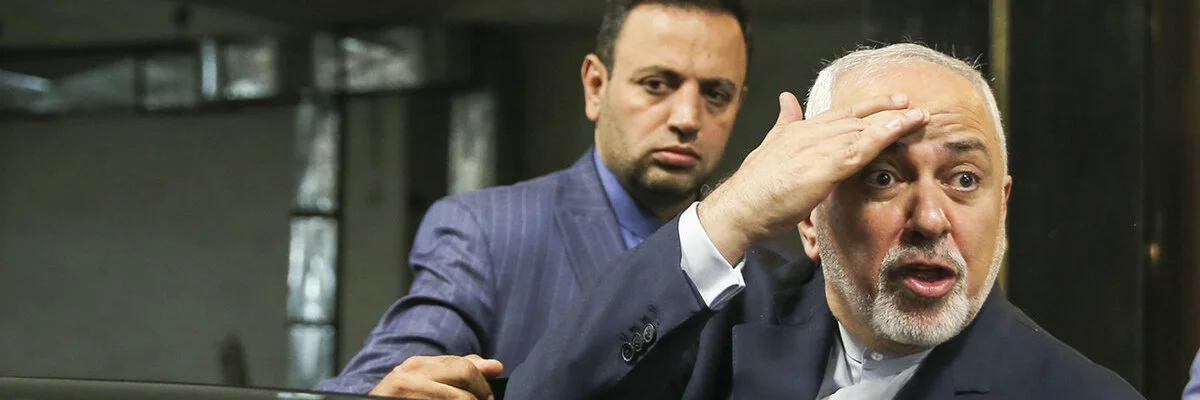
Zarif Says U.S. ‘Shot Itself in the Foot’ by Quitting Iran Deal
◢ The U.S. has “shot itself in the foot” by pulling out of the nuclear accord with Iran, Foreign Minister Javad Zarif said, offering a grim outlook for the chance of restarting talks with President Donald Trump. Zarif signaled that Iran will continue to pursue what he called the Islamic Republic’s rights under the accord to respond to the U.S. pullout and failed European efforts to deliver promised benefits to the Iranian economy.
By Margaret Talev and David Wainer
The U.S. “shot itself in the foot” by pulling out of the nuclear accord with Iran, Foreign Minister Javad Zarif said, offering a grim outlook for the chance of opening talks with President Donald Trump.
Zarif, in an interview Wednesday with Bloomberg Television, also accused European countries that are part of the agreement of failing to carry out their own commitments under the 2015 deal and after the U.S. withdrawal. He said promises to allow Iran to sell oil and repatriate money have failed to materialize.
Addressing U.S. allegations that Iran has never given up its goal of building nuclear weapons, Zarif said Iran has the technical ability to pursue them “very rapidly” but “we’re not going to” because Supreme Leader Ayatollah Ali Khamenei made a “religious commitment” that they are forbidden, Zarif said in the interview with Bloomberg Editor in Chief John Micklethwait.
“If we wanted to build nuclear weapons, we could have built it a long time ago,” said Zarif, who was in New York to address a United Nations meeting.
Nevertheless, Zarif signaled that Iran will continue to pursue what he called the Islamic Republic’s rights under the accord to respond to the U.S. withdrawal and failed European efforts to deliver promised benefits to the Iranian economy.
Tensions have soared in the Persian Gulf region since the Trump administration stopped issuing sanctions waivers for buyers of Iranian oil and reimposed crippling economic measures against Tehran. In response, Iran has started gradually breaching parts of the nuclear accord, confirming in July that it had surpassed agreed caps on its stockpiles of enriched uranium and exceeded the allowable level of enrichment.
“Yeah, we will continue with the steps, and these steps are legal, in line with the agreement,” Zarif said, when asked about the likelihood of continuing uranium enrichment.
The threat of conflict appeared to climb even higher following a spate of attacks on ships in the Persian Gulf region in May and June, the downing of an American drone last month and the recent British seizure of a tanker carrying Iranian crude, which U.K. officials said was violating sanctions by heading toward Syria. Last month Trump said he called off retaliatory strikes on Iran over the drone, which U.S. officials claim was over international waters and Iran says was over their territory.
Zarif, who has been Iran’s foreign minister since 2013, was the lead negotiator in the multi-party nuclear accord reached in 2015 during the Obama administration that Trump has repeatedly called the “worst deal ever.”
Pressed on how to engage with the U.S. in a way that eases tensions, Zarif suggested that the burden falls on Trump. He also expressed skepticism of renegotiating the accord, known as the Joint Comprehensive Plan of Action, to include talks on Iran’s missile program.
“You don’t buy a horse twice,” he said.
Secretary of State Michael Pompeo says the U.S. “maximum pressure” campaign is working and that the Trump administration is open to talks with Tehran without preconditions. But Pompeo has also laid out a series of 12 conditions for the easing of American sanctions. Iran wants sanctions eased before any talks.
Addressing U.S. accusations that Tehran fuels instability across the Mideast, Zarif said the primary culprits for regional turmoil are its rivals Saudi Arabia and the U.A.E., who buy billions of dollars in weapons from the U.S. Dismissing an issue U.S. officials have cited in recent days, Zarif said that under no circumstances could Iran give up its missiles given the arms buildup by its enemies in the region.
Pressed on whether there’s a diplomatic solution to U.S.-Iran tensions, Zarif suggested that President Hassan Rouhani’s government is drawing lessons from Trump’s threats against Mexico over trade and immigration, and that it was clear to Tehran that Washington would keep asking for more even if the two parties were to eventually strike a new deal.
“After renegotiating NAFTA he raised a new demand and he tried to push Mexicans into giving in a bit more,” Zarif said. “So he always believes, it seems, that ‘What’s mine is mine and what’s yours is negotiable.”’
Zarif rejected the idea that Iran is waiting for next year’s U.S. election to put a Democratic president in office who might be open to reentering the nuclear deal.
“No country in their right mind would make their foreign policy based on results they don’t have any control over,” he said. He went on to give Trump a “better than 50% chance” of winning reelection.
Photo: IRNA
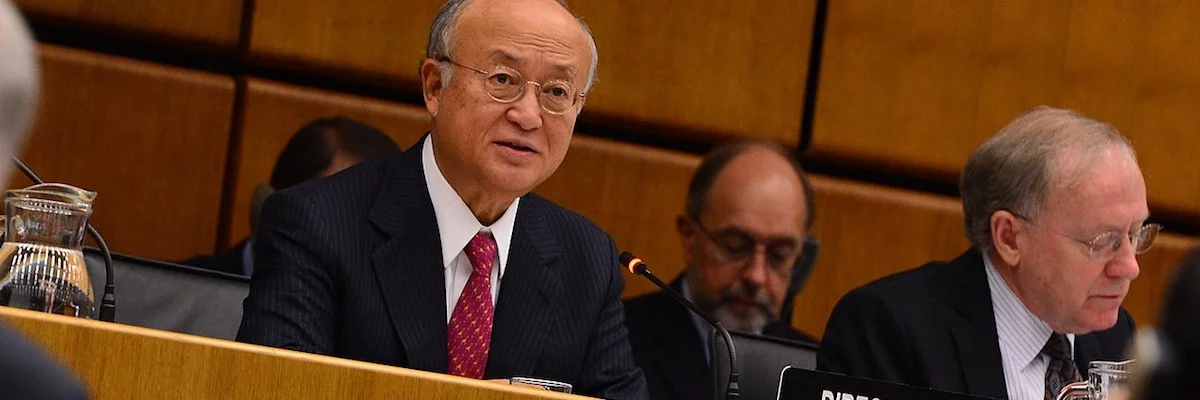
IAEA Director General Yukiya Amano Prepares to Step Down
◢ The international body in charge of inspecting Iran’s nuclear program is searching for new leadership after health problems forced its director to plan an early end to his term. International Atomic Energy Agency Director General Yukiya Amano seeks to leave the Vienna-based agency by March, according to two diplomats briefed on the matter.
By Jonathan Tirone
The international body in charge of inspecting Iran’s nuclear program is searching for new leadership after health problems forced its director to plan an early end to his term.
International Atomic Energy Agency Director General Yukiya Amano seeks to leave the Vienna-based agency by March, according to two diplomats briefed on the matter who asked not to be named in return for discussing the private conversations. An official IAEA announcement is expected as early as next week.
“The director general is in contact with members of the board of governors regarding his future plans,” the agency’s press office said in a statement. “He will make a formal communication to the board at an appropriate time.”
Amano, 72, missed an extraordinary board meeting last week because of health issues, the second time in less than a year. His shortened term, which was originally set to expire in December 2021, will thrust the agency into an unexpected leadership battle as its Iran inspectors can expect scrutiny to increase.
“It’s unprecedented for an IAEA director general to resign due to inability to perform duties due to health reasons,” said Tariq Rauf, the agency’s former head of policy coordination. “The IAEA statute is silent on the matter.”
Chief Policy Coordinator Cornel Feruta could be asked to assume some leadership duties while the IAEA board organizes elections, according to the diplomats. Amano’s office is informing ambassadors that he wants to ensure “an orderly transition process” in the midst of rising tensions with Iran, they said.
IAEA investigators continue reviewing material for any new information about Iran’s past weapons activities. Agency labs are similarly assessing environmental samples taken from a warehouse alleged to have stored radioactive material that may not have been declared. It will be up to Amano or his successor to decide whether inspectors’ conclusions warrant an IAEA board report.
Amano was instrumental in raising pressure on Iran by issuing a series of reports that detailed the military dimensions of its earlier nuclear work. His approach drew criticism after leaked diplomatic cables suggest he was “solidly in the U.S. court” when it came to dealing with Tehran’s government.
Amano subsequently issued the December 2015 report ending the IAEA’s active investigation into Iran’s past military-related activities. The 2015 nuclear deal between Iran and world powers gives IAEA inspectors the most robust verification system in existence anywhere in the world, he has said.
“This is hugely significant,” Ian Stewart, a nuclear policy adviser at King’s College in London, said in a Tweet. “Amano seemed intent on staying indefinitely and brought a very particular approach to the agency.”
The IAEA frequently drew criticism for the way it disclosed information under his leadership as public access to meetings and data became increasingly restricted. During the Fukushima nuclear meltdowns, diplomats chided it for being slow to communicate the degree of danger.
It will be up to the IAEA’s 35-member board to determine the election schedule for the next director. They’re scheduled to convene Sept. 9 in the Austrian capital.
Photo: Wikicommons
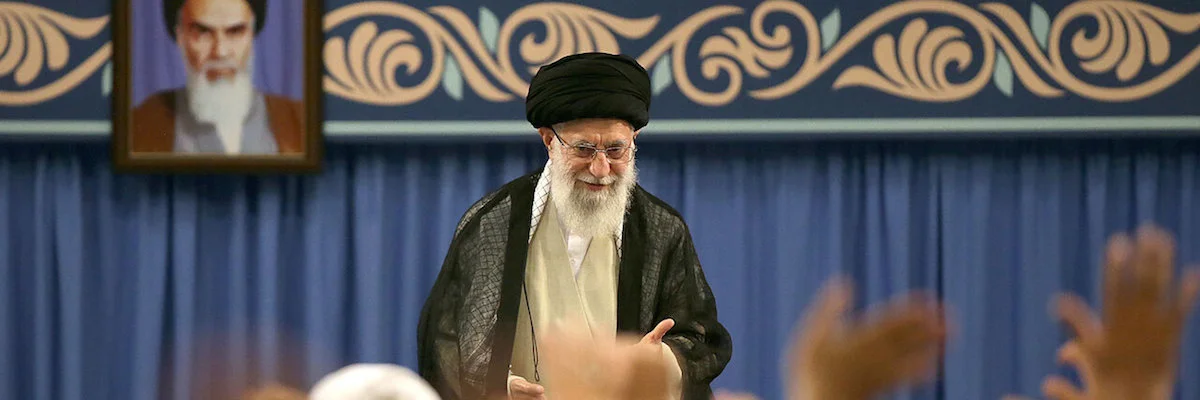
Khamenei: Iran to Keep Rolling Back Nuclear Commitments
◢ Iran's supreme leader Ayatollah Ali Khamenei said Tuesday that the Islamic republic will keep rolling back its commitments under the landmark 2015 nuclear deal. "You did not carry out a single one (of your commitments), why do you want us to stick to our commitments?" Khamenei said, criticizing European countries which are party to the deal.
Iran's supreme leader Ayatollah Ali Khamenei said Tuesday that the Islamic republic will keep rolling back its commitments under the landmark 2015 nuclear deal.
"You did not carry out a single one (of your commitments), why do you want us to stick to our commitments?" Khamenei said, criticizing European countries which are party to the deal.
"We have just started to decrease our commitments (in the deal) and this process will certainly continue," he said in a speech in Tehran partly aired on state television.
Iran-US tensions have soared since last year when President Donald Trump withdrew the United States from the hard-won 2015 nuclear deal and reimposed sanctions on the Islamic republic.
Angered that its beleaguered economy is not receiving sanctions relief it believes was promised under the deal, Iran has intensified its sensitive uranium enrichment work.
Iran announced last week that it had enriched uranium past the 3.67 percent limit set by the nuclear deal, and it has also surpassed the 300-kilogram cap on enriched uranium reserves.
European parties to the deal have called on Iran to return to its commitments under the deal.
On Sunday, President Hassan Rouhani said Iran had changed its strategy from one of "patience to that of retaliation".
"If they decrease then we too shall decrease our commitments (in the deal)... If they fully implement their commitments than we too shall fully implement ours," he said, quoted by the government website dolat.ir.
Tensions have since soared, with the US calling off air strikes against Iran at the last minute after Tehran downed an American drone, and Washington blaming Tehran for a series of attacks on tanker ships.
On July 4, British forces helped Gibraltar authorities detain an Iranian tanker which US officials said had been trying to deliver oil to Syria in violation of separate sets of EU and US sanctions—claims denied by Iran.
In his speech on Tuesday, Khamenei vowed to retaliate against the British for the ship's seizure.
"The vicious British... have committed piracy and stolen our ship... God willing the Islamic republic will not leave these vicious acts unanswered," he said.
Photo: IRNA
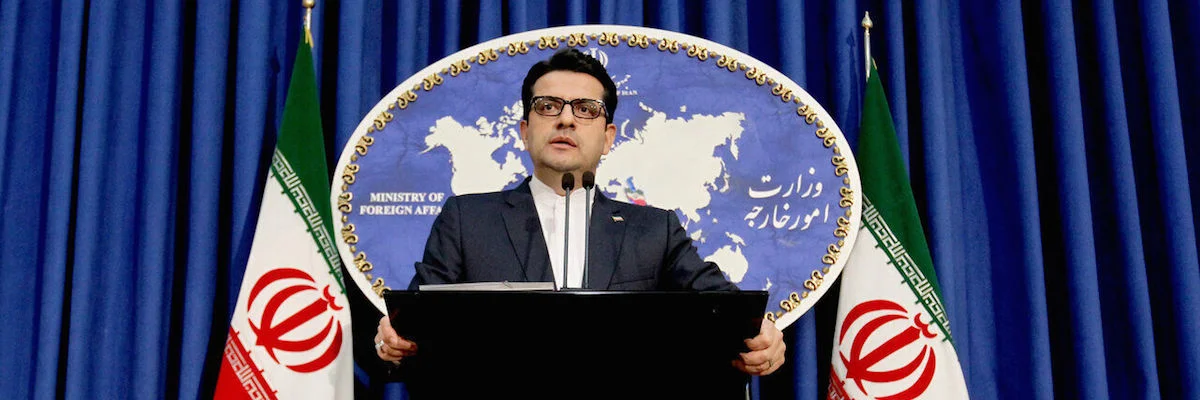
Iran Says Missing Tanker Had Problems and Was Towed for Repairs
◢ A small oil tanker that had gone missing in the Persian Gulf had technical difficulties and was towed into Iranian waters for repairs, an Iranian foreign ministry official said, according to the ISNA news agency. Further details on the ship, the Panamanian-flagged RIAH, will be announced later, Foreign Ministry spokesman Abbas Mousavi said, according to the semi-offficial ISNA.
By Zainab Fattah, Verity Ratcliffe and Zoya Khan
A small oil tanker that had gone missing in the Persian Gulf had technical difficulties and was towed into Iranian waters for repairs, an Iranian foreign ministry official said, according to the ISNA news agency.
Further details on the ship, the Panamanian-flagged RIAH, will be announced later, Foreign Ministry spokesman Abbas Mousavi said, according to the semi-offficial ISNA. Iran responded after a request for assistance from the tanker, the report said.
The Iranian comments did little to clarify exactly what happened to the RIAH. The vessel was passing through the Strait of Hormuz, the shipping chokepoint at the mouth of the Gulf, before it went silent more than two days ago in unexplained circumstances, according to the Associated Press. The news agency said the U.S. “has suspicions” that Iran took control of the tanker, citing an unidentified defense official.
The disappearance was first reported by CNN, which said U.S. intelligence increasingly believed the tanker had been forced into Iranian waters by Iran’s Islamic Revolutionary Guard Corps but that some Gulf sources suggested the ship simply broke down and was towed by Iran.
Earlier, a United Arab Emirates official said the ship isn’t owned or operated by the U.A.E. and hadn’t sent out a distress call.
While details are unclear, if the RIAH was seized, it would seem an unusual target for Iran. The vessel is 30 years old and tiny. Its capacity is 2,000 dead weight tons, according to the MarineTraffic website. That’s only a fraction of the almost 160,000-ton capacity of the British Heritage, the U.K. oil tanker harassed by Iranian ships last week while exiting the Persian Gulf.
While Iran has been blamed for attacks on merchant shipping in recent months, it has denied responsibility. The main threats it has made in the past few weeks have been against the U.K. after British Royal Marines helped authorities in Gibraltar seize the supertanker as it carried Iranian crude in the Mediterranean Sea seemingly bound for Syria.
In May and June, six tankers were attacked just outside the Gulf. A British Navy frigate intervened this month to stop Iranian boats from blocking the BP Plc-operated British Heritage as it was exiting the waters.
The U.S. Navy’s 5th Fleet, which is based in Bahrain, declined to comment when contacted by Bloomberg.
Photo: IRNA

Suspension of Visas to Iranians not 'Political': Portugal
◢ Portugal denied Wednesday it was refusing visas to Iranians for "political" reasons, and insisted the measure was "temporary.” "It is not related to security conditions in Iran or any other aspect of an institutional or political nature," the foreign ministry added in a statement.
This story has been updated to reflect new reporting from AFP.
Portugal denied Wednesday it was refusing visas to Iranians for "political" reasons, and insisted the measure was "temporary".
The move came against a background of mounting tension between Iran and the West after Tehran breached a limit for uranium enrichment set in a 2015 nuclear deal.
"This decision is not political," a foreign ministry spokesman told AFP Wednesday.
"It is not related to security conditions in Iran or any other aspect of an institutional or political nature," the ministry added in a statement.
On Tuesday, Foreign Minister Augusto Santos Silva announced a decision to suspend the issuing of visas to Iranians for "security reasons", telling parliament: "Portugal does not joke around with entries into its national territory."
The minister said he would not elaborate on the reasoning in public, though he later told local media the suspension had "nothing to do with the quality of bilateral relations between Portugal and Tehran."
Iran and the United States have been engaged in a war of words since Tehran in recent weeks enriched uranium past the limit set by a landmark 2015 nuclear in response to Washington pulling out last year.
There has also been tension on the high seas, after the British Royal Marines helped Gibraltar authorities detain an Iranian tanker that US officials believe was trying to deliver oil to Syria in violation of sanctions.
In response, Tehran has issued a series of increasingly ominous warnings to both the US and Britain about its right to take unspecified actions in reprisal.
And France has expressed concern about the fate of a French-Iranian academic arrested in Iran, the latest in a long list of dual nationals held in the country's prisons.
Photo: Wikicommons
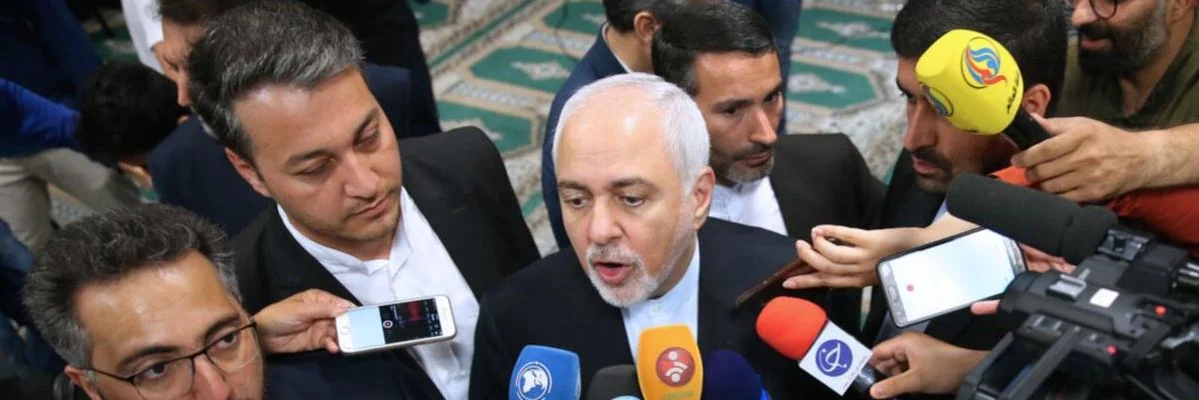
UN Concerned at US Limits on Iran FM's Access
◢ The United Nations voiced concern Monday after the United States imposed unusually harsh restrictions on the movements of Iran's foreign minister. Weeks after the United States threatened sanctions against Zarif, Secretary of State Mike Pompeo said that Washington issued him a visa but forbade him from moving beyond six blocks of Iran's UN mission in Midtown Manhattan.
The United Nations voiced concern Monday after the United States imposed unusually harsh restrictions on the movements of Iran's foreign minister, who was visiting the world body and also speaking on the soaring tensions between the countries.
Weeks after the United States threatened sanctions against Zarif, Secretary of State Mike Pompeo said that Washington issued him a visa but forbade him from moving beyond six blocks of Iran's UN mission in Midtown Manhattan.
"US diplomats don't roam around Tehran, so we don't see any reason for Iranian diplomats to roam freely around New York City, either," Pompeo told The Washington Post.
"Foreign Minister Zarif, he uses the freedoms of the United States to come here and spread malign propaganda," he said.
UN spokesman Farhan Haq told reporters that the UN Secretariat was in contact with the US and Iranian missions about Zarif's travel restrictions and "has conveyed its concerns to the host country."
The United States, as host of the United Nations, has an agreement to issue visas promptly to foreign diplomats on UN business and only rarely declines.
Washington generally bars diplomats of hostile nations from traveling outside a 40-kilometer (25-mile) radius of New York's Columbus Circle.
Zarif is scheduled to speak Wednesday at the UN Economic and Social Council, which is holding a high-level meeting on sustainable development.
Even from the confines of the mission, Zarif—a US-educated academic who speaks fluent English sprinkled with self-effacing humor—sought to take his message to the media, as is his wont on UN trips.
The Iranian mission tweeted photos of Zarif speaking to NBC News as well as the BBC.
Despite the restrictions, the decision to admit Zarif is the latest sign that President Donald Trump's administration appears to be retreating from its vow to place sanctions on Zarif as part of its "maximum pressure" campaign on Iran.
Treasury Secretary Steven Mnuchin said on June 24 that sanctions against Zarif would come later that week.
Critics questioned the legal rationale for targeting Zarif and noted that sanctions would all but end the possibility of dialogue—which Trump has said is his goal.
Zarif said in an interview with The New York Times he would not be affected by sanctions as he owns no assets outside of Iran.
Trump last year left a denuclearization accord negotiated by Zarif with six nations including the United States under former president Barack Obama and instead imposed crippling sanctions on Tehran's economy, vowing to curb Tehran's regional role.
With tensions escalating, Trump ordered military strikes on Iran last month after it shot down a US spy drone, although he canceled the operation at the 11th hour, saying it would be disproportionate.
No US diplomats are based in Iran as the two countries broke off relations in the aftermath of the 1979 Islamic revolution that toppled the Western-oriented shah.
Photo: IRNA
EU Holds Iran Nuclear Crisis talks as Tehran Issues Fresh Threats
◢ European foreign ministers held crisis talks Monday on saving the beleaguered Iran nuclear deal as Britain warned the "small window" for success was closing and Tehran issued fresh threats of restarting its atomic program. British Foreign Secretary Jeremy Hunt—who held phone talks with his US and Iranian counterparts at the weekend—insisted "the deal isn't dead yet.”
By Damon Wake
European foreign ministers held crisis talks Monday on saving the beleaguered Iran nuclear deal as Britain warned the "small window" for success was closing and Tehran issued fresh threats of restarting its atomic program.
Tensions in the Gulf have soared since last year, when the United States pulled out of the 2015 deal and reimposed sanctions on Iran, hammering its economy and prompting Tehran to break limits on uranium enrichment and stockpiling.
The European Union is desperately trying to prevent the deal unravelling completely, seeing it as the best way to stop Tehran acquiring atomic weapons, and the issue was top of the agenda as ministers from the bloc met in Brussels.
But Iran piled fresh pressure on Europe, demanding concrete measures to give it relief from US sanctions and threatening to return its nuclear programme to where it was before the curbs imposed by the 2015 deal.
British Foreign Secretary Jeremy Hunt—who held phone talks with his US and Iranian counterparts at the weekend—insisted "the deal isn't dead yet.”
"Iran is still a good year away from developing a nuclear weapon. We think there is still some closing but small window to keep the deal alive," Hunt told reporters.
Britain, France and Germany—the three European parties to the deal—on Sunday issued a joint statement calling for dialogue to resolve the crisis.
Iran has repeatedly warned it could leave the deal unless the remaining parties bypass US sanctions to deliver the promised economic benefits and on Monday threatened to take its nuclear programme back to its pre-deal status.
"If the Europeans and the Americans don't want to carry out their duties... we will decrease our commitments and... reverse the conditions to four years ago," Iranian atomic energy agency spokesman Behrouz Kamalvandi said, quoted by IRNA state news agency.
The US has vowed to pursue its "maximum pressure" campaign against Iran, but Spanish Foreign Minister Josep Borrell—lined up to be the next EU diplomatic chief—warned its strategy is only "strengthening the most radical" elements in the Islamic republic.
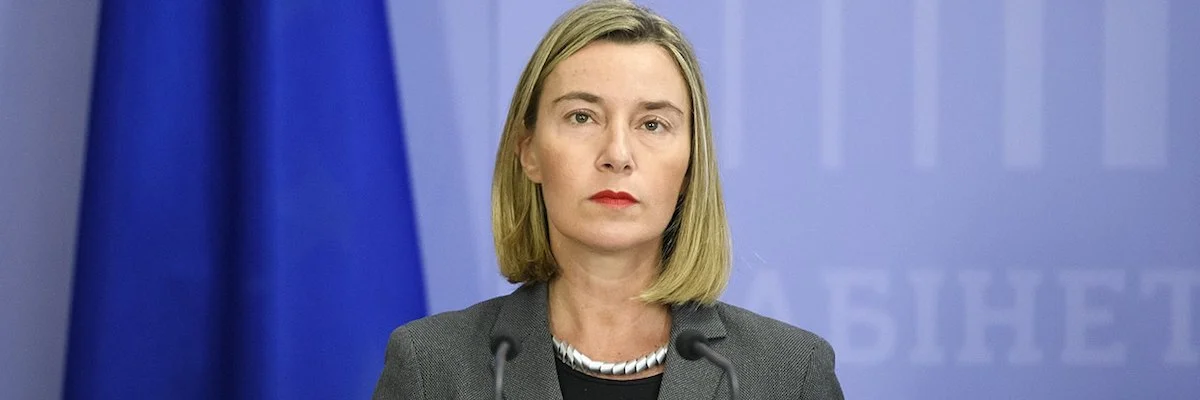
Current EU diplomatic chief Federica Mogherini said the steps taken by Iran so far—including enriching uranium above the 3.67 percent ceiling set by the deal—were reversible.
For now, none of the remaining parties have triggered the formal dispute mechanism, meaning that they did not regard Iran's breaches up to now as "significant non-compliance" under the terms of the deal, Mogherini said.
No 'Less for Less'
Europe hopes to use a special trading mechanism called INSTEX to enable businesses to deal with Iran without using the US dollar or financial system, thereby helping the Iranian economy while avoiding Washington's sanctions.
But the mechanism is complicated, no transactions have been finalised yet and it can for now only be used for humanitarian goods -- food and pharmaceuticals, for example -- though Mogherini said the shareholding countries were discussing extending it to Iran's crucial oil sector.
The sweeping nature of the US measures has scared many major European businesses out of Iran despite Brussels' insistence that American sanctions do not apply in Europe.
"Iran has taken bad decisions in response to the bad decision of the United States to pull out of the deal and reimpose sanctions, whose extraterritoriality strikes at the economic advantages the country got from the deal," French Foreign Minister Jacques-Yves Le Drian said as he arrived in Brussels.
The Iranian foreign ministry warned in a statement that its compliance with the deal was "rooted in the principle of reciprocity" and demanded Europe come up with "practical, effective and responsible decisions".
EU ministers insisted Iran must return to respecting its obligations under the deal in full, rejecting a suggestion by Iranian President Hassan Rouhani that both sides could reduce their commitments.
"This is a very, very serious situation. We must make it clear once again, in clear language, that there is only a chance if Iran commits itself unreservedly to what is contained in the treaty," Germany's junior foreign minister Michael Roth told reporters.
But the Iranian foreign ministry statement branded the European expectations "unrealistic", demanding a quid pro quo for undoing its recent breaches of the deal -- including exceeding a 300-kilo (660-pound) limit on enriched uranium stockpiles.
The joint commission overseeing the accord, made up of representatives from the countries still in the deal—the Europeans plus China, Russia and Iran—will meet "very soon" to discuss Tehran's breaches, Hunt said.
Photo: Wikicommons
Macron Demands Answers from Iran Over Academic's Detention
◢ French President Emmanuel Macron on Monday called on Tehran to explain why a Franco-Iranian academic based at a Paris university has been arrested in Iran, expressing concern for the woman's welfare. The detention of Fariba Adelkhah, a well-known expert on Iran and Shiite Islam at the prestigious Sciences Po university, risks increasing tension between Paris and Tehran at a critical moment.
By Stuart Williams and Anne Chaon
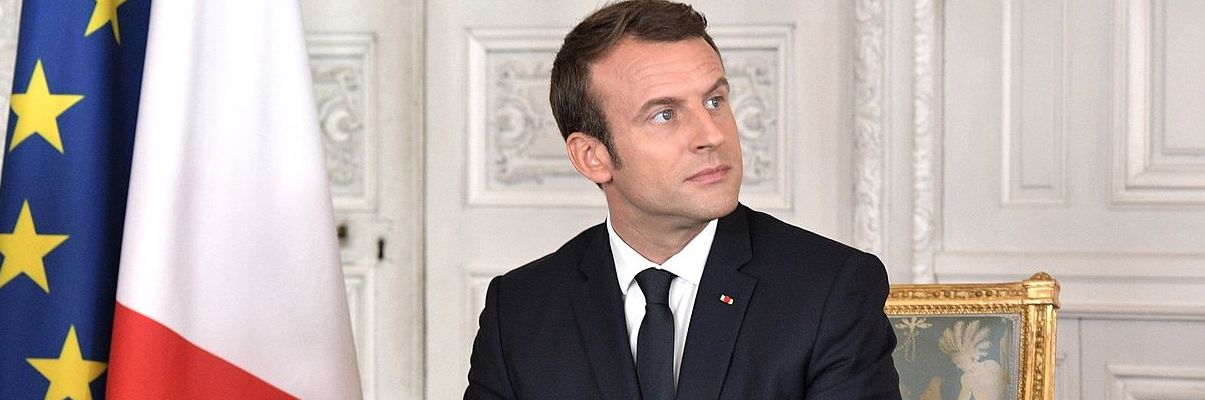
French President Emmanuel Macron on Monday called on Tehran to explain why a Franco-Iranian academic based at a Paris university has been arrested in Iran, expressing concern for the woman's welfare.
The detention of Fariba Adelkhah, a well-known expert on Iran and Shiite Islam at the prestigious Sciences Po university, risks increasing tension between Paris and Tehran at a critical moment in crisis talks to save the beleaguered Iranian nuclear program.
Adelkhah has been denied contact with consular staff, the French foreign ministry said Monday, confirming her dual nationality.
"France calls on the Iranian authorities to shed full light on Mrs. Adelkhah's situation and repeats its demands, particularly with regard to an immediate authorisation for consular access," the ministry said in a statement.
"What has happened worries me a great deal," Macron told reporters at a news conference in Belgrade, where he is visiting. "We have been aware of this for some days.
"I have expressed my disagreement and asked President (Hassan) Rohani for clarification," he added. But he added that France had so far received no meaningful explanation.
Iranian government spokesman Ali Rabiei said he could not confirm the charges.
Adelkhah, 60, is the latest Iranian national with a Western passport to be arrested in Iran.
British-Iranian Nazanin Zaghari-Ratcliffe, a project manager with the Thomson Reuters Foundation, has been jailed in Tehran since 2016 on sedition charges, a detention that has caused major tensions with Britain.
'Totally Unacceptable'
Adelkhah's arrest comes just as Macron is seeking to lead European efforts to find a way of keeping the 2015 nuclear deal alive, which limits Iran's atomic programme.
Macron has sent an envoy to Tehran twice in the last month and was even rumoured to be considering becoming the first French president in more than 40 years to travel to the Iranian capital.
The landmark deal is at risk of collapsing after US President Donald Trump pulled Washington out unilaterally, leading Iran to violate safeguards that limited its stockpiling and enrichment of uranium.
Jean-Francois Bayart, a French academic and friend of Adelkhah's, said he and colleagues had alerted French authorities when the anthropologist did not return home from a trip to her homeland as scheduled on June 25.
He said he thought she had been arrested on June 5 and was being held at the Evin prison in Tehran.
"She has been visited by her family. She hasn't been mistreated, but I'm worried about her because she isn't physically strong," Bayart told AFP. "We don't know how long this totally unacceptable detention is going to last."
"Iran doesn't recognise dual nationality, so for them she is Iranian, which is why consular access has not been permitted," he added. "But talks have taken place at the highest levels between the countries."
'Talented Researcher'
Adelkhah was arrested while visiting her mother.
Bayart said that Adelkhah had arrived in France in 1977 to study.
"She's a free, independent and extremely talented researcher," he told AFP.
Other Iranian dual nationals jailed in Iran include Iranian-American Siamak Namazi and his father Baquer, who are serving 10-year sentences for espionage in a case that has outraged Washington.
Chinese-American Xiyue Wang, a Princeton University researcher, is serving a 10-year sentence for espionage and US national Michael White, 46, was this year also sentenced to 10 years.
French academic Clotilde Reiss was detained in Iran for 10 months in 2009-10 before being released in a case that attracted widespread attention at the time.
At around the same time as her release, French judicial authorities freed Ali Vakili Rad, who had been convicted of the 1991 murder outside Paris of the ousted shah's former prime minister Shapour Bakhtiar.
The timing led to speculation about a bilateral deal over the prisoners, though French authorities denied any exchange.
For several months in 2007, Iran detained US-Iranian academic Haleh Esfandiari, one of the most prominent US-based academics working on Iran, who at the time was director of the Middle East program at the Wilson Center.
Photo: Wikicommons

Iran Says Efforts to Curb the Rial's Slide Are Starting to Work
◢ Iran’s battered currency is starting to recover in the unregulated market as government policies to defend it against U.S. sanctions take effect. The central bank sought ways to protect the currency with measures that include setting up a government-run foreign-exchange platform known as NIMA to quell the black market and controlling interest rates offered by lenders.
By Golnar Motevalli
Iran’s battered currency is starting to recover in the unregulated market as government policies to defend it against U.S. sanctions take effect.
The rial has stabilized, Abdolnaser Hemmati, the head of Iran’s central bank, was cited as saying by the semi-official Iranian Students’ News Agency. It strengthened about 8% in the open market over the past month to 125,450 per dollar, according to prices compiled by Bloomberg from foreign-exchange websites and traders in Tehran.
The advance is a relief for Iranians who watched the currency plummet more than 50% after U.S. President Donald Trump scrapped the 2015 nuclear accord and reimposed sanctions on the nation. The central bank sought ways to protect the currency with measures that include setting up a government-run foreign-exchange platform known as NIMA to quell the black market and controlling interest rates offered by lenders.
The rial on the open market is now close to the NIMA rate, Hemmati said.
“The central bank’s policies of controlling currency markets and bank interest rates appear to be helping,” said Massoud Gholampour, an analyst at Novin Investment Bank in Tehran. “Demand for foreign currency has dropped compared to last year,” he said, adding that bans on a raft of luxury imports helped as much as $2 billion from being spent on imports.
Photo: Wikicommons

UK Says Iran Tanker Will be Freed After Guarantees on Destination
◢ British Foreign Secretary Jeremy Hunt sought to ease tensions with Iran on Saturday, saying a tanker held by Gibraltar would be released if Tehran guaranteed it was not heading to Syria. He said he had a "constructive call" with his Iranian counterpart Mohammad Javad Zarif, who he said assured him that Tehran "is not seeking to escalate" tensions between the countries.
British Foreign Secretary Jeremy Hunt sought to ease tensions with Iran on Saturday, saying a tanker held by Gibraltar would be released if Tehran guaranteed it was not heading to Syria.
He said he had a "constructive call" with his Iranian counterpart Mohammad Javad Zarif, who he said assured him that Tehran "is not seeking to escalate" tensions between the countries.
"I reassured him our concern was destination not origin of the oil on Grace One," a tanker seized off the coast of the tiny British territory of Gibraltar on July 4, Hunt tweeted.
An Iranian statement confirmed the conversation and said Hunt underlined Iran's "right to export oil". It added that Tehran hoped that an investigation in Gibraltar into the seized ship "would lead quickly to the release of the Iranian tanker".
US officials believe the tanker was destined for Syria to deliver oil, in violation of separate EU and US sanctions .
Hunt said Britain "would facilitate release if we received guarantees that it would not be going to Syria, following due process in Gib (Gibraltar) courts.
"Was told by FM Zarif that Iran wants to resolve issue and is not seeking to escalate."
Tehran had reacted angrily to the seizure, and Britain this week said Iranian military vessels had tried to "impede the passage" of a British oil tanker in the Strait of Hormuz.
Detained British-Iranian Discussed
Iran, in its statement relayed by state media, said Zarif had told Hunt that his country would continue to export its oil "in all circumstances" and that the Grace One's destination was a "legal" one, in "the eastern
Mediterranean". He did not specify where. Iran has repeatedly said it deems US and EU sanctions against it as “illegal.”
Hunt said Gibraltar's Chief Minister Fabian Picardo was doing an "excellent job co-ordinating issue and shares UK perspective on the way forward.”
Hunt also said he raised with Zarif the imprisonment of British-Iranian national Nazanin Zaghari-Ratcliffe, and Zarif "said he would continue to seek to find a solution.”
Picardo said in a separate statement that he spoke with Hunt before and after the foreign secretary's conversation with Zarif and backed several of the points that were raised.
He said notably that he asked Hunt to tell Iran that Gibraltar would continue to enforce EU sanctions but it was also prepared to release the Grace One "if we were satisfied that we had received guarantees that it would not be going to Syria or to any entity sanctioned under the relevant EU regulations.”
He added that he was "pleased to hear of Iran's constructive approach and their wish also to resolve this situation, which comes at a time of heightened international tensions".
Photo: Wikicommons
Iran’s Uranium Enrichment Has U.S. Weighing Sanctions ‘Snapback’
◢ Iran’s decision to ramp up uranium enrichment is prompting debate over whether the U.S. should—or even can—invoke a threat that negotiators built into the 2015 nuclear agreement but hoped would never be used: a “snapback” of international sanctions.
By David Wainer and Daniel Flatley
Iran’s decision to ramp up uranium enrichment is prompting debate over whether the U.S. should—or even can—invoke a threat that negotiators built into the 2015 nuclear agreement but hoped would never be used: a “snapback” of international sanctions.
Although President Donald Trump withdrew from the accord last year, the administration is being pressured by some American hard-liners to invoke a mechanism that ultimately would trigger a return to United Nations Security Council sanctions beyond those the U.S. is already imposing unilaterally.
Such a move, if successful, would shred what’s left of European-led efforts to keep the multinational accord alive, and analysts and diplomats say it would be galling coming from the nation that was first to quit the deal.
“Do I think there’s an argument to be made for snapping back? Sure,” said Richard Nephew, who was the lead sanctions expert for the Obama administration team that negotiated the 2015 accord. “Do I think the rest of the council agrees? No. It’s not clear people would stay in their chairs during discussions if we invoked this.”
Nephew, now a senior research scholar at Columbia University, said the snapback was designed to give the U.S. unilateral privileges to restore sanctions through the Security Council. At the time, the provision was a major part of Secretary of State John Kerry’s pitch for Congress to acquiesce to the deal. It’s also something that an “America First” president like Trump would like.
Under the snapback clause, any of the signatories to the Iran accord can cite Iran for violating the accord in a complaint to a dispute resolution committee. The matter eventually could be brought before the Security Council, which could vote on a resolution to keep the previous sanctions from going back into force. But the U.S. could get its way by exercising its veto on the council.
It’s no easy fix: The process could take two months or longer. And in today’s circumstances, other participants in the deal would be likely to argue that the U.S. is no longer allowed to invoke the mechanism.
To get around a dispute over whether the U.S. has standing to initiate the snapback mechanism, American officials are leaning on France and the U.K. to consider exercising it. The Europeans are signaling they’re not at that point yet, but they are using the American threats to put pressure on Iran to restrain itself, according to Western diplomats at the UN.
A senior European diplomat whose country still supports the accord said any decision to implement the snapback wouldn’t be automatic but predicted that support for it will grow unless Iran’s government changes its behavior.
A trio of hard-line U.S. senators say the White House doesn’t need to wait for the Europeans to start the process.
“Your administration has refrained from invoking the snapback mechanism in United Nations Security Council resolution (UNSCR) 2231, which if invoked would restore international restrictions against Iranian uranium enrichment, plutonium-related heavy water work, and ballistic missile development,” Republican Senators Ted Cruz, Marco Rubio and Tom Cotton said in a letter to Trump.
The UN resolution defines “the United States as a participant for the purpose of invoking the mechanism,” they said. “We urge you to do so."
Using Pressure
Even without the snapback provision, the U.S. has instituted punishing sanctions targeting Iran’s oil exports and its broader economy. European nations have been trying to salvage the deal by offering barter provisions that would sidestep the U.S. banking system—with little success so far—even as they warn Iran against continuing to violate the deal’s limits on uranium enrichment.
In a briefing last month, Majid Takht-Ravanchi, Iran’s ambassador to the UN, told reporters that his country wants to remain in the accord but that Europe needs to deliver stronger economic incentives, and quickly.
Against that backdrop, tensions between the U.S. and Iran have surged. The Trump administration has blamed Iran in recent weeks for sabotaging oil tankers near the the Strait of Hormuz and for downing an American drone over international waters. Tehran denies it was behind the tanker attacks and says the drone was shot down over its territory.
Resisting the U.S.
A meeting in Vienna on Wednesday foreshadowed just how explosive any efforts for a snapback would be. The U.S. sought a special meeting of nuclear inspectors to increase pressure against Iran. Instead, the Americans drew pushback from Russia, China and Europe, all of whom blame the Trump administration for the crisis.
France, Germany and the U.K. issued a joint statement on the eve of the meeting saying that while they were concerned by Iran’s violations, it’s the job of the remaining participants in the deal, known as the Joint Comprehensive Plan of Action, to address disputes.
“The EU deeply regrets the U.S. withdrawal and calls on all countries to refrain from taking any actions that impede the implementation of the JCPOA commitments,” it said.
Trump, who has a long history of pushing allies and adversaries toward the edge of conflict, will have to decide if it’s time to test the snapback provision.
"It is certainly a topic of significant ongoing conversation within the administration," Cruz of Texas said in an interview. "We should invoke those sanctions.”
Photo: IRNA
Britain Says Iran Tried to 'Impede' UK Tanker in Persian Gulf
◢ Britain said on Thursday that Iranian military vessels tried to "impede the passage" of a UK oil tanker but were warned off by a British warship in a dramatic escalation of tensions with Tehran in the Gulf. "Contrary to international law, three Iranian vessels attempted to impede the passage of a commercial vessel, British Heritage, through the Strait of Hormuz," the UK defence ministry said in a statement.
By Dmitry Zaks
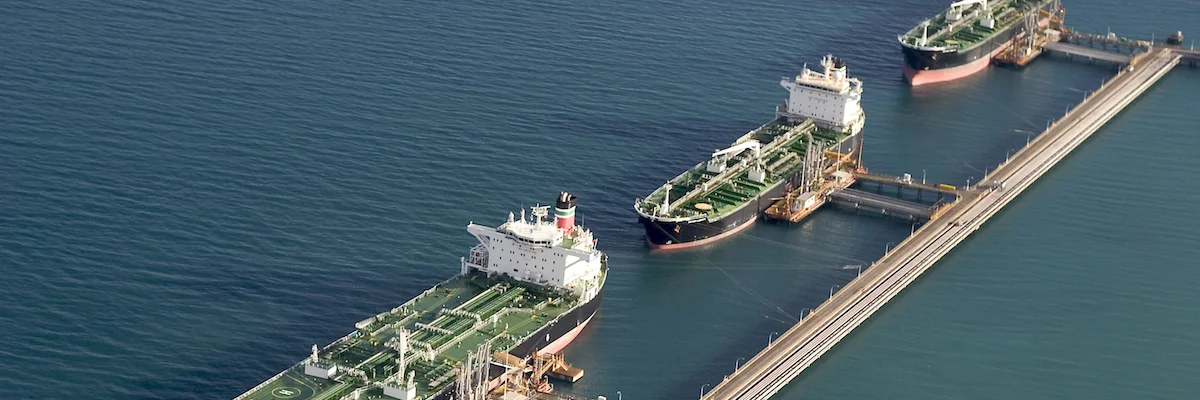
Britain said on Thursday that Iranian military vessels tried to "impede the passage" of a UK oil tanker but were warned off by a British warship in a dramatic escalation of tensions with Tehran in the Persian Gulf.
The incident in the narrow but busy Strait of Hormuz occurred on Wednesday after President Donald Trump ratched up his own administration's pressure even further by warning that sanctions against the Islamic Republic would be "increased substantially" soon.
CNN initially reported that Iranian boats attempted to seize the British tanker but were driven off by a Royal Navy frigate.
The UK defense ministry said only that the Iranian boats tried to "impede" a commercial vessel called British Heritage, which is owned by British energy giant BP.
"Contrary to international law, three Iranian vessels attempted to impede the passage of a commercial vessel, British Heritage, through the Strait of Hormuz," the UK defense ministry said in a statement.
"HMS Montrose was forced to position herself between the Iranian vessels and British Heritage and issue verbal warnings to the Iranian vessels, which then turned away."
It also urged "the Iranian authorities to de-escalate the situation in the region".
Iran's Revolutionary Guards—a vast and powerful security organization that the United States blames for staging several tanker attacks since May—denied trying to seize or impede the UK tanker.
"There has been no confrontation in the last 24 hours with any foreign vessels, including British ones," the Revolutionary Guards said in a statement.
'Path of Diplomacy Open'
The episode adds further fuel to a volatile mix of brinkmanship and saber rattling in a region already unsettled by the Trump administration's nuclear standoff with the Islamic Republic.
Iranian President Hassan Rouhani on Wednesday warned Britain of unspecified "consequences" over last week's detention of one of its oil tankers off Gibraltar.
Officials in Gibraltar—a British overseas territory on Spain's southern tip—said the cargo was believed to be destined for Syria.
Damascus is subject to EU sanctions while the US has its own sets of trade restrictions on Iranian oil.
Iran condemned the detention as an "illegal interception."
Britain has denied suggestions from Gibraltar officials that it was acting on the orders of the United States.
Iran has been ramping up uranium enrichment in response to the Trump administration's decision last year to pull out of a landmark nuclear agreement world powers signed after a decades of talks with Tehran in 2015.
It surpassed one limit set in that deal one month ago and breached a second one on Monday.
French President Emmanuel Macron's diplomatic adviser Emmanuel Bonne met with Rouhani on Wednesday in an attempt to mediate some sort of reprieve in the escalating standoff.
Rouhani told Bonne that Tehran had "completely kept the path of diplomacy and talks open," according to a statement issued by the Iranian presidency after the talks.
He called on other parties to the nuclear deal to "completely implement their commitments" to keep it alive.
Full Compliance 'Without Delay'
Britain and other European nations have been trying to save the agreement by setting up their own independent trade mechanism that evades US sanction on Tehran.
But Iran's decision to push ahead with enrichment to ever higher levels is putting the European strategy under strain.
European parties of the agreement issued a tough joint statement on Tuesday saying Iran must reverse its activities and return to full compliance "without delay.”
Photo: BP
French Envoy in Iran Talks as Trump Threatens to Up Sanctions
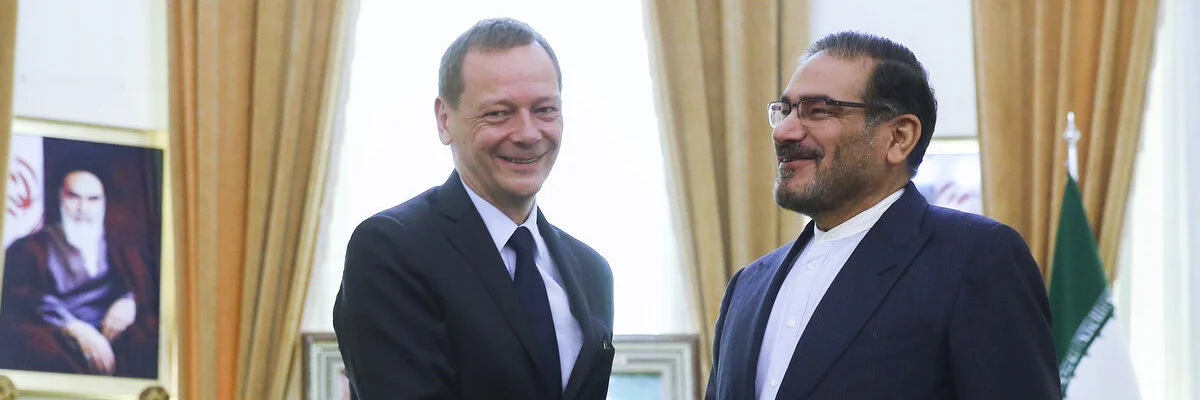
◢ A diplomatic adviser to French President Emmanuel Macron held talks in Tehran Wednesday aimed at saving the 2015 nuclear deal and easing tensions between Iran and the United States. Emmanuel Bonne met Rear-Admiral Ali Shamkhani, secretary of Iran's Supreme National Security Council, and was set to meet with Foreign Minister Mohammad Javad Zarif later on Wednesday.
By Kay Armin Serjoie
French President Emmanuel Macron's top diplomatic advisor met with Iran's president Wednesday winding up a day of talks in Tehran aimed at saving a landmark 2015 nuclear deal and easing tensions between Tehran and Washington.
But as Emmanuel Bonne pressed the high-level talks, President Donald Trump took to Twitter to warn that US sanctions against Iran would soon be "increased substantially", charging Tehran had "long been secretly 'enriching'" uranium.
The 2015 accord between Iran and world powers, the Joint Comprehensive Plan of Action (JCPOA), promised sanctions relief, economic benefits and an end to international isolation in return for stringent curbs on the Islamic republic's nuclear programme.
But Tehran says it has lost patience with perceived inaction by European countries more than a year after Trump unilaterally pulled the US out of the agreement and started to impose punishing sanctions.
In his meeting with Bonne, Iran's President Hassan Rouhani said Tehran had "completely kept the path of diplomacy and talks open", according to a statement from his office.
He called on other parties to the deal to "completely implement their commitments" to keep it alive.
Bonne also met Rear-Admiral Ali Shamkhani, the secretary of Iran's Supreme National Security Council, and Foreign Minister Mohammad Javad Zarif and his deputy Abbas Araghchi.
His mission was "to try and open the discussion space to avoid an uncontrolled escalation, or even an accident", according to French Foreign Minister Jean-Yves Le Drian.
Before meeting with Bonne, Zarif said "negotiations are never possible under pressure", in reference to US sanctions against Iran.
Pointing to the US withdrawal from the JCPOA, he added that the Europeans "must solve that problem."
‘Nuclear Extortion'
Bonne arrived in Tehran after Iran announced on Monday it had surpassed 4.5 percent uranium enrichment—above the 3.67 percent limit under the accord, though still far below the 90 percent necessary for military purposes.
Earlier this month, it was confirmed that Iran surpassed 300 kilogrammes of enriched uranium reserves, another limit that was imposed by the deal.
At Washington's request, the UN's nuclear watchdog held a special meeting Wednesday at its Vienna headquarters.
US delegate Jackie Wolcott told the gathering that Iran was engaged in "nuclear extortion".
Her Iranian counterpart Kazem Gharib Abadi hit back, calling it a "sad irony" that the meeting was convened at Washington's request and claiming the current standoff was a result of the US's "outlaw behaviour".
Russia's ambassador to the International Atomic Energy Agency, Mikhail Ulyanov, later tweeted that the US "was practically isolated on this issue".
In a joint statement, European parties to the deal Germany, France and Britain said their continued support for the accord "relies on Iran implementing its commitments".
But they added the "issues at hand should be addressed by participants to the JCPOA".
Ahead of the meeting, a source at the French presidency said "we are in a very critical phase. The Iranians are taking measures that are in violation (of the agreement) but (they) are very calibrated".
Iran Ends 'Strategic Patience'
After Washington withdrew from the JCPOA in May 2018, it reimposed stinging sanctions on Tehran, hitting the banking and oil sectors hard.
As the Iranian economy went into free fall, Iran demanded that the other parties—especially the Europeans—deliver promised economic benefits and help it bypass the US sanctions.
However, it became clear that this was no simple task, and Iran—whose economy depends heavily on oil exports—changed tack and indicated it would reshape its policy of "strategic patience".
In May, a year after Trump's withdrawal, Rouhani said Iran would roll back its commitments under the deal in stages every 60 days in an effort to force the other parties to deliver on their side of the bargain.
As tensions rose, the US dispatched a naval carrier, bombers and extra troops to the region to counter perceived threats from Iran.
Last month, Trump said he had called off a retaliatory military strike against Iran at the last minute after the Islamic republic shot down a US drone that it said had crossed into its airspace, a claim denied by Washington.
Trump re-upped the pressure Wednesday, claiming "Iran has long been secretly 'enriching'" uranium in violation of the accord.
"Remember, that deal was to expire in a short number of years. Sanctions will soon be increased, substantially!"
Photo: IRNA
Special Iran Nuclear Meeting Exposes Discord Over U.S. Strategy
◢ The U.S. called for an extraordinary meeting of atomic inspectors to ramp up pressure against Iran after it violated key restrictions set by the landmark nuclear accord. What it’s likely to get is pushback from Russia, China and other nations who blame the Trump administration for precipitating a crisis that has threatened to spill over into war.
By Jonathan Tirone
The U.S. called for an extraordinary meeting of atomic inspectors to ramp up pressure against Iran after it violated key restrictions set by the landmark nuclear accord. What it’s likely to get is pushback from Russia, China and other nations who blame the Trump administration for precipitating a crisis that has threatened to spill over into war.
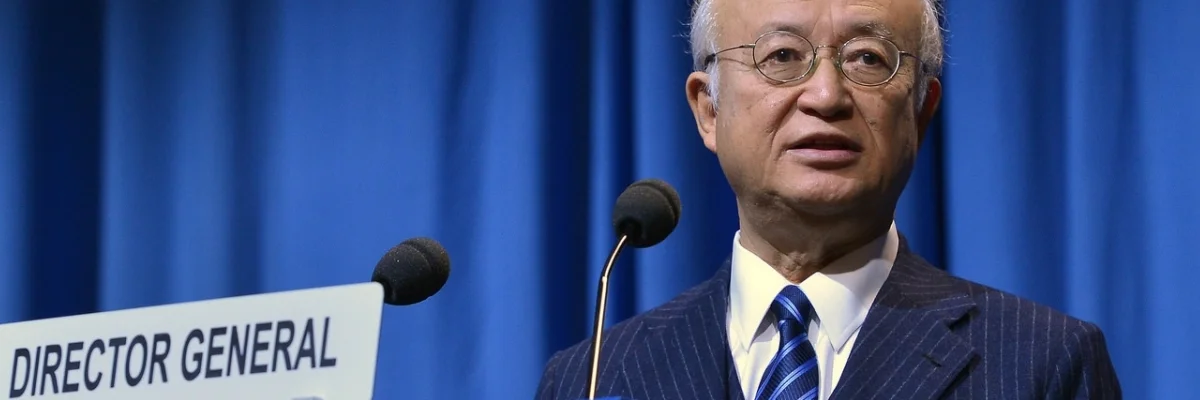
The International Atomic Energy Agency’s 35-member board of governors meets Wednesday at 2:30 p.m. local time in Vienna. American diplomats asked for the session after IAEA monitors confirmed Iran had exceeded enriched-uranium limits set under its 2015 deal with world powers.
While the State Department expects the meeting to marshal support for its “maximum pressure” campaign against Iran, diplomats from other nations said they may argue that the IAEA isn’t the right forum to handle the dispute.
With accusations flying, the get-together is likely to highlight the growing international discord over how to contain a diplomatic crisis that has disrupted shipping and threatened to escalate into a new war in the world’s largest oil-producing region.
China and Russia have criticized President Donald Trump for withdrawing from the accord a year ago and say his administration is being hypocritical in blaming Iran for its violations after unilaterally imposing sanctions on vast swathes of the oil exporter’s economy.
“Since last week U.S. behaves as if it were a strong supporter of the deal demanding that Iran must strictly comply with it,” tweeted Russia’s IAEA Ambassador Mikhail Ulyanov on Sunday. “There is a way out of this paradox: stop ruining the deal through sanctions.”
France, Germany and the U.K. issued a joint statement Tuesday saying that while they were concerned by Iran’s violations, it’s the job of the remaining participants in the Joint Comprehensive Plan of Action, as the nuclear accord is known, to mediate disputes.
“These compliance issues must be addressed within the framework of the JCPOA,” they said.
The IAEA meeting takes place as French President Emmanuel Macron’s top diplomatic adviser visits Iran for discussions, seeking to persuade the Islamic Republic to reverse course.
French officials say they see room for compromise as Iran’s infringements have been carefully calibrated and Trump has underlined his desire for new talks. Iran’s dialogue with Europe never stopped but it said it won’t speak to the U.S. unless sanctions are eased first.
Tehran’s contraventions have increased pressure on European nations who’ve urged Iran to stick with the deal even as they struggle to find a mechanism that would allow it to keep selling its oil. They’ve come up with a trade vehicle called Instex that would protect some trade with Iran from U.S. penalties but would initially be limited to food and drugs.
Iran is producing oil at the slowest clip since 1986, making U.S. sanctions as effective as the devastating Iraq-Iran war that ended more than 30 years ago. The measures have hit the currency, fueled inflation and hobbled growth.
U.S. officials say the squeeze is meant to push Iran to negotiate a broader deal that also limits its missile program and support for proxy militias in the region. But the approach has weakened the hand of moderate President Hassan Rouhani, who called Wednesday’s meeting “ridiculous”, and prompted hardliners to dig in.
"The Americans, on one hand, say the JCPOA was a very bad deal, even the worst deal and they left it,” he was quoted as saying by the official Islamic Republic News Agency. “On the other hand, when Iran diminishes some of its commitments everyone expressed worry.”
A Trump administration official said the IAEA meeting was “highly appropriate.” U.S. diplomats will underscore that any expansion of enrichment activities is unacceptable, according to the official, who asked not to be identified in return for discussing the agenda of the private meeting.
Critically, Iran has continued allowing IAEA inspectors to conduct what Director General Yukiya Amano calls “the most robust verification system in existence anywhere in the world.” The safeguards account for gram-level amounts of enriched uranium to ensure they aren’t diverted for weapons. The agreement gave monitors unique powers in Iran, where they called record snap inspections last year.
China’s IAEA envoy, Wang Qun, accused the U.S. of using “unilateral coercive measures” at a meeting in the Austrian capital earlier this month. By reimposing sanctions, Washington itself could stand accused of violating the United Nations charter and international law, he said.
“The United States will be trying to create pressure out of the fact that Iran has ceased implementing some of the restrictions which the agreement requires,” said Peter Jenkins, a former U.K. diplomat who helped lead nuclear negotiations with Rouhani before he became president. “This is very different from failing to comply with IAEA safeguards obligations.”
Photo: IAEA
Macron’s Top Diplomatic Adviser Looks to Save Iran Nuclear Deal
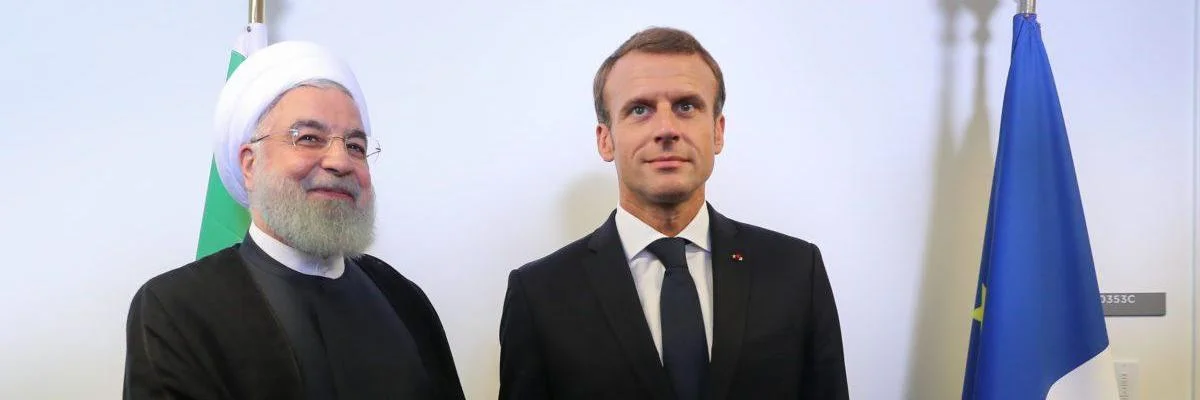
◢ French President Emmanuel Macron’s top diplomatic adviser heads to Iran on Tuesday, seeking to persuade the Islamic Republic to reverse breaches that have raised pressure on European nations struggling to save the landmark 2015 nuclear deal from collapse. Emmanuel Bonne will meet with Iranian leaders, including a representative of Supreme Leader Ayatollah Ali Khamenei.
By Ladane Nasseri
French President Emmanuel Macron’s top diplomatic adviser heads to Iran on Tuesday, seeking to persuade the Islamic Republic to reverse breaches that have raised pressure on European nations struggling to save the landmark 2015 nuclear deal from collapse.
Emmanuel Bonne will meet with Iranian leaders, including a representative of Supreme Leader Ayatollah Ali Khamenei, on Tuesday and Wednesday, according to French officials. His trip comes a day after Iran started enriching uranium to purity levels beyond the 3.67% cap set in the accord and pledged to further scale back its commitments in response to U.S. sanctions reimposed after President Donald Trump abandoned the agreement a year ago.
French officials say they see room for compromise as Iran’s infringements have been carefully calibrated and Trump has underlined his desire for new talks that seek to also limit the country’s missile program and support for proxy militias around the Middle East. Iran has held open the door to negotiations with Europe but has said it will not speak to the U.S. unless sanctions are eased first.
On Monday evening, Trump and Macron discussed by phone efforts to ensure that Iran doesn’t obtain a nuclear weapon and to curtail its role in the broader Middle East, according to an emailed White House statement.
The latest developments in Tehran have increased pressure on European nations who’ve urged Iran to stick with the multi-party deal even as they struggle to find a mechanism that would allow it to keep selling its oil, the main source of government revenue.
Iran is producing oil at the slowest clip since 1986, making U.S. sanctions as effective as the devastating Iraq-Iran war that ended more than 30 years ago. The measures have hit the currency, fueled inflation and set back economic growth.
U.S. officials say their policy of maximum pressure is designed to force the Iranian government to negotiate a broader deal. But the approach has weakened the hand of moderate President Hassan Rouhani and prompted Tehran to dig in.
The U.S. is “waging war in all areas simultaneously, and using all its power in military, economic and social sphere to confront Iran,” General Hossein Salami, the head of Iran’s Revolutionary Guard Corps, was quoted as saying Tuesday by the official Islamic Republic News Agency. “The more time passes, the more serious the enemy’s threats become.”
Iran’s latest violations of the accord are likely to stoke further friction with the U.S., which has accused the Islamic Republic of being behind a spate of attacks on oil tankers near the Strait of Hormuz shipping chokepoint. Iran denies any wrongdoing.
Ties with the U.K. have also been strained by its seizure of a supertanker off the coast of Gibraltar that it said was carrying Iranian oil to Syria in violation of European and U.S. sanctions against that war-torn country. Iran said the tanker was in international waters and not headed to Syria. It has vowed to retaliate, highlighting mounting risks to shipping in a region that exports about a third of all seaborne oil.
“It will be reciprocated, at a suitable time and in a suitable place,” Mohammad Bagheri, the chief of staff for Iran’s armed forces, was quoted as saying by the IRNA.
Though the rhetoric has continued to escalate, all sides have said they want to avoid war.
France, Germany and the U.K. have managed to deliver a financial channel known as INSTEX that aims to protect some trade with Iran—initially only food and medicine—from U.S. penalties. But Iran wants a trade vehicle that can also be used to buy its oil.
Bonne will meet on Wednesday with Ali Shamkhani, a representative of Khamenei and chairman of Iran’s Supreme National Security Council, to discuss the nuclear agreement and mechanisms to counter U.S. penalties, according to a Fars news agency report.
International Atomic Energy Agency inspectors, who are on the ground daily thanks to the existing deal, verified on Monday that Iran is enriching uranium above the agreed cap.
The IAEA will hold an extraordinary meeting on Wednesday, convened at the behest of the U.S., to discuss Iran’s breaches of the Joint Comprehensive Plan of Action, as the nuclear agreement is formally known.
“We continue to urge Iran not to take further measures that undermine the nuclear deal, to stop and reverse all activities that are inconsistent with its commitments,” European Commission spokeswoman Maja Kocijancic said. “We are currently in contact with the other JCPOA participants regarding the next steps under the terms of the agreement.’’
Photo: President.ir

Iran Passes Uranium Enrichment Cap Set by Endangered Deal
◢ Iran on Monday breached a uranium enrichment cap set by a troubled 2015 nuclear deal and warned Europe against taking retaliatory measures. The move came more than a year after Washington pulled out of the landmark accord between world powers and Tehran, which says it has lost patience with perceived inaction by the remaining European partners.
By Kay Armin Serjoie
Iran on Monday breached a uranium enrichment cap set by a troubled 2015 nuclear deal and warned Europe against taking retaliatory measures.
The move came more than a year after Washington pulled out of the landmark accord between world powers and Tehran, which says it has lost patience with perceived inaction by the remaining European partners.
Iran surpassing the cap and reaching 4.5 percent enrichment was announced Monday by the country's atomic energy organization spokesman Behrouz Kamalvandi.
"This level of purity completely satisfies the power plant fuel requirements of the country," he said, quoted by semi-official ISNA news agency.
Kamalvandi hinted that the Islamic republic might stick to this level of enrichment for the time being, which is well below the more than 90-percent level required for a nuclear warhead.
The European Union said it was "extremely concerned" by the development and called on Iran to "reverse all activities" inconsistent with its deal commitments.
France, Germany and Britain—the European partners of the international deal—on Sunday urged Tehran to halt its advance towards breaching the cap.
After Tehran's latest step, US President Donald Trump held talks with his French counterpart Emmanuel Macron on "ongoing efforts to ensure that Iran does not obtain a nuclear weapon and to end Iran's destabilizing behavior in the Middle East", the White House said in a statement.
But Iran's foreign ministry spokesman Abbas Mousavi warned against any escalatory response.
If the Europeans "do certain strange acts then we would skip all the next steps (in the plan to scale back commitments) and implement the last one," he said.
He did not specify what the final step would be but Iran's President Hassan Rouhani had warned previously that Iran could leave the nuclear accord.
'Bullying' By the US
US Secretary of State Mike Pompeo tweeted Sunday that Iran would face "further isolation and sanctions".
China and Russia, the other deal partners, both blamed the United States for the latest step by Iran.
Beijing accused Washington of "unilateral bullying", while Moscow said passing the cap was one of the "consequences" of the White House abandoning the deal.
Iran's Deputy Foreign Minister Abbas Araghchi on Sunday singled out declining oil sales and the effect of financial sanctions as the main issues that needed to be solved, or Tehran would further step back from its nuclear commitments.
"We hope we can reach a solution, otherwise after 60 days we will take the third step as well," he said, adding that Tehran would give further details of that at an "opportune moment.”
Tehran says that it is not violating the deal, citing terms of the agreement allowing one side to temporarily abandon some of commitments if it deems the other side is not respecting its part of the accord.
Iran's Foreign Minister Mohammad Javad Zarif, a key architect of the deal, cautioned "all such steps are reversible" if European partners deliver on their part.
Rouhani in May flagged Tehran's intentions to start enriching uranium above the agreed maximum purification level of 3.67 percent.
The International Atomic Energy Agency confirmed this month that Iran has exceeded a 300-kilogram limit on enriched uranium reserves, a cap that was imposed by the deal.
The IAEA has scheduled a special meeting on Iran's nuclear program for July 10.
Photo:
