
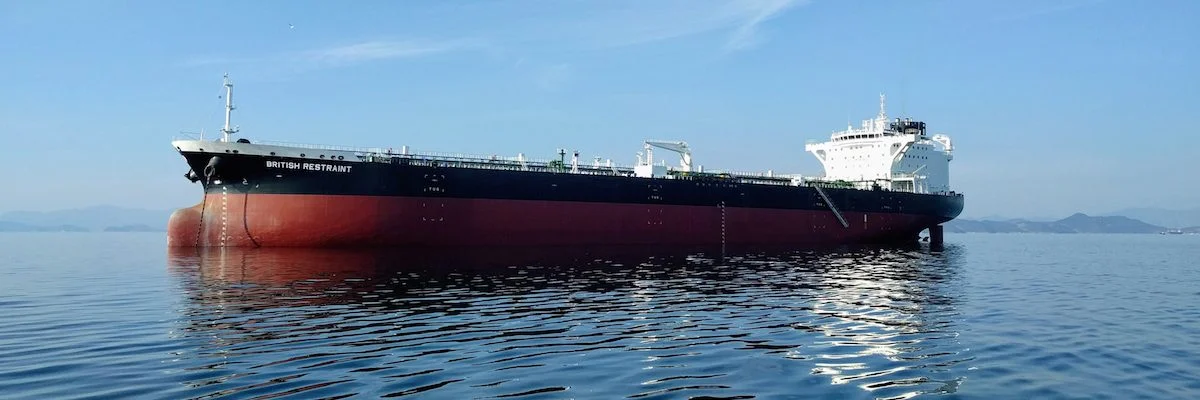
BP Oil Tanker Shelters in Persian Gulf on Fear of Iran Retaliation
◢ An oil tanker run by BP Plc is being kept inside the Persian Gulf in fear it could be seized by Iran in a tit-for-tat response to the arrest by Gibraltar last week of a vessel hauling the Islamic Republic’s crude. The British Heritage, able to haul about 1 million barrels of crude, was sailing toward Iraq’s Basrah oil terminal in the south of country when it made an abrupt u-turn on July 6.
By Kelly Gilblom and Serene Cheong
An oil tanker run by BP Plc is being kept inside the Persian Gulf in fear it could be seized by Iran in a tit-for-tat response to the arrest by Gibraltar last week of a vessel hauling the Islamic Republic’s crude.
The British Heritage, able to haul about 1 million barrels of oil, was sailing toward Iraq’s Basrah terminal in the south of country when it made an abrupt u-turn on July 6. It’s now off Saudi Arabia’s coast and a person with knowledge of the matter says BP’s concern is that it could become a target if Iran seeks to retaliate for the seizure near Gibraltar—by British Royal Marines—of the tanker Grace 1 on July 4.
BP’s decision shows how rising tensions between Iran and the west are having an impact on the oil tanker industry that’s vital to the global trade in crude. Tehran’s foreign ministry said the arrest of Grace 1 was an act of piracy and a former leader of Iran’s Revolutionary Guard said on Twitter the Islamic Republic should take a British tanker in response. The U.S. accused Iran of recent attacks on tankers just outside the Persian Gulf.
“It’s a psychological game that’s being played,” said Olivier Jakob, managing director of energy consultant Petromatrix GmbH. “Nobody wants to be that one whose vessel is seized in a ‘tit-for-tat’.”
The overall oil market impact will probably be limited because Iran is unlikely to escalate the conflict beyond seizing one vessel in retaliation, he said, adding that companies will work hard to avoid being targeted.
The ship, registered in the Isle of Man and flying under the British flag, had been chartered by Royal Dutch Shell Plc to transport crude from Basrah to northwest Europe, tracking data and shipbrokers said. It didn’t collect that cargo and the booking was canceled.
British Heritage won’t be able to exit the Strait of Hormuz, the chokepoint through which about a third of global seaborne oil moves, without sailing close to Iran’s coast, thereby placing it at greater risk.
Legal Issues
Tensions between Iran and the U.K. may remain high until the legal issues surrounding the arrest in Gibraltar are smoothed out, Jakob said. That could take months, according to Anna Bradshaw, a partner at the law firm Peters & Peters, who specializes in sanctions.
Tensions have escalated since the U.S. resumed sanctions on Iran, prompting the country to say it would enrich uranium in defiance of a global pact that was meant to stop that from happening.
Iran may choose to enrich uranium at a higher purity level as its next step in a new policy that’s gradually undoing the restrictions imposed by a 2015 nuclear pact with world powers, the official Islamic Republic News Agency reported on Monday, citing Behrouz Kamalvandi, the spokesman for the Atomic Energy Organization of Iran.
The escalation has heightened the risks for shipping companies exporting crude from the Persian Gulf, a region responsible for about one third of all seaborne petroleum supplies. Insurance costs for both tankers and their cargoes soared in the aftermath of the attacks, while some wary owners are now choosing to refuel elsewhere.
Photo: BP
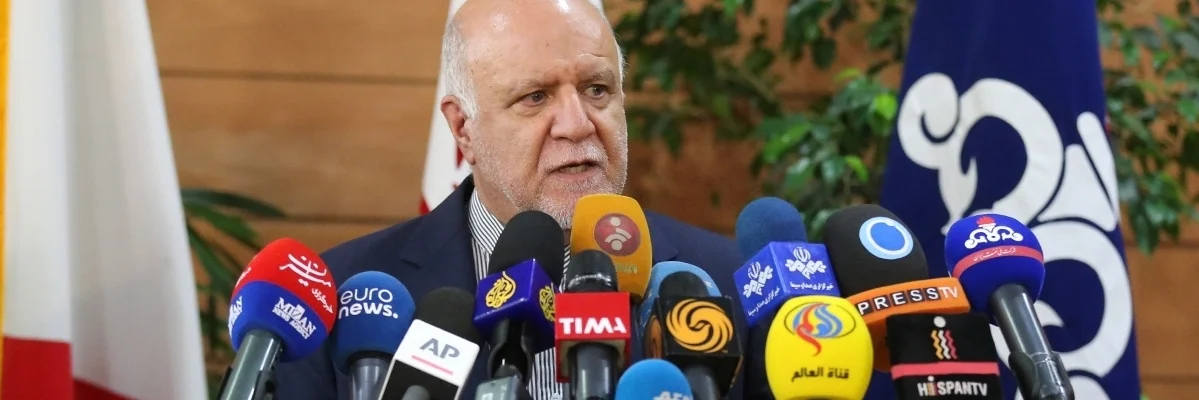
Iran Accuses US of Using Oil Sanctions to Gain Market Clout
◢ Iran's oil minister has accused the United States of using sanctions to "shock" the global oil supply and gain market clout for its booming shale oil production. "I think one of the reasons for sanctions against Iran and Venezuela is opening up the market for American oil sales," Oil Minister Bijan Namdar Zanganeh said in an interview with state TV.
Iran's oil minister has accused the United States of using sanctions to "shock" the global oil supply and gain market clout for its booming shale oil production.
Washington abandoned a landmark 2015 nuclear deal between Tehran and world powers last year and reimposed sanctions on the Islamic republic's crucial oil sales as well as other parts of the economy.
"I think one of the reasons for sanctions against Iran and Venezuela is opening up the market for American oil sales," Oil Minister Bijan Namdar Zanganeh said in an interview with state TV late Sunday, a transcript of which was provided by his ministry's SHANA news agency.
“This much oil production needs a market and could not be compensated for with regular OPEC cuts, therefore America needed to shock the market to find a place for itself. Some sanctions are (imposed) so that Americans can keep producing and developing shale oil," he added.
New technology that allows for extracting oil and gas from shale rock formations has led to a boom in oil production in the US in recent years.
Zanganeh said that according to US figures, shale oil's breakeven cost can be as low as $40 per barrel.
Benchmark Brent crude was trading at around $64 dollars a barrel in London on Monday.
The US is currently the world's biggest oil producer followed by Russia and Saudi Arabia, and is set to become a net exporter from 2021, according to the International Energy Agency.
The White House said in April that tightening sanctions on Iran will have "no material impact" on oil prices given the large supply of US oil on the global market.
OPEC, pressured by US output, abundant global crude supplies and weak oil demand growth, agreed last week to extend by nine months daily oil output cuts first announced in December aimed at supporting prices and soaking up excess supplies.
Iran, whose production has been severely hit by US sanctions, is exempt from the cuts agreement along with crisis-stricken Venezuela and Libya.
Battling what he called "the most severe organized sanctions in history," Zanganeh last week vowed to keep selling oil via "unconventional means.“
Iran's state TV recently aired a program showing an Iranian-flagged tanker under US sanctions that delivered one million barrels of crude oil to China, one of the remaining partners to the nuclear deal and which has rejected Washington's efforts to cut Tehran's oil exports to zero.
Photo: IRNA
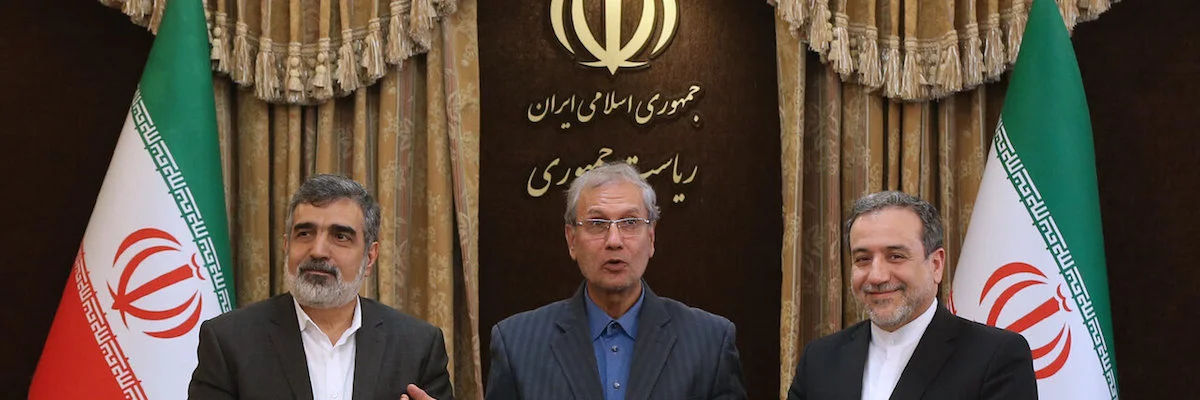
Iran Set to Exceed Nuclear Deal Uranium Enrichment Cap
◢ Iran said Sunday it was set to breach the uranium enrichment cap set by an endangered nuclear deal within hours as it seeks to press signatories into keeping their side of the bargain. The move—involving purifying beyond the 3.67 percent allowed by the 2015 agreement—comes despite opposition from the European Union and the United States, which has quit the deal.
By Kay Armin Serjoie and Amir Havasi
Iran said Sunday it was set to breach the uranium enrichment cap set by an endangered nuclear deal within hours as it seeks to press other parties into keeping their side of the bargain.
The Islamic republic also threatened to abandon more commitments unless a solution is found with parties to the landmark 2015 agreement.London said Iran had "broken the terms" of the accord and along with Berlin urged Tehran to halt its advance towards breaching the cap.
Iranian Foreign Minister Mohammad Javad Zarif said that Tehran could further scale back its commitments to the deal, but "all such steps are reversible" if European countries deliver on their part.
The move to start enriching uranium above the agreed maximum purification level of 3.67 percent comes despite opposition from the European Union and the United States, which has quit the deal.
President Hassan Rouhani's order to exceed the threshold would be implemented "in a few hours" after the last technical details were sorted, Iran's Atomic Energy Organisation spokesman Behrouz Kamalvandi said live on state television.
Rouhani initially flagged Tehran's intentions on May 8, exactly a year on from US President Donald Trump abandoning the multilateral pact.
The Iranian president has said the move is in response to a failure by remaining parties to help Iran work around biting sanctions reimposed by the US.
The arch-rivals have been locked in an escalating war of words with Washington blaming Iran for a series of attacks on tanker ships and Tehran shooting down an American surveillance drone, raising fears of a conflict that both sides have said they want to avoid.
The International Atomic Energy Agency (IAEA) has said in recent days that Iran has exceeded a 300-kilogram limit on enriched uranium reserves, a cap that was imposed by the 2015 deal.
Deputy Foreign Minister Abbas Araghchi on Sunday singled out Iran's declining oil sales and the effect of financial sanctions as the main issues that needed to be solved, or Tehran would further step back from its nuclear commitments.
"We hope we can reach a solution otherwise after 60 days we will take the third step as well," he said, adding that Tehran would give further details at an "opportune moment.”
Iran has previously threatened to also resume building as of July 7 a heavy water reactor—capable of one day producing plutonium—in Arak in central Iran, a project that had been mothballed under the agreement.
However since Iran delivered its ultimatum on the Arak reactor "good technical progress" had been made with parties on modernizing the reactor in a way that would not produce military grade plutonium, convincing Iran to postpone its decision, Araghchi said.
'At any Level'
The 2015 deal was reached between Iran and six world powers—Britain, China, France, Germany, the United States and Russia—and saw Tehran agree to drastically scale down its nuclear programme in exchange for sanctions relief.
Washington began reimposing sanctions in August 2018 and has targeted crucial sectors including oil exports and the banking system, fueling a deep recession.
Iran's Atomic Energy Organisation spokesman Behrouz Kamalvandi said Sunday that this body was fully ready to enrich uranium "at any amount and at any level" if ordered to do so.
A top advisor to Iran's Supreme Leader Ayatollah Ali Khamenei hinted Friday it could reach five percent.
The 3.67 percent enrichment limit set in the agreement is far below the more than 90 percent level required for a nuclear warhead.Iran says that it is not violating the deal, citing terms of the agreement allowing one side to temporarily abandon some of commitments if it deems the other side is not respecting its part of the accord.
'Playing with Fire'
Britain and Germany said Sunday they were coordinating with other partners to the deal.
In separate statements, their foreign ministries called on Iran to "stop and reverse all activities inconsistent with its commitments."
France expressed "great concern" and demanded Tehran "Iran halt all activities that do not meet its commitments," a foreign ministry spokeswoman said.
French President Emmanuel Macron spoke to Rouhani by phone Saturday and pledged to "explore by July 15 the conditions for a resumption of dialogue between all parties," according to a statement from the Elysee Palace.
Iran says it exercised "strategic patience" for a year after the US withdrawal, waiting for the remaining partners to make good on promised economic benefits.
Trump has warned Iran that it is "playing with fire" by scrapping limits set by the accord.Israeli Prime Minister Benjamin Netanyahu said Sunday's announcement was a “very dangerous step" and called on France, Britain and Germany to impose "harsh sanctions" on Iran.
The IAEA has scheduled a special meeting on Iran's nuclear program for July 10.
Photo: IRNA
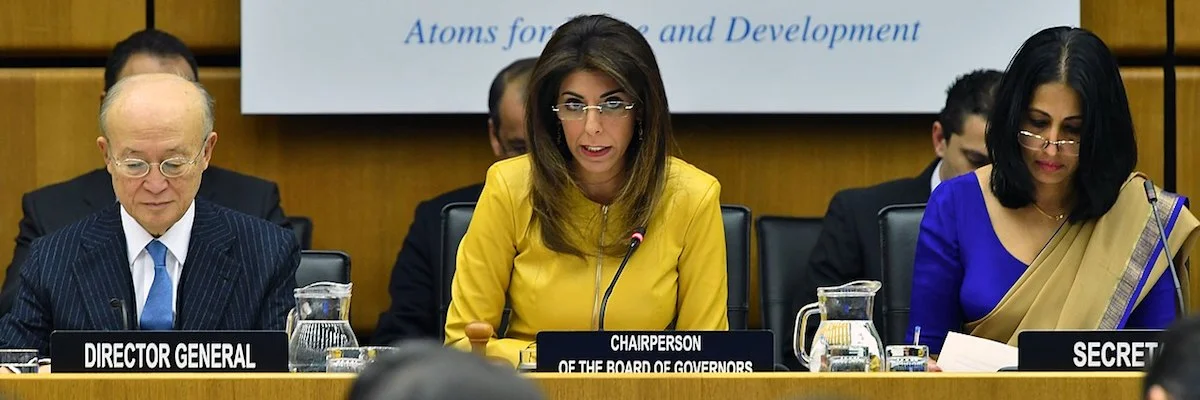
IAEA to Hold Special Meeting on Iran on 10 July
◢ The UN's nuclear watchdog said Friday it will hold a special meeting on Iran's nuclear program next week, days after Tehran breached one of the limits set in a 2015 deal with world powers. The meeting of the International Atomic Energy Agency (IAEA)'s board of governors would be held "on 10 July at 14:30," an IAEA spokesman said.
The UN's nuclear watchdog said Friday it will hold a special meeting on Iran's nuclear program next week, days after Tehran breached one of the limits set in a 2015 deal with world powers.
The meeting of the International Atomic Energy Agency (IAEA)'s board of governors would be held "on 10 July at 14:30," an IAEA spokesman said.
Earlier, the US mission in Vienna said in a statement that the American Ambassador to International Organizations Jackie Wolcott had requested the special meeting to discuss the IAEA's latest report on Iran, issued earlier this week.
In it, the IAEA confirmed that Iran had breached the limit of 300kg for stockpiles of enriched uranium as stipulated under the 2015 Joint Comprehensive Plan of Action (JCPOA).
The US statement described the news of the breach as "concerning.”
"The international community must hold Iran's regime accountable," the statement added.
Iran has said that as of Sunday it will begin breaking another key limit set in the JCPOA, which restricts the enrichment level of its uranium stockpile to 3.67 percent.
Iran has said the breaches announced so far would be reversible "within hours" if progress is made in providing Iran with relief from US sanctions.
The US was originally a party to the JCPOA but in May 2018 President Donald Trump dramatically withdrew from the accord.
Since then the US has re-imposed sanctions and has attempted to prevent Iran from exporting oil, a vital part of its economy.
Analysts say that the breaches announced by Iran so far mean very little in terms of any possible attempt by Tehran to develop a nuclear weapon, but are rather designed to pressure the remaining parties to the JCPOA.
Russia is also a party to the JCPOA and its ambassador to international organizations in Vienna, Mikhail Ulyanov, said in a tweet Friday that an IAEA board of governors' meeting was "not a proper place to consider" what he called "Iranian deviations from (the) JCPOA".
"From the viewpoint of (the) IAEA mandate they don't constitute violation or concern," Ulyanov said.
Photo:

British Forces Seize Oil Supertanker for Busting Syria Sanctions
◢ British special forces seized a supertanker off Gibraltar suspected of carrying Iranian oil to Syria in violation of European and U.S. sanctions against the war-torn country. Gibraltar didn’t say where the crude came from, but shipping tracking data compiled by Bloomberg suggest the vessel loaded at Iran’s Kharg Island oil terminal in mid-April.
By Verity Ratcliffe, Julian Lee, and Javier Blas
British special forces seized a supertanker off Gibraltar suspected of carrying Iranian oil to Syria in violation of European and U.S. sanctions against the war-torn country.
Grace 1, which can hold 2 million barrels of crude, is now anchored near Gibraltar, a British overseas territory in southern Spain that controls the strait between the Mediterranean Sea and the Atlantic Ocean. The vessel is registered in Panama.
The seizure, announced by Gibraltar’s government, could inflame tensions between Iran and the European Union just as the U.K., France and Germany try to keep the Islamic Republic from walking away from the nuclear deal. The U.S. quit the pact a year ago, prompting Iran to significantly increase uranium enrichment in response.
While Syrians will feel the immediate impact of halting the crucial oil shipment to the country, the arrested vessel shows the difficulty Iran faces in finding outlets for its crude as President Donald Trump’s administration ramps up sanctions.
“We have detained the vessel and its cargo,” said Fabian Picardo, Gibraltar’s chief minister. “This action arose from information giving the Gibraltar government reasonable grounds to believe that the vessel, Grace 1, was acting in breach of European Union sanctions against Syria.”
Suez Ban
Gibraltar didn’t say where the crude came from, but shipping tracking data compiled by Bloomberg suggest the vessel loaded at Iran’s Kharg Island oil terminal in mid-April. After anchoring off the United Arab Emirates for several weeks, the ship began a journey around the southern tip of Africa, passing Cape Town in early June, rather than taking the more direct route through the Suez Canal.
That route from Iran to Syria is about 23,300 kilometers (14,500 miles), compared with just 6,600 kilometers via the Red Sea and Suez Canal. A ship the size of the Grace 1, known as a Very Large Crude Carrier, or VLCC, can’t pass through the canal fully loaded. The shorter route would require it to discharge half its cargo, load it on to a smaller ship or send the oil through the Sumed Pipeline, and pick it up again in the Mediterranean.
Iran can’t pump oil through the pipeline, which spans Egypt from the Red Sea to the Mediterranean, because the link is owned by companies from Egypt, Saudi Arabia, the United Arab Emirates, Kuwait and Qatar. The pipeline’s owners have not permitted the transit of Iranian crude since August 2012.
Iran has regularly supplied Syria with crude since the country descended into civil war in 2011. Iran backs the government headed by President Bashar Al-Assad, which has been sanctioned for most of this decade due to its bloody crackdown on the country’s civilians.
Syria receives Iranian crude despite the embargo. It imported at least 32,000 barrels a day in 2018 and 66,000 in 2017, according to tanker tracking data compiled by Bloomberg. It has imported similar volumes so far this year.
Gibraltar said Grace 1 was destined for the Baniyas refinery, which is owned by the Syrian government and is subject to both U.S. and E.U. sanctions. Three of the facility’s underwater oil pipelines were allegedly sabotaged with mines in June, according to Syrian TV, potentially complicating the unloading of cargoes there.
Photo: Wikicommons
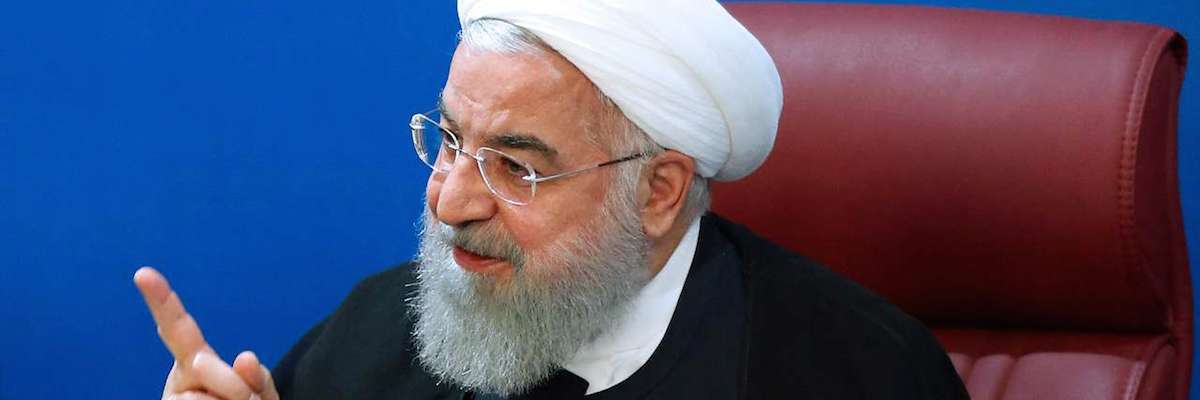
Iran to Exceed Uranium Enrichment Maximum Despite Calls for Rethink
◢ President Hassan Rouhani said Iran will exceed on Sunday the uranium enrichment limit it agreed in a 2015 deal with major powers. "On July 7, our enrichment level will no longer be 3.67 percent. We will put aside this commitment. We will increase (the enrichment level) beyond 3.67 percent to as much as we want, as much as is necessary, as much as we need," Rouhani said.
By Amir Havasi
Iran ignored US and EU warnings Wednesday and announced it will exceed the maximum enrichment level it agreed for uranium within days in response to the failure of the other parties to a 2015 nuclear deal to provide it with promised relief from sanctions.
Iran is acting on its May 8 threat to suspend parts of the agreement in response to US President Donald Trump's reimposition of crippling sanctions after withdrawing from it in May last year.
“On July 7, our enrichment level will no longer be 3.67 percent. We will put aside this commitment. We will increase (the enrichment level) beyond 3.67 percent to as much as we want, as much as is necessary, as much as we need," Rouhani said during a cabinet meeting on Wednesday.
The enrichment maximum set in the agreement is sufficient for power generation but far below the more than 90 percent level required for a nuclear warhead.
Rouhani stressed that Iran's action would be reversed if the other parties to the nuclear deal made good on their side of the bargain—relief from sanctions.
"We will remain committed to the (nuclear deal) as long as the other parties are committed. We will act on the JCPOA 100 percent the day that the other party acts 100 percent (too).”
Iran has sought to pressure the other parties—Britain, China, France, Germany and Russia—to save the deal.
It announced on May 8 it would no longer respect the limits set on the size of its stockpiles of enriched uranium and heavy water.
It threatened to abandon further nuclear commitments, including exceeding the agreed uranium enrichment maximum from July 7.
Rouhani said Iran will also deliver on its threat to resume construction of a heavy water reactor after July 7 and will bring it to the condition that "according to you, is dangerous and can produce plutonium."
He added the measures can be reversed in "hours" if the other parties "live up to their commitments."
'Playing with Fire'
US President Donald Trump warned Monday that Iran is "playing with fire" after Tehran said it had exceeded the limit set on its enriched uranium stockpile.
Rouhani said it was the US that started the fire and Washington has to "put it out" by returning to the nuclear deal.
His adviser, Hesamodin Ashena, warned Trump against listening to hawks in his administration, hinting aggression against Iran could make him a "one-term president.”
"We have unseated an American president in the past, we can do it again," he tweeted, referring to Jimmy Carter whose bid for a second term was marred by the Iran hostage crisis in 1980.
Israel urged European states to slap sanctions on Iran for abandoning its nuclear commitments.
Russia voiced regret but said the move was a consequence of US pressure, which has pushed the deal towards collapse.
The diplomatic chiefs of Britain, France, Germany and the EU said they were "extremely concerned" and urged Iran to reverse its decision.
Europe has sought to save the nuclear deal by setting up a payment mechanism known as INSTEX which is meant to help Iran skirt the US sanctions.
Rouhani dismissed the mechanism as "hollow", saying it was useless to Iran because it failed to provide for financing of purchases of Iranian oil.
He took issue with the EU for calling on Iran to stay committed to the deal, saying the deal "is either good or bad. If it's good, everyone should stay committed to it," not just Iran.
Photo: IRNA
Photo: IRNA
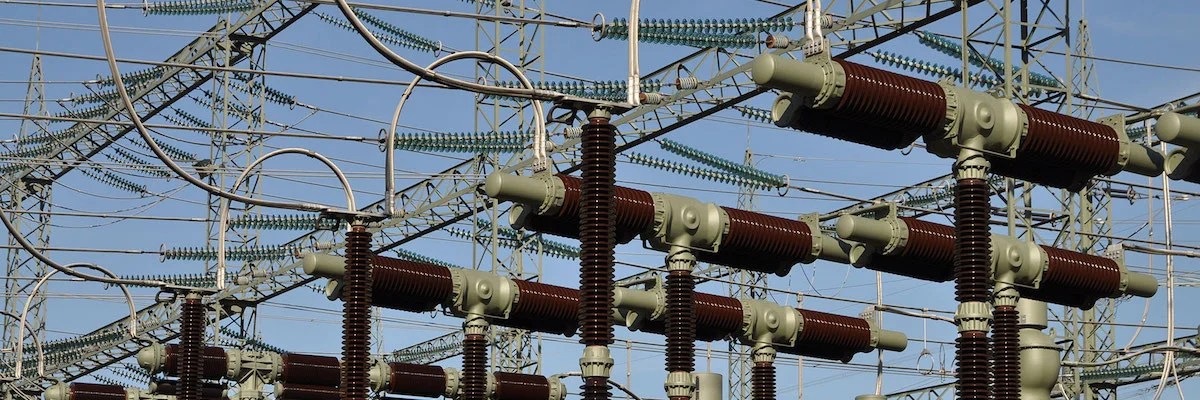
Iraq Sets Up 'Loophole' in US Sanctions to Buy Iranian Power
◢ Iraq is establishing a financial "loophole" to continue buying vital gas and electricity from Iran despite US sanctions, AFP has learned, mirroring a European mechanism that came into effect Friday. The "special purpose vehicle" (SPV) would allow Iraq to pay for imported Iranian energy in Iraqi dinars, which Iran could use to exclusively buy humanitarian goods, three senior Iraqi officials said.
By Maya Gebeily
Iraq is establishing a financial "loophole" to continue buying vital gas and electricity from Iran despite US sanctions, AFP has learned, mirroring a European mechanism that came into effect Friday.
The "special purpose vehicle" (SPV) would allow Iraq to pay for imported Iranian energy in Iraqi dinars, which Iran could use to exclusively buy humanitarian goods, three senior Iraqi officials said.
The workaround would allow Baghdad to keep the lights on and avoid shortage-driven protests without triggering US sanctions, as it treads an increasingly precarious tightrope between its two main allies Tehran and Washington.
One senior government official told AFP it was the product of months of talks between Iraqi, Iranian and US officials.
"The Iraqi government will continue to pay Iran for gas by depositing money into a special bank account inside Iraq, in Iraqi dinars," the official said.
"Iran will not be able to withdraw the money, but will be able to use it to purchase goods from outside Iraq."
Iraq has an outstanding bill of around $2 billion for previous gas and electricity purchases, according to Iranian Oil Minister Bijan Zangeneh.
A US official told AFP that Washington was aware of the mechanism's creation.
The US embassy in Baghdad declined to comment, while Iran's embassy did not respond to an AFP request.
Two additional high-level Iraqi officials confirmed Baghdad was establishing such an account with US knowledge, but could not say whether payments into the account had begun.
"How else is Iraq supposed to pay what it owes Iran? We have no other choice," the second official said.
‘Iran's ATM'
To offset its notorious power shortages, Iraq imports around 1,400 MW of electricity and 28 million cubic meters (988 million cubic feet) of gas for power stations from neighboring Iran, which together make up about a third of Iraq's power supply.
That reliance has angered the US, which slapped tough sanctions on Iran last year but has granted Iraq several temporary waivers to keep purchasing Iranian power until October.
The US insists Iraq wean itself off Iranian energy, but Baghdad has said that could take up to four years, during which it would need to keep purchasing at least Iranian gas.
To do so, the central banks of Iran and Iraq agreed in February to create a payment method that steers clear of US sanctions, Iran's state news agency IRNA said, without providing additional details.
That would mean not dealing in US dollars and purchasing only "humanitarian goods" allowed by the US -- like food and medicine.
"We would become Iran's ATM," another Iraqi official told AFP.
According to two of the senior Iraqi officials, Baghdad's SPV would likely be set up at the Trade Bank of Iraq.
The TBI has handled most of the Iraqi government's international transactions since its establishment in the aftermath of the US-led invasion in 2003.
A senior TBI source told AFP the bank had been involved in the negotiations but the account had not yet been created.
"The US Treasury has confidence in the TBI's processes. We are in discussions to reach an agreement, which would be fully within US exemptions," the source said.
'Like a Ledger'
It would effectively be a "loophole" around sanctions, said Ahmed Tabaqchali, senior fellow at the Sulaymaniyah-based Institute of Regional and International Studies.
"It's like a ledger. You record the money paid, and Iran has that much credit in Iraq," Tabaqchali told AFP.
The system would work much like INSTEX, a mechanism recently activated by Britain, Germany and France to trade legitimately with Iran without falling foul of US sanctions.
Still, the system is fraught with political, financial and practical complexities
Iraq's economy relies almost exclusively on oil revenues, paid in dollars, which leaves Baghdad extremely vulnerable to any punitive measures the US could take in response to a violation.
It also remains unclear what exactly Iran could purchase from Iraq as trade is heavily tilted in the other direction.
"Credit would develop in Iran's favour but how would it actually cash it?" said Tabaqchali.
Importing goods from outside Iraq would require a third party willing to take the political and financial risk of such a transaction, he told AFP.
And, ultimately, much of Iraq's transactions with Iran are cash purchases of commercial goods—something US authorities implementing sanctions are unable to monitor.
"Cash is untraceable," said Tabaqchali.
Photo: Wikicommons
Iran Traders Ride Bull Market Despite US Sanctions
◢ Iran's stock market is thriving, despite US sanctions which have battered its economy and an uncertain future as geopolitical tensions soar in the Gulf. Tehran Stock Exchange was buzzing Monday after the latest spike in a 12-month bull market, mostly caused by the crash of Iran's currency, the rial.
By Amir Havasi
Iran's stock market is thriving, despite US sanctions which have battered its economy and an uncertain future as geopolitical tensions soar in the Gulf.
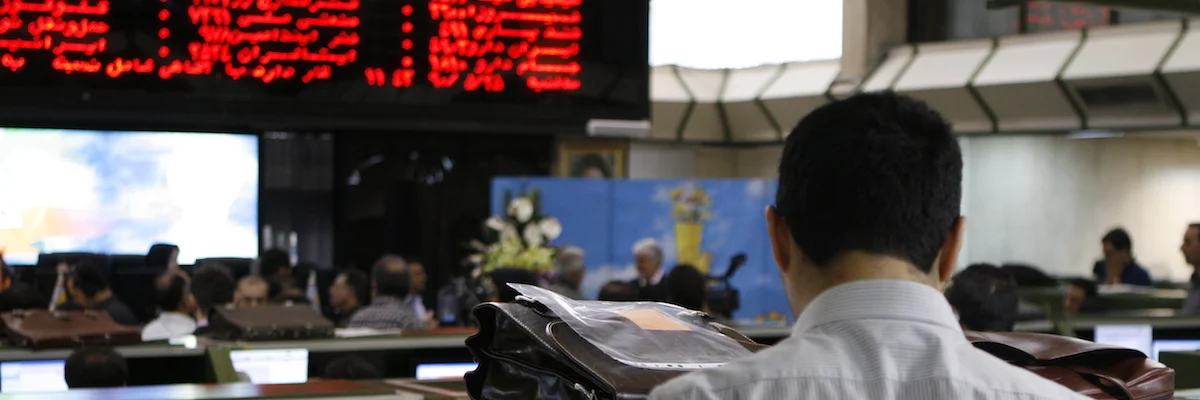
Tehran Stock Exchange was buzzing Monday after the latest spike in a 12-month bull market, which veteran trader Mohsen said was mostly caused by the crash of Iran's currency, the rial.
"Share values are not growing because of profitability but because of the companies' asset values," which have spiked on a drastically weaker currency, he said.
The energetic 58-year-old said he had "seen it all" in three decades of trading at the exchange in central Tehran.
Its main index, the TEDPIX, has steadily risen over the past 12 months, accelerating in the most recent quarter to a historic high of 248,577 last week—more than twice its level of a year ago.
Iran's currency crisis has made imports far more expensive, at the same time as US-imposed banking sanctions made it harder to move goods into the country or receive payment for exports.
Yet investors seemed unconcerned about tensions with Washington, which have escalated since US President Donald Trump unilaterally withdrew from a landmark nuclear deal last year and reinstated biting sanctions against Tehran.
Share prices have continued their run even since Iran shot down a US spy drone in mid-June, nearly triggering a retaliatory US strike—the latest in a series of incidents that have raised fears of a regional conflict.
"Maybe only a war breaking out could stop the market. Otherwise political tensions won't impact it," said investor Mohammad Kazerani after visiting a bank counter at the exchange to withdraw more cash to invest.
"The market has been good for about three months, very good," the upbeat 48-year old said.
The Iranian economy is struggling in part because of the crippling US sanctions targeting Iran's oil sales, banking transactions and major industries like steel and petrochemicals.
That has caused runaway inflation, officially topping 52 percent, and the rial has nosedived against major foreign currencies over the past year.
But some of these woes may be the very factors fuelling the rise in Tehran stock prices.
"Sanctions and political tensions have actually been good for some companies that sell their products in Iran," Mohsen said.
Silver Lining
According to economists, the root causes of the rial's slump pre-date the Trump administration's withdrawal from the nuclear deal.
But the subsequent reimposition of US sanctions has caused the currency to lose half of its value against the dollar since May last year.
Yet Kazerani said a weaker rial has been a silver lining for some companies, as the soaring prices of imports have pushed buyers towards local producers.
Some Iranian companies, long sidelined in favour of foreign competitors, are now seeing so much demand that "buyers have to queue up" to place orders, he said.
Among those gaining the most are firms specifically targeted by US sanctions, including the Mobarakeh Steel Company and the Persian Gulf Petrochemical Industries Company, a big enterprise linked to the Revolutionary Guards.
At the Tehran exchange, investors sat in a glass hall overlooking the operators' room, where traders faced a large monochrome ticker or huddled over small terminals, tracking their shares.
Mohsen, busy advising someone to buy shares in a shipbuilding company despite US sanctions, said the good times will not last long.
"This situation will only last a year or two, and it won't repeat itself," he said.
Photo: Sena.ir
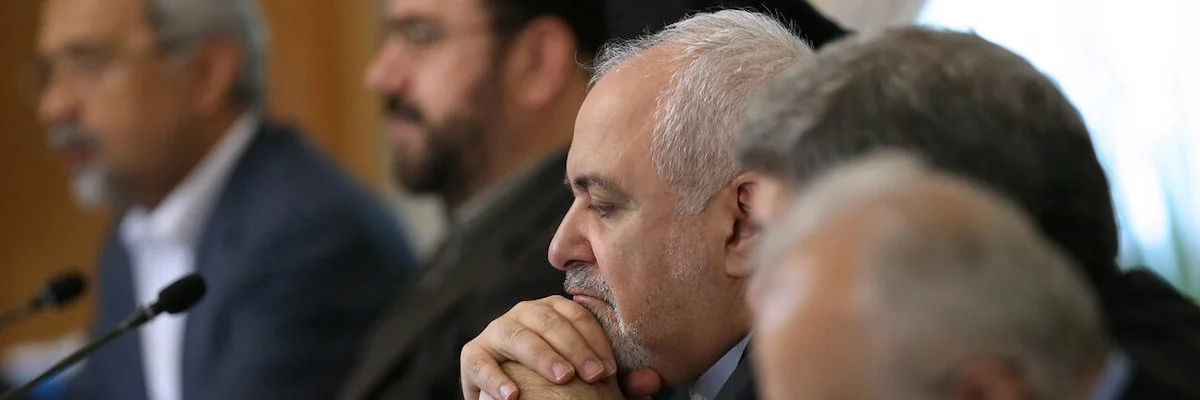
Iran Breaches Limit on Enriched Uranium Under Nuclear Accord
◢ Iran said it had exceeded the cap on its stockpile of enriched uranium set under the 2015 nuclear deal, risking a confrontation with European nations which had urged it to stick to the accord. “As I was informed, Iran has crossed the 300-kilogram cap according to plans,” the Iranian Students’ News Agency cited Foreign Minister Mohammad Javad Zarif as saying.
By Nour Al Ali and Ladane Nasseri
Iran said it had exceeded limits set on its enriched-uranium stockpile, a move that risks the collapse of the 2015 nuclear accord and raises concerns that a standoff with the U.S. could lead to military action.
“As I was informed, Iran has crossed the 300-kilogram cap according to plan,” the Iranian Students’ News Agency cited Foreign Minister Mohammad Javad Zarif as saying. “We have clearly expressed what we are doing and will act upon it,” he said, saying the step was in line with Iran’s rights under the agreement after it was abrogated by the U.S.
The breach is likely to heighten tensions in the Persian Gulf that have spiked since the Trump administration exited the nuclear accord a year ago and reimposed crippling sanctions on Iran, prompting a warning that Tehran will ditch elements of the deal unless it’s given an economic lifeline by July 7. Attacks in the Strait of Hormuz, a vital waterway for oil shipments from the Middle East, and the Iranian downing of an American drone have raised concerns of another war in the region.
Foreign Ministry Spokesman Abbas Mousavi said earlier on Monday that if European nations working to salvage the nuclear deal “take more concrete steps, Iran’s action in cutting back on its commitments can be rolled back,” according ISNA.
The move was “carefully calibrated” by authorities and “isn’t in itself dangerous because it can be reversed,” said Sanam Vakil, senior research fellow at Chatham House Middle East and North Africa Program. “It’s the action and reaction and what comes next—it’s a step in what can be a slippery slope.”
International Atomic Energy Agency spokesman Fredrik Dahl confirmed that Iran’s stockpile of low-grade enriched uranium exceeded 300 kilograms (661 pounds).
Iran was expected to breach the cap on Thursday, though it had appeared to back off from its warning following efforts led by European nations to preserve the accord. Seven more European countries agreed on Friday to support the U.K., Germany and France in rolling out a trade mechanism, known as Instex, that aims to protect trade with Iran from U.S. sanctions. Diplomats said the first transactions using the vehicle had been processed.
European powers opposed President Donald Trump’s decision last year to quit the multinational accord intended to curb Iran’s nuclear development in exchange for easing sanctions. But they have been so far unsuccessful developing effective ways to maintain economic relations that avoid the U.S. banking system and the sanctions that Trump reimposed.
At the same time, they had called for Iran to continue adhering to the accord, knowing that any violation would put European leaders in a difficult position with regard to U.S. officials.
Tehran “has been escalatory in pushing Europe to challenge the Trump administration” and European nations are “struggling to find a band aid” to keep the agreement alive, Vakil said.
The spokesman for Prime Minister Theresa May said the cap announcement was “extremely concerning” but the U.K. was working to keep the deal in place. Still, Britain’s commitment to the accord “relies on Iran complying with the full terms of the deal,” James Slack told reporters.
The nuclear deal was designed to prevent Iran from breaking out and constructing a weapon within a year, as the U.S. and its allies feared. The Arms Control Association, a Washington nonprofit, estimates Iran would need about 1,050 kilograms (2,315 pounds) of uranium enriched to 3.67% to build one bomb. The material would then need to undergo further enrichment.
Trump says he wants to negotiate a better deal that would also restrict Iran’s missile program and support for armed proxies around the region. But Iran says it can’t negotiate by force and while its economy and—more recently—its leaders are targeted by the U.S.
Russia said on Monday that Iran’s move to breach the limit on enriched uranium wasn’t a surprise, blaming the U.S.’s policy of maximum pressure.
Deputy Foreign Minister Sergei Ryabkov said Iran is confronting “unprecedented and unthinkable” U.S. efforts to throttle its economy, state news service RIA Novosti reported. At the same time, the leading Russian diplomat urged Iran to show restraint, voicing alarm at signals from Tehran it might pull out of the Treaty on the Non-Proliferation of Nuclear Weapons.
Photo: IRNA
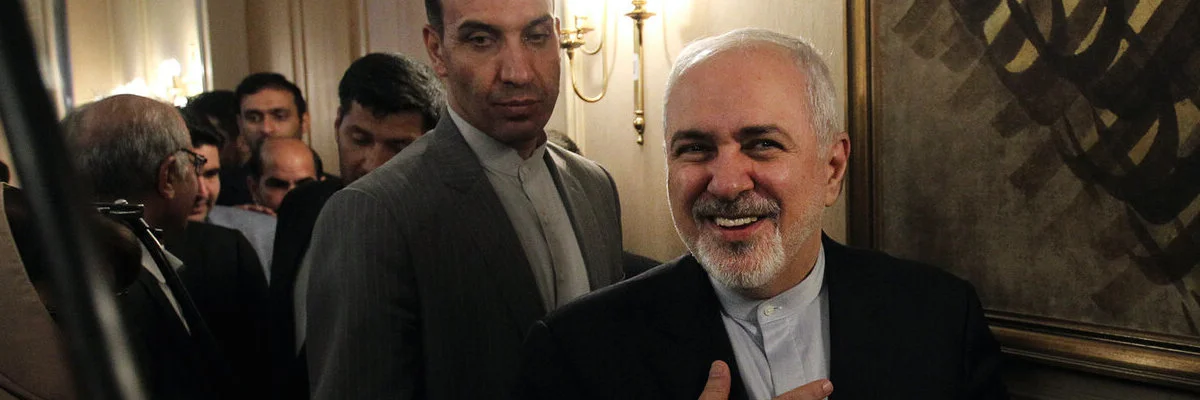
Iran Says European Plan to Bypass US Sanctions Falls Short
◢ The mechanism set up by European powers to help Iran skirt US sanctions will be of limited use but it has highlighted a welcome distance between Washington and its allies, Tehran's top diplomat said Monday. Britain, France and Germany launched the special payment system in late January after US President Donald Trump abruptly quit the nuclear deal last year and reimposed sweeping sanctions on Iran.
The mechanism set up by European powers to help Iran skirt US sanctions will be of limited use but it has highlighted a welcome distance between Washington and its allies, Tehran's top diplomat said Monday.
The EU said Friday after a crisis meeting aimed at salvaging a landmark 2015 nuclear deal between Tehran and world powers that the INSTEX payment mechanism was finally "operational" and that the first transactions were being processed.
"Although it does not meet the demands of the Islamic republic, (or) Europeans' obligations... it has a strategic value (in showing) that the closest allies of the United States are distancing themselves from America in their economic relations," Foreign Minister Mohammad Javad Zarif said.
"This will certainly have long-term effects," he added, during a speech broadcast on state television.
Britain, France and Germany launched the special payment system in late January after US President Donald Trump abruptly quit the nuclear deal last year and reimposed sweeping sanctions on Iran.
It is seen as key to EU efforts to preserve the deal but its promise of easing the bite of US sanctions, which have cut Iran off from the international financial system and decimated its oil exports, has been slow to materialize.
In response to the US measures, Tehran announced in May it would abandon some of the limits on its nuclear activities imposed under the deal, threatening to give up two others by July 7 if the other signatories to the accord do not help it break the US embargo.
INSTEX was designed to only support transactions in the pharmaceutical, medical and agricultural-food sectors.
Photo: IRNA
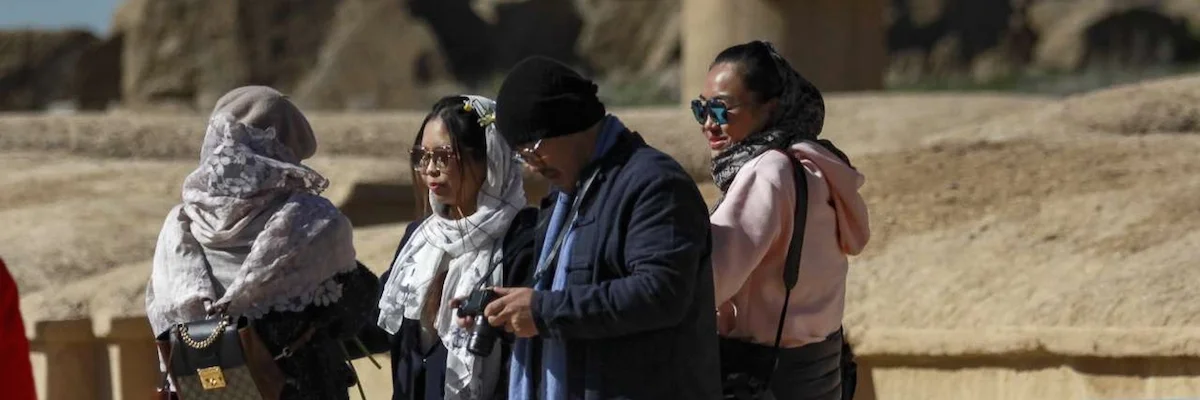
Iran Announces Visa Waiver for Chinese Tourists
◢ Iran will no longer require Chinese visitors to obtain visas, state media reported Sunday, as the sanctions-hit country attempts to boost tourism in the face of an economic crisis. "The cabinet has agreed to waive visa requirements for Chinese nationals entering the Islamic Republic of Iran," state news agency IRNA said.
Iran will no longer require Chinese visitors to obtain visas, state media reported Sunday, as the sanctions-hit country attempts to boost tourism in the face of an economic crisis.
"The cabinet has agreed to waive visa requirements for Chinese nationals entering the Islamic Republic of Iran," state news agency IRNA said.
Tourism board chief Ali Asghar Mounesan told IRNA that "we aim to host two million Chinese tourists per year using our country's numerous attractions."
He said the sector is "unsanctionable" and could help offset the economic hardships caused by tough sanctions Washington reinstated after withdrawing from a multilateral nuclear deal last year.
The sanctions have particularly targeted Iran's vital oil exports and international financial transactions, and were a major factor in the country's ongoing recession.
According to IRNA, some 52,000 Chinese tourists visited Iran during the 12 months to March.
In another bid to boost tourist arrivals, Iran recently announced it would no longer stamp visitors' passports, allowing them to bypass a US entry ban on travelers who have visited the Islamic Republic.
China is one of the remaining partners in the nuclear deal and has rejected the Trump administration's policy of seeking to cut Iranian oil exports to zero.
Tehran has threatened to abandon some of its commitments under the nuclear deal unless the remaining partners—Britain, China, France, Germany and Russia—help it circumvent US sanctions, especially on oil sales.
Photo:
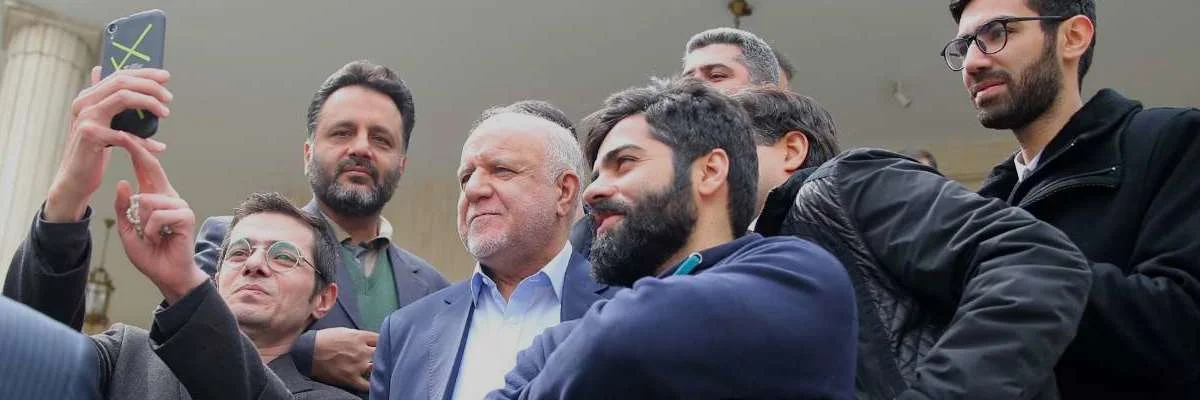
Iran's OPEC Veteran Weathers Storms From Trump to Saudi Arabia
◢ Iran’s oil minister, Bijan Zanganeh, is under almost constant pressure from hardliners and right-wing lawmakers who’ve repeatedly tried to have him impeached and removed from office. But his record at OPEC and efforts to rehabilitate Iran’s energy sector mean he’s developed a reputation among the wider public for being an efficient and dedicated technocrat.
By Golnar Motevalli, Grant Smith, and Will Kennedy
Iran’s Bijan Namdar Zanganeh is OPEC’s longest serving oil minister.
During 14 years spent shuttling between Tehran and the cartel’s Vienna headquarters, he’s proved himself adept at both the closed-door horsetrading, where policy gets decided, and the uniquely chaotic brand of public diplomacy ministers use to talk to the global oil market.
But he arrives for Monday’s meeting, his 48th, under pressure on several fronts.
Iran’s oil exports have plunged after President Donald Trump resurrected sanctions, crippling the economy and forcing Tehran into a dangerous cycle of brinkmanship with the U.S.
Meanwhile, the policy agenda of the Organization of Petroleum Exporting Countries is largely set by bitter rival Saudi Arabia, the only Middle East producer these days with real clout in the oil market. And Zanganeh is under attack at home from hardliners who see him as part of a reformist clique that botched rapprochement with the west.
None of that makes him irrelevant. In recent years, Zanganeh, 67, has proved able to make the best of a bad hand. His goal will be to show fellow ministers—not to mention a domestic audience anxious to see Iran assert itself internationally—that the country can’t be ignored.
He believes OPEC is being undermined as Saudi Arabia prioritizes its bilateral relationship with Russia, a country that’s not even an official member but the most important player in the broader OPEC+ alliance created in 2016.
"OPEC is is danger by the unilateralism of some members and the organization faces the risk of collapse," he told Iranian news wire Shana in May.
In recent weeks, he’s asserted himself over the seemingly trivial issue of when OPEC should meet. After ministers agreed a June date, Russia insisted the meeting be delayed until after this week’s G-20 summit in Japan. Iran complained, forcing weeks of back and forth before a new date was settled.
While he’s not always awkward—he had a good working relationship with former Saudi oil minister Ali Al-Naimi—Zanganeh has often been willing to go on the attack. As far back as 2000, during the first of his two stints in the job, Zanganeh refused to sign the final communique after Naimi consulted the U.S. Energy Secretary in the middle of the meeting.
New Sanctions
Those moments have come more often since Trump reimposed sanctions in 2018. Last June, Zanganeh stormed out of a meeting because he believed Saudi Arabia was using sanctions to steal Iran’s market share. Six months later he forced the meeting into a second day in a dispute over whether Iran should be exempt from cuts.
Zanganeh has been one of the Islamic Republic’s longstanding servants. He studied civil engineering at the University of Tehran, earning a master’s degree in 1977, a year before protest erupted against Shah Mohammad Reza Pahlavi’s corrupt regime.
Two years after the 1979 revolution, Zanganeh was made deputy minister for cultural affairs at the Ministry of Islamic Guidance. He oversaw reconstruction projects for several years during the Iran-Iraq War and became energy minister in 1988, the year the war ended.
He was made oil minister in 1997 by reformist president, Ali Mohammad Khatami. He held the post until Mahmoud Ahmadinejad was elected in 2005. In his first stint, he tried to attract foreign investment to Iran’s energy industry through so-called buy back deals where investors were repaid in crude. France’s Total SA and Norway’s Statoil ASA -- now called Equinor ASA -- committed to projects in the country.
After hardliner Ahmadinejad left office in 2013, Zanganeh was returned to his post by Hassan Rouhani. In the years he spent out of office, oil production plunged under sanctions imposed by the U.S. and European Union to stymie Iran’s nuclear research. Iran had fallen from being OPEC’s second-largest producer to sixth, severely weakening its power inside the cartel.
When those sanctions were lifted in 2015, exports started to recover and Zanganeh again sought to bring oil companies back. During OPEC meetings, executives would queue outside his Vienna hotel suite to discuss potential projects.
Everything went into reverse after the election of Trump in 2016. Even before sanctions were formally reimposed, investors got cold feet and western oil companies including Total and Royal Dutch Shell Plc stopped buying Iranian crude.
Under Pressure
At home, Zanganeh is under almost constant pressure from hardliners and right-wing lawmakers who’ve repeatedly tried to have him impeached and removed from office. But his record at OPEC and efforts to rehabilitate Iran’s energy sector mean he’s developed a reputation among the wider public for being an efficient and dedicated technocrat with few airs or graces—something of a rarity in the country’s leadership.
“He is under siege at home, as are all the moderates,” said Helima Croft, chief commodities strategist at RBC Capital Markets in New York. “He has shown incredible staying power as his name is perennially floated for impeachment by his hardline critics at home.”
Zanganeh is still taken seriously in Vienna, where fellow ministers respect his reverence for OPEC’s traditional consensus and his seriousness of purpose.
As he arrived at the Kempinski hotel lobby last December, journalists scuffled with bodyguards as they tried to get their microphones and cameras close. Despite being jostled, Zanganeh remained calm and waited to deliver a simple message: Iran can’t participate in OPEC’s production cuts as long as it remains under U.S. sanctions and won’t allow other members to steal its rightful market share.
Photo: IRNA
Iran Won't Exceed Uranium Stockpile Limit on Thursday: Diplomatic Source
◢ Iran will not exceed Thursday a uranium stockpile limit agreed under a nuclear deal with world powers, contrary to what Tehran said earlier this month, according to a diplomatic source in Vienna. "They won't exceed it today," the source told AFP, speaking on condition of anonymity.
Iran will not exceed Thursday a uranium stockpile limit agreed under a nuclear deal with world powers, contrary to what Tehran said earlier this month, according to a diplomatic source in Vienna.
"They won't exceed it today," the source told AFP, speaking on condition of anonymity.
The source suggested there might be a "political reason" for this, given the intensified efforts by European governments in recent days to de-escalate tensions in the Gulf region.
There was no indication to suggest the agreed limit would be exceeded this weekend either, the source added, underlining that Tehran can suspend its uranium enrichment activities at any time.
Iran said 10 days ago that it would surpass the agreed 300-kilogram (660-pound) reserve of enriched uranium on June 27 because it no longer felt bound by the 2015 deal which the United States unilaterally pulled out of in May 2018.
Vienna is home to the UN's nuclear watchdog, the International Atomic Energy Agency or IAEA, which is responsible for monitoring whether Iran is sticking to the terms of the nuclear deal.
Tehran has also threatened to start enriching uranium above the agreed purification level of 3.67 percent starting from July 7.
Under the landmark deal signed with world powers in 2015, Iran pledged to reduce its nuclear capacities for several years and to allow IAEA inspectors into the country to monitor its activities in return for relief from international sanctions.
The deal set a limit on the number of uranium-enriching centrifuges, and restricted Iran's right to enrich uranium to no higher than 3.67 percent, well below weapons-grade levels of about 90 percent.
But the deal has come under severe strain since Washington pulled out of it last year and slapped new economic sanctions on the Islamic republic.
On Tuesday, in a gesture seemingly aimed at reining in soaring tensions with the US, Iranian President Hassan Rouhani told French President Emmanuel Macron in a telephone call that Iran "never seeks war" with any country.
Macron, for his part, said on the sidelines of a G20 meeting in Tokyo that he would do "the maximum" to "avert military escalation" between Iran and the US.
US President Donald Trump said Wednesday he does not want a war with Iran, but warned that if fighting does break out, it "wouldn't last very long".
Macron reiterated that France shared the US "strategic objective" that Iran should not be allowed to develop a nuclear weapon.
Photo: IRNA
Iran 'Never Seeks War' with US, says Rouhani
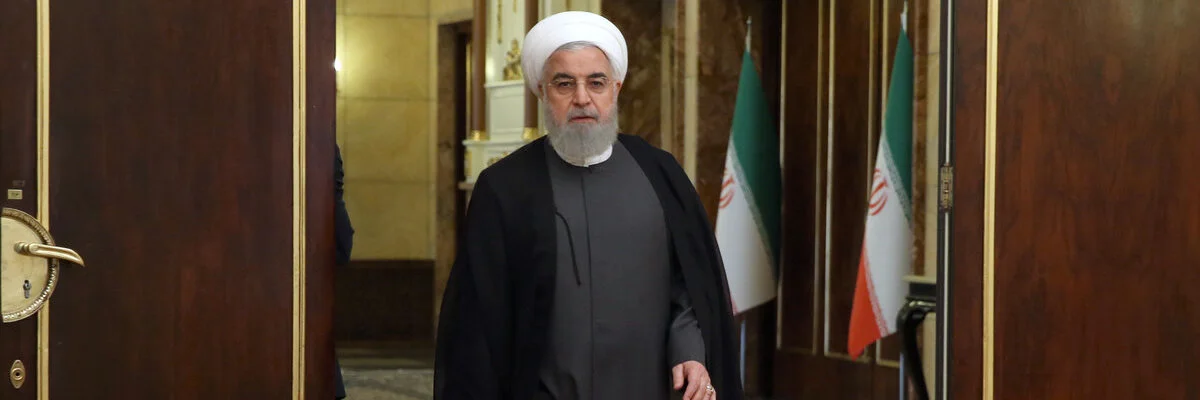
◢ Iran "never seeks war" with the United States, President Hassan Rouhani said as he sought to rein in soaring tensions Wednesday between the two countries. "Iran has no interest to increase tension in the region and it never seeks war with any country, including (the) US," the president said, quoted by state news agency IRNA.
By Marc Jourdier
Iran "never seeks war" with the United States, President Hassan Rouhani said as he sought to rein in soaring tensions Wednesday between the two countries.
"Iran has no interest to increase tension in the region and it never seeks war with any country, including (the) US," the president said, quoted by state news agency IRNA.
Rouhani was speaking by phone to his French counterpart Emmanuel Macron, as Tehran and Washington engaged in an escalating war of words following Iran shooting down a US drone last week.
"We have always been committed to regional peace and stability and will make efforts in this respect," the Iranian president told Macron.
US President Donald Trump said he pulled back from retaliatory strikes on Iran at the last minute, rejecting Tehran's claim that the aircraft was in its airspace.
But pressure mounted this week with Trump announcing sanctions on Iran's supreme leader and top officials.
The new measures are the latest against Tehran since Trump pulled out of a landmark nuclear accord between Iran and world powers.
Rouhani blamed the United States for regional tensions and said if Washington had stuck to the deal "we would have witnessed positive developments in the region".
Iran announced in May it would suspend two of its pledges under the 2015 deal, giving the agreement's remaining supporters two months to help it circumvent US sanctions.
On Tuesday Tehran's top security official, Ali Shamkhani, said Iran would "forcefully" reduce further commitments from July 7.
This was so "countries who interpreted Iran's 'patience' with weakness and inaction realise that Iran's answer to the American drone's violation of its airspace will be no different than its reaction to devious political efforts to limit Iranian people's absolute rights," he said, quoted by Fars news agency.
Tehran's compliance had been based on European promises to support Iran's economy—which have failed to bear fruit—Rouhani told Macron.
Iran previously announced it would stop observing restrictions on its stocks of enriched uranium and heavy water agreed under the deal.
'Obliteration'
Tehran accuses Washington of waging economic warfare through its crippling sanctions regime, which on Monday saw Iran's supreme leader Ayatollah Ali Khamenei blacklisted.
The Trump administration says it is open to talks with Tehran, an offer flatly rejected by Rouhani after the US said it would also sanction his top diplomat.
"At the same time as you call for negotiations you seek to sanction the foreign minister? It's obvious that you're lying," Rouhani said Tuesday, raising fears of conflict despite both sides saying they are not looking for war.
Washington's national security advisor, John Bolton, on Tuesday accused Iran of being behind "a long series of unprovoked and unjustifiable attacks."
The US has blamed Tehran for attacks earlier this month on tankers close to the strategic Strait of Hormuz, through which most Gulf oil exports pass.
Iran has vehemently denied involvement, despite it previously threatening to close the vital waterway.
Trump said Tuesday he is not seeking conflict, while warning Iran against hitting US interests.
“Any attack by Iran on anything American will be met with great and overwhelming force. In some areas, overwhelming will mean obliteration," he tweeted.
Iran and the US broke off diplomatic relations in 1980 over the hostage crisis at the US embassy in Tehran following Iran's Islamic revolution.
Trump's comments came after a flurry of diplomatic activity, which saw the UN Security Council issue a unanimous call Monday for dialogue to address the bilateral standoff.
With no sign of calm on Tuesday, China urged "calm and restraint.”
Photo: IRNA
Iran to Abandon More Nuclear Deal Commitments on July 7
◢ Iran will "resolutely" abandon more commitments under a 2015 nuclear deal with world powers on July 7, Fars News Agency reported on Tuesday quoting a "note" from a top security official. Tehran had announced on May 8 that it was suspending two of its 2015 pledges and gave Europe, China and Russia a two-month ultimatum to help Iran circumvent US sanctions and sell its oil or it would abandon two more commitments.
Iran will "resolutely" abandon more commitments under a 2015 nuclear deal with world powers on July 7, Fars News Agency reported on Tuesday quoting a "note" from a top security official.
Tehran had announced on May 8 that it was suspending two of its 2015 pledges and gave Europe, China and Russia a two-month ultimatum to help Iran circumvent US sanctions and sell its oil or it would abandon two more commitments.
Last year Washington withdrew from the landmark nuclear deal and reimposed sanctions on Tehran, and Europe's efforts so far to help Iran economically benefit from the accord have been dismissed by Iran's supreme leader Ayatollah Ali Khamenei as a "bitter joke.”
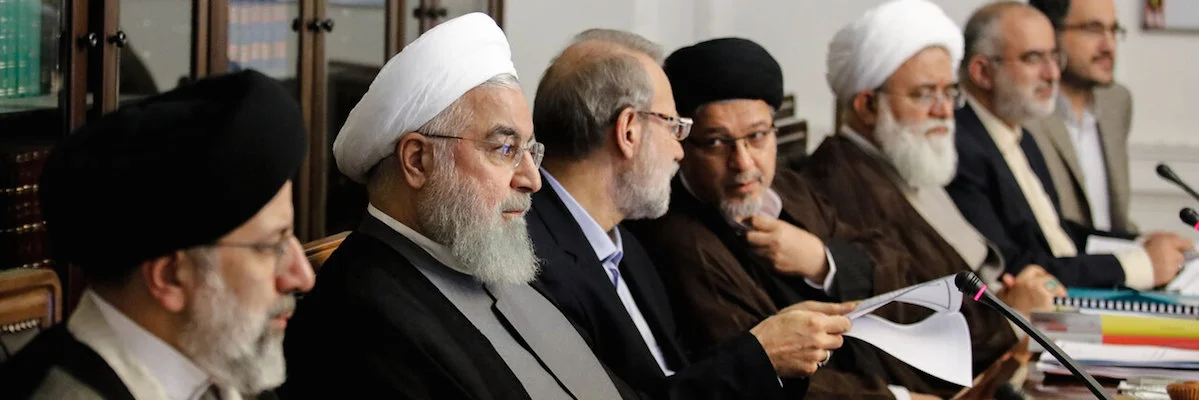
"As of July 7, Iran will forcefully take the second step of reducing its commitments" to the nuclear deal, Rear Admiral Ali Shamkhani, secretary of Iran's Supreme National Security Council, was quoted as saying by Fars.
This was so "countries who interpreted Iran's 'patience' with weakness and inaction realize that Iran's answer to the American drone's violation of its airspace will be no different than its reaction to devious political efforts to limit Iranian people's absolute rights," he added.
Amid escalating tensions last week, Iran shot down a US spy drone it said had crossed into its territory, a claim denied by the United States.
Russia, a key ally of Iran, on Tuesday backed Iran's version of events.
US President Donald Trump said he ordered retaliatory air strikes against Iran but pulled back at the last minute.
Shamkhani slammed Europe's "political insolence" for expecting Iran to continue its commitments without them fulfilling their end of the deal and said it showed a "lack of will" to face the US.
France's Foreign Minister Jean-Yves Le Drian said Iran would be making a "serious mistake" if it violates the deal by through abandoning commitments.
In a joint statement on Monday, Britain, France and Germany said they were "committed to working hard for the full implementation of (the nuclear deal) and urge all sides to do the same."
Shamkhani in response said the E3 statement and "Trump's game of sanctions" were two sides of the same coin and that Europe has so far "paid no cost for saving" the deal.
In retaliation to the European inaction, Iran has begun to increase its enriched uranium and heavy water stockpile and is set to soon pass the limits set in the deal.
The second step would involve breaking past the 3.67 percent restriction on enriching uranium and restarting development of a heavy water reactor that was put on hold.
Photo:
Iran Says US Blocking Diplomacy With New Sanctions
◢ Iran said Tuesday new US sanctions against its leaders marked the end of diplomacy with Washington, after President Donald Trump threatened the country with "obliteration.” Trump imposed new sanctions Monday against Iran's supreme leader Ayatollah Ali Khamenei and top military chiefs, further raising the stakes in an escalating regional standoff.
By Amir Havasi
Iran said Tuesday new US sanctions against its leaders marked the end of diplomacy with Washington, after President Donald Trump threatened the country with "obliteration.”
Trump imposed new sanctions Monday against Iran's supreme leader Ayatollah Ali Khamenei and top military chiefs, further raising the stakes in an escalating regional standoff.
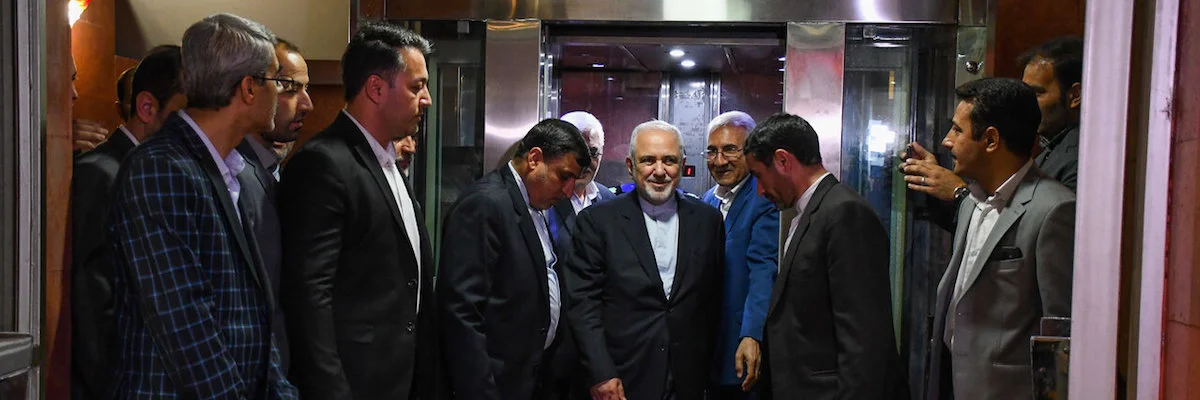
The US Treasury said it would also blacklist Iran's Foreign Minister Mohammad Javad Zarif—a moderate figure and key architect of the 2015 Iran nuclear deal—and eight top commanders from Iran's Revolutionary Guards.
Iran's Foreign Ministry spokesman Abbas Mousavi said Tuesday that "imposing fruitless sanctions against Iran's supreme leader and the commander of Iran's diplomacy is the permanent closure of the path to diplomacy with Trump's desperate government."
"Trump's government is destroying all established international mechanisms for keeping global peace and security," he said in a tweet.
Washington's move came after Iran shot down a US spy drone last week and Trump launched a retaliatory strike, canceling it at the last minute.
That follows a series of attacks on ships in sensitive Gulf waters which the US has blamed on Iran—claims hotly denied by Tehran.
US media have also reported Trump secretly authorized cyber-attacks against Iran's missile defense systems and a spy network, but Tehran says no damage was done.
Trump called Monday's sanctions a "strong and proportionate response to Iran's increasingly provocative actions."
"We do not ask for conflict," Trump said, adding that depending on Iran's response the sanctions could end tomorrow or "years from now."
'Deafening' Silence
Tehran and Washington broke off diplomatic relations in 1980 over the hostage crisis at the US embassy in Tehran following Iran's Islamic revolution.
The latest tensions come a year after Trump unilaterally withdrew from a multilateral pact with Iran over its nuclear program.
Iran has since said it will drop adherence to some of the limits the deal imposed on its nuclear activities, but has insisted its atomic program is entirely for civilian purposes.
US allies Saudi Arabia and Israel have long pushed Washington to act aggressively against Iran.
Israel's Prime Minister Benjamin Netanyahu warned that his country, widely believed to have its own undeclared nuclear arsenal, would do "everything" to stop Iran getting such a weapon.
Speaking in Jerusalem on Tuesday, US National Security Advisor John Bolton said Iran had failed to respond to an offer to negotiate with Washington.
"The president has held the door open to real negotiations," Bolton said during a visit to Jerusalem. "In response, Iran's silence has been deafening."
But Iranian President Hassan Rouhani said the new sanctions showed Washington was "lying" about its offer.
"At the same time as you call for negotiations you seek to sanction the foreign minister? It's obvious that you're lying," Rouhani said in a meeting with ministers broadcast live on TV.
The UN Security Council has called for dialogue to address the standoff. Iran's UN ambassador said his country, already crippled by existing US sanctions that include the blocking of most of its own crucial oil exports, is being subjected to "economic war."
"You cannot start a dialogue with somebody who is threatening you, who is intimidating you," Ambassador Majid Takht Ravanchi told reporters in New York.
Strategic Strait
Trump also declared Monday that other countries should no longer expect US forces to police the Gulf.
"All of these countries should be protecting their own ships," Trump tweeted Monday. "We don't even need to be there."
Iran welcomed his statement.
It is "100% right that the US military has no business in the Persian Gulf. Removal of its forces is fully in line with interests of US and the world," Zarif tweeted.
US Secretary of State Mike Pompeo met Monday with leaders of Saudi Arabia and the United Arab Emirates, telling them to contribute more to maritime surveillance duties near Iran.
Pompeo said he was working to build what he called a "global coalition" against the Islamic republic.
On Sunday, Trump told an NBC television interview that if it came to war, Iran would experience "obliteration like you've never seen before."
But he has also said he is open to negotiations with Iran's leaders. "I think Iran, potentially, has a phenomenal future," he said.
Photo: IRNA
France's Macron to Discuss Iran Tensions with Trump at G20
◢ French President Emmanuel Macron on Monday said he would discuss the current flare-up of tensions between Iran and the United States with President Donald Trump at this week's G20 summit in Japan. The tensions with Iran are set to loom large over the G20 meeting in Osaka later this week after the United States accused Iran of sabotaging ships.
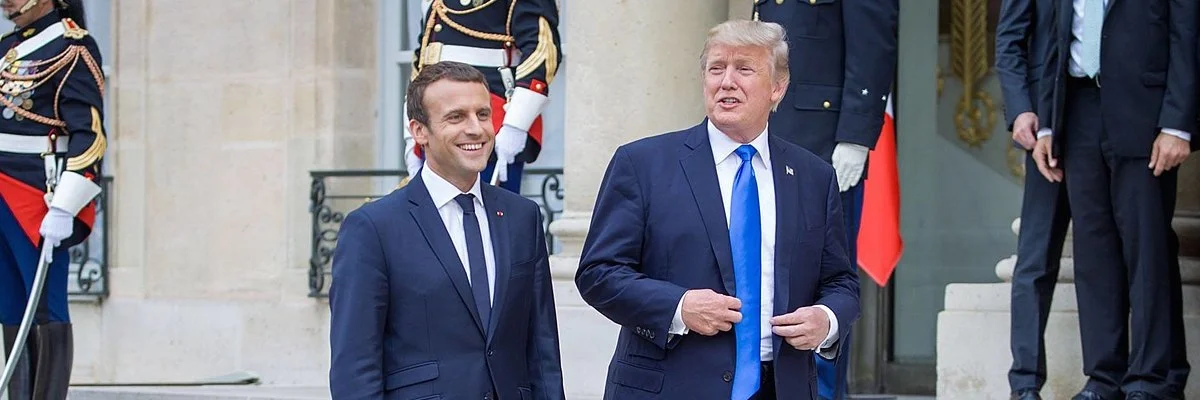
French President Emmanuel Macron on Monday said he would discuss the current flare-up of tensions between Iran and the United States with President Donald Trump at this week's G20 summit in Japan, saying a solution was needed through dialogue to ensure regional security.
The tensions with Iran are set to loom large over the G20 meeting in Osaka later this week after the United States accused Iran of sabotaging ships.
"We have to find a constructive solution with the aim of ensuring collective regional security," Macron told reporters, urging diplomacy rather than an escalation of tensions.
With the EU increasingly concerned over the risk of conflict, Macron pointed to a rare visit by his top diplomatic advisor Emmanuel Bonne to Tehran last week for talks.
"We have condemned very strongly all forms of escalation or aggression and what we will try to have is dialogue," he said.
Iran-US tensions have increased sharply since Trump last year abandoned a landmark 2015 nuclear agreement with Iran and reimposed sanctions, moves strongly opposed by Europe.
Last week Macron appealed to Iran to be "patient and responsible" after Tehran said it would soon surpass the uranium stockpile limit set under the nuclear accord.
Photo: Wikicommons
Trump Sanctions Iran's Supreme Leader in Provocative Move
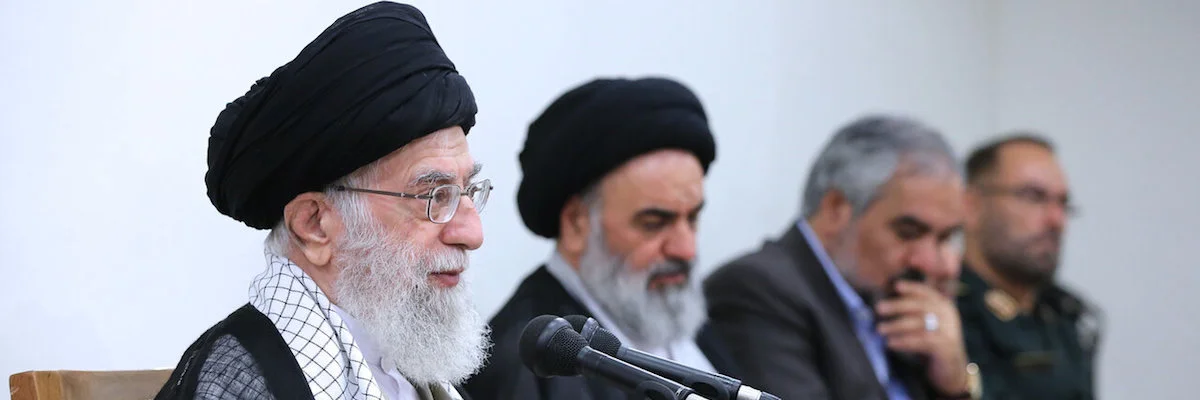
◢ President Donald Trump imposed sanctions on Iran’s supreme leader, Ayatollah Ali Khamenei, and eight senior military commanders, a provocative step designed to increase pressure on the Islamic Republic. Trump told reporters at the White House on Monday that the penalties would deny Khamenei and his office access to financial resources.
By Saleha Mohsin and Shannon Pettypiece
President Donald Trump imposed sanctions on Iran’s supreme leader, Ayatollah Ali Khamenei, and eight senior military commanders, a provocative step designed to increase pressure on the Islamic Republic.
Trump told reporters at the White House on Monday that the penalties would deny Khamenei and his office access to financial resources.
“The supreme leader of Iran is the one who ultimately is responsible for the hostile conduct of the regime,” Trump said.
Trump last week abruptly canceled planned air strikes against Iran for shooting down a U.S. Navy drone on Thursday. The administration also blames Iran for recent attacks on two oil tankers near the Persian Gulf, though Iran denies it.
The penalties won’t have a significant impact on a country that’s already in recession and facing heavy sanctions from the U.S. Still, the new restrictions serve as symbolic reprimand for the attacks, according to former Treasury officials.
‘Annoy the Iranians’
“It will have an effect because it will annoy the Iranians and make negotiations hard to pull off if the supreme leader is sanctioned,” said Brian O’Toole, a senior fellow at the Atlantic Council who previously worked in the U.S. Treasury Department’s sanctions unit.
The U.S. already has sanctioned more than 80% of Iran’s economy, according to Secretary of State Michael Pompeo. He’s en route to Saudi Arabia and the United Arab Emirates to rally a front against Iran.
Khamenei, who was initially elected president of the nascent republic in 1981, has “possessions” worth an estimated at $200 billion, according to a Facebook post by the U.S. embassy in Baghdad in April. He is backed by the Islamic Revolutionary Guard Corps and has survived an assassination attempt and frontline combat.
The U.S. Treasury Department said Monday those sanctioned also include eight officials of the Guard Corps who supervised “malicious regional activities,” including its ballistic missile program and “harassment and sabotage” of commercial ships in international waters.
Treasury Secretary Steven Mnuchin said at a news conference in Washington that some of the sanctions had been “in the works” and others were a result of “recent activities.” He said sanctions against the Islamic Republic have been effective in cutting off funds to the military and “locking up” the Iranian economy, and that the new penalties would be effective as well.
Mnuchin said the U.S. will impose financial restrictions on Iran Foreign Minister Javad Zarif “later this week.”
Trump told reporters Monday that, “A lot of restraint has been shown by us, a lot of restraint—and that doesn’t mean we are going to show it in the future, but I thought that we want to give this a chance,” he said.
Any financial institution that knowingly assists with a financial transaction for those who were sanctioned could be cut off from the U.S. financial system, according to the Treasury.
Trump’s Warning
Trump had warned of additional sanctions on Saturday. At the same time, he said an interview that aired Sunday on NBC’s “Meet the Press” that he thinks Iranian leaders want to negotiate and he’s willing to talk with no preconditions except that the outcome must be Iran acquiring no nuclear weapons. Trump said the proposed discussions have “nothing to do with oil.”
Even before the new penalties were announced, the U.S. had applied sanctions to nearly 1,000 Iranian entities, including banks, individuals, ships and aircraft. In May, the Trump administration prohibited the purchase of Iranian iron, steel, aluminum and copper.
Iran’s Foreign Ministry had said new penalties won’t force the country to negotiate or capitulate.
“Are there any other sanctions left for the U.S. to impose on Iran?” ministry spokesman Abbas Mousavi said Monday prior to Trump’s announcement, according to the official Islamic Republic News Agency. The Trump administration “knows full well that if pressure and sanctions were the answer, they would have yielded results much earlier.”
Tensions have spiked in the Gulf since May, when the Trump administration revoked waivers on the import of Iranian oil, squeezing its economy a year after the U.S. walked away from the landmark 2015 deal meant to prevent the Islamic Republic from developing a nuclear weapon. Since then, a spate of attacks on oil tankers near the Strait of Hormuz shipping choke point have raised the specter of war and pushed up oil prices. The U.S. has blamed the attacks on Tehran, which has denied any wrongdoing.
On Monday, Trump questioned in comments on Twitter why the U.S. was protecting the shipping route on behalf of other countries.
Photo: IRNA
Trump Vows New Iran Sanctions, Tehran Warns US Against Attack
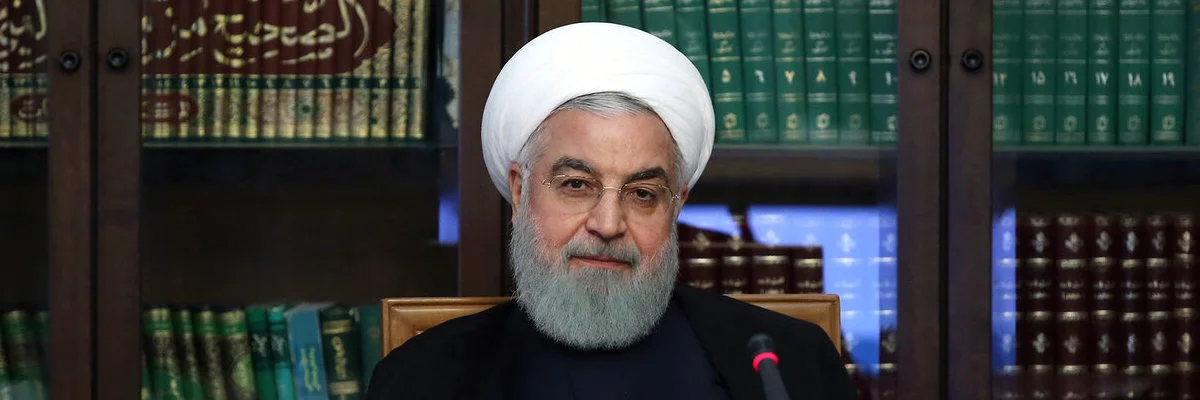
◢ US President Donald Trump on Saturday pledged to hit Iran with "major" new sanctions as Tehran warned Washington that any attack would see its interests across the Middle East go up in flames. The war of words heated up after Trump had pulled back from military action against Iran in response to its downing of a US reconnaissance drone.
By Inčs Bel Aiba and Amir Havasi
US President Donald Trump on Saturday pledged to hit Iran with "major" new sanctions as Tehran warned Washington that any attack would see its interests across the Middle East go up in flames.
The war of words heated up after Trump had pulled back from military action against Iran in response to its downing of a US reconnaissance drone.
That incident, which came after a series of attacks on tankers in the congested shipping lanes out of the Gulf that the US has blamed on Iran, exacerbated already tense relations between the two countries.
Iran has denied responsibility for those attacks. Trump, who spent Saturday huddling with his advisors at Camp David, initially told reporters that he was keen to be Iran's "best friend"—if the country agreed to renounce nuclear weapons.
"When they agree to that, they're going to have a wealthy country. They're going to be so happy, and I'm going to be their best friend," he told reporters.
Iran has denied seeking a nuclear weapon and says its program is for civilian purposes.
A multinational accord reached by Tehran and world powers in 2015 sought to curb Iran's nuclear ambitions in exchange for sanctions relief. But Trump left that agreement more than a year ago and has imposed a robust slate of punitive economic sanctions designed to choke off Iranian oil sales and cripple its economy—one he now plans to expand.
"We are putting major additional Sanctions on Iran on Monday," tweeted Trump, who has also deployed additional troops to the Middle East.
"I look forward to the day that Sanctions come off Iran, and they become a productive and prosperous nation again - The sooner the better!"
Added Secretary of State Mike Pompeo: "When the Iranian regime decides to forgo violence and meet our diplomacy with diplomacy, it knows how to reach us. Until then, our diplomatic isolation and economic pressure campaign against the regime will intensify."
But lest anyone think he was entirely ruling out military action, Trump tweeted Saturday evening that "I never called the strike against Iran 'BACK,' as people are incorrectly reporting, I just stopped it from going forward at this time!"
'Powder Keg'
A top Iranian military official warned Washington against any strikes.
"Firing one bullet towards Iran will set fire to the interests of America and its allies" in the region, armed forces general staff spokesman Brigadier General Abolfazl Shekarchi told the Tasnim news agency.
"If the enemy—especially America and its allies in the region—make the military mistake of shooting the powder keg on which America's interests lie, the region will be set on fire," Shekarchi warned.
Following his comments, Iran said it had executed a man, a contractor for the defense ministry's aerospace organization, who had been convicted of spying for the United States.
'Trampling' International Law
After the downing Thursday of the Global Hawk surveillance aircraft, Trump said the United States had been "cocked & loaded" to strike Iran.
But at the last minute, he said he pulled back as the response would not have been "proportionate."
The US president subsequently said he did not want war with Iran, but if it came to pass, there would be "obliteration like you've never seen before," according to excerpts of an interview with NBC conducted on Friday.
Tehran insists that the drone violated its airspace—something Washington denies—but a commander of the elite Revolutionary Guards, Brigadier General Amir Ali Hajizadeh, told state news agency IRNA that the violation could have been an accident.
"Nonetheless, this was an act of trampling international aviation laws by a spy aircraft," Hajizadeh added.
The Pentagon released a map of the drone's flight path, indicating it avoided Iranian waters, but Iranian Foreign Minister Mohammad Javad Zarif on Saturday published maps showing the aircraft inside Iranian territory.
"There can be no doubt about where the vessel was when it was brought down," he wrote on Twitter.
After the drone was downed, Trump secretly authorized US Cyber Command to carry out a retaliatory cyber attack on Iran, The Washington Post reported Saturday.
It crippled computers used to control rocket and missile launches, according to the Post, while Yahoo News said a spying group responsible for tracking ships in the Gulf was targeted.
Iran's foreign ministry said it had summoned the charge d'affaires of the United Arab Emirates, from where the US drone launched, to protest its decision to "put its installations at the disposal of foreign forces for aggression."
The US Federal Aviation Administration has barred American civilian aircraft from the area "until further notice," and several major non-US airlines were altering flight paths to avoid the sensitive Strait of Hormuz.
Photo: IRNA
Iran Diplomat Calls Talks With UK Minister 'Repetitive'
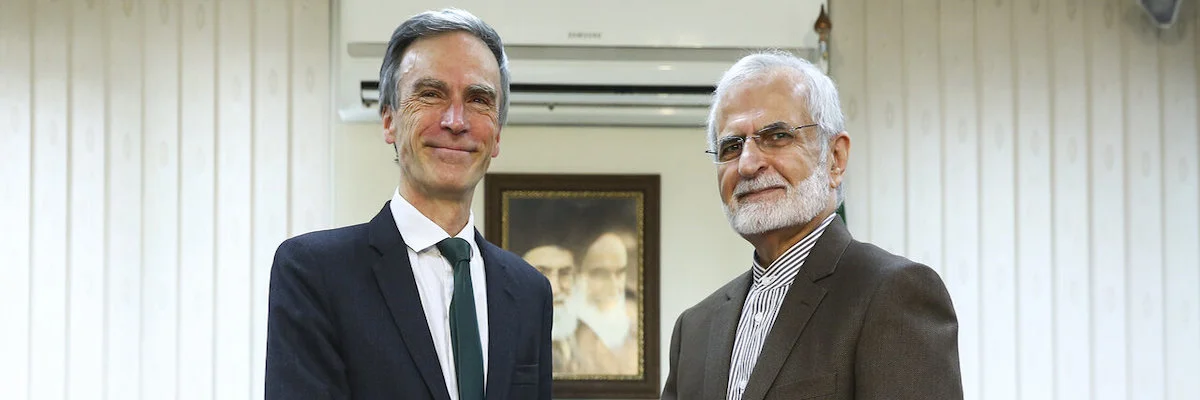
◢ A top Iranian diplomat expressed disappointment on Sunday after meeting a British Foreign Office minister amid escalating regional tensions, saying their talks were "repetitive", state news agency IRNA reported. Minister of State for the Middle East Andrew Murrison had the "usual talking points", said Kamal Kharazi, the head of the Strategic Council of Foreign Relations at Iran's foreign ministry.
A top Iranian diplomat expressed disappointment on Sunday after meeting a British Foreign Office minister amid escalating regional tensions, saying their talks were "repetitive", state news agency IRNA reported.
Minister of State for the Middle East Andrew Murrison had the "usual talking points", said Kamal Kharazi, the head of the Strategic Council of Foreign Relations at Iran's foreign ministry.
These included talking up a European payment mechanism to help Iran with US sanctions and saying "that Britain has always supported the JCPOA (nuclear deal) and has its own problems with America," Kharazi added.
"Such talks that have always been repetitive."
The JCPOA is the Joint Comprehensive Plan of Action, a multilateral 2015 nuclear deal that the US unilaterally withdrew from in May last year.
Washington has since re-imposed biting sanctions against the Islamic republic, despite Britain, China, France, Germany and Russia remaining committed to the deal.
Murrison said that in Tehran he had been "clear about the UK's long-held concerns over Iran's activities in the region," according to a Foreign Office statement.
"I reiterated the UK's assessment that Iran almost certainly bears responsibility for recent attacks on tankers in the Gulf of Oman."
The minister said he also repeated that Britain was determined "to maintain the nuclear deal which is in our shared security interests.”
"I was clear that Iran must continue to meet its commitments under the deal in full—including the limits imposed on its low-enriched uranium stockpile," he was quoted as saying.
Murrison also had meetings with Vice President Masoumeh Ebtekar, Deputy Foreign Minister Abbas Araghchi, and the deputy head of Iran's atomic agency, Behrouz Kamalvandi.
Tensions between Washington and Tehran have flared further after Iran on Thursday shot down a US surveillance drone.
Iran said the drone violated its airspace—a claim the US denies—near the strategic Strait of Hormuz.
In response, the US was ready to carry out a military strike against Iran but US President Donald Trump said he had called it off at the last minute.
The downing of the drone came after Iran-US tensions spiked following a series of attacks on commercial vessels that the US has blamed on Iran—accusations vehemently denied by the Islamic republic.
Britain is a signatory to the 2015 nuclear deal which saw Iran scale back its nuclear program in exchange for sanctions relief.
European powers have tried to respond to the US withdrawal by setting up a special trade mechanism called INSTEX that would allow legitimate trade with
Iran to continue without falling foul of US sanctions.
But the mechanism has been dismissed by Iran's supreme leader Ayatollah Ali
Khamenei as a "bitter joke.”
On May 8, Iran said it would reduce some of its nuclear commitments unless the remaining partners helped it circumvent US sanctions and sell its oil.
Iran's atomic energy agency said on Monday it would soon pass the amount of low-enriched uranium allowed under the nuclear deal.
The deal set a limit on the number of uranium-enriching centrifuges, and restricted Iran's right to enrich uranium to no higher than 3.67 percent, well below weapons-grade levels of around 90 percent.
Kharazi warned Sunday that European powers must realise Iran is "serious" about its decision and that "in two weeks it will take new steps" to scale down nuclear commitments.
Photo: IRNA
